Autumn In My Little Town

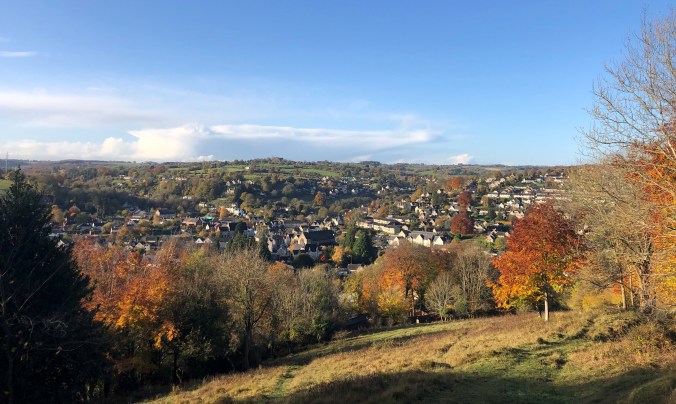
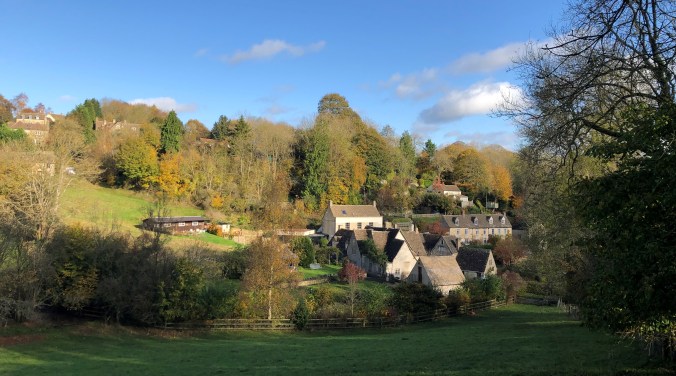
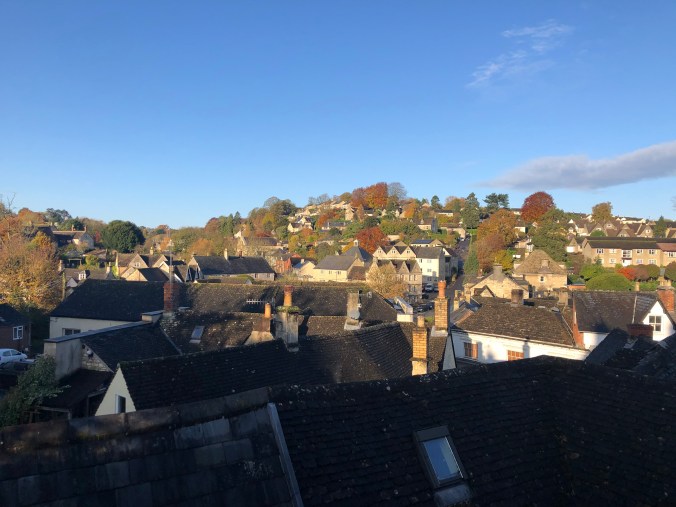
View Of Nailsworth Looking South

View Of Nailsworth Looking South

I’ve been retired for well over two years now.  New daily routines have shifted as I have settled into retirement and as the seasons have cycled around.  However, when I am not away from home, one of the daily constants has been that I walk into the local town of Nailsworth to pick up the newspaper and buy the day’s groceries.  It’s been one of my great and most consistent retirement pleasures.

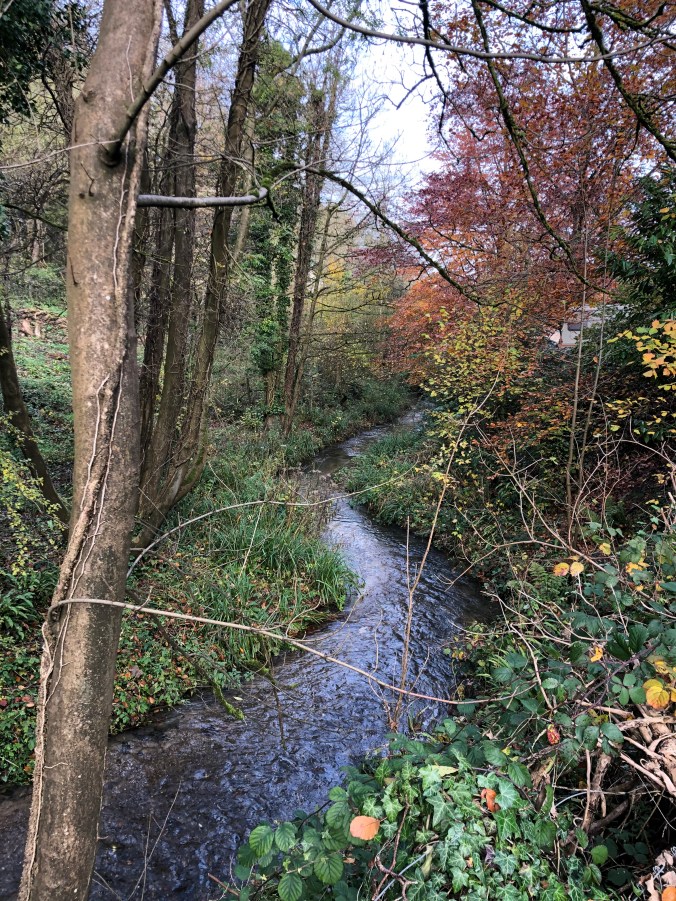
These walks have been particularly splendid recently as the Autumn colours have intensified across the hills and valleys through which I walk.  Also, in recent weeks the streams in the valleys have gushed with copious amounts of rainwater and have provided a noisier soundtrack to the burgeoning Autumn colour.

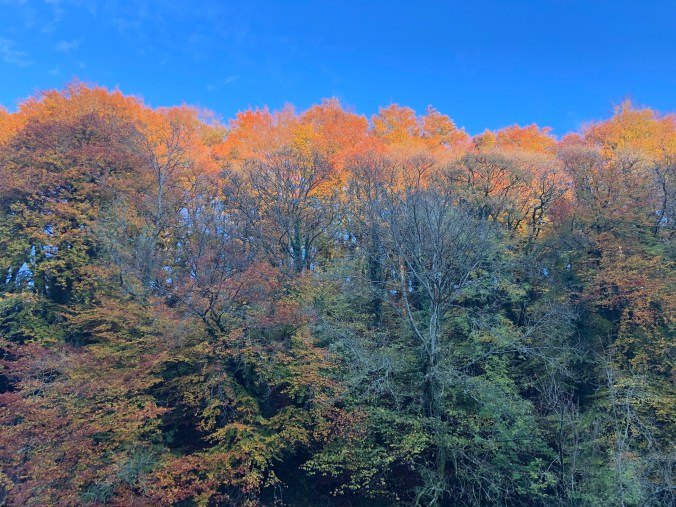
Sun Catching The Tops Of Trees In Ruskin Mill Valley

Late Sun Catching The Tops Of Trees In Ruskin Mill Valley

There are multiple routes and detours that I take to create daily variety.  However, the most rewarding walk is through the bottom of the valley between our home and Nailsworth centre.  I thought I would share a few pictures of this frequent and favourite walk.

Satellite Picture (Courtesy Google) OF My Walk Into Nailsworth

Satellite Picture (Courtesy Google) Of My Walk Into Nailsworth – From The Blue Dot (Upper Downend), East Then North-East Up The Valley To Nailsworth

The start point is, of course, my home in the hamlet of Downend near Horsley.  Our field has a small stream running through it.  This joins the Downend stream nearby and I head north-east down through its valley in which our hamlet nestles.  When this reaches another, larger valley I continue north to where it opens out to a confluence of rivers around which Nailsworth has thrived, first as a mill town and now as a small (monthly) market town.

Upper Downend

Upper Downend

As I leave Downend, I pass some old cottages and houses and cross the Old Horsley Road.  I then dip downwards into the larger, wider valley flanked by dense woods to the east.  Following the ever enlarging stream, I pass some small fields and a couple of pretty lakes.  The larger of these is often the haunt of a swan, herons, kingfishers and several varieties of duck.

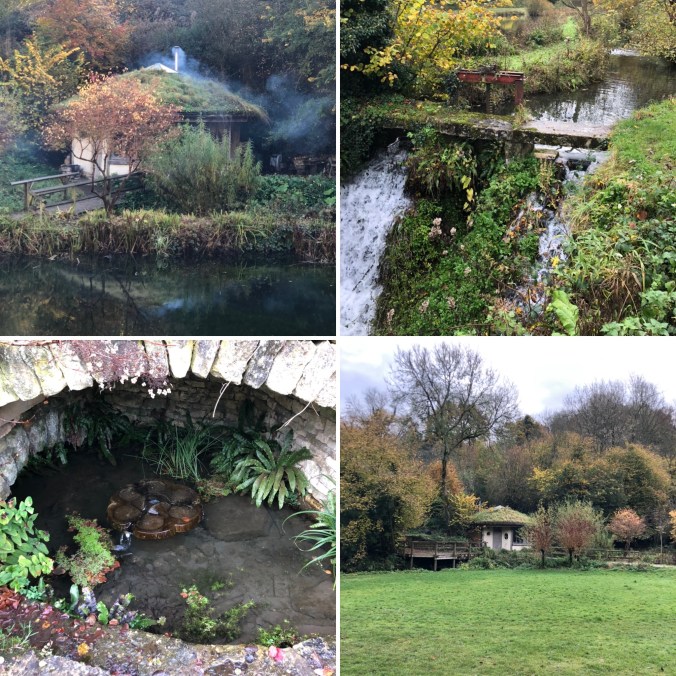
Much of the land in the valley, and up the slopes to the east, is owned and managed by Ruskin Mill Trust.  The college here caters for challenged teenagers.  The grounds include two historic wool mills, several acres of woodland, a biodynamic livestock and fish farm, a shop where some of the produce is sold, a forge, a popular café, and an arts centre and music venue.  Locals like me are privileged to have access to these grounds which are always evolving in interesting ways under the management of the Trust and which often teem with fish and birds.

Craft Workshops And Running Water In Ruskin Mill College Grounds

Craft Workshops And Running Water In Ruskin Mill College Grounds

Views Near Ruskin Mill College

Views Near Ruskin Mill College

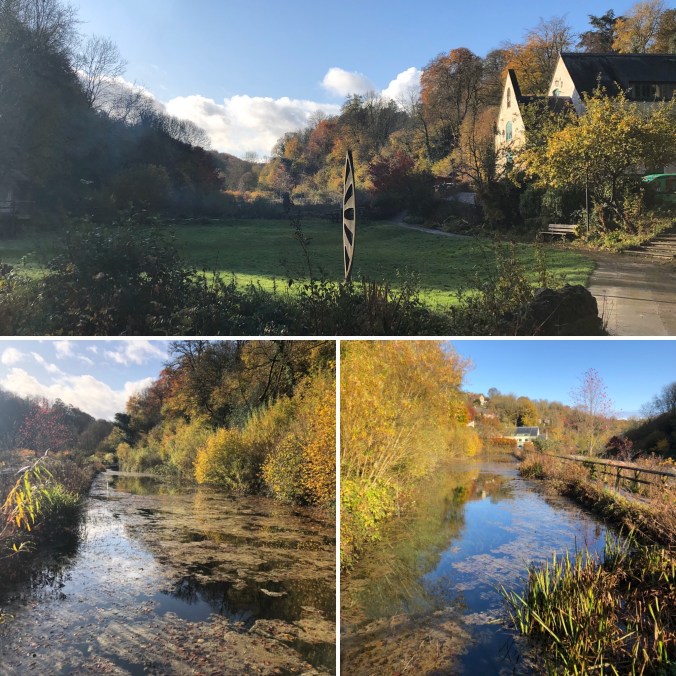
Beyond the college grounds I cross the road and the stream (now a small river) once more.  As I approach the outskirts of Nailsworth, I look out for dippers in the stream.  I had never heard of these birds before seeing them here and also in Downend itself.  They are shy but fascinating to watch as they live up to their name by dipping their heads up and down and dive into the water to catch their prey.

Dipper Habitat On The Outskirts Of Nailsworth

Dipper Habitat On The Outskirts Of Nailsworth

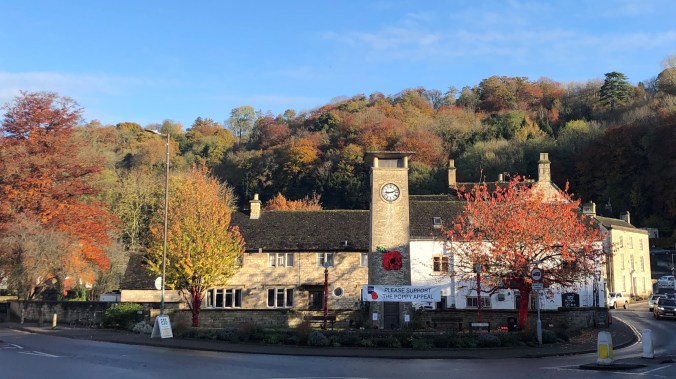
Nailsworth sits at the junction of two valleys and is overlooked by typical Cotswold woodland and hillsides (‘Cotswold Tops’).  The best time to visit is early morning when wood smoke and mist often sits above the town but below the hill tops.  The floral displays in the town this year have been award winning and many of the narrow streets and Cotswold stone buildings are always attractive.

Nailsworth Clock Tower

Nailsworth Clock Tower

Like many such towns in this age of the internet and same day delivery, it is a struggle to establish a thriving retail business in Nailsworth.  There is a persistent turnover of small independent shops and probably more shops selling small gifts and vaping equipment than is necessary.  However, some good clothes, homeware and hardware shops have prospered.  There are also a few decent pubs and café/restaurants, plus – critically for me – a newsagent, a small supermarket and health food store.

Roofs Of Nailsworth

Roofs Of Nailsworth

I’m an urban man at heart – the country was always a place to visit rather than live in through the first 60 years of my life.  I still hanker after London having left it upon retirement.  But this Cotswold landscape I now find myself living in is very attractive.  While I still can, my daily walks into the local town will continue to help me experience and appreciate it.

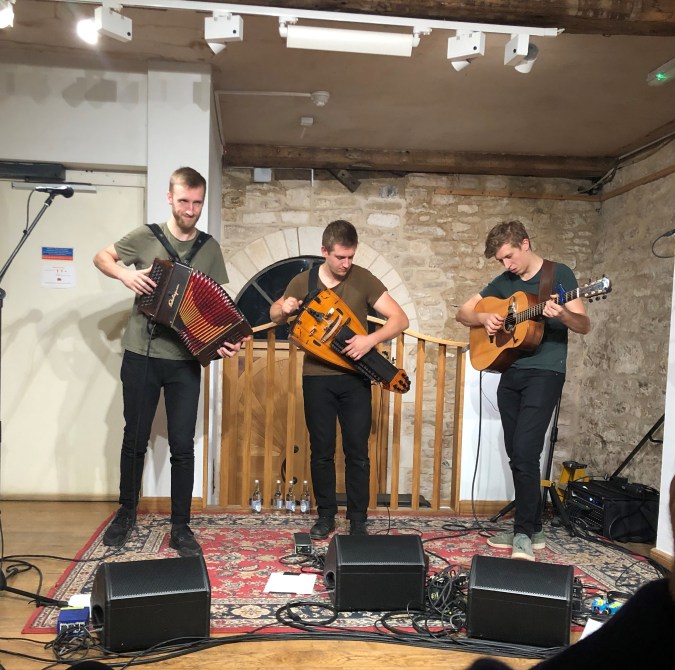
Postscript: I mentioned that Ruskin Mill College have a small music venue and Long-Suffering Wife and I thoroughly enjoyed a gig there last night.  The main act was Trio Dhoore who are three young, charming Flemish brothers who play diatronic accordion, guitar and, a first for me, the hurdy gurdy.  The music was wonderfully deep, rich and warm and the banter between tunes matched this warmth perfectly.  The trio of brothers seemed to enjoy the evening as much as we did; it was a lovely couple of hours.

Trio Dhoore At Ruskin Mill

The Rather Wonderful ‘Trio Dhoore’ At Ruskin Mill


Dipping Into Culture

Long-Suffering Wife (LSW) and I still haven’t quite planned our trip away this summer/autumn but we have both made an effort to attend some local cultural events to keep our entertainment levels up.  Indeed, as I write this, LSW is attending a couple of talks at the Cheltenham Literature Festival and will no doubt return full of much new thinking.

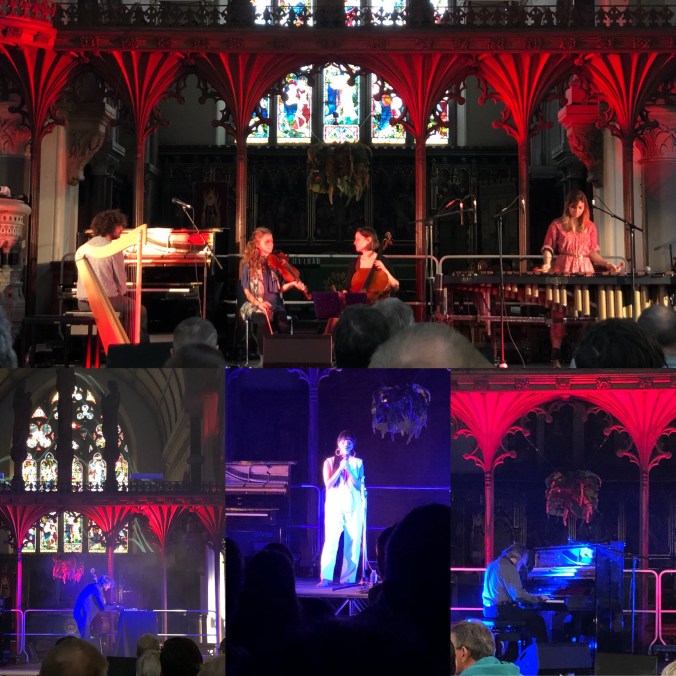
We went to two contrasting concerts recently.  The first was a programme of what I suppose are modern classical music composers and performers.  The concert had been arranged by a local magazine and creative arts consortium called Good On Paper.  The five performers were a mix of local and internationally renowned musicians.  All were interesting – especially avant-garde cellist Sebastian Plano and Japanese vocalist Hatis Noit – and there were passages I really enjoyed.  The final act was the now famous Lubomyr Melnyk who demonstrated his ‘continuous music’ piano playing; it was technically impressive but, by the end, for me, overbearing.

Spindle Ensemble, Sebastian Plano, Hatis Noit and Lubomyr Melnyk At The Hidden Notes Festival At St Laurence Church, Stroud

Spindle Ensemble, Sebastian Plano, Hatis Noit and Lubomyr Melnyk At The Hidden Notes Festival At St Laurence Church, Stroud

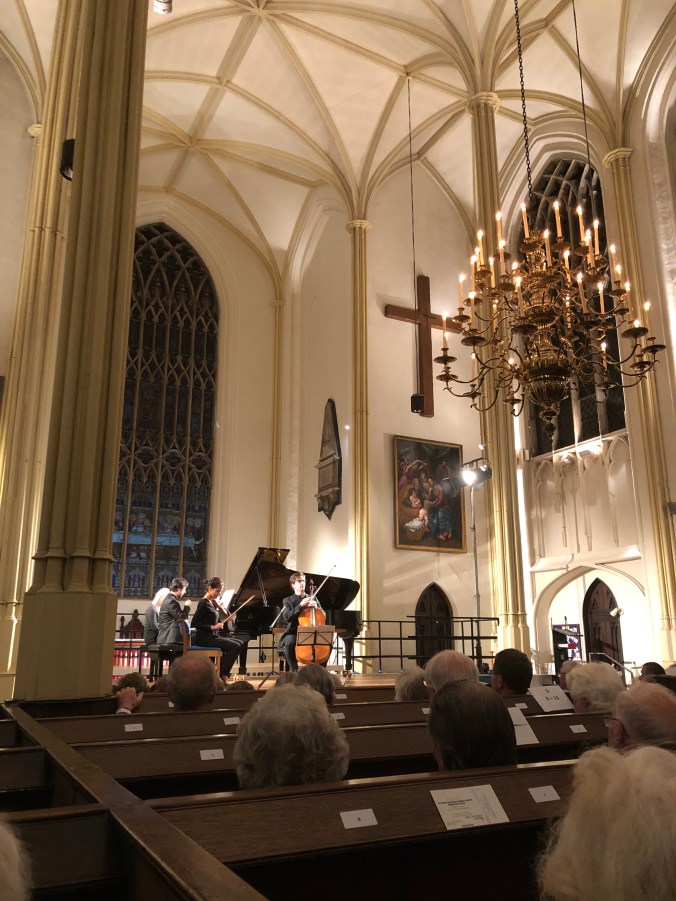
Later in the week LSW and I went to the Tetbury Music Festiival.  Despite the proximity to our home, this was, rather shamefully, our first visit to the festival.  We saw an excellent performance of three piano trios (by Haydn, Schumann and Schubert).  This was the first classical music concert I had been to for many years and I surprised myself with how much I enjoyed it.  I also surprised myself in that I actually knew the last work by Schubert; it must have been one my Dad had taken me to see played when I was a teenager and he first introduced me to classical music.

Chamber Music At Tetbury Music Festival

Chamber Music At Tetbury Music Festival

It felt good to support these local cultural events and I hope their success breeds more in the future.  The atmosphere for both was reverential and enhanced by the beautiful surroundings of a church.  Whatever the concert – modern classical, classical classical or just modern, I do like to be able to listen to the music rather than the chatter of the crowd.  A third concert I saw this week at the wonderfully eclectic Rich Mix in London also provided these sorts of listening conditions as I saw one of my favourite bands: Kefaya.

This concert was totally different from the other two.  Kefaya is a cross-cultural collective who play jazz with Middle Eastern, south and south-east Asian and Caribbean influences.  I have seen Kefaya in various guises many times over the last few years.  Here, they mostly ran through their latest album of Afghan songs fronted by an Afghani singer.  There was a lot of energy in the largely Afghani audience but, again, there was respect for the music and full attention to the band.  I loved it – especially when they let loose with their trademark jazzy duelling between guitar and keyboards, all backed up by phenomenally pacey and intricate tabla playing.

Kefaya At Rich Mix

Kefaya At Rich Mix

Apart from music LSW and I have also taken in some local art.  We have known local artist, Maggie Shaw, for many years and have bought many examples of her work; several remain our favourite pieces of art in our house.  Unfortunately she died last year.

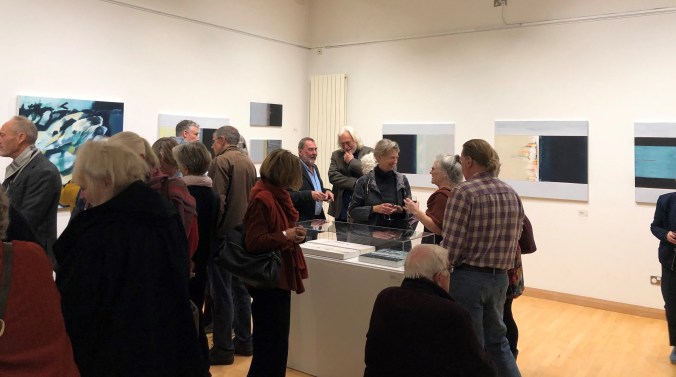
We were honoured to be part of her memorial exhibitions at the beginning of this year and lent one of her largest pieces for this.  Last week there was a further exhibition of her more recent work alongside that of two of her companion artists.  As usual, Maggie’s work stood out for me as truly remarkable.  Had we not already been in possession of so much of her output (and not starting to think about further downsizing of our house and wall space) we might have bought another of her pictures.

Exhibition Of Maggie Shaw's and Others' Work

Exhibition Of Maggie Shaw’s And Others’ Work At Stratford Park, Stroud

The absence of demands on my time from any work, continue to make it easy to fit in trips to Nottingham to visit my parents, and to London to see sons, exhibitions and gigs there.  This week, on the back of a regular meeting in London with my financial advisor and the Kefaya gig, I was able to catch up with Eldest Son, his girlfriend and Youngest Son’s girlfriend; a real pleasure.  I also visited the new exhibition at The Barbican where I am still a member and so can feel I am attending for free.

The latest exhibition at the Barbican is called Into The Night: Cabarets and Clubs In Modern Art and, as the title suggests, it is about the relationship between art and nightlife.  It examines this relationship in the period from 1880 to the late-1960s through focus on a dozen nightclubs in a variety of cities including Tehran, Ibadan in Nigeria, Paris, Berlin, Mexico City and New York.

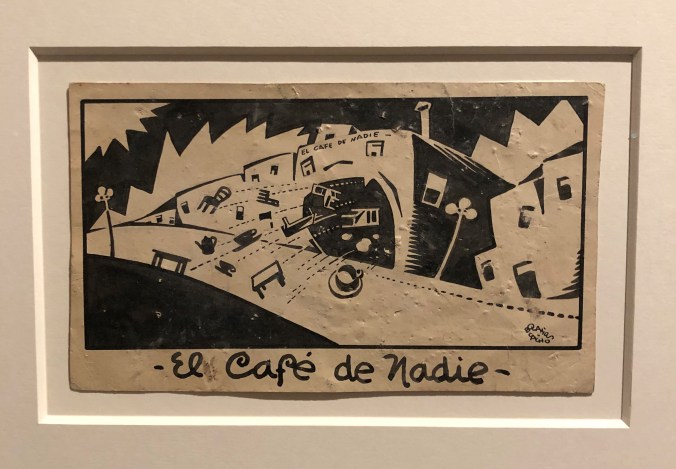
Postcard Showing Cafe De Nadie, Mexico City

Postcard Showing Cafe De Nadie, Mexico City. It Seemed To Me To Sum Up The Atmosphere These Nightclubs Tried to Engender!

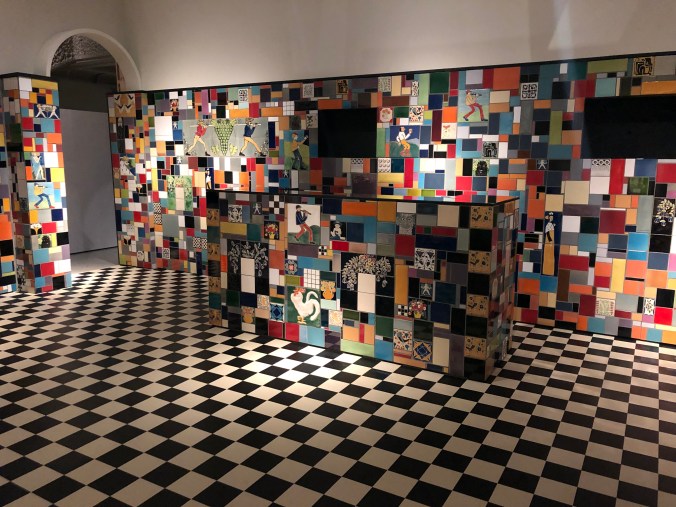
As usual, the exhibition was very well presented.  My favourite section was probably that on Vienna’s Cabaret Fledermaus (1907-13).  The posters, menus, programmes, ashtrays, flower pots, chairs and other accessories to an experience at this club were all exquisitely designed along consistent lines.  The set and costume designs for the performances were flamboyant and smacked of decadence.

Reconstruction of Cabaret Fledermaus In The Barbican Exhibition: Into The Night

Reconstruction of Cabaret Fledermaus In The Barbican Exhibition: Into The Night

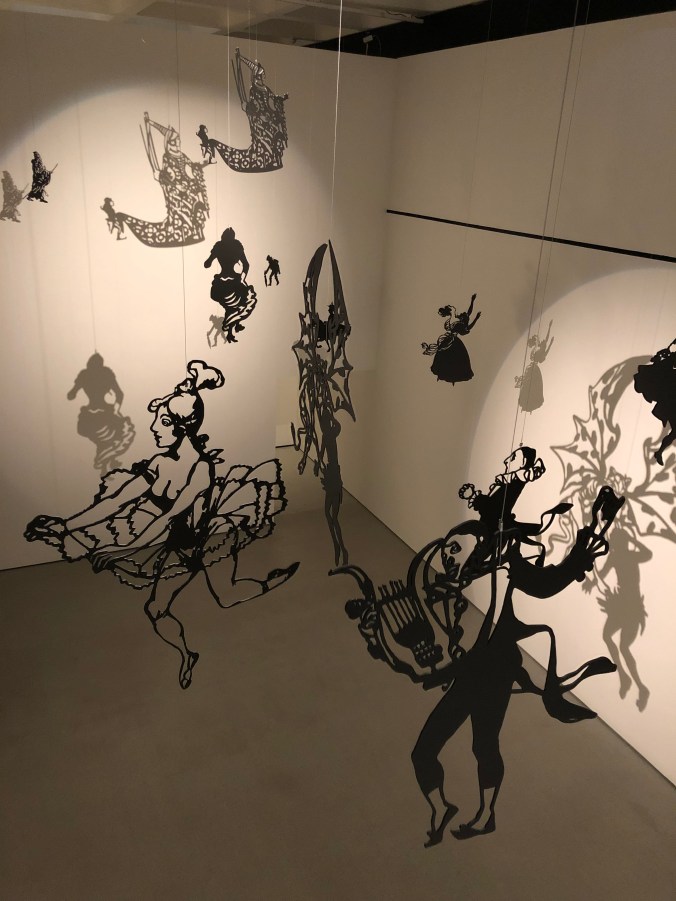
For each of the clubs chosen for the exhibition, drawings, pictures and photos helped to bring it must have been like to actually be in the nightclubs.  Aiding this further, the exhibition included reconstructions of parts of four of the nightclubs.  Particularly striking were the zinc shadow theatre models for the Chat Noir club in Paris.  For each reconstruction, despite the recorded sound, the only thing lacking was the smoke, bustle, heat and pandemonium that must have driven the fun of the customers in between – and maybe during – the cabaret and other performances.  It was a well arranged exhibition and was very enjoyable.

Reconstruction Of Chat Noir's Shadow Theatre Pieces In The Barbican Exhibition: Into The Night

Reconstruction Of Chat Noir’s Shadow Theatre Pieces In The Barbican Exhibition: Into The Night

Top tasks for this week: planting the whitebeam and cherry trees I mentioned we had bought in my last blog post, planting lots of bulbs and organising that long-considered trip away.

London Variety Part II

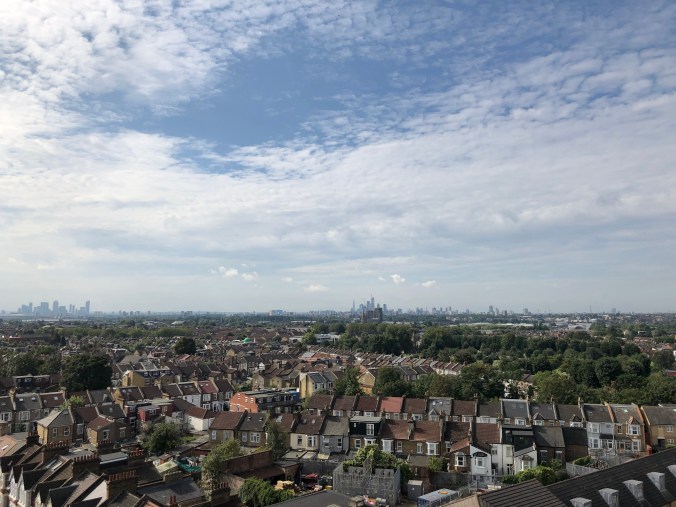
As planned, we are in London again.  We are treating the week as something of a holiday and the weather is so warm it certainly feels like could be in Madrid or Rome.  We are effectively being tourists in our capital city and are working our way through a plan of food, music and art.  We are also taking the opportunity to catch up with Middle Son (MS), stay in his new flat with its wonderous view of central, southern and northern London, and even to cook in his kitchen.

View Of The City And Canary Wharf From MS And His Girlfriends' Flat

View Of The City And Canary Wharf From MS And His Girlfriends’ Flat

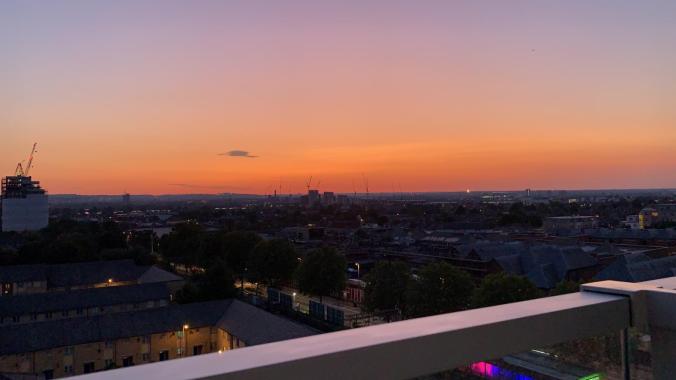
I have been cooking increasingly often in retirement and, even more surprisingly, am cooking increasingly vegetarian meals.  Earlier this week, we further adopted MS’s flat as a sort of Air BnB by inviting over Eldest Son (ES) and his girlfriend.  I cooked a meal of bulgar wheat, tomatoes, aubergine and lemon and mint yogurt that I have been perfecting at home.  Admittedly, this time, I added a few slices of (probably farmed!) salmon. So, not vegetarian after all, but we are reducing meat intake slowly.  Anyway, it was a lovely evening watching the sun go down over Alexandra Palace.

Sunset Over Walthamstow

Sunset Over Walthamstow

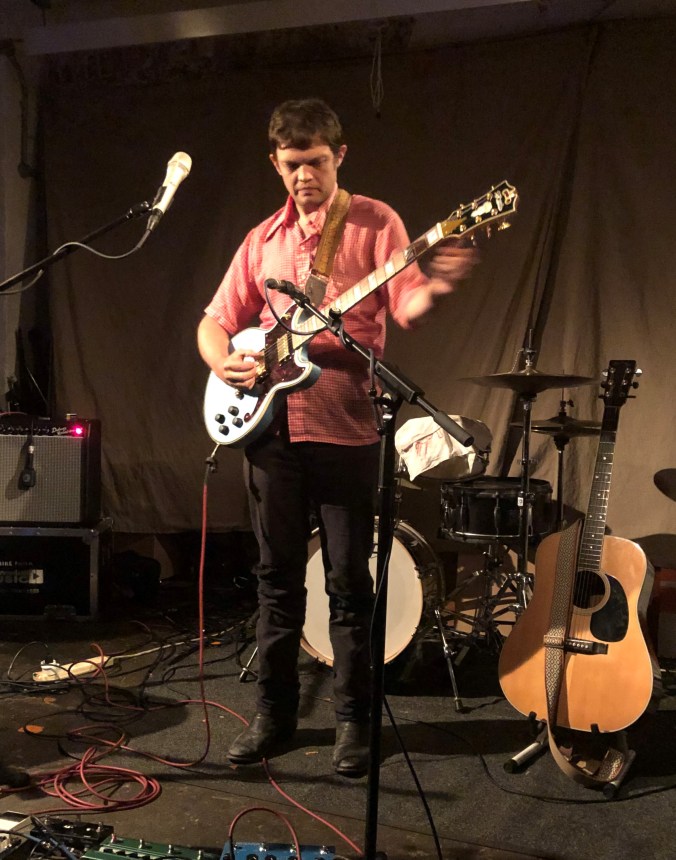
During this London visit, we have also stayed with Youngest Son (YS) and his girlfriend in their new flat in Hackney.  We had planned to see an American guitarist called William Tyler with them at Cafe Oto which is one of my favourite music venues.  Unfortunately, YS’s wasn’t well and so only Long-Suffering Wife and I made it to the gig.

We got there early enough for front row seats and the performers and music were as intimate as they always seem to be at Café Oto.  William Tyler’s technique was awesome and, despite him not having a band or vocals (apart from some amusing inter-song banter), I loved the whole experience.

William Tyler At Cafe Oto

William Tyler At Cafe Oto

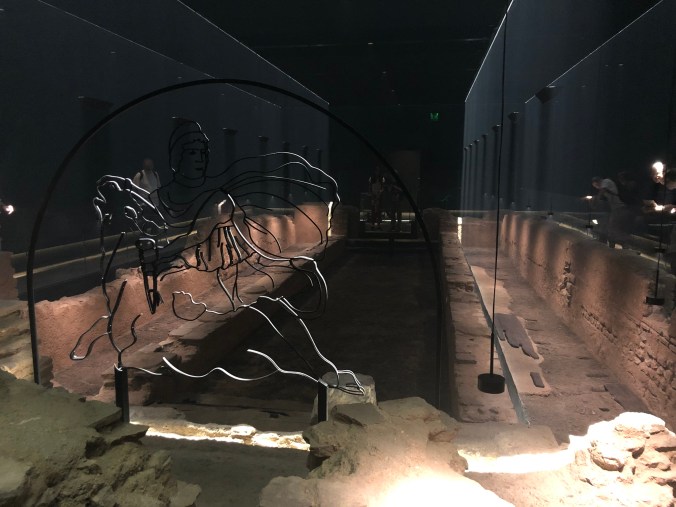
LSW and I have also visited (in my case, revisited) the Temple of Mithras in the new Bloomberg Building in Walbrook.  I first saw this in February last year and was impressed by the classy presentation of this ancient monument – discovered during demolition after the Second World War and relocated to its current underground site a few years ago.  The information about the cult that worshipped here in Roman times is scarce and the ruins themselves are sparse.  However, the free show (but you have to book) makes the most of a little.  The lighting is very clever and it engenders an atmosphere of mystery and eeriness.  I recommend the 30 minute investment of time.

The Temple Of Mithras

The Temple Of Mithras

We then went on to Tate Britain. Our intention was to see the Frank Bowling exhibition but, as we had with the Van Gogh exhibition at Tate Modern a couple of weeks before, we made the rookie error of turning up a day after the exhibition had closed!  Never mind; the Tate always has great art to feast on.

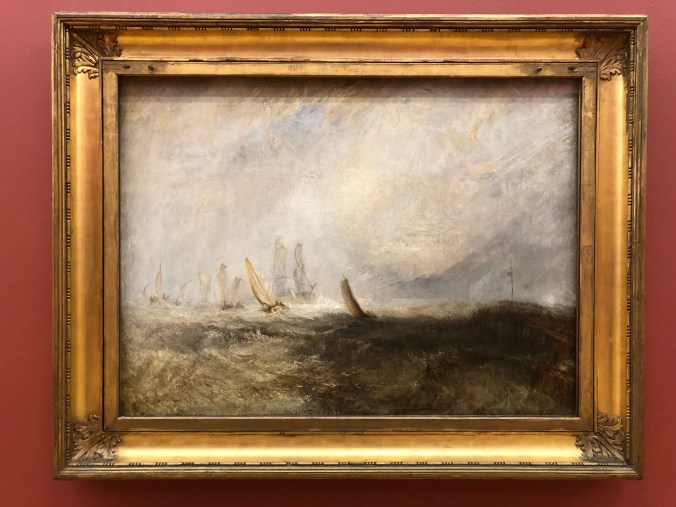
I was relatively controlled and focused on just 8-10 rooms including those housing the Turners.  I do love his portrayal of outdoor light, especially in his later, almost abstract work.  I particularly enjoy his seascapes which either capture the energy of windswept skies and seas, or the calm of his famous sunsets.

Turner's 'Fishing Boats Bringing A Disabled Ship Into Port Ruysdael' (1844)

Turner’s ‘Fishing Boats Bringing A Disabled Ship Into Port Ruysdael’ (1844)

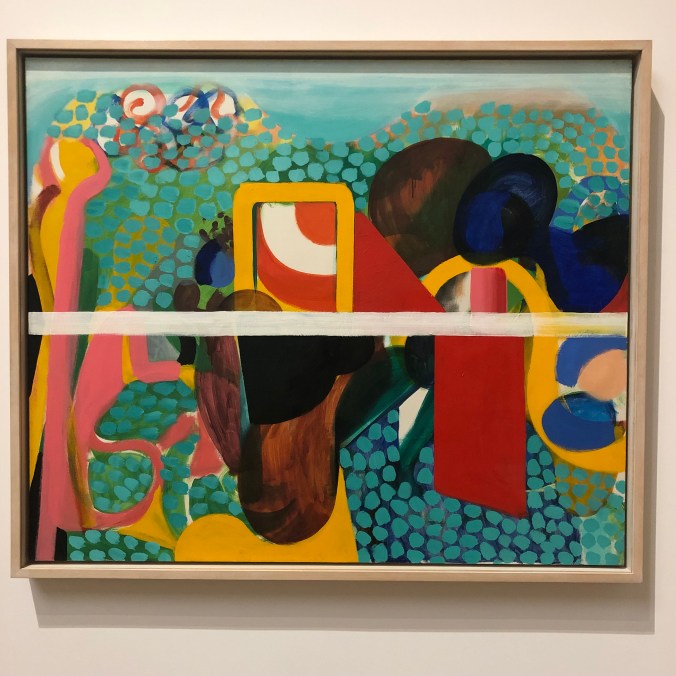
On this visit I also enjoyed some of the British abstract art from the 1950s including Howard Hodgkin, the paintings of the St Ives crowd and the Bloomsbury Group, and the Henry Moore and Barbara Hepworth sculptures.  There was also a rather odd but interesting new installation of old machines – posing as art – in the main hall.  This was called Asset Strippers and was created by Mike Nelson as an ode to the last days of the industrial revolution in Britain.  Given the UK economy focus on services, it did provide a whiff of nostalgia perhaps.

Howard Hodgkin's 'Dinner At West Hill' (1966)

Howard Hodgkin’s ‘Dinner At West Hill’ (1966)

Moore and Hepworth

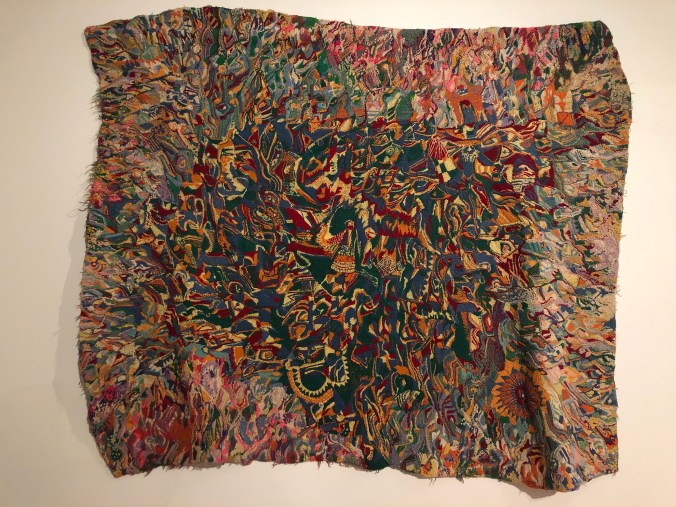
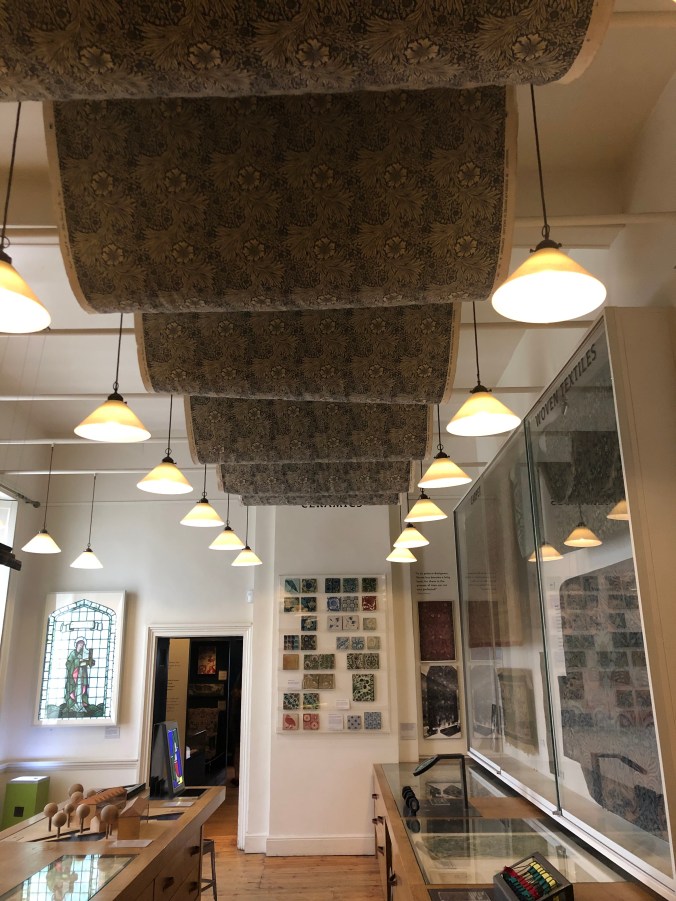
Later the same day, I revisited the William Morris Gallery in Walthamstow that I went to earlier this month in the midst of MS’s early recovery from his accident.  Then, I couldn’t concentrate much on what I was seeing.  This time I spent longer in the temporary exhibition of Madge Gill’s work and the permanent history of William Morris and the Arts and Crafts movement he founded with a few of his early friends and business partners.

Embroidery By Madge Gill

Embroidery By Madge Gill (Victorian/Edwardian Artist From Walthamstow)

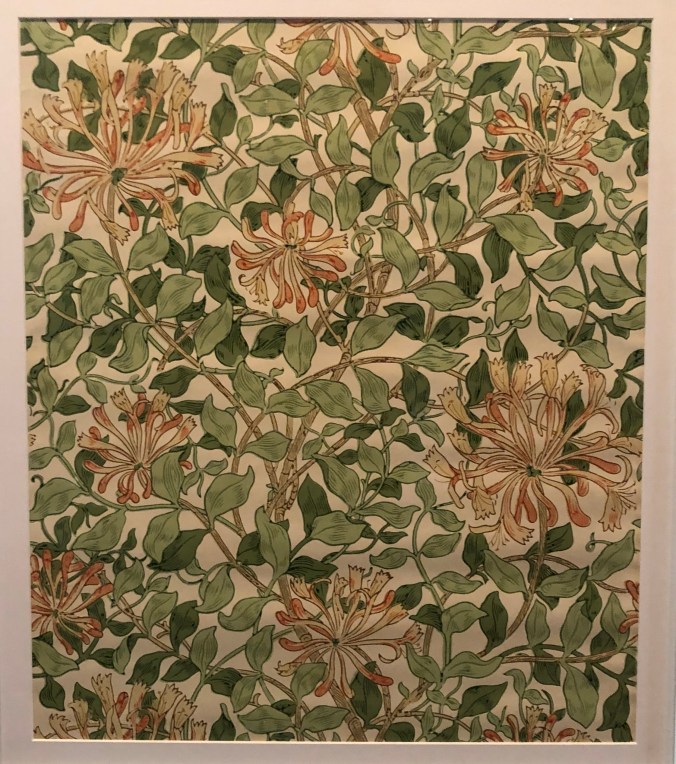
The portrayal of William Morris, his life, his work and his influences and influence is well structured and compelling.  He was an artist, designer, colourist (fascinated by natural dyes), writer, printer of books, retailer, environmentalist, and, from the age of 50 a raging socialist activist.  He fitted so much into his life and his concern for social issues and the environment, particularly after he visited Iceland, was remarkable.

Honeysuckle Print Wallpaper - Typical William Morris

Honeysuckle Print Wallpaper – Typical William Morris

I ended up liking him and want to find out more about him (and his close colleague John Ruskin).  He seems to have been a man ahead of his time on social and environmental issues and but also, in his hankering for past styles and craftsmanship, a man out of time in the century of industrial revolution.  It is great that the Gallery, like Tate Modern and the Temple of Mithras, is free to visitors – that is in line with Morris’s beliefs: “I do not want art for a few any more than education for a few, or freedom for a few.

William Morris Gallery

William Morris Gallery

Following so much cultural input, LSW, MS and I headed off for a local pizza at Sodo Pizza which was sufficiently wheel chair friendly and excellent.  I’m enjoying my stay in Walthamstow!

Distractions Amid The Wreckage

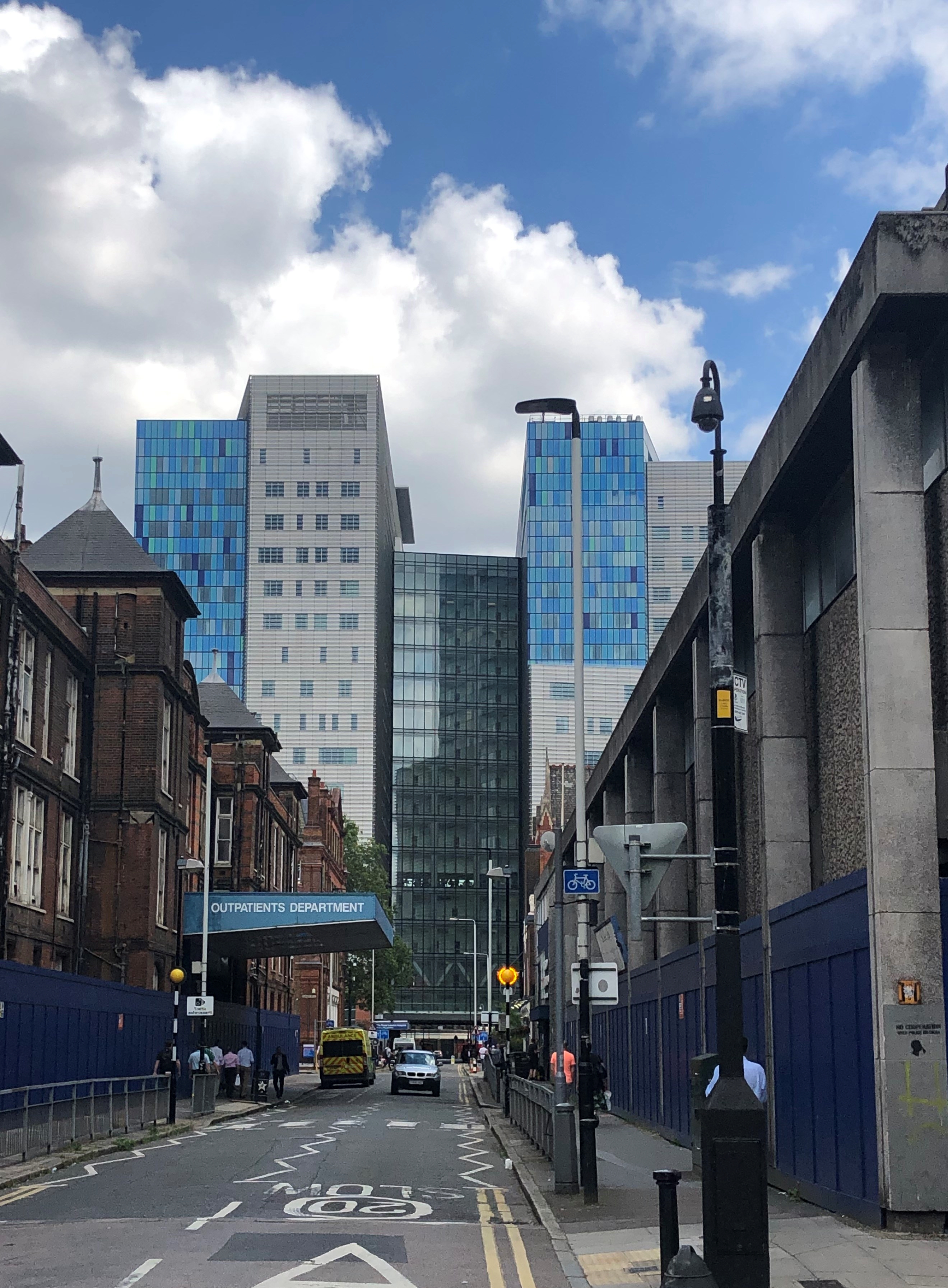
It’s been nearly two weeks since Middle Son’s (MS’s) accident on a pedestrian crossing.  LSW and I are popping up and down to London to see MS while he is in hospital waiting for, and then recovering from, the operations to repair him.  We have the flexibility to be able to supplement and fit in around visits from his others.  Outside of visiting hours we are able to visit London-based exhibitions and in between trips to London, we tend the everyday of house and garden.

Royal London Hospital

Royal London Hospital

The garden is certainly looking full and colourful.  After an unusually slow start, the vegetable patch is starting to come to life.  The slugs, deer and pigeons are enjoying a lot of the potential vegetable and fruit produce.  However, I hope to pick the blackcurrants that survived the pigeon onslaught next week and chard, spinach and beetroot are now ready for the first harvests.

Marbled White and Ringlet Butterflies and A Crab Spider

Marbled White and Ringlet Butterflies And A Crab Spider

The meadow is also looking healthy and, in this last week’s sunshine and warmth, it has been full of butterflies and other insects.  Youngest Son (YS) and his partner have been staying with us and have been able to enjoy the garden before swapping the rural peace for their new life in London.  It has been great to have had their cheery demeanour around the place.

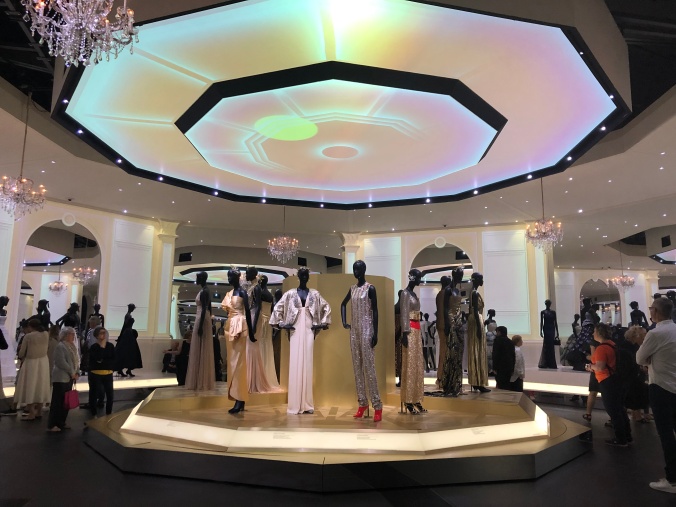
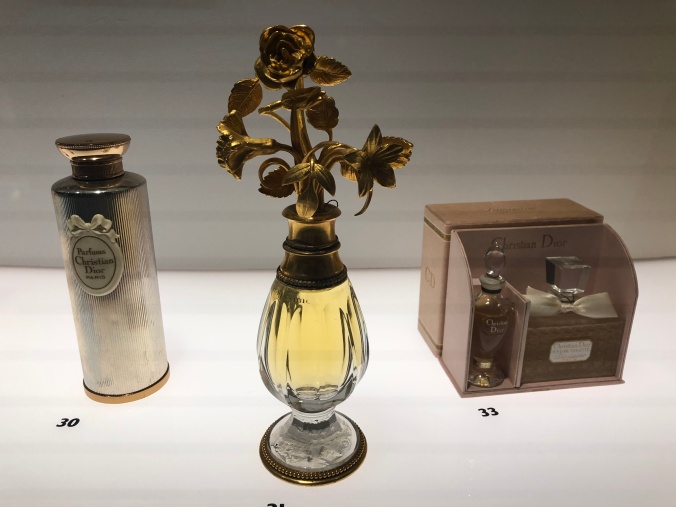
The London exhibition LSW and I went to see in a few spare hours was the Dior: Designer of Dreams exhibition at the Victoria & Albert Museum.  The ostentation on show was perhaps the least appropriate thing to appreciate while our minds were wrestling with the gritty practicalities of MS’s circumstances.  However, it is a very stylish and well-presented show covering Dior’s clothes, perfumes, partnerships with makers of accessories and seamstresses.

Ulysse Coat By Dior (1952)

Ulysse Coat By Dior (1952)

The outfits on show demonstrate Christian Dior’s career and then the contributions of the lead designers who followed him in driving forward the Dior brand.  The clothes are consistently beautiful or dramatic or both and the rooms showing his ball gown and garden-influenced designs were particularly impressive.

Dior Ball Gowns 1950 To Today

Dior Ball Gowns 1950 To Today

Dior Perfume Bottles And Travel Set From The 1950s

Dior Perfume Bottles And Travel Set From The 1950s

At the end of the exhibition was a wall with a quote from Christian Dior: “In the world today, haute couture is one of the last repositories of the marvellous”.  The show managed to underline that.

Exotic Dior Dresses Influenced By His Travels in Japan and Egypt

I also managed to get to see a free gig by D’Voxx at Rough Trade East.  I knew nothing about this electronic duo before turning up but it was another temporary but welcome distraction from reality.  The music they played was interesting and got me nodding away to the beats, but what made the gig unusual was that both performers were using modular synthesisers that looked ancient and that seemed to require a lot of wire waving and plug swapping alongside the normal knob-twiddling.  It was quite a sight and a fun experience.

IMG_3804

LSW and I are heading back to London tomorrow.  Maybe we will find a couple more diverse distractions like Dior and D’Voxx to divert us before MS’s final operations and discharge.  Fingers crossed for him.

TV Mini-Series And Music In The Rain

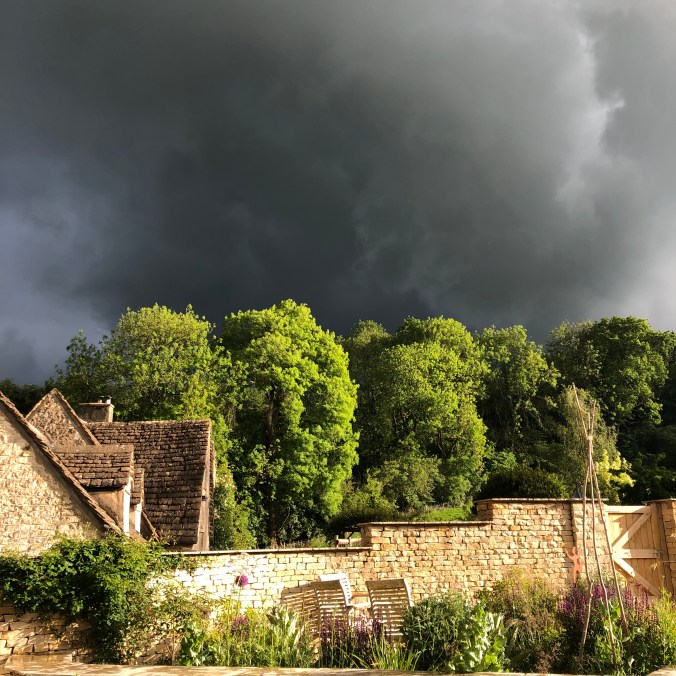
View From The Garden - Sun And Impending Hailstorm

View From The Garden – Sun And Impending Hailstorm

June has been a very wet month so far but I suppose the garden and allotment needed the rain after such a dry Spring.  Few vegetables are growing quickly yet but the garden flowers are thriving.  Encouragingly, the bees flitting among them, between the bouts of rain, seem more numerous than last year.

Partly due to the weather, Long-Suffering Wife and I have been watching more box-set TV recently.  Much of what we have watched has been excellent and I’m pleased ‘Killing Eve’ and ‘The Handmaid’s Tale’ have started up again.  Of recent TV treats, I particularly recommend:

  • The Virtues’ (Channel 4) which has an astonishing performance by Steven Graham and a climax that had me holding my breath tensely for ages and mentally urging his character to do the right thing
  • The Looming Tower’ (BBC) starring the brilliant Jeff Daniels, which is showing how infighting between the FBI and the CIA contributed to the terrorist success of 9/11
  • Chernobyl’ (Sky Atlantic) which reproduced compellingly and with amazing special effects and crowd scenes, the (western understanding of the) nuclear disaster there.

We were able to see the last of these thanks to Youngest Son (YS) having access, in ways I’m not sure I want to know about, to channels and films that are not available to us through our normal facilities.  This has been just one of the upsides of having him around for a few weeks since he returned from Australia.  YS’s cheery demeanour has certainly brightened our days recently as the rain has set in.  However, he has now disappeared to undertake a video project in the US and left us with the rain continuing to pour down.

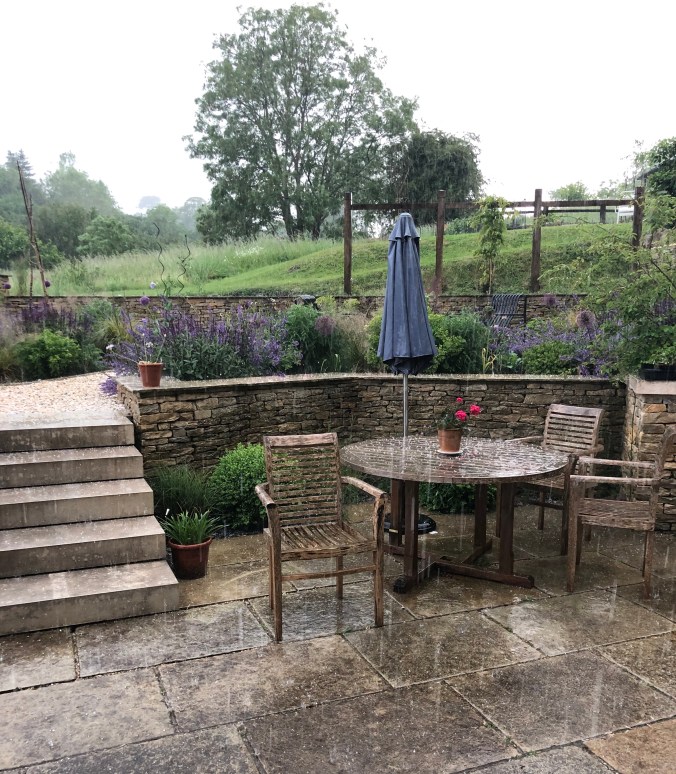
The Garden In A Hailstorm

The Garden In A Hailstorm

Another very good mini-series, still currently ongoing, is Years and Years.  This follows a fictitious family through a vision of the next 15 years of global and UK politics and social development.  It is not a cheery watch since it picks up some of the most modern-day contentious issues and shows how they may unfold in the near future with pretty depressing effects.  One of the issues, of course, is the climate emergency and the story postulates a future where 80 days of heavy rain with flooding is a norm.  I’m fed up with the rain after a week; I can barely imagine a future where it rains for months!

I hope that the future is brighter – and not just weather wise – than Years and Years predicts.  However, I confess that the management of immigration, the climate emergency, the future of democracy on both sides of the Atlantic and the apparent rise of shallow populism are growing concerns for me.  It is fortunate, then, that YS keeps LSW’s and my rants at the radio news over breakfast and lunch in check (to a degree).  They may get ridiculous while he is away.

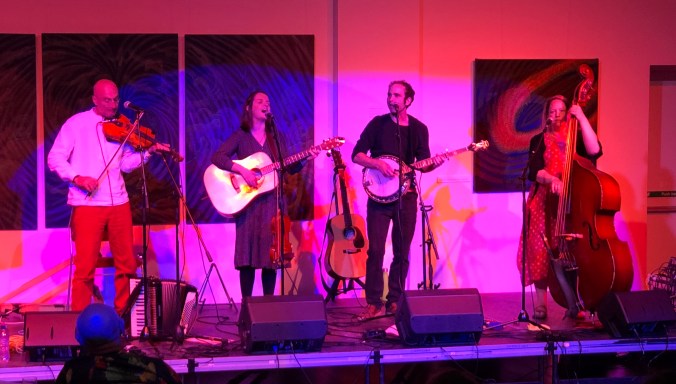
To help distract ourselves from precipitation and political current affairs, LSW and I have been to a couple of very good gigs over the last few days.  The first was very local at the refurbished Tetbury Goods Shed and featured a local band called Faeland who I didn’t know until a week ago but who are lovely.  They follow the folk music idiom but with bright, modern songs and an engaging presence. LSW loved them too – and very much enjoyed the provision of comfortable seating and a perfect view at the venue.

Faeland At The Tetbury Goods Shed

Faeland At The Tetbury Goods Shed

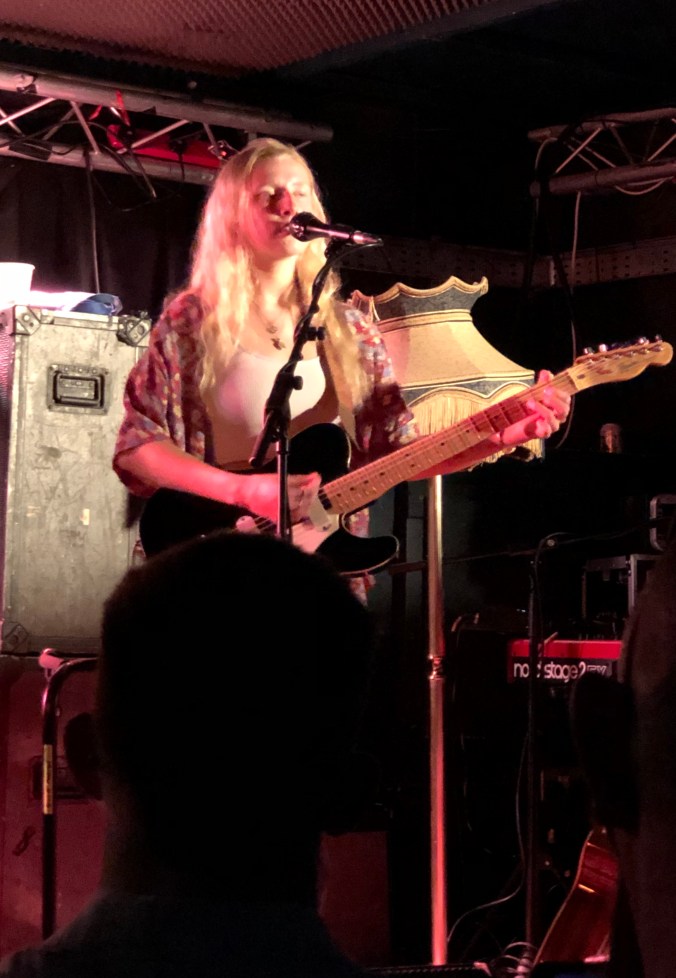
She was less enamoured by the shoulder to shoulder standing room only at The Exchange in Bristol.  Here we saw a singer-songwriter I have been following and enjoying hugely on Spotify and CD for a couple of years – Billie Marten.  I love her songs and, although she could have engaged a tight packed, eager and intimate audience a little more, I enjoyed the gig very much. LSW enjoyed it too but I was nervous about her comfort and we left just before the end.  That was fine since Billie Marten had already played for an hour and I may anyway get the chance to see her again in London.

Billie Marten At The Exchange, Bristol

Billie Marten At The Exchange, Bristol

As I complete this post, I see that the sun has come out.  I shall go out for a walk humming tunes from Faeland and Billie Marten and think cheery thoughts……

From Writing to Artificial Intelligence

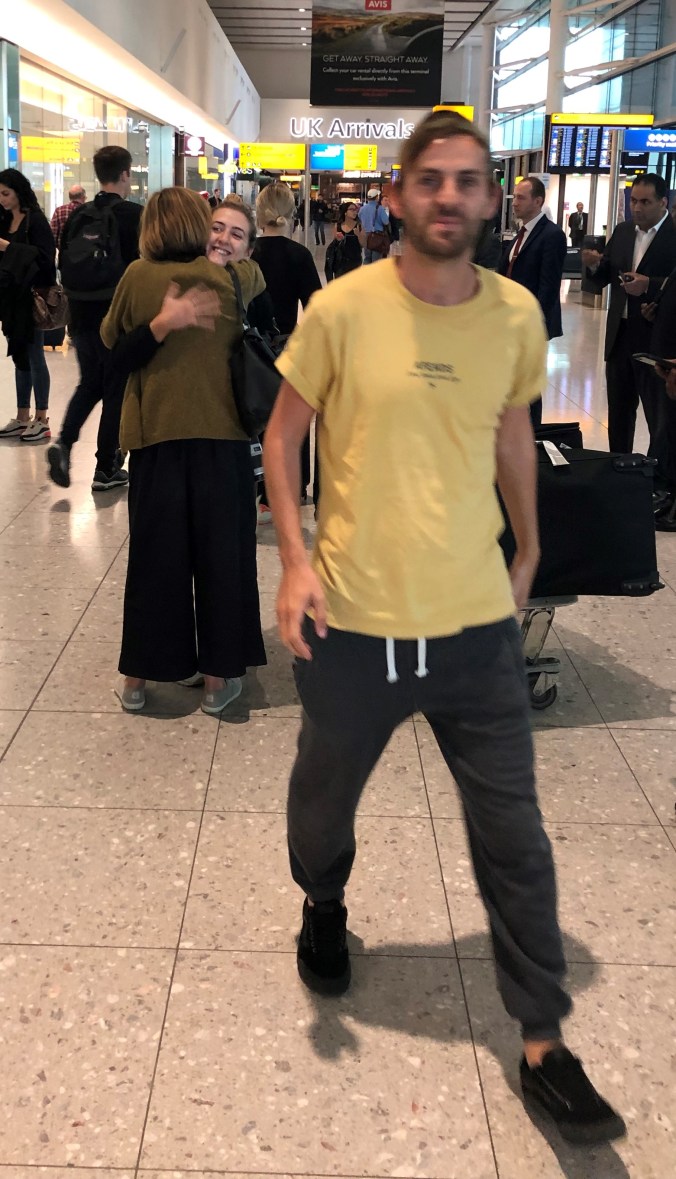
A relatively quiet week or so has been punctuated by another trip to London and the return from Australia of Youngest Son (YS).  YS and his Northern Irish girlfriend have been working (and playing) successfully in Australia for almost three years.  It’s great to have YS back in closer proximity after so long but I’m sorry we no longer have such a good excuse to visit Australia!

YS At Heathrow.  Big Hug Imminent!

YS At Heathrow. Big Hug Imminent!

It will be interesting to see how things work out for YS and his girlfriend in London during such a precarious time for the United Kingdom.  Fortunately, they very excited by the prospect and are far more optimistic about life in general than I.  They made a great life in Australia from a standing start and I’m sure they will employ their energy and contacts to do the same in London.

I continue to make the most of my opportunities to visit the excitement of London with overnight stays in my old flat.  I based my trip up to London this time around another reunion of old work colleagues – this time from a bank I worked at 15 years ago.  Once that get together was in the diary I could fit in other things around it.  I saw a film (High Life) with Eldest Son (ES) (which was more interesting than truly enjoyable) and, as has become my norm, went to The Lantern Society Folk Club and a couple of exhibitions.

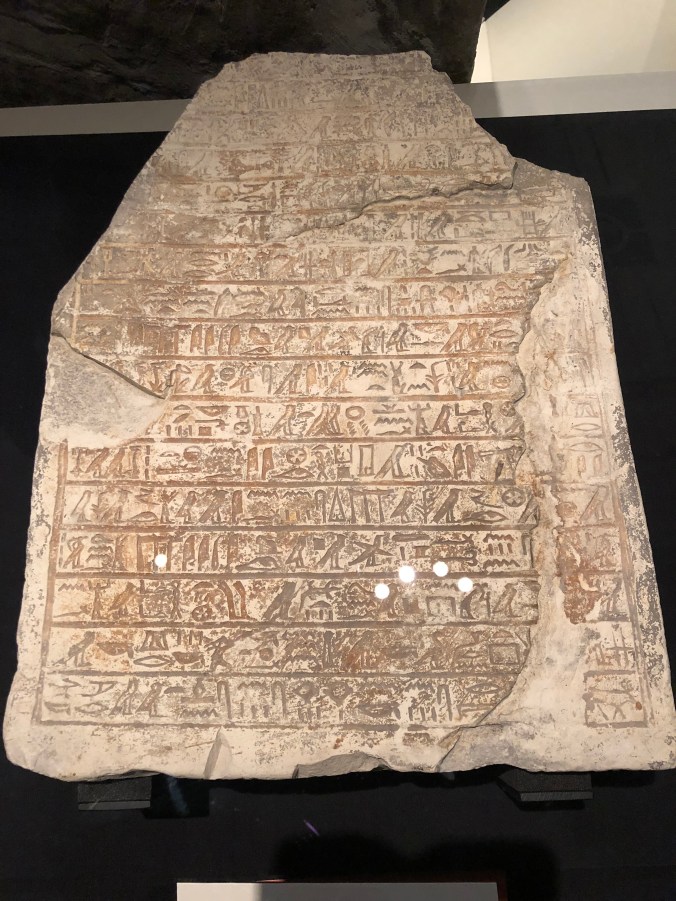
The first of these exhibitions was a history of Writing at the British Library.  This shows how different types of writing emerged amongst early human communities roughly simultaneously in a several different places across the globe.  This accounts for the huge variation in language types and structures and also the variety of writing styles and media through modern history and today.

A Limestone Stela With Classical Heiroglyphs

A Limestone Stela With Classical Hieroglyphs (The Oldest Object Held By The British Library)

The exhibition then focuses on the development of our alphabet from images (e.g. an ox head shape for the letter ‘a’) used in Egypt.  These were refined progressively through simplification and transformation by the Phoenicians, the Greeks then the Italians and, especially, the Romans (who got us writing from left to right).  Further evolution of our western writing styles, fonts and media to develop readability, speed of writing and then mass production are explained clearly and interestingly with lots of tangible examples.  I became thoroughly absorbed in the exhibition.

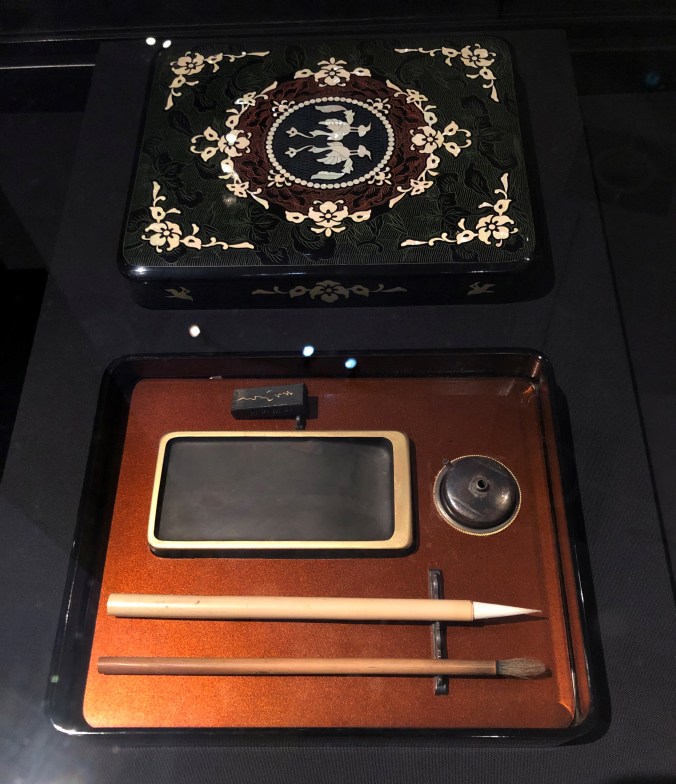
img_3582.jpg

A Japanese ‘Four Treasures Of The Study’ – Ink (Made From Grinding An Ink Stone With Drops Of Water) And Brushes In A Beautiful Box

The British Library has such beautiful texts in its possession to illustrate every development in the art and science of writing.  In addition to the examples of writing, there were sections on writing materials spanning examples of use of clay, wax, metal, stone, skin, palm leaves and, of course, the early efforts to produce paper (by the Chinese).  Printing innovations, writing implements (including a comparison between mass produced BIC biros and Montblanc fountain pens) and much more is covered.  It is a multi-faceted and fascinating exhibition.

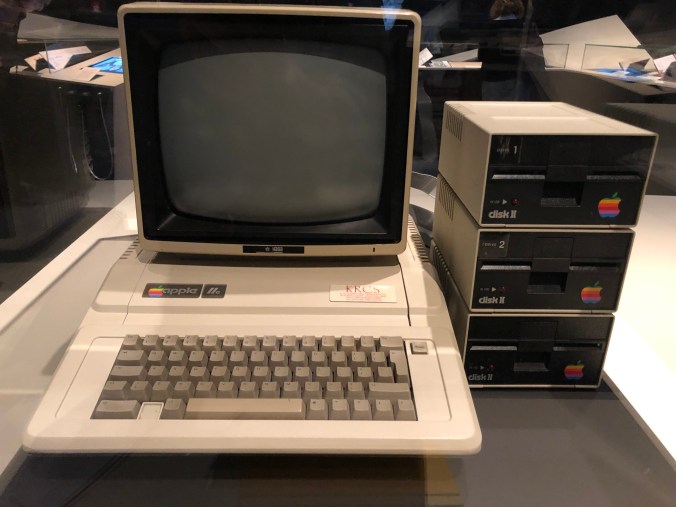
A 1977 Vintage Macintosh Apple II Computer

A 1977 Vintage Macintosh Apple II Computer (Part Of The Section Illustrating Progression of Typewriters to Computers And Word Processing)

Less successful is the exhibition of Artificial Intelligence (AI); More Than Human at the Barbican.  I am very interested in this topic and was looking forward to the exhibition.  It is large and I spent three hours viewing it.  However, I left vaguely unsatisfied; I’m not sure I have worked out all the reasons why yet.

I went on the first day of the exhibition and some of the interactive exhibits needed tweaking to be successful.  But a more fundamental weakness is the amount of space devoted to cultural roots relating to the human desire to animate the inanimate and to create non-human life (Frankenstein for example).  This meant that, for me, there was insufficient focus on current and future use of AI.

The history of AI is laid out in detail and was a little overwhelming.  I invested a lot of time in understanding the key developmental moments, the surges in optimism surrounding the AI technology (the ‘Golden Ages’) and the periodic ‘winters’ when that optimism seemed misplaced.  There is also good information that I recall from when I used to work in Information Technology on the differences between Expert Systems and Learning Systems, and between simulation, understanding and intelligence.

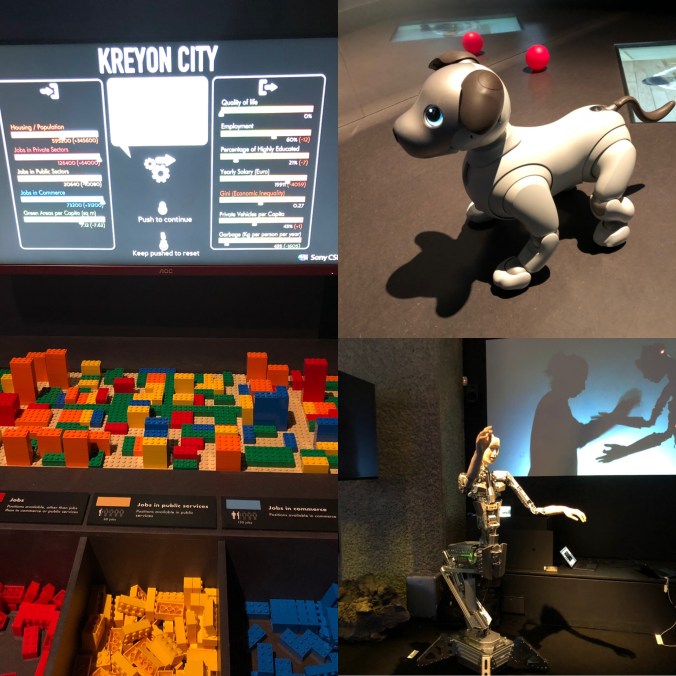
Exhibits In The AI: More Than Human Exhibition

Exhibits In The AI: More Than Human Exhibition (An Interactive Model For City Planning, Aibo The Robot Dog And A Robot Able To Mimic Human Movement)

That laid a good foundation for the latter sections of the exhibition which focus on current and, to a degree, future practical use of AI.  The examples on show, though, often seemed a little perfunctory and rather unconnected.  Some demonstrated what I would consider to be advanced computer power not, specifically, AI.

However, there were some good examples too.  These include those showing how AI is accelerating and improving areas as diverse as medical understanding and treatments, pedestrian and driver safety, city planning, customer problem solving, education and even dating.  There are also sections (too brief in my view) on the ethics of AI.  For instance, these include the dangers of AI in war, the risk of bias being built into the algorithms, and of AI being used to undermine our privacy, freedom and perception of the truth.  The exhibit showing AI helping lip-synching of Barack Obama was a rather chilling demonstration of the latter.

Since I’m a Barbican Member, I can go again for free and will plan to take ES who is also interested in the potential (and dangers) of AI.  Maybe with his insights alongside me, I will enjoy the exhibition more.

Back home, the focus is on catching up with YS (while he stays with us to gird himself for his move to London) and on gardening.  Long-Suffering Wife (LSW) has got large parts of the garden looking very full and attractive.

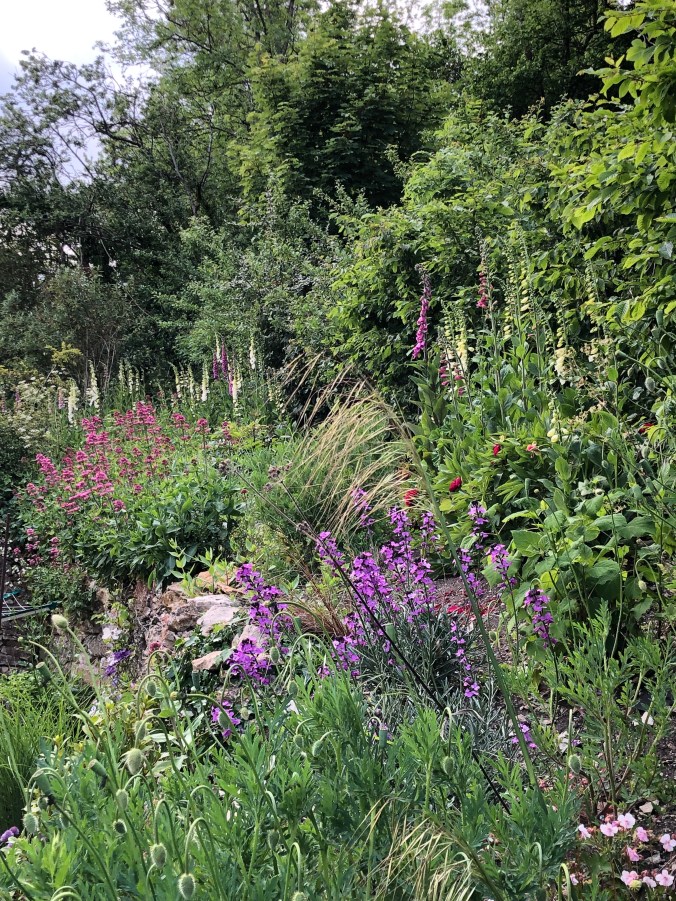
Foxgloves, Erigeron, Geraniums And Flowering Weeds At The Back Of Our House

Foxgloves, Erysimum, Geraniums And Other Flowers At The Back Of Our House

My vegetable seedlings are planted and just await proper rain and, no doubt, a slug onslaught.  The meadow is looking lush and healthy. Just a few more degrees of heat and summer will be here…..

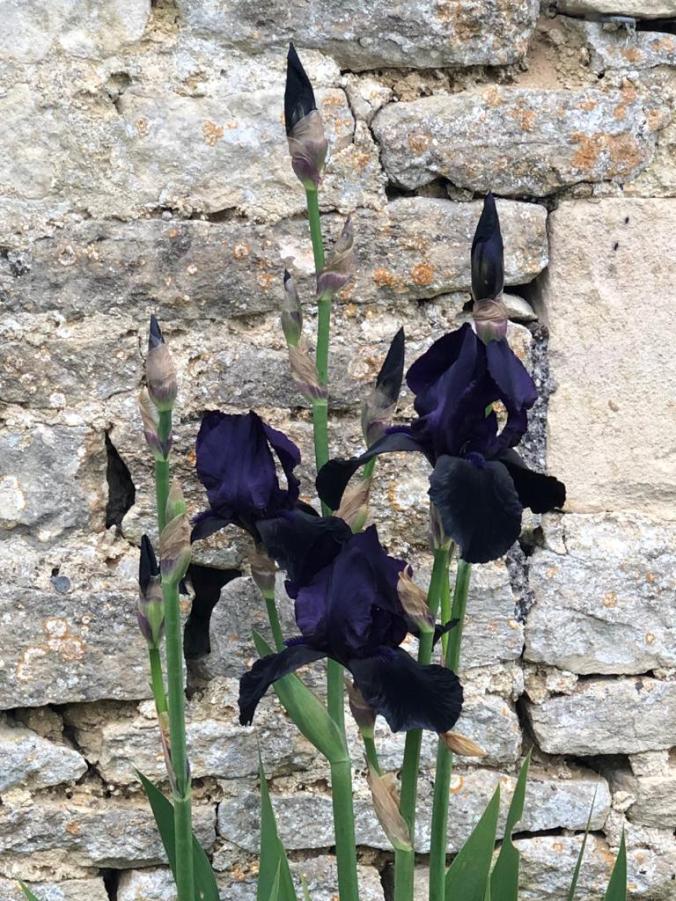
Our Favourite Irises In Our Garden

Our Favourite Irises In Our Garden


Two London Visits

I continue to be able to ameliorate my yearning for the buzz of living in London with one or two visits each month.  These are often based around meetings with old friends or gigs of bands that I like but can’t see out in the country.  That was the case this month and, once again, my ability to camp in my old flat on the sofa bed has proved very convenient.

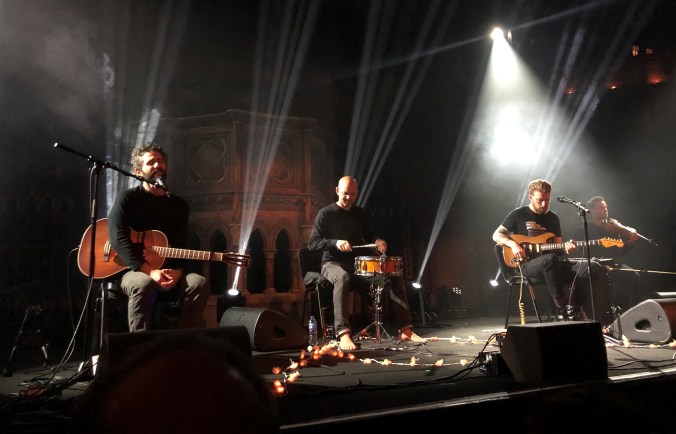
During the last week I saw a couple of gigs.  The first was The Antlers at Union Chapel with Middle Son (MS).  This was a celebration of the ten year anniversary one of my favourite albums: Hospice.  It’s a very sad album about domestic, emotional abuse (apparently) and (more clearly) terminal illness.  That may not sound appetising but it’s wonderfully powerful and the stripped back acoustic version The Antlers performed was moving and beautiful.  It drew on the hushed and respectful atmosphere the Union Chapel often generates and I love going there despite the unforgivingly hard pew seating.

img_3411.jpg

The Antlers At Union Chapel

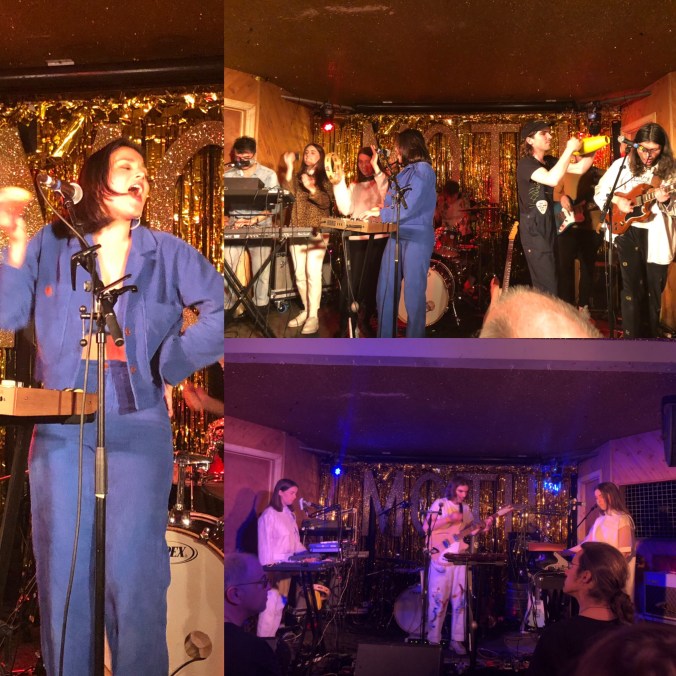
The next day, following a planned lunch with one old friend and then an impromptu meeting and beer with another outside Rough Trade East, I saw Malena Zavala at The Moth Club in Hackney.  This is a compact venue that is an ex-military veterans club with sparkling ceilings and amusing customer signs I have mentioned in previous blog posts.  The support band (Wovoka Gentle) and Malena were both good.  Malena mixed the tuneful, dreamy songs I knew with warm Latin rockers that indicated her Argentinian heritage.  I, and the rest of her audience, had a great, foot-tapping evening.

Malena Zavala and Support (Wovoka Gentile) at The Moth Club

Malena Zavala and Support (Wovoka Gentile) at The Moth Club

Earlier in April I had visited London for another gathering of old friends.  On the back of that I visited two places I had not been to before: The British Library and The Wallace Collection in Hertford House.

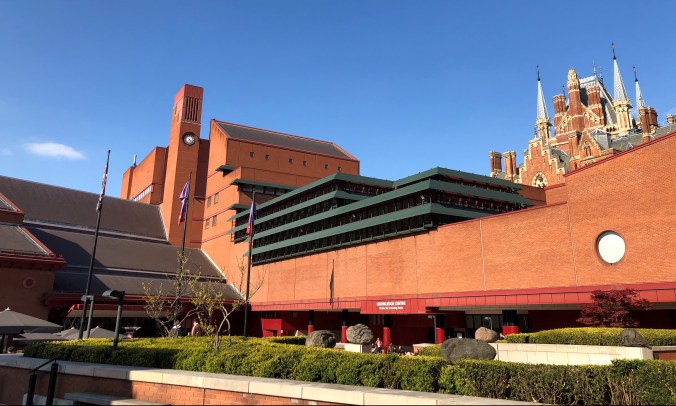
The British Library is vast and I limited myself to just the art exhibitions and the Library Treasury Gallery.  The latter provided an insight into the types of document that is held in the enormous reserves of the library.  There were beautiful illuminated books, religious texts representing all the main religions, historical documents (such as the book of Welsh Laws), important scientific papers and literature (such as the 14th century Gawain and The Green Knight) and sections covering Shakespeare and The Beatles.  I was drawn particularly to the old maps and I will look out for future special exhibitions that showcase the library’s holding of these.

The British Library

The British Library

One especially interesting section was on ‘Friendship Before Social Networks’.  This displayed many Friendship and Student Albums dating from the mid-16th century to Victorian times that individuals used to record the friends they met and the things they saw and did.  They were a little like artists’ sketch-books and many were really intricately completed and beautiful.  Their aim was to record, or even show off, the social networks and activities of their owners in much the way Facebook and Instagram often do today; fascinating!

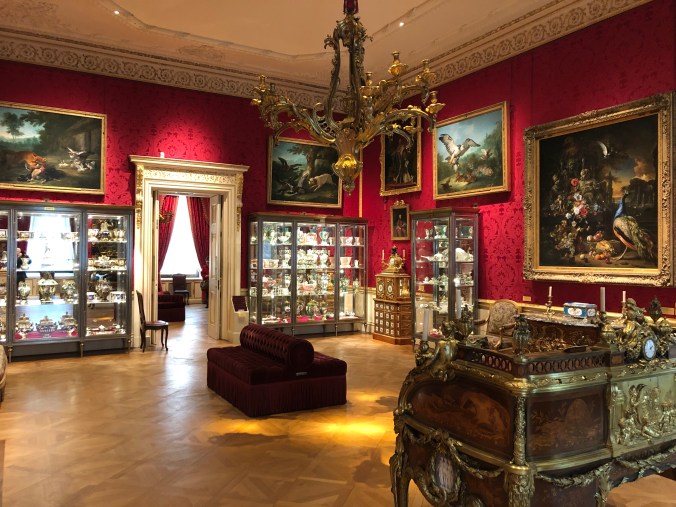
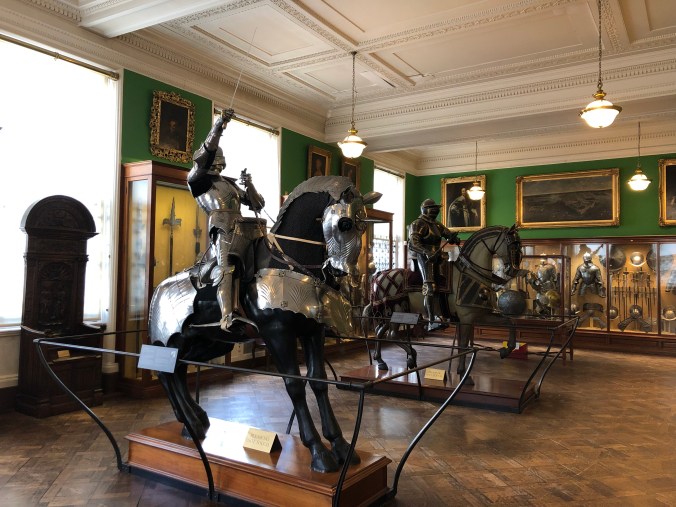
Long-Suffering Wife (LSW) tells me that I saw at least part of the Wallace Collection at Somerset House many years ago.  I barely recall that and, in any case, the collection is now in Hertford House in Manchester Square.  Like the British Library, the permanent exhibition of art, armour and weapons collected in the 18th and 19th centuries (and bequeathed to the British nation by Lady Wallace in 1897) is free.  I love it that such attractions are open to all without mandatory charge – not least because I could visit on consecutive days rather than struggle to take it all in in one go.

The Back State Room, Hertford House (Wallace Collection)

The Back State Room, Hertford House (Wallace Collection)

The armoury is particularly impressive although I rather hankered for the more selective and minimalist displays LSW and I had seen in Kolumba in Cologne and in the Museum of Islamic Art in Doha.  The Wallace Collection of armour and weapons is certainly comprehensive but also a bit overwhelming.

Part Of The Wallace Collection Armoury

Part Of The Wallace Collection Armoury

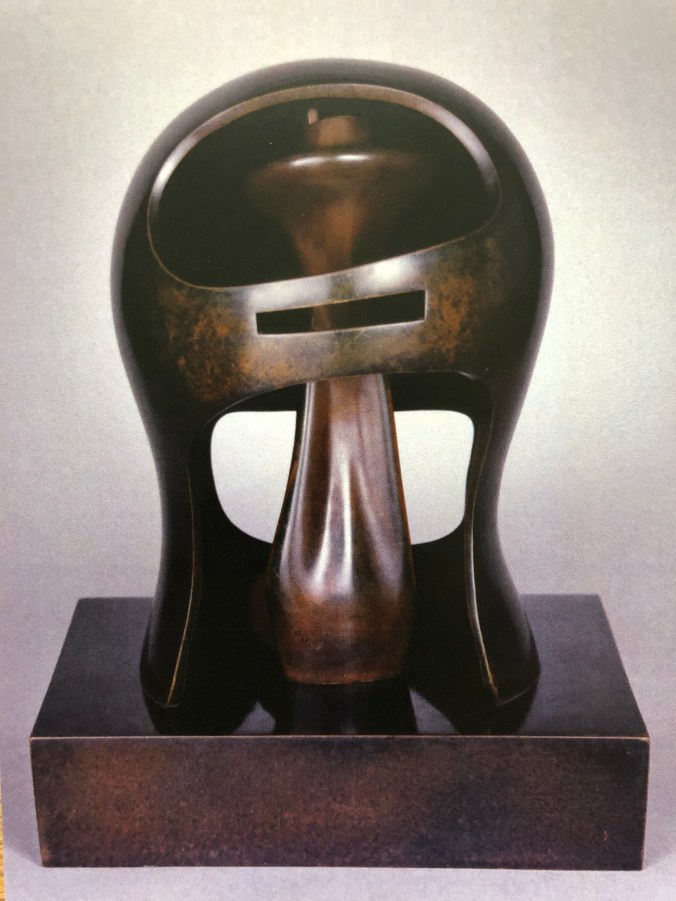
Not so, apparently, for Henry Moore the famous British sculptor.  He loved the armoury and visited it often during his time in London.  It inspired his development of the head and helmet as one of his iconic sculptural forms.  This was the subject of what I thought was a tremendous exhibition of his ‘Helmet Heads’ in the basement of Hertford House.  This wasn’t free but it was excellent in terms of the items on display and the information about how the helmets concept influenced his ideas throughout much of his life.  It’s on until 23 June 2019 and I recommend it.

One Of Henry Moore's Helmet Heads

One Of Henry Moore’s ‘Helmet Heads’

I’m back home now and the focus is on the last few games of Forest Green Rover’s unexpectedly successful and entertaining football season and on population of the vegetable patch and allotment.  Easter saw marvellous weather and it would be nice to see a return of that so gardening and football can be followed by wine in sun in LSW’s new garden.

Secret Santa Scores A Hit

Last Christmas, Long-Suffering Wife (LSW), our three sons and I, decided to replace the tradition of us each giving everyone else a present, with a Secret Santa arrangement.  In this, each person draws a lot to determine which single person they should buy a Secret Santa present for up to a (relatively small) price limit.  This allows more focus and so reduces considerably the stress of (useful) present buying and the chance of getting something unwanted.

The reason I recall this now is that last week I was able to act upon my Secret Santa present: a ticket to a gig by Yo La Tengo at Hackney Arts Centre.  Actually, the giver, Eldest Son (ES), was no secret and, indeed, I went with him.  But Secret Santa was, for me as a receiver, a great hit.

Yo La Tengo is a band I have loved since I started buying albums by them in 2000.  In fact, they have been together as a three piece since the mid 1980’s and, as ES said after the gig, they have become very proficient at what they do.  Their music varies from gentle muses to Velvet Underground-like wig outs.  Unfortunately they didn’t rock ES’s boat but I loved almost all of the two-and-a-half hour performance.  I’m still humming their tunes to myself every day.

The venue is a gutted old cinema with bare walls and the seats taken out (contrary to the picture of comfortable seating on their website!).  We had to sit on nicely preserved, but very hard, wooden steps.  My back and bum could only take hour of that but then I was able to stand at the front and the two halves of the gig from the two vantage points was nice variety.

Yo La Tengo

Yo La Tengo At Hackney Arts Centre

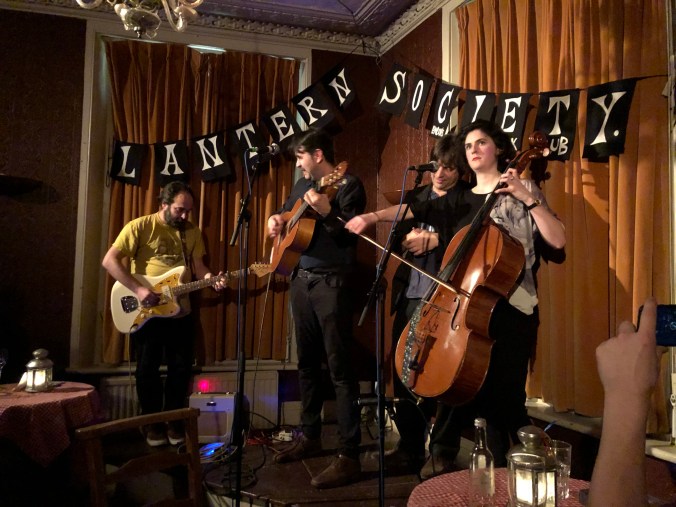
I made two separate trips to London last week.  During these I met with a fellow retiree ex-work colleague for lunch, caught up with Middle Son (MS) for breakfast and met up with ES and his girlfriend.  I also went once again to my favourite folk club – The Lantern Society – which was once again consistently good across 10 brief but high quality and varied acts.

Live At The Lantern Society

Live At The Lantern Society

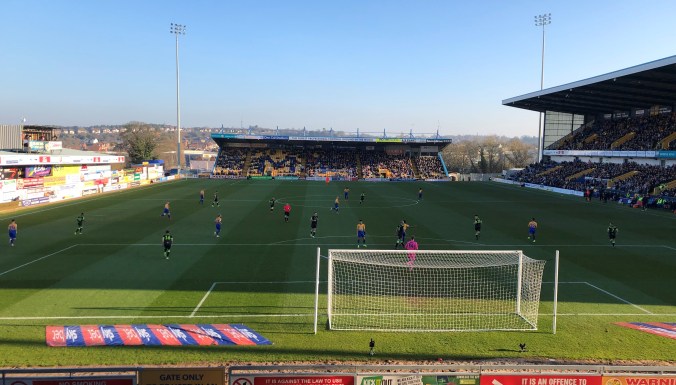
I then travelled up to my parents in Nottingham and jumped on from there to Mansfield to see my football team (lose entertainingly again).

Forest Green Rovers At Mansfield Town

Forest Green Rovers At Mansfield Town (With 170 Fellow Travelling Supporters)

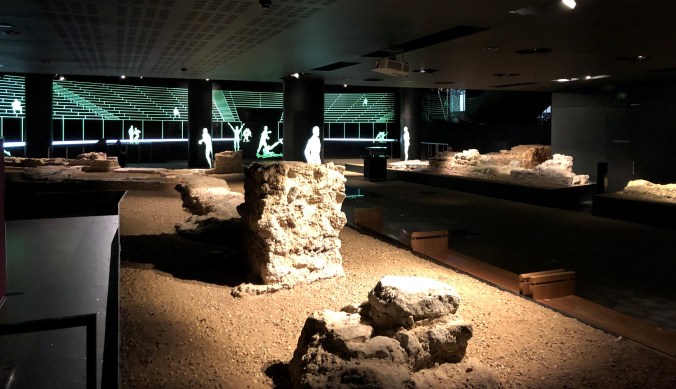
The most surprising element amid all this was a visit I made to the Guildhall Art Gallery.  Although it is only a 10 minute walk from where I lived for 20 years, I had never been before.  I went to see an exhibition of Victorian art portraying lives and perceptions of children.  However, I also walked around the rest of an impressive gallery and the very well exhibited remains of a Roman amphitheatre in the bowels of the building. London never ceases to surprise.

Guildhall Art Gallery

Guildhall Art Gallery (Pre-Raphaelite Section)

Roman Amphitheatre Under The Guildhall, London

Roman Amphitheatre Under The Guildhall, London

The main exhibition at the gallery, called Seen and Heard was interesting, informative and well presented.  It resonated well with a book I’m just finishing called A House Unlocked by Penelope Lively.  As it happens this was another Christmas present, this time from LSW’s Aunt. Lively uses her memory of artefacts and aspects of a rather grand childhood home in west Somerset to launch narratives on how various elements of social life have changed in the last 150 years or so.

The First Sermon and The Second Sermon By Millais

The First Sermon (Girl Sleeping) and The Second Sermon (Girl Not Sleeping) By Millais At The ‘Seen And Heard’ Exhibition

Lively covers childhood, gardening, hunting, immigration and marriage and much more.  The chapters covering childhood and parenting interlocked with some of what I saw at the Guildhall and it all rang true.  In particular, the section on her marriage got me nodding my head in agreement.  Here is an extract of one paragraph:

“Every marriage is a journey, a negotiation, an accommodation.  In a long marriage, both partners will mutate; the people who set out together are not the same two people after ten years, let alone thirty or more…… Our marriage was like most; it had its calm reaches, its sudden treacherous bends, its episodes of white water to be navigated with caution and a steady nerve…… We meshed entirely in tastes and inclinations, could always fire one another with new interest, and laid down over the years that rich sediment of shared references and mutual recognition familiar to all who have known long companionship. You are separate people, but there is a shadowy presence which is an entity, the fusion of you both.”

I’m expecting LSW and I to build another layer of sediment of shared memory over the next few weeks as we travel to Qatar and then tour Sydney, Tasmania and Perth in Australia.  Watch this space.

Winter Catching Up

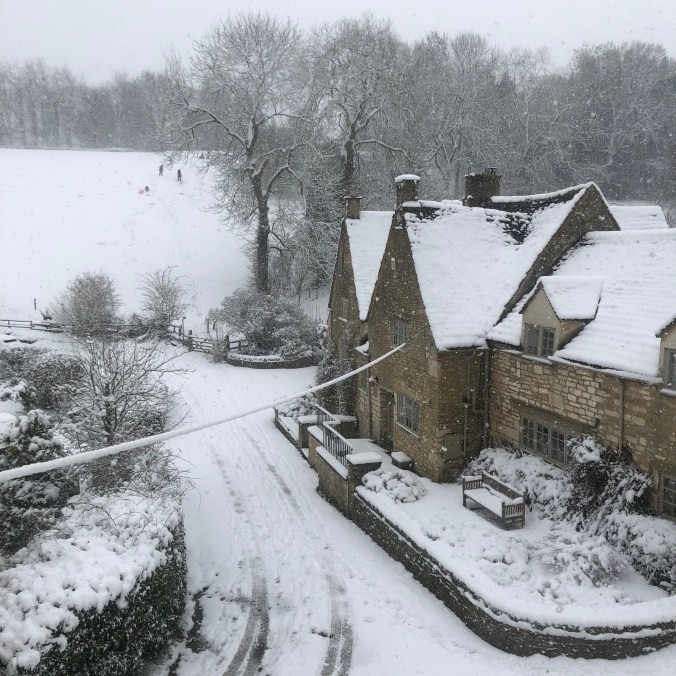
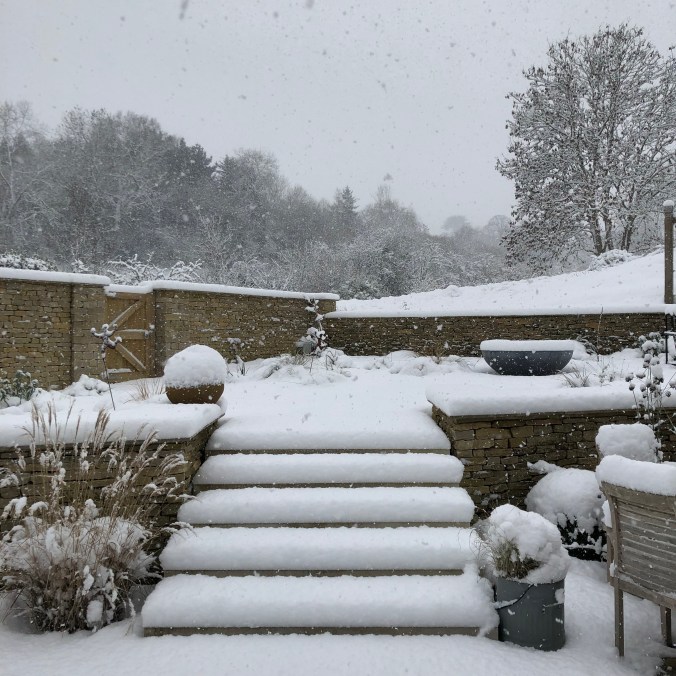
At last, a proper winter seems to have arrived.  We don’t have the extreme of the polar vortex that Canada and the northern states of the USA are currently experiencing, but we have had some frosty starts and, now, a heavy layer of snow.  School seems to be cancelled and kids are in the field opposite the house, sledging to their heart’s content.  The silent garden looks magical now it is cloaked in snow.  I know it is the increasing climate extremes that are the worry but it is comforting that we can still have real winter weather amid the trend towards global warming.

Snow And Sledging Outside Our Front Door

Snow And Sledging Outside Our Front Door

Middle Son texted to tell us London just has rain and in any case, the warmth of London’s buildings normally means that snow we see in rural areas becomes grey slush in the city centre.  However, London has other attractions and I was able to pay another visit last week.

The main reason for the visit was to meet up with some old work colleagues, as we do once or twice a year.  We worked together in 1977/8 and those times that were so formative to our early careers remain pretty vivid in our collective and shared memory.  We recalled some of those memories again.  We also caught up with more recent life developments and steered away from divisive Brexit debate sufficiently to make the get together over beers and curry very pleasant.

When I travel up to London for an event like this I have the flexibility of no time or work commitments plus the availability of a sofa bed in the flat we rent out to Eldest Son.  That enables planning of extra-curricular activity to maximise the diversity of fun during my stay.

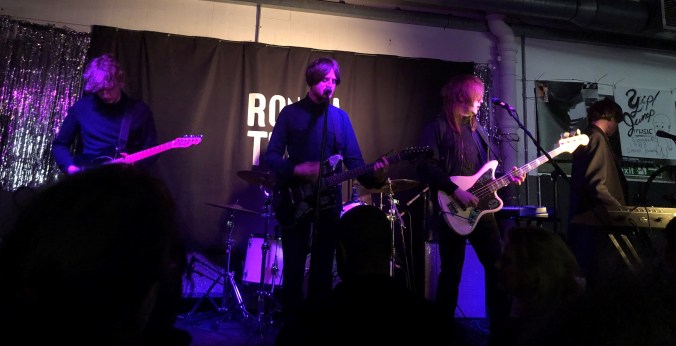
Almost always, I include a trip to Rough Trade Records so I can work my way around the listening posts there and catch up with latest music they are promoting.  This time I also attended one of their free gigs.  The band, Toy, is one I have followed since I enjoyed them at the same venue in September 2012.  I’ve seen them a couple of times since including, believe it or not, at a remarkable gig primarily for the deaf/hard of hearing in 2015.  They were worth seeing for a fourth time and I’m sure they now have even more hair.

img_1931.jpg

Toy At Rough Trade

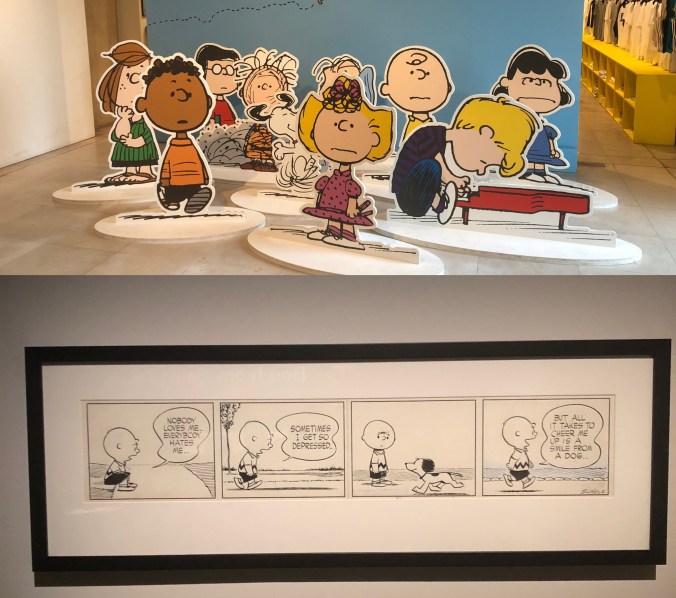
I also went to the Good Grief, Charlie Brown exhibition at Somerset House.  It was interesting to read about, and see through examples, how Charles M. Schultz developed his cartoon technique and characters.  The exhibition was also instructive on how Schultz managed, even as a white, middle class and relatively conventional American, to dabble in modern day issues such as gender identity, race, abortion, feminism and psychiatry/mental illness while growing his audience for his modest and understated Peanuts cartoon strips.  However, one would need to be a very dedicated follower to review all of the material on show and I think I grasped the main themes without concentrating on it all.

Charles M. Schultz's Characters From Peanuts And A Sample Early Cartoon

Charles M. Schultz’s Characters From Peanuts And A Sample Early Cartoon

Following a rather overly meaty breakfast (of three separate dishes of merguez sausage, black pudding and chorizo), I headed north to Stevenage for a Forest Green Rovers Football Club away game.  I watched us notch up another excellent win with my Best Man (BM) who lives nearby.  I then stayed a couple of nights with him and we spent the weekend watching more football, walking around the Royal Society for the Protection of Birds (RSPB) site where he used to work (as we had last September), and visiting St Albans.

Views At The RSPB Reserve, Sandy, Bedfordshire

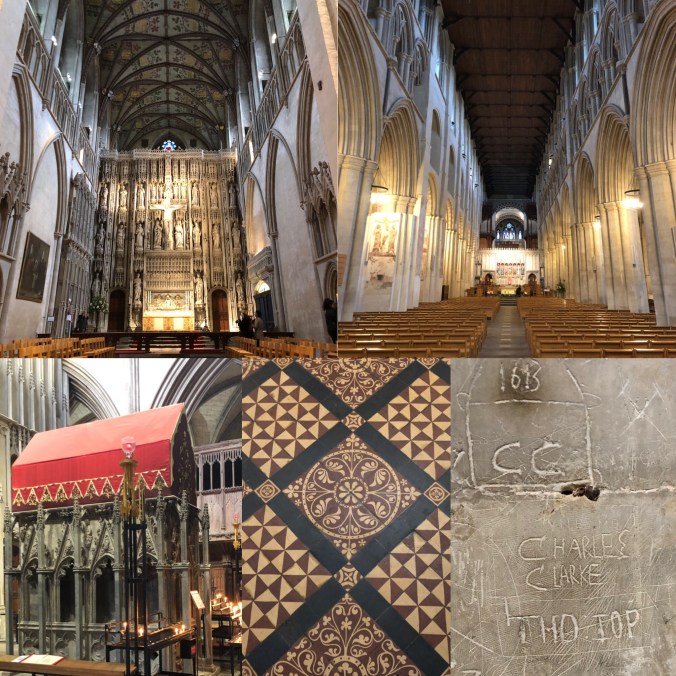
St Albans Cathedral

St Albans Cathedral: Naves, St Albans Shrine, Mosaic Floor And 17th Century Graffiti

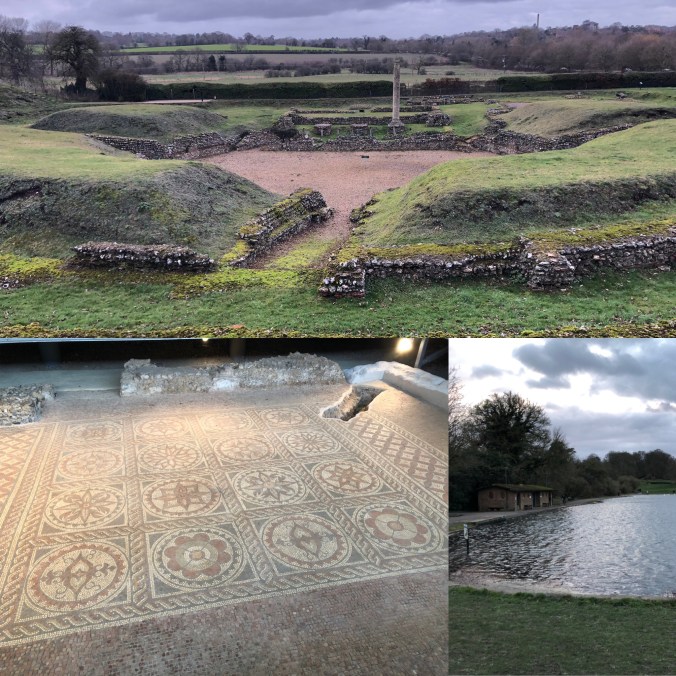
I hadn’t been to St Albans for years.  It still hold happy, though blurred, memories of my first excursion out of London to St Albans with my now Long-Suffering Wife (LSW) in her unassuming, idiosyncratic but effective Citroen Diane.  This time, BM and I visited the Roman ruins, the very old and lovely Cathedral and a very nice pub.  But we also saw the lake LSW and I held hands by over 35 years ago.
St Albans: Roman Theatre, Roman Mosaic And The Romantic Lake

St Albans: Roman Theatre, Roman Mosaic And The ‘Romantic’ Lake

I had a very relaxed and amusing time with BM. He continues to do big corporate work and travels a lot.  It was good to catch up on events in his complex and busy life but also to mentally compare his world with mine.  I’m very happy with my simpler, leisure-oriented lot.

Snowy Garden

Snowy Garden

Retirement Time

Now I am retired, and no longer have to spend 50-60 hours a week working or travelling to and from work, I can extend what used to be rushed tasks at home over longer periods.  I can also take a few more risks with events that I invest time in.  There have been some good examples of both in the last week or so.

I have spoken before in this blog about what I called ‘speed gardening’.  This was the result of the pressure I felt to get substantial tasks in the garden done in the slivers of time available at the weekends before my Sunday commute back to work in London.  I rushed around trying to get things done and, while it kept me fitter than I am now, it wasn’t altogether satisfactory enjoyment.  Now, if a job doesn’t get done as planned on one day, well, there is always tomorrow!

This week’s example was ‘doing the bonfire’.  The pile of garden detritus requiring disposal – and burning it is the most convenient if not the most environmentally friendly way – had become huge following some recent tree maintenance.  I had the time to salvage logs and ‘loglets’ pretty thoroughly but there was a large amount of brash together with a solid mass of other woody matter.  I moved the base of the bonfire pile (so any small creatures could escape) and organised the brash so Long-Suffering Wife (LSW) and I could load it easily onto the flames in batches.

We managed to clear half the waste in a couple of hours before darkness descended.  The process was very satisfying in some base animalistic way.  In my more relaxed and retired mode, I wasn’t concerned that we didn’t finish.  There is always another day.

The example of having more time to take risks with events was that, when I went up to London for a couple of days this week, primarily to see the Jusepe de Ribera exhibition before it closes at the Dulwich Picture Gallery, I also booked a couple of other events about which I knew very little.  One was successful the other rather less so but, either way, I have so much more leisure time now that success or otherwise seems less crucial.

Of course, a successful event is still to be aimed at (time and energy is not infinite, after all). Certainly the Ribera exhibition, entitled ‘Art of Violence’, was riveting and impactful.  There weren’t many large paintings but those that were on show really conveyed the pain of martyrs on the way to their martyrdom.  As impressive were the numerous, much smaller sketches and wash and ink drawings of torture and martyrdom.  These were so intricate and compelling that they drew you into close inspection despite the horror they depicted.  My visit was complemented by the chance to catch up briefly with Eldest Son’s (ES’s) previous girlfriend who works at the gallery; we remain friends.

img_1875

The Martyrdom Of St Bartolomew By Jusepe de Ribera (sorry the picture fails to capture the piercing look of the Saint)

Examples Of Ink And Wash Drawings By Ribera

Another, more unexpected success, was that ES and I went to a lecture on, and demonstration of, how Russians in the Cold War created illicit copies of western music during Stalin’s regime (and often went to jail when caught).  The fascinating twist was that, because materials were scarce, the early copies were made by creating grooves on discarded x-rays with home-made lathes.  The resulting ‘records’ therefore had x-ray pictures on them.  Although the sound quality wasn’t great, the recordings were much sought-after snatches of the forbidden jazz and rock and roll of the west and each was unique.

Stephen Coates Explaining The X-Ray Audio Project

Stephen Coates (Ex-The Real Tuesday Weld) Explaining The X-Ray Audio Project And The History Of Illicit Music Recording In Cold War Russia

Pictures and video footage of interviews with some of the protagonists in the schemes to create the lathes, to procure the x-rays (being discarded by hospitals because they were inflammable and presented a fire risk) and to cut the recordings added extra life to some well told stories about the copying process.  These stories recalled, and tied in neatly with, aspects of the film Cold War by Pawel Pawlikowski that I saw with ES recently, books I read years ago by Josef Skvorecky about underground music in Czechoslovakia, and also an excellent book I read recently called A Gentleman in Moscow by Amor Towles.

The evening culminated in Thurston Moore – a guitarist previously with Sonic Youth – recording a couple of things onto x-ray disks so they could be played back to us.  It was pretty visceral stuff – in a very different way to the Ribera exhibition – and ES and I will remember it for a long time.

The X-Ray Audio Project With A Thurston Moore Demonstration

Less successful, but entertaining nonetheless, was a gig I went to in one of my old stomping grounds in Homerton, Hackney.  Chats Palace was the venue and it seemed much the same as I could remember from when I was last there in the early 1980’s.  I saw William Doyle who I liked in his incarnation as East India Youth a few years back and who has produced some interesting ambient music recently.  He now has a new band who are preparing to release their first album together.  They were good in parts but, I felt, still finding their feet.

William Doyle In Full Flow At Chats Palace

William Doyle In Full Flow At Chats Palace

I may have much more leisure time now but, when I’m in London, I have to squeeze in plenty of activity.  Fortunately ES and Middle Son both had time for breakfast with me.  I also walked around Dulwich Park, visited Rough Trade Records (as usual), went to Southwark Cathedral for the first time, snacked in Borough Market and, in lovely weather, took in the scale of London from London Bridge.  I still love London and have the time to enjoy it.

Views From London Bridge

Views From London Bridge