Art, Gardens and a Big Anniversary

Our time in Edinburgh – the bread on either side of our Fife sandwich filling – was busy. 

We did some of the usual things with First Grandchild (FG); going to the playground, visiting the National Museum of Scotland and meeting his hopeful requests: ‘can you play with me?’. 
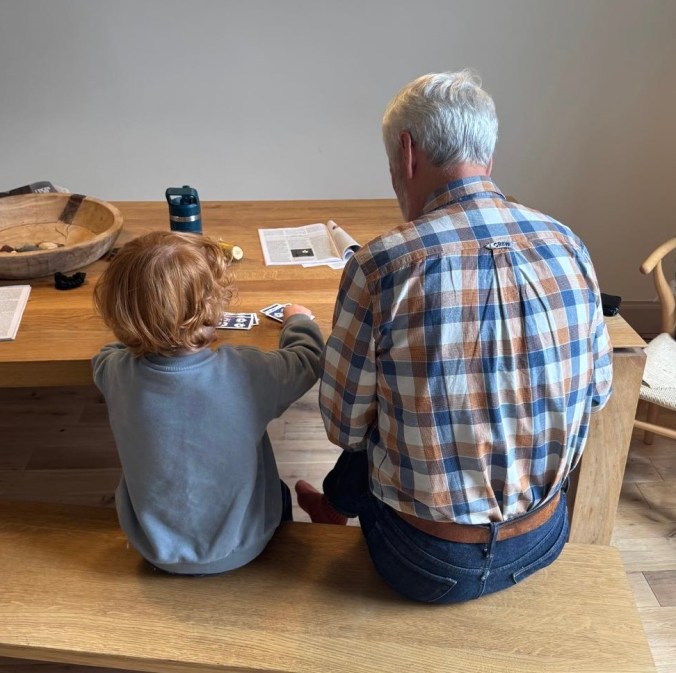
Playing Cards With First Grandchild (FG)

We also went to the Museum Of Childhood for the first time.  FG loved the activities available and we liked the nostalgia of seeing the toys from our own childhoods and those of our sons.  Entrance to the museum was free and we will definitely be going back with FG.

Construction Toys From My Youth Including Betta Builder, My Favourite
A Display of Toys From My Youth At The Edinburgh Museum Of Childhood, Including Betta Bilda, One Of My Favourites

FG also had a tremendous time at the Newhailes Gardens and Adventure Park near Musselburgh.  This is owned by the Scottish National Trust and is a wonderful facility.  I wandered the grounds while FG loved all the activities.  I then joined him to build towers, and to watch him get some experience of sack and egg and spoon races.

Newhailes House, Front And Back

We did spend some time away from our Edinburgh family so they could get back to something resembling their routine.  A huge highlight of this was a visit to the Andy Goldsworthy exhibition at the National Gallery of Scotland.  Based on reviews I had seen, I was expecting great things and it truly was an excellent display.  The exhibition was so good, I’ll cover our visit in a separate blog post after this one.

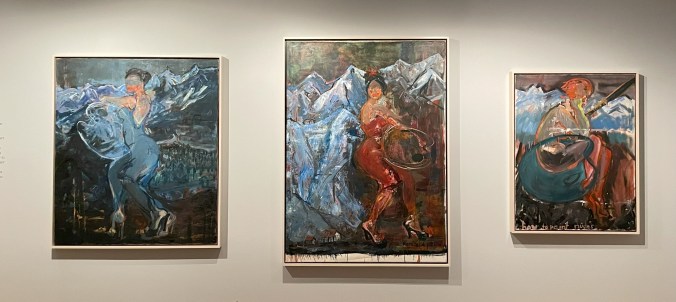
Jane and I visited a few other galleries while in Edinburgh.  In the basement of the National Gallery was an exhibition of work by Paul Furneaux who we know our Eldest Son admires.  I liked his paintings too.

'Temple Path' By Paul Furneaux At the Scottish National Gallery
‘Temple Path’ By Paul Furneaux At the Scottish National Gallery

Furneaux also featured in the Open Eye Gallery which is always worth visiting as was The Scottish Gallery opposite.  The latter had an exhibition of paintings by Alexander Goudie who I enjoyed getting to know a bit.
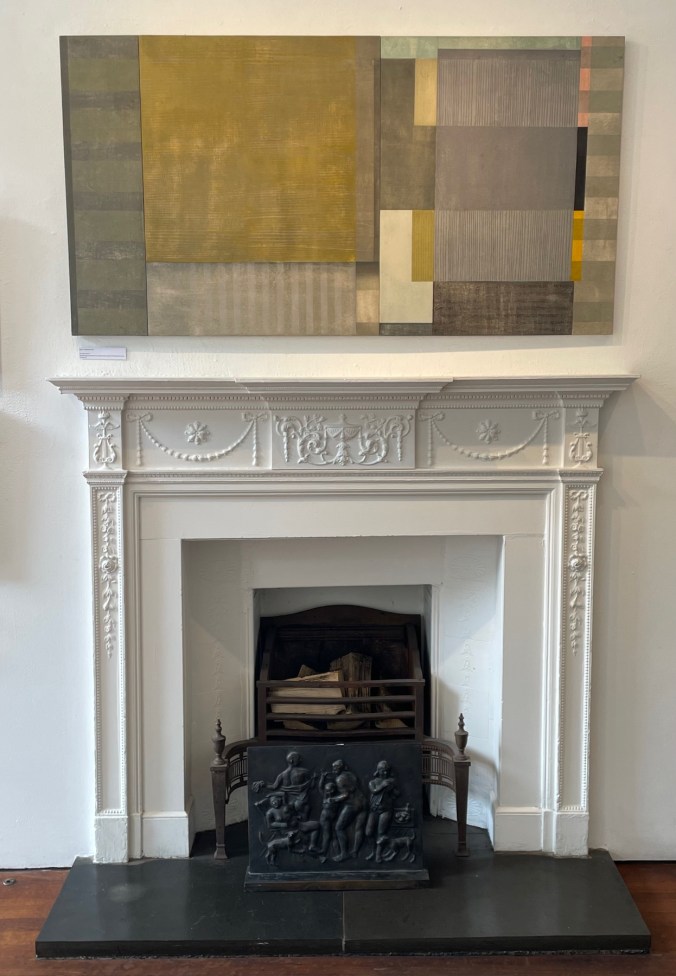
Another Painting BY Paul Furneuax, This Time At The Open Eye Gallery, Edinburgh
Another Painting By Paul Furneuax (‘Rain City’), This Time At The Open Eye Gallery, Edinburgh

One afternoon, I slipped off and went to a free show of Post-Modern art at the City Art Centre.  A little embarrassingly, I got told off for taking a photo here (see below, top) – I just didn’t see the signs prohibiting photography.  Otherwise, my visit was very satisfactory as previous shows there have been.  I particularly enjoyed the rather macabre painting by John Bellany of men gutting fish (also below).  Bellany had a separate (but not free) exhibition at the centre but I didn’t pop in.
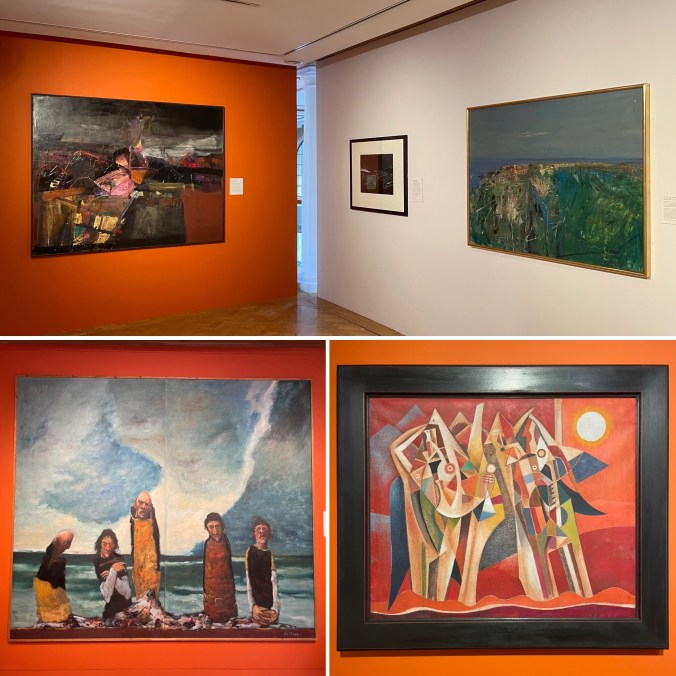
Scottish Post Modern Art At The City Art Centre, Edinburgh

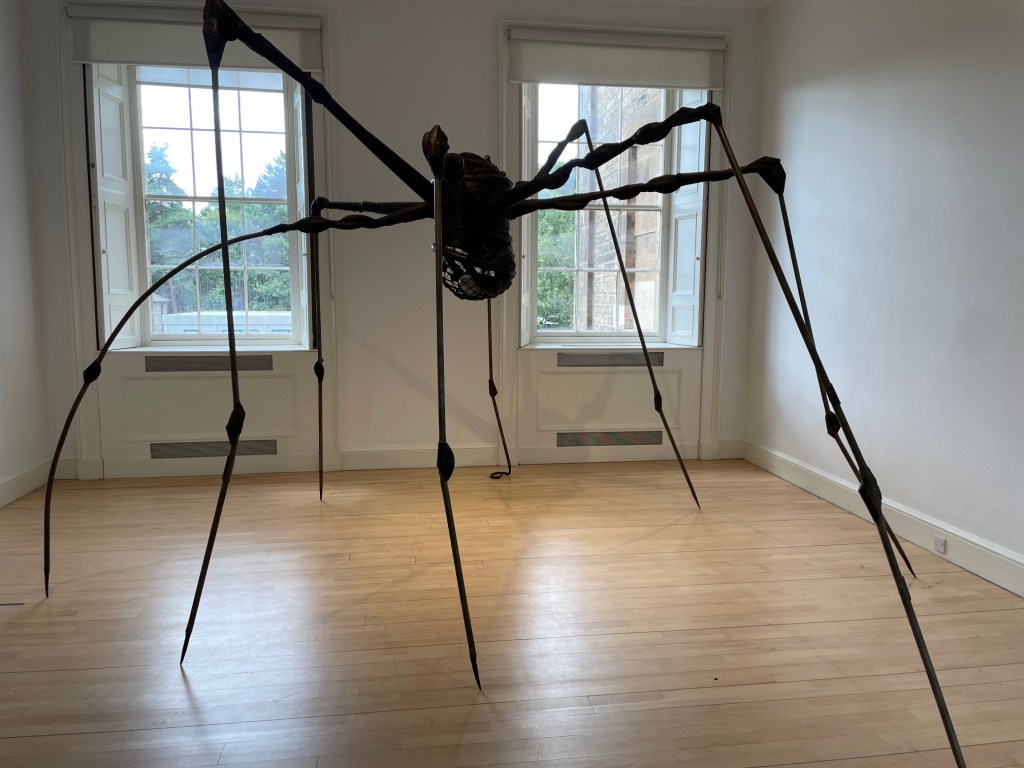
Jane and I also visited the Scottish National Gallery of Modern Art briefly to see three or four rooms of works by Louise Bourgeois, Robert Mapplethorpe and Helen Chadwick.  This was mildly diverting but only Bourgeois’s spider, which we had both seen variants of before at the Hayward Gallery in London, and the famous photo of Mapplethorpe’s disembodied head (see below) left much of an impression  on me.

Beyond the art and beyond Edinburgh, we also took some time out to explore some gardens.  Recalling these visits now reminds me that I failed to mention in my last blog post a very pleasant hour or so spent in the St Andrews Botanic Garden during our time in Fife.  It was a longer walk out of the St Andrews town centre than we expected but well worth a visit to see a rather wild and experimental garden that is investigating how gardens, and the insects that live in them, can cope with our changing climate. Semi-wild gardens, busy with insect life, can be very attractive at this time of year.
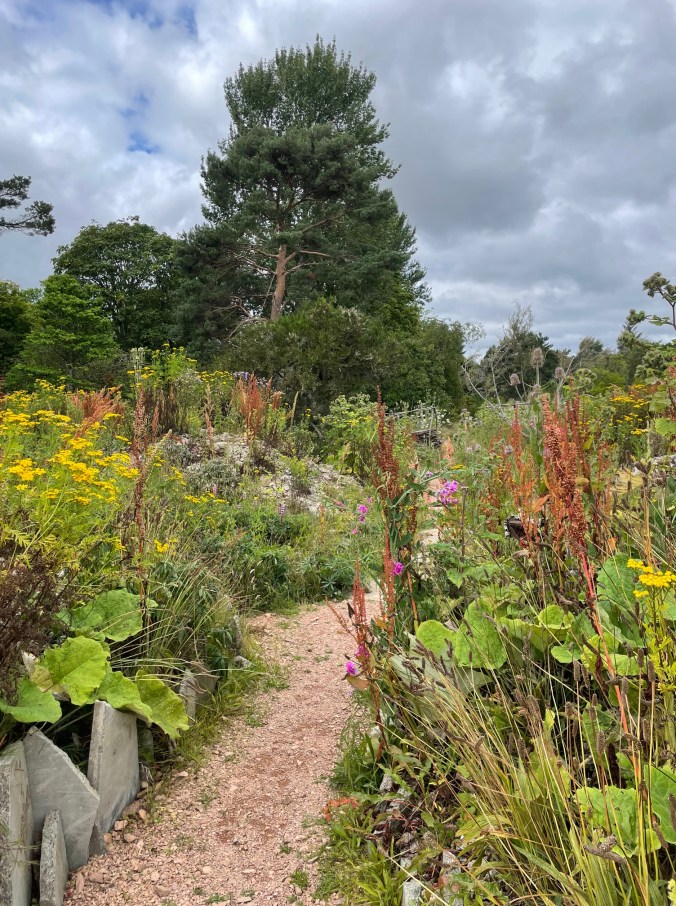
St Andrews Botanic Gardens

Now we travelled south from Edinburgh to the Pentland Hills and Tweed Valley to Dawyck Botanic Garden.  This is a 65-acre arboretum with a lot of mature indigenous trees and a large number planted using seed collected a couple of centuries ago in America by a traveller called David Douglas.  He met a sticky end in Hawaii after falling into an animal trap already occupied by a bull, but his legacy at Dawyck is impressive. 
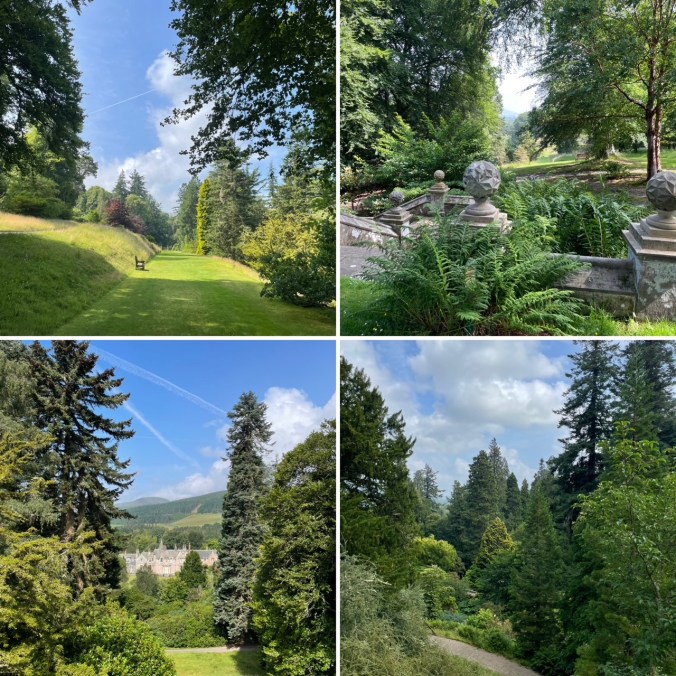
Dawyck Botanic Garden
Dawyck Botanic Garden, Scottish Borders

The setting is lovely with gorgeous views across heavily wooded valleys to open hillsides beyond.  It would be worth visiting again in Spring when more of the azaleas and rhododendrons are in flower.

We then went on to  Little Sparta, the home and garden of Scottish poet and artist Ian Hamilton Finlay whose work I have often seen in various places in and around Edinburgh including, during this visit, the City Art Centre. This year is the centenary of his birth.
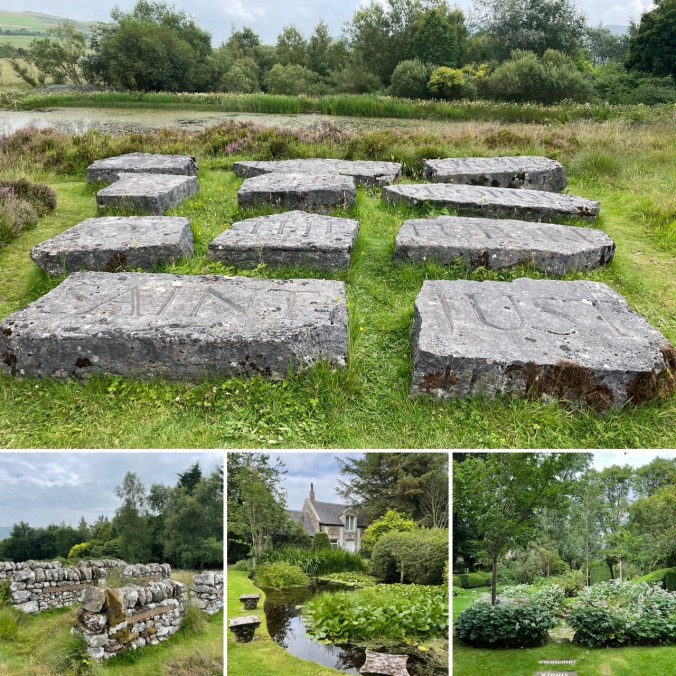
Little Sparta
Little Sparta, South Lanarkshire

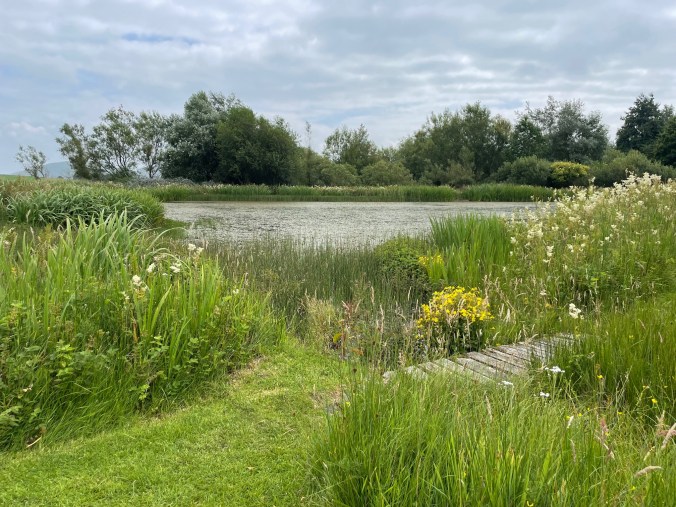
The garden is in the middle of nowhere.  It is both a little chaotic and very sweet.  Throughout the garden are little paths and about 200 individual art works from golden heads to simple inscriptions and stone sculptures.  I particularly liked the open area beyond the wooded garden which included an attractive lake.
Little Sparta
Little Sparta

Of course, we ate and drank well while in Edinburgh as usual.  A highlight was a drink at the Newbarns Brewery and Taproom followed by an excellent dinner at Ardfern.  We will be going to both (and Ardfern’s sister restaurants) again.

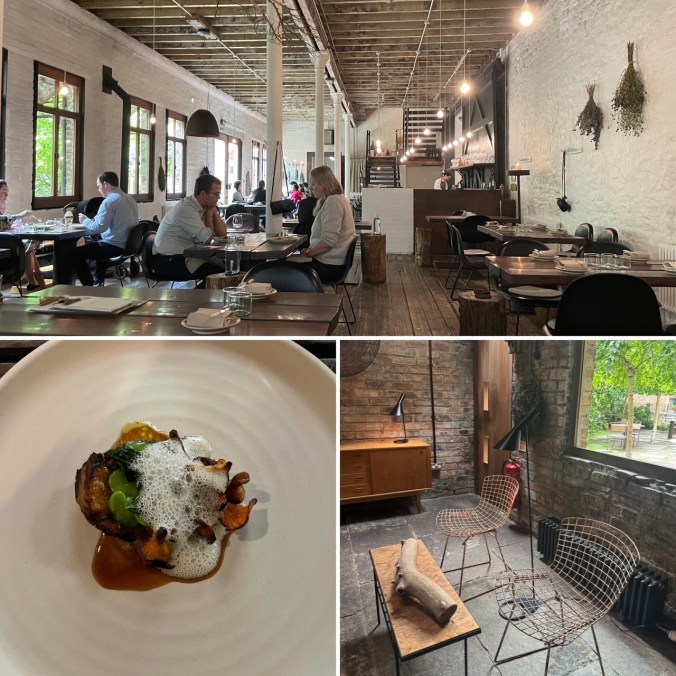
Our stay in Edinburgh was completed with a rather splendid lunch at Timberyard.  This was with our extended Edinburgh family including ES’s wife’s parents and was to celebrate Jane and my 40th wedding anniversary.  FG provided the rubies from his toy treasure chest and then got on with some drawing, leaving us to enjoy a splendid three courses.  The restaurant is a lovely space and the service and food are top notch. 
Timberyard, Edinburgh

ES’s wife asked what advice we had, given we have achieved 40 married years together.  I mumbled something about needing patience to adjust as circumstances and each partner change at different times.  I’m not sure if retirement brings a requirement for more patience.  Certainly, intermittent contact with grandchildren and no work to worry about allows much more time to think about getting along than full blown parental childcare and employment ever did!

We took our time over Timberyard’s food but there was still time to take in England Woman’s Football Team winning the European Championship after extra time and penalties.  It was a thrilling end to a lovely week and a half in Scotland.
Outings, Outings, Outings!

A few times since I retired, Jane and I have resolved to break up our routines (my retirement routine especially) with more frequent outings and trips.  This has resulted in short bursts of trips away from the house and we have had one of those brief bursts of outings recently.  A combination of summer weather and a little more determination this time, may mean we sustain the run of outings for a little longer than previously.

Hard To Tear Us Away From Our Garden This Summer?

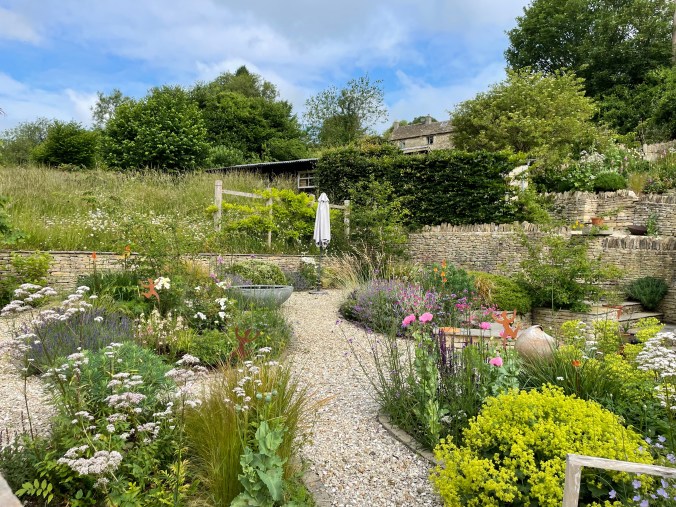
Jane kicked us off by organizing our rather impromptu trip to Basel and then we had a trip to Belfast and Derry.  Those were followed up by a visit to the Ashmolean Museum in Oxford which had originally been conceived as a birthday treat for me before the grander idea of a weekend in Basel intervened.  Then we had a day out in and around Bath and finally, before Jane headed off for a few days in Southern France with her book group, we pottered around more than a dozen open private gardens a nearby Cotswold village.  I love my daily and weekly retirement routine but it has been fun to give it a jolt.

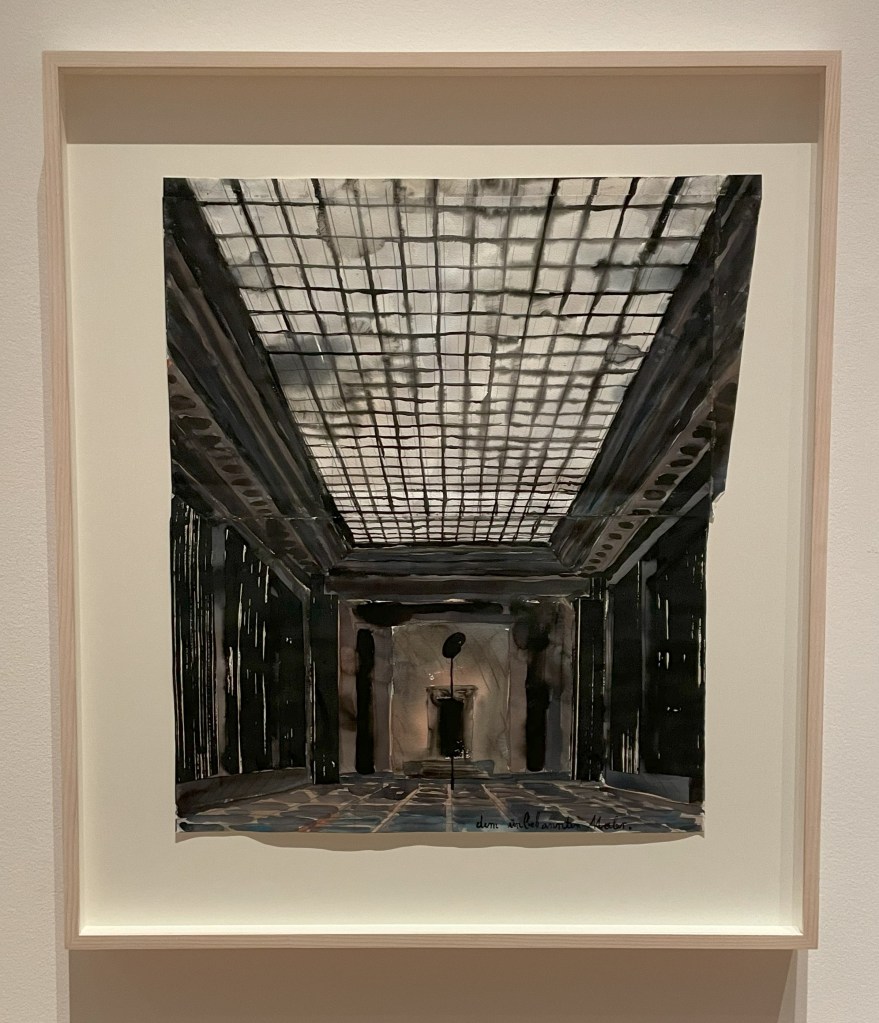
The main reason for visiting the Ashmolean Museum was to celebrate my birthday by visiting the current exhibition of paintings by Anselm Kiefer.  I hadn’t heard of him until I saw an incredible exhibition of his work about five years ago and I have sought him out since. 

His subject matter and resultant paintings are often dark.  At the Ashmolean, we read about his early preoccupation with post-Second World War thinking in Germany and his ambition to expose some of the cultural and artistic taboos of that time.  One of the first pictures in the exhibition – and the only one for which photographs were prohibited – was an image of Hitler. 

'At Night The Heavy Earth Is Falling' By Anselm Kiefer
‘At Night The Heavy Earth Is Falling’ By Anselm Kiefer

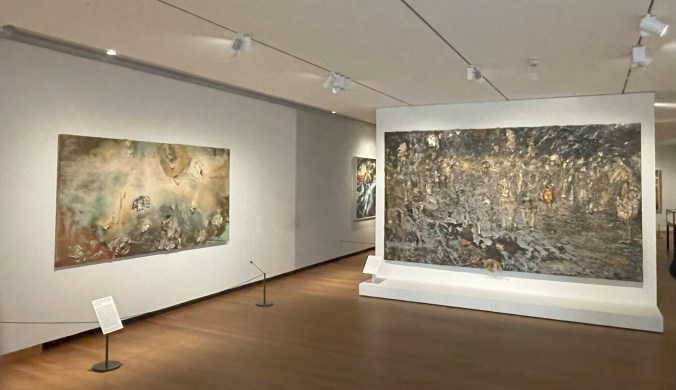
Actually, the exhibition started with some typically monumental, deeply layered works that were very recent.  I confess that it was these of those on show that resonated most strongly with me.  Perhaps this was because they were so reminiscent of Kiefer’s works that I had seen in previous exhibitions and were in a style I was familiar with. 

Paintings By Anselm Kiefer Painted In The 1970s

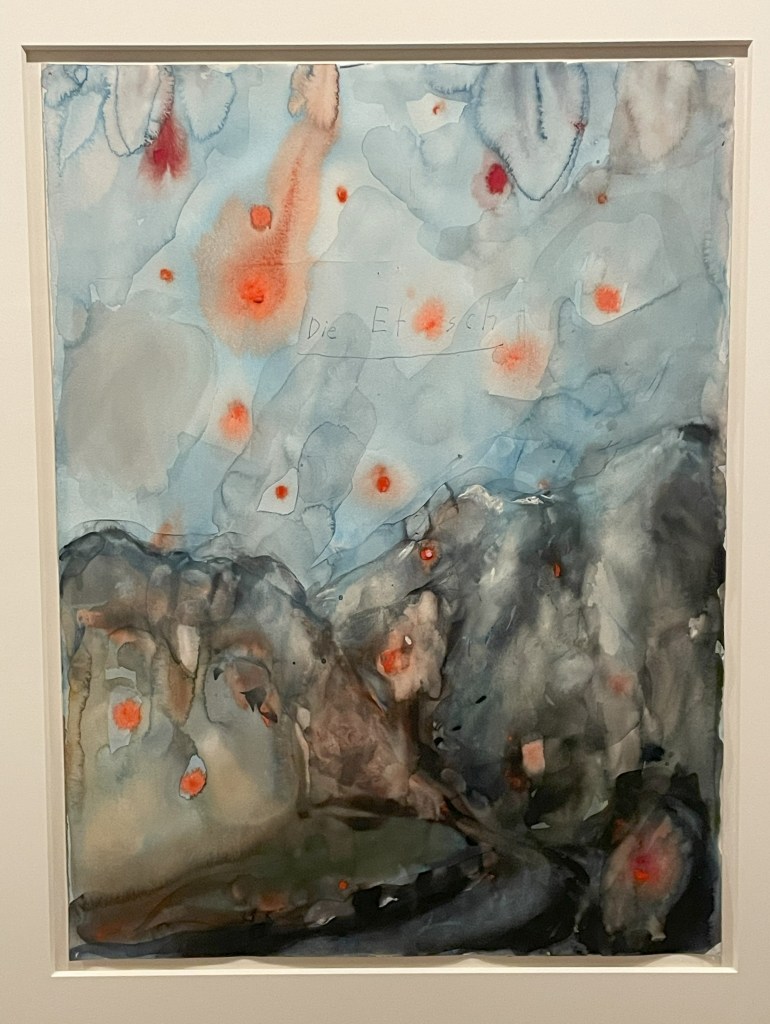
The rest of the exhibition lived up to expectations though.  Kiefer is an interesting artist and a couple of his watercolours were as arresting as the larger, more obviously impactful oils.  I’ll continue to look out eagerly for his exhibitions.

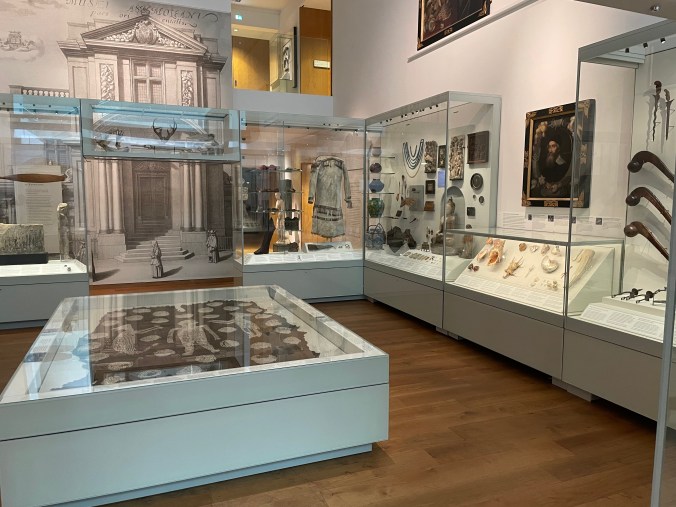
We spent an hour of so wandering through the Ashmolean before a very nice lunch on the roof terrace in the sun.  It was good to come across a section of the museum dedicated to its founder, Elias Ashmole, because it reminded me of an excellent book by Phillipa Gregory (called ‘Virgin Earth’) about Elias’s friend and colleague, John Tradescant, that I read last year.

Section Of The Ashmolean Dedicated To Elias Ashmole

The museum’s rooms are full of a wide huge variety of exhibits from Egyptian mummies to cabinet after cabinet of ceramics. 

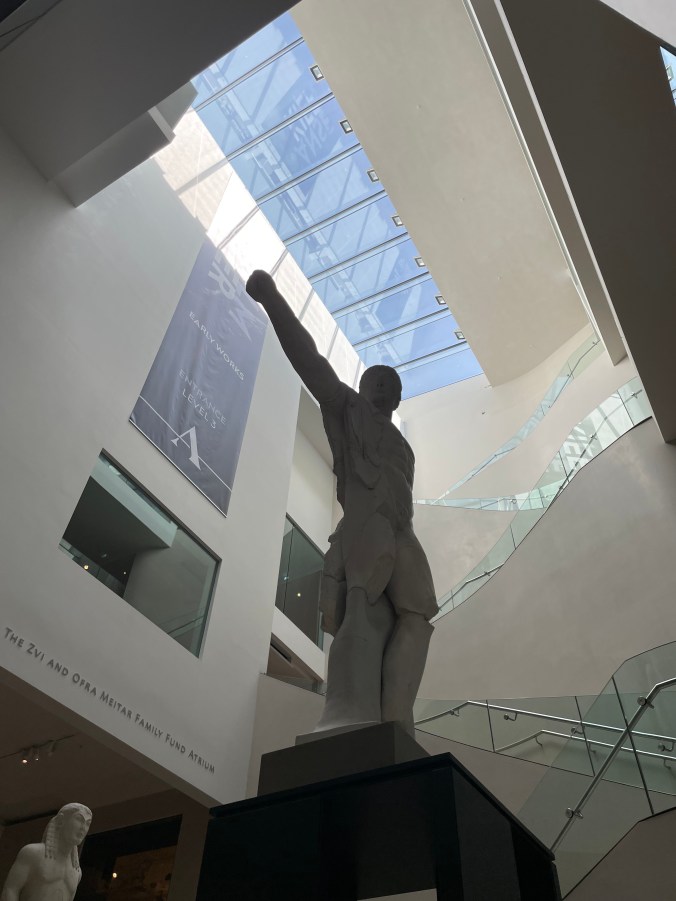
Apollo From The Temple of Zeus, Greece (About 460BC)
Ashmolean Museum: Apollo From The Temple of Zeus, Greece (About 460BC)

There was also a short more temporary exhibition of portraits of leaders and the Iranian elements of this show were well presented and explained.  Then lunch beckoned….

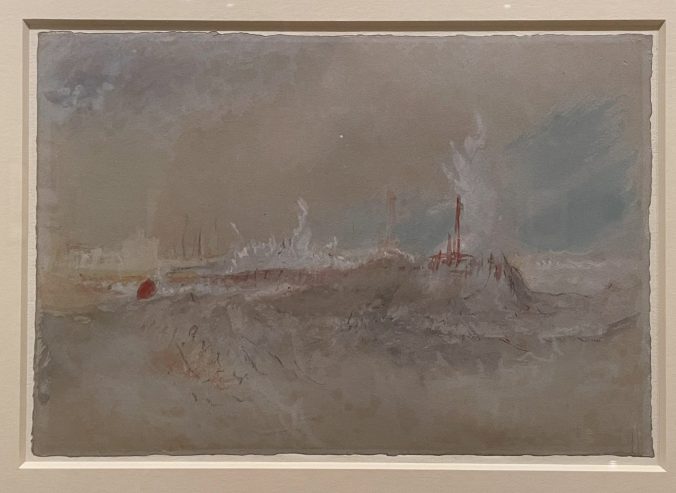
We took in another dose of art during a trip to Bath.  We visited a well-reviewed exhibition at The Holburne Museum of watercolours by J.M.W. Turner – another of my favourite artists.  I enjoyed this even more than the exhibition of Turner watercolours I had seen earlier this year in Edinburgh.  The room was a lot less crowded, Turner’s watercolours were more varied and, in some cases, more interestingly abstract. Plus, there were several lovely paintings by his friends of the time which showed how they influenced – indeed, competed with – each other.

'A Rough Sea Bearing Against Margate Jetty' By J.M.W. Turner
‘A Rough Sea Bearing Against Margate Jetty’ By J.M.W. Turner

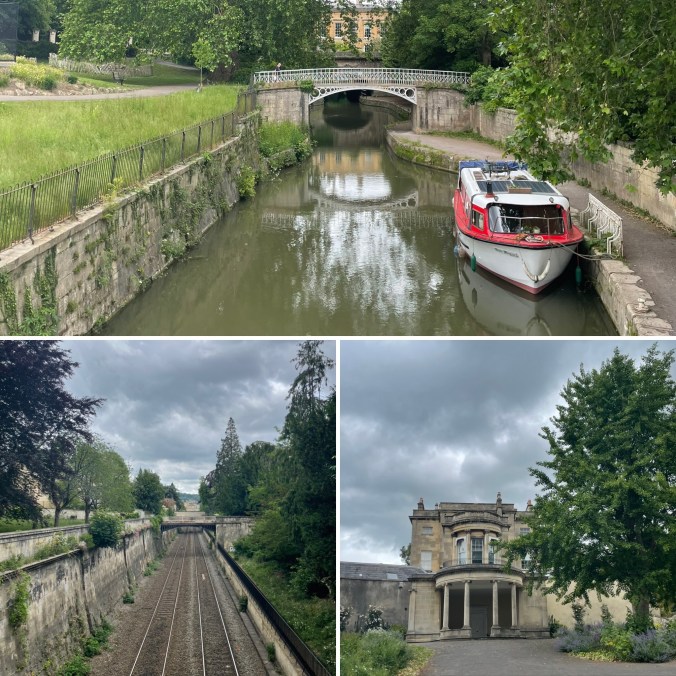
We had a stroll through the adjacent Sydney Gardens.  Despite visiting Bath many times, it was the first time I had walked through these gardens and was surprised that they spanned both the Kennet and Avon Canal and the Great Western Railway with lovely bridges and impressive vistas.  In the dappled sunshine, we could somehow imagine the mix of Jane Austen romance, toll path horses and Victorian railway steam as we wandered about.

Views In Sydney Gardens, Bath
Views In Sydney Gardens. Bath

We had an excellent lunch at our favourite bakery in Upstairs at Landrace.  We are so lucky to be able to just drop into restaurants as good as this and take home what we still think is our favourite sourdough bread.

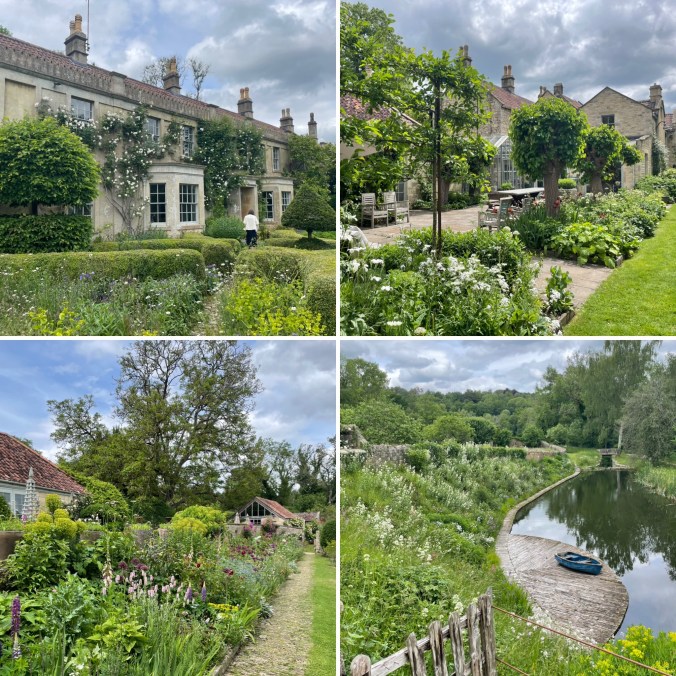
Then, to complete the day, Jane took us down some very windy and narrow lanes into deepest East Somerset to Caisson Gardens where she had booked a tour.  The sun was shining still and the gardens were a delight.  Visitor numbers were restricted and so the views of the flower beds and the backdrop of the house were largely unimpeded and aspect after aspect was beautiful.

Caisson Gardens
Caisson Gardens

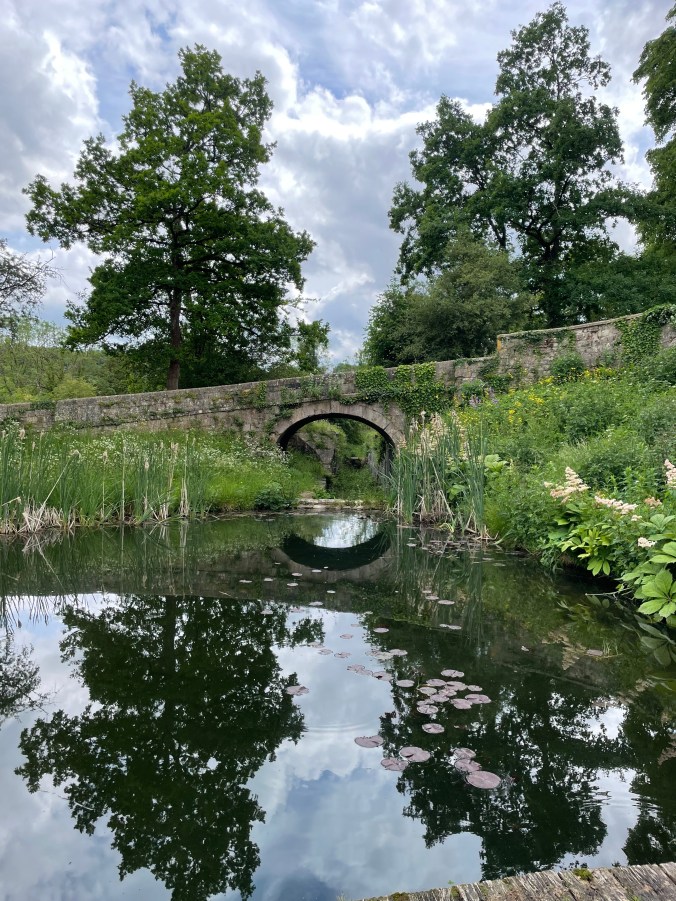
There was some interesting history too in that the remains of Somerset Coal Canal runs through the gardens and adjoining fields.  This once had innovative, but ultimately flawed, Caisson Locks.  The remains of the waterway now supplement ponds full of tiny black frogs, a small lake and a pattern of rivulets running down from the house. 

More Views Of Caisson Gardens

The garden has only opened to the public recently but is well-established and is already a wonderful spectacle at this time of the year.

Lake At Caisson Gardens

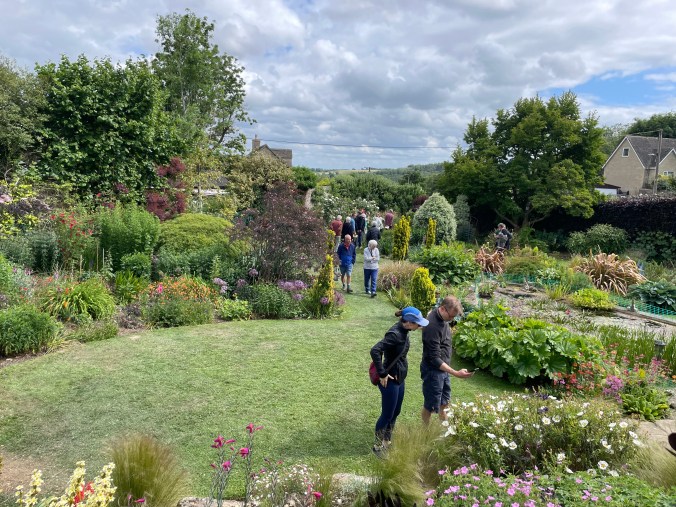
Less spectacular but enjoyable nonetheless, was an afternoon spent on the Box Open Gardens tour in a village near to our previous house.  It’s always interesting to peek into other peoples’ lives – or at least, their gardens.  We picked up a couple of ideas for our own garden and met a lot of people who we hadn’t seen for a long time.  We also were able to wander around the extensive, organic gardens of the local special needs school which you can only get a glimpse of from the road.  Again, the sun shone and we had a very pleasant afternoon.

One Of The Box Village Open Gardens

We have plans for more outings.  We just need to keep breaking the routine.

Resolutions And Houghton Hall

I have made patchy progress in adhering to my 2024 New Year resolutions during the first half of this year.  I’m ok with alcohol targets and weight management.  As planned, I’m spending more quality time reading books and I’m listening to less (largely agitating or depressing) news on the radio and television.  However, I’m not doing enough back exercises despite grumbling about a stiff back.  Also, my resolve to step up my creative activity has been weak since my visible darning of a load of socks and my devising of an Easter treasure hunt for First Grandchild.

Additionally, since a good start early in the year, Jane and I have not been consistent in addressing our joint aim of embarking on more short trips away from home.  We set this target with the intention of responding to periods of good weather and our relatively flexible diaries to see bits of the UK we are not familiar with.  In part that has been because the abnormally cool, wet weather hasn’t been particularly conducive to such thinking.  Also, my diary has been less flexible since I took up a new commitment on Wednesday afternoons to listen to children read as part of the local ‘Read With Me’ scheme.

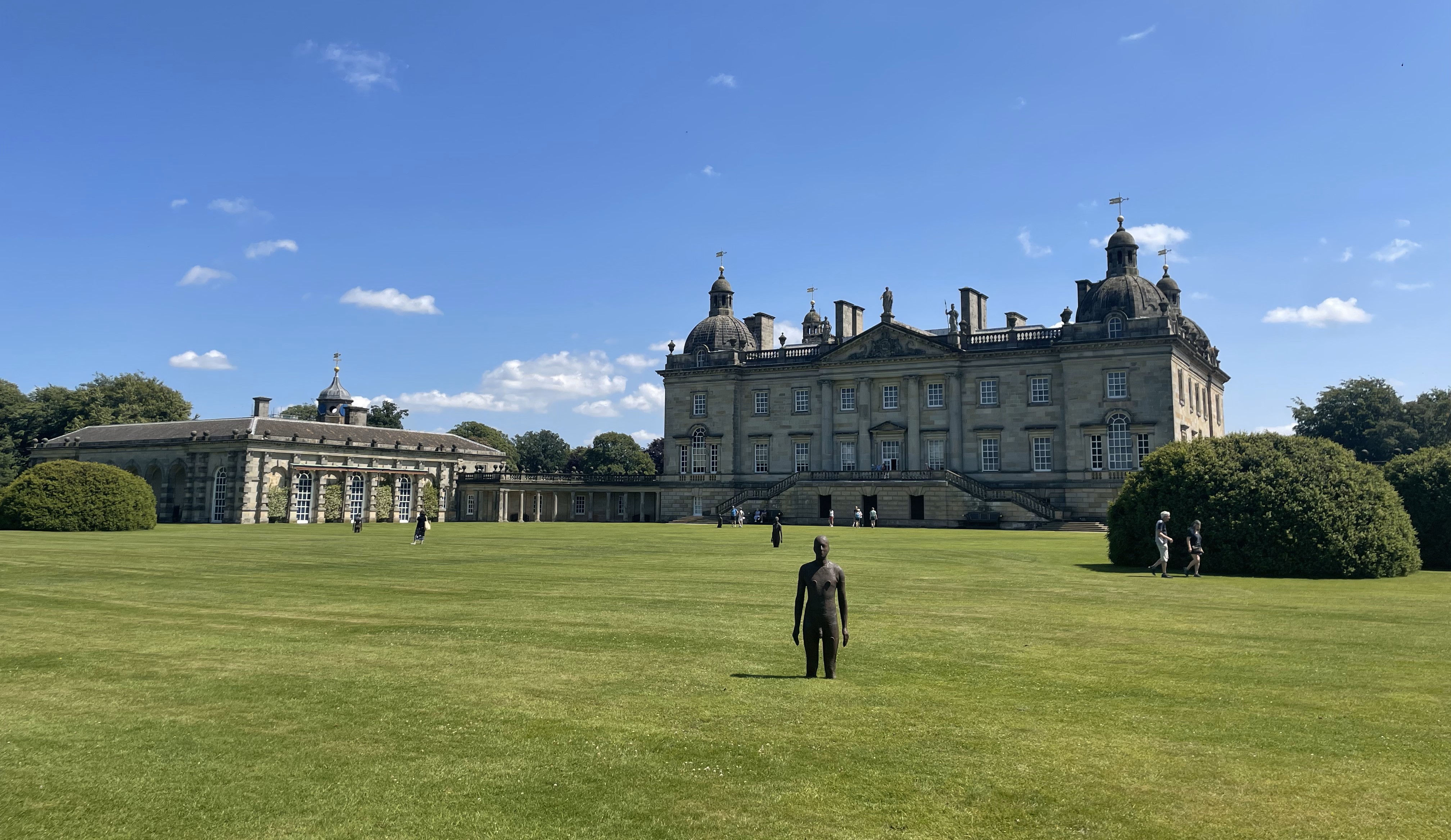
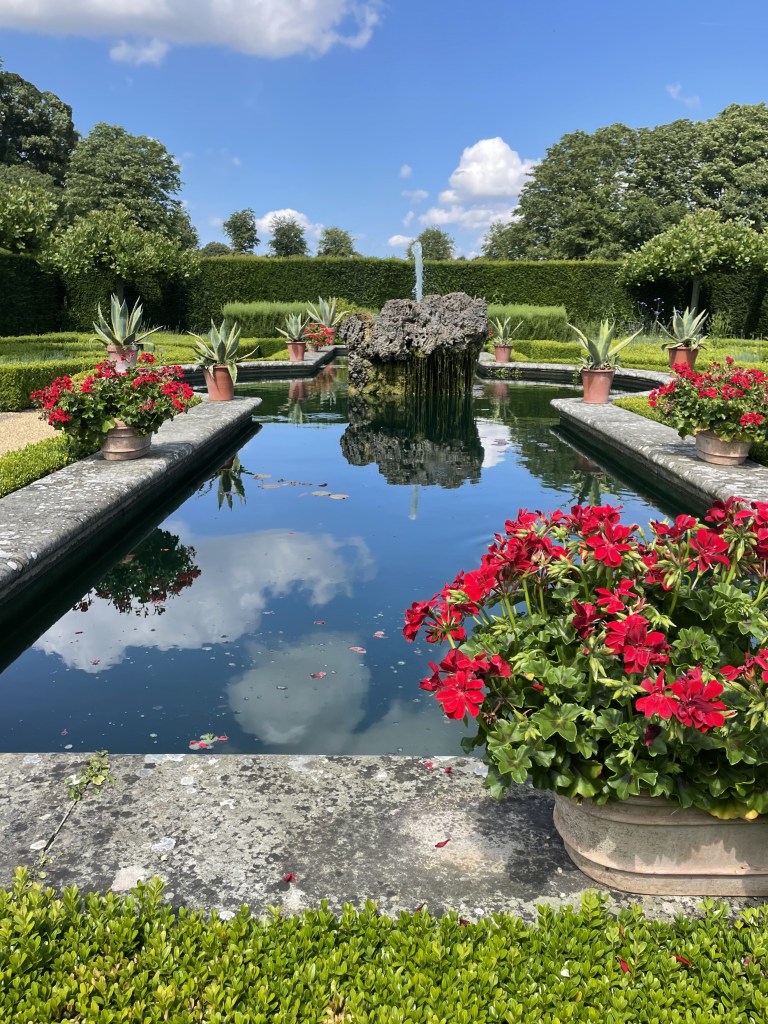
Houghton Hall And Gardens, Norfolk

We have done much better as the weather has improved and the school term drew to a close.  We have followed up our trip to Sissinghurst, Rye and Lewes with another lengthy excursion to Houghton Hall and Gardens in north Norfolk, and then on to visit friends in north Suffolk.  On all these travels this month, we were blessed with very good weather. 

Houghton Hall was impressive, the gardens-cum-sculpture park there were interesting and it was great to see our longstanding friends again.

Houghton Hall West Wing (From The Cafe)

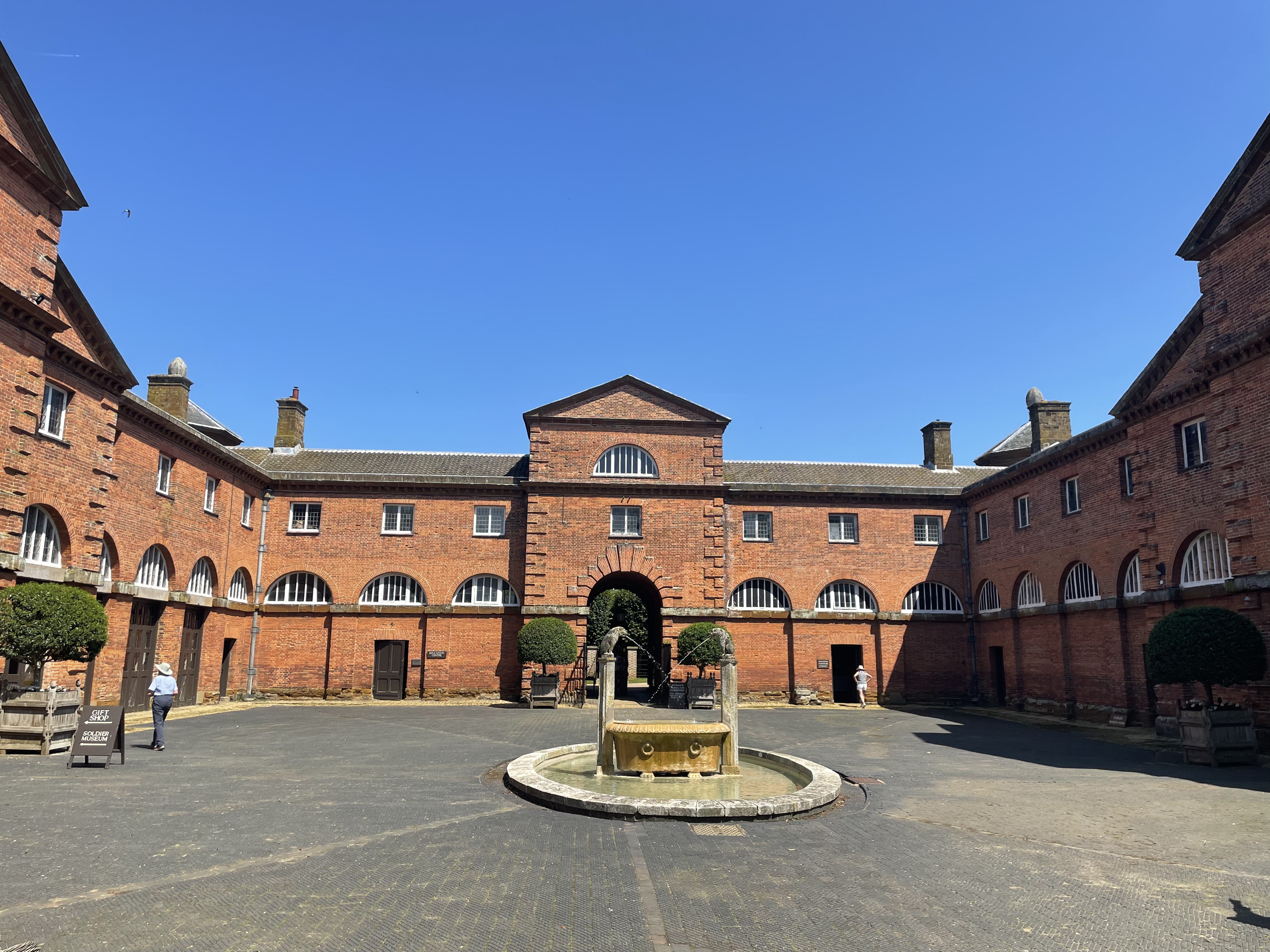
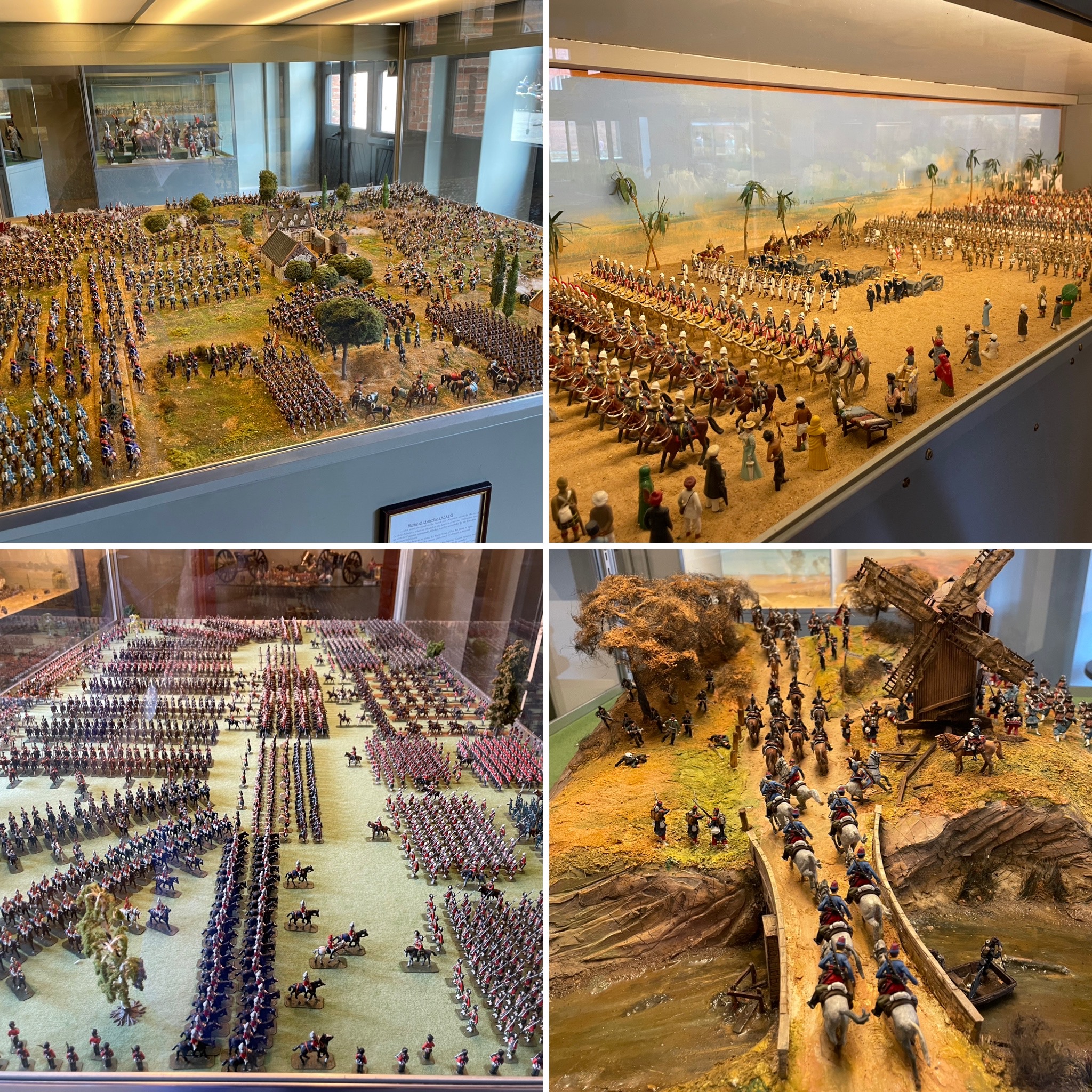
We left early with the intention of arriving at the Houghton Hall at opening time but, after encountering tedious traffic jams around Kings Lynn, arrived a little after midday.  The car park was already extending into the overflow area but the grounds of the house are so huge that, once we got into them past the café and exhibitions (including a truly remarkable exhibition of the Cholmondeley Collection of Model Soldiers) in the splendid West Wing, the crowds seemed to melt away.

The Remarkable Model Soldier Collection of the 6th Marquess of Cholmondeley Spanning Two Densely Packed Rooms

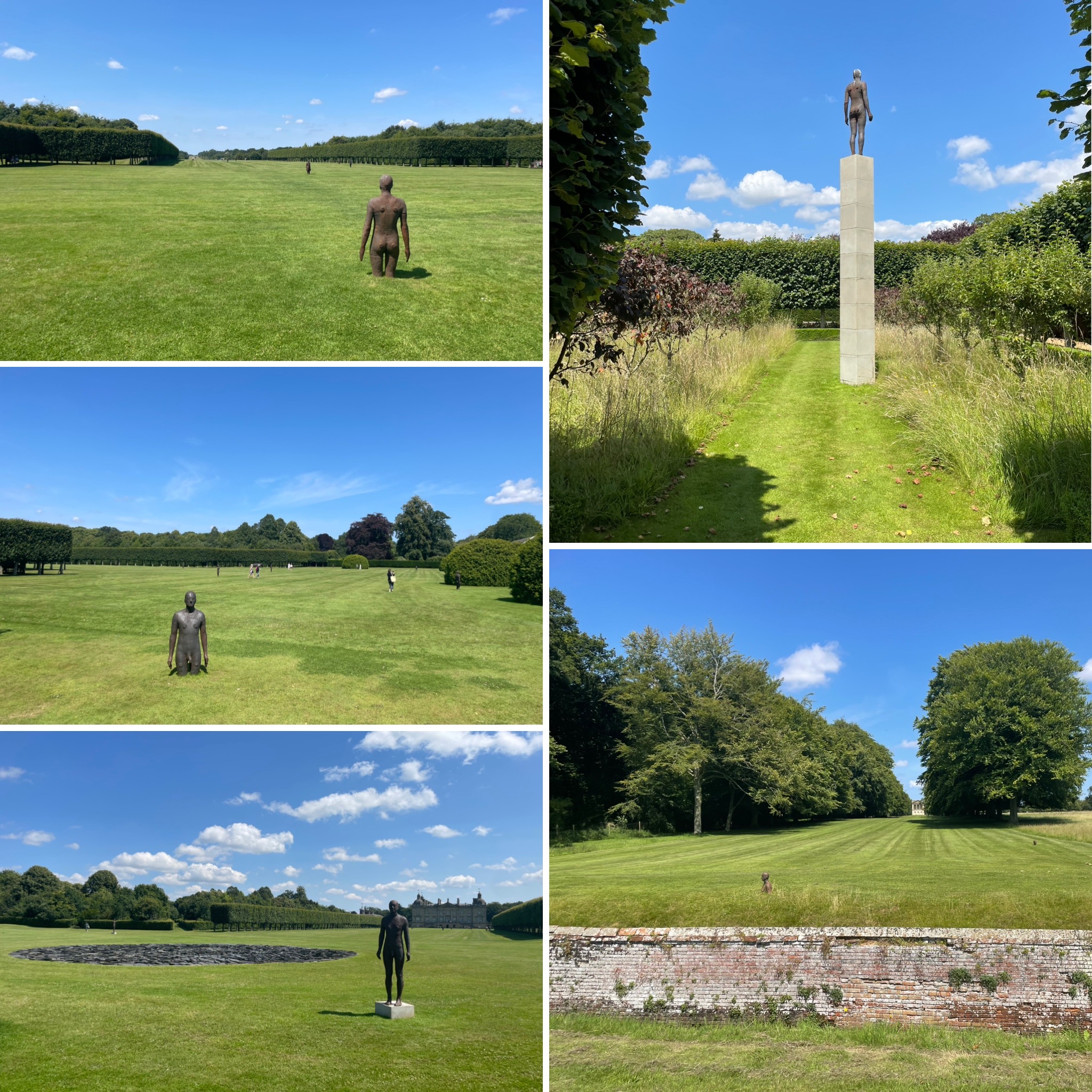
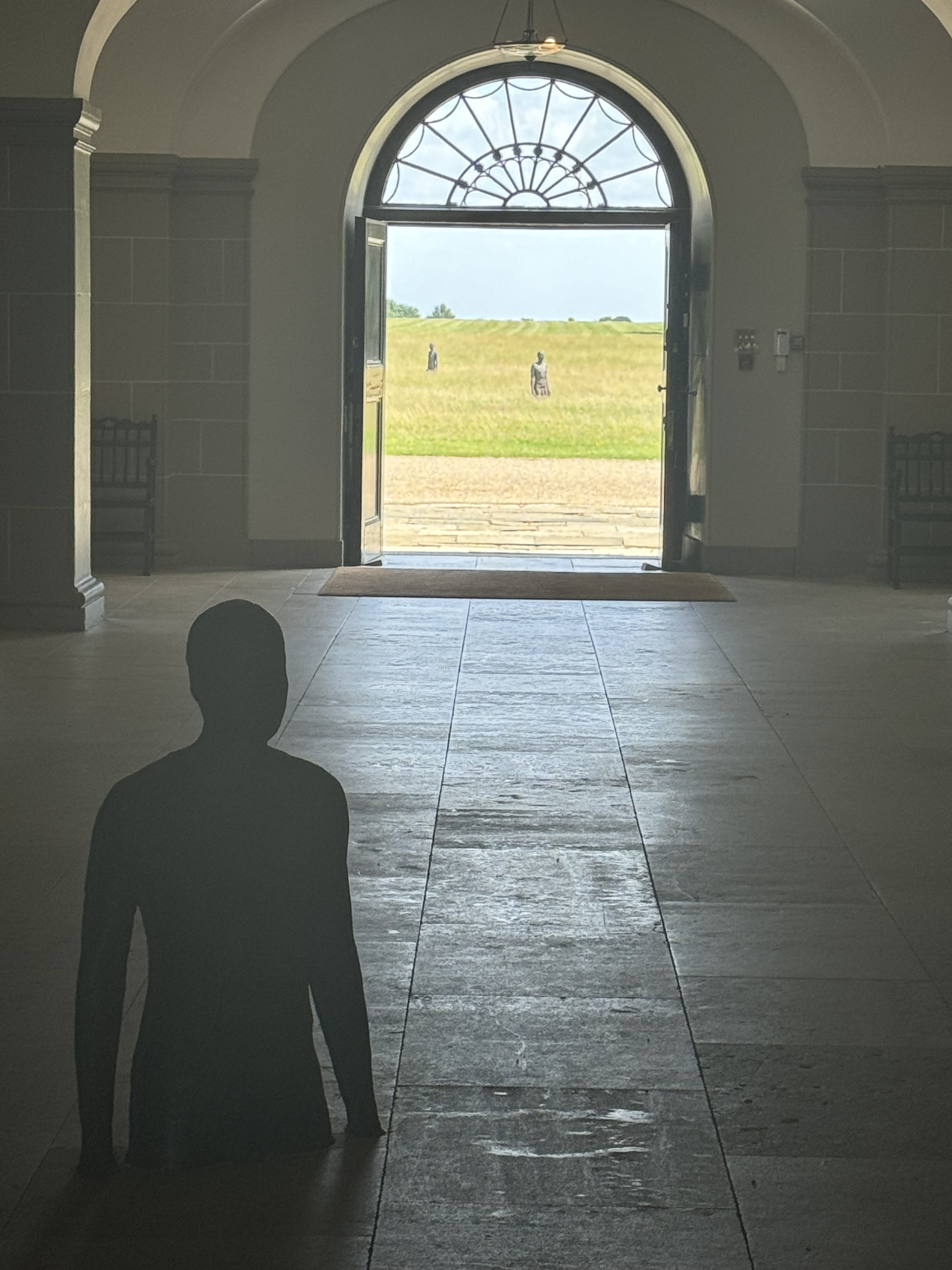
The gardens double up as a sculpture park and, immediately, we could see Antony Gormley statues dotting the acres of lawn.  Jane explained that the 100 statues comprising his work called ‘Time Horizon’ had been installed so that they were all standing at the same height above sea level.  Given the undulating land of the gardens, this concept meant that some statues barely were barely visible – with just their heads showing – while others were on tall plinths.  We have seen the multiple statues (of himself) several times before in a variety of settings but this idea of consistent altitude was a new and amusing one for me.

Antony Gormley Statues – All At The Same Height Above Sea Level – At Houghton Hall Gardens

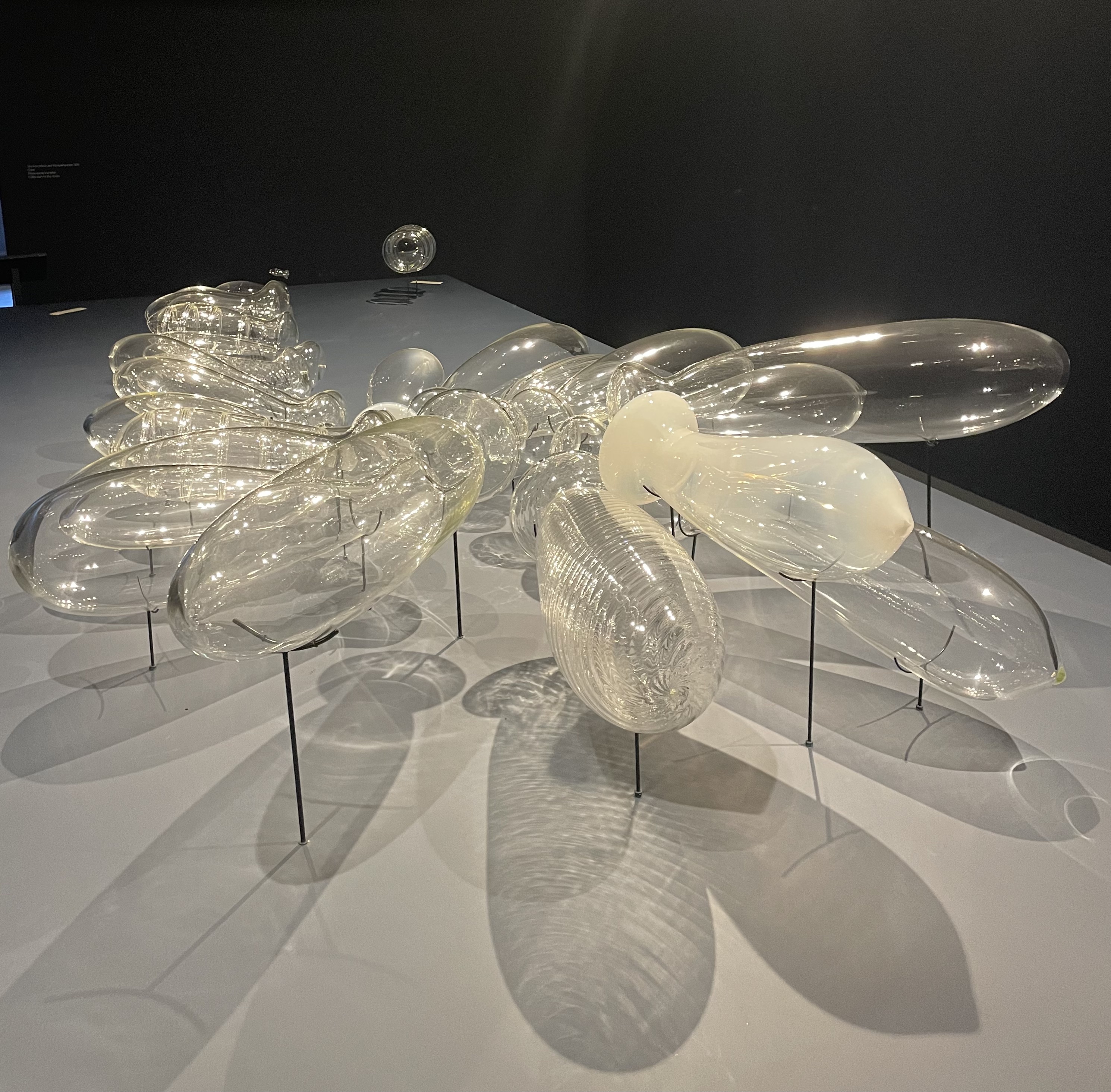
In the South Wing there was a small, temporary exhibition of Magdalene Odundo’s work called ‘Metamorphosis and Transformation’, an installation of blown glass vessels apparently based on an ancient Egyptian ear stud found.  That was impressive although I found some of her other work set out in the main house elegant but a little distracting in its contrast with the heavy furnishings and wall art there.

Metamorphosis and Transformation (2011) By Magdalene Odundo

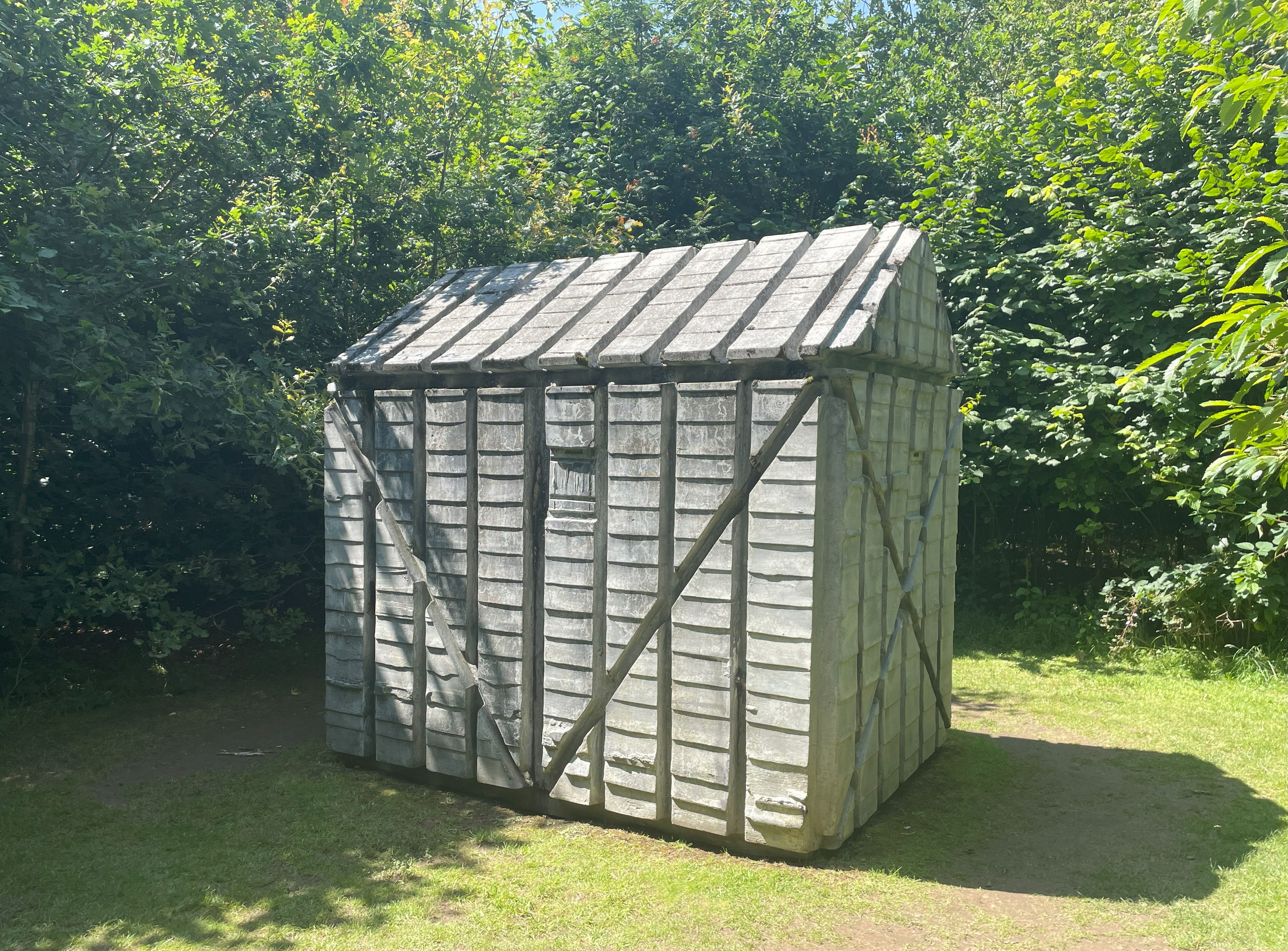
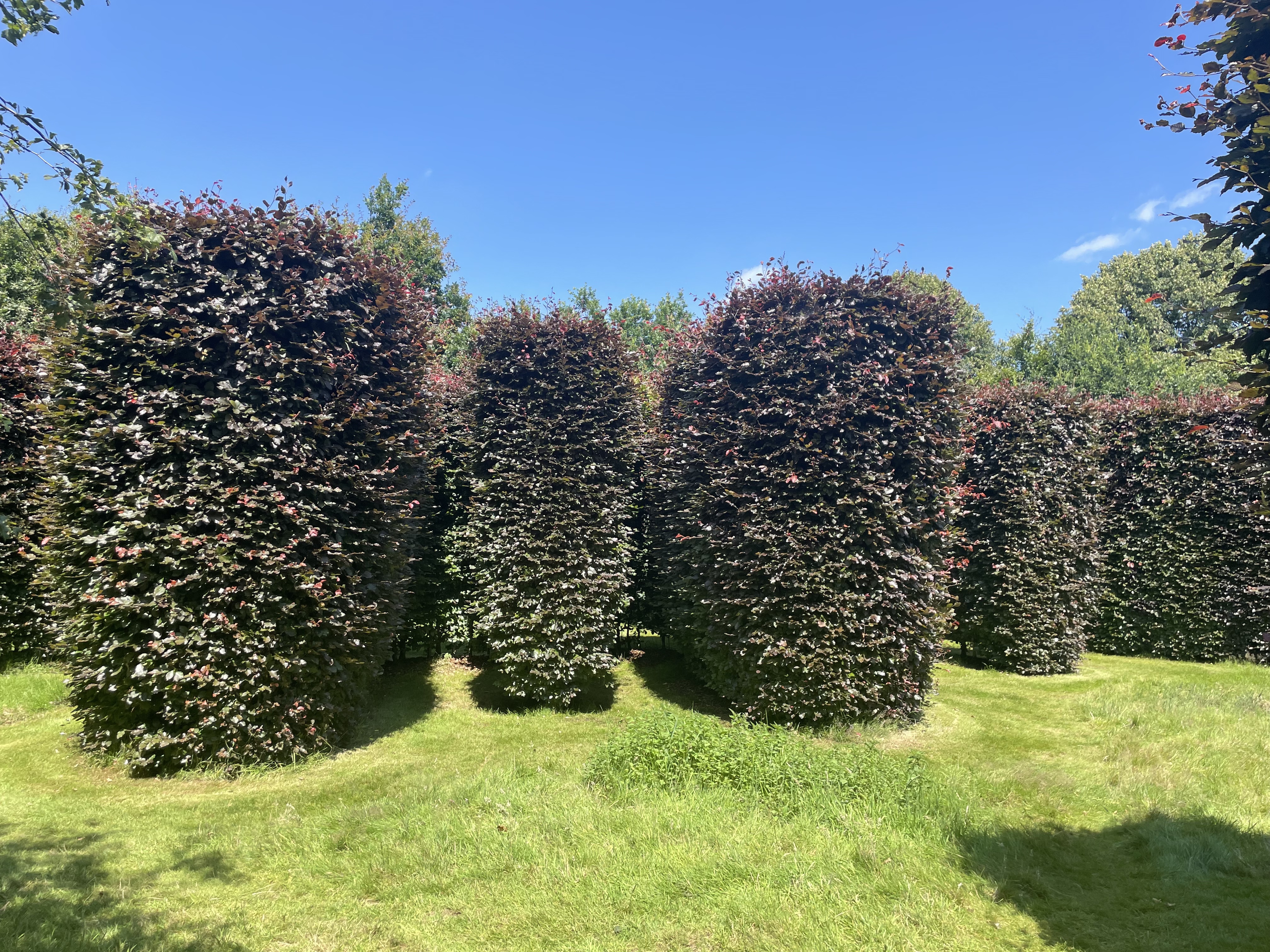
Elsewhere in the gardens, we saw sculpture by other artists we have encountered before such as Richard Long, Sean Scully and Rachel Whiteread, plus several others I wasn’t familiar with.  I particularly enjoyed ‘Sybil Hedge’ by Anya Gallaccio.  This was an unusual ‘sculpture’ made from a large, winding beech hedge that worked well in the large scale of the garden.

‘Houghton Hut’ By Rachel Whiteread
A Section Of ‘Sybil Hedge’ By Anya Gallaccio At Houghton Hall Gardens

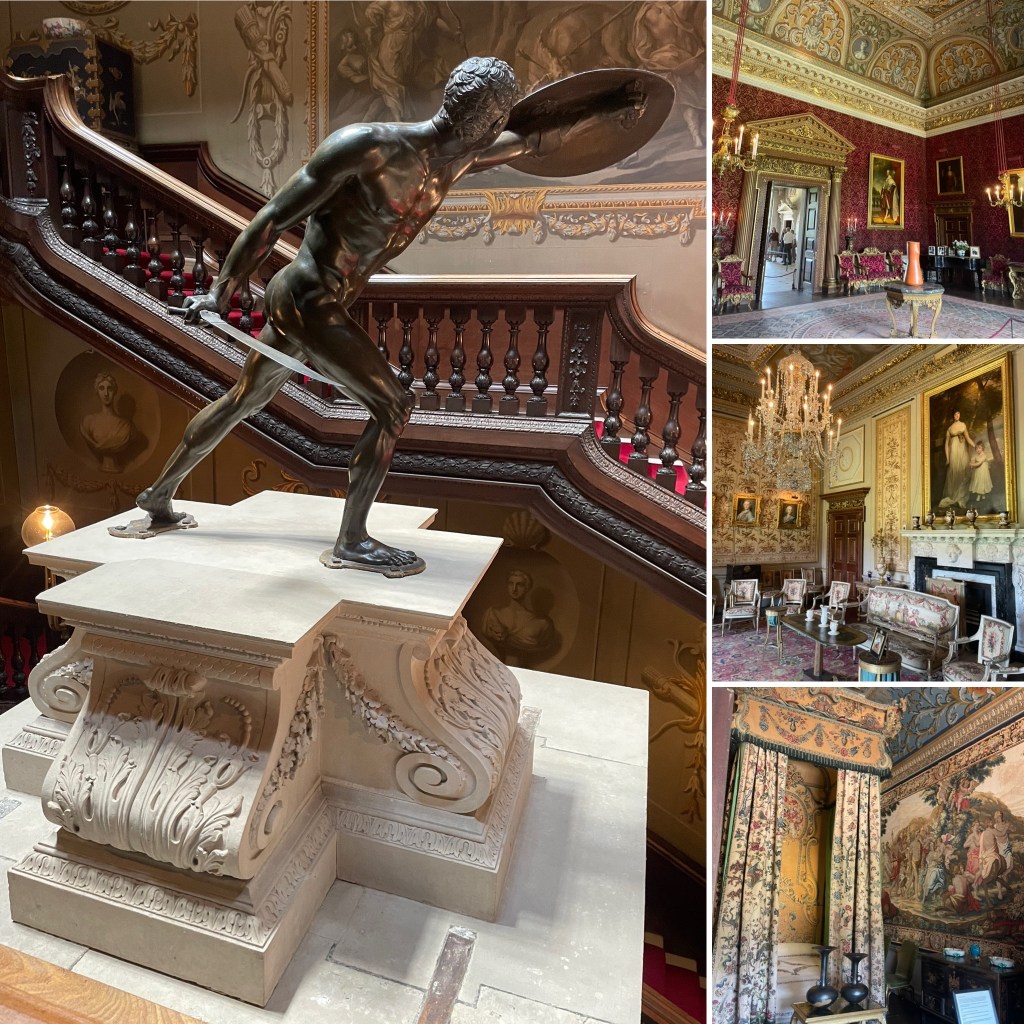
The Palladian style house was bathed in sun but, inside, the rooms were dark to preserve the furnishings, tapestries and artworks.  As Jane remarked, despite the size of the rooms, they felt almost claustrophobic after the expanses of the grounds.  The tapestries that adorned many of the walls contributed to that feeling but they were remarkably well preserved and had interesting content.  The sumptuous rooms, with their blurry views out onto the lawns and deer park though original, handmade glass, were well worth the extra visit fee.

Inside Houghton Hall

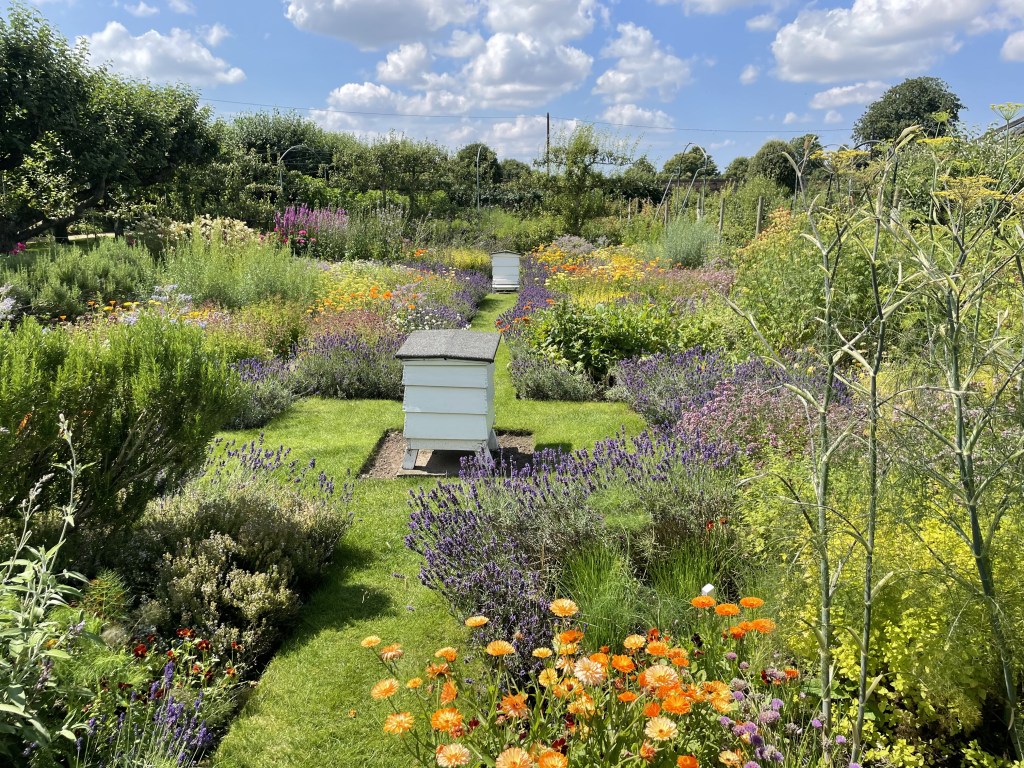
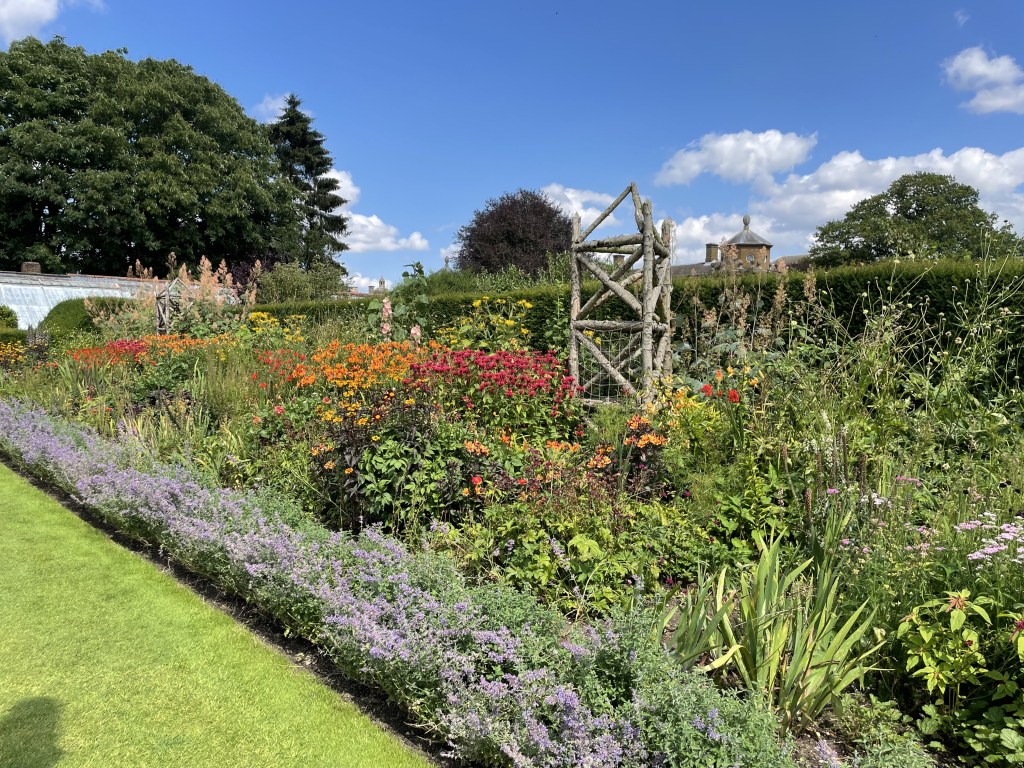
The highlight of the visit for me was the Walled Garden.  This was beautiful at every turn and a riot of colour.  An interesting twist was that vegetables were grown between the flowers and, here too, Gormley’s statues (on plinths here because of the lower altitude) were watching over us.  It was clear that the volunteers and gardeners that manage the garden are not blighted by the multitude of slugs and snails as we are back at home; everything looked vibrant and healthy.

From Houghton Hall we drove south to Eye in Suffolk.  By this time, we needed to charge up the car.  We have noticed a huge improvement in the availability of electric vehicle charging points during our last few trips around the United Kingdom.  Certainly, both our charge ups on this trip were very quick and easy.

Another of Gormley’s Statues, This Time In Houghton Hall Looking Out At Others (Incredibly, Given The Amount Of Work Involved In Setting It Up, The Installation Is Only Until October 2024)

We arrived at our friend’s house in time for drinks in the sunshine.  There was also time for an evening tour of their garden, the private allotments adjoining the garden which they own and manage, and the entrance to the woodland/wetlands beyond the allotments that are now owned by our friends and others in the community.  The various types of land they look after are lovely slices of nature.  They are also a labour of love although one task not needed is slug management – their chickens prodding around in the allotments seem to deal with that!

The excellent and copious hospitality we were given in terms of food and drink put my New Year resolution targets for weight and alcohol consumption under pressure but, as ever, it was great to catch up with old friends.  Plus, our target to have more days away from home exploring the UK was helped along.

Sissinghurst Castle Gardens

Jane said she didn’t want a present for her birthday – I had one planned, honest!  Instead, she wanted to go on a trip to Sussex and, specifically, to Rye.  She booked a hotel there and sorted out an itinerary of things to do.  Part of that itinerary was to visit Sissinghurst Castle Garden in Kent on the way.

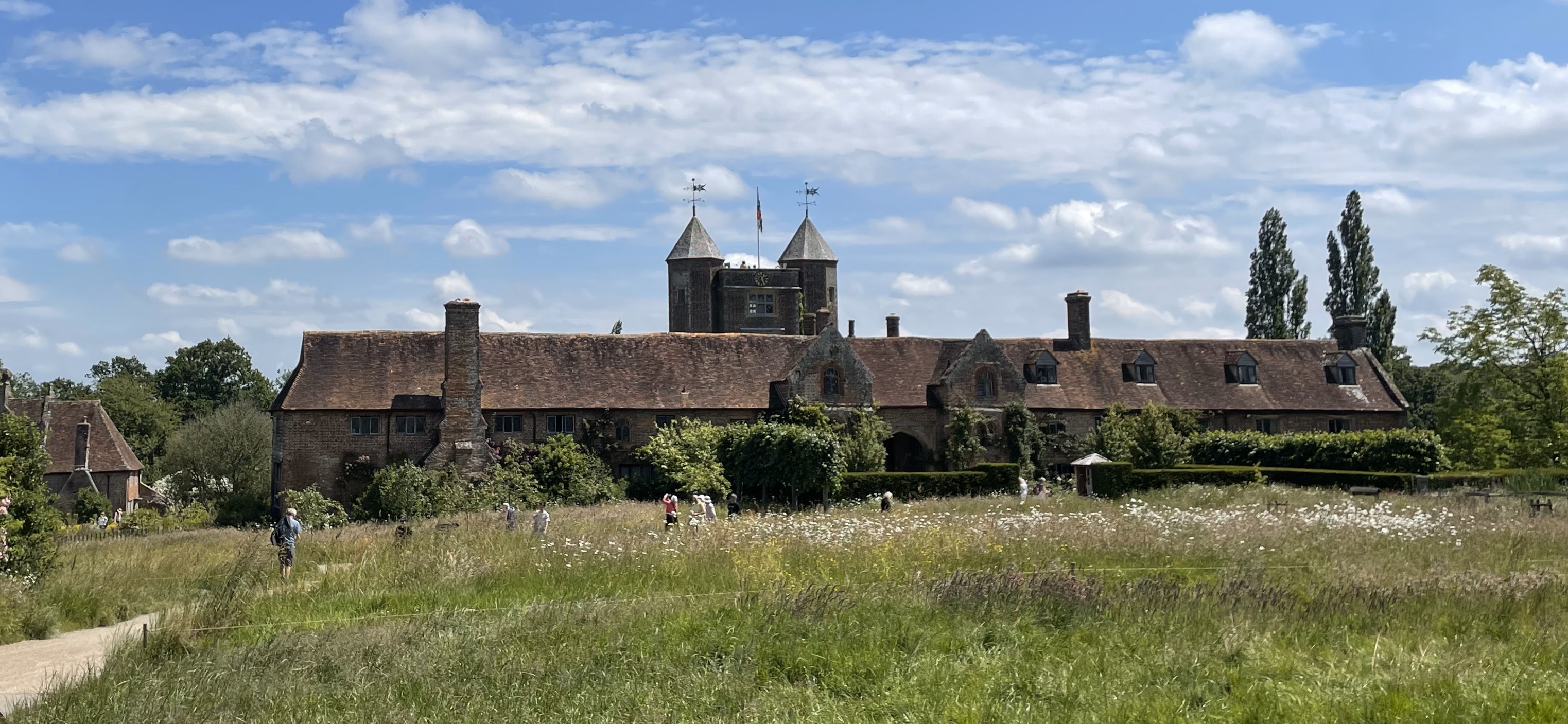
Approaching Sissinghurst Castle Gardens

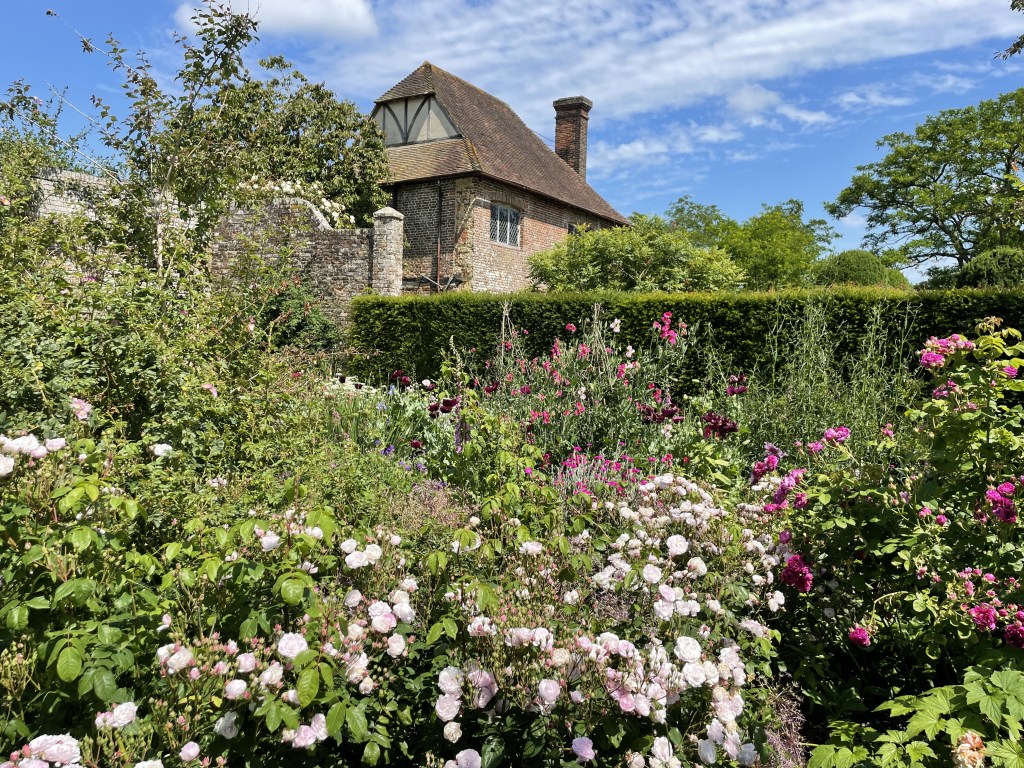
We had visited the garden early in our relationship, a few decades ago.  I barely remember that.  Even when confronted with the garden this time, I could only recall the old brick buildings not the walled gardens.  Jane thinks we went in a different season to this time; perhaps that’s why I don’t really remember the garden but my memory is like a sieve these days (as our local pub-quiz regularly demonstrates.)  Anyway, the gardens looked beautifully cared for and uniformly splendid.

The garden has developed considerably over the last century.  It was transformed from the 1930’s onwards by Vita Sackville-West and her husband, Harold Nicolson, until their deaths in the 1960s.  In 1967 the garden, castle and associated farm were taken over by the National Trust.  Since then, Harold Nicholson’s grandson and his wife, the famous gardener, Sarah Raven, developed the garden. 

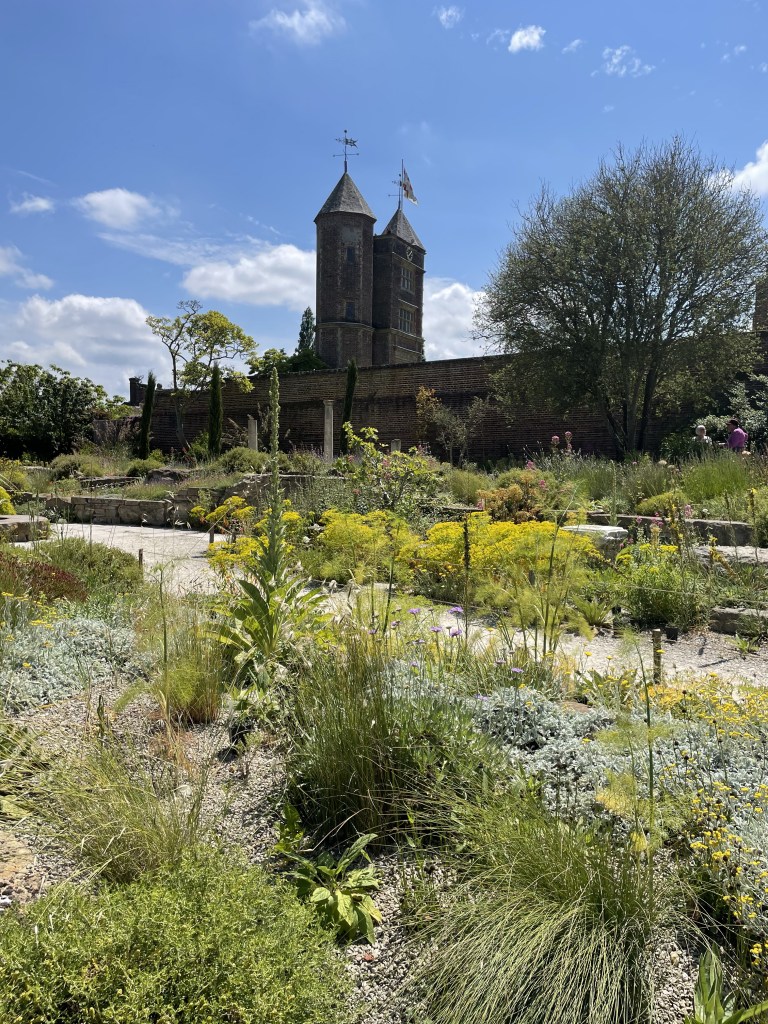
More recently, the original ideas to develop a Greek-style garden in one of its parts have been re-implemented under the guidance of yet another famous gardener, Dan Pearson, to create an area called the Delos Garden.  We visited on a gorgeous sunny day with some real heat in the air and the Delos Garden was one of the great highlights of our visit.  It really did have a Mediterranean feel.

The Delos Garden

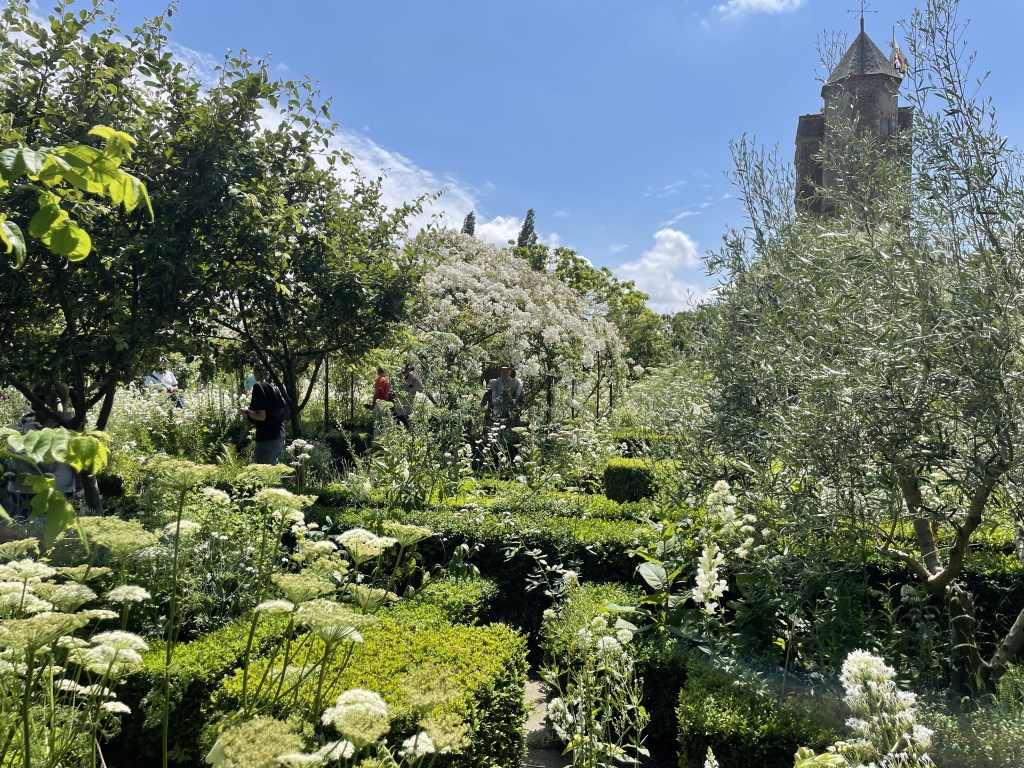
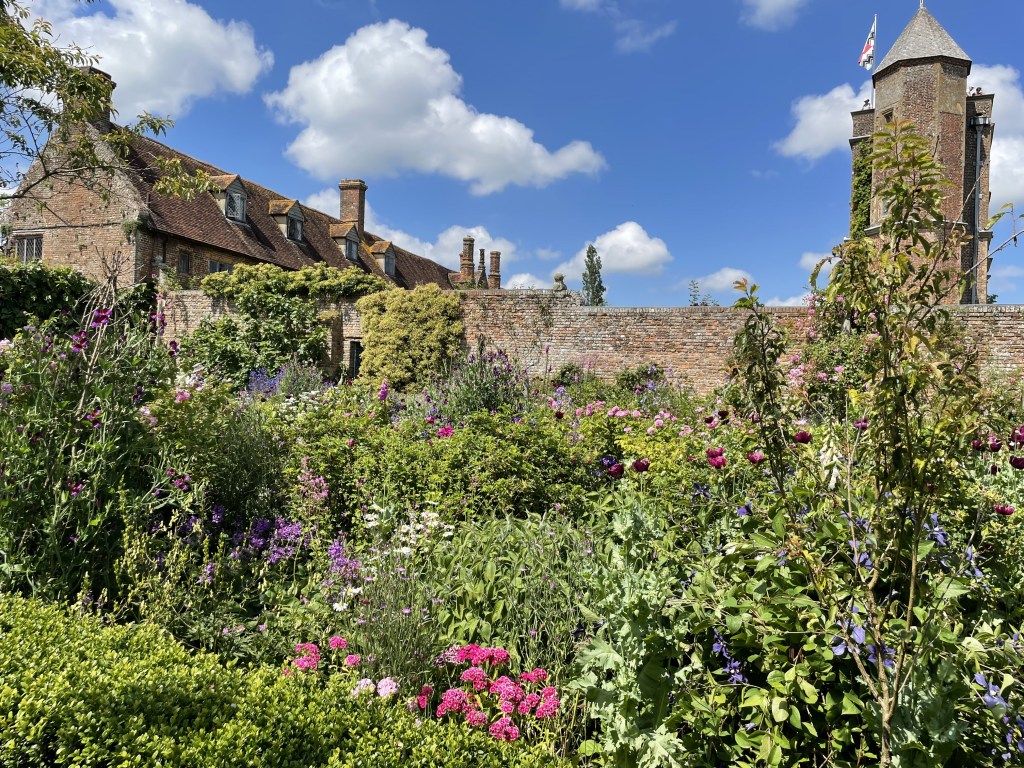
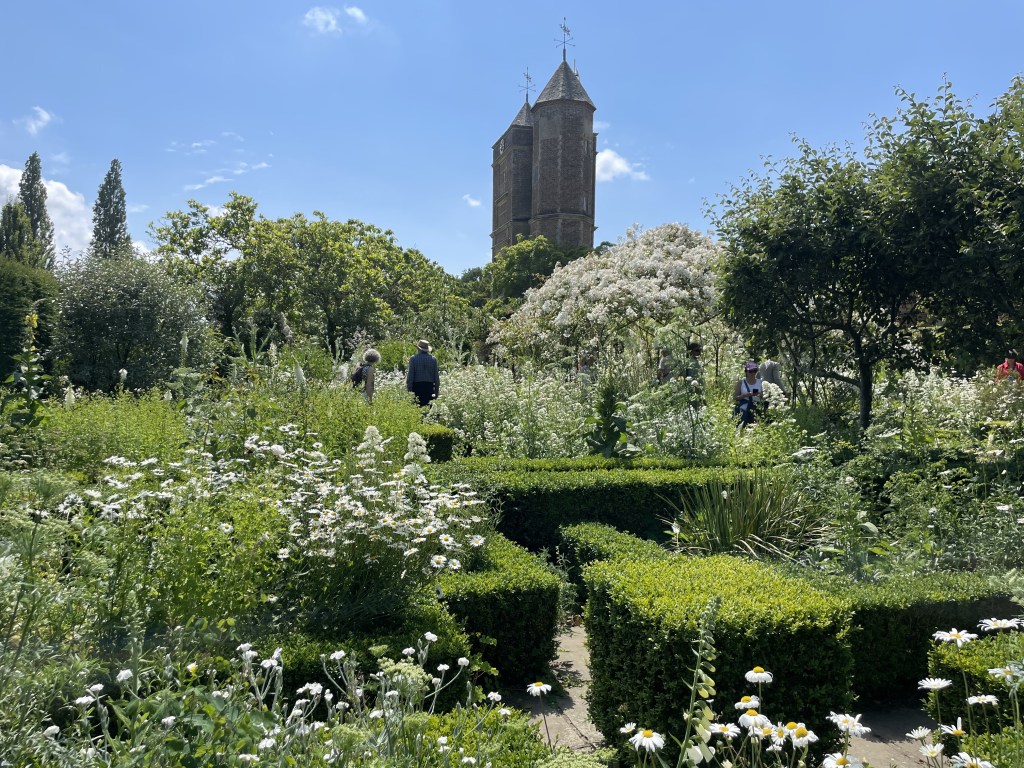
Elsewhere, in one of the several walled garden quadrants, was the White Garden.  Here too, the timing of our visit was perfect.  Not only was the sun shining but the old, huge, central climbing rose (rosa mulliganii) is apparently only in full bloom briefly and yet we saw its lovely blossom at its peak.

The White Garden

We spent well over an hour meandering around the garden, investigating all its nooks and crannies.  Then we retraced many of our steps to take another look.  The variety and density of the planting is amazing.  Every time I thought: ‘ooh I haven’t seen one of this or that species of shrub or flower’, one would turn up around the next corner.  In all directions, the colours and sheer health of the plants was breathtaking.

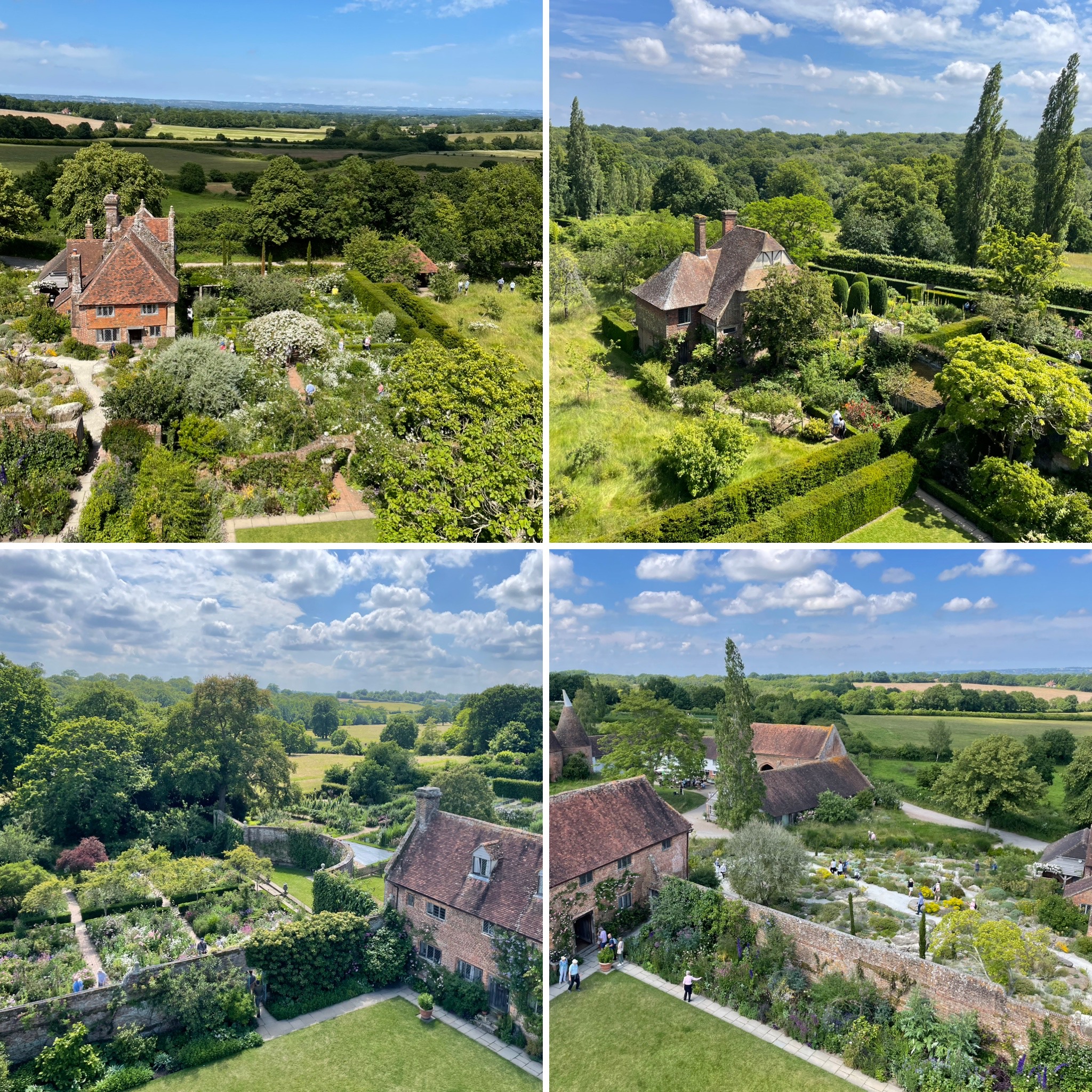
To cap the visit, I ventured up to the top of the castle for an aerial view of the garden.  In a way, I wished I had done this at the start.  That way, the layout of the garden would have been clearer from the start.  But perhaps that would have detracted in some way from the excitement I got in moving through an arch or turning a corner as I had moved through the sections of the garden.  Either way, the views from the top of the castle were as spectacular as expected.

Views From The Top Of Sissinghurst Castle

We were so fortunate to see the gardens on such a beautiful day.  Surprisingly, there was not a huge number of visitors.  The layout of the garden into walled sections also helped to give a feeling of seclusion and nowhere felt crowded. 

The entrance cost may be a deterrent for many (£15/adult).  Again, we are so lucky in that we were both given lifetime National Trust Membership by my parents when we were married.  It was an extravagant gift but one of the best value and valued ones we have ever received – the cost of life membership now is eyewatering.

We had had another lovely day courtesy of that gift and the good work of the National Trust.  It’s a really special garden and well worth a visit – especially in June.  We drove on to Rye with a bounce in our hearts.

After An Irish Wedding

I got up a little gingerly on the morning after the wedding.  My alcohol unit count and monthly quota had taken something of a battering the day before and my head was a little fuzzy.  It was a blessing then that the relatives of the bride and groom had laid on a lovely lunch with more drinks, at the wedding reception venue at Ballycurry.  I had enough scope in my alcohol unit quota for a ‘hair of the dog’ or two.

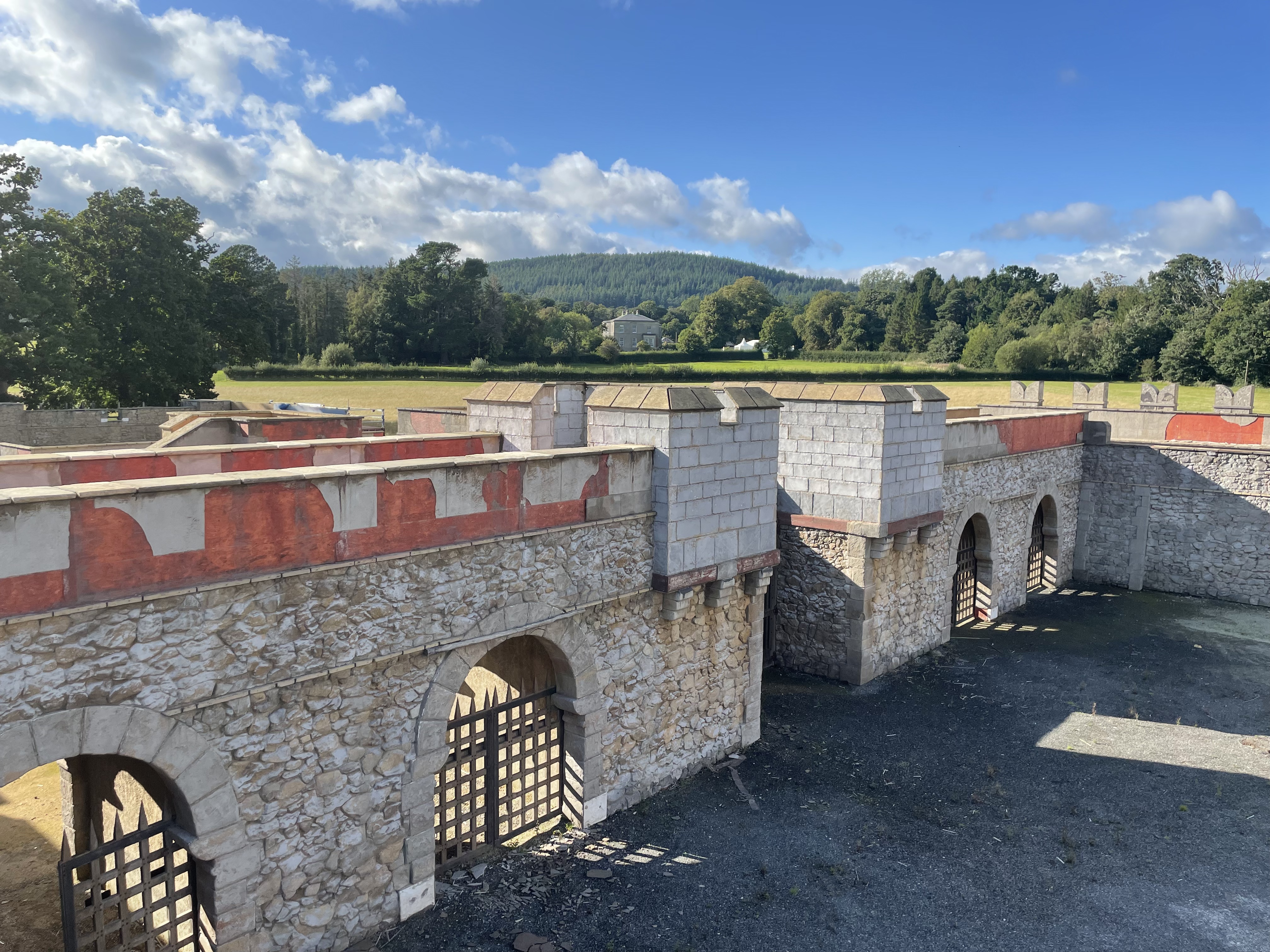
By now, after a damp start, the weather was gorgeous and the manor house and estate looked splendid.  After an excellent buffet lunch, we had the opportunity to see one of the recent ventures the bride’s brother has initiated to diversify revenues into the estate farm.  This was a substantial film set that has been used by the BBC and, latterly, for streamed series such as Vikings and The Last Duel.  The scale of the set was impressive and now the trick will be to find new ways of using it for further dramatic series.

The Film Set With The Estate House Beyond

The next day, our last full day in Ireland, again started with dreary weather.  We considered abandoning ill-formed plans to visit local gardens and to visit Dublin’s galleries and museums instead.  But as we left our Airbnb, blue sky appeared and we headed east over the mountains again to Glendalough.

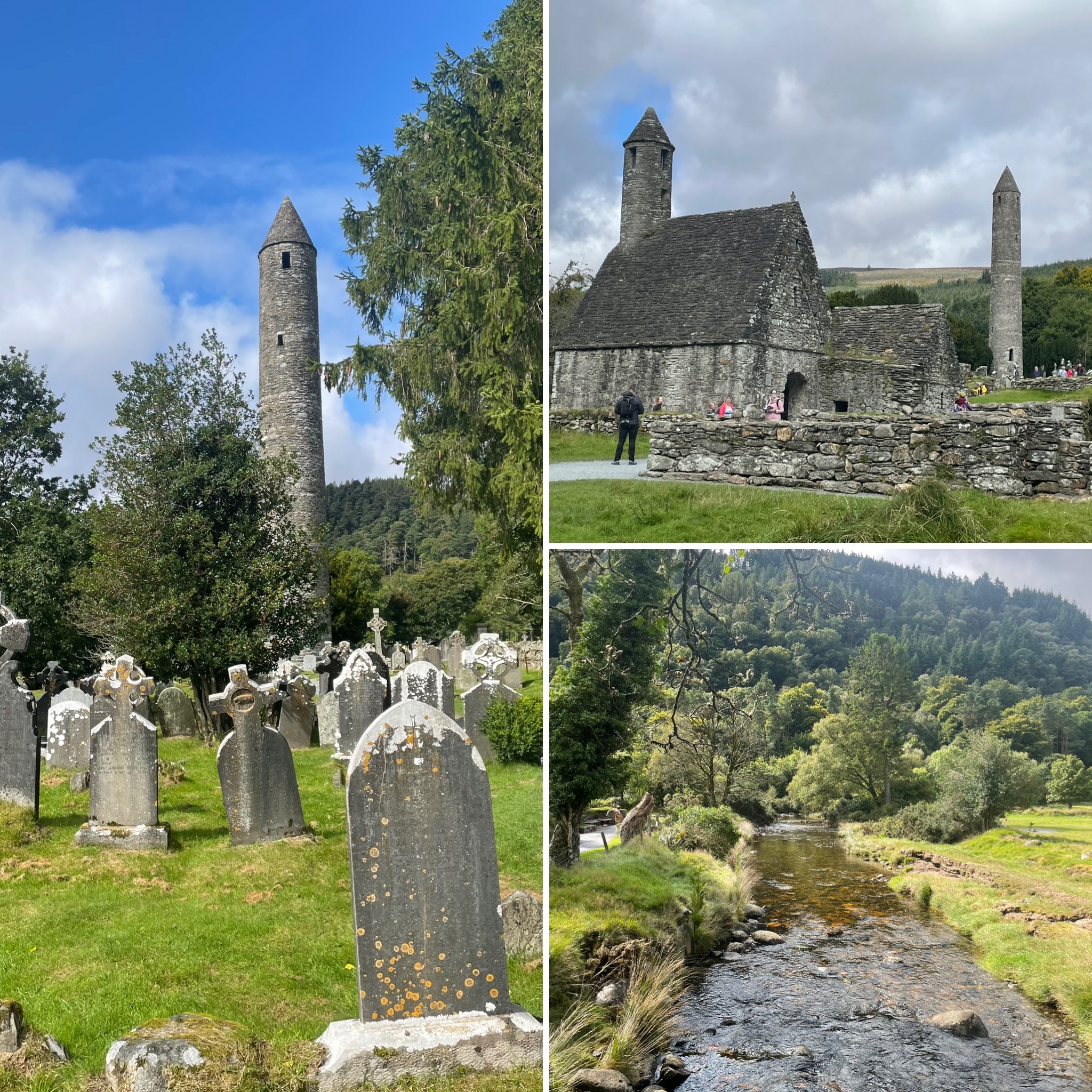
Glendalough

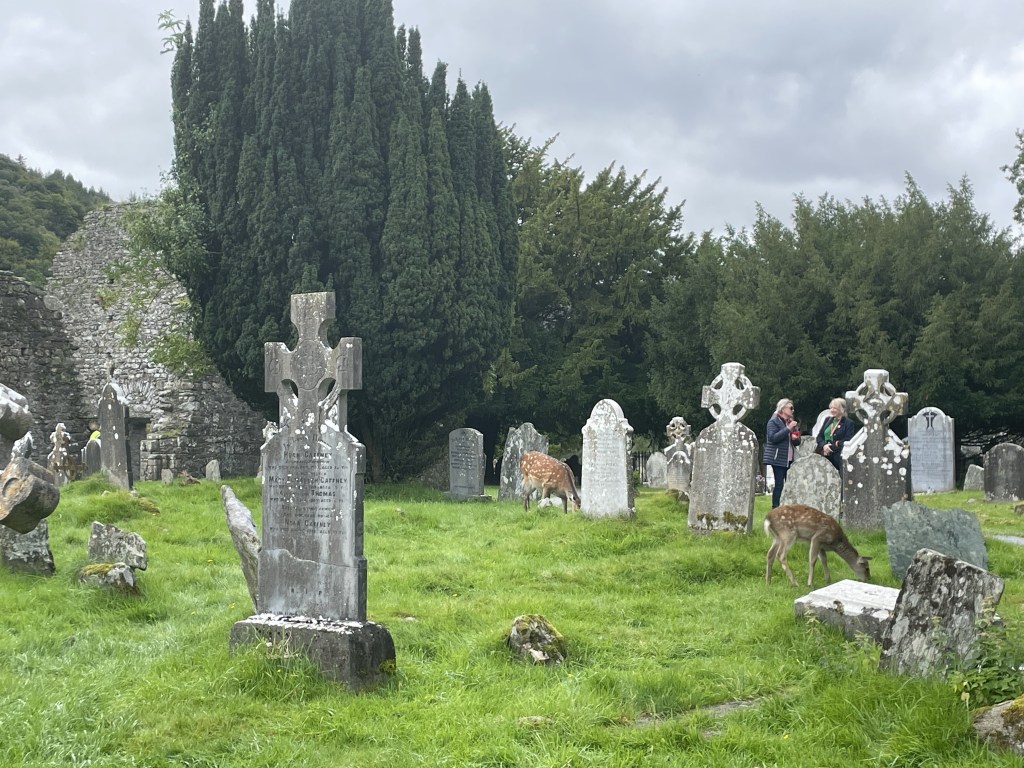
This is an ancient monastic settlement, set in a glacial valley, and now a big draw for tourists.  We arrived just in time to find a parking spot among hundreds of cars and a fleet of large coaches.  The ruins of the towers, monuments and chapels are very picturesque.  The quaintness of the scene was enhanced by the presence of semi-tame deer mooching between the gravestones despite the crowds. 

Deer Amongst The Gravestones At Glendalough

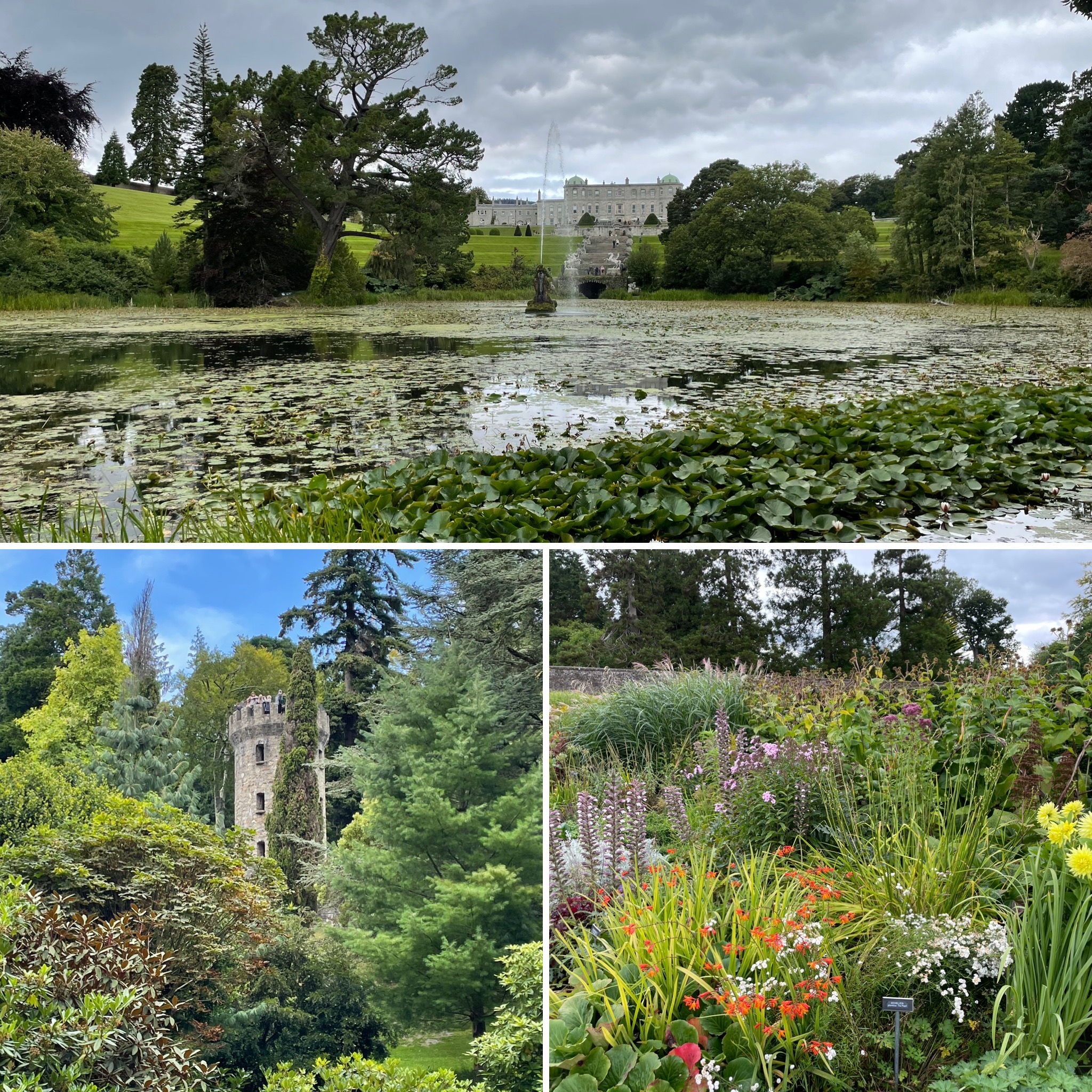
Rather than loiter among the throng of tourists, or embark on the suggested nearby woodland walks, we headed off to lunch at Powerscourt Gardens.

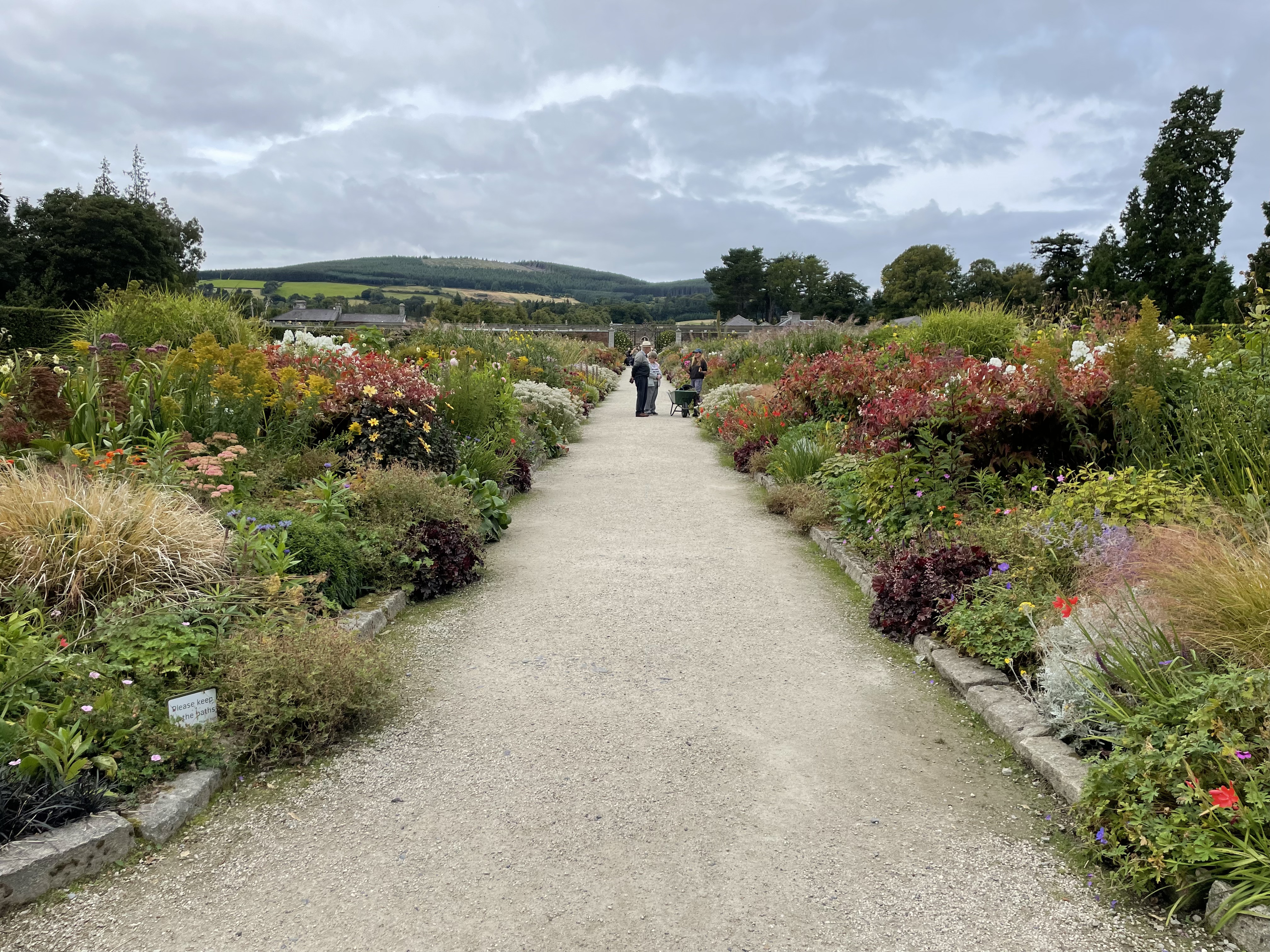
Powerscourt Gardens (Including, Apparently, The Longest Herbaceous Border in Ireland)

The mansion at Powerscourt was destroyed by fire in 1974 and has been restored since as a tourist destination with a few high-quality shops (including a couple of Jane’s favourites) and a restaurant.  We were able to bag a restaurant seat by the window overlooking the 47 acre expanse of formal gardens and arboretum.  The view was great and the food was excellent quality and value. 

Powerscourt Gardens And Great Sugar Loaf Mountain

We worked lunch off a bit with an extended walk around the gardens.  These are varied in format and large enough to absorb the large number of visitors, especially as we moved away from the main building.  The sun was creating lovely dappled shade, the borders were full of colour, bees and butterflies, and the views were splendid.  I enjoyed our relaxed time at Powerscourt very much.

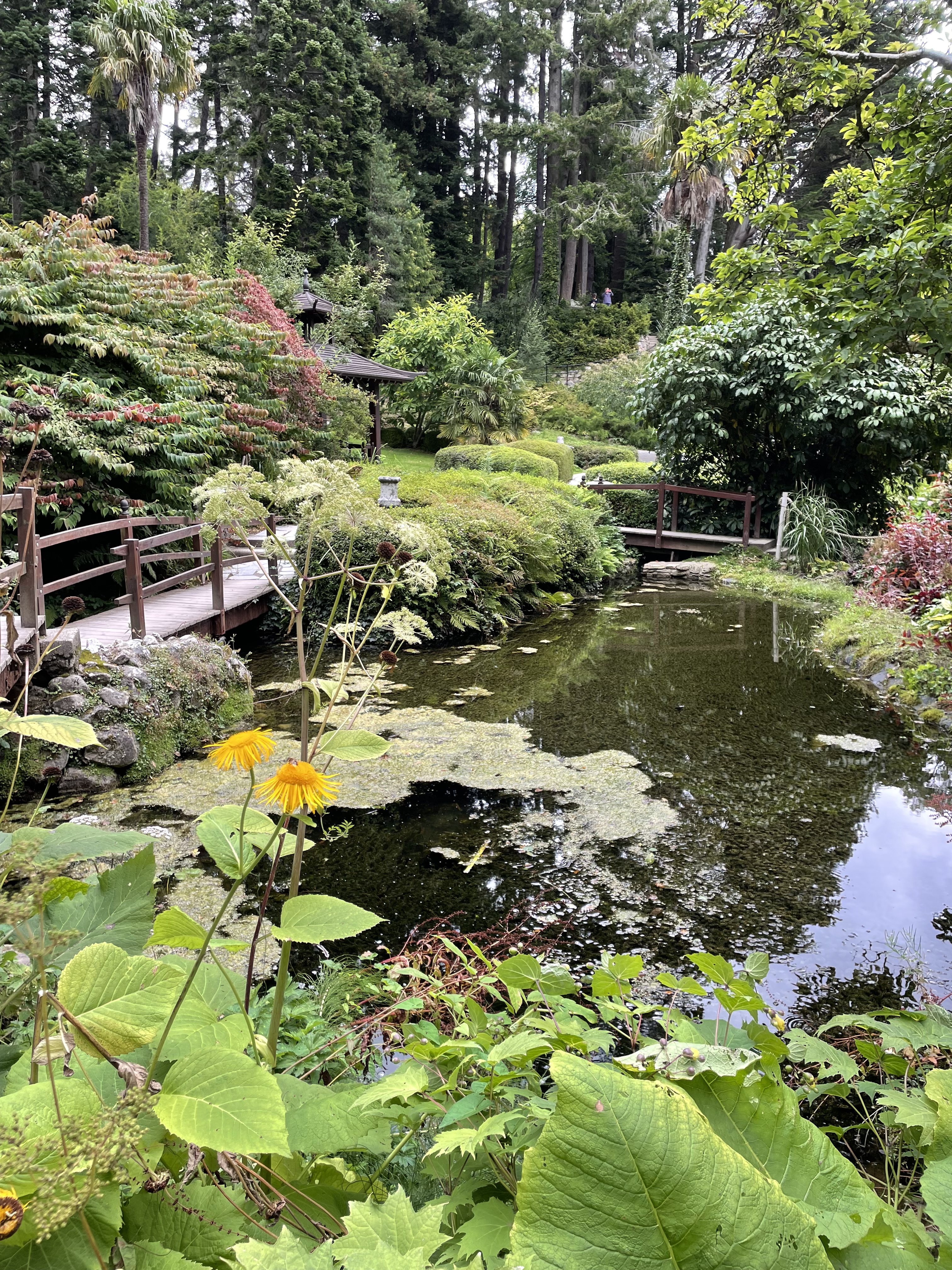
The Japanese Garden, Powerscourt

Our penultimate excursion (apart from one final, smooth charging up of the car) was again to the coast.  We visited Bray Head with the intention of walking along the coastal path for a while.  Unfortunately, this was shut due to a recent rockfall so we ventured up towards Bray Head.  This was a steep and stony climb that, until we reached the top, afforded none of the expected views of Bray or the coast to the north. 

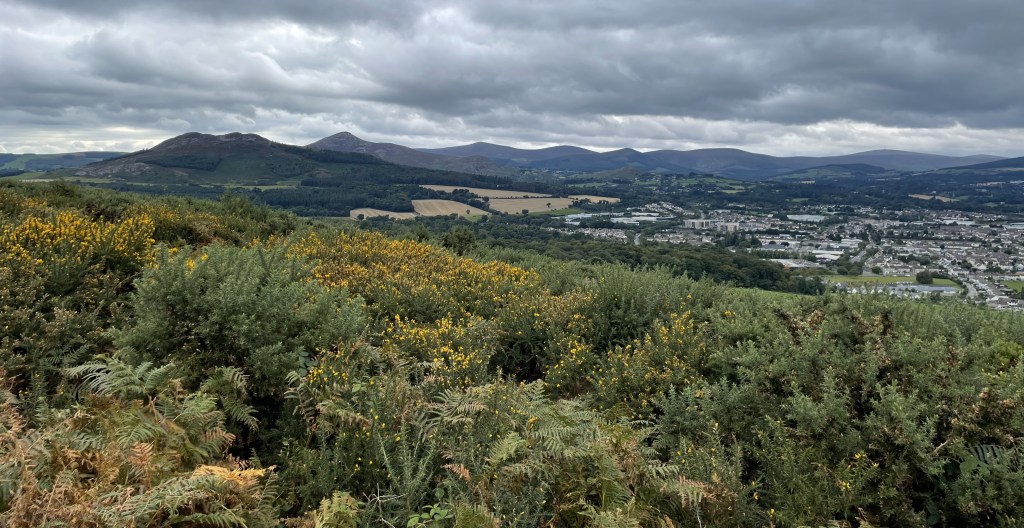
Looking South and North West From Bray Head

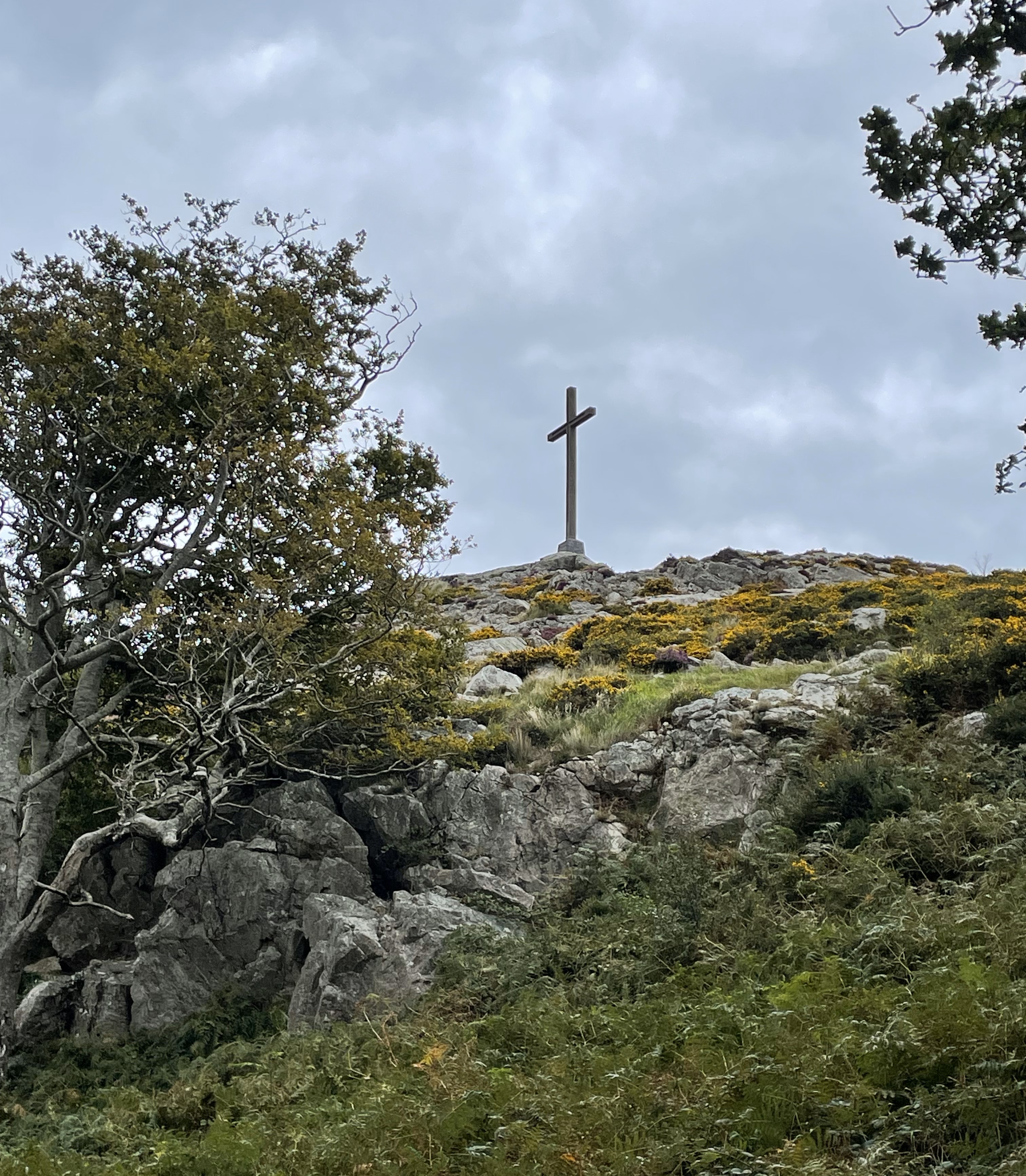
Eventually I made it to the top of the tree line to get some long views up the coast and across to the Wicklow Mountains but I eschewed the final scramble to the imperious, concrete Bray Head Cross which was built in 1950 and from which, I imagine, the vistas are even more spectacular.

Bray Head Cross – It’s Bigger Than It Looks Here

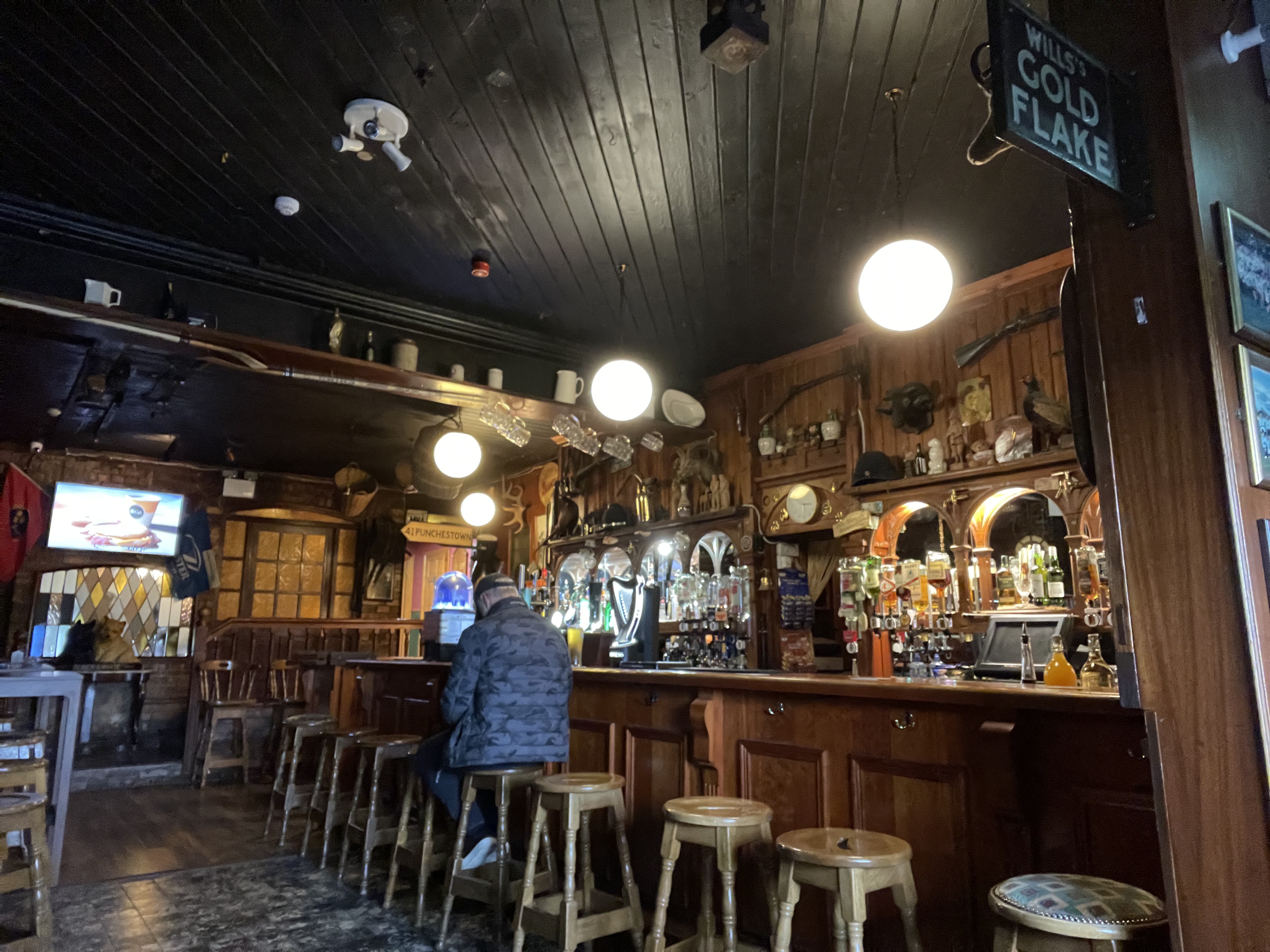
Jane had one more thing on her bucket list for the trip before we left for Roslare and the ferry uncomfortably early the following morning.  That was to visit a traditional, rural Irish pub.  We popped into the one nearest to our Airbnb, Brennans in Kilteel, which was just inside Kildare rather than Wicklow. 

An Authentic But Rather Empty ‘Brennans’, Kilteel, At 6pm On A Monday Evening

As was befitting, I had a pint of Guinness (which took me fractionally over my 100 alcohol unit quota for the month but which was very nice and creamy).  In a nod to our normal UK-routine we completed the Guardian newspaper Quick Crossword over our drinks.  Then we headed back to our Airbnb to finish the Netflix Scandi-noir crime series we had started earlier in our trip, polished off the remaining chocolate and crisps, and had an early night.  It was a pleasantly chilled evening to complete our busy day and our brief stay in Ireland!

Before An Irish Wedding

At the end of August, Jane and I travelled by road and ferry to County Wicklow in Ireland to attend, and help celebrate, the wedding of a granddaughter of Jane’s aunt.  This was a great opportunity to see a part of Ireland and a useful test of driving (and, critically, charging up) our electric car in a foreign country.  We had decided to tack a free day on either side of the two days of the wedding events so we could get a feel for County Wicklow and space out the two 12-hour journeys to and from Ireland.

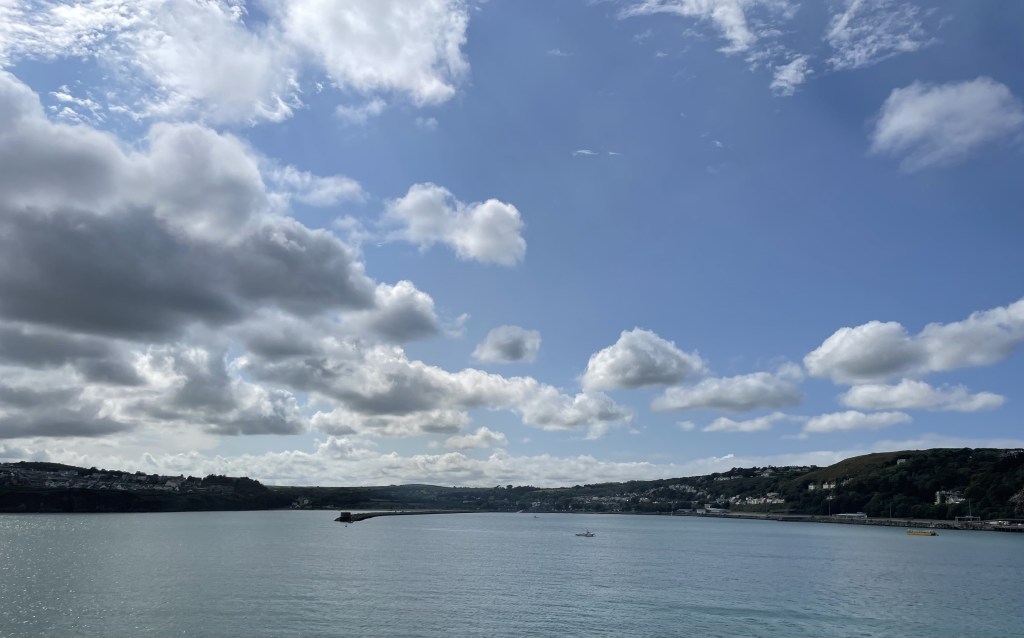
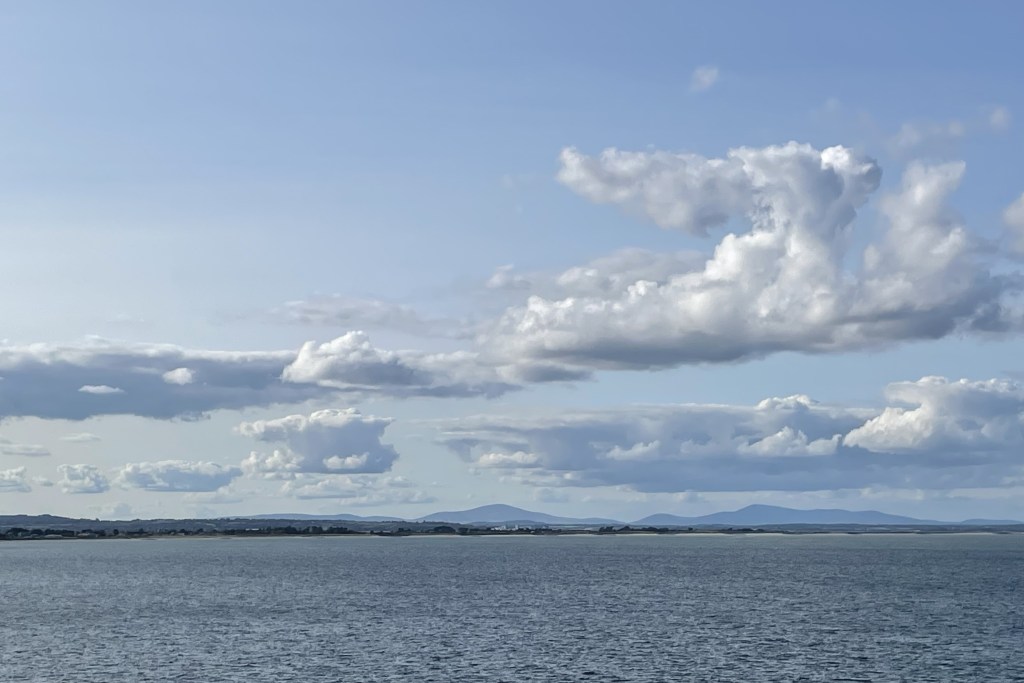
Leaving Fishguard, Approaching Roslare. The Ferry Trip Reminded Me Of My Childhood Trips To The Isle of Wight

The only time I had been to the Republic of Ireland before was for a short conference in Dublin.  I only really remember that trip for it being the only time in my working career that I was ever late for the start of a conference due to drink-induced oversleeping (I had previously prided myself on turning up no matter what).  During this latest visit, the drinking was much more moderate, the wedding celebrations were lovely and we had a very good time.

We stayed in an Airbnb on the west side of the Wicklow Mountains – the opposite side from the location of the wedding.  That meant more driving for Jane (since she didn’t really trust me in the narrow lanes) but it enabled us to see much more of County Wicklow and the eastern edge of County Kildare.  Having our own car allowed a comfortable familiarity and charging it up was relatively easy, although more expensive than in the UK. 

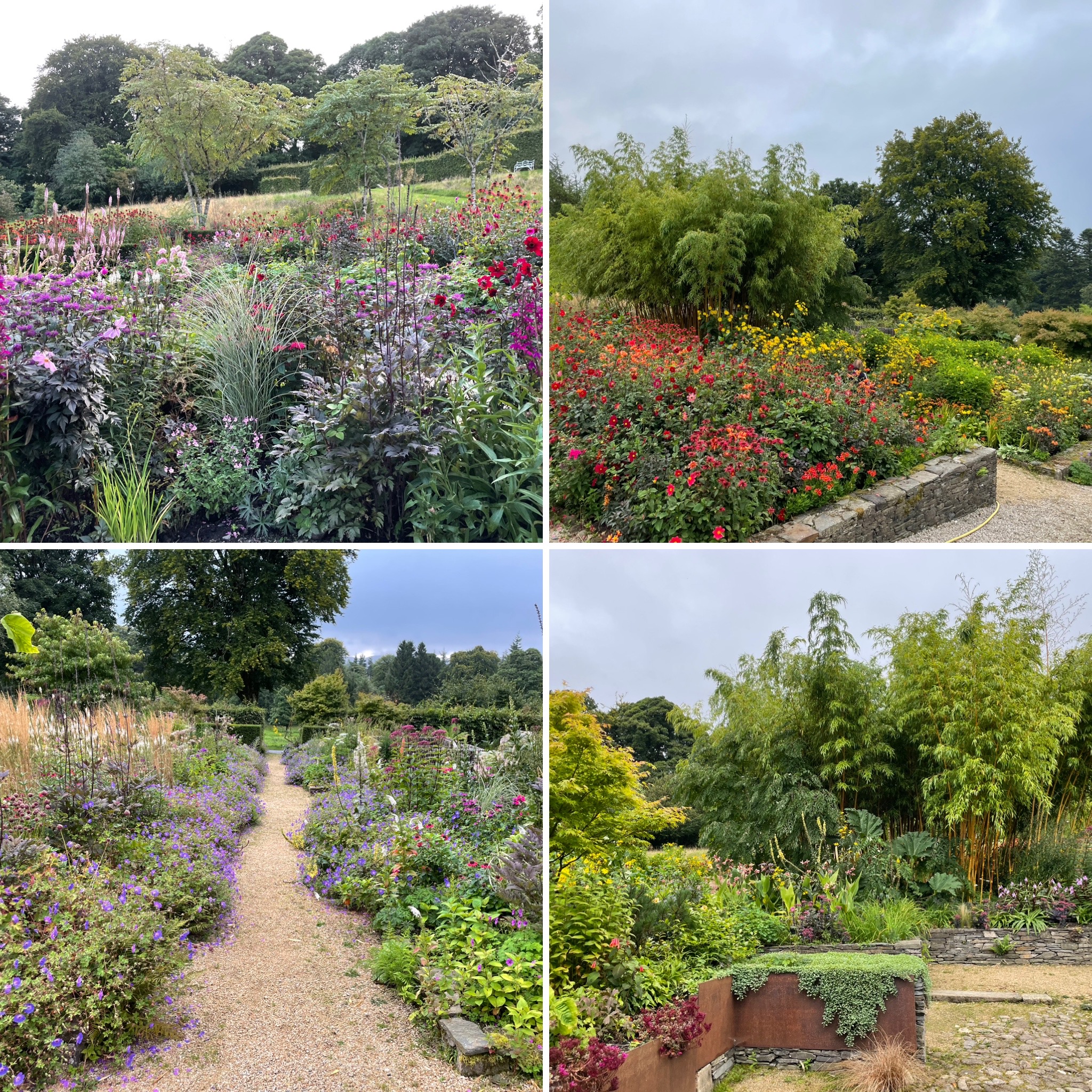
Our Airbnb was in a renovated and repurposed farm outbuilding amid a lovely garden that is periodically open to the public – June Blake’s Garden.  At the time of our visit the flower beds were packed with colour.  The dahlias (I have come to love this species of plant) were particularly gorgeous.  It was lovely to stroll through the garden and among the restored farm buildings whenever we went out to the car or just to put the recycling out. 

June Blake’s Garden, Blessington, Wicklow

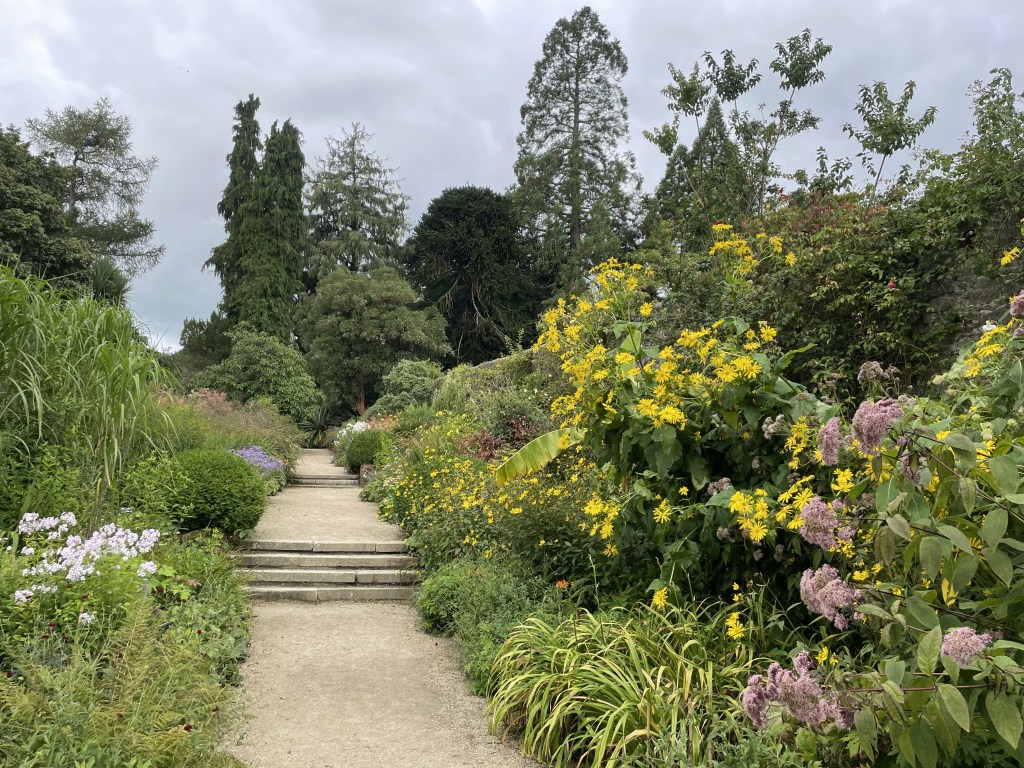
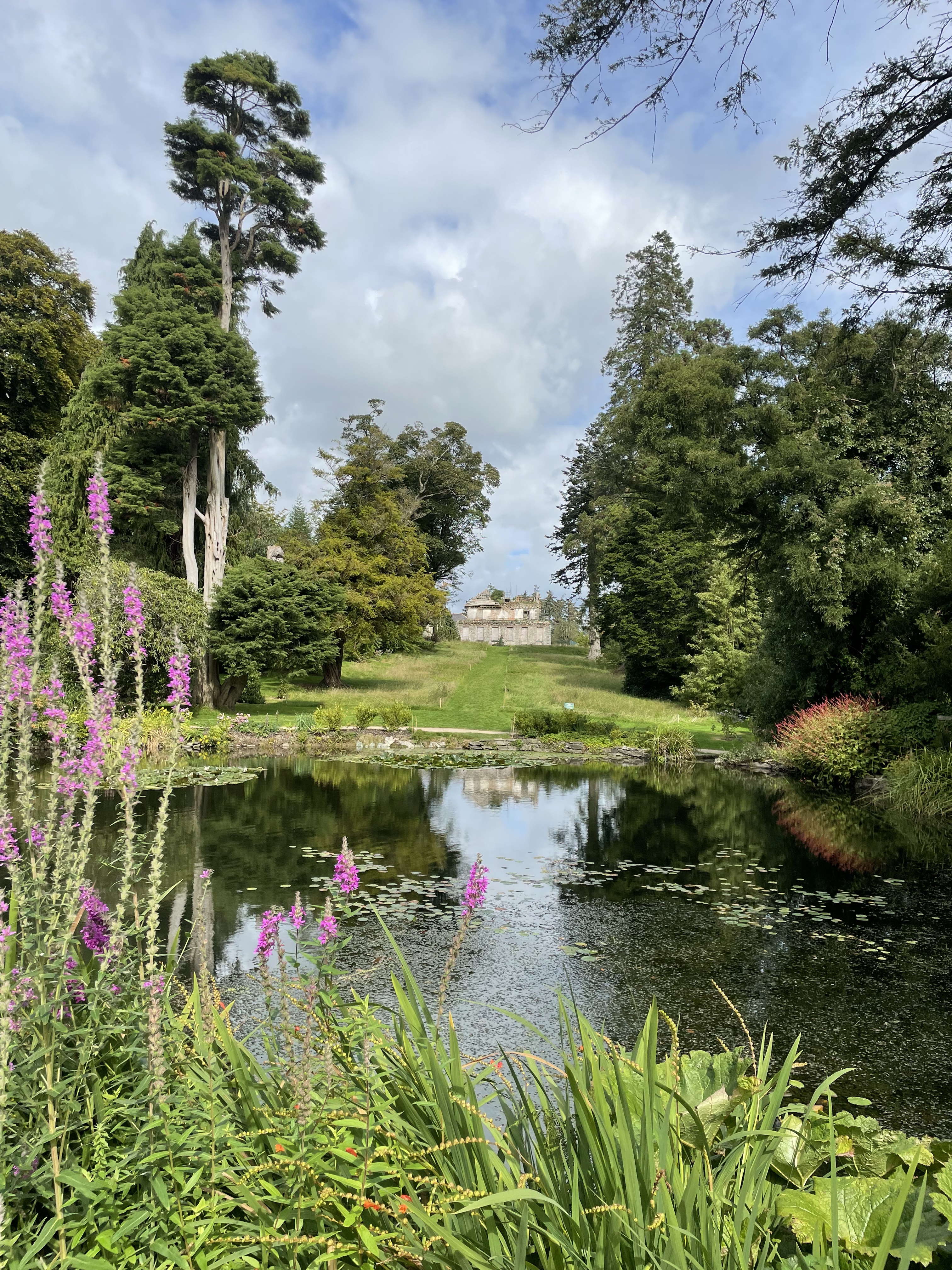
Armed with information from the Airbnb host, the bride to be and a travel blog I follow by someone living in Ireland (Marie at HopsSkipsandJumps), we ad-libbed our itinerary and set off on our first free morning to the National Botanic Gardens at Kilmacurragh.  The meadows, trees and one long flower bed that was full of interesting plants and masses of bees and butterflies, were lovely and the weather was kind.

National Botanic Gardens, Kilmacurragh

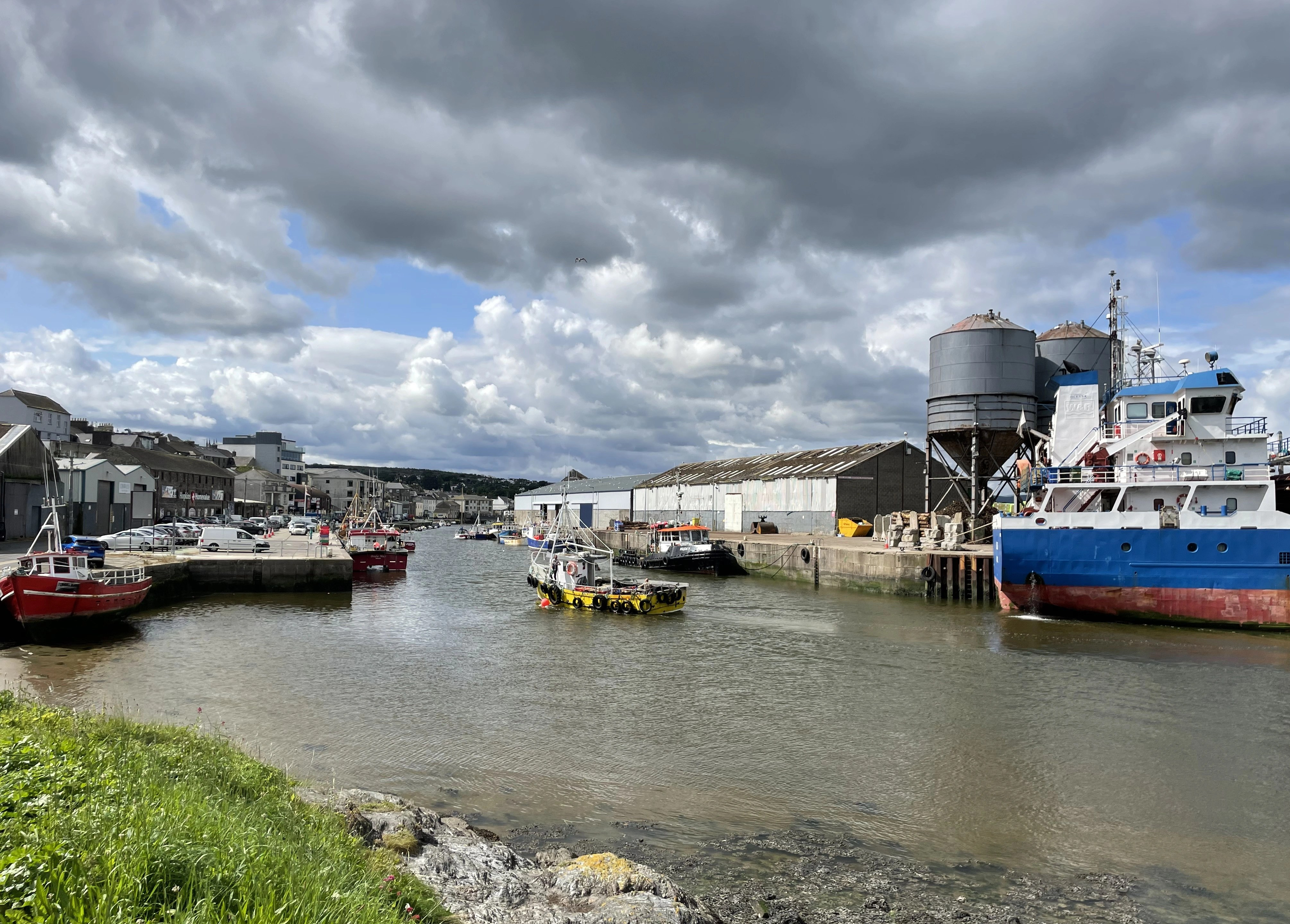
We then headed to the town of Wicklow for a perusal of the county town and lunch.  Already we were finding the Irish people very friendly and, as we sat on the quayside with our fish and chips, a quip from a passer-by, “ahh, fine dining!”, made us giggle. 

Wicklow Town Docks – Perfect Spot For Fish And Chips!

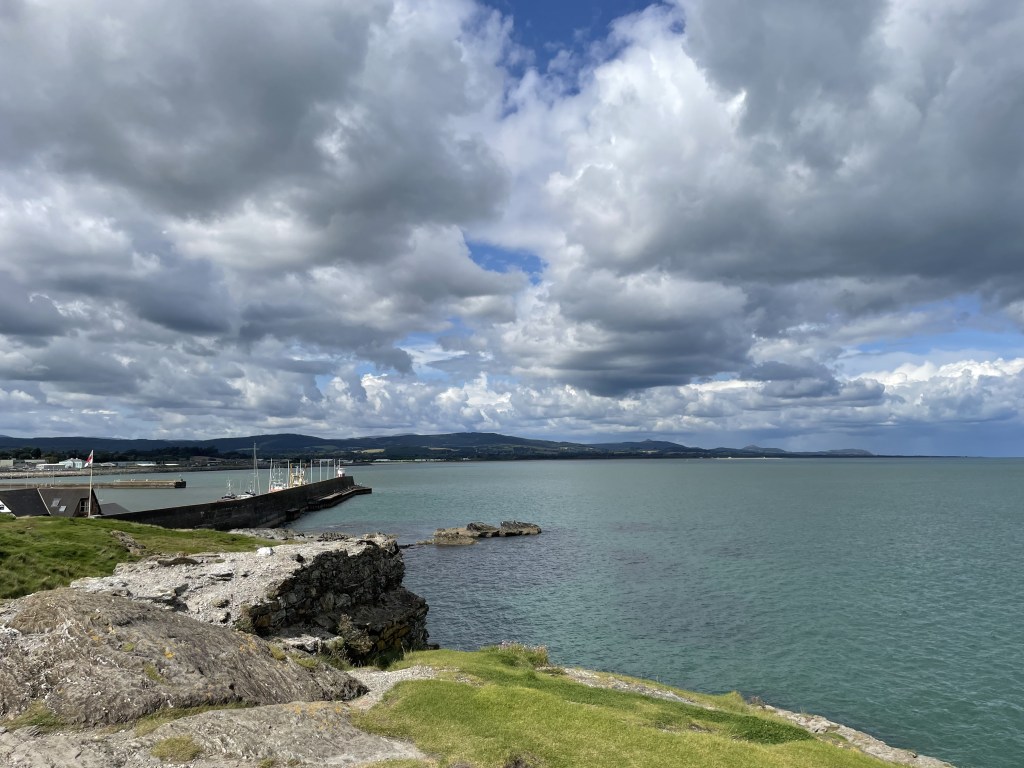
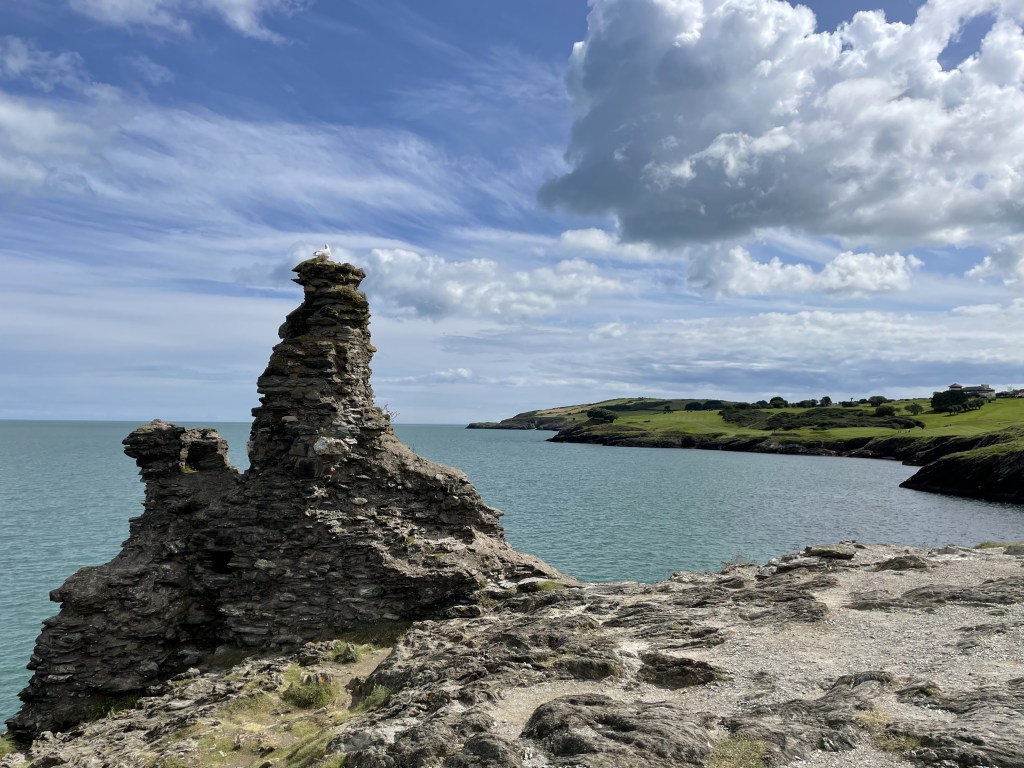
We took a look at the remains of a Norman castle, (The Black Castle) on a promontory overlooking the town.  We loved the views along the coast in gorgeous sunshine.

Views From The Black Castle, Wicklow Town

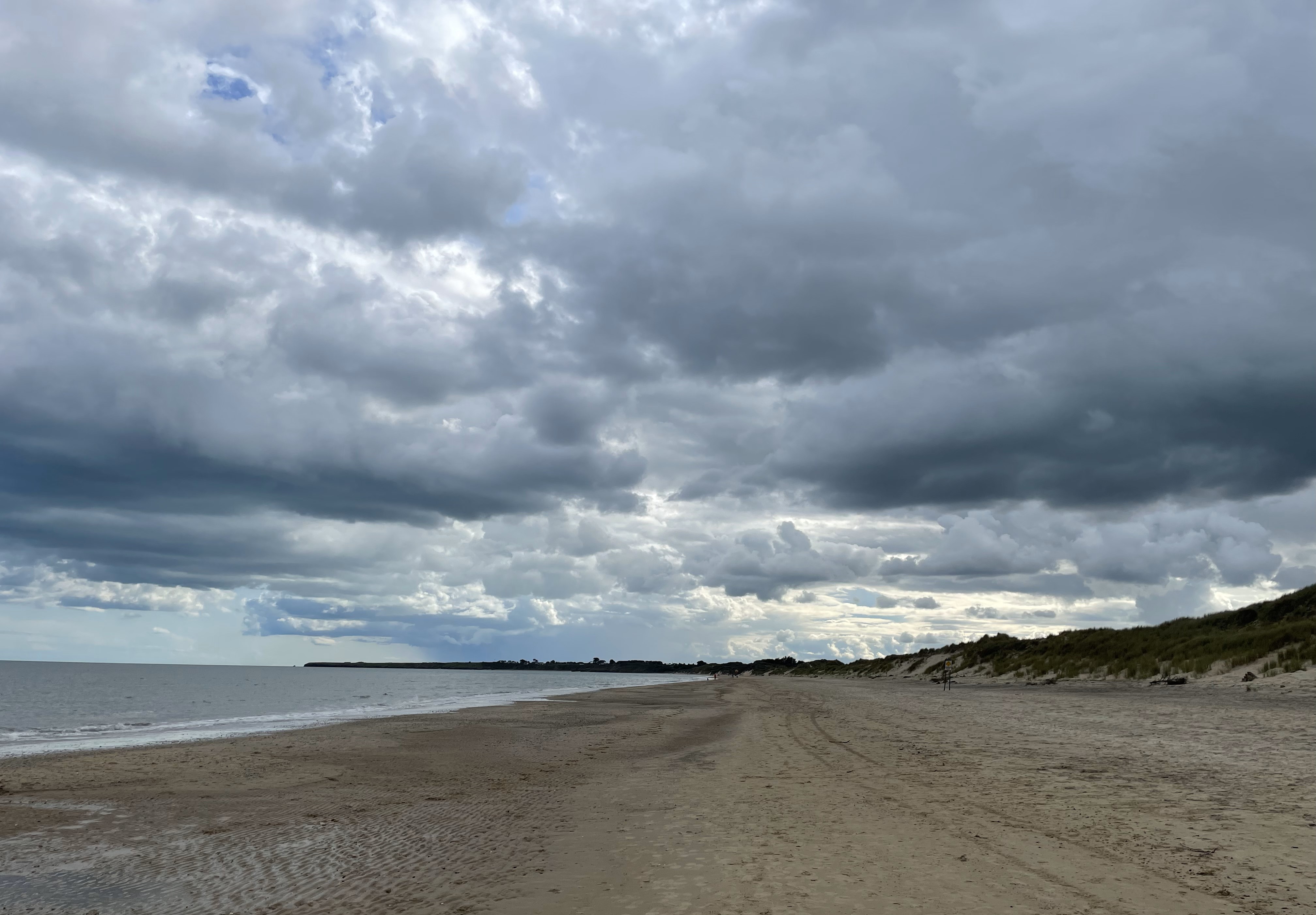
Jane wanted to visit the hand weaving mill and shop at the ancient and pretty rural settlement of Avoca.  Having negotiated our way down some very narrow roads to Avoca and wandered around the shop, we returned to the coast for a wander along one of the long and surprisingly empty beaches on the Wicklow coast.  

Avoca Handweaving Mill And Shop
The Long Beach At Brittas Bay

We then headed home equipped with bits of fruit, nuts, chocolate and crisps for an evening in front of Netflix.  To be honest we didn’t eat very healthily until we got to the wedding reception but we did enjoy The Lørenskog Disappearance, which is yet another European crime thriller in which we seem to specialise.

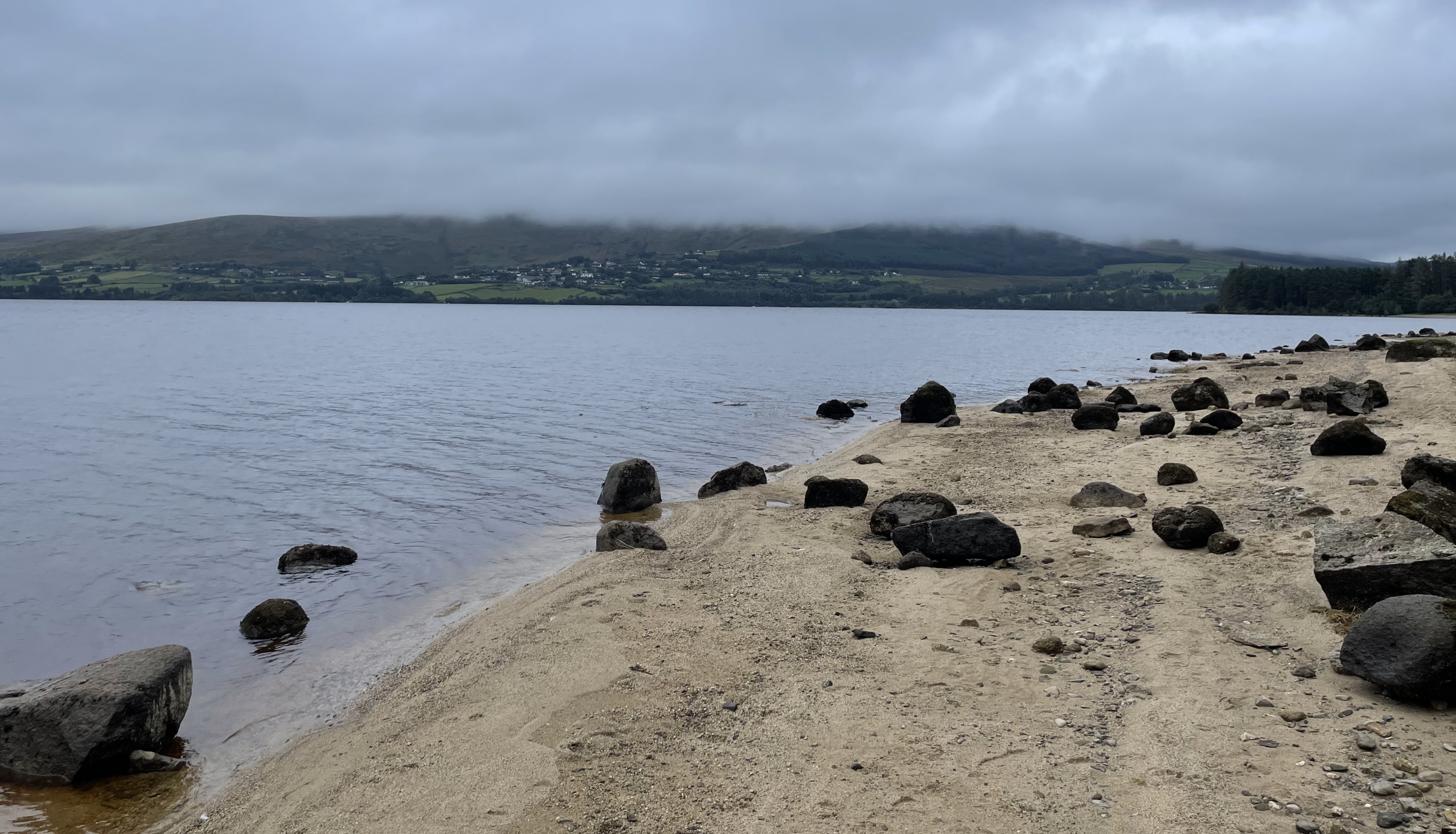
Next morning was rather grey and drizzly.  We ventured a quick walk and a breath of fresh but damp air around a section of the nearby Blessington Lakes. These were formed over 50 years ago when the Poulaphoca Dam was built. 

Blessington Lakes And Low Cloud Over The Wicklow Mountains

Fearing rain, we headed back to the Airbnb to change into our glad rags.  In my case that involved squeezing rather inelegantly into a morning suit that I hadn’t worn for decades and that I first wore at my own wedding over 38 years ago.  It was a little tight to say the least!

Then we were off to the wedding ceremony.  The wedding service, in Nun’s Cross Church, Killiskey, was lovely and cheering.  The weather perked up for the photos on the way out and we made our way to the wedding reception.

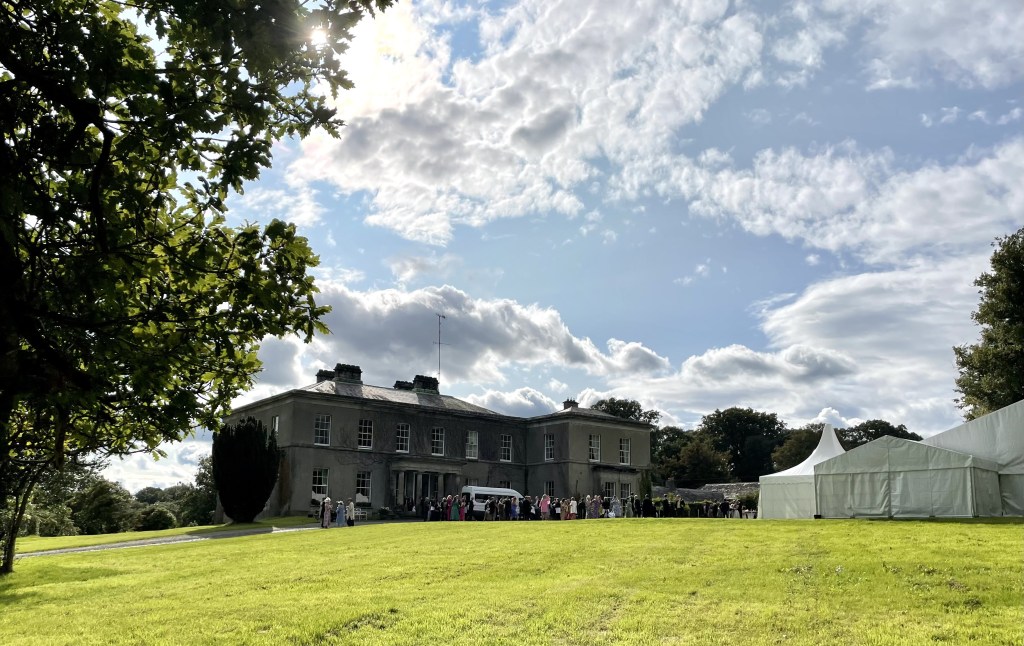
Ballycurry

This was in a giant marquee directly in front of an impressive country house owned by the bride’s family.  The estate is managed by her aunt and uncle and, latterly, her brother.  The setting and arrangements for the reception were both marvellous.  The marquee was laid out for around 170 guests and we all enjoyed an evening of plentiful drinks, lovely food (especially the local lamb), dancing, mingling and celebrating. 

It was a late night by the time we got back to the Airbnb, but it had been a thoroughly memorable day.

Spring Visits

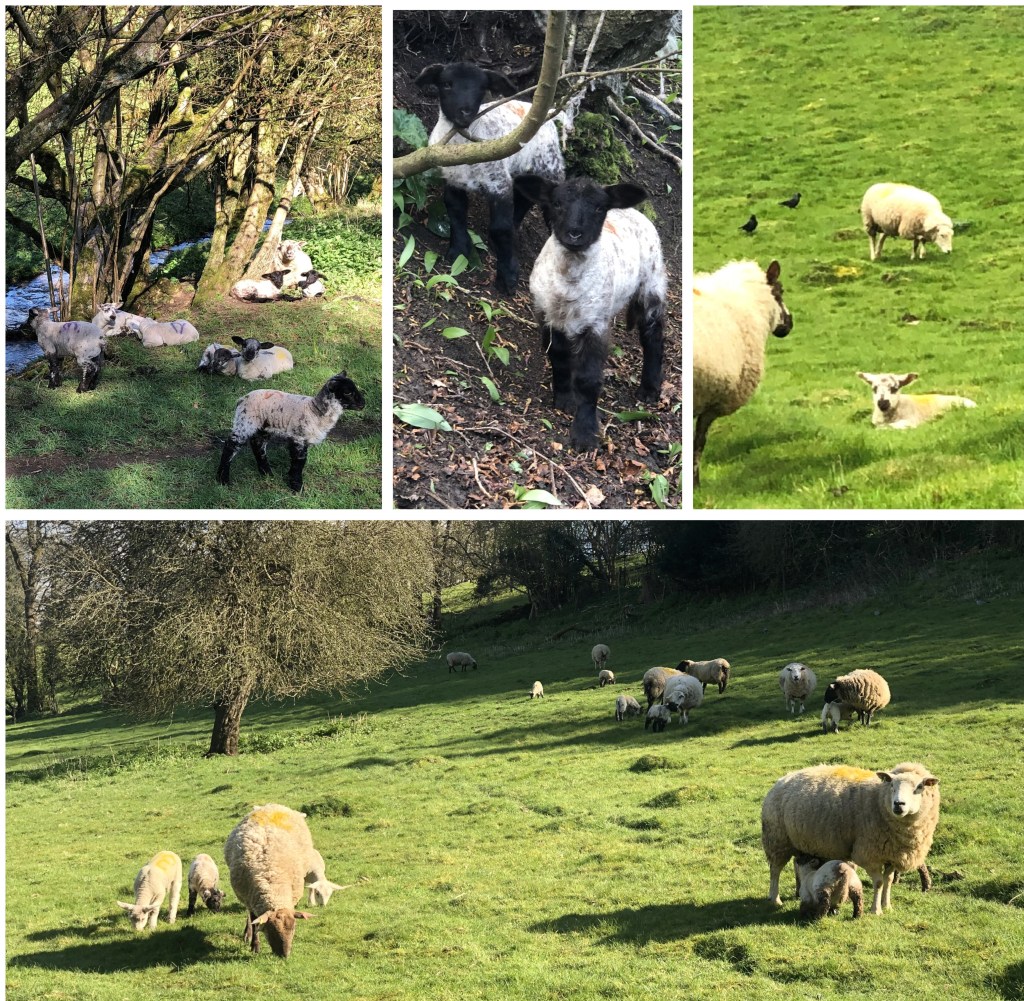
Ok, so yesterday afternoon we had a brief blizzard of snowflakes, but Spring is well and truly here!  Trees are starting to reveal their leaves and the blackthorn has been in flower for weeks.  Cherries and magnolias are in full bloom.  Lambs have arrived in the fields adjacent to and opposite our house.  Their carefree gambolling about on wobbly legs is always a huge pleasure to watch at this time of year.

Worryingly, but not unexpectedly given the fact of global warming, Spring seems earlier every year.  Even by mid-March I was starting to see a range of butterflies (including Brimstone, Clouded Yellow, Small Tortoiseshell, Orange Tip and Red Admiral).  But, whenever Spring feels like it has arrived, it is always a joy.

Once again, during a trip to Edinburgh, the weather was very kind.  One time in the future when we visit Edinburgh, all our sunny days there so far are going to be repaid by relentless rain and grey but…  not yet!

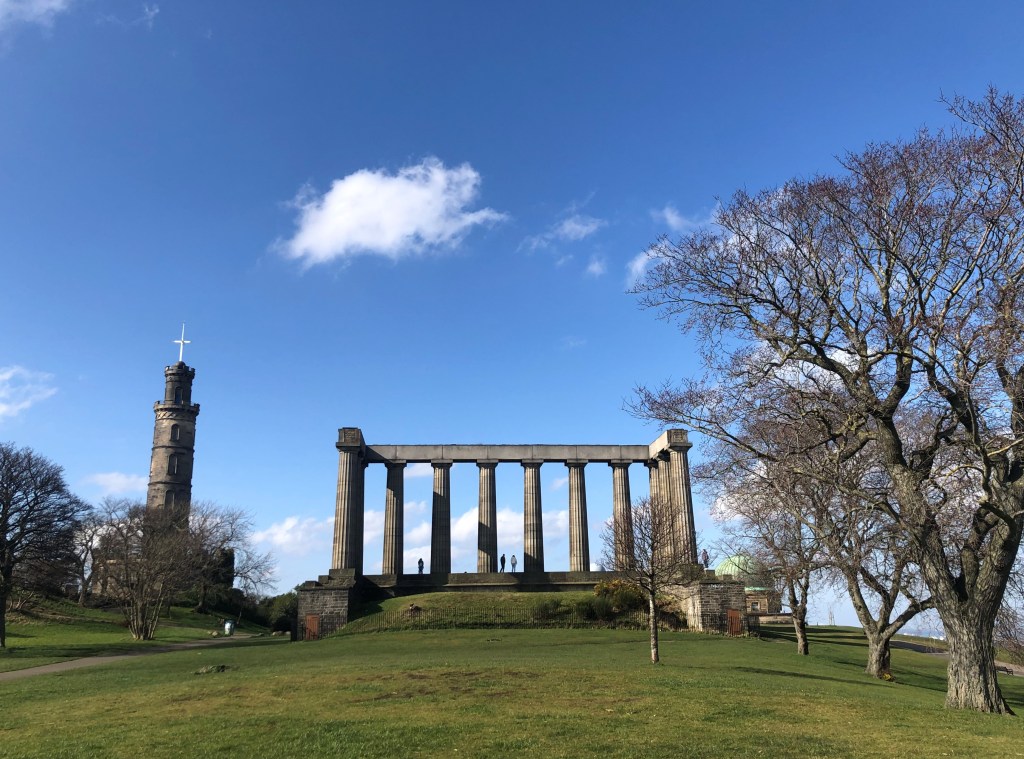
On Carlton Hill, Edinburgh With FG (Asleep And Out Of Shot)

On this trip there was the novelty and pleasure of picking up my Dad on the way and taking him up to Edinburgh with us.  That enabled him to see Edinburgh again for the first time in a decade or so but also, critically, to meet his great grandchild (our First Grandchild (FG)).  It was actually too, the first time he had me FG’s mother since previous attempts to meet up had been thwarted by train cancellations or pandemic restrictions.  The building of new relationships even extended to my Dad meeting FG’s other grandparents over a lovely lunch at their flat.

Of course, Long-Suffering Wife (LSW) and I did our pram-pushing duties to send FG off to sleep while taking in the sights and smells of Edinburgh.  (There is a brewery in the city and the smell of hops reminded me of the breweries in my home town of Reading when I was a kid.)  Once again we visited the excellent Royal Botanic Garden which was perfect in the sun. 

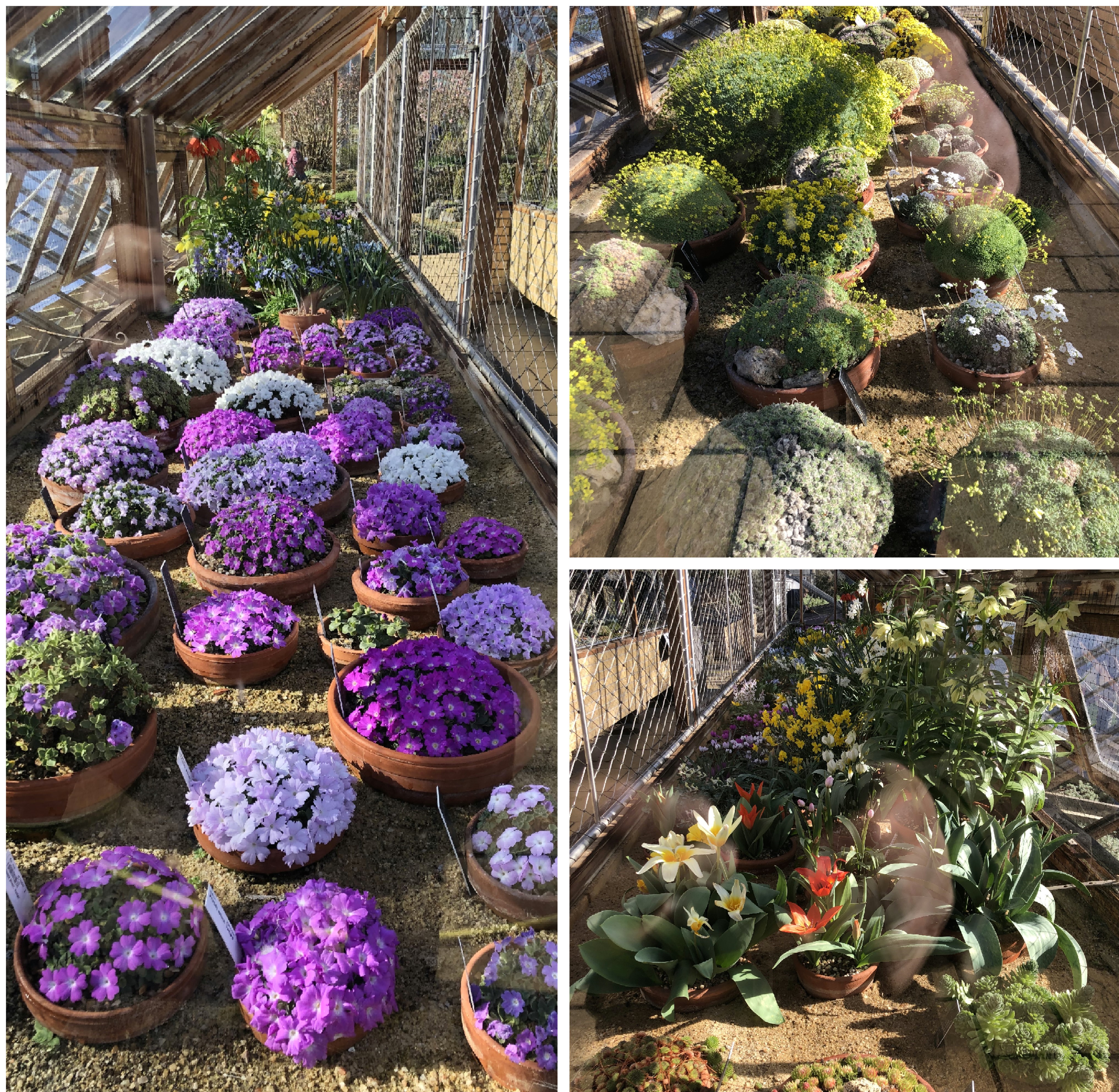
Inside The Alpine Houses At The Royal Botanic Gardens, Edinburgh
The Obligatory (But Lovely) Slew Of Daffodils In The Royal Botanical Gardens

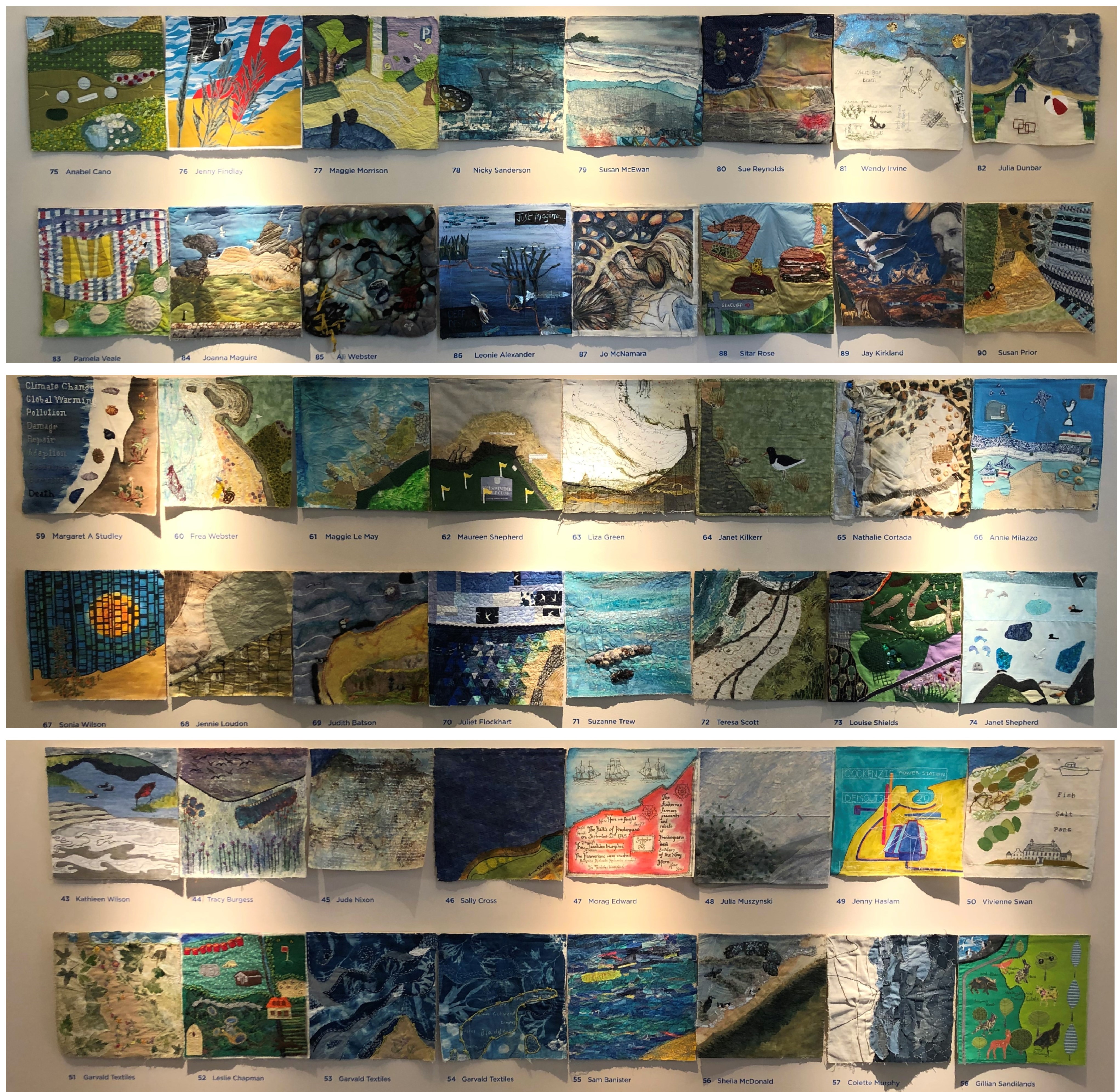
In the Botanic Garden entrance hall was a colourful and interesting exhibition (called ‘Forth Lines’) of local artists’ embroidery with each of 96 panels depicting a point along the Firth of Forth coastline.  FG stayed asleep long enough for me to enjoy it and to encourage my thinking about future walks along that coastline.

Sample Rows Of Embroidery Pieces By Local Artists And Residents Along The Firth Of Forth (The ‘Forth Lines’ Exhibition)
One Of The Individual Panels From The ‘Forth Lines’ Exhibition (By Kathleen Wilson)

Another exhibition I visited while in Edinburgh was a major exhibition of John James Audubon’s pictures of birds at the National Museum of Scotland.  My Dad has long been interested in Audubon and I tagged along since I love exhibitions of this sort and it was great to share the experience with my Dad.  It is an excellent exhibition. Our only wish was that there would be more on the process of actually executing the drawings, engravings and colouration – it was clearly a substantial team effort. Regardless of this, the resultant prints on show are stunning and the explanations of them and of Audubon’s life were fascinating.
Audubon was certainly a rather strange character.  He was born in 1785 in Haiti to French parents – a plantation owner and his maid – and became a self-trained naturalist, artist and hunter. 

Audubon had many contradictions.  He owned slaves and dabbled in ideas related to eugenics but took funding from slavery abolitionists. He shot thousands of birds in his life but was also one of the first to document how industrialisation and agriculture were destroying bird habitats.  His lack of an academic background meant many in the scientific community in America denigrated him but he was – with his drawing talent, determination to succeed and his wild looks (complete with bear oil slicked hair) – a big hit in the academic and artistic circles of Edinburgh.

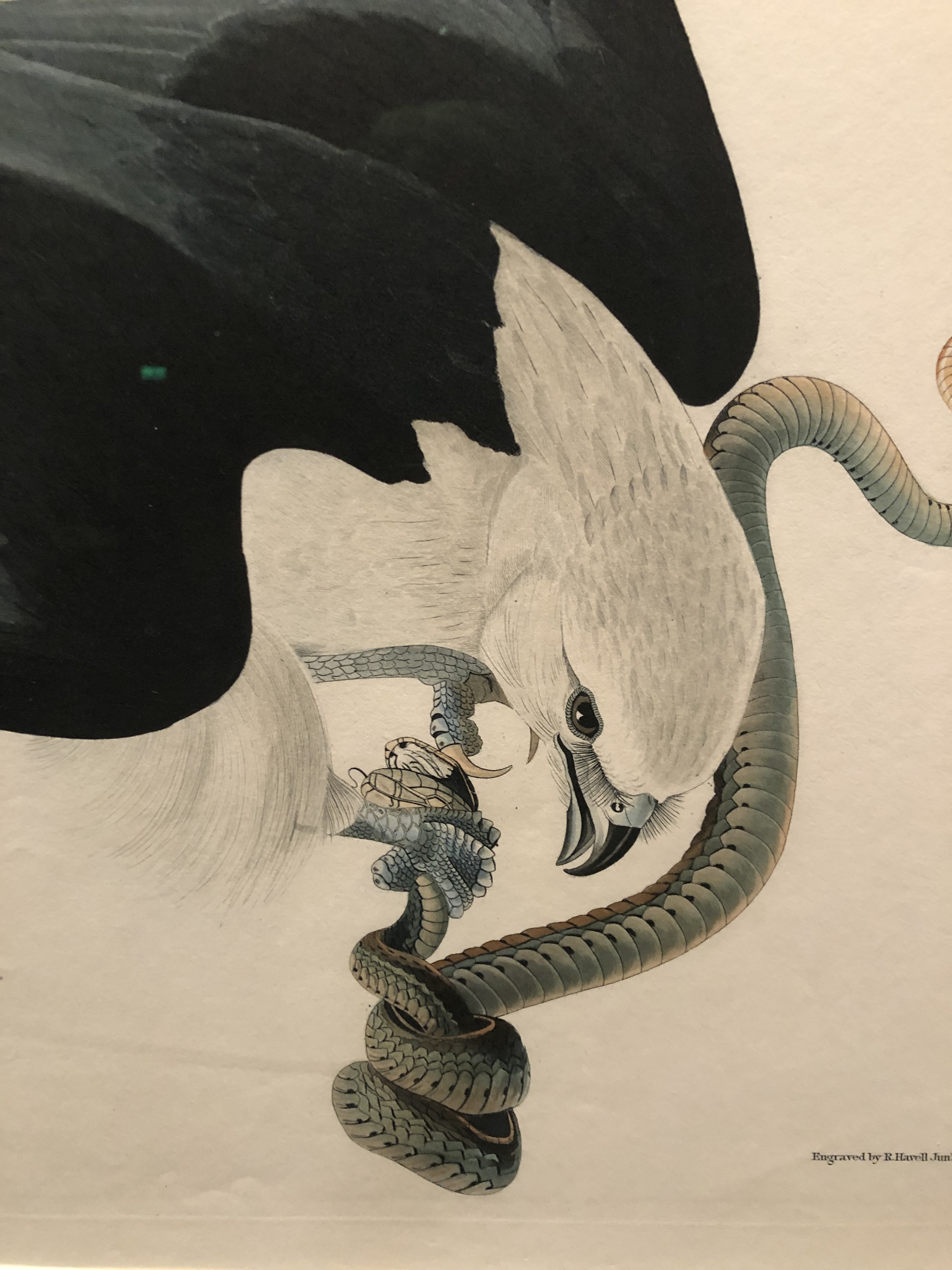
Detail From Plate 26 Of ‘Birds Of America’ – ‘Carolina Parrot’ by Audubon

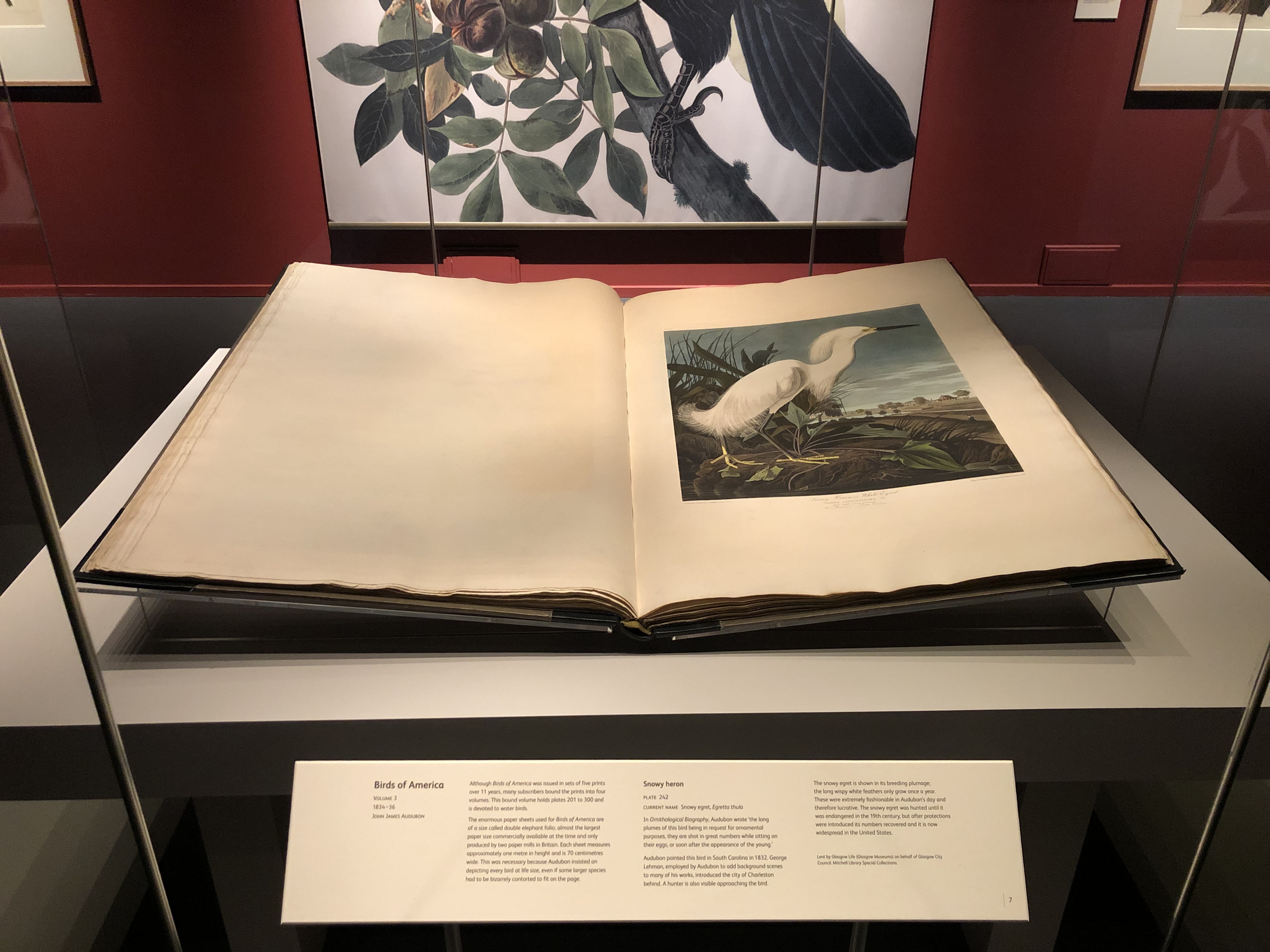
It was here and then London that he gained sponsorship for (apparently £2m in today’s money) and published his most famous and hugely popular work, ‘The Birds of America’.  The huge volumes consist of 435 hand-coloured, life-size prints of 497 bird species, made from engraved copper plates of various sizes depending on the size of the image.  One of the volumes was on show at the exhibition alongside numerous individual prints.  The book was extravagantly large because, remarkably, each bird picture it contained was drawn at life size.

One Of The Volumes Of Audubon’s ‘Birds Of America’

The prints on show were vibrant and wonderful and the lack of crowds at the exhibition meant that the stunning detail could be seen up close and at leisure.  That many of Audubon’s prints boasted incorrectly of newly discovered species or were anatomically incorrect didn’t matter given the high quality of the overall impact. 

Detail From Plate 72 Of ‘Birds Of America’ – ‘Swallow Tailed Hawk’ by Audubon

The exhibition was also good because it told Audubon’s story about his talent (and the way the world responded to it) interestingly, and it was honest about his flaws.  Most of all, it was great to have the afternoon with my Dad sharing something so memorable.

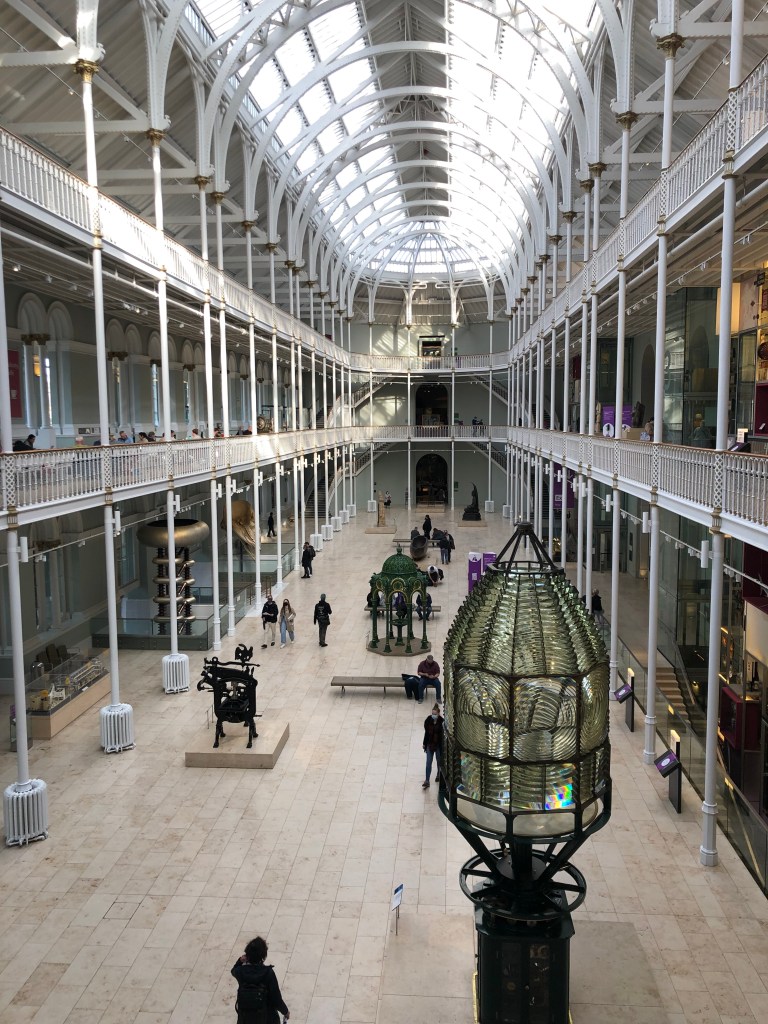
Although We Didn’t Explore It Beyond the Audubon Exhibition This Time, The National Museum of Scotland Is In a Lovely Building

To round off March, LSW and I visited The Newt Garden in Somerset for the second time this year.  Spring has definitely come to this 350 acre garden and woodland.  Already, the myriad varieties of cordon and espaliered apple plants are starting to come into flower. 
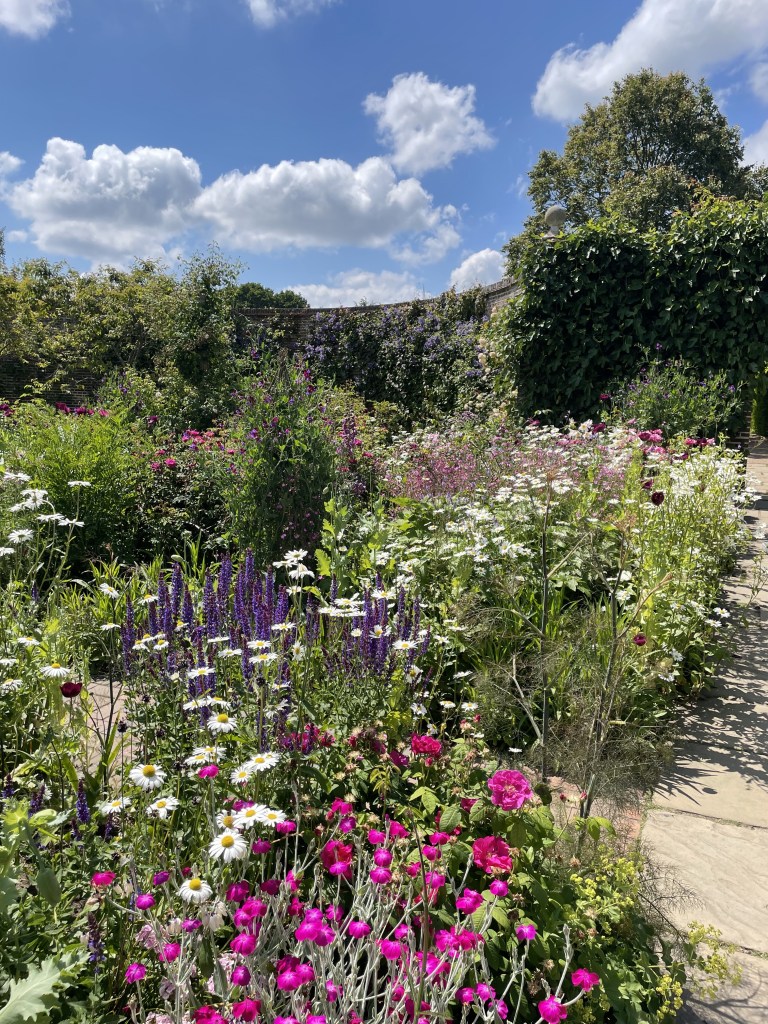
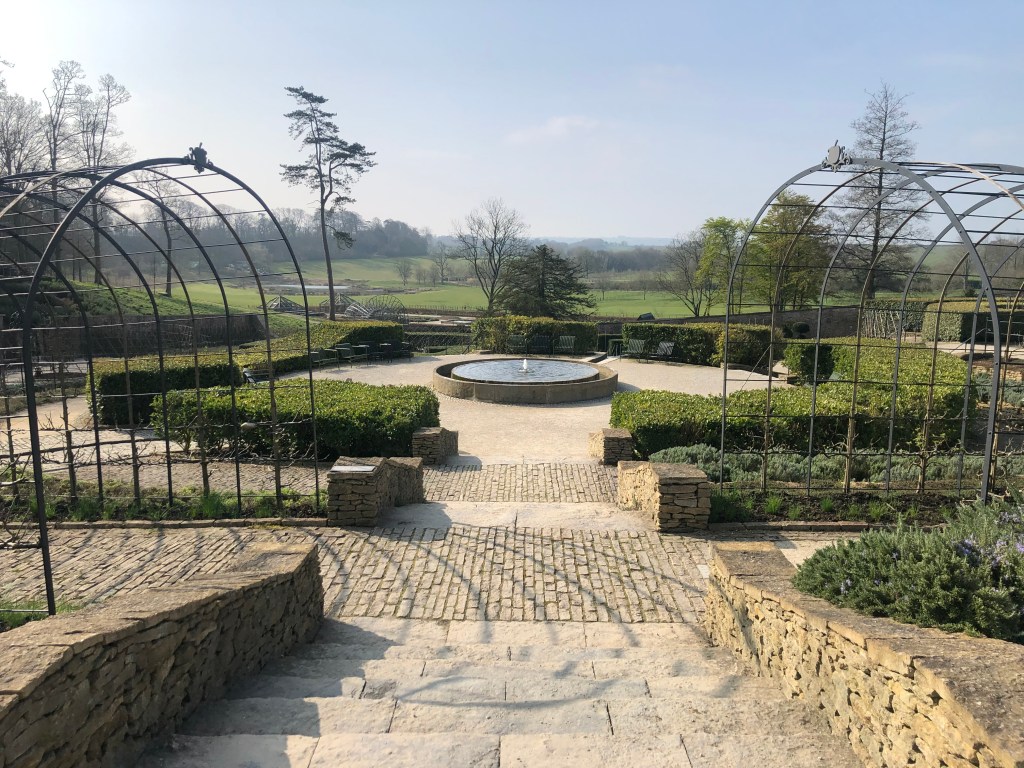
The Newt Gardens – The Parabola Garden

As reported in this blog several times before, it is a wonderful garden which continues to evolve and grow.  This time we were able to visit with two friends from our village which added a lovely extra dimension which was topped off by a delicious lunch in the Garden restaurant.  I’m looking forward already to visiting again later in the year.

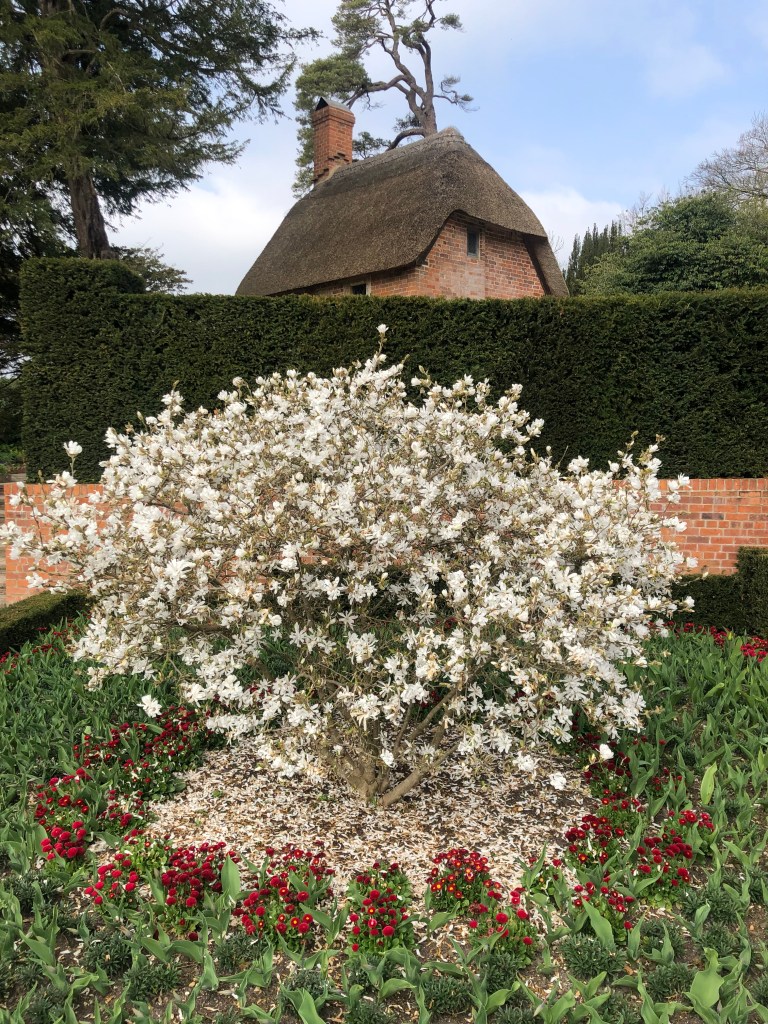
The Gardeners Cottage And Magnolia From The Victorian Garden At The Newt

Before that, we have April to look forward to: a re-warming of the weather, the Football League run-in of the final games of the season (I go in hope for Forest Green Rovers), more blossoming of plants and shrubs, thriving seedlings (again, I hope), and Easter with Youngest Son and his partner.  Not a bad prospect but what a shame it is the global context of Russia’s dire attack on Ukraine.  Spring is sprung but not everyone can appreciate it right now.

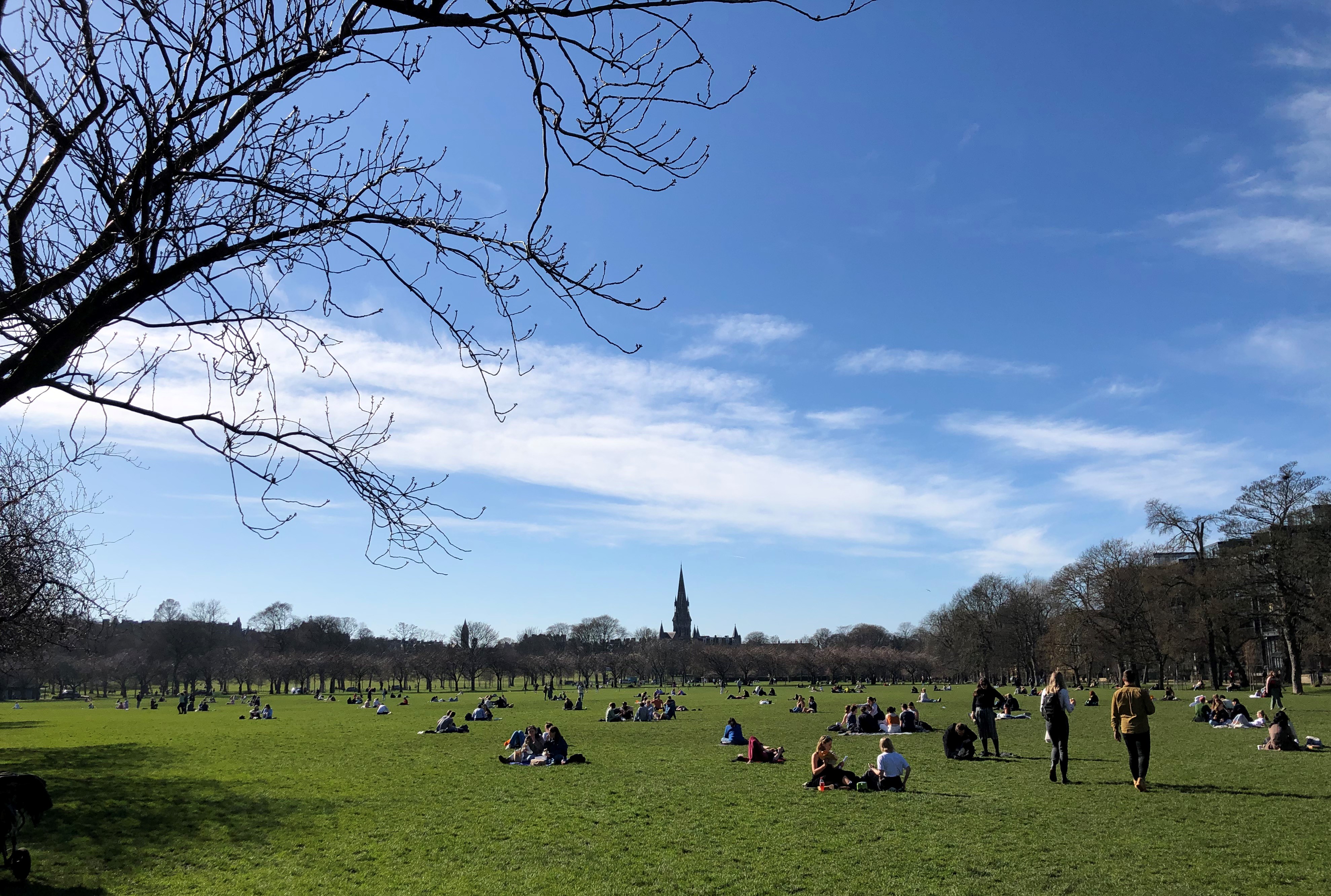
Bonus Photos of Sunny Edinburgh

Funeral Reunion

My Mum’s funeral last week was as emotionally moving as expected.  Dad did her proud with his arrangements.  Mum would have loved the music, the simplicity, the intimacy and the fact that all her close family were all there to say goodbye. 

I can’t actually recall the last time that we were all together on something other than Zoom; probably a decade or two have passed since we managed it.  It was great that all three of our sons could take a break from work to be there.  I recall how hard it is sometimes to get away from work for unplanned events but this one was a biggie.

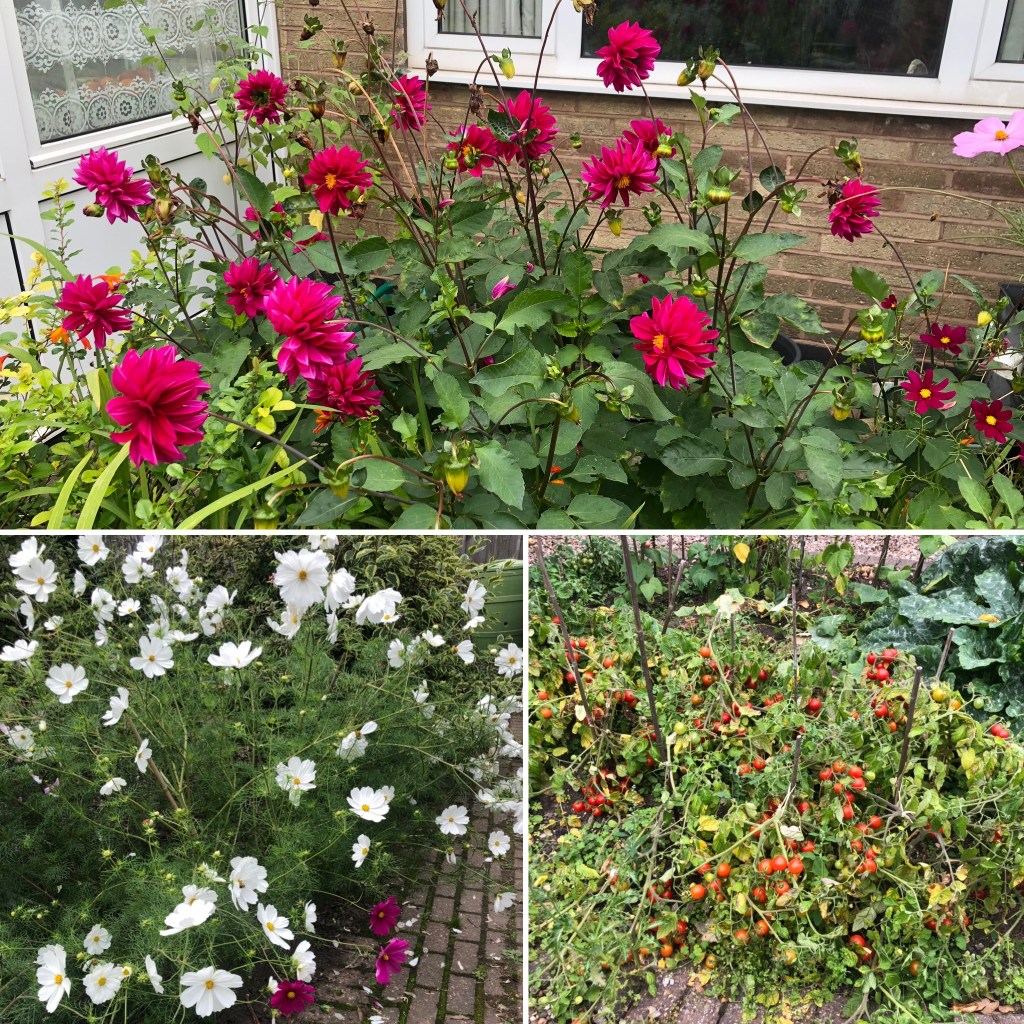
Dahlias, Cosmos And A Proliferation Of Tomatoes In My Dad’s Garden

The celebration of Mum’s life was dominated by my Dad reading out a last letter he had written to her.  This was the last of 354 letters that he had written daily to her when Mum’s care home stopped taking visitors last year because of the pandemic.  Fortunately the care home had opened up again before Mum died so Dad replaced the series of letters with frequent visits and, charmingly, readings of short stories (mainly tales of Paddington Bear that Mum loved and which my sister and I had grown up with).  This last letter, though, was especially poignant.

By the time Dad had finished reading the letter I (and I wasn’t alone) was tearful and a barely managed my brief recollection of a few relevant memories and Mum’s quiet love for us.  My sister too said a few lovely words through the emotion.  Then we all retired to Dad’s house for lunch which was a very pleasant affair that was full of chat about memories and next steps.

Fortunately my sister has been able to work from my Dad’s house for a week or so and then will take some holiday.  They will continue the task of rationalising possessions acquired over decades but also, I’m sure, provide some mutual emotional support.  Then, I hope that Dad can come and visit us in Gloucestershire for a while later this year.  We move on…..

The flurry of activity around the funeral last week has folded back into the routine of quasi-lockdown life.  We are starting to do the normal forms of socialising but mask wearing in shops and social distancing from all but some relatives and close friends seems to be a permanent part of our way of life now. 

Youngest Son (YS) stayed with us before and after the funeral and between video shoots and we ventured to the local pub with him. We actually drank inside – such a novelty!  To remind us that the pandemic is not over however, that same pub is now shut for 10 days due to a positive Covid test among the pub team.  It ain’t over!

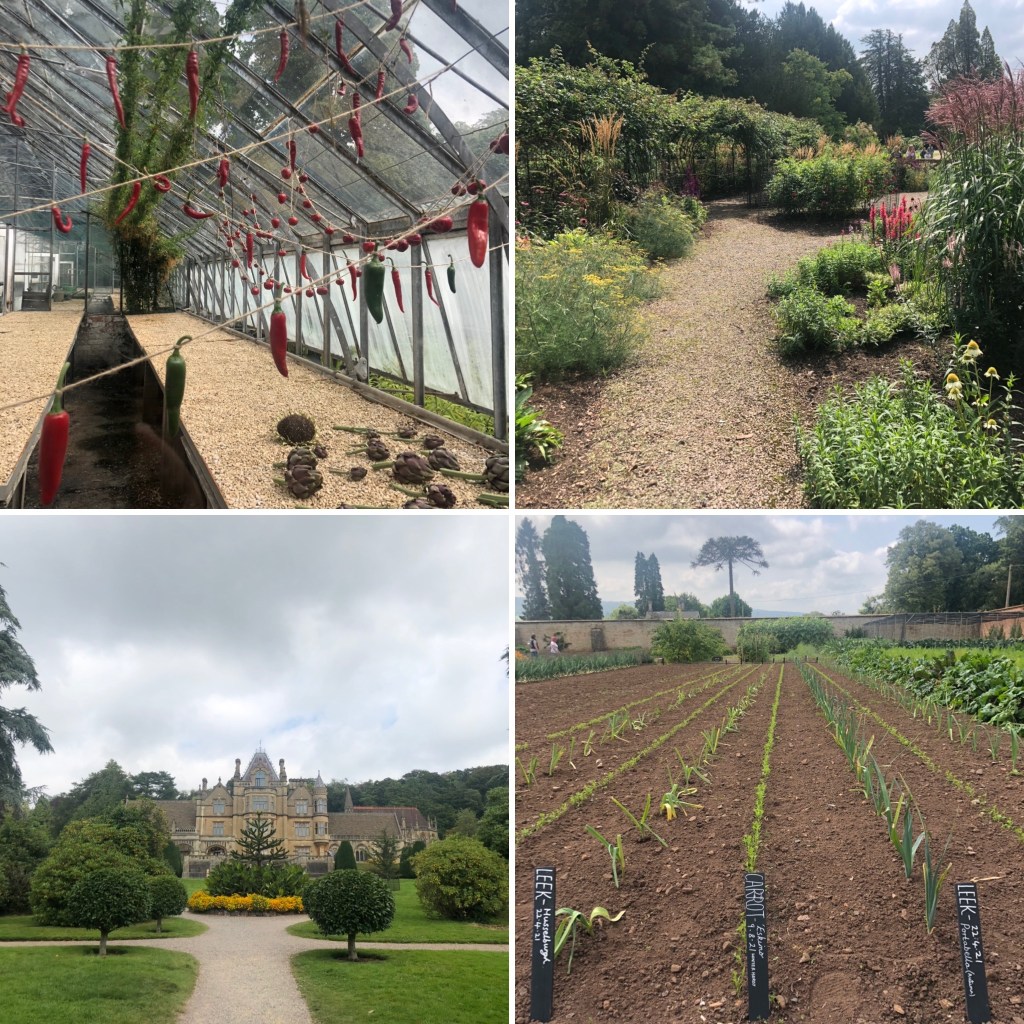
After taking YS back to the airport for his flight back to Belfast, Long-Suffering Wife (LSW) and I visited Tyntesfield House Gardens in Somerset.

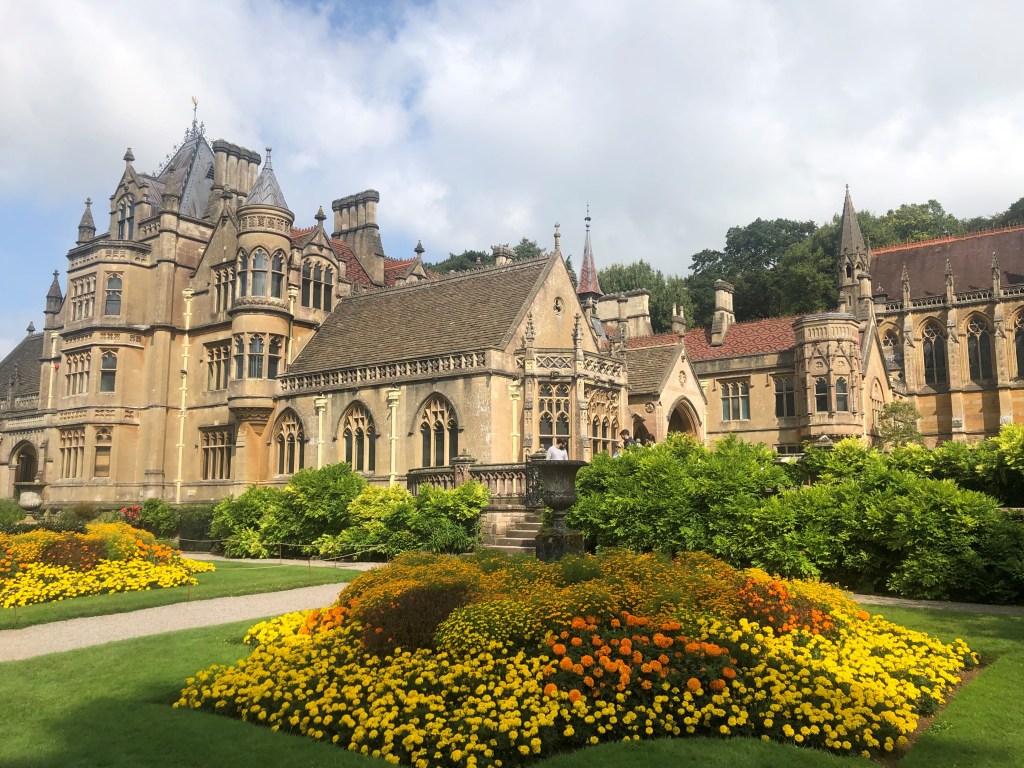
Tyntesfield House And Chapel, North Somerset

The house and chapel are Victorian and were built in a rather loud gothic style by William Gibbs who apparently made his fortune from trading guano as fertiliser.  The buildings are certainly a grand statement of his wealth and, on a less busy day, we will visit again and go inside to see the ornate rooms with their paintings and furniture.

Tyntesfield House And Gardens Including Chillies Drying In The Greenhouse And Impressively Long Straight Rows Of Vegetable Plants

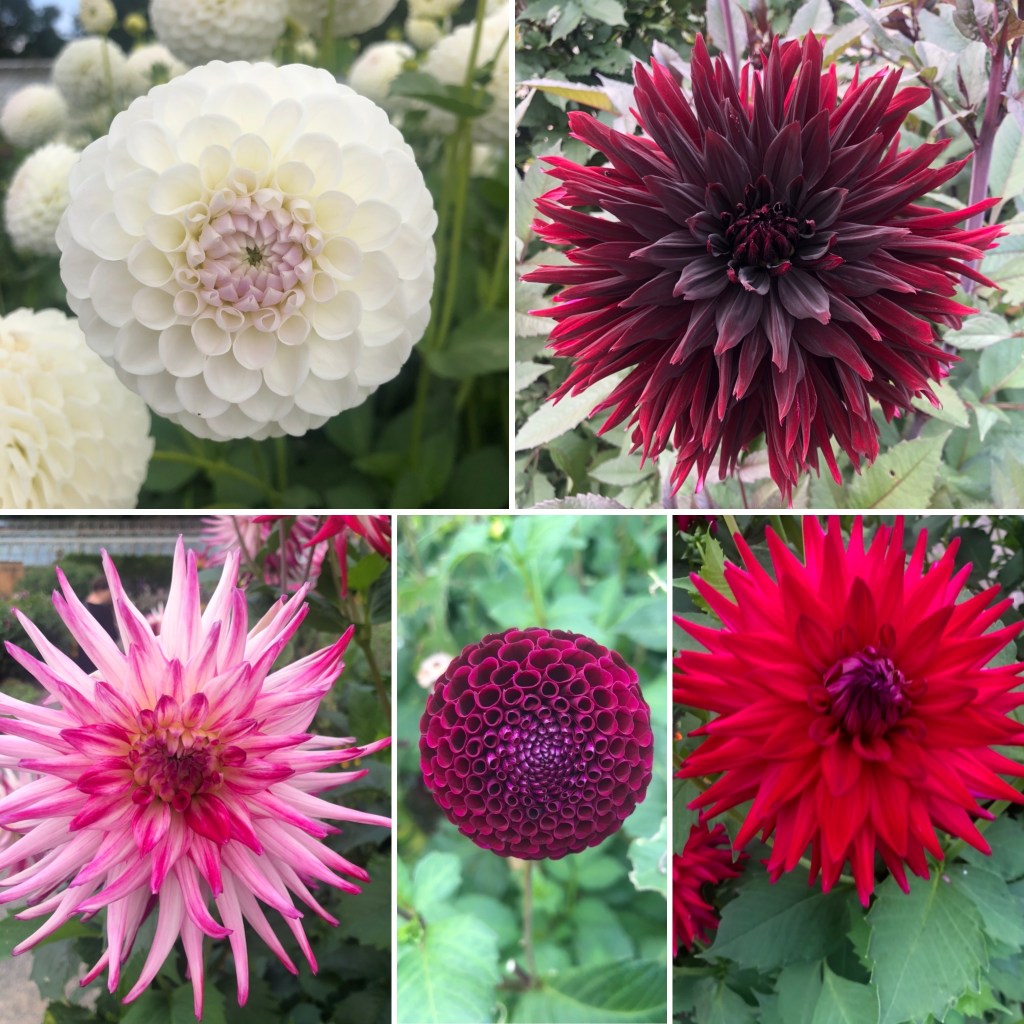
The walled kitchen garden, orangery and dahlia beds were impressive and quite inspiring to walk around.  Some of the dahlias were gorgeous and we arrived at the right time to see them at their best. 
Dahlias At Tyntesfield House Gardens – I Wanted Them All!

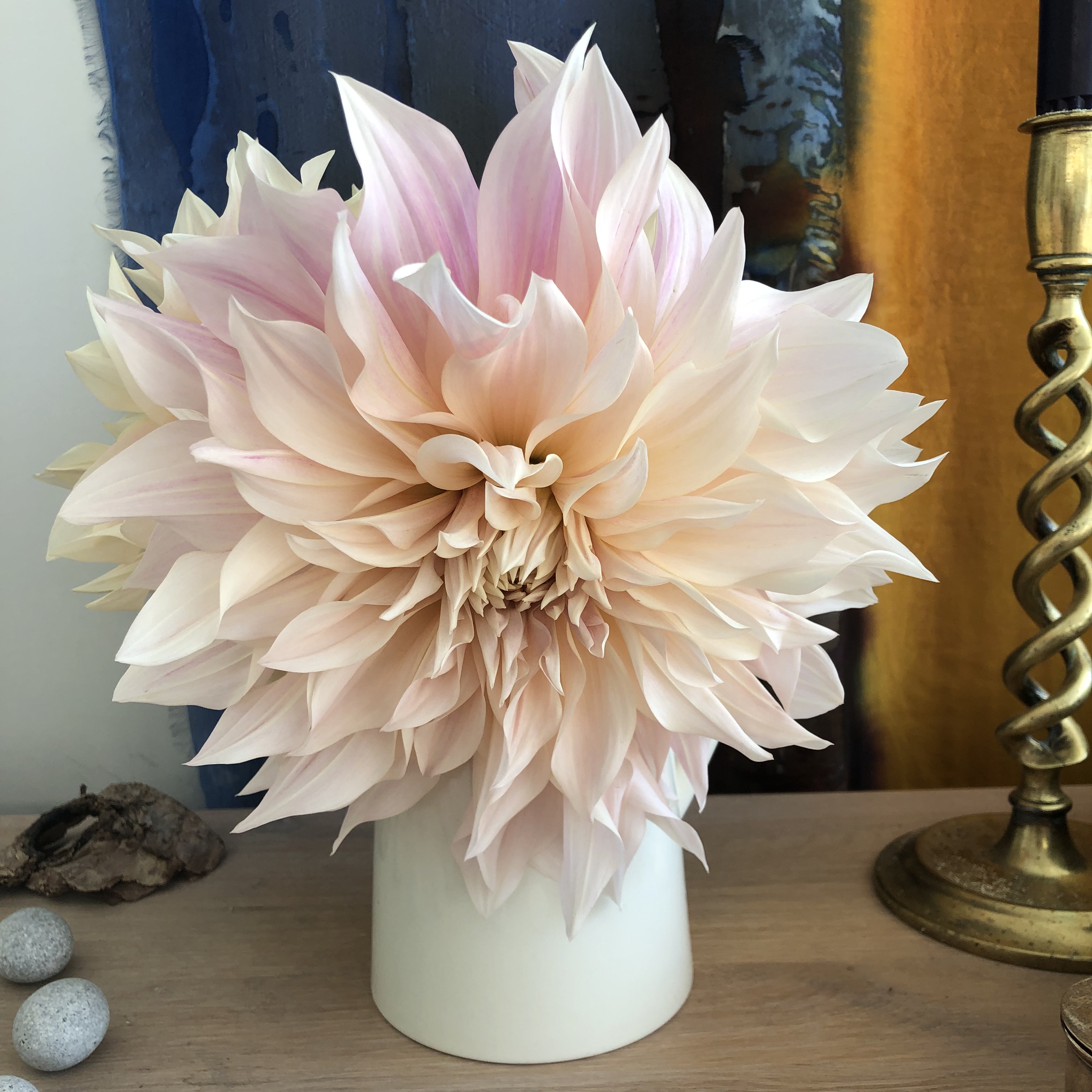
We just have one dahlia in our garden (Café Au Lait which produces huge blooms that last well even when cut).  However, my Dad has a lovely one in his garden I may be able to filch part of and I will try to find some room for some others and then protect them avidly from frost.

One Of Our Cafe Au Lait Blooms – This One Slightly Pinker Than Usual

Tyntesfield House was acquired by the National Trust in 2002.  That LSW and I are members is thanks to my Mum and Dad who bought us life membership around the time we were married.  We both hold on stubbornly to our original membership cards that are so old that they defy the automatic card reader systems the National Trust have installed, and which attract knowing looks from some of the National Trust staff.  Those cards are still so valuable to us and are great reminders of the generosity and life-long interests of my dear Dad and, my now departed, Mum.
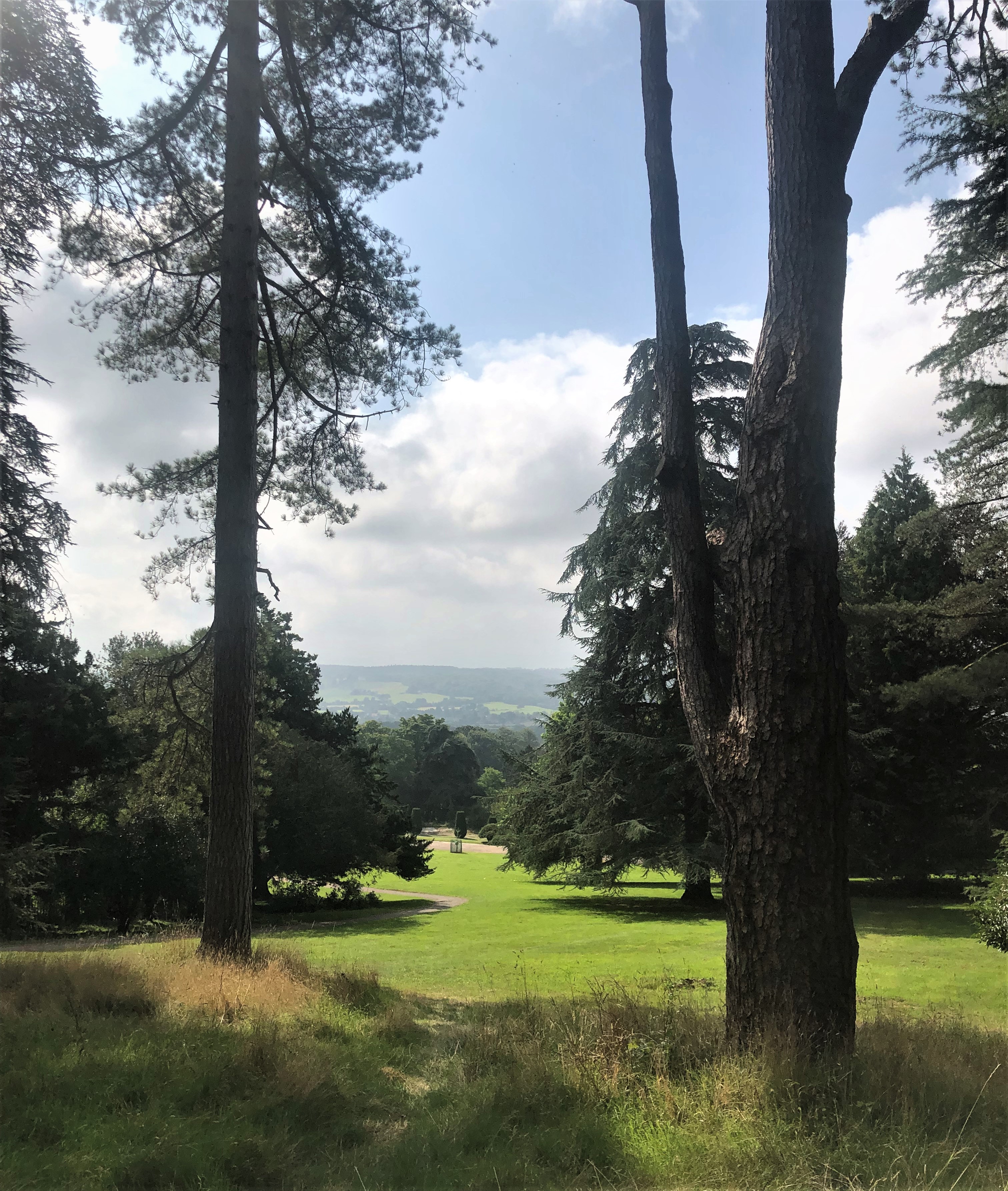
Parkland Adjoining Tyntesfield House

Visiting The Newt And Going Abroad

Autumn is well and truly here.  The weather has been very variable.  Days of heavy rain sufficient to test guttering, fill the local streams to brimming, and force a frustrating postponement of a Forest Green Rovers Football Club fixture, have been followed by frosty nights and wonderfully cloudless, sunny days.  The trees are turning brown at different rates depending on their species and health.  The woodland views from my normal walk routes are glorious patchworks of subdued colour.

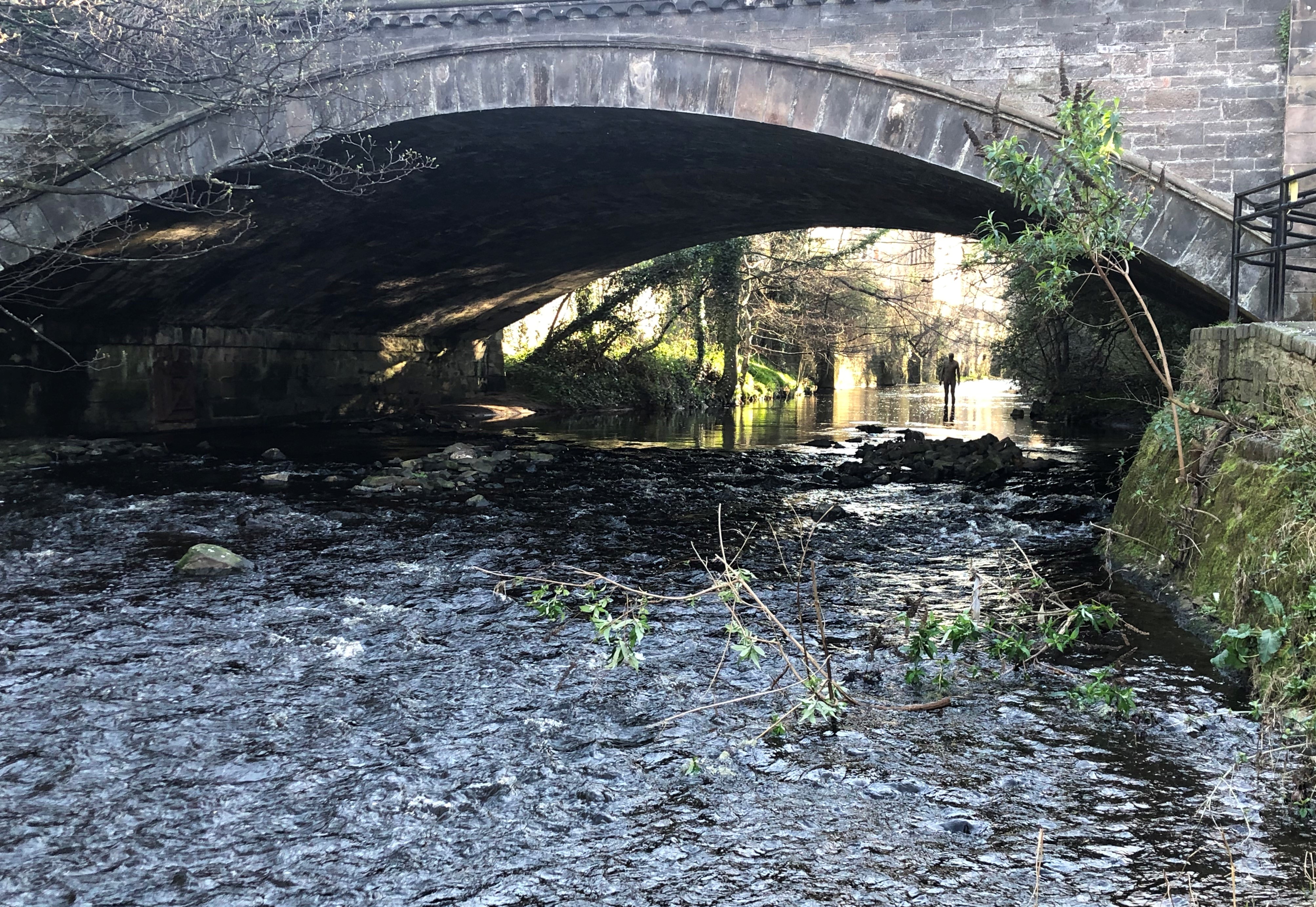
Autumn: Long Shadows, First Frost And Full Streams

Last week, Long-Suffering Wife LSW) and I used one of the days we had once reserved for a trip abroad, long since postponed, to do a more modest excursion into East Somerset.  Over the last five years or so, we have become quite familiar with the countryside there and some of the pubs, restaurant and galleries around Bruton.  It’s a lovely area and Time Out Magazine calls Bruton ‘a bit like an abridged Stoke Newington with better air quality’ with its interesting shops, eateries and architecture.

This time, we visited a new garden set in the grounds of a large mansion that has recently been developed as a hotel called The Newt.  The garden has only been open to visitors in recent months and is still under construction.  However, the main bones of the garden, services and on-site workshops (producing cider, bread and other delicacies), are in place.  It has great views over the local countryside and is already somewhere I would recommend highly.

£15 initially seemed a bit steep for a garden that is so young and new.  But whole enterprise exudes class, attention to detail and quality; the visit (including a lovely lunch) was very good value.  We arrived just in time for a very interesting garden tour by one of the 18-strong operational gardening and woodlands management team.  The guide was every bit as impressive as the things he pointed out and he was able to give a few insights into the history of the house and garden.

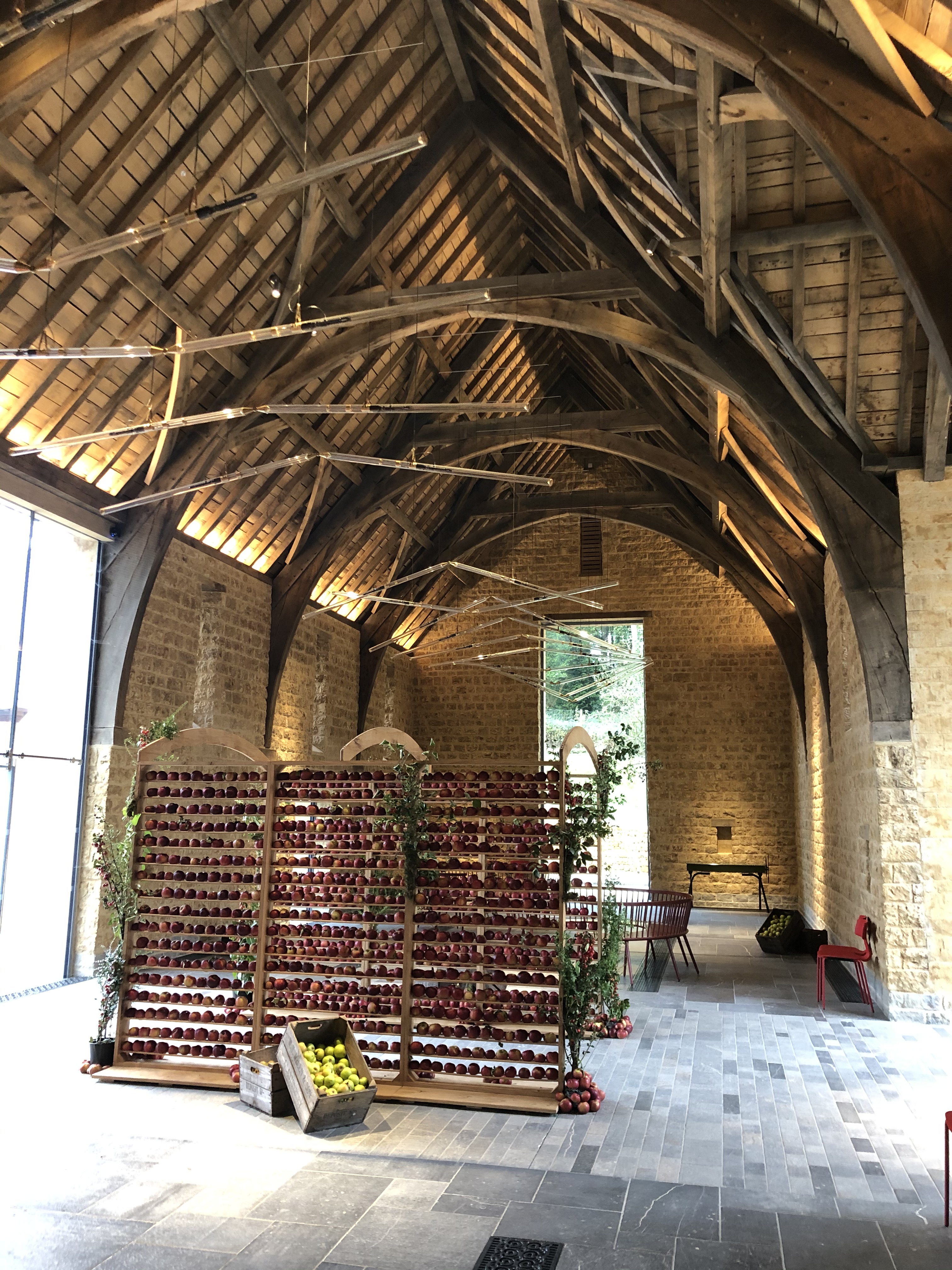
The Newt Reception: Apple Display And Roof Sculpture

The Newt Reception: Apple Display And Roof Sculpture

The estate, of which The Newt has become a core feature, was created in the 17th century.  From 1785 it was home to several generations of the Liberal Hobhouse family, including Arthur Hobhouse, a founder of the national parks system in England and Wales.

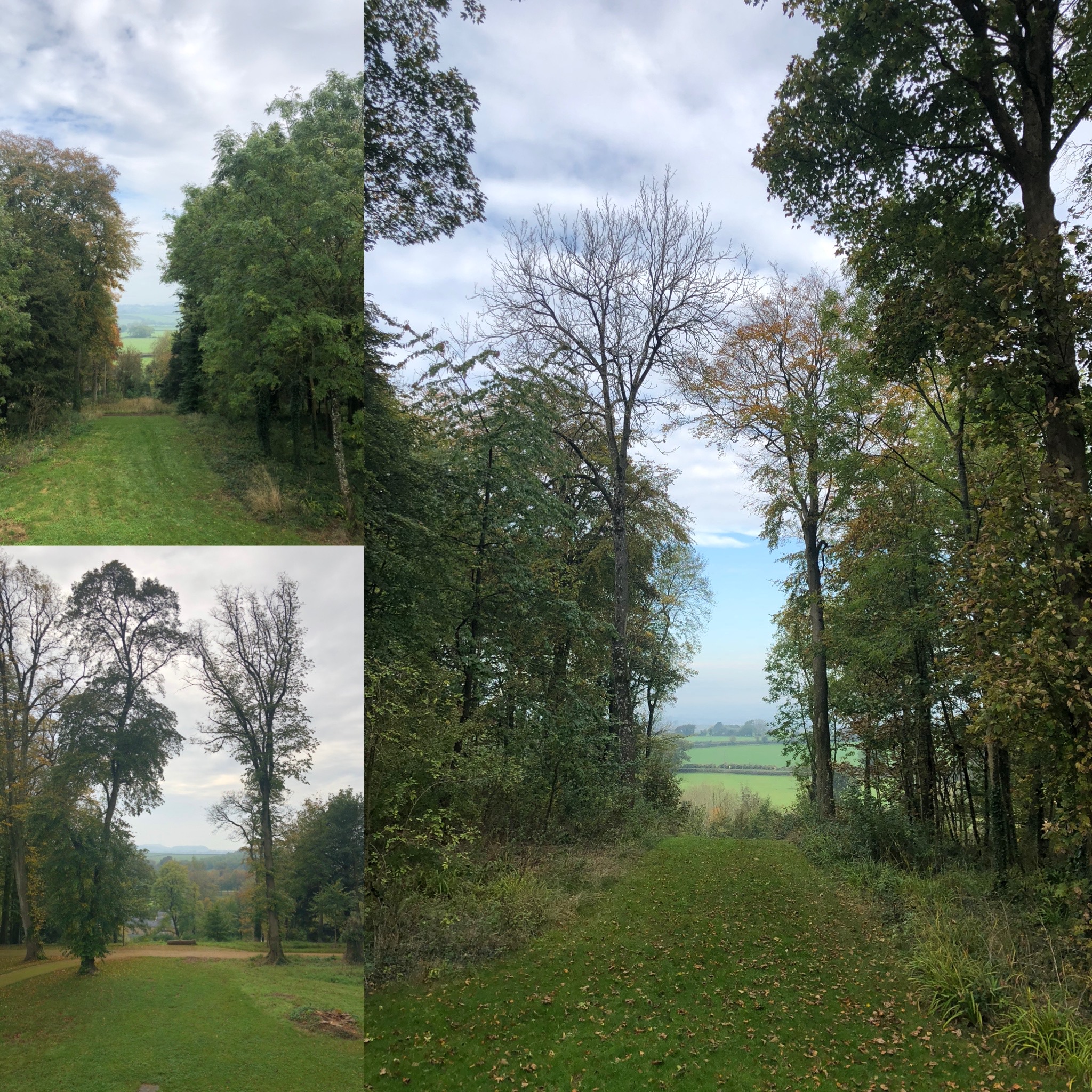
The Newt: Views Through The Woodland

The Newt: Views Through The Woodland

The South African pair of Karen Roos and Koos Bekker (a telecoms magnate) then bought the property in 2013.  They had previously developed Babylonstoren near Cape Town which is a marvellous garden and winery that LSW and I had loved during our visit to South Africa in 2017.  At The Newt, they have converted the Palladian fronted mansion into a luxury hotel and invested hugely in a transformation of the garden and outbuildings.  The have used the garden designer (a Frenchman called Patrice Taravella) they employed at Babylonstoren.  As a result, by design, The Newt has a similar feel to Babylonstoren but is a tribute to the apple and cider rather than the grape and wine.

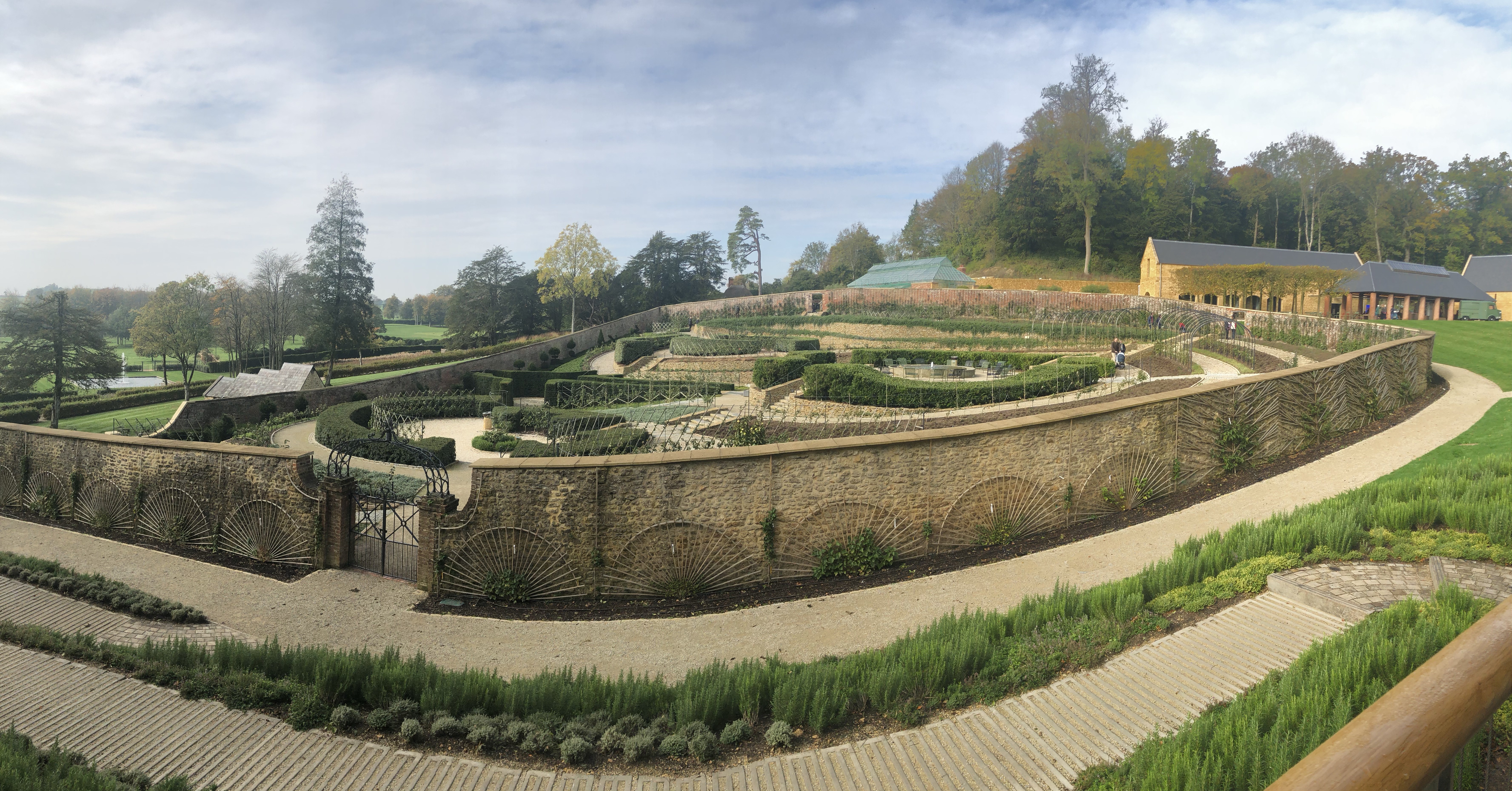
Panoramic View Of The Parabola Garden

Panoramic View Of The Parabola Garden

The centre-piece is a walled, egg-shaped garden, called ‘The Parabola’ with multiple centres, terraces and running water.  It is filled with 250 varieties of apple tied to laths (thin strips of wood) pinned to the walls or being trained up metal arches.  All are under-planted simply with a relatively small variety of herbs.  The whole ‘Parabola’, is tilted south towards a huge view and is already spectacular.  It will be even more so when the apple trees are more mature.

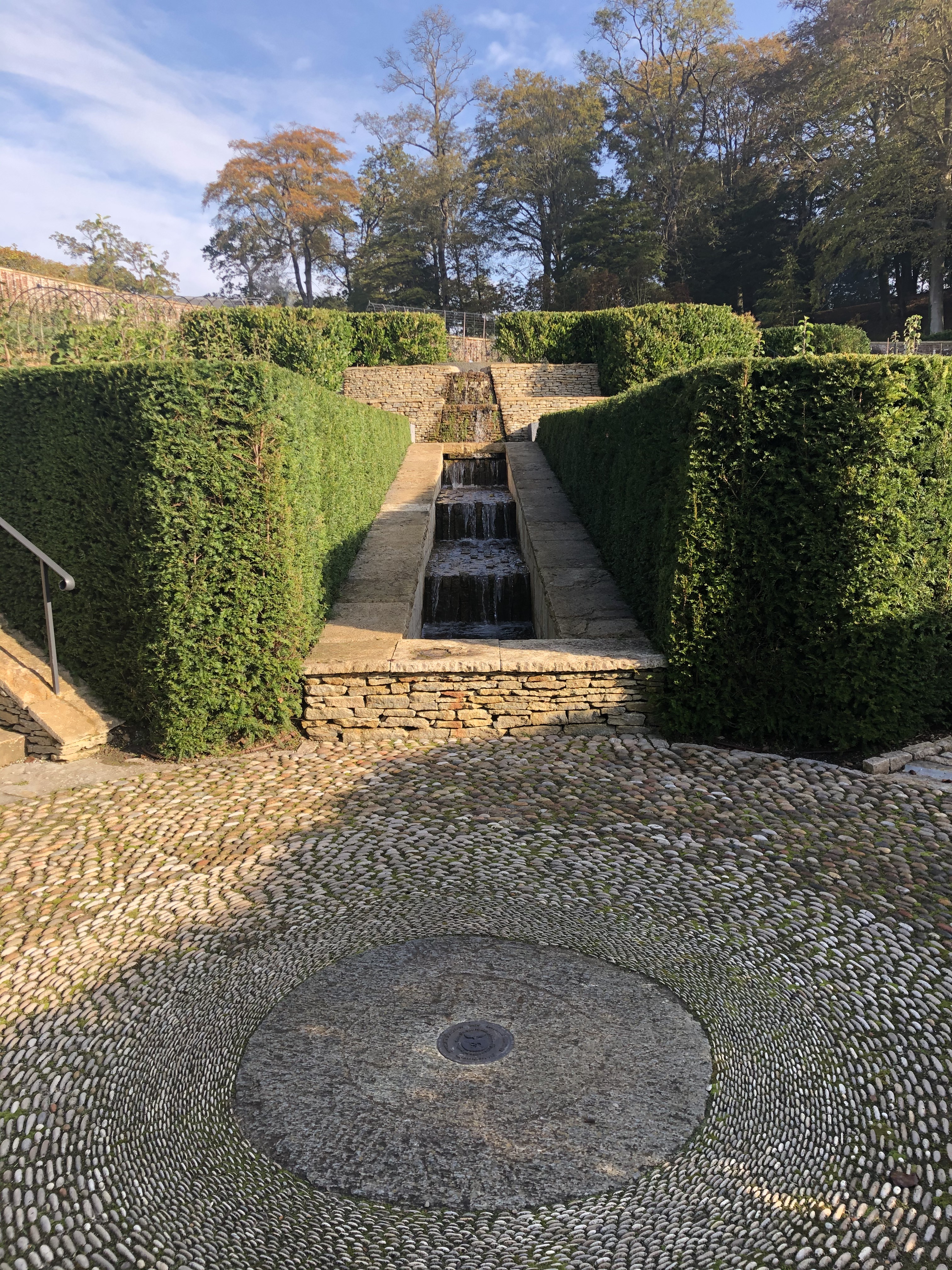
The Newt: Water Runs In The Parabola Garden

The Newt: Water Runs In The Parabola Garden

This central show orchard is surrounded by a variety of differently cultivated areas.  These include cottage gardens, grass gardens, lawns populated by chickens, and three small walled ‘colour’ gardens filled with plants of white, then blue, then red.  Below the long lawn and bathing pond (now for newts!) in front of the hotel, the vegetable garden is particularly impressive (and clearly devoid of the badger and deer damage we are so familiar with at home!)  The woodland provides gentle walks away from the main buildings and we saw plans to open these up further.
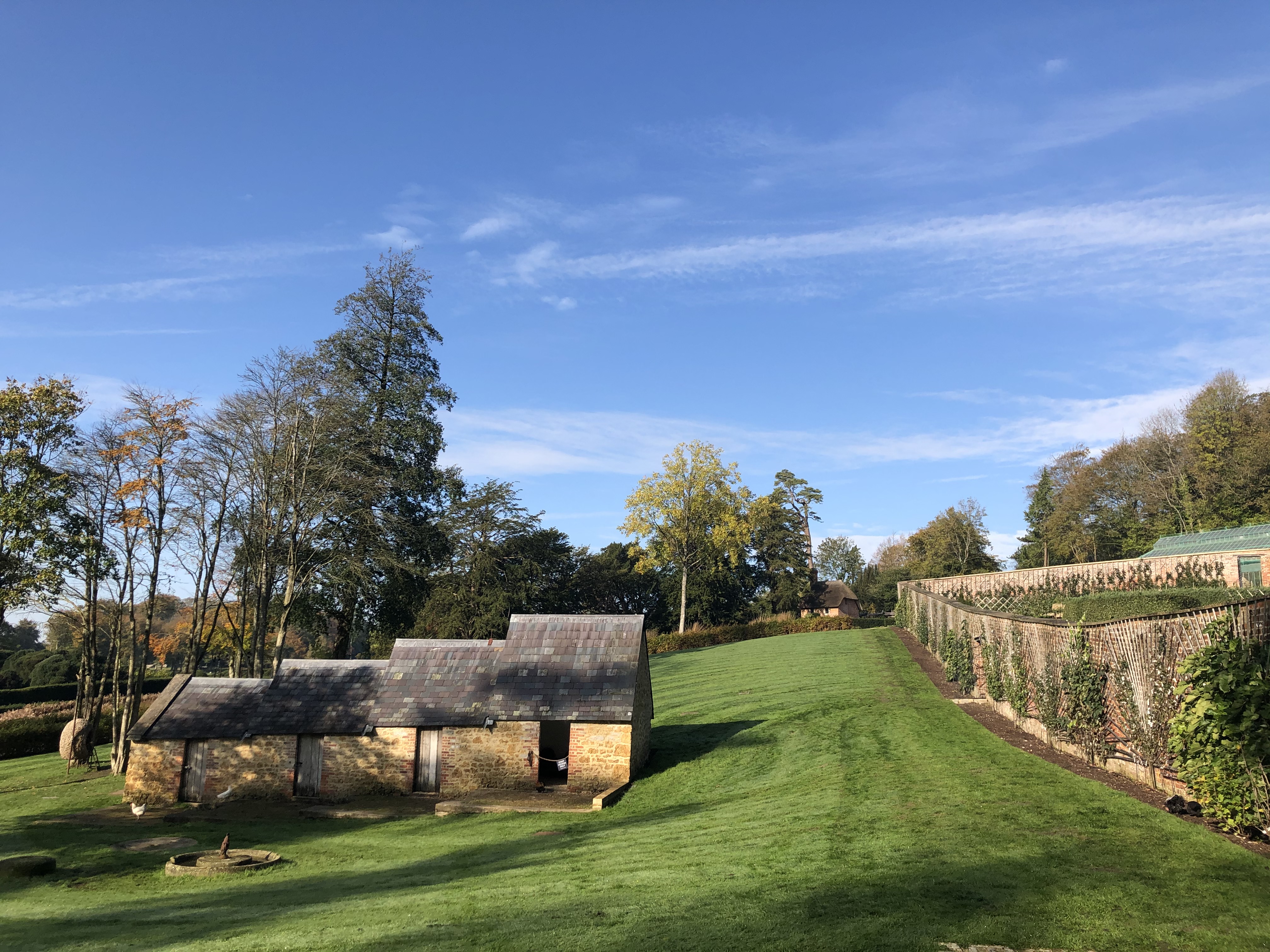
The Newt: Old Hunting Dog Kennels, Now Chicken And Duck House

The Newt: Old Hunting Dog Kennels, Now Chicken And Duck House

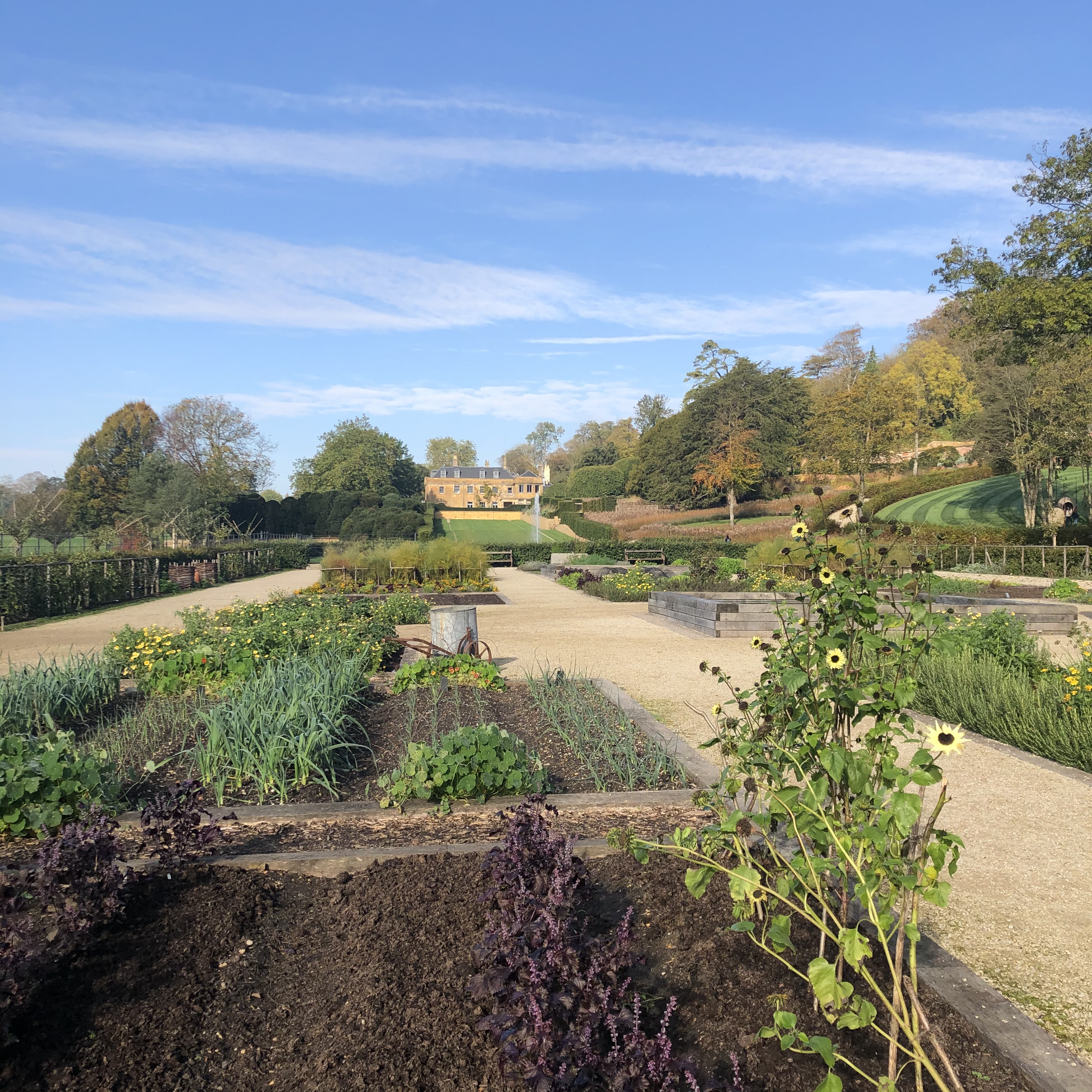
The Newt: Vegetable Garden, Long Lawn and Hotel

The Newt: Vegetable Garden, Long Lawn and Hotel

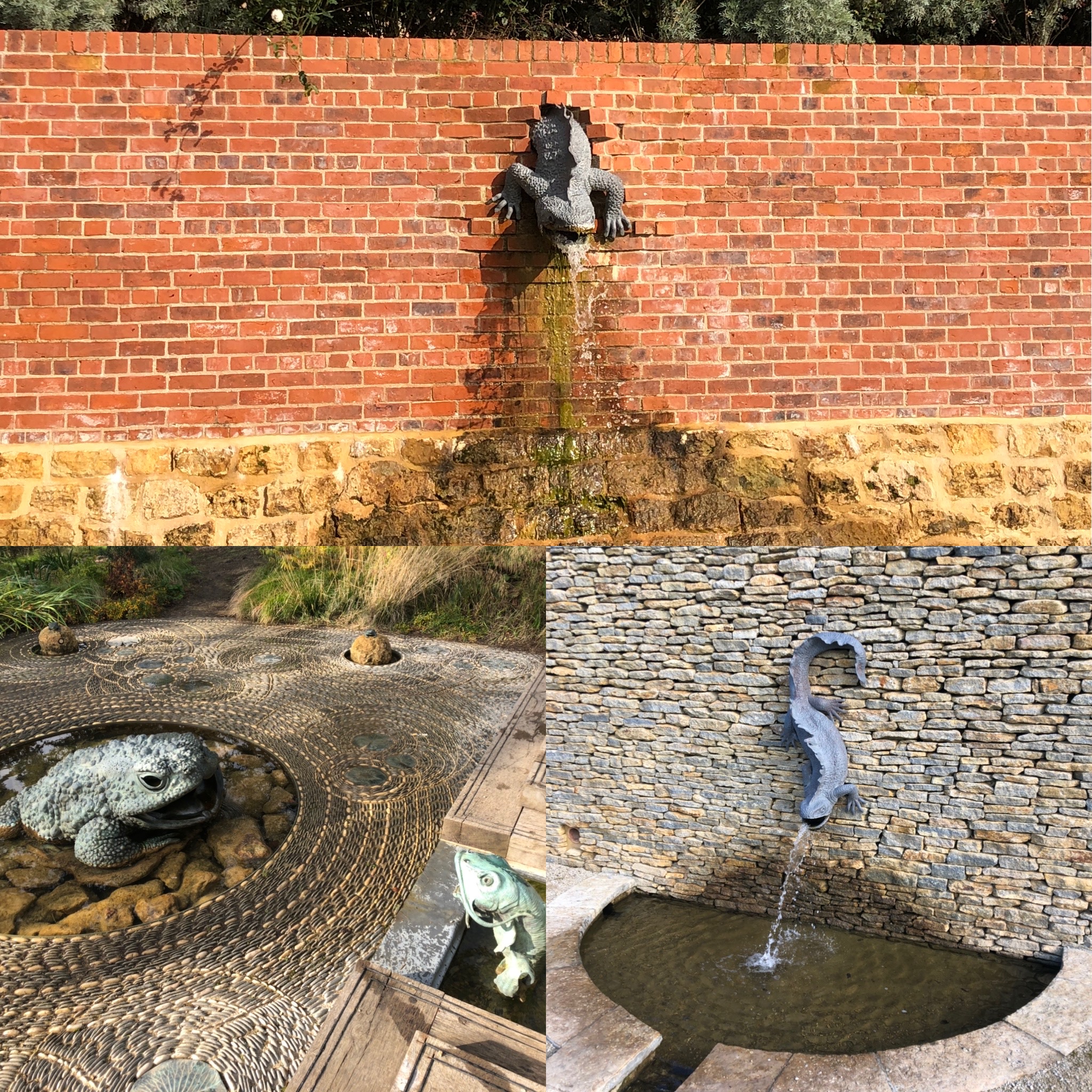
The Newt: Quirky Fountains

The Newt: Quirky Fountains

We are planning to re-visit The Newt both in Spring and in about 4 years, by which time further developments will have taken place and the planting will have matured.

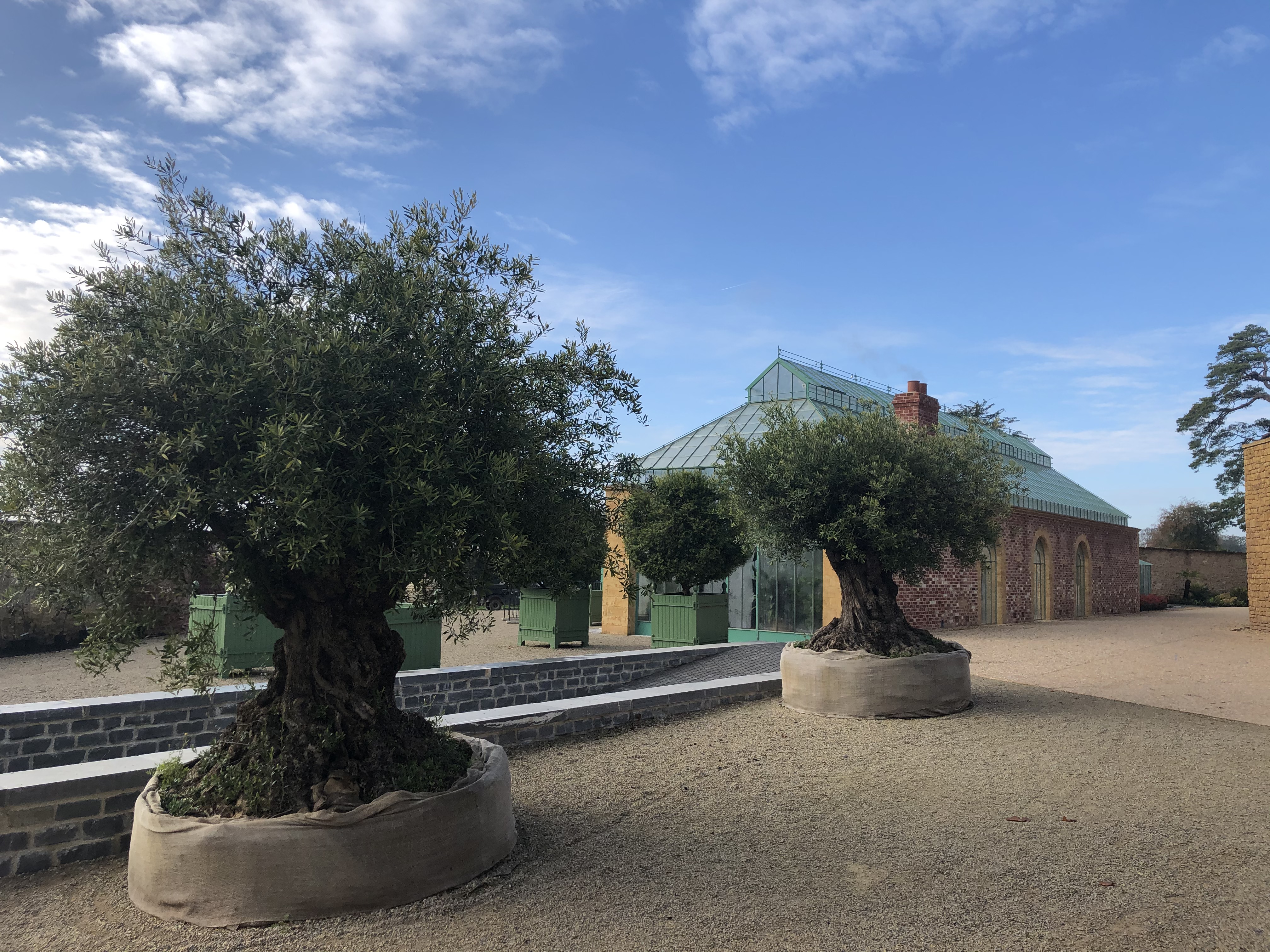
The Newt: Conservatory and Olives

The Newt: Conservatory and Olives

Now Autumn has arrived and LSW has finished work for the season, we plan to go on more trips like the one to The Newt.

Also, finally, we have scheduled a short trip abroad. With Brexit being postponed again we are slipping in a trip to Venice in November.  Given it is only for 3 nights, travelling by train is impractical so we are opting to offset our carbon expenditure in the air.  Ryan Air include this option in their booking process but it appears not to charge enough given that the ‘bad’ gases from flights go immediately into the upper atmosphere where they are not broken down.  I used Solar Aid to top up the offset contribution.

We have always recognised that we needed to visit Venice – so many have told us that it must not be missed and that it is unbelievably beautiful.  Hopefully the weather will be as kind as it was when we visited The Newt but I’m sure we will love it anyway, and won’t have damaged the planet too much.

Postscript: Goodbye October Celebrated Nicely In Our Local Pub's Octoberfest

Postscript: Goodbye October – Celebrated Nicely At Our Local Pub’s Octoberfest

Finished At Last!

Those of you following this blog for a while will know that I have been painting the woodwork in our ‘TV Room’ – new shutters, skirting and panelling and the old doors – for the last 8 months.  This week, I finally finished!

Long-Suffering Wife (LSW) remains astonished at how long I have taken over this but at least she hasn’t changed her mind about the dark blue colour during the protracted execution and she likes the result.  The parts I did towards the end of the exercise are better than the early efforts but it looks alright if you don’t look too closely.  We now have to paint the walls.  LSW is planning to impress me up by doing those in a matter of a few days.  Maybe hiring a professional is a better idea; we’ll see.

Of course, the primary reason why it took so long to complete this apparently simple painting task, apart from my inexperience, was my reluctance to devote more than 1-2 hours a day to the (admittedly intermittent) work.  Although I’m still a bit frustrated by the patchiness of the end product, I did enjoy the work overall.  I especially liked that I could paint to the rhythm of some of my CDs.  I’ve always wanted a job where I could listen to my favourite music at the same time as working, and retirement has enabled that!

Now I have finished, I have to find a productive way of utilising the hours per week that are freed up.  No problem; there are plenty of competing options and in any case there are lots of events already in the diary over the next couple months.

For example, the football season has re-started.  I plan to attend several Forest Green Rovers (FGR) games, both home and away, in the next few months.  While I attended the Cambridge Folk Festival, which I talked about in my last blog post, FGR enhanced my enjoyment by winning their first game.  Somehow, the music seemed to sound a lot better once I knew FGR had secured three points!

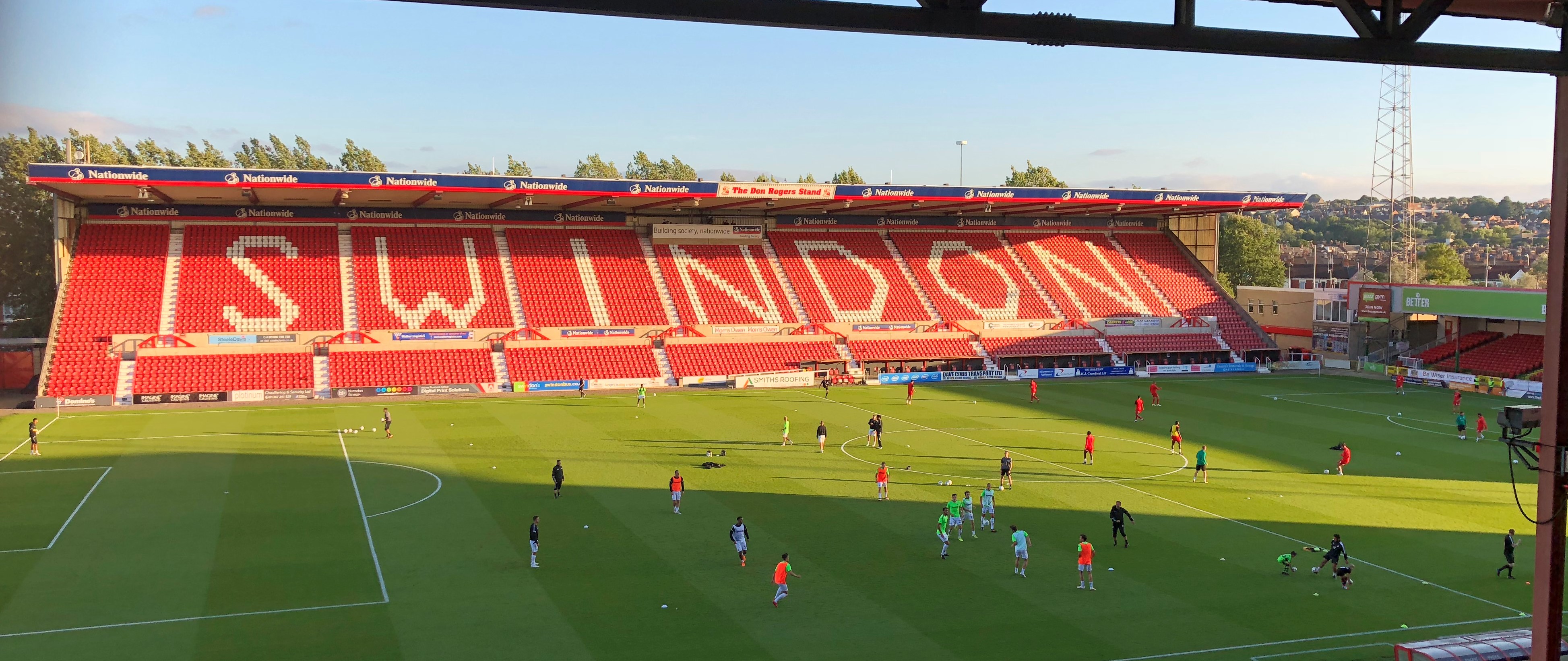
Since then I have seen three games and we remain unbeaten; a very promising start.  I especially enjoyed our win at Swindon who have become local rivals as we have risen and they have fallen (they were in the Premier League just 25 years ago).  I enjoyed joining in on the mischievous chants: ‘Premier League to village team/Forest Green’ and ‘Your ground’s too big for you’; it is, as the picture below shows.

Swindon Football Club

Swindon’s Empty Don Rogers Stand During Warm Up Versus FGR – How The Mighty Have Fallen

Between the football commitments, LSWs work and the rush to complete the TV Room paintwork (so I could show it off to weekend visitors from London and then my parents when they visited us), LSW and I have resumed our ‘days out’.

We really enjoyed a trip to East Somerset.  We went primarily to see the Alexander Calder exhibition at Hauser & Wirth in Somerset.  This was notable for containing a large number of personal, functional items designed and made by Calder alongside a splendid sample of his sculpture and mobiles.  It was an excellent exhibition and a visit to Hauser & Wirth, including the adjoining garden, is always a treat.

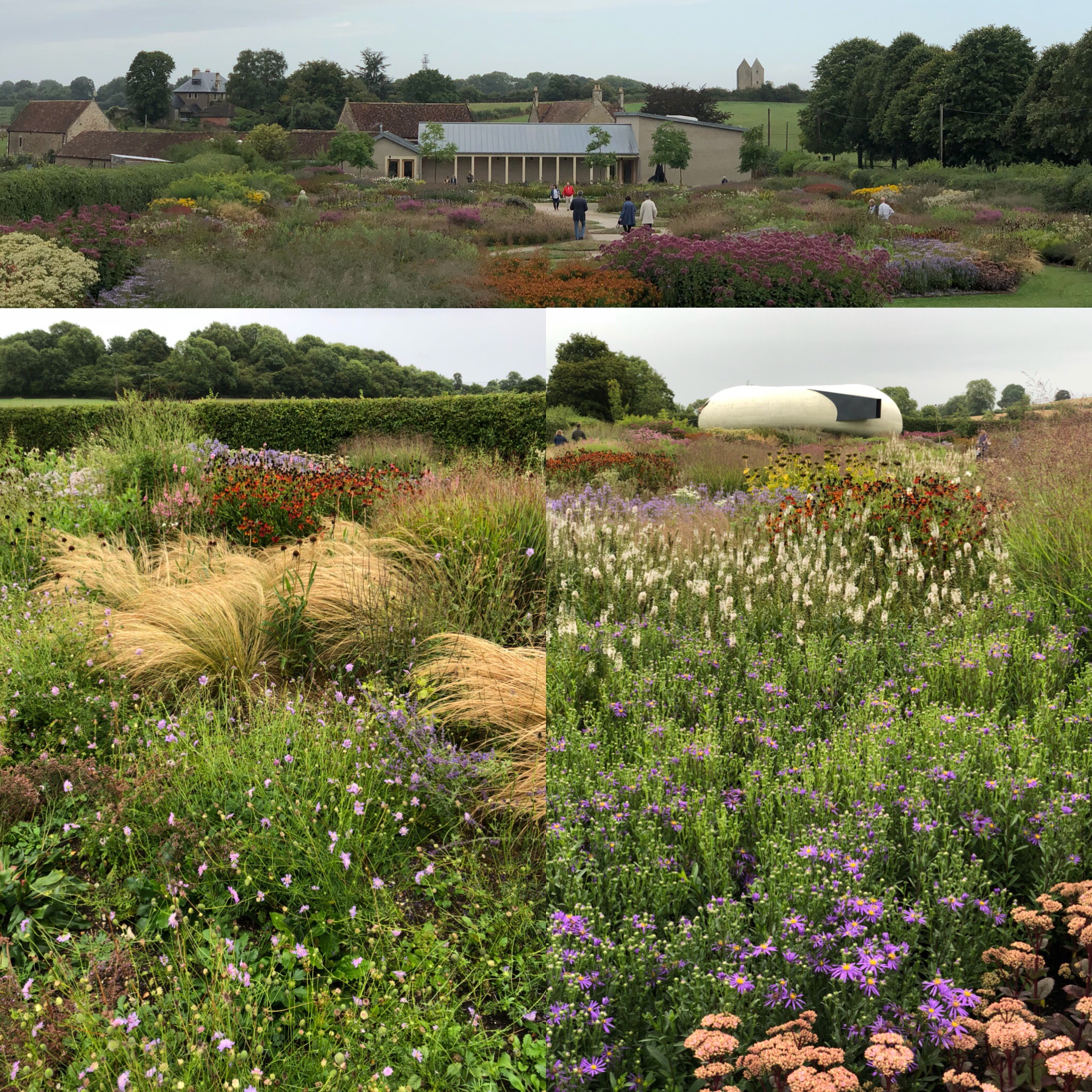
Piet Oudolf Gardens At Hauser & Wirth

Piet Oudolf Gardens At Hauser & Wirth

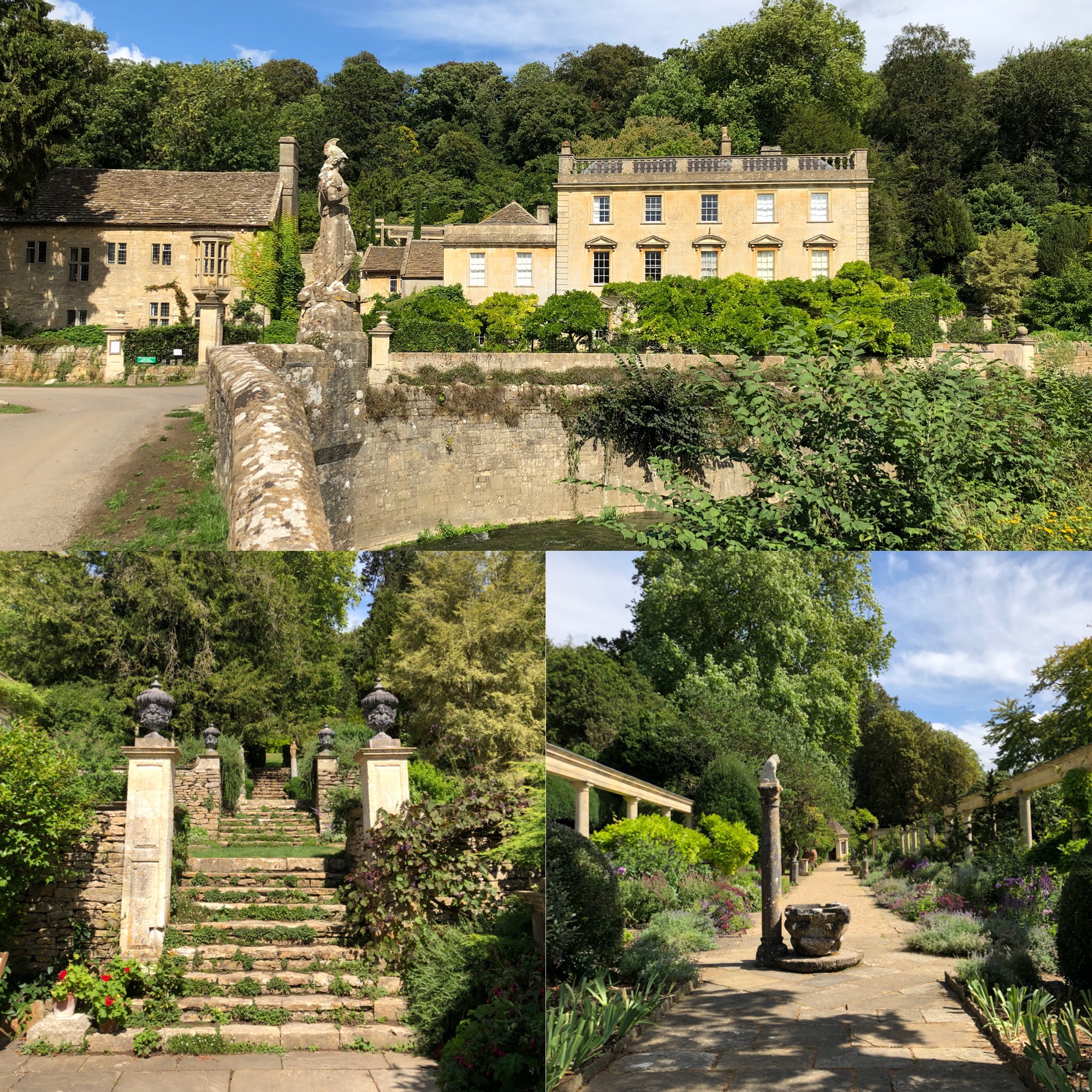
Following a very good lunch at the light and airy Chapel in Bruton, the sun came out and we paid an impromptu visit to Iford Manor Garden.  This was a rather unexpected joy. It was an intimate, Italianate garden full of 100 year old mock-Italian buildings adorned with original, imported Italian sculpture and friezes.  It adjoined an archetypally English river scene and old, golden manor buildings, and looked wonderful in the sun.

Iford Manor And Gardens

Iford Manor And Gardens

More day trips like this – as well as longer excursions once LSW’s work is on pause – are being planned to fill my retirement itinerary.