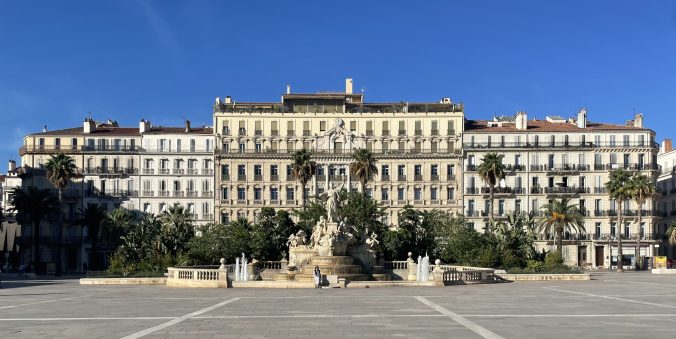
Toulon was a substantial change up from Cassis in terms of scale as we pursued our French and Italian Riviera trip. Toulon is an industrial and working town rather than a pure tourist destination. It is about a fifth the size of Marseilles but, in some ways, had a similar feel. It is another coastal port with a grand square, an old town which is criss crossed with narrow streets, and some very attractive buildings.
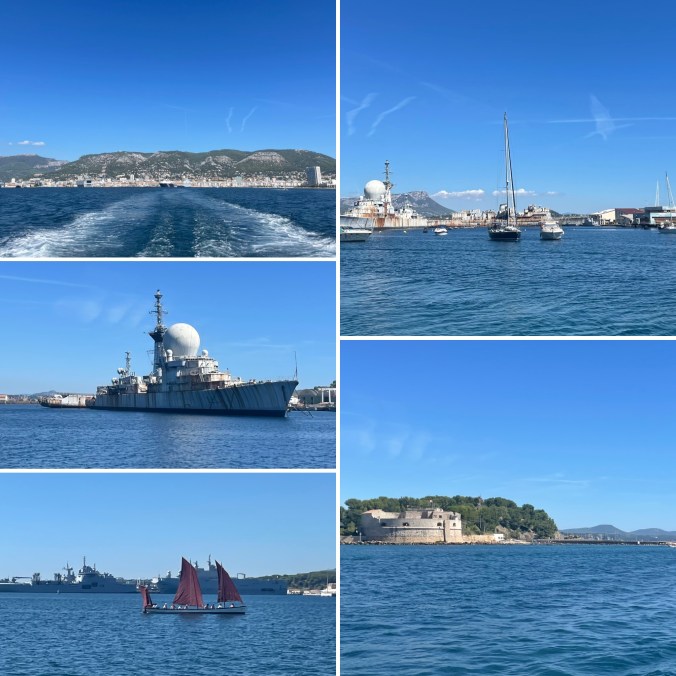
Here the port is dominated by the French Navy. Of course, much of that part of the port is off limits. However, we were able to get a good feel for the naval history of the city and its current importance as a naval base from visit to the Maritime Museum and a ferry trip out to the Saint-Mandrier-Sur-Mer peninsula opposite Toulon harbour.
The ferry trip reminded me of the ferry that crossed Hong Kong harbour that we had travelled on to sightsee Hong Kong bay nine years ago. As then, we paid a tiny fee to travel back and forth across the bay and here we were able to take in some big views of Toulon, its surrounds and some of the redundant and current naval ships including, in the distance, the Charles De Gaulle aircraft carrier. It was refreshing to be in the sun, in the breeze and taking in an unusual view of the city.
The Maritime Museum was quiet, nicely laid out and enough exhibits, models and historical context were explained in English to make it very informative. Toulon has been a port since Roman times. Since the 15th century, the city has gradually become one of the pre-eminent naval centres in France where most ships are berthed and maintained (but not built).
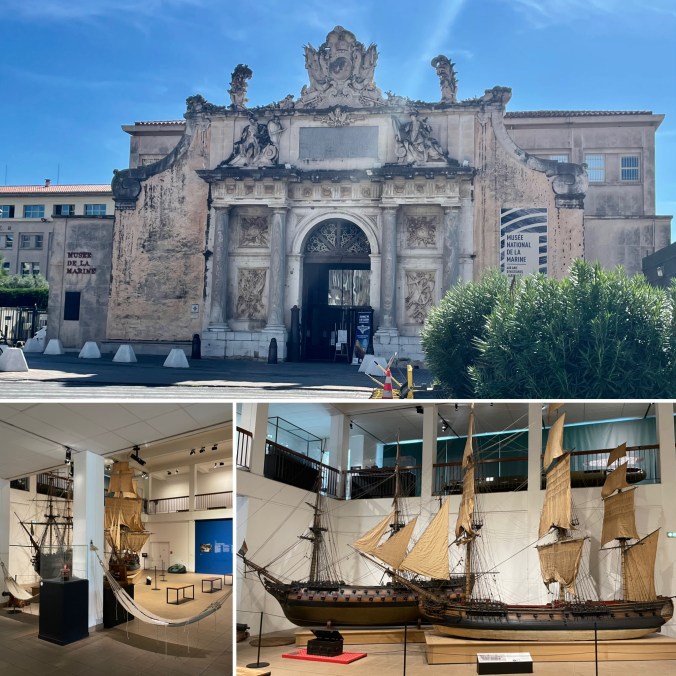
That development has not been smooth. There have been multiple blockades of the port (including one by the British led by Horatio Nelson), explosions of ships undergoing maintenance which killed hundreds of workers and, in the Second World War, the scuttling of many military boats in the harbour by the French Vichy government as naval leaders faced German advances to commandeer the fleet.
We had arrived in Toulon on a Sunday so the city was relatively quiet. We targeted lunch at L’Epicerie, which Jane had previously singled out as recommended. Unfortunately, the relative peacefulness was disrupted by a DJ who was playing at the restaurant. The food was organic, tasty and good (although I prefer my panisse with garlic not tomato sauce) but the DJ initially played loud music we didn’t like before chilling out a bit. We must be getting old…..
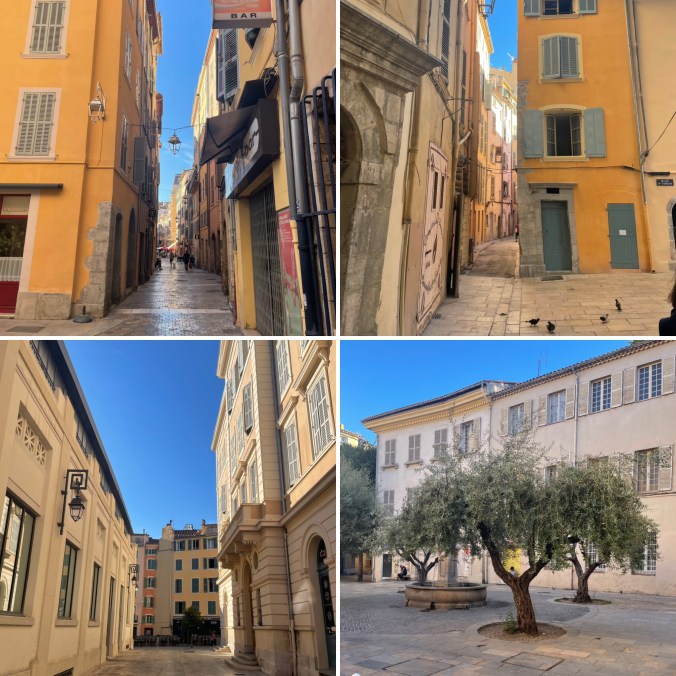
We wandered through some of the streets including the Cours Lafayette Market, and enjoyed the tightly packed old town just inland from the modern buildings of the harbour front. We were fascinated by the underground receptacles for household and other rubbish; above ground these took up very little space and were unobtrusive. They looked like a great idea and we wondered if these are facilities we will see more often nearer to home in the future.
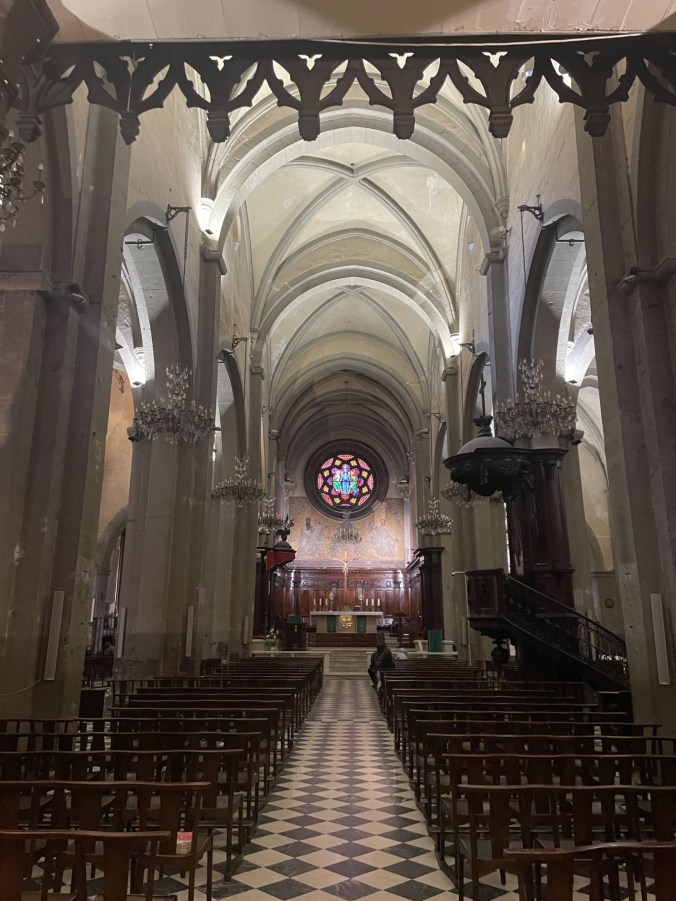
We visited the Toulon Cathedral which is also unobtrusive from the outside and has shops and houses so adjacent to it that they seem to be part of the same structure. Inside, it is dark with only five windows of stained glass. That made it a very atmospheric space.
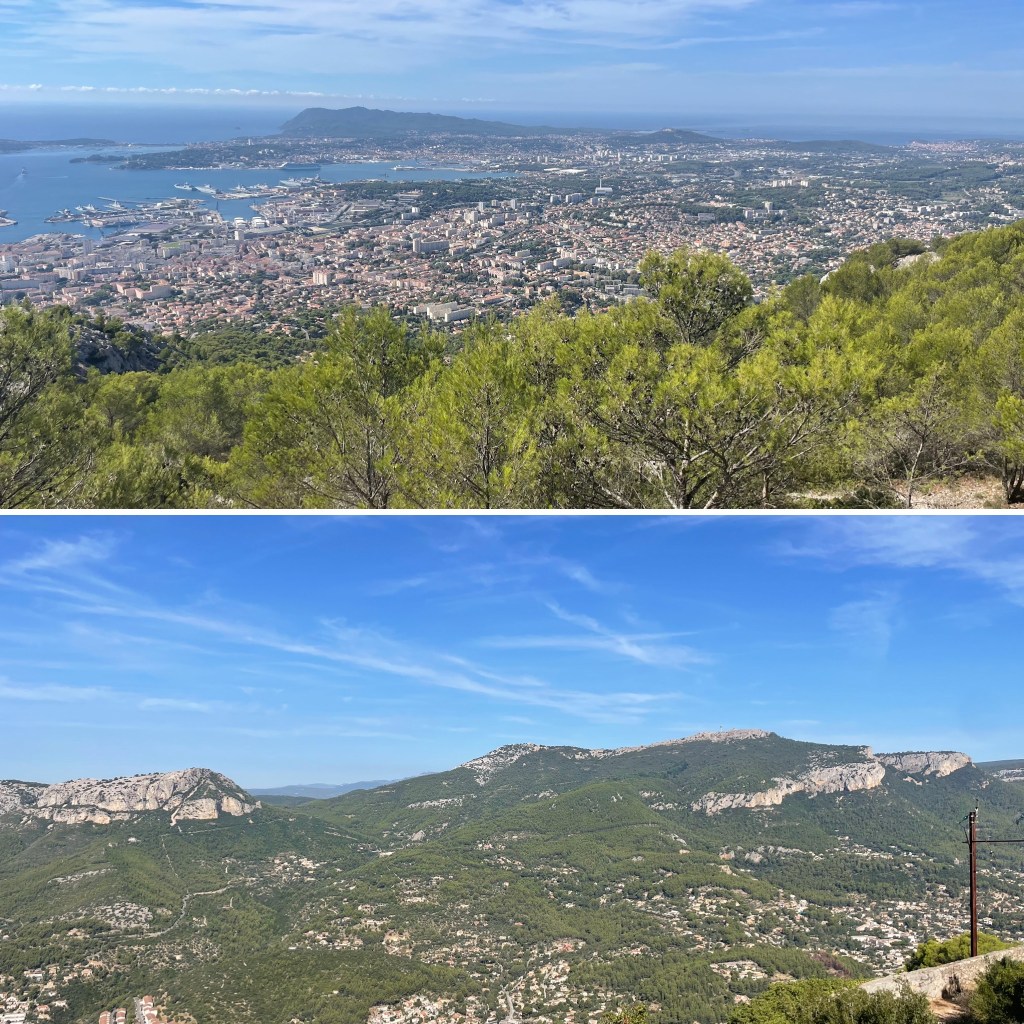
The following day, the city and, especially, the market was more bustling. We left the city centre by taking the cable car up to The Mont Faron which is a substantial mountain overlooking the city and a huge expanse of the Mediterranean. The views on the way up and from the cable car terminal on the mountain are tremendous.
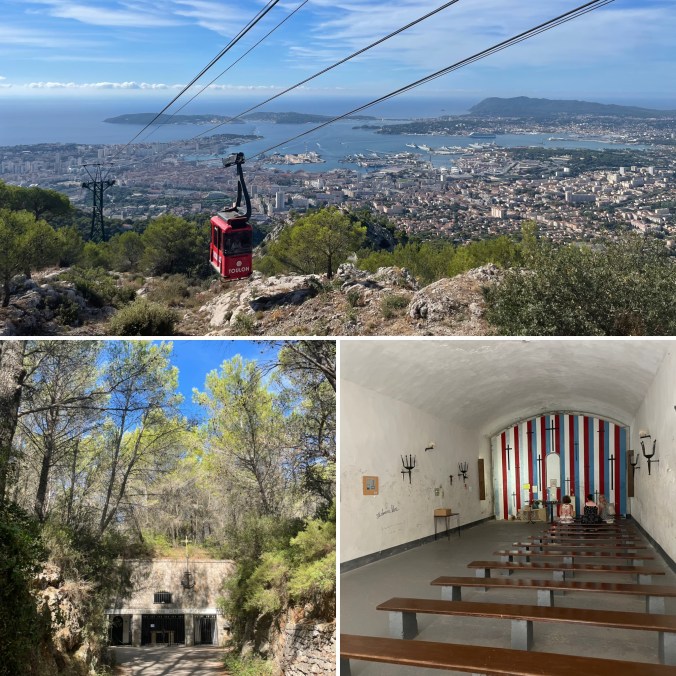
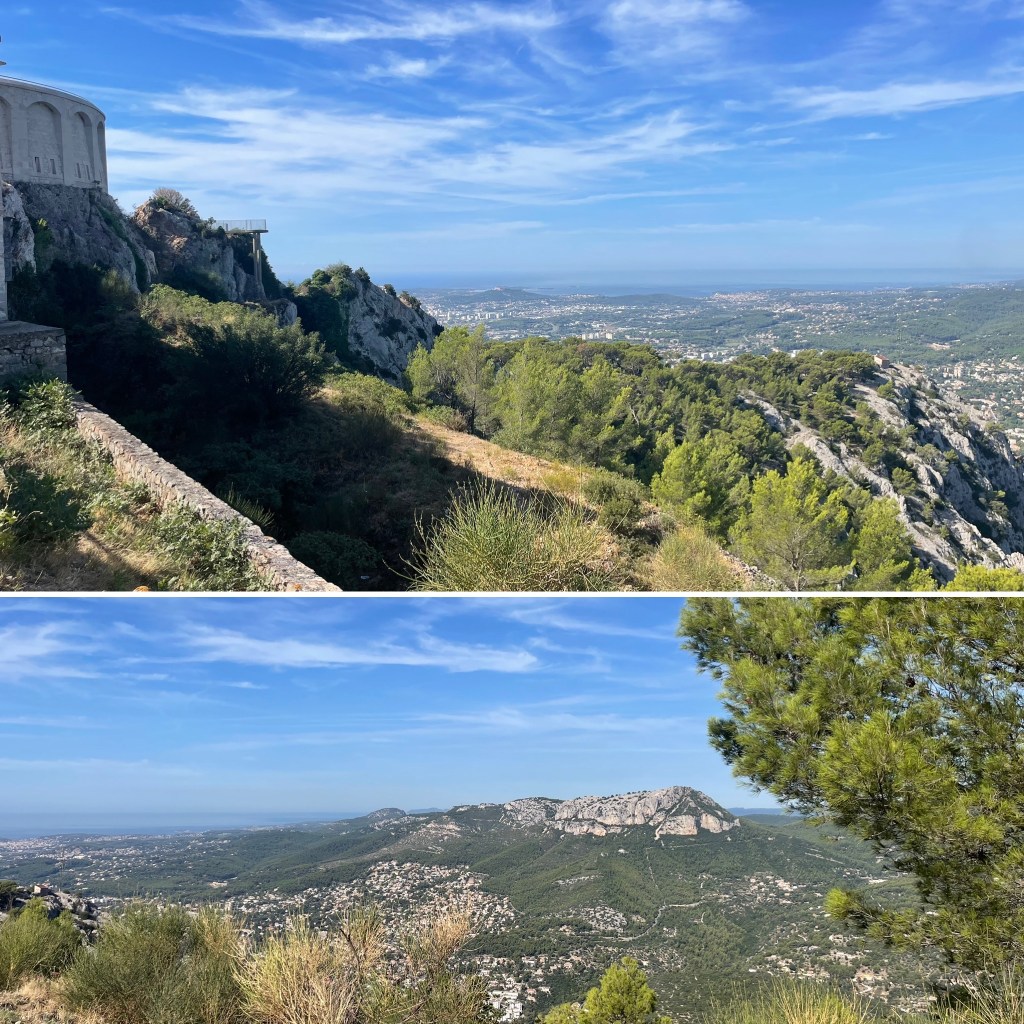
I wandered on to a chapel (Sanctuaire Notre-Dame du Faron) created in the mid-20th century from an old military store that had been built into the mountain. I walked on the Mont Faron Memorial to Allies who dies in the Second World War and to some further sun-bathed views of the mountains to the north and west. The pines afforded some shade in what was increasing heat but it was good to get back to the cable terminal.
By the time we returned to the city we were ready for a drink with our lunch. Jane had identified another Provencal speciality called Daube which is a beef stew. In practice, to pursue a taste of that, we went to a family restaurant called Frankie that served lovely flat buns with a variety of fillings (including Daube which I tried and enjoyed) in neat little paper wrappings. These were delicious.
We followed up with our hydration with some local wine and a few snacks at a bar in one of the pretty squares and headed back to our hotel for rest and sleep.
By this time in our holiday, we were getting into the swing of the two nights in a town or city routine. We left Toulon full of a very good hotel breakfast, very happy and excited for the next stop in Nice.

