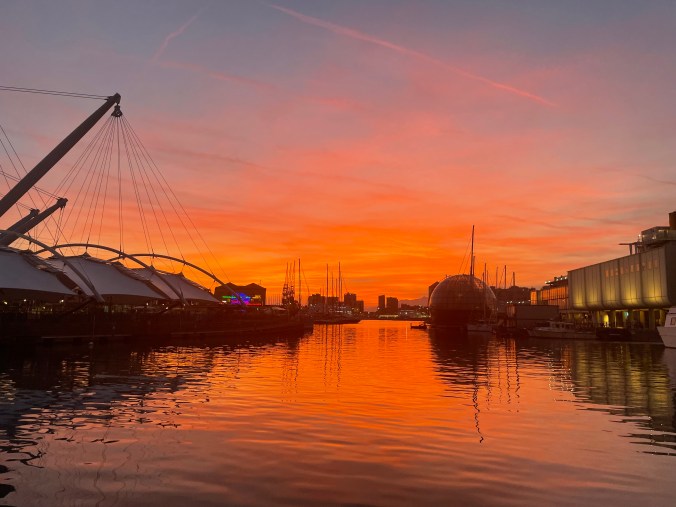
Our last stop on our trip along the French and Italian Riviera was this grand old city of Genoa. Having just gone back through my holiday photos, I realise now that I took far more pictures in Genoa than in any other of our stop-offs; there is just so much to see and admire.
There are the palaces, many of which have become museums and art galleries. There are mazes of Medieval streets (the ‘Caruggi’), multiple squares and imposing public buildings. There are spectacular views from the hills above the city that are accessible by a lift and funiculars. And there is the port where many of the old warehouses and harboursides are now full of restaurants and bars and where a film-prop galleon (Roman Polanski’s Neptune) is berthed prominently harbourside.
We had a very full 48 hours in Genoa. It’s a busy, gritty city packed with things to see. It’s a city that seems comfortable with its somewhat faded grandeur. It appears to be preserving, restoring and exploiting it for tourism as well as posterity.
The Palaces
Most of the famous palaces are in Via Garibaldi and our family hotel was conveniently located between that impressive street and the railway station. As soon as we left our hotel, having stashed our luggage in our room one more time, we started to pass palaces. One such is now part of Genoa University (below).
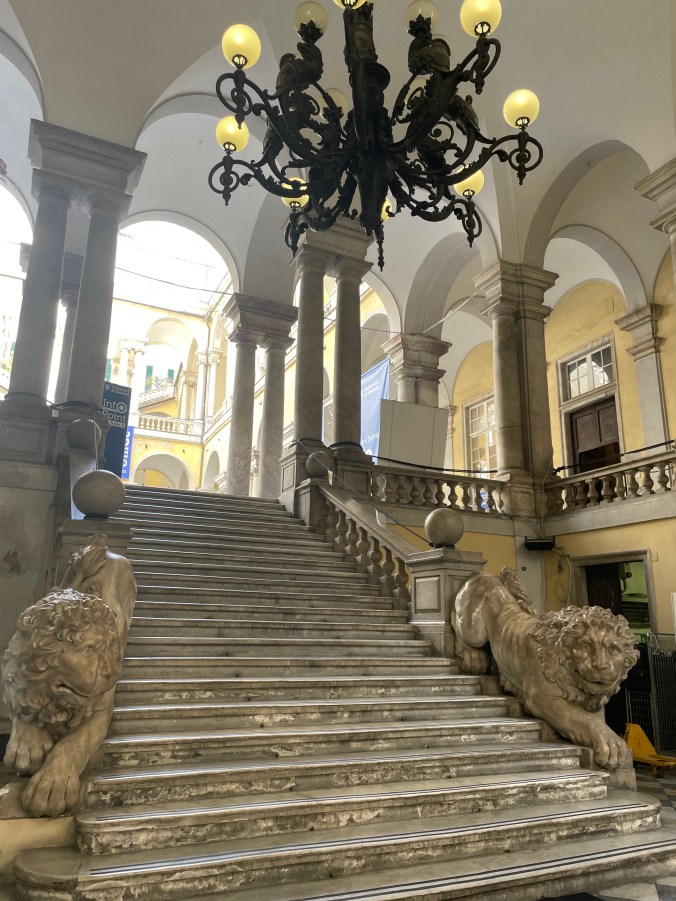
Opposite is Palazzo Reale which, like many of the palaces, was built in the mid-17th Century. We peeked in but pressed on and by the time we had arrived in Via Garibaldi, it was clear that we were in a very special town centre with a myriad of medieval, baroque and renaissance buildings in almost every direction we looked.
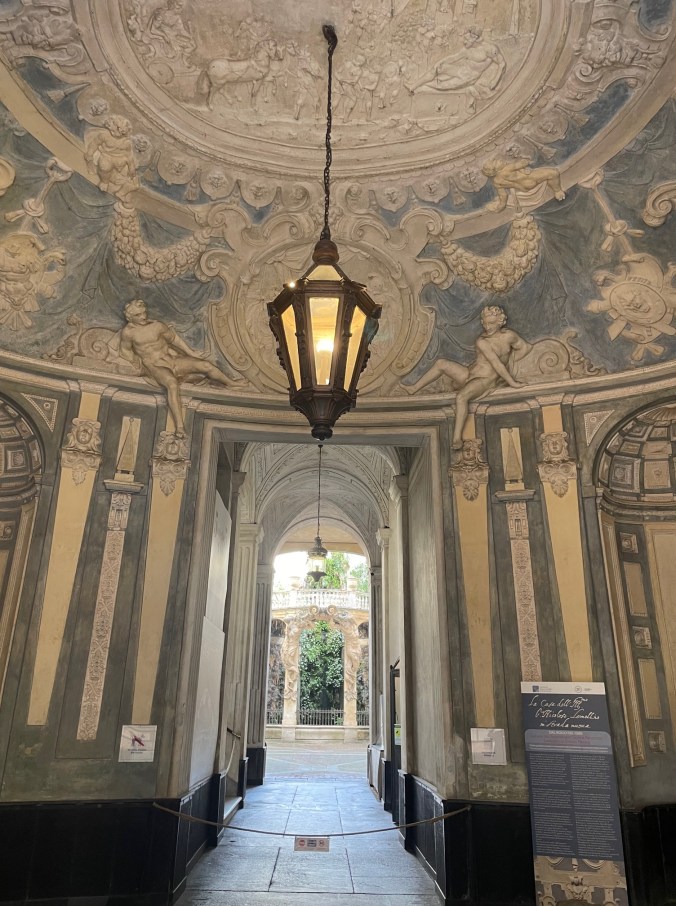
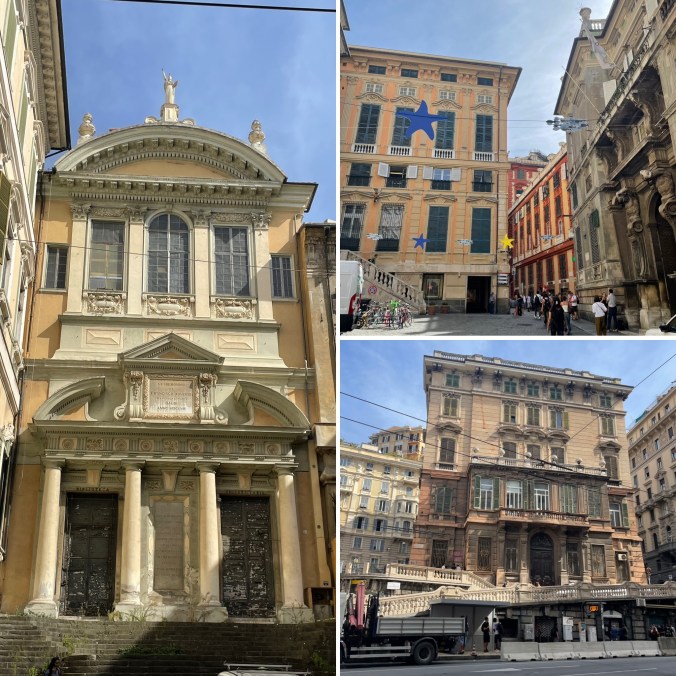
We saved entering the Via Garibaldi palaces until our second full day in the city. Three of the main palaces make up the Strada Nuova Museums and can be visited with a single ticket. Palazzo Rosso, Palazzo Bianco and Palazzo Tursi are magnificent Baroque/Renaissance buildings comprising over 75 rooms. The whole is an incredible UNESCO site of history and art.
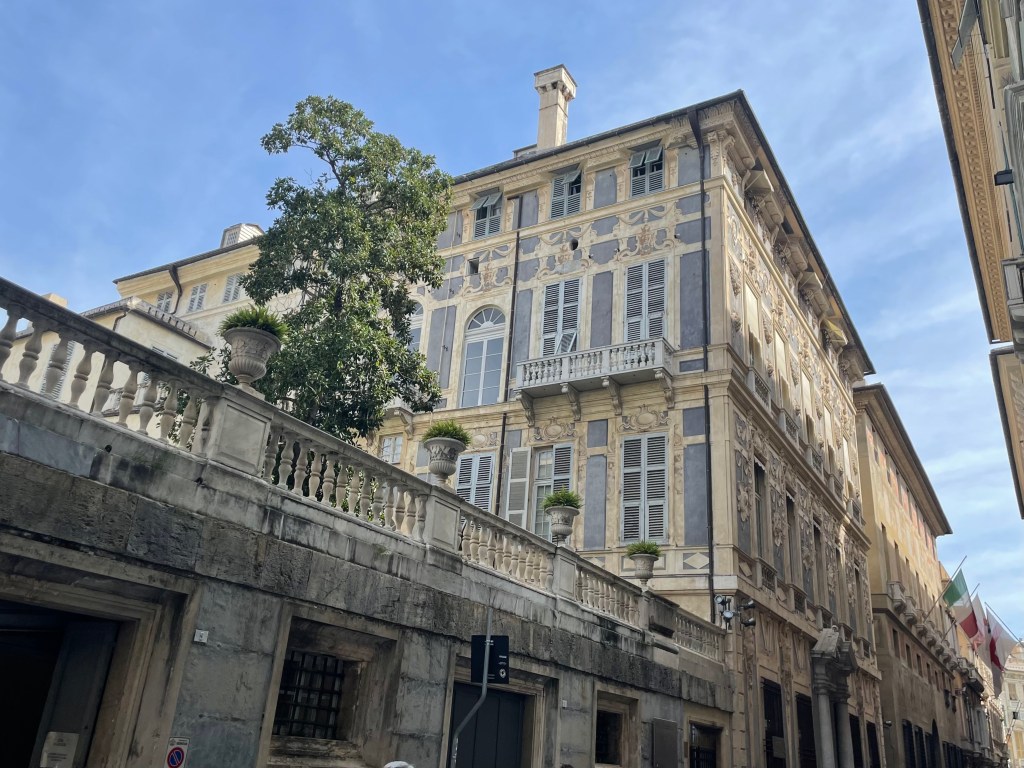
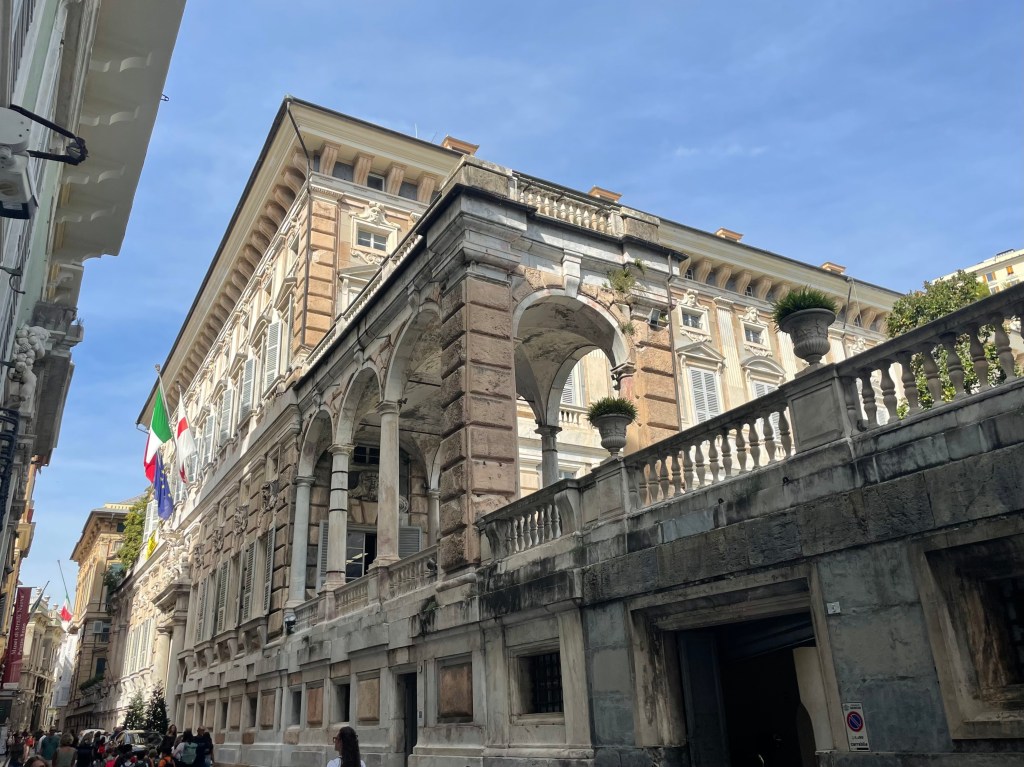
Palaces in Via Garibaldi
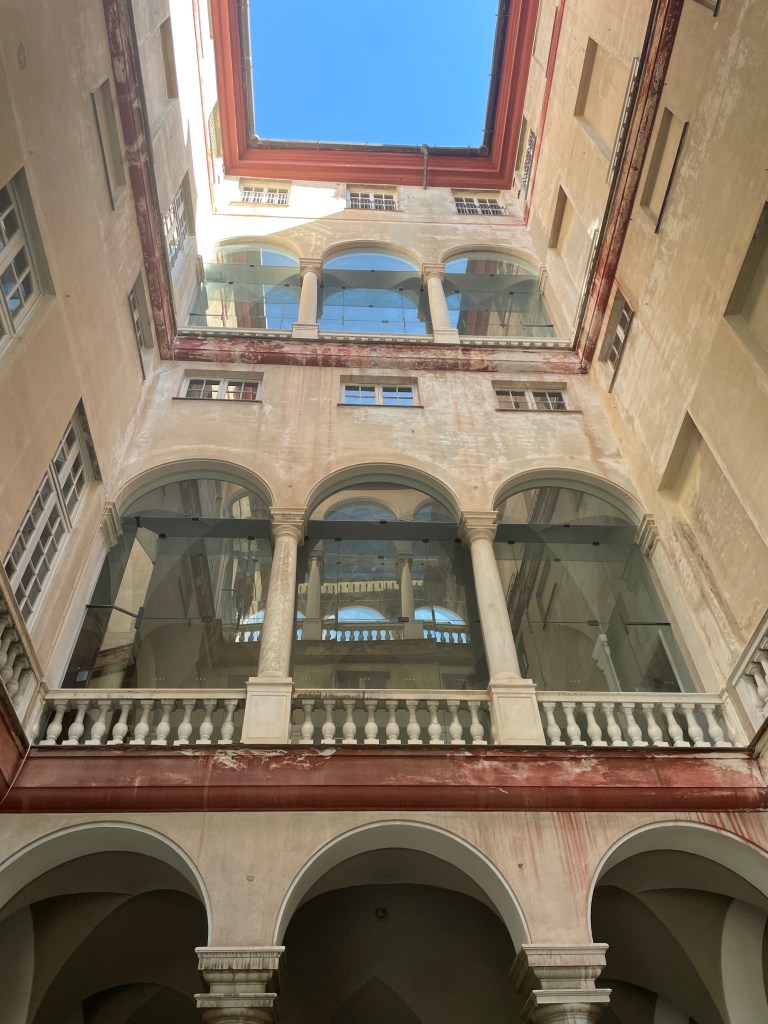
Palazzo Rosso is as red as its name suggests. When built, most of the internal terraces and stairwells must have been open to the elements. Significant repairs were required following damage during the Second World war and then further restoration was undertaken that was completed in 2022. This has enclosed the terraces in glass so the vistas are still evident but the art works in the building are fully protected from the weather.
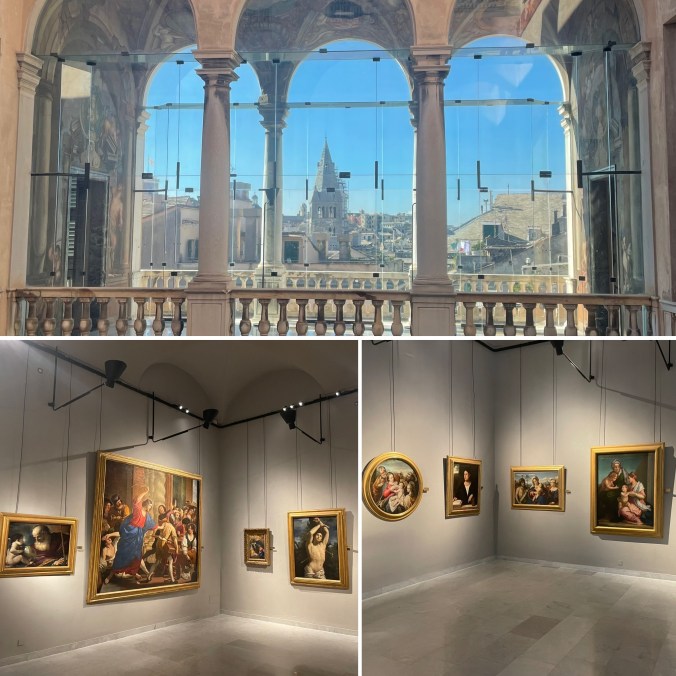
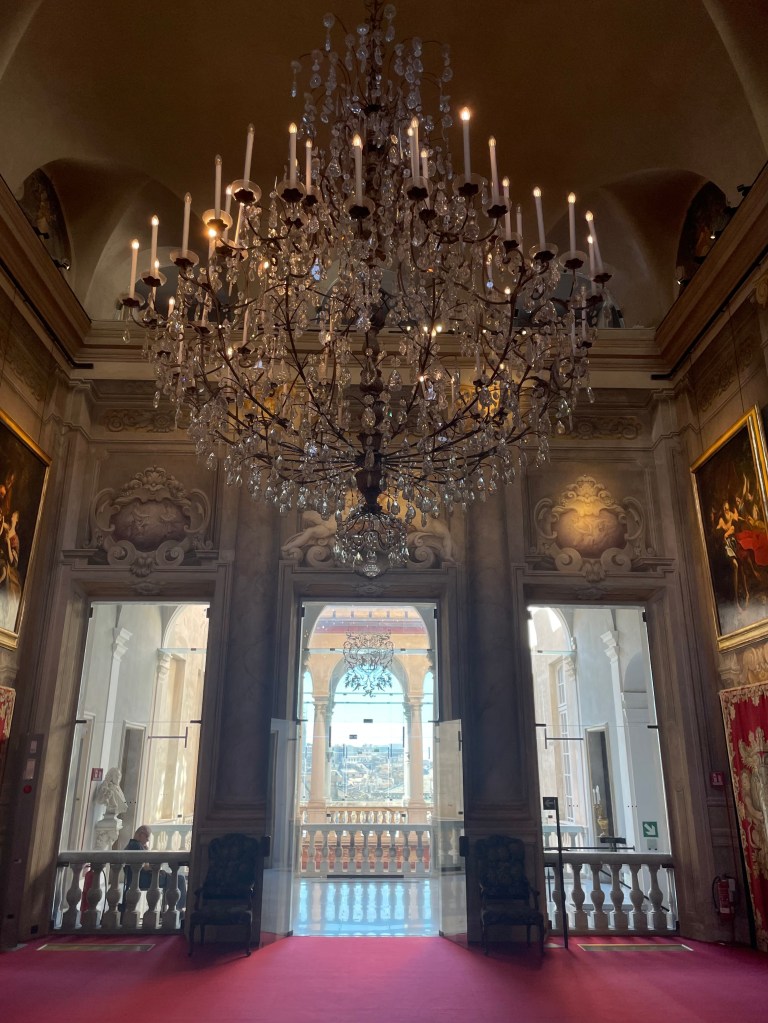
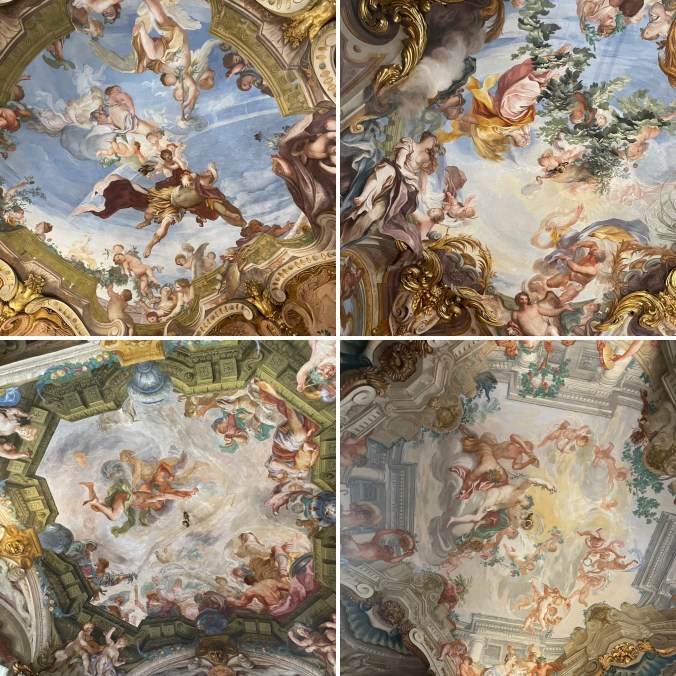
The principal rooms themselves are largely empty of furniture but almost all are decorated ornately. The ceilings, in particular, were incredible in room after room. Many of the walls are now devoted to displays of Italian and Flemish art, much of which was collected by the families that lived in the building until it was donated to the city in 1874.
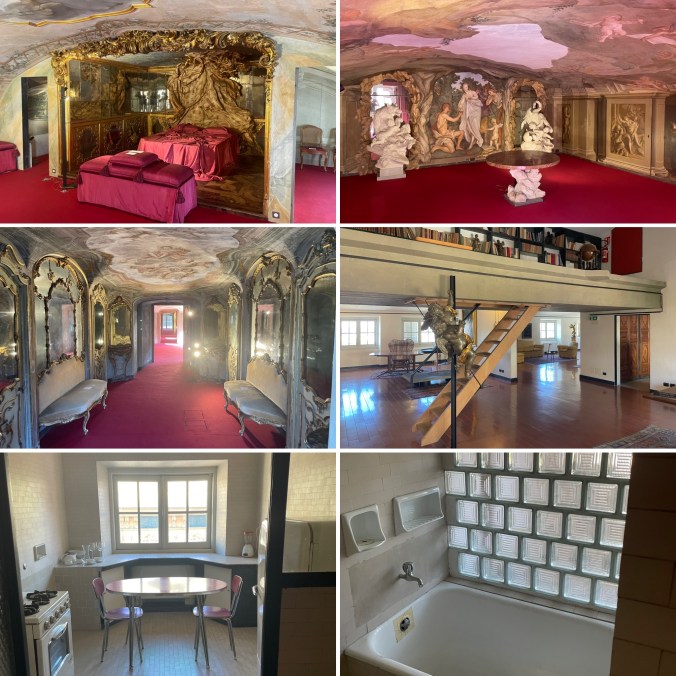
The top floor of the palace is perhaps the most interesting. It was a retreat for some members of the family during the 19th century. Then, as part of the post-war renovation, the floor became a self-contained apartment and the living quarters of the Director of the Civic Museums, Caterina Mercardo, and home to her own art (subsequently donated to the city). The apartment was designed by Franco Albini and then, following use as offices, was fully restored early in 20th century. It’s low ceilings and the mundane functions of rooms such as the bathroom and kitchen act as a great counterpoint to the huge rooms of the rest of the palace.
Palazzo Bianco is opposite and is, indeed, predominantly white. Like Palazzo Rosso, Palazzo Bianco has been renovated and transformed from a huge residence into an art gallery and museum. I enjoyed the art here rather more than I had in Palazzo Rosso but there is just so much of it that I couldn’t focus on it all. Instead, I spent time in the terrace garden which was very pleasant in the sunshine.
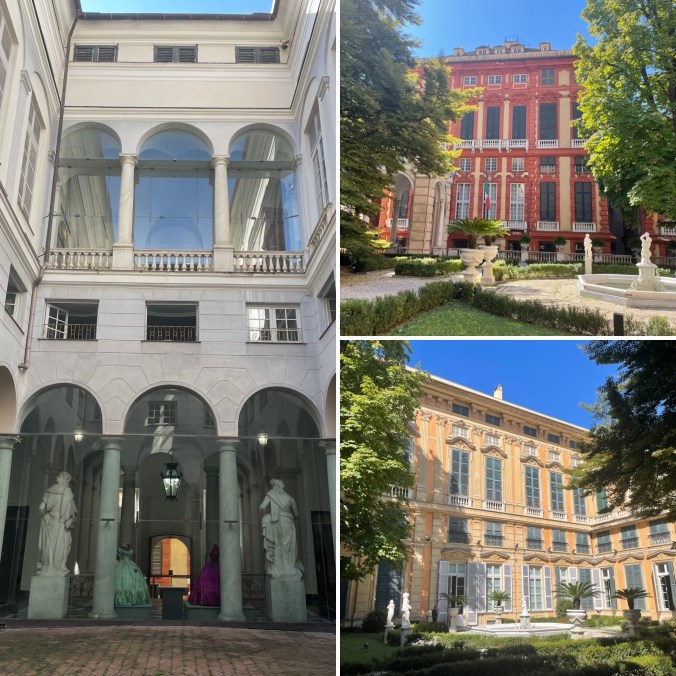
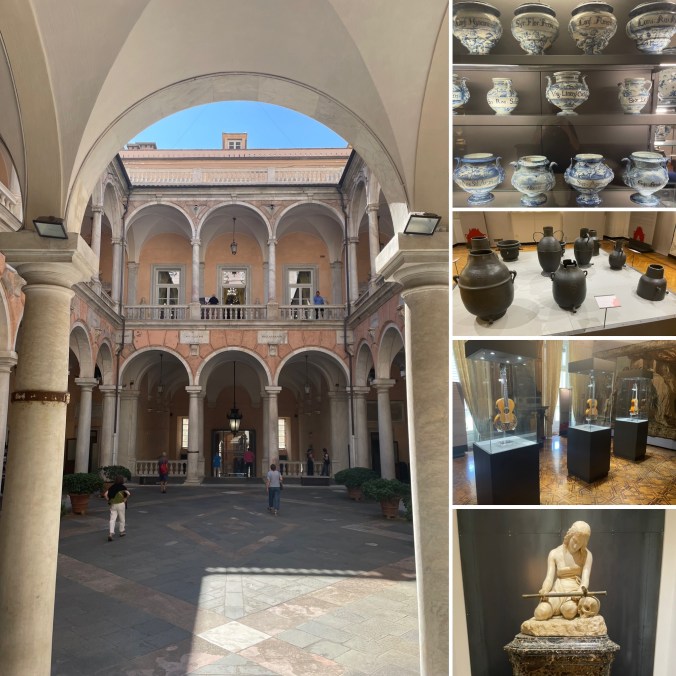
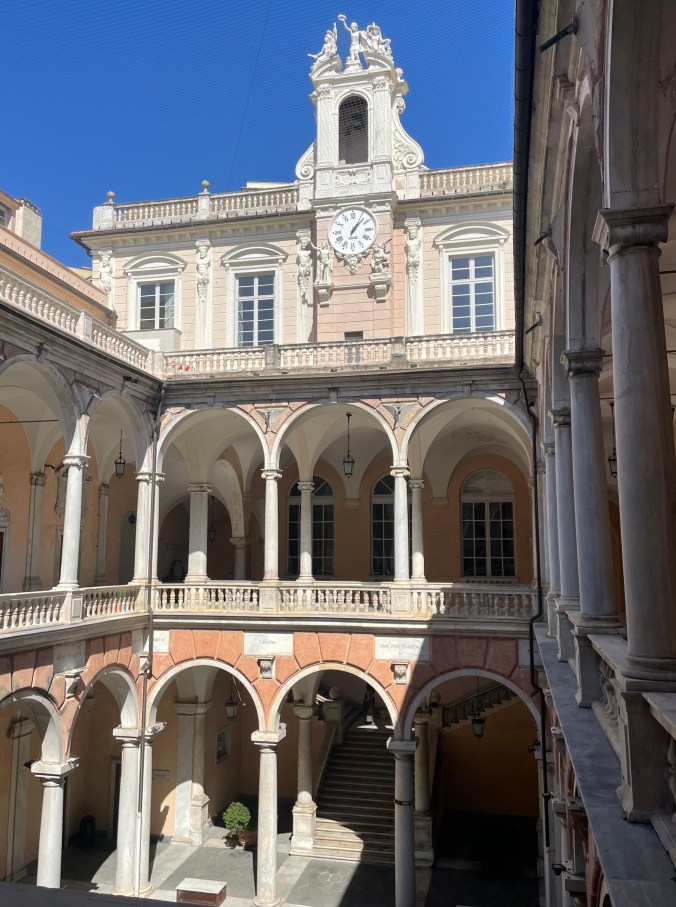
Adjoining Palazzo Bianco is Palazzo Doria Tursi. This too has been renovated earlier this century and now is a museum for art, coins, ceramics, violins and more. The central courtyard of this palace is particularly beautiful.
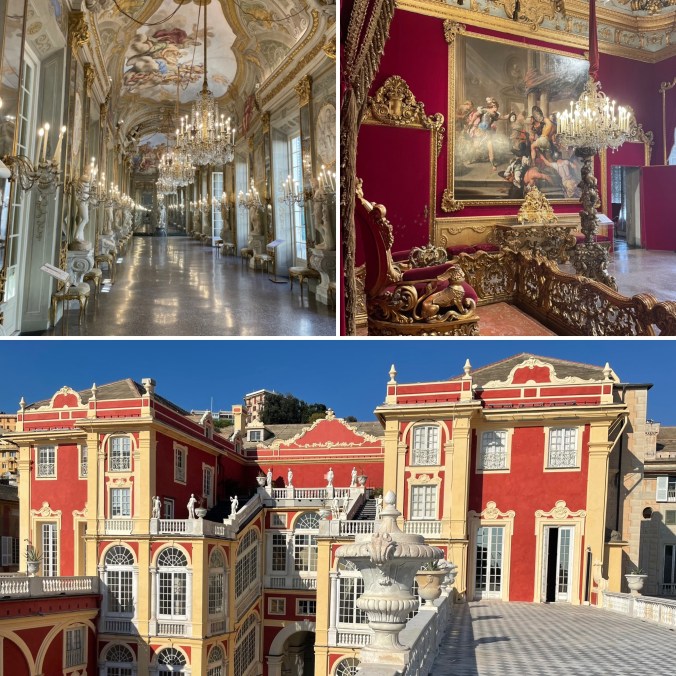
Later in our first day, we visited Palazzo Reale which we had passed by earlier. This too is amazing, especially the Hall of Mirrors, the Throne Room and the courtyard at its centre. The garden is undergoing repairs and the views from it are impaired by modern buildings and the massive, elevated harbour road. Nonetheless I’m very glad we fitted in a visit.
The Caruggi, Cathedrals and Squares
The Medieval streets separate the large, detached palaces and residential blocks in the Old Town and provided access for the rich merchants and aristocracy to the port. This complex of streets is called the Caruggi.
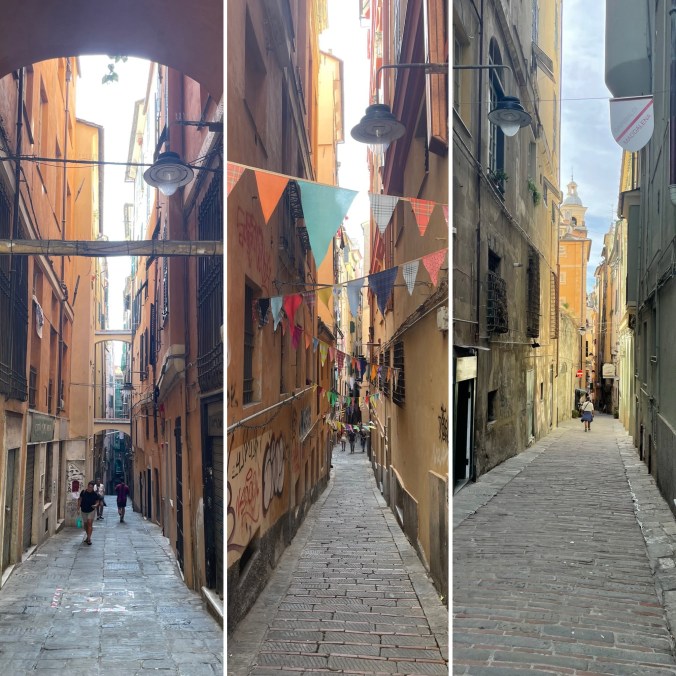
The blind corners and tight alleys lead to small squares with churches (we visited Chiesa di Santa Maria Maddalena), art and craft shops, and small cafes. Rat traps are prevalent but we only saw one rat. The area is intriguing but we declined traversing the Caruggi at night.
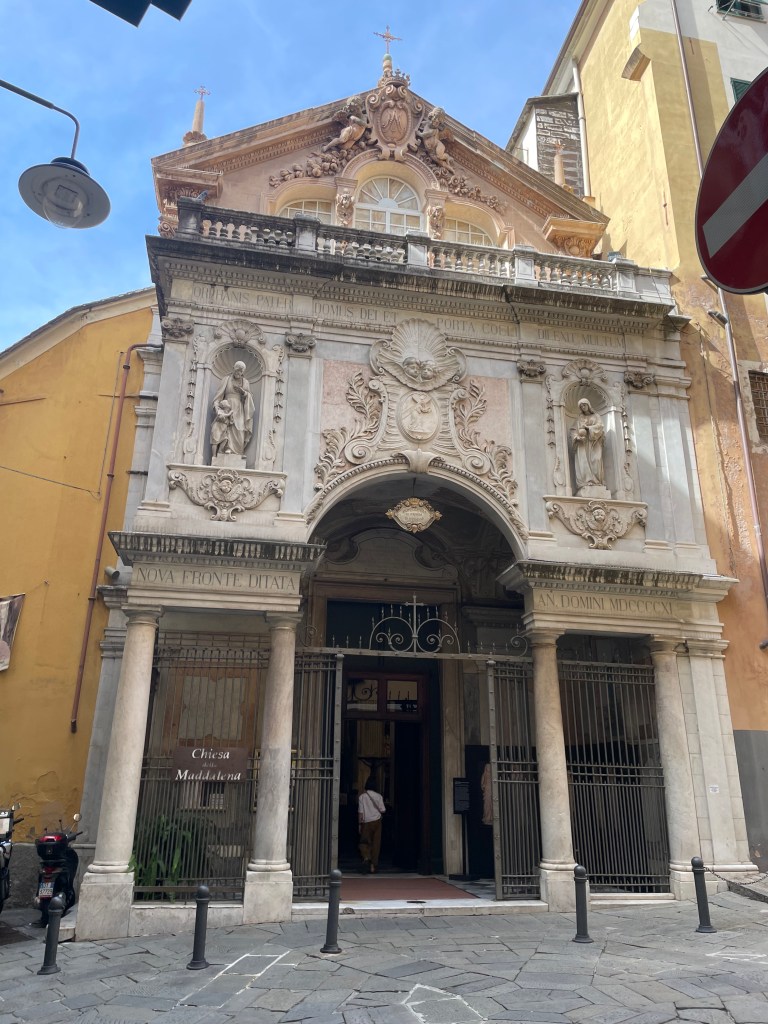
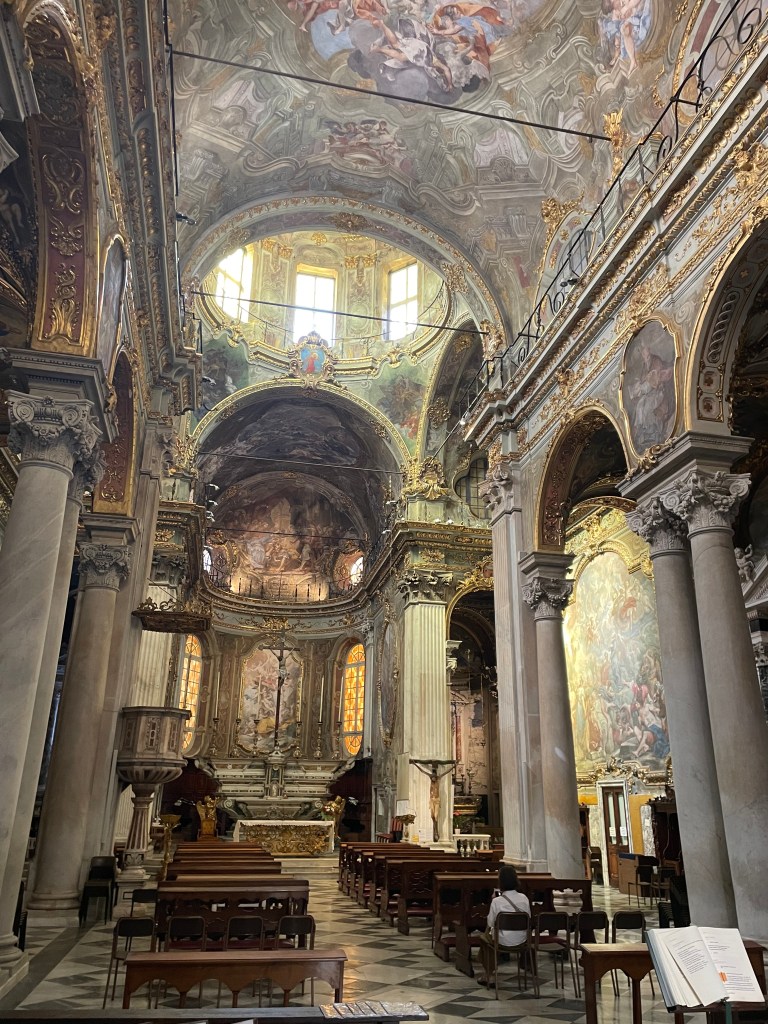
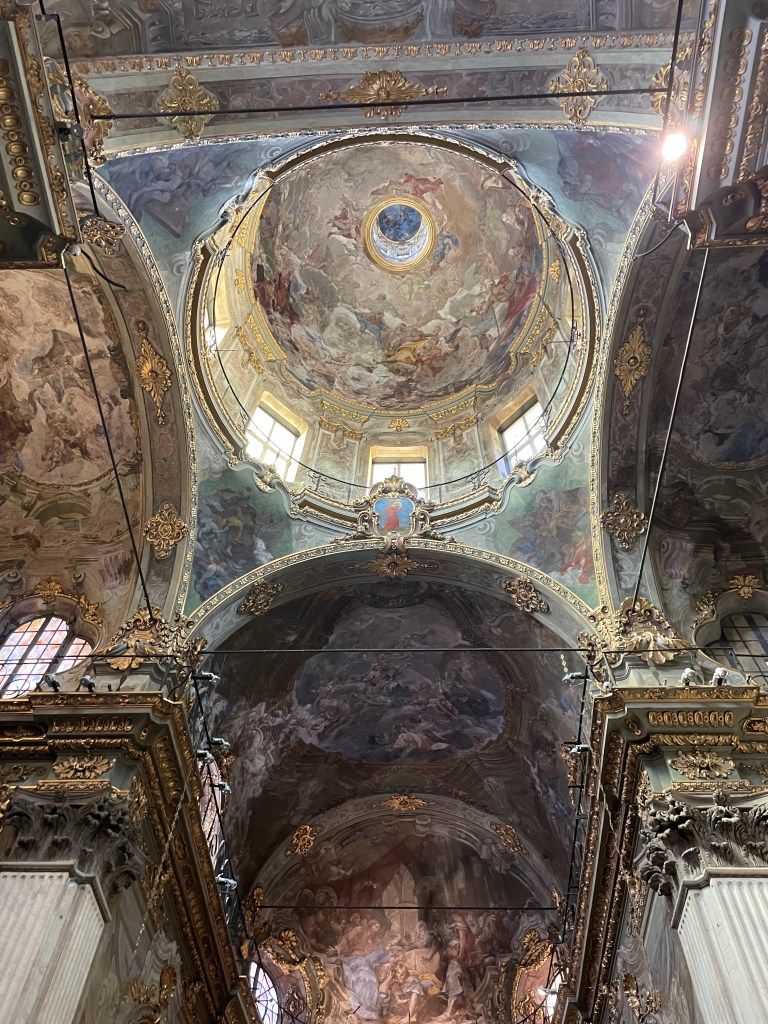
Chiesa Di Santa Maria Maddalena
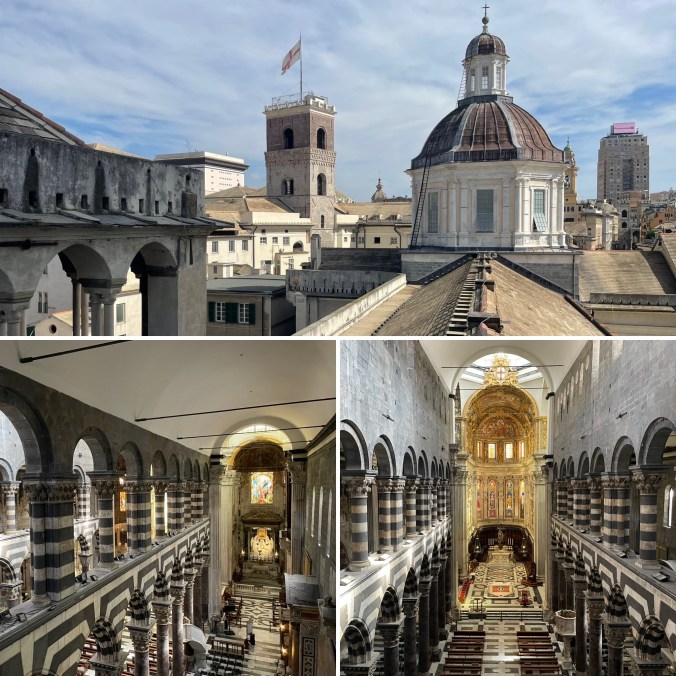
Beyond the Via Garibaldi and the Caruggi are a number of squares. Piazza San Lorenzo contains the Cathedral of San Lorenzo which is very calming and beautiful as most such cathedrals are, but which also offered unusual and welcome views from a balcony above the nave and outside on the roof.
The nearby Piazza Matteotti was also impressive with the Palazzo Ducale on its northern side. A busy street leads from here to the eastern and originally Medieval gate to the city, Porta Soprana, and some monastery ruins.
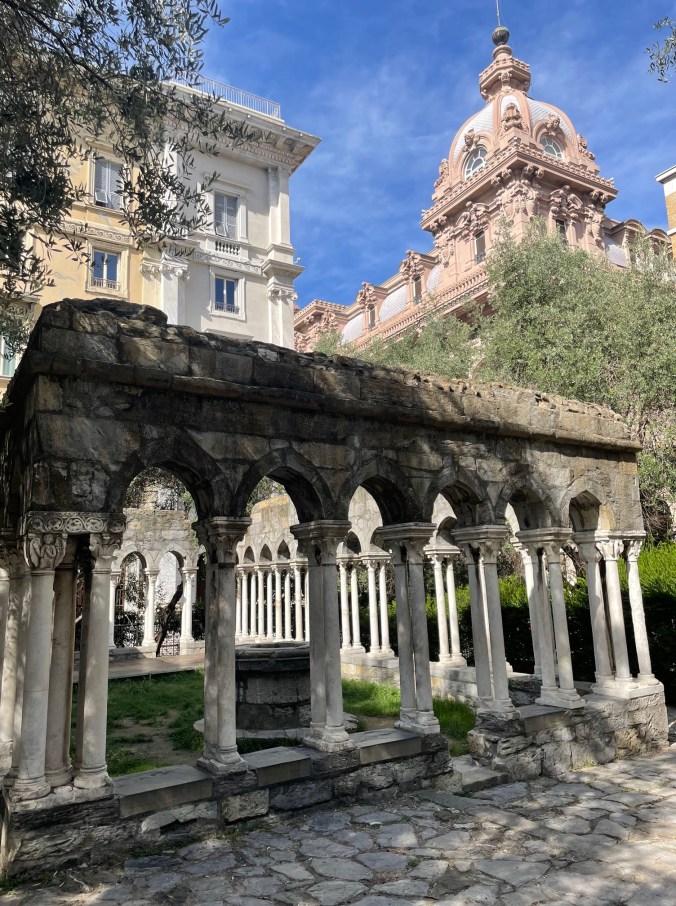
It was here that we first noticed a preponderance of what appeared to be St George’s Cross flags. It seems that England shares the St George’s Cross with cities across Northern Italy and it is the ensign of the Republic of Genoa. Wikipedia helped out and says ‘King Richard the Lionheart, passing through Genoa in 1189-1190 to embark on the Third Crusade wanted his ships to benefit from the protection of the Genoese fleet. The English Monarch paid an annual tribute to the Doge of Genoa for this privilege.’ This was interesting to us given the current fuss in England about flying the flag……
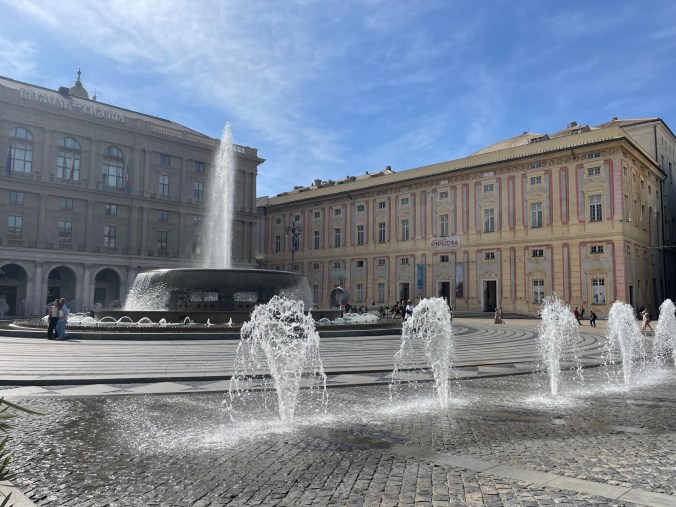
From Piazza Dante (which was adjacent to a spectacularly large moped parking area), we walked back north to Piazza De Ferrari which is the largest square in the city. This is surrounded by a mix of old and new. It was in one of the side streets here that we found a restaurant Jane had identified through her contacts on Instagram as our favoured place to dine that night: Trattoria Rosmarino. The restaurant is aligned with the Slow Food Movement which Jane has been following. Our meal there, and the accompanying service, was indeed excellent.
The Hills
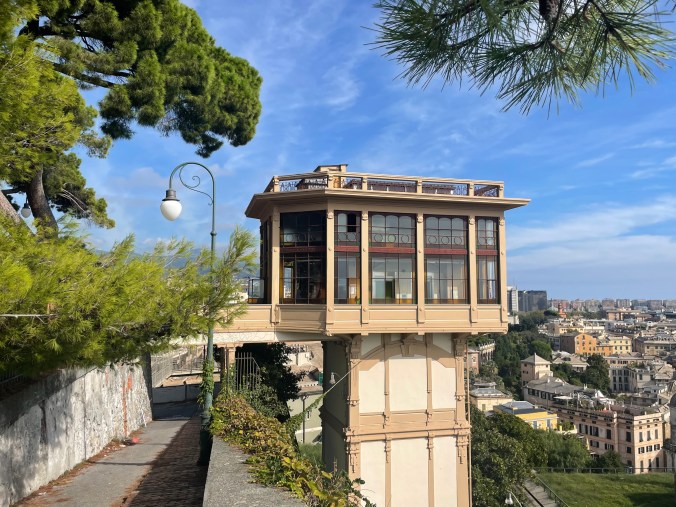
On the first day of our Genoa stay, we took the Ascensore Castelletto Levante Lift to a small hill overlooking the city. There were wide views of course but the most interesting thing was the Art Nouveau design of the decorations around the entry points and of the lift itself.
There are at least three funiculars in Genoa. We eventually found the entrance the longest of these, the Zecca–Righi funicular and travelled through several commuter stations to rise over 900 feet above the city. From the top, we could look many miles north to old fort-topped mountains and far along the valley of the Bisagno, the main river flowing from the Ligurian Apennines and through Genoa.
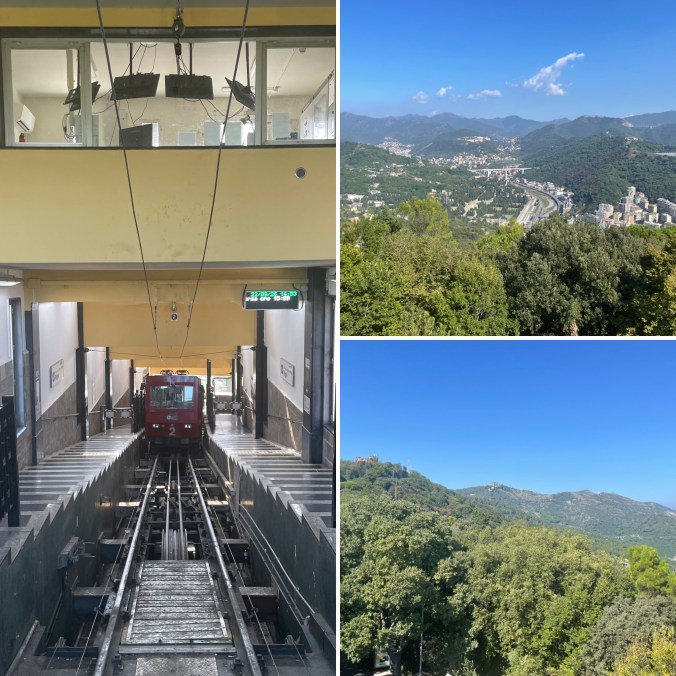
Both these excursions were fun breaks from the art, architecture and bustle of the city.
The Port
We found restaurants and bars in Genoa port that, if one ignored the motorway overhead, was very attractive. We enjoyed strolling around. The large yachts and a huge cruise liner called the MSC Grandiosa were on show. The latter is vast and can accommodate an astonishing over 8,000 customers and crew.
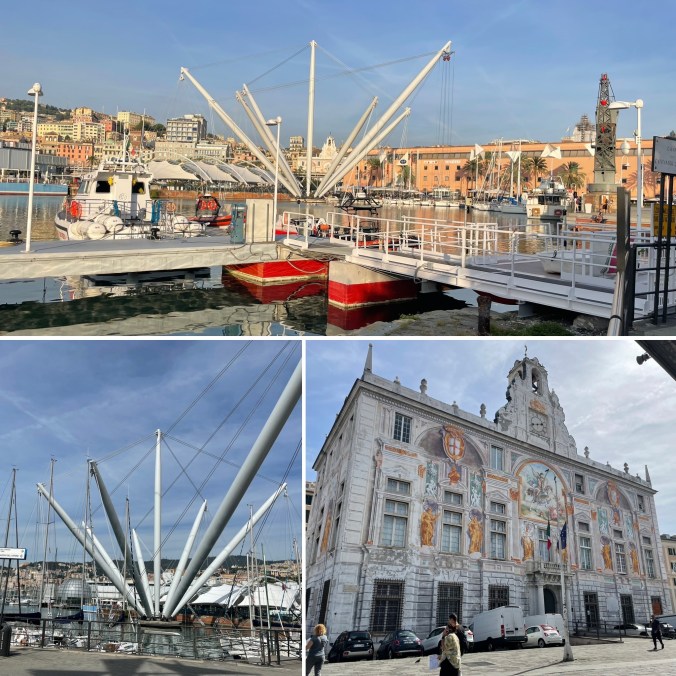
The centrepiece of the port is the inverted spider structure that supports various canopies and Bigo, a lift offering 40-foot-high views of the harbour and beyond. Unfortunately, this lift wasn’t working when we visited but we enjoyed the port anyway. Particularly spectacular was a sunset as we walked along the harbourside on our last evening in the city. A lovely finish to a very good segment of our holiday before setting off for home.