Paris: A Perfect End

Our trip in September along the French and Italian Riviera had been very successful.  Every day – even the travelling days – had been exciting and interesting and the whole trip had been full of variety.  The package we had bought from Byway Travel was full of variety and had taken us to:

As I have written up here each of theses stop overs, I have been able to reprise many of the great memories from our trip; a sort of ‘double whammy’ of holiday experience!

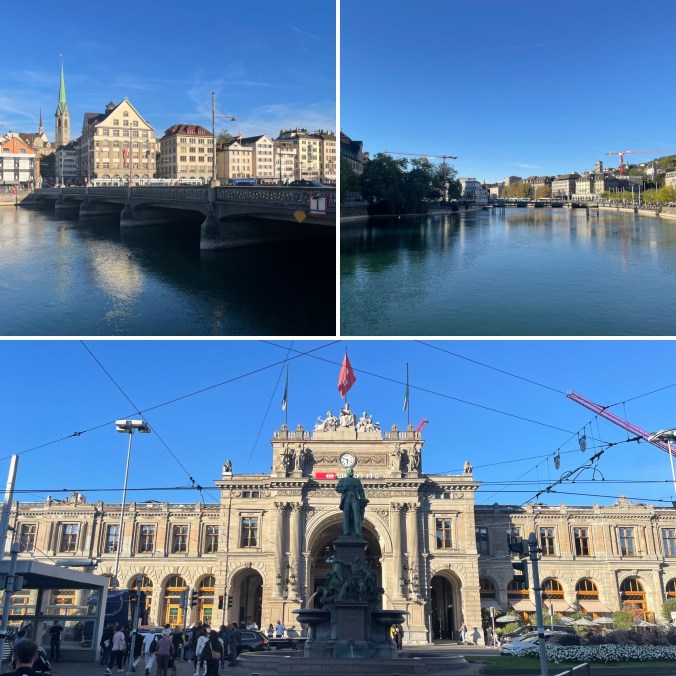
We left Genoa for home but, as well as a long but often beautiful train journey through Milan, Zurich and the Alps, we still had 36 hours in Paris to enjoy.
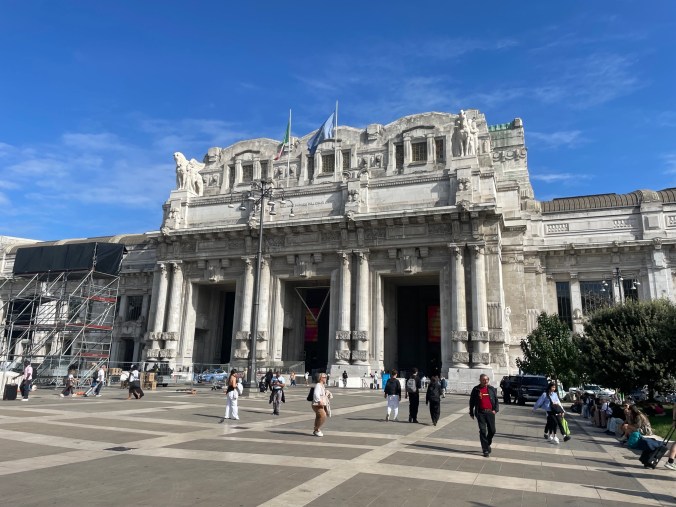
Milan Station.  Not Much Time To Stop..... But, Impressive Building
Milan Station. A Brief Stop In An Impressive Building

We arrived at our hotel in Paris near midnight. It was more chic than others we had stayed in, but equally comfortable. 

Following breakfast there, we set off without any great plan.  We had hoped to visit the renovated Notre-Dame.  However, we hadn’t booked a reserved slot for entry (or indeed, any advance tickets for any of the main tourist sites in the city) and, in any case, the cathedral was closed because of an impending visit by the Pope.  We will just have to visit Paris another time and be armed with reservations for the Notre-Dame and tickets for a few other big attractions that we haven’t seen or want to revisit.
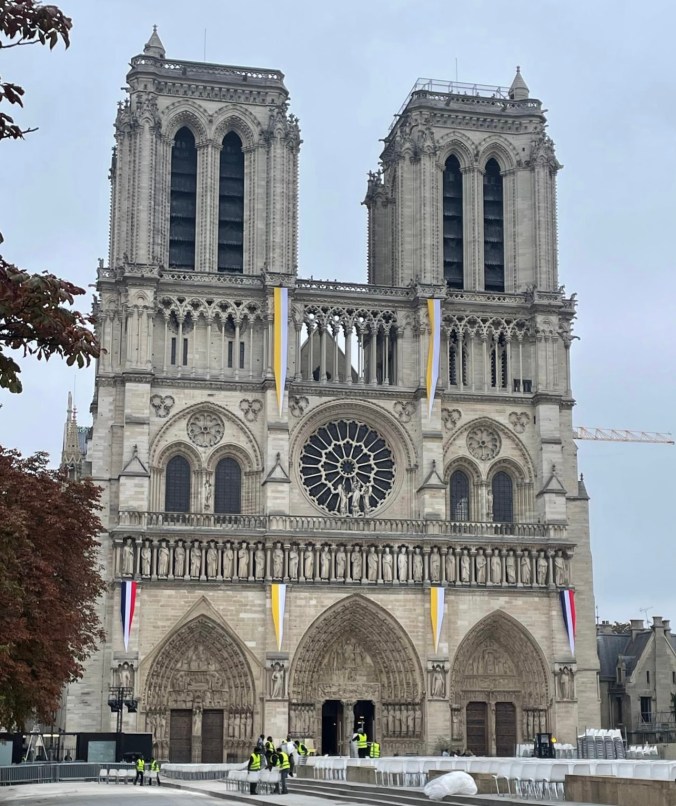
Notre-Dame
Notre-Dame

The weather was initially cloudy but the sun came out so that we were quickly in weather similar to that we had become accustomed to over the previous couple of weeks or so – warm and sunny.   We wandered through Le Marais until we approached the Seine.

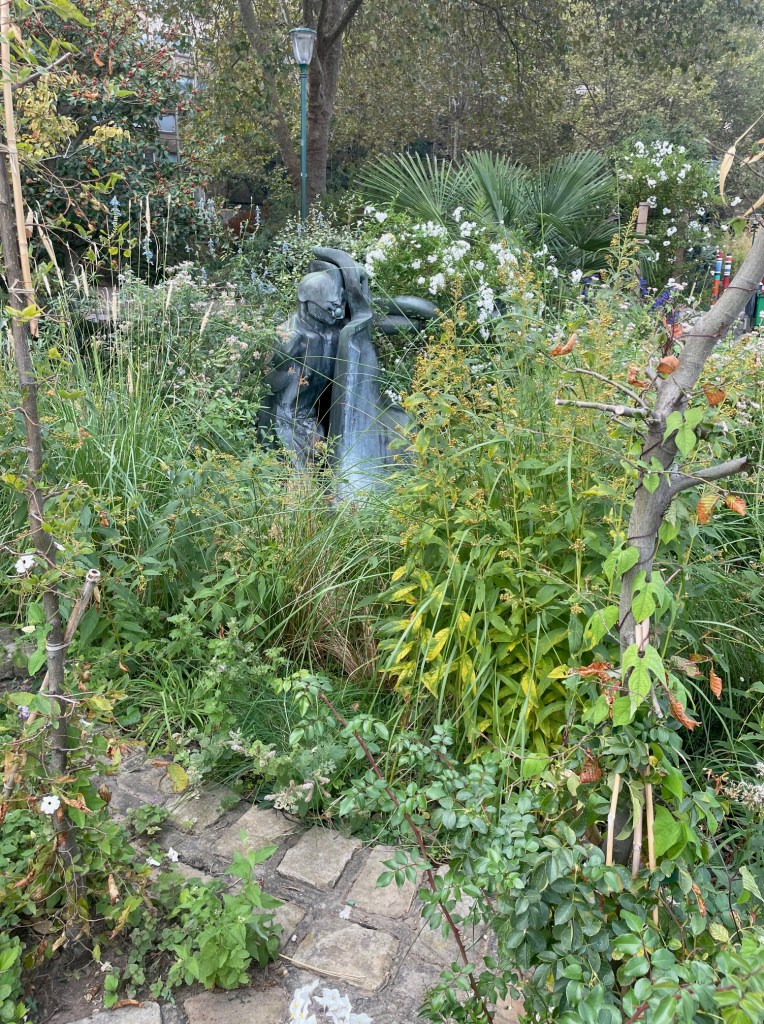
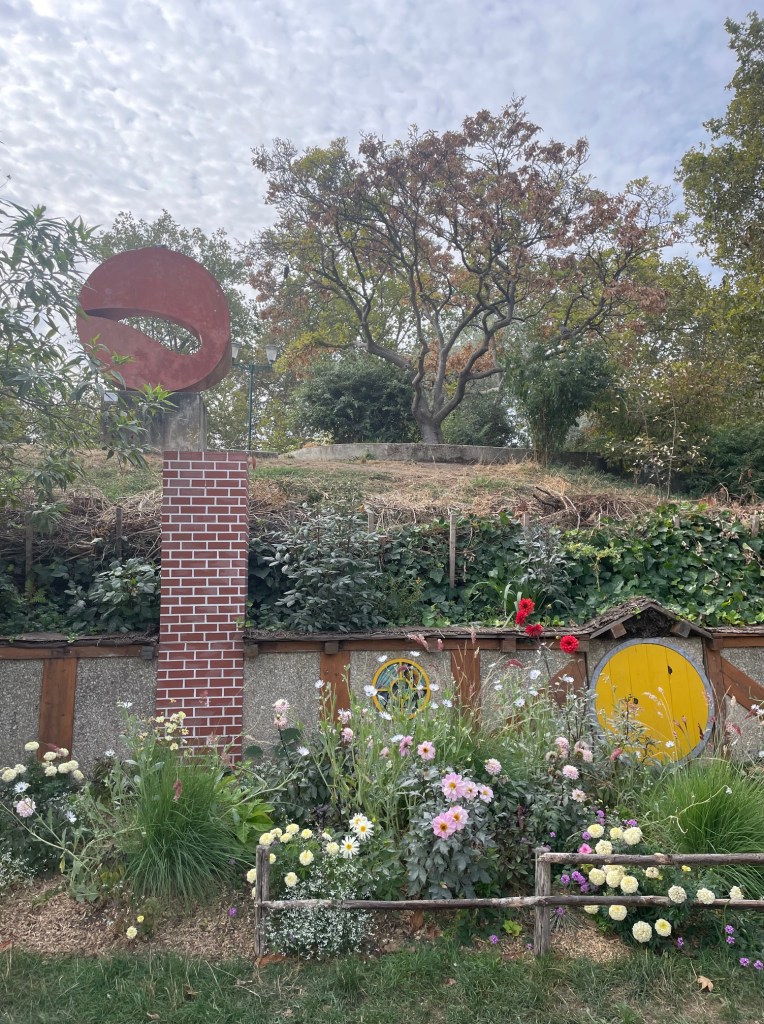
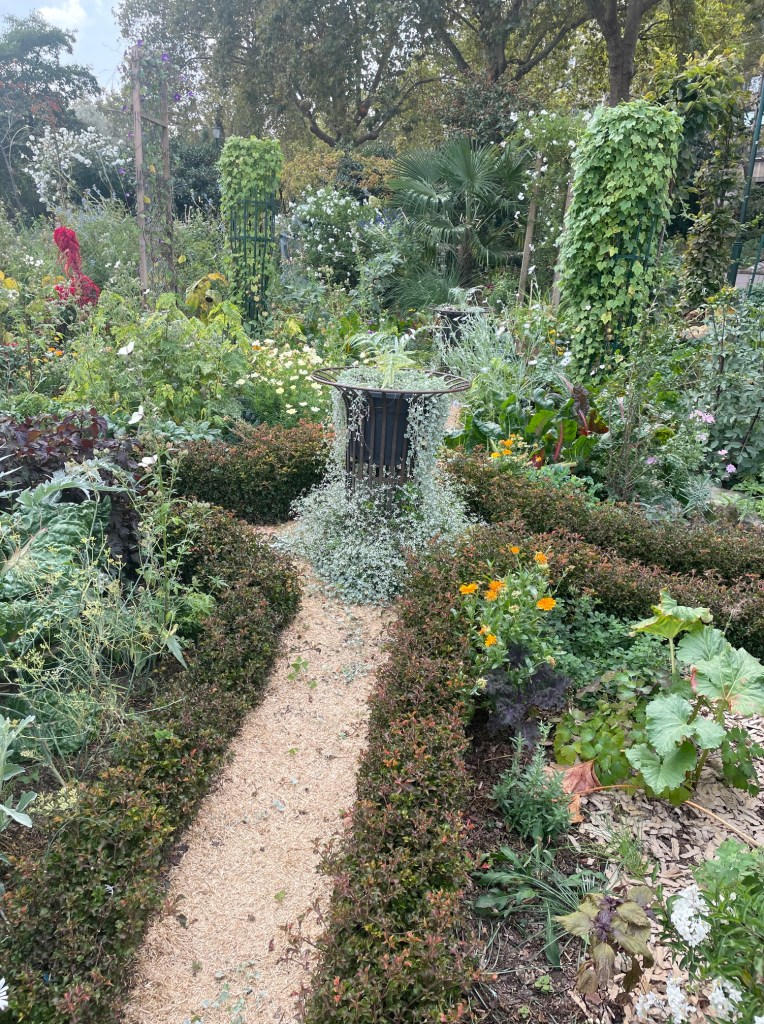
We visited the Memorial Garden established as a memorial for those who died in the terror attacks in Paris in November 2015 including in the Bataclan theatre.  The gardens are very moving.  The layout consists of six distinct areas each representing one of the six attacks on the day.  Overlooking the gardens is Saint-Gervais-Saint-Protais parish church and that imposing structure seemed to add to the solemnity of the area.
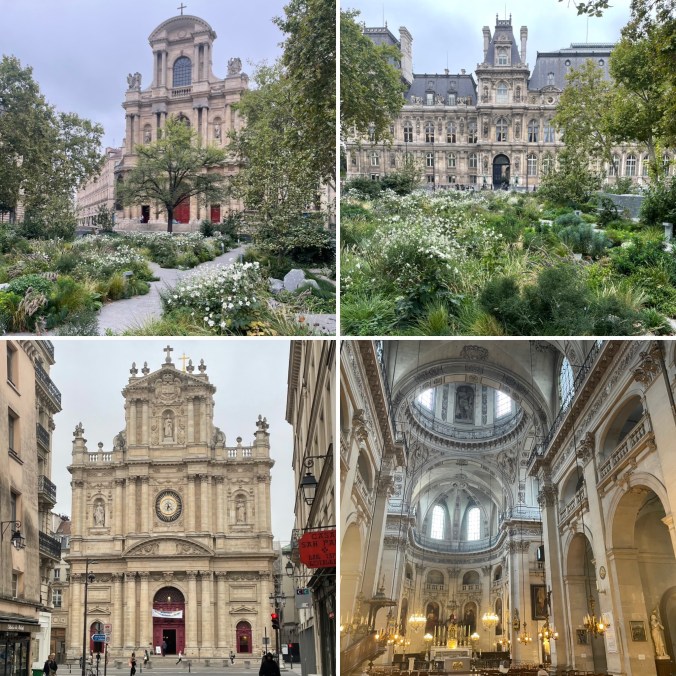
In And Around The November 2015 Memorial Garden
The November 2015 Memorial Garden And The Nearby Eglise St Paul

We discussed what we would do with the rest of our day over a coffee in a very cool café that was nearby.  We split up and I simply walked to and then through the Tuileries Garden to views of the Eifel Tower from Pont De La Concorde.  I then returned east along the south bank of the Seine to the Jardin des Plantes, a public garden, museum and zoo. It all felt perfectly relaxing.
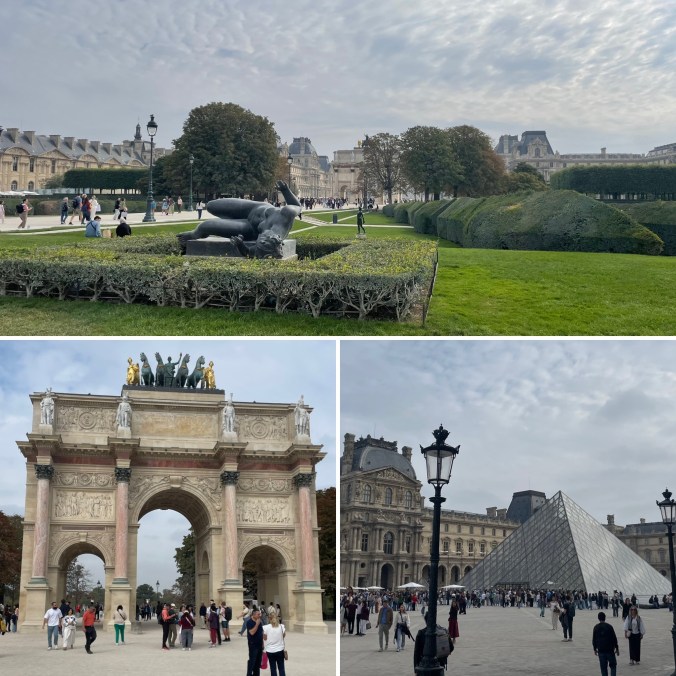
Views Around The Louvre And Tuileries Gardens

On the way I passed long rows of riverside stalls selling vast volumes of books, posters and other paraphernalia.  I thought vaguely of the decluttering that we have started and have vowed to do more of back at home, and moved on.  I wandered on past views of the Notre-Dame, which continues to be repaired, and the islands in the Seine.  Unexpectedly, I also traversed a string of pleasant riverside gardens on my way including the Jardin Tino Rossi.  This contained some interesting sculpture and more great views the river.
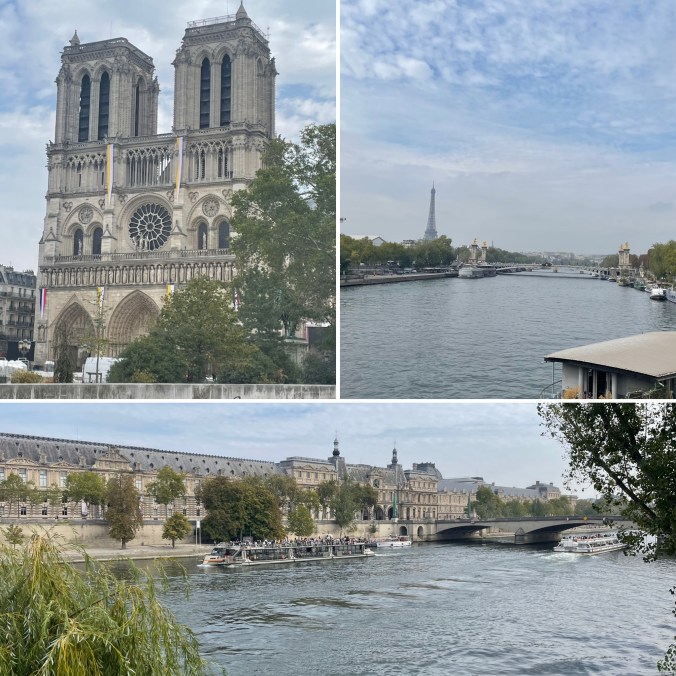
Views Along The South Bank Of The Seine
Views From Along The South Bank Of The Seine

The Jardin de Plantes itself was also very agreeable but I opted not to pay entrance fees for the large greenhouses or museum.  Instead, I walked back across the Seine towards our hotel. 
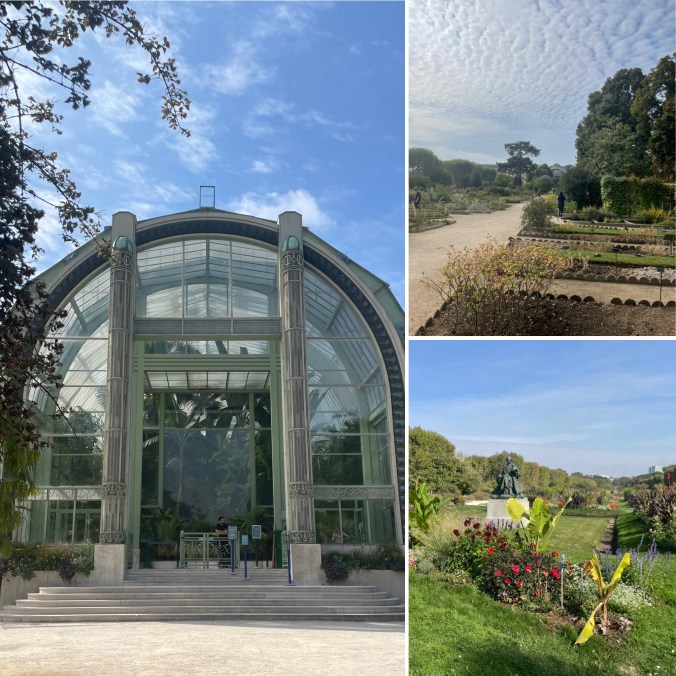
Le Jardin Des Plantes, Paris

This stroll took me along part of the canal network in Paris, the Bassin de l’Arsenal and Canal St Martin.  Here rather than lined with booksellers, the path was lined with the tents of the homeless; a sad contrast to the rather grand flats and office buildings on either side of the canal.
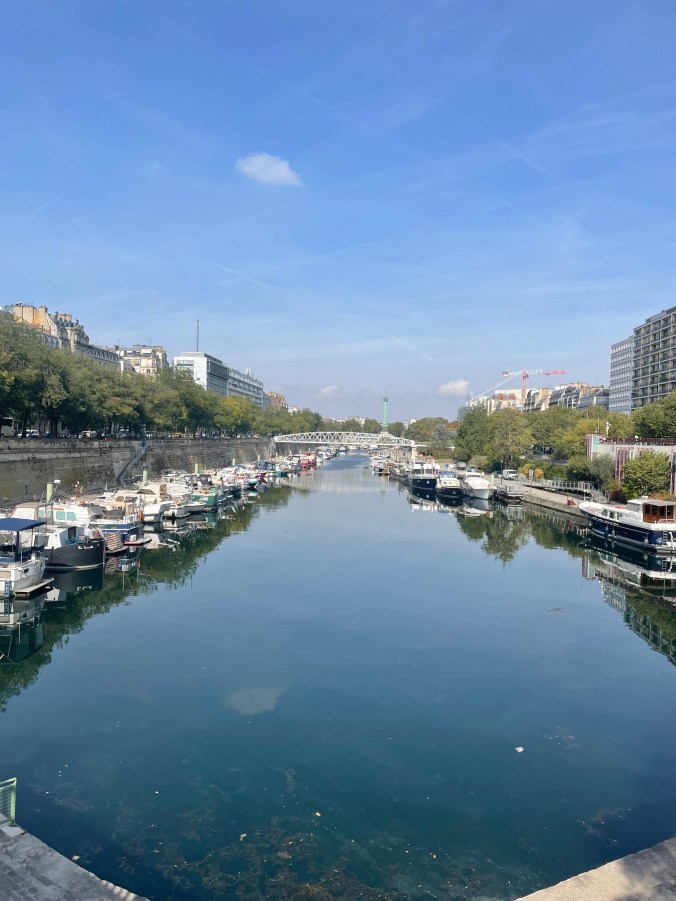
Bassin De L'Arsenal, Paris
Bassin De L’Arsenal/Canal St Martin, Paris

That evening we found a great little micro-brewery and taproom (where, in common with other tap rooms we had visited on our trip, the beer was great but rather dauntingly strong) and then had dinner at Trâmette.  Here we sat at a bar and ate a mix of tasty South Asian and French style small plates; our last holiday meal.

Next morning we had time to make a visit to Cimetière du Père-Lachaise which we have been to several times in the past.  I love the cemetery for its peace, quiet and the stature and history of its monumental family tombs.  Once again, the weather was kind to us and the trees around the mausoleums and graves looked beautiful in the mid-morning sunlight.  Then, we retreated to our luggage at the hotel and made our final set of metro and train journeys back home.
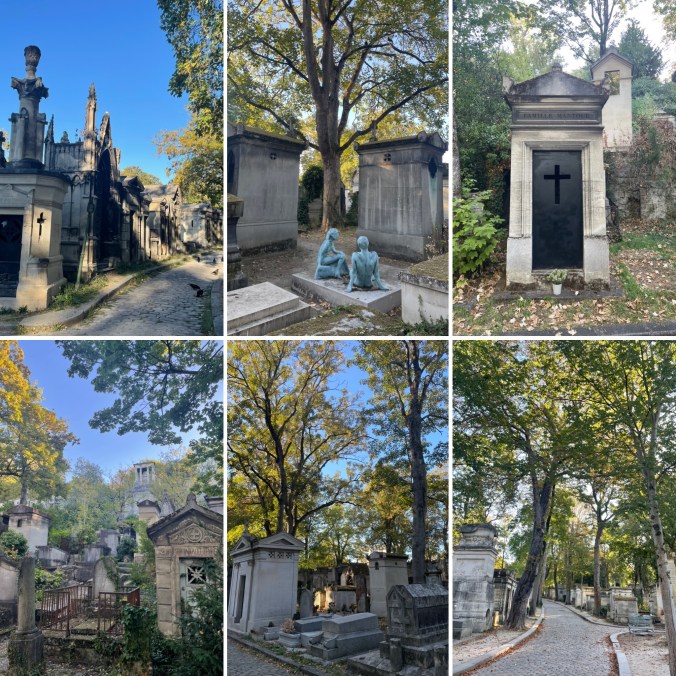
Cimitiere Du Pere-Lachaise, Paris

We got home just in time to make our normal early Friday evening social outing in the local pub.  There, we started to share our holiday experience with anyone who’d listen.  It’s been fun too writing our trip up in these blog pages and re-remembering the holiday so clearly.  We are so lucky to be able to enjoy holidays like our trip to the Riviera; nothing went wrong (wildfires, melting rail tracks, late trains, illness, inability to clean my underwear) and pretty much everything went right.  It was a great trip.
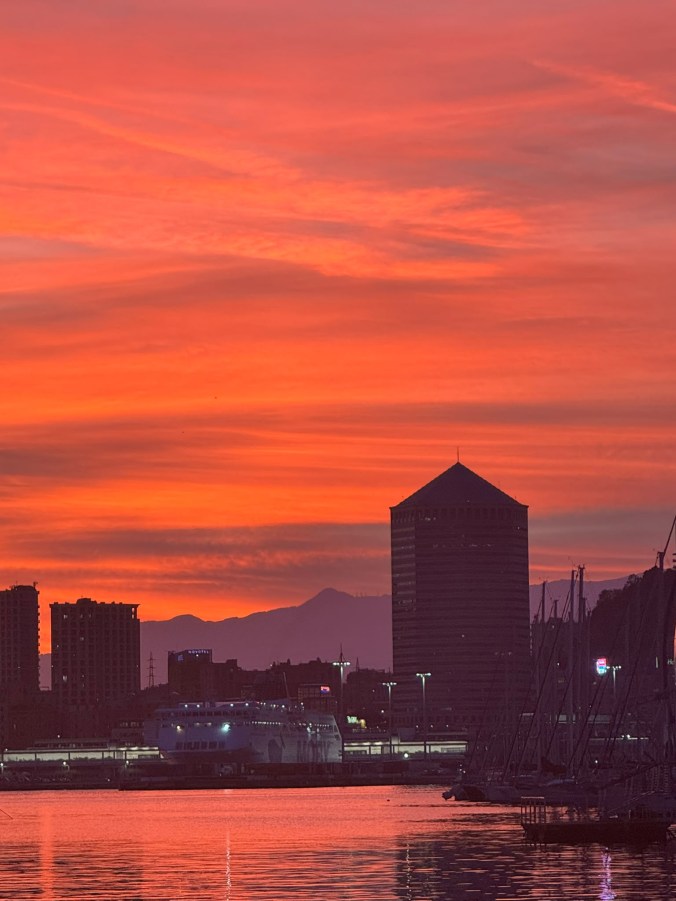
Near End Of Holiday: Genoa

Menton And The Machine Wash

The memories of our French and Italian Riviera trip are, inevitably, fading as post-holiday activities have resumed and taken up head-space.  But reprising the experience of our trip in these blog posts is keeping memories of the holiday fresher than would otherwise be the case and so I’ll continue…. On to Menton.

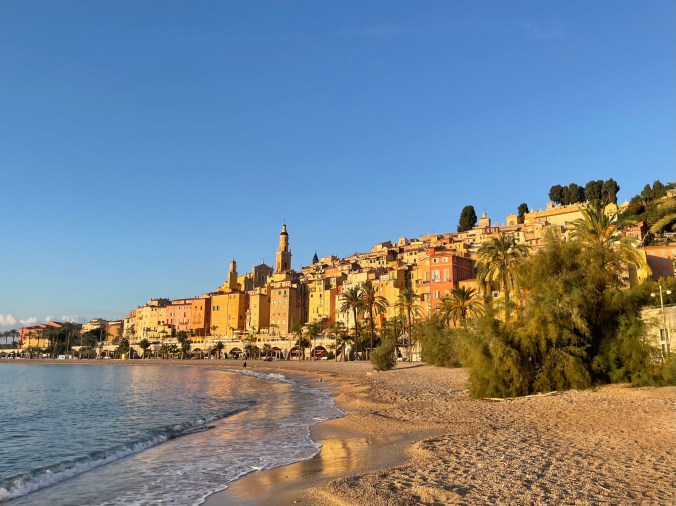
I’d not heard of Menton before the itinerary of our trip became clear.  It is one of many towns along the French Riviera with a long history, a small fishing industry, some beautiful historic buildings and a mild sub-tropical Mediterranean climate that supports exotic plants and gardens.

Menton From The Beach Walk

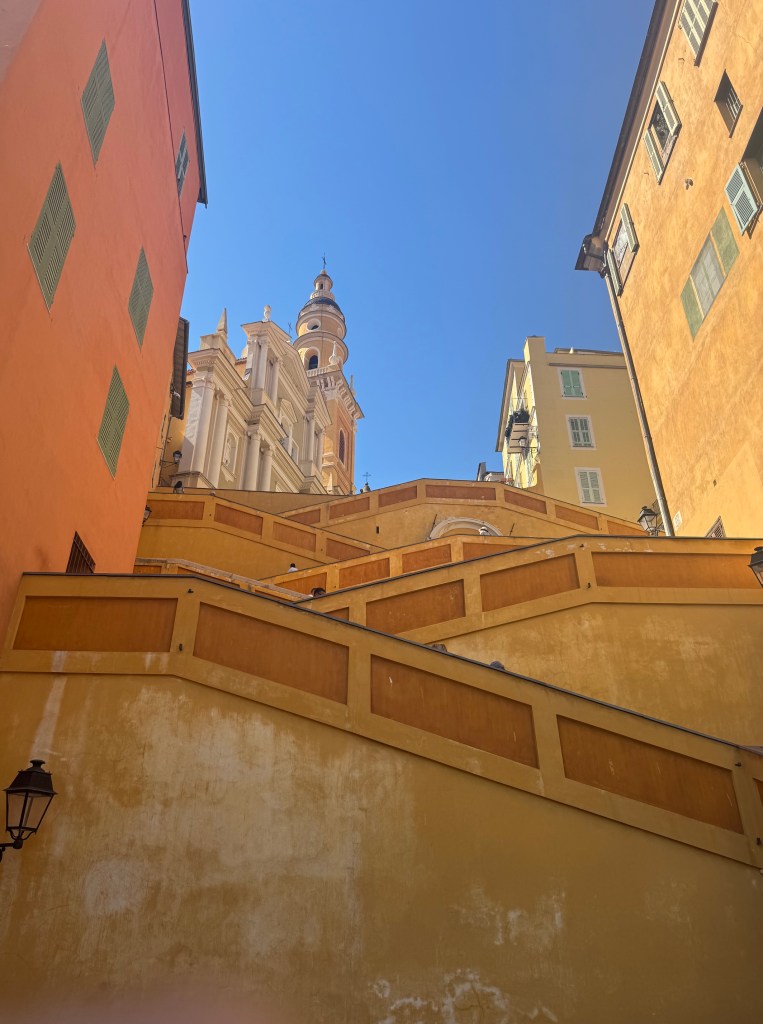
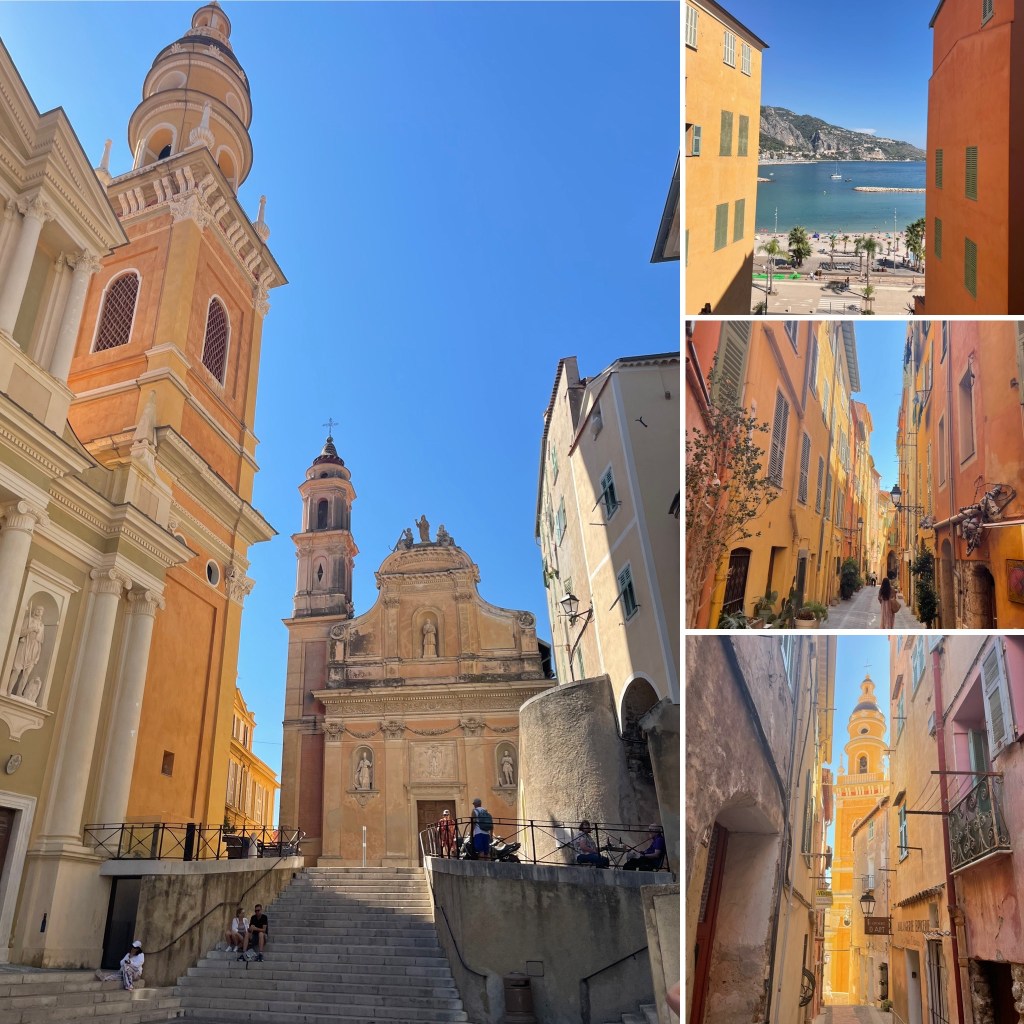
The centrepiece and main tourist attraction in the town is the Les Rampes Saint Michel.  This is a series of steep, stepped, cobbled ramps that rise directly from the cafes and bars on the coast to the core of a square bounded on two sides by the Basilique Saint Michel Archange and the Chapelle des Pénitents Blancs.  The very attractive zig zag ramps were mostly built in the 18th century but, following the Second World War, were restored well near the base. 

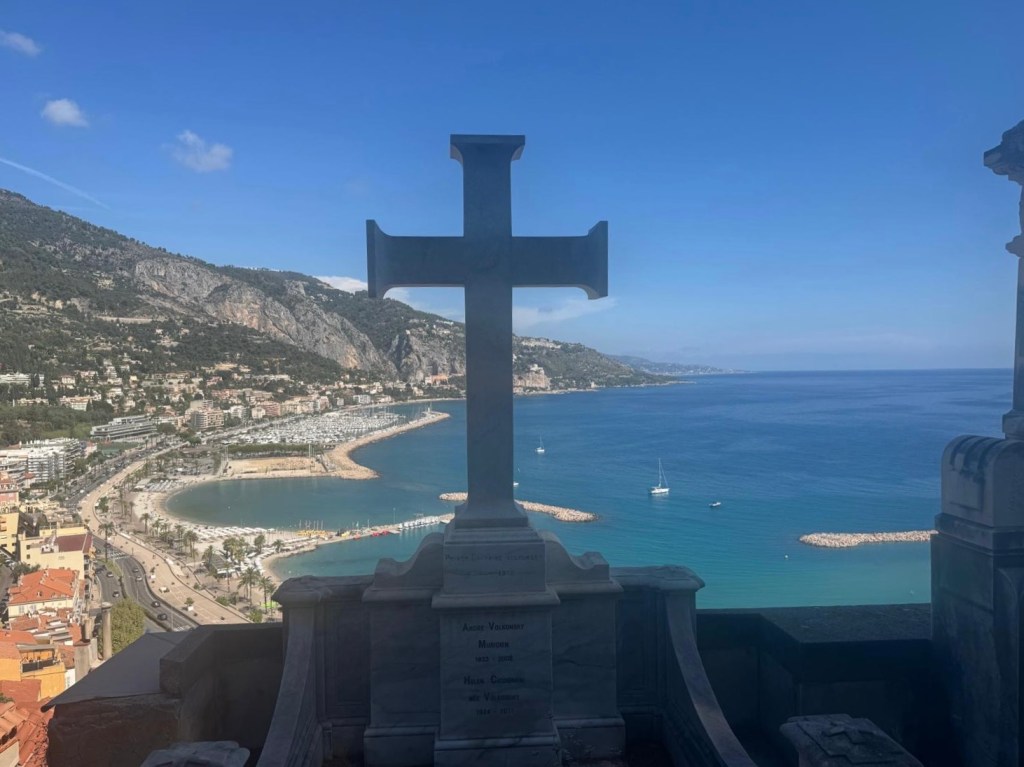
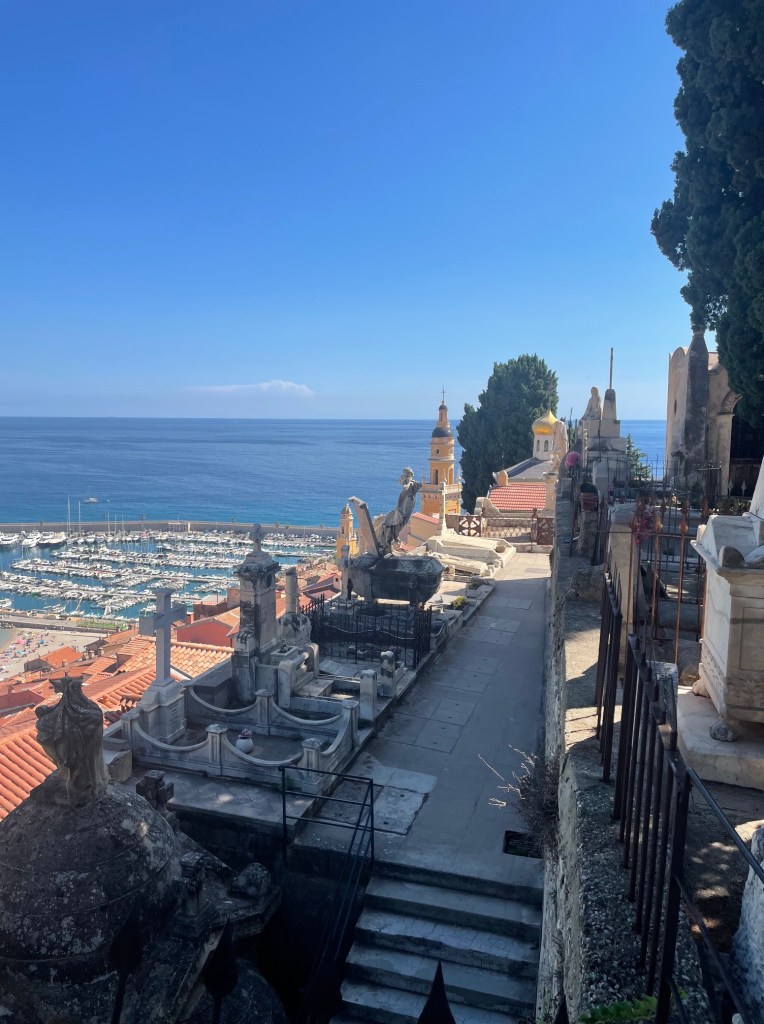
To the immediate north of the square at the top of the ramps is an incline with a labyrinth of narrow lanes lined by tall, ochre buildings.  At the top, sits Le Cimetière du Vieux Château.  It has an interesting history as a re-purposed site of the ancient citadel protecting the town.  It was developed as a cemetery in the 19th century after Napoleon had decreed that churches could no longer be used for burials and the spare land around Menton’s Basilica ran out.  Today it hosts dramatic family vaults and tombstones and provides peaceful but tremendous views of the coast and the Old Town below.

An interest from British aristocracy over the last couple of hundred years in buying up land along the French and Italian Riviera to provide holiday homes with exotic gardens attached was apparent throughout our holiday.  Menton has several great exemplars of such houses and gardens.  Some of these are open to the public.

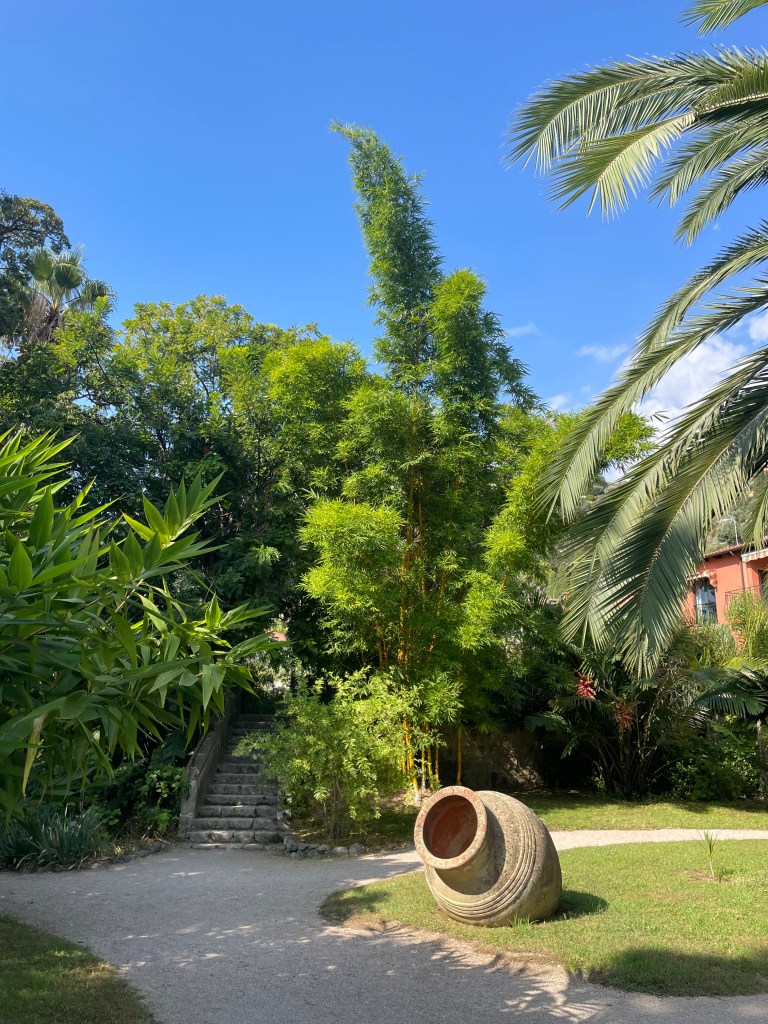
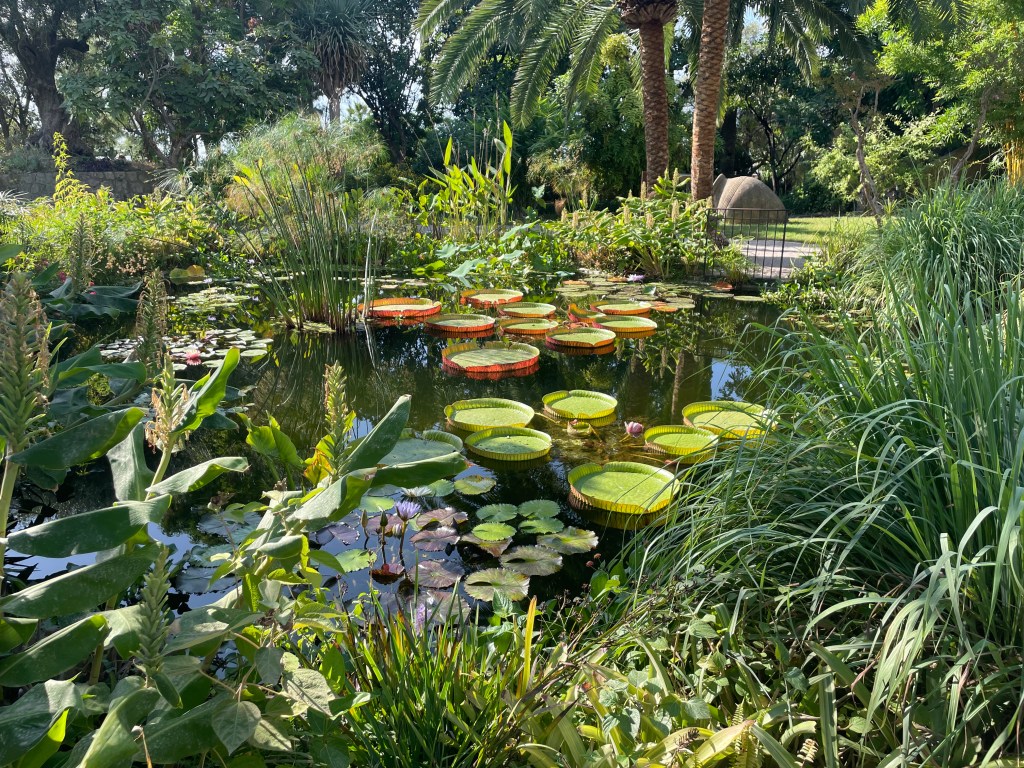
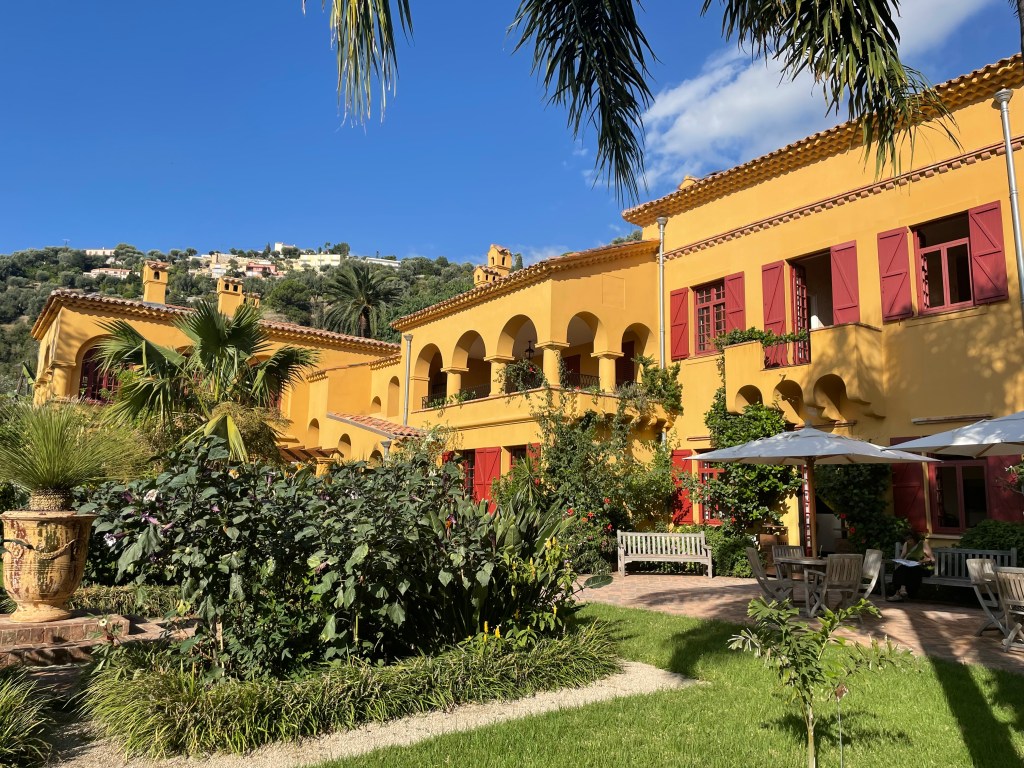
We visited the delightful Val Rahmeh-Menton Botanical Garden which was up a steep hill behind our harbour-side hotel.  In 1905, Sir Percy Radcliffe started to transform a former farm into a villa and surrounding garden and named it after his wife.  In 1957, May Campbell, a wealthy woman from England, bought the estate and enhanced the planting to create an exotic garden full of floral and other horticultural treasures. 

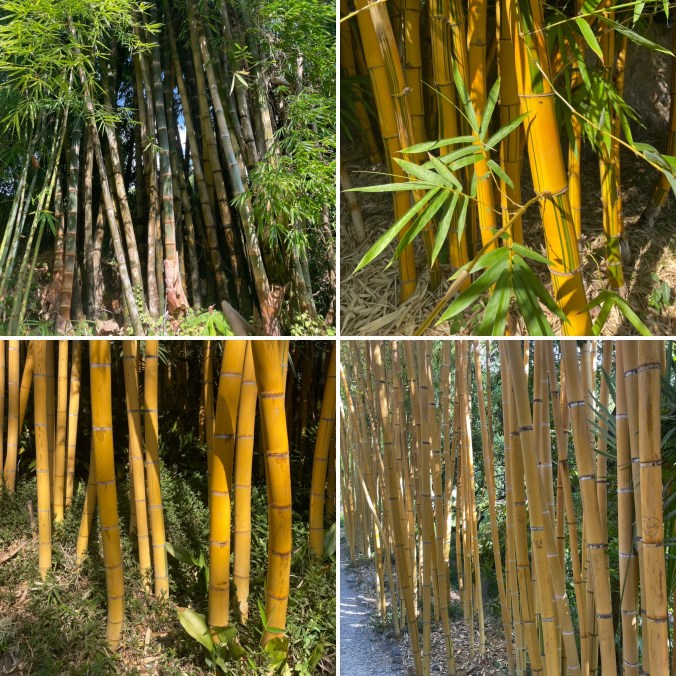
There are now over 1,600 different species of planting the garden including a wide variety of bamboo and unusual citrus plants.  The current microclimate supports this temperate, sub-tropical and tropical arrangement but I wonder if climate change is going to increase the need for further adaption in the future.  For now, it is a lovely place to visit.

Four Of The Many Bamboo Species In Val Rahmeh Botanical Garden

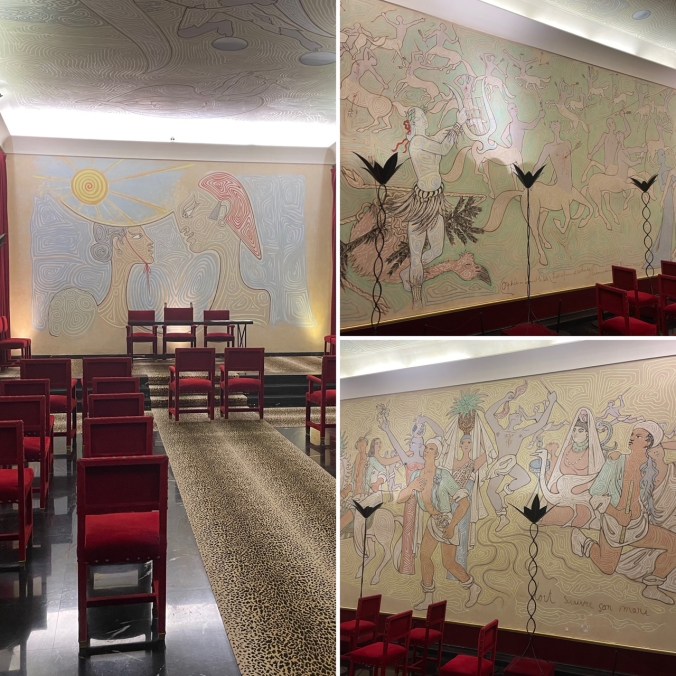
Another highpoint in our sight-seeing was a visit to the Hôtel de Ville.  This is the Town Hall and it houses the famous Wedding Hall decorated by Jean Cocteau in 1957.  The audio tour of the hall that was provided was useful to help us pick out some of the themes in Cocteau’s murals.  Certainly, it would be a memorable location for any wedding.

Jean Cocteau's Murals In The Wedding Hall, Menton
Jean Cocteau’s Murals In The Wedding Hall, Menton

The Jean Cocteau Museum and the Cathedral were both closed for renovation and repair but much of Menton – the Old Town, the best buildings of the New Town, the palm strewn beach – were very pleasant.  We ate well too and especially at Tony Restaurant which had great sea views.

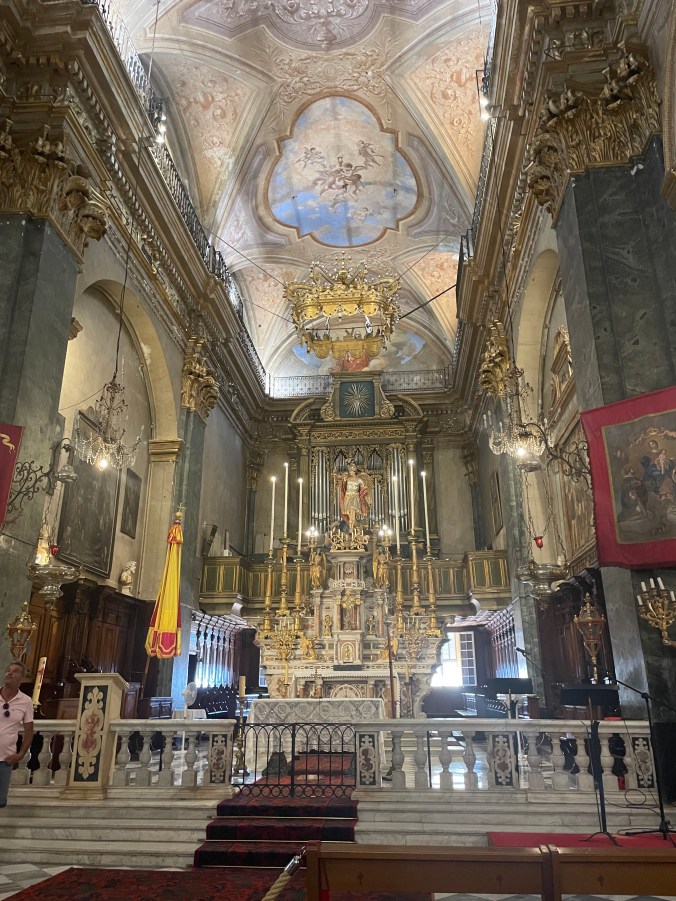
Inside Basilica Saint-Michel Archange

Our enjoyable stay was much enhanced by the renewal of our laundry.  How to get our laundry done while hopping from one location along the Riviera to another had been bugging me from the time we first booked the trip (I’m a worrier).  In Menton, Jane located some public laundry machines near our hotel and we gave them a try. 

We survived failing to read the instructions about absolutely not adding our own detergent to the wash – there was too much foam but at least it didn’t burst from the machine.  However, when we opened the door at the end of the cycle, our clothes smelt a lot worse than when they went in.  We piled the stinky, damp washing into a bag and retreated to our hotel.  Fortunately, the bathroom there was large with two sinks and a bidet, our balcony was also spacious, and the weather was breezy and sunny.  We handwashed and dried our laundry and I loved the fact that, as we left Menton, I had a bag full of clean clothing again.

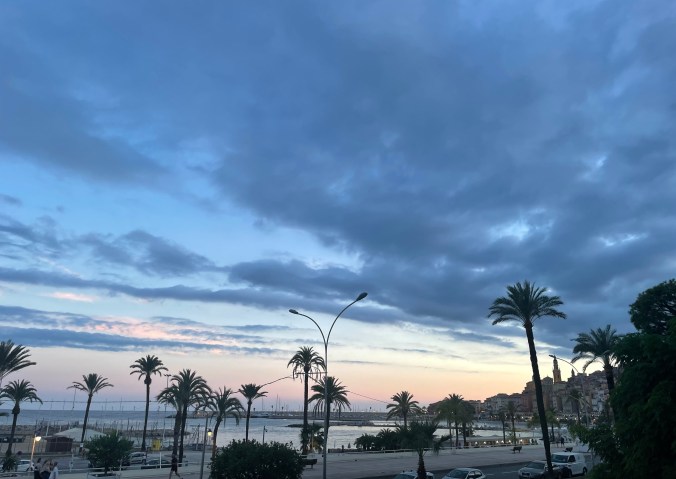
Evening In Menton
Evening In Menton, We Move On…..

Nice Nice

It is hard to say which of the several stop-offs on our French and Italian Riviera was my favourite because they were all quite different.  However, Nice was certainly a lovely one.  Our hotel was perhaps the smartest that we had stayed in up to this point, the city is well appointed with a lot to see, and the weather continued to be terrific for holiday makers like us. 

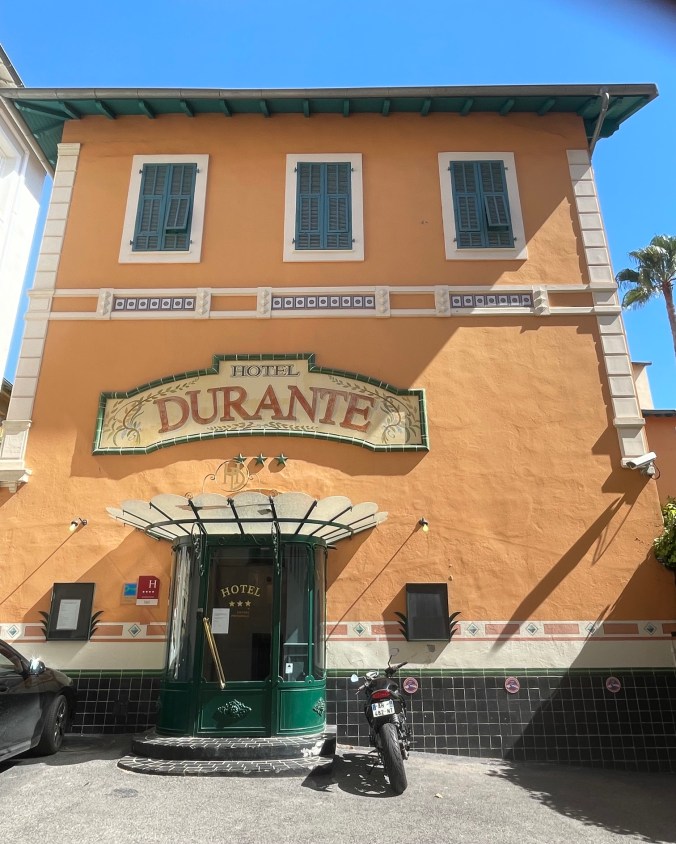
Hotel Durante _ A Nice Welcome To Nice
Hotel Durante – A Nice Welcome To Nice

Also, we were looking forward especially to this stay because we had arranged in advance to meet up with a couple of great friends from our village who had been on a similar rail trip across northern Italy and, co-incidentally, were now in Nice at the same time as us. 

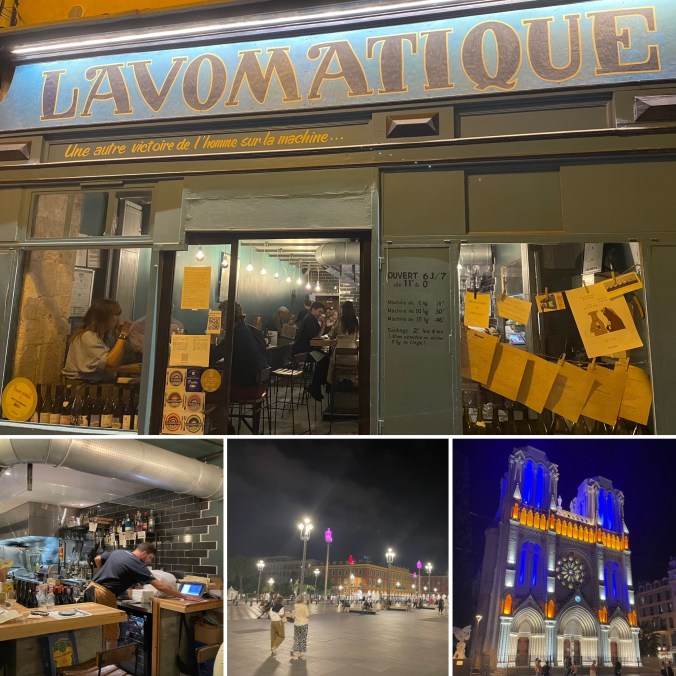
Jane had taken responsibility for booking a restaurant and, after a beer in the incongruously named Wayne’s Bar in the old town area, we had a lovely time eating, drinking and swapping holiday stories in Lavomatique.  In my opinion this was the best meal we had in France even though the panisse, which we had sampled in lots of places, were not quite the best.

Lavromatique - Great Restaurant, Great Fun And A Great Walk Back To Our Hotel
Lavomatique – Great Restaurant, Great Fun And A Great Walk Back To Our Hotel

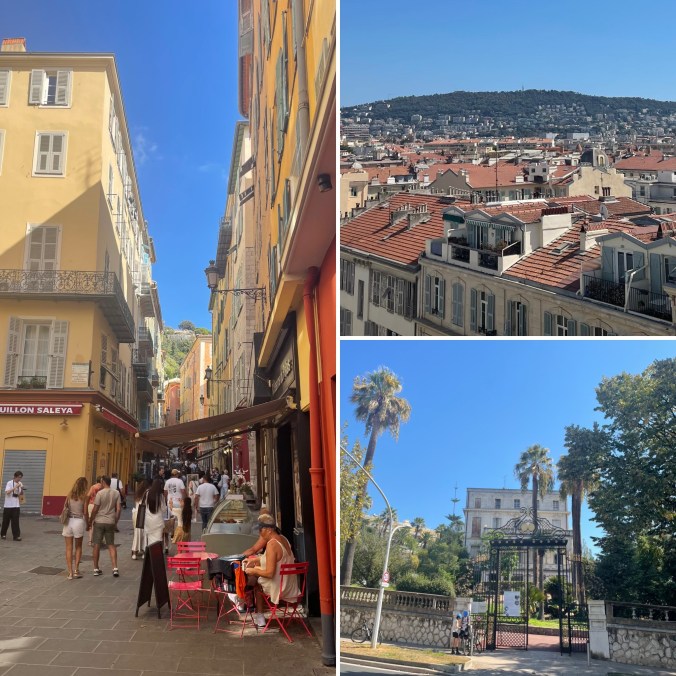
Even though we had been in Nice for only 36 hours, we didn’t hold back on advice about what to see and do.  The mix of typical old town with narrow, often touristy, bustling streets, the large squares and parks of the more modern town, and the huge 18th and 19th century houses a little further out, is very attractive.  Just walking around to take in the feel of the city was, as it often is on holiday, very rewarding. 

Old Town, View Across New Town And A Suburban Villa

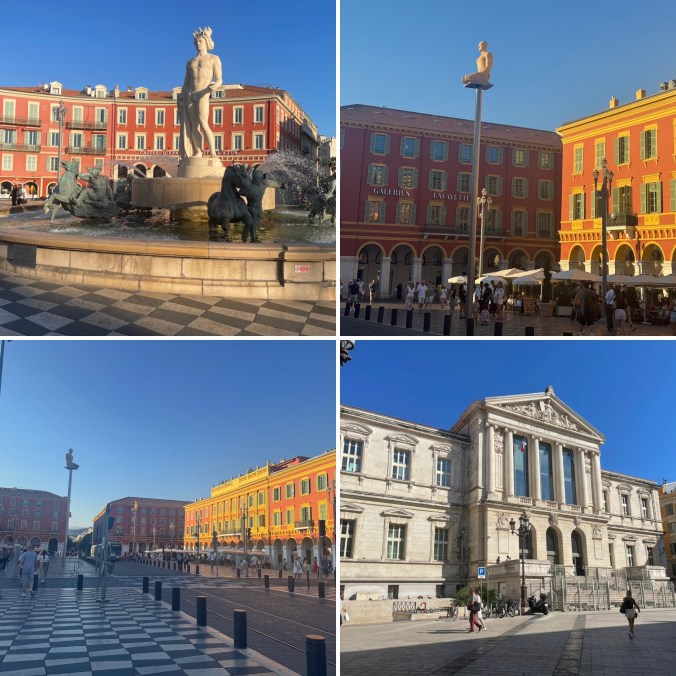
At the boundary between the old and modern is Place Masséna and the Promenade des Anglais which have developed into wonderful pedestrianised areas since the 19th century.  Unfortunately, the latter became famous because of the terrorist attack there in 2016 by a truck driver who killed over 80 people.  Today, both these spaces are wonderfully airy and fine.

Place Massena And Palais De Justice, Nice

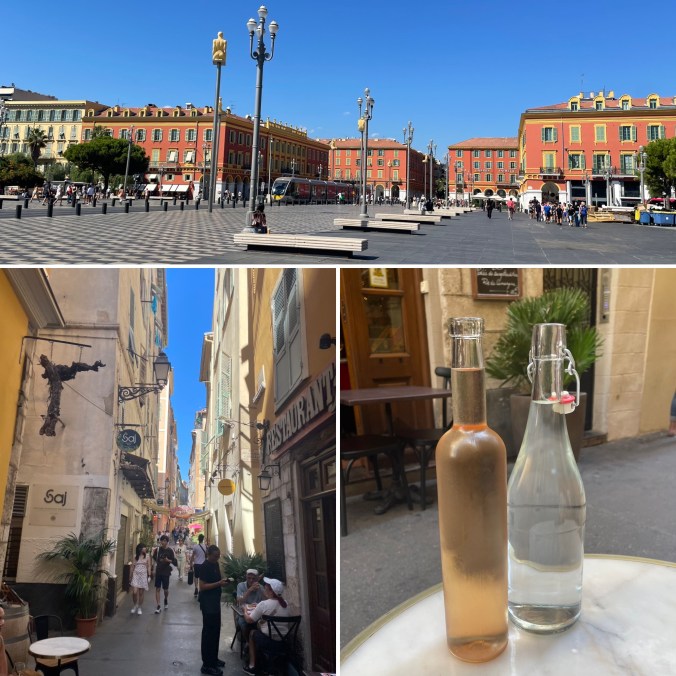
We started our first afternoon in Nice wandering through the city centre and then eating and drinking at the excellent Bistro du Fromager in depths of the Old Town.  

Walking Around Big Squares And Narrow Streets -> Hydration Needs!

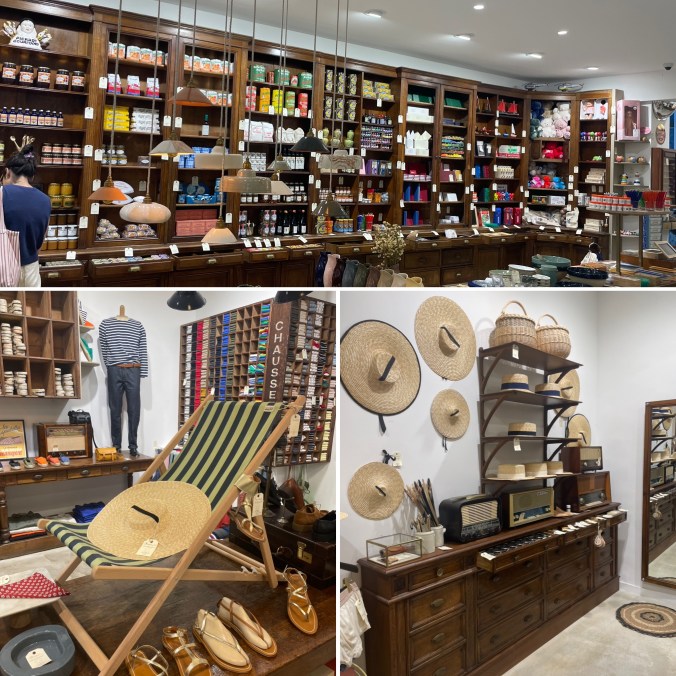
We perused a fascinating shop called Trésors Publics that Jane was familiar with from Instagram and elsewhere. 

Tresors Publics
Tresors Publics

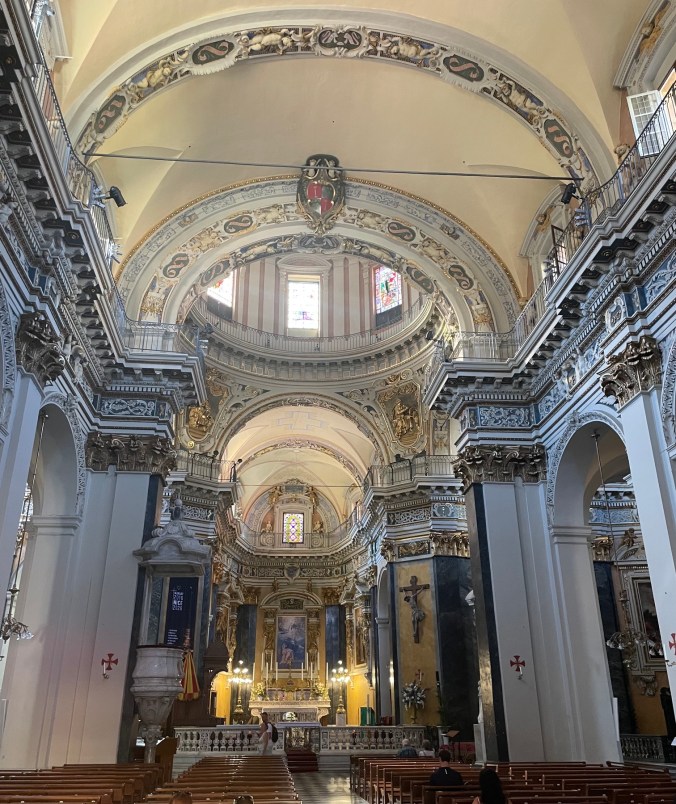
We visited and sat in Cathédrale Sainte Réparate for a few minutes and then walked steeply uphill to Parc de la Colline du Château.

Cathedrale Sainte Reparate

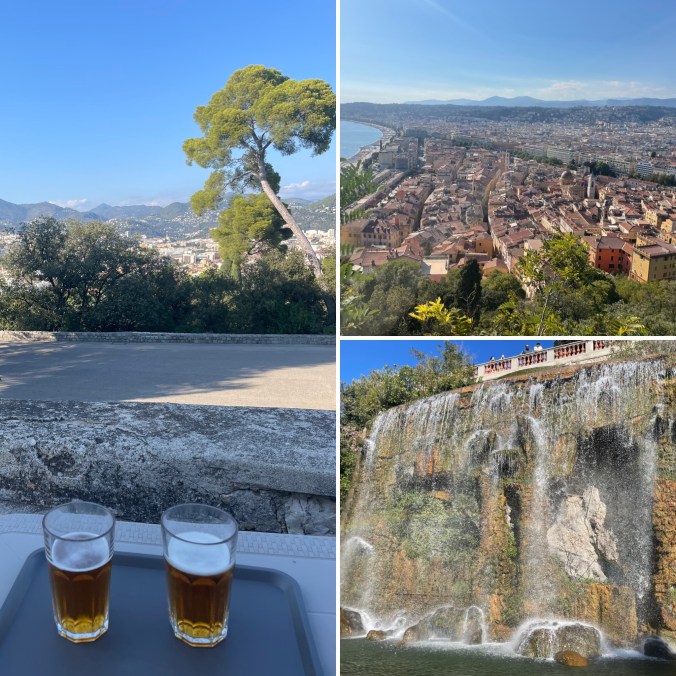
This park overlooks the city.  It has a dramatic and impressive cascade and gave us great views of Nice harbour, the Mediterranean and the city itself. 

Views: Parc De La Colline Du Chateau
Views And Cascade: Parc De La Colline Du Chateau

There was also another restaurant outside, in which we had another very relaxed drink with, this time, lovely views of mountains.  Our rather boozy day was completed at Beer District Libération a tap room which offered the sort of hoppy beer I like best and which is not yet always easy to find in France.

Breakfast at our hotel was a little strange in that it wasn’t a buffet.  I felt a bit awkward asking for my normal three course breakfast of stacked fruit and yogurt, then eggs and then a croissant or two which I can usually get by serving myself.  But I managed and the pleasure of eating it in the neat hotel garden outweighed any embarrassment. 

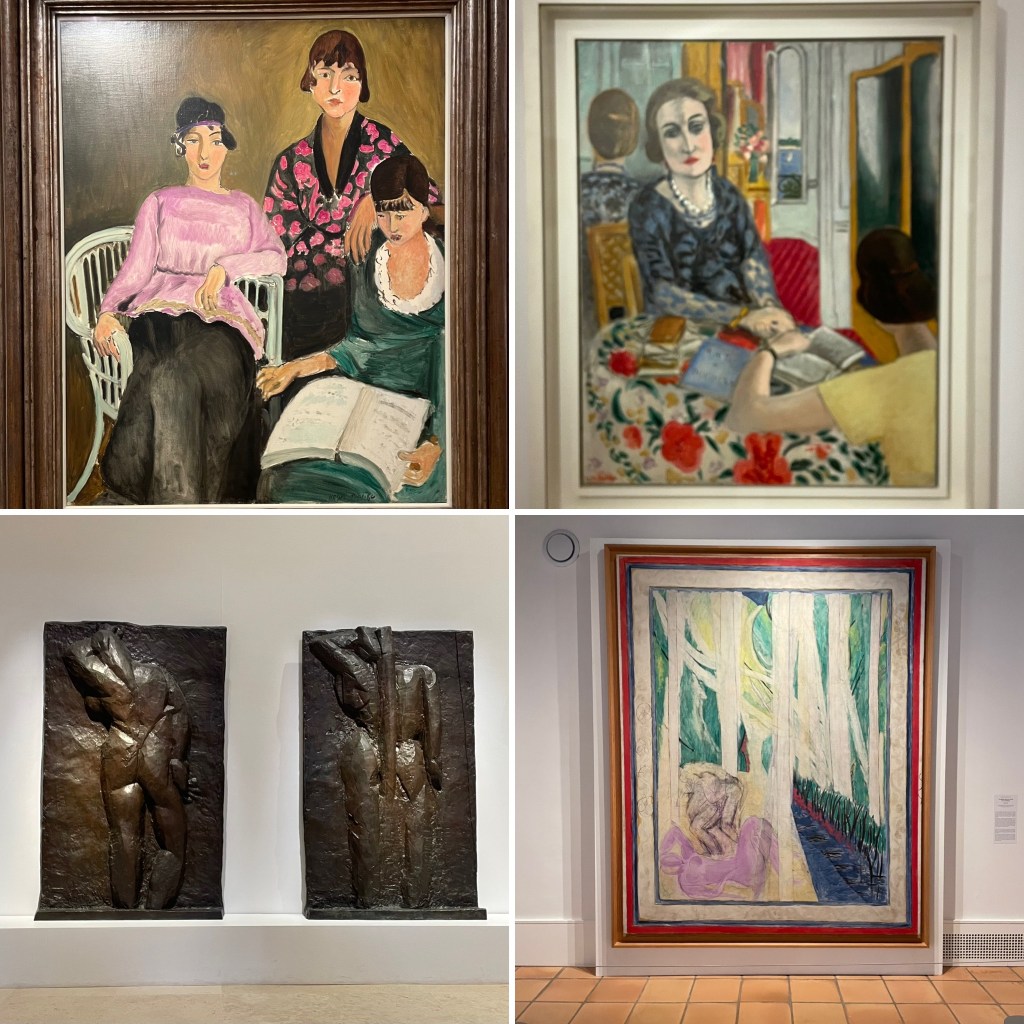
Afterwards we negotiated the bus transport procedure to travel north to the rather grand-looking Matisse Museum.  As expected, there was a queue to get in but we were early and the crowds weren’t huge.  It is always good to find out more about artists and what drives them but, in truth, I didn’t enjoy the paintings as much as I had expected having seen pictures of some of his stained-glass windows and abstract art in the past. 

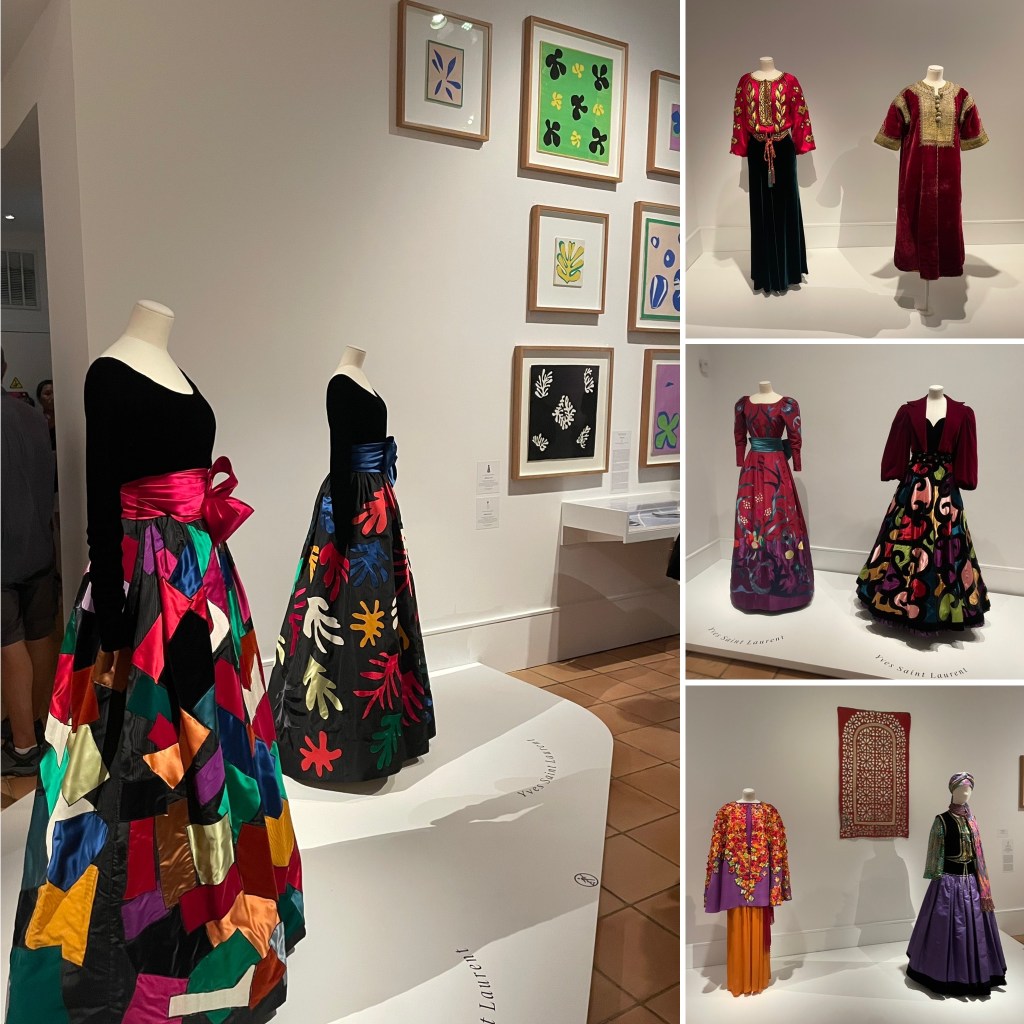
However, a positive for me was that we were visiting during a temporary exhibition of Yves Saint Laurent dresses.  These exhibits were interleaved among the Henri Matisse paintings to show how the artist influenced the fashion designer.  This worked best for me when I could see the motifs in Matisse’s work reflected most obviously in the dress designs. 

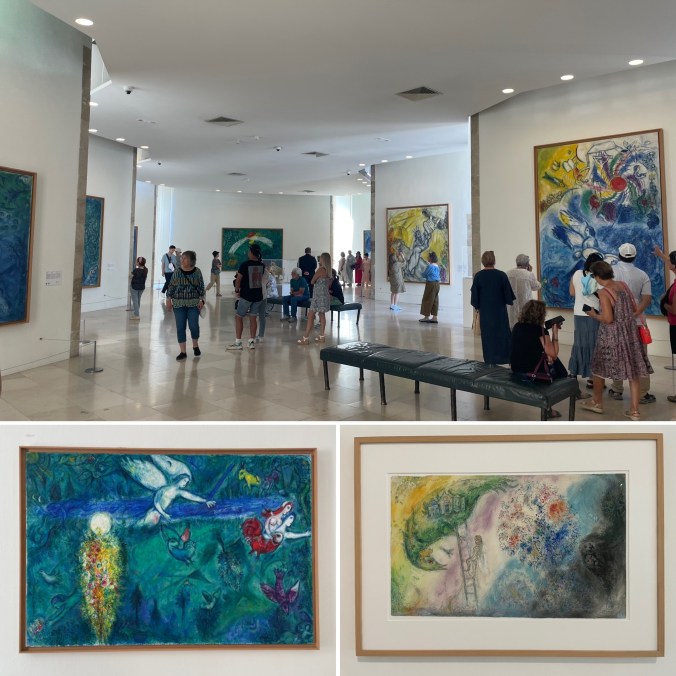
Around the Matisse Museum are some extensive Roman remains.  We didn’t linger because we wanted to get to the Marc Chagall National Museum before lunch.  We were fortunate in that the Chagall museum closed for lunch too and so we only had 45 minutes to look around.  That was enough; the museum is an attractive, modern building but relatively small. 

The centrepiece is a large room exhibiting several paintings from Chagall’s series called the Biblical Message.  I enjoyed these very much.  There were other highlights such as the mosaic overlooking a pond outside the building and pieces illustrating his sets for opera.  It was interesting too to learn more about the man himself some of which I knew but had forgotten.  Again though, I was a little disappointed that there were not more pictures, apart from the Biblical Message, similar to those I have seen elsewhere by Chagall. 

The National Chagall Museum, Nice

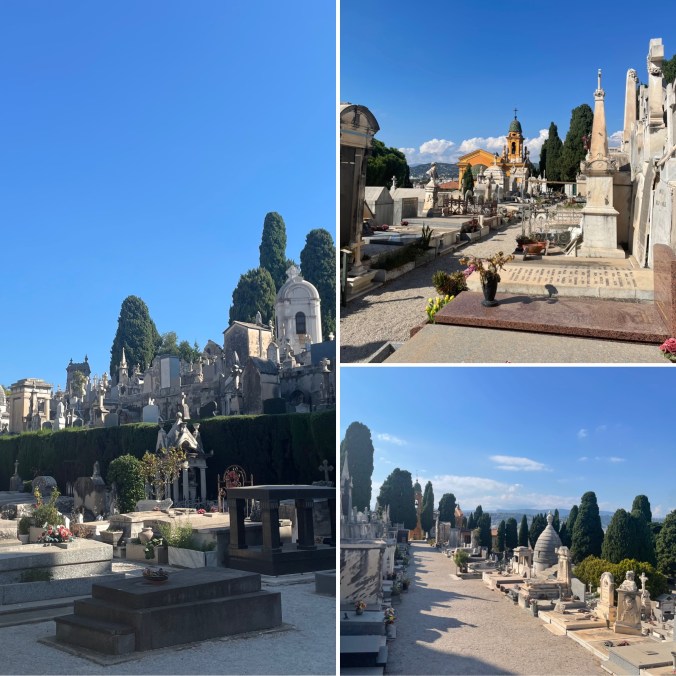
After all that culture, we retreated to a roof top bar back in the city.  I then wandered back through the Old Town towards Parc de la Colline du Chateau to see the nearby Cimetiere Du Chateau.  This was built on the ruins of Nice’s old castle and, as expected, there were some absolutely massive 18th and 19th century family tombs and some great views of Nice’s surrounds.  I do love a good cemetery!

Cimetiere Du Chateau
Cimetiere Du Chateau, Nice

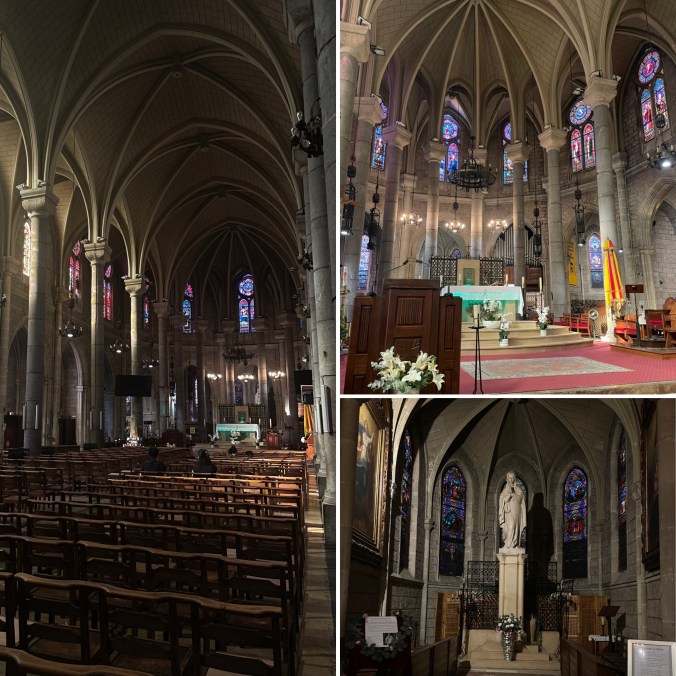
On our last morning, we popped into the Basilica Notre-Dame which was near our hotel.  It isn’t particularly old but was quiet and grand.  Jane lit a couple of candles and then we headed off via the hotel and station to Menton a little further east along the Riviera.

Basilica Notre Dame, Nice

Naval Toulon

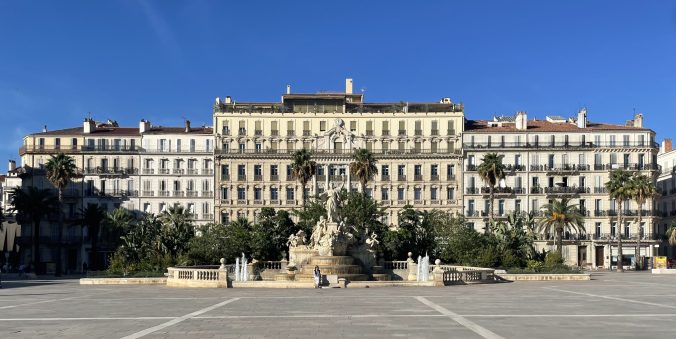
Toulon was a substantial change up from Cassis in terms of scale as we pursued our French and Italian Riviera trip.  Toulon is an industrial and working town rather than a pure tourist destination.  It is about a fifth the size of Marseilles but, in some ways, had a similar feel.  It is another coastal port with a grand square, an old town which is criss crossed with narrow streets, and some very attractive buildings. 
Place de la Liberté
Place de la Liberté, Toulon

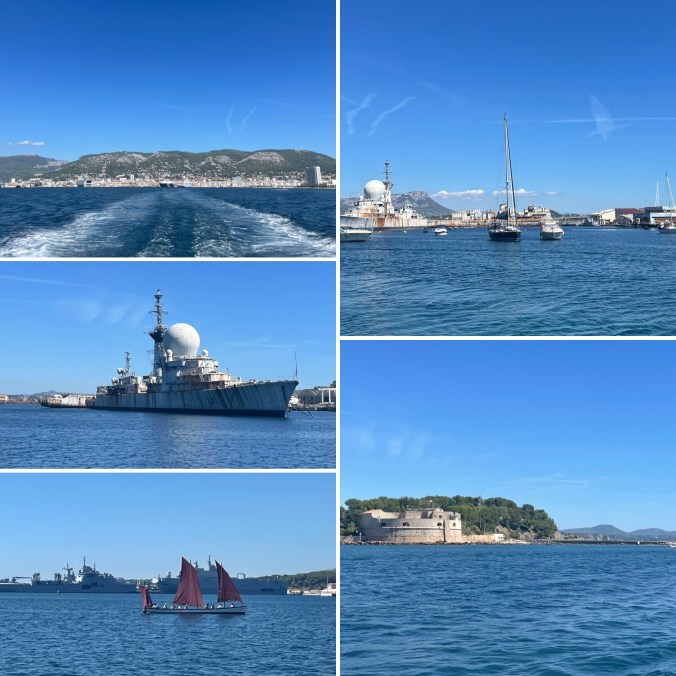
Here the port is dominated by the French Navy.  Of course, much of that part of the port is off limits.  However, we were able to get a good feel for the naval history of the city and its current importance as a naval base from visit to the Maritime Museum and a ferry trip out to the Saint-Mandrier-Sur-Mer peninsula opposite Toulon harbour.

The ferry trip reminded me of the ferry that crossed Hong Kong harbour that we had travelled on to sightsee Hong Kong bay nine years ago.  As then, we paid a tiny fee to travel back and forth across the bay and here we were able to take in some big views of Toulon, its surrounds and some of the redundant and current naval ships including, in the distance, the Charles De Gaulle aircraft carrier.  It was refreshing to be in the sun, in the breeze and taking in an unusual view of the city.

Views Of Toulon From The Ferry To/From Saint-Mandrier-Sur-Mer

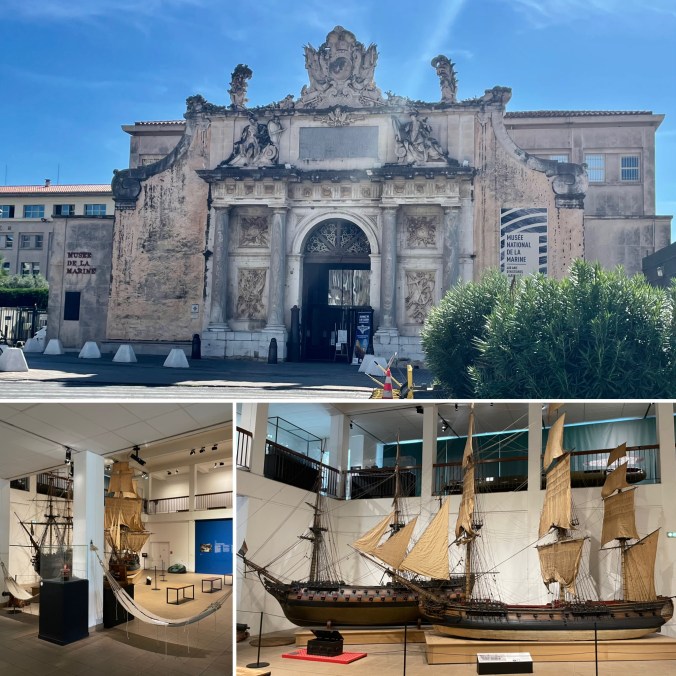
The Maritime Museum was quiet, nicely laid out and enough exhibits, models and historical context were explained in English to make it very informative.  Toulon has been a port since Roman times.  Since the 15th century, the city has gradually become one of the pre-eminent naval centres in France where most ships are berthed and maintained (but not built). 

Outside And Inside The Maritime Museum, Toulon

That development has not been smooth.  There have been multiple blockades of the port (including one by the British led by Horatio Nelson), explosions of ships undergoing maintenance which killed hundreds of workers and, in the Second World War, the scuttling of many military boats in the harbour by the French Vichy government as naval leaders faced German advances to commandeer the fleet.

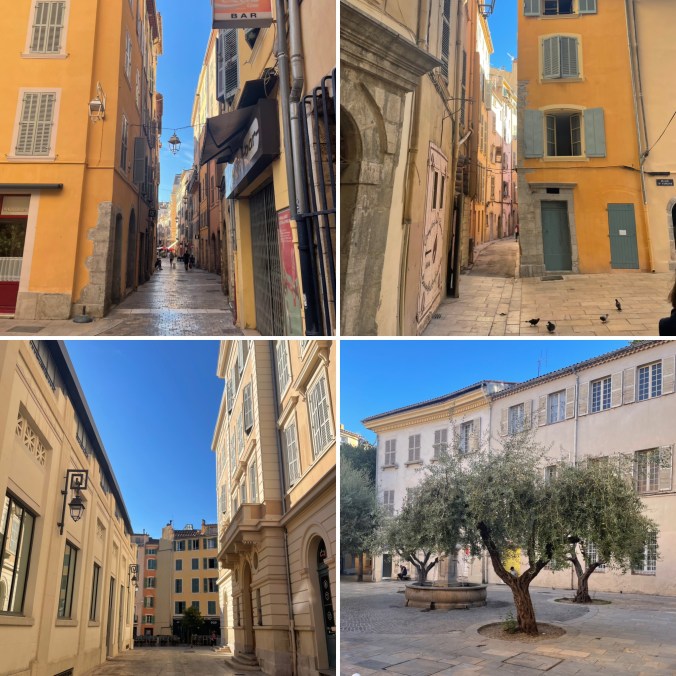
We had arrived in Toulon on a Sunday so the city was relatively quiet.  We targeted lunch at L’Epicerie, which Jane had previously singled out as recommended.  Unfortunately, the relative peacefulness was disrupted by a DJ who was playing at the restaurant.  The food was organic, tasty and good (although I prefer my panisse with garlic not tomato sauce) but the DJ initially played loud music we didn’t like before chilling out a bit.  We must be getting old…..

Quiet Sunday In Toulon Old Town
Quiet Sunday Afternoon In Toulon Old Town

We wandered through some of the streets including the Cours Lafayette Market, and enjoyed the tightly packed old town just inland from the modern buildings of the harbour front.  We were fascinated by the underground receptacles for household and other rubbish; above ground these took up very little space and were unobtrusive.  They looked like a great idea and we wondered if these are facilities we will see more often nearer to home in the future. 

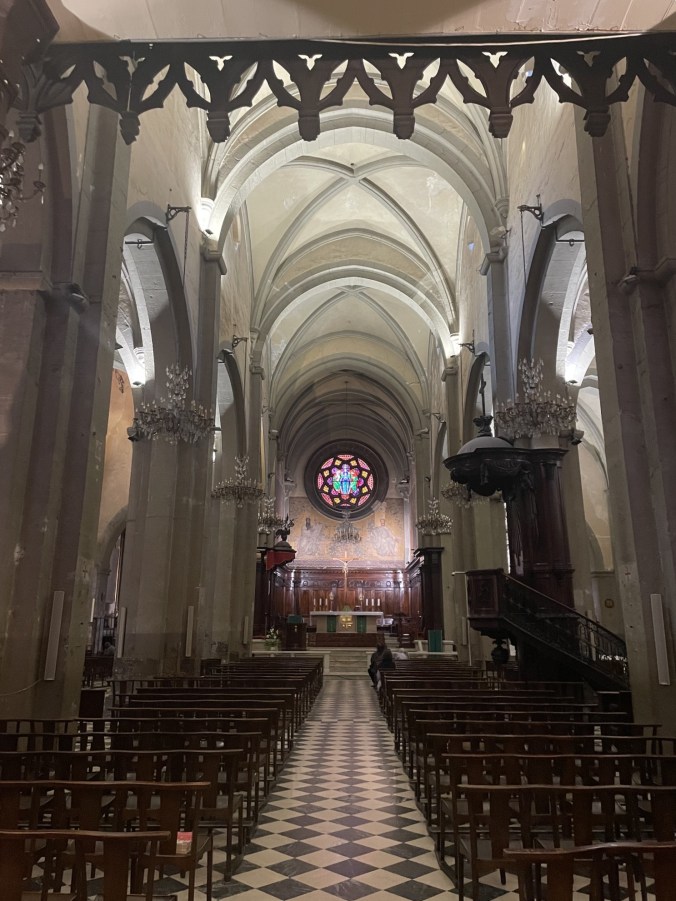
We visited the Toulon Cathedral which is also unobtrusive from the outside and has shops and houses so adjacent to it that they seem to be part of the same structure.  Inside, it is dark with only five windows of stained glass.  That made it a very atmospheric space.

Toulon Cathedral
Toulon Cathedral

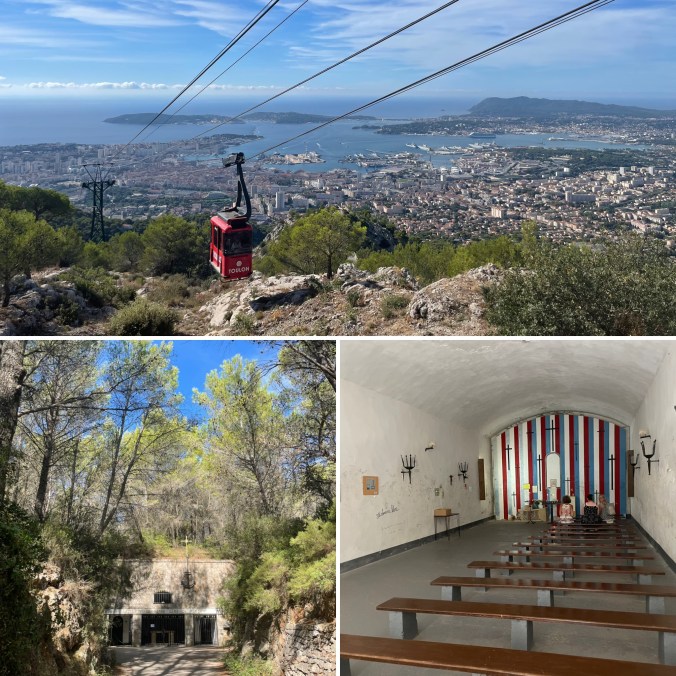
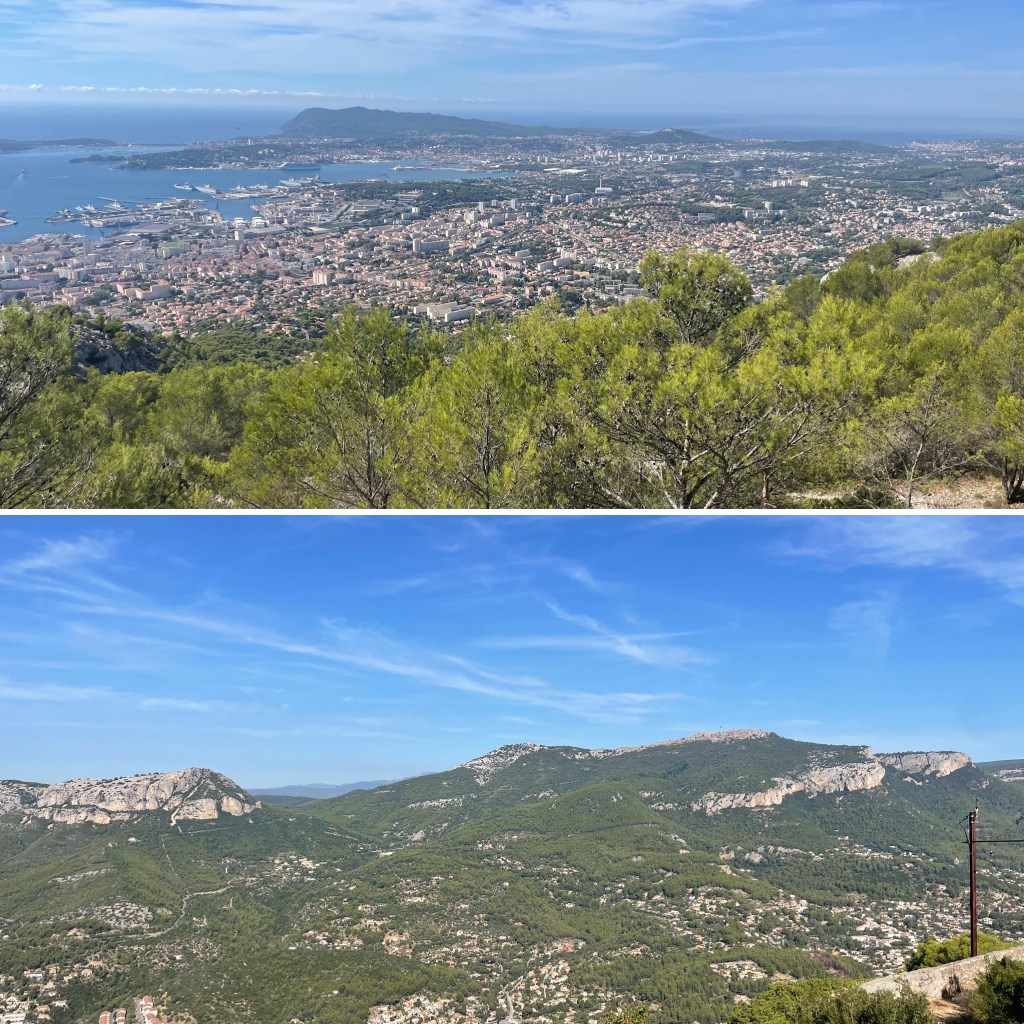
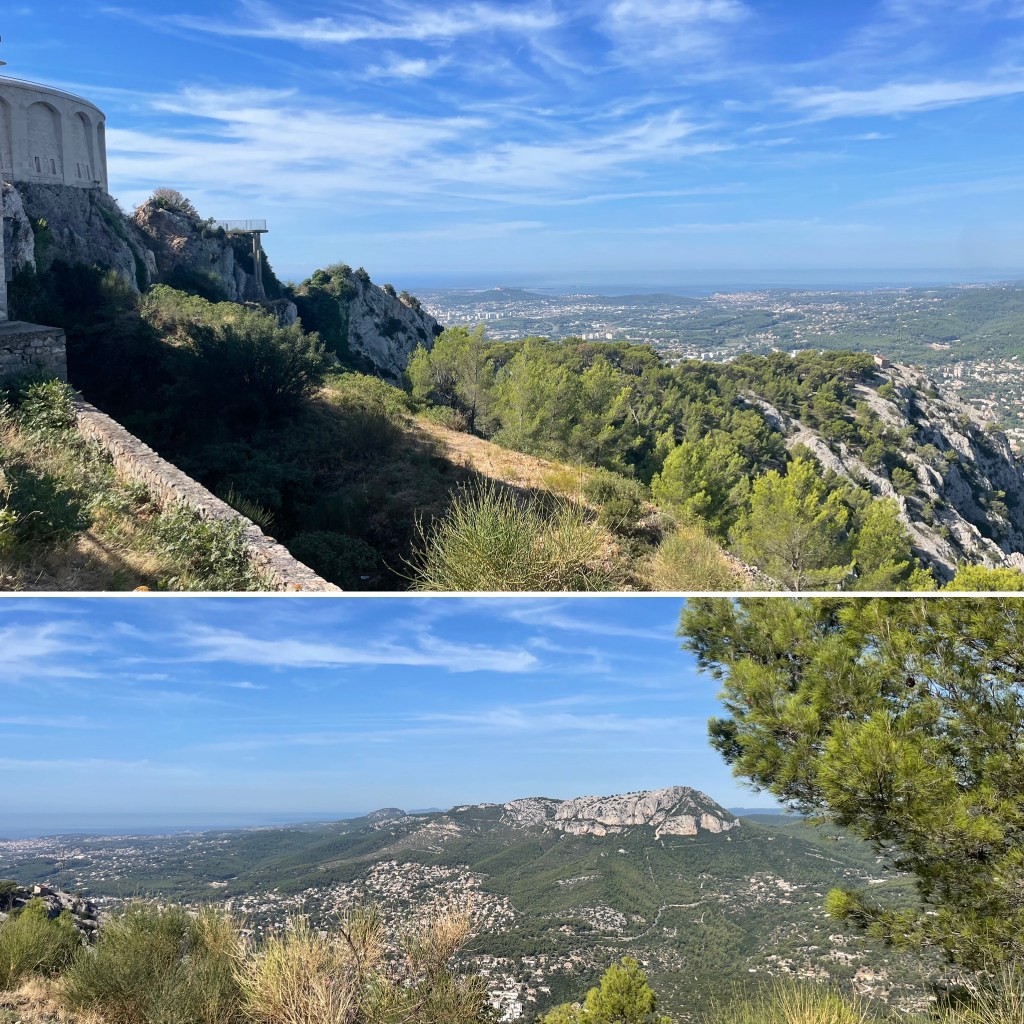
The following day, the city and, especially, the market was more bustling.  We left the city centre by taking the cable car up to The Mont Faron which is a substantial mountain overlooking the city and a huge expanse of the Mediterranean.  The views on the way up and from the cable car terminal on the mountain are tremendous.  

The Cable Car To Mont Faron And The Chapel Built Into The Mountain

I wandered on to a chapel (Sanctuaire Notre-Dame du Faron) created in the mid-20th century from an old military store that had been built into the mountain.  I walked on the Mont Faron Memorial to Allies who dies in the Second World War and to some further sun-bathed views of the mountains to the north and west.  The pines afforded some shade in what was increasing heat but it was good to get back to the cable terminal. 

By the time we returned to the city we were ready for a drink with our lunch.  Jane had identified another Provencal speciality called Daube which is a beef stew.  In practice, to pursue a taste of that, we went to a family restaurant called Frankie that served lovely flat buns with a variety of fillings (including Daube which I tried and enjoyed) in neat little paper wrappings.  These were delicious.

We followed up with our hydration with some local wine and a few snacks at a bar in one of the pretty squares and headed back to our hotel for rest and sleep.
By this time in our holiday, we were getting into the swing of the two nights in a town or city routine.  We left Toulon full of a very good hotel breakfast, very happy and excited for the next stop in Nice.
Cassis and Calanque

The train journey along the coast from Marseilles to Cassis was mainly inland and involved a lot of tunnels.  This section, like several others we travelled on later in the holiday seemed to be quite a feat of engineering and I was surprised that it had been first built in the middle of the 19th century.  We left this leg of the railway at Cassis station and caught a very crowded shuttle bus to the town a few miles away.

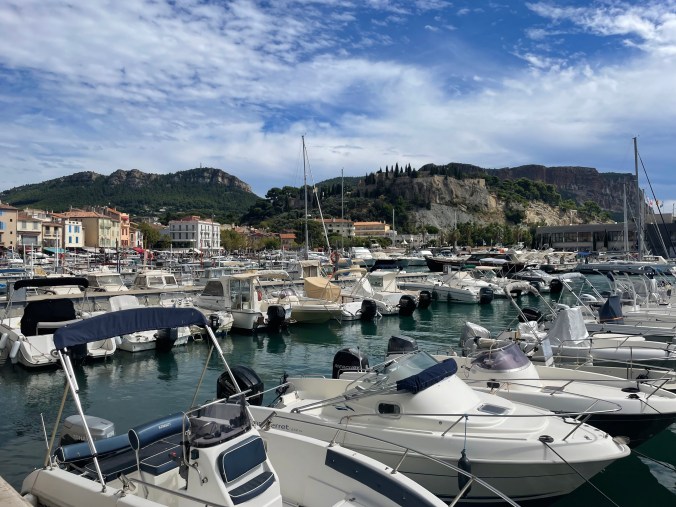
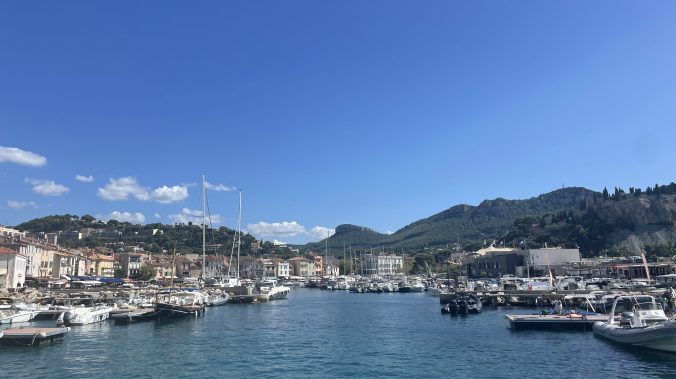
Cassis Harbour
Cassis Harbour

We walked through the town centre and along the harbour front, which was lined with restaurants and cafes, to our hotel, Le Golfe.  It was immediately obvious that the town thrives almost purely on tourism and is a different scale and feel to Marseilles.  After the hubbub of Marseilles this was a welcome change.  Indeed, throughout our French and Italian Riviera trip, the variety of stop offs was a really positive feature of the itinerary that Byway Travel had planned for us.

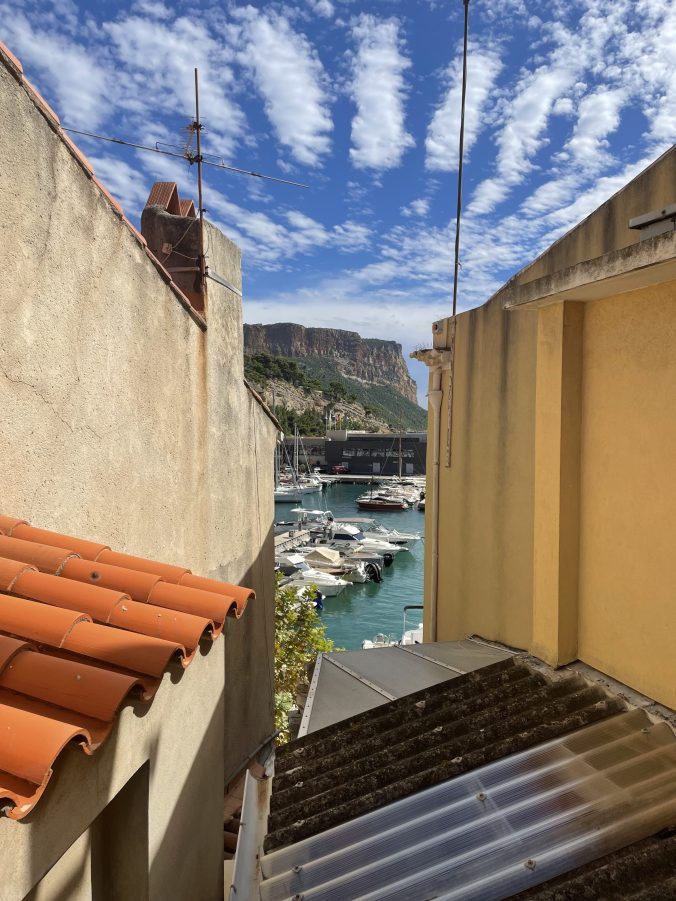
Our Hotel Balcony View
Our Hotel Balcony View – The Room Was Small But The Balcony Was An Unexpected Bonus

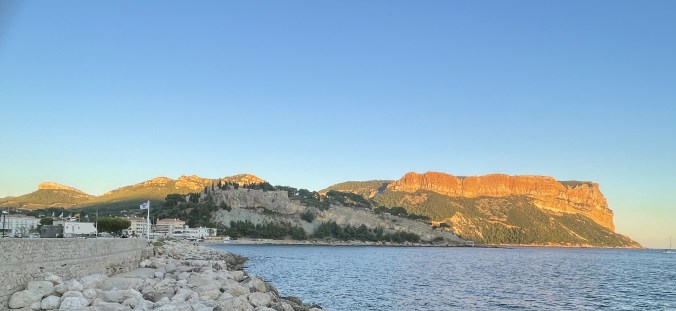
Cassis harbour is pretty and overlooked by the limestone Saint-Cyr range of mountains and, to the east, Cap Canaille.  This headland is the highest sea cliff in France at 1,293 feet.  It is a mix of conglomerate rock, limestone and sandstone and the colours at sunset were stunning. 

The Cliffs Overlooking Cassis Harbour At Sunset

Also overlooking the town, and on the lower slopes of Cap Canaille, is Chateau de Cassis.  This was built in the 13th century as a castle and is now a set of rooms marketed as a luxury retreat.  It is not open to the public but, from afar, it looks fascinating and very picturesque.

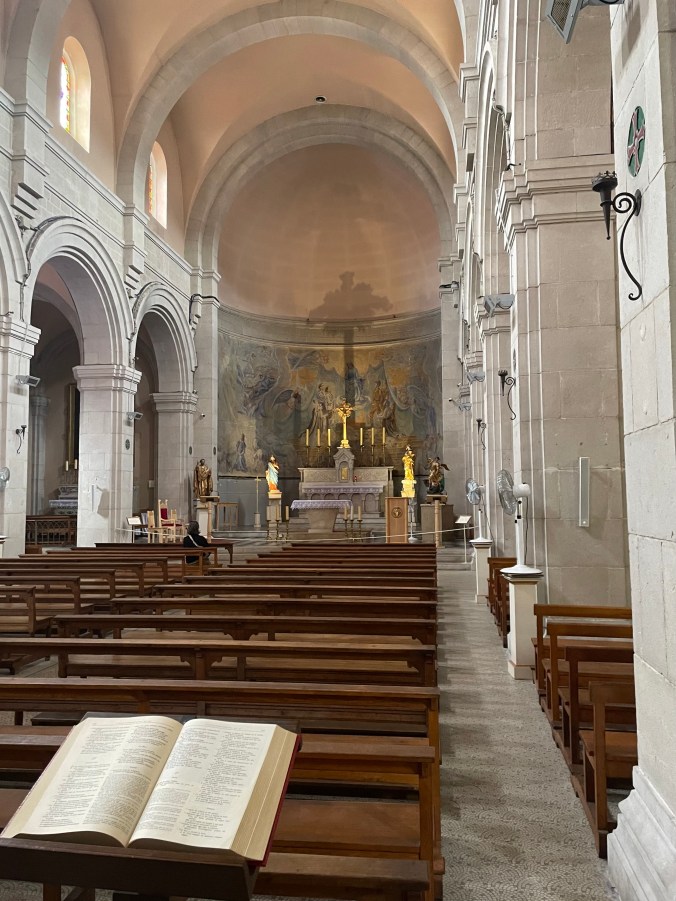
As we wandered around Cassis, we assessed the various eateries and concluded they were all very similar and all very popular with tourists like us.  We picked Olea Cassis, rather over-ordered some substantial portions and then found a little lie down in our room too tempting.  We visited St Michel church and investigated the Calanques boat tours ready for the following day.  I strolled along the waterfront beyond the harbour to see the sunset on Cap Canaille and then had an early night.  This was all very relaxing.

Eglise St Michel, Cassis

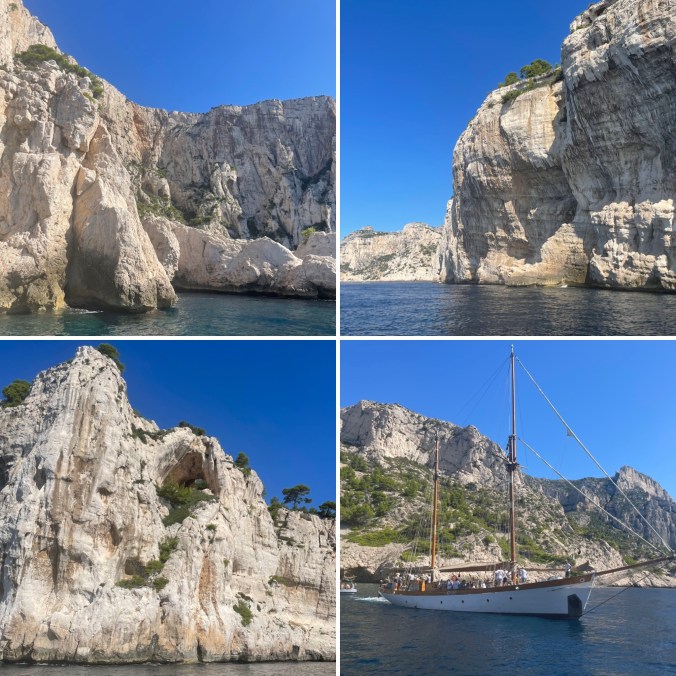
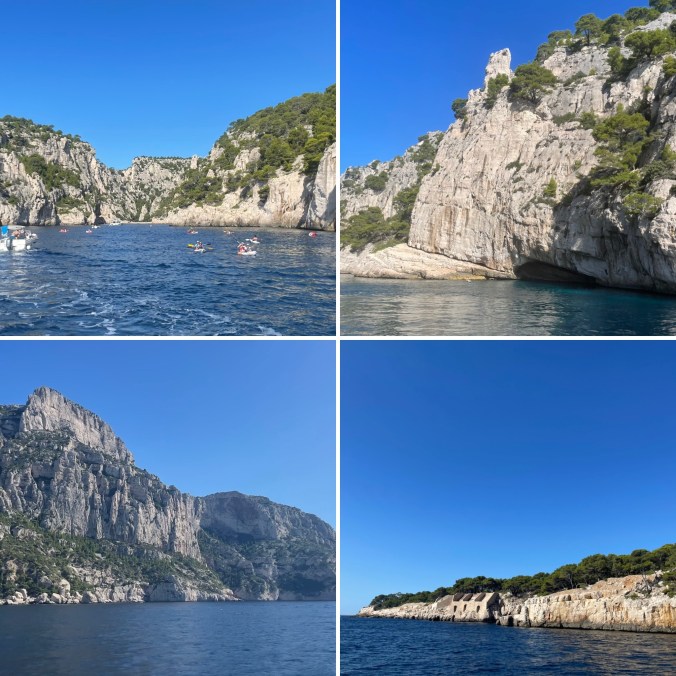
I’m not sure why but I always have to be persuaded to go on boat trips.  However, Jane was clear from the time we booked the holiday package that we would be going on a boat to see the Calanques.  These are an impressive set of limestone cliffs with inlets akin to fjords formed when caves collapsed as sea levels have changed. 

Views Of The Calanques From Our Boat

There are several such inlets, separated by huge limestone cliffs, just west of Cassis.  Each has a slightly different layout and rock features and each has its own name.  Some of the beaches at the ends of the inlets are accessible by car, some by foot and some by boat or kayak.  All were terrific to see from the sea, especially given the gorgeous sunny weather that we had.

More Views Of The Calanques

The trip to see the Calanques was undoubtably the highlight of our stay in Cassis.  On our return, I wandered the town again and visited the public park.  This had a lot of ducks but none were in the very murky algae-ridden lake at the park’s centre.  I made a brief stop at a supermarket for some beer and snacks and returned to the hotel.

Approaching Cassis Harbour
Approaching Cassis Harbour After Our Tour Of The Calanques

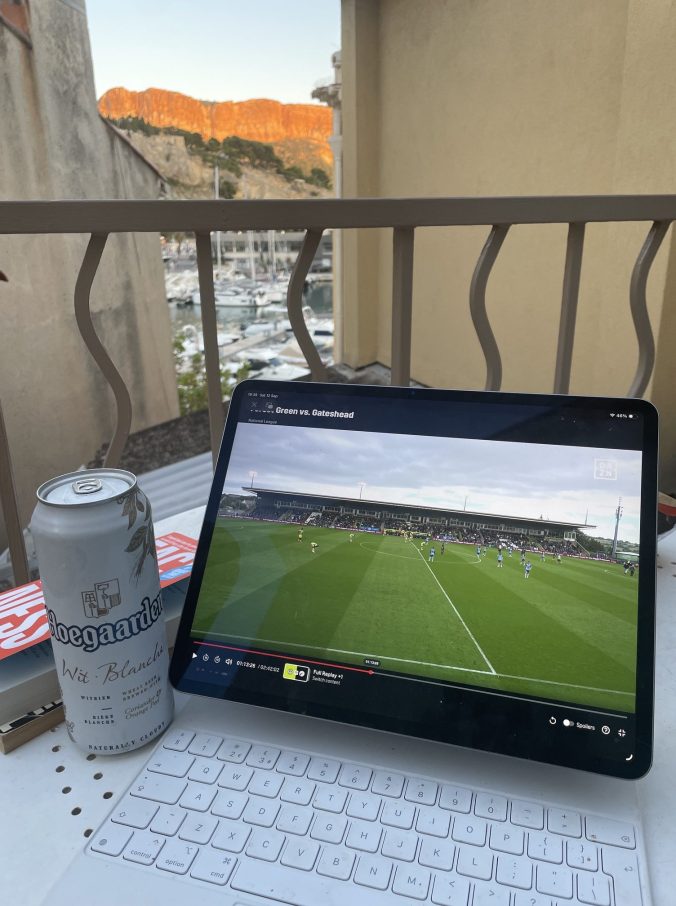
By this time, I was preparing my nerves for a Forest Green Rovers football game that I was planning to watch that evening in our room on a catch-up streaming service on Jane’s i-Pad.  In the event, I shouldn’t have worried.  I sat on the balcony of our room watching the game with a lovely backdrop of harbour and cliffs and we won 4-0.

Watching My Football Team Win On Our Balcony

Next morning, still thinking buoyantly about that win, we had breakfast at our hotel.  Le Golfe again served up what we agreed later was our favourite croissant of our whole holiday and we were ready to head off to our next stop: Toulon.

Marseilles: A Great Start

In truth, our holiday on the French and Italian Riviera started when some old, very good friends put us up for the night at their house in London so that we could catch the Eurostar from Kings Cross St Pancras first thing next morning.  They provided not only accommodation but great conversation and a dinner, the quality of which was barely matched during the rest of our holiday.

We left them early as planned and caught the Eurostar to Paris and then the TGV to Marseilles.  We arrived early evening in time for some exploration of the city. 

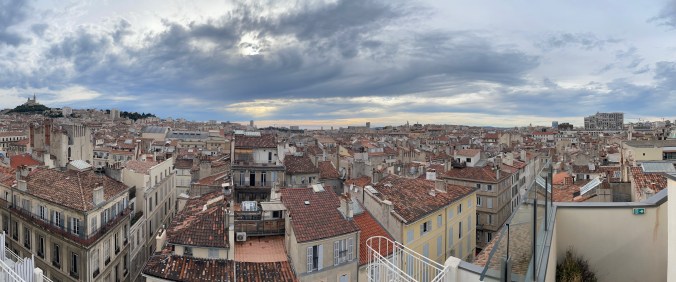
Panorama Of Marseilles From A Rooftop Bar

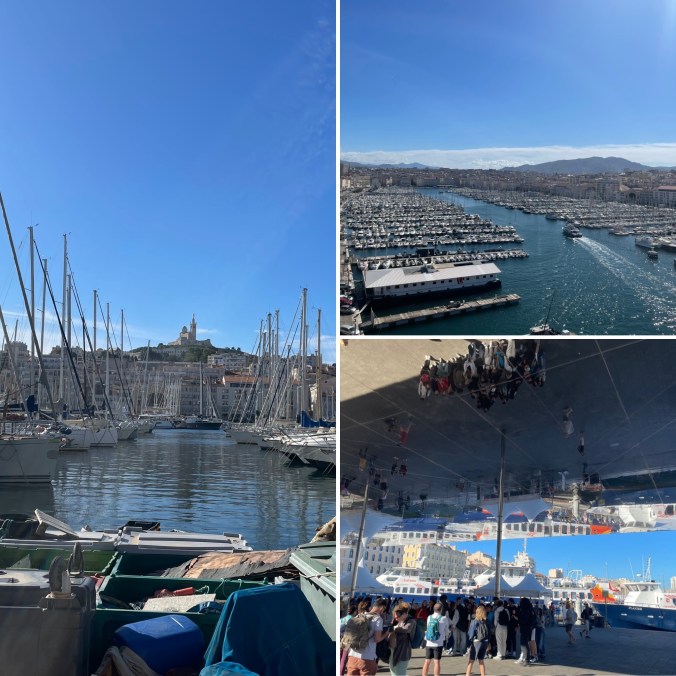
Marseilles has featured in a number of thriller and crime series we have watched (Fauda Series 5 being the latest) and in those it has seemed to be a rather gritty, edgy, working city.  However, our initial view of the harbour area rather scotched that impression with its grand Norman Foster mirror canopy, the myriad of boats bobbing in the harbour and its busy tourist vibe. 

Views Around Marseilles Harbour Including The Dosorienting Norman Foster Canopy (Bottom Right)
Views Around Marseilles Harbour Including The Rather Disorienting Norman Foster Canopy (Bottom Right)

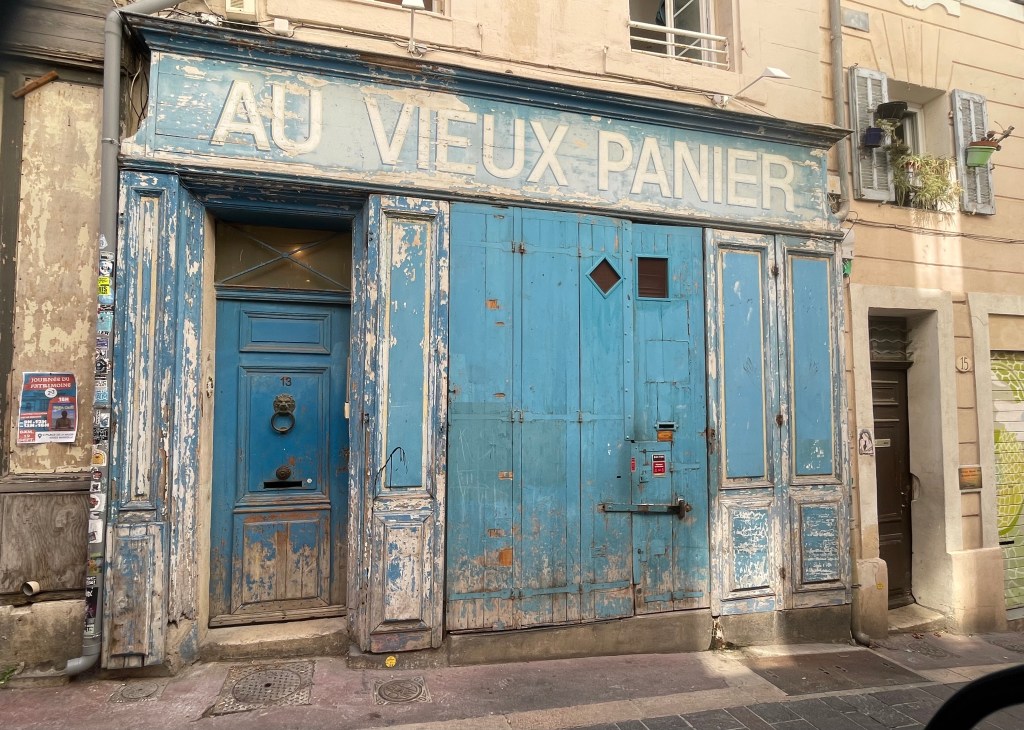
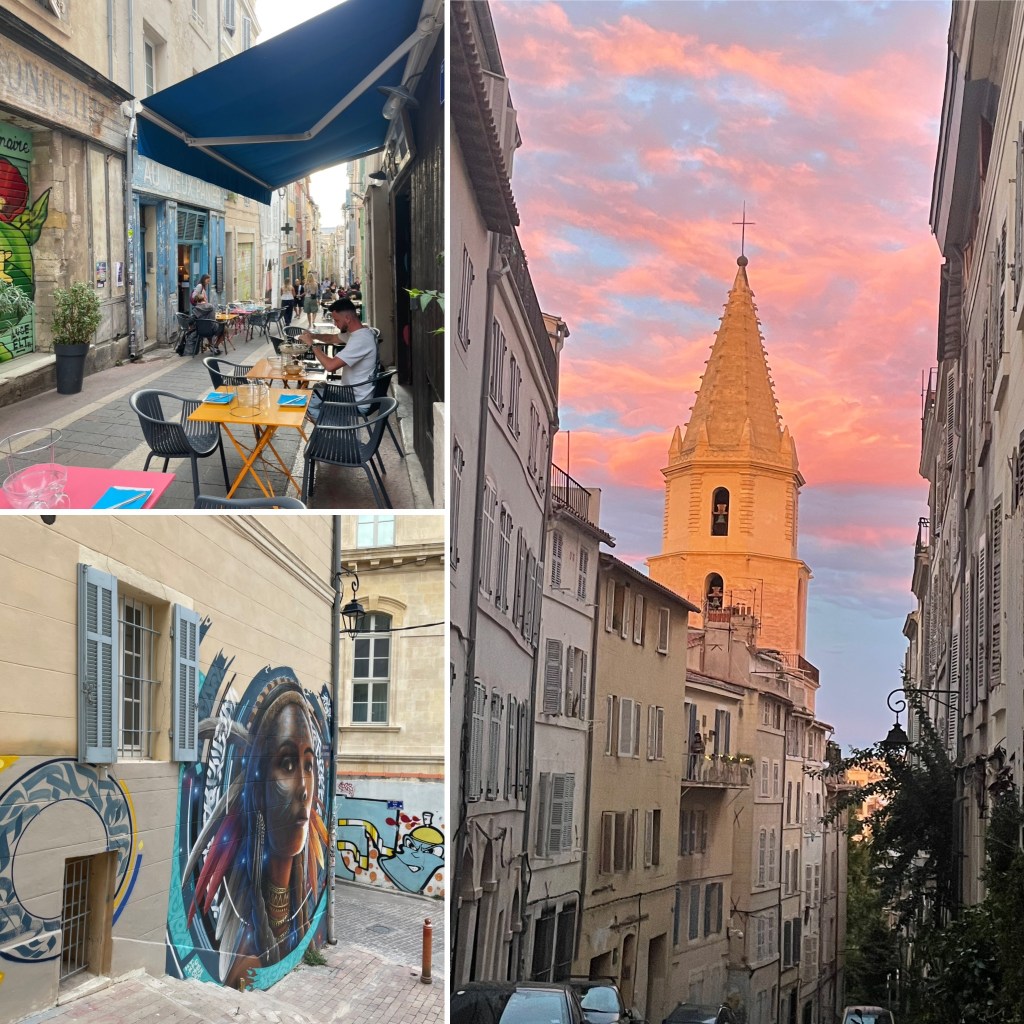
We headed up and out of the harbour for dinner and a drink in the Le Panier area of Marseilles.  This was rather more of what I had expected with its old, narrow streets, numerous small shops and cafes, and its prolific street art. 

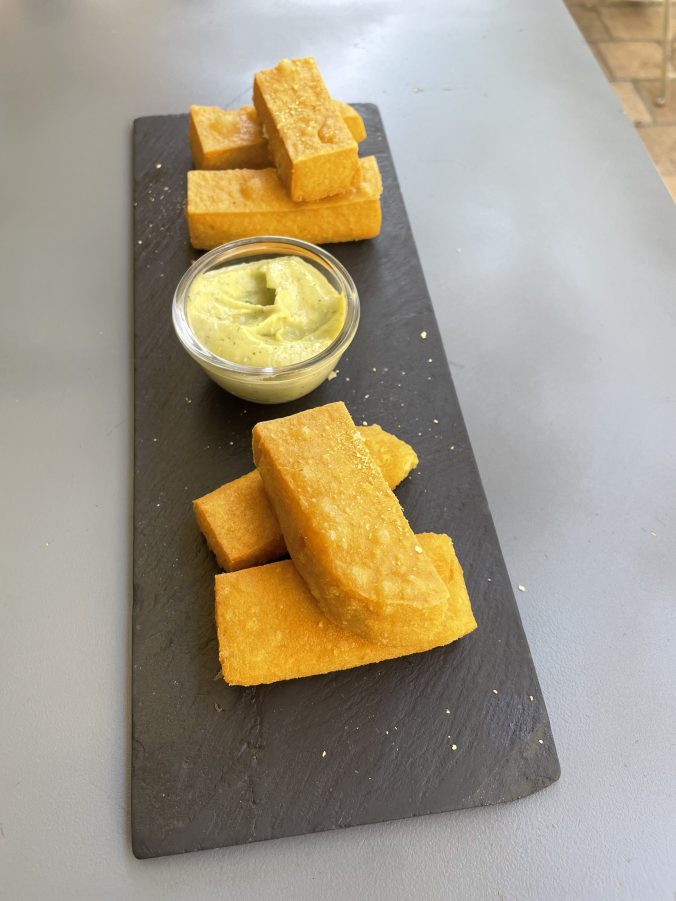
We had our first authentic taste of panisse, a local speciality made primarily from pan-fried chickpea flour that are cut into sticks to be dipped in a garlic or tomato sauce.  We ate panisse several times during our holiday.  I thought that the best was served with a great garlic sauce at Cafe Buvo in Marseille. 

Panisse With Garlic Sauce; Yum!

We strolled around Le Panier as the sun set over the harbour, retreated to our hotel for a relatively early night, and prepared for our first full day of sightseeing.

Jane had researched places to have the sort of breakfasts that she likes and on both mornings in Marseilles, we started our day in Deïa Coffee & Kitchen which was great.  I think these turned out to be the best breakfasts we had during our holiday.

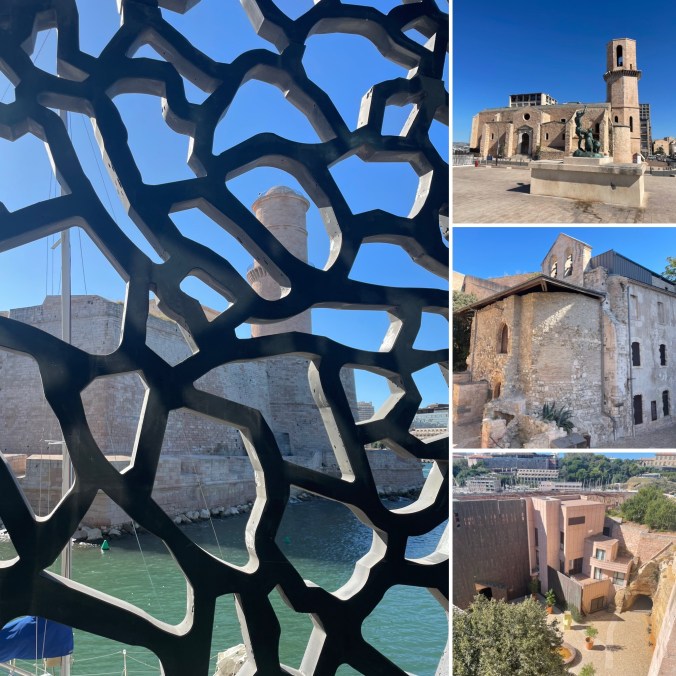
My Turkish eggs set me up for my first 30,000 steps day of the holiday.  First, we walked the length of the inner harbour, getting our bearings, admiring the basilica high on the hill to the east and the old fort at the mouth of the harbour.  Opposite this fort is the Museum of European and Mediterranean Civilisations (MUCEM) and we spent the rest of the morning in and around this. 

MUCEM Views
MUCEM Views

The building housing the museum is new and is a cube that is completely surrounded by a concrete lattice and linked to much older buildings and to gardens by elevated and terraced walkways.  I loved it although it was easy to get lost. 

Inside were exhibitions laying out, for example, the French occupation of Algeria and the colonial attempts to marry artistic and cultural interest in the way of life there, with the expropriation of the Algerian oil and other resources.   There was also an exhibition of the work of fashion designer Mossi Traore.  I hadn’t heard of him before but it was a good exhibition and I could see why he had become, from modest beginnings, so successful.  I particularly enjoyed his football kit designs.

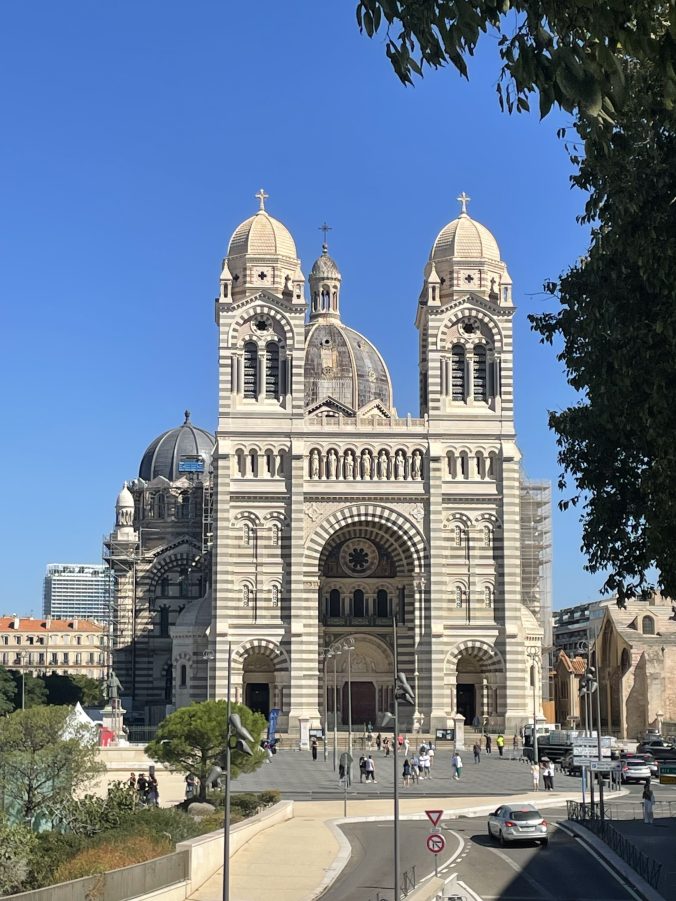
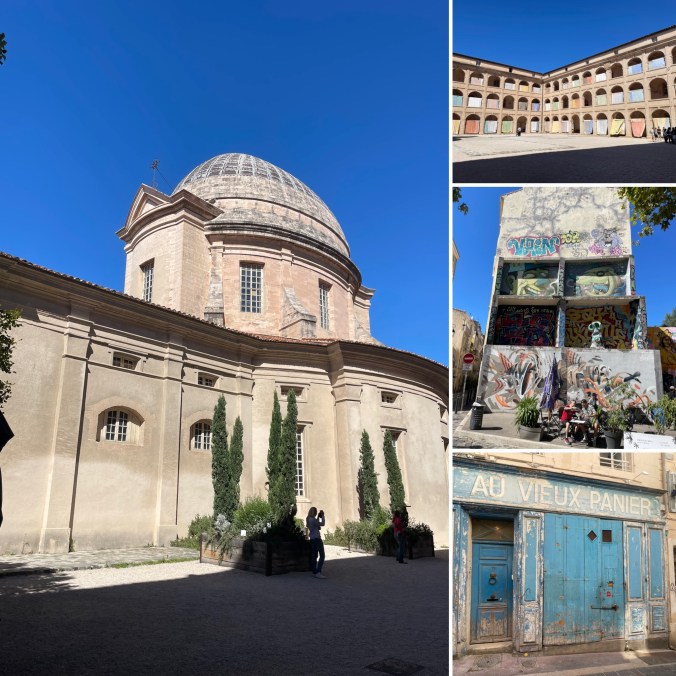
We walked past the Cosquer Cultural Centre and the Museum of Provence – both modern buildings – and visited the nearby Catholic Cathédrale de la Major.  We then wandered back into Le Panier to see The Old Charity Centre.  This was built in the 18th century to house beggars and then became a hospice.  When we visited, it was showing an exhibition of pastel-coloured, hanging textiles which added a bit of extra interest.

Cathedrale De La Major
The Old Charity Centre
The Old Charity Centre and Le Panier

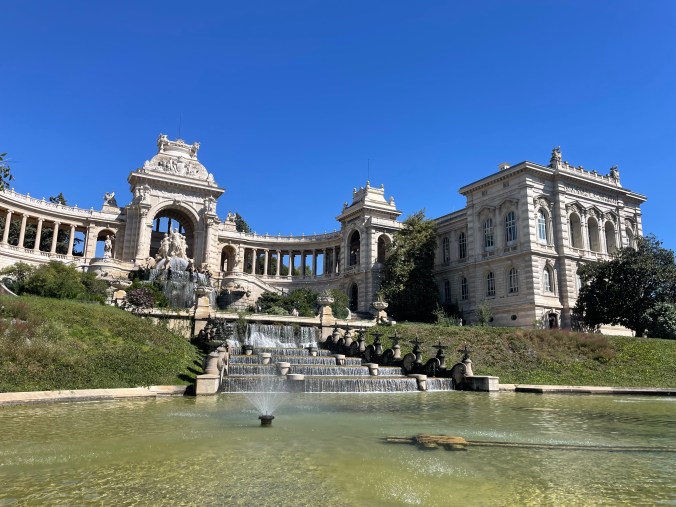
After lunch, Jane and I split up for a few hours. I walked to the The Musée des Beaux-Arts. The art gallery itself was disappointing (but free and almost empty of people) but the adjoining Le Palais Longchamp is spectacular with an almost infeasibly large cascade between two impressive terraces and buildings.  A couple were having their wedding photos taken with the Palais as a backdrop and I imagine this is a common feature at this amazing site.

Le Palais Longchamp
Le Palais Longchamp

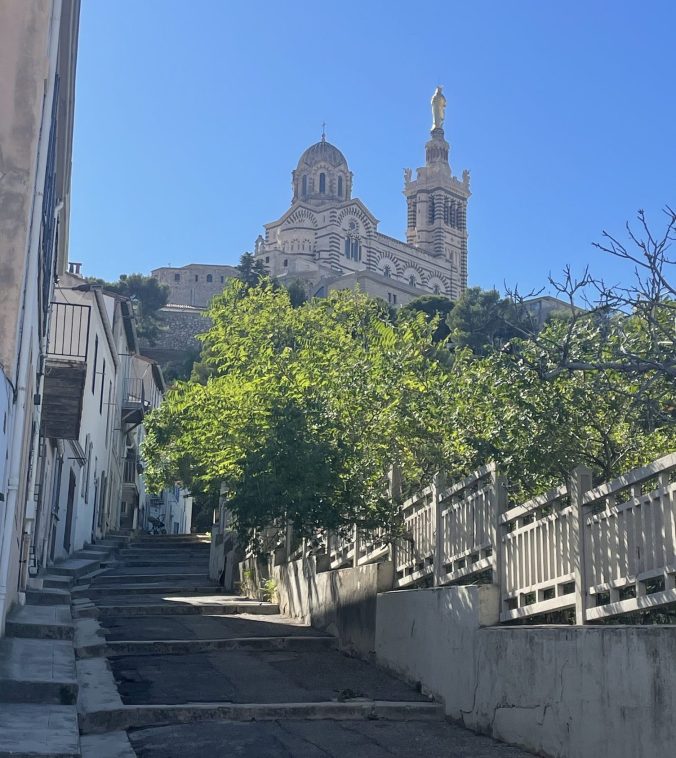
Our sightseeing was not yet done.  Inadvertently, I walked a long detour through the lively Cours Julien area (which is apparently famous for its nightlife) on my way to meet Jane at the Notre-Dame de la Garde.  This basilica stands prominently on a substantial hill overlooking the city.  I was getting tired and I recall looking up from a road that I thought was close to the basilica and being surprised at how much more climbing I had to do to get to it.

Are We There Yet? Not Quite!

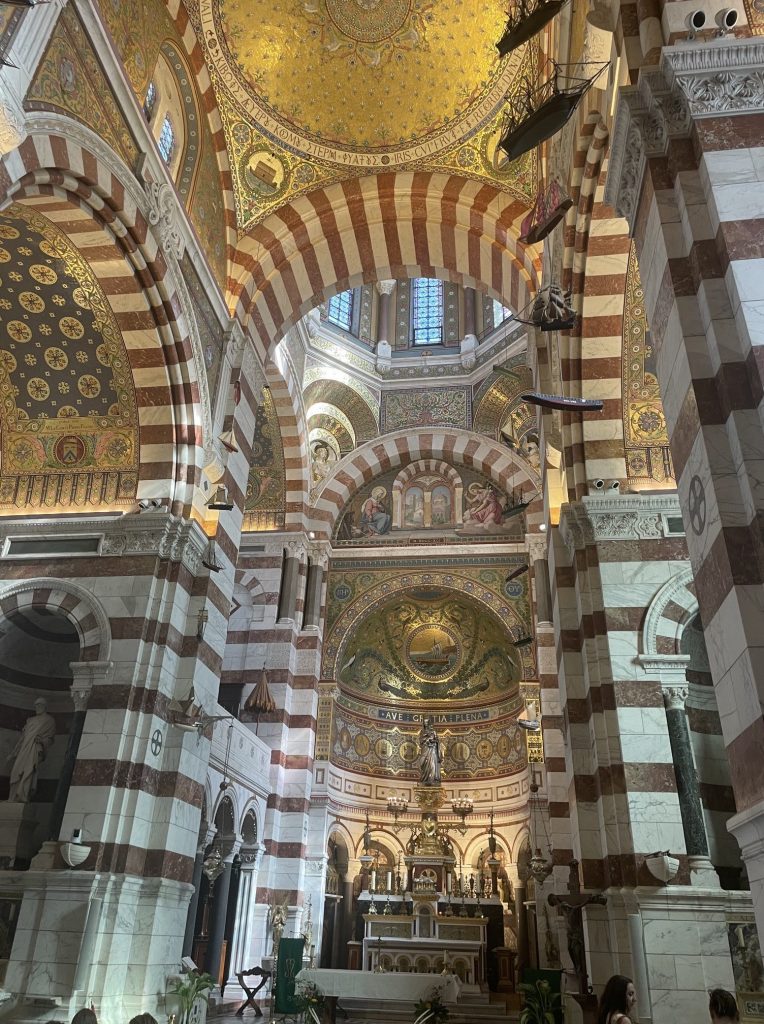
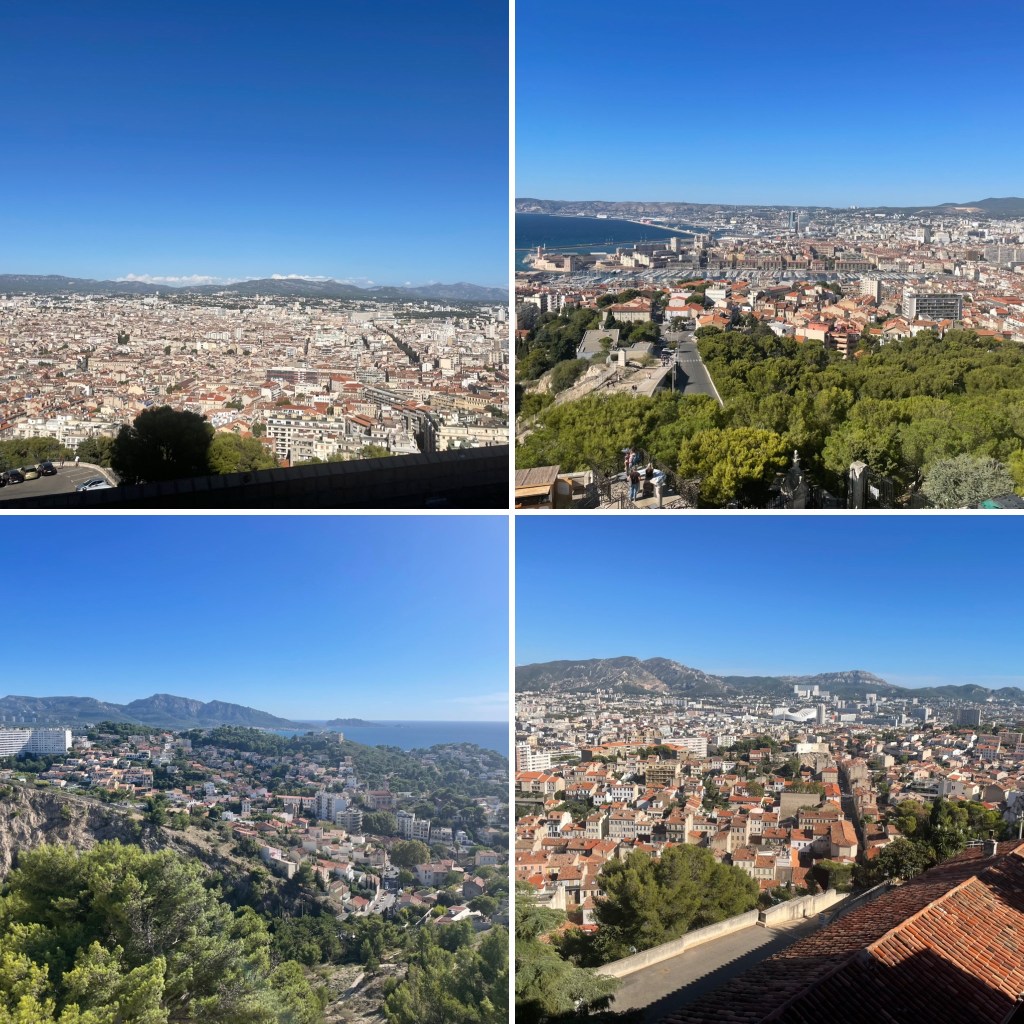
Of course, the views from outside the basilica are spectacular in all directions and there were many fellow tourists enjoying these.  The interior is also impressive – a huge, cavernous space with gold ceilings and striped columns. 

Inside And Views From Notre Dame De La Garde

To round off our day, we shared a dinner of interesting small plates at Nabu and Jero back in Cours Julien.  All the dishes were tasty although Jane refused one that had surprisingly uncooked egg white in it.  We survived.

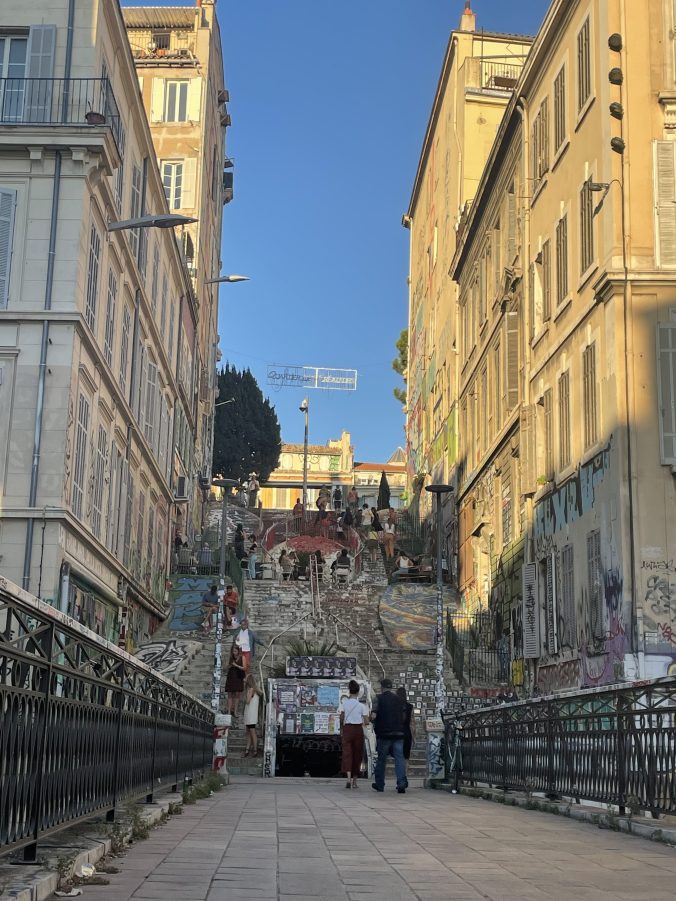
Cours Julien
Cours Julien

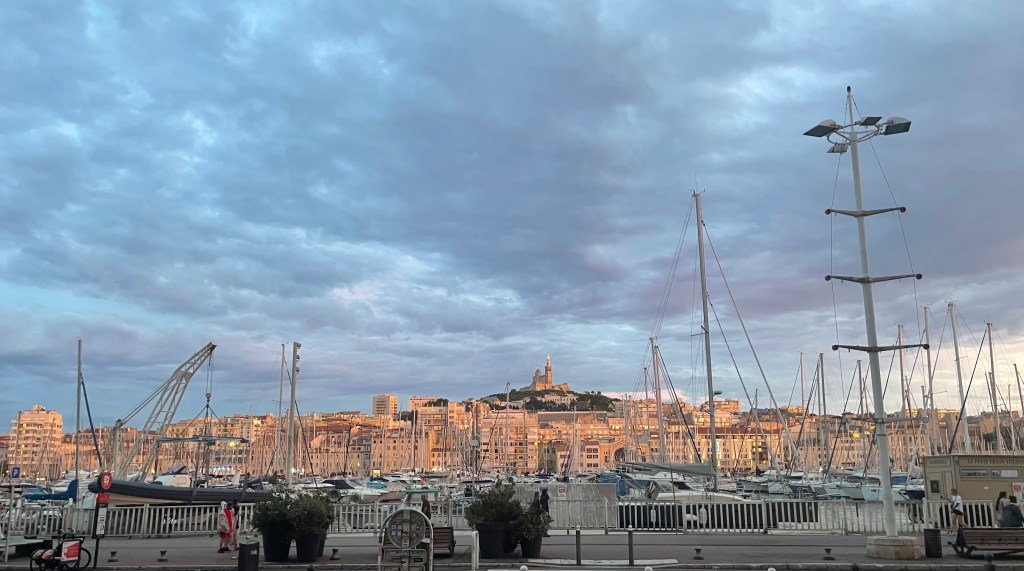
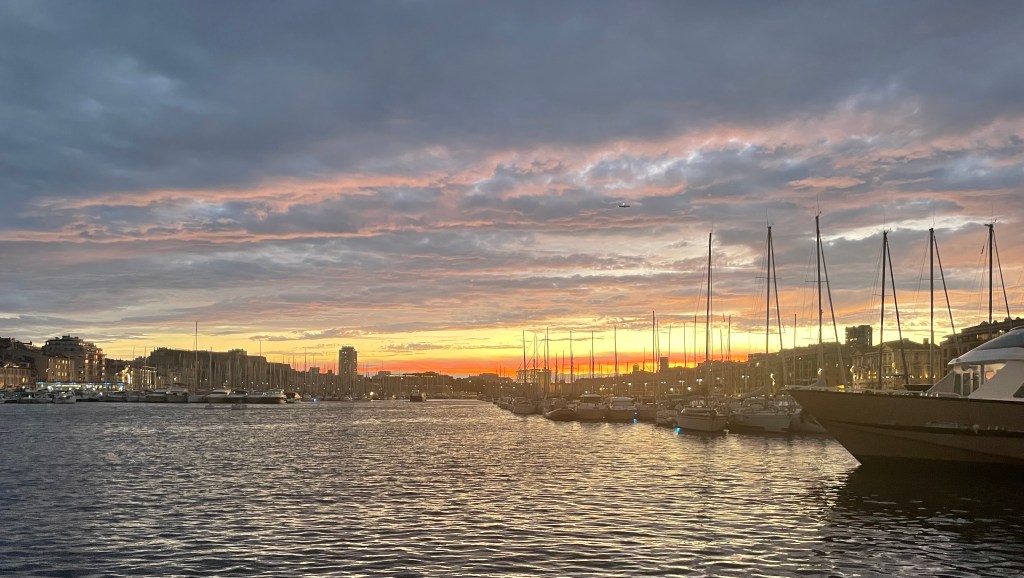
Marseilles Sunset

Next morning, after breakfast at Deia again, we made our way past the harbour one last time and, from the station, set off for our next stop: Cassis.

Byway, Railway, and Riviera Cities

Jane and I have just returned from a two and a half week Interrail holiday along the French and Italian Riviera between Marseilles and Genoa.  It was an excellent holiday.  One of my daughter-in-laws asked what was best about it and, in typical fashion I’m afraid, I replied: “well, nothing went wrong”.  In truth though, pretty much everything went right.

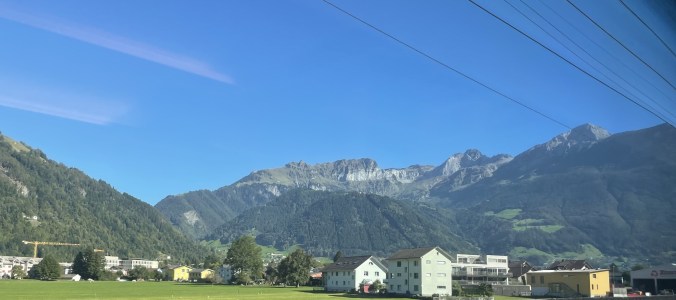
Travelling By Train Through The Alps

The weather was great.  There was blue sky and, apart from about 4 hours in Paris on our way home, brilliant sunshine all day.  It wasn’t too hot – we wouldn’t have coped well with the much hotter temperatures prevalent a few weeks before.  There were no wildfires to worry about.  We’d packed the right clothing and managed to launder enough on the way to feel fresh (though our use of a public laundry in Menton was a disaster and it was fortunate our bathroom there was big enough to accommodate the rewash we did in the bidet and the subsequent drying out!)

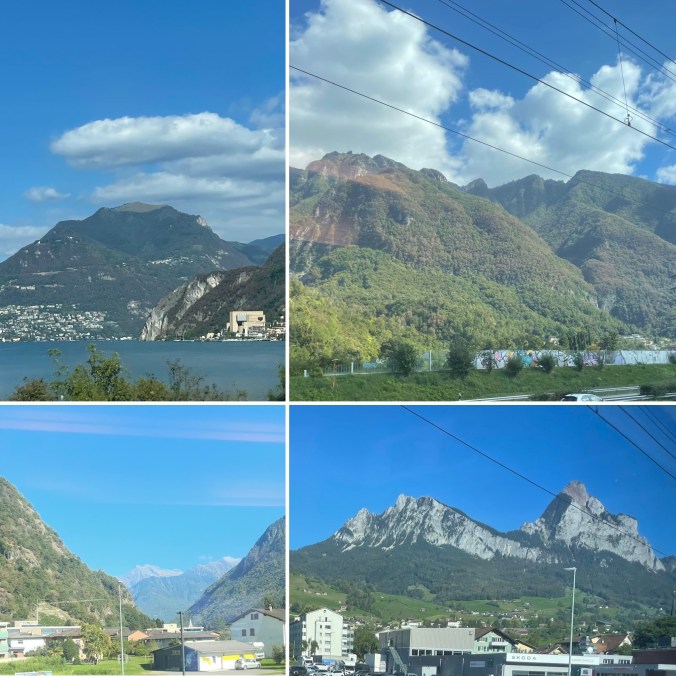
More Alpine Views From The Train

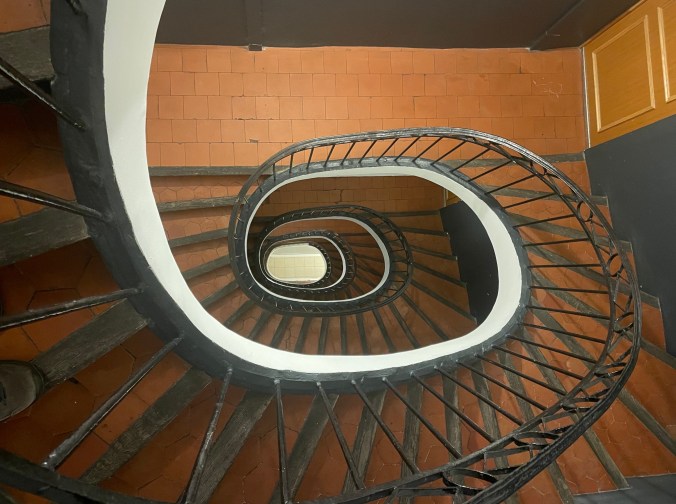
We had booked the holiday as a package with Byway Travel.  For the premium we undoubtedly paid for getting a package rather than creating our own tour, I think we got peace of mind and good value.  The trains were punctual enough and we always had a seat.  The hotels were very varied but very good although the number of stairs we had to climb in a couple of them was a bit daunting. 

100 Steps in Our First Hotel Of The Trip - Good Job We Are Reasonably Fit!
100 Steps in Our First Hotel Of The Trip – Good Job We Are Reasonably Fit!

The selection of places we visited for two nights each – Marseilles, Cassis, Toulon, Nice, Menton, Alassio, Genoa and, on our way home, Paris (via train changes in Milan and Zurich) – were also varied in size and feel. 

Zurich - A Brief Stop Off To Stretch Legs And Change Trains
Zurich – A Brief Stop Off To Stretch Legs And Change Trains

Unexpectedly, two nights in each place felt like enough and, once we got into the routine, changing accommodation every other day became a pleasant routine not a chore.  We might revisit one or two of the big cities we saw but, if we do something similar in the future (and I hope we will), then I think we will try a different part of Europe.

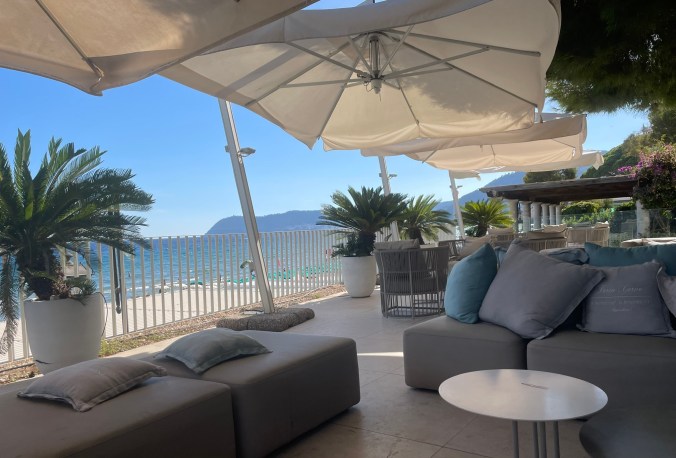
Alassio: Drinks On The Hotel Terrace And Dinner On The Hotel Beach

Getting back into our home routine has been quick and easy.  We got back home on a Friday at 5.30pm and managed to get to the local pub for our normal Friday night imbibing with local mates by 6pm.  We have both restarted maintenance of our garden.  We have both started our respective work and volunteering duties.  There’s a home Forest green Rovers football match to attend tonight.

What remains is sorting out of the hundreds of photos I took while we were away.  Once I have done that, I plan to post brief summaries of the town and city visits included in our holiday.  Then we are off to Edinburgh to visit family there and will plan some more trips.  I’m getting into the swing of this holiday lark!