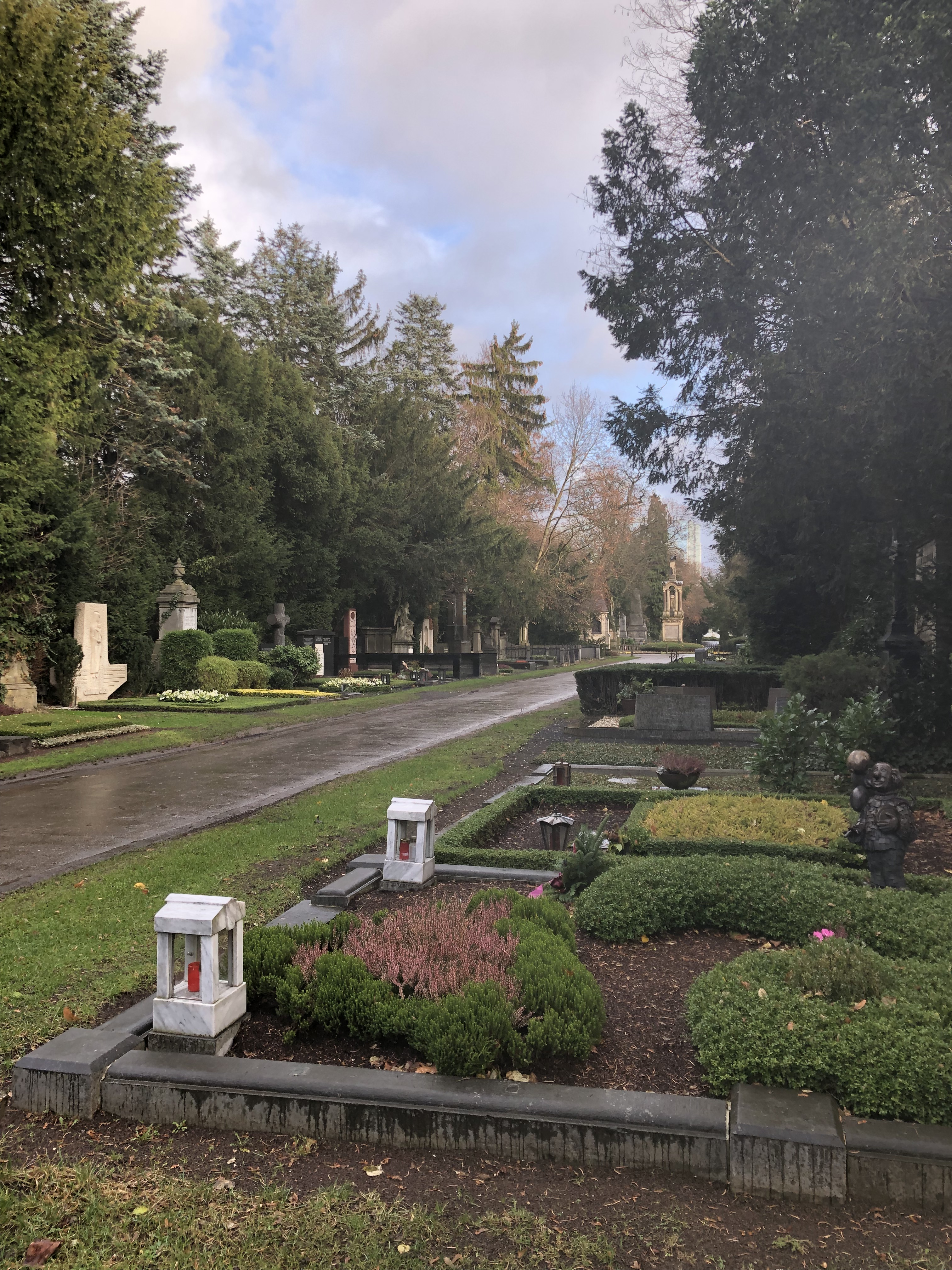
I have always been interested in visiting old graveyards. They are generally quiet places for reflection, a secluded refuge for wildlife, and also a rather oblique representation of history and of lives lived. For me, those characteristics more than offset any feeling of sadness or mournfulness derived from their function.
Edinburgh has a number of graveyards in or near its centre. While Jane was resting her broken arm, I took the opportunity to visit a few.
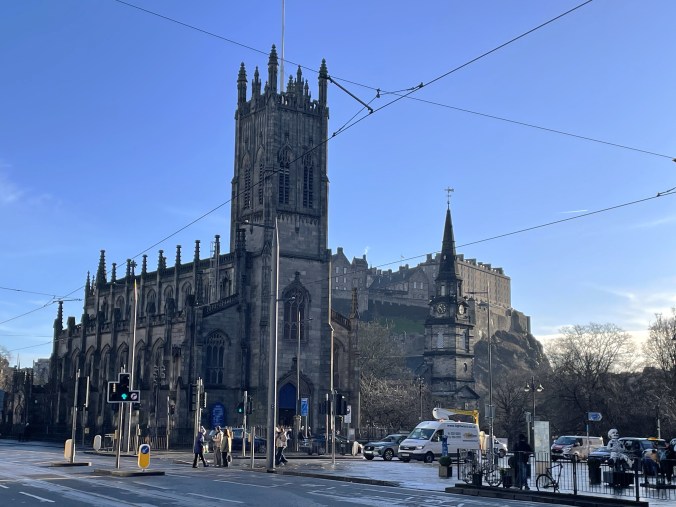
At the west end of Princes Street is Saint Cuthbert’s Churchyard. It seemed to be the nearest cemetery to our holiday flat. This is a very old graveyard with burials believed to have dated from the 14th century and probably much earlier. It is one of a few graveyards in Edinburgh that has a watchtower, built in the 19th century, for guards aiming to prevent bodysnatching for the purposes of medical science.
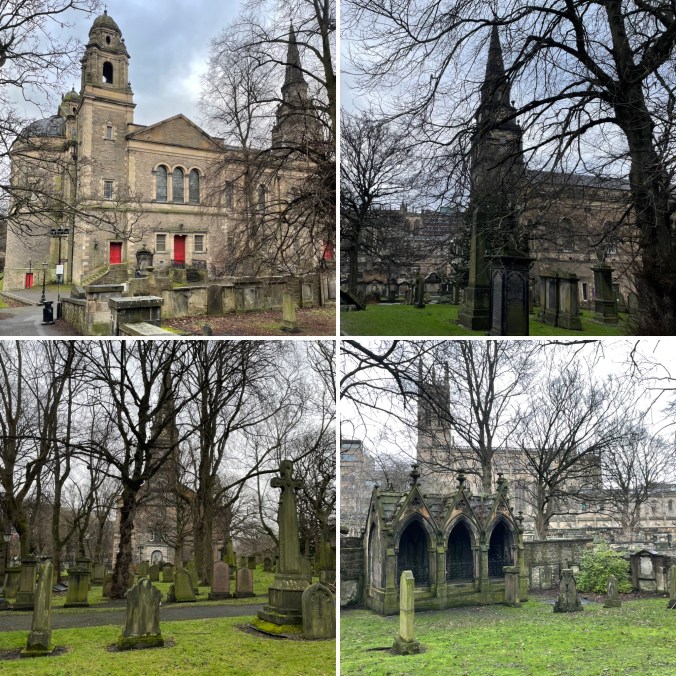
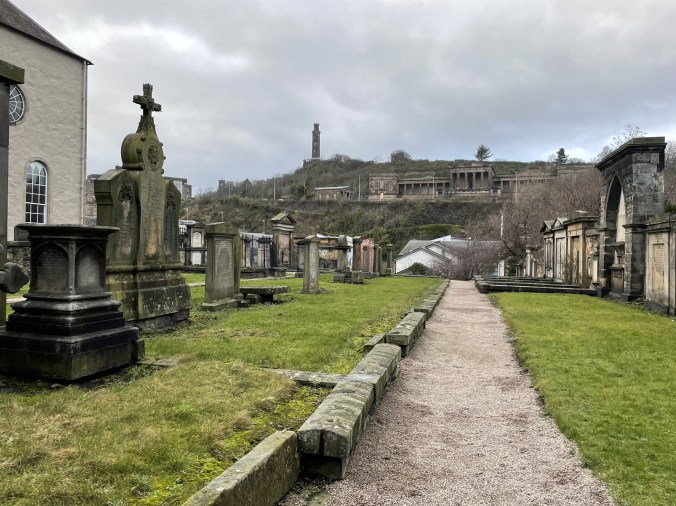
Another such watch tower is in New Calton Burial Ground. This has great views over Holyrood, Arthurs Seat and the government buildings and alleys off Canongate. Like many of the graveyards I visited, it has a map to show the location of graves of the Edinburgh ‘great and good’. On the day of my visit, the northern end was full of birdsong.
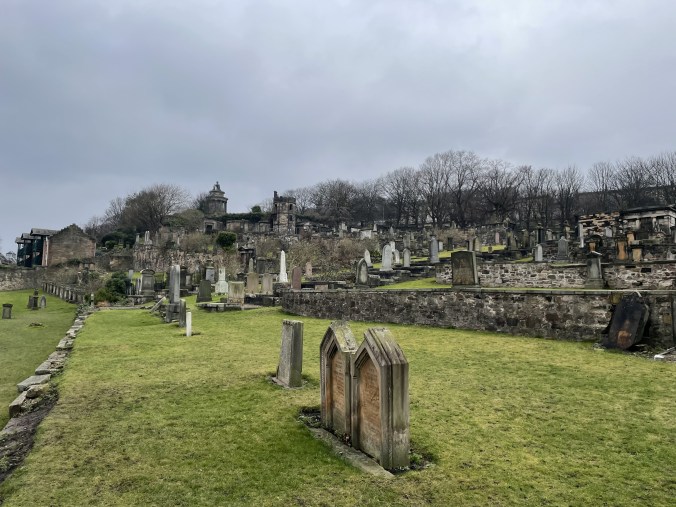

New Carlton Burial Ground was overspill from the nearby Old Calton Burial Ground which I have visited before and which has memorials to a number of notable Scots, including famous radicals of whom some were deported to Australia for their troubles.
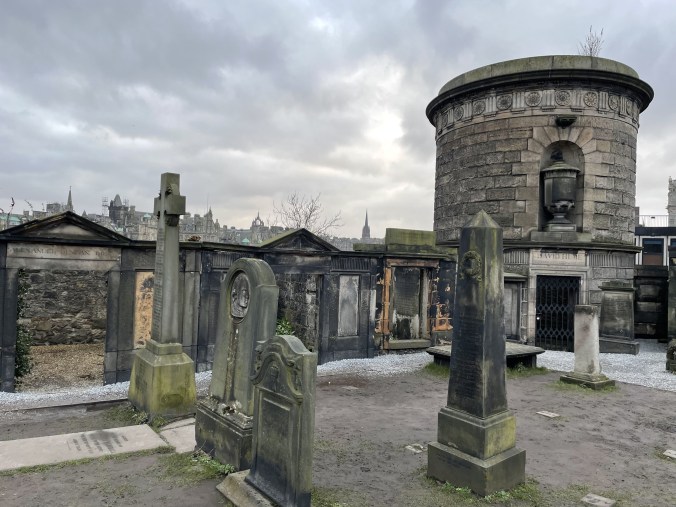
In Canongate is Canongate Kirkyard. The Kirk and its Cemetery which was created when decreed that the inhabitants of the Canongate would no longer be allowed to worship at Holyrood Abbey in 1687. It is the resting place of Adam Smith, the famous Scottish philosopher and economist.
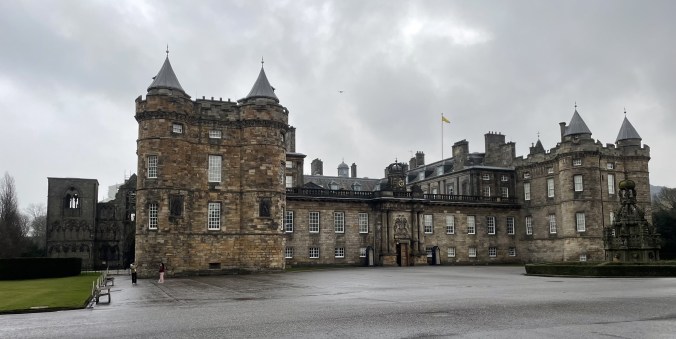
This cemetery has views back to Carlton Hill and is a peaceful haven just yards away from the many tourists – even at this time of year – strolling between Holyrood and The Royal Mile. I too, wandered down to Holyrood Palace but, impressive as it looks from outside, I demurred from paying £25 to enter the grounds and house; maybe I will on a future rainy, rather than just grey, day in the City.
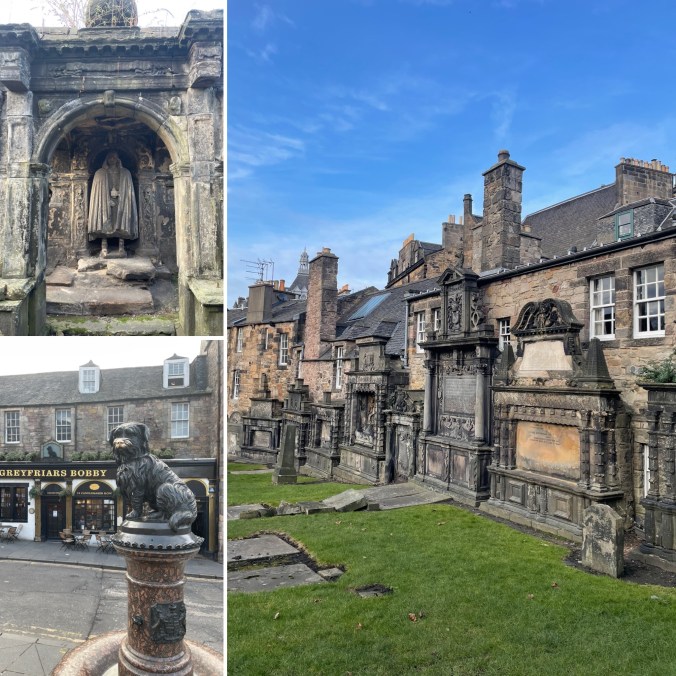
Unlike the other graveyards I visited, Greyfriars Kirkyard was crowded with tourists eager to follow up on apparent connections to Harry Potter characters and the famous story of Greyfriars Bobby, a terrier who sat by and guarded the grave of his owner (a nightwatchmen at the cemetery) for 14 years, without a break, until he too died.
The more interesting aspects for me were the scale and disposition of the mausoleums in Greyfriars Kirk. These proliferated from the 1660s when burial in Greyfriars Church was prohibited. Families of the dead apparently compensated for not being allowed inside by erecting very large monuments outside. Some of these directly attach to the houses around the graveyard (see below).
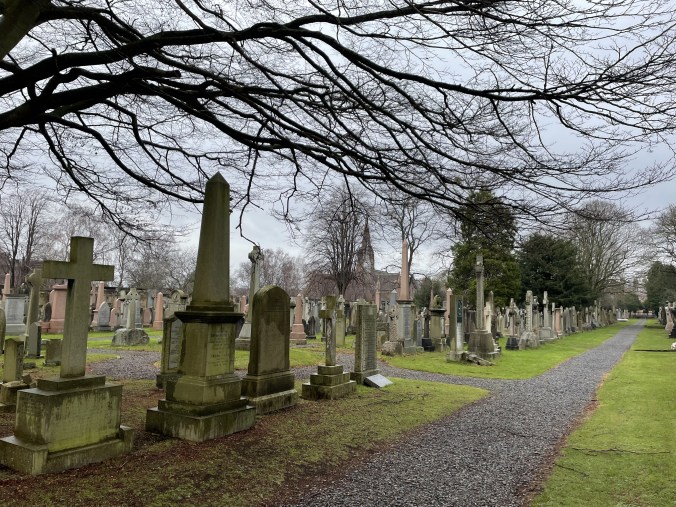
Further afield, I stumbled across two other cemeteries. Dean Cemetery, behind high walls and full of mature trees, was very quiet except for the birds. The cemetery is attractive – if you like this sort of thing – but the grey skies gave the cemetery a rather melancholy air and I plan to return when the trees are in leaf and the atmosphere is brighter.
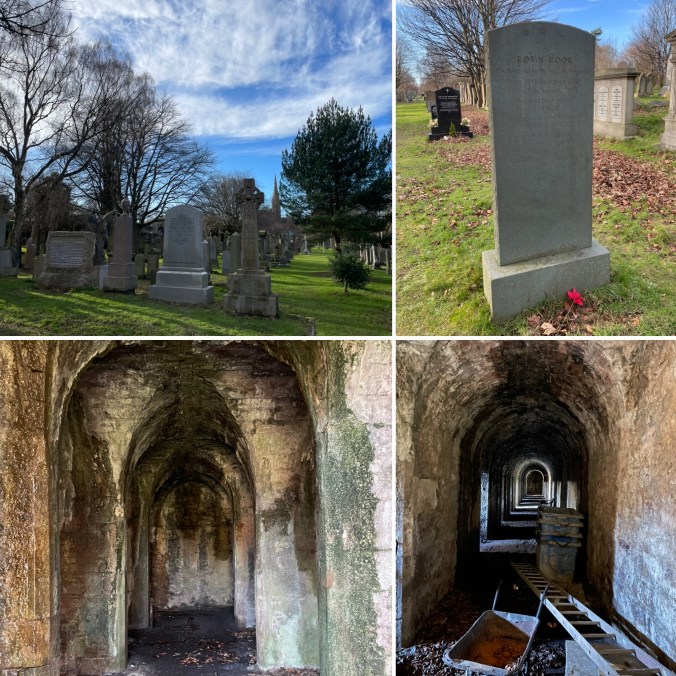
Even prettier – perhaps helped by the blue skies overhead when I visited – was Grange Cemetery. I found this during a rather random walk south of the centre of Edinburgh. I noticed the imposing surrounding walls and found a way in. Like Dean Cemetery it is in two halves. Here however, the divide here is not a wall but a long array of catacombs that are halfway underground; an interesting dimension to the site.
The Grange Association do a great job of maintaining the cemetery and of documenting its history and its ‘residents’. Thanks to that, I found the grave of Robin Cook who was one of my political heroes 20-25 years ago. His gravestone has a nice epitaph referring to the Iraq war: ‘I may not have succeeded in halting the war but I did secure the right of Parliament to decide on war’.
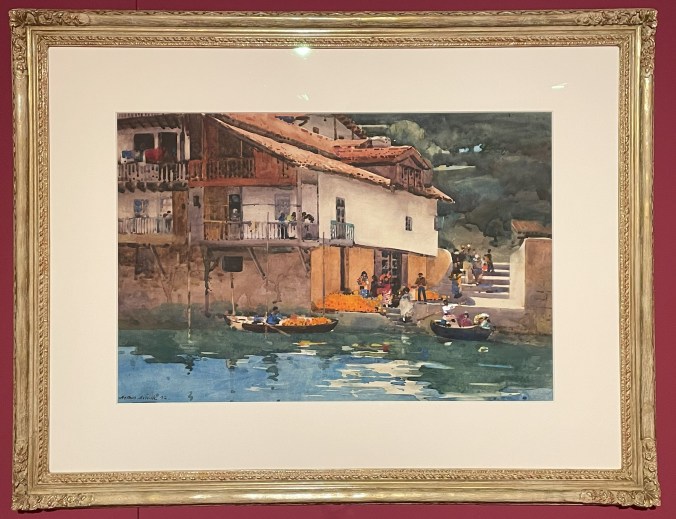
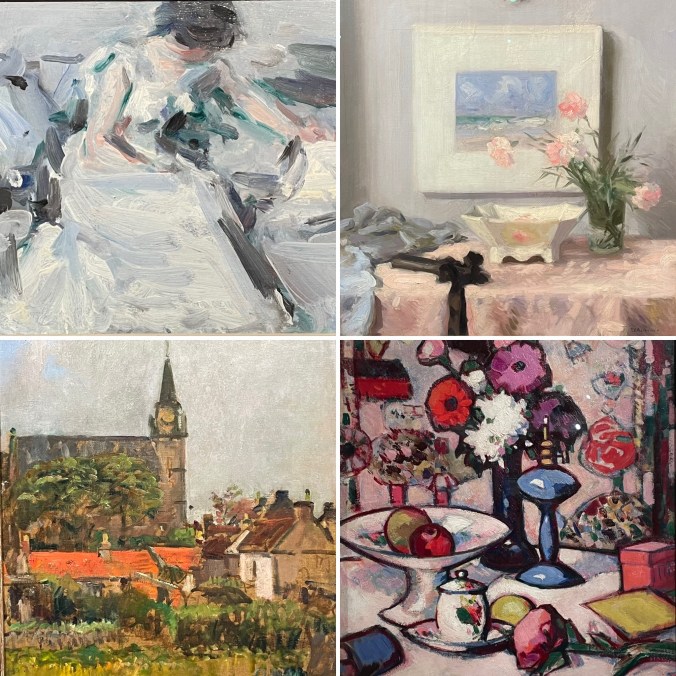
In the last week of our Edinburgh stay, I returned to the National Gallery of Scotland to see the permanent collection and we also returned together to Dovecote Studios to see an really excellent exhibition presenting the Scottish Colourists.
The Scottish Colourists were a group of just four artists who were at their peak in terms of quality and influence in the art world in the first half of the 20th century. Unlike Jane, I hadn’t heard of any of them as I entered the exhibition. But interesting information about them was carefully presented and their influencers, and those they influenced, were summarised and then underlined with examples. I loved the exhibition and felt I learnt a lot.
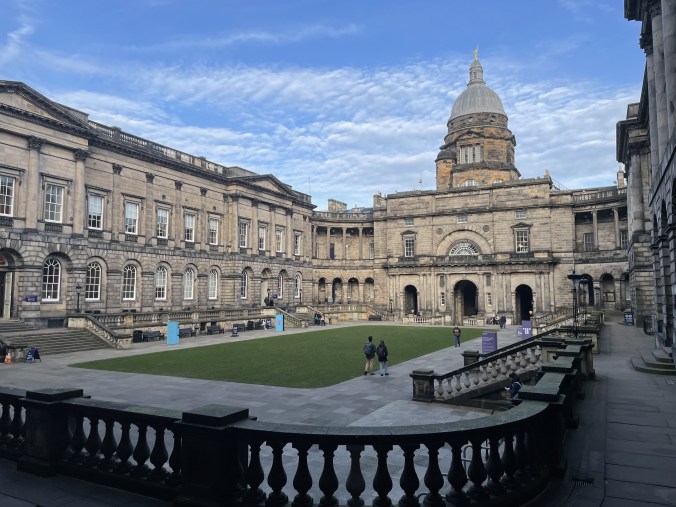
Another interesting exhibition I saw was at the Talbot Rice Gallery. The gallery is part of Edinburgh University and is within the wonderful buildings of Old College. The art on show was at another end of the spectrum from that of the Scottish Colourists. Let’s just say that the anti-woke brigade would not have approved.
The first part was an exhibition of videos by Gabrielle Goliath relating to violence against women. The videos were images of women describing their experiences but the words were truncated so that only the gaps between their words remained. It was strangely powerful albeit with really just the one idea and the explanations of the videos were too high-falutin for me to absorb properly.
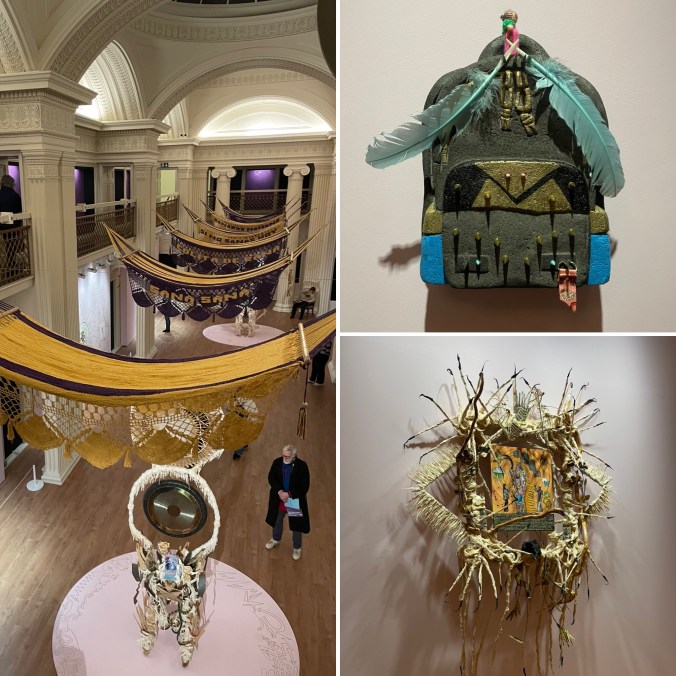
Much more aesthetically pleasing but equally, weirdly impactful was an exhibition of work by Guadalupe Maravilla, an child refugee and cancer survivor from El Salvador. It’s hard to describe the work (see below) but the allusions to healing, trauma and displacement were fascinating. All this was in a single, splendid room bedecked with hammocks for the ‘healing gods’; it was all very dramatic.
Jane and I also visited a couple of the multitude of private galleries in Edinburgh. One, the Open Eye Gallery, had some work by a friend of hers, Gail Turpin, who’s exhibition we visited last summer when we were in the city. I liked her watercolours but was even more taken by a room showing paintings by James Fairgrieve and by a few ceramics by Rachel Wood.
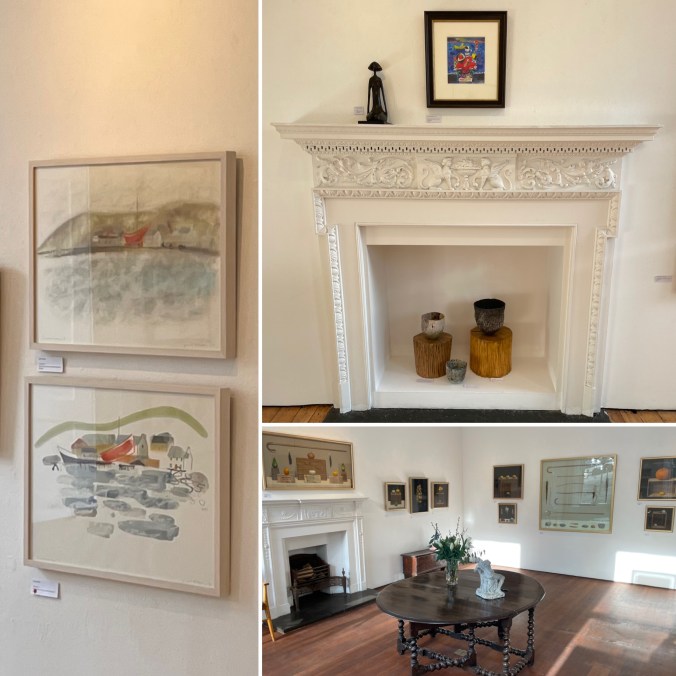
The other was the oft-visited The Scottish Gallery just up from where Eldest Son lives. As soon as I walked in my eyes fell on a couple of Joan Eardley paintings. I’d never heard of her until we started to visit Edinburgh a few years ago, but love all her paintings of sea and fields that I have seen since.

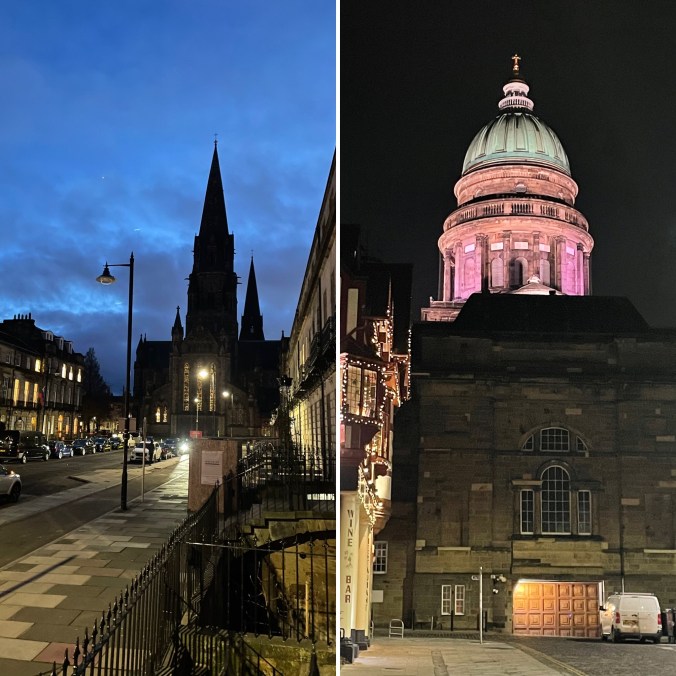
We originally planned day trips to Glasgow and Fife whilst in Edinburgh. In the absence of those, I was very happy visiting Edinburgh’s graveyards and galleries, and wandering through the wonderful Georgian architecture of central Edinburgh, where most streets seem to have a monument or imposing building at their end. It’s a great city to visit, and, I think, to live in.






 My Retirement Journey