Proper Baby-Sitting and Grayson Perry

We have babysat First Grandchild (FG) a few times for short periods during visits to Edinburgh during the last year or so.  It’s been a joy and a privilege to be able to do so. Plus we always enjoy visiting his parents and seeing Edinburgh.

The Water of Leith From Dean Bridge – The Steep Gradients So Near To The Centre Of Edinburgh Still Surprise Me

Our baby-sitting responsibilities went up a notch at the beginning of September when First Grandchild’s (FG’s) parents went to a wedding of an old friend in Spain.  Jane and I were thankful to be asked to baby sit for the 36 hours they were away but were unsure how the experience would go for us and for FG. 

His other grandparents do a lot of babysitting and look after him all day on Thursdays.  But it would be the first time that someone other than a parent would get FG up in the morning (twice), manage his afternoon nap (twice), put him to bed (once), plus feed, entertain and keep him safe in between.  It was our first go at proper grandchild babysitting!

Eldest Son and his wife had departed in the small hours of the night.  Apart from 15 minutes of full-on anxiety and yelling after he woke up that morning, and another five minutes of low-grade moaning after his first nap, FG was fine with the whole weekend. 
First Grandchild Exactly Where We Wanted Him – Asleep With His Monkey and Other Soft Toys

FG knows his routine down to the fine details: which soft toy needs to be kissed goodnight in what order, which book is the last book to be read before bedtime, which bedroom light goes on and off when.  As long as we stuck to that routine and provided plenty of book reading, tower and garage building, and other activities at other times, he was very happy.  FG, his parents in Spain and, certainly, the two of us, all had (tiring) fun.

Of course, we visited a few Edinburgh playgrounds and, as usual, the Royal Botanic Garden with FG while we were with him.  The weather was kind to us and we were able to walk, to and from everywhere and around the gardens, at FG’s pace. 

Like most kids his age he loves being able to take mini-decisions about what to do when and, as grandparents, we have the time to allow that.  That Jane has had a motherhood bringing up three boys and then a career in providing parental advice to troubled mums and dads really helps.  I learnt a lot from her about how to give toddlers options so they feel a semblance of decision making while the adults actually remain in control.

A highlight with FG was a trip to Portobello beach.  We got there early so the crowds were yet to gather in large numbers in the sunny and warm weather.  FG loves the outdoors and the novelty of visiting the coast.  He loved wandering along the shoreline and collecting shells and other debris along it (and, in some sort of memory throwback to my own childhood, so did I).  It was a great way to spend a morning.
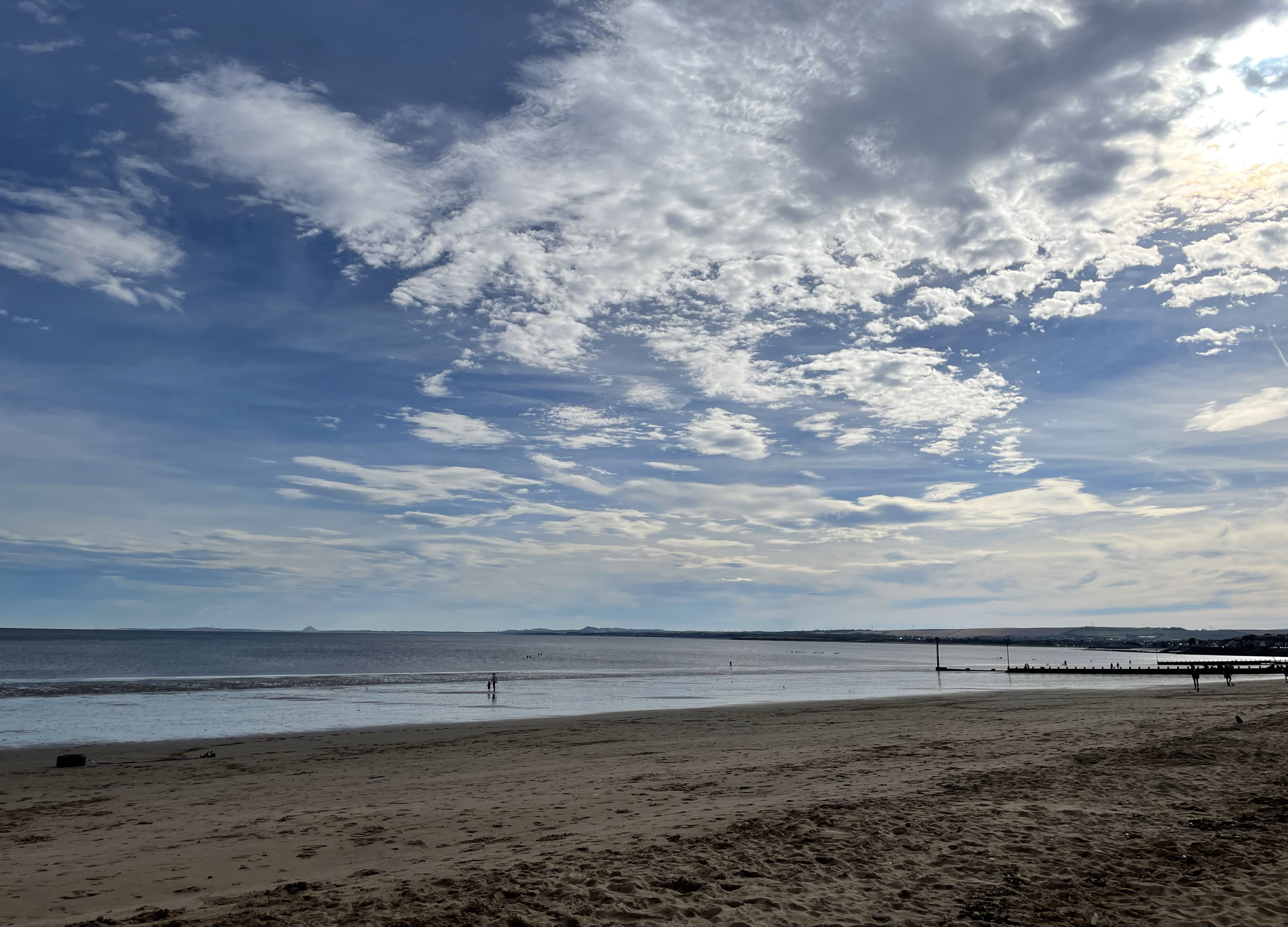
First Grandchild (FG) And Granny On Portobello Beach

Another morning with FG was consumed with a trip on the new tram service to and from Leith.  FG was more concerned with engaging with fellow passengers willing to smile at him than with looking out of the window.  He enjoyed the journey and a big vegan biscuit at Williams and Johnson Coffee Co.  Leith appears to be an increasingly cool place to live and work and the tram extension is surely a catalyst for that.

Leith

Before FG’s parents shot off for their whirlwind jaunt to the wedding, we managed a good dose of art and culture by visiting The Scottish Gallery, a nearby private gallery we have visited several times before, and the National Gallery of Scotland.
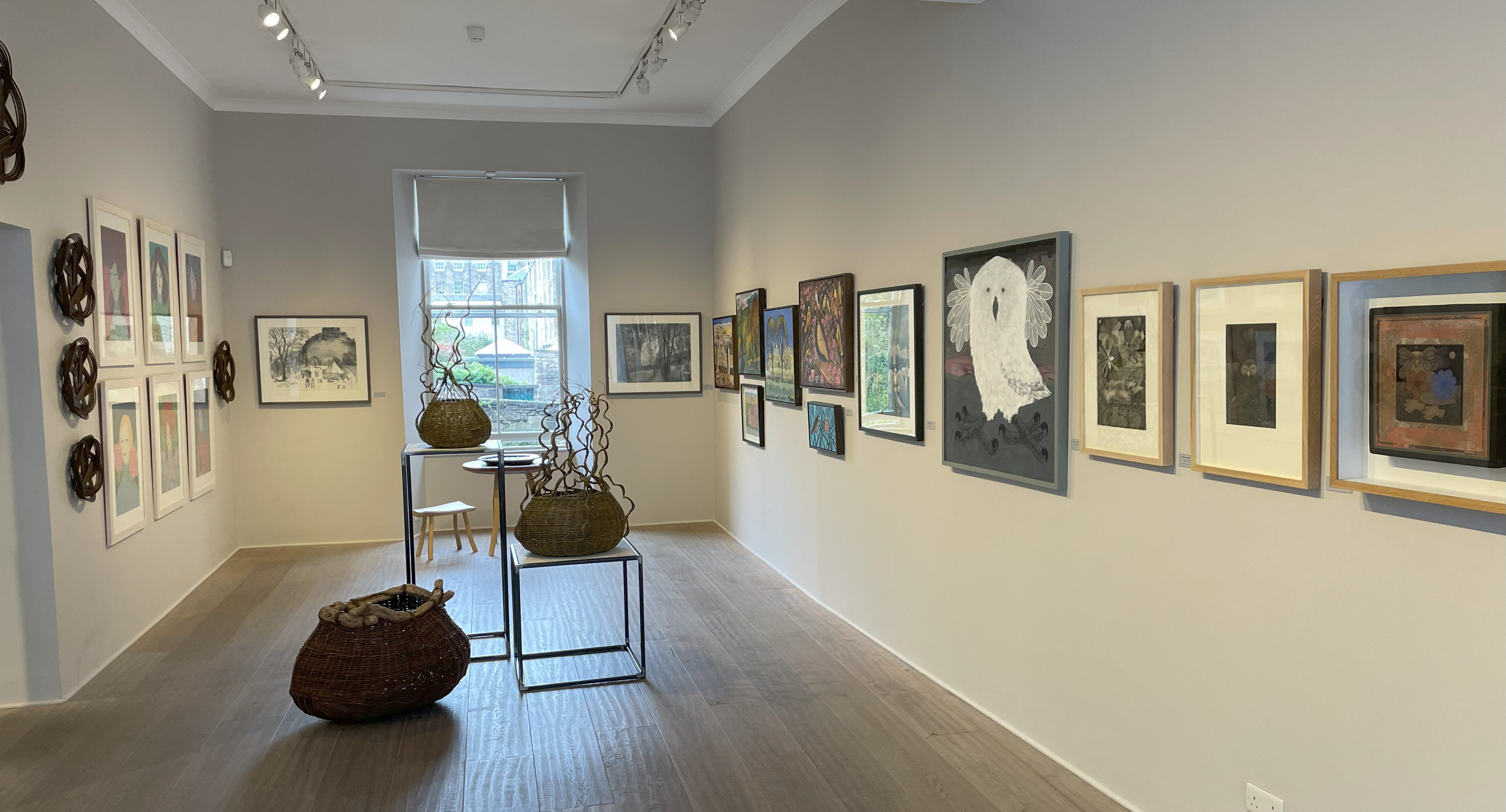
‘Folk At Heart’ At The Scottish Gallery, Edinburgh

The Scottish Gallery was showing a range of artists embracing traditional folk art.  Although the gallery is quite small, there was plenty to admire.  I particularly liked the woven baskets, the muted colours of some of the naïve style paintings and prints and, downstairs, the textiles by Jane Keith which were innovatively displayed given the compact space.
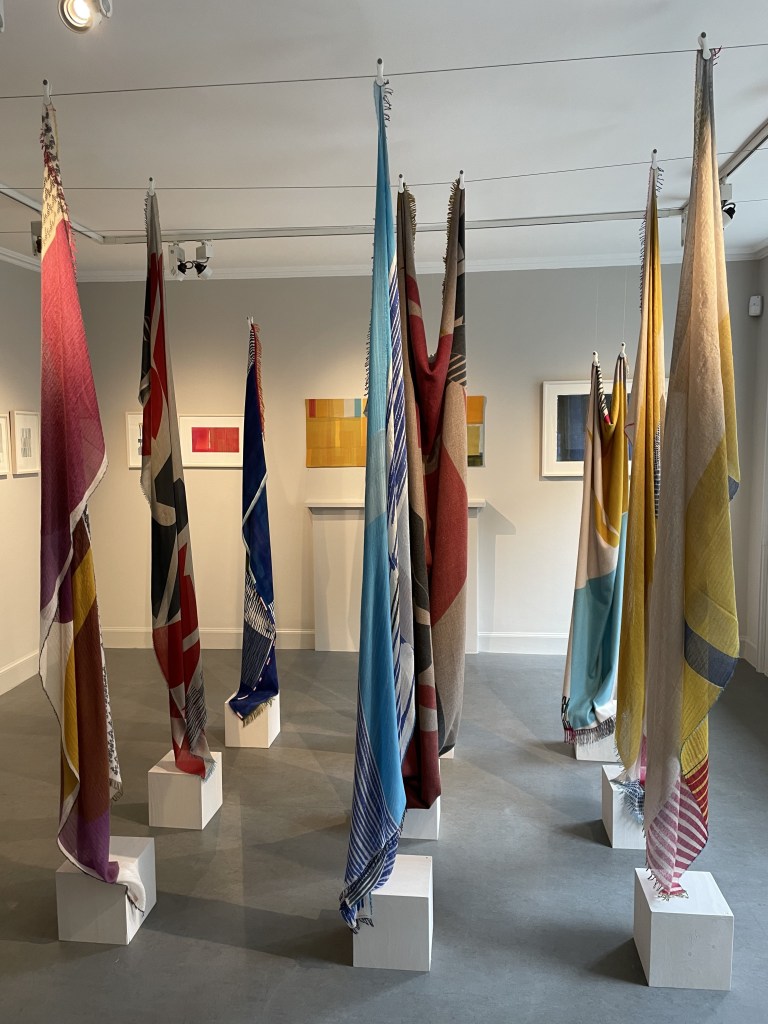
Textiles By Jane Keith At The Scottish Gallery

The headline exhibition at the National Gallery was a substantial retrospective of Grayson Perry’s work.  I’ve enjoyed Grayson Perry exhibitions before – notably the Summer Exhibition at the Royal Academy in 2018 and, more recently, in Bath.  The latter was a small exhibition of his ceramics where Grayson explained the pieces in his own words. 

Grayson provided the captions for each piece at the National Gallery exhibition too and, apart from the art itself, this was one of the most attractive features of the show.  His art is very accessible anyway but his thoughtful captions alongside each piece were unpretentious, clear and highly explanatory of the themes that have dominated his work since he was a very young man and how they have developed in his mind.
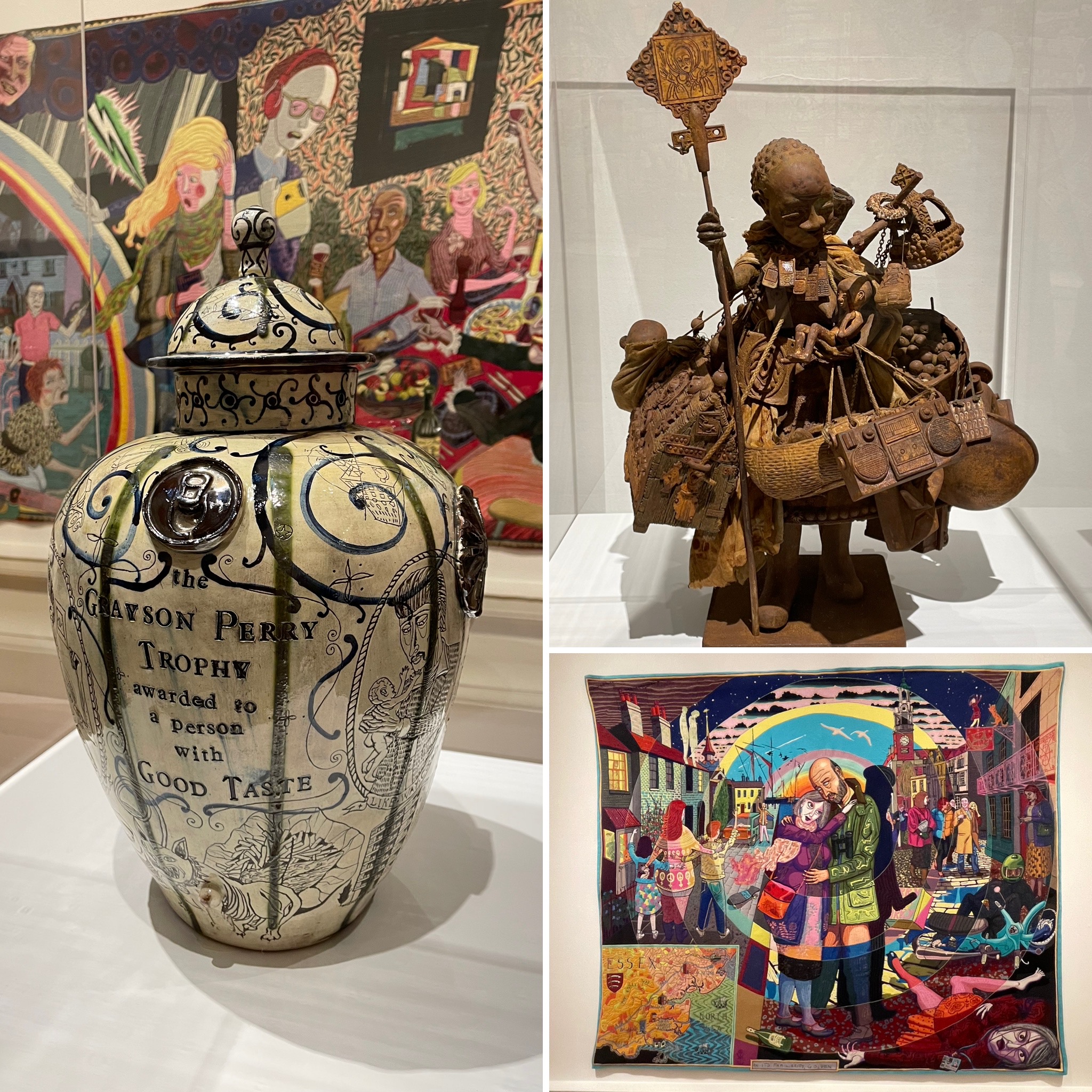
Examples Of Grayson Perry’s Ceramics, Iron And Tapestry Works – With Typical Intense Detail

From the first work – a plate he made in 1983 called ‘Kinky Sex’ – the irreverence of his approach and the courage of his anti-establishmentarianism came through.  But rather than be just a series of bold, even brash statements, the exhibition and particularly Grayson’s own words, drew me into what I see the Guardian newspaper calls ‘a thrumming conversation’. 
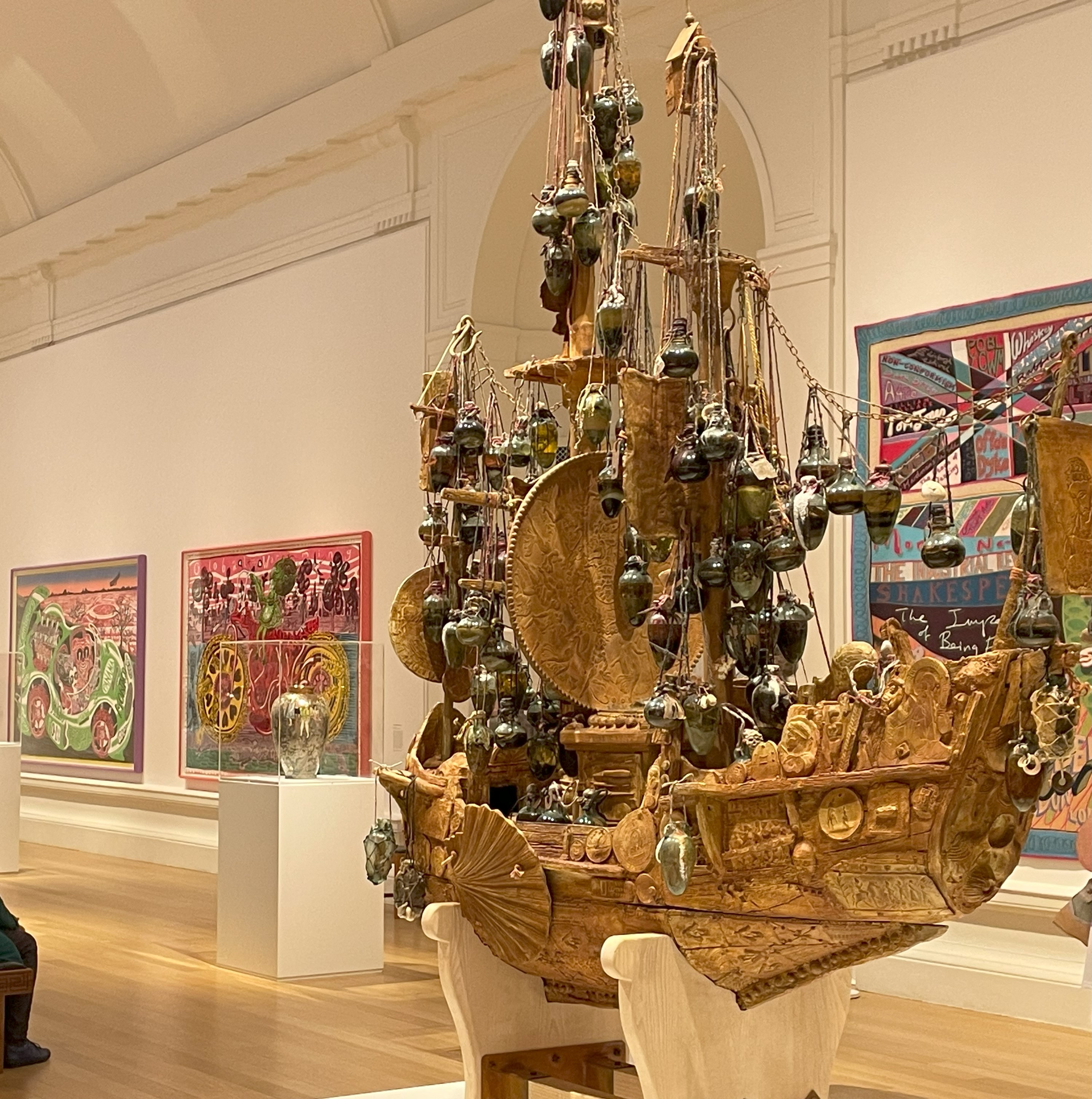
Grayson’s ‘Tomb Of The Unknown Craftsman’ (2011)

Some of the pieces on show were beautiful to my eyes, some were rather ugly, but every one of them had something to say and was engaging in some way.  Rather than say more here, this is a link to a video hosted by Grayson describing much of the show: Grayson Perry’s Smash Hits.  Watch out for references to ‘Alan Measles’ who is Grayson’s (troubled) childhood teddy bear who, entertainingly, crops up in various guises throughout the exhibition.

‘Kenilworth AM1’ (Including Alan Measles’s ‘Stunt Double’ In The Box On The Back)

The only downside to the exhibition was that, somehow, I missed the last room and exited prematurely.  Nonetheless I thought it was brilliant.

As was the whole weekend!  Proper baby-sitting was a resounding success and we look forward to doing it again (we are scheduled for a longer stint in April next year during another Spanish wedding trip). 

Having said that, it was great to get home, slot into routines less driven by a 21-month-old, and have a bit of a rest in what remained of summer in our home and garden. 
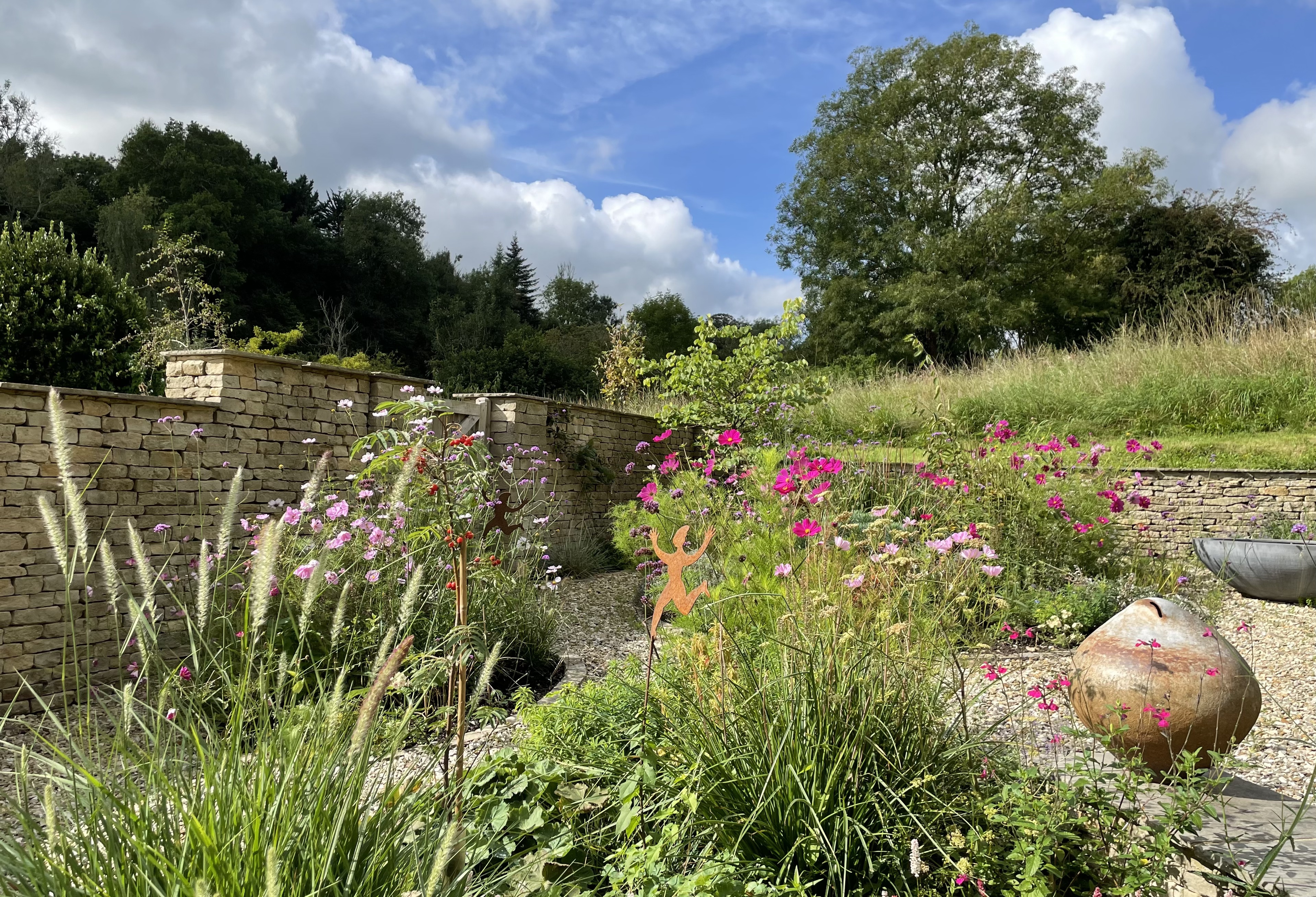
Late Summer In Our Garden

After An Irish Wedding

I got up a little gingerly on the morning after the wedding.  My alcohol unit count and monthly quota had taken something of a battering the day before and my head was a little fuzzy.  It was a blessing then that the relatives of the bride and groom had laid on a lovely lunch with more drinks, at the wedding reception venue at Ballycurry.  I had enough scope in my alcohol unit quota for a ‘hair of the dog’ or two.

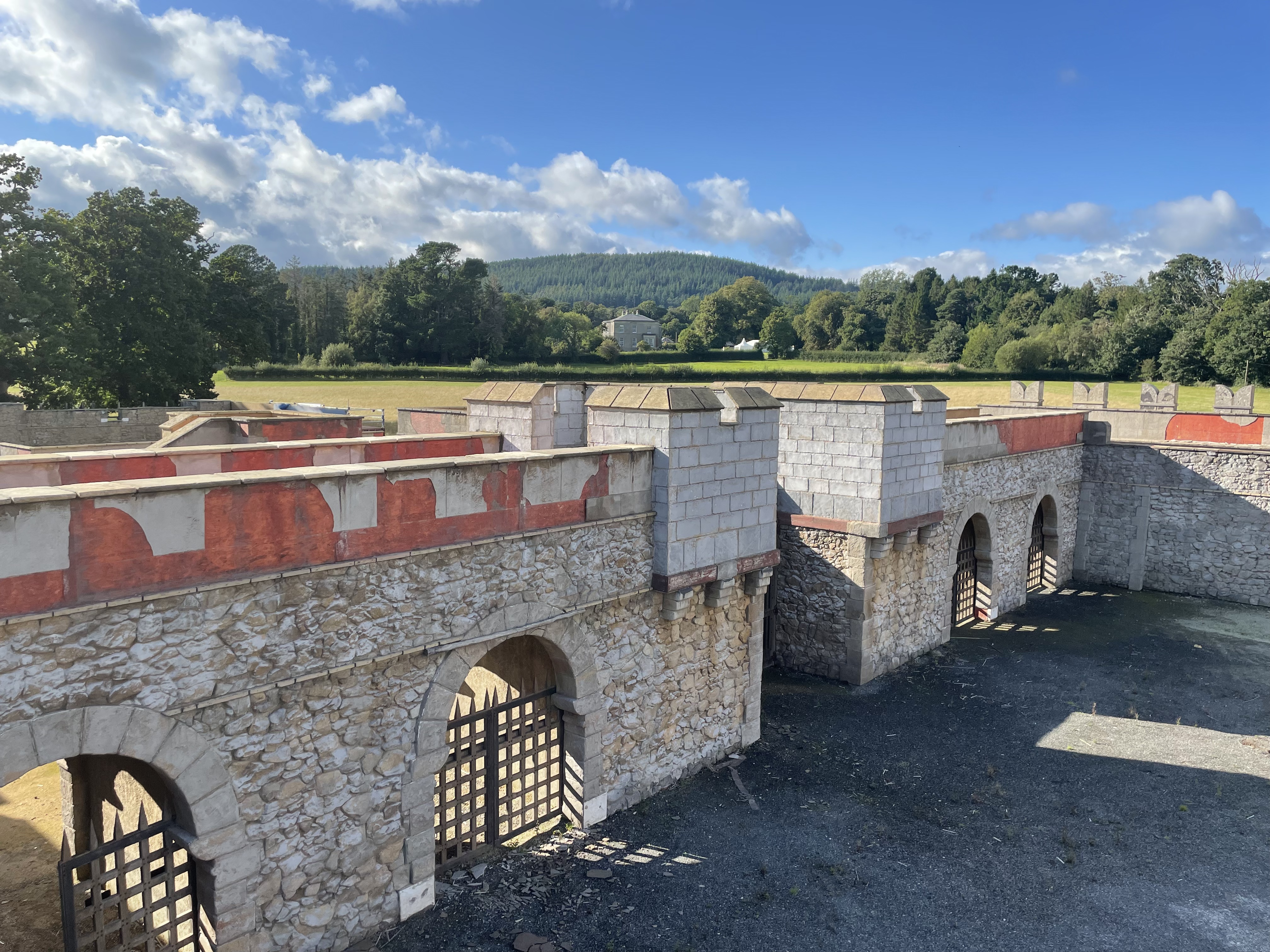
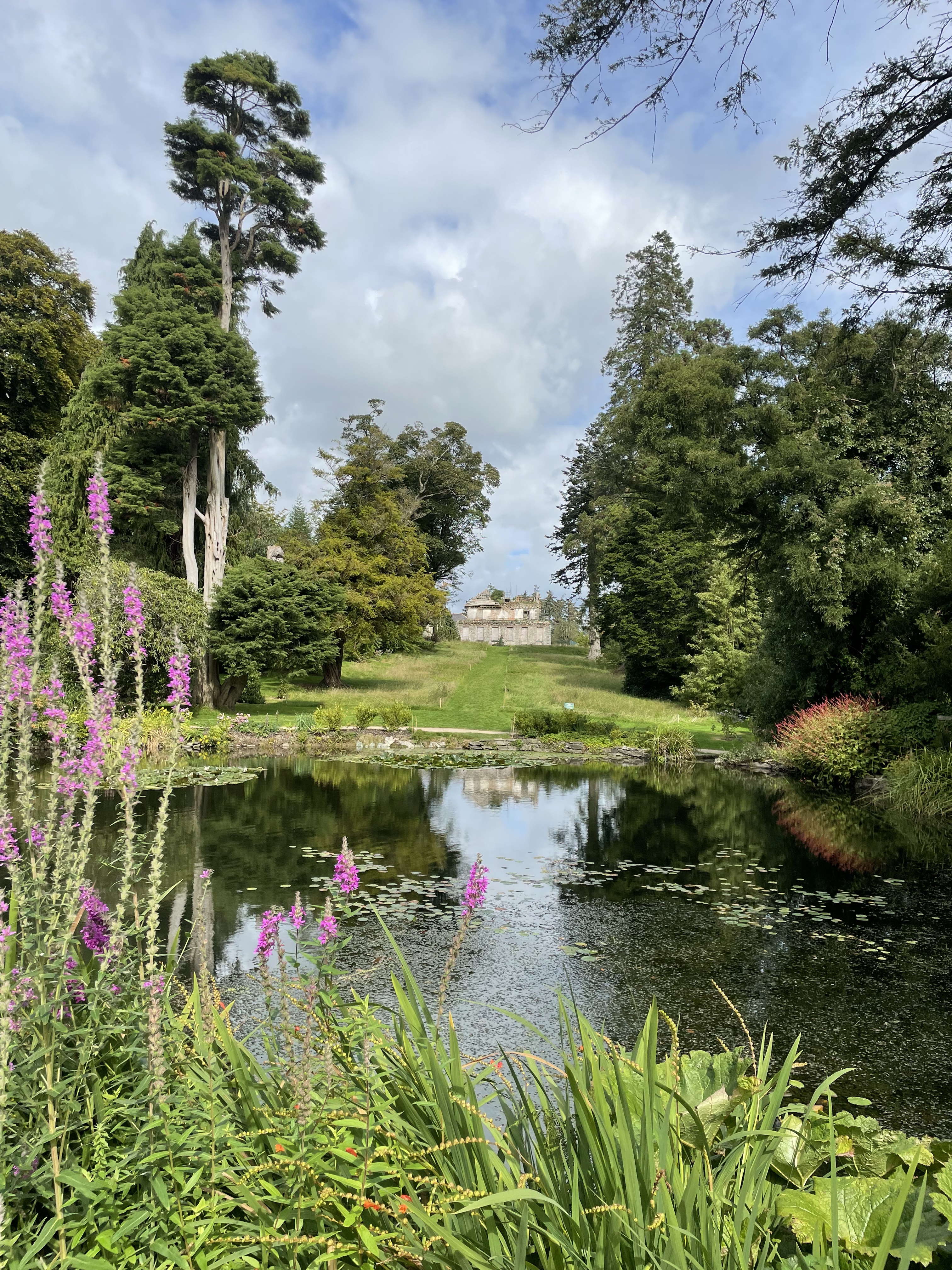
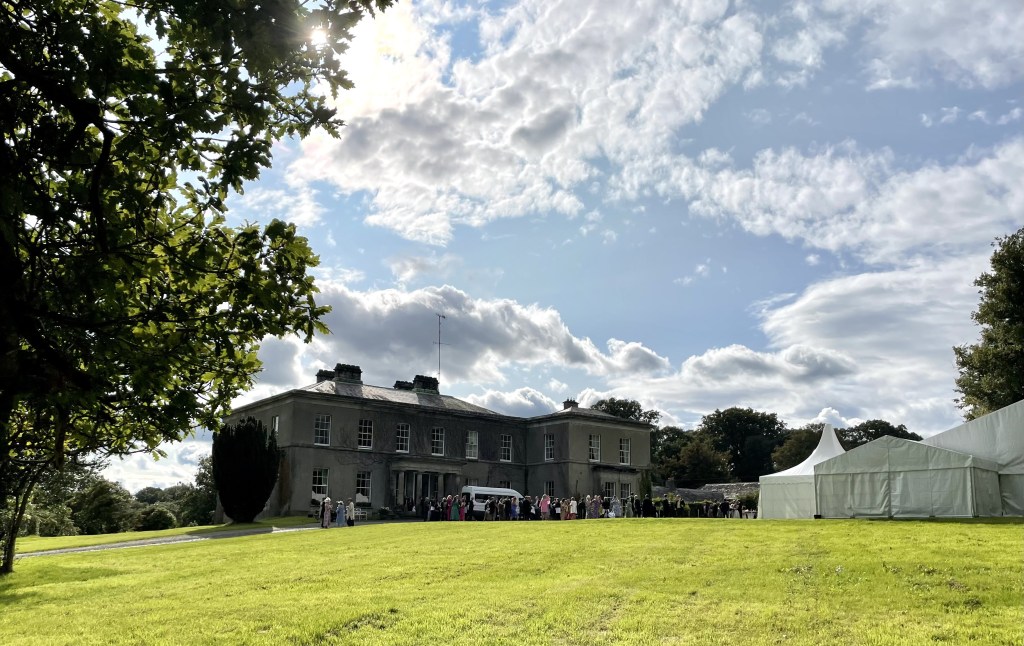
By now, after a damp start, the weather was gorgeous and the manor house and estate looked splendid.  After an excellent buffet lunch, we had the opportunity to see one of the recent ventures the bride’s brother has initiated to diversify revenues into the estate farm.  This was a substantial film set that has been used by the BBC and, latterly, for streamed series such as Vikings and The Last Duel.  The scale of the set was impressive and now the trick will be to find new ways of using it for further dramatic series.

The Film Set With The Estate House Beyond

The next day, our last full day in Ireland, again started with dreary weather.  We considered abandoning ill-formed plans to visit local gardens and to visit Dublin’s galleries and museums instead.  But as we left our Airbnb, blue sky appeared and we headed east over the mountains again to Glendalough.

Glendalough

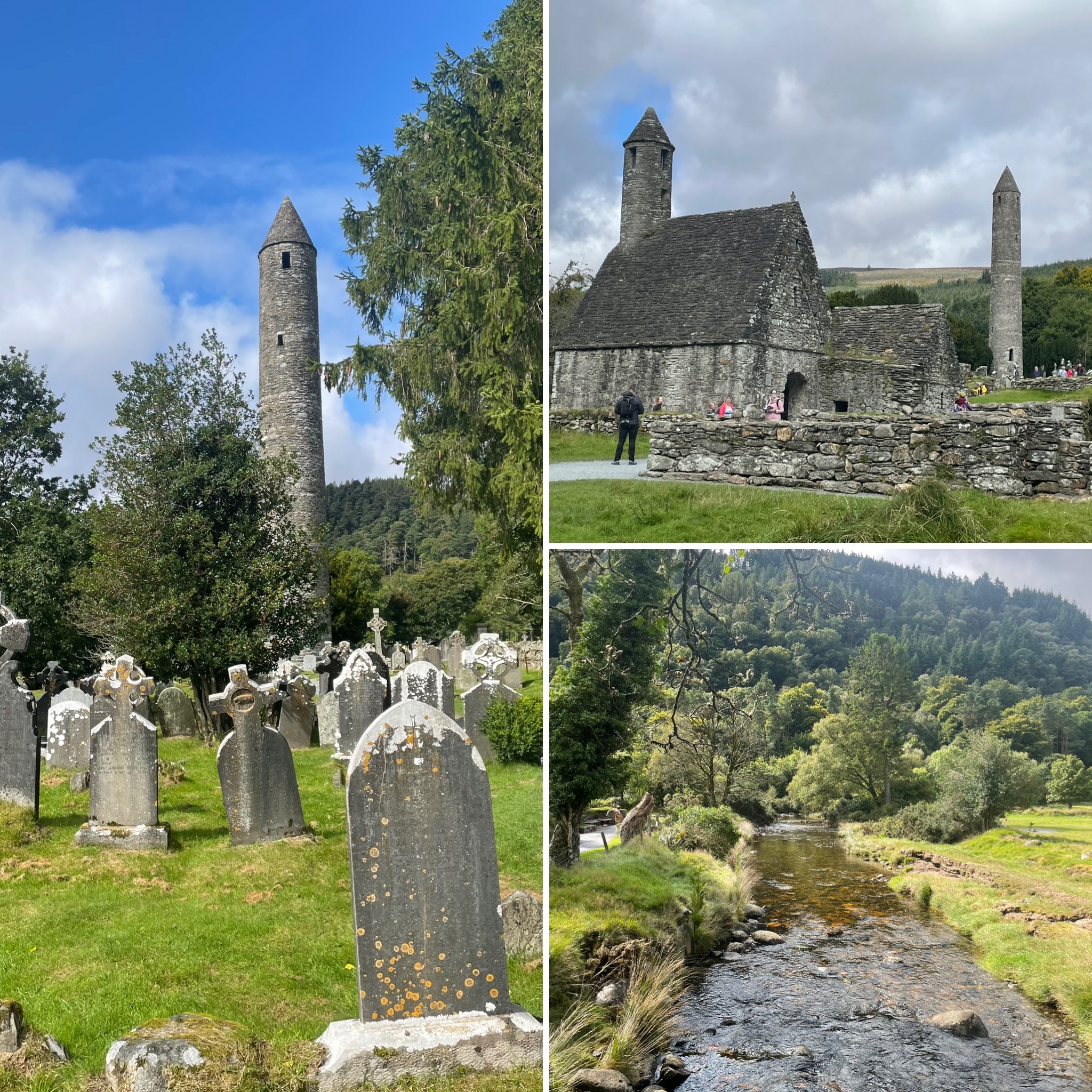
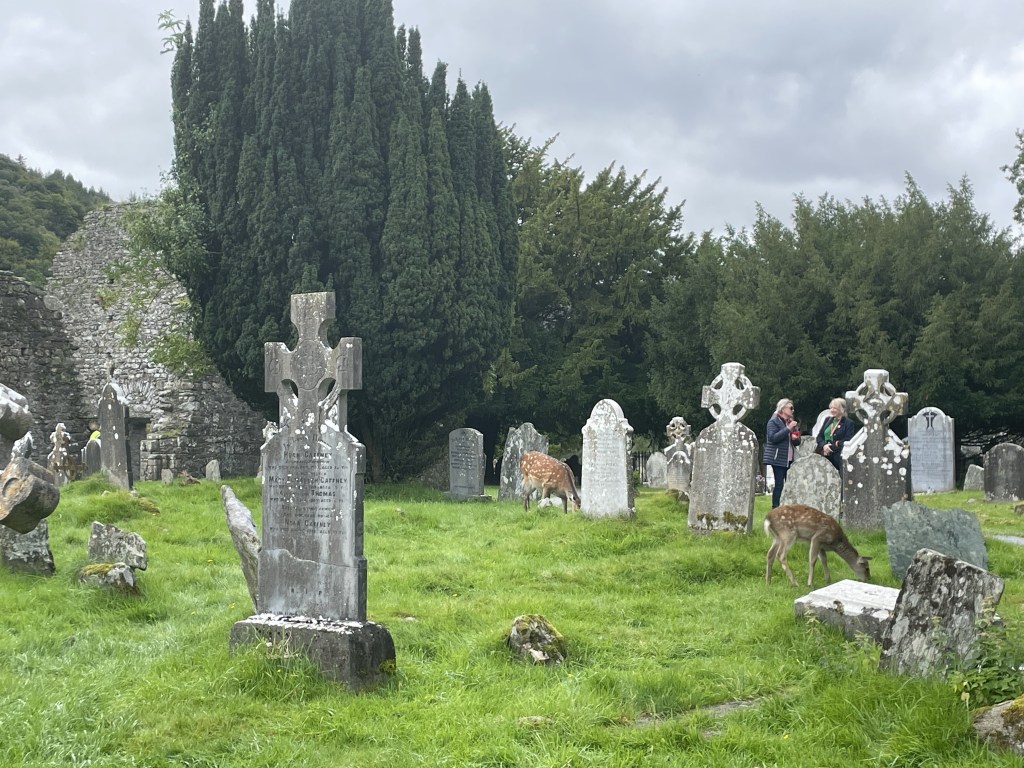
This is an ancient monastic settlement, set in a glacial valley, and now a big draw for tourists.  We arrived just in time to find a parking spot among hundreds of cars and a fleet of large coaches.  The ruins of the towers, monuments and chapels are very picturesque.  The quaintness of the scene was enhanced by the presence of semi-tame deer mooching between the gravestones despite the crowds. 

Deer Amongst The Gravestones At Glendalough

Rather than loiter among the throng of tourists, or embark on the suggested nearby woodland walks, we headed off to lunch at Powerscourt Gardens.

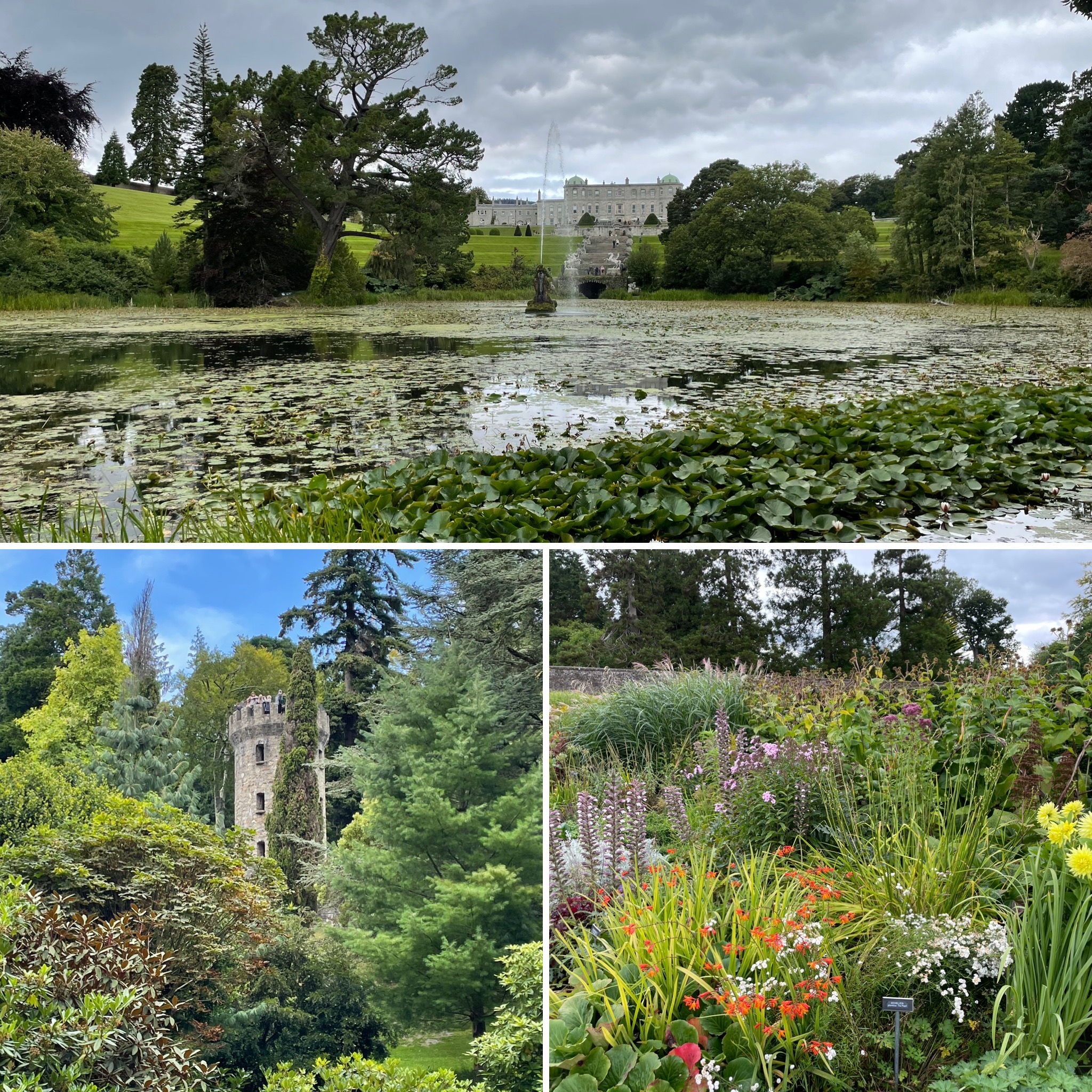
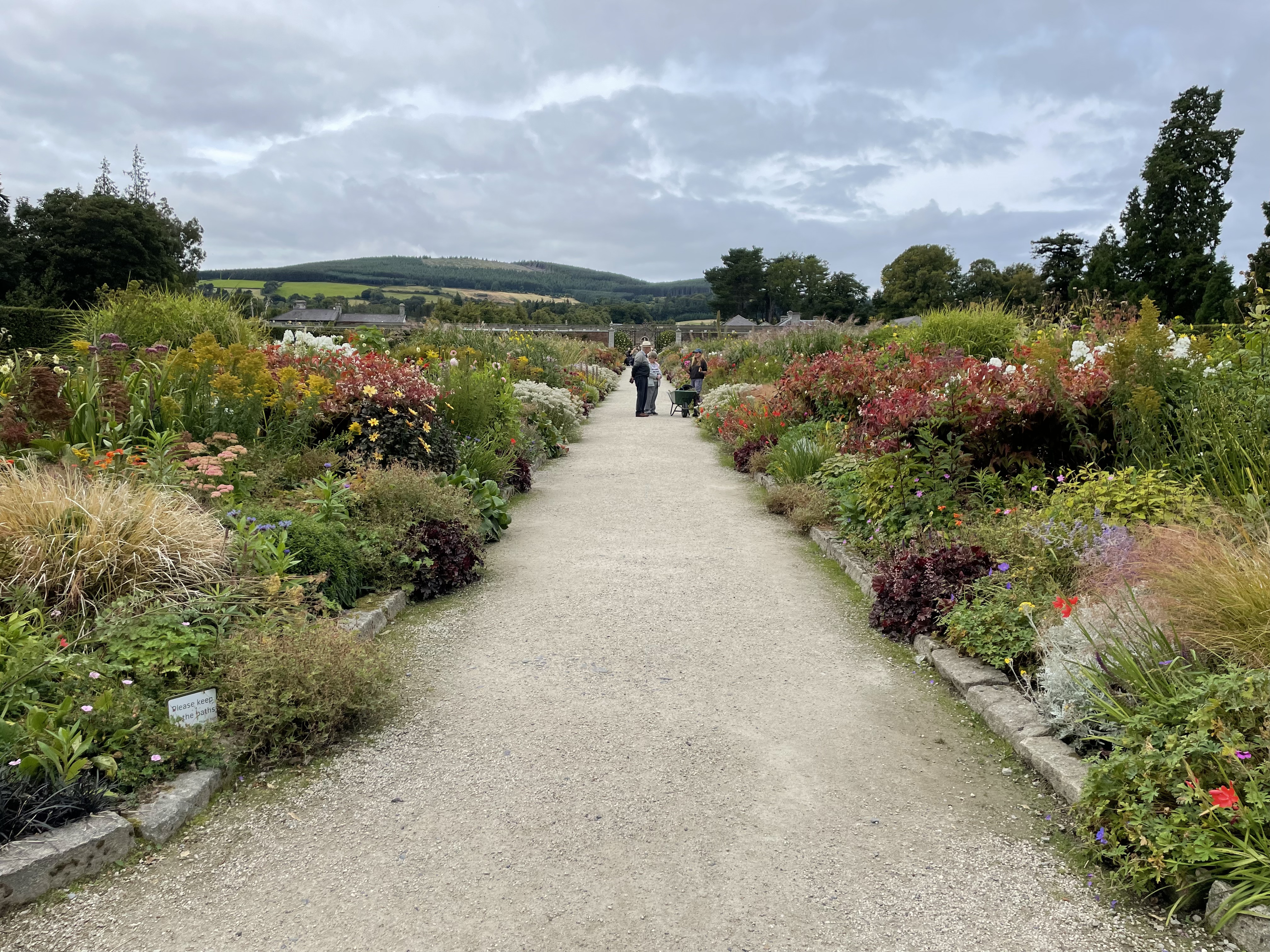
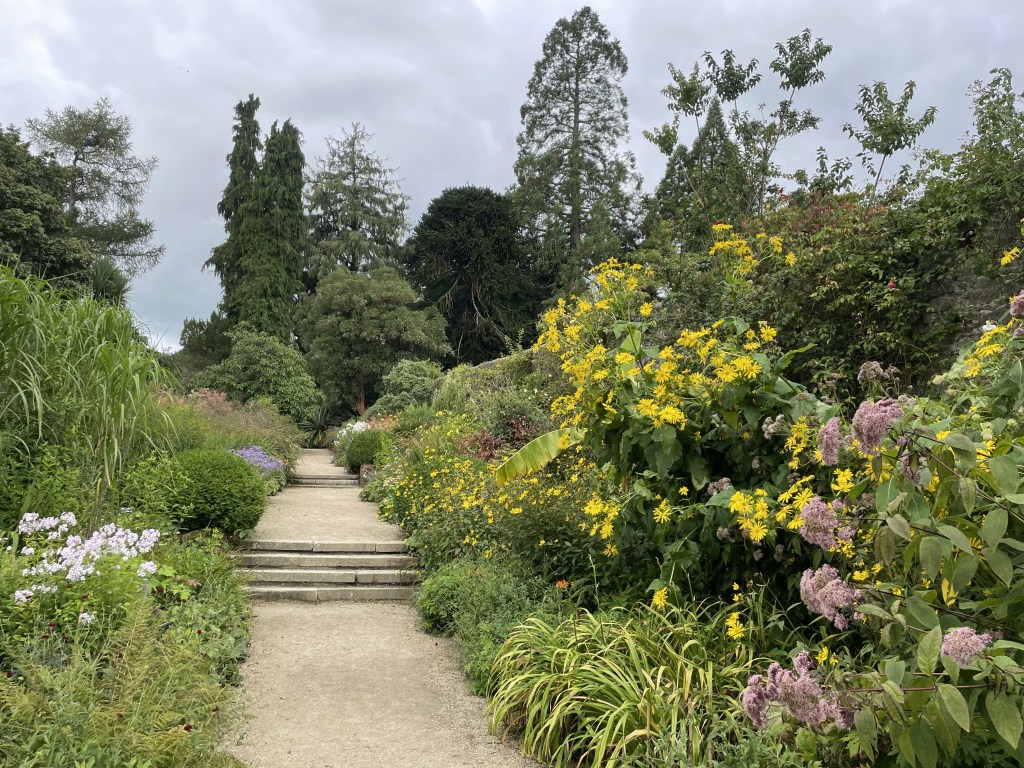
Powerscourt Gardens (Including, Apparently, The Longest Herbaceous Border in Ireland)

The mansion at Powerscourt was destroyed by fire in 1974 and has been restored since as a tourist destination with a few high-quality shops (including a couple of Jane’s favourites) and a restaurant.  We were able to bag a restaurant seat by the window overlooking the 47 acre expanse of formal gardens and arboretum.  The view was great and the food was excellent quality and value. 

Powerscourt Gardens And Great Sugar Loaf Mountain

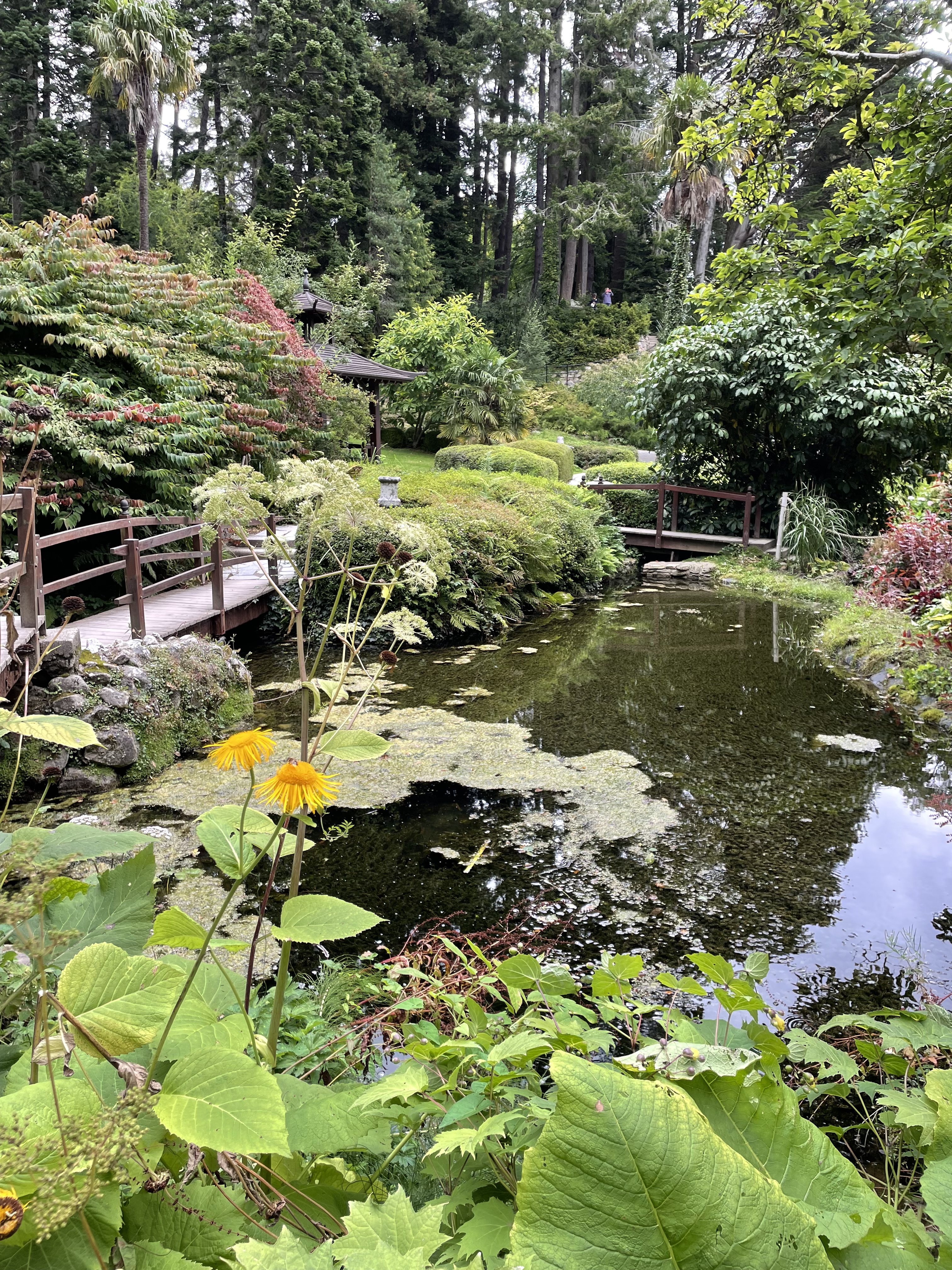
We worked lunch off a bit with an extended walk around the gardens.  These are varied in format and large enough to absorb the large number of visitors, especially as we moved away from the main building.  The sun was creating lovely dappled shade, the borders were full of colour, bees and butterflies, and the views were splendid.  I enjoyed our relaxed time at Powerscourt very much.

The Japanese Garden, Powerscourt

Our penultimate excursion (apart from one final, smooth charging up of the car) was again to the coast.  We visited Bray Head with the intention of walking along the coastal path for a while.  Unfortunately, this was shut due to a recent rockfall so we ventured up towards Bray Head.  This was a steep and stony climb that, until we reached the top, afforded none of the expected views of Bray or the coast to the north. 

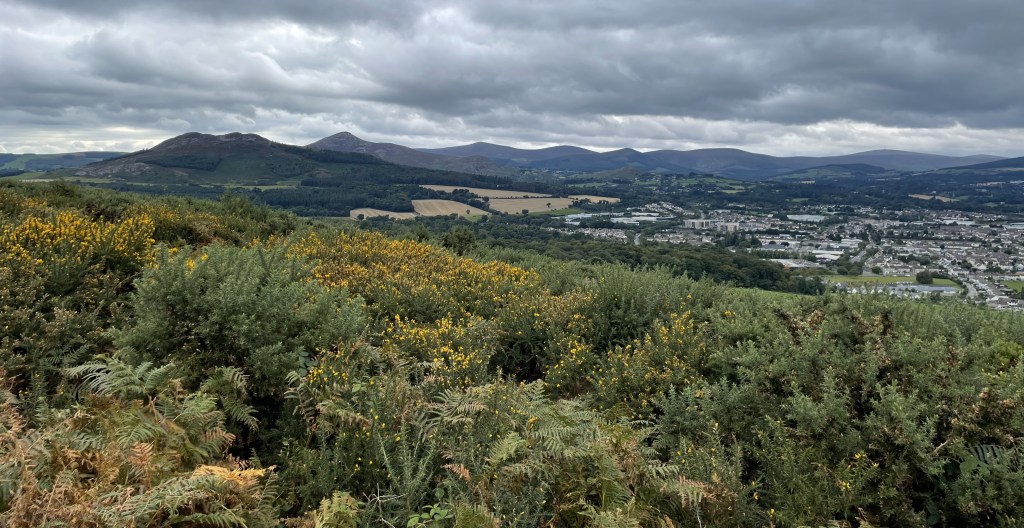
Looking South and North West From Bray Head

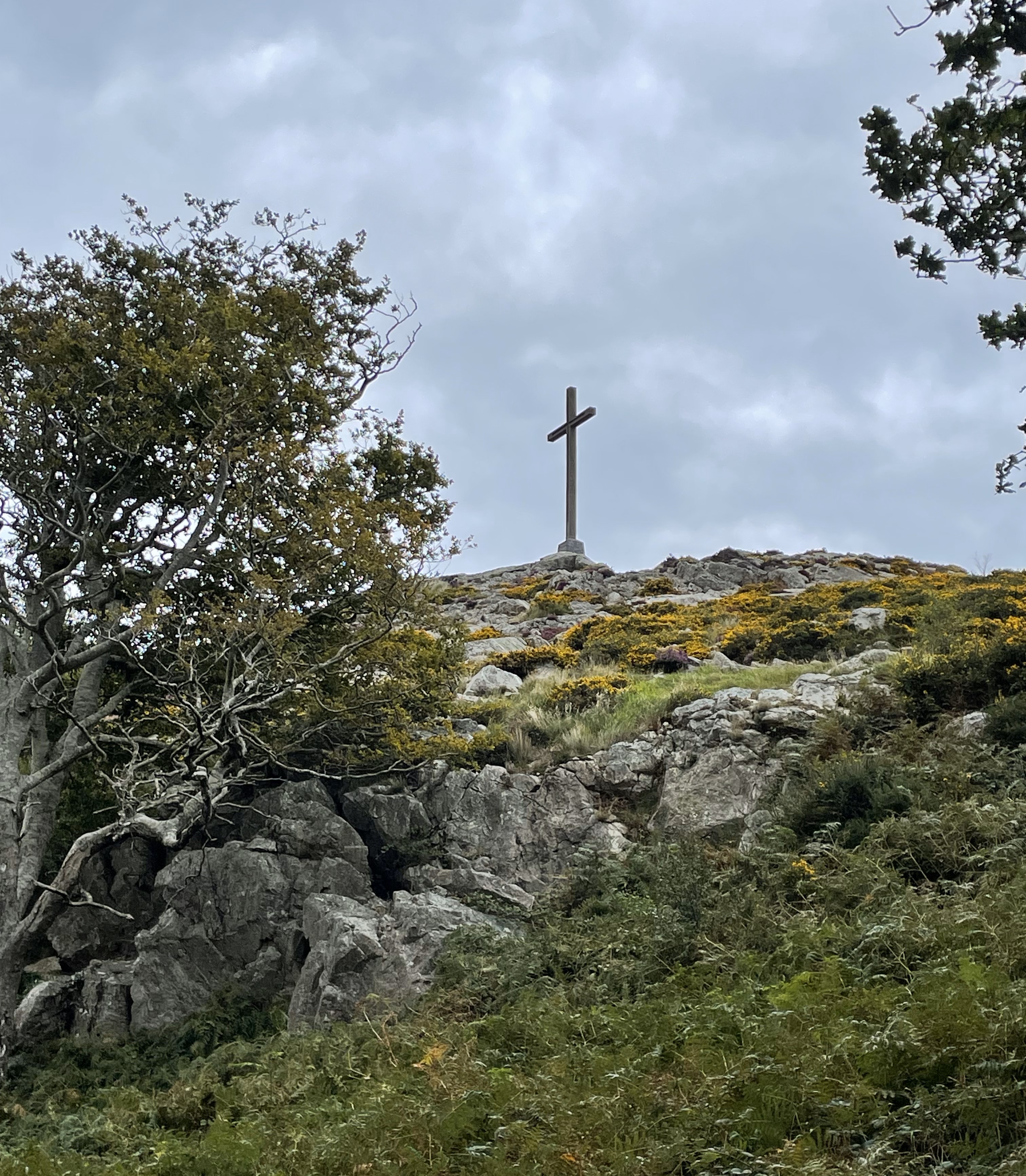
Eventually I made it to the top of the tree line to get some long views up the coast and across to the Wicklow Mountains but I eschewed the final scramble to the imperious, concrete Bray Head Cross which was built in 1950 and from which, I imagine, the vistas are even more spectacular.

Bray Head Cross – It’s Bigger Than It Looks Here

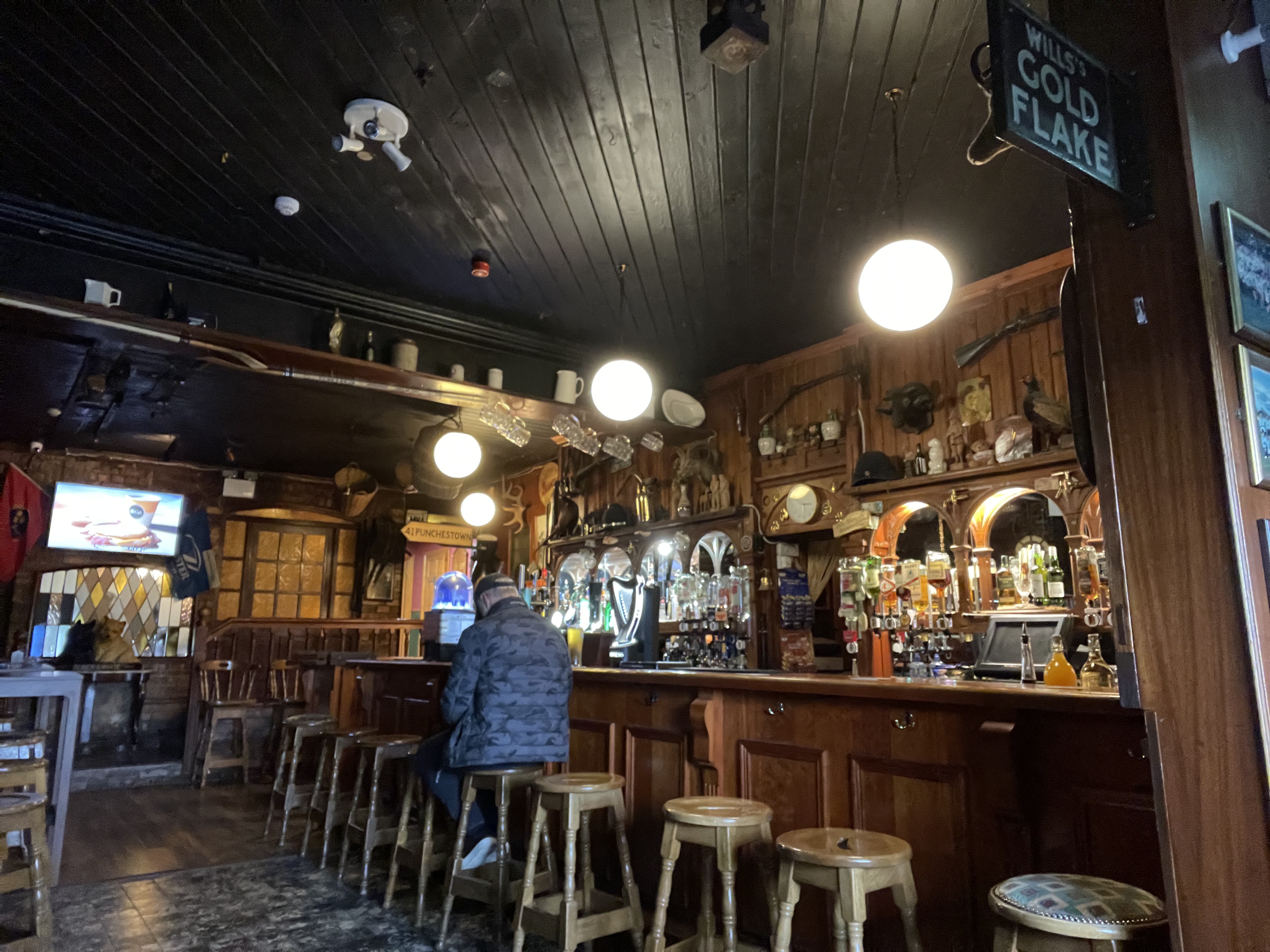
Jane had one more thing on her bucket list for the trip before we left for Roslare and the ferry uncomfortably early the following morning.  That was to visit a traditional, rural Irish pub.  We popped into the one nearest to our Airbnb, Brennans in Kilteel, which was just inside Kildare rather than Wicklow. 

An Authentic But Rather Empty ‘Brennans’, Kilteel, At 6pm On A Monday Evening

As was befitting, I had a pint of Guinness (which took me fractionally over my 100 alcohol unit quota for the month but which was very nice and creamy).  In a nod to our normal UK-routine we completed the Guardian newspaper Quick Crossword over our drinks.  Then we headed back to our Airbnb to finish the Netflix Scandi-noir crime series we had started earlier in our trip, polished off the remaining chocolate and crisps, and had an early night.  It was a pleasantly chilled evening to complete our busy day and our brief stay in Ireland!

Before An Irish Wedding

At the end of August, Jane and I travelled by road and ferry to County Wicklow in Ireland to attend, and help celebrate, the wedding of a granddaughter of Jane’s aunt.  This was a great opportunity to see a part of Ireland and a useful test of driving (and, critically, charging up) our electric car in a foreign country.  We had decided to tack a free day on either side of the two days of the wedding events so we could get a feel for County Wicklow and space out the two 12-hour journeys to and from Ireland.

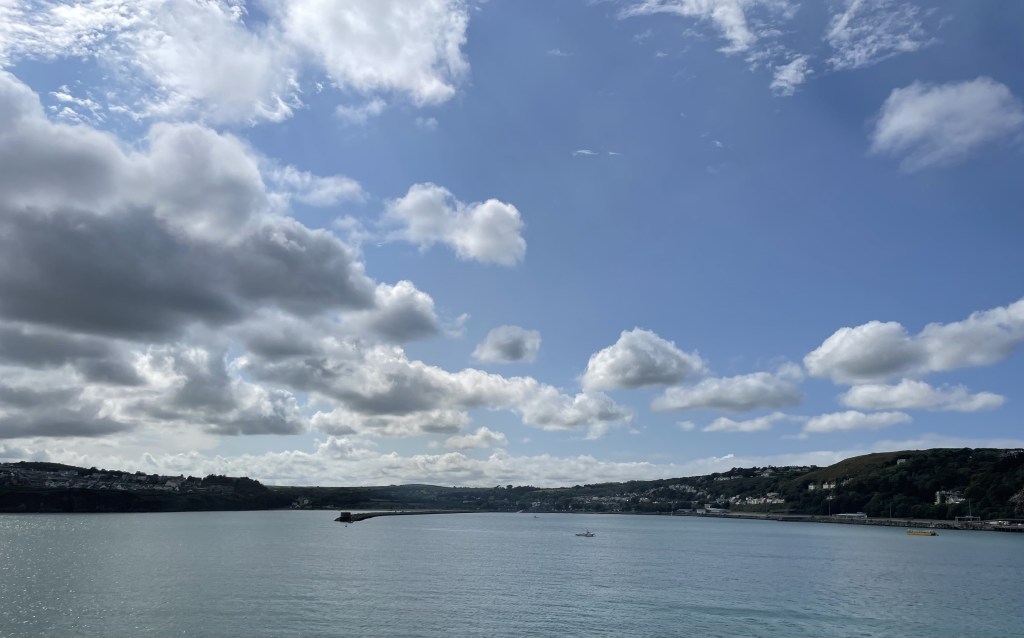
Leaving Fishguard, Approaching Roslare. The Ferry Trip Reminded Me Of My Childhood Trips To The Isle of Wight

The only time I had been to the Republic of Ireland before was for a short conference in Dublin.  I only really remember that trip for it being the only time in my working career that I was ever late for the start of a conference due to drink-induced oversleeping (I had previously prided myself on turning up no matter what).  During this latest visit, the drinking was much more moderate, the wedding celebrations were lovely and we had a very good time.

We stayed in an Airbnb on the west side of the Wicklow Mountains – the opposite side from the location of the wedding.  That meant more driving for Jane (since she didn’t really trust me in the narrow lanes) but it enabled us to see much more of County Wicklow and the eastern edge of County Kildare.  Having our own car allowed a comfortable familiarity and charging it up was relatively easy, although more expensive than in the UK. 

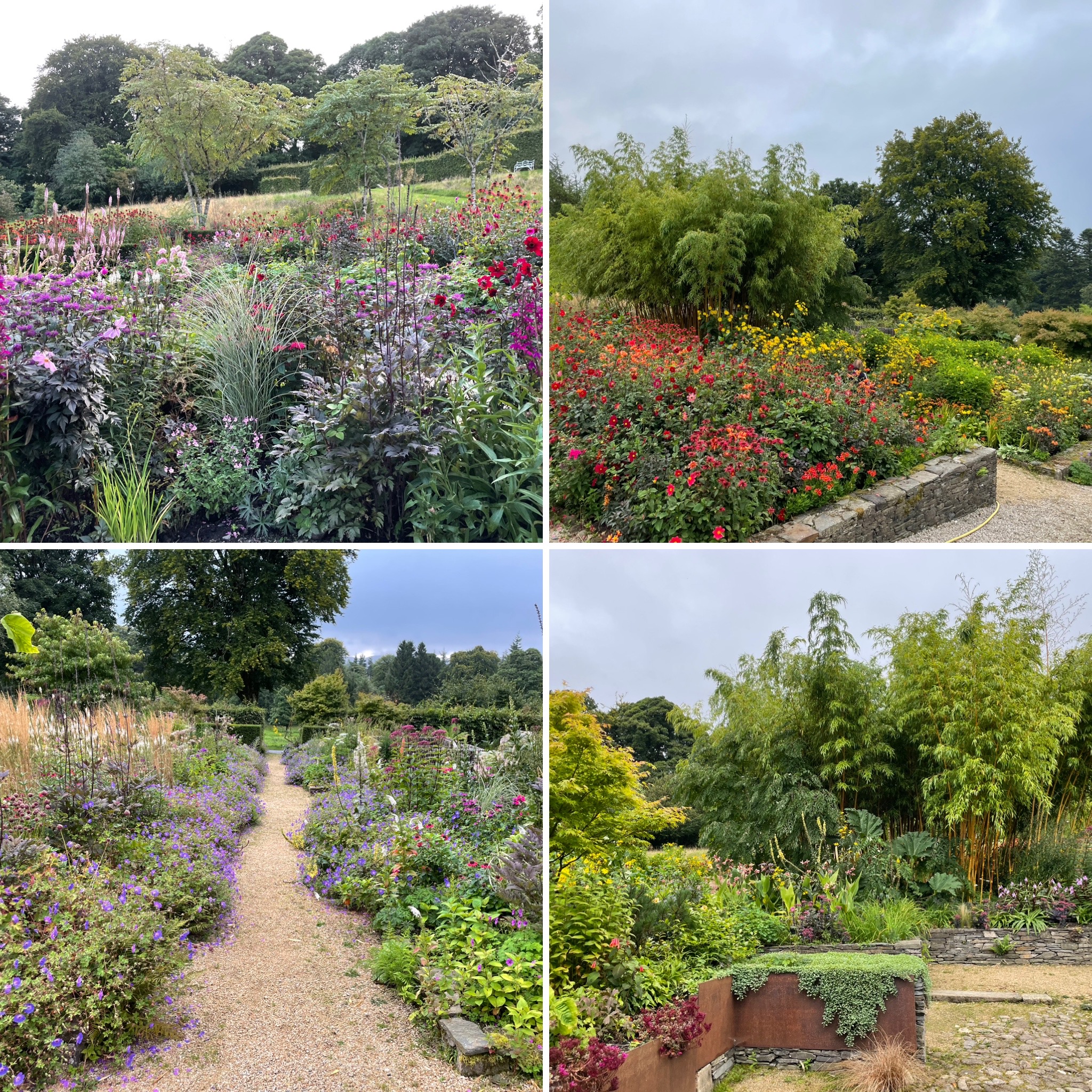
Our Airbnb was in a renovated and repurposed farm outbuilding amid a lovely garden that is periodically open to the public – June Blake’s Garden.  At the time of our visit the flower beds were packed with colour.  The dahlias (I have come to love this species of plant) were particularly gorgeous.  It was lovely to stroll through the garden and among the restored farm buildings whenever we went out to the car or just to put the recycling out. 
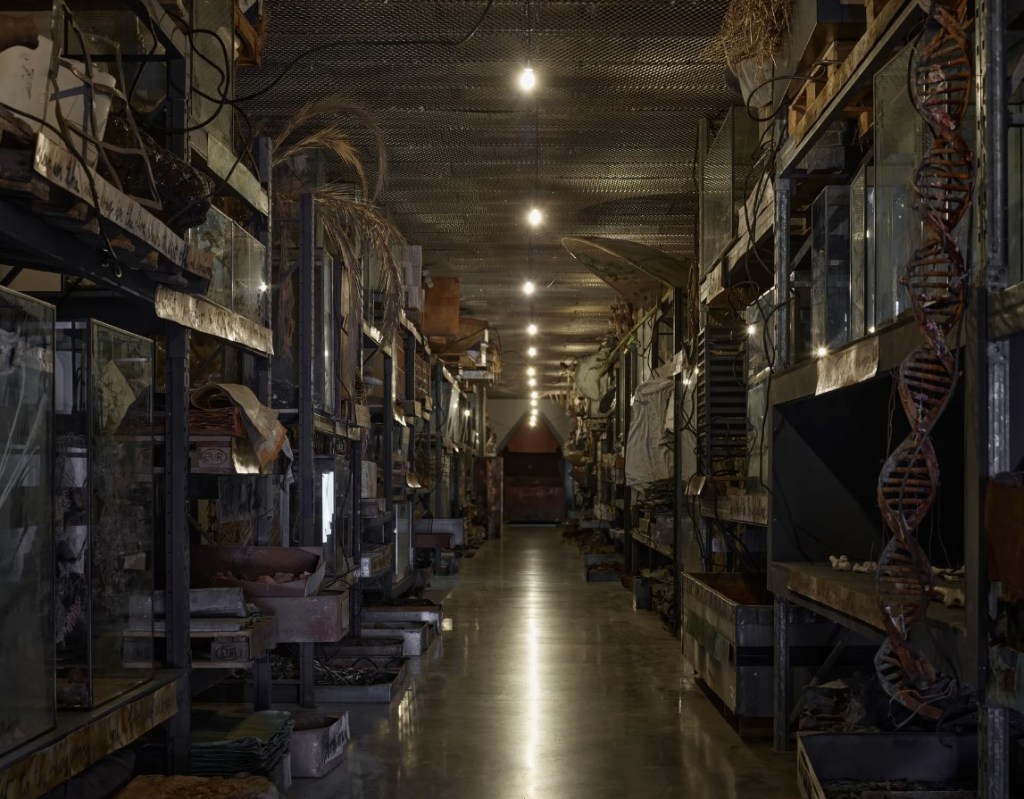
June Blake’s Garden, Blessington, Wicklow

Armed with information from the Airbnb host, the bride to be and a travel blog I follow by someone living in Ireland (Marie at HopsSkipsandJumps), we ad-libbed our itinerary and set off on our first free morning to the National Botanic Gardens at Kilmacurragh.  The meadows, trees and one long flower bed that was full of interesting plants and masses of bees and butterflies, were lovely and the weather was kind.

National Botanic Gardens, Kilmacurragh

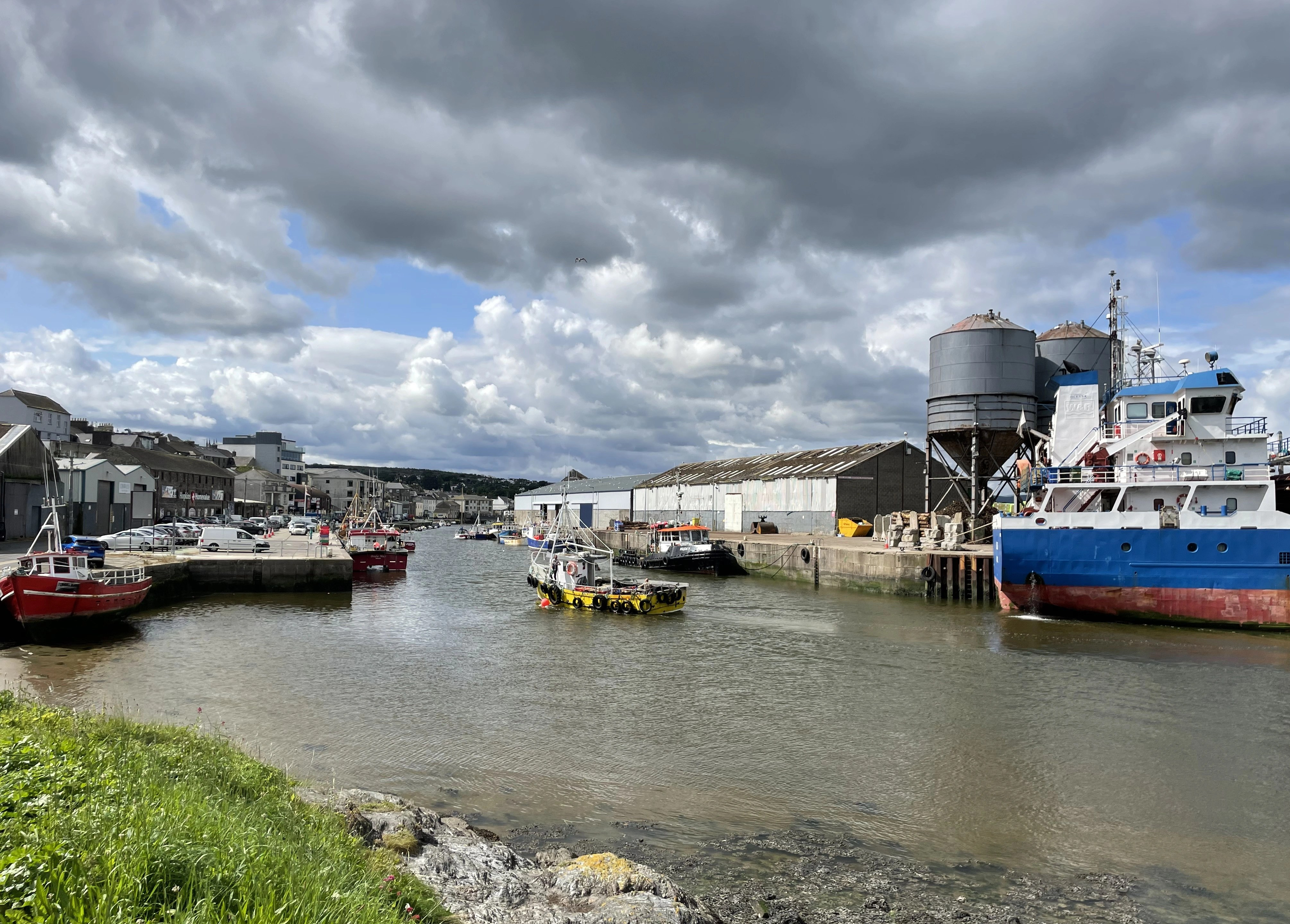
We then headed to the town of Wicklow for a perusal of the county town and lunch.  Already we were finding the Irish people very friendly and, as we sat on the quayside with our fish and chips, a quip from a passer-by, “ahh, fine dining!”, made us giggle. 

Wicklow Town Docks – Perfect Spot For Fish And Chips!

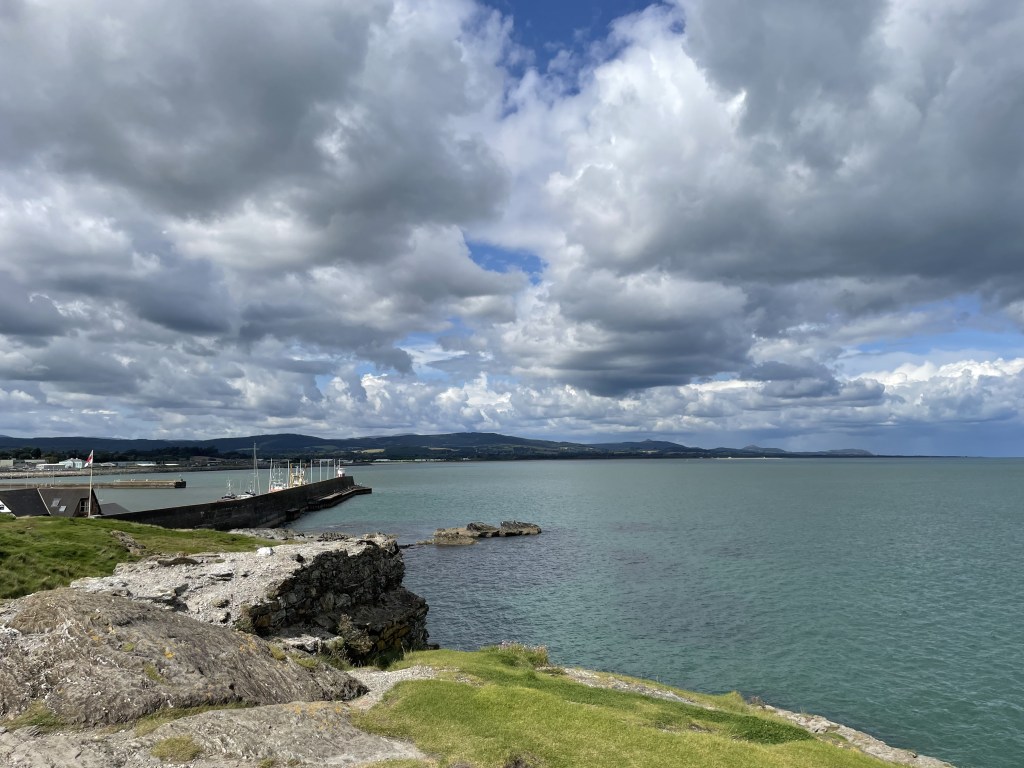
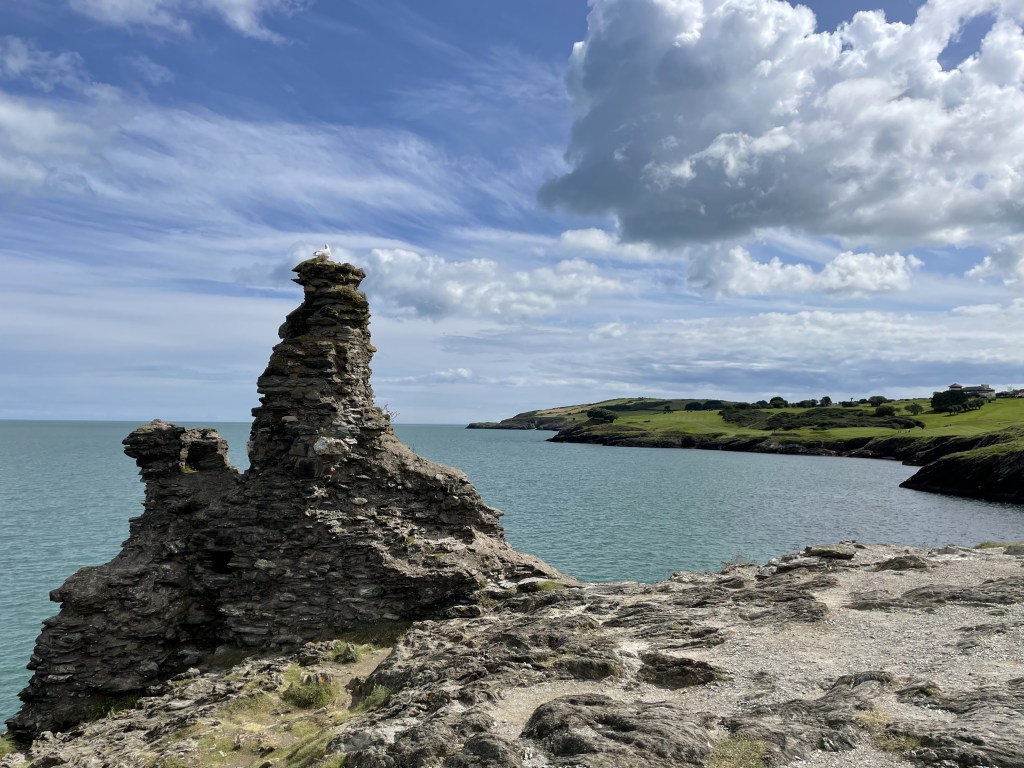
We took a look at the remains of a Norman castle, (The Black Castle) on a promontory overlooking the town.  We loved the views along the coast in gorgeous sunshine.

Views From The Black Castle, Wicklow Town

Jane wanted to visit the hand weaving mill and shop at the ancient and pretty rural settlement of Avoca.  Having negotiated our way down some very narrow roads to Avoca and wandered around the shop, we returned to the coast for a wander along one of the long and surprisingly empty beaches on the Wicklow coast.  

Avoca Handweaving Mill And Shop
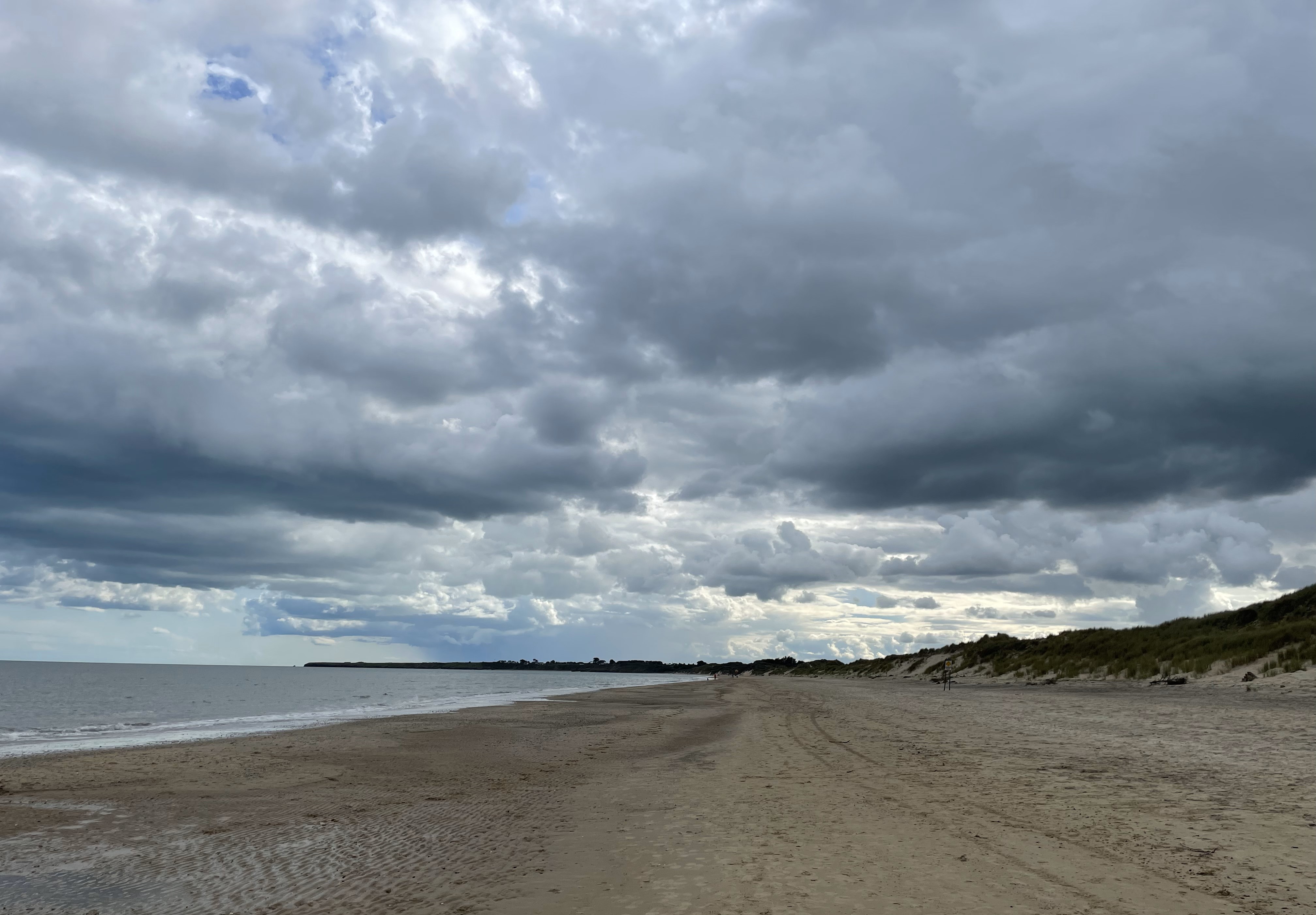
The Long Beach At Brittas Bay

We then headed home equipped with bits of fruit, nuts, chocolate and crisps for an evening in front of Netflix.  To be honest we didn’t eat very healthily until we got to the wedding reception but we did enjoy The Lørenskog Disappearance, which is yet another European crime thriller in which we seem to specialise.

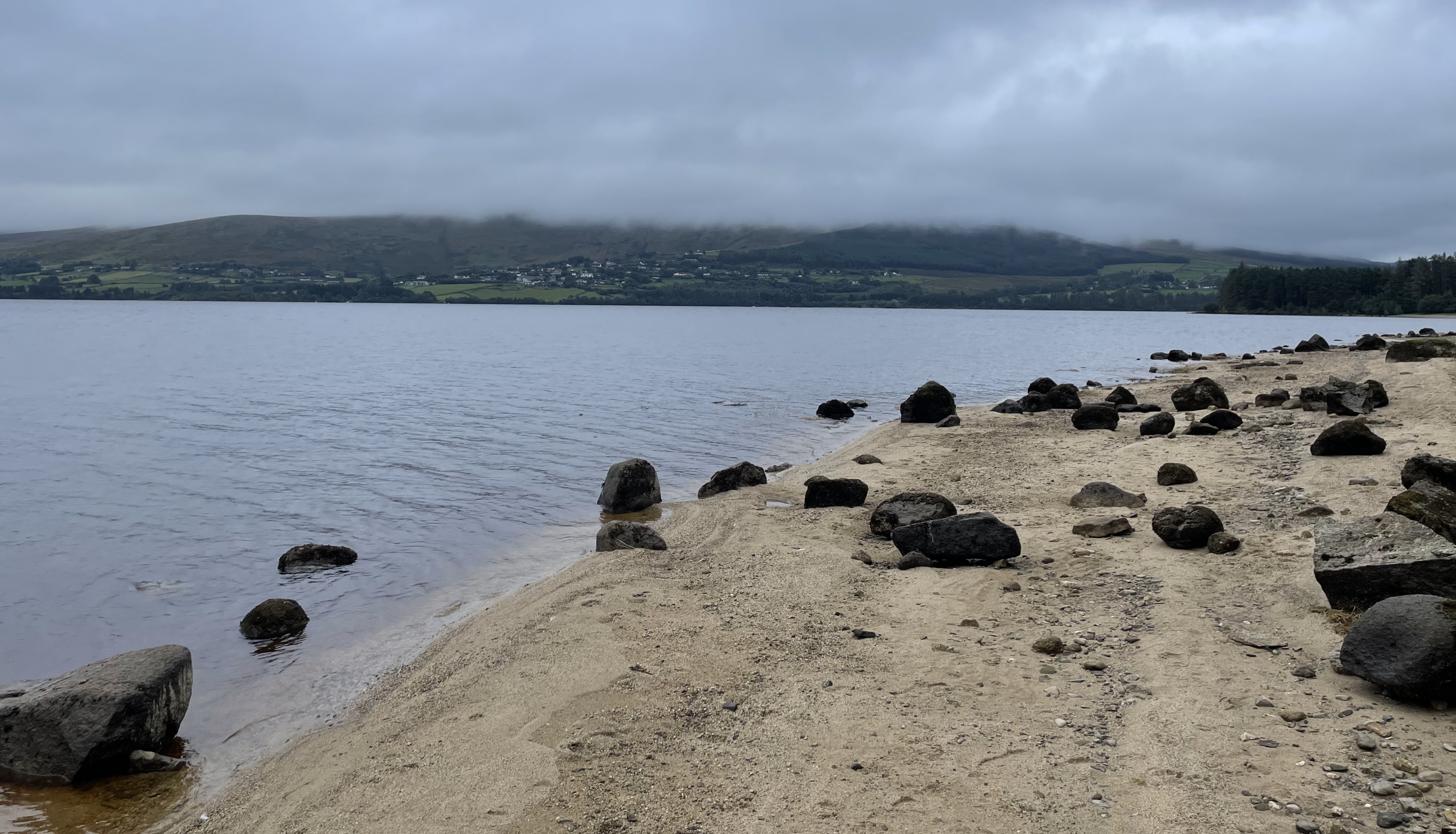
Next morning was rather grey and drizzly.  We ventured a quick walk and a breath of fresh but damp air around a section of the nearby Blessington Lakes. These were formed over 50 years ago when the Poulaphoca Dam was built. 

Blessington Lakes And Low Cloud Over The Wicklow Mountains

Fearing rain, we headed back to the Airbnb to change into our glad rags.  In my case that involved squeezing rather inelegantly into a morning suit that I hadn’t worn for decades and that I first wore at my own wedding over 38 years ago.  It was a little tight to say the least!

Then we were off to the wedding ceremony.  The wedding service, in Nun’s Cross Church, Killiskey, was lovely and cheering.  The weather perked up for the photos on the way out and we made our way to the wedding reception.

Ballycurry

This was in a giant marquee directly in front of an impressive country house owned by the bride’s family.  The estate is managed by her aunt and uncle and, latterly, her brother.  The setting and arrangements for the reception were both marvellous.  The marquee was laid out for around 170 guests and we all enjoyed an evening of plentiful drinks, lovely food (especially the local lamb), dancing, mingling and celebrating. 

It was a late night by the time we got back to the Airbnb, but it had been a thoroughly memorable day.

Fragmented Summer

June this year was wonderfully sunny.  The vegetables would have appreciated a little more rain but July certainly made up for that.  Indeed, July and, so far, August have often felt autumnal and summer has only come in fits and starts.  The sunny periods may have been intermittent but maybe that has helped us to appreciate the sun more on the occasions when it has shone on the unusually verdant countryside.

Intermittent Bright Summer Sunshine On My Daily Walks Into Town

Our summer has sometimes felt as fragmented as the weather.  The lack of any ties to school holidays and, much more recently, my retirement has meant that we don’t tend to book blocks of holiday through the summer months.  As a result, we don’t have centrepiece diary commitments to schedule around.  Instead, we have moved towards multiple shorter trips including those to our sons in Belfast and Edinburgh, plus a couple of day visits to Nottingham to check on my Dad during a period of ill-health. 

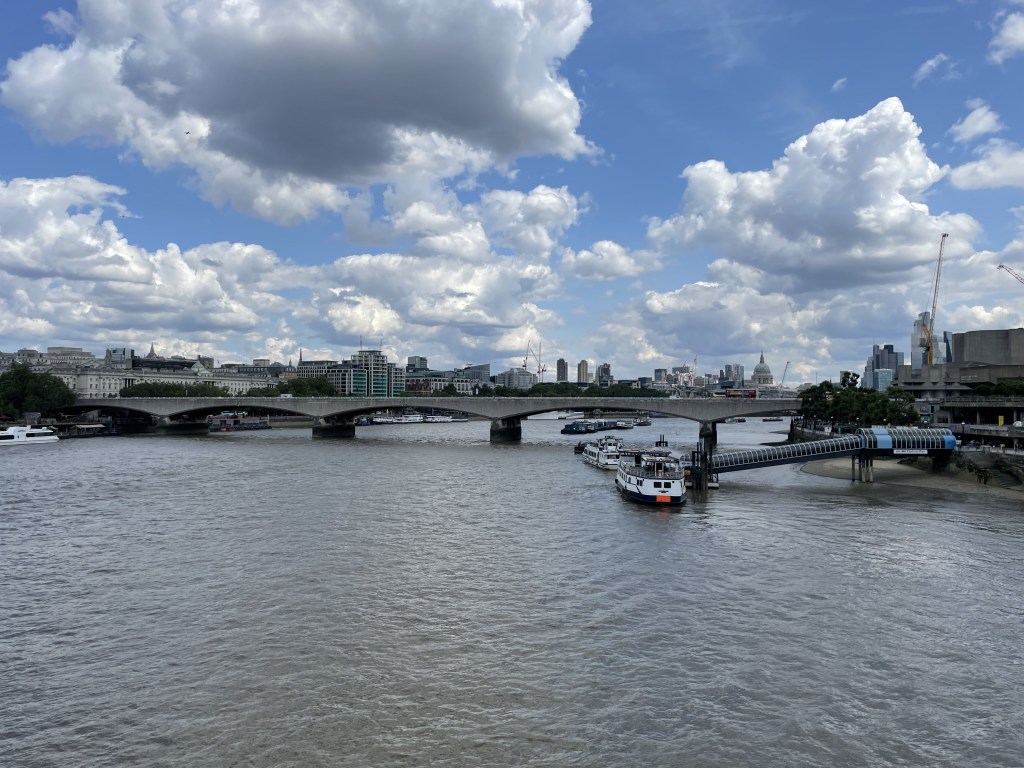
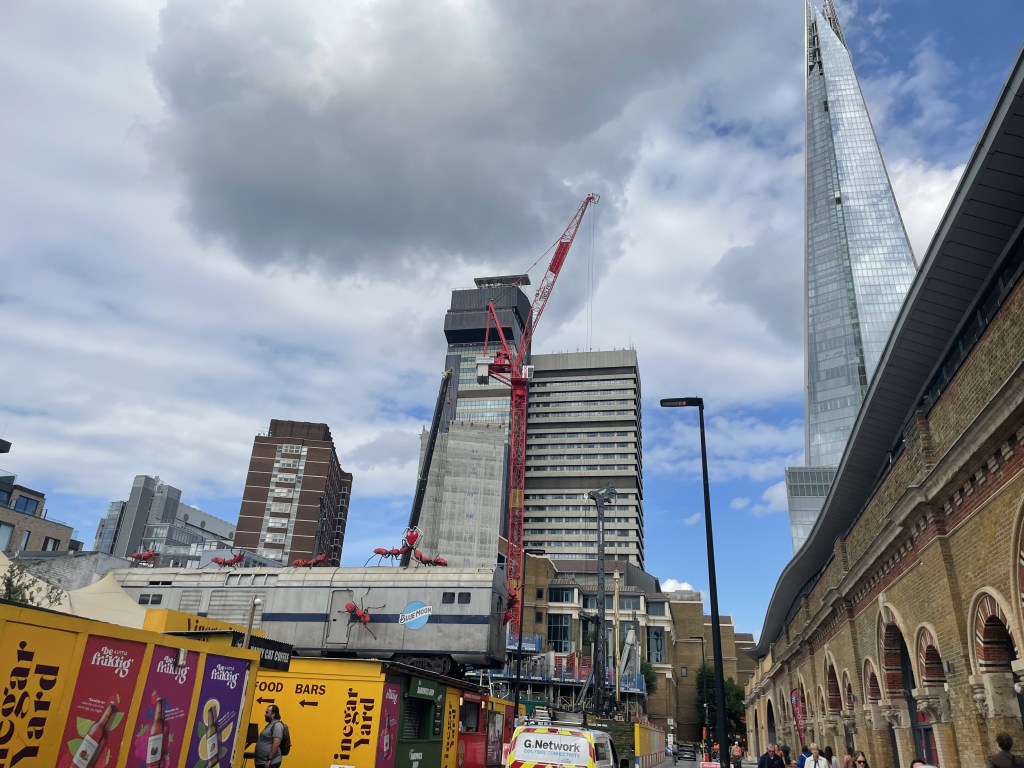
The Wonderful Variations Of London’s Skylines

Retirement means flexibility too.  I was able a few weeks ago to piggy back, at relatively short notice, onto the back of a visit Jane was making to London to see a friend of hers.  We could share the driving a bit and I caught up with an old friend of my own.  I also took the opportunity to visit an exhibition of the sort that was part of my routine when we had a flat or sons in London.  I miss those exhibition trips a lot.  This one was a visit to the rather wonderful White Cube in Bermondsey.

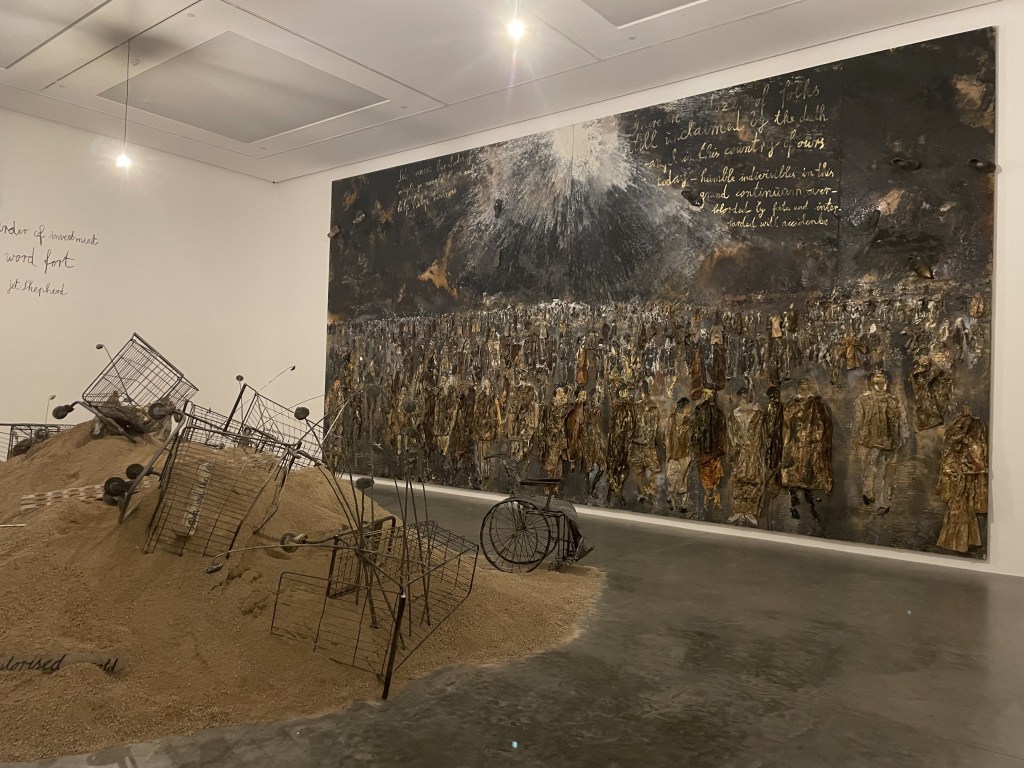
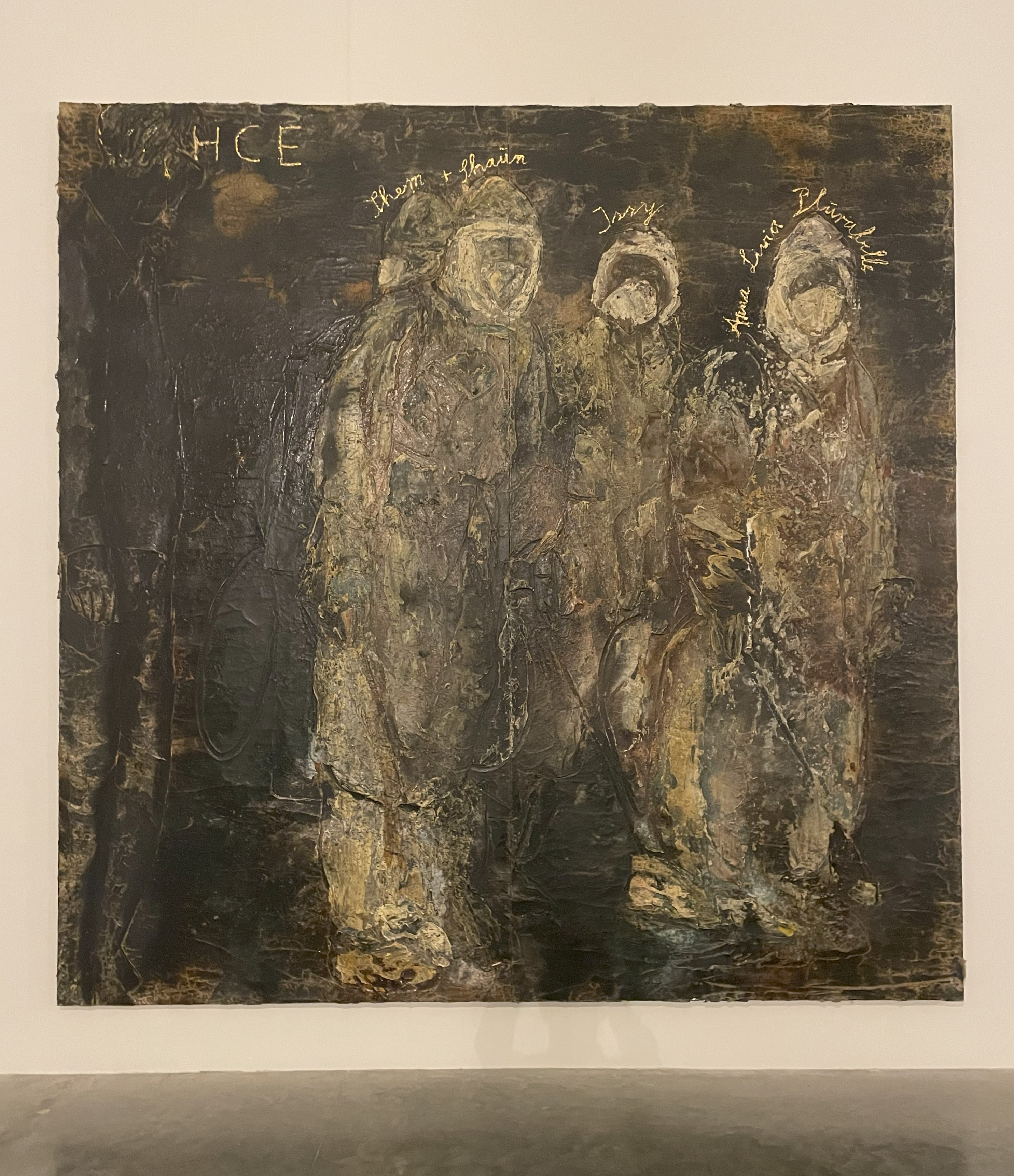
Anselm Kiefer At The White Cube Gallery, Bermondsey

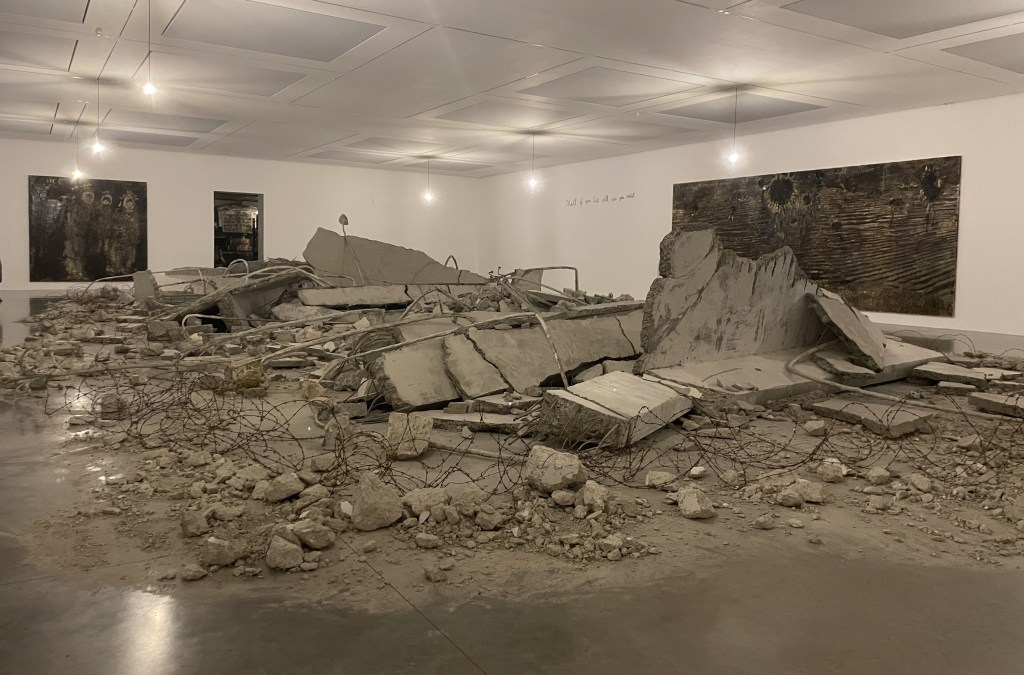
I have been to this gallery several times and one of the most memorable visits was to see an exhibition by Anselm Kiefer.  I wrote briefly here about that back in January 2020 just before Covid disrupted things.  The monumentalism and scale of that exhibition is repeated in his latest works at The White Cube.  I loved it and the White Cube spaces were perfect for it!

More Anselm Kiefer

Kiefer’s works this time were based around the novel by James Joyce called Finnegan’s Wake.  The novel is apparently (I’ve not tried to read it) a fractured mix of dream world and grim reality that deploys invented and combined words.  The language of the novel is strewn across most of the works on show.  While most of the phrases and sentences are nonsensical in this context, they added somehow to the mystery and sense of a dystopia as I moved from room to room.

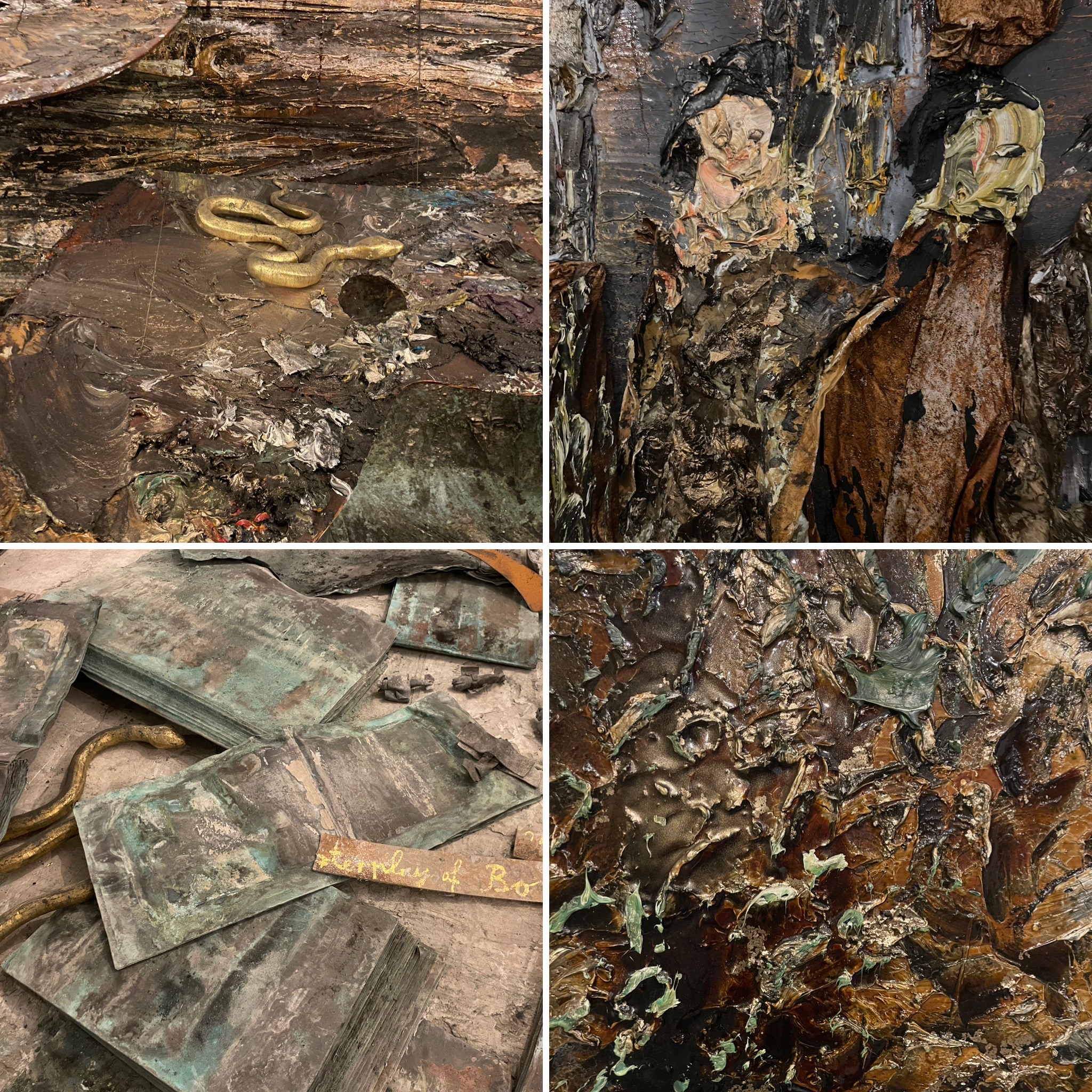
Detail From Various Anselm Kiefer Works At The White Cube Gallery

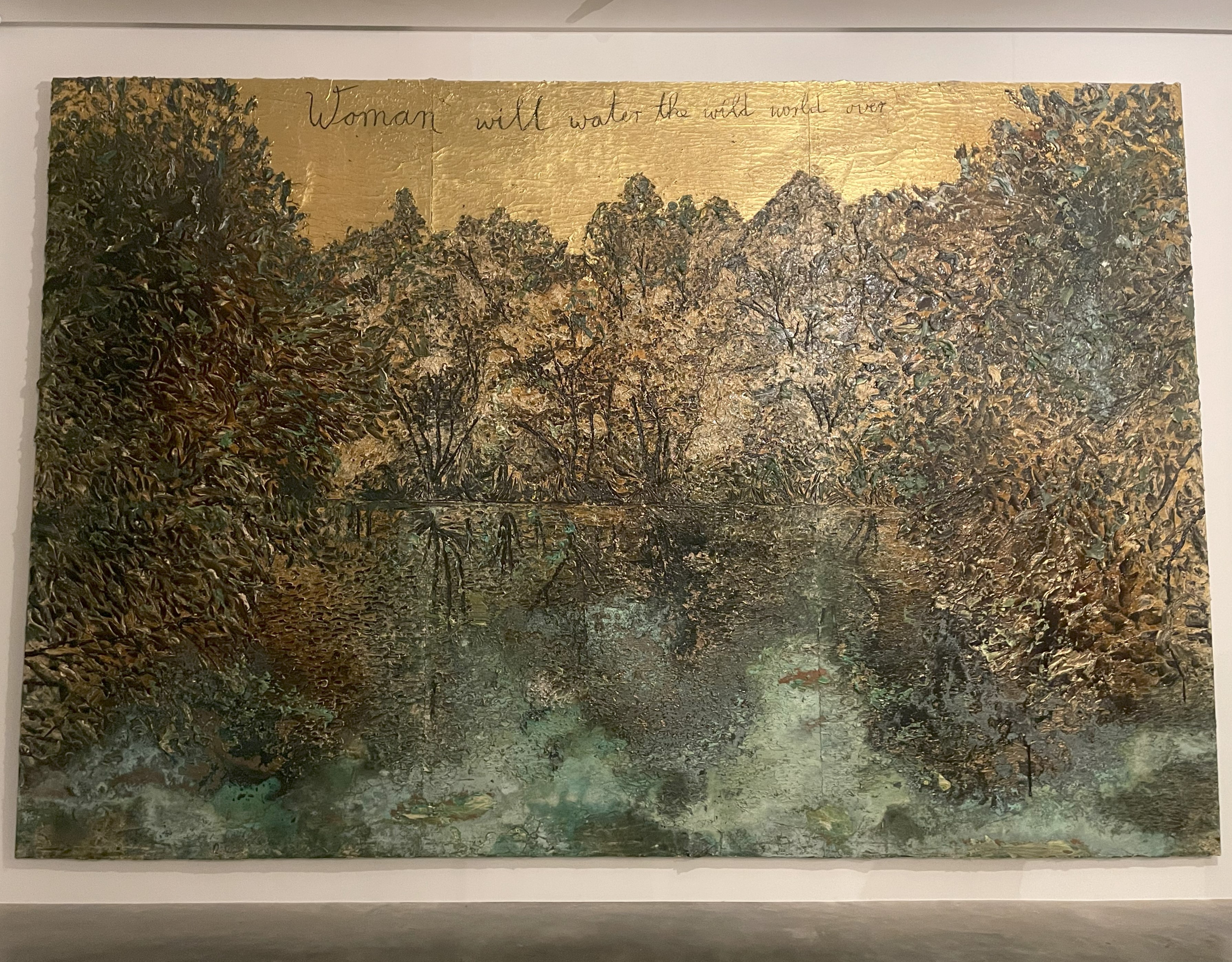
Goodness knows how the White Cube is funded – the exhibition was, as usual, free – and I fear removal of some of the works will require repolishing of the extensive polished concrete gallery floors.  To be honest the huge piles of debris in a couple of the exhibition rooms were, for all their scale, harder to appreciate than the pictures on the walls.  These were dense art works including rural scenes that worked for me close up and from observation across the huge rooms.

‘Woman Will Water The Wild World Over’ By Anselm Kiefer

Those rooms were linked by a vast corridor stuffed with huge, dusty vitrines and crude floor-to-ceiling shelves full of… well, what were they full of?  Just stuff!  It was like walking through a museum of detritus but it was strangely compelling and all underlined by the sheer scale of the thing.

‘Arsenal’ by Anselm Kiefer

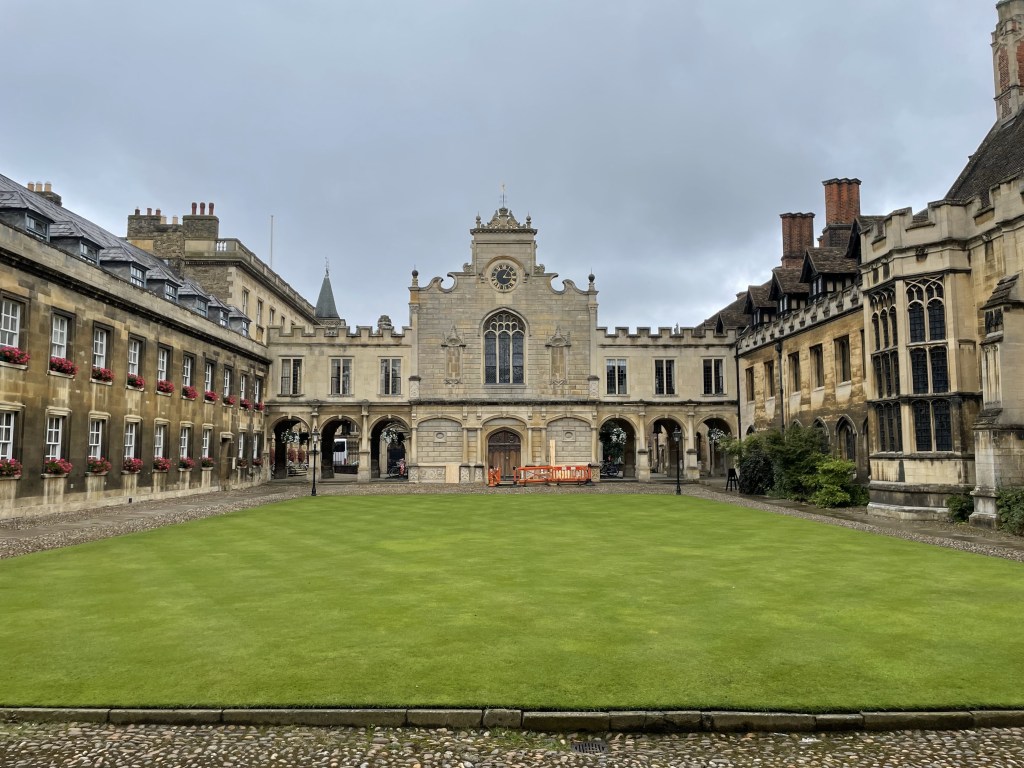
Another recent highlight has been a visit to Cambridge where I once – several decades ago – studied.  I had not been back for quite a while and the reason this time was the wedding of my Best Man (BM).  He lives nearby and we took up an Airbnb (which turned out to be outstanding) in his village and travelled into Cambridge twice: once for the formal registry element of the wedding and then again for a ceremony and reception held in BM’s and my old college, Peterhouse. 

Our Outstanding Airbnb (Just the Left-Hand Portion Of The Building) From The Grounds

Peterhouse Main Quadrangle and Chapel (Left) And My Old H Staircase In Gisborne Court (Right)

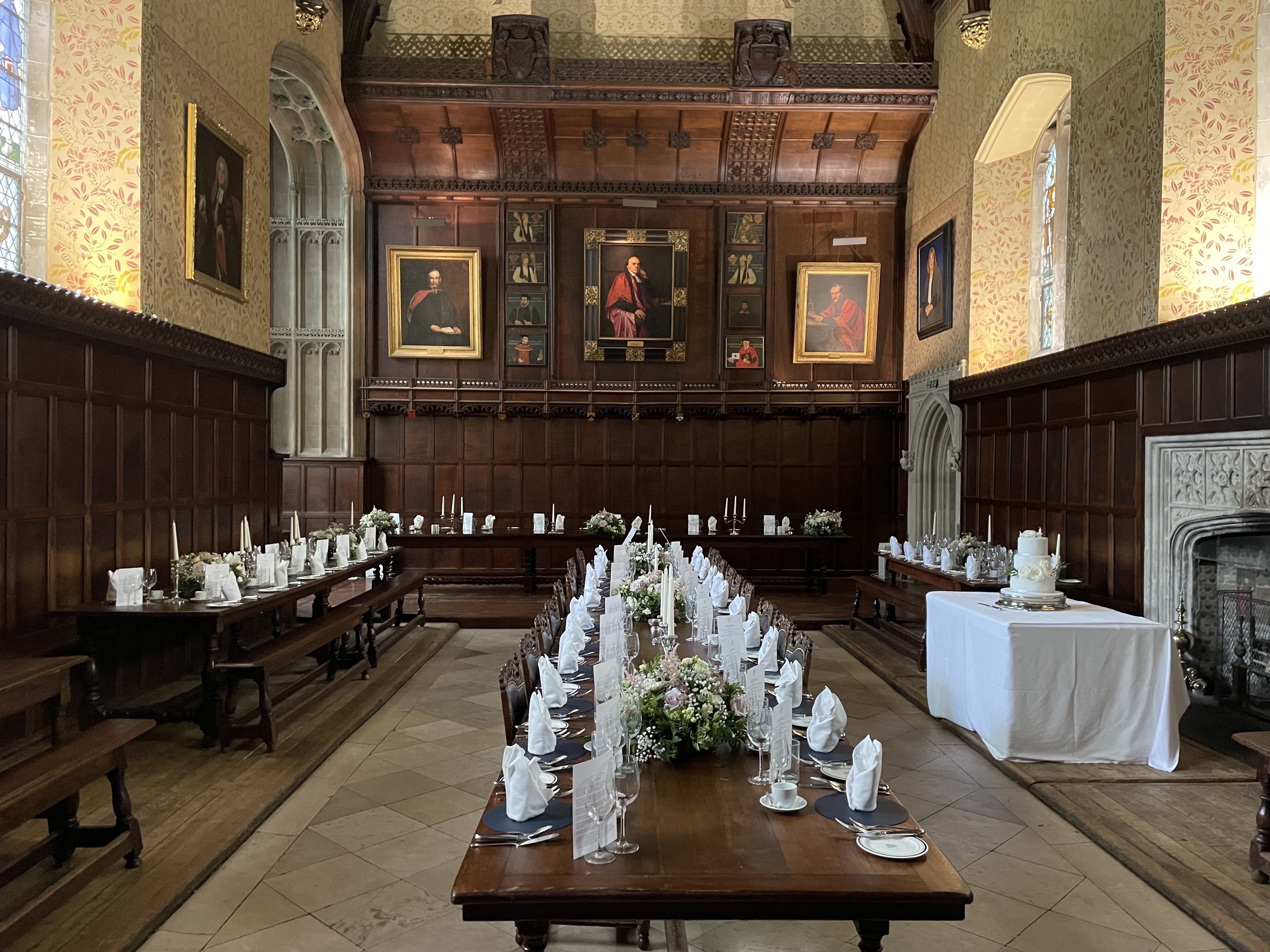
The whole weekend was a delightful mix of ceremony, catch up with a few old friends and meetings with a number of new acquaintances – both local and international – who were very interesting and easy to talk to.  They really helped to make the whole weekend event lovely.  The event generated some nostalgia too as the reception dinner was held in the main Peterhouse Dining Hall where, about 50 years ago, I ate college meals every day.  I didn’t appreciate the history or the grandeur of the college buildings half as much when I was living there as I did during this fleeting visit.

Peterhouse Main (Dining) Hall

One other prompt for a less welcome bit of recollection was that Jane, and a few others at the wedding, contracted Covid there.  Fortunately, I have avoided it again but it was a reminder that the pandemic was not long ago and that damned virus is still very much around.

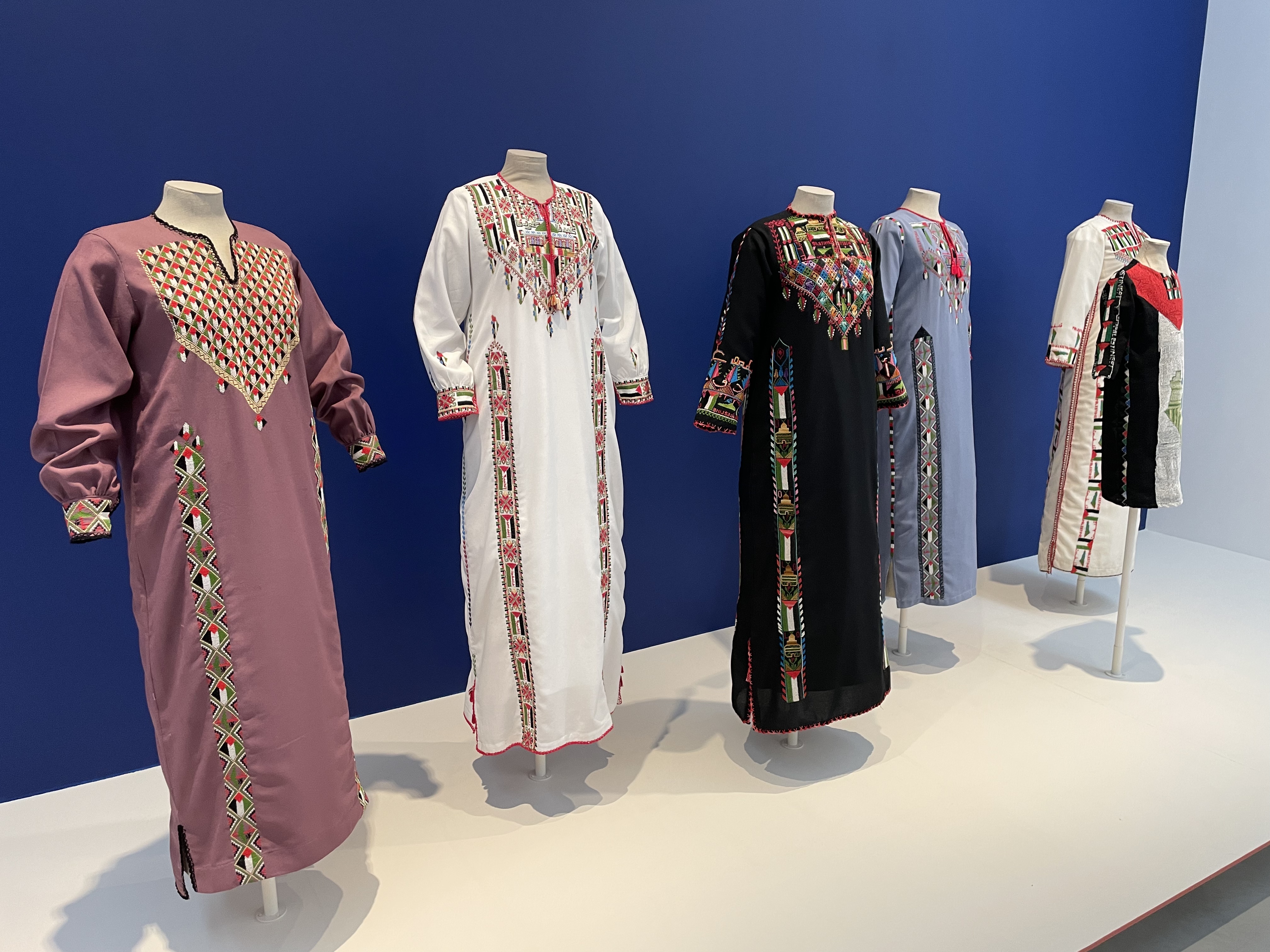
During our stay in and around Cambridge, Jane and I went to Kettle’s Yard to see an exhibition of Palestinian embroidery over the last century that Jane had read about.  Even someone like me with no real understanding of the intricacies of embroidery could appreciate the delightful patterns and muted colours of the clothing on display in the first room of everyday women’s wear. 

Palestinian Embroidery At Kettles Yard; Everyday Wear In The 1920’s

The exhibition went on to show more formal and more ornate wear and the way each local area had its distinctive styles and motifs.  The exhibition then tracked the changes in Palestine embroidery brought about by history since the Second World War.

Palestinian Embroidery: Formal Wear (1921)

First the United Nations Partition Plan for Palestine in 1947, the subsequent displacement of about 70,000 Palestinians, and then the 1967 Six-Day War all disrupted and then broke much of the cottage industry of embroidery crafting in the Palestinian villages.  Enforced movement of Palestinians mixed up the local pockets of unique styling.  Materials such as silks from France became unattainable and were replaced by cheaper products.  Small handicraft workshops were often replaced by factories.  The end results, outside of a few traditional, small-scale operations, became bland and almost garish.

Finally, following and during the Intifadas of the 1980s and 1990s the embroidery became a means of protest.  The exhibition showed how the defiance of the Palestinians led them to incorporate the Palestinian flag into their embroidery designs as a symbol of resistance. 

The exhibition was an interesting mix of video and clothing, and of art and history.

Palestinian Dress Post Intifada With The Palestinian Flag Embedded In Designs

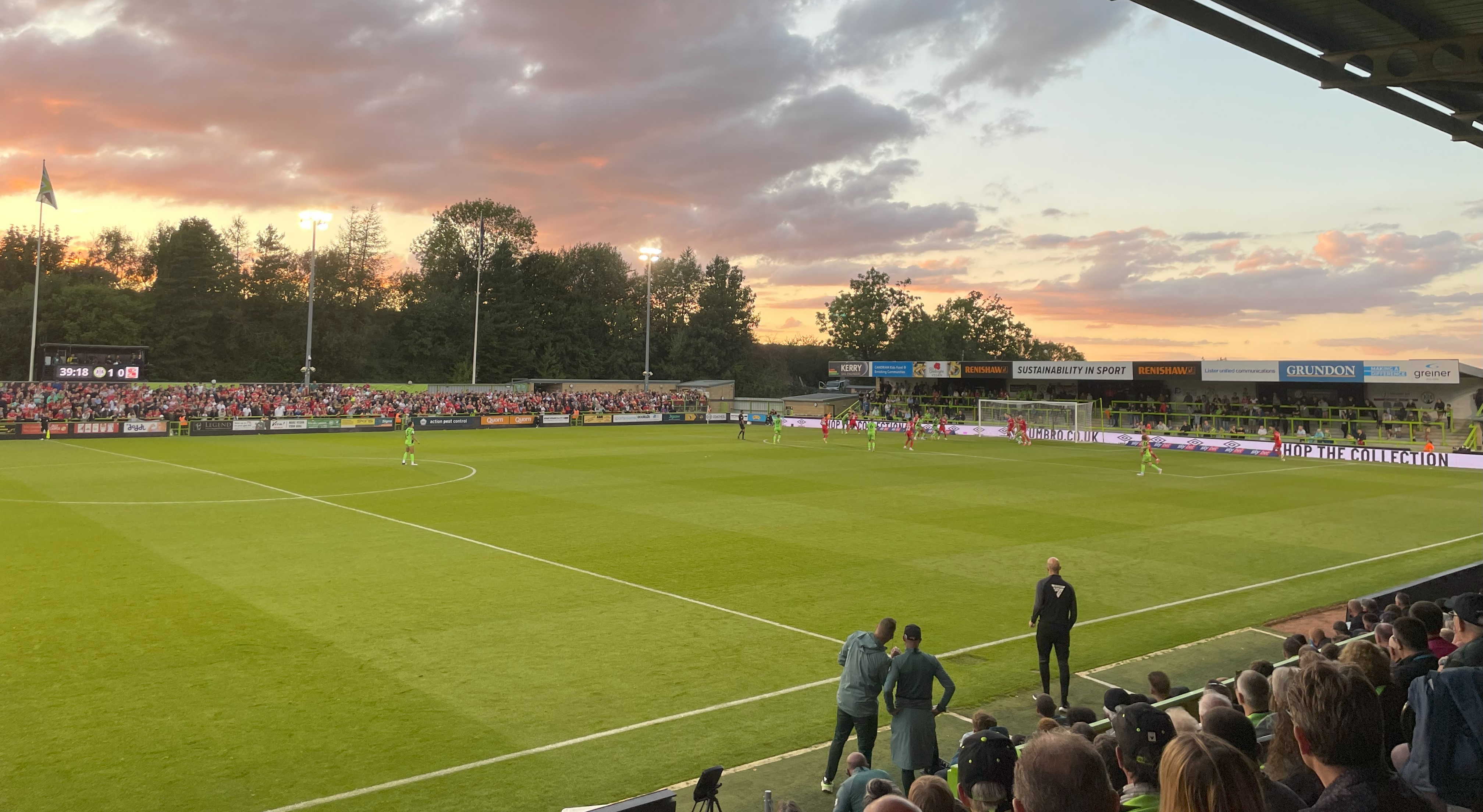
Back at home the advent of the new football season, together with the Women’s Football World Cup, is starting to take up time at Forest Green Rovers’ football stadium and in front of the telly. 

Evening Football At Forest Green Rovers – We Lost (Again) But It Was A Nice Sunset

Also, we have entertained Eldest Son, his wife and First Grandchild (FG) with a number of relatives who were keen to meet the little one.  I had a great time with FG and my phone is full of video of him that Jane and I watch on repeat.  Now we are looking forward to entertaining Youngest Son, his partner and some of their (and our) friends from their time in Australia.  Then we are off to Ireland for another wedding.  For a quietly retired chap like me, summer may feel a bit fragmented but it also feels pretty full!

A Glasgow Virgin

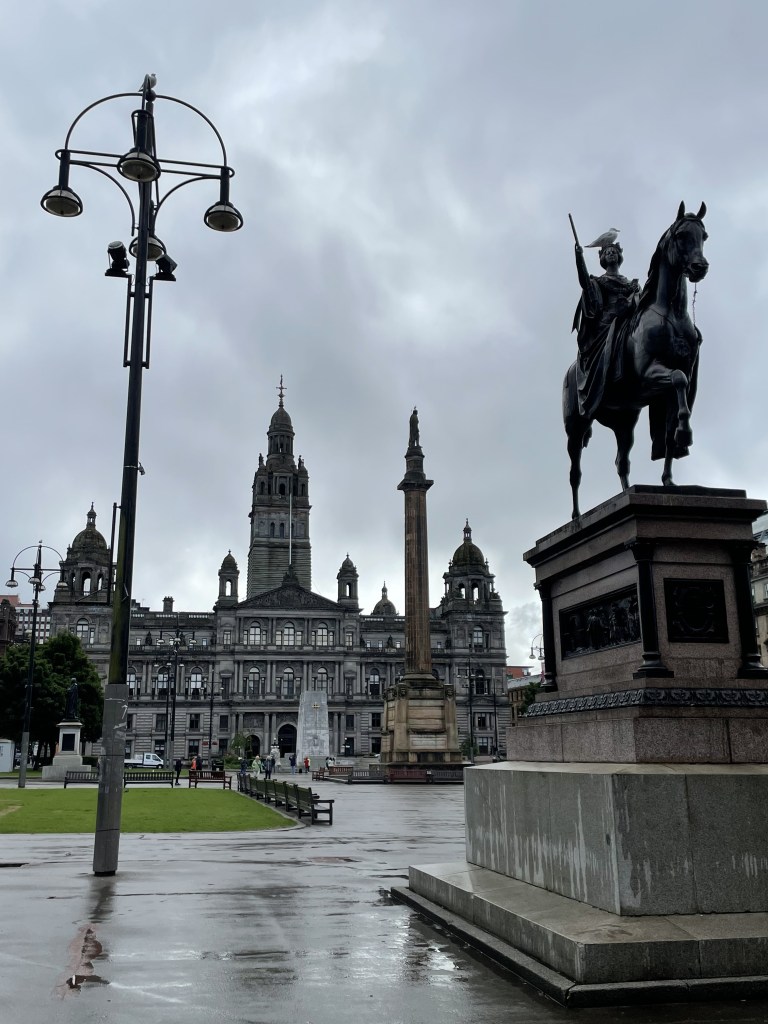
While we were based in Edinburgh for a week, Jane and I visited Glasgow.  It was my first encounter with Scotland’s largest city.  I think the only UK city in the top 10 by size I now have yet to visit is Liverpool and I need to plan for that.  Thanks to holidays with my parents in my youth and my trips to football grounds with Forest Green Rovers, there are only a handful of northern industrial cities in the top 100 UK cities by population that I have yet to go to.  I suspect that Glasgow is a lot more interesting than most of those 😊

George Square, Glasgow

We travelled from Edinburgh to Glasgow by train.  It was a very easy journey through the Scottish Lowlands past green fields, spoil heaps (large orange-brown hills, locally called ‘bings’ that are apparently a legacy of the 19th century oil-shale industry) and a brief sighting of the attractive Linlithgow Palace.  The stop at Falkirk High railway station was personally significant since it made sense of a lyric in one of my favourite songs by one of my favourite singer-songwriters who was brought up in Falkirk: Loneliness Shines by Malcolm Middleton. 

“My favourite place is Falkirk High Station

Metal rails stretch off towards life

And I’m just waiting”

I always assumed Falkirk had a railway station but wondered why the word ‘High’ was included without understanding that it was just a part of the station’s name.  It’s a great song from a master of miserabilism.

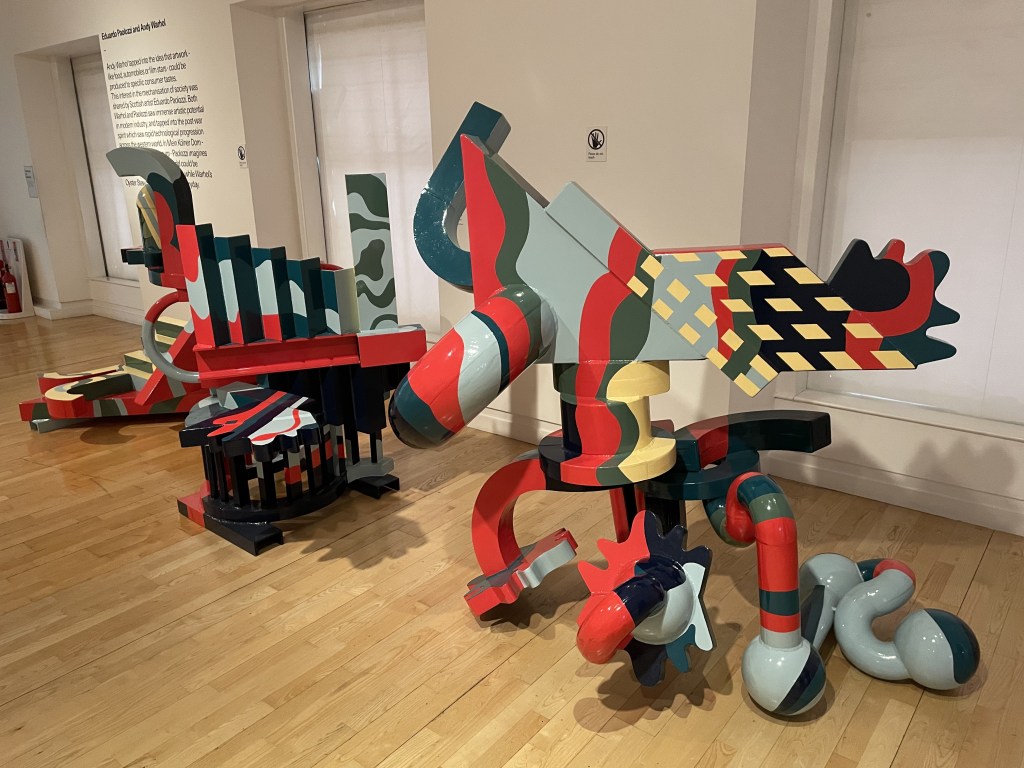
Anyway, we arrived mid-morning in Glasgow and, since it was raining, took immediate shelter in the Gallery of Modern Art (GOMA).  We quickly perused the permanent collection which included a number of works by Eduardo Paolozzi who is also prominent in Edinburgh where he was born (well, just up the road in Leith actually). 

GOMA: Eduardo Paolozzi’s ‘Hamlet In A Japanese Manner’, 1966

We eschewed the queues to see the Banksy exhibition at GOMA which, in retrospect, was an omission due to limited planning of our Glasgow trip.  Instead, we took a bus tour around the city – something that Jane always loves to do upon arrival in a new city so as to get a feel for it.  It was a good idea even though rain prevented us using the open top part of the bus.  The recorded guide through the headphones provided by the tour operator was very informative and once we had secured a seat on the upper deck and the sun started shining, the tour showed Glasgow off at its best.

We headed to the West End of the city to visit the Botanic Gardens there.  On the way we saw a lot of the River Clyde and the redevelopment of the old port and shipyards.  Indeed, we saw a lot of areas that I’d like to come back to on foot, both in the oldest parts of the city and along the river.  I’m especially keen to spend some time in the Riverside Museum which looked as though it would have some lively exhibits – perhaps we’ll go on tour with First Grandchild when he is a little older.

Unsurprisingly, parts of the West End of Glasgow are reminiscent of the lovely Georgian streets and squares of Edinburgh that were built at the same time.  However, prices of the flats within the three and four storey terraces are significantly lower than in Edinburgh.  That reflects, perhaps, the more fragmented nature of the architecture in Glasgow and the status and cachet of Edinburgh as Scotland’s capital.  I sensed though, that Glasgow is up and coming with a vibrant cultural energy that presumably has increased dramatically since Glasgow became European Capital of Culture in 1990.

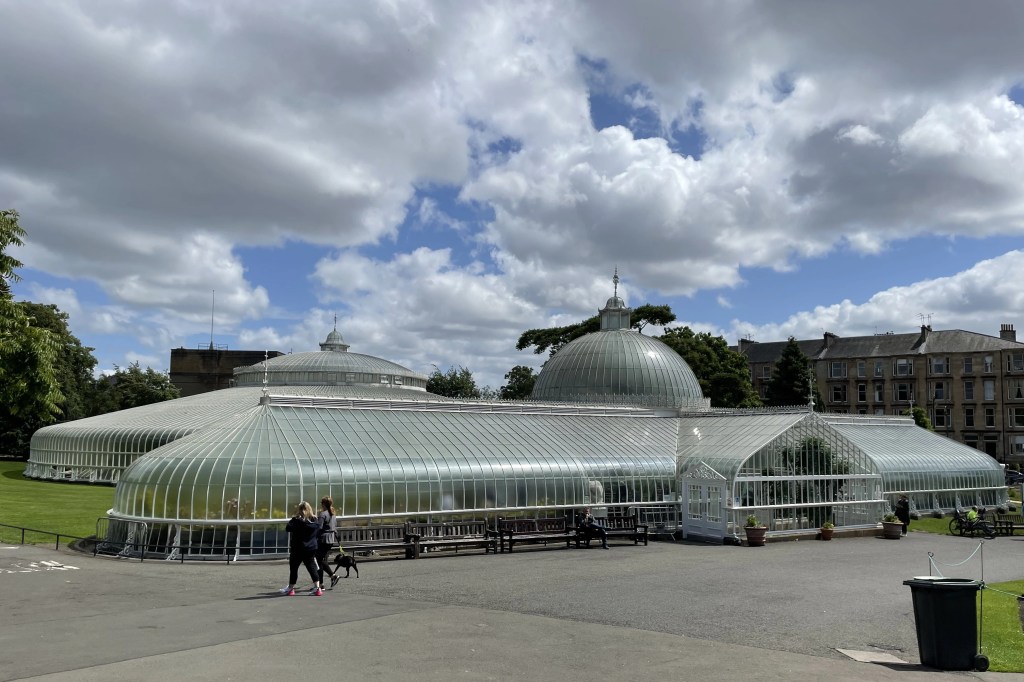
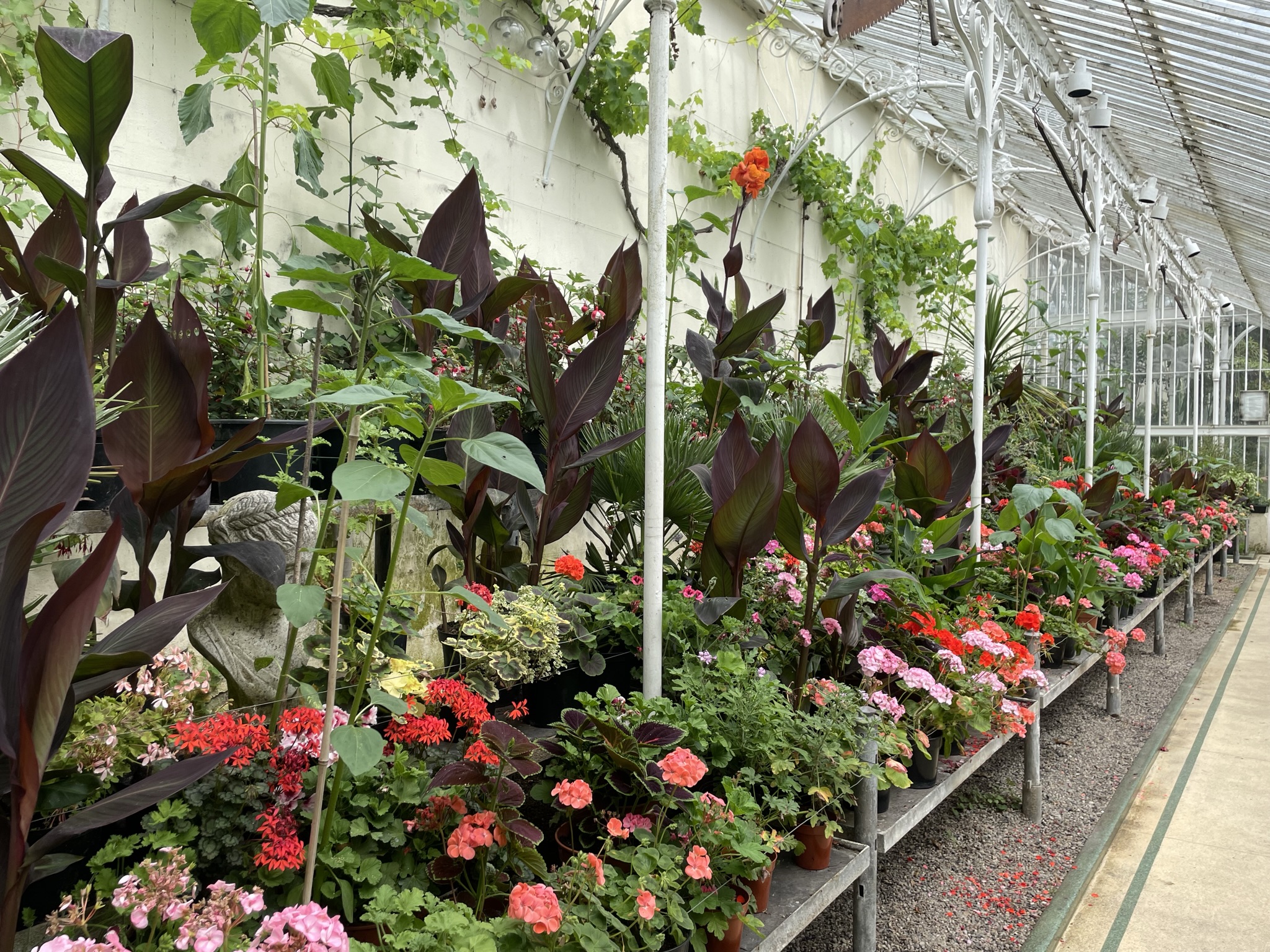
Glasgow’s Kibble Palace In The Botanic Gardens

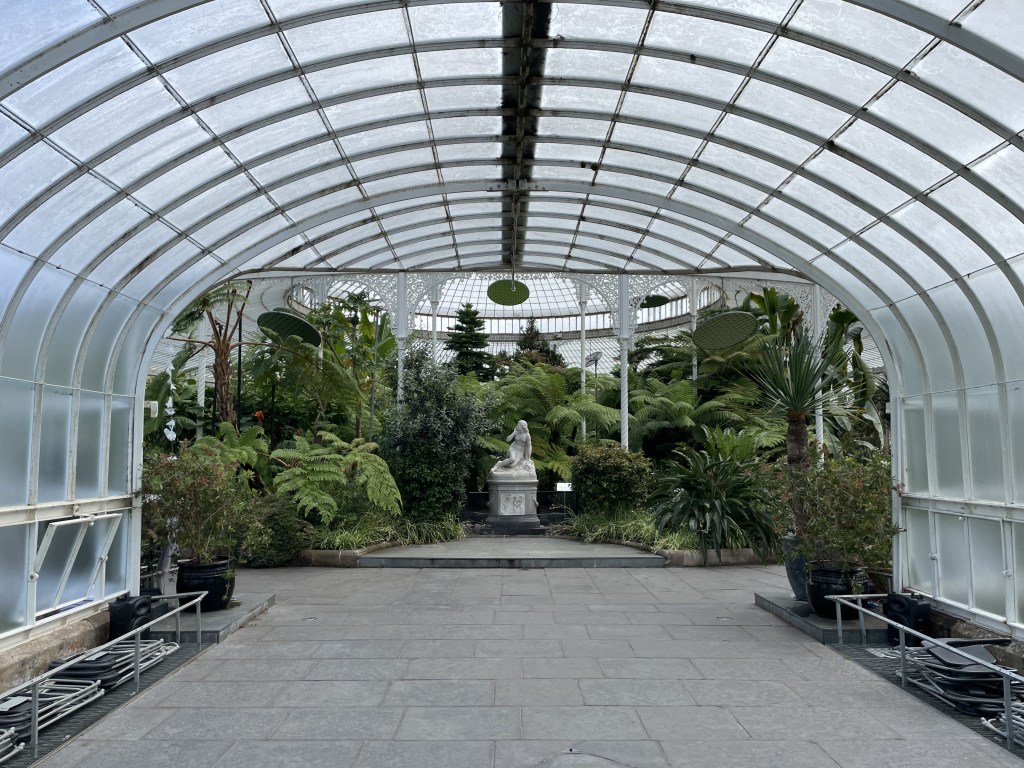
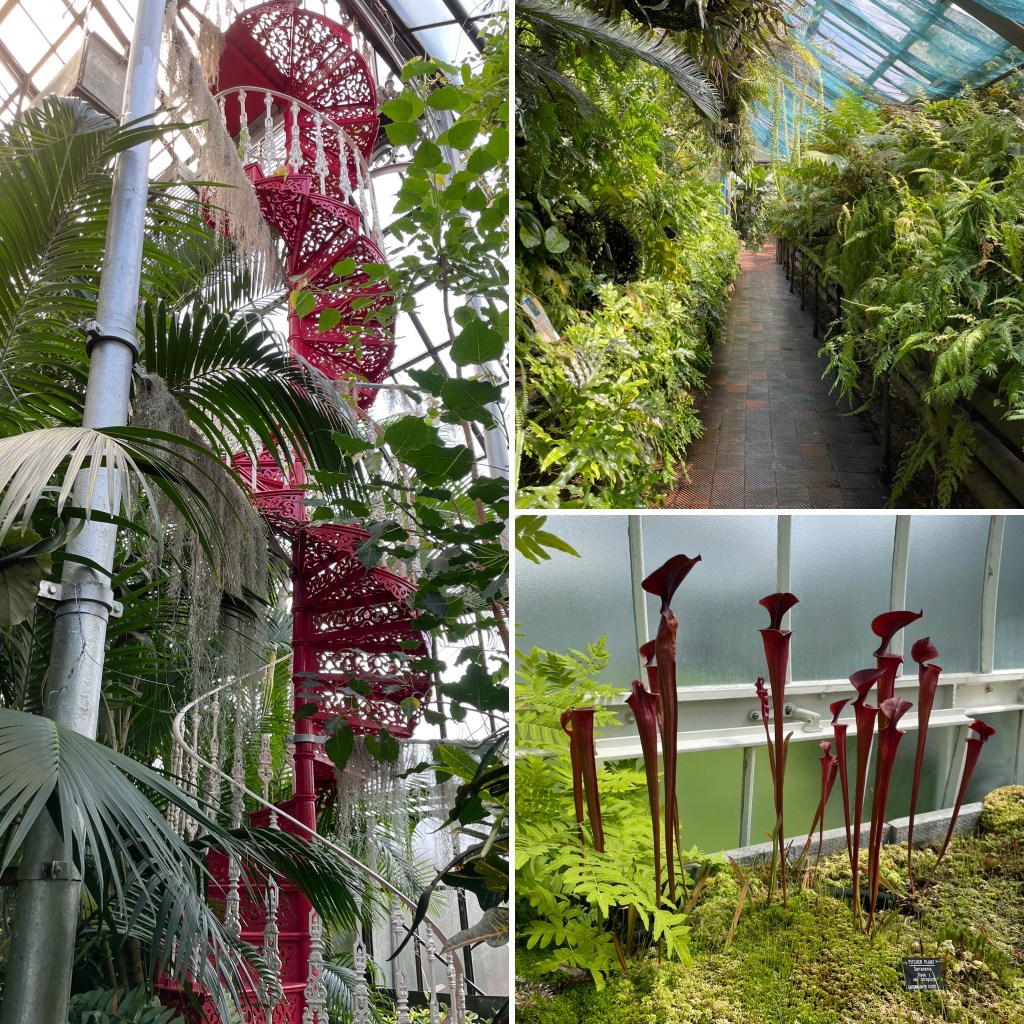
After a quick lunch stop, we thoroughly enjoyed the glasshouses in the Botanic Gardens.  These are called the Kibble Palace.  This is because they were designed and built for John Kibble’s own garden but then transported to Glasgow’s botanical gardens in 1873, initially as a concert and exhibition venue and then the temperate glasshouse which it remains today.

Inside Kibble Palace, Glasgow Botanic Gardens

We strolled south from the gardens past Glasgow University and the Hunterian Museum (saving it for another day), into some small independent shops on Great Western Road, through Kelvingrove Park and on to the Kelvingrove Art Gallery and Museum. 

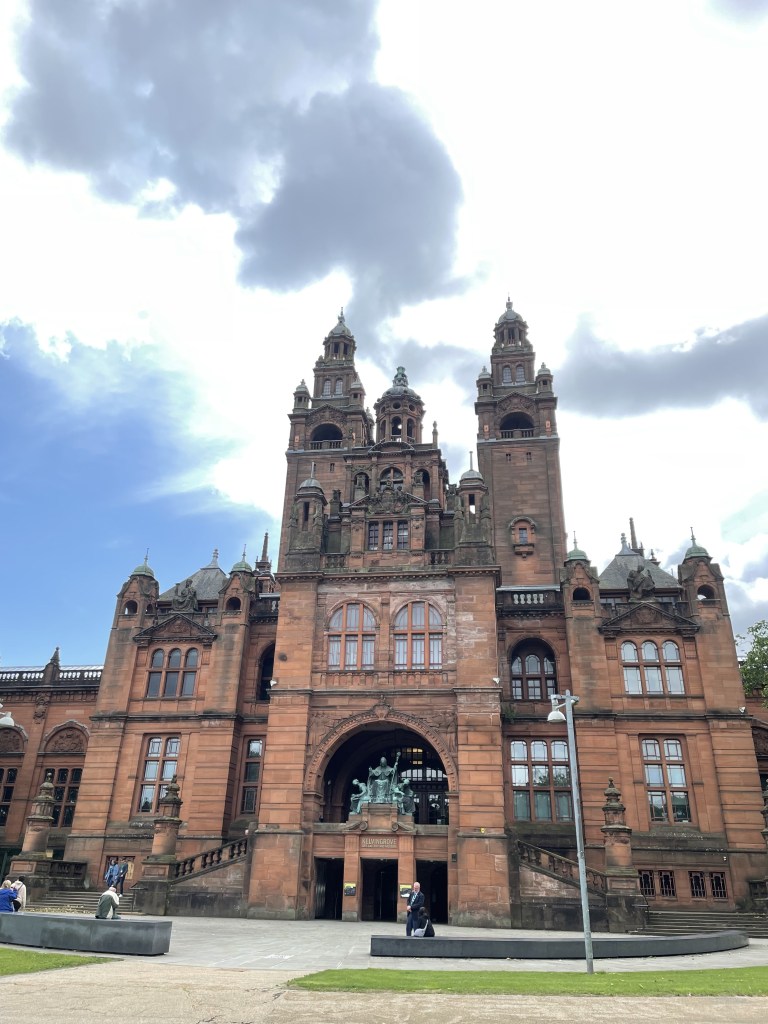
Kelvingrove Art Gallery And Museum

This is an impressive late Victorian building overlooking the park which, like all public Scottish museums and galleries, is free to enter.  That is great because it encourages short as well as longer visits.  Because we wanted to finish our open top bus tour, we restricted ourselves to a short dash around the ground floor and lack of pre-planning on our part meant that a look at the current Mary Quant exhibition will have to wait for another time.

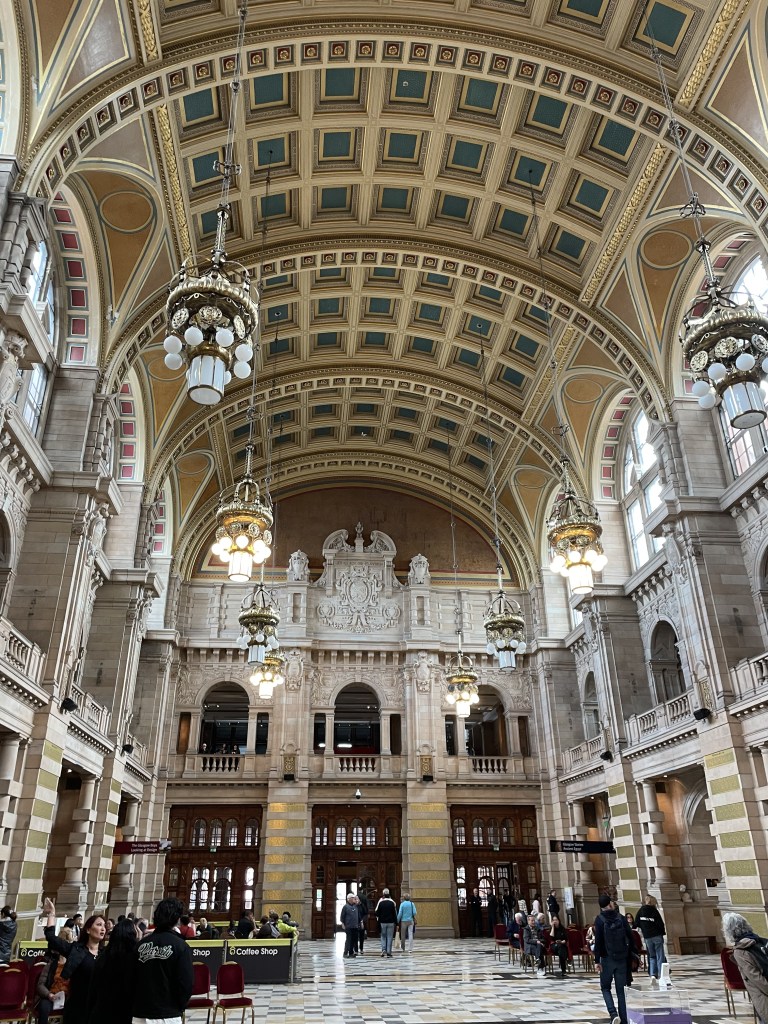
Entrance Hall Of Kelvingrove Art Gallery And Museum

The Kelvingrove contains an eclectic mix of art and history.  There is a room on the Glasgow Boys that Jane was keen to see since she had seen a play recently about them and their rebelliousness against Victorian traditions in painting.  I spent most of my time in a couple of rooms celebrating Charles Rennie Mackintosh, one of Glasgow’s most famous sons. 

Reconstruction Of Part Of Miss Cranston’s Tea Room Designed By Charles Rennie Mackintosh

Frankly, neither of us invested enough time to do the collections in the Kelvingrove justice but we will visit Glasgow again soon, I’m sure.  This trip was an excellent diversion from our usual walks around the sights of Edinburgh.  Next time, armed with what we now know, we will fill in some of the gaps that deserved more time or that we missed out on last week.

Edinburgh: Same Trip, Different Model

For our latest visit to Edinburgh, we changed the accommodation model from what we have done in the past.  This time we stayed in an Airbnb, converted mews building rather than stay in Eldest Son (ES) and his wife’s flat.  That meant we felt we could stay in Edinburgh for longer – a full week this time – and not be a burden on them as they worked and went about their daily lives. 

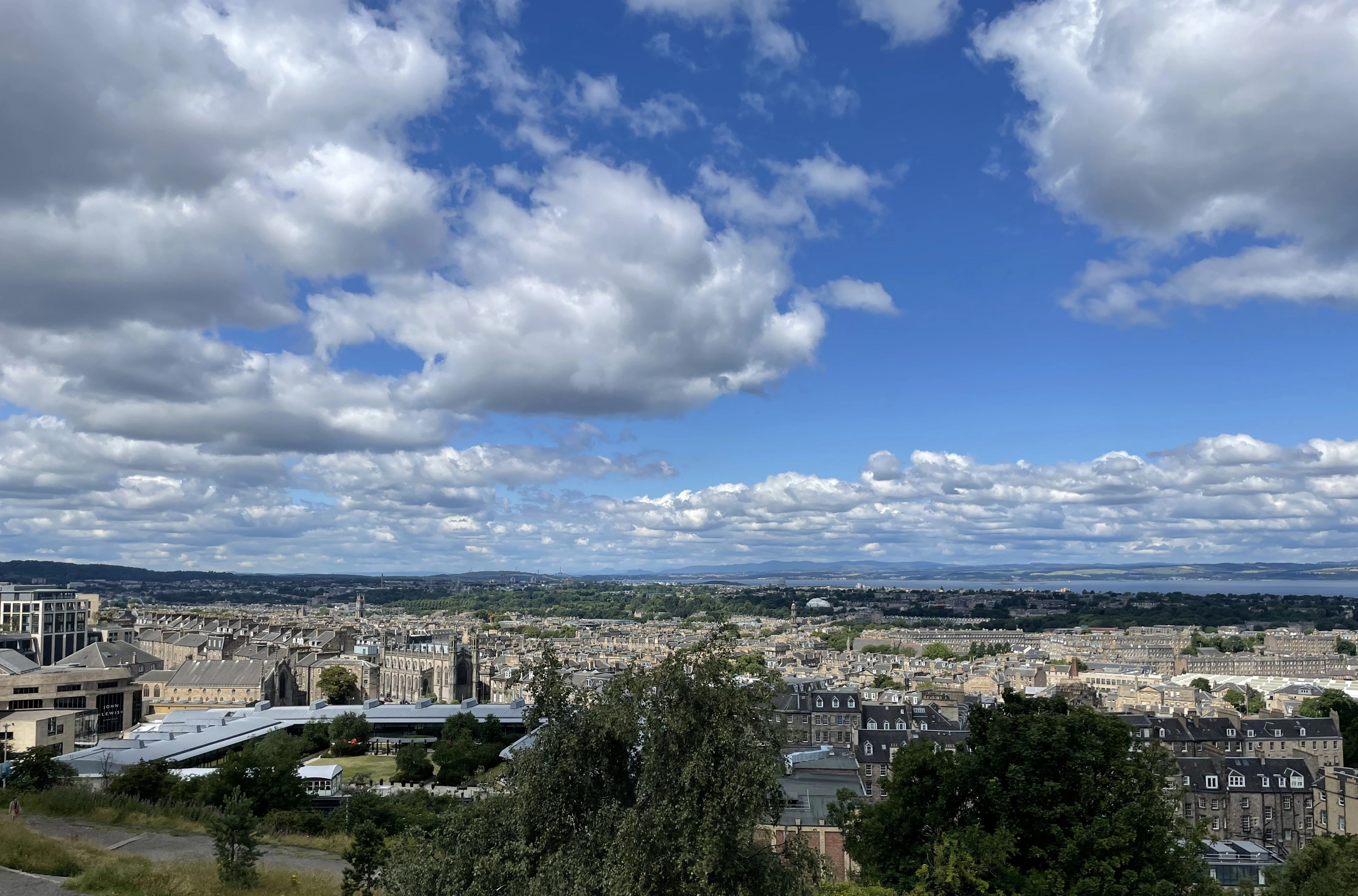
Edinburgh New Town (From Calton Hill) – Where First Grandchild Lives!

Because our accommodation was so close to them, we were able to pop over for, or just after, breakfast to see First Grandchild (FG) and, on his nursery days, enjoy the novelty of taking him to his nursery.  Overall, we saw ES, his wife and FG as much as ever, but they and we could also enjoy a bit more independence.  It worked for us anyway!

Our first few days were those when FG doesn’t go to nursery and so we had fun with him in Inverleith Park, the Royal Botanic Garden and the National Portrait Gallery (where FG ignored the art but loved going up and down the flights of steps).  We also loved playing with him at home playing with his toys.  It had been almost two months since we had last seen FG and, at his age (just over 18 months), that is a long time and a lot of growing up.  The way he now plays with his toys using his imagination in conversation with them is the main development I noticed.

Edinburgh Skyline From Inverleith Park

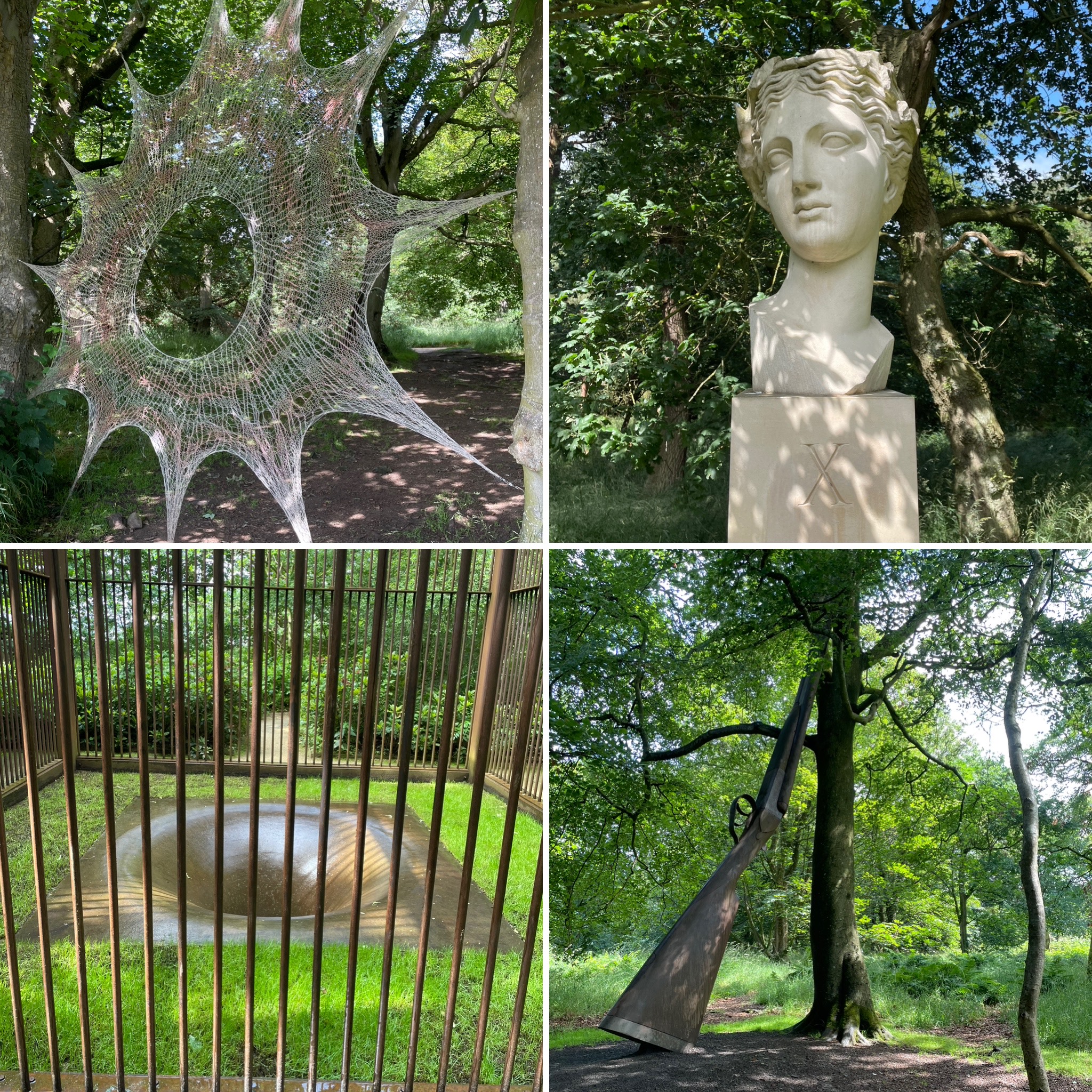
The highlight of these early days of our stay was a car trip to Jupiter Artland to the south west of Edinburgh.  This is an outdoor sculpture park exhibiting a wide variety of works of contemporary artists set in over 100 acres of woodland and open grassland.  It is a very impressive venture founded in 2009 by philanthropist art collectors Robert and Nicky Wilson. 

Jupiter Artland: Works By Shane Waltner, Ian Hamilton Finlay, Anish Kapoor And Cornelia Parker

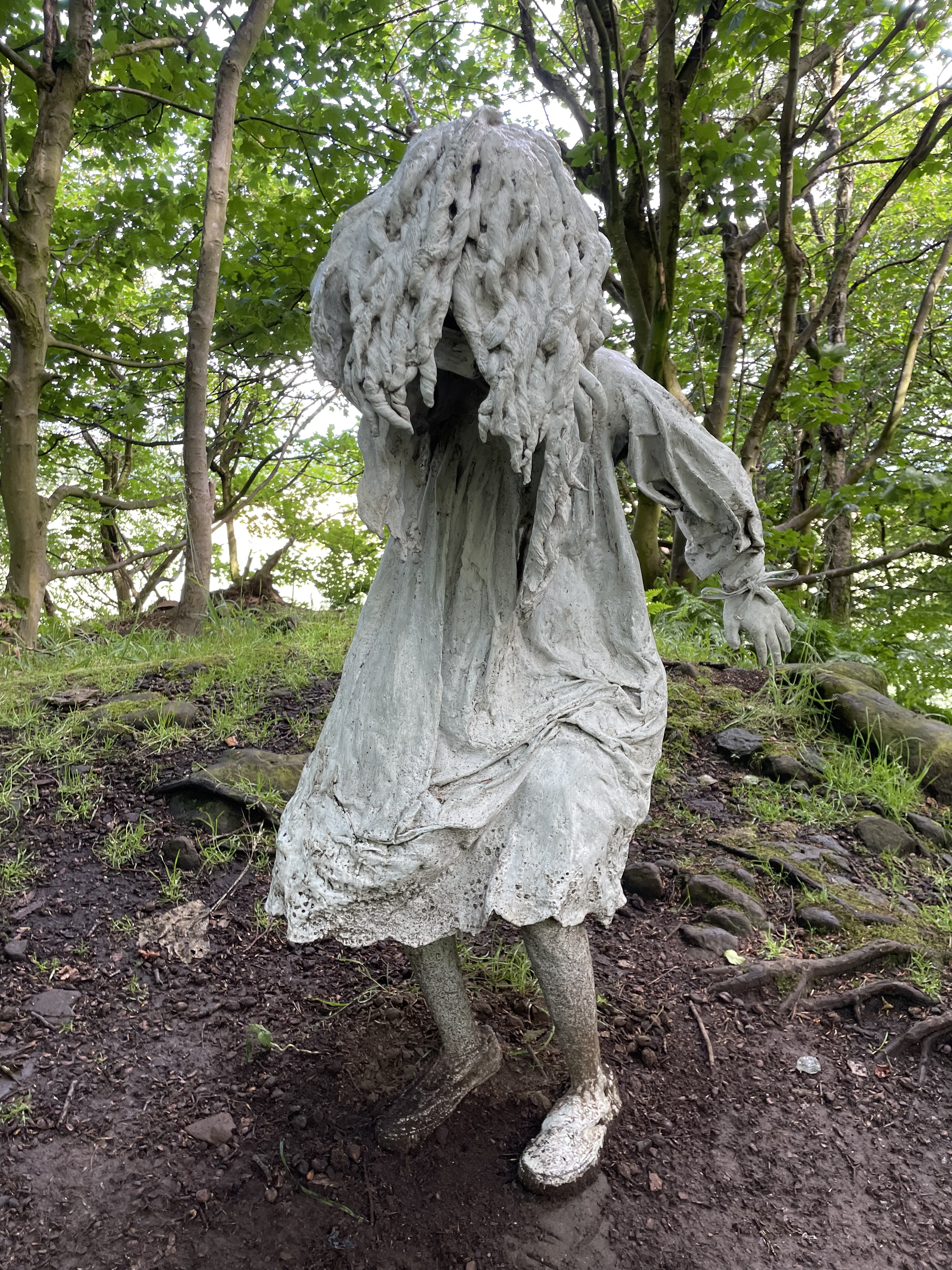
FG walked with us but was a little bemused by our occasional sheltering under trees to avoid the showers.  He seemed to particularly enjoy the ‘Weeping Girls’ (rather macabre bronze figures looking very sad) by Laura Ford and the ‘Temple of Apollo’ by Ian Hamilton Finlay which had the sort of steps that he loves. 

Jupiter Artland: One Of The ‘Weeping Girls’ By Laura Ford

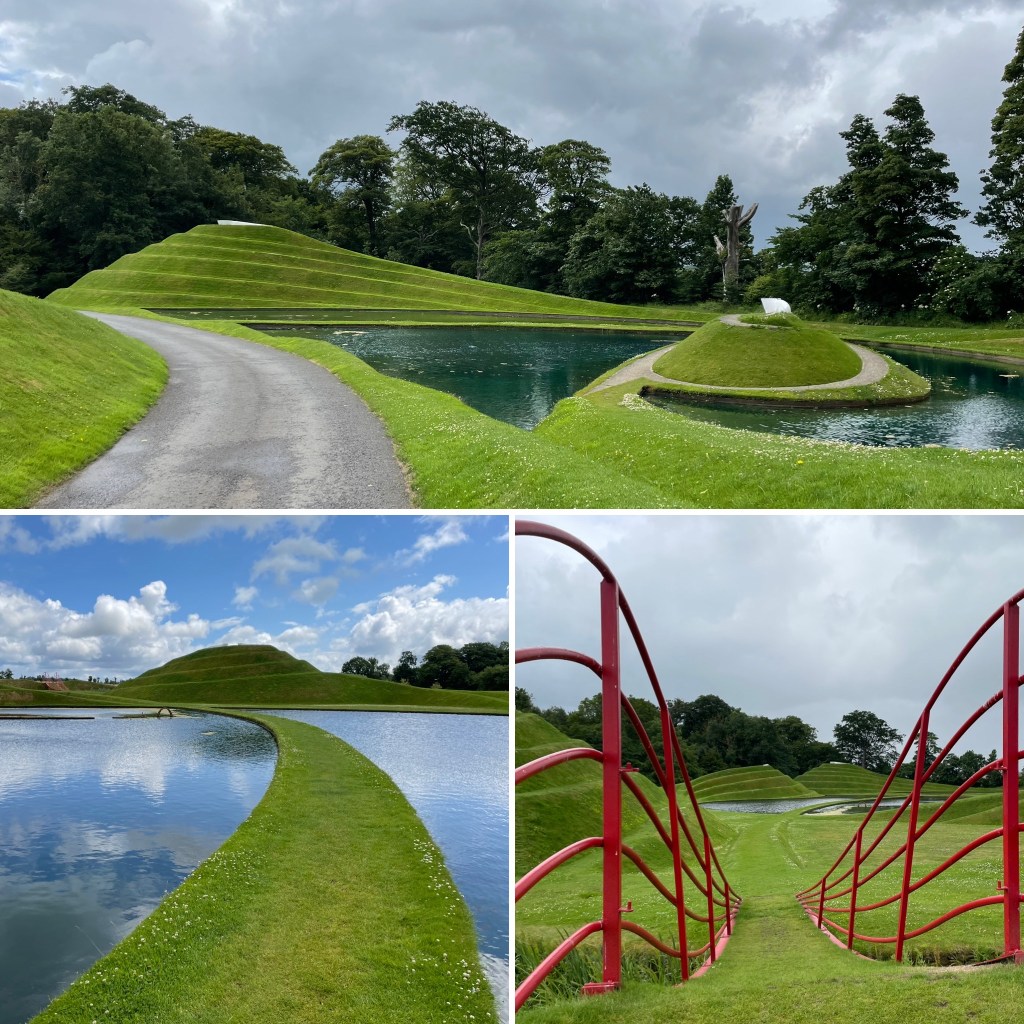
I believe that he also enjoyed the snacks at the café.  While he tried those out, I popped off to get a closer look at the earthworks by Charles Jencks that we had driven past on the way in to Jupiter Artland.  They are larger versions of those outside the Scottish Museum of Modern Art and are quite dramatic, especially as the heavens opened for another shower.

Jupiter Artland: Charles Jencks’ ‘Cells Of Life’

On the Sunday we had a lovely lunch with ES’s wife’s parents.  ES has certainly married into a family that knows hospitality and how to cook.  We had great breakfasts fueled by bread from excellent Archipelago Bakery and delightful gooseberry jam home made by ES’s mother-in-law.  On our Edinburgh visits ES’s wife has repeatedly demonstrated calm and efficient cooking of lovely meals and she did so again.  ES wasn’t to be outshone and he treated us to a very tasty vegetable curry too.  Overall, and as usual, we ate very well.

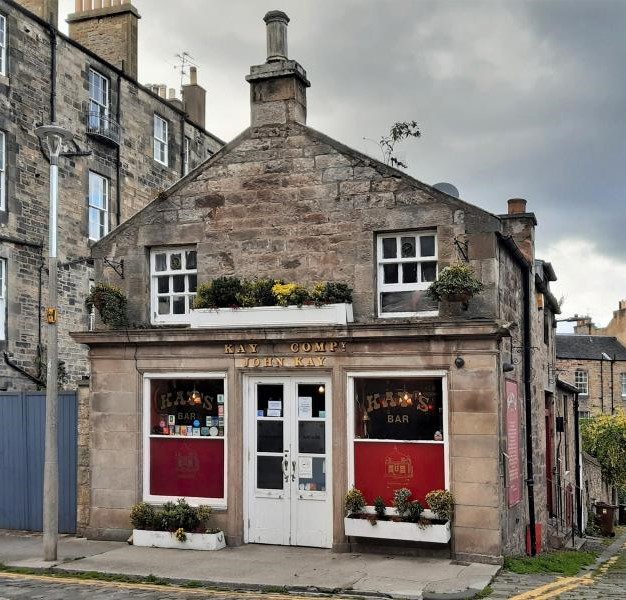
We also drank well including at our favourite Edinburgh bar, Spry and at Kay’s Bar which is a tiny, intimate pub tucked away in a side street right next to our Airbnb accommodation. 

Kay’s Bar, Edinburgh

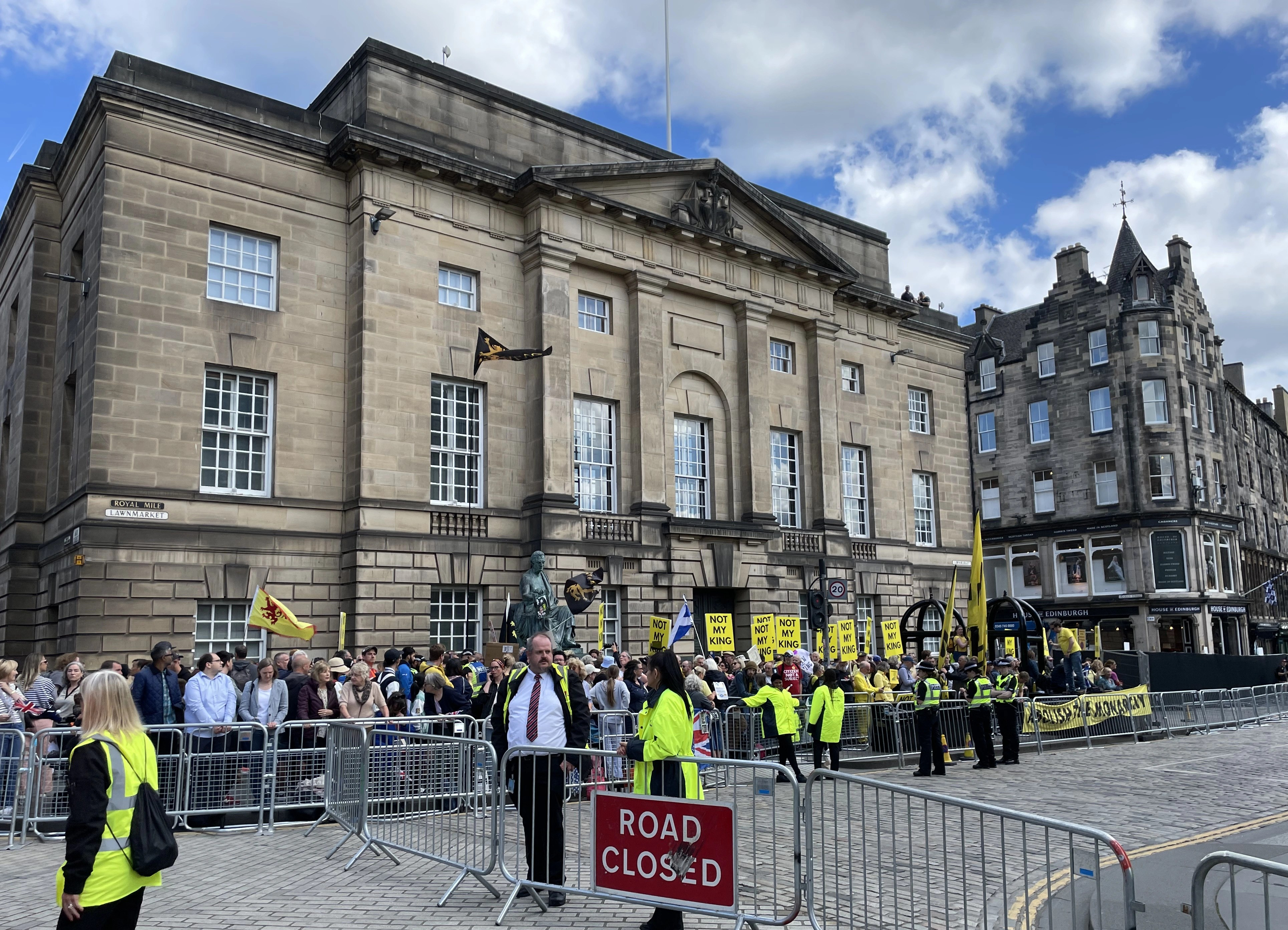
Once we had dropped FG off at nursery – he seemed entirely unfazed by the change in those accompanying him – Jane and I had several hours in which to relax and see the sights of Edinburgh.  Our main excursion within Edinburgh was past the noisy royalists and noisier anti-royalists lining the Royal Mile to watch King Charles receive the Scottish crown jewels, and on to the National Museum of Scotland. 

‘Not My King’ Protesters On The Royal Mile, Edinburgh

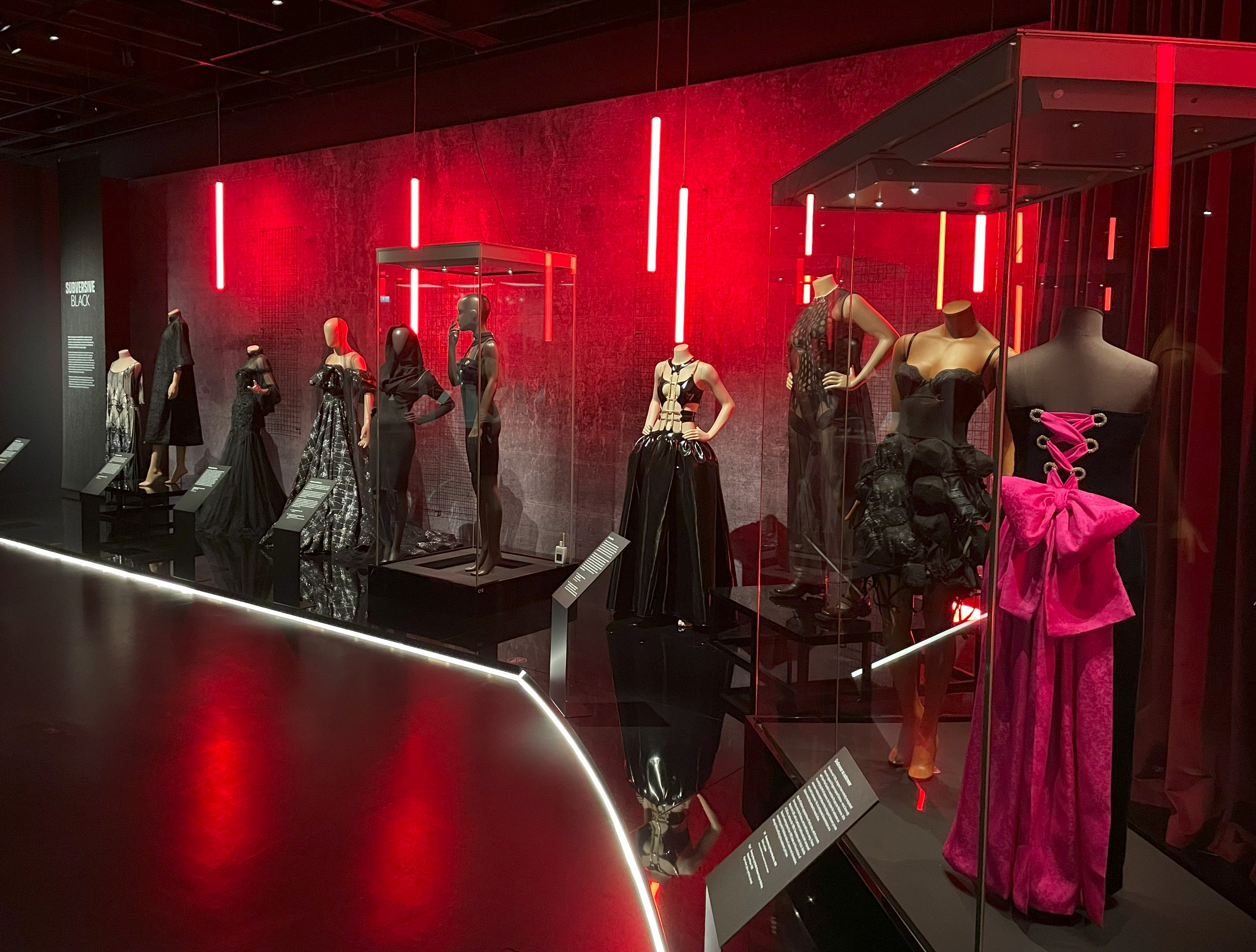
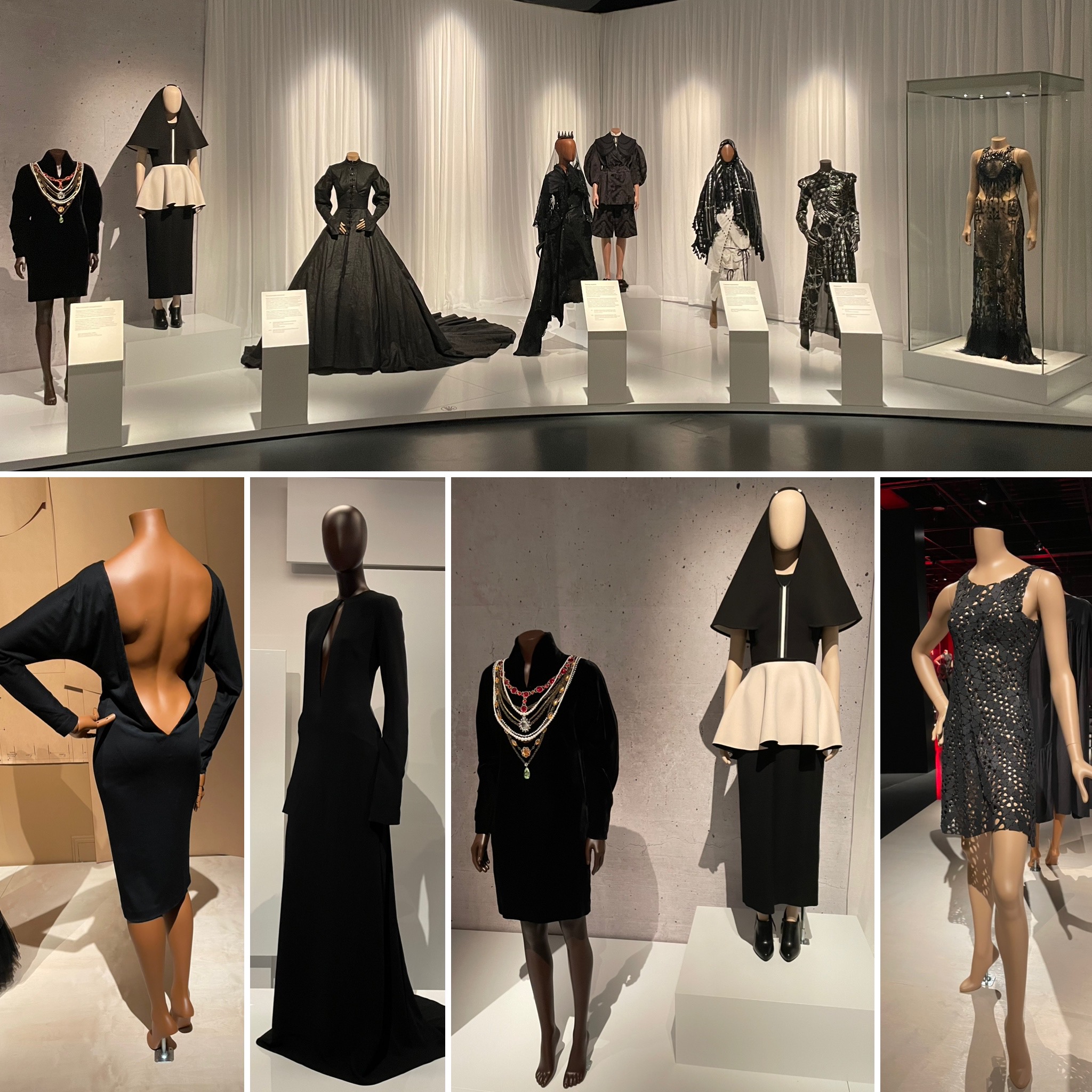
There we saw an exhibition called Beyond the Little Black Dress.  This traced the history of the little black dress as a fashion item since the 1920’s to the present (and, with a bit of foresight, into the future).  Even I could see that the dresses were spectacularly good and almost all the famous designers I know were represented. 

The Little Black Dress Exhibition At The Scottish National Museum

Rather than follow a purely chronological route, the exhibition was mainly structured around themes that have underpinned the use of the little black dress by designers and those who wear it.  There were sections on ‘Well Mannered Black’ (emphasising elegance during cocktail hour), ‘Spiritual Black’ (reflecting religious undertones), ‘Subcultural Black’ (such as the Goth look), and ‘Subversive Black’ (including the erotic and nuances of bondage).  Others showed, for instance, how Japanese designers used different ‘Shades of Black’ and how sustainable fashion is emerging. 

Little Black Dresses At The Exhibition At The Scottish National Museum (With A 3-D Printed Dress Bottom Right)

I liked the displays very much and I felt I learnt something in an area I know little about.  I was particularly struck by the last exhibit which was a short video called ‘Her Dreams Are Bigger’ by Osman Yousefzada.  This showed poor textile workers in Bangladesh – the sort that make mass-produced little black dresses – and related what they imagined the wearers of the clothes they make do and think.  The punchline is in the title of the video.  It was quite unexpectedly moving.

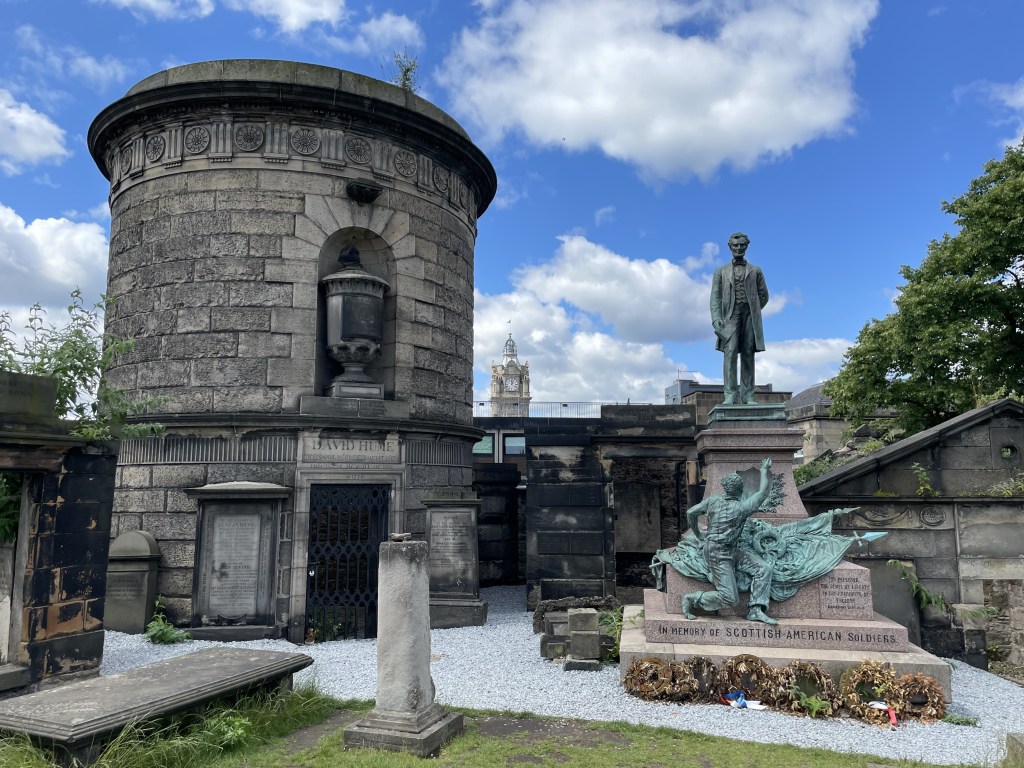
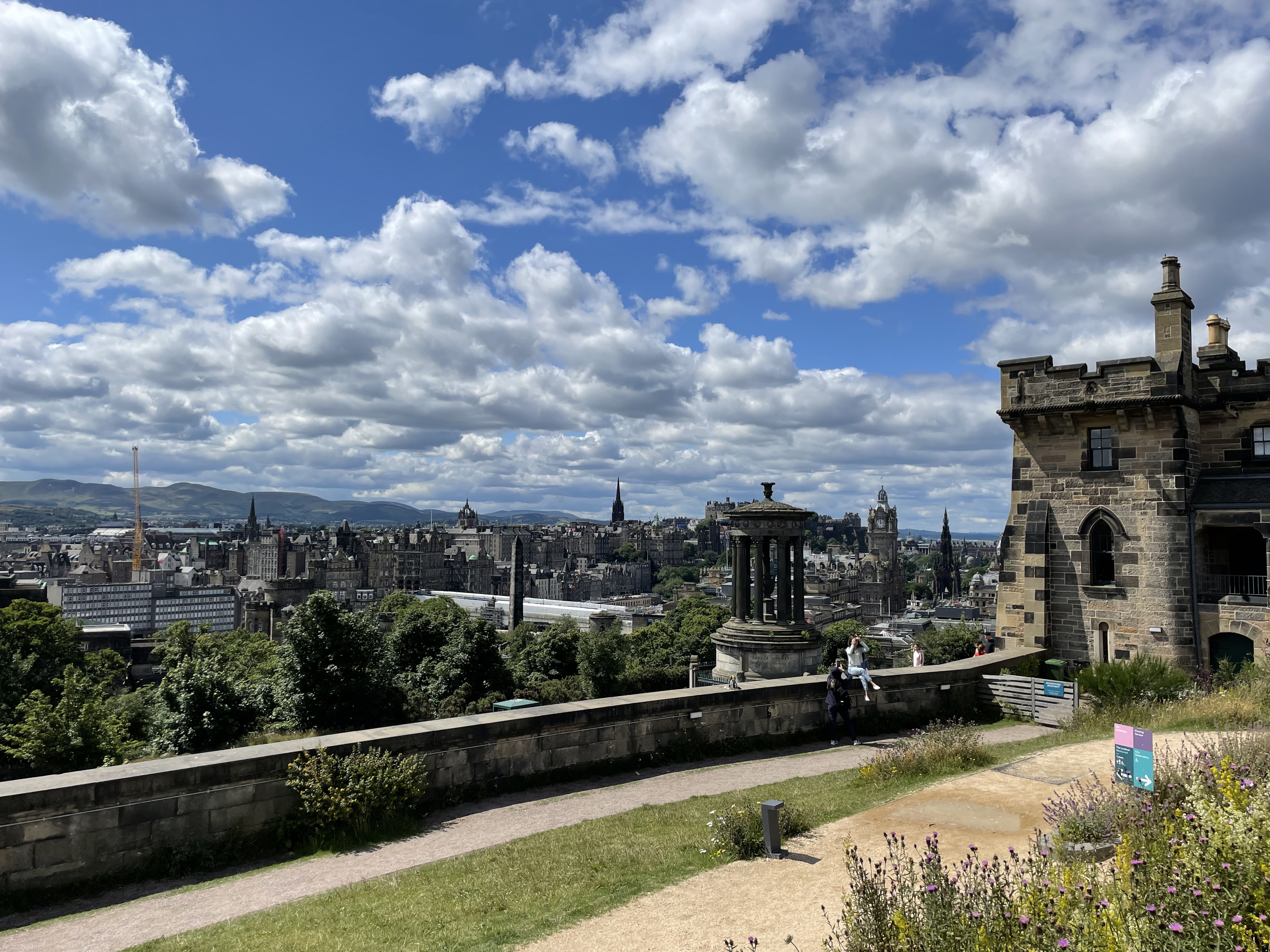
While Jane went off to peruse shops, I walked over to Old Calton Burial Ground and Calton Hill.  Both offered great views of Edinburgh in wonderfully sunny weather and clear air. 

Old Calton Burial Ground

I hadn’t seen the burial ground before and it is a secluded, private space easily overlooked by tourists.  It is dominated by a tall obelisk erected in memory of members of the Friends of the People who campaigned for universal suffrage in the late 18th century but who were deported to Australia for their efforts.  It got me researching ‘one man one vote’ campaigns and I was amazed to find out how long it took for rich property owners to lose their monopoly of electoral privilege.  It was only in the early 20th century that the UK passed legislation to enable all men to vote; womens’ suffrage followed shortly after.

View Across Edinburgh Old Town From Calton Hill

On another day, Jane and I popped into The Scottish Gallery, a private gallery which had completely changed its exhibitions since the last time we visited and now included some lovely porcelain pottery by Jack Doherty (not someone I knew but who Jane follows and likes). 

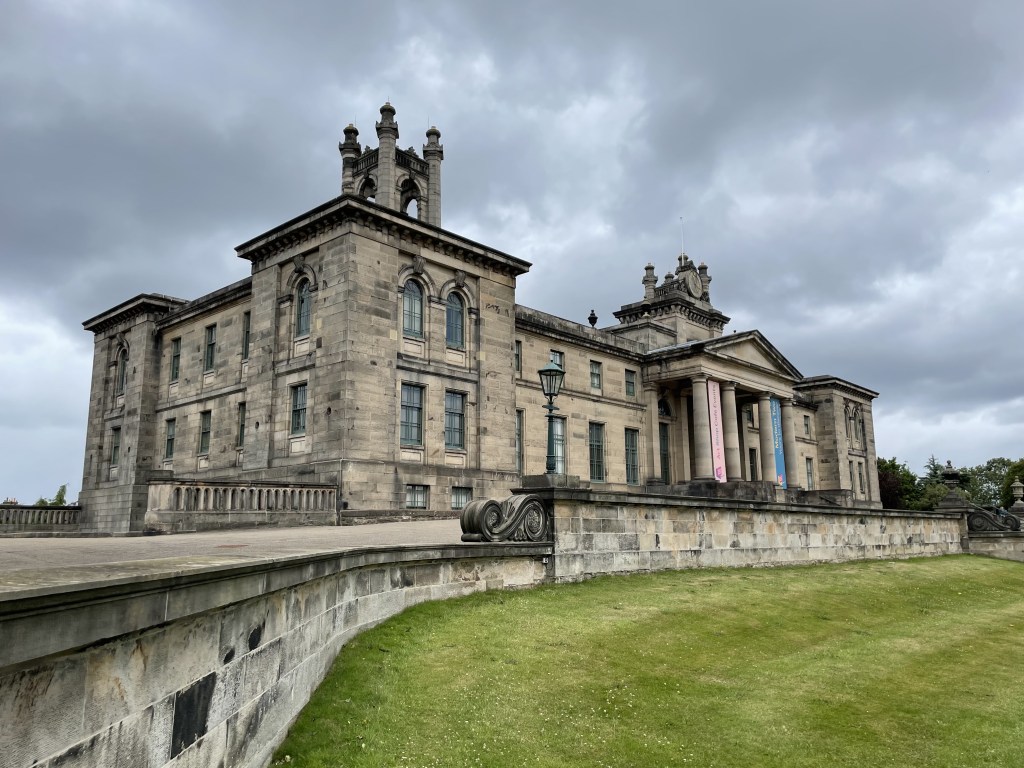
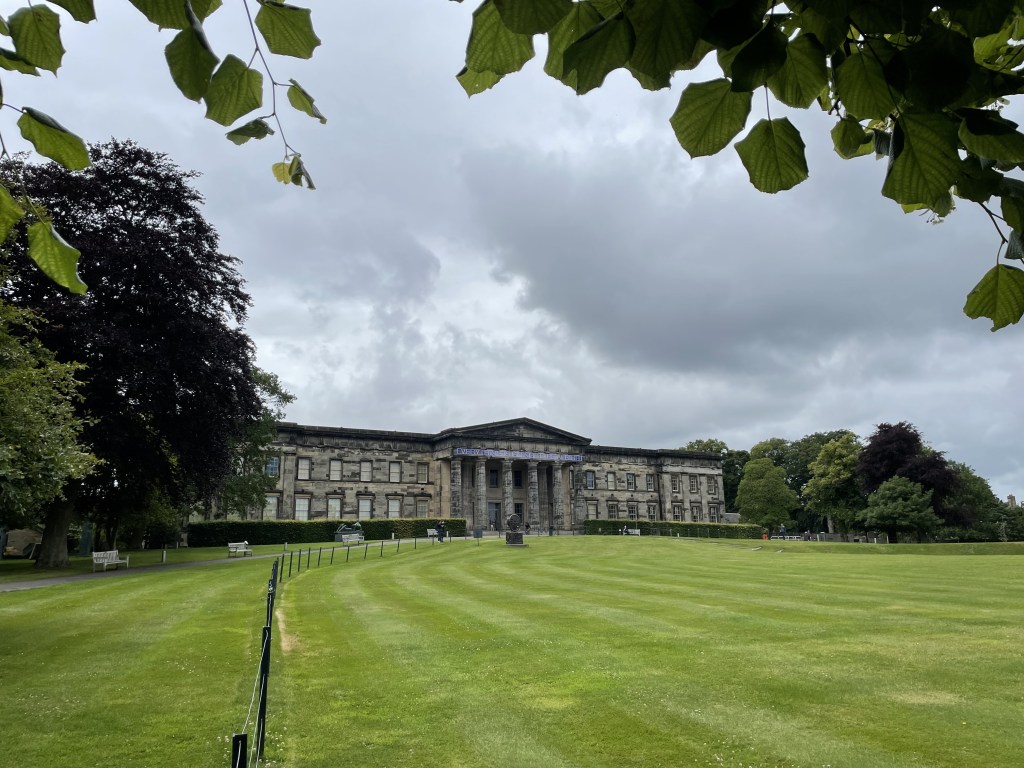
Jane and I also visited both buildings comprising the Scottish National Gallery of Modern Art where I briefly revisited the retrospective of Alberta Whittle’s work (and, as during our last visit, enjoyed the abstract watercolours more than the more prominent fabric and photo-collage works).  We wandered through the galleries and again I was struck by the number of famous artists (that is, the ones I know!) represented on the walls.  It was nice to be able to spend the time rather aimlessly taking in such a wide range of art.

Modern Art Galleries of Scotland 1 and 2

The relative flexibility of our longer stay in Edinburgh than usual (without impinging overmuch on ES and his wife) and the fact that we drove up (with no recharging delays or issues at all) and so had a car with us, afforded the opportunity to travel further afield.  I’ll cover our day trip to Glasgow separately……

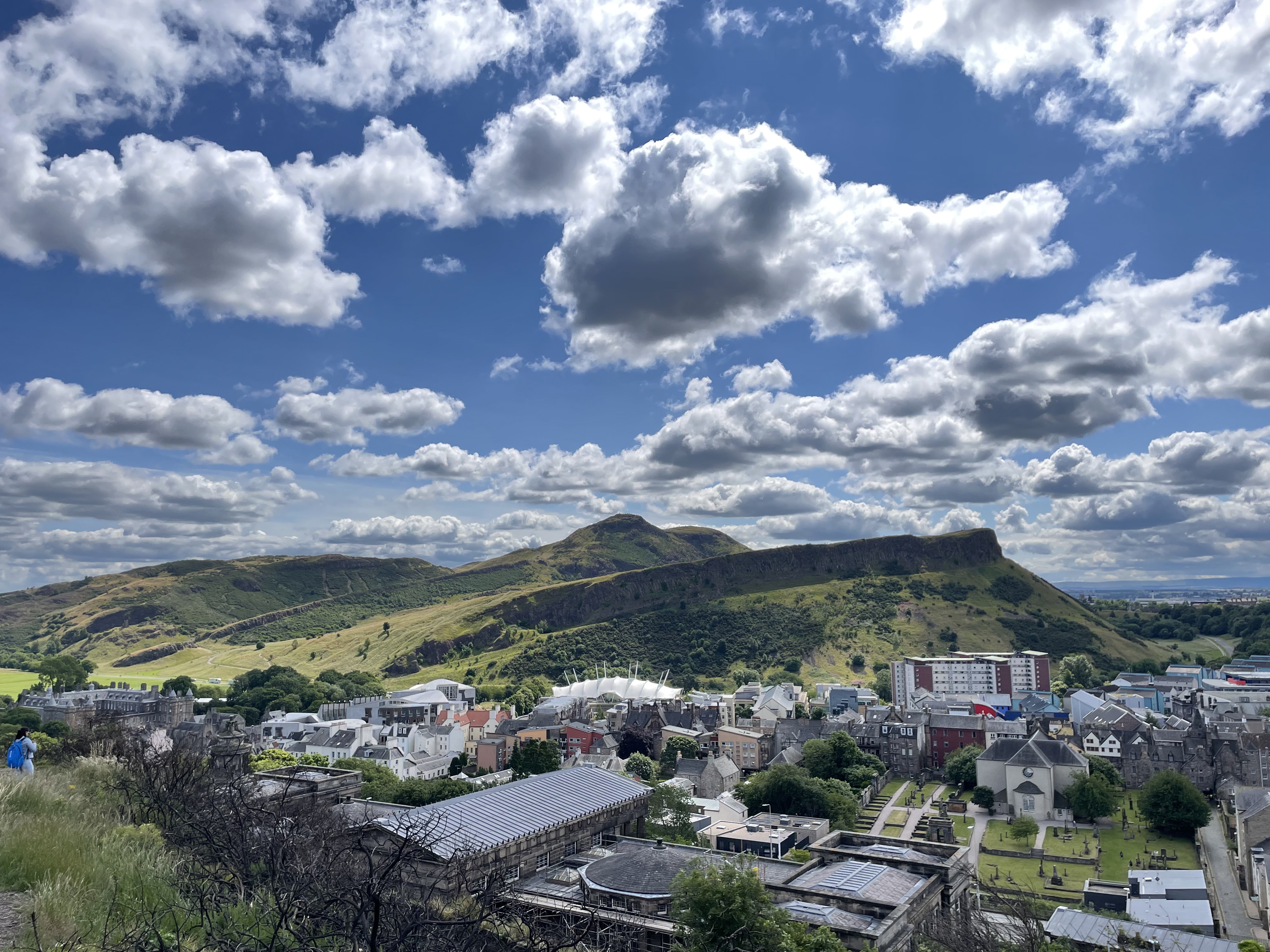
Arthur’s Seat From Calton Hill

Breaking the Routine – To Visit and Be Visited

After Jane’s Mother’s funeral early last month, we had visits from my Dad and my sister and then my Best Man (BM).  A quiet week followed before we headed off to Belfast to see Youngest Son (YS) and his partner.  I’ve written a lot about my retirement settling me into a new structure of daily routine but these visits were a nice break from that and forced changes to our settled pattern of everyday life – a beneficial shake up.

It had been quite a while since my Dad and sister had visited us.  Whilst there have been no structural changes to the house or garden since their last visit, the garden has matured.  The weather was largely fine and the garden was approaching its best in terms of colour and variety.  This, despite the loss of several small shrubs and many of the ornamental grasses during the cold and wet of late Winter and early Spring.

Garden Colour: Late May Irises

We ventured out on a few short local walks together while my Dad and sister were with us.  Unfortunately, the bluebells in the woods on the way into town were well past their best but there was enough to see and the strolls were pleasant and largely sunlit. 

We also had an excellent dinner at The Woolpack Inn in Slad near Stroud (thanks Dad!).  This pub was made famous by the poet, Laurie Lee and it’s a great venue to go to with visitors to Gloucestershire.  On one hand it looks like what people typically envisage an old rural pub to be (the toilets are still outside!) and the atmosphere is intimate and cosy.  On the other hand, it offers modern, excellent food, and smiling but unoppressive service.  In addition, I had a really well-kept pint of India Pale Ale.

Double Rainbow From Our Dinner Table Window At The Woolpack

Later in the week, the arrival of my BM, an old friend from university, was dominated by his exciting news that he is getting married.  We met his fiancé, a lovely Chinese woman, in 2020 just before the Covid lockdown.  After a lockdown apart, they are now together in Kenya and planning their wedding.  It’s a lovely story of late life (for him, anyway) romance and we enjoyed catching up with that and the other developments in BM’s life during good food and long walks.

Our trip to Belfast was long awaited.  YS and his partner bought a house there at the end of last year and we have been keen to visit it and them since then.  YS wanted to settle into the house – and get the spare bedroom renovated – before inviting us.  Then that invitation was postponed by YS and his partner taking on the responsibility for a large and lively puppy.  We finally arrived to meet ‘Reggie’!  He is a disruptive handful but they love him despite his chewing of the furniture and the digging up of the lawn. 
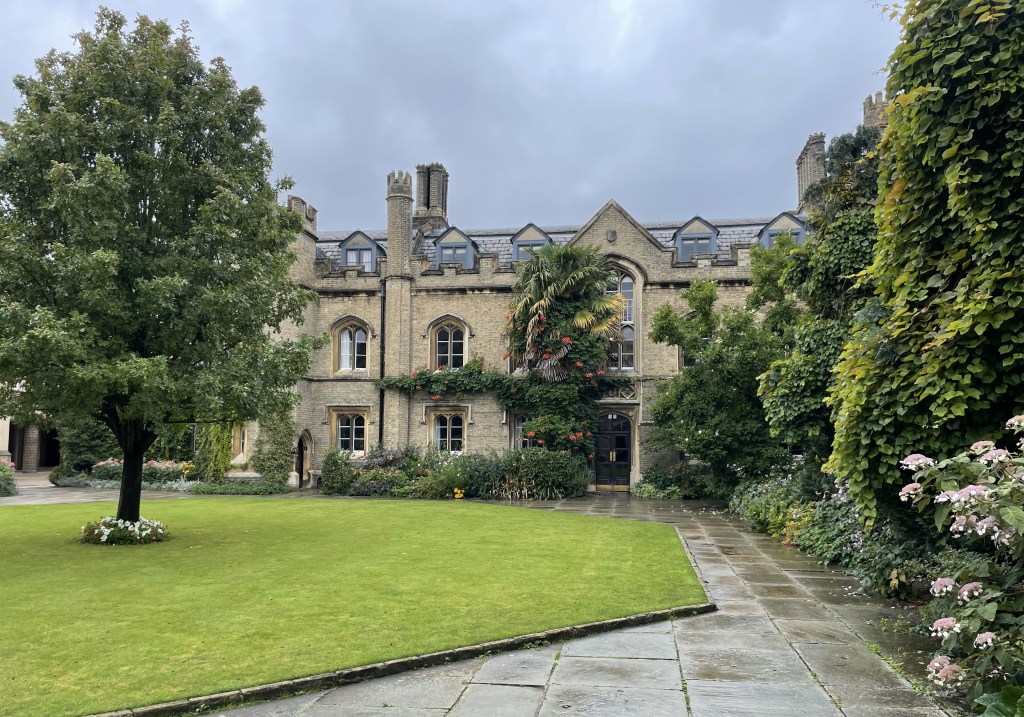
Reggie

The house is already great and has a lot of potential.  I liked the local area, Ormeau, very much; it is a much larger residential area than I remembered with several roads with pretty Victorian terraces and later rows of larger, well-built houses.  There are a smattering of attractive independent businesses on the main road and river walks and the Belfast Botanic Gardens and Ulster Museum are nearby. 

Inside The Belfast Botanic Gardens Palm House

We visited the Botanical Garden Palm House briefly but spent far longer in the Ulster Museum.  This has a very diverse set of exhibits and attractions set in an airy combination of old and new buildings.  Since YS moved to Belfast, I have focused more than before on articles and television programmes about Ireland but my understanding of its history remains thin; the museum provided a lot of reminders and filled in a lot of gaps. 

Inside The Ulster Museum With Porcelain Works By Frances Lambe And Nuala O’Donovan

As well as displays about Ulster and Northern Ireland history there was some beautiful craftmanship on show.  Overall, it is well worth a (free!) visit and I’m sure we will go again.
The weather in Belfast was noticeably cooler than back in England but it was mainly sunny and clear; perfect for walks along the coast to the east of Belfast and around the green enclaves of Belfast along the Lagan River – both with and without Reggie. 
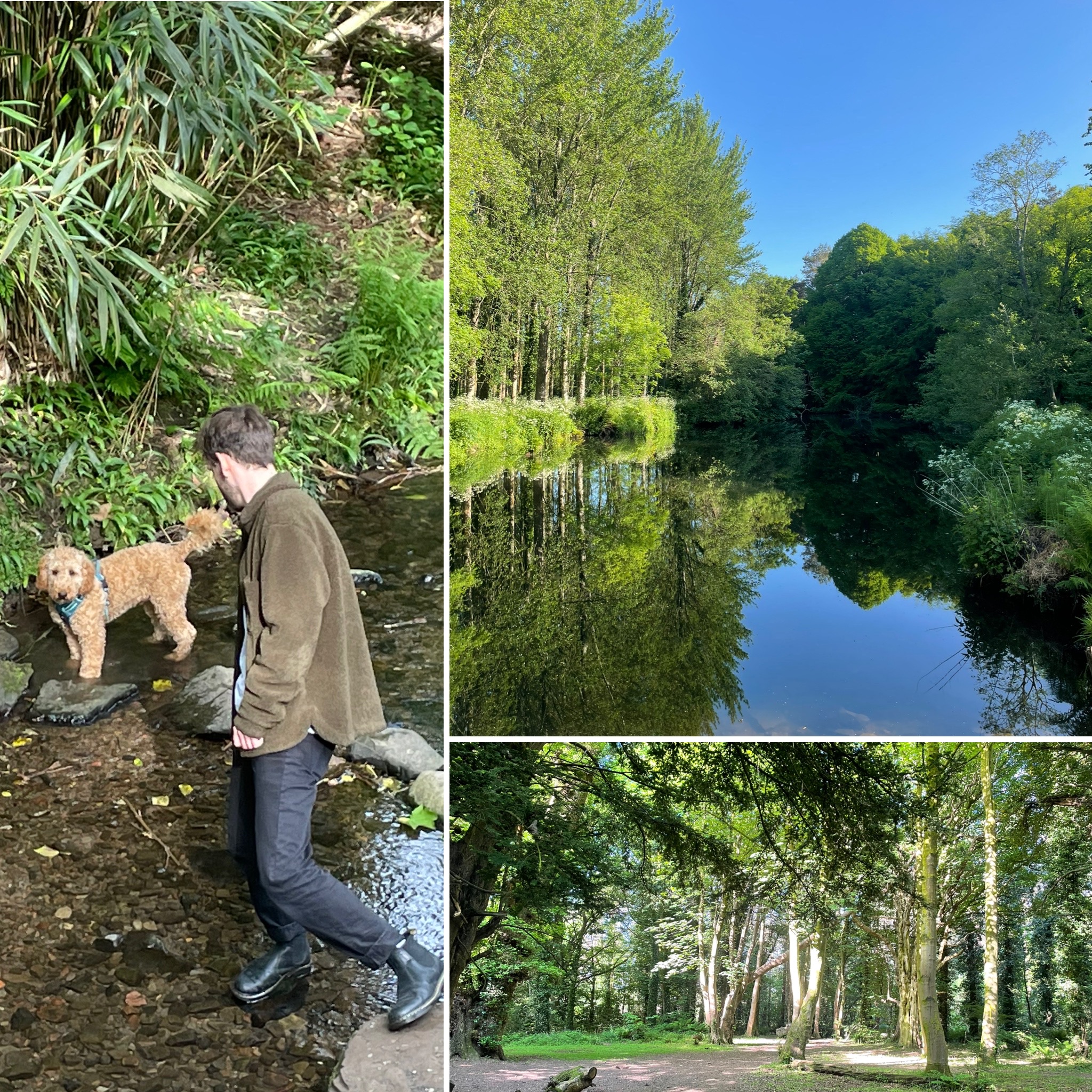
Walking With Reggie in Belvoir Park Forest, Belfast
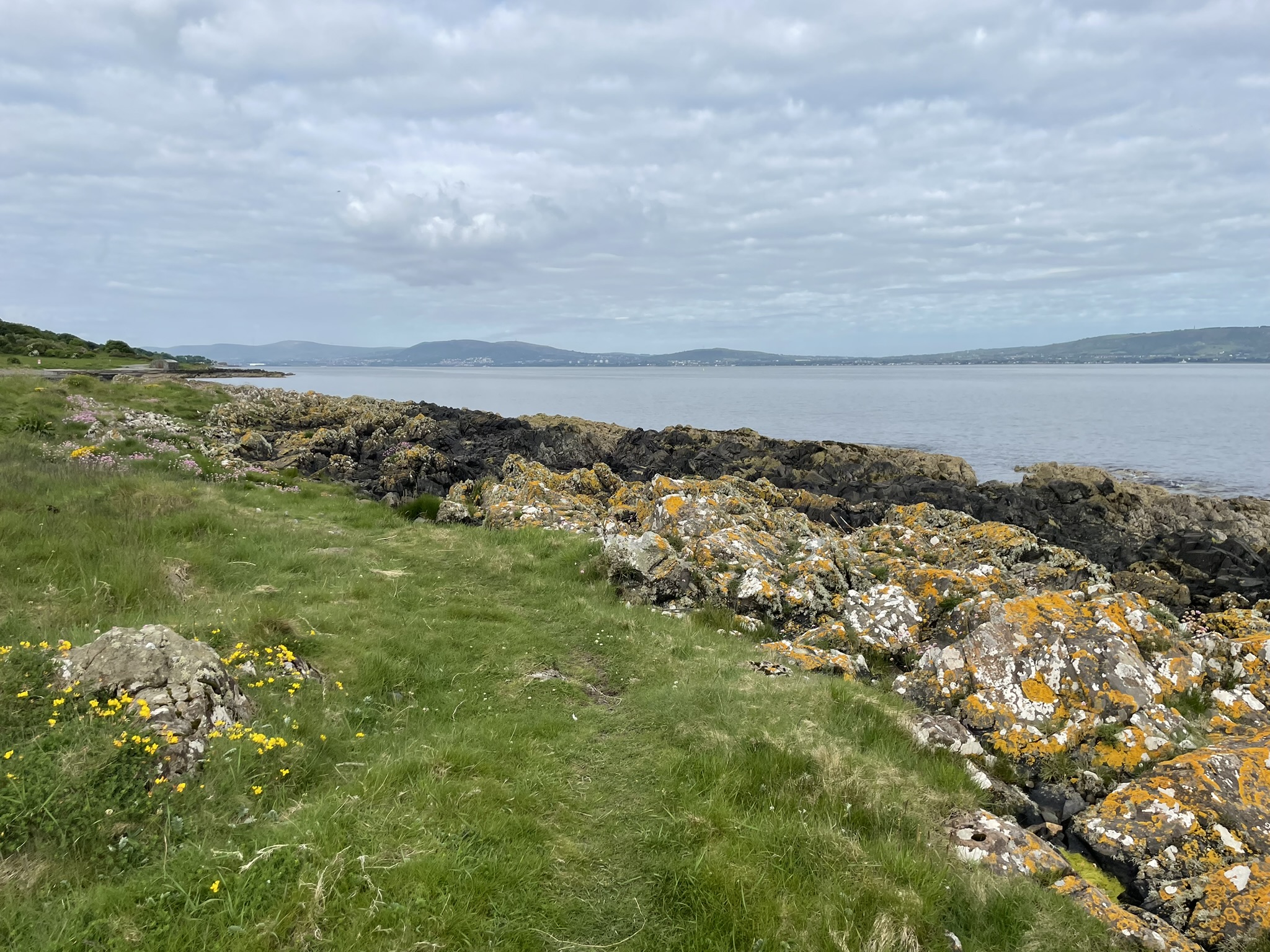
The Path On The South Side Of The Lagan Estuary
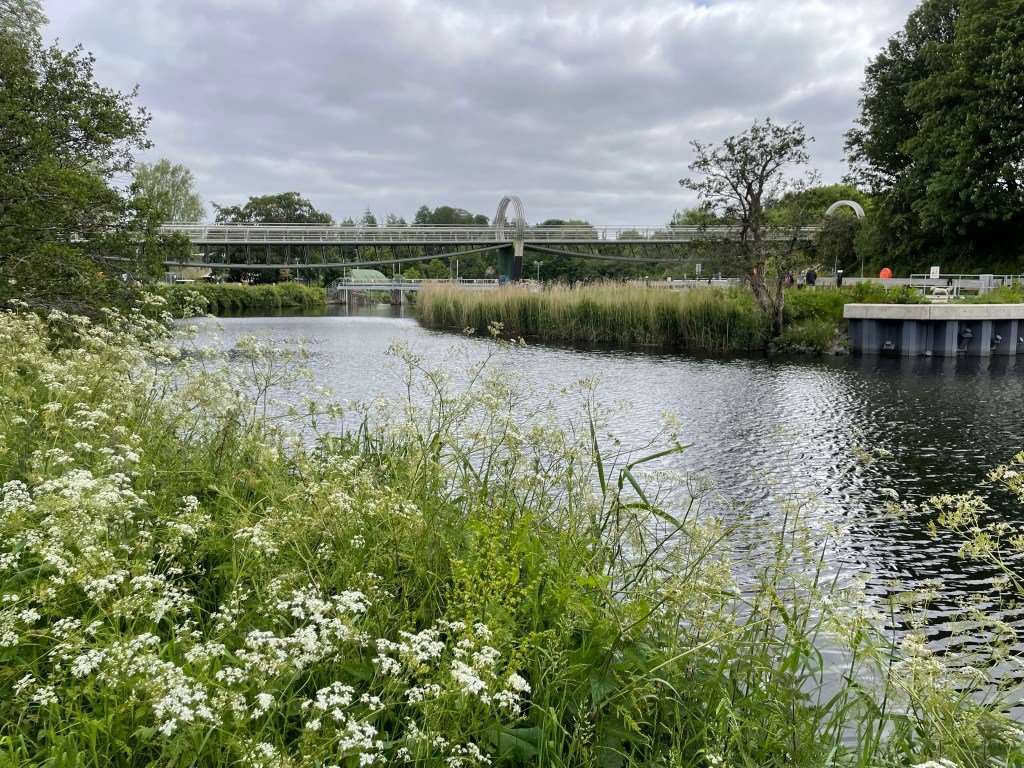
Lagan Meadows, Belfast

We were also able to leave Reggie so we could visit YS’s place of work in a renovated set of warehouses and factories in East Belfast.  His offices weren’t open but we were able to sample a beer (and a few games of Bananagrams – YS loves games!) in the Boundary Brewing Taproom next door.

YS’s Office And Building

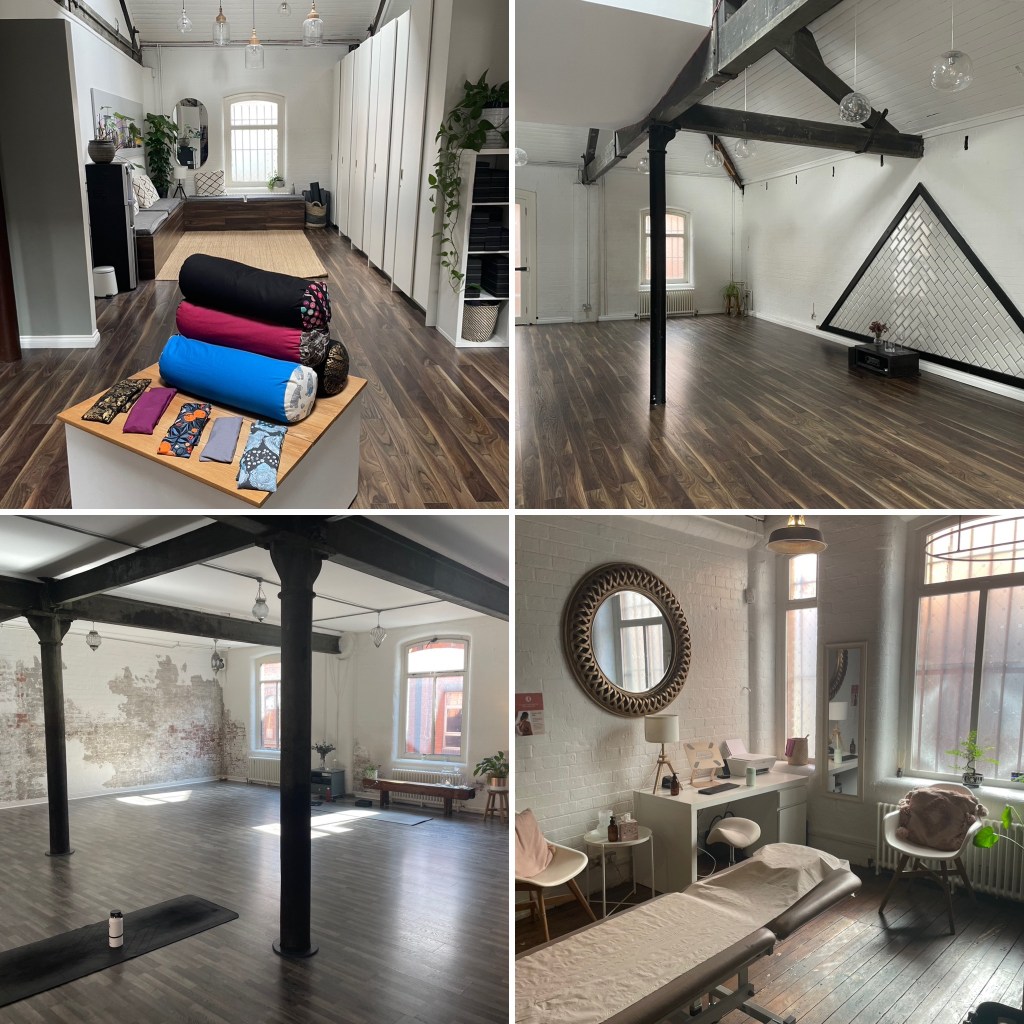
YS’s partner’s business (Restore Osteopathy) is more centrally located in the Cathedral Quarter.  Here she practices not only osteopathy in a very attractive treatment room but also leads yoga and Pilates classes in two large, ideally suited rooms.  It’s a wonderful space for what she does.  Both YS and his partner have more than found their feet in Belfast.

YS’s Partner’s Yoga Spaces And Treatment Room

Belfast itself is very lively and seems to have so much potential if only the politics would calm down and business could invest with even more certainty.  It is a small city compared to London.  But, like Edinburgh (which is about 50% bigger) it is a capital city, has some impressive things to see and is attracting increasing numbers of young people setting up new businesses. 

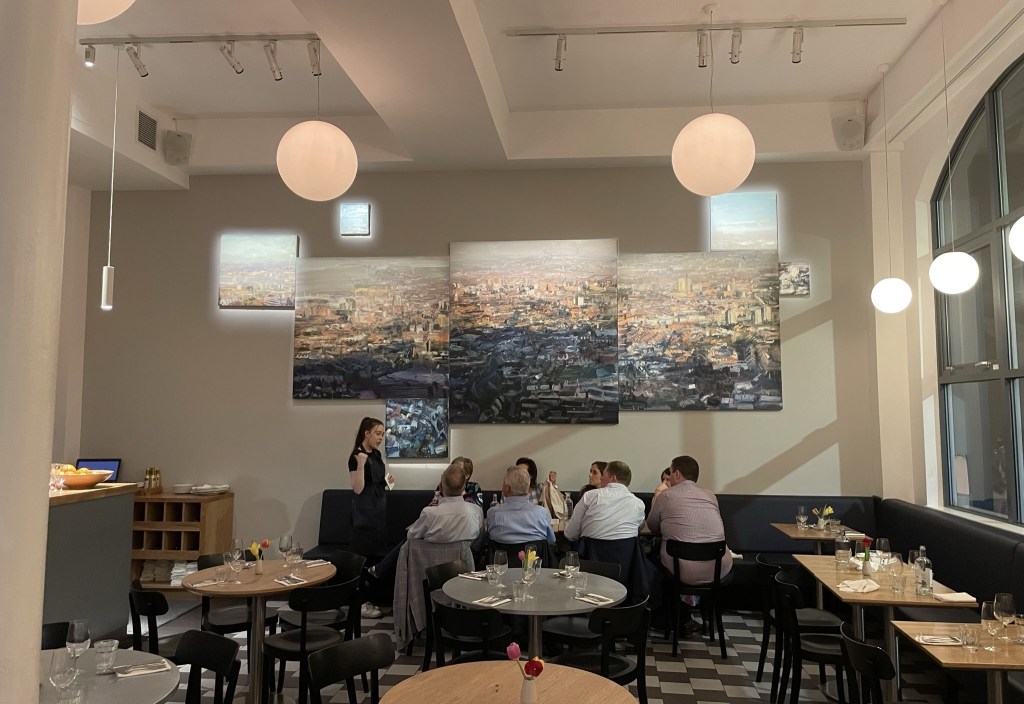
Great coffee houses and interesting and enjoyable restaurants are popping up across the city.  On this trip we ate at EDŌ where we had a welcome chance to catch up with YS’s partner’s parents (thanks for dinner guys!) and Waterman House.  We breakfasted on trendy bread from an bakery (Bakari) apparently using Icelandic recipes.

Waterman House Restaurant With A Large Painting Of Belfast By Colin Davidson
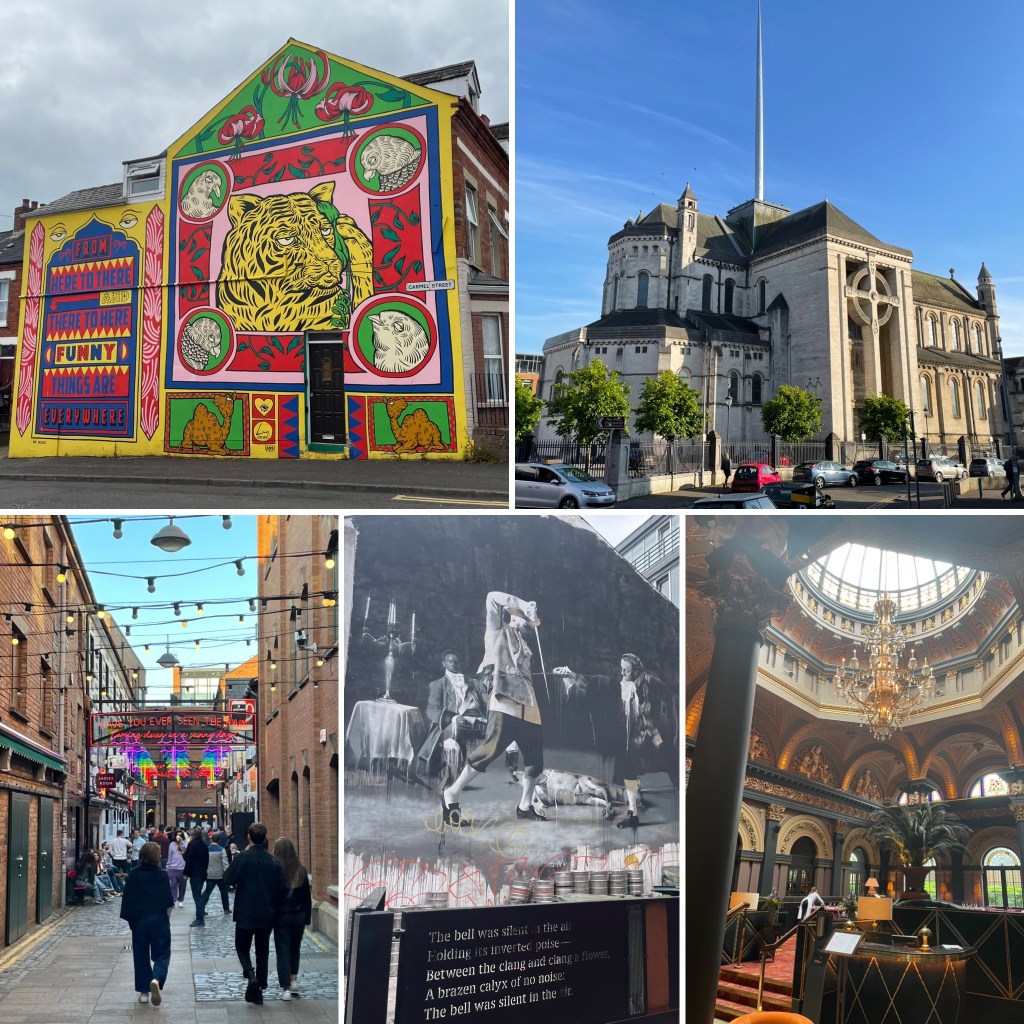
Belfast Cathedral Quarter

Being visited and visiting others disrupts our well-worn micro-routines.  This is a good thing.  Having YS ask us whether we want a beer at 4.30pm instead of waiting till our traditional 6pm drinking time is a good challenge.  Not finding time to do the Quick Crossword at 5pm is actually ok for a day or two.  Having to scrabble around in the depths of a cupboard for our sugar bowl for a visitor that takes sugar in their coffee isn’t much trouble really.  Dealing with the issues of a new puppy is unsettling but helps to keep us on our toes.  Seeing new places and finding out about them is always interesting.  We should, and will, do more and I should avoid getting stuck in my ways.

Going to the Food Bank

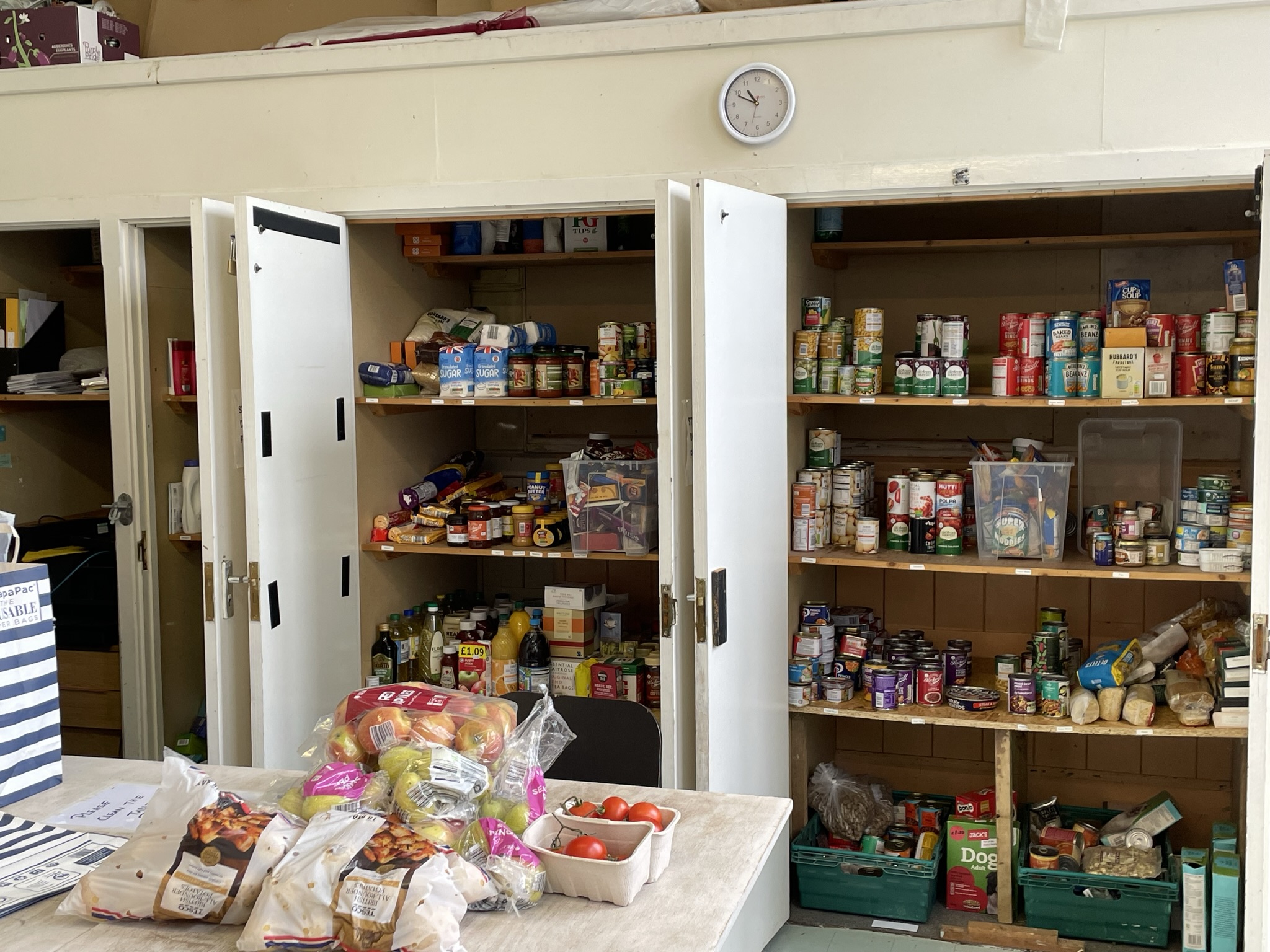
I started working at the Stroud Food Bank about 9 months ago.  I only work for about 2 hours a week and, usually, only to put away stock and to fulfil (i.e. pack up) orders for the Food Bank’s ‘clients’.  Some weeks I get a bit of extra arm stretching exercise by helping to deliver the (heavy and full) food bags to clients’ homes.

The location is in central Stroud and it operates as one of the outposts for the much larger warehouse, run by the The Trussell Trust, in Brimscombe, a couple of miles away.  In the year to March 2023, The Trussell Trust has delivered almost 3m emergency food parcels in the UK.  In Stroud district we delivered 8,663 of those – a huge 77% increase on the previous year.

Stroud Trinity Rooms Food Bank

Working at the Food Bank has been eye opening and educational around the everyday problems faced by people less fortunate than me.  Often, even with very little income, people learn to manage somehow but what brings them to the Food Bank is something unexpected – sometimes a seemingly small thing – that tips their well-being and ability to cope over the edge.  The pandemic, the war in Ukraine, the cost of living surge and the lack of a proper benefits safety net have all made that tipping over the edge more frequent.

To say I enjoy working at the Food Bank would be to undermine or trivialise these very real hardships but the couple of hours a week I spend there does feel worthwhile.  What is even better for me is that I am able to walk to the Food Bank (and get the bus back afterwards).  That walk has been especially lovely recently due to the advent of a lush Spring and the fortuitousness of good weather when I have to go to the Food Bank.

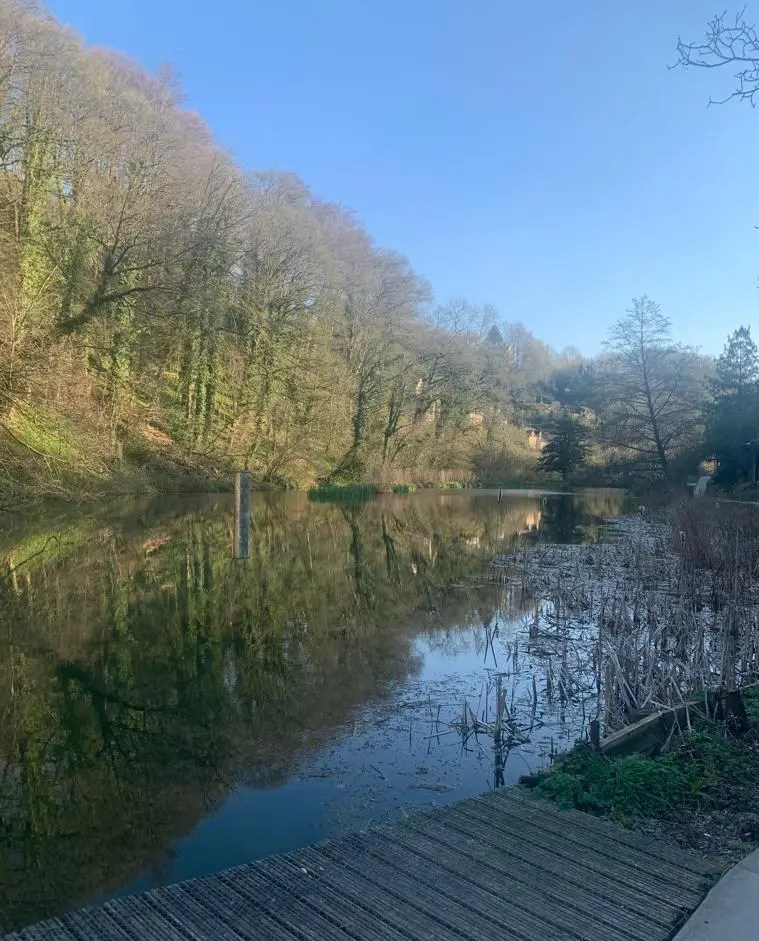
Ruskin Mill Lake Last Winter

The first 25 minutes of the walk is my normal route to our local town, Nailsworth.  I usually take the direct route along the road but even so, the views over Ruskin Mill’s valley are good and the birdsong at that time in the morning is loud and continuous.  Once in town, I pick up my newspaper and then set out to Stroud along two old railway routes now converted to cycling and walking paths. 

I love the variety along this route. 

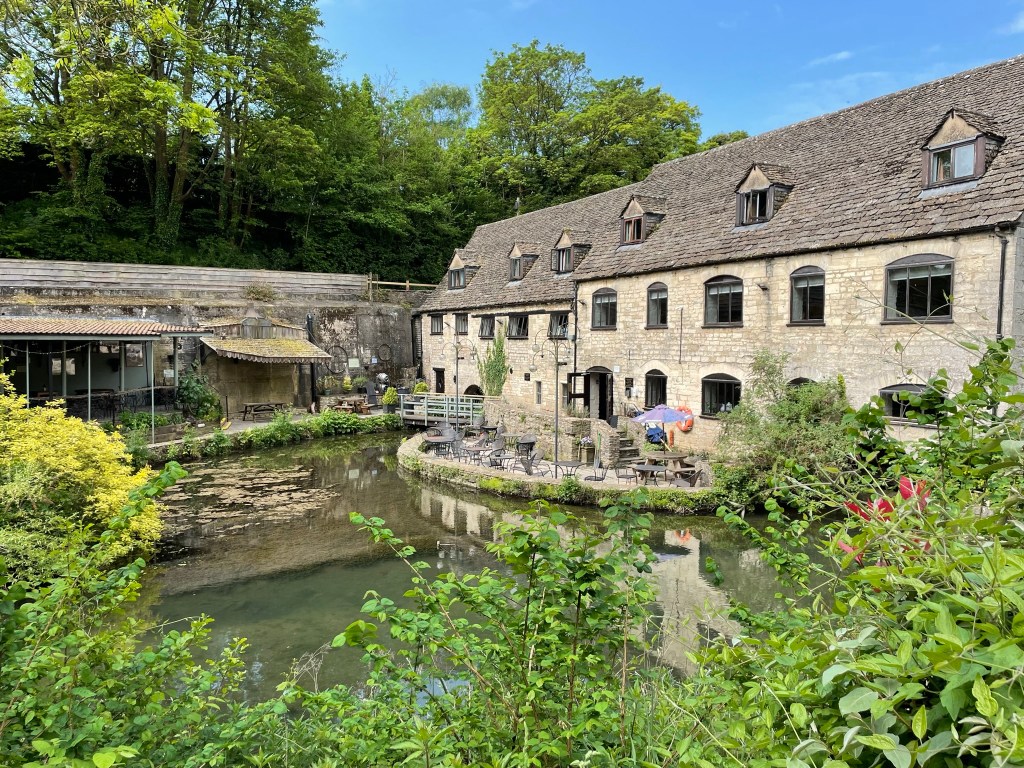
Egypt Mill – Now A Popular Bar, Restaurant And Hotel (Deserted At This Time In The Morning)

The first part follows Nailsworth Stream and is dominated by mills and their associated mill ponds.  This is perhaps where bird life and nature along the route are most evident. 

The path then squeezes between vineyards, woodlands and fields on one side and a string of light industrial buildings on the other.  These buildings include a micro-brewery, a pizza factory and numerous engineering works alongside which I sometimes pause to watch the drama of welding sparks.  Then the birdsong is drowned out by the canine users of a large Playschool for Dogs.  I’ve never seen so many dogs in one place!

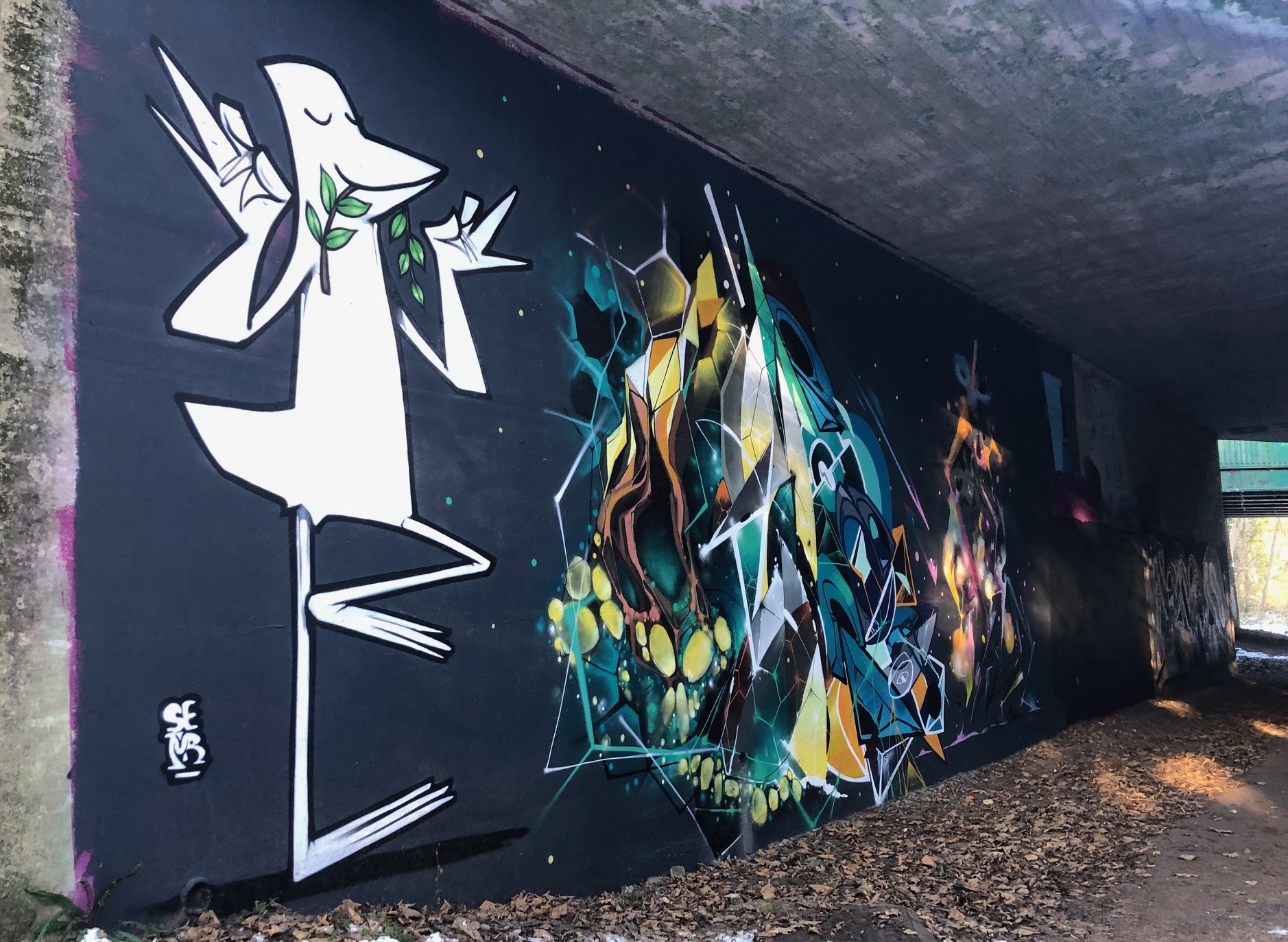
Under-Bridge Street Art On My Route

I walk under bridges covered in frequently changing street art.  Then I go past a factory making wind turbines and another associated with Forest Green Rovers Football Club’s Chairman called The Devil’s Kitchen which makes vegan meals for the football club and for schools nationally. 

The path runs alongside the main road for a while but from here there are great views up towards Rodborough Common.  Past the old and now converted Woodchester Railway Station, there is a new large residential development and its associated children’s playground before the walk returns to another leafy section.

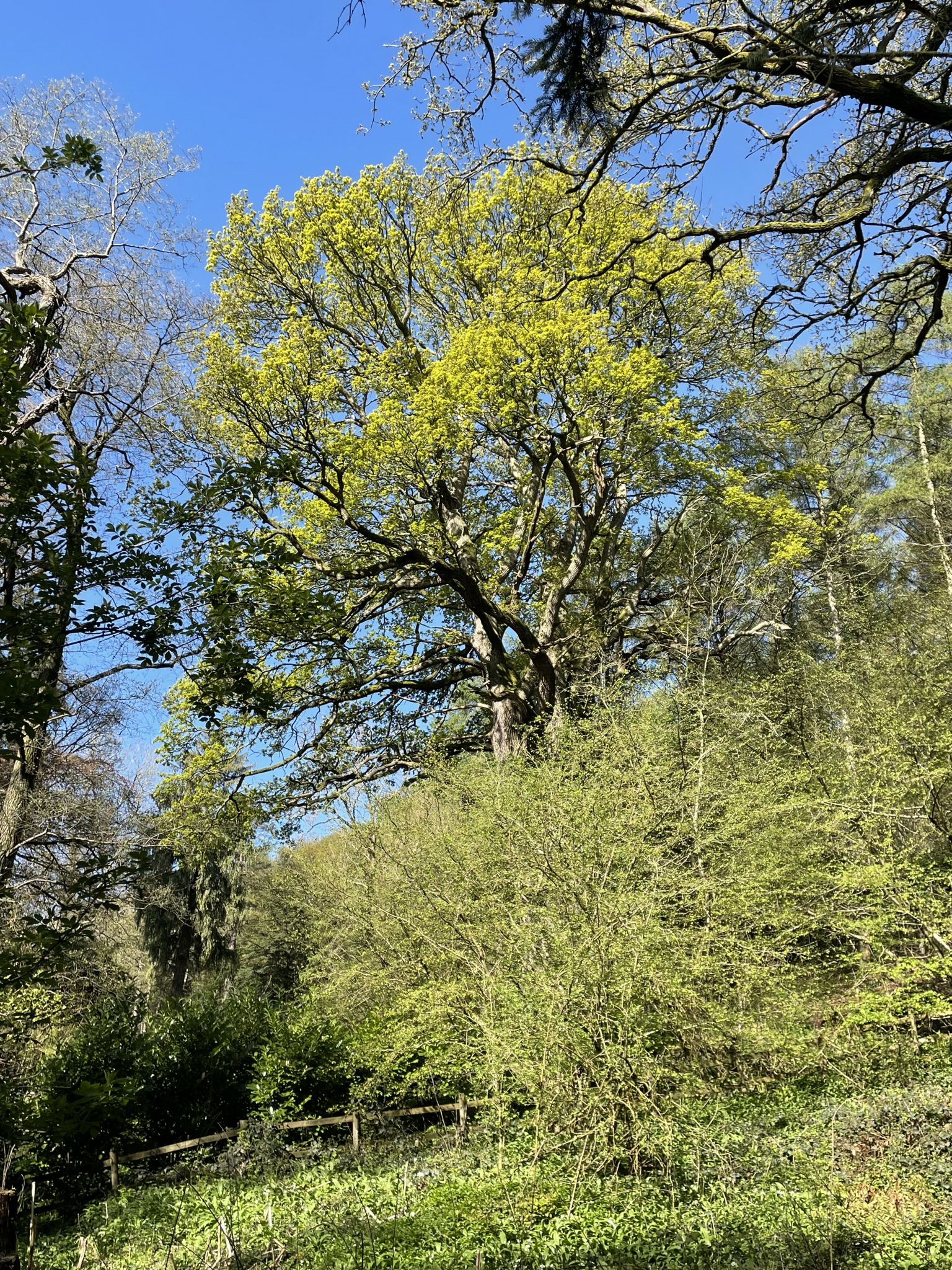
One Of Several Very Large Oaks Along The Way (The Birdsong Is Usually Intense Around Here)

The woods continue on one side but on the other are acres of factories, some of which now appear disused and ripe for some sort of development.  Most are ugly mass-constructed buildings but some are attractive, Victorian buildings that have new lives as auction houses and bases for hi-tech businesses. 

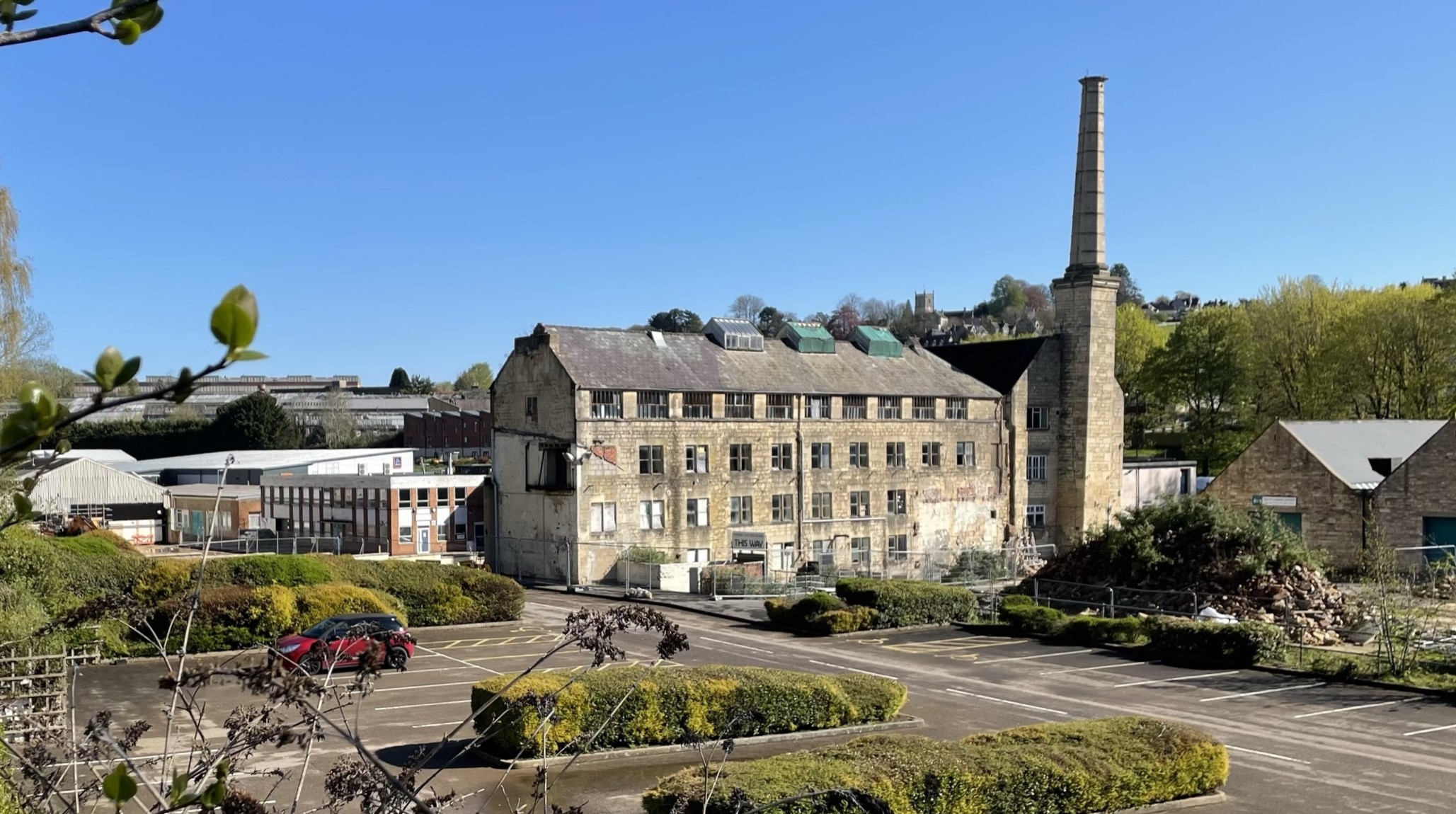
One Of The More Impressive Factory Blocks

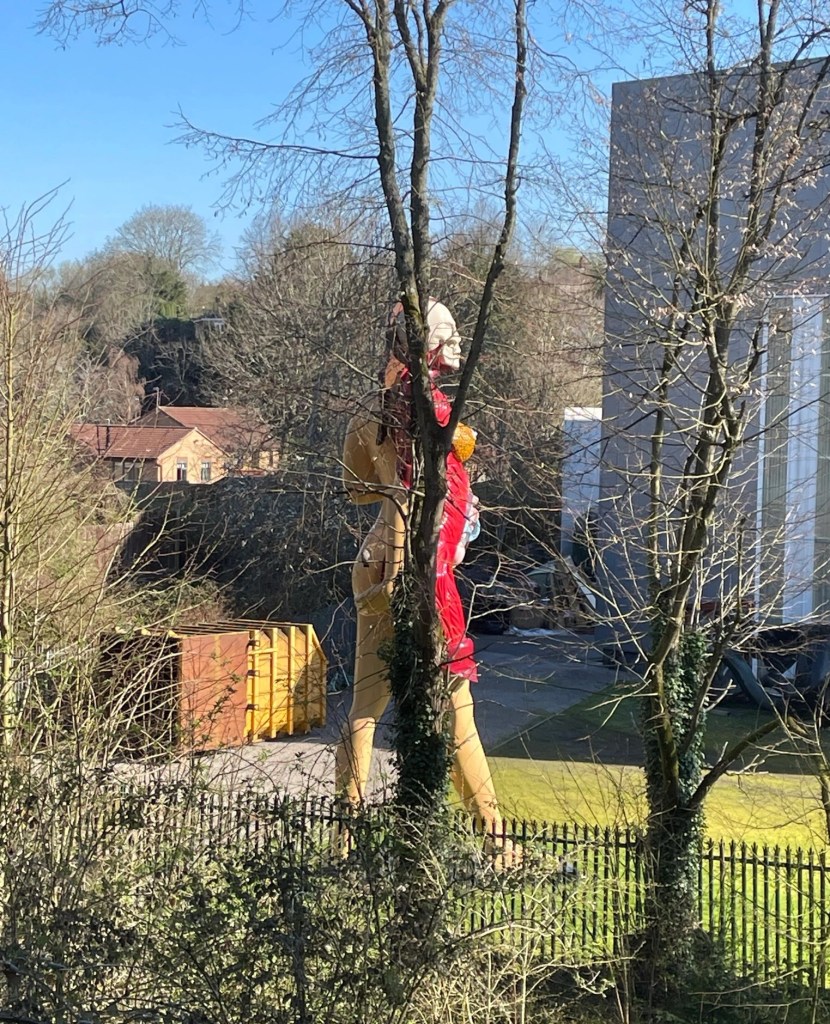
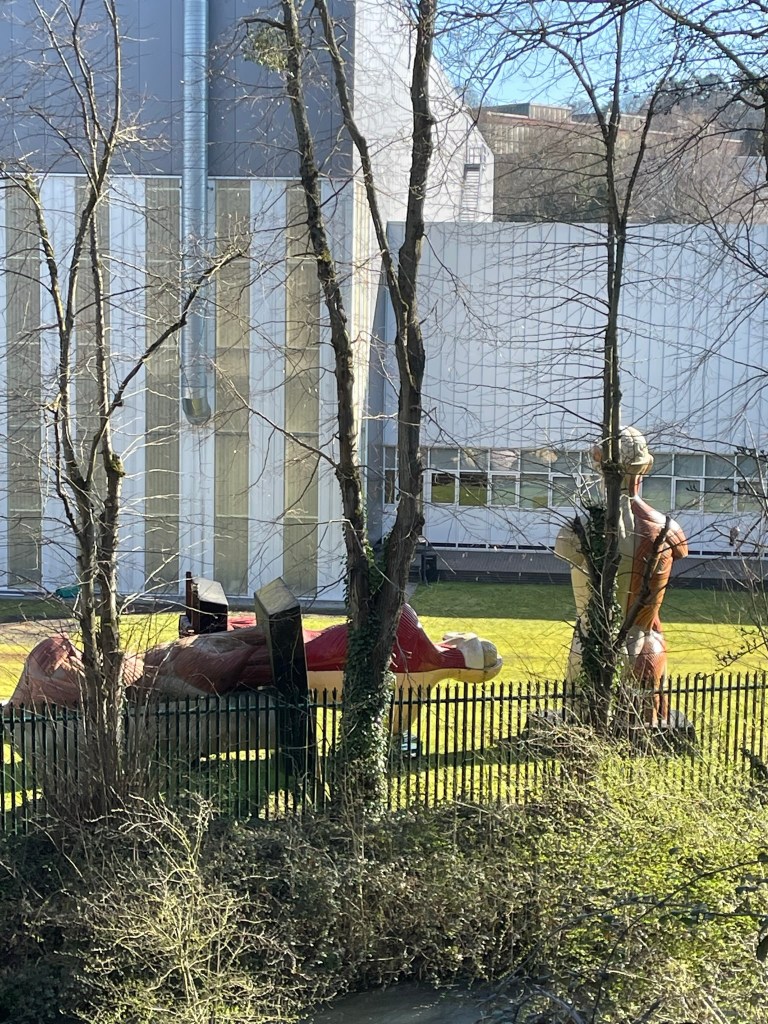
One of the largest and newest of these industrial buildings is the factory which produces Damien Hirst’s art works.  Some of his old works from his Human Anatomy series stand behind the factory and are visible from the path.

Damien Hurst’s Works Partly Obscured By Trees

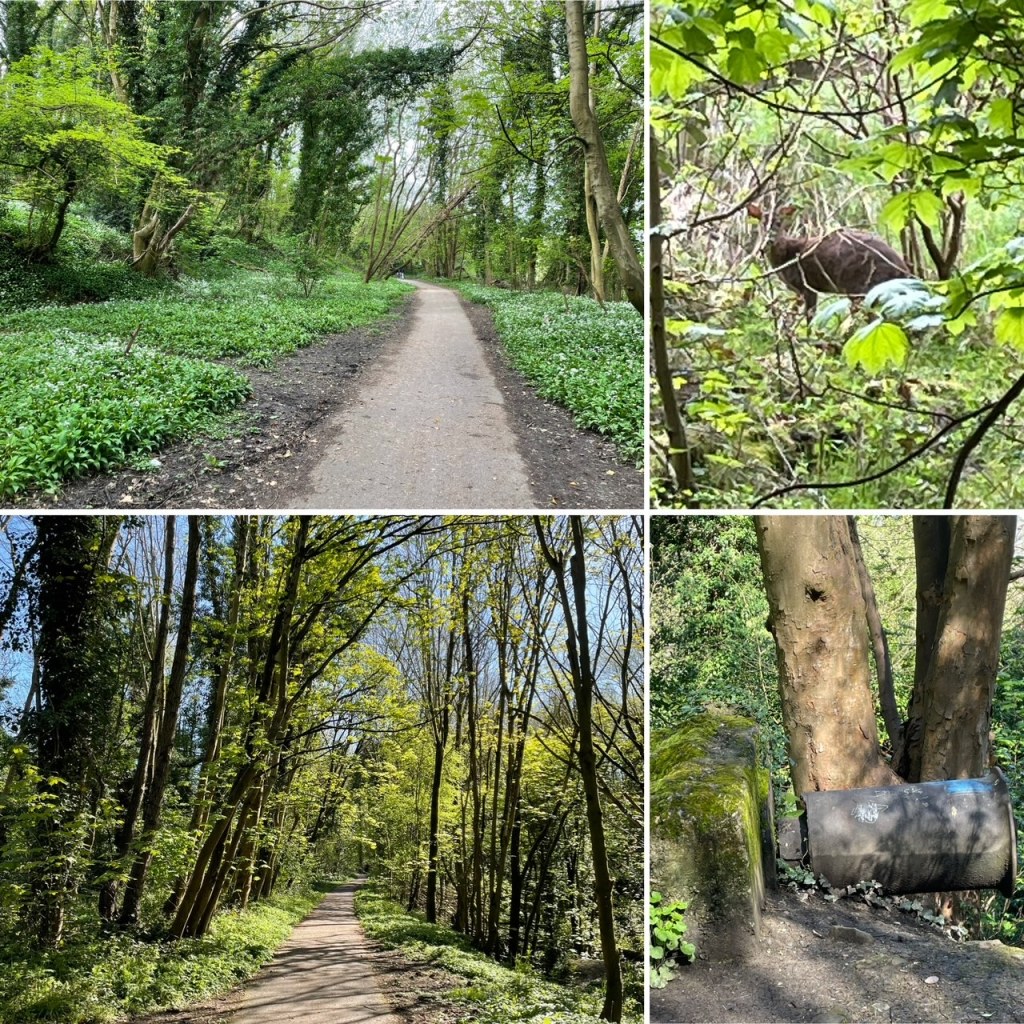
The route I take then passes briefly through a housing estate and joins another old railway route on the final leg into Stroud.  This is in a deep, old railway cutting which shields walkers from the surrounding houses and roads and then passes over the River Frome and Stroudwater Canal. 

Tree Lined Walks With (If You Look Carefully) Deer And Old Railway Line Infrastructure
River Frome At Stroud

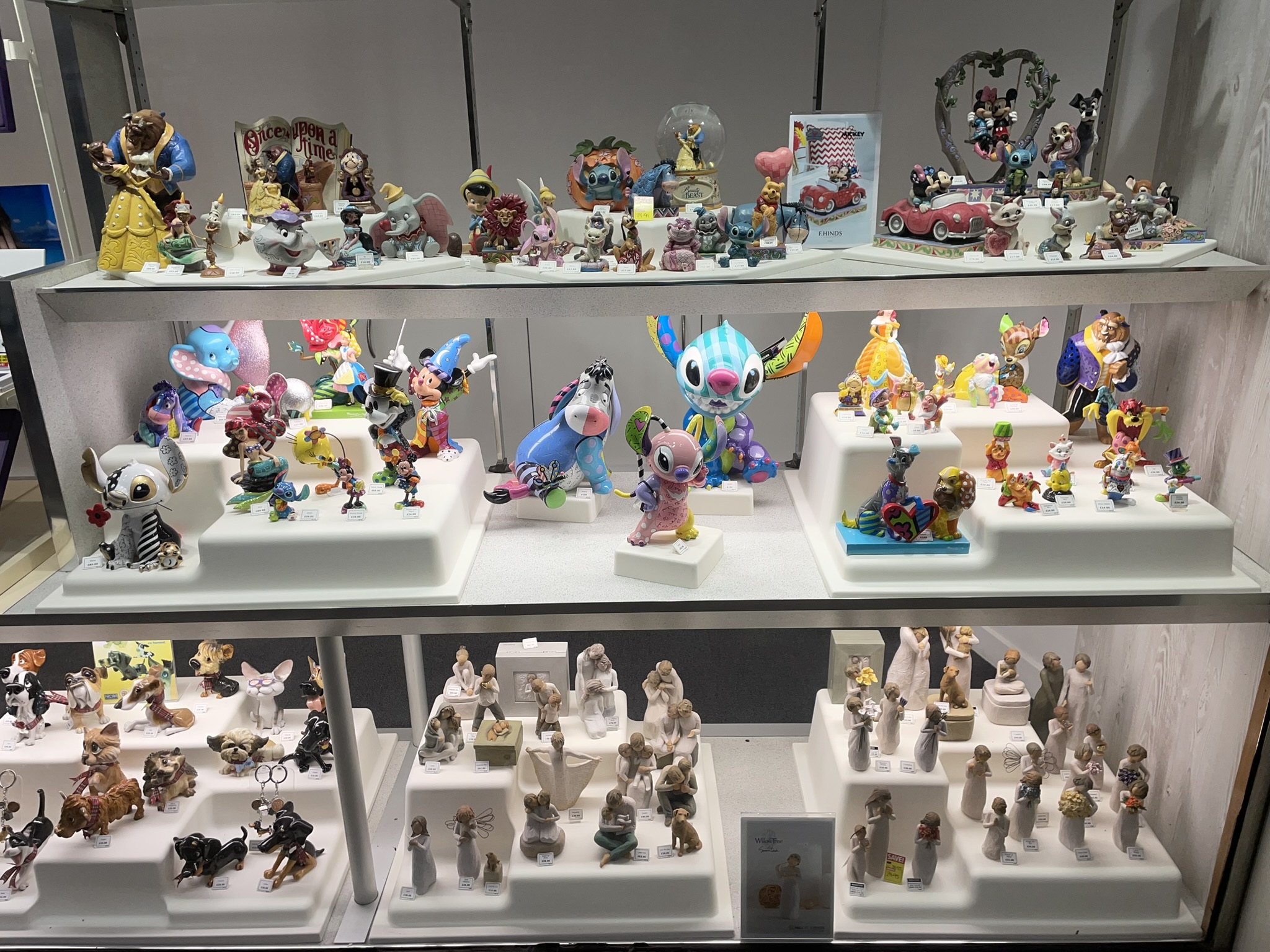
By this time my breakfast coffee intake needs attention so I dive into the recently re-modelled shopping centre before heading up through the town to the Food Bank.  The shopping centre itself is a mixed bag of street food outlets, depressingly empty up-market clothes and accessories shops, and discount goods outlets.  It’s a strange mix of businesses.  Even the large and prominent jewelers in the centre is a strange mix of expensive watches, jewelry and garish ornaments. 

Not For Me But People Must Like These Ornaments Given Their Surprisingly High Prices

In a way, the diversity of the shopping centre, and that of the stock of the jeweler’s shop within it, reflects the unusualness of Stroud and the surrounding district.  It has a left wing, ‘woke’, hippy vibe with one of the best Farmers Markets and (arguably) the country’s first fully organic cafe (Woodruffs).  But it is also very much a grounded, working town surrounded by historical and current wealth.  It is a blend that is also reflected, perhaps, among the mix of ‘clients’ and volunteers at the Food Bank.

Places to Go, Things to Do

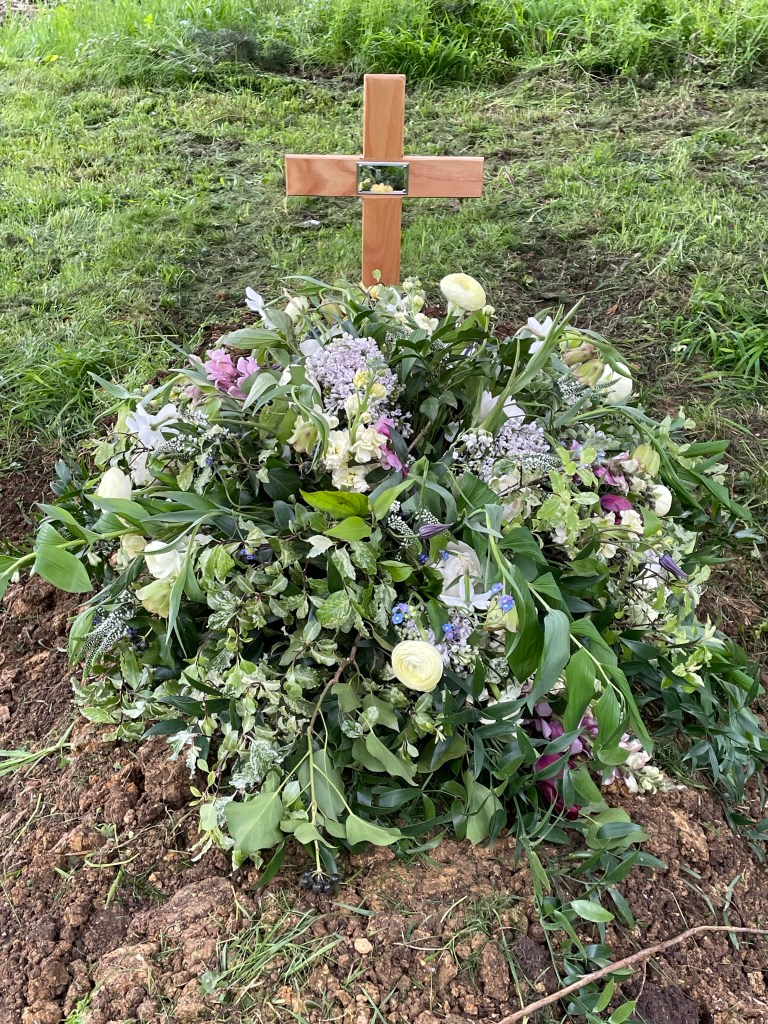
Our three sons came from Edinburgh, Bristol and Belfast to stay with us to attend Jane’s Mum’s funeral and then my birthday brunch.  The funeral was very well attended and passed flawlessly, peacefully and movingly.  My birthday was low key but very enjoyable.  It was great to have all three sons in one place for the first time for a while, to hear them banter with each other, and to chat to.

Beautiful Funeral Flowers

Two of them asked, independently, what on earth I fills my time in retirement.  I’m not sure I was entirely candid about my occasional post-lunch snoozes or the rather excessive amount of time I spend looking at my mobile phone – though they are also fairly guilty of the latter so they would understand.  But what struck me once again as I tried to answer is how busy my life still seems to be. 

The routine of walking to the nearest town for the daily shopping and the newspaper, reading that newspaper and the weekly Economist magazine, preparing lunch and (50% of the time) dinner, all takes up hours of relatively relaxed time.  I spend up to a day a week in local climate action and other village activities and another half a day at the Stroud Foodbank.  I have recently inserted an hour or two of gardening into the routine (not enough, but it’s a start) partially at the cost of my frequent walks around the local countryside that usually constitute my main exercise.

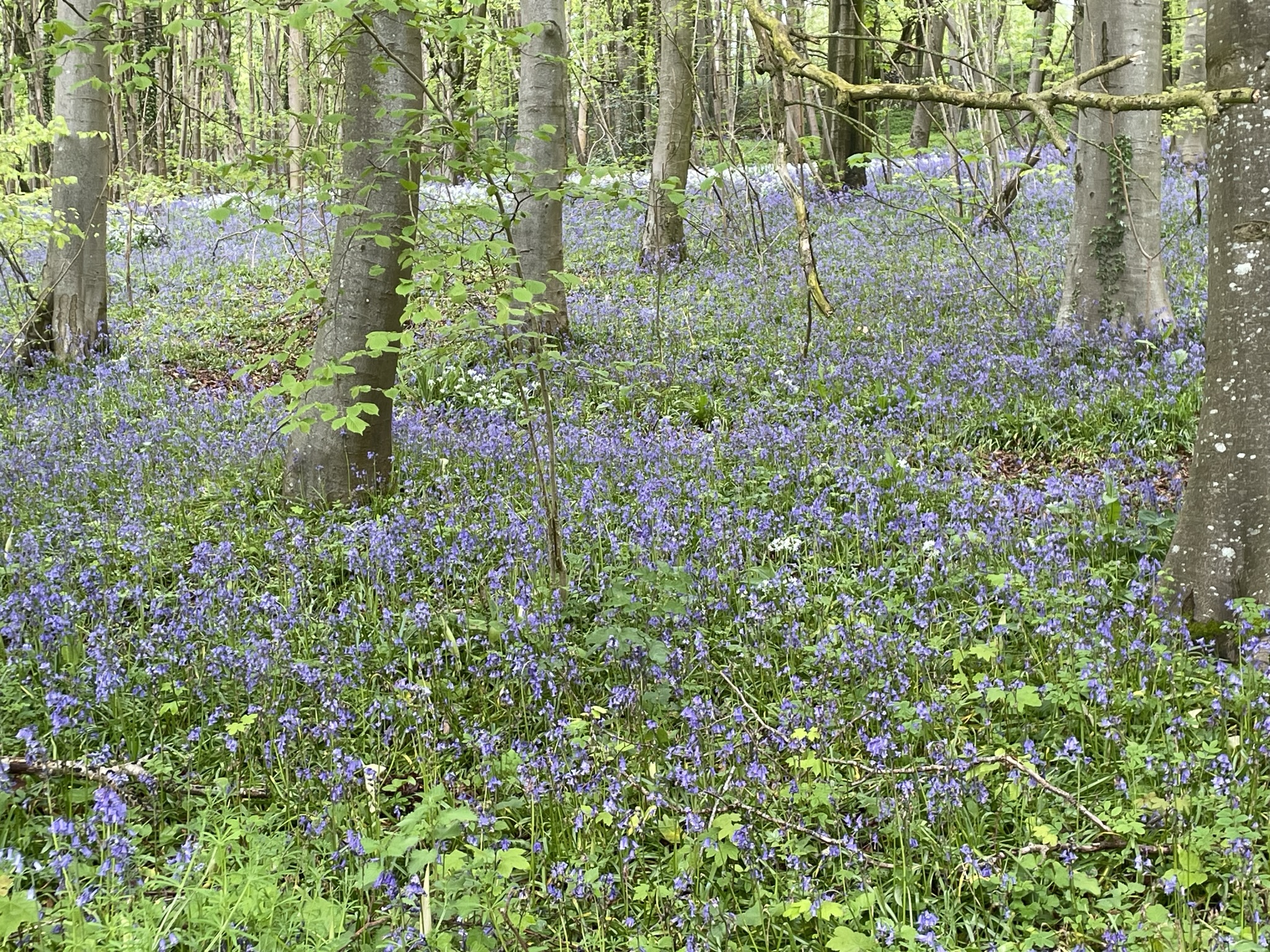
Peak Bluebells And Wild Garlic

The early evenings comprise of the ‘Quick Crossword’ over a cup of tea and/or visits to the local pub.  Later, we watch streamed TV series (we tend to gravitate to dark European crime thrillers) and then its time for the BBC News, 15 minutes reading in bed and sleep. 

So, even in weeks without trips to Edinburgh or funerals to attend (and there have been two in the last month unfortunately), I feel pretty occupied.  How did I fit 10 hours a mid-week day on work?  It was interesting to hear Middle Son start to feel the same way now he has given up his job for a bit of downtime before a ‘gap-month’ travelling in Columbia.  He too seems to have found that available time just gets filled with activity.  In retirement, those activities are mainly non-urgent and discretionary; suits me!

Our trip to Edinburgh last month to see First Grandchild (FG) and his parents was as rewarding as usual.  FG is discovering the desire to exert control and is developing a temper, a willingness to do things but only at his pace and when he is ready, and a sense of humour.  Its lovely to see his development in the videos we are sent but even more so face to face.  Maybe I just lack the recall power but I think work got in the way of appreciating all of this in my own children at FG’s age.

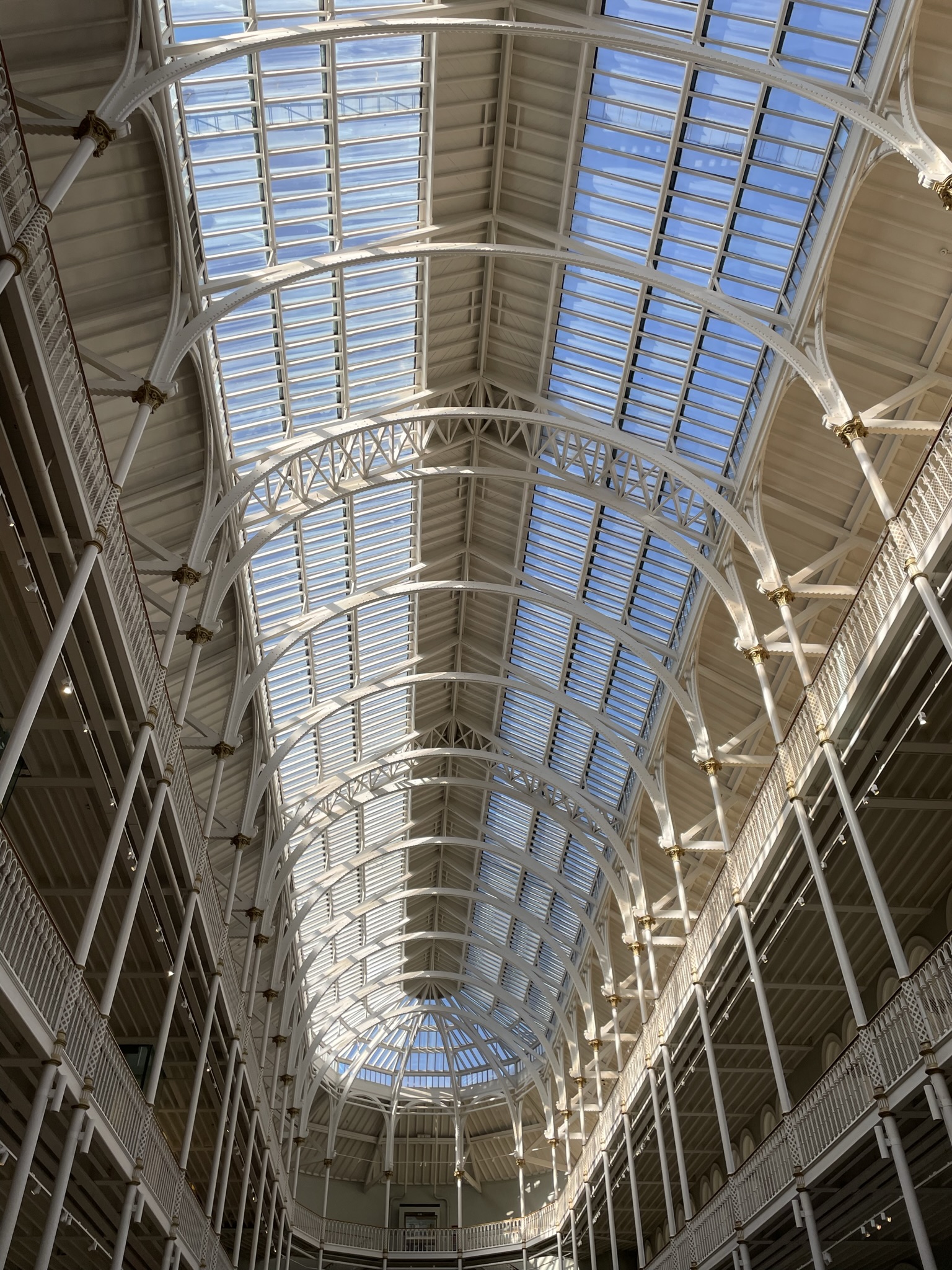
The Splendid Roof Of The Scottish National Museum’s Main Hall

As usual, taking FG out to the National Museum of Scotland, to the Royal Botanic Garden and to the local playgrounds were highpoints during our Edinburgh trip.  It’s wonderful to see that everything through his eyes is so new and something to learn about. 

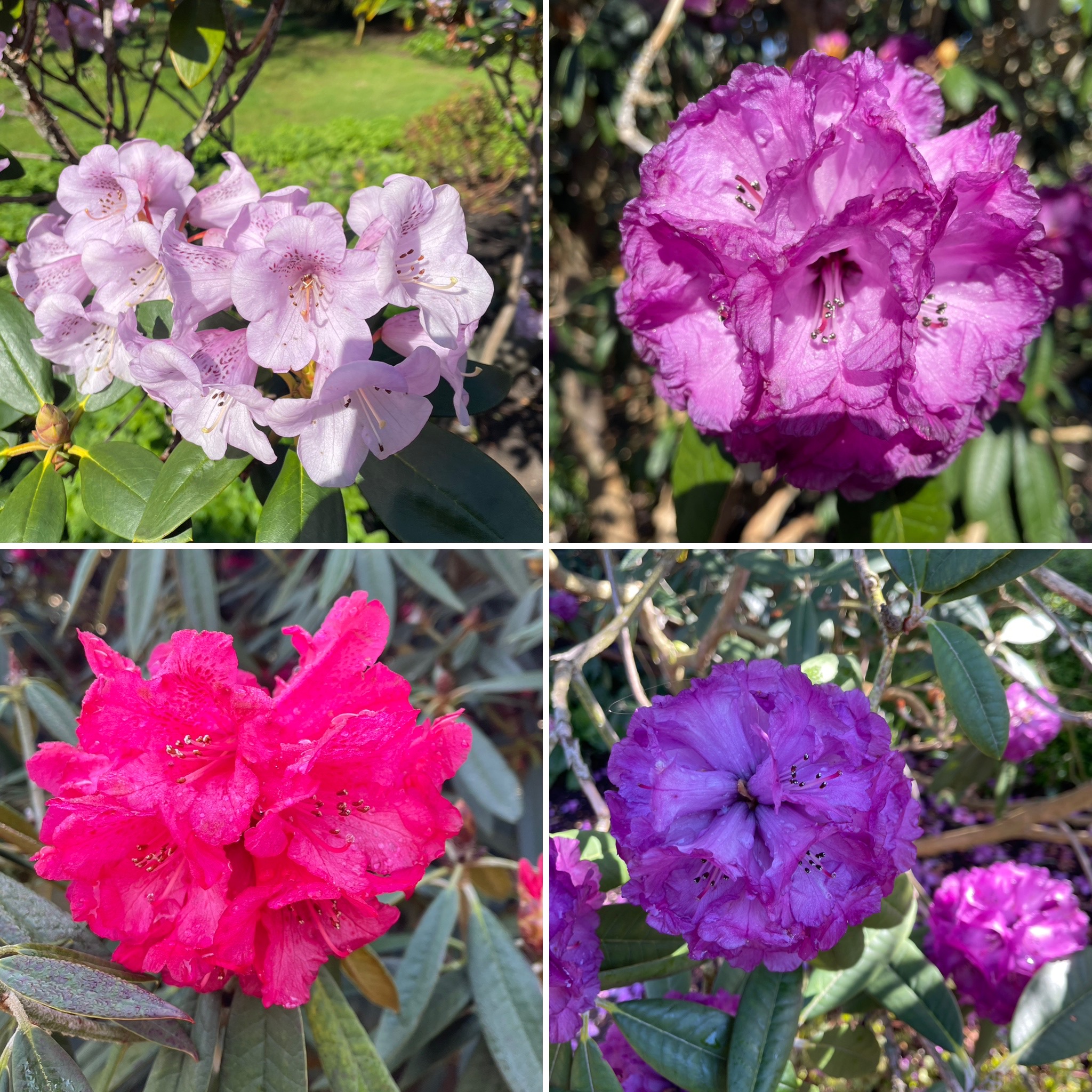
Royal Botanic Garden, Edinburgh: Rhododendrons Out In April!

However, there were many other treats amid the hospitality offered by Eldest Son and his wife and the fun of being with FG.  Jane and I walked to Leith where I bought her birthday present in advance and with her close guidance.  On the way back we stopped off at Spry, our favourite wine bar in the city. 

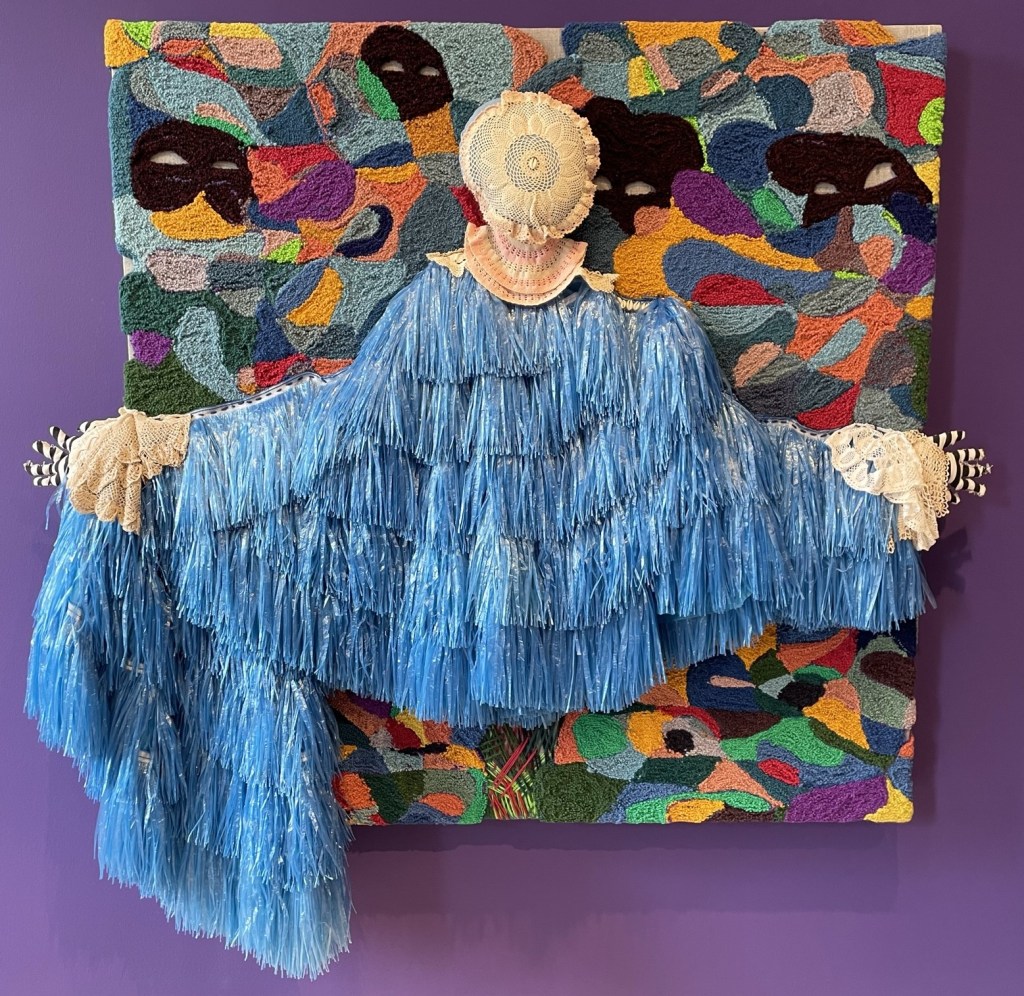
We also visited the Scottish National Gallery of Modern Art to see an exhibition of Alberta Whittle’s work.  We had seen an exhibition by her in Bath a few months earlier which we had enjoyed.  However, although the exhibition in Edinburgh was much broader in ambition, neither of us enjoyed the individual works so much this time.

‘Taking A Leap Toward The Ancestors’ By Alberta Whittle (2022)

Our cultural immersion while in Edinburgh continued with a brief stop at the private The Scottish Gallery (mainly to see some pretty floral paintings by Angie Lewin) before exceeding all our daily steps targets by crossing the city again to visit the Dovecot Studios.  This was a real highlight.

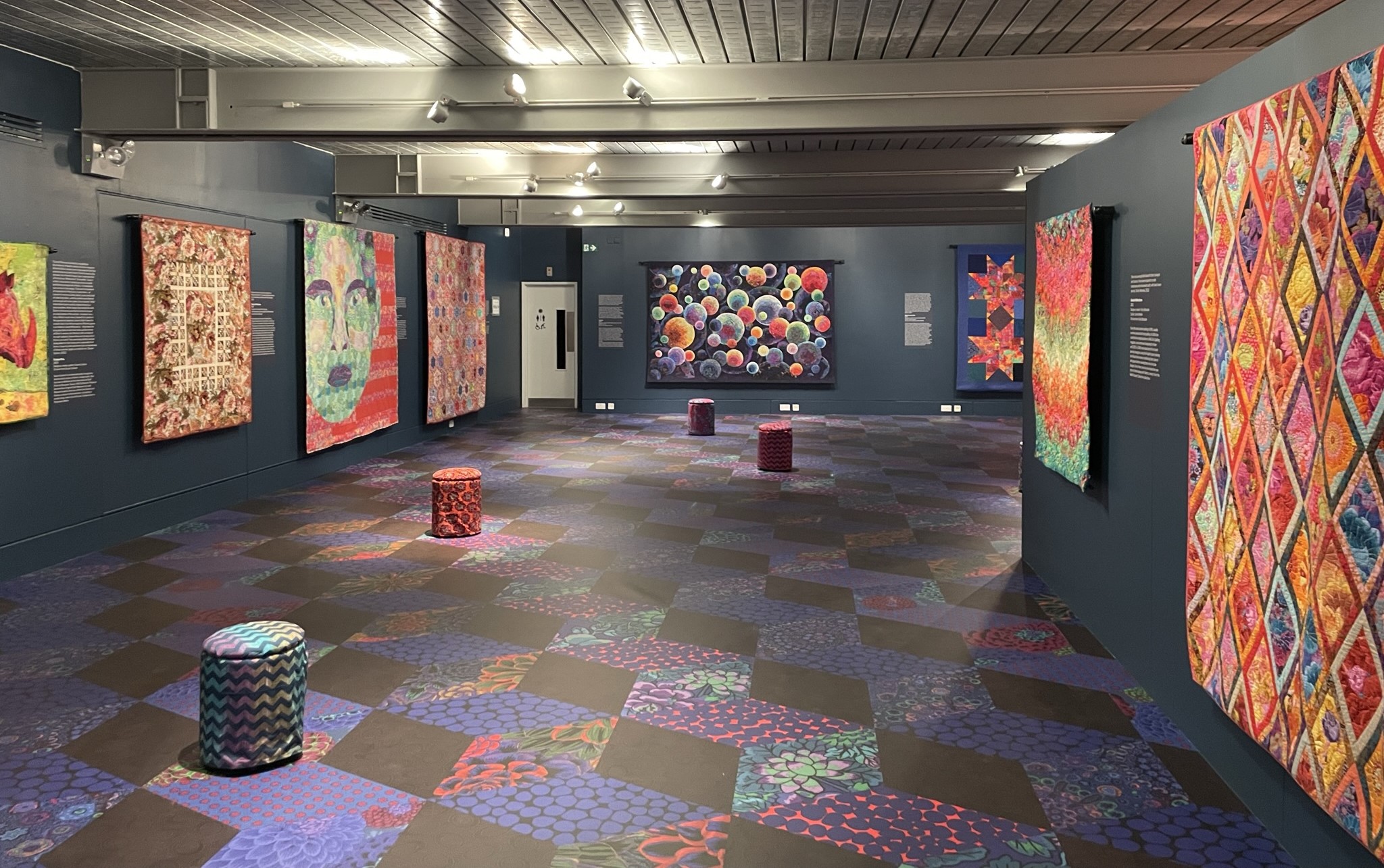
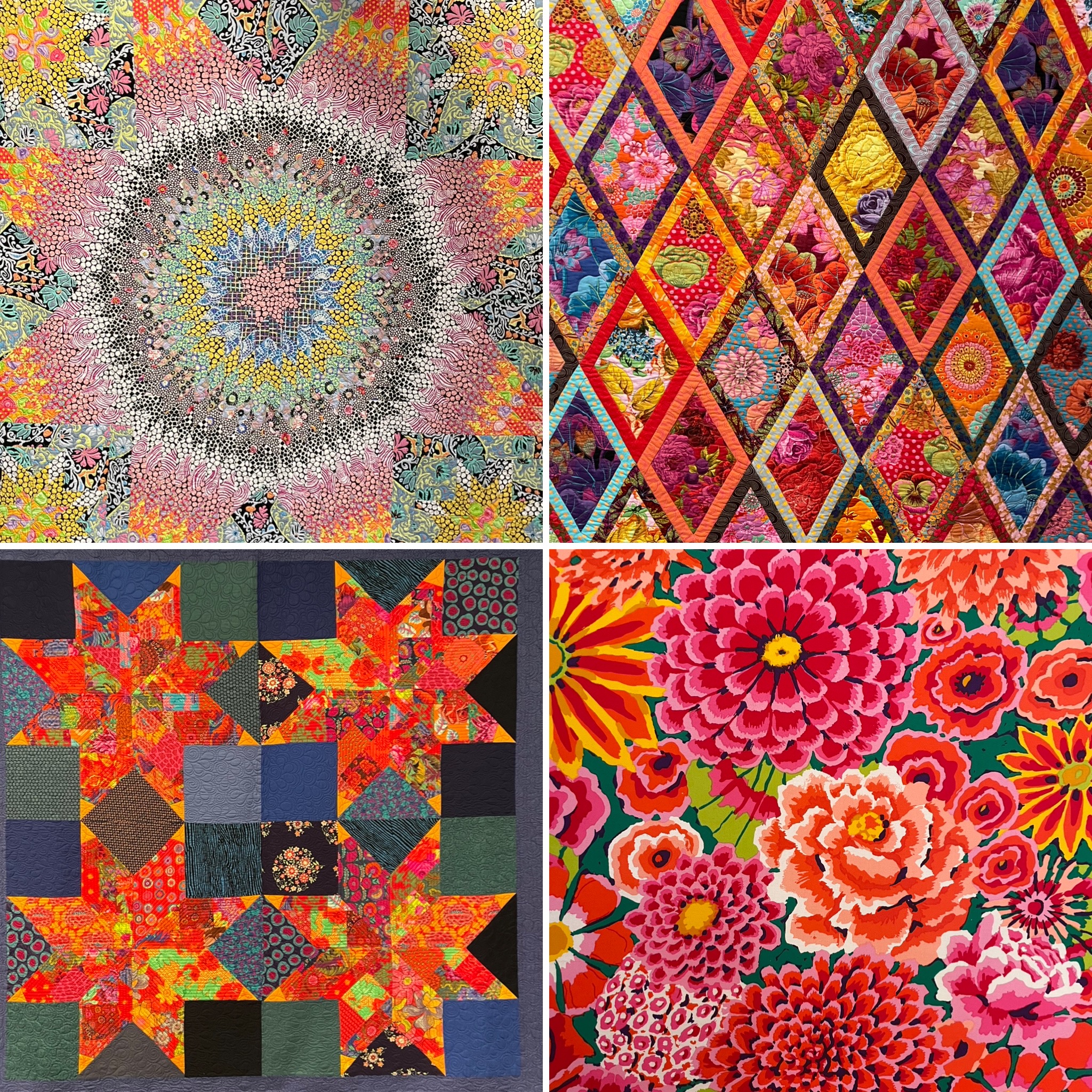
Part of the Kaffe Fassett ‘Power Of Pattern’ Exhibition

Not only was there an excellent exhibition of textiles by and inspired by Kaffe Fassett called ‘The Power of Pattern’, but the tapestry studios themselves were fascinating.  I was only vaguely familiar with Kaffe Fassett but I loved a lot of the work on show here – mainly because of the vibrancy of the colour – and I learned a lot about his philosophy, way of working and his collaborations with others. 

Close-ups Of Quilted and Tapestry Works By Kaffe Fassett And Followers

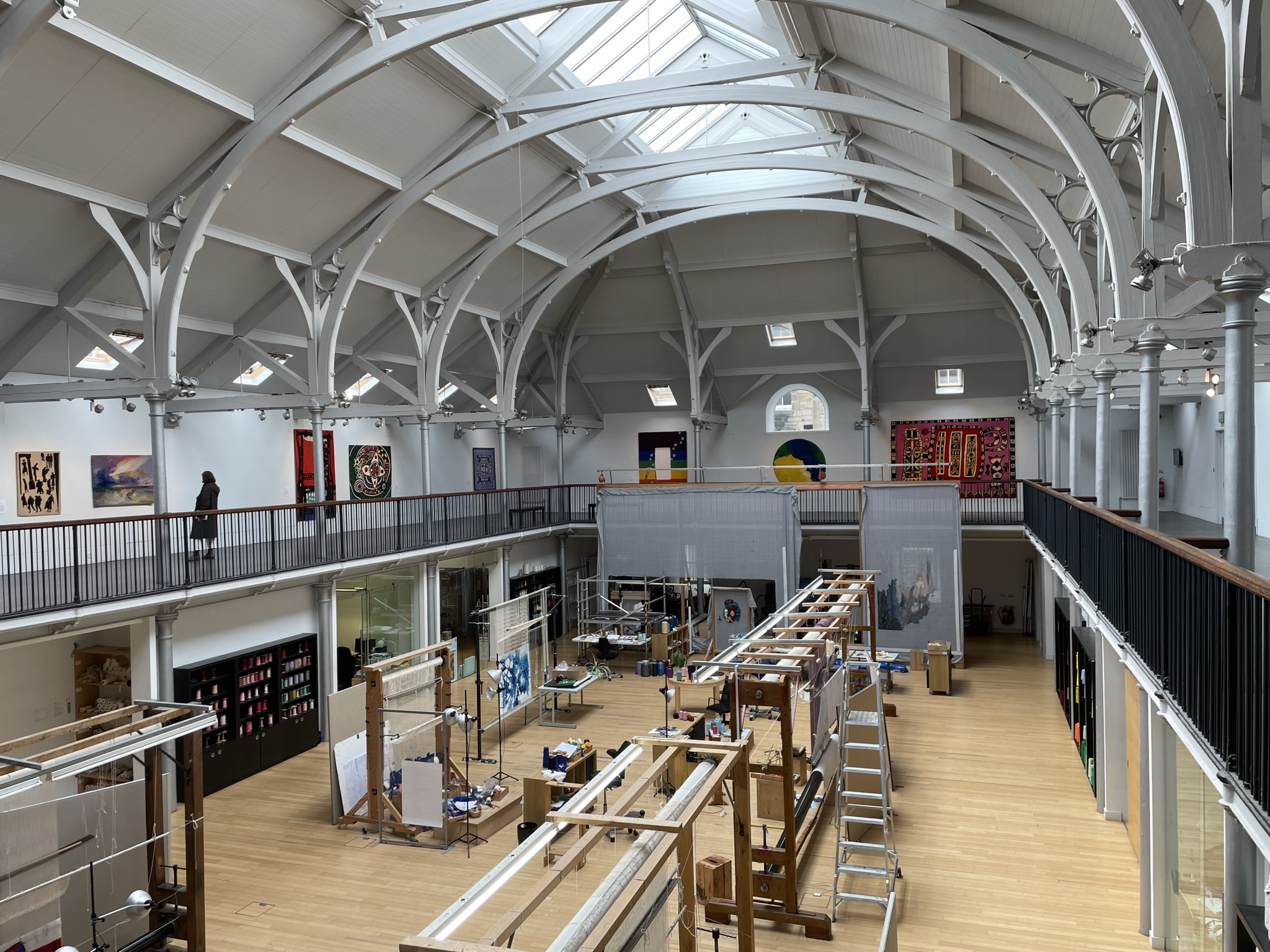
The tapestry studios at Dovecote are restored and re-purposed swimming baths that were part of the now defunct infirmary.  The space is airy and dramatic.  The floor – what presumably was the bottom of the swimming pool – is an art space that is currently occupied by a series of looms of varying sizes and types.  Each contained part-finished tapestries that suggested the huge effort that has to go into each.  Upstairs, completed tapestries illustrating various techniques and styles are on display.  We really enjoyed the experience.

Dovecot Studios

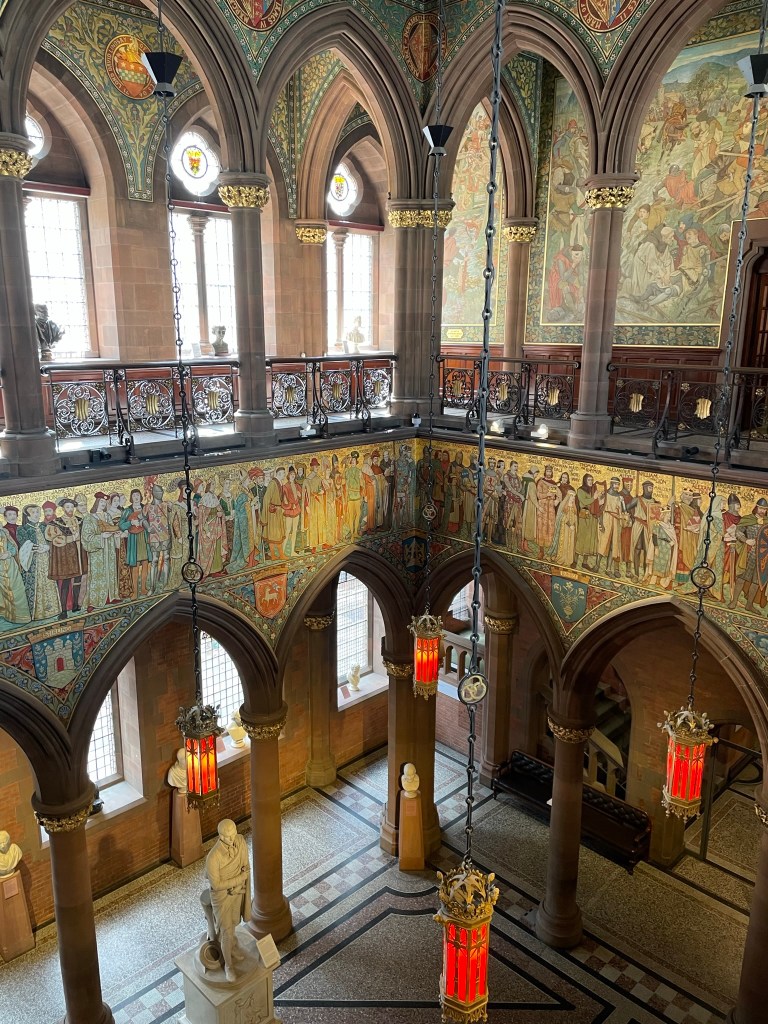
To round out the cultural aspect of our Edinburgh trip, I also managed an hour or so in the Scottish National Portrait Gallery.  The entrance hall is stunning and I wanted to see that again.  Inside there was no special exhibition this time but the permanent displays – especially the modern section – were interesting enough.

The Scottish National Portrait Gallery Atrium

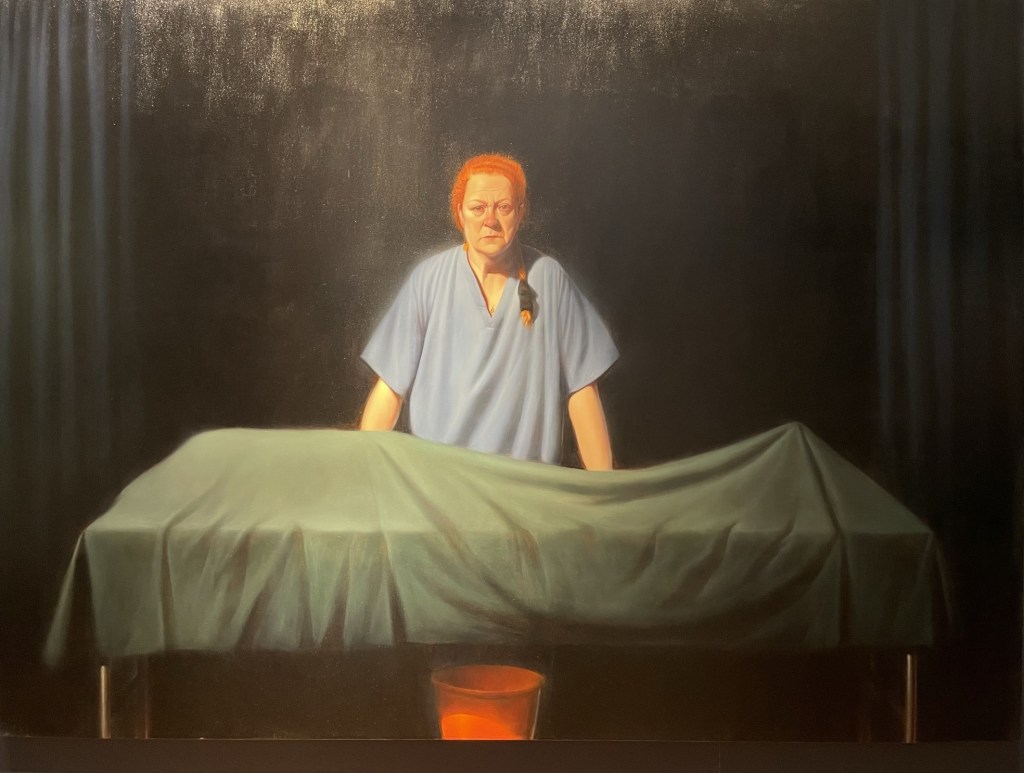
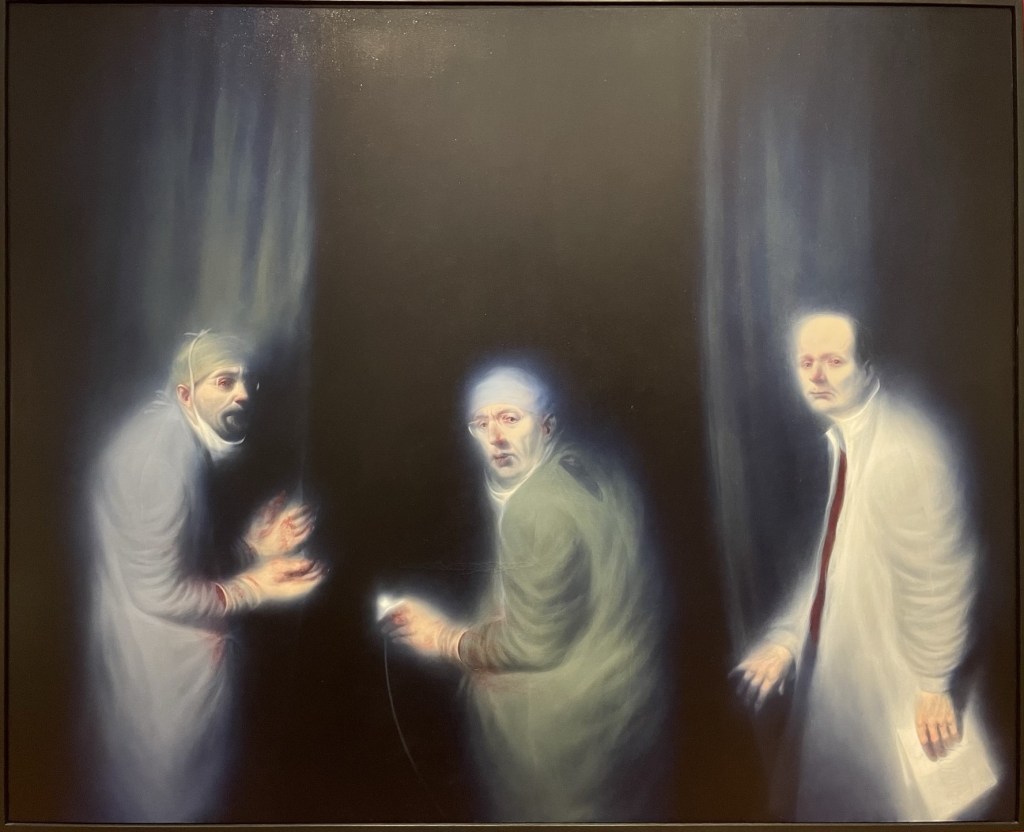
The Scottish National Portrait Gallery: Two Unusual, Medical Portraits (By Ken Currie)

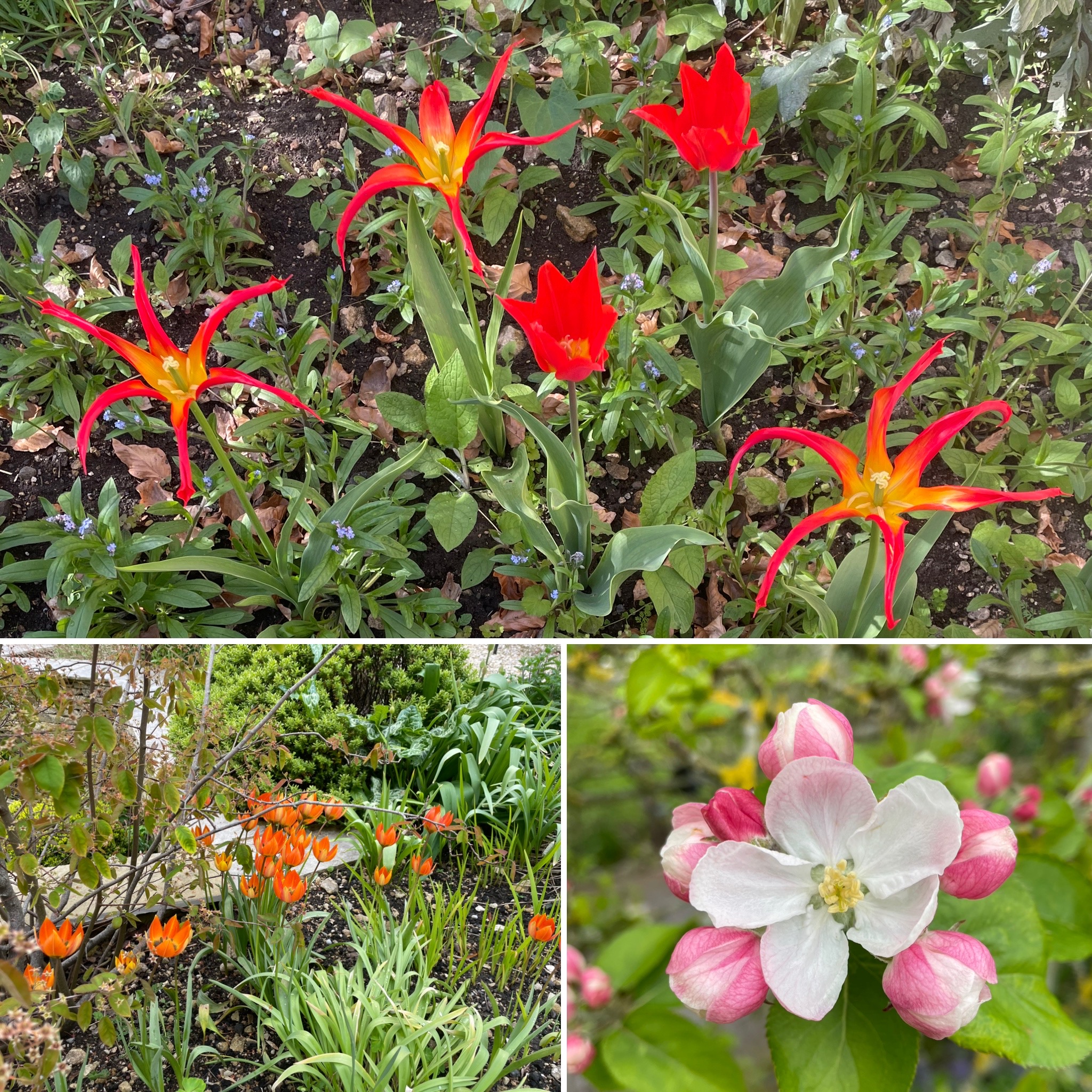
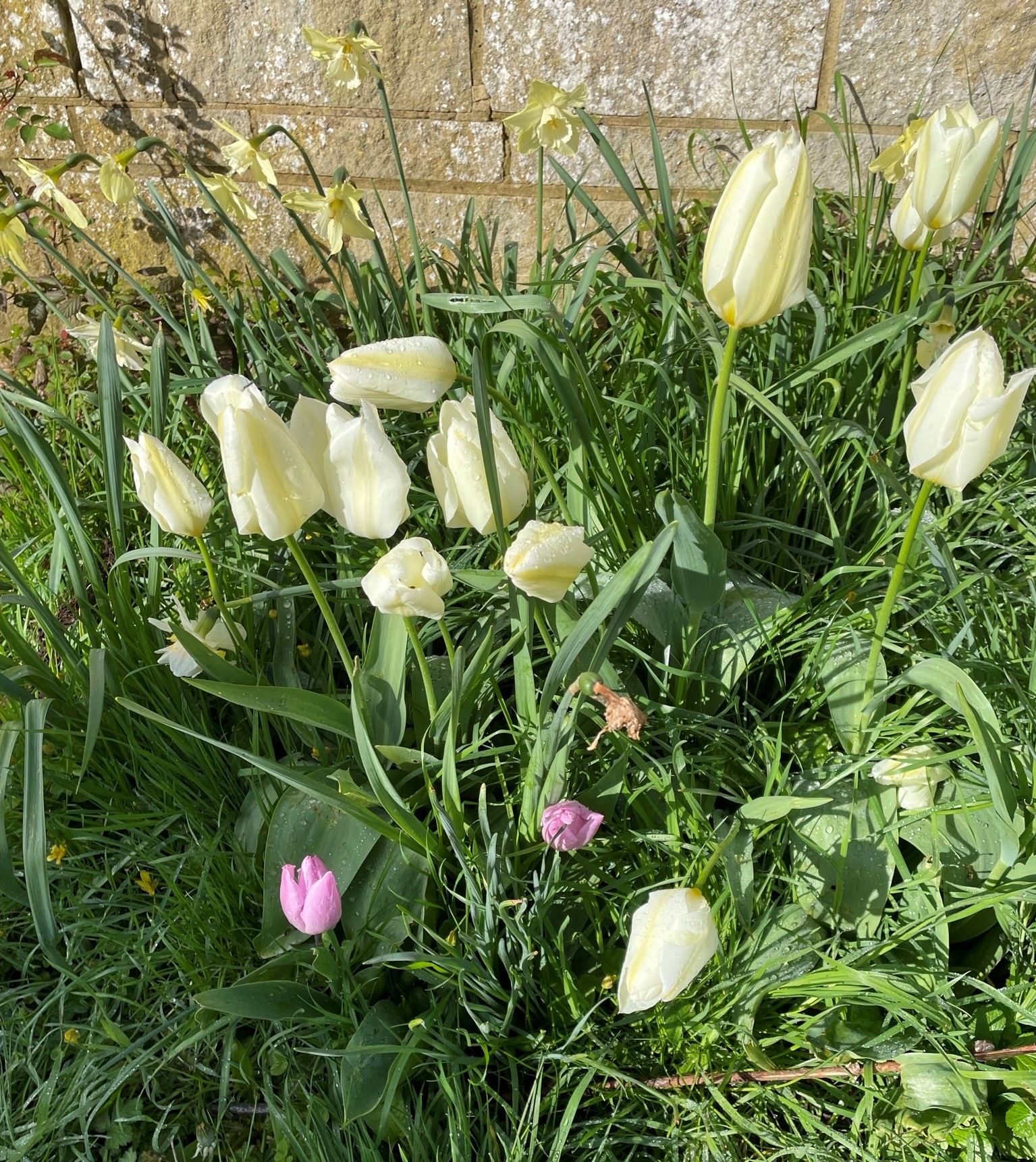
Back home we have been enjoying an admittedly rather wet spring.  The wild garlic, bluebells and cow parsley adorn the lanes and the woods.  In the garden, the daffodils, the amelanchier and most of the tulips have been and gone but there are allium flower heads about to burst and green shoots everywhere.  In our lush and green field cum orchard, the cowslips and wild geraniums have proliferated and our eyes are peeled for orchids.

Exotic Garden Tulips And Perfect Apple Blossom

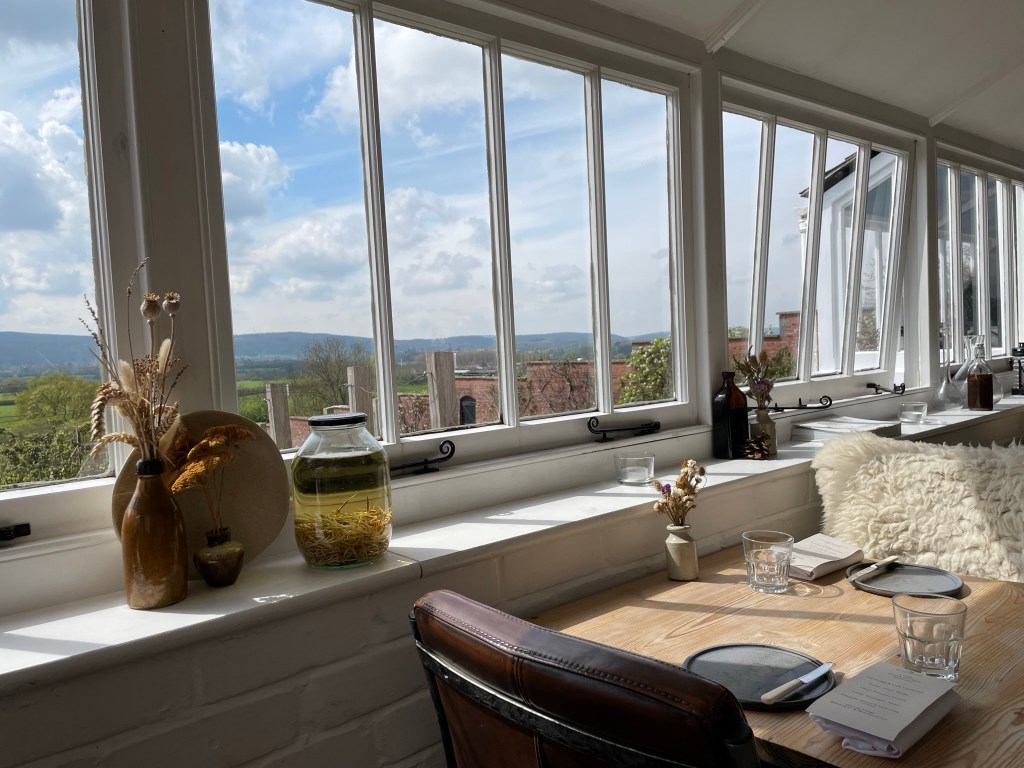
A recent visit to The Ethicurean with Middle Son and his partner for Sunday lunch included a wander around the gardens that provide many of the vegetable ingredients for the cooking.  The lunch itself was multi-course but much more than a tasting menu; it was really imaginative, tasty and filling, and delivered at a perfectly slow pace in the gorgeous surroundings of a converted Victorian greenhouse.  We’ll go again.

The Rather Wonderful The Ethicurean Restaurant

Since then, rather inspired by The Ethicurean’s gardens, I have made progress in clearing most of the vegetable patches, planting beetroot, chard, onions and potatoes and getting bean, courgette and squash seeds on the go. 

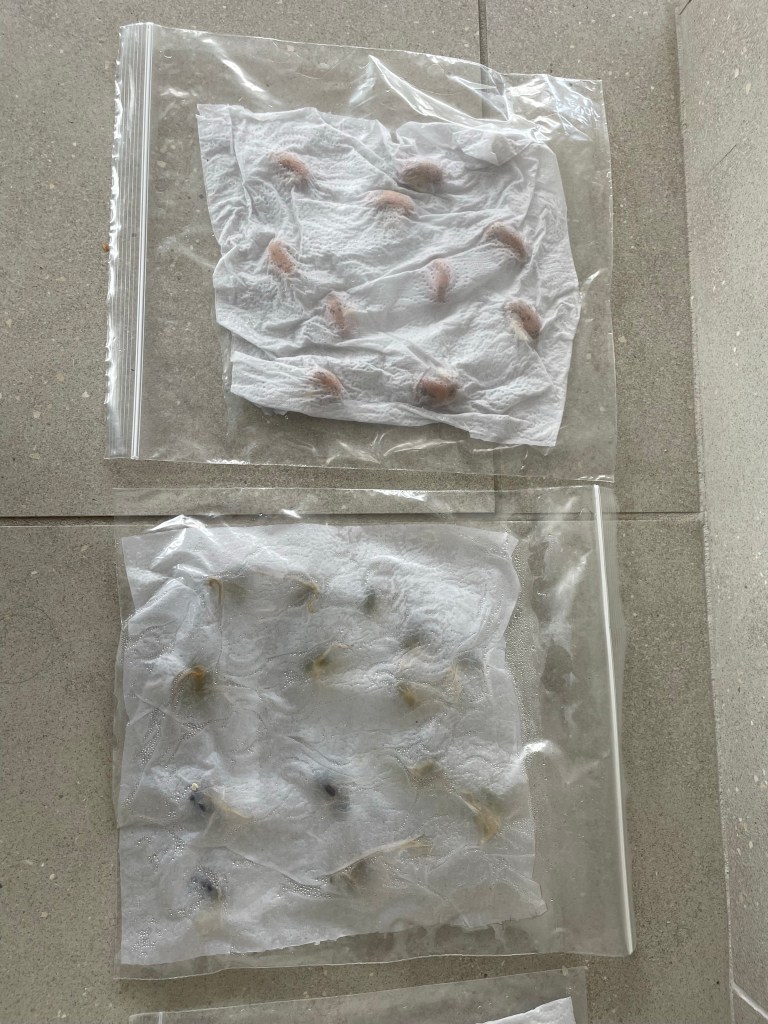
This year I have applied a method Jane used for some of her flower seeds to the germination of the beans seeds I recovered from my last two harvests.  Instead of popping them in composted seed trays, I put them between two sheets of wet kitchen roll and put the result in zip lock plastic bags.  I left the bags on the floor of our kitchen which has underfloor heating and, lo and behold, I had a 100% success rate for germination! 

My (Janes!) New Ziplock Plastic Bag Method Of Seed Germination

I have transferred the germinated beans to the small pots and now hope they will grow on with, unlike previous years, zero seed wastage.  Success in a busy retirement schedule is sweet!

Life and Death

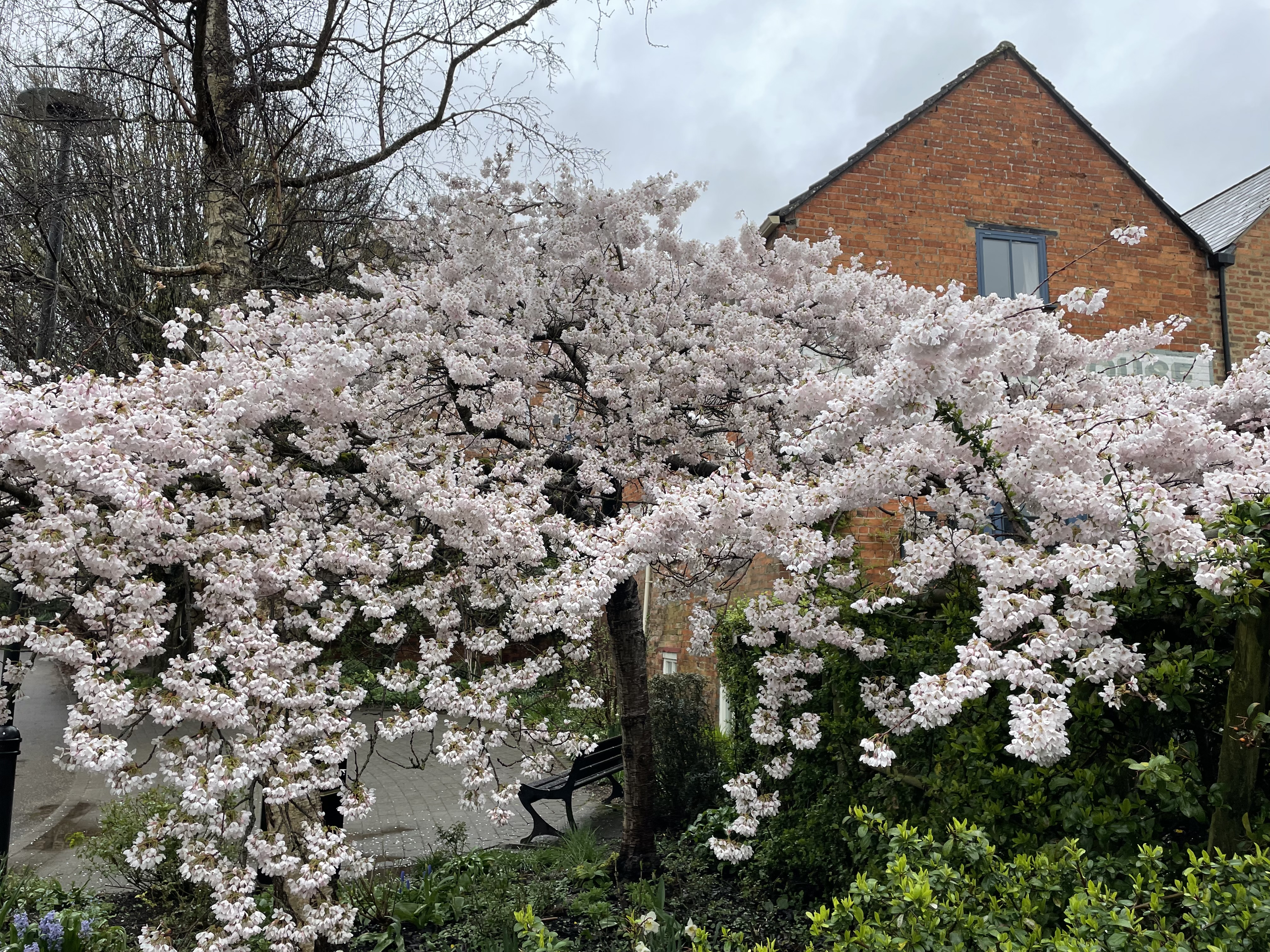
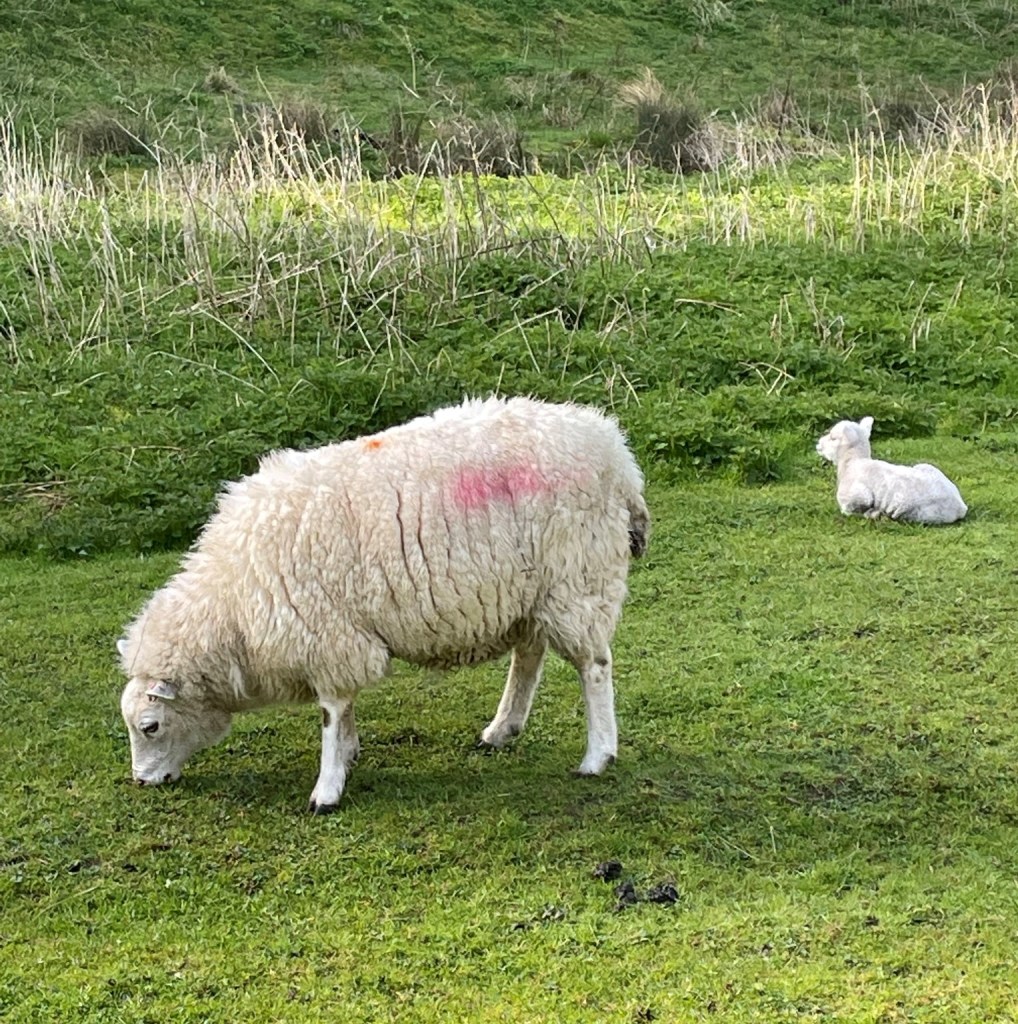
Spring is definitely with us after a very wet March.  We have April showers – it even snowed for a minute or two earlier today – and spring flowers.  The cherry blossom is out and there are lambs in the fields.

One Of Many Cherry Trees In Full Bloom In The Local Area

The First Lamb I Spotted This Year

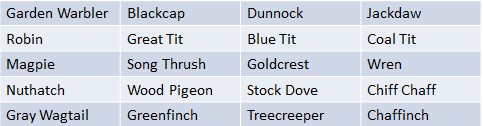
The birds are marking out their territory and gathering material for their nests.  During just 15 minutes of my walk to my Food Bank duties in Stroud yesterday I switched on the Merlin bird identification app on my phone and detected (and sometimes saw) 20 different bird varieties (plus a seagull and a buzzard that didn’t squawk at the right time).  Spring is such a busy time for these little home builders and it was relieving and lovely to hear that our rural pathways are still home to such avian diversity.

Birds Heard In 15 Minutes During A Local Walk

The outside temperatures are gradually rising with the prospect of heatwaves to come.  At Easter, when Youngest Son and Middle Son came to stay for a couple of days and the weather was sunny, we managed our first outdoor lunch of the year. 

Random Roadside Bulbs On The Way To Food Bank

Spring really is a season of new life and promise.

Except that, this spring, we are mourning the passing of Jane’s mother who died peacefully last week in the care home we had all come to love and respect.  Her death came as no surprise after a steady decline hastened by a fall but of course there is mood of sadness around the family.  Easter and its Bank Holiday’s was a convenient pause for Jane to enable reflection on her relationship with her Mum before getting stuck into the administration of funeral arrangements.  Death brings sadness but also a need for clear thinking about the fall out.  Death balances out life.

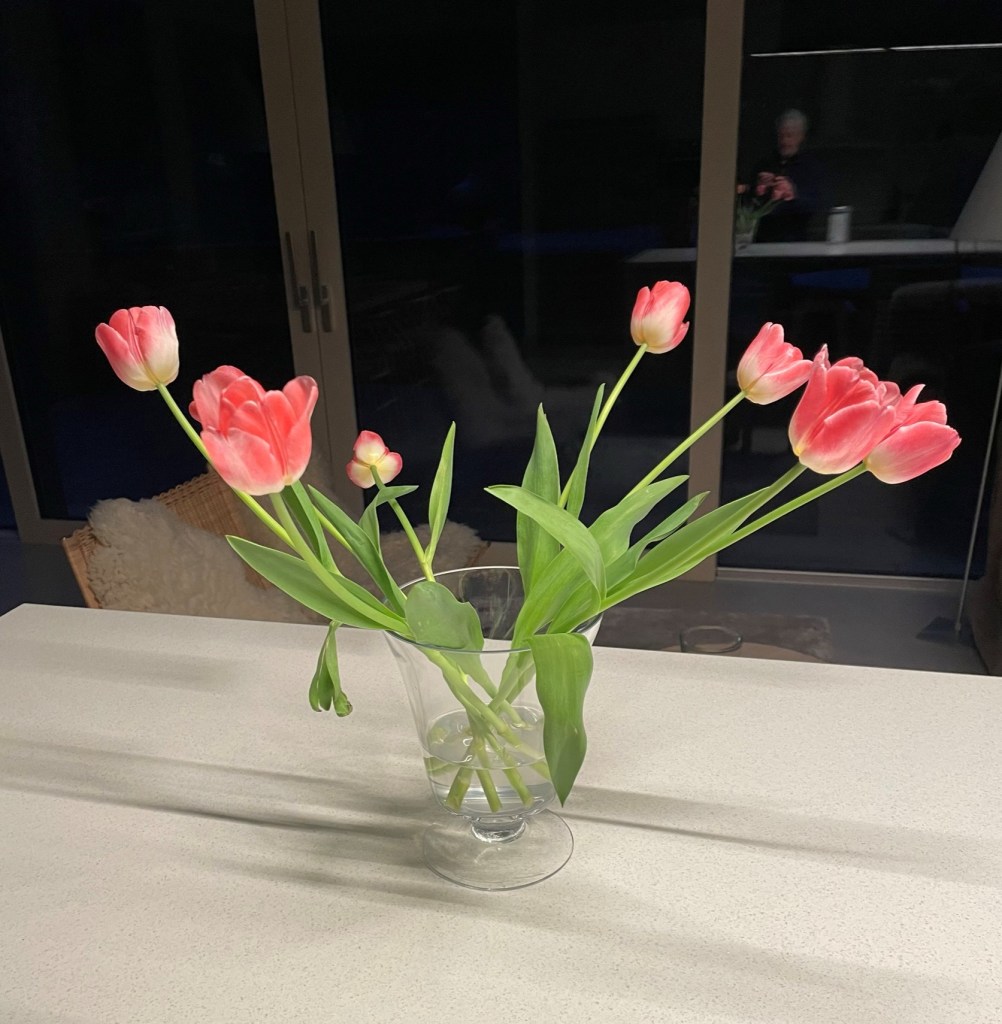
More Tulips!

Before the funeral we are off to Edinburgh to see Eldest Son, his partner and First Grandchild.  That will be a great distraction and an antidote for Jane to the last couple of weeks of focus on looking after her Mum and then the mourning of her passing.  Of course, discussions about Jane’s Mum and the making of funeral arrangements will continue, but it will be in the company of a little grandchild who will demonstrate as vividly as possible that life goes on.

A few days of tiny, effervescent youth and spring; what could be better!