Going to the Food Bank

I started working at the Stroud Food Bank about 9 months ago.  I only work for about 2 hours a week and, usually, only to put away stock and to fulfil (i.e. pack up) orders for the Food Bank’s ‘clients’.  Some weeks I get a bit of extra arm stretching exercise by helping to deliver the (heavy and full) food bags to clients’ homes.

The location is in central Stroud and it operates as one of the outposts for the much larger warehouse, run by the The Trussell Trust, in Brimscombe, a couple of miles away.  In the year to March 2023, The Trussell Trust has delivered almost 3m emergency food parcels in the UK.  In Stroud district we delivered 8,663 of those – a huge 77% increase on the previous year.
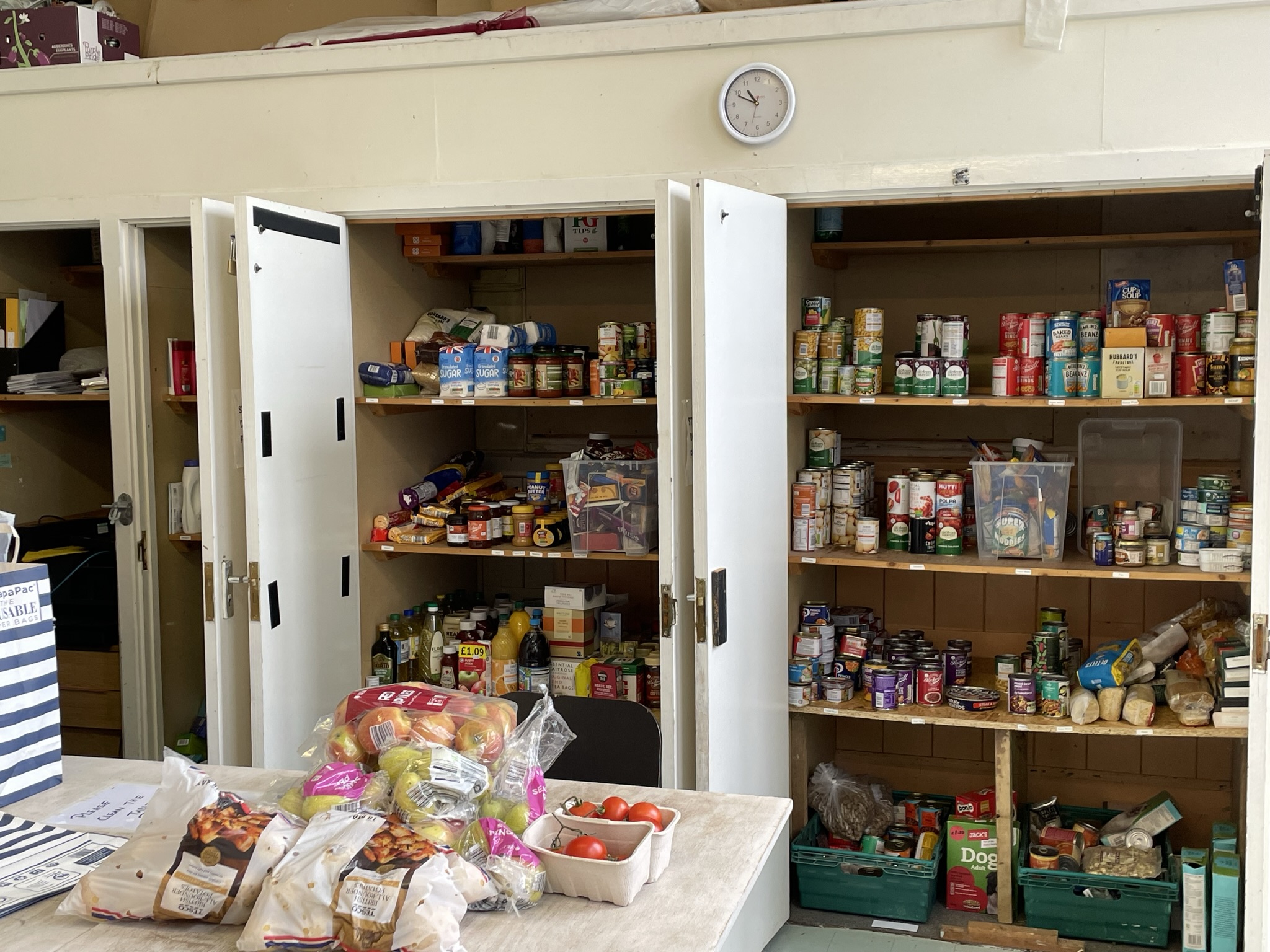
Stroud Trinity Rooms Food Bank

Working at the Food Bank has been eye opening and educational around the everyday problems faced by people less fortunate than me.  Often, even with very little income, people learn to manage somehow but what brings them to the Food Bank is something unexpected – sometimes a seemingly small thing – that tips their well-being and ability to cope over the edge.  The pandemic, the war in Ukraine, the cost of living surge and the lack of a proper benefits safety net have all made that tipping over the edge more frequent.

To say I enjoy working at the Food Bank would be to undermine or trivialise these very real hardships but the couple of hours a week I spend there does feel worthwhile.  What is even better for me is that I am able to walk to the Food Bank (and get the bus back afterwards).  That walk has been especially lovely recently due to the advent of a lush Spring and the fortuitousness of good weather when I have to go to the Food Bank.
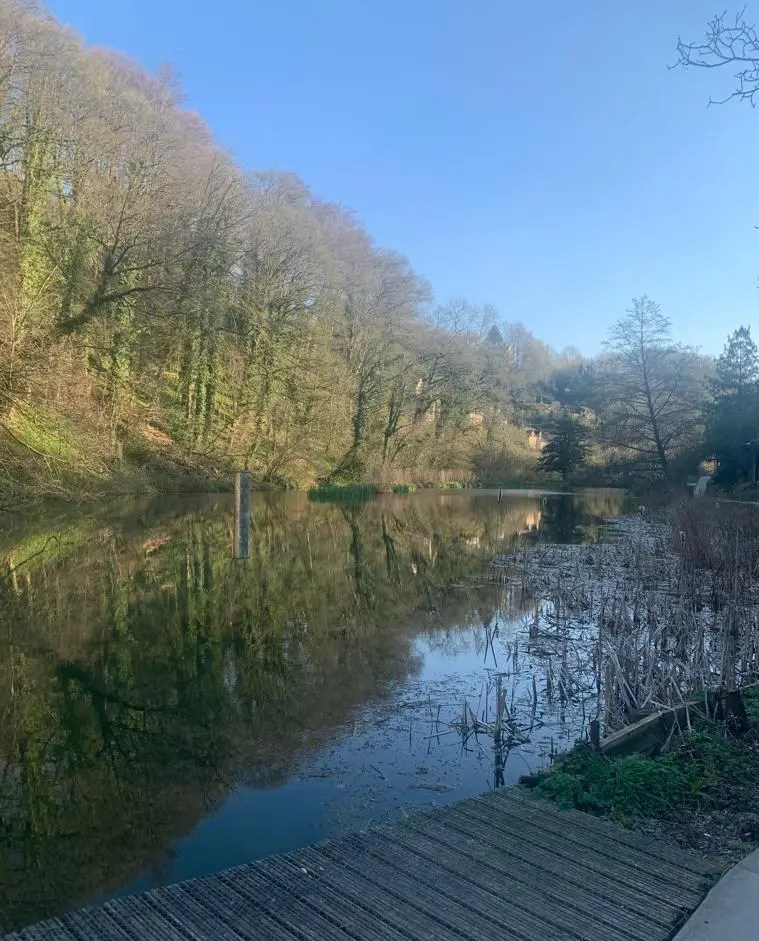
Ruskin Mill Lake Last Winter

The first 25 minutes of the walk is my normal route to our local town, Nailsworth.  I usually take the direct route along the road but even so, the views over Ruskin Mill’s valley are good and the birdsong at that time in the morning is loud and continuous.  Once in town, I pick up my newspaper and then set out to Stroud along two old railway routes now converted to cycling and walking paths. 

I love the variety along this route. 
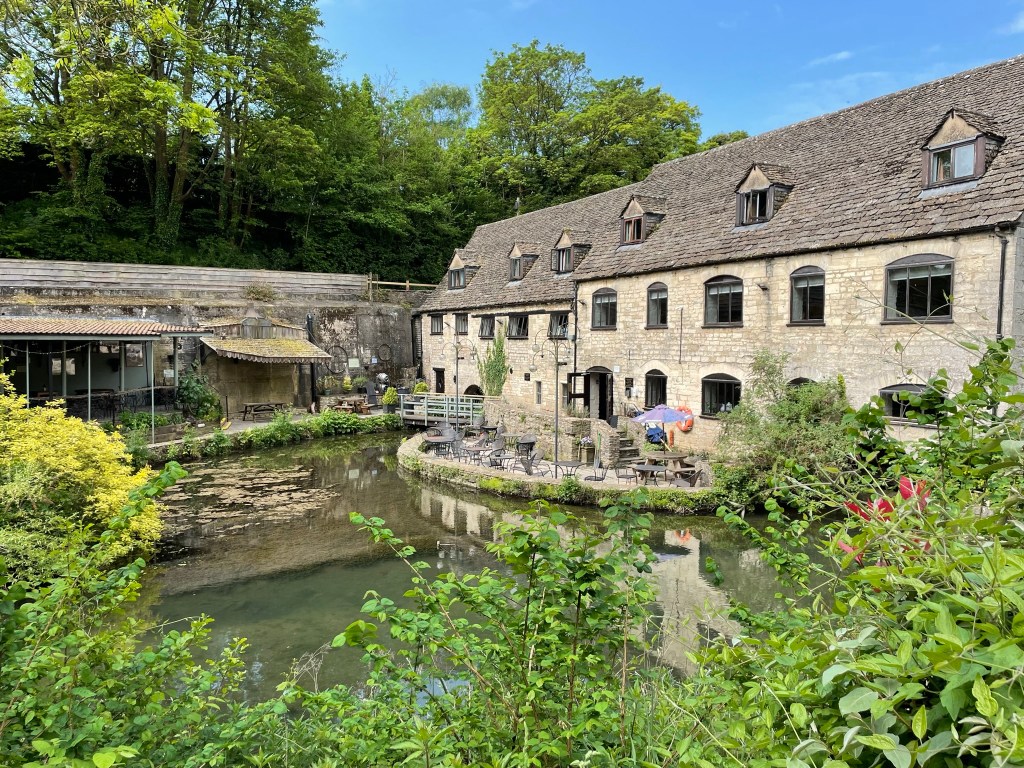
Egypt Mill – Now A Popular Bar, Restaurant And Hotel (Deserted At This Time In The Morning)

The first part follows Nailsworth Stream and is dominated by mills and their associated mill ponds.  This is perhaps where bird life and nature along the route are most evident. 

The path then squeezes between vineyards, woodlands and fields on one side and a string of light industrial buildings on the other.  These buildings include a micro-brewery, a pizza factory and numerous engineering works alongside which I sometimes pause to watch the drama of welding sparks.  Then the birdsong is drowned out by the canine users of a large Playschool for Dogs.  I’ve never seen so many dogs in one place!
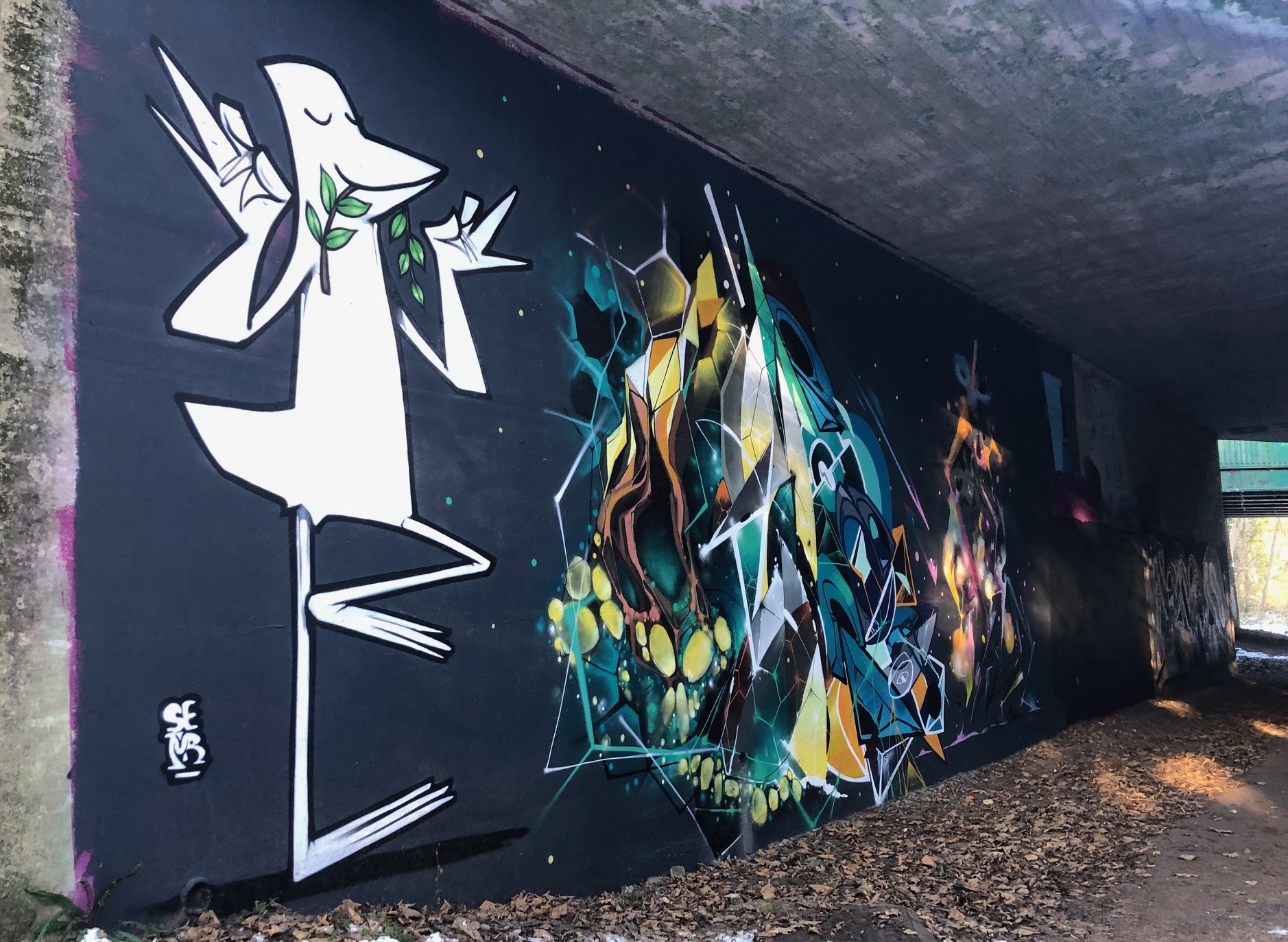
Under-Bridge Street Art On My Route

I walk under bridges covered in frequently changing street art.  Then I go past a factory making wind turbines and another associated with Forest Green Rovers Football Club’s Chairman called The Devil’s Kitchen which makes vegan meals for the football club and for schools nationally. 

The path runs alongside the main road for a while but from here there are great views up towards Rodborough Common.  Past the old and now converted Woodchester Railway Station, there is a new large residential development and its associated children’s playground before the walk returns to another leafy section.
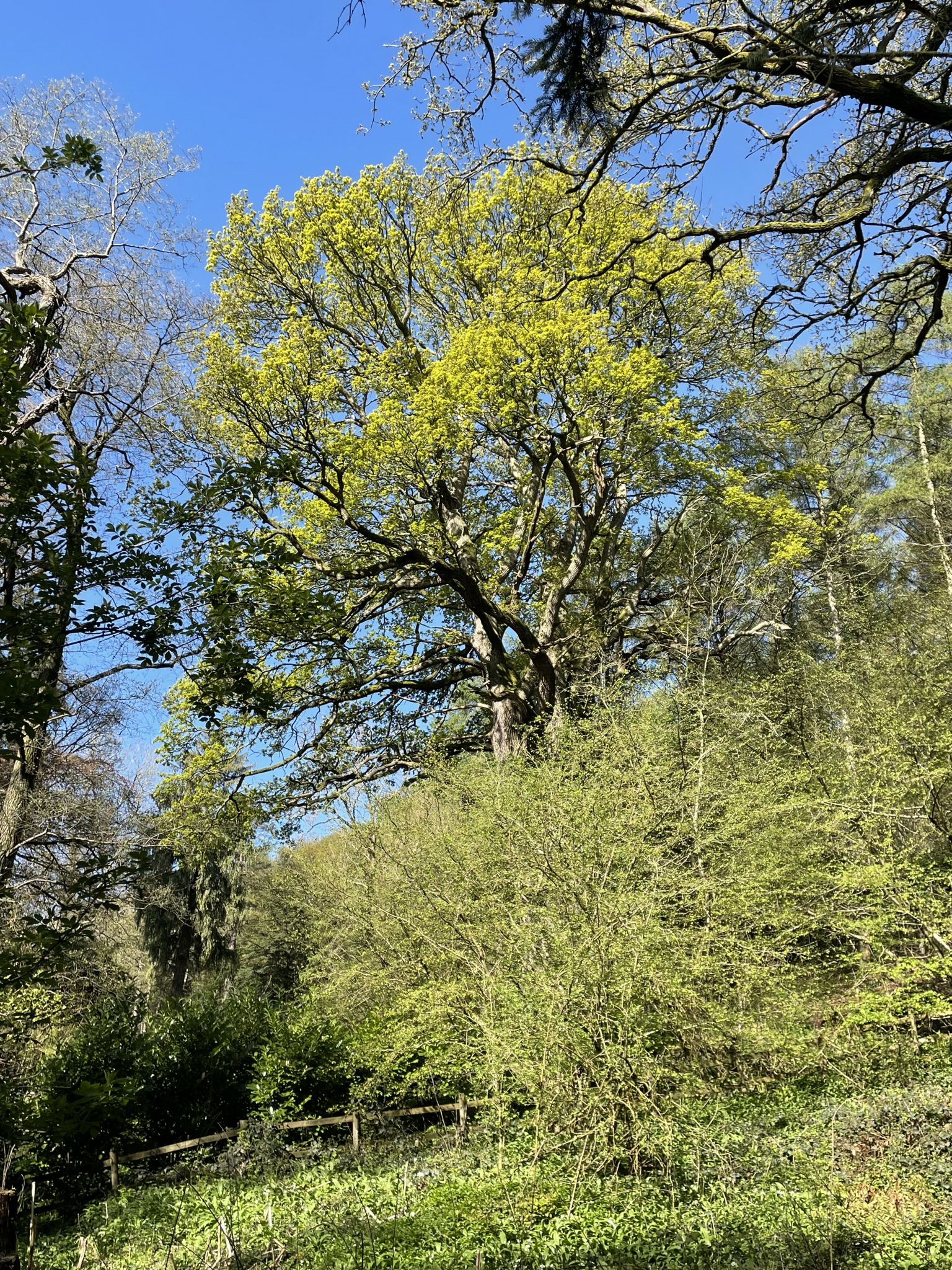
One Of Several Very Large Oaks Along The Way (The Birdsong Is Usually Intense Around Here)

The woods continue on one side but on the other are acres of factories, some of which now appear disused and ripe for some sort of development.  Most are ugly mass-constructed buildings but some are attractive, Victorian buildings that have new lives as auction houses and bases for hi-tech businesses. 
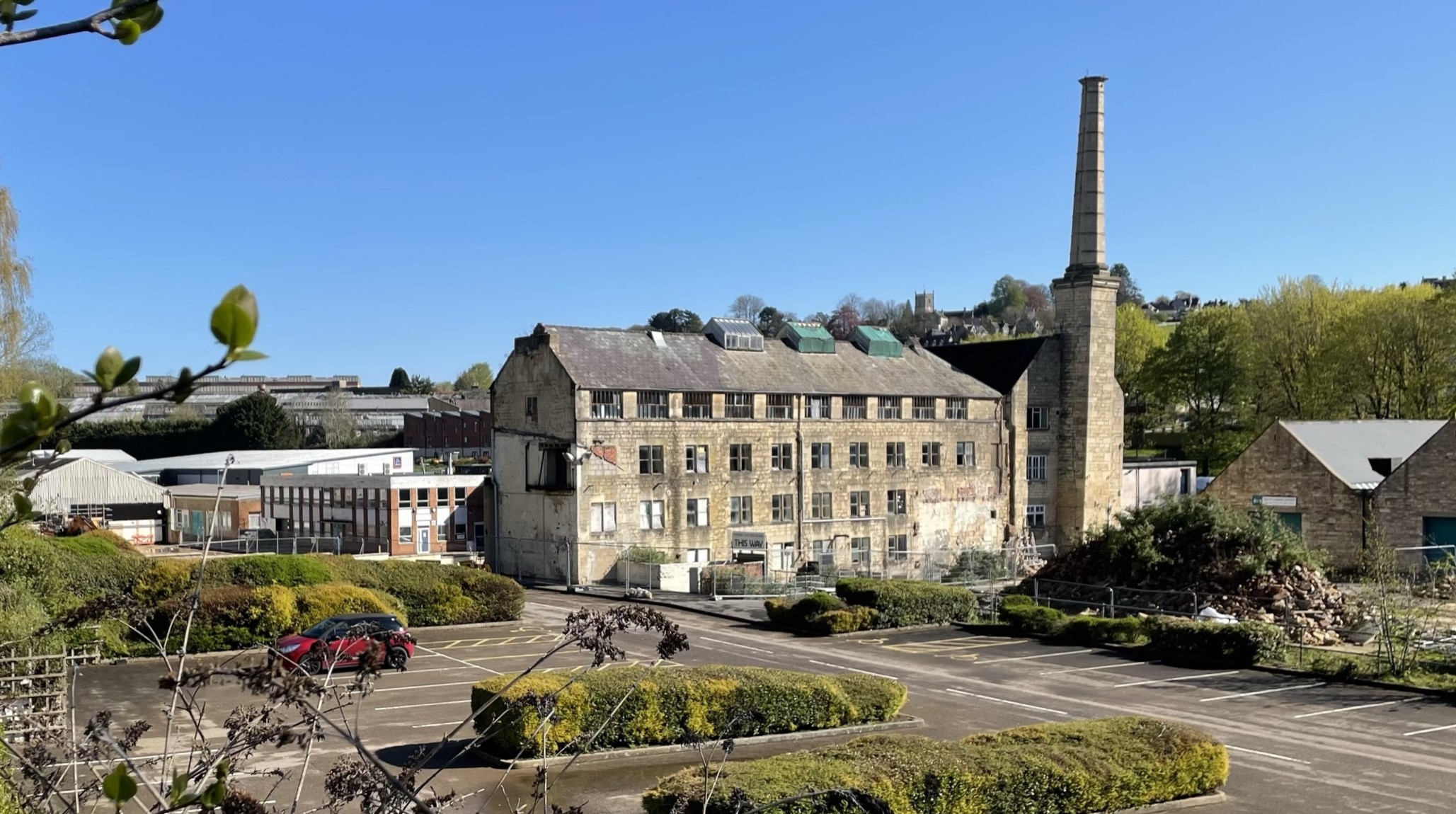
One Of The More Impressive Factory Blocks

One of the largest and newest of these industrial buildings is the factory which produces Damien Hirst’s art works.  Some of his old works from his Human Anatomy series stand behind the factory and are visible from the path.
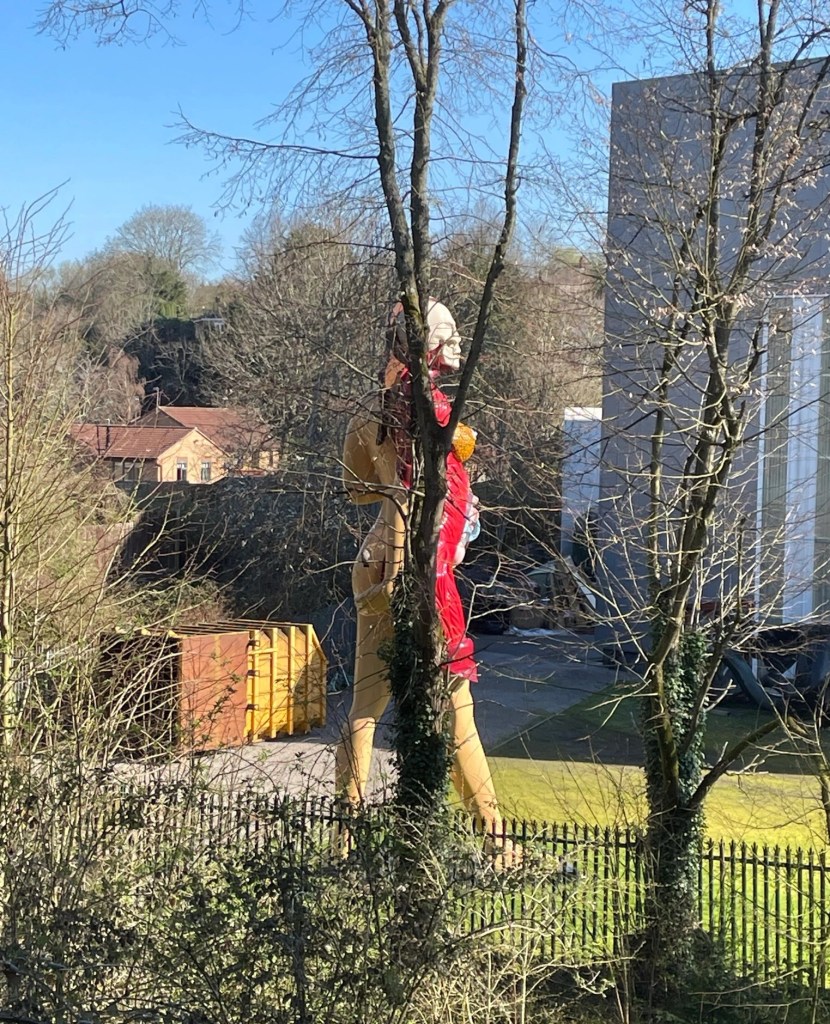
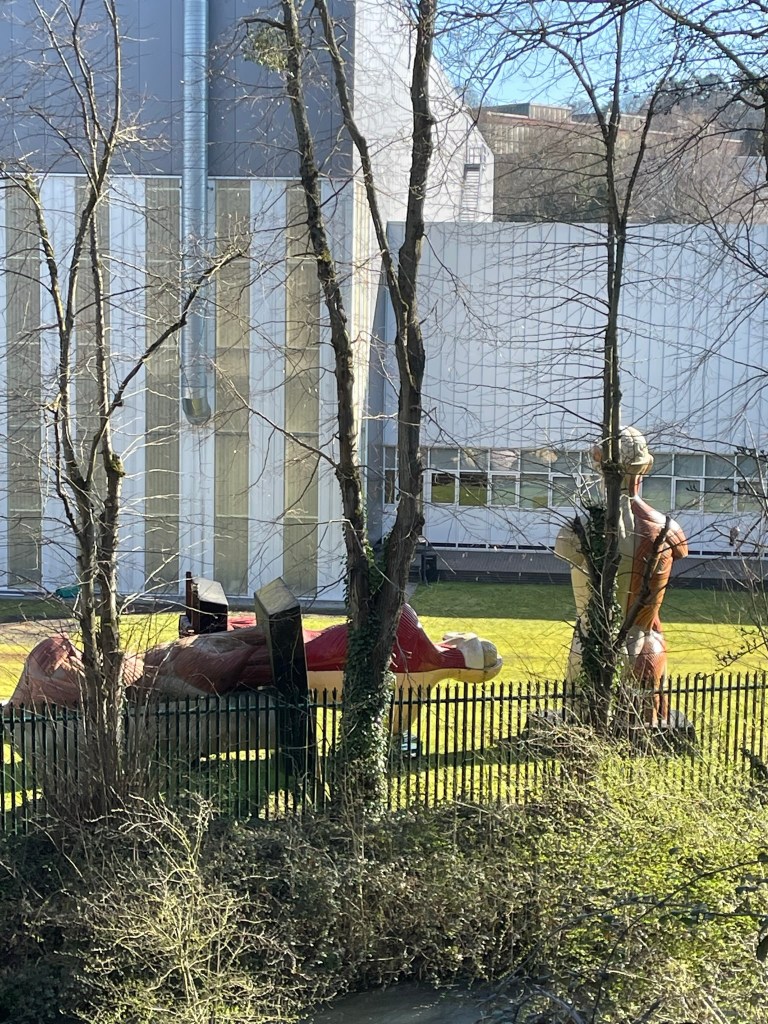
Damien Hurst’s Works Partly Obscured By Trees

The route I take then passes briefly through a housing estate and joins another old railway route on the final leg into Stroud.  This is in a deep, old railway cutting which shields walkers from the surrounding houses and roads and then passes over the River Frome and Stroudwater Canal. 
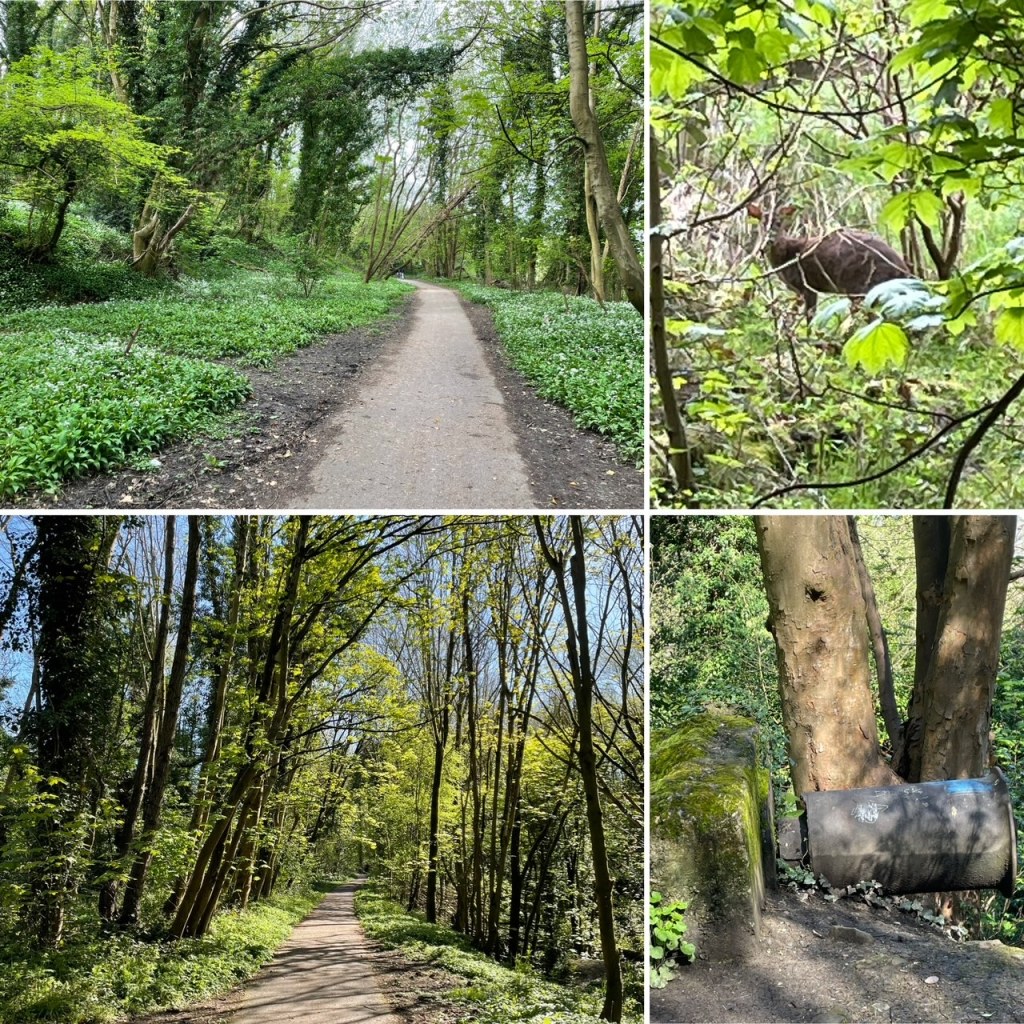
Tree Lined Walks With (If You Look Carefully) Deer And Old Railway Line Infrastructure
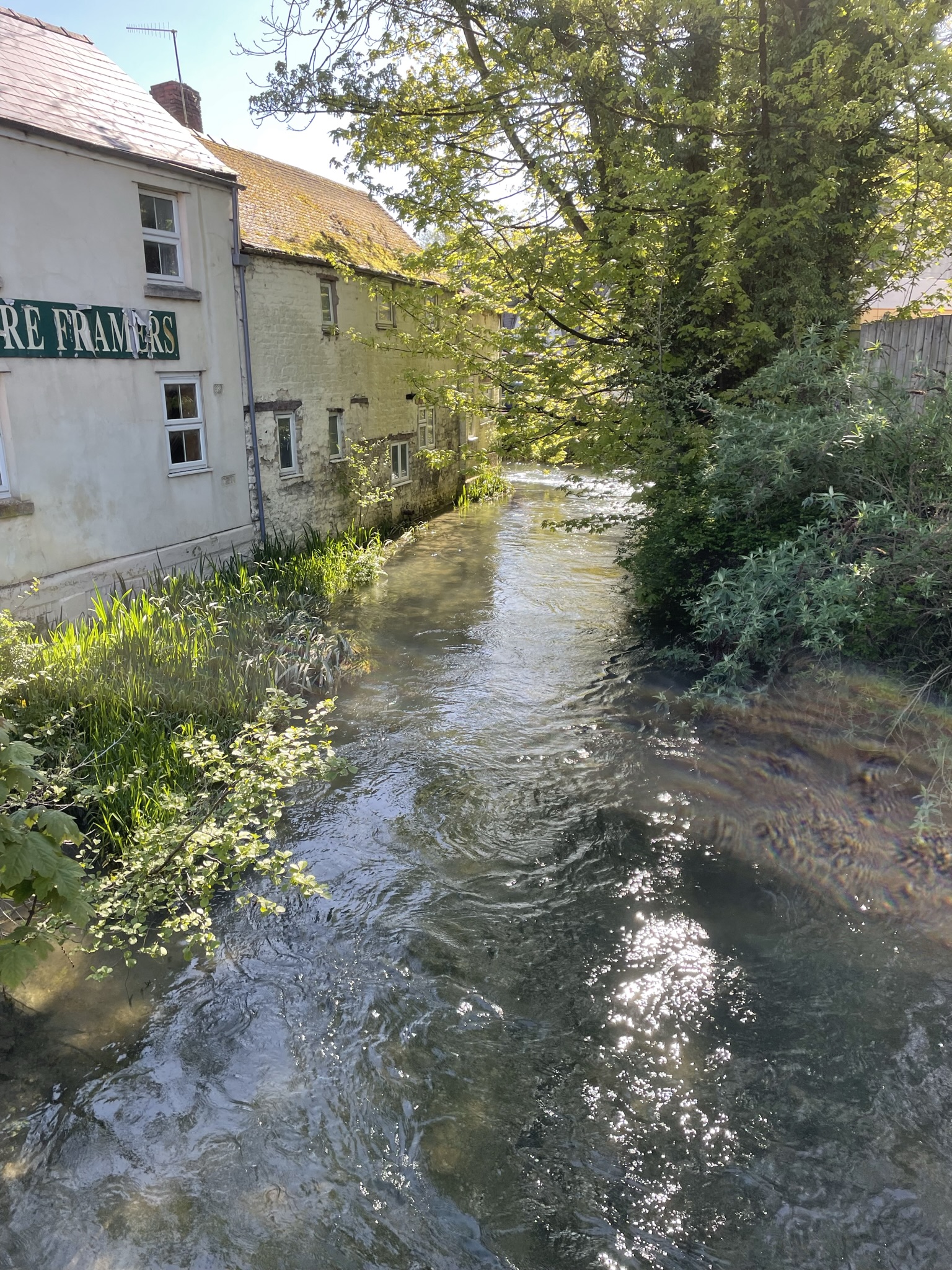
River Frome At Stroud

By this time my breakfast coffee intake needs attention so I dive into the recently re-modelled shopping centre before heading up through the town to the Food Bank.  The shopping centre itself is a mixed bag of street food outlets, depressingly empty up-market clothes and accessories shops, and discount goods outlets.  It’s a strange mix of businesses.  Even the large and prominent jewelers in the centre is a strange mix of expensive watches, jewelry and garish ornaments. 
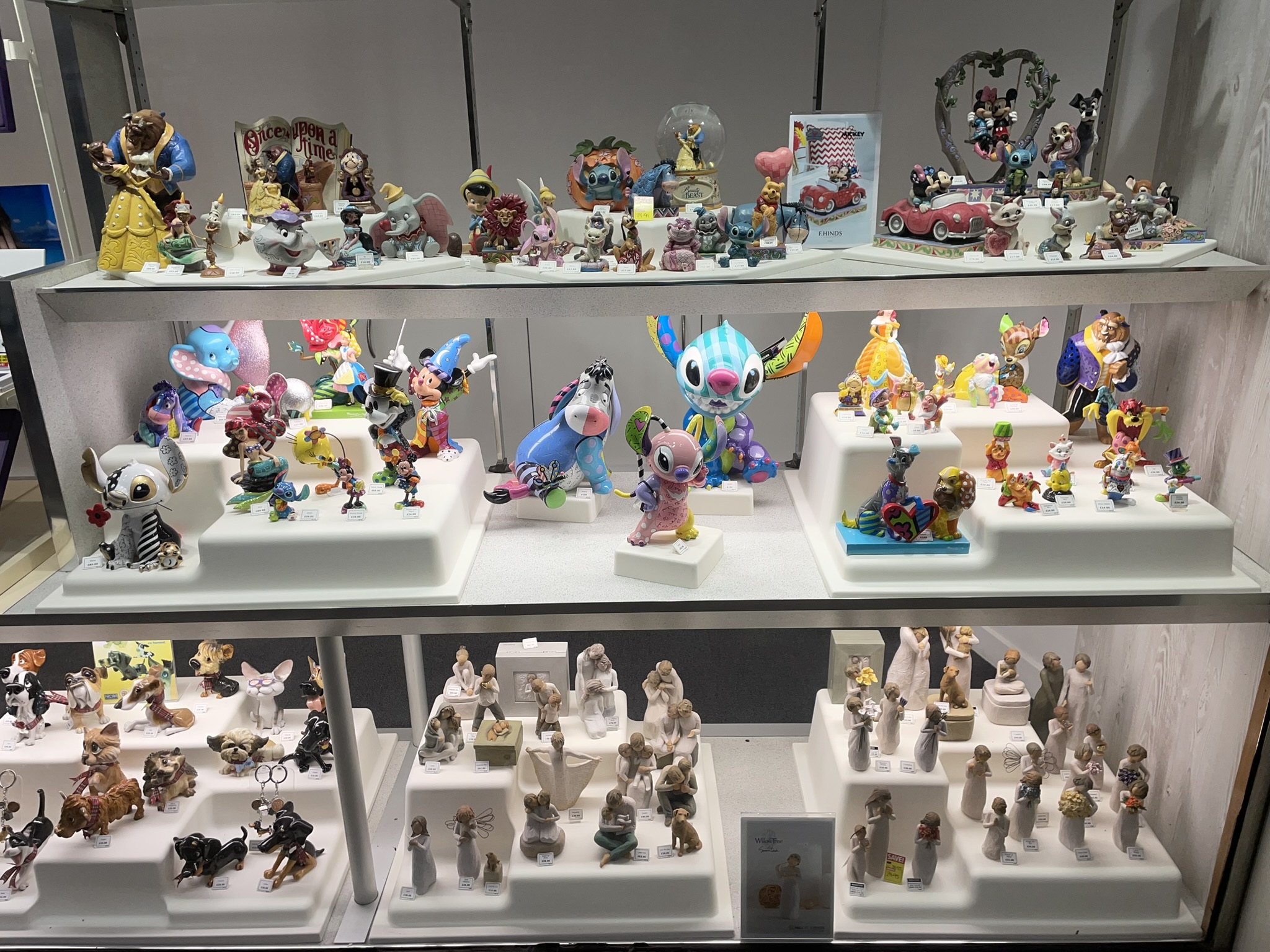
Not For Me But People Must Like These Ornaments Given Their Surprisingly High Prices

In a way, the diversity of the shopping centre, and that of the stock of the jeweler’s shop within it, reflects the unusualness of Stroud and the surrounding district.  It has a left wing, ‘woke’, hippy vibe with one of the best Farmers Markets and (arguably) the country’s first fully organic cafe (Woodruffs).  But it is also very much a grounded, working town surrounded by historical and current wealth.  It is a blend that is also reflected, perhaps, among the mix of ‘clients’ and volunteers at the Food Bank.
Dipping Into Culture

Long-Suffering Wife (LSW) and I still haven’t quite planned our trip away this summer/autumn but we have both made an effort to attend some local cultural events to keep our entertainment levels up.  Indeed, as I write this, LSW is attending a couple of talks at the Cheltenham Literature Festival and will no doubt return full of much new thinking.

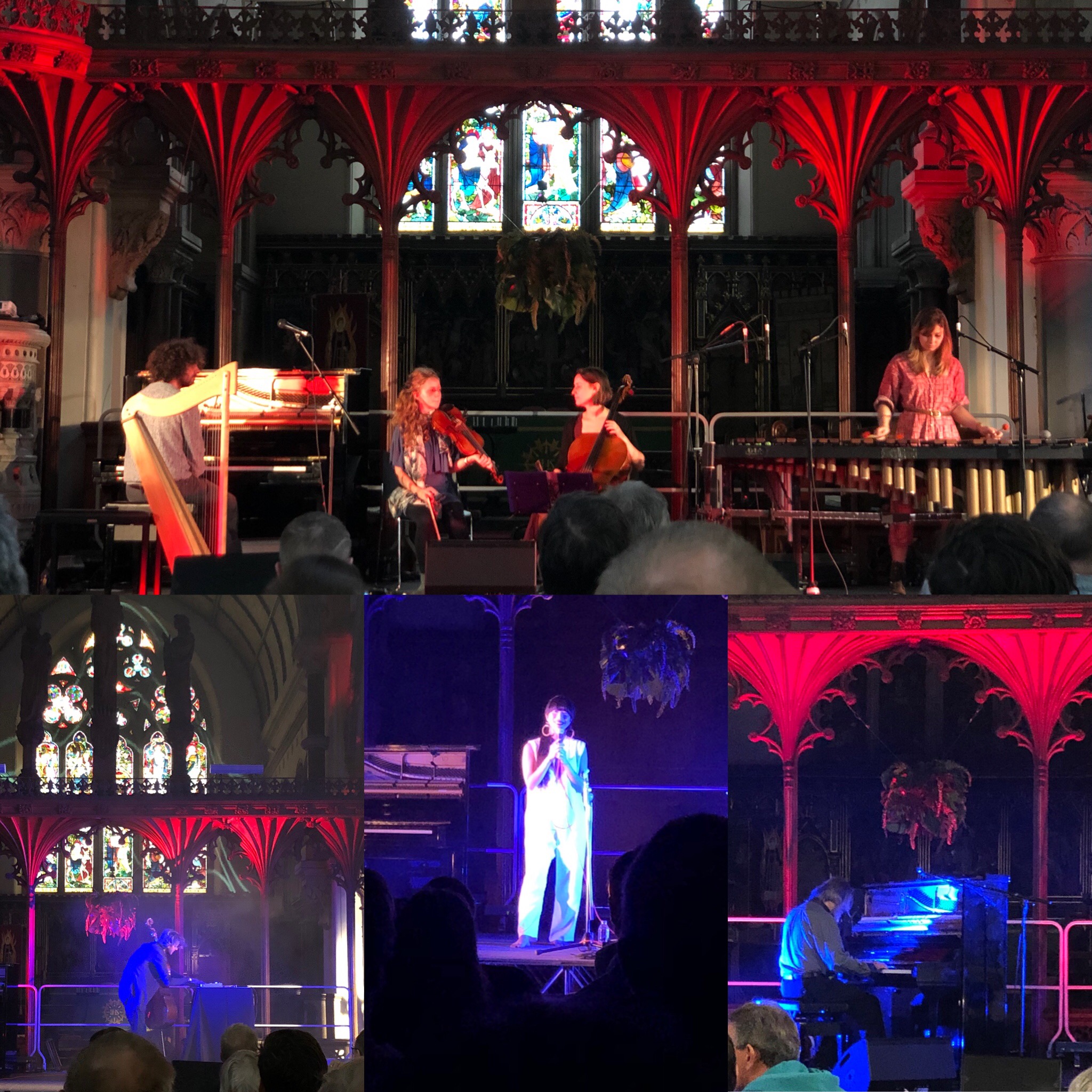
We went to two contrasting concerts recently.  The first was a programme of what I suppose are modern classical music composers and performers.  The concert had been arranged by a local magazine and creative arts consortium called Good On Paper.  The five performers were a mix of local and internationally renowned musicians.  All were interesting – especially avant-garde cellist Sebastian Plano and Japanese vocalist Hatis Noit – and there were passages I really enjoyed.  The final act was the now famous Lubomyr Melnyk who demonstrated his ‘continuous music’ piano playing; it was technically impressive but, by the end, for me, overbearing.

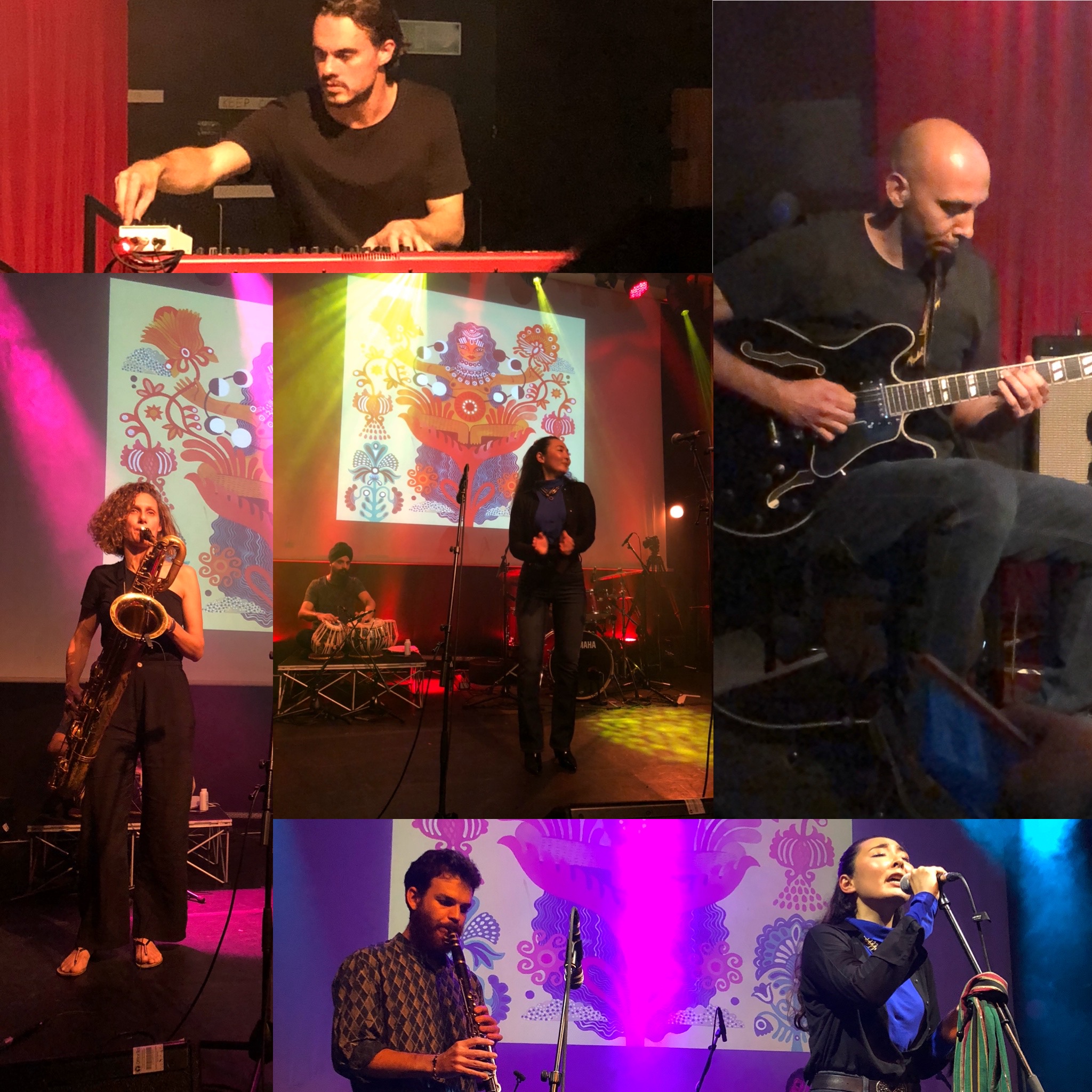
Spindle Ensemble, Sebastian Plano, Hatis Noit and Lubomyr Melnyk At The Hidden Notes Festival At St Laurence Church, Stroud

Spindle Ensemble, Sebastian Plano, Hatis Noit and Lubomyr Melnyk At The Hidden Notes Festival At St Laurence Church, Stroud

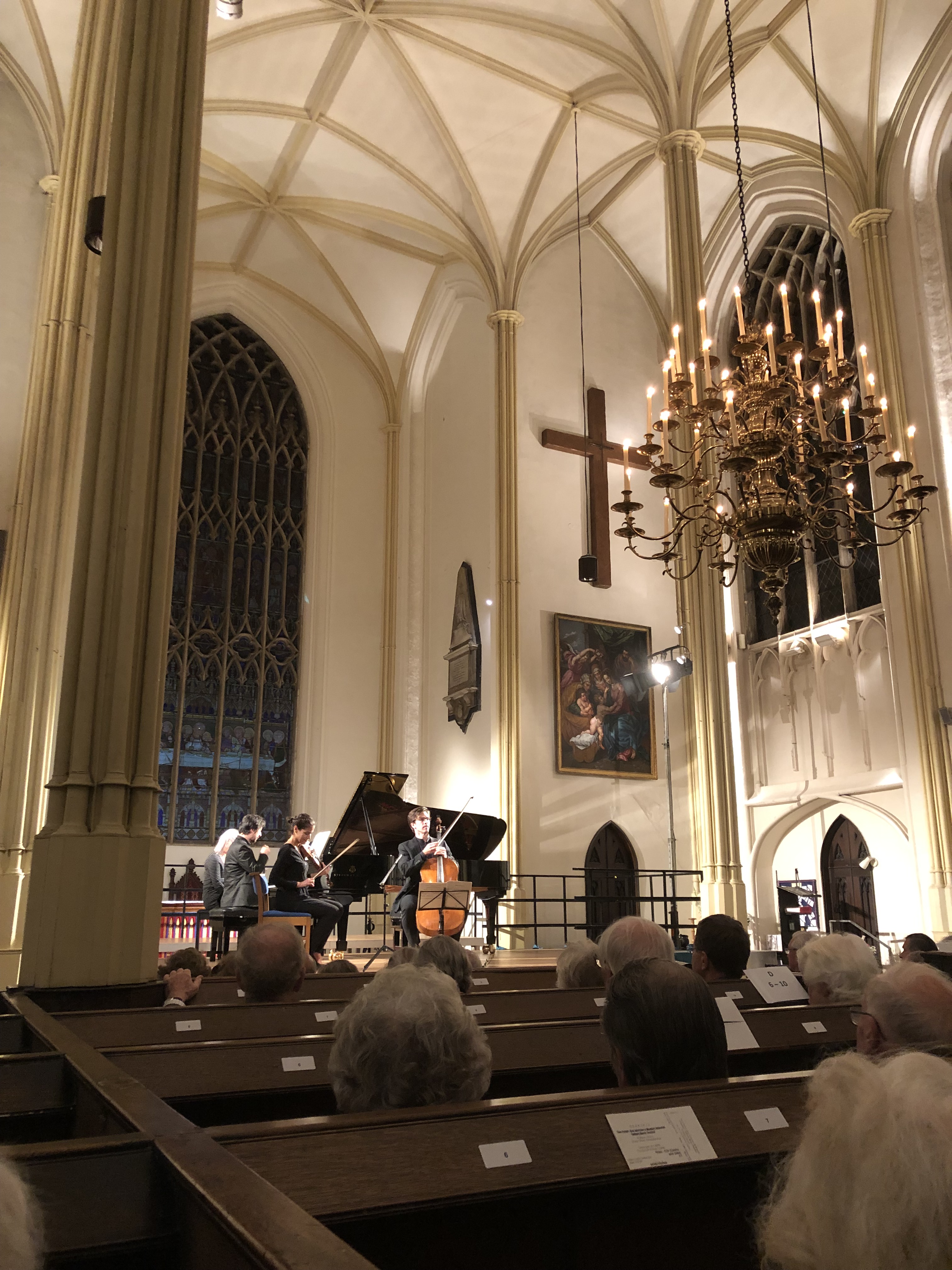
Later in the week LSW and I went to the Tetbury Music Festiival.  Despite the proximity to our home, this was, rather shamefully, our first visit to the festival.  We saw an excellent performance of three piano trios (by Haydn, Schumann and Schubert).  This was the first classical music concert I had been to for many years and I surprised myself with how much I enjoyed it.  I also surprised myself in that I actually knew the last work by Schubert; it must have been one my Dad had taken me to see played when I was a teenager and he first introduced me to classical music.

Chamber Music At Tetbury Music Festival

Chamber Music At Tetbury Music Festival

It felt good to support these local cultural events and I hope their success breeds more in the future.  The atmosphere for both was reverential and enhanced by the beautiful surroundings of a church.  Whatever the concert – modern classical, classical classical or just modern, I do like to be able to listen to the music rather than the chatter of the crowd.  A third concert I saw this week at the wonderfully eclectic Rich Mix in London also provided these sorts of listening conditions as I saw one of my favourite bands: Kefaya.

This concert was totally different from the other two.  Kefaya is a cross-cultural collective who play jazz with Middle Eastern, south and south-east Asian and Caribbean influences.  I have seen Kefaya in various guises many times over the last few years.  Here, they mostly ran through their latest album of Afghan songs fronted by an Afghani singer.  There was a lot of energy in the largely Afghani audience but, again, there was respect for the music and full attention to the band.  I loved it – especially when they let loose with their trademark jazzy duelling between guitar and keyboards, all backed up by phenomenally pacey and intricate tabla playing.

Kefaya At Rich Mix

Kefaya At Rich Mix

Apart from music LSW and I have also taken in some local art.  We have known local artist, Maggie Shaw, for many years and have bought many examples of her work; several remain our favourite pieces of art in our house.  Unfortunately she died last year.

We were honoured to be part of her memorial exhibitions at the beginning of this year and lent one of her largest pieces for this.  Last week there was a further exhibition of her more recent work alongside that of two of her companion artists.  As usual, Maggie’s work stood out for me as truly remarkable.  Had we not already been in possession of so much of her output (and not starting to think about further downsizing of our house and wall space) we might have bought another of her pictures.

Exhibition Of Maggie Shaw's and Others' Work

Exhibition Of Maggie Shaw’s And Others’ Work At Stratford Park, Stroud

The absence of demands on my time from any work, continue to make it easy to fit in trips to Nottingham to visit my parents, and to London to see sons, exhibitions and gigs there.  This week, on the back of a regular meeting in London with my financial advisor and the Kefaya gig, I was able to catch up with Eldest Son, his girlfriend and Youngest Son’s girlfriend; a real pleasure.  I also visited the new exhibition at The Barbican where I am still a member and so can feel I am attending for free.

The latest exhibition at the Barbican is called Into The Night: Cabarets and Clubs In Modern Art and, as the title suggests, it is about the relationship between art and nightlife.  It examines this relationship in the period from 1880 to the late-1960s through focus on a dozen nightclubs in a variety of cities including Tehran, Ibadan in Nigeria, Paris, Berlin, Mexico City and New York.

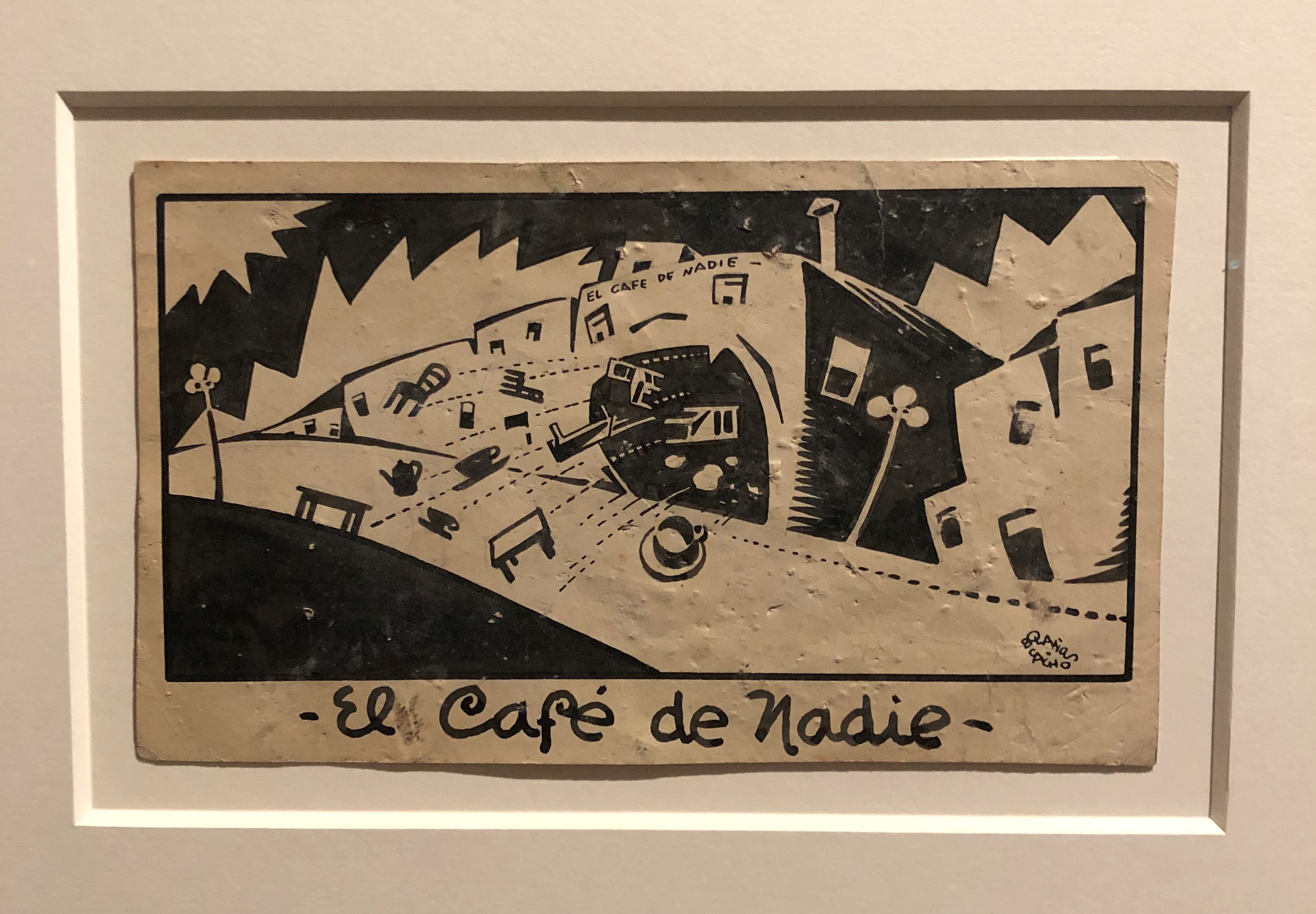
Postcard Showing Cafe De Nadie, Mexico City

Postcard Showing Cafe De Nadie, Mexico City. It Seemed To Me To Sum Up The Atmosphere These Nightclubs Tried to Engender!

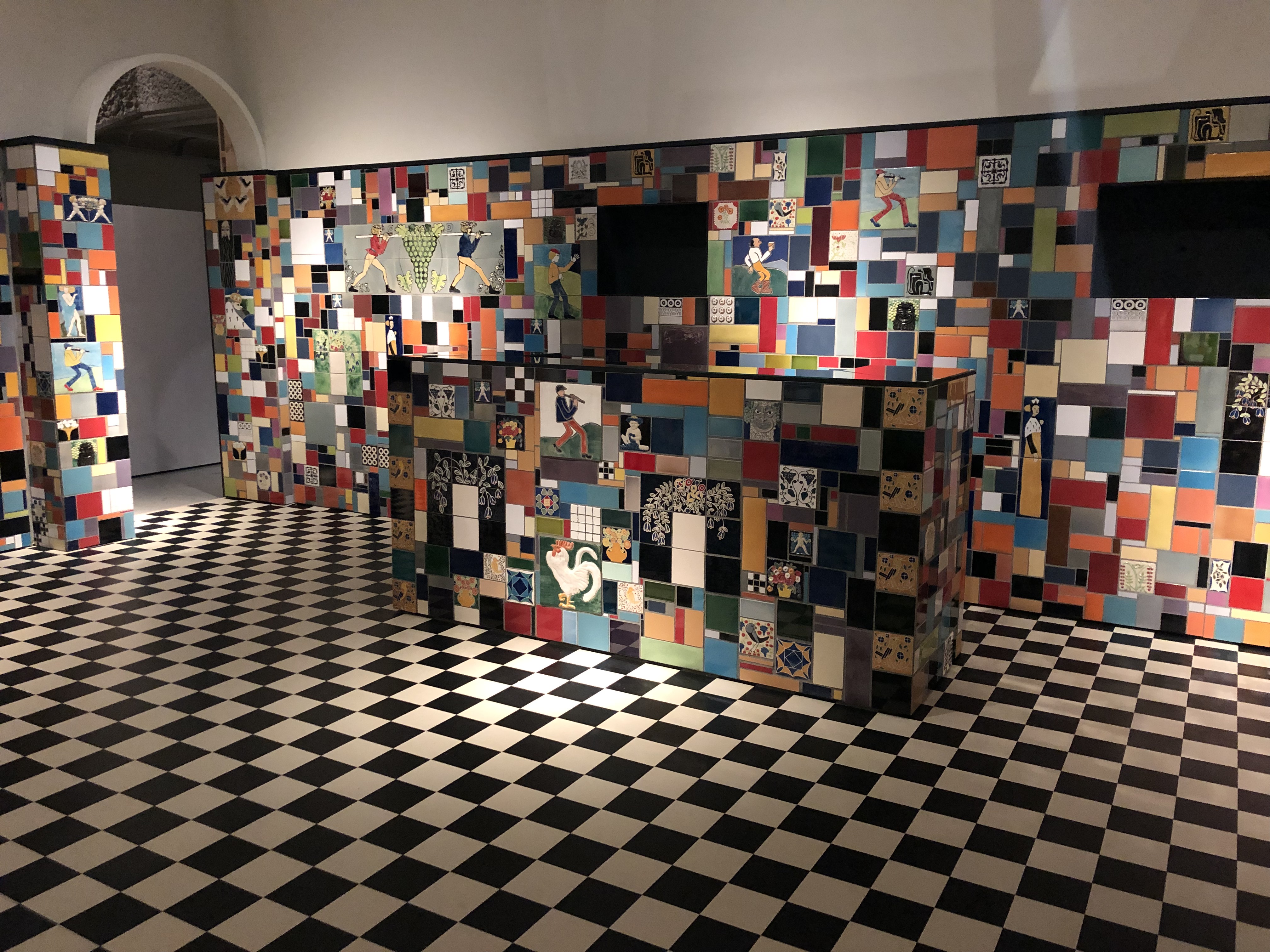
As usual, the exhibition was very well presented.  My favourite section was probably that on Vienna’s Cabaret Fledermaus (1907-13).  The posters, menus, programmes, ashtrays, flower pots, chairs and other accessories to an experience at this club were all exquisitely designed along consistent lines.  The set and costume designs for the performances were flamboyant and smacked of decadence.

Reconstruction of Cabaret Fledermaus In The Barbican Exhibition: Into The Night

Reconstruction of Cabaret Fledermaus In The Barbican Exhibition: Into The Night

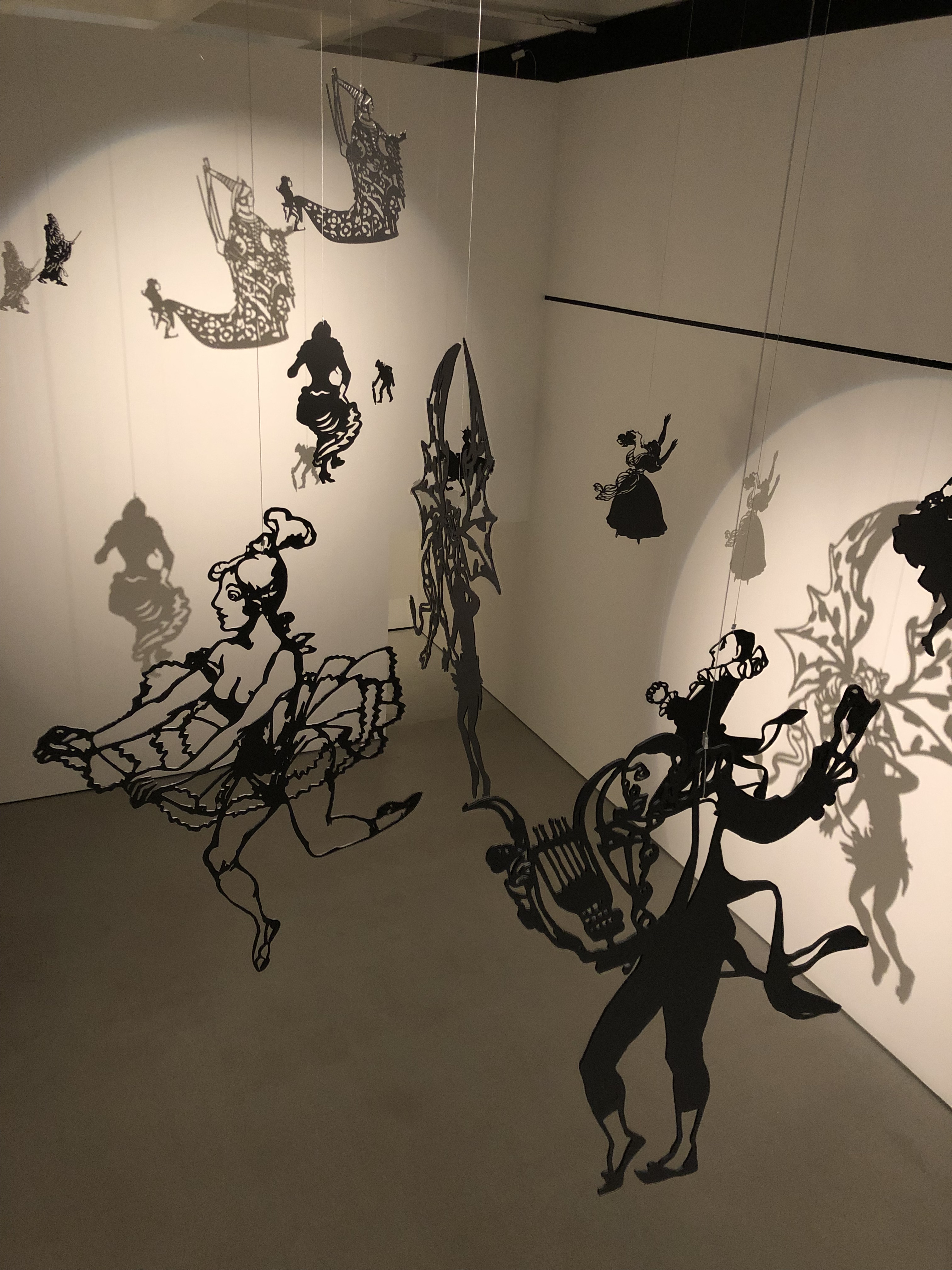
For each of the clubs chosen for the exhibition, drawings, pictures and photos helped to bring it must have been like to actually be in the nightclubs.  Aiding this further, the exhibition included reconstructions of parts of four of the nightclubs.  Particularly striking were the zinc shadow theatre models for the Chat Noir club in Paris.  For each reconstruction, despite the recorded sound, the only thing lacking was the smoke, bustle, heat and pandemonium that must have driven the fun of the customers in between – and maybe during – the cabaret and other performances.  It was a well arranged exhibition and was very enjoyable.

Reconstruction Of Chat Noir's Shadow Theatre Pieces In The Barbican Exhibition: Into The Night

Reconstruction Of Chat Noir’s Shadow Theatre Pieces In The Barbican Exhibition: Into The Night

Top tasks for this week: planting the whitebeam and cherry trees I mentioned we had bought in my last blog post, planting lots of bulbs and organising that long-considered trip away.