June this year was wonderfully sunny. The vegetables would have appreciated a little more rain but July certainly made up for that. Indeed, July and, so far, August have often felt autumnal and summer has only come in fits and starts. The sunny periods may have been intermittent but maybe that has helped us to appreciate the sun more on the occasions when it has shone on the unusually verdant countryside.
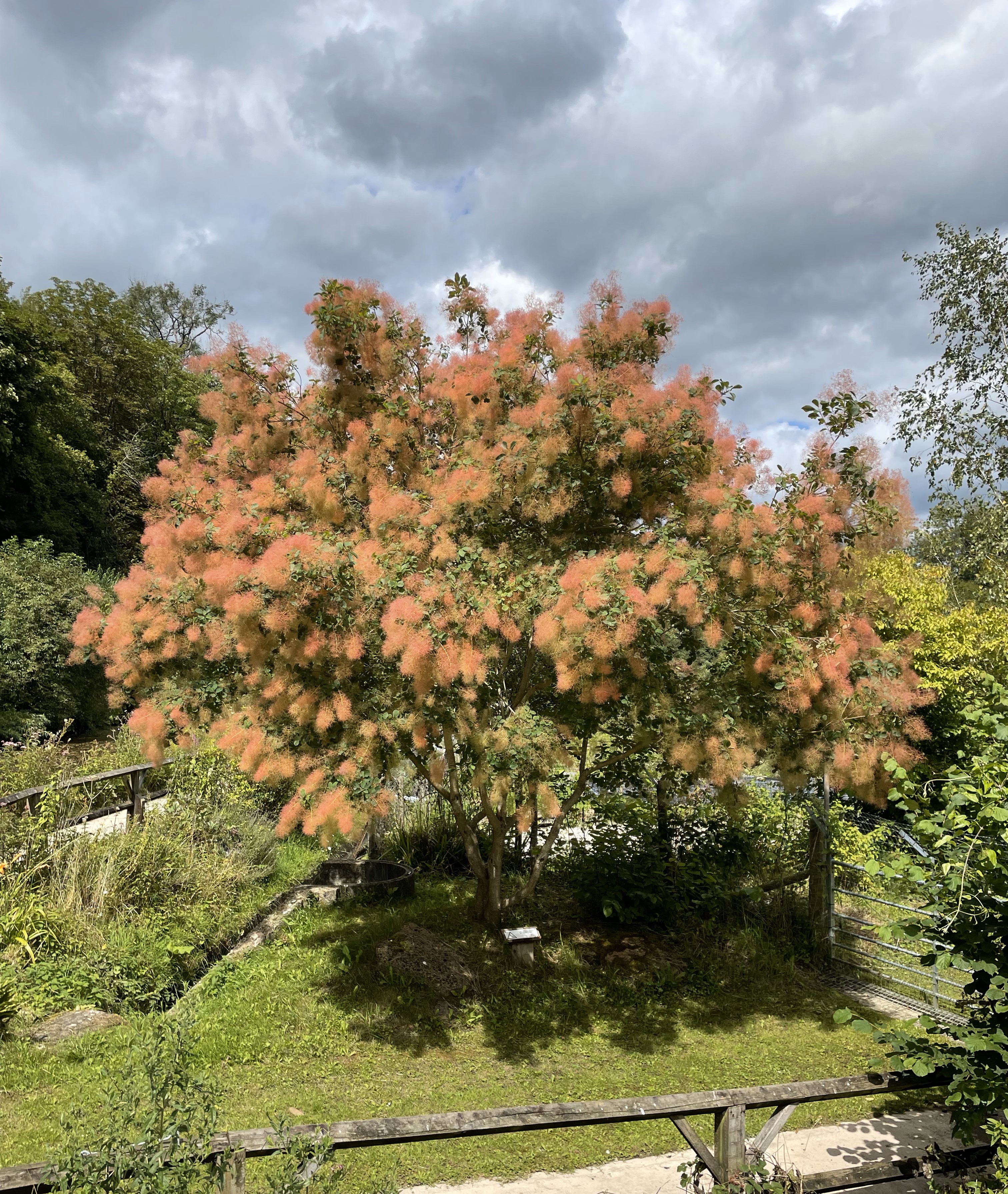
Our summer has sometimes felt as fragmented as the weather. The lack of any ties to school holidays and, much more recently, my retirement has meant that we don’t tend to book blocks of holiday through the summer months. As a result, we don’t have centrepiece diary commitments to schedule around. Instead, we have moved towards multiple shorter trips including those to our sons in Belfast and Edinburgh, plus a couple of day visits to Nottingham to check on my Dad during a period of ill-health.
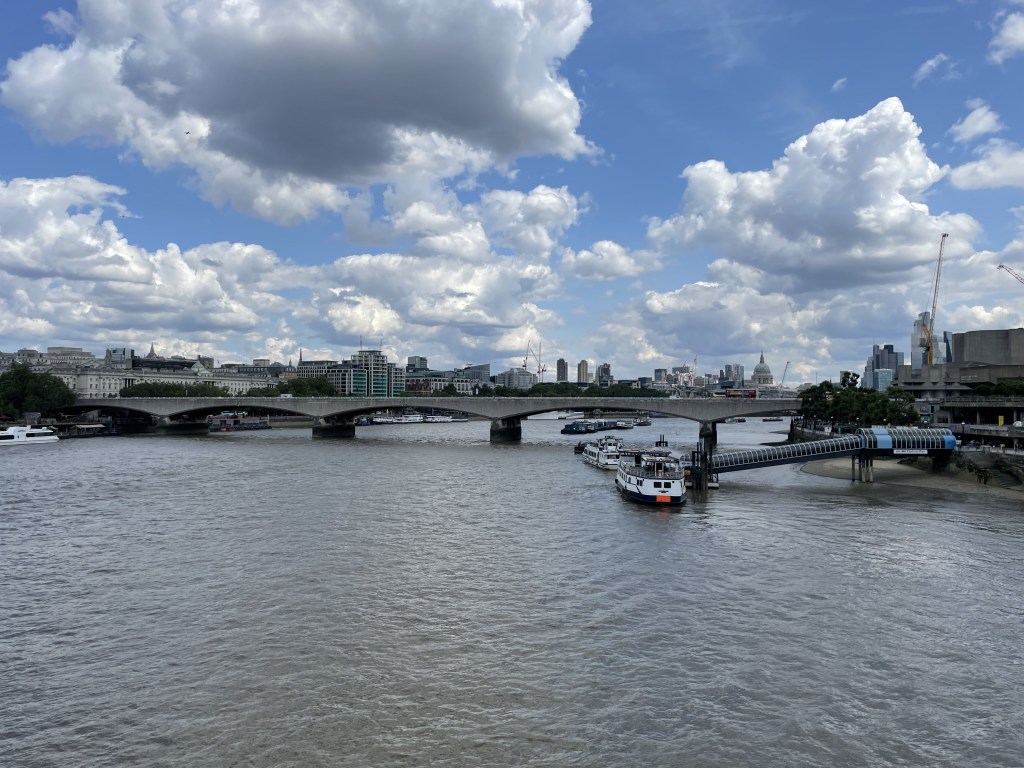
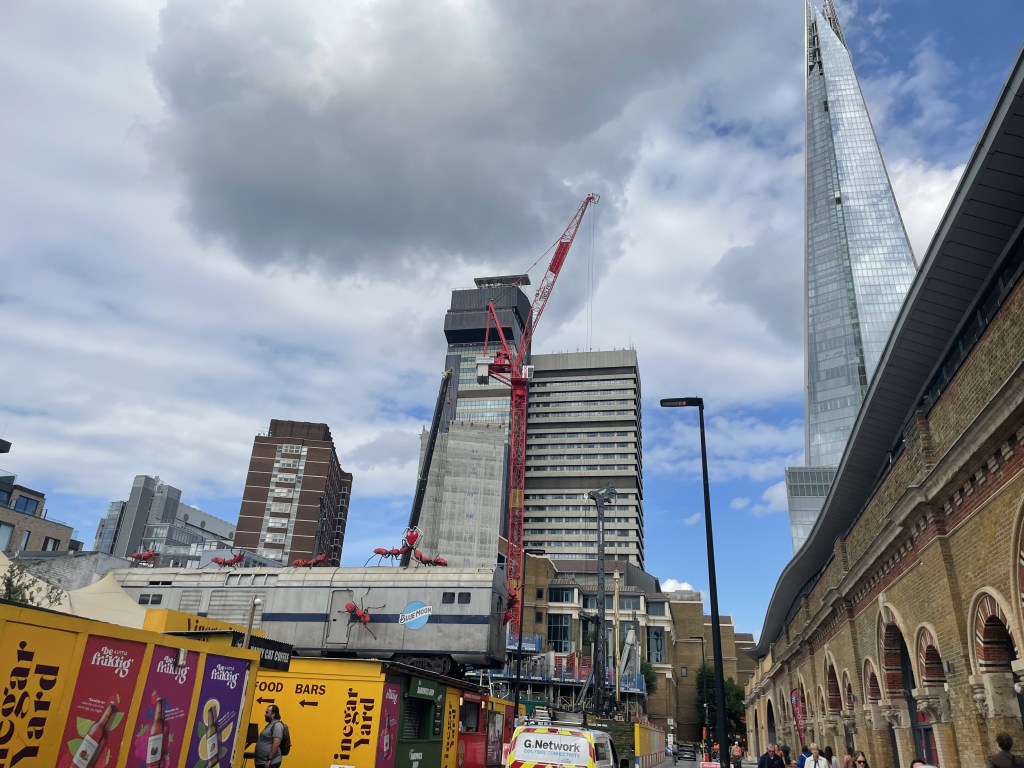
The Wonderful Variations Of London’s Skylines
Retirement means flexibility too. I was able a few weeks ago to piggy back, at relatively short notice, onto the back of a visit Jane was making to London to see a friend of hers. We could share the driving a bit and I caught up with an old friend of my own. I also took the opportunity to visit an exhibition of the sort that was part of my routine when we had a flat or sons in London. I miss those exhibition trips a lot. This one was a visit to the rather wonderful White Cube in Bermondsey.

I have been to this gallery several times and one of the most memorable visits was to see an exhibition by Anselm Kiefer. I wrote briefly here about that back in January 2020 just before Covid disrupted things. The monumentalism and scale of that exhibition is repeated in his latest works at The White Cube. I loved it and the White Cube spaces were perfect for it!
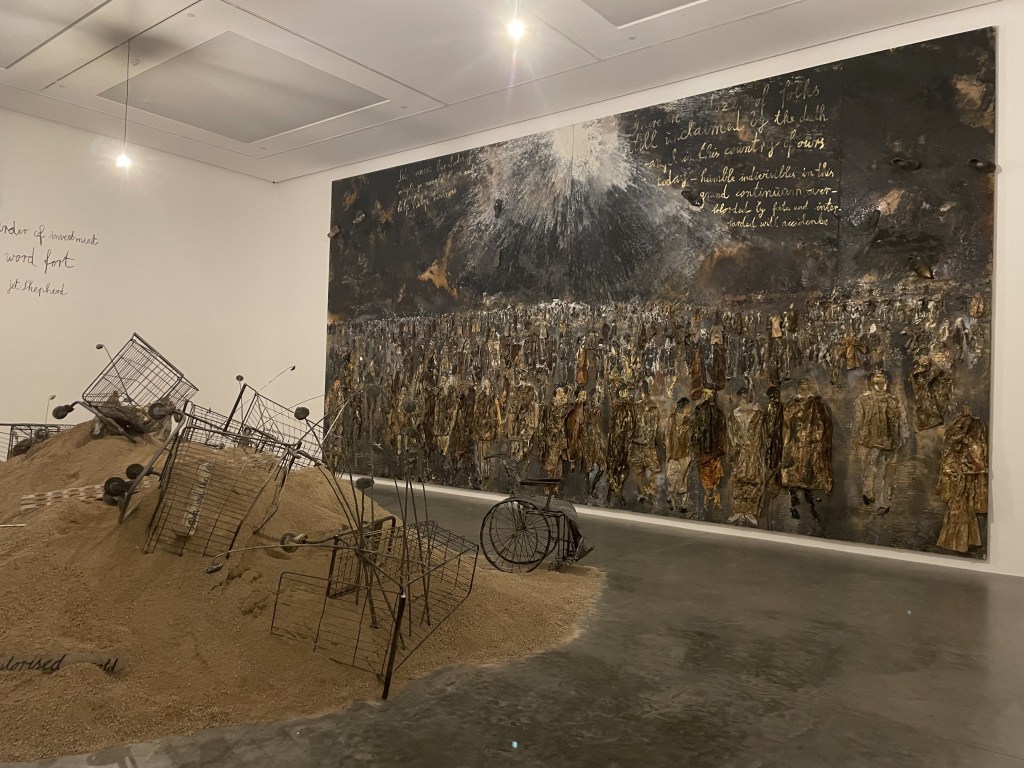
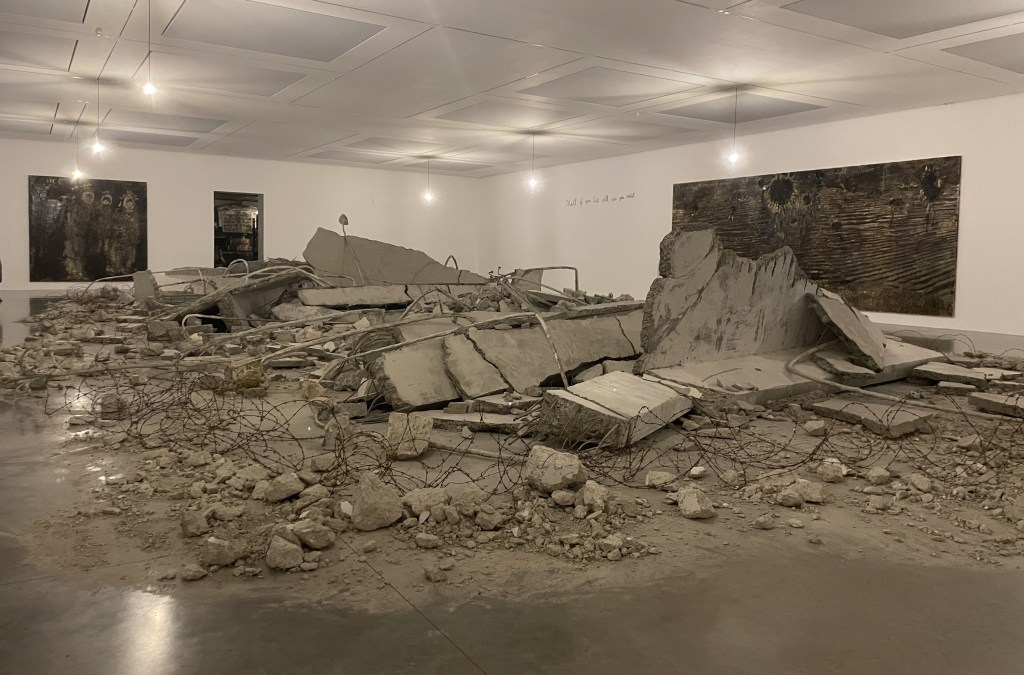
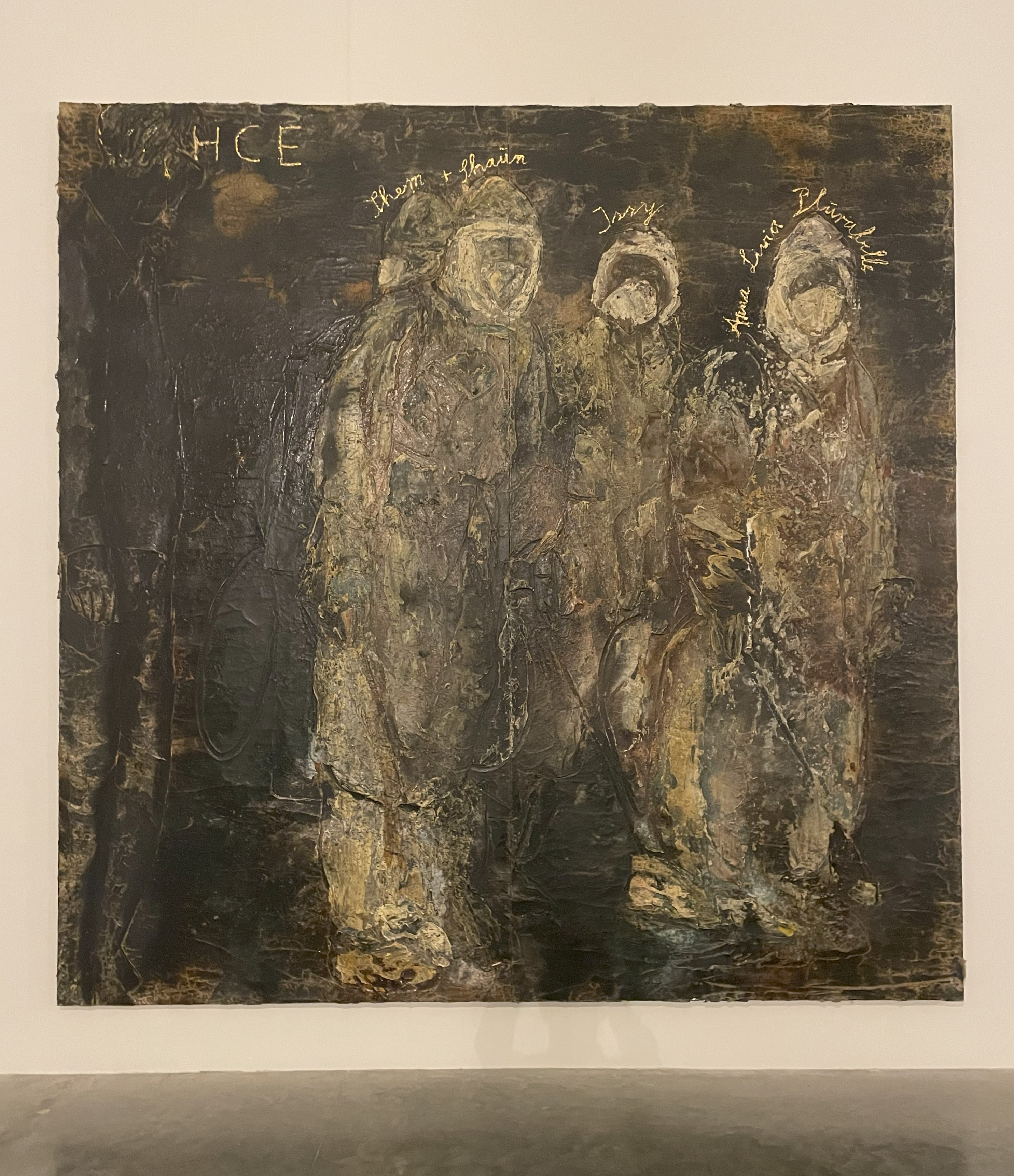
Kiefer’s works this time were based around the novel by James Joyce called Finnegan’s Wake. The novel is apparently (I’ve not tried to read it) a fractured mix of dream world and grim reality that deploys invented and combined words. The language of the novel is strewn across most of the works on show. While most of the phrases and sentences are nonsensical in this context, they added somehow to the mystery and sense of a dystopia as I moved from room to room.
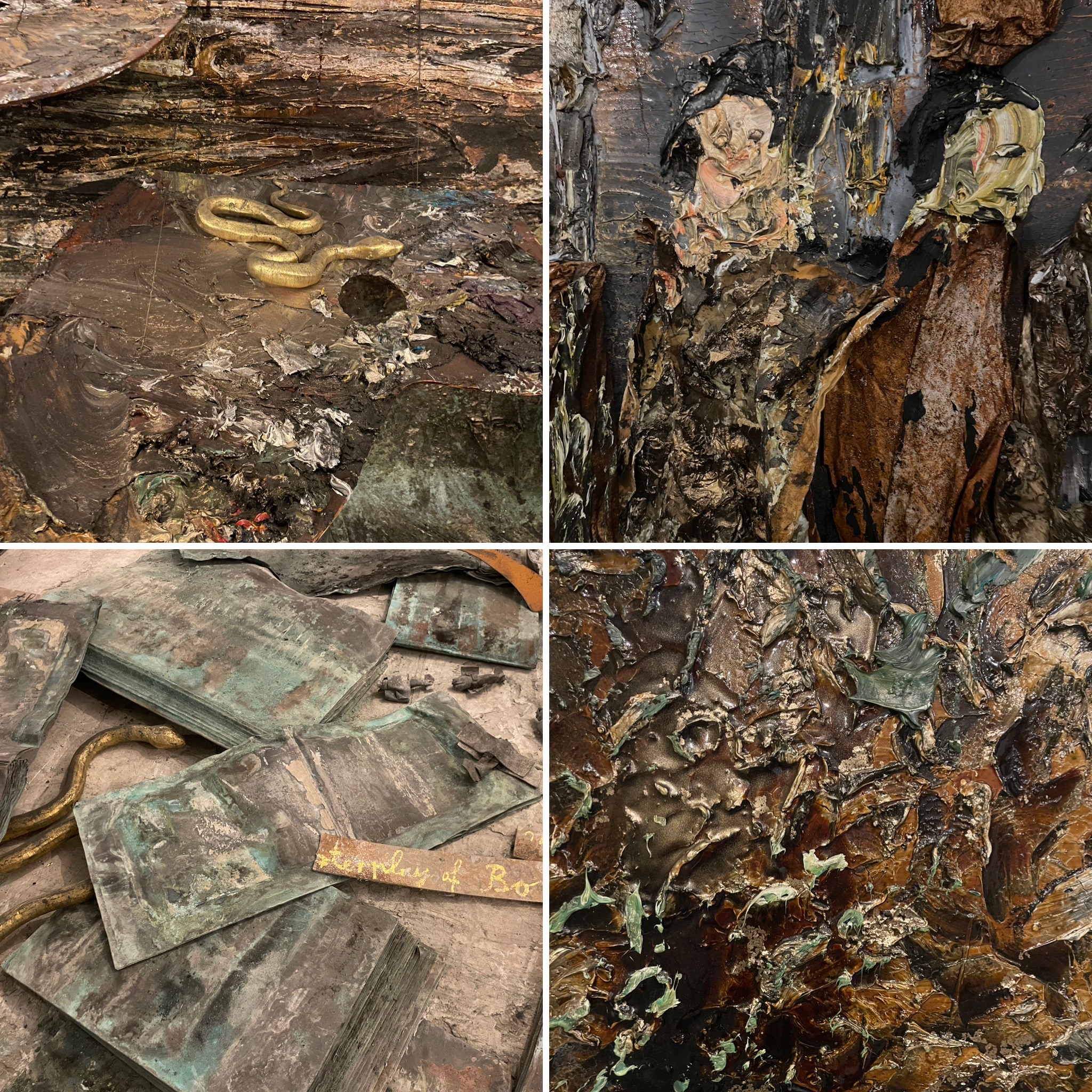
Goodness knows how the White Cube is funded – the exhibition was, as usual, free – and I fear removal of some of the works will require repolishing of the extensive polished concrete gallery floors. To be honest the huge piles of debris in a couple of the exhibition rooms were, for all their scale, harder to appreciate than the pictures on the walls. These were dense art works including rural scenes that worked for me close up and from observation across the huge rooms.
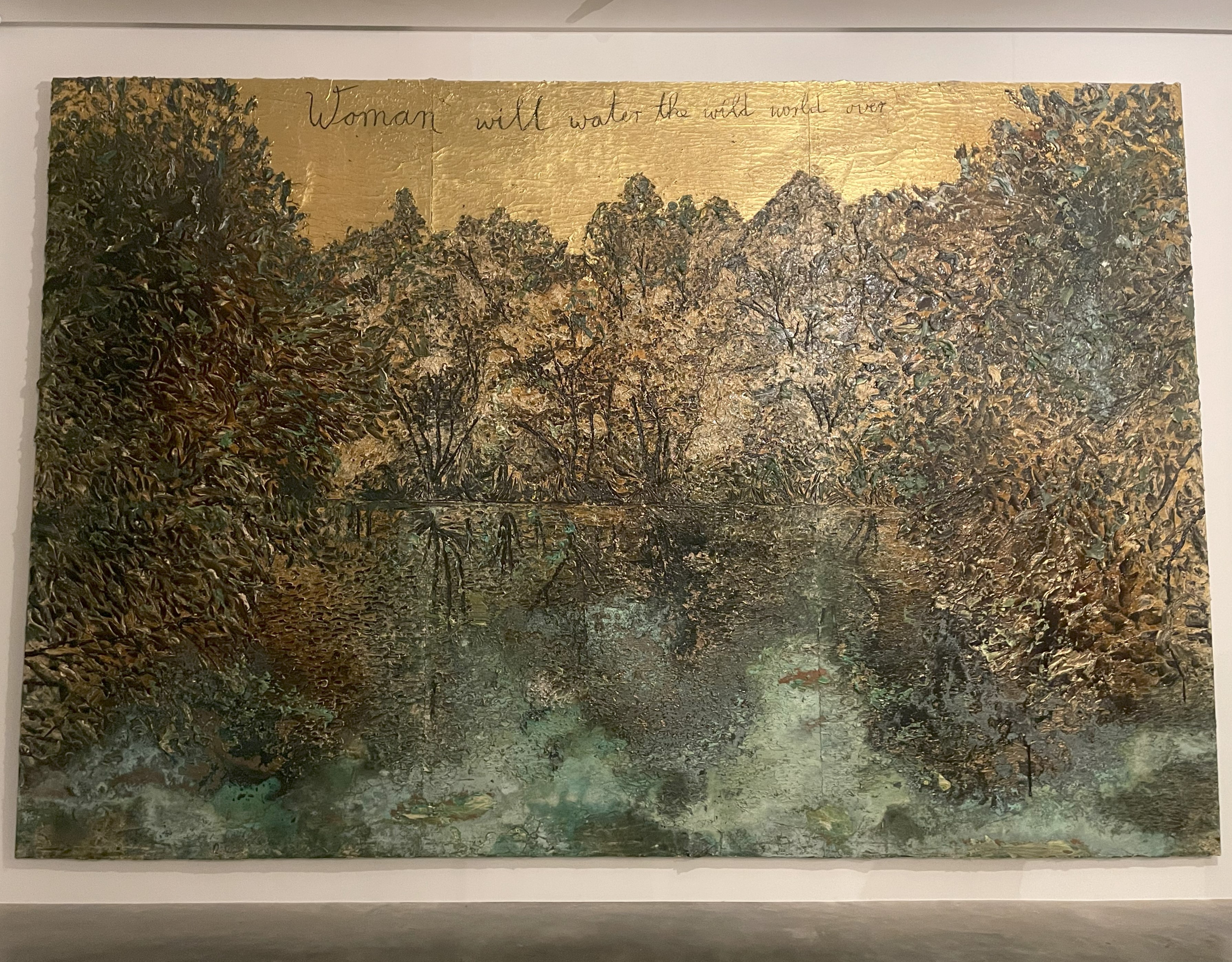
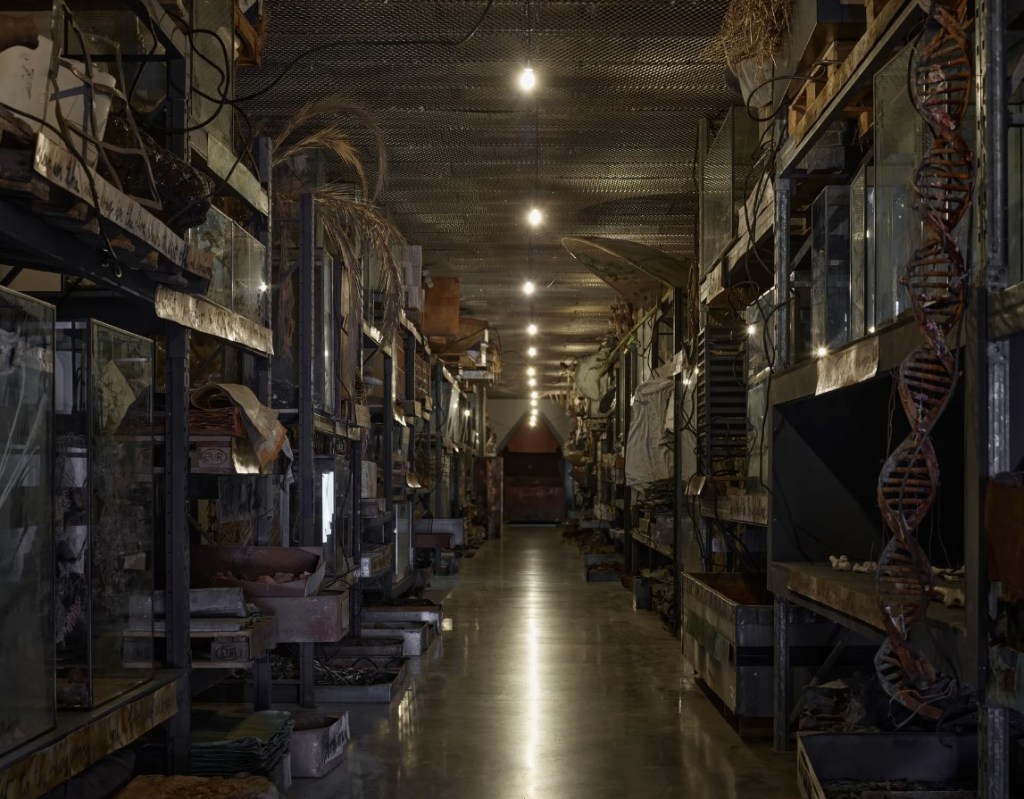
Those rooms were linked by a vast corridor stuffed with huge, dusty vitrines and crude floor-to-ceiling shelves full of… well, what were they full of? Just stuff! It was like walking through a museum of detritus but it was strangely compelling and all underlined by the sheer scale of the thing.
Another recent highlight has been a visit to Cambridge where I once – several decades ago – studied. I had not been back for quite a while and the reason this time was the wedding of my Best Man (BM). He lives nearby and we took up an Airbnb (which turned out to be outstanding) in his village and travelled into Cambridge twice: once for the formal registry element of the wedding and then again for a ceremony and reception held in BM’s and my old college, Peterhouse.
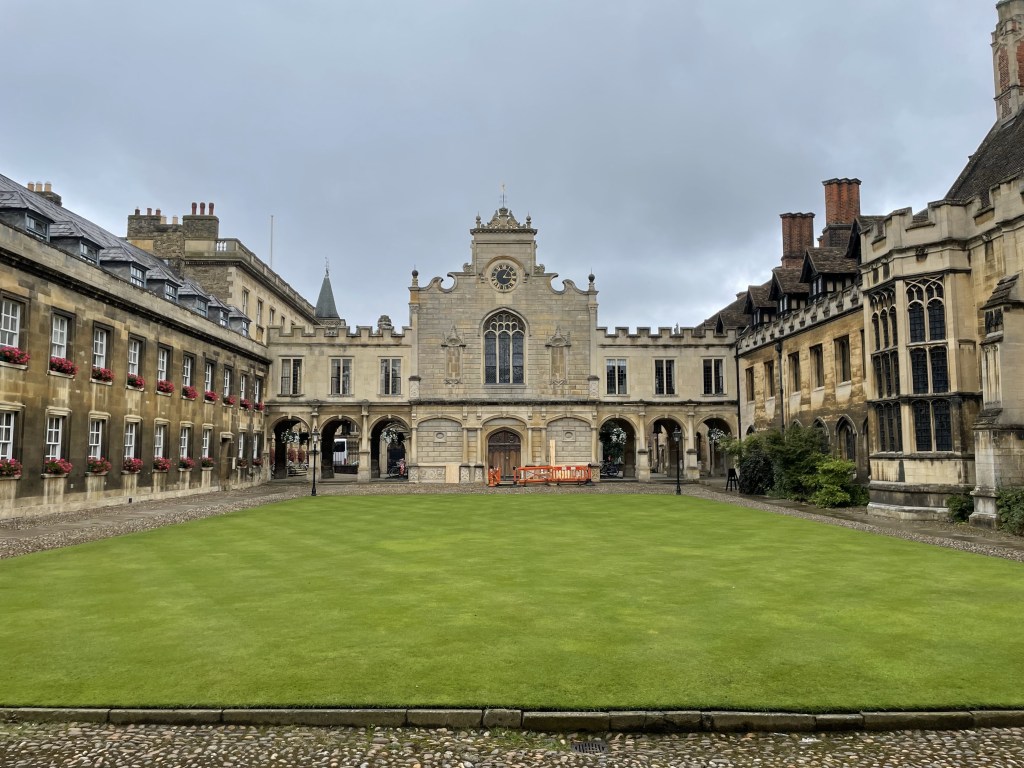
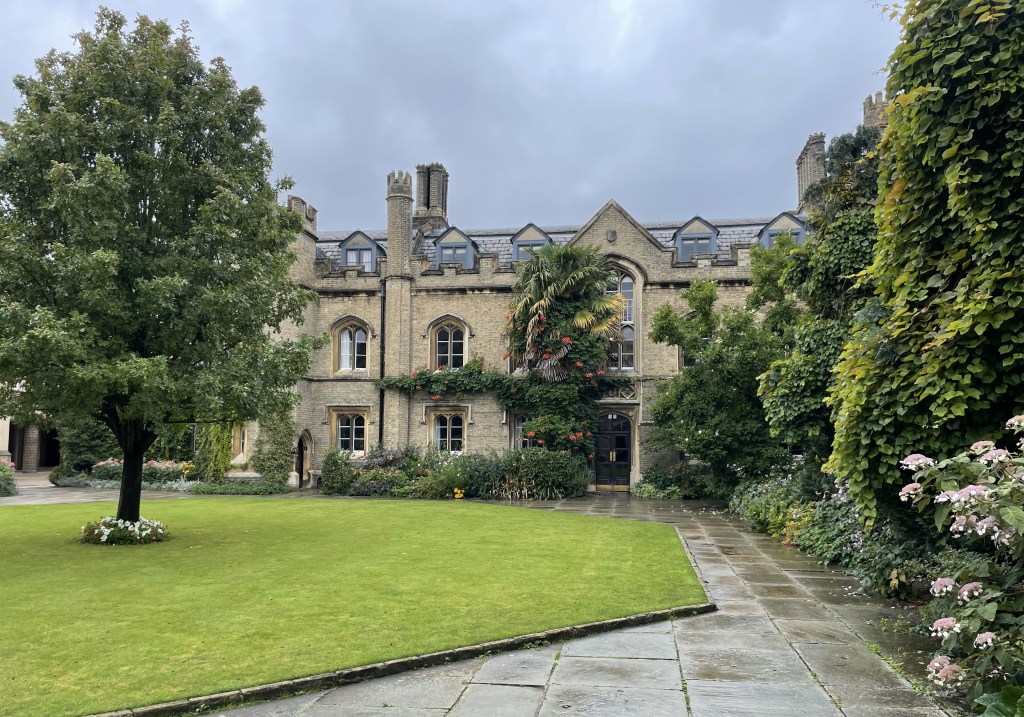
Peterhouse Main Quadrangle and Chapel (Left) And My Old H Staircase In Gisborne Court (Right)
The whole weekend was a delightful mix of ceremony, catch up with a few old friends and meetings with a number of new acquaintances – both local and international – who were very interesting and easy to talk to. They really helped to make the whole weekend event lovely. The event generated some nostalgia too as the reception dinner was held in the main Peterhouse Dining Hall where, about 50 years ago, I ate college meals every day. I didn’t appreciate the history or the grandeur of the college buildings half as much when I was living there as I did during this fleeting visit.
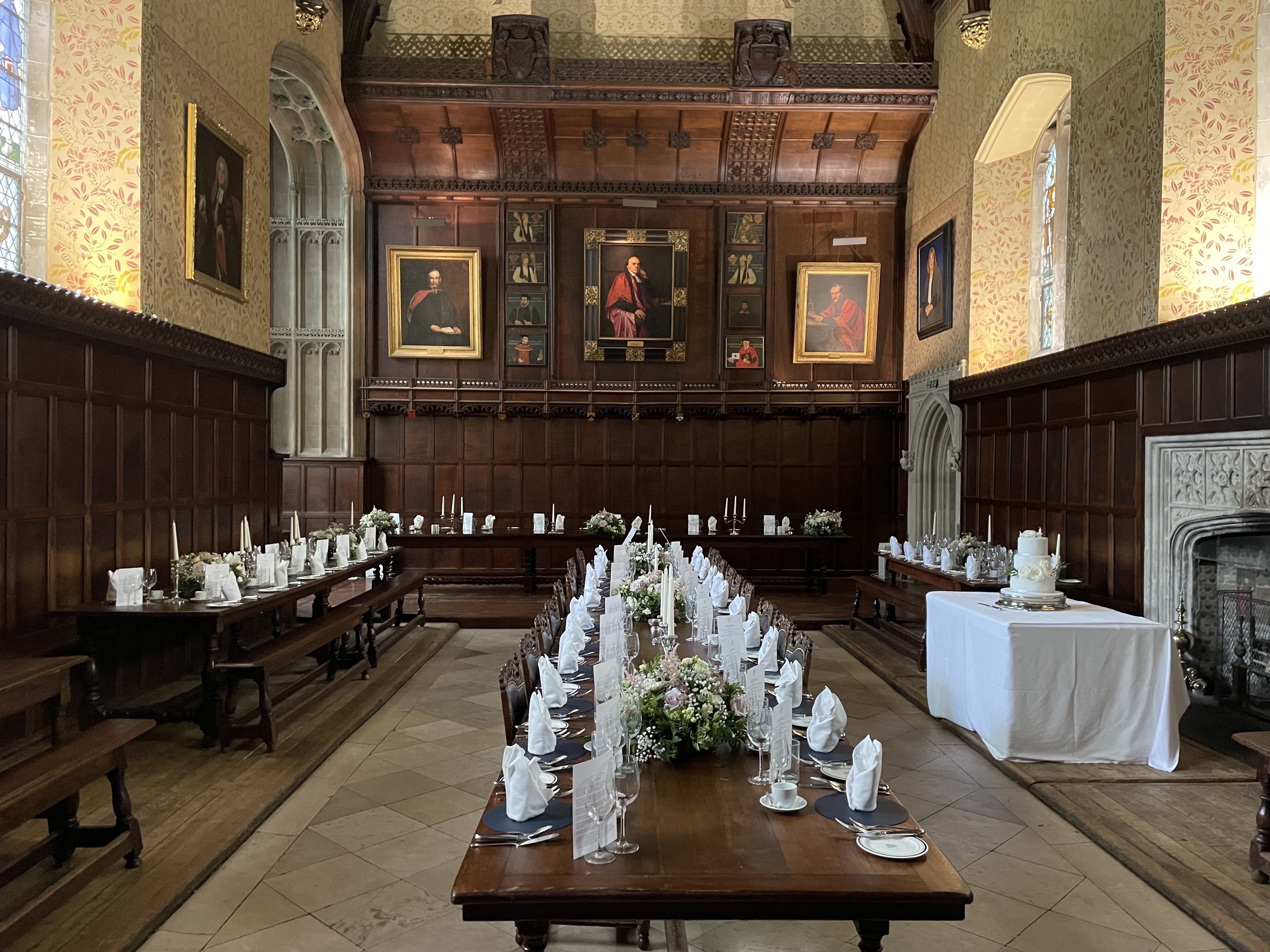
One other prompt for a less welcome bit of recollection was that Jane, and a few others at the wedding, contracted Covid there. Fortunately, I have avoided it again but it was a reminder that the pandemic was not long ago and that damned virus is still very much around.
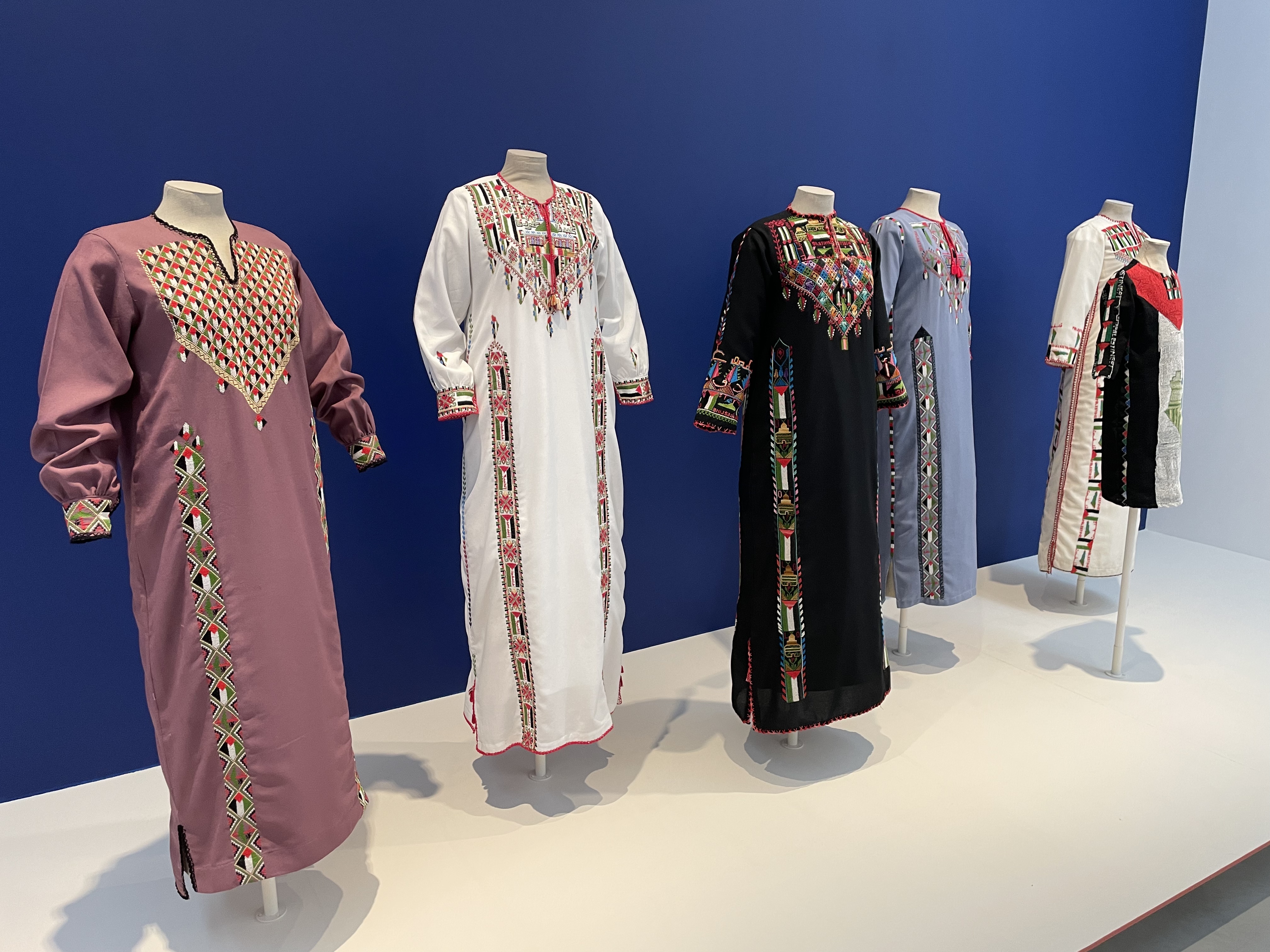
During our stay in and around Cambridge, Jane and I went to Kettle’s Yard to see an exhibition of Palestinian embroidery over the last century that Jane had read about. Even someone like me with no real understanding of the intricacies of embroidery could appreciate the delightful patterns and muted colours of the clothing on display in the first room of everyday women’s wear.

The exhibition went on to show more formal and more ornate wear and the way each local area had its distinctive styles and motifs. The exhibition then tracked the changes in Palestine embroidery brought about by history since the Second World War.

First the United Nations Partition Plan for Palestine in 1947, the subsequent displacement of about 70,000 Palestinians, and then the 1967 Six-Day War all disrupted and then broke much of the cottage industry of embroidery crafting in the Palestinian villages. Enforced movement of Palestinians mixed up the local pockets of unique styling. Materials such as silks from France became unattainable and were replaced by cheaper products. Small handicraft workshops were often replaced by factories. The end results, outside of a few traditional, small-scale operations, became bland and almost garish.
Finally, following and during the Intifadas of the 1980s and 1990s the embroidery became a means of protest. The exhibition showed how the defiance of the Palestinians led them to incorporate the Palestinian flag into their embroidery designs as a symbol of resistance.
The exhibition was an interesting mix of video and clothing, and of art and history.
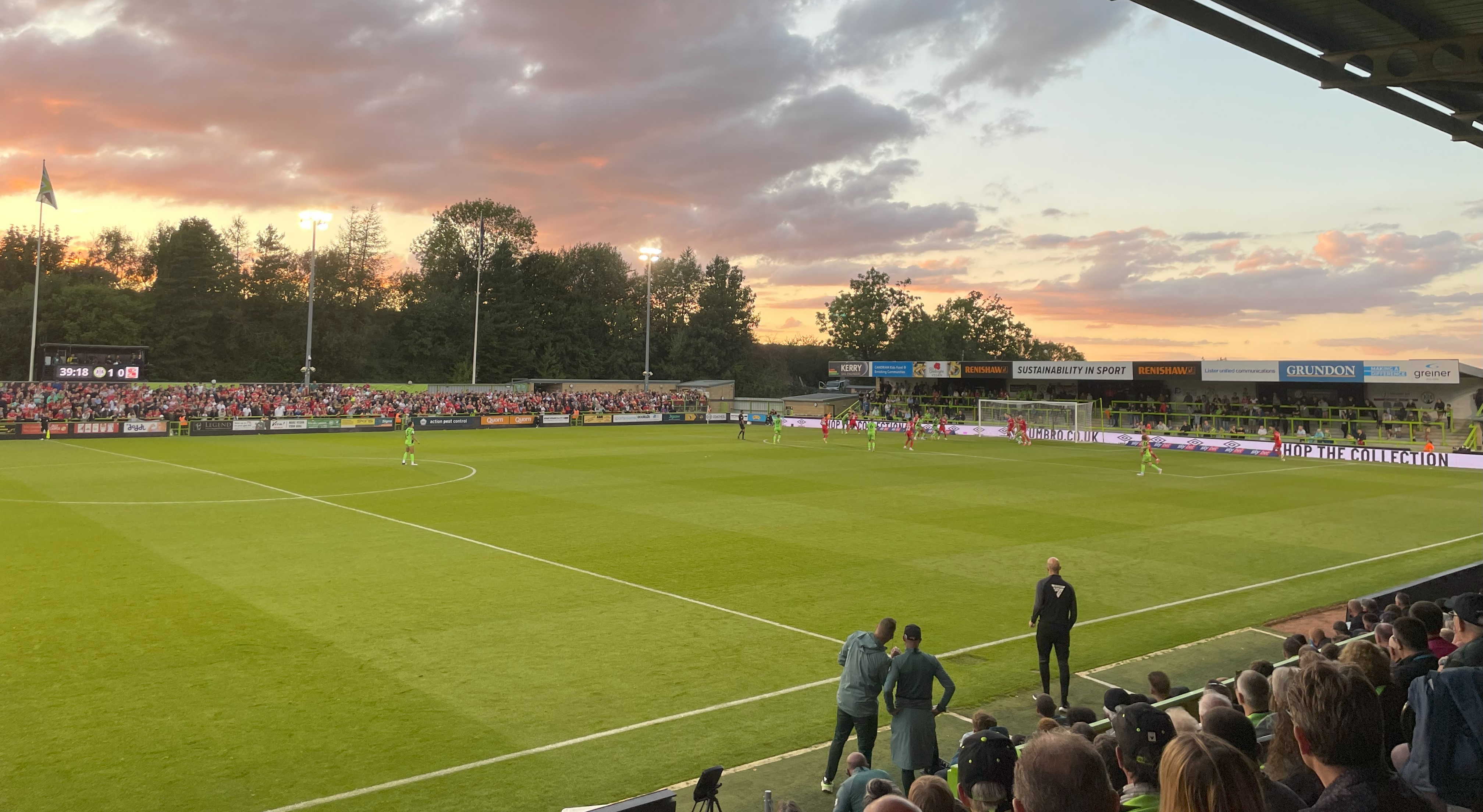
Back at home the advent of the new football season, together with the Women’s Football World Cup, is starting to take up time at Forest Green Rovers’ football stadium and in front of the telly.
Also, we have entertained Eldest Son, his wife and First Grandchild (FG) with a number of relatives who were keen to meet the little one. I had a great time with FG and my phone is full of video of him that Jane and I watch on repeat. Now we are looking forward to entertaining Youngest Son, his partner and some of their (and our) friends from their time in Australia. Then we are off to Ireland for another wedding. For a quietly retired chap like me, summer may feel a bit fragmented but it also feels pretty full!
 My Retirement Journey