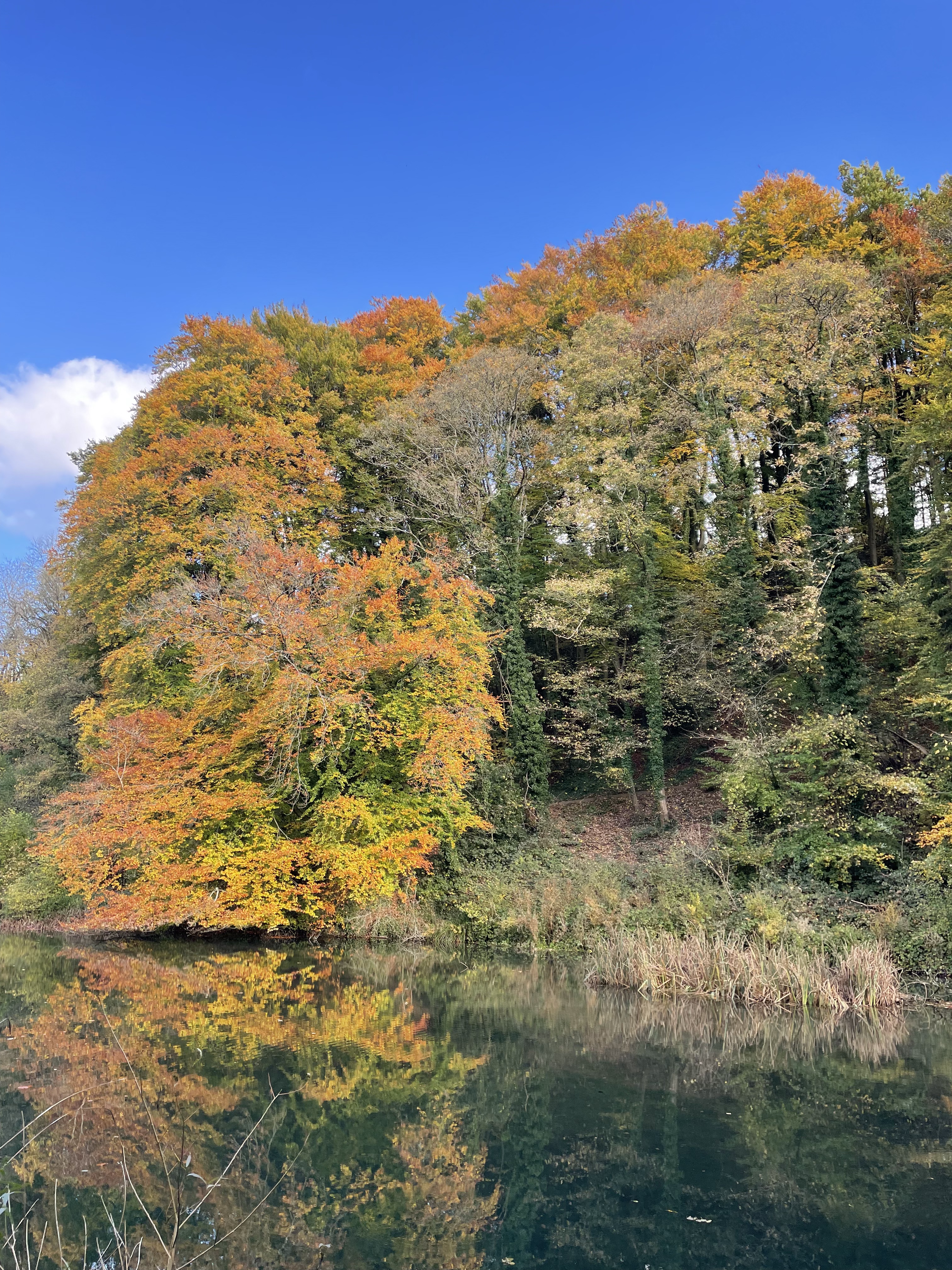
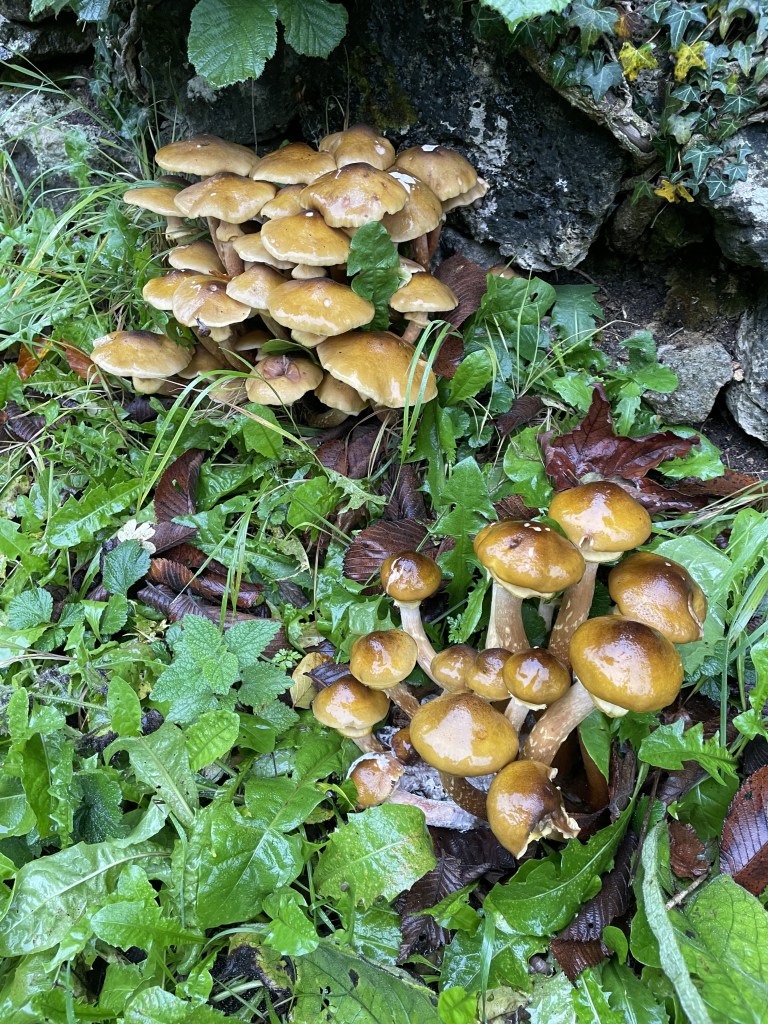
We are well into Autumn. There are mushrooms underfoot and local trees are looking lovely in their yellows, browns and reds as they shut down for winter. Our social whirl, which was so active with weddings and holidays a few weeks ago, has slowed but it hasn’t shut down. We have enjoyed several very pleasurable outings and visits and have a few more lined up during the rest of the month.
The backdrop to this has been activity to prepare our rental property for a new tenant after a several month gap for repairs and, now, moving furniture around to enable restoration of our house’s ground level wooden floors. It’s been a busy period of the routine, of renewal and of entertainment gems.
Back in September, still in our ‘wedding period’, we attended Stroud’s annual Hidden Notes festival of electronic and ambient music. We last attended in 2019 and the festival has become much more popular since then. We underestimated that and only just managed to get a seat before the central concert event became standing room only.
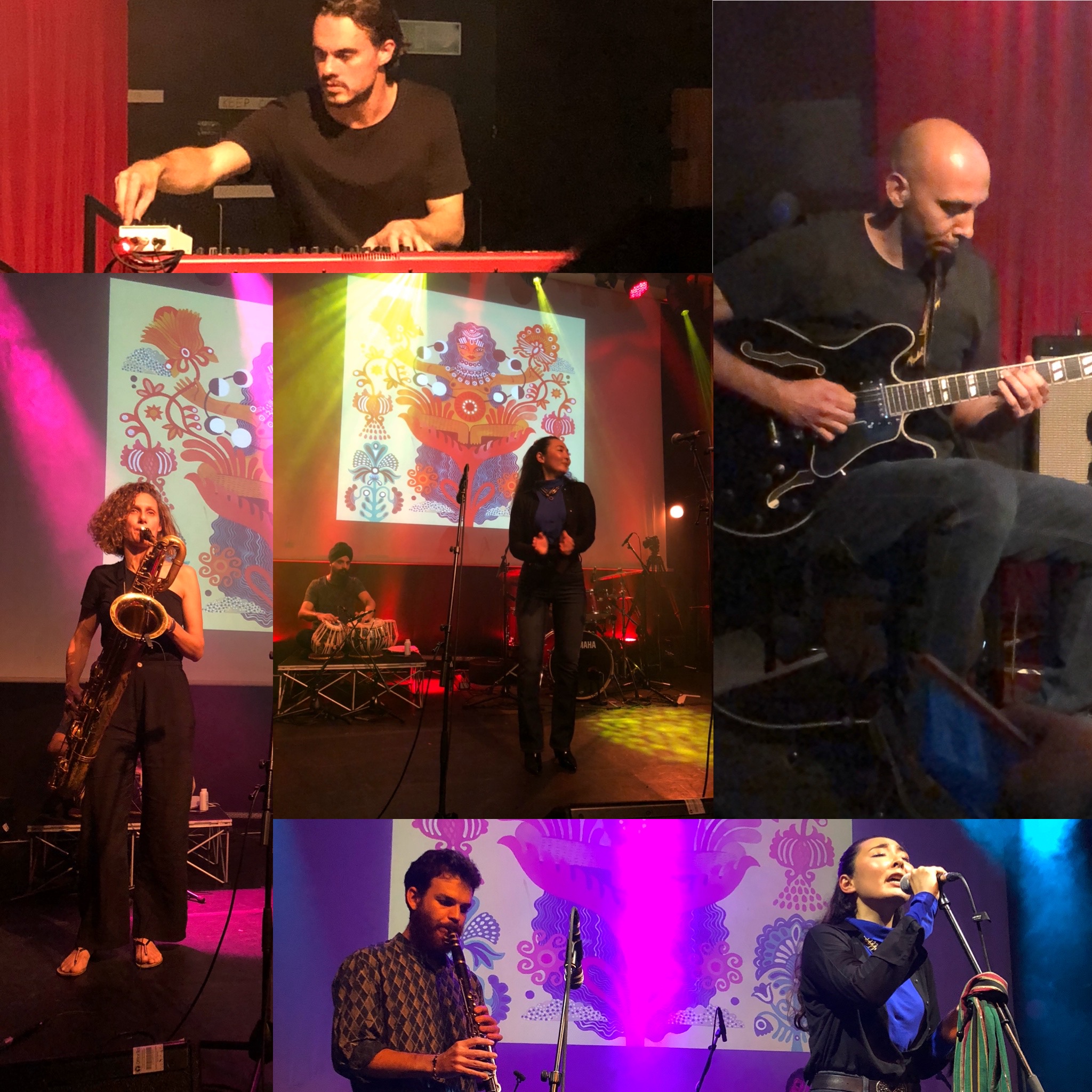
We saw five different artists over a six-hour period (thank goodness we got those seats!). Not all the music was to our tastes but all the performers were interesting in some way. Laura Cannell kicked things off with pleasant, off-beat, folky music on violin and a strange-looking bass recorder.
Hekla was even stranger. She is an Icelandic expert in playing the ‘Theremin’ which is a Soviet invention from the 1920s and is now an instrument that makes sound without physical contact as the artist moves around it and disrupts the electric signals it emits. It produced a rather bizarre, eerie sound and it was fun to watch Helka waving arms and hands around.

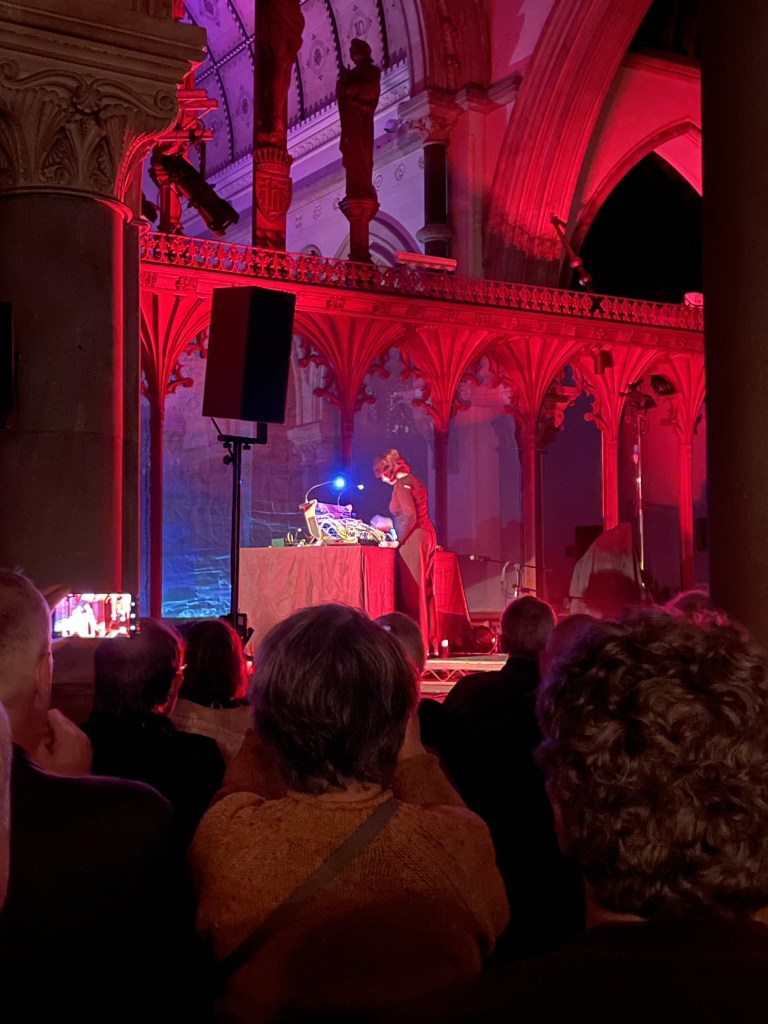
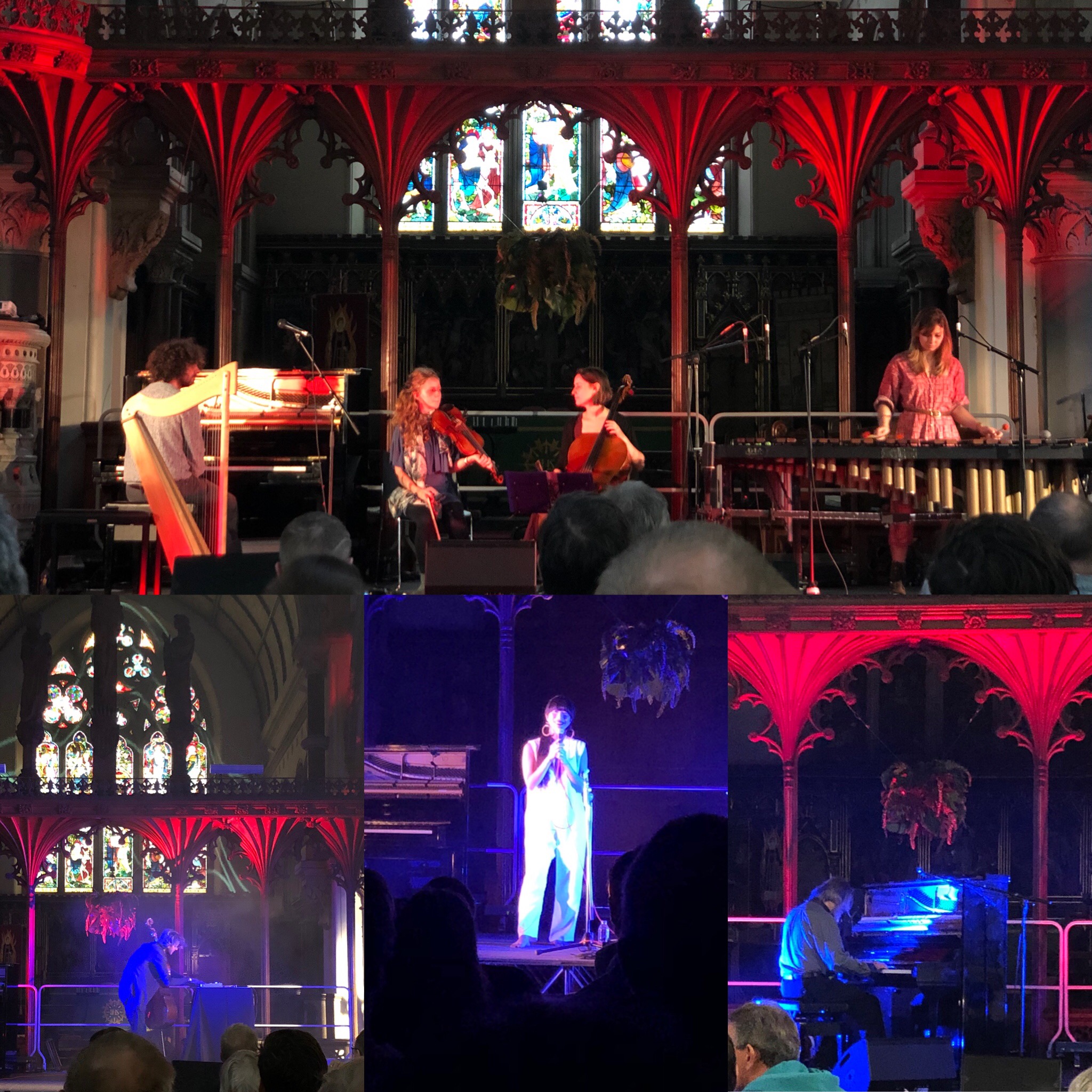
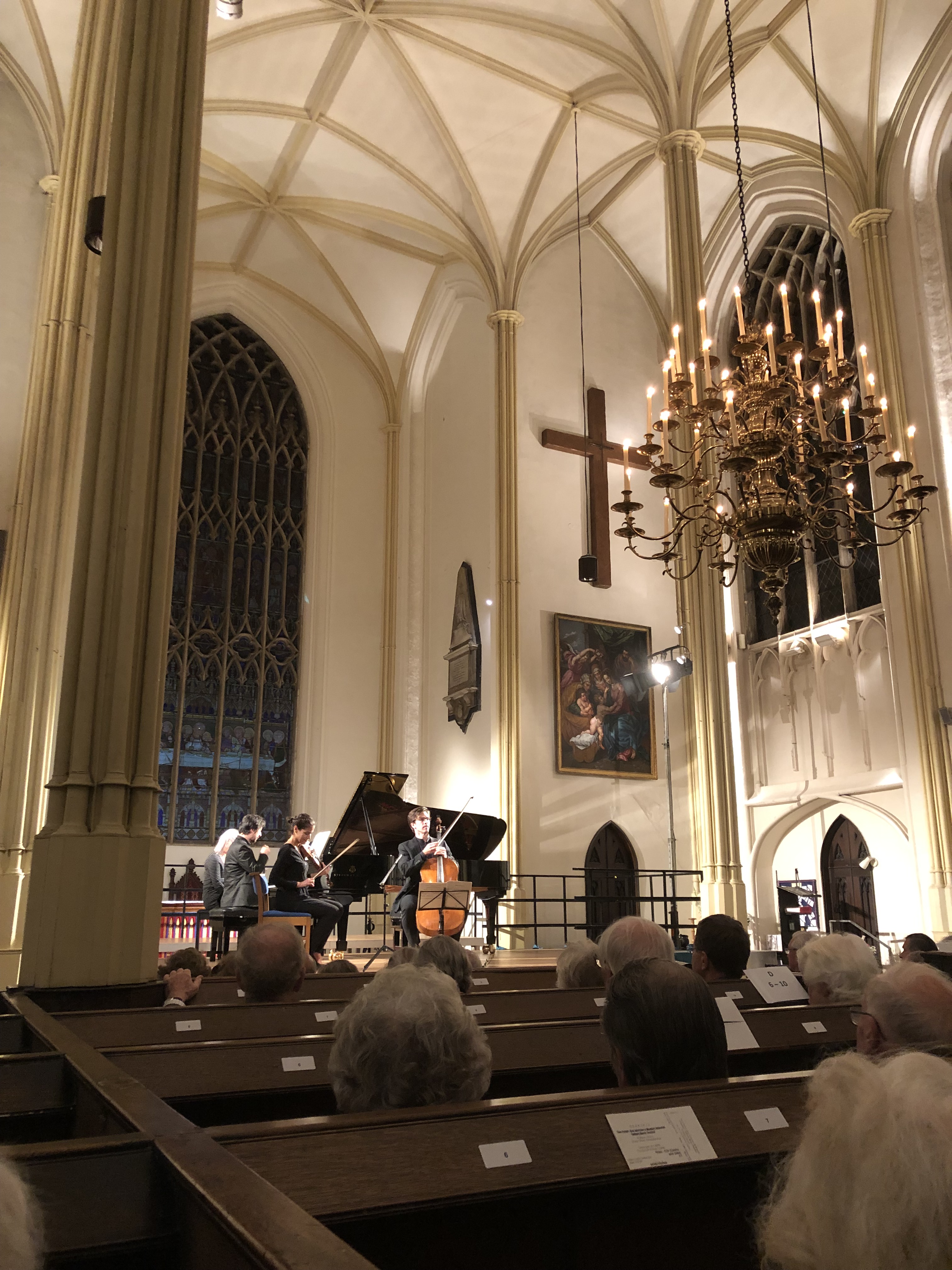
Mary Lattimore and Suzanne Ciani At St Lawrence Church, Stroud During The ‘Hidden Notes’ Festival
Echo Collective, a group of classically trained Belgian musicians, sounded rather sombre. Their set was a rather slow burn but ultimately satisfying. Then came Mary Lattimore, an American harpist. I know her work well and was very much looking forward to hearing her in person. I wasn’t disappointed; it was great to see how the sounds she makes on her albums are actually made. Those sounds were lovely with occasional unexpected twists.
The evening was completed by Suzanne Ciani. She is an electronic music pioneer and she brought some very retro equipment with her. The most remarkable thing about her performance was her sprightliness at the age of 78. The music, however, was a difficult listen for our ears. That didn’t dent our enjoyment of the Hidden Notes event; it’s a little gem in the Cotswolds.
A more substantial outing was, more recently, to South Somerset and ‘a restaurant with rooms’ called Holm. I have wanted to revisit Wells Cathedral since passing it unexpectedly while following SatNav on the way back from Youngest Son’s Stag do in the summer. Holm in South Petherton was a hotel and restaurant Jane had been attracted to during one of her Instagram searches. Our trip was a win-win for us both.
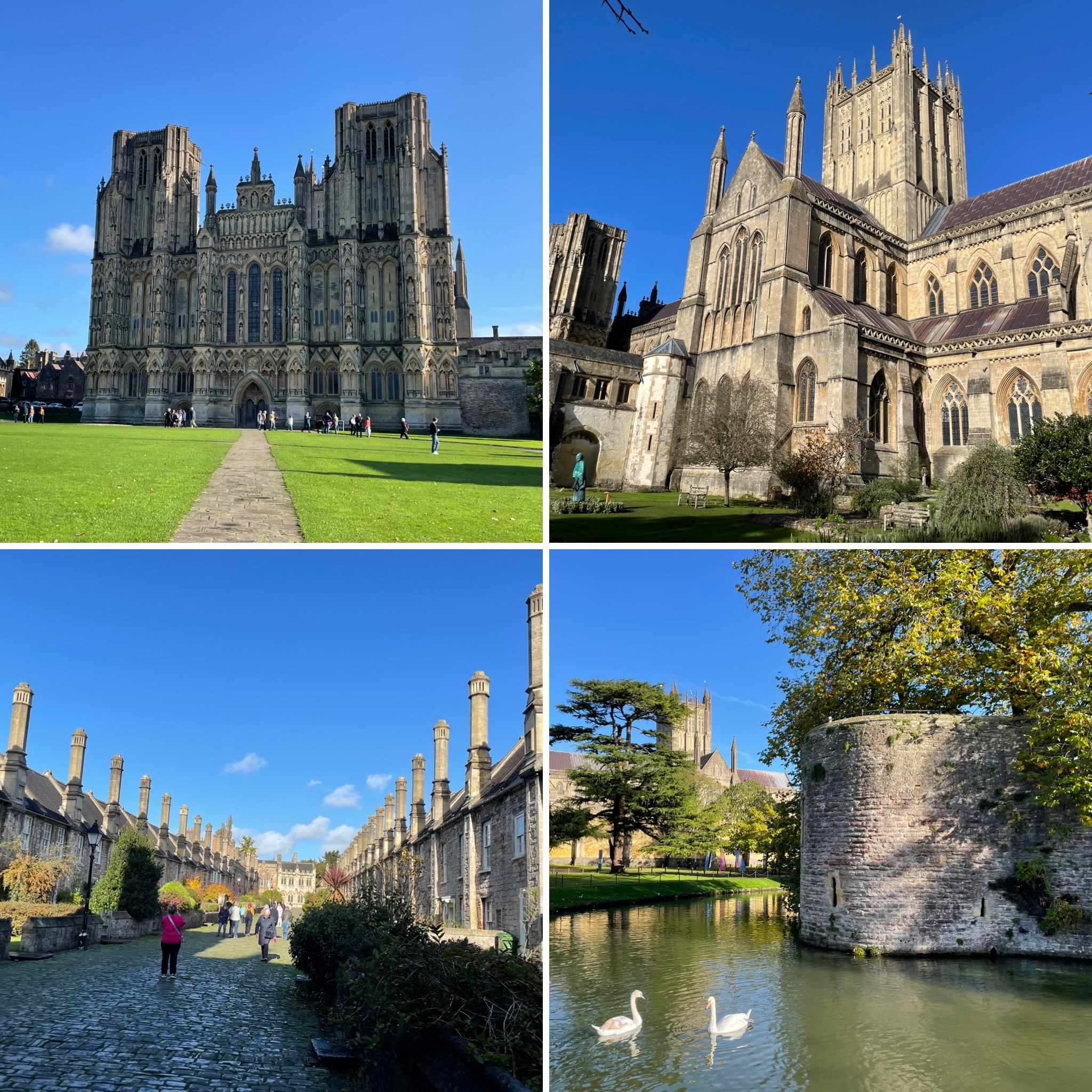
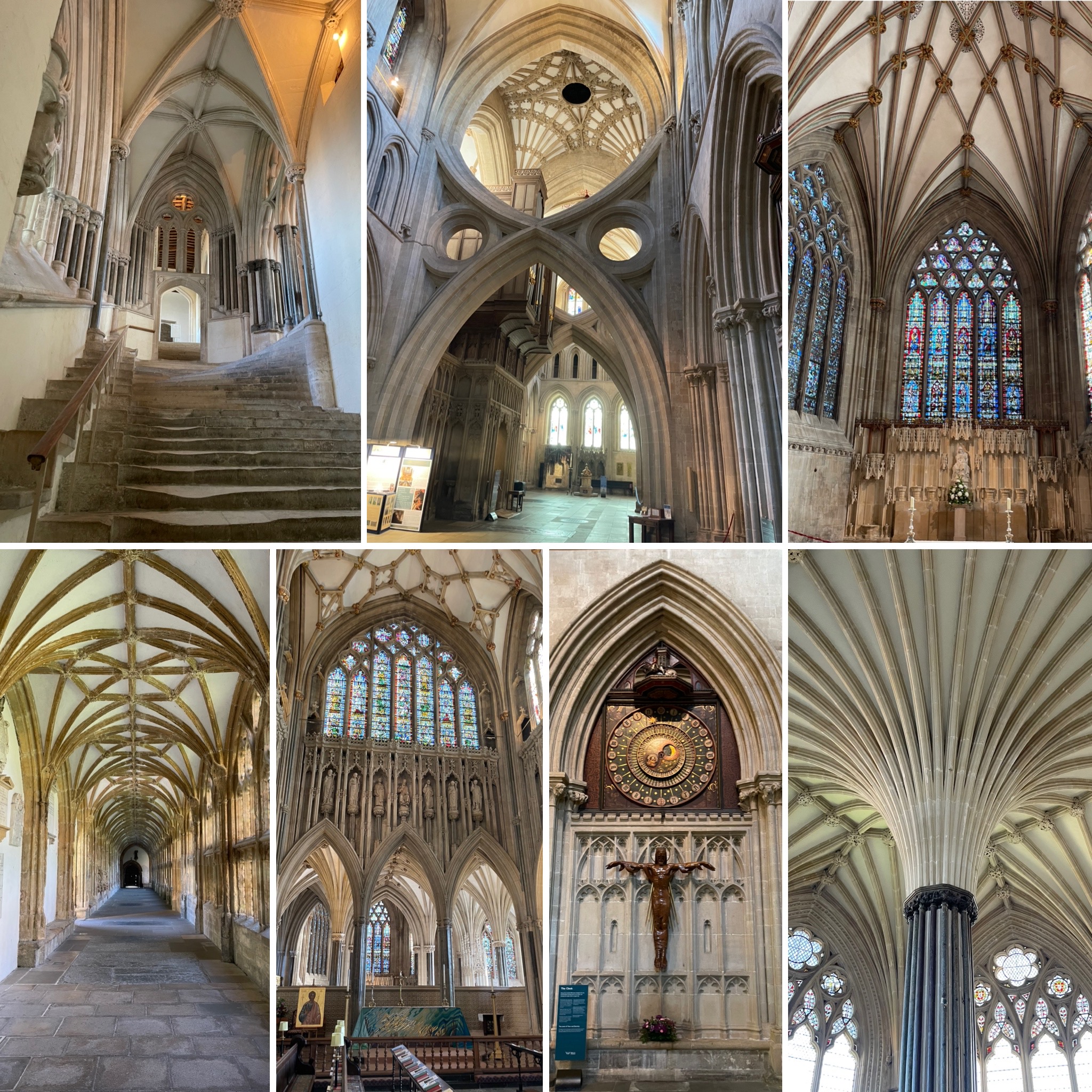
The whole outing was bathed in Autumn sunshine and was very rewarding. The area immediately around Wells Cathedral and the Bishops Palace is beautiful. Wells Cathedral itself has some really wonderful features.
Holm provided very attractively decorated, comfortable rooms and innovative and excellent food. Despite a problem with the hot water on the first morning, we had a very good stay.
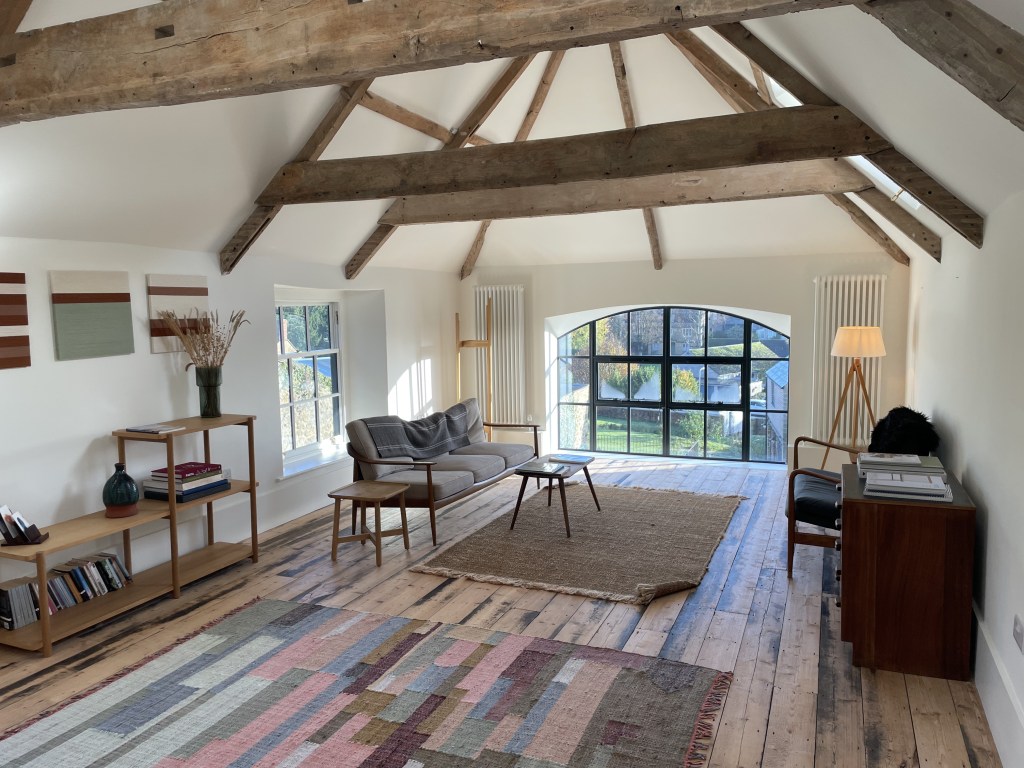
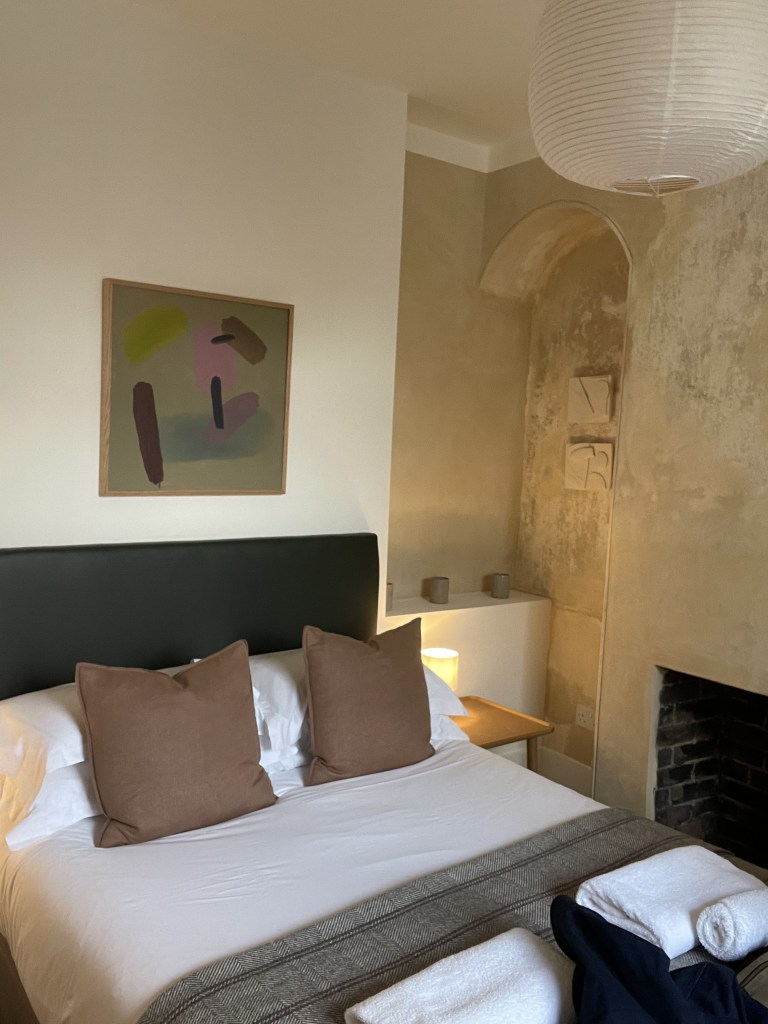
The Studio at Holm and Our Tasteful Room
Holm is in the small market town of South Petherton. The church was attractive, there were numerous interesting old houses mainly constructed from a limestone that had a lovely orange hue.
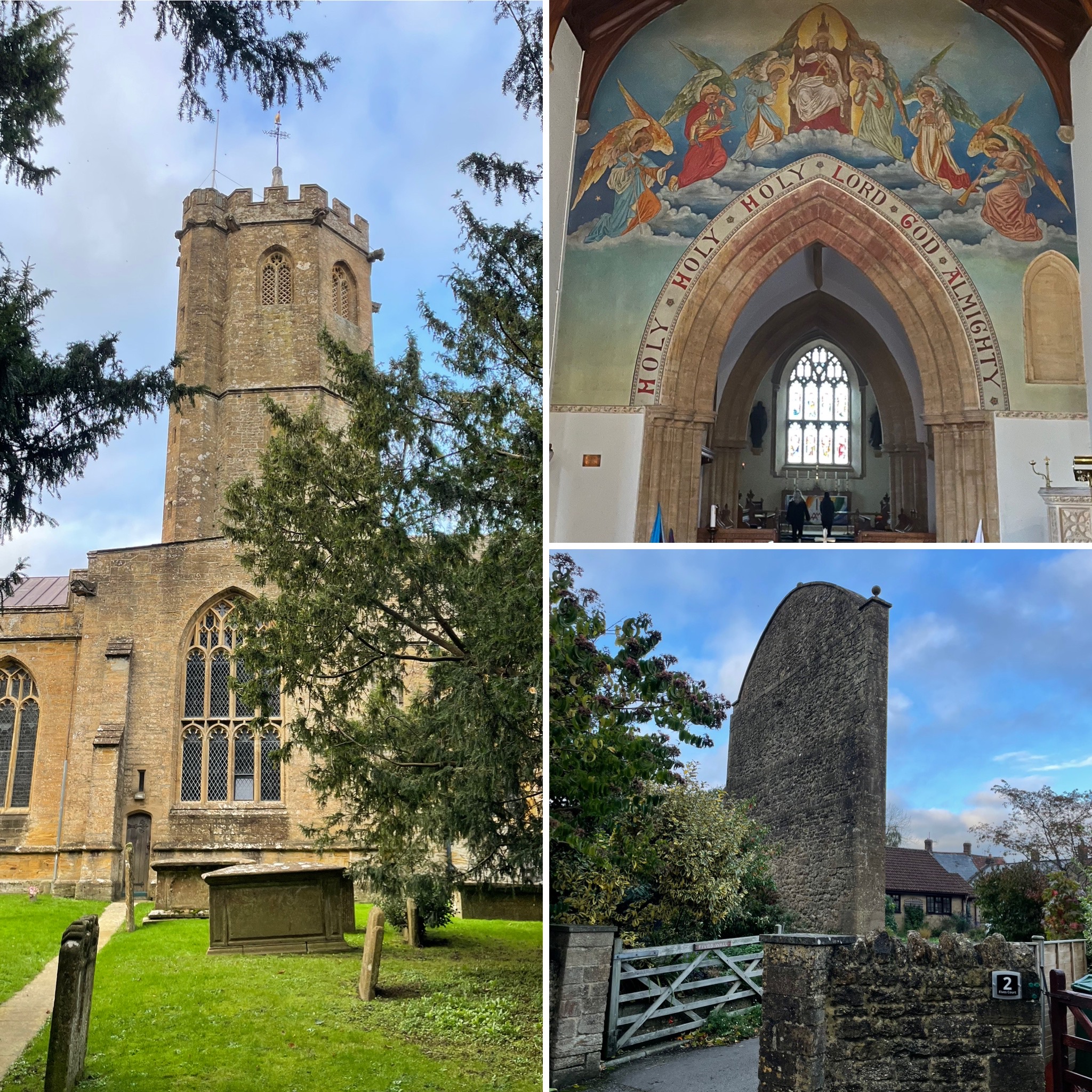
Perhaps most remarkably, South Petherton has a ‘fives’ wall in someone’s garden (and we saw another later in a nearby village). The game of fives became a popular sport in South Somerset from the mid-18th century. Churchwarden accounts record damage from fives being played against church towers. To prevent this, purpose-built fives walls were constructed in the yards of inns and large gardens and here was a surprising example of that (see below).
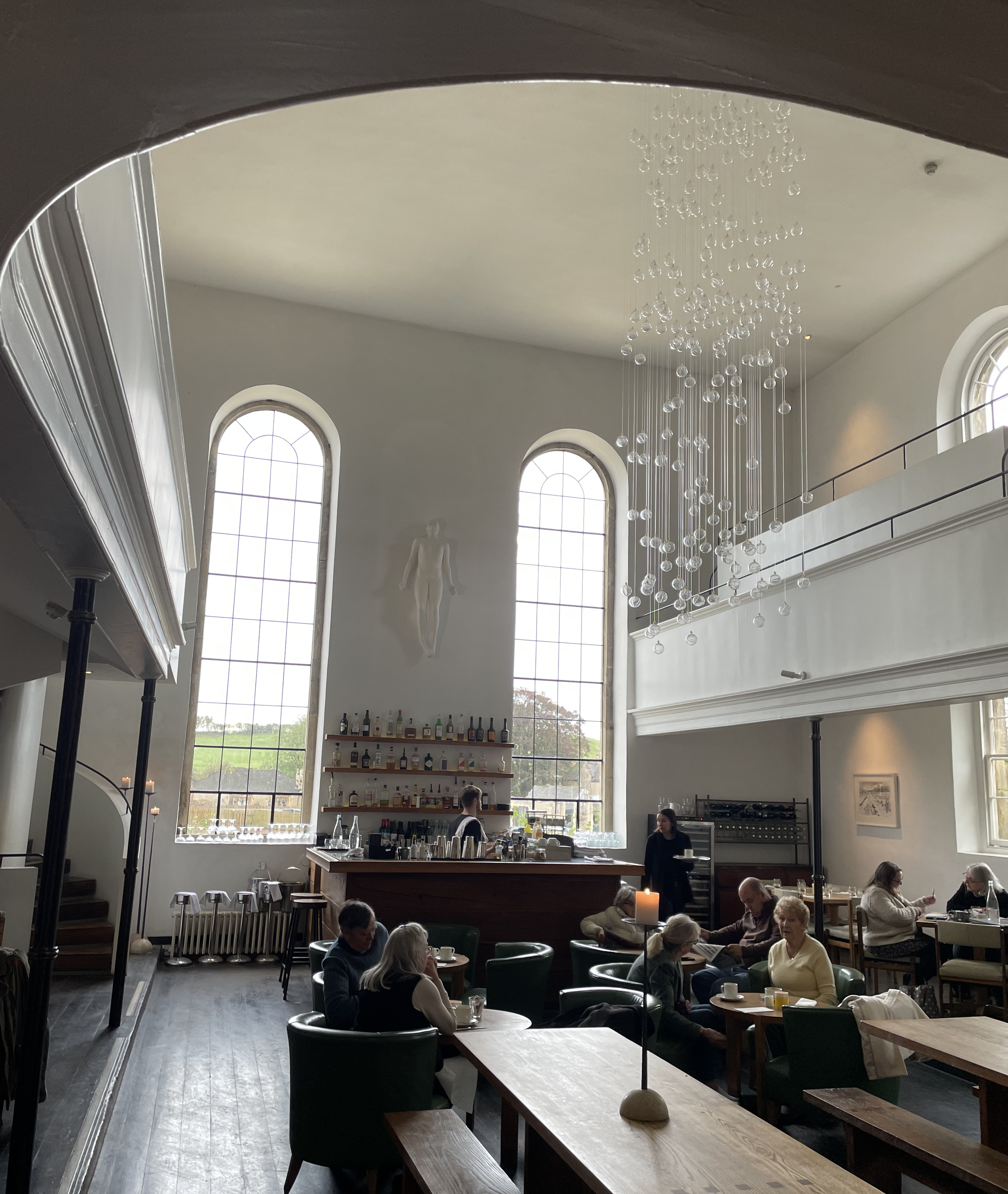
On the way to South Petherton we stopped off at the familiar and elegant At the Chapel for a coffee and then Hauser & Wirth in Bruton. We have been to both several times before.
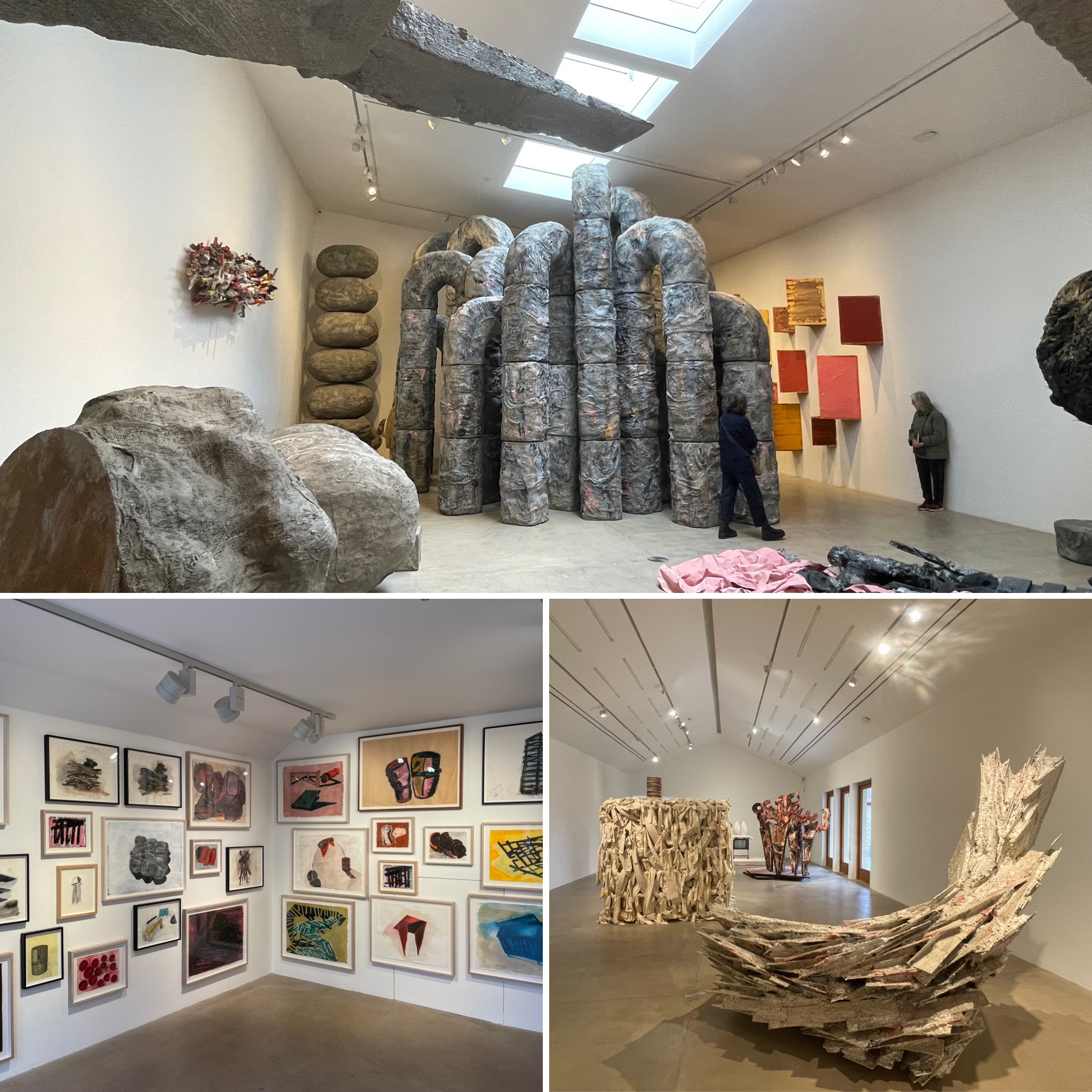
There always seems to be an exhibition at Hauser & Wirth that is worth seeing. On this occasion it was an exhibition by Dame Phyllida Barlow who Jane seemed to be familiar with (I wasn’t). Her work was both in the indoor exhibition spaces and in the gardens. The scale of some of it was impressive and I quite liked the collection of small paintings but I don’t believe either of us was much moved. Instead, we retreated to a good lunch in Da Costa, the new Hauser & Wirth restaurant..
Of course, once settled into our very nice hotel room, we used Holm as a base to visit a few other local places of interest. Once again, the life memberships of the National Trust that we were given as presents decades ago by my Mum and Dad came in very handy and were much re-appreciated.
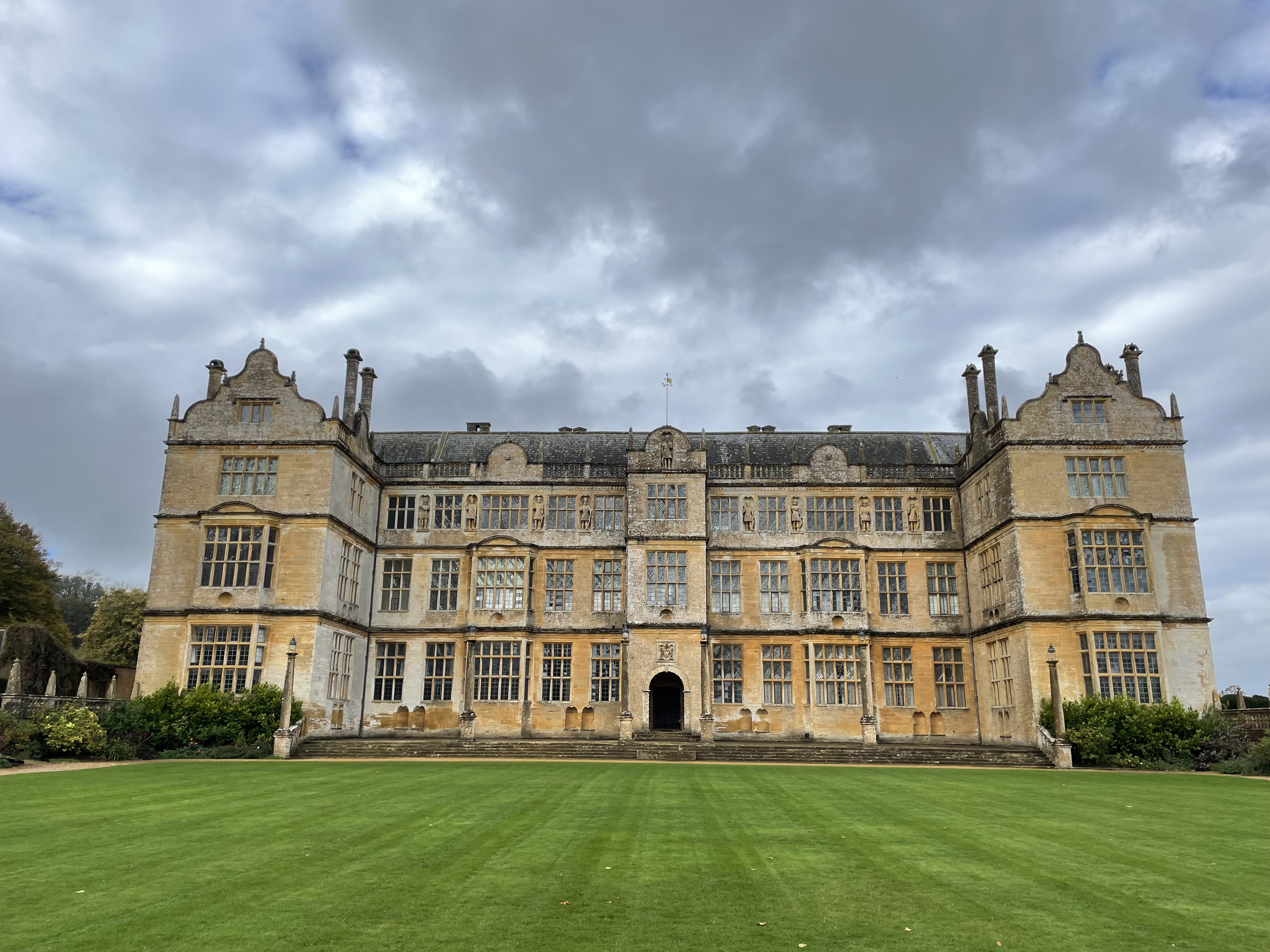
We visited Montacute House gardens and benefited from an informative guide to the late Elizabethan architecture. The house itself was closed due to an ‘incident’ but, armed with our membership cards, there was no disappointment – we can simply come again another year. The house is very impressive from the outside and the gardens were quiet and pleasant in the Autumn sunshine.
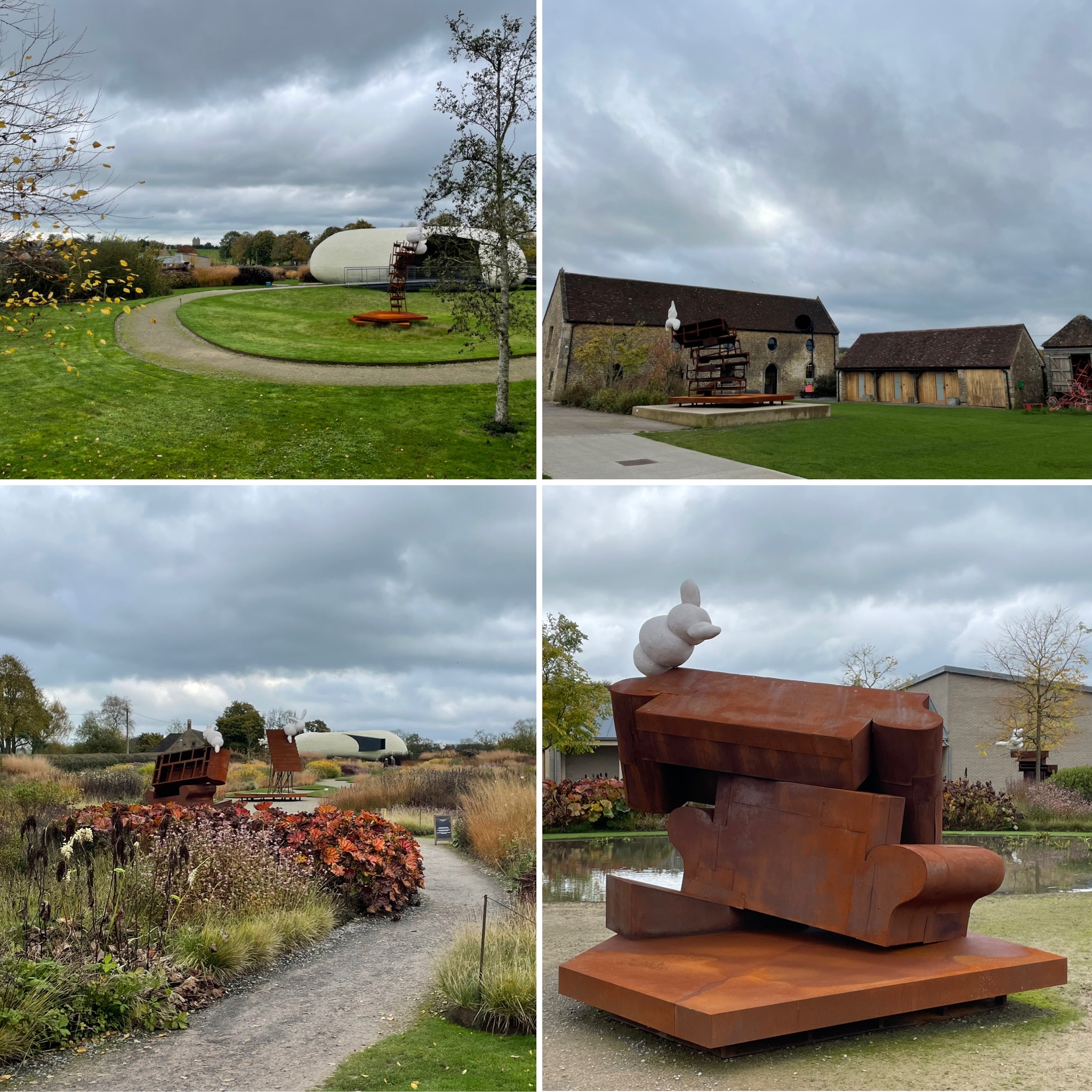
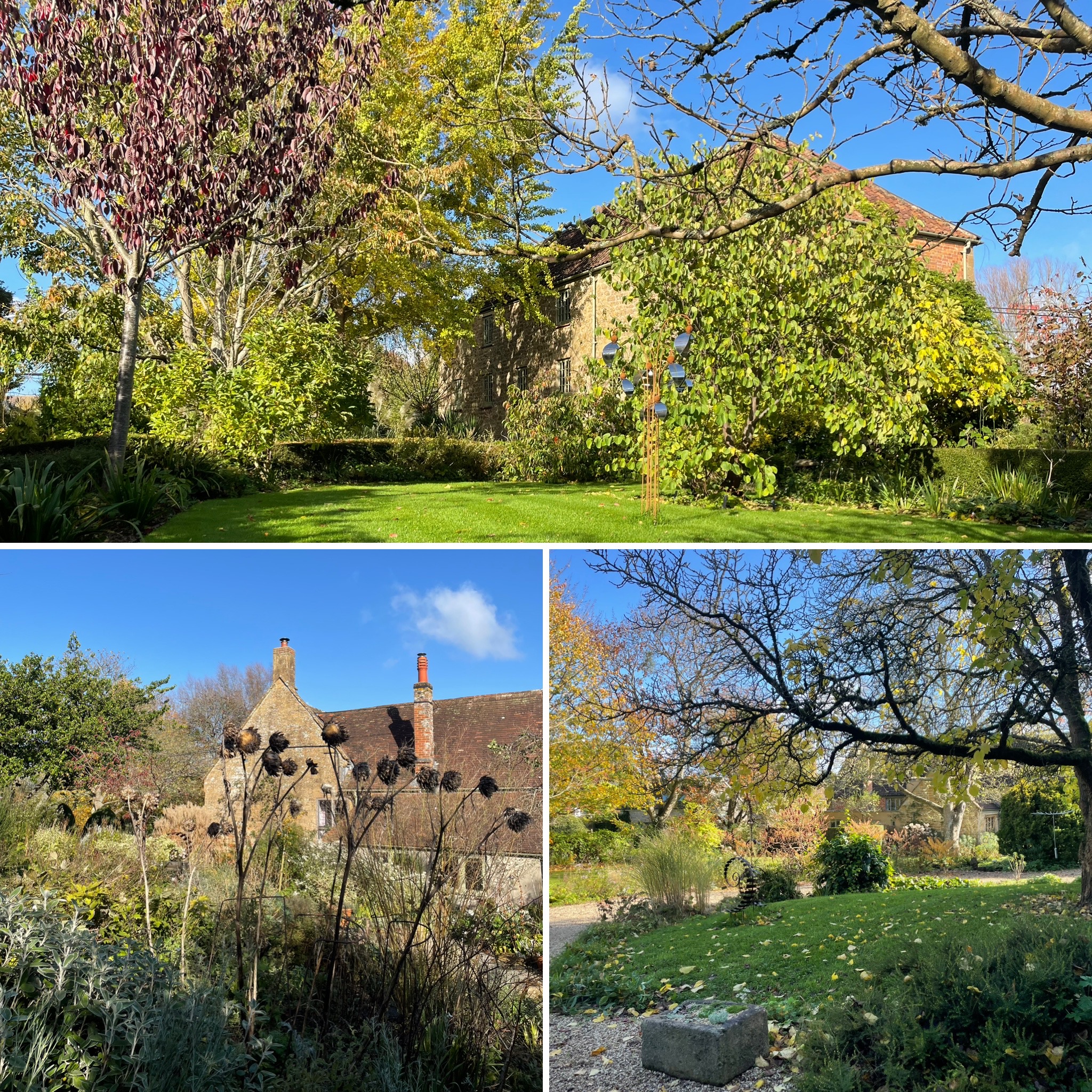
We popped into East Lambrook Manor Gardens which is famous as an archetype cottage garden created by Margery Fish in the second half of the 20th century. Because of the lateness of the season there was limited colour in the garden. Even so, the mix of old buildings, autumnal trees, seed heads and densely planted beds were lovely. All this was augmented by a selection of steel plant-like sculptures by a local artist (Chris Kampf). We were left wondering how much longer the attractive set-up will last given the ‘For Sale’ sign we saw on the way out – we hope it does as it’s clearly lovingly looked after by the current incumbents and was another little hidden gem for us to see.
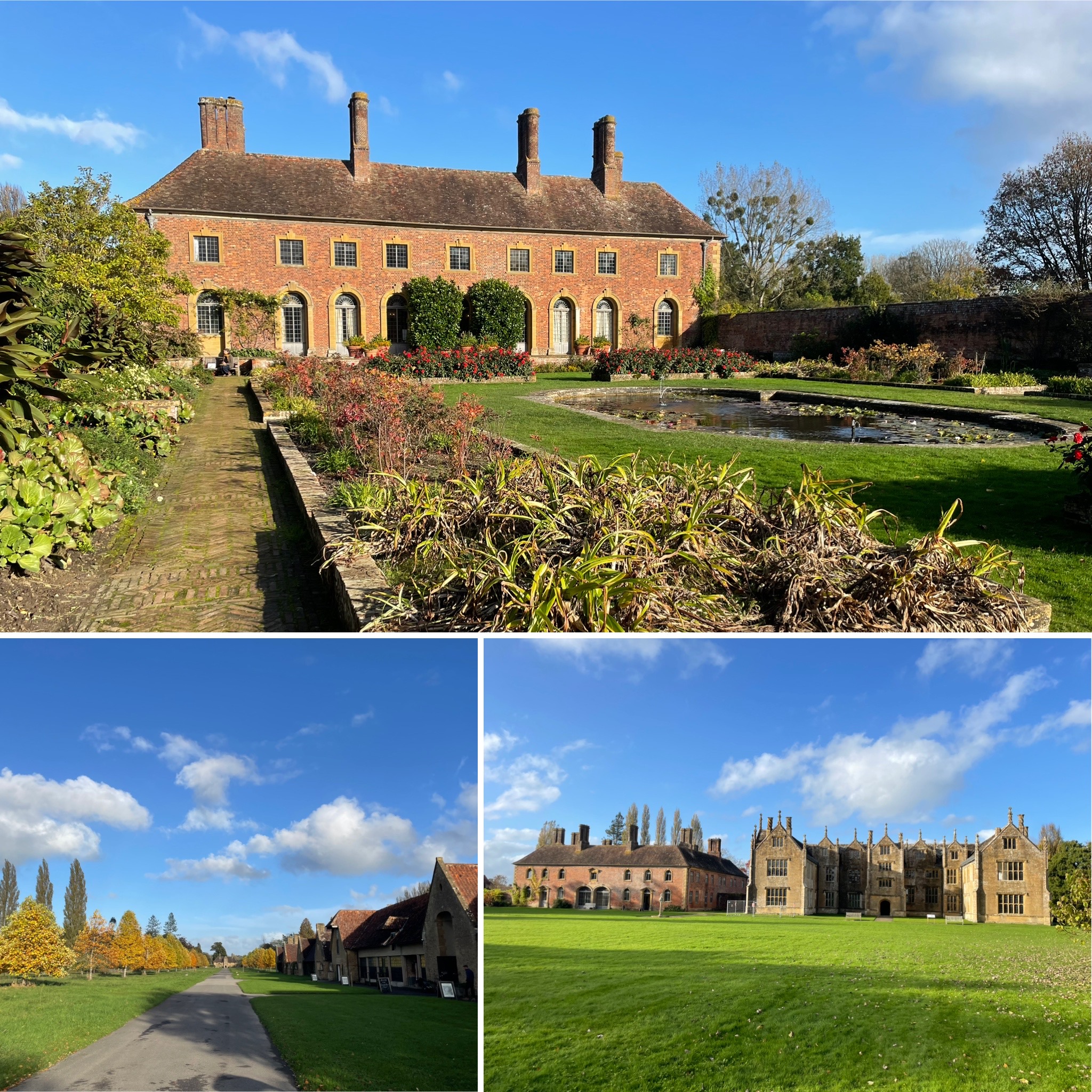
Finally, we visited Barrington Court and its twin, Strode House. This was owned by the Tate family of sugar, golden syrup and Tate Gallery fame. The spacious gardens and vistas were wonderful in the late afternoon sun. Inside the house, was the long and interesting story of restoration and development of the house – first by the Tate family and then the National Trust. This restoration is ongoing but the areas that were open were very nicely presented.
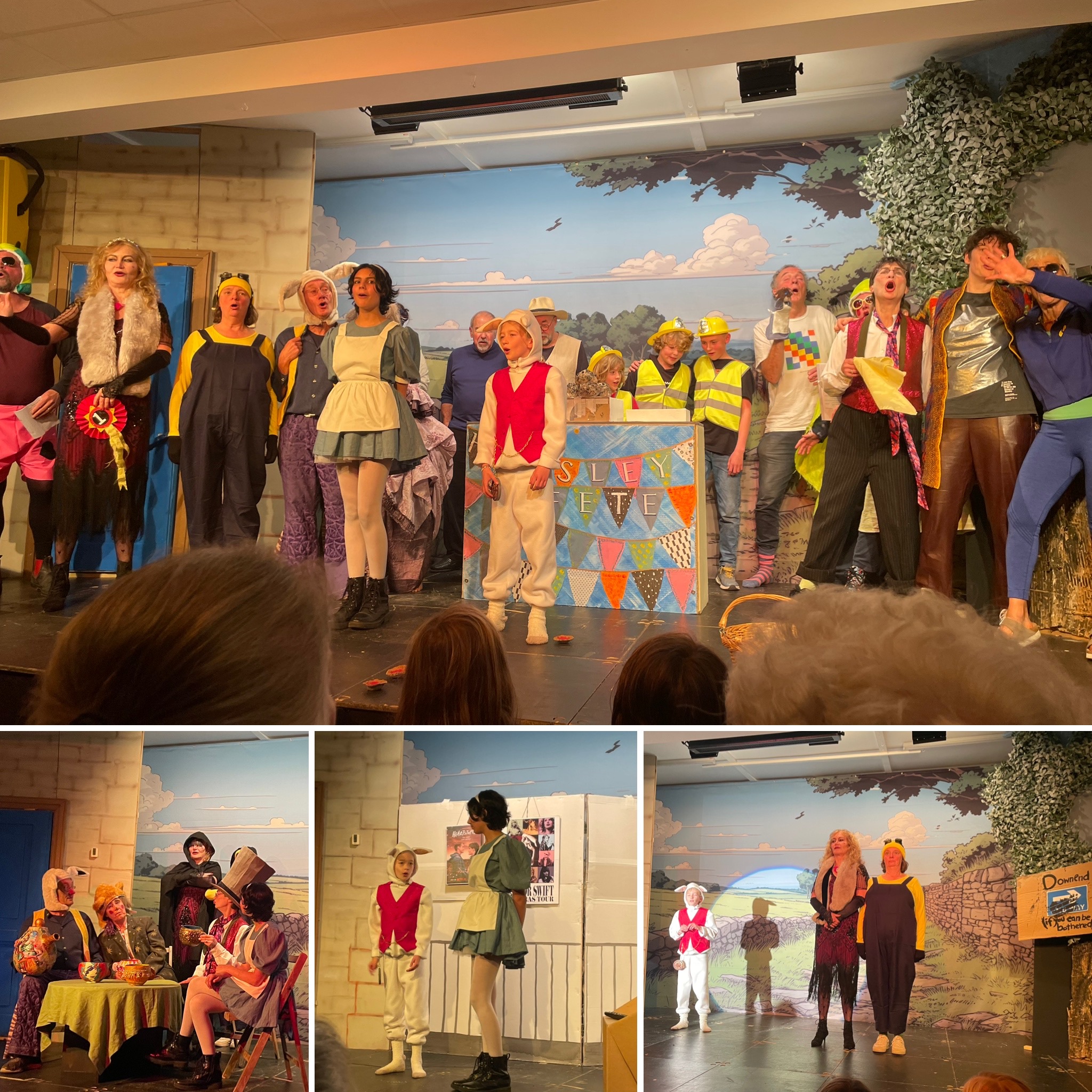
Back home we went to a gem of very local entertainment: a rather surreal but very funny village pantomime. It poked fun at the local village of Horsley and its hamlets, the misplacement of parcels delivered to village residents and other local peculiarities – all in a very quirky way along the theme of Alice in Wonderland. In a village of just 300 households there is a lot of talent and the entertainment provided was priceless.
The rest of the last few weeks has been more routine but with highlights of visits by Eldest Son’s family and his parents in law, and a few visits by Middle Son and his fiancée. It is so heart-warming to see our grandchildren. It’s a different love to that we felt towards our own kids. Maybe recollections of our love for them when they were growing up is blurred by time. Oddly, my love for our sons feels even greater now, and my adoration of both grandchildren is incredibly intense; we both love it when they visit us.
We have more visits by London friends and another visit to Edinburgh for First Grandchild’s third birthday coming up in the next few weeks. Each event will be a welcome distraction from disturbing international events and a little fillip to our lives; autumnal gems for the memory banks.

 My Retirement Journey