We have just returned from a really excellent time in Scotland. We stayed with our Edinburgh based family and then gathered them up for a few days in Fife. We then returned to Edinburgh for our wedding anniversary celebrations and a bit more time in our favourite city. This is the longest sustained period we have spent with First Grandchild (FG) (and his parents) and it was a real treat.
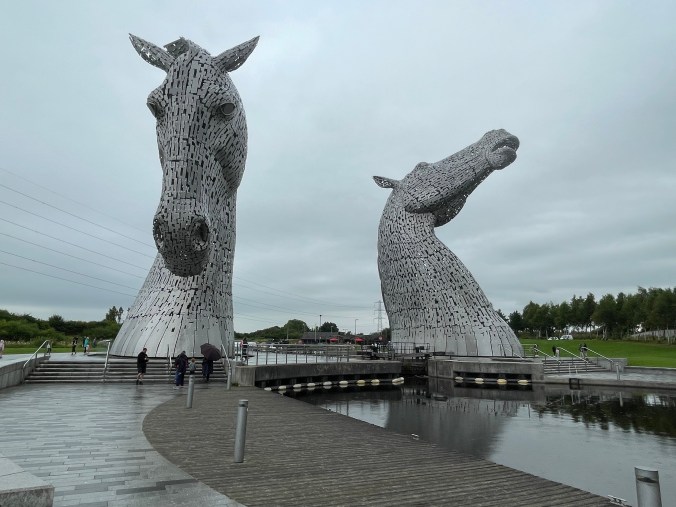
We decided to travel to our holiday Airbnb in Fife via The Kelpies. These are huge metal statues of horse spirits that, as legend has it, tempted humans into the river and drowned them. The story may be a bit grim but the monuments, designed by Andy Scott, are very impressive. FG was less enamoured with the Kelpies than we were but walking around them was a useful activity break before the next section of driving to a recommended cafe in Culross on the north bank of the Firth of Forth.
FG’s wife always ensures that we eat very well when we visit Edinburgh and surrounds – either through her excellent and seemingly effortless cooking, or through her restaurant recommendations. The Mercat in Culross was a cafe and homeware shop that Jane had also heard about and the toastie lunch there didn’t disappoint.
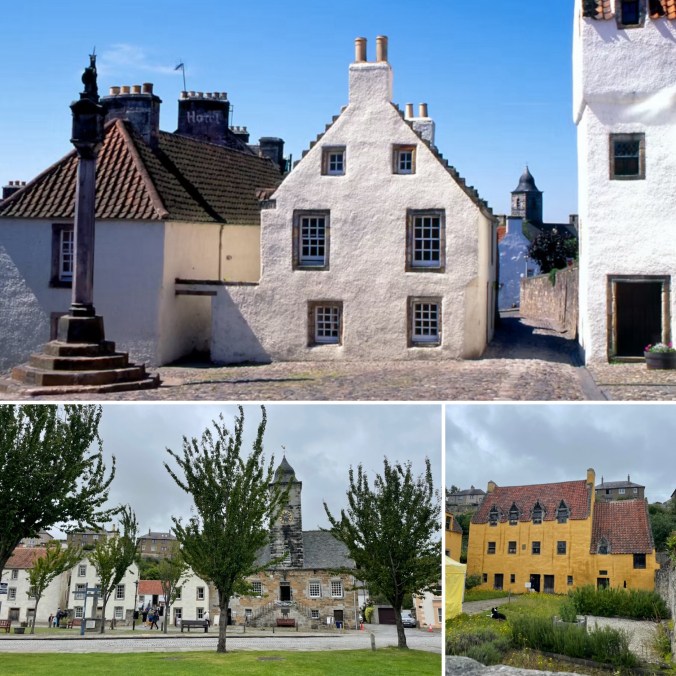
Culross is a very pleasant town. The market square was small but pretty and the buildings along the coast front were clearly historic. They are preserved well enough to, apparently, be used in a lot of period films and television series, some of which we have seen. The old wealth of the town was based on coal. While FG enjoyed the substantial playground, I read up on the innovative way in which the coal was loaded onto ships via a tunnel under the water of the Forth of Firth and then up a lift shaft onto the pier.
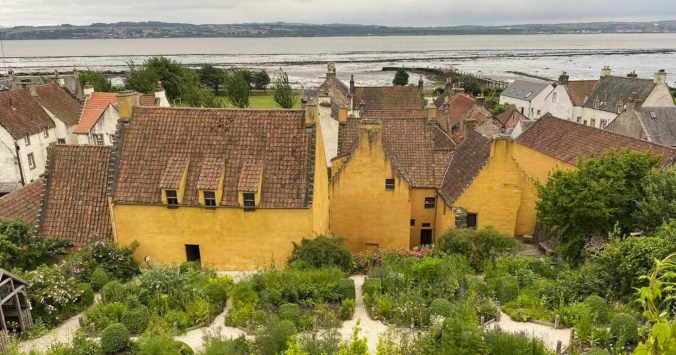
Our holiday home was one of four new, eco-type buildings on the Charleton Estate in East Fife. It housed us comfortably (once we got used to the limited storage spaces and the absurdly steep stairs to Jane and my bedroom) and was surrounded by a golf course and open land we could walk around. In summary, it was near ideal and a great base for discovering other parts of Fife.
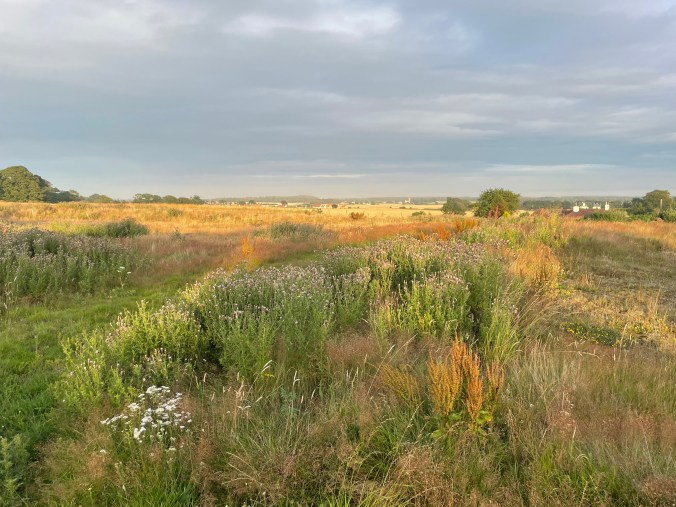
I liked Fife very much. We had visited the east Fife coast once before immediately after the wedding of ES and his wife in late 2022. Then, however, Jane was ill and the weather was so poor that we didn’t appreciate the environment much beyond being impressed with the scale of the flooding and the wind velocity. This time, we had warm and mainly sunny weather.
Many of the Fife towns have an interesting industrial and mercantile past often based on coal. The usually pretty main streets of solidly-built Georgian or Victorian houses and cottages indicate a historic wealth. Around these, the landscape is clearly fertile and is dominated by agriculture – mainly potatoes, wheat and attractive fields of manure/ground cover crops such as white radish and phacelia.
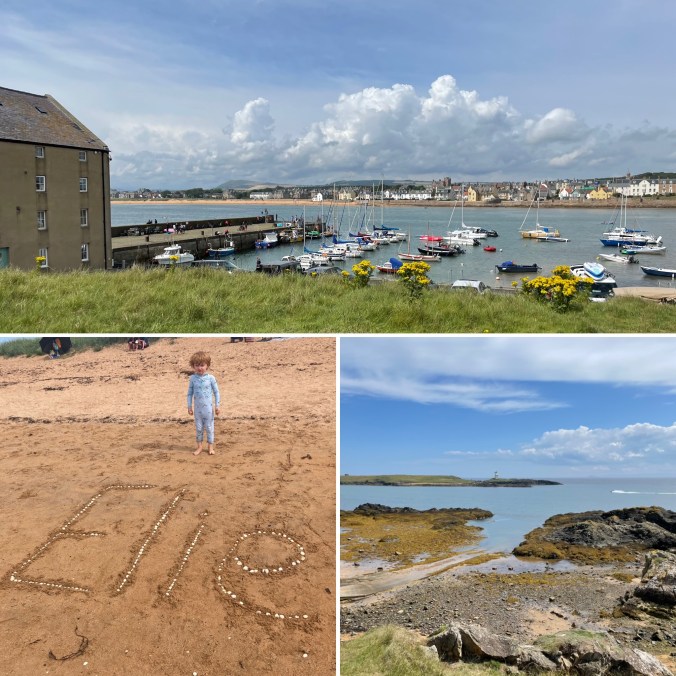
The coastal towns near our base were particularly attractive. Anstruther looked a bit touristy but Elie harbour was lovely and we spent several hours there helping FG potter about, make sand constructions, search for ‘treasure’ and paddle.
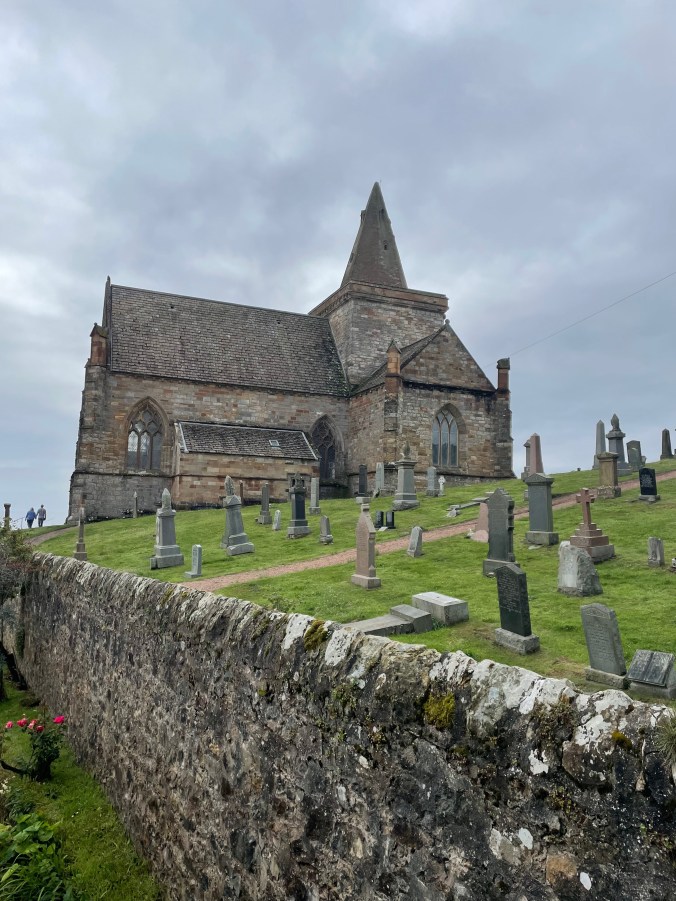
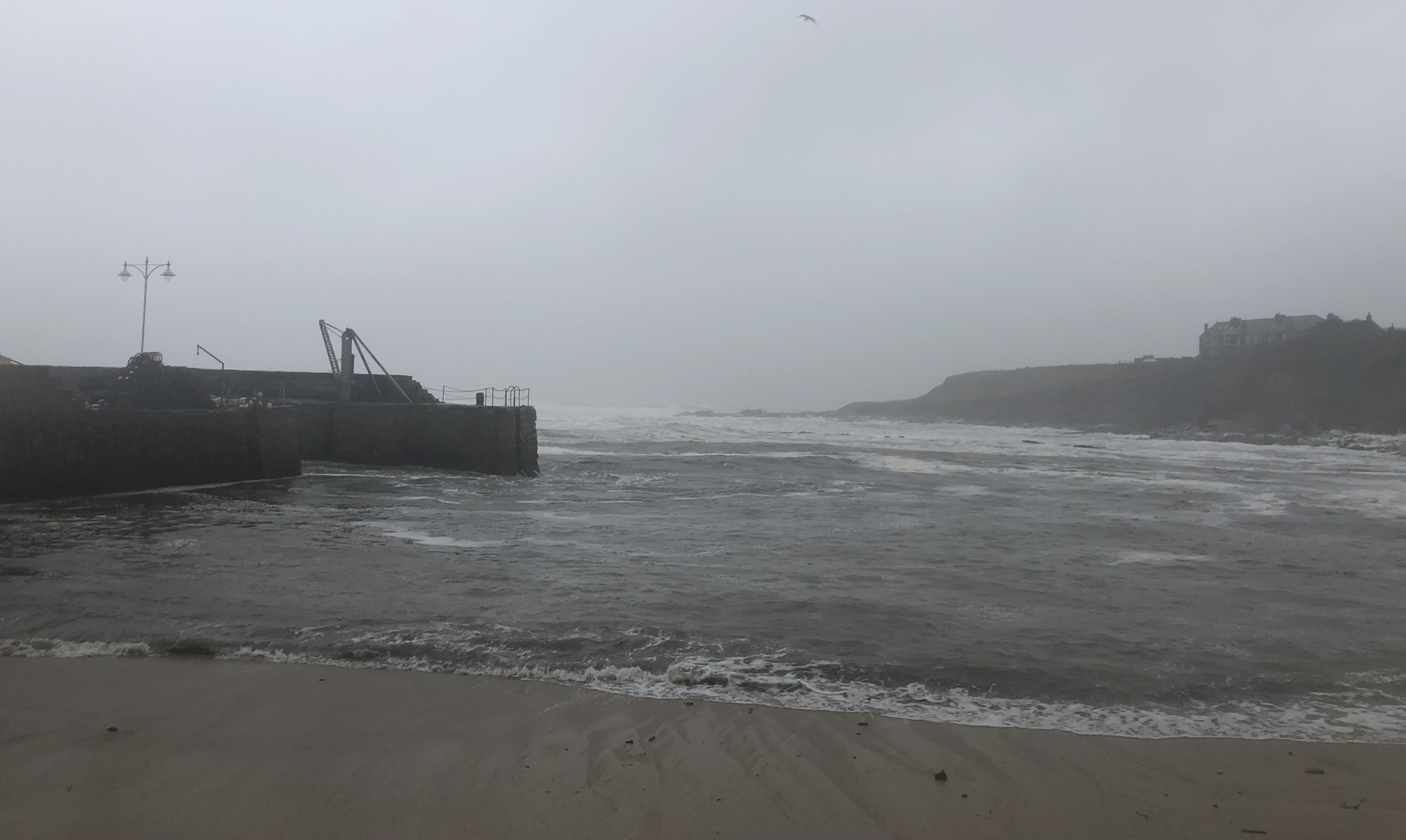
Even better was St Monans. I love this place. It’s a stop off from the Fife coastal walk – some of which is walkable only at low tide. It has a great, compact, sturdy harbour, many 17th and 18th century cottages and several grander old houses. I particularly enjoyed the views of the church (one of the oldest in Scotland) and the walk along the coast to a windmill.
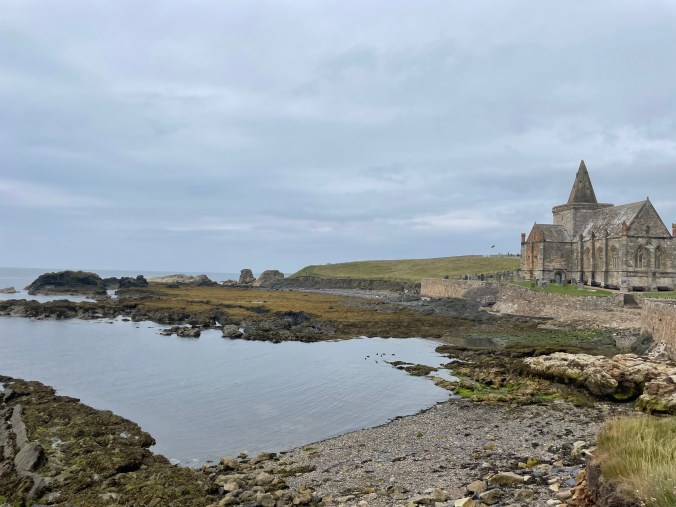
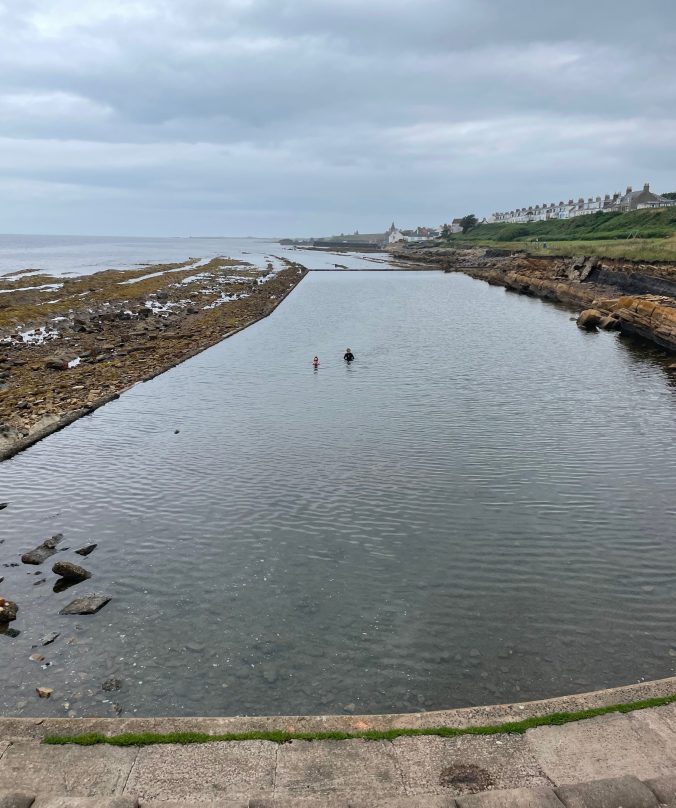
On the walk I saw and/or heard interesting birds including yellowhammers, curlews, redshanks and oystercatchers. I then passed a huge tidal swimming pool built in the 1930s and still popular with wild swimmers today.
St Monans has a long history of fishing and industry. The windmill was used to pump sea water into buildings with salt pans. The foundations of these buildings are still visible. Using local coal, it seems that the salt industry all along the Firth of Forth coast was huge in the late 18th and early 19th centuries until foreign imports became too competitively priced. It was interesting to see the remains of this bit of St Monans’ history.
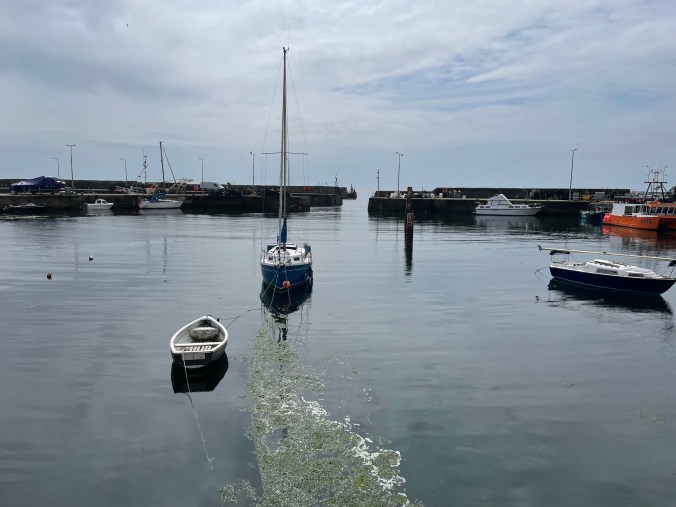
On top of all this, St Monans has some very good cafes and restaurants including the Giddy Gannet and the East Pier Smokehouse (which provided an excellent smoked seafood stew in a beautiful location).
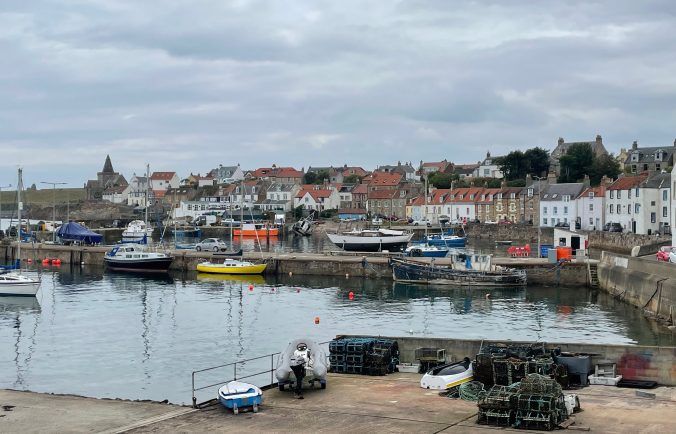
We also ate very well at the The Kinneuchar Inn in the centre of another nearby, very pretty little town (Kilconqhuar). At all these meals, FG was very absorbed with his pebbles, shells and card games and was so well behaved (with a bit of ‘management’) that we could relax.
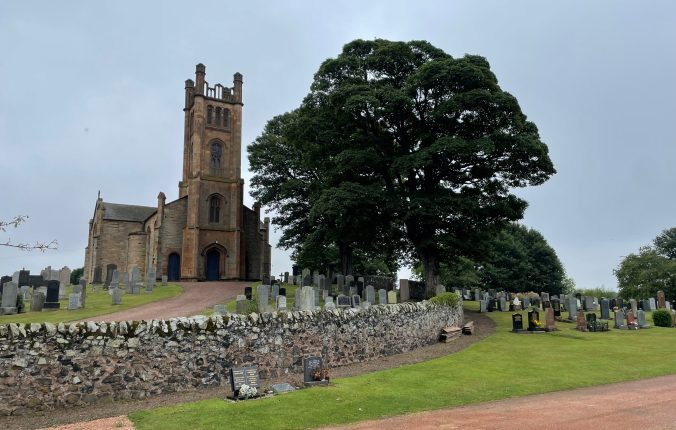
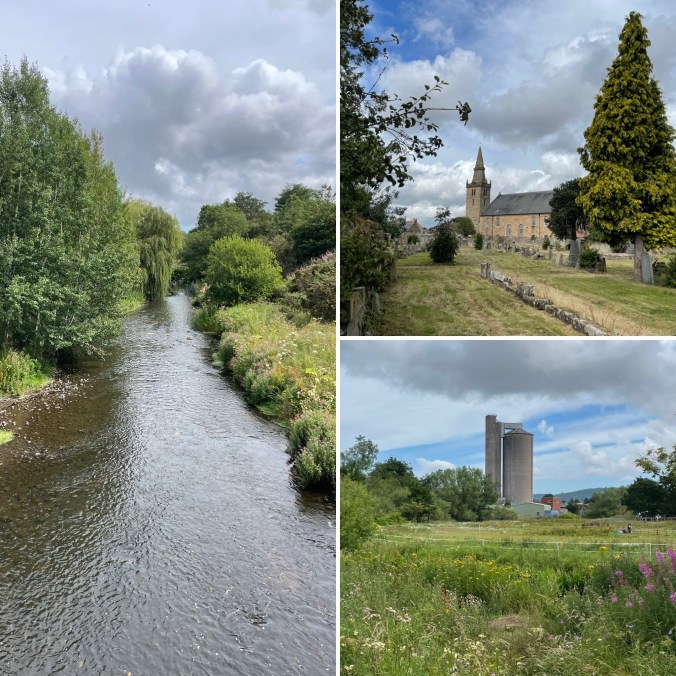
While in Fife, we also visited St Andrews. On the way, I was dropped off in Cupar while the others went on to an adventure park and a pick-your-own fruit farm. Like so many other towns, Cupar has a history back to Medieval times and a lot of nice old buildings. However, apart from a nice parish church and a walk along the Eden River, Cupar was relatively unassuming and unmemorable.
St Andrews, on the other hand, was very grand with its ancient university (founded in 1413), its prestigious golf course, beautiful beaches and historic buildings.
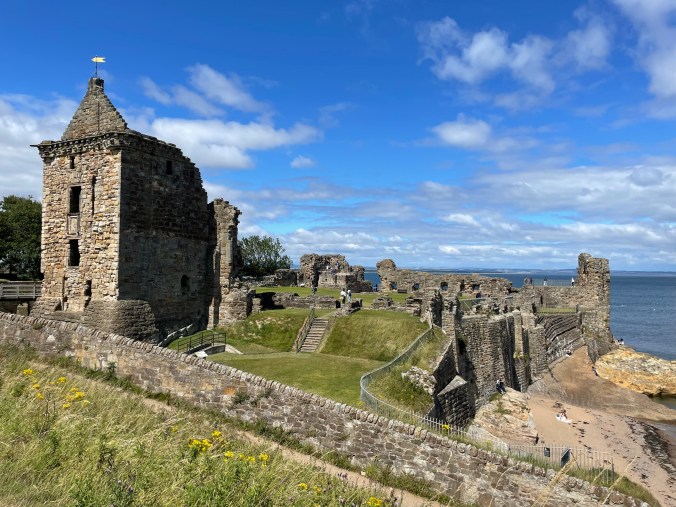
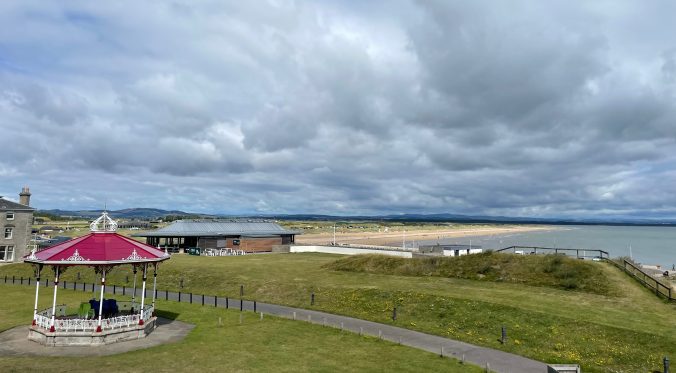
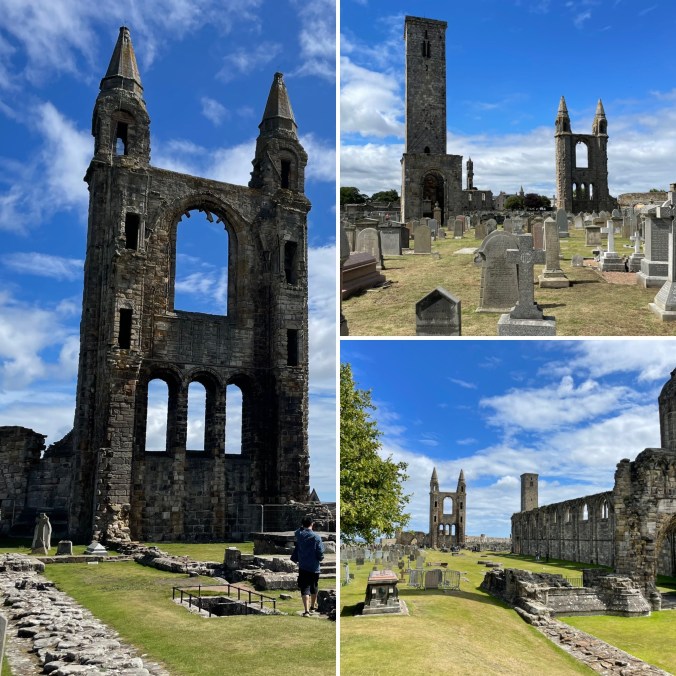
The cathedral, built in 1138, is now a ruin but has an impressive location. Within its grounds is St Rule’s Tower which pre-dates the cathedral. Together they are an impressive sight and a big tourist attraction.
Our break in Fife had all I could have wished for. We enjoyed variety, history, wildlife, attractive British landscapes, pretty towns and great places to eat. That culinary pleasure included a very good home barbeque engineered by ES. Plus, of course, we loved spending quality time with FG. We loved seeing him enjoy the whole holiday whether on the beach, in the playgrounds or learning how to play simple card games. I hope we can do something like it again sometime.
 My Retirement Journey