Art and Architecture in Basel

I am not an art connoisseur but I do enjoy visiting art galleries; indeed, we both do.  Whilst we were in Basel for my birthday, and as the weather turned from sun to cloud to rain, we went indoors to see the Kunstmuseum, Fondation Beyeler and the Swiss Architecture Museum.  Each was impressive in different ways and we enjoyed visiting them all very much.
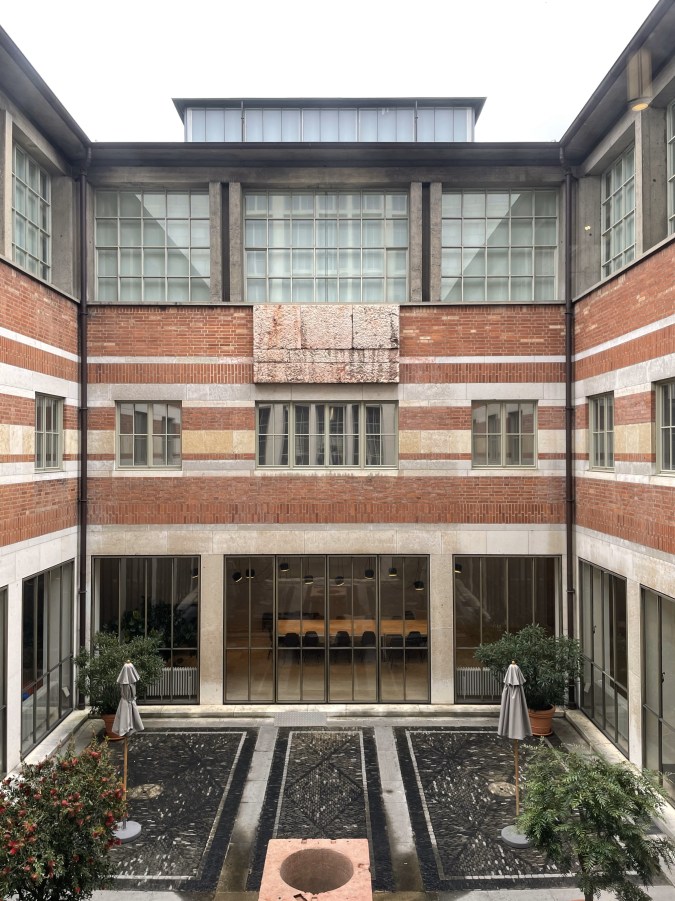
Basel Kunstmuseum (Hauptbau - Main Building)
Basel Kunstmuseum (Hauptbau – Main Building)

The collection at the Kunstmuseum Basel is very extensive and diverse.  It is housed in three different buildings.  The first was built in the 1930’s and is a beautiful building from that era that is full of great art from the 15th century to the middle of the 20th century.  The colours throughout the building are subtle and earthy, and the stairwell was as impactful as some of the art.
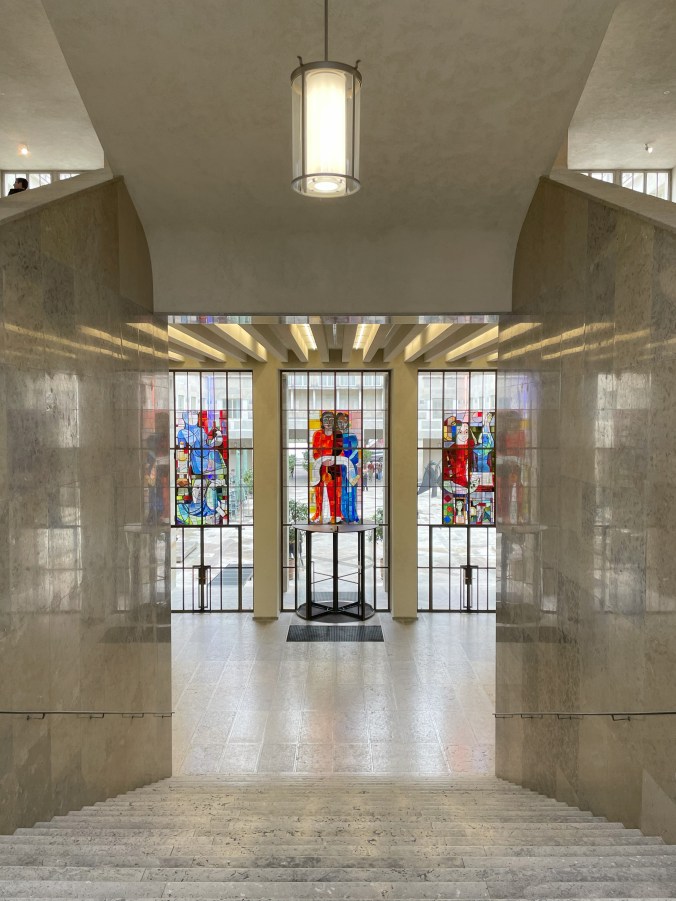
Inside Basel Kunstmuseum (Hauptbau - Main Building)
Inside Basel Kunstmuseum (Hauptbau – Main Building)

We started gently in a side room where the curators had paired pieces from different genres and periods and exhibited them side by side.  This was in an effort to trigger new comparisons and feelings that would not be prompted if the works were seen alone.  I didn’t always see the connections in the pairings but some were more obvious and fun to spot. 
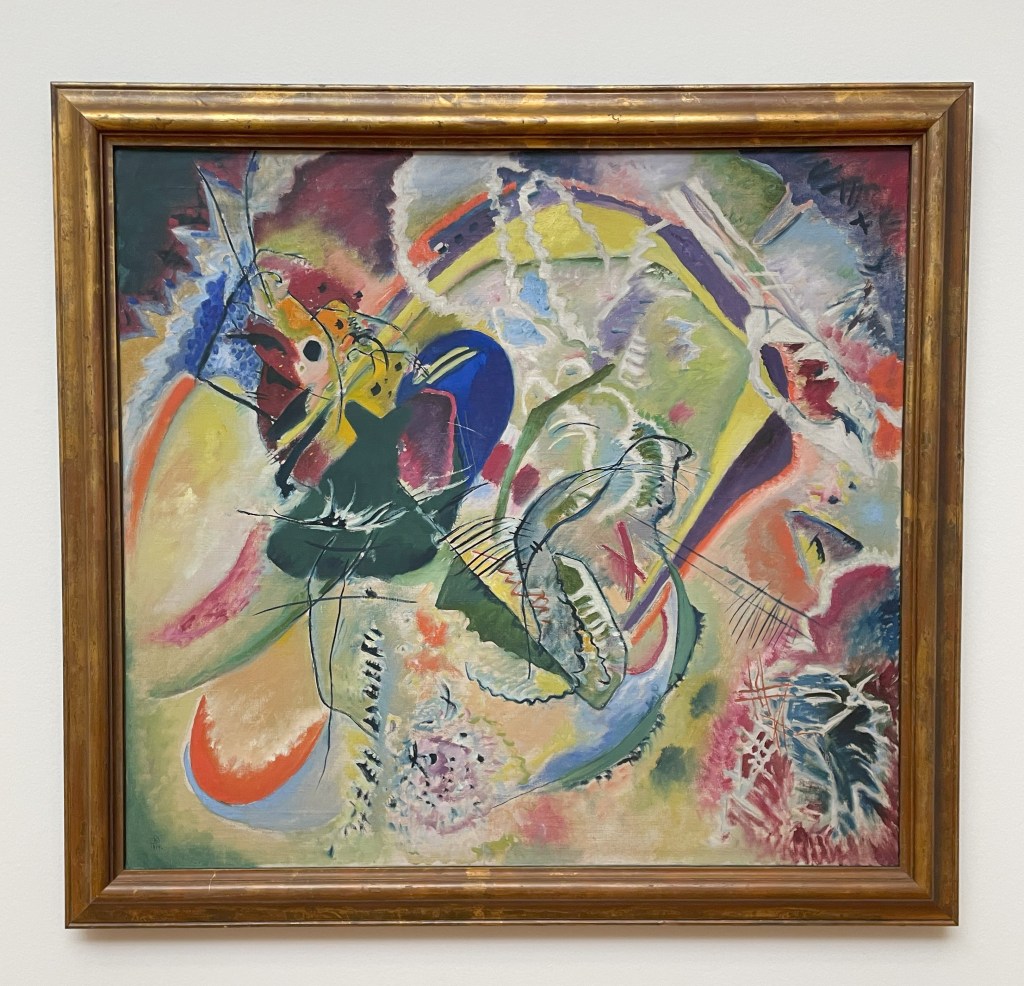
We both spent more time upstairs amid works from the early 20th century.  Here too I had fun recognising some of artists before reading the explanatory captions alongside the works.  There was representation of almost every western-mainland European artist I could think of plus many I was unfamiliar with. (I only spotted two works by English and American artists).  The quality was consistently very high and here are two I particularly liked….
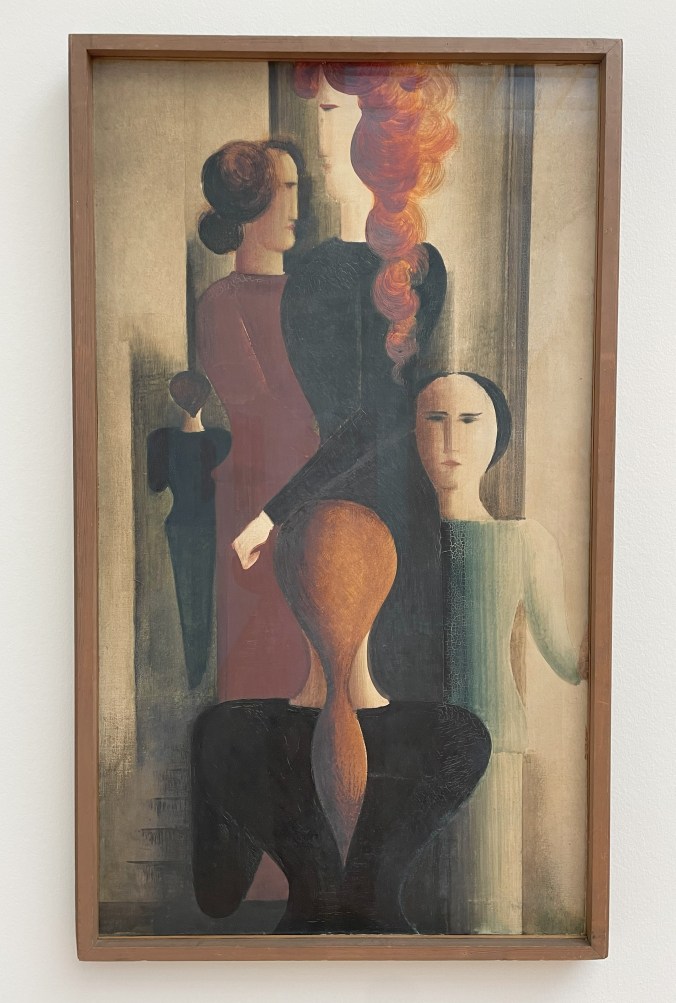
'Women on a Stairway' By Oskar Schlemmer
‘Women on a Stairway’ By Oskar Schlemmer
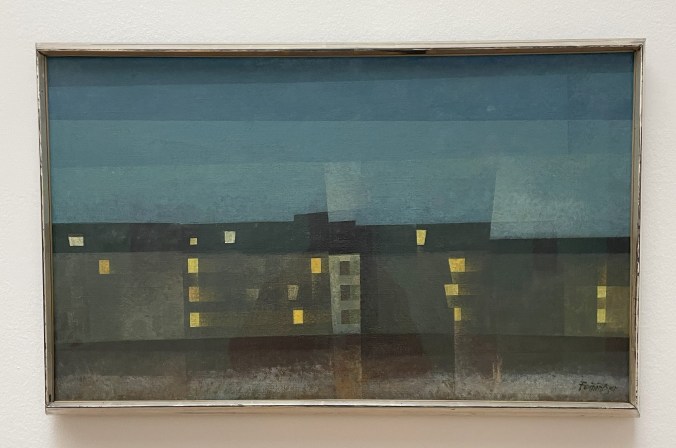
'Illuminated Windows' By Lyonel Feininger
‘Illuminated Windows’ By Lyonel Feininger

By the time I had finished with the 20th century art on the first floor, I was tiring.  However, as I moved into areas showing the 15th to 19th century art I was revitalised again by the range and quality.  I skipped through some of the rooms displaying early religious work – although, not for the first time, I was astonished by the vibrancy of the colour given that most of these works are over half a millennium old. 
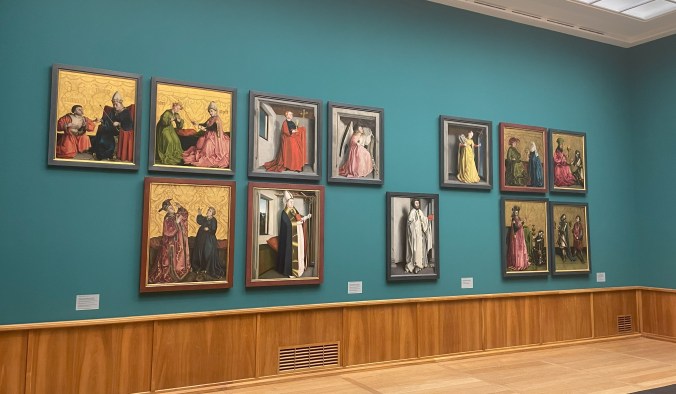
Vibrant Religious Works In Kunstmuseum Basel
Brightly Coloured 15th Century Religious Works In Kunstmuseum Basel

My favourite paintings in this section were one by Pieter Bruegel, whose detailed crowd scenes I always find interesting, and those by Hans Holbein (the Younger).
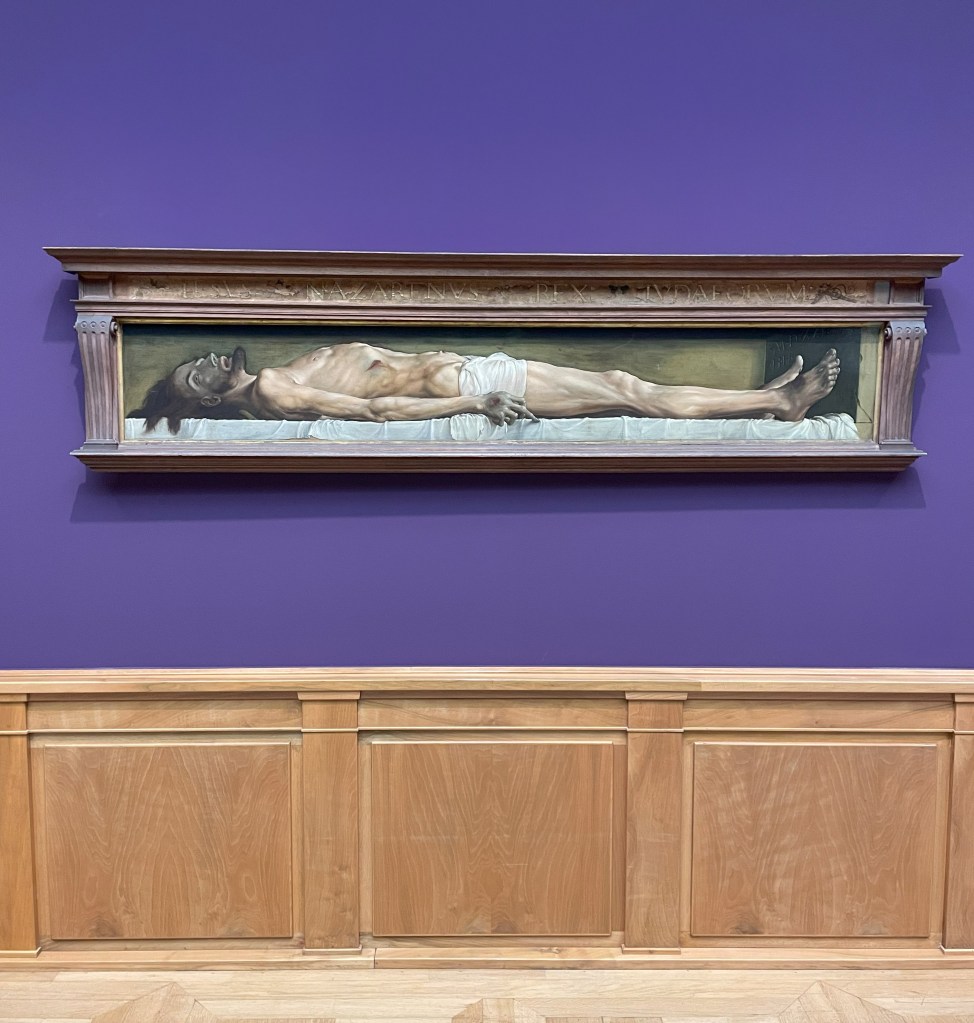
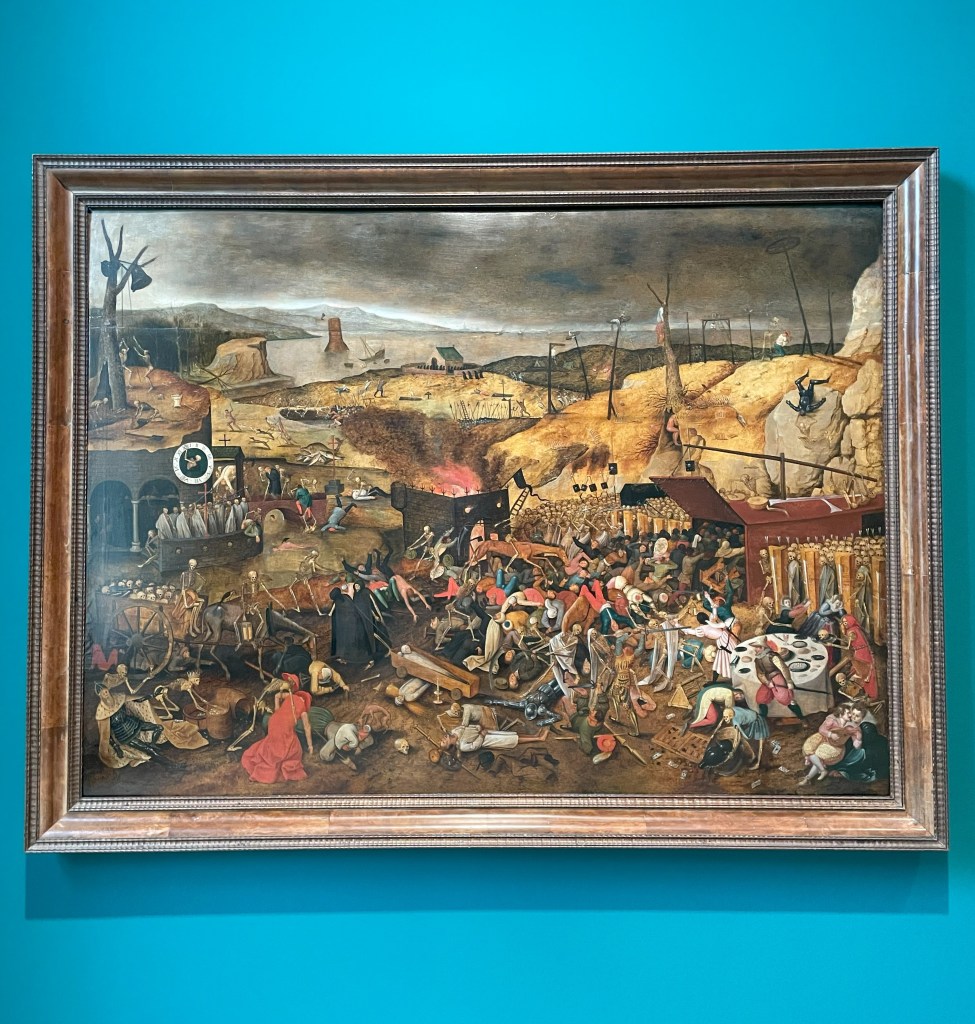
I slowed again as we came to the 18th and 19th century sections and really enjoyed painting after painting.  I especially enjoyed a room of Dutch still lives.

To be honest I thought I was done but there was still more early 20th century art to see including a whole room dedicated to Alberto Giacometti sculptures (I hadn’t previously realised that he was Swiss!).  And this was just the first building……
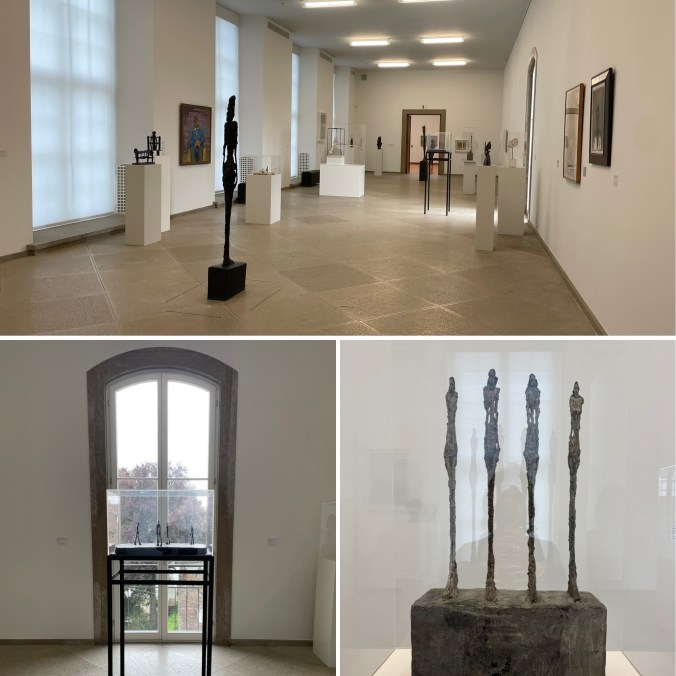
The Giacometti Room, Kunstmuseum Basel

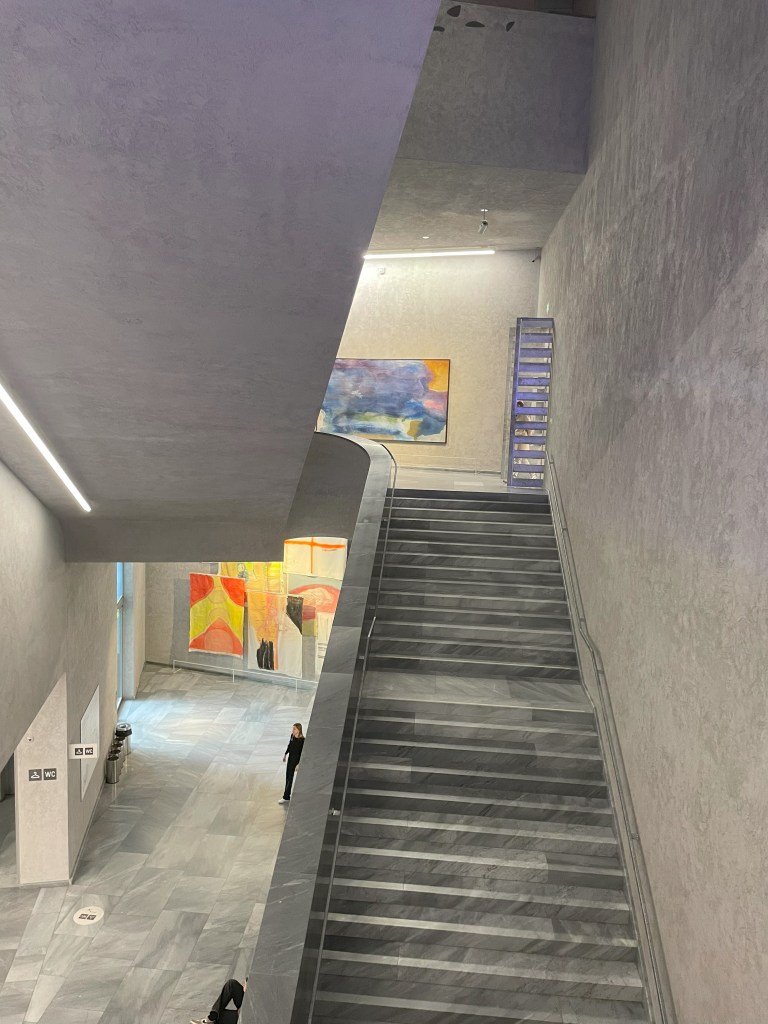
The second Kunstmuseum building was built in 2016 and is a radical design resembling a slightly crumpled grey box.  Inside, the look is very contemporary with bare grey surfaces and art dating from 1950. 
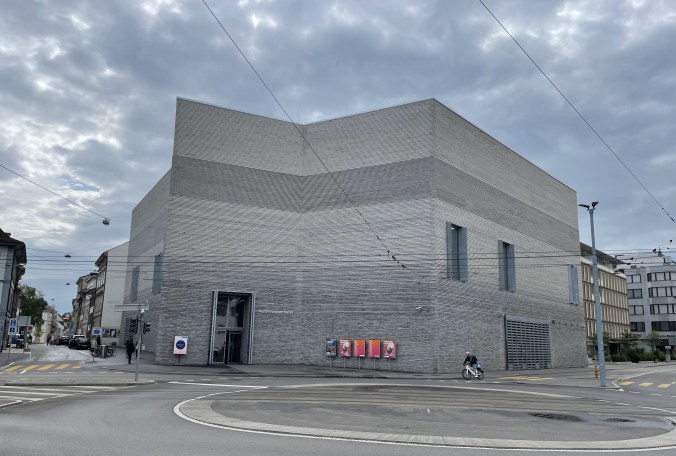
Basel Kunstmuseum (New Building)

Frankly, I was sated with art by this time.  I walked around the floors but found the modern art even harder to fully take in than usual, especially as not all the information was provided in English and so the backstory to the artists and work was harder to grasp.  However, I did like an Alexander Calder mobile in the entrance hall and the overall ambiance of the place.
We didn’t make it to the third Kunstmuseum building which is for temporary exhibitions.  Instead, we stopped off at the Swiss Architecture Museum.  This had a couple of ongoing exhibitions on display. 

By far the most interesting was that showing recent Swiss developments demonstrating renewal and renovation of buildings rather than their demolition and replacement.  Not only is replacement more eco-friendly but it preserves a continuum of history. This was a theme of the European Architectural Heritage Year of 1975 and the exhibition we saw was a celebration of the 50th anniversary of that event.
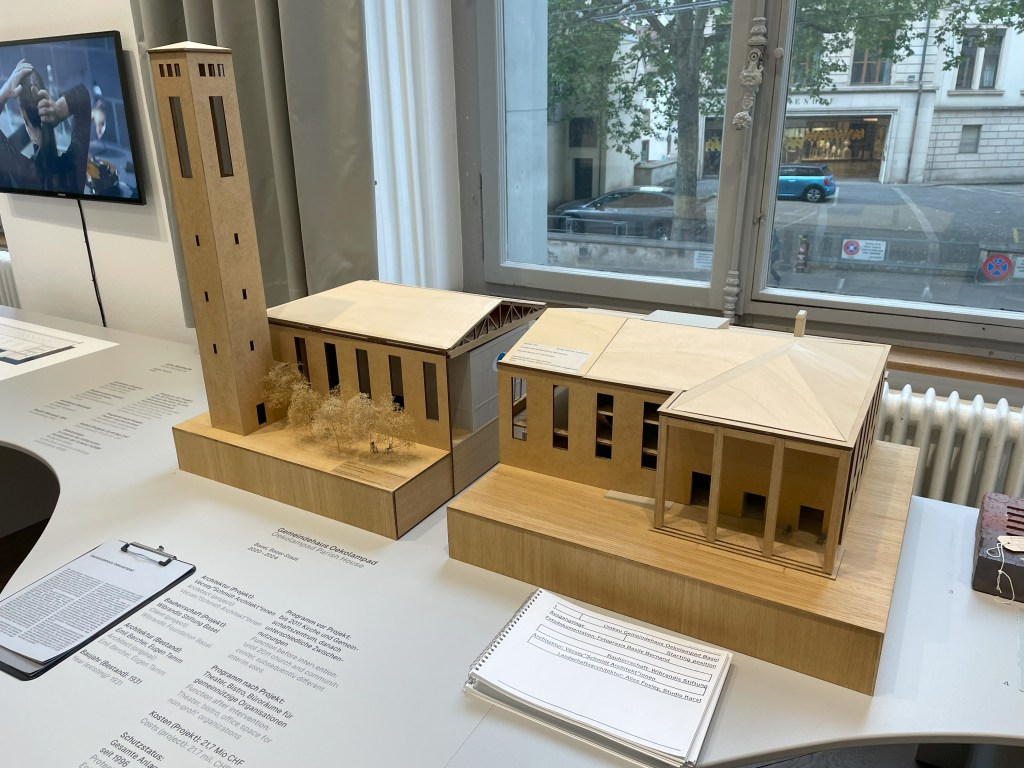
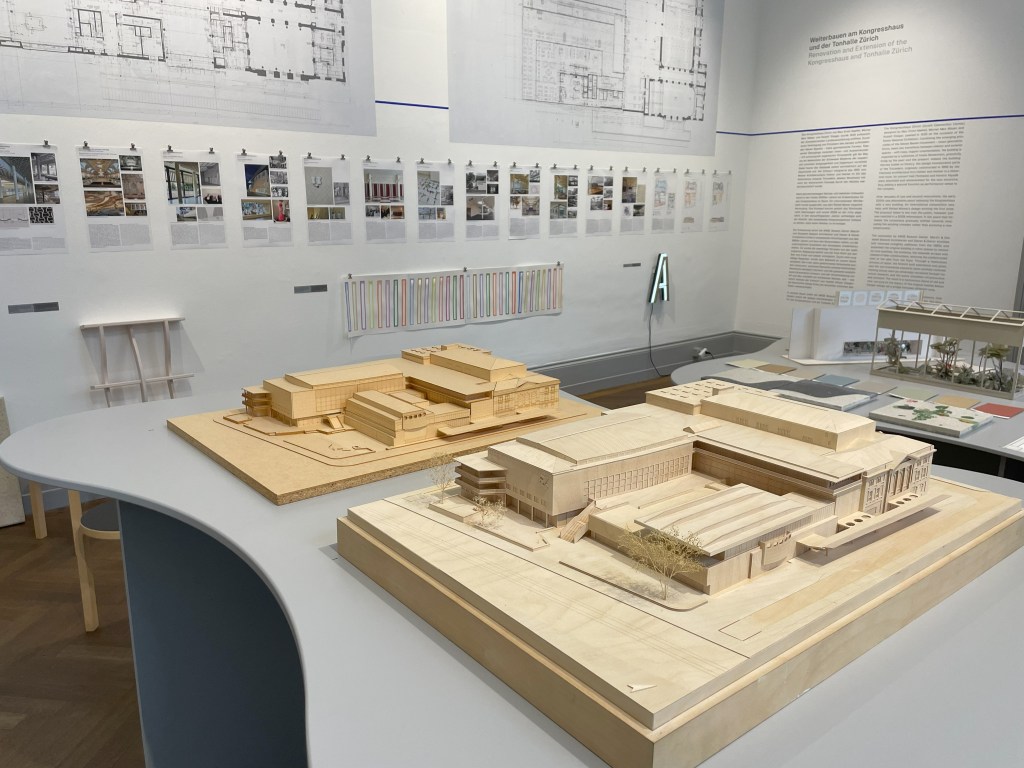
Models of Renovated/Restored Buildings On Show At The Swiss Architecture Museum

Some of the developments portrayed were quite small – individual houses or community buildings – while others were large and included the Kongresshaus and Tonhalle in Zurich.  The museum was well worth an hour or so of our time even as laypeople in the architecture world.

Our last day in Basel was forecast to be wet and, indeed, it rained all day.  We had planned for this and set off on a tram to Fondation Beyeler a few miles outside the city.  We knew that the main art gallery – another very impressive collection apparently – was closed to visitors, but we were very keen to see the well-reviewed exhibition of art called ‘Northern Lights’.  This was focused on representations of the boreal forest around the Arctic Circle by Canadian, Scandinavian and Russian artists.

I was particularly keen to see works on show by Hilma Af Klint.  I had not heard of this Swedish artist until I heard children at a local school read about her during my volunteering to help ‘unconfident readers’.  Her two works on show here was very different from her later symbolism and portrayed the eeriness of the forest.
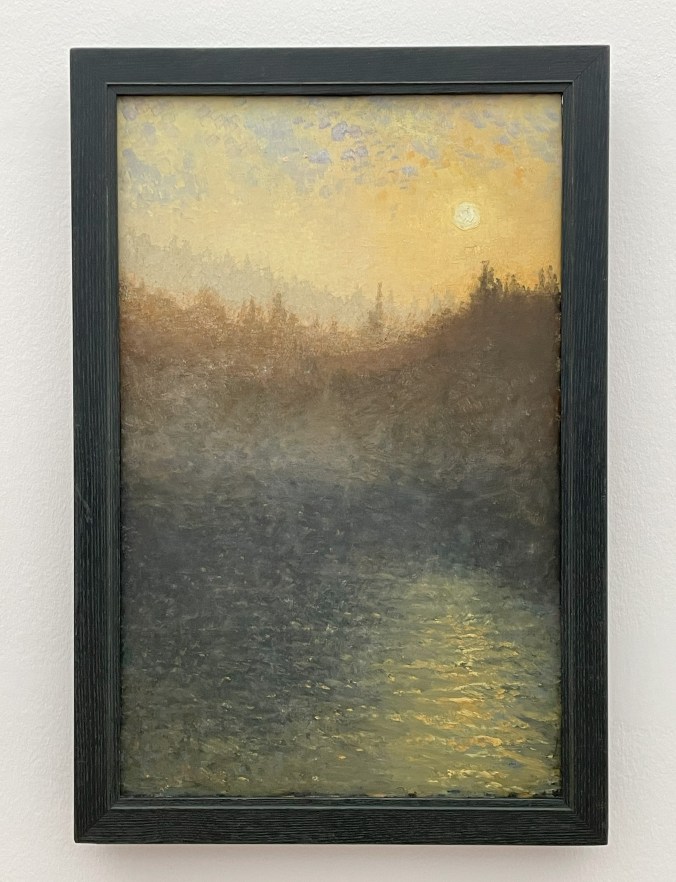
'Sunrise' By Hilma Af Klimt
‘Sunrise’ By Hilma Af Klimt

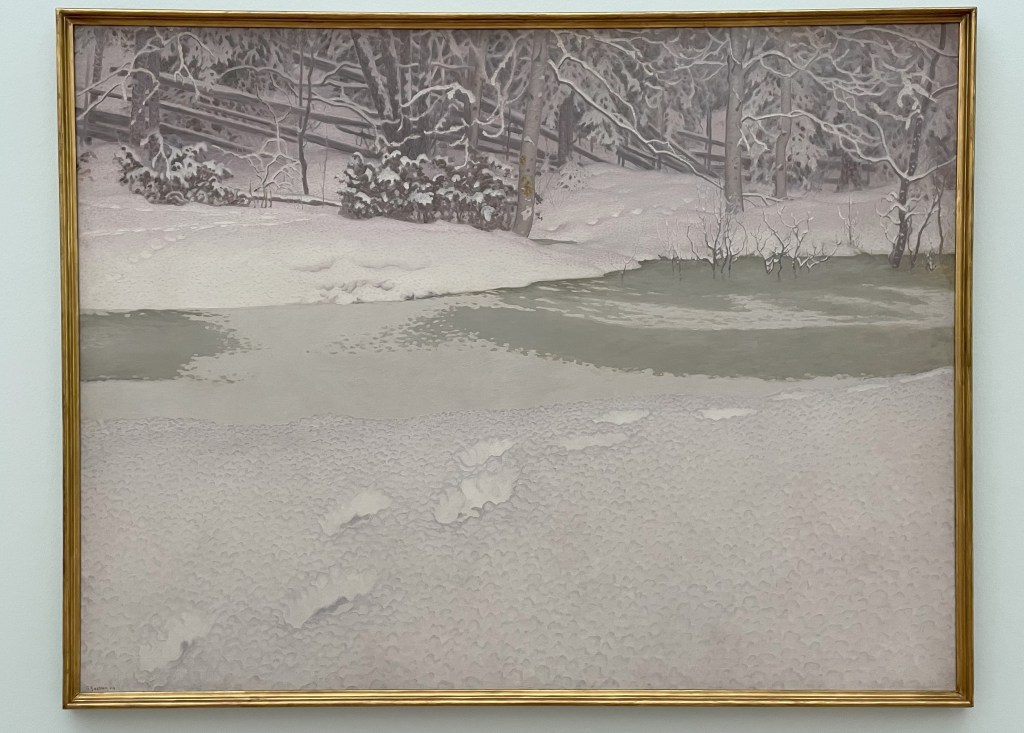
To be honest though, there were paintings in the exhibition that I enjoyed more and all were by artists I had never heard of before.  Both of us really enjoyed a few of the works by another Swede: Akseli Gallen-Kallela.  These were some of my favorites of his:

'Spring Night' By Askeli Gallen-Kallela At The Northern Lights Exhibition, Fondation Beyeler
‘Spring Night’ By Askeli Gallen-Kallela At The Northern Lights Exhibition, Fondation Beyeler
Four More Paintings By Askeli Gallen-Kallela
Four More Paintings By Askeli Gallen-Kallela Including ‘Mantykoski Waterfall’ (Left)

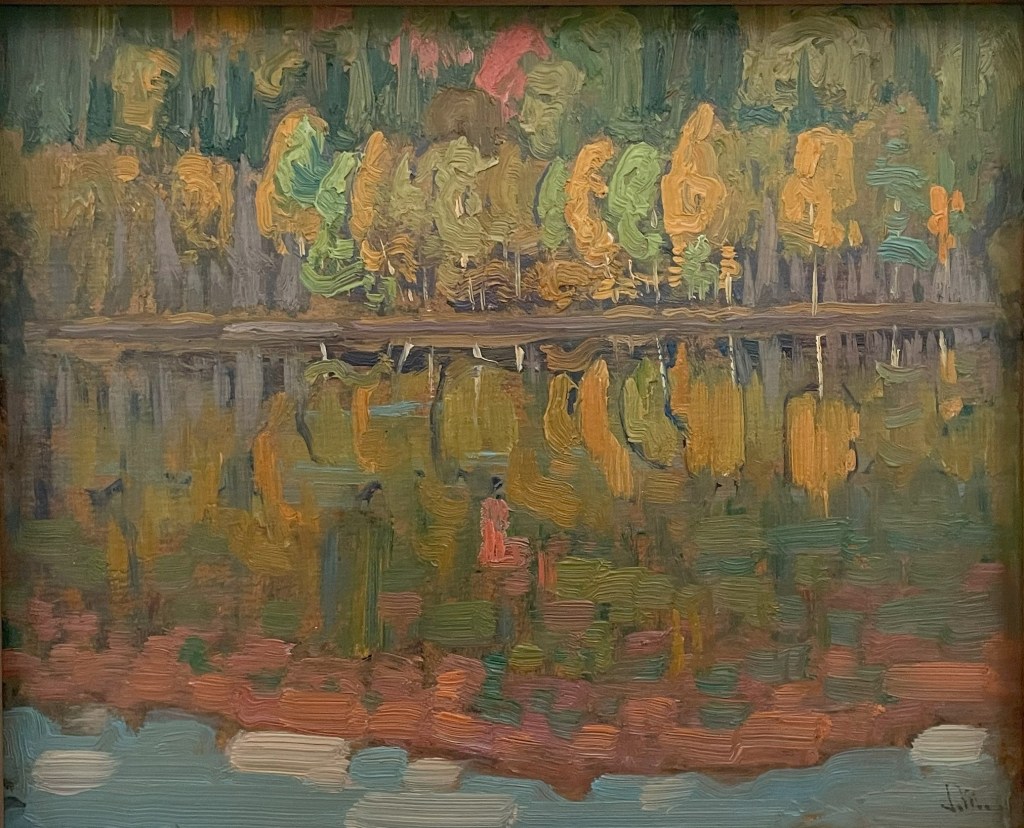
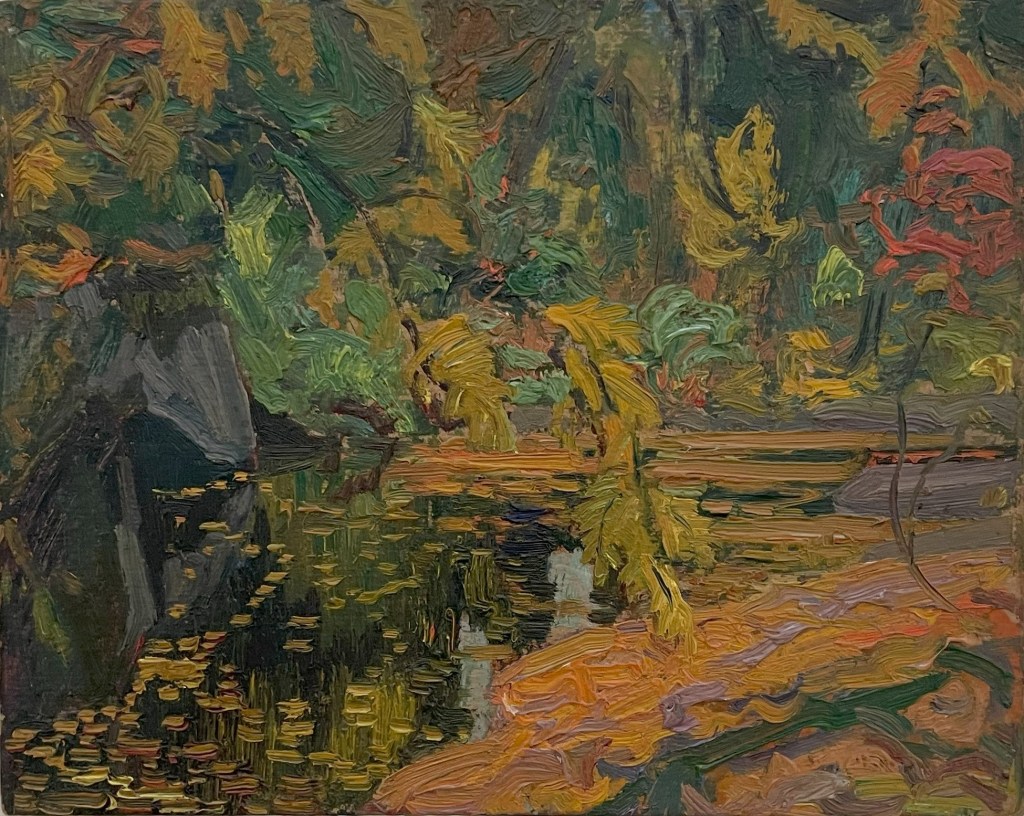
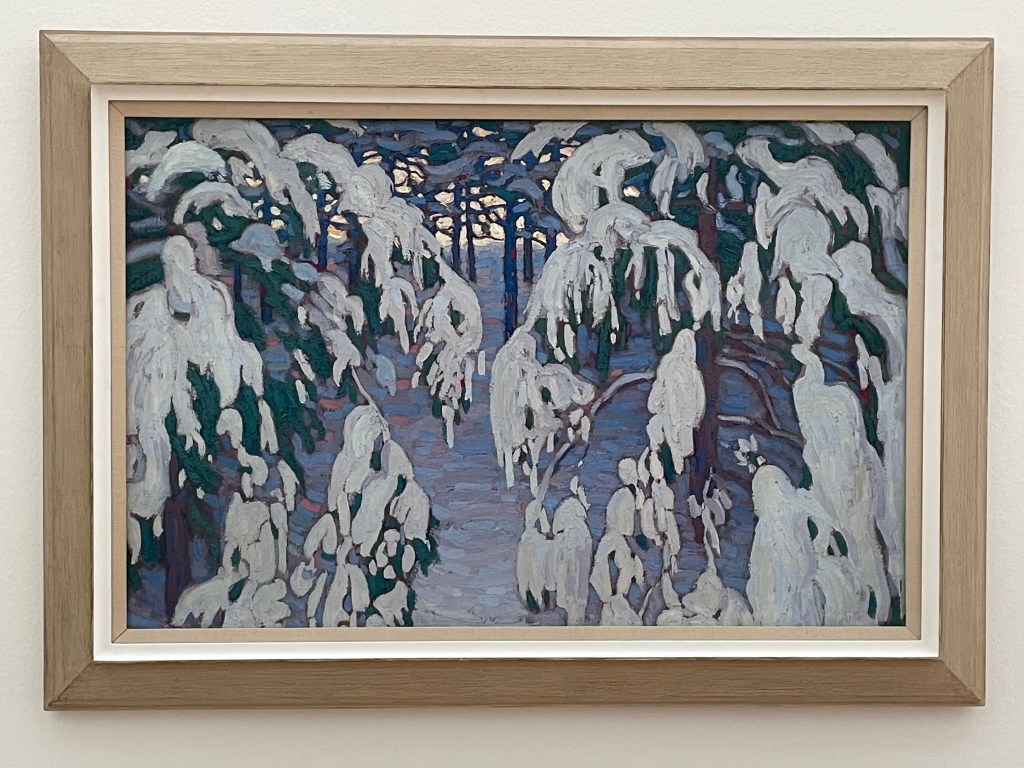
I also really enjoyed the last room of smaller paintings.  Several were by Canadians including Tom Thomson including one of a canoe he used to row out onto lakes and which, sadly, he ultimately disappeared in, and J. E. H. MacDonald who was originally from the UK. 
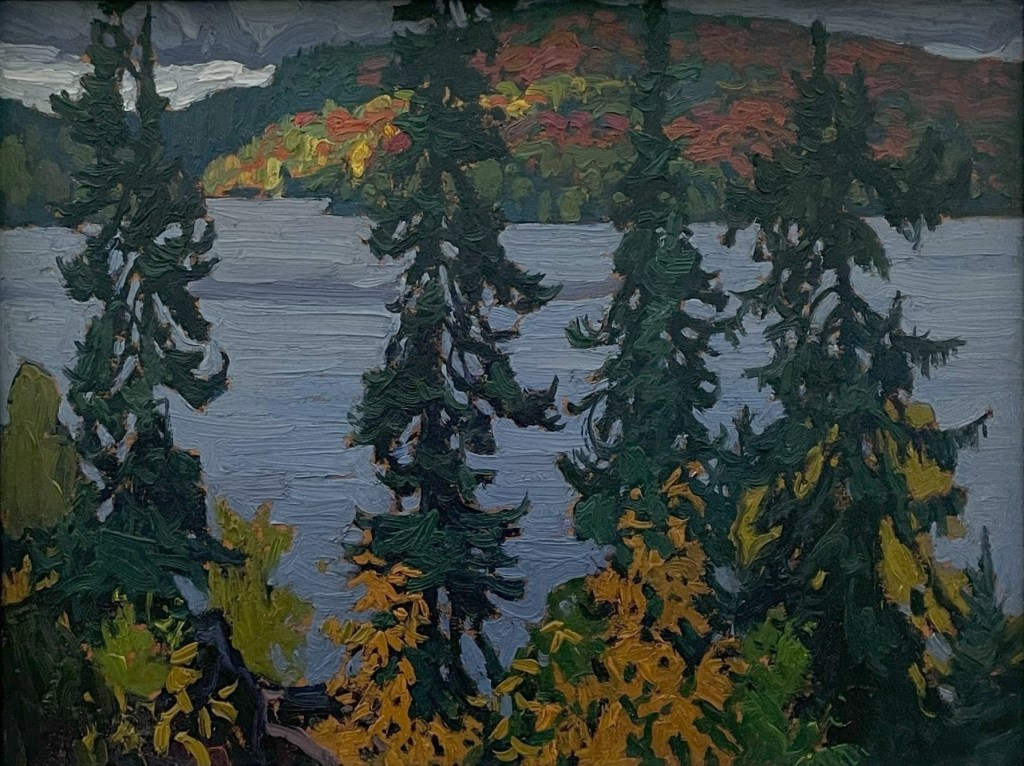
Paintings By Lawren Harris and J. E. H. MacDonald

Many of the paintings in the exhibition gave a strong impression of the cold of the forest.  Apart from a couple which showed the wind in the trees, they also had a calm, silent, atmospheric quality.   
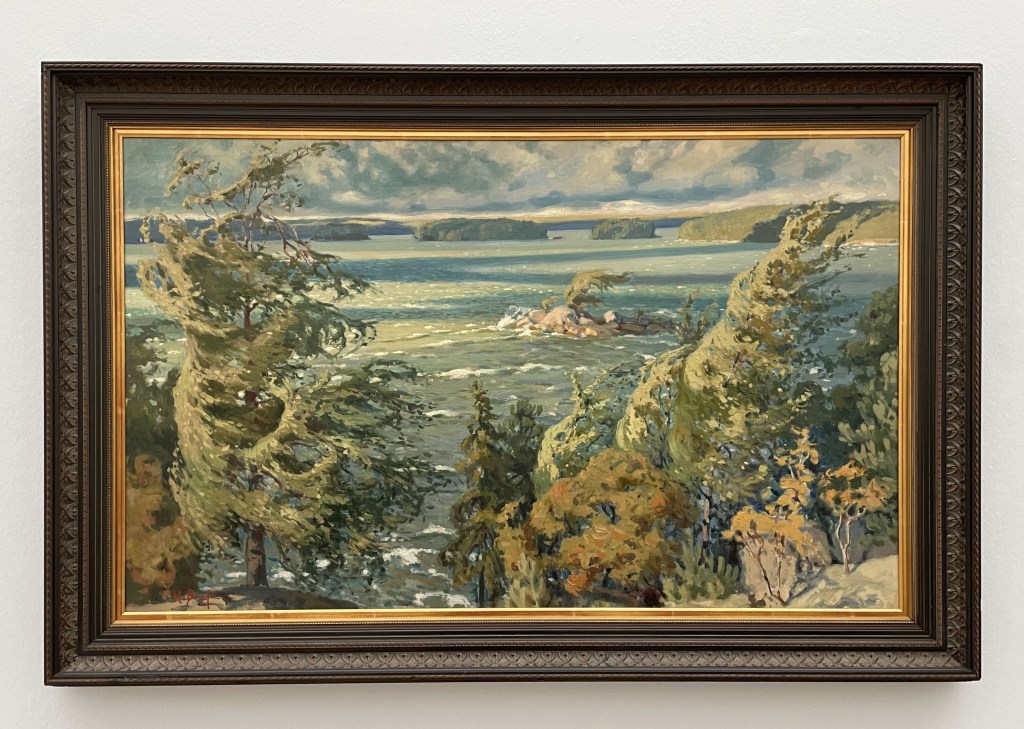
Throughout the exhibition, the presentation and the information provided was first class.  Both of us liked the fact that the explanatory captions for each art work were on the floor rather than alongside the paintings.  I wonder why this tactic isn’t employed in other galleries.

As we left Fondation Beyeler, following very tasty lunch there, we saw some filming going on in the pretty but wet gardens.  Jane overheard that it was related to the Eurovision Song Contest that was gearing up for the finals a week or so later.  I’m certainly glad our excellent, uncrowded visit to Basel didn’t happen to coincide with that!
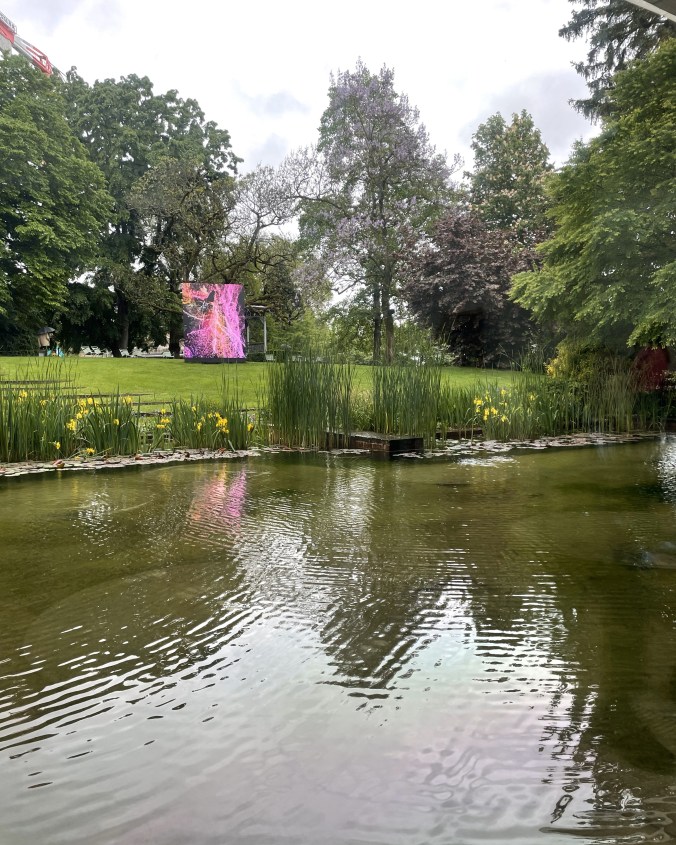
The Garden, Fondation Beyeler

Birthday in Basel

Unusually, my wife Jane picked up a copy of the Financial Times (FT) a couple of weekends ago.  On Saturday’s, it’s a thick paper with a variety of sections – some more interesting than others.  In the travel section, there was an article on Antwerp which we visited several years ago and, alongside that, an article on visiting Basel in Switzerland.  Upon reading it, Jane suggested that we book a trip there the following weekend to mark my birthday.  Within 20 minutes, we were booked into car parks, flights and a hotel and were set; retirement flexibility, a bit of money in the bank and the internet on our phones makes delivering on a whim so easy!

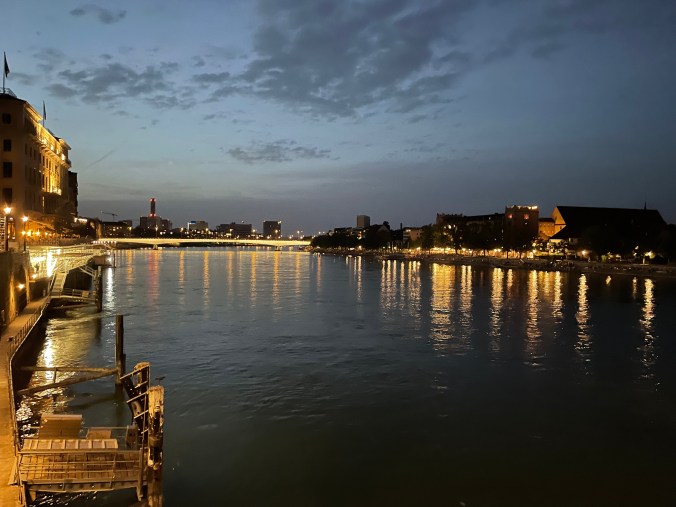
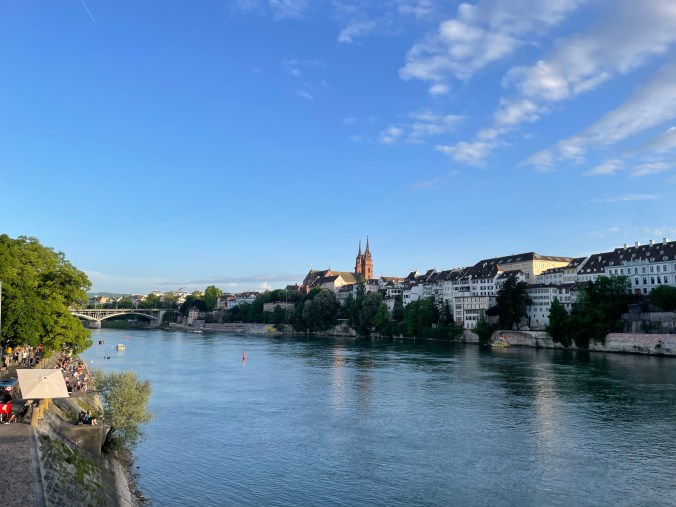
View Of The Rhine on Our First Evening in Basel

We arrived late in the evening, checked in to our room and ventured out to a brasserie recommended in the FT article for something to eat.  We chose simply – just a beer and a burger each – but were taken aback by the cost of restaurant food.  Meal prices are about twice those in our part of the UK.  It took us a couple of days to recalibrate our expectations as we picked up menus in a variety of places over the next few days.  The food quality was excellent everywhere but the prices were eye opening.

Other aspects of the city break in Basel weren’t so expensive.  Our hotel (Hotel Märthof) was very central, perfectly comfortable and decent value.  The service there was exceptional and there were some useful addons, notably including the free BaselCard which all Basel hotels provide for overnight stays and which offers half price museum and gallery entry, and free public transport. 

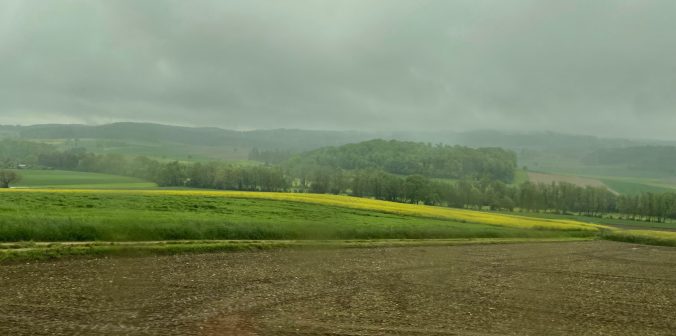
That last perk was very useful on our last afternoon in Basel when the weather was rainy, almost all the public buildings and bars were shut, and we found ourselves wanting to kill some time in comfort.  We simply got the number Line 10 Tram, one of the longest tram rides in Europe and one of only five tram lines in Europe to span more than one country (in this case France and Switzerland).  It was an interesting hour or so that enabled views of misty hills and nice, green French and Swiss countryside.

From The Line 10 Tram In France

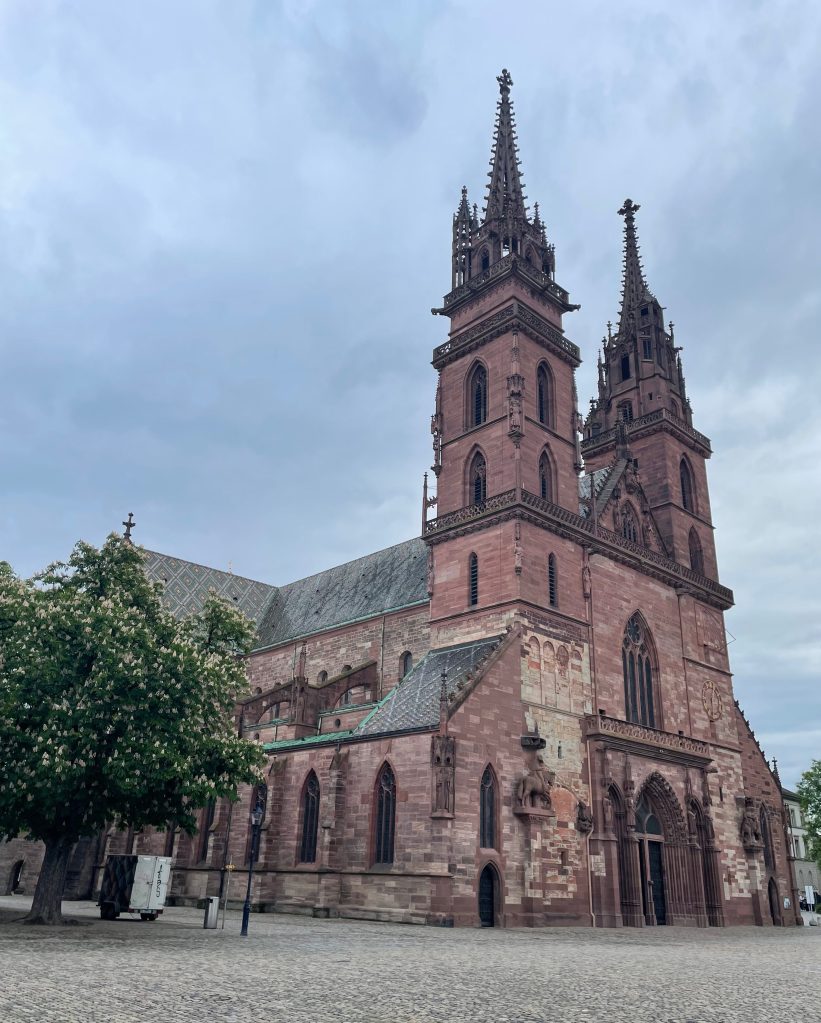
Our first full day in Basel was very sunny and warm.  After substantial pastries at Bio Andreas, we walked a lot and got a feel for the old part of the town and beyond.  We visited the Cathedral (Basler Münster) and took in our first daylight views of the Rhine that separates the two halves of the city.

View From Basler Munster: Rhine, Bridges And Chestnut Trees (Which Were All Over The City)

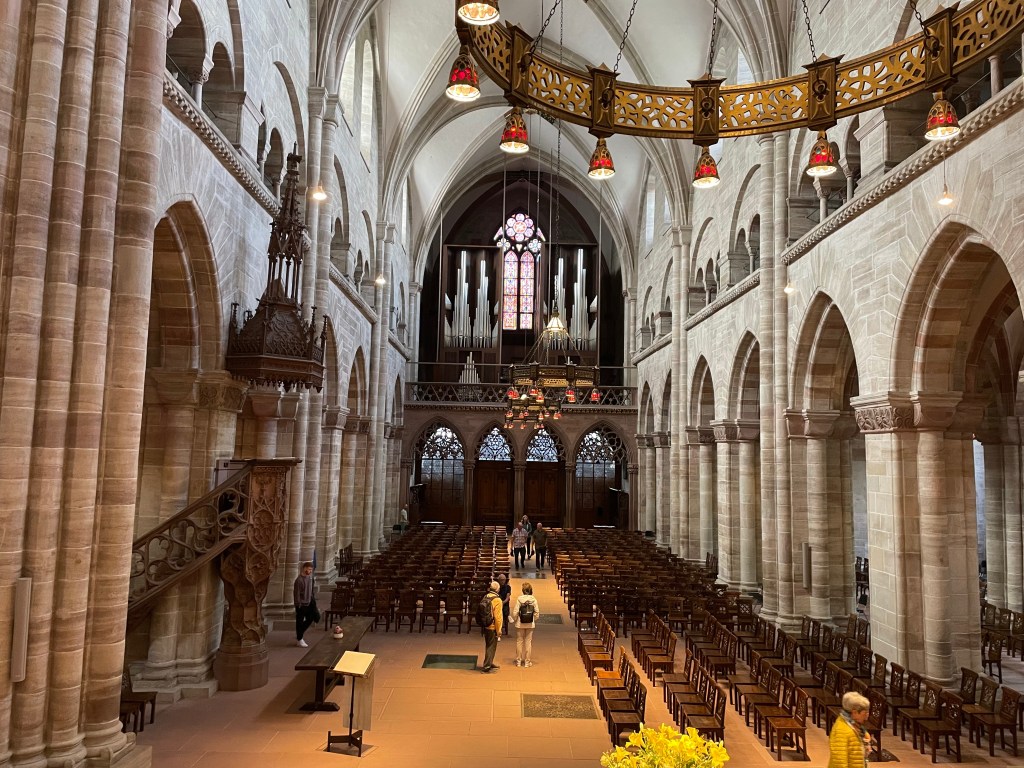
The cathedral dominates much of the south bank of the Rhine but, inside, it is of a good scale.  The extensive roof has pretty coloured tiles and, while the exterior walls are mainly red, inside the walls are a muted grey/brown colour.  We both liked this colouring, the lighting and the simplicity of the interior.  It was also clear even at this early stage of our trip that we were not going to be overwhelmed by crowds of other tourists; nice!

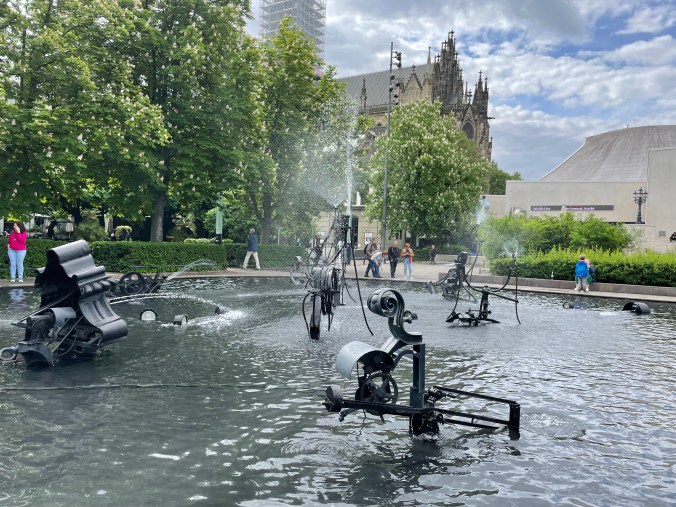
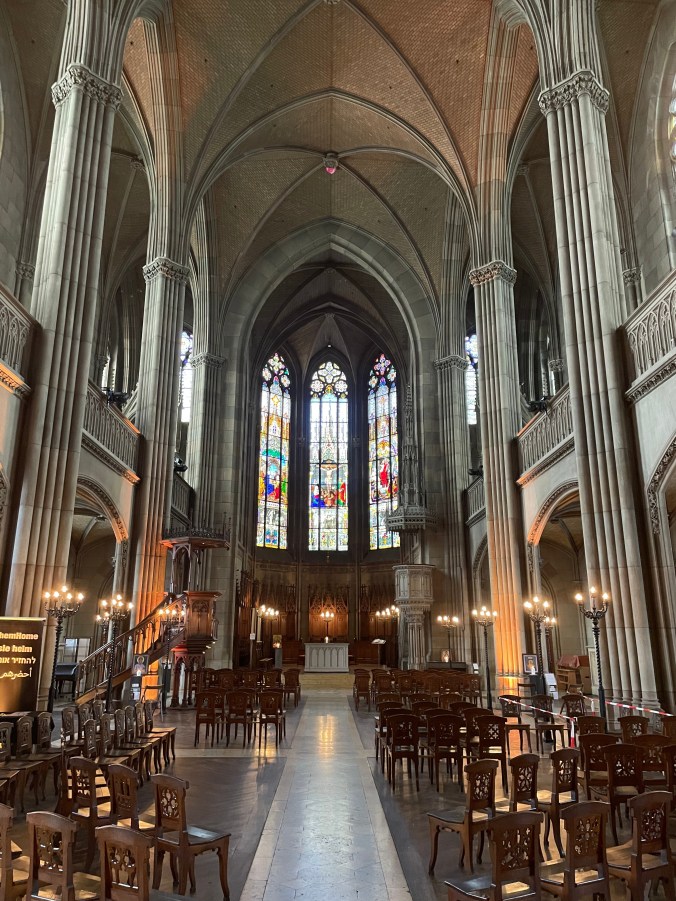
We walked on to the Tinguely Fountain which was an amusing array of mechanical, moving fountains and then to the nearby Offene Kirche Elisabethen.  The nave of this church was (or at least seemed) taller than the cathedral and I loved the airiness and, again, the lighting. 

Tinguely Fountains
Tinguely Fountains (Created By Jean Tinguely In 1977)
Offene Kirche Elisabethen

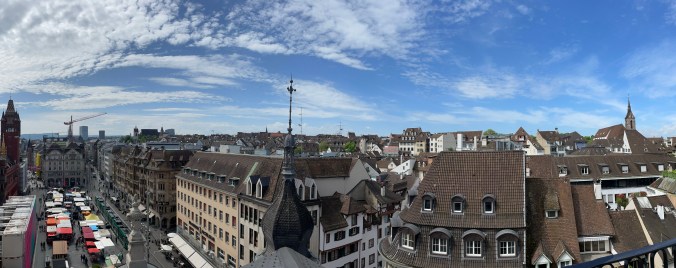
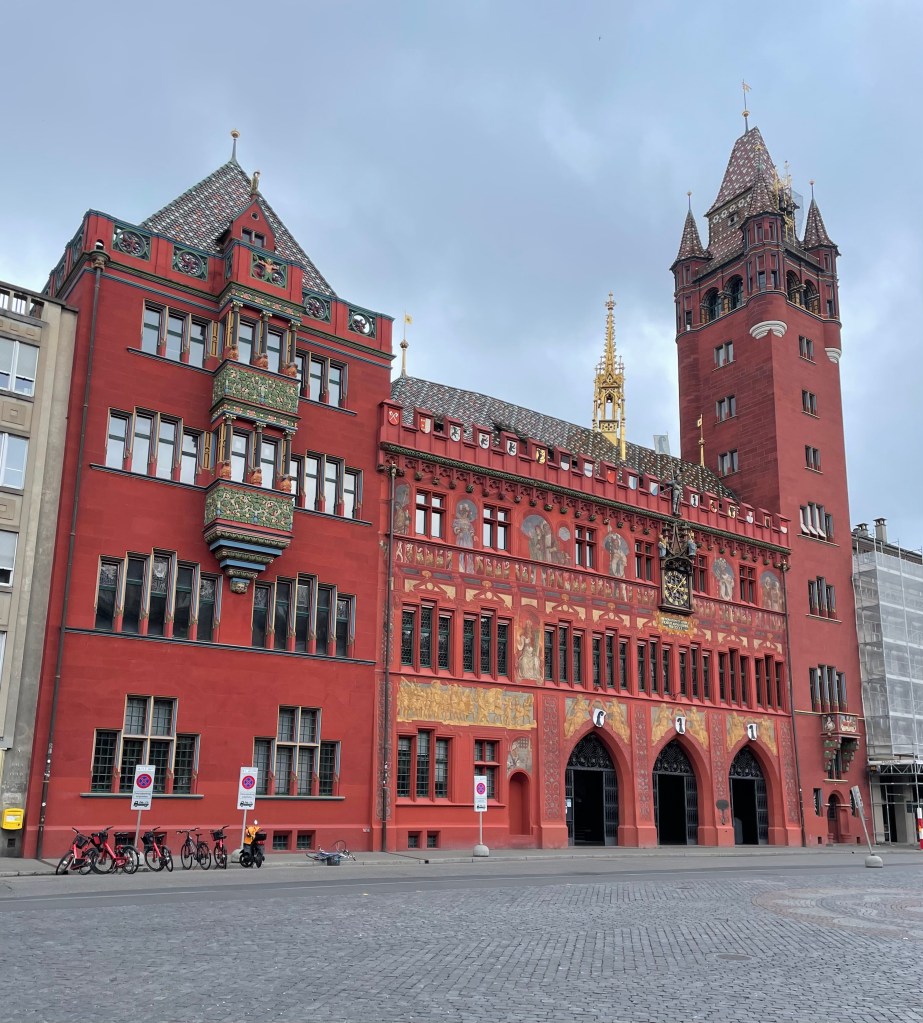
Our hotel had a roof terrace and so we thought that we would try that out while the sun was shining.  We enjoyed a couple of complimentary glasses of fruit infused water while perched over the market place, watching the market customers choose from the pricey but high-quality fare for sale and listening to the bells of the surrounding churches.  This was all very relaxing but, with phones now recharged, we thought it time to find a bar.

Panorama From Our Hotel Roof Terrace

Jane did a couple of searches on her phone and re-consulted the FT article.  This led us over the main bridge to the north side of the city where we could see seating in front of hotels and bars on terraces leading down to the Rhine riverbank.  These would have been fine I’m sure but we wanted something a little quieter and offbeat. 

View OF Basler Munster From The Main Bridge Across The Rhine

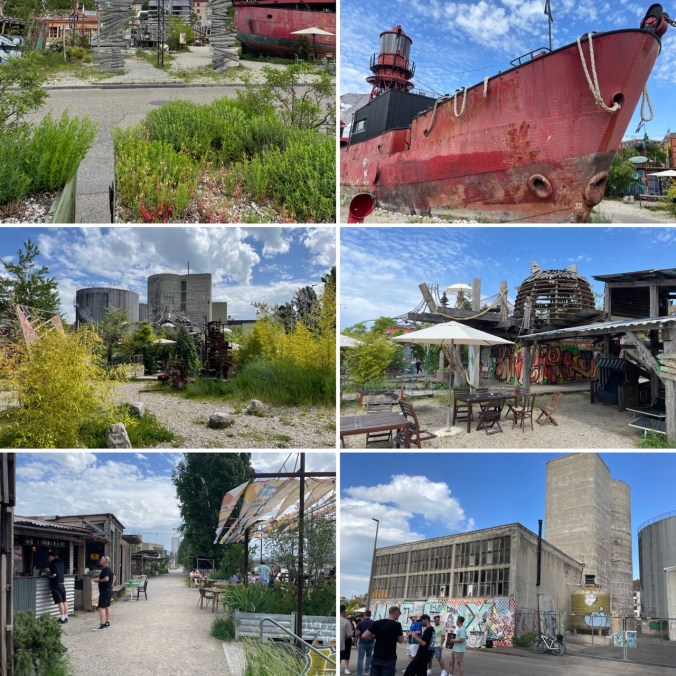
Jane found a description on her phone of a ‘quirky’ bar and, despite the significant distance to it, we set off west along the Rhine.  The walk was delightful.  It was initially between rows of lime trees with seating along the river on one side and some substantial houses on the other.  Then the walk became indispersed with small pop-up bars and DJs with portable sound systems.  Finally, past some rather run down industrial buildings and cranes, we came to Holzpark, an alternative cultural centre and play-space, and the quirky bar called Landestelle.

Holz Park, Landestelle Bar and DJs Playing En Route

Landestelle was almost perfect for us.  It was buzzy with interesting looking, local people but not crowded.  The staff were friendly and the music choices were unusual but to our taste.  The Rhine – already wide despite still about 1,000km from the sea – was right alongside.  We watched huge barges slipping past and the sight of swimmers and divers on the far bank near modern offices and imposing factory chimneys.  The only drawback for me was that the draft beer was so continental and lager-like – not the hoppy IPAs we have become used to in our local pub.  Notwithstanding that, we felt as though we had found a lively but relatively undiscovered aspect of Basel.  We thoroughly enjoyed ourselves and the walk back to the hotel.

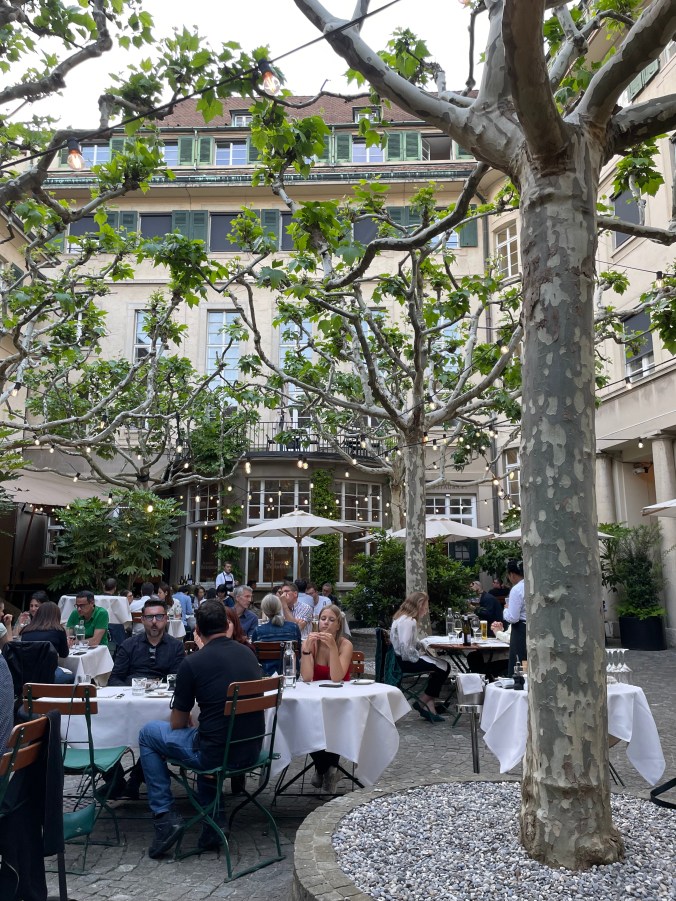
Our step count merited a nice dinner.  Jane had already booked us in at the Volkshaus restaurant.  The weather was still warm and sunny enough for us to eat outside in a charming courtyard under a canopy of heavily managed plane trees and next to a continuous tinkle of a fountain.  I was braced for the price list by this time (and I wasn’t disappointed there!) but the asparagus soup and steak frites (with the steak covered innovatively in a tarragon sauce) was top notch. 

Volks Haus Restaurant: Courtyard Dining

Much of the rest of our time in Basel was spent indoors avoiding the increasingly heavy cloud then rain.  However, we had planned for that and were very happy in the Kunstmuseum, with its very large collection of art from the 15th century onwards, the Swiss Architecture Museum and, on the Monday when the rain was heaviest, Fondation Beyeler where there was an exceptional exhibition of paintings by artists’ works portraying the boreal forests around the Arctic.  More on those visits, for those who are interested in art and architecture, in the next blog post.

We had a great break from our normal home routine whilst we were in Basel.  Despite the impetuousness and short notice of our trip, Jane had done enough planning to make the trip full and thoroughly rewarding.  I enjoyed especially the mix of good food (once I had adjusted to the price shock), relaxed drinking, friendly and helpful people, and the impressive galleries and museums we had time to visit.  It was a very memorable birthday weekend.