Richness of London

Some great and long-standing friends of ours from London visited us about a month ago.  During their stay they offered to put me, and Jane, up for a couple of nights in London so I could attend a ‘Boys Night Out’ with some other mutual friends.  These nights out with half a dozen other longstanding London-based friends have been going on for several years.  We meet each time in a restaurant where country’s cuisine matches our progression through the alphabet. 
From London Bridge (Unusually, With Tower Bridge Up)

We have made it through to ‘W’ which this time meant we had to meet in a Welsh, Western Samoan or Western Saharan restaurant.  Perhaps controversially given the current politics in north west Africa, we went for the latter and settled on a Moroccan restaurant in Covent Garden.  There, we were deposited in the basement where we were largely left to our own devices and had a relaxed evening of catch up while avoiding issues of Brexit, politics and climate change which might have provoked argument.  We may be mates but we have diverse views on life!

Visiting London for this evening out and capitalizing on the hospitality of our hosts, provided a great opportunity to experience the rich range of exhibitions and galleries of this great city.  Having sold my weekday bolt-hole 18 months ago, we rarely visit London these days.  We are no longer members of the big cultural institutions and hadn’t planned well enough in advance to see the most popular and celebrated exhibitions.  But exhibitions in the next tier down from the greatest were amusement enough.

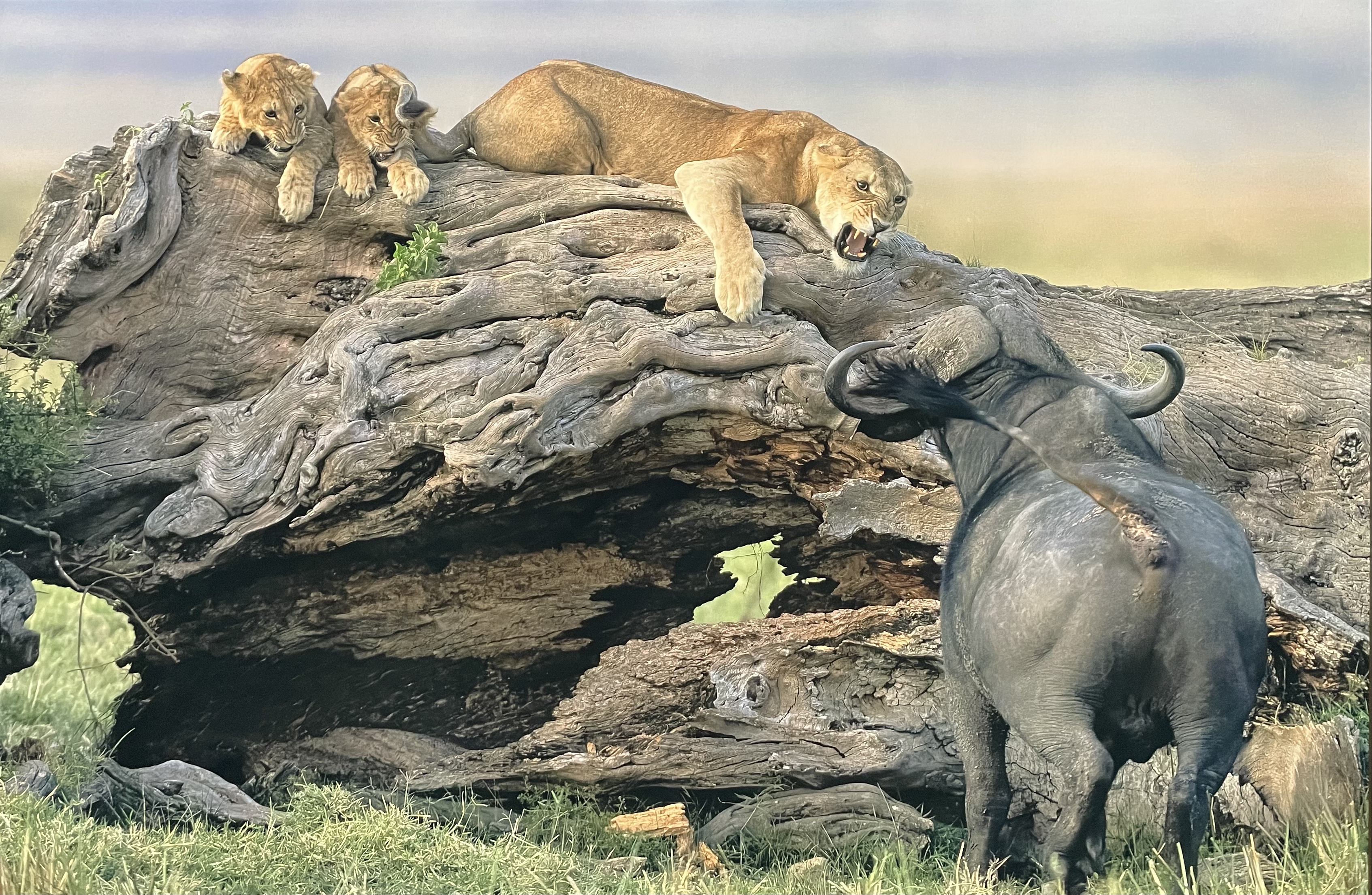
Jane had accompanied me to London and, before she went off to meet up with London friends of her own, we went to the Natural History Museum to see the Wildlife Photographer of the Year exhibition.  I have visited this many times and always love the photographs and the way they are presented in backlit screens.  The range of material and the detail in the images is astounding to me.

From The Wildlife Photographers Exhibition – My Favourite I Think, By Olivier Gonnet

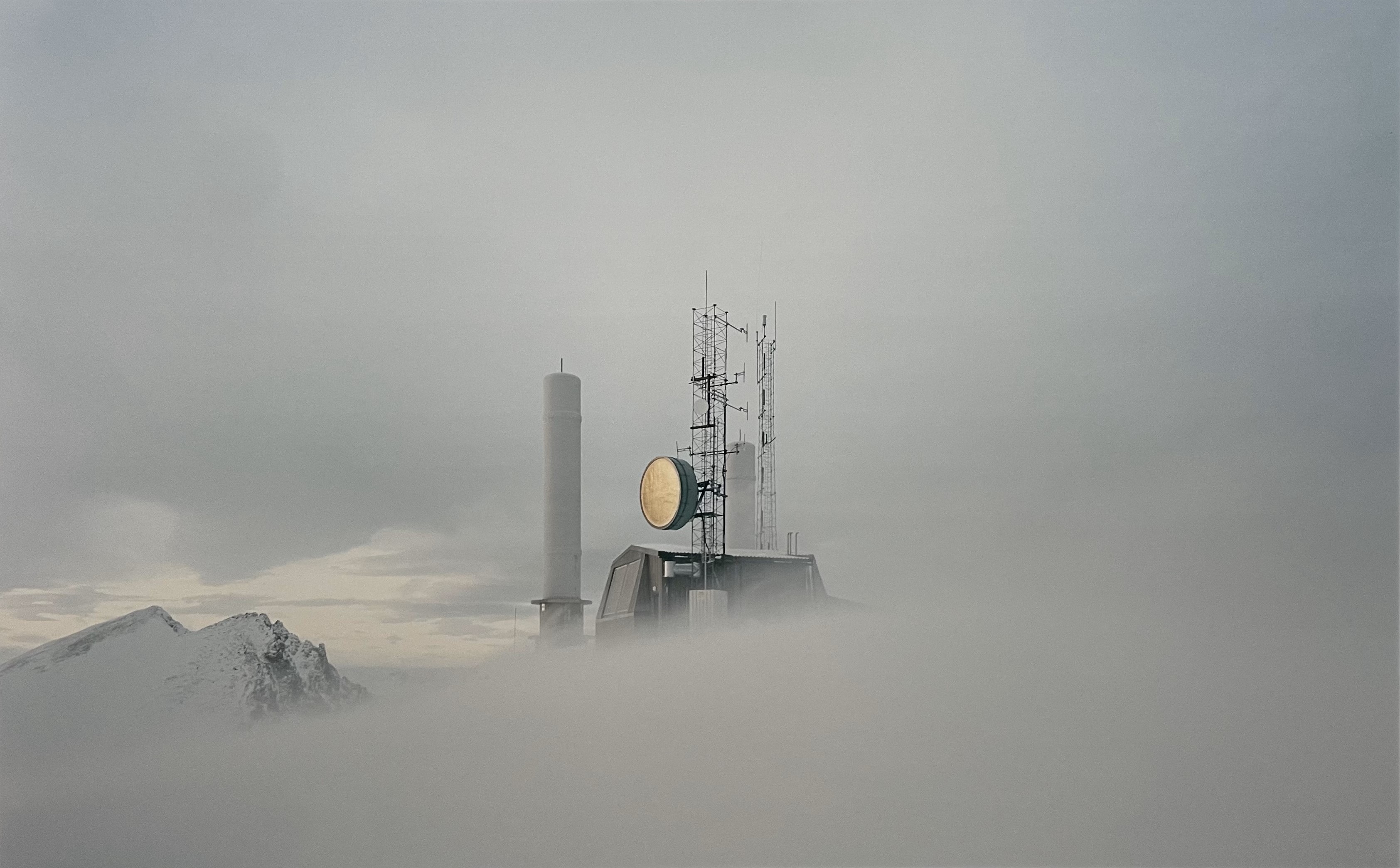
I hung around the Natural History Museum for a while to help me recall bringing our sons to the museum on many Saturday mornings when they were small.  I saw several of the rooms including the new dinosaur section (including a robotic, moving tyrannosaurus dressed as Father Christmas!), and a small but diverting exhibition of photos of research and military stations in the Arctic by Gregor Sailer.

One Of Gregor Sailer’s Photos

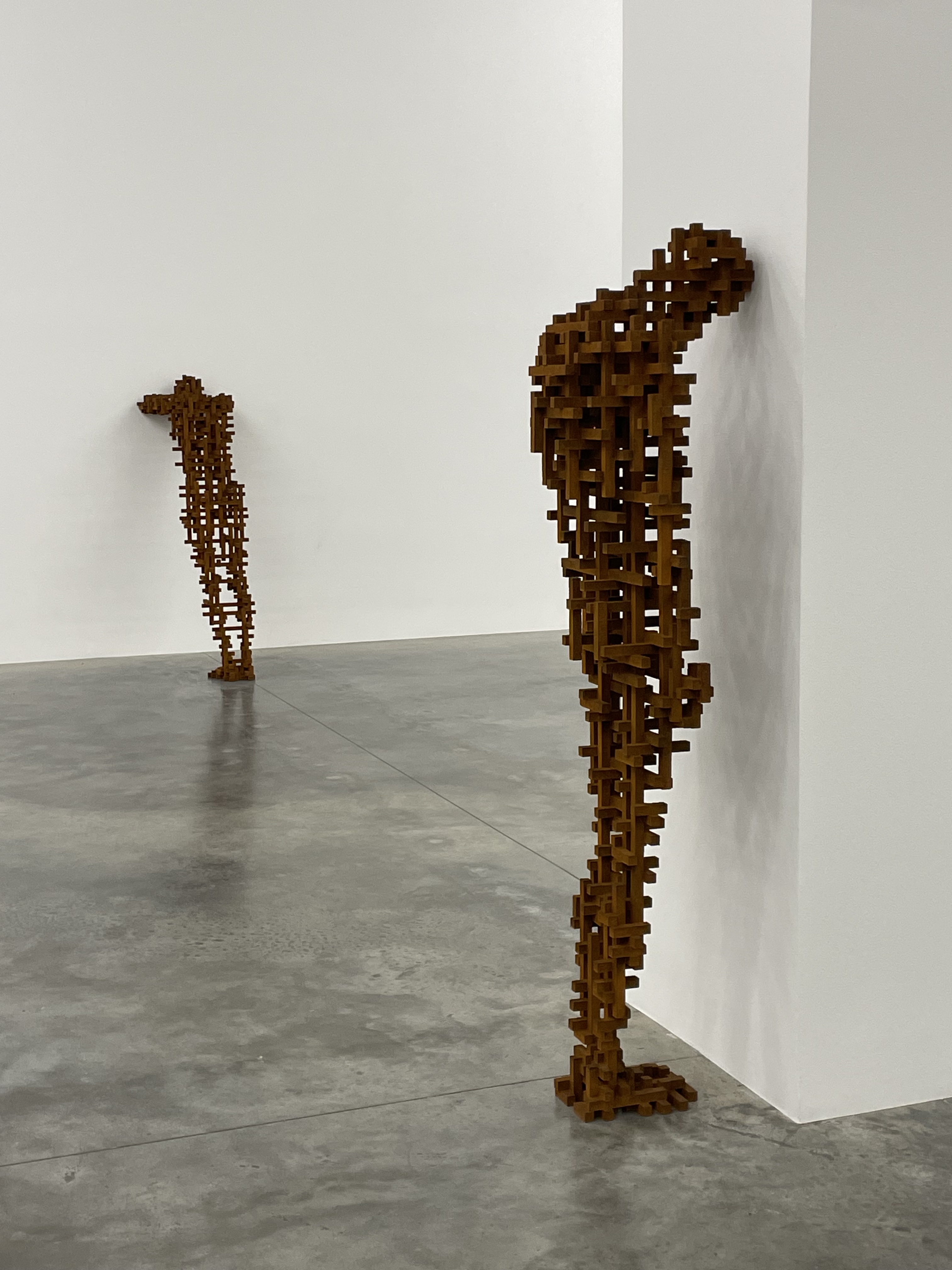
I then crossed London in wonderfully sunny weather, to the brand new Antony Gormley exhibition at White Cube Gallery

Classic Antony Gormley At The White Cube

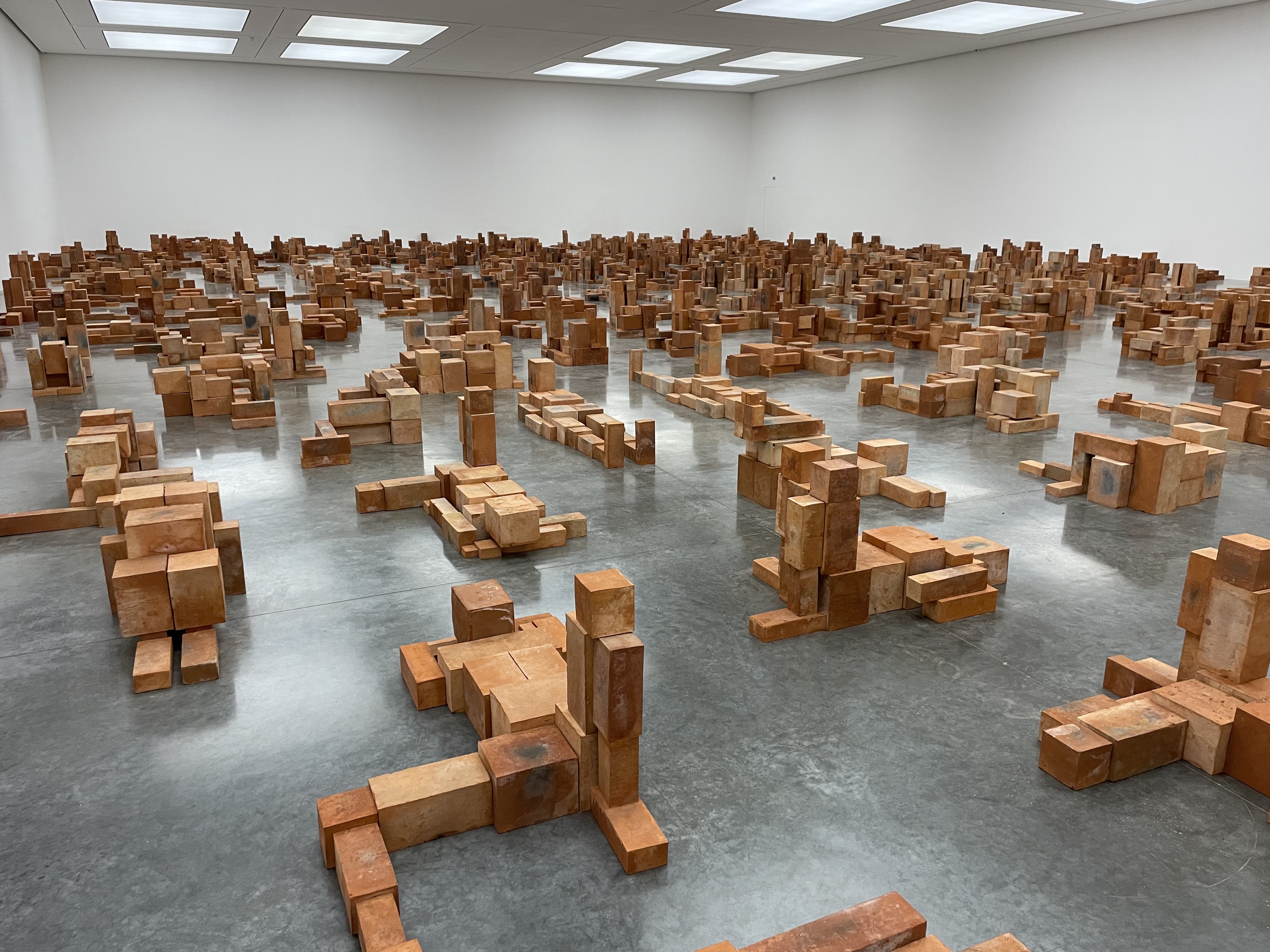
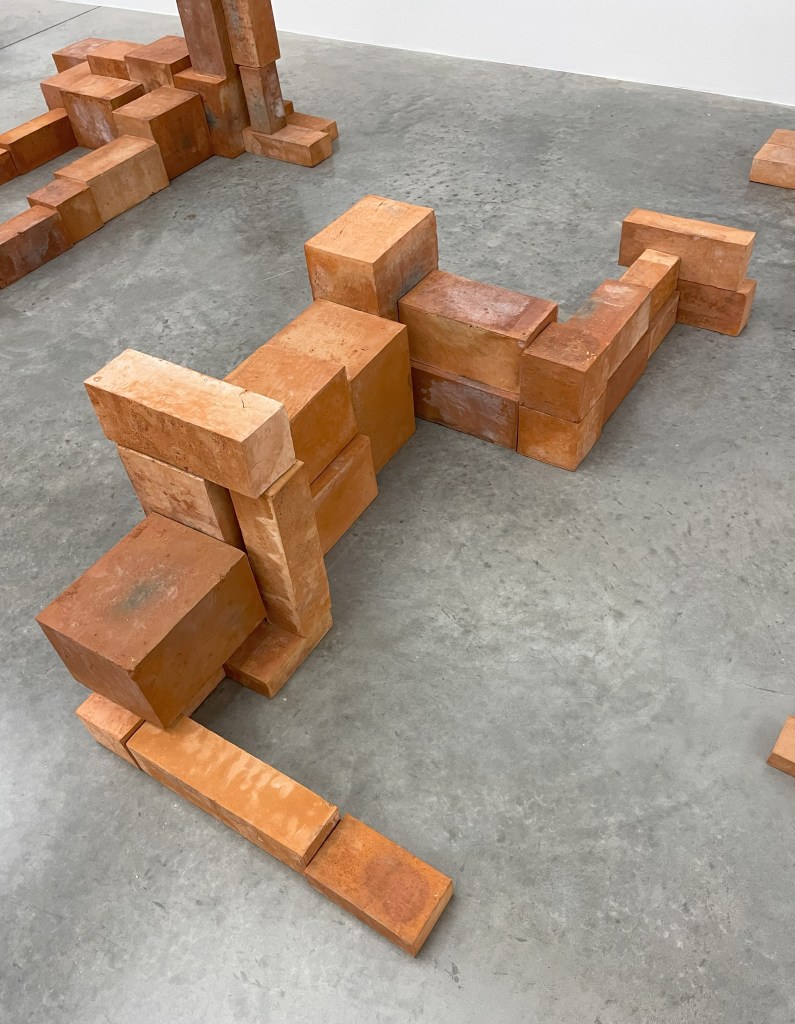
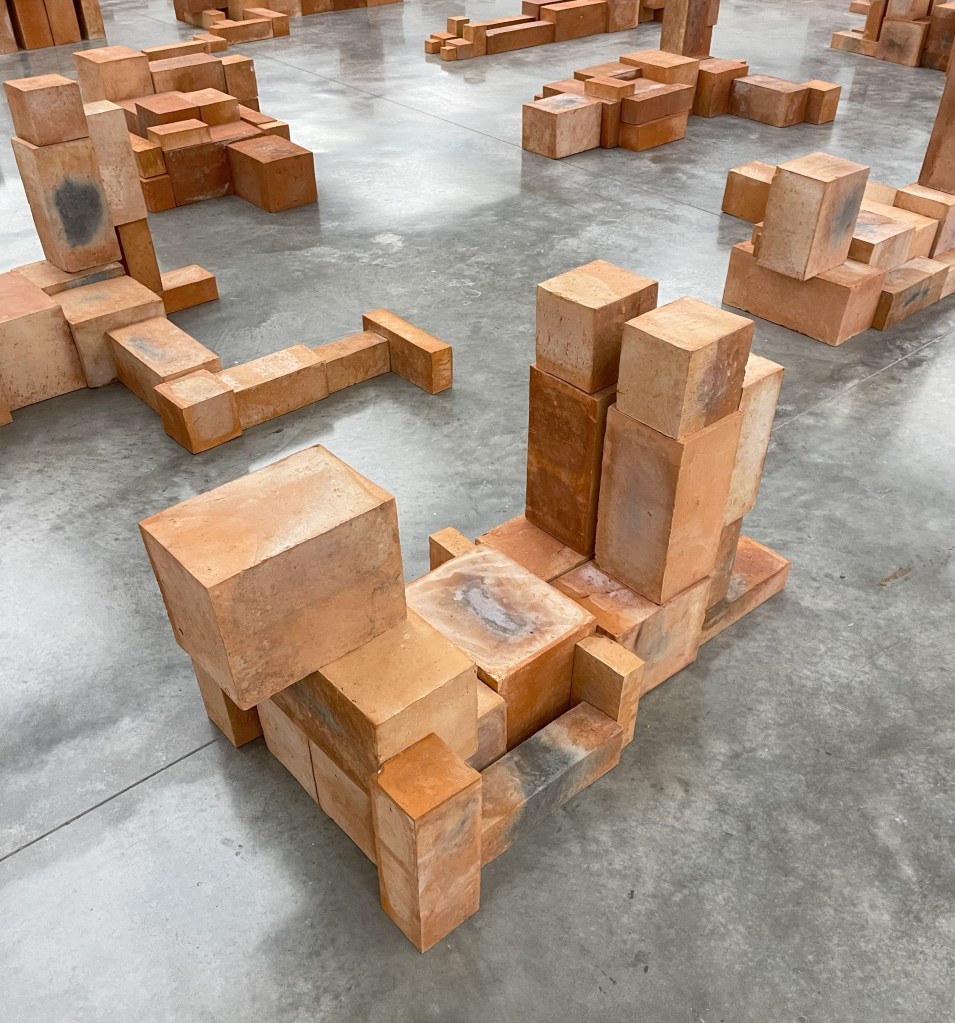
The first thing that astonished there was the transformation since my last visit.  Then, all the rooms were filled with massive piles of rubble and shelving packed with dimly lit industrial artifacts put together by Anselm Kiefer in celebration of Finnegan’s Wake by James Joyce.  Gormley did fill the biggest of the rooms with more stone constructions – fired clay blocks positioned to represent 244 ‘body forms’ – but the whole exhibition was sparse and minimalist; a total contrast to Kiefer’s last exhibition here.

‘Resting Place’ By Antony Gormley (2023)

I was joined by one of our London hosts and together we did another circuit of the exhibition.  I enjoyed it.  I like the fact that I have now seen a range Gormley’s work in a variety of places and see at least some of the linkages and evolutions in his thinking.

We headed off to find a local Bermondsey pub for a pint (of Magazine Cover by DEYA Brewing Company – one of my favourite beers and local to our home not London) and a light lunch.  Then we ‘Citymappered’ our way to Greenwich to see the Astronomy Photographer of the Year exhibition at the National Maritime Museum.

Like the Wildlife Photography exhibition, this is an exhibition I have visited often over the last several years.  It tends to be more repetitive in terms of content than the wildlife photography but I find it amazing nonetheless. 

‘Aurora Over the Great Pollet Sea Arch’ (Donegal) By Brendan Alexander

I don’t really understand the techniques and equipment involved in producing the images.  Indeed, I admire the photos that are relatively simple single take shots rather than the ones clearly involving huge telescopes, time lapse photography and overlays of multiple pictures.  In any case, the results are, almost uniformly, incredibly beautiful.

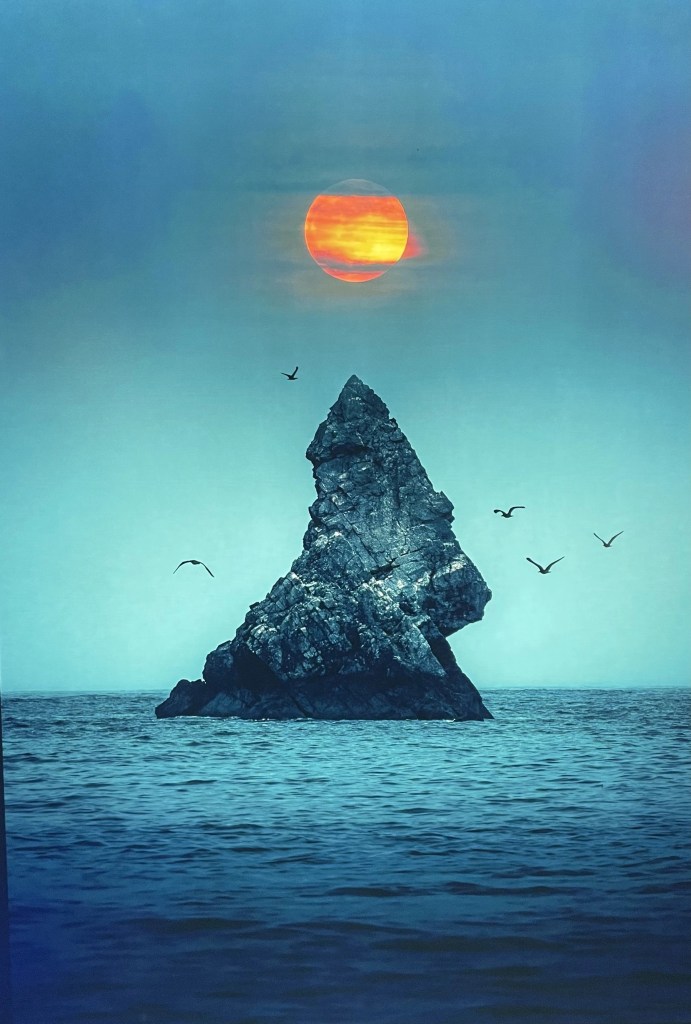
‘A Rocky Rise’ (Pembrokeshire) By Carl Evans

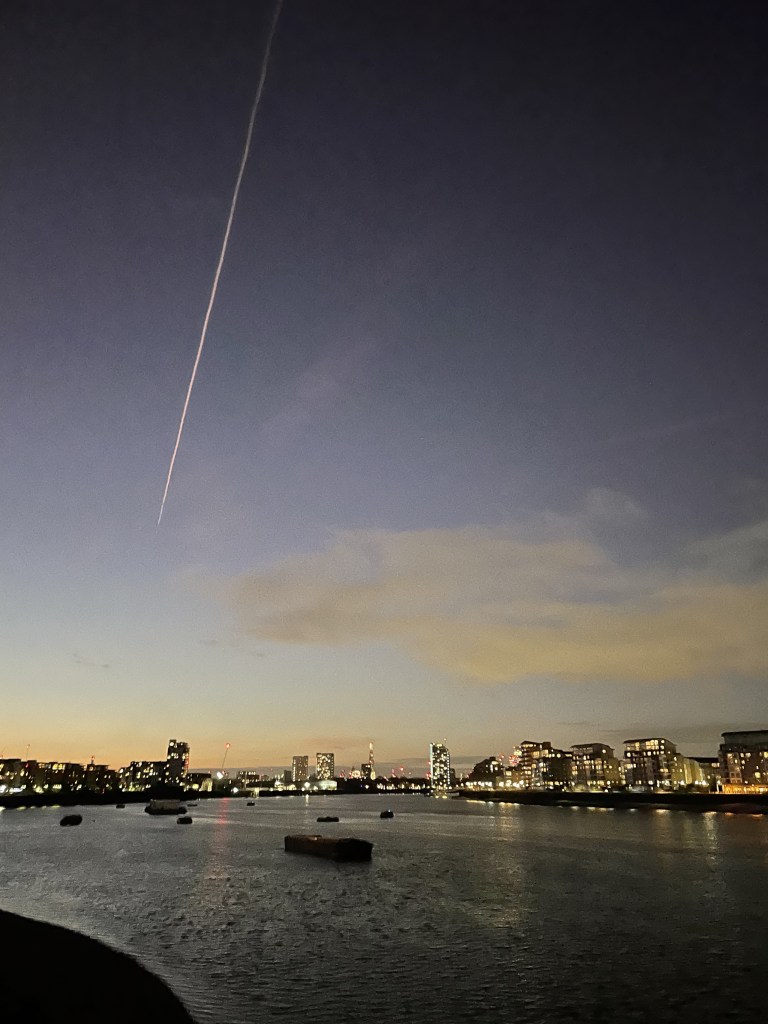
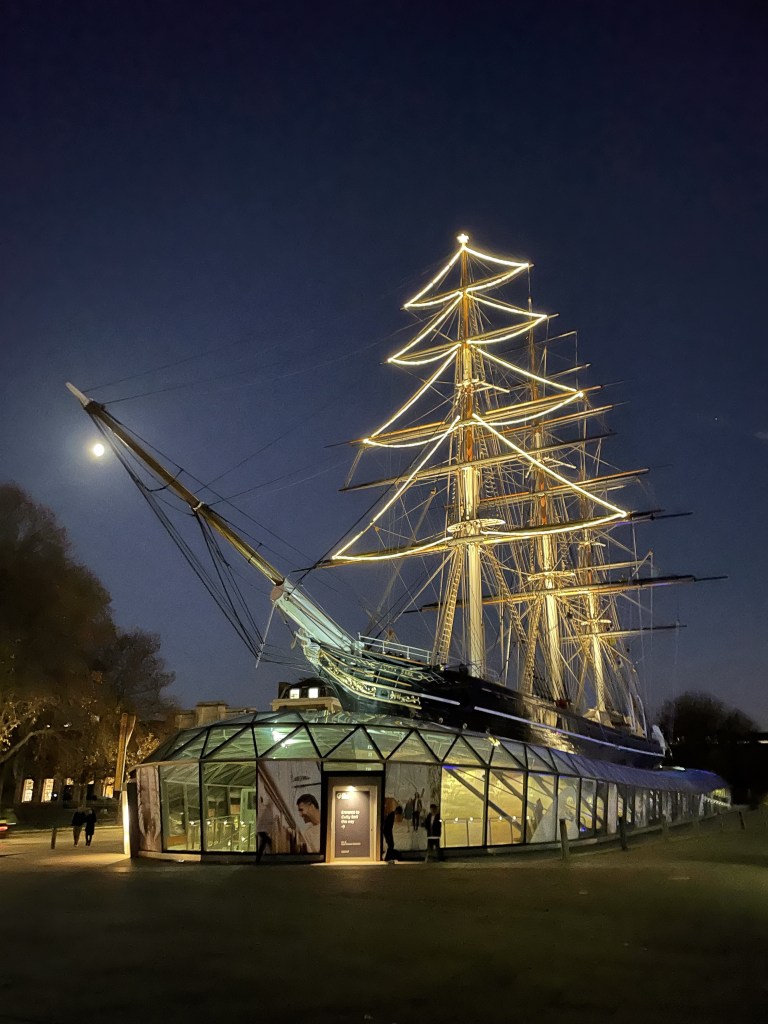
We failed to get to the Royal Naval College in time to see the Painted Hall there before it closed for the day (my fault!).  But we did get some good views of the Cutty Sark and the Thames as the sun went down in a clear sky.

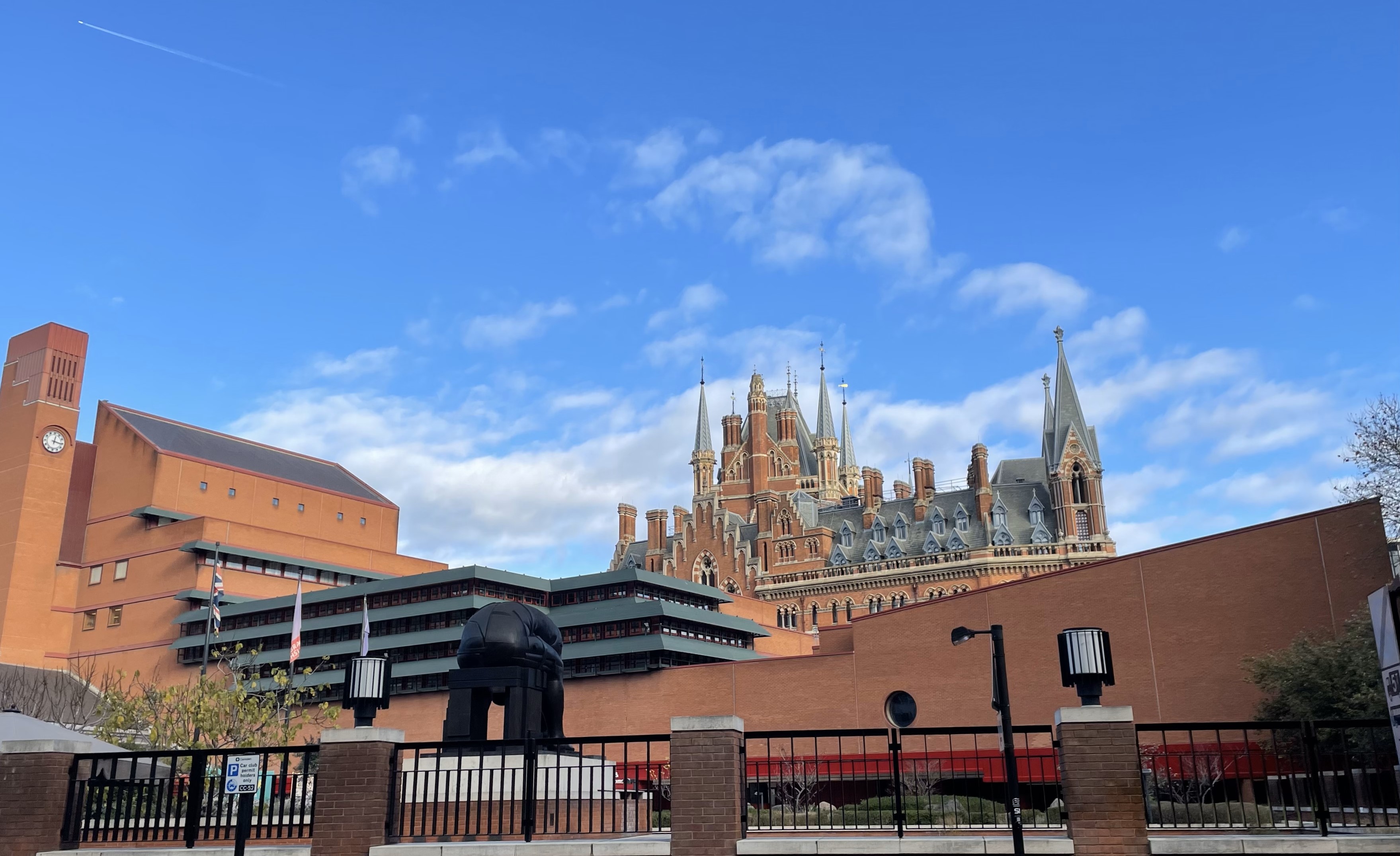
Next morning, Jane left for home and I made my way across London to Kings Cross to take a train to Nottingham.  Again, the weather was clear and bright.  I loved my walk across the centre of the city while renewing my acquaintance with London’s diversity, vibrancy and bustle.  Its such a rich city – in more ways than one!

The British Library And The St Pancras Renaissance Hotel, London

Then to Nottingham for a rather whistle-stop stay with my sister, a game of Mahjong, and a nice meal out with my Dad whose birthday followed the next day.  He is 92.  That is 90 years older than First Grandchild whose birthday we celebrated just a couple of weeks before.  Incredible!

Anniversary and Birthday in Edinburgh

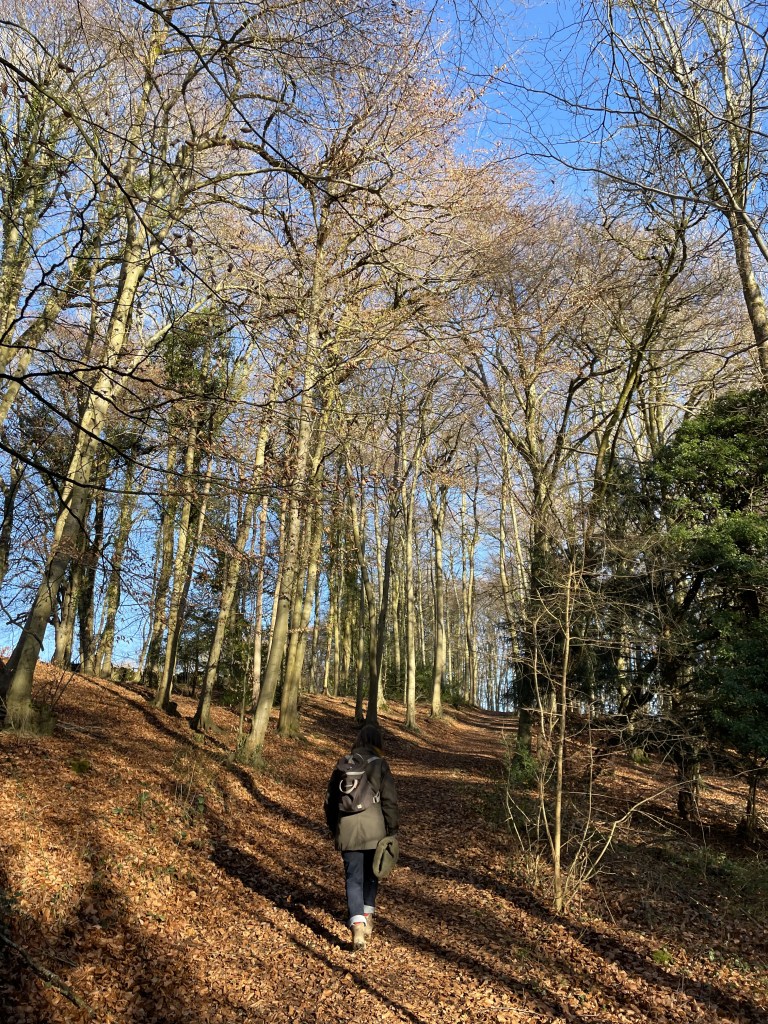
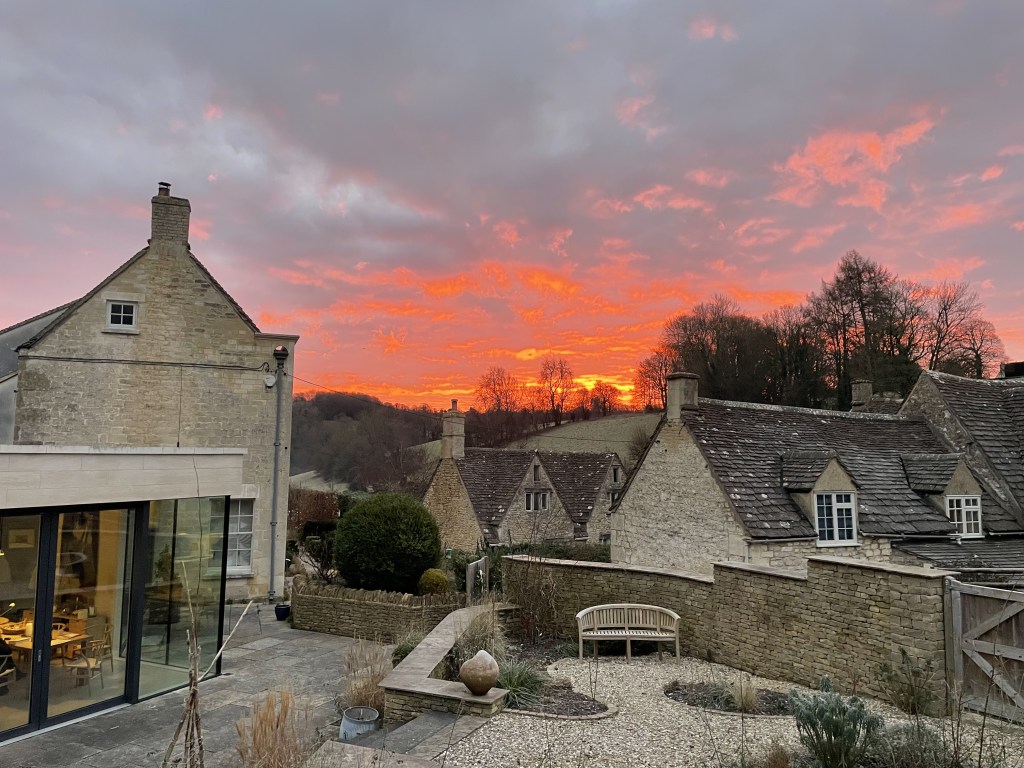
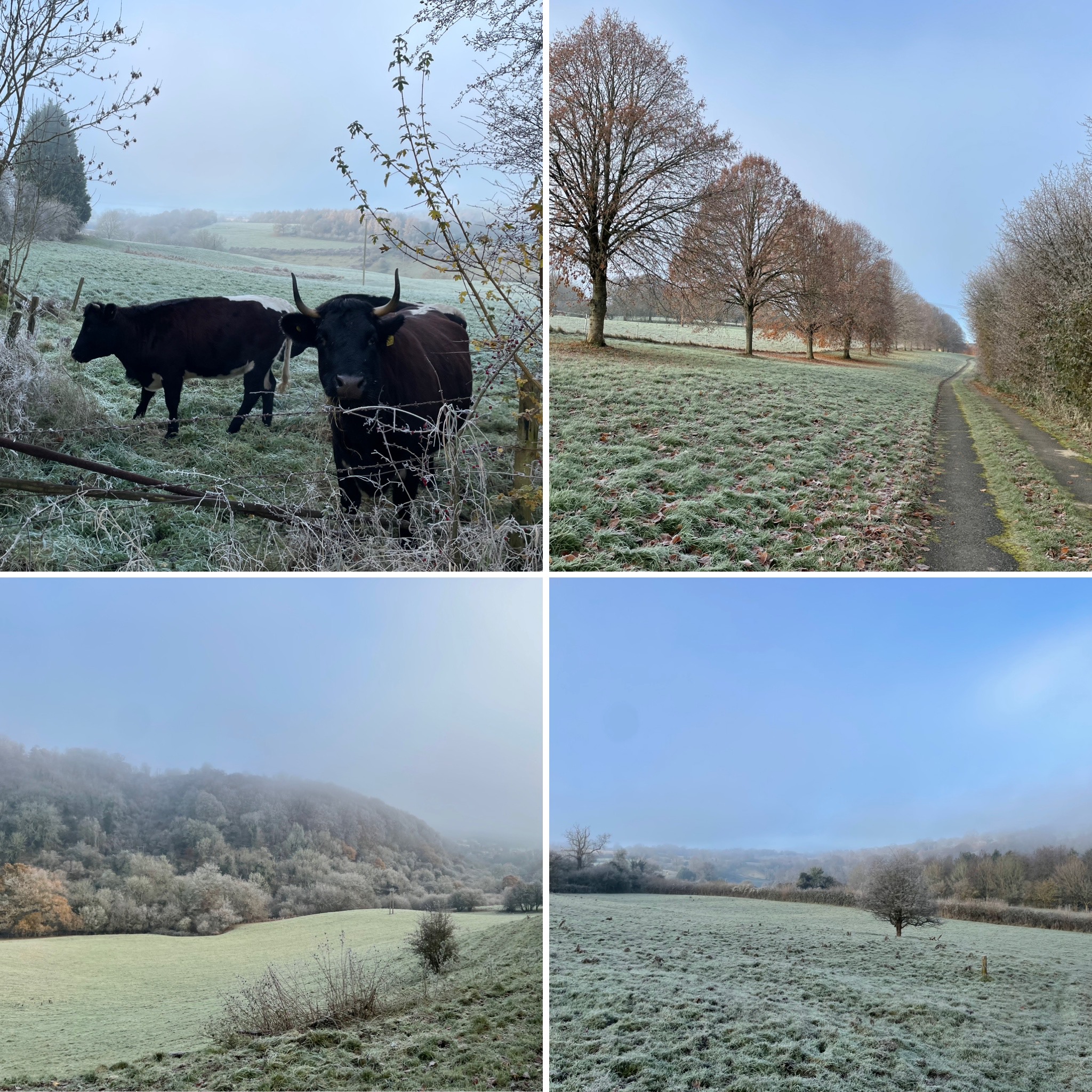
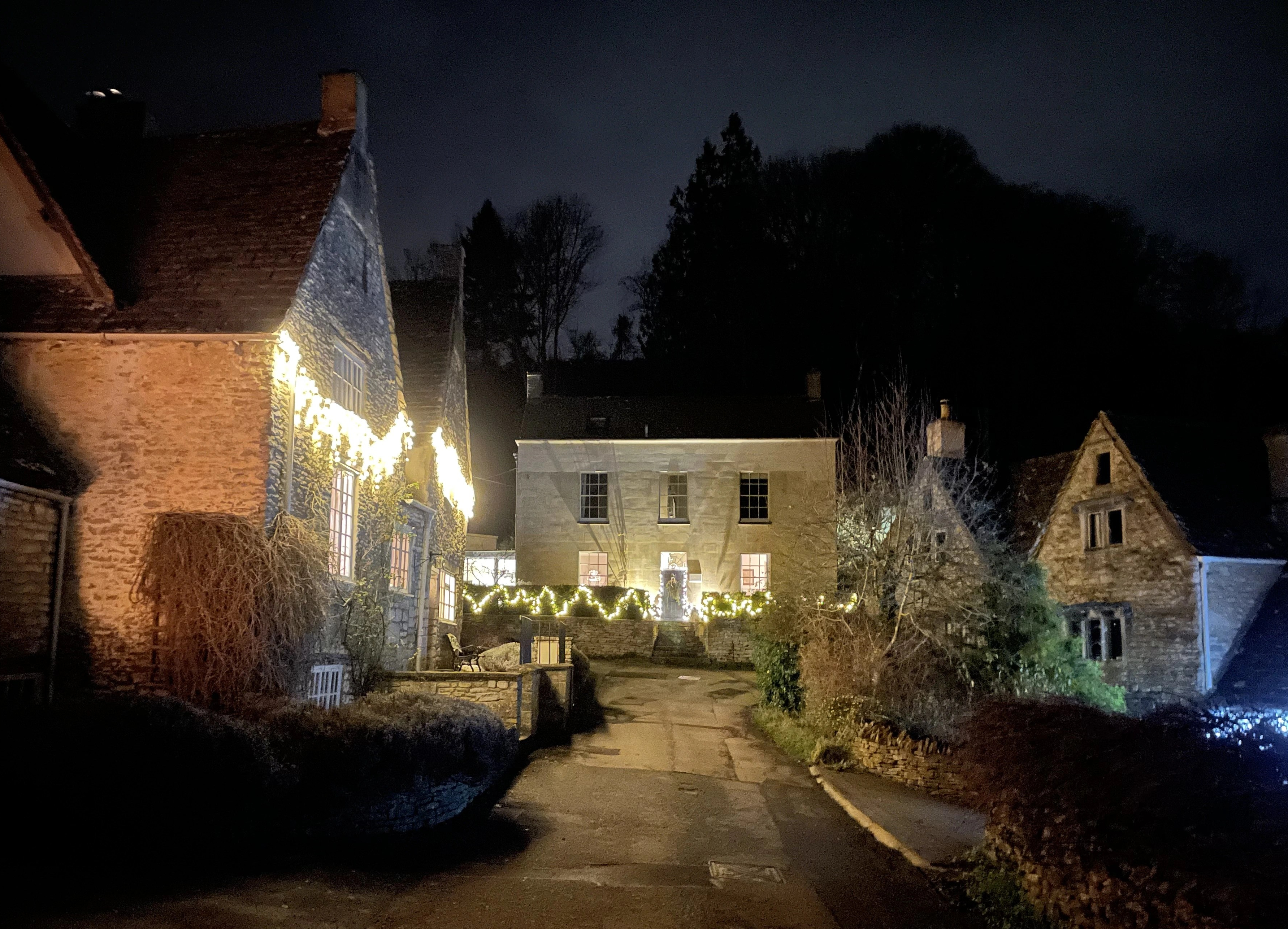
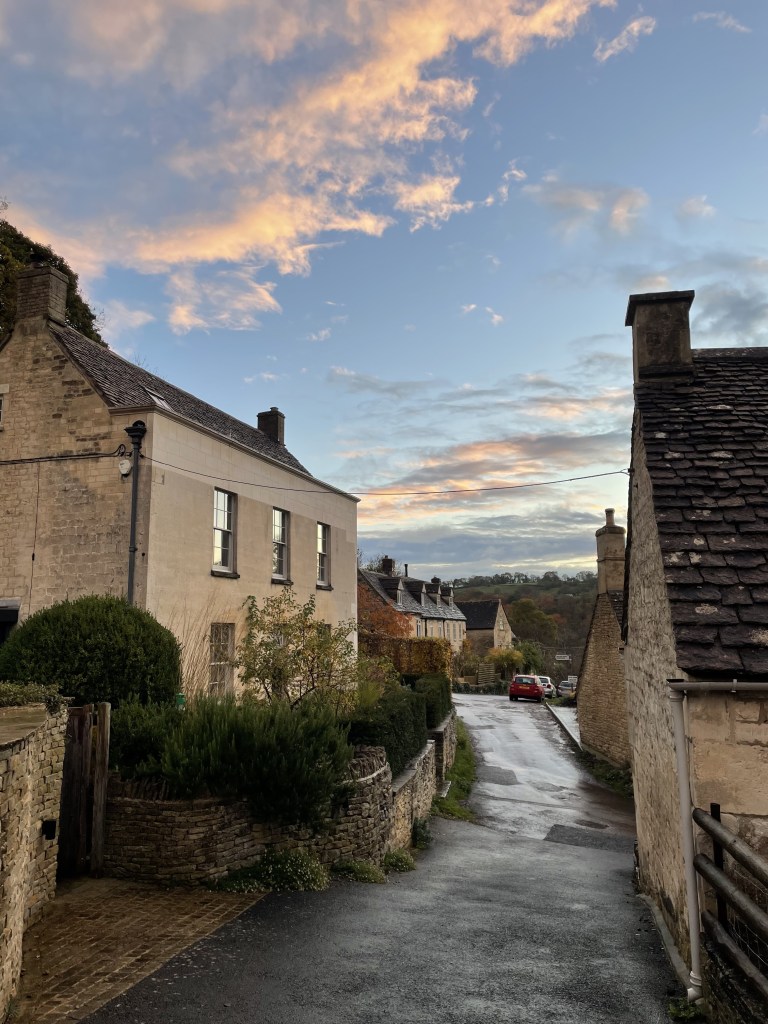
Autumn is turning to winter but there is still some colour in the trees and the occasional sunny day provides a bit of autumnal sparkle.  I continue to feel fortunate to live in a pretty (but not prettified) part of Gloucestershire and we enjoyed showing it off a bit while some friends stayed with us at the end of October.  When the sun is low as it is now, the Cotswold stone of the houses glows beautifully and the crispening leaves on the trees glimmer in the breeze.

Local Autumn Colour

I am well behind on the bedding down of the garden and allotment for winter.  I have made some progress but, when the weather has been nice, I’ve tended to take the opportunity to go for local walks.  When the weather has been cold and wet, I’ve stayed close to the heating in our kitchen.  I feel that, as I get older, I feel the cold more than I did.

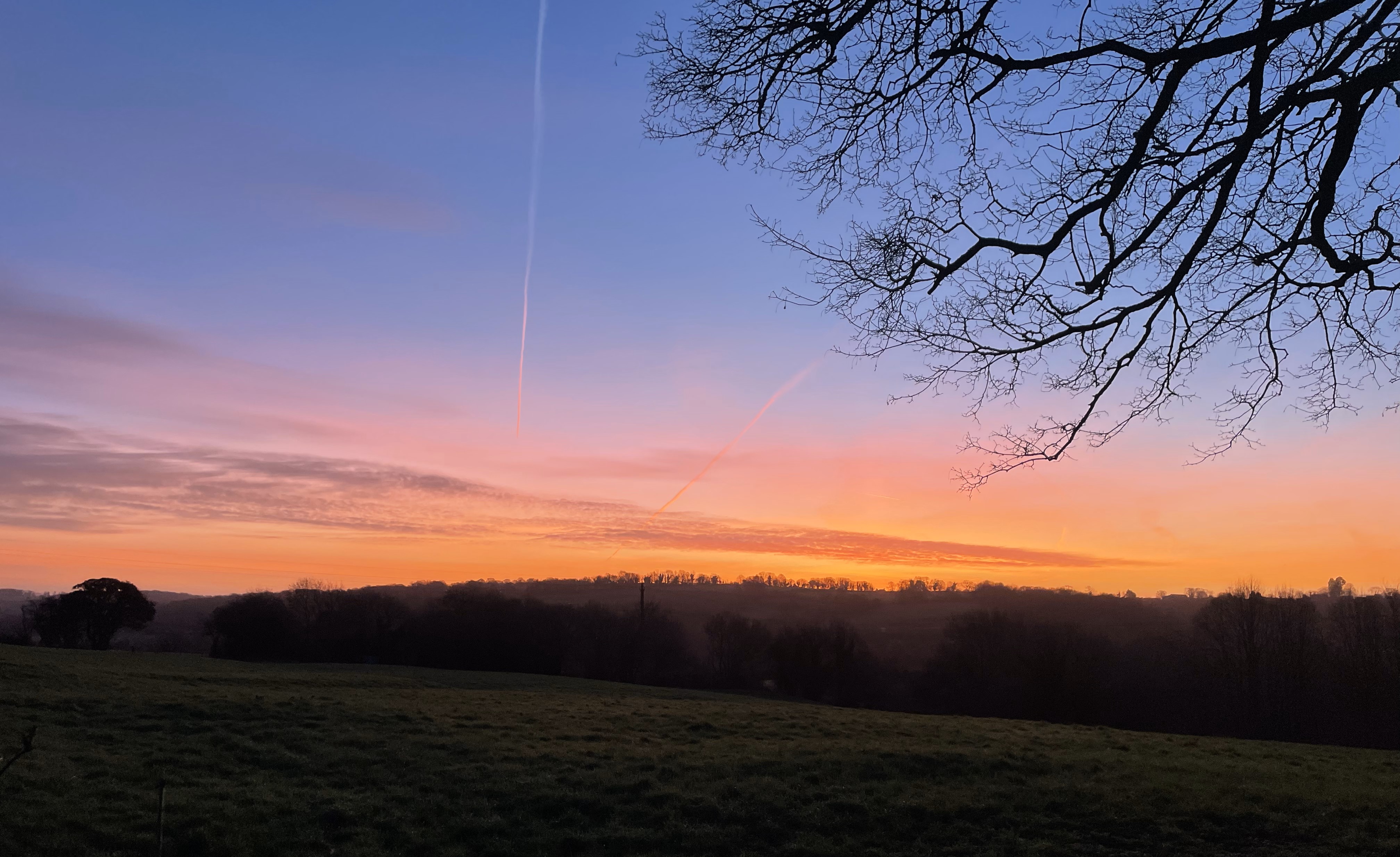
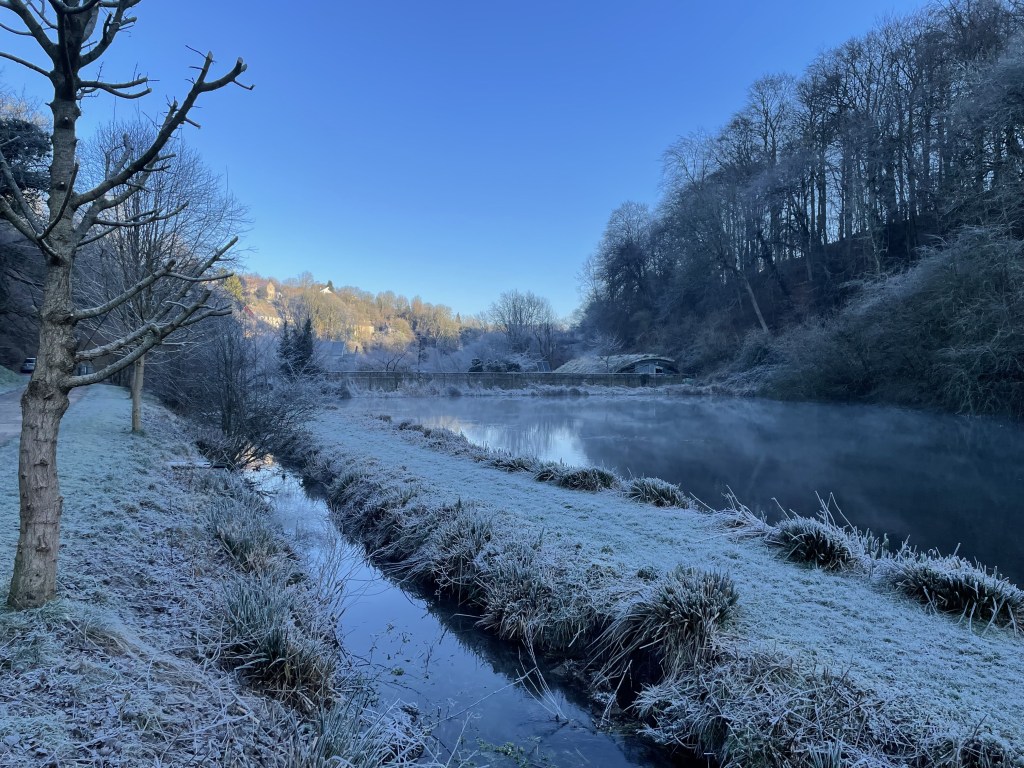
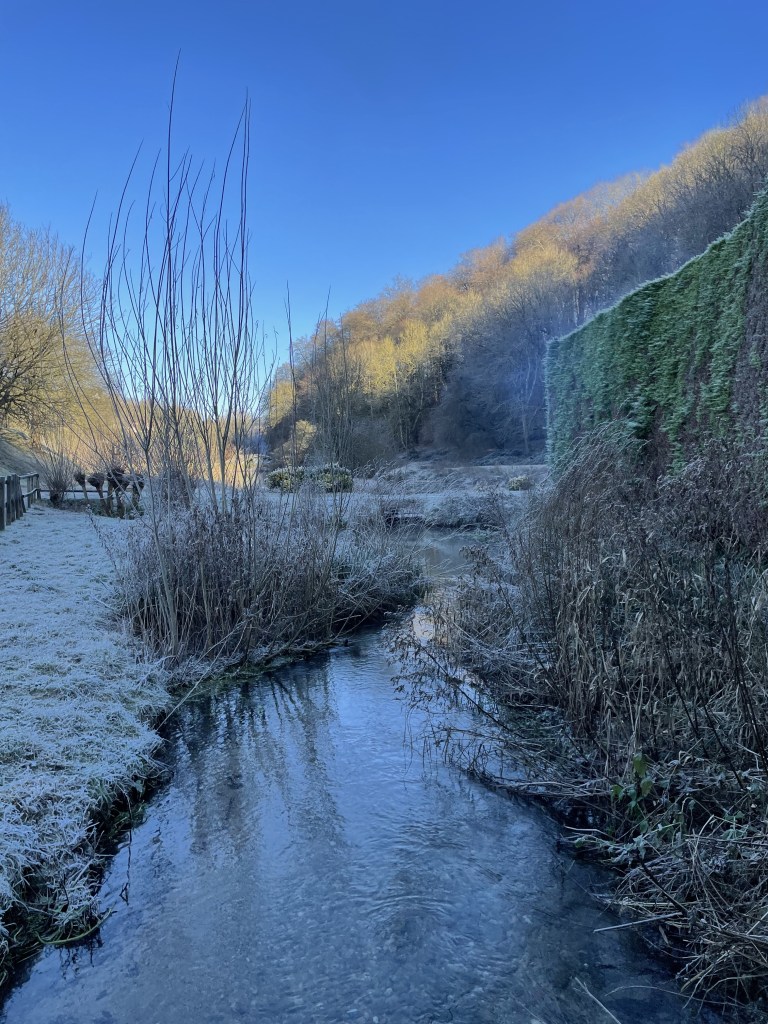
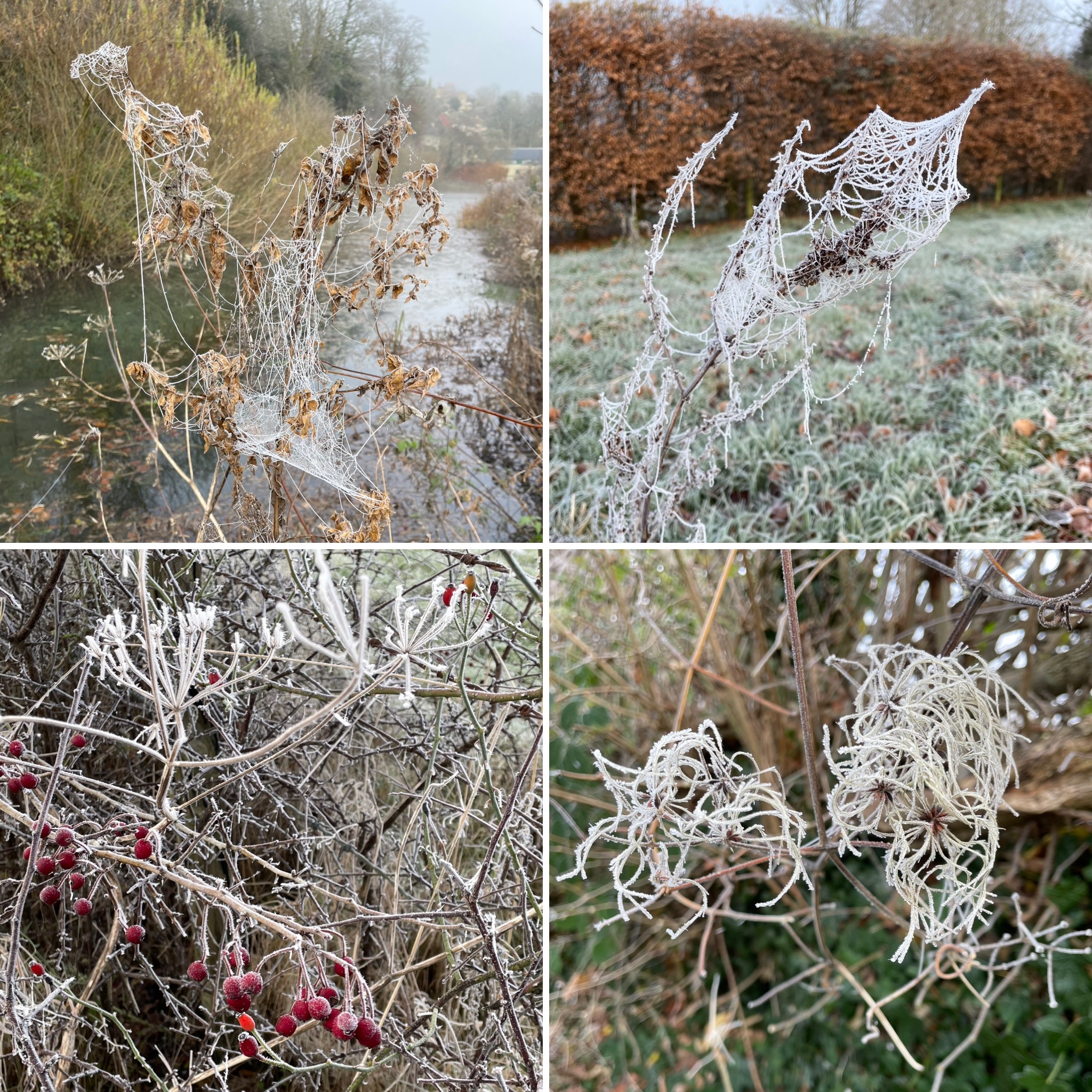
Chilly Early Starts

Our First Grandchild (FG) doesn’t seem to feel the cold anywhere near so much!  He is thriving up in Edinburgh.  We visited Edinburgh recently to celebrate his second birthday and his parents’ first wedding anniversary.  They have a lovely flat and, now there is a wood-burner in the lounge, a very cosy spot for the evenings.  FG can now lark about before bedtime in his nightwear – or just his nappy – without me feeling chilly by proxy. 

We stayed in Edinburgh for longer than usual but hopefully avoided overburdening the working parents by staying a couple of nights in a hotel rather than with them.  FG seemed to enjoy having two more people to order about especially once his birthday brought more toys for us all to play with. 

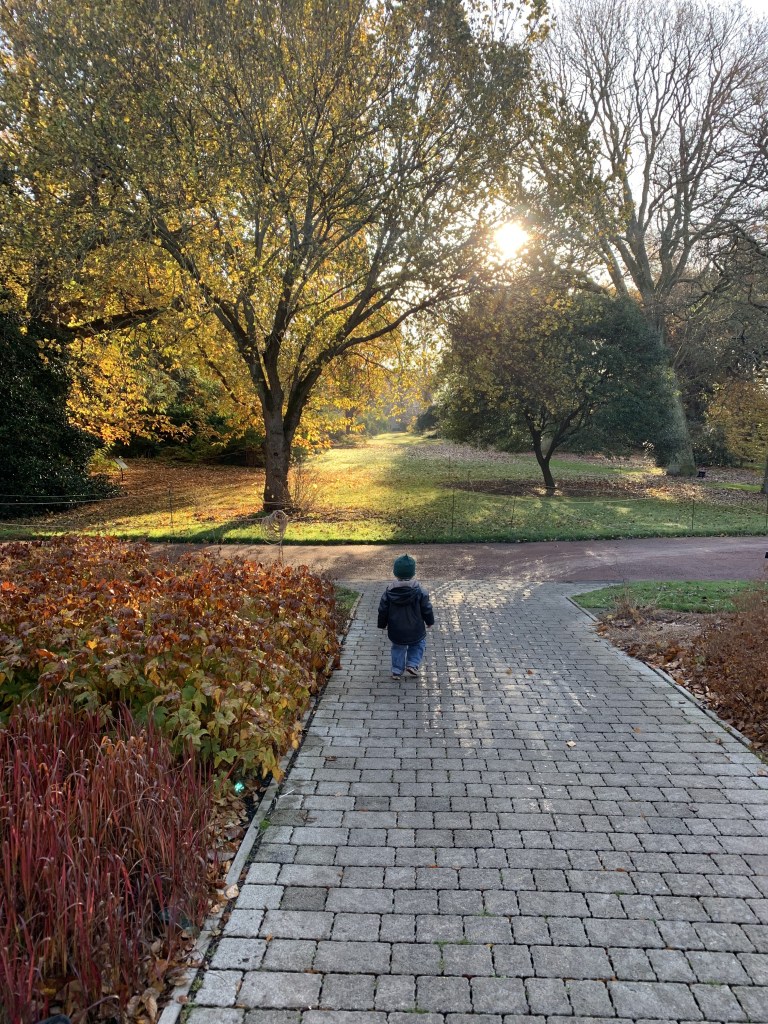
He also liked his usual trip with us to the Royal Botanic Garden, where we collected different colours and sizes of leaf.  It’s a wonderful, free resource regardless of the time of year.

Edinburgh’s Royal Botanic Gardens

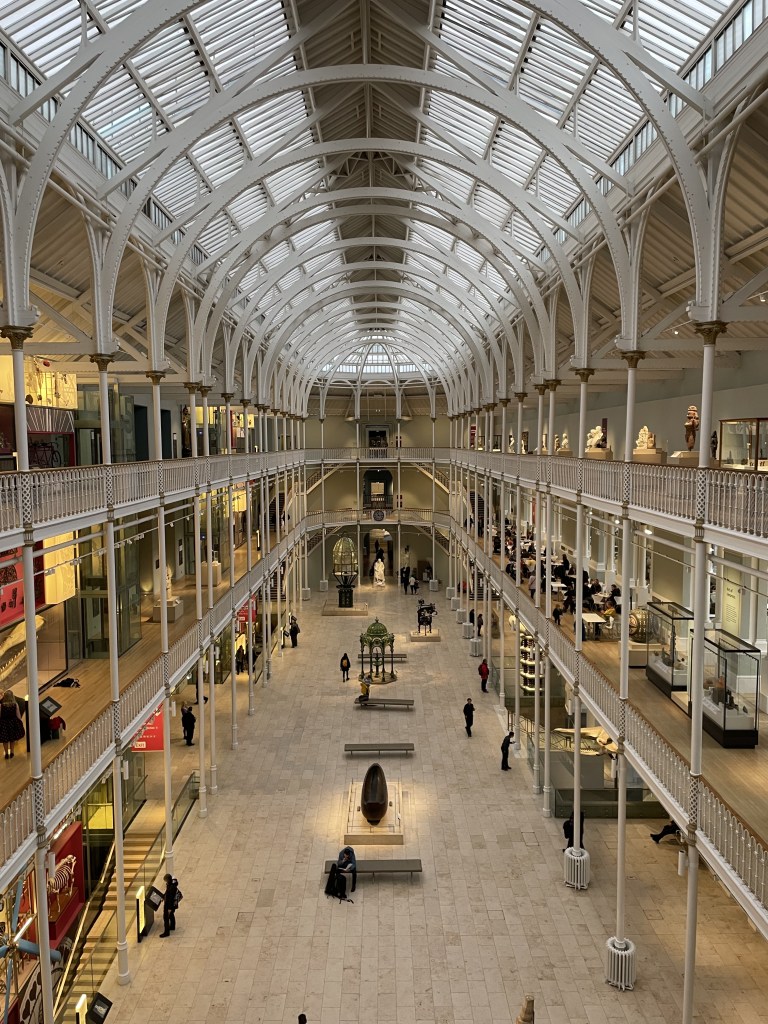
On the actual day of his birthday, we all joined him on an extended visit to the National Museum of Scotland where he joyfully rushed from exhibit to exhibit.  It’s a great place for kids.

The National Museum Of Scotland

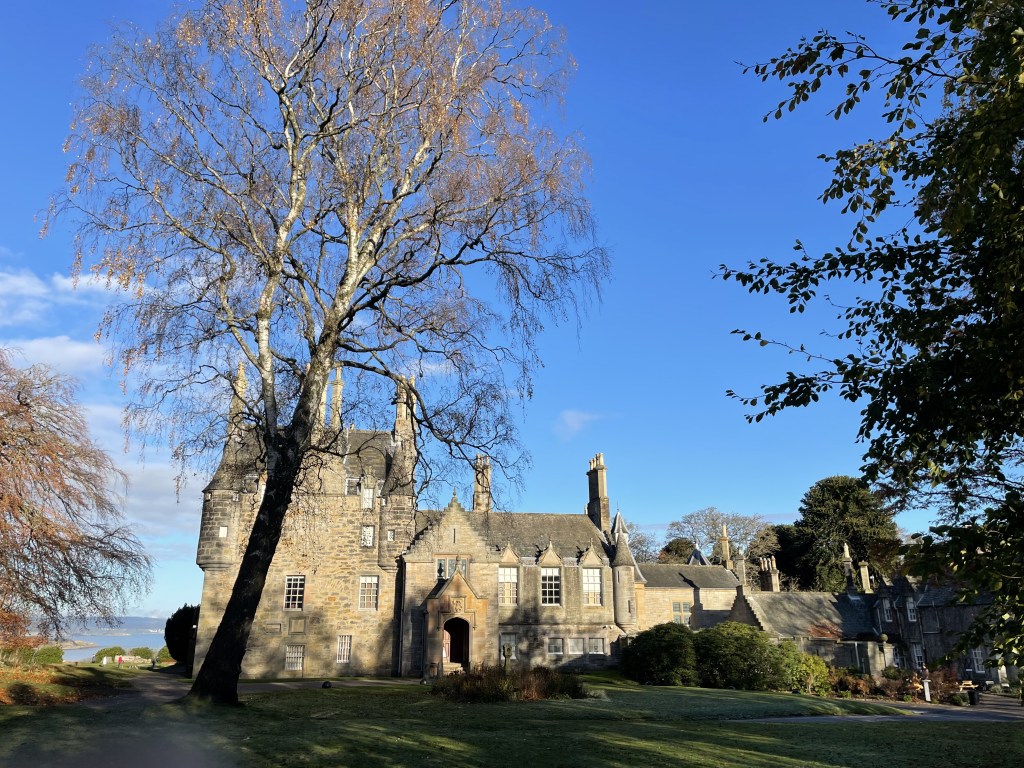
We had other lovely family outings in brilliant sunshine to Saughton Park, which had an interesting history and a goldfish pond which fascinated FG, and to Lauriston Castle gardens with its great views across the Firth of Forth.  Much to Jane’s satisfaction, each visit involved a café stop.  This is something that, when we are alone together, she finds hard to persuade me to indulge in.  With FG, it’s another little opportunity to watch him develop.

Lauriston Castle With The Firth Of Forth Beyond

It was convenient that we had our car, could get around easily with everyone, and that ES and his partner had some time off work so they could enjoy their anniversary and birthday fully.

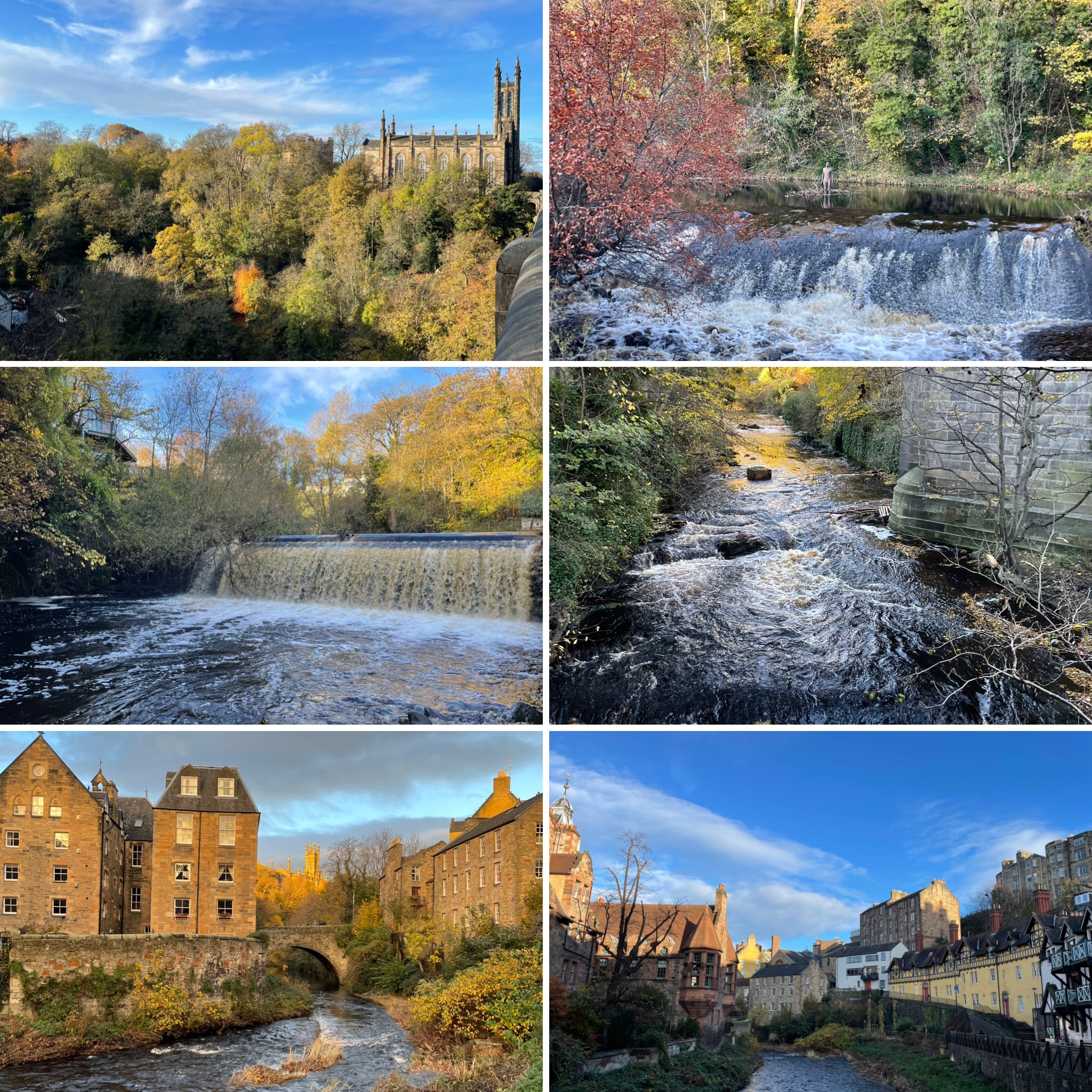
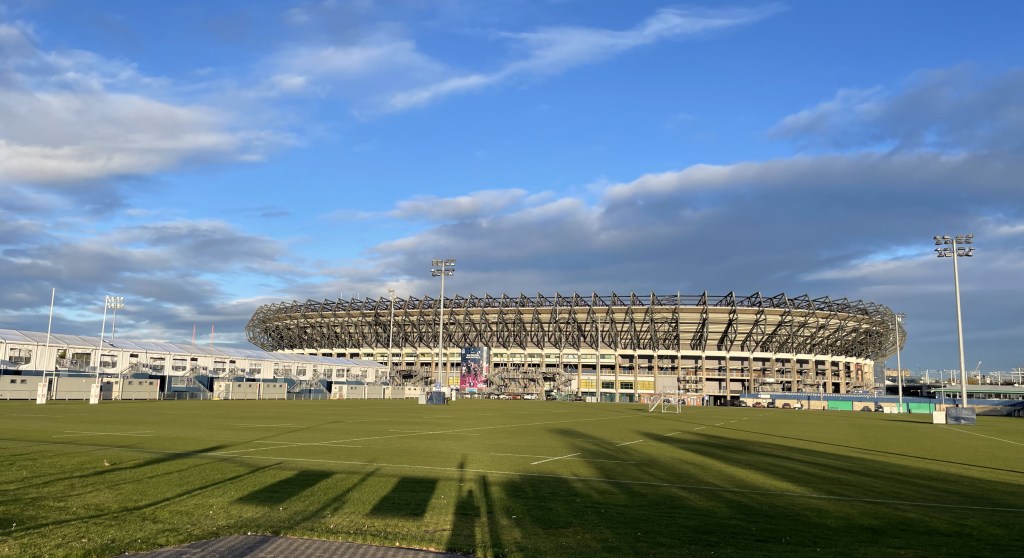
Jane and I also went off on our own for perusal of Stockbridge’s shops (Jane) and walks by the Water of Leith (me).  The Water of Leith was gushing more than usual following the recent storms which made the riverside walk somehow even more pleasurable than usual, especially as the sun was shining.

We also managed to slide off for an hour in Spry, our favourite wine bar, and for a set of very tasty, innovative small lunch plates at Noto where Eldest Son (ES) and his partner had celebrated their anniversary a couple of nights before.

My Walk Along The Water Of Leith Led Me To Murrayfield

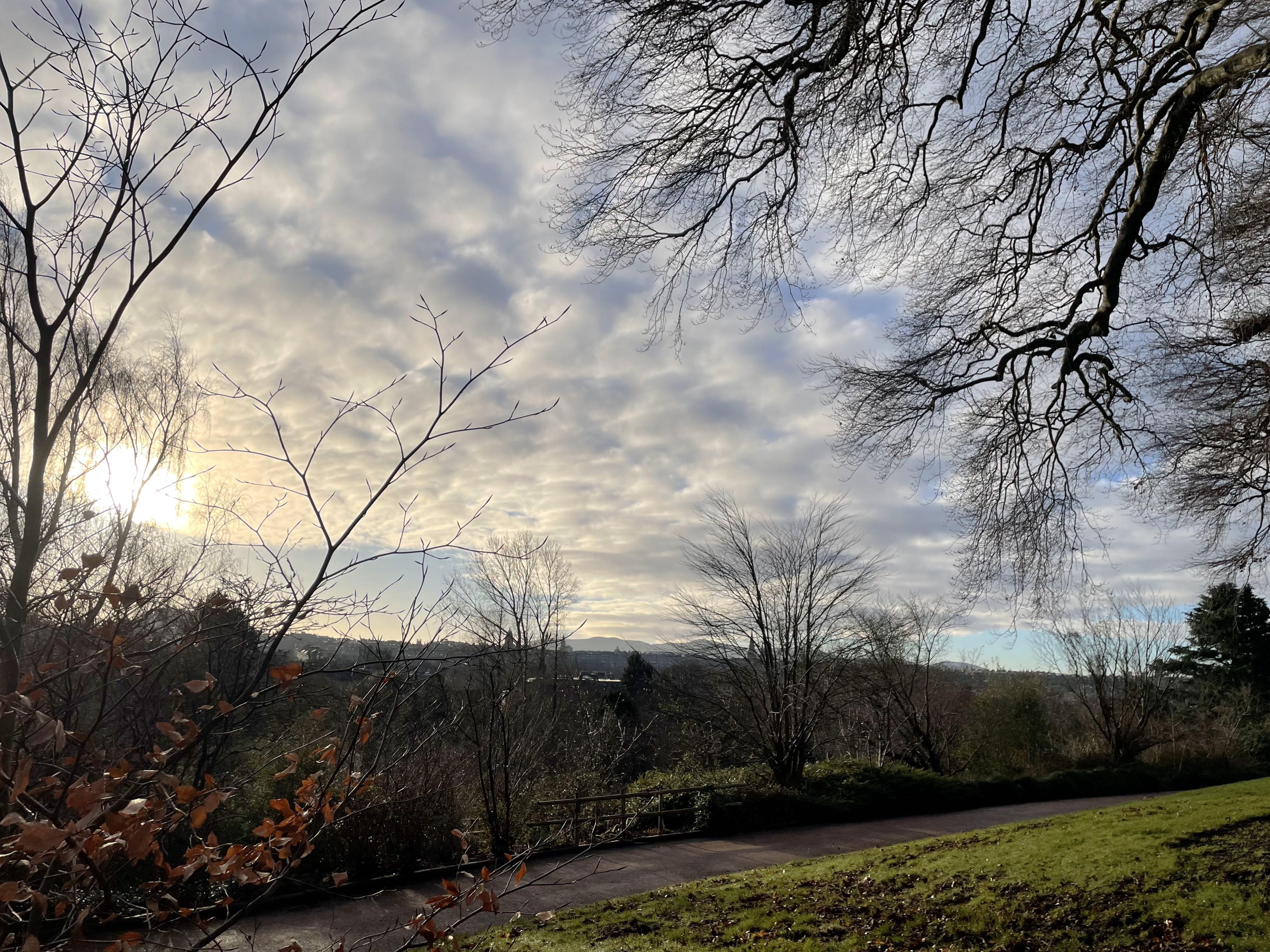
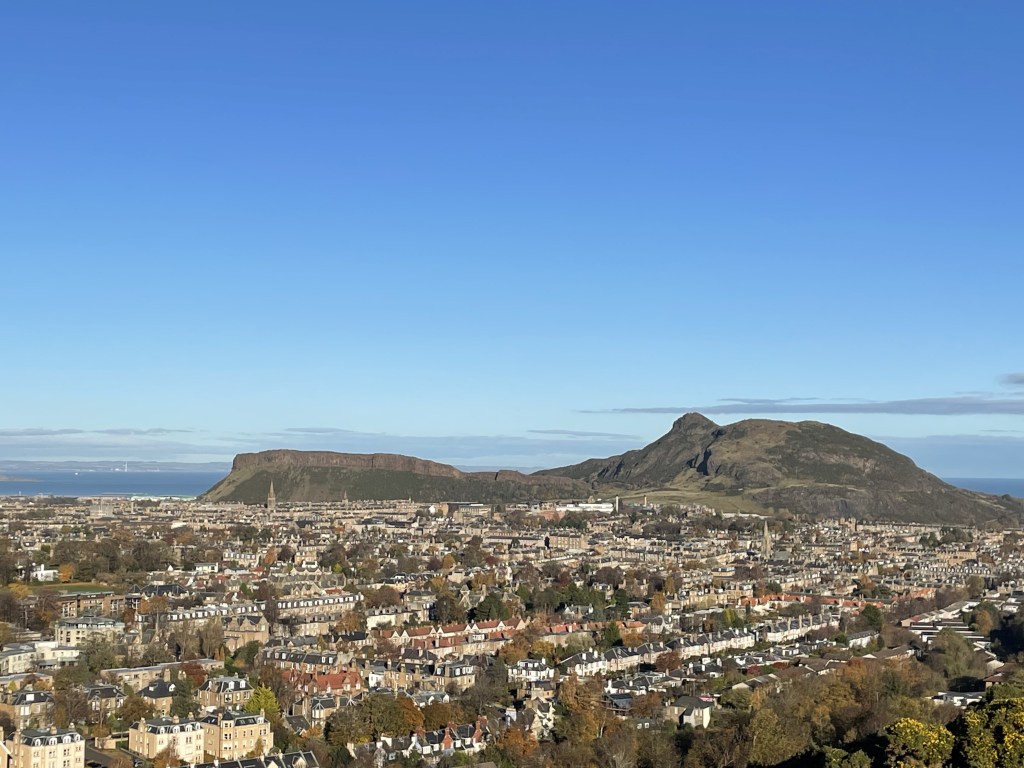
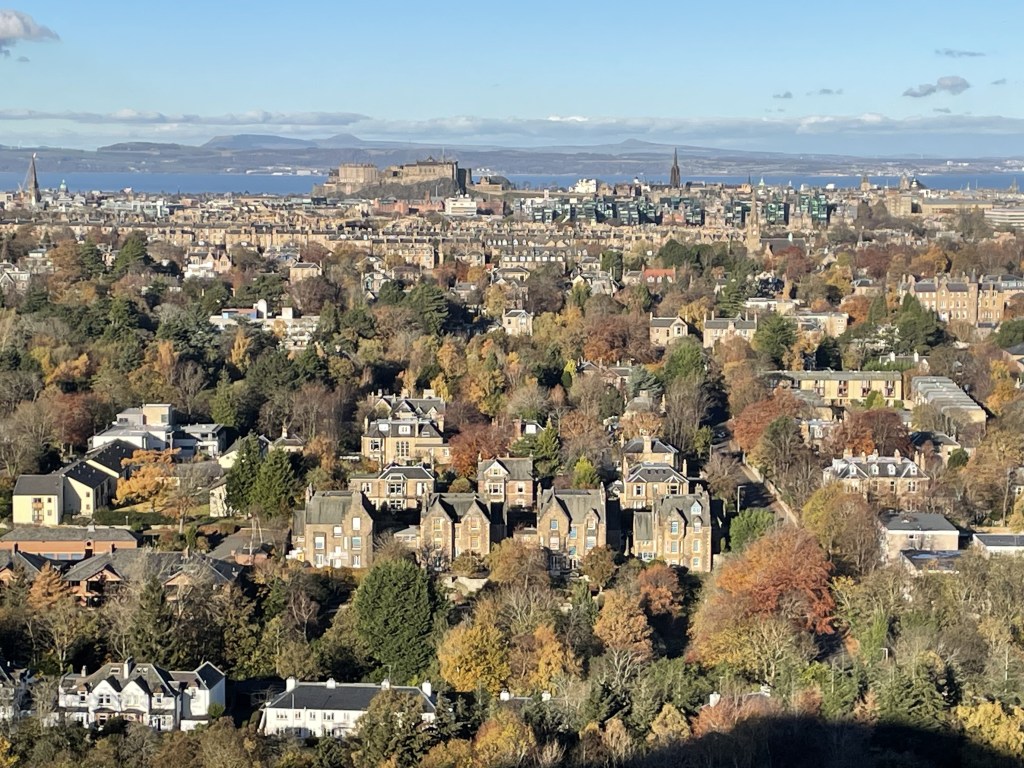
While FG and his parents went off to a birthday party of one of FG’s contemporaries in south Edinburgh, Jane and I took advantage of more sunny weather to climb Blackford Hill.  This afforded great views north of Arthur’s Seat and the city and I had a bit of an internal psychic glow knowing that this was where ES had proposed marriage.  

Views North From Blackford Hill

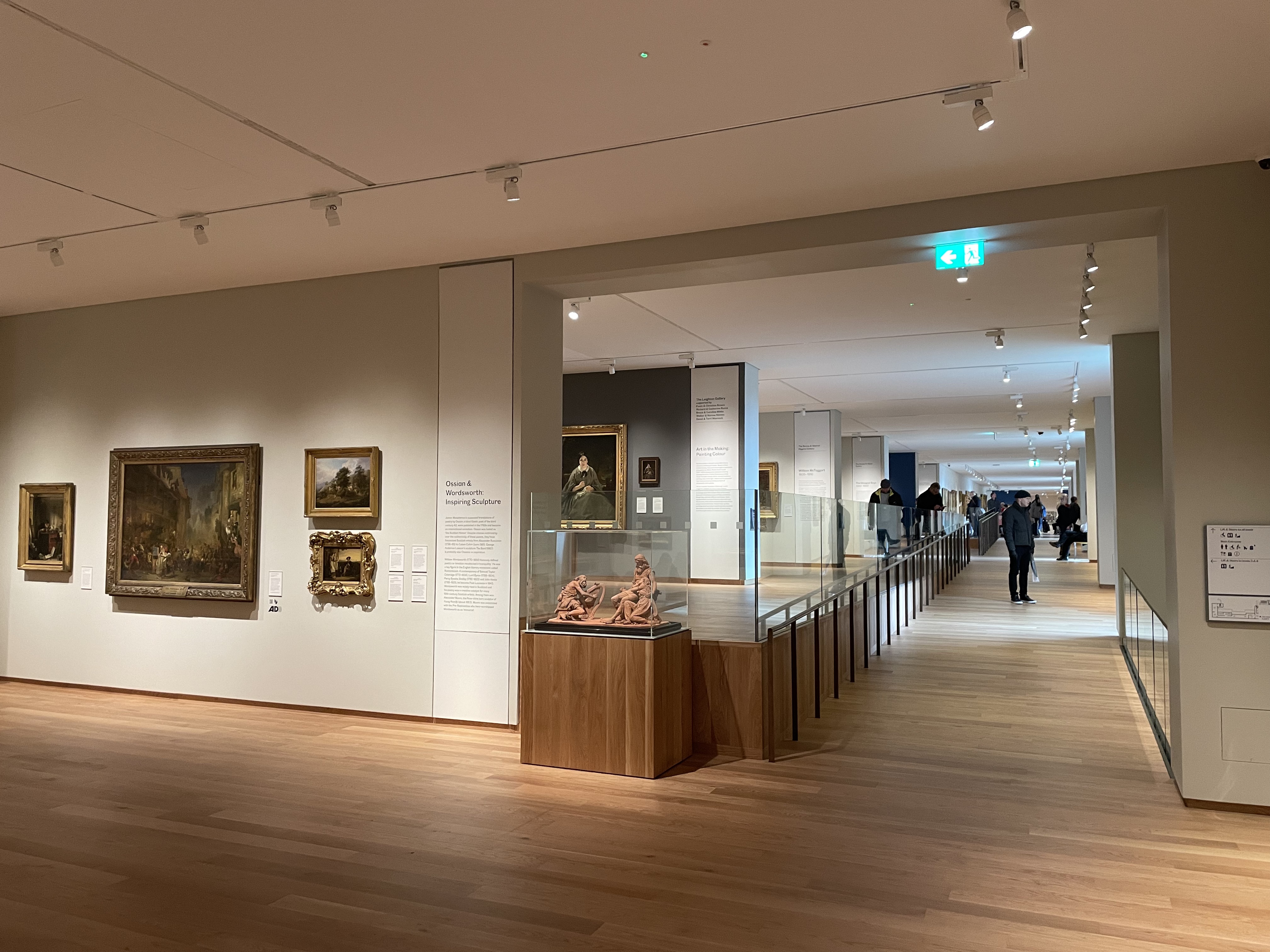
In between the anniversary and birthday festivities, and as the weather deteriorated, Jane and I visited the newly opened half of the National Gallery of Scotland.  This great new space doubles the size of the gallery and has some excellent works including many by the Glasgow Boys and the less renowned Glasgow Girls.

The New Galleries At The Scottish National Gallery

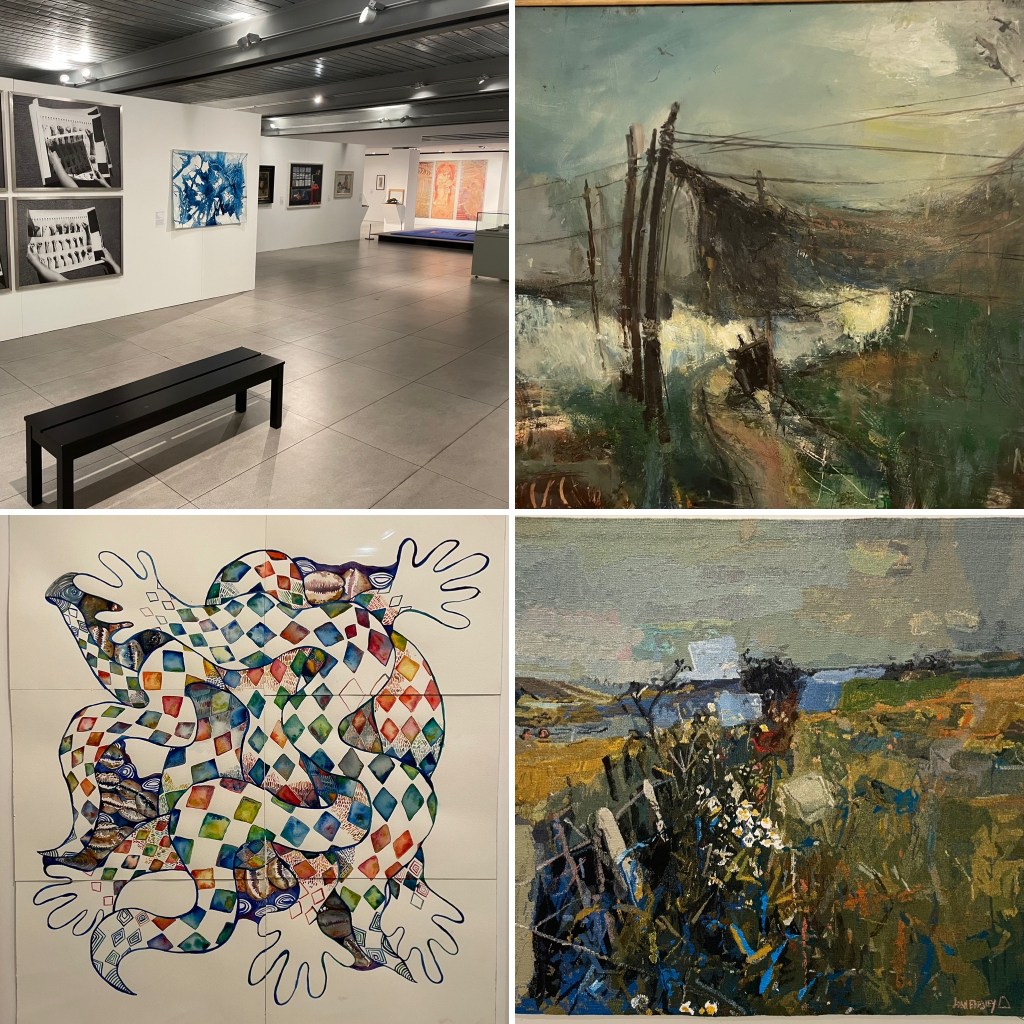
In a slight overdoing of cultural experience for one day, we also visited Dovecot Studios to see an exhibition called ‘Scottish Women Artists: Challenging 250 Years of Perception’.  This too had art by the Glasgow Girls.  I thought the exhibition was a bit uneven but particularly liked the works by Joan Eardley and a few others. 

Dovecote Studios: Scottish Women Artists (Including Joan Eardley And Alberta Whittle – bottom right and left respectively)

While we were in Edinburgh, ES’s partner cooked us lovely meals and we had great toast-laden breakfasts (Archipelago Bakery sells outstanding bread) plus a couple of substantial delivery meals from local food outlets.  Fortunately, this visit, we met ES’s partner’s parents again and we all tucked into an Indian spread while sharing FG-stories.  

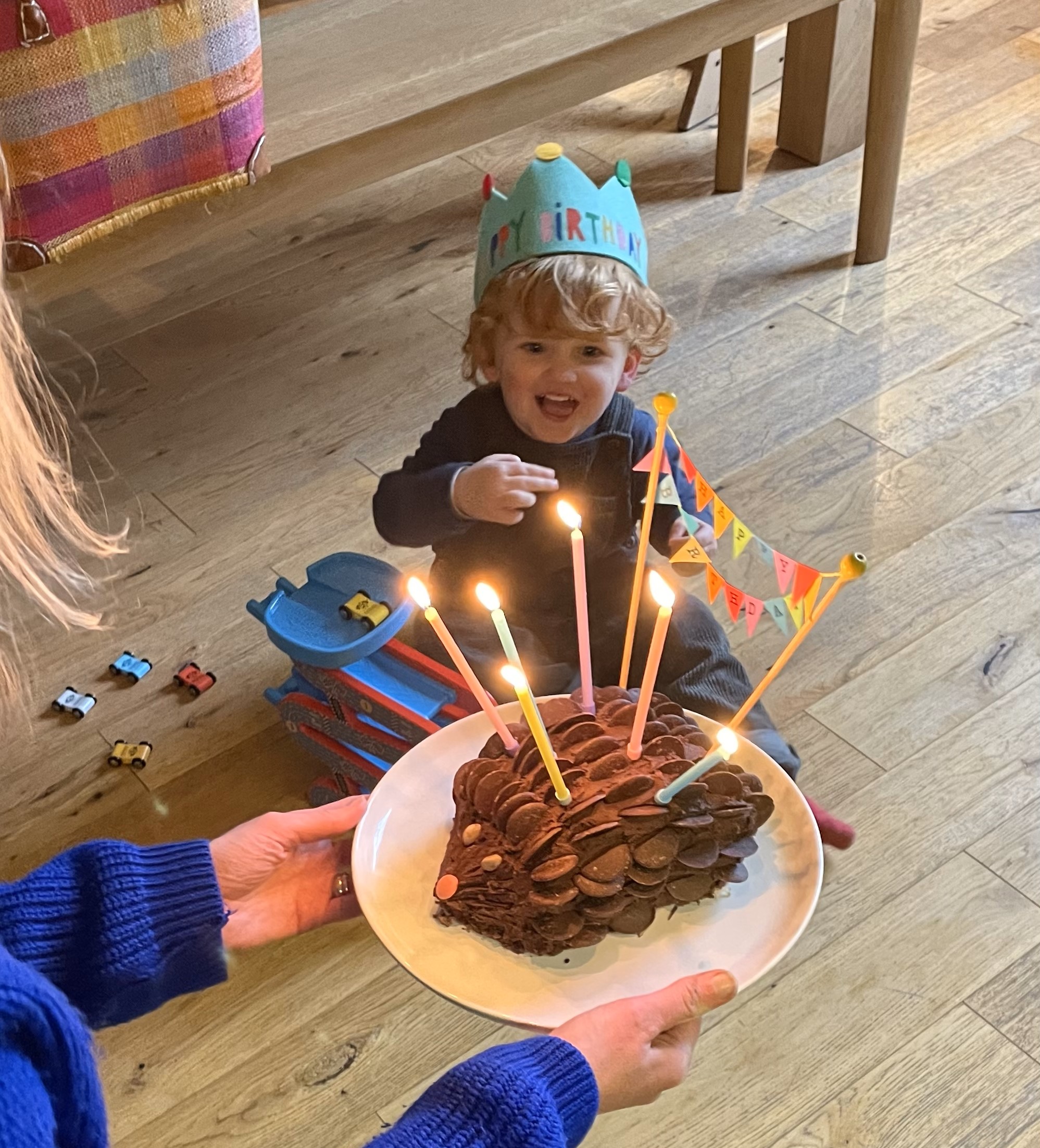
FG’s birthday cake was a delightful mum-made ‘hedgehog cake’ with chocolate buttons for spines (he loved the candle blowing out process and the chocolate).  Later, his birthday dinner was a shared set of delivered pizzas.  Meals delivered to the door are rare treats for me; we don’t have them at home since the choice is limited and the distances feel too great.  I put on weight in Edinburgh but it was well worth it.

Birthday Joy

It’s a long way to Edinburgh and back in our car (though we again had no real problems with charging it up as we travelled).  But we love Edinburgh.  Jane and I know that had ES not met someone from there who wanted to settle in the city, we would not have had such an opportunity to get to know Edinburgh so well.  There is so much more to see there and we look forward to another trip for ES and his partners’ birthdays early next year.

Last Day In Ghent

On the morning of our second and last full day in Ghent, Jane and I set off north again to the Museum of Industry.  The sun was already shining again, the temperature was pleasant and we seemed to be finding, together, a good pace and combination of visiting the sights of Ghent and of casually taking in its atmosphere.

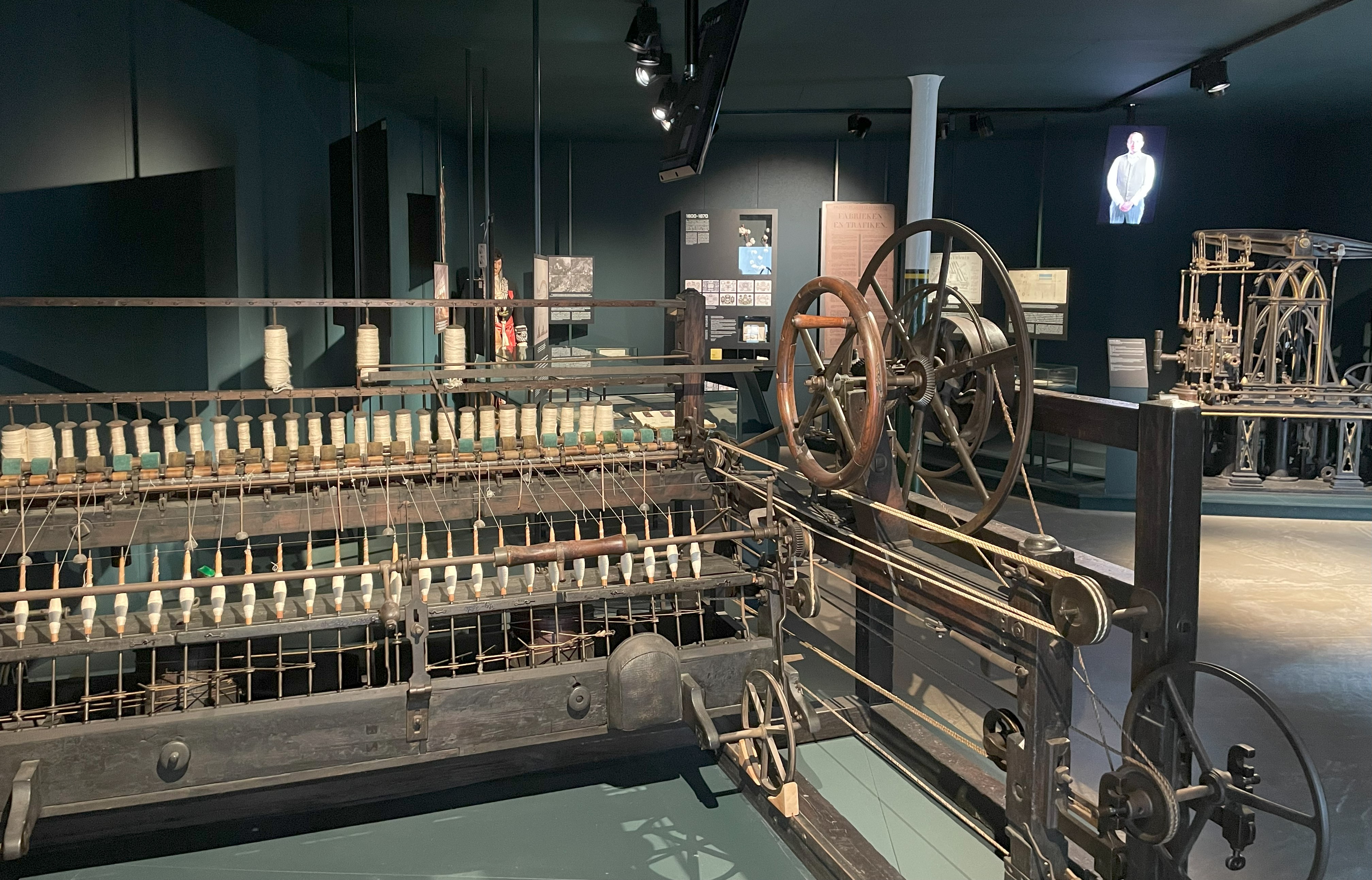
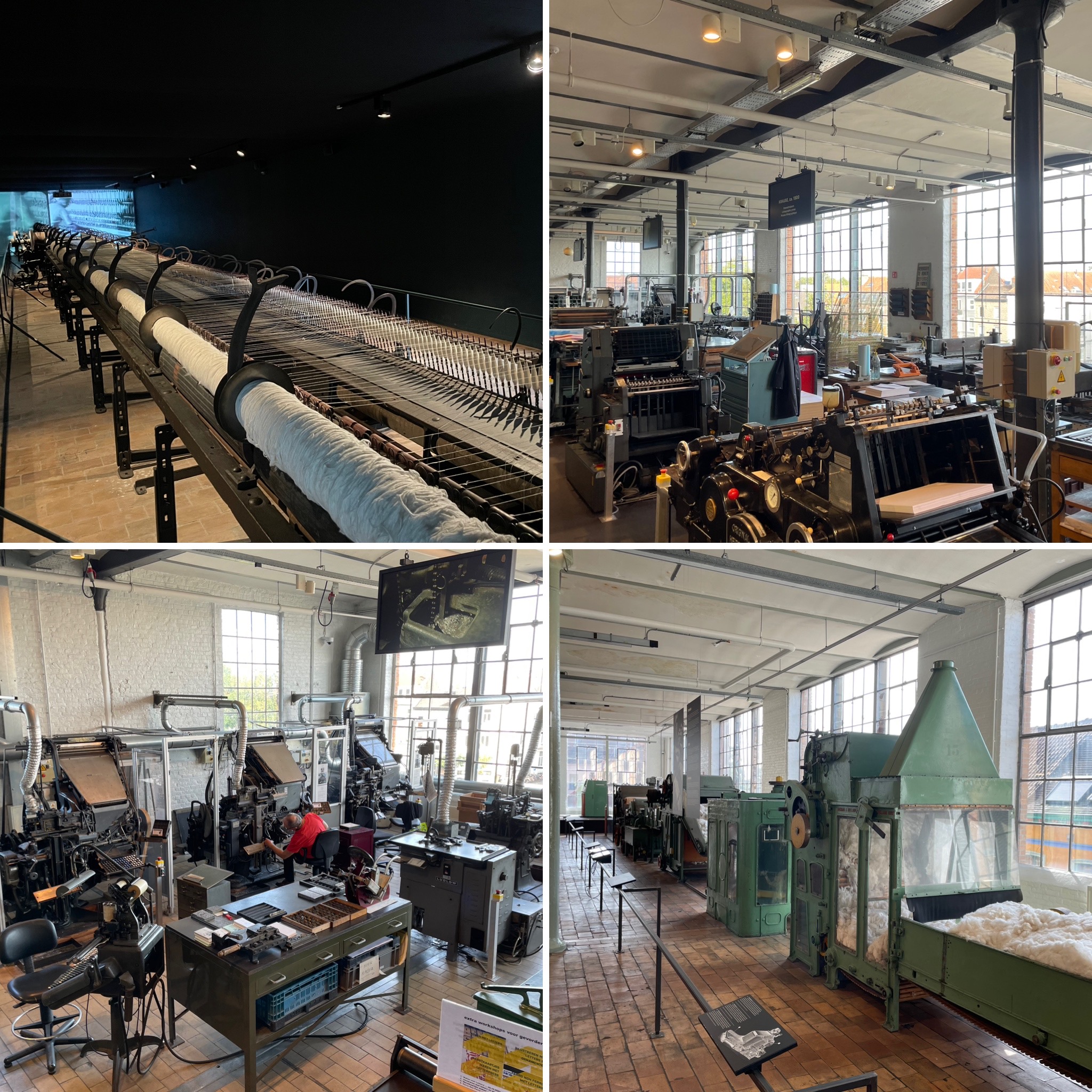
Gent is a significant industrial centre and, it seems, has been so for centuries.  The museum focused on Ghent’s history in textiles and printing. 

Museum of Industry, Ghent: An Original ‘Mule Jenny’ Brought to Belgium Illegally From The UK To Spawn The Textile Industry In Ghent

There were working machines and technical descriptions but what was even more interesting were the accounts of peoples lives as the city’s industry developed.  These were presented among relevant artifacts through short videos that I found very informative.  This was an excellent museum.

Museum of Industry, Ghent Including Some Very Large Looms And A Lot Of Old But Operational Printing Equipment

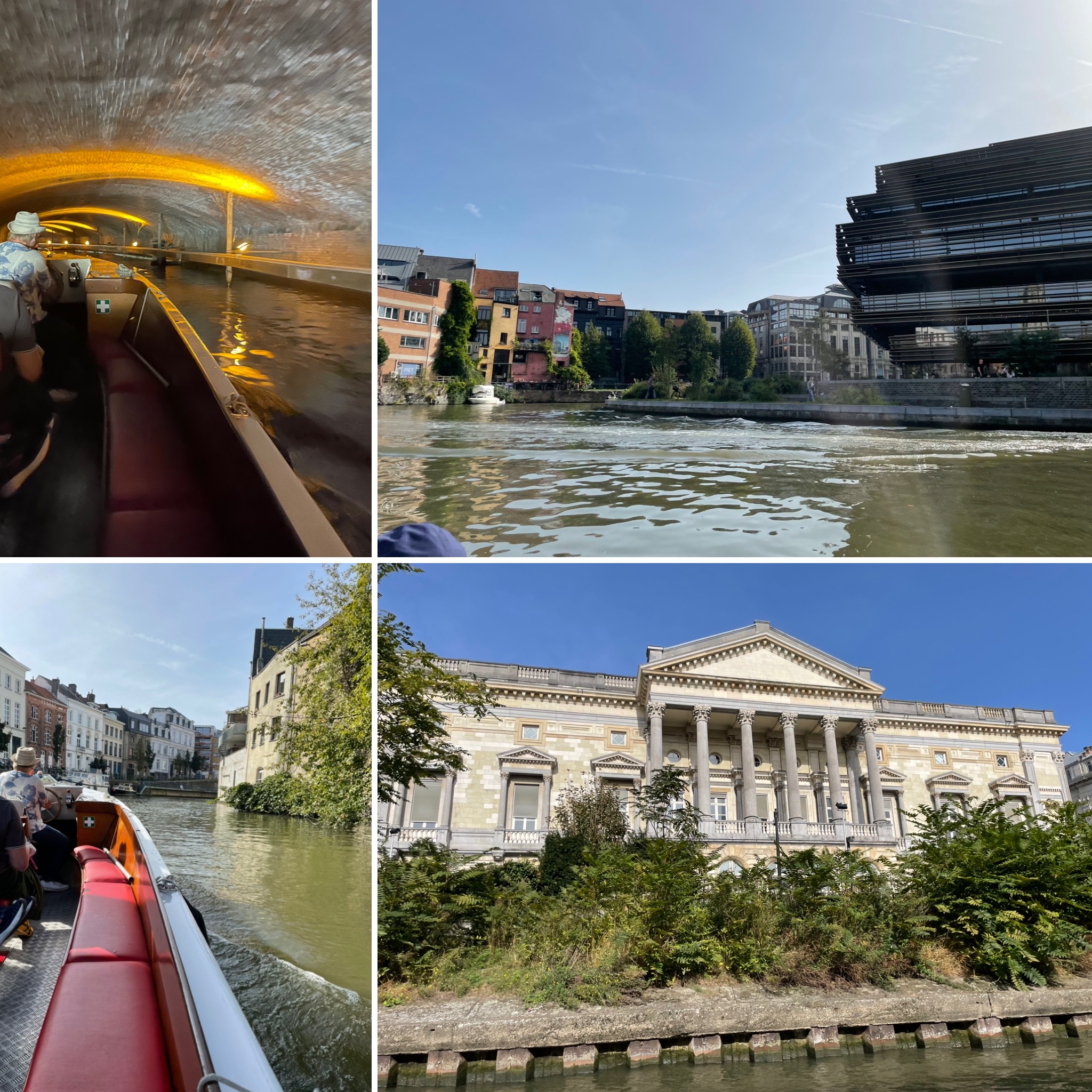
Following a quick stop for a revitalising coffee and off-the-beaten-track people watching at Peaberry, we used our trusty ‘CityCard’ to embark on a guided boat ride around some of Ghent’s waterways.  The sun helped make this a very pleasant and novel excursion.  The boat also took Jane towards another linen store that had been recommended at the Museum of Industry. 

Views From The Ghent Watertram

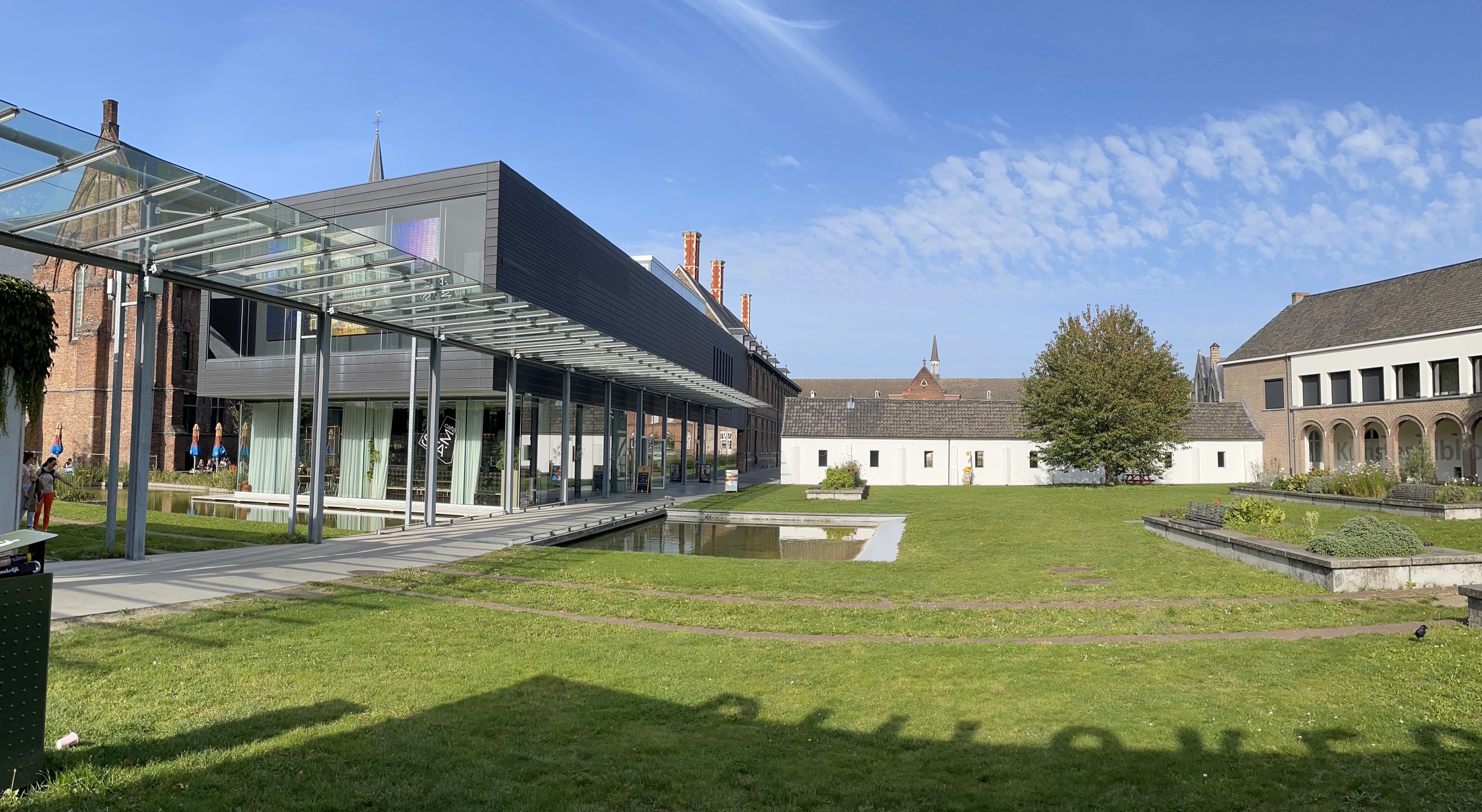
While she sought out the linen she wanted and then sat in another bar, I went off to visit the Bijloke campus

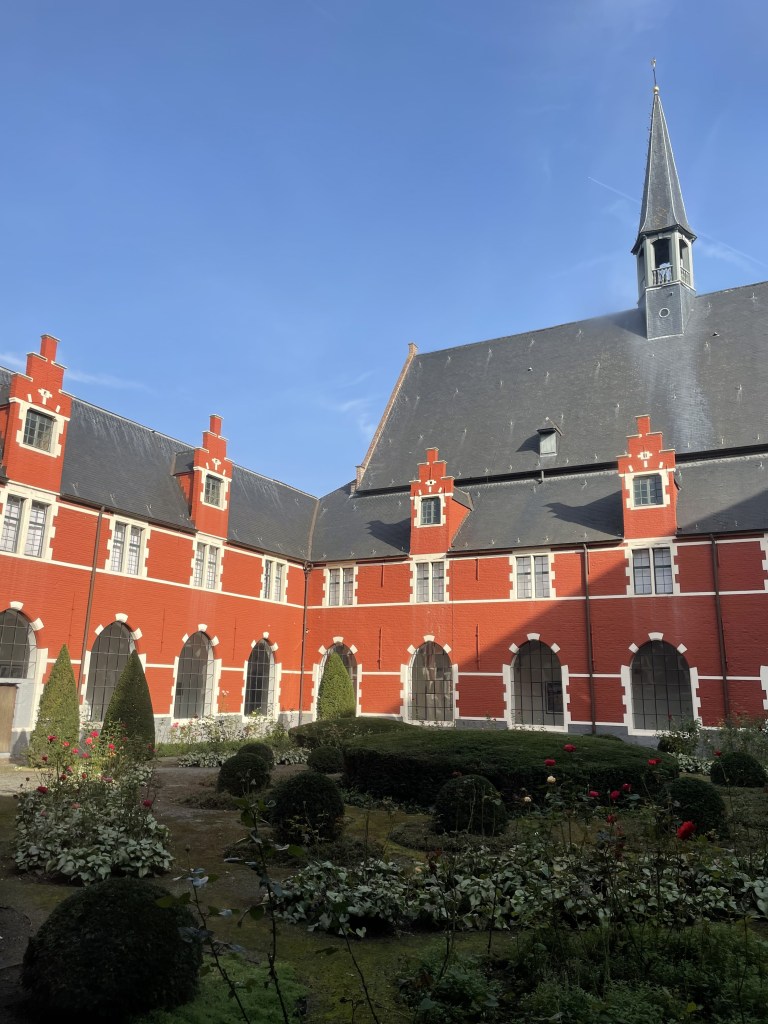
Bijloke Campus: A Mix Of Old And New

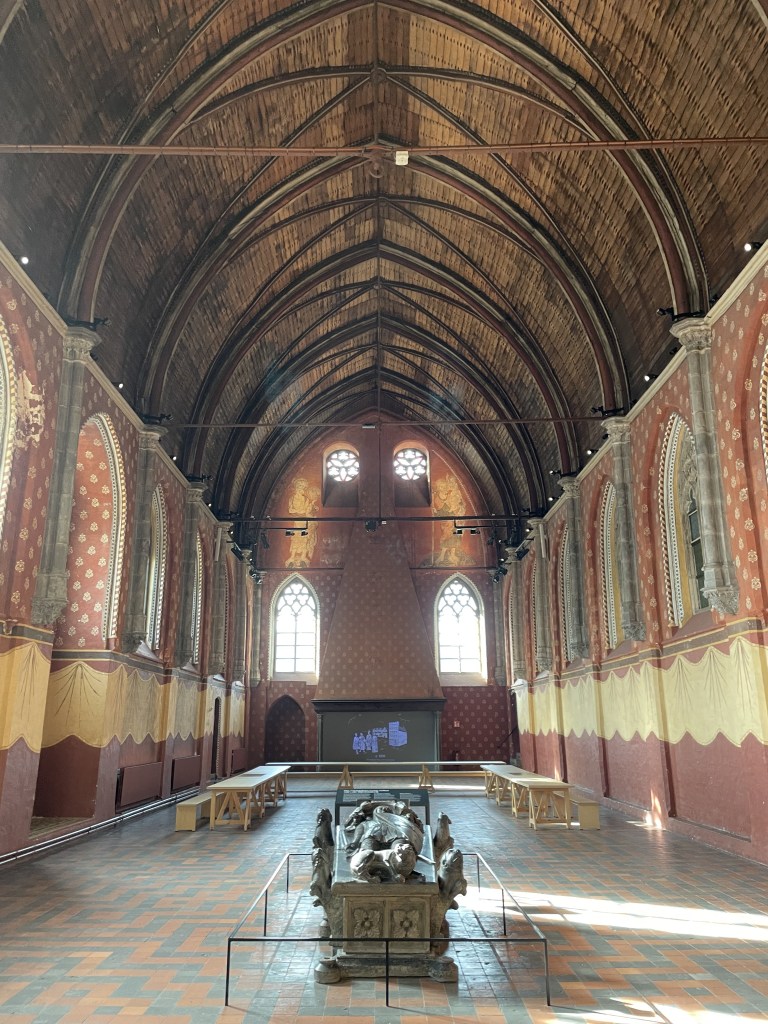
This campus is a monastery and hospital founded in the 13th century that is now a collection of buildings of various vintages that include the Ghent City Museum and a concert hall.  I spent longer in the City Museum than I had planned – I found it very interesting and its contents dovetailed nicely into what I had learnt in the Museum of Industry earlier in the day. 

Inside Ghent City Museum: The Monastery Refectory and Cloister

By the time I got back to Jane, I was ready for a beer and planning for the evening.  Guess what?  More beer and another burger!

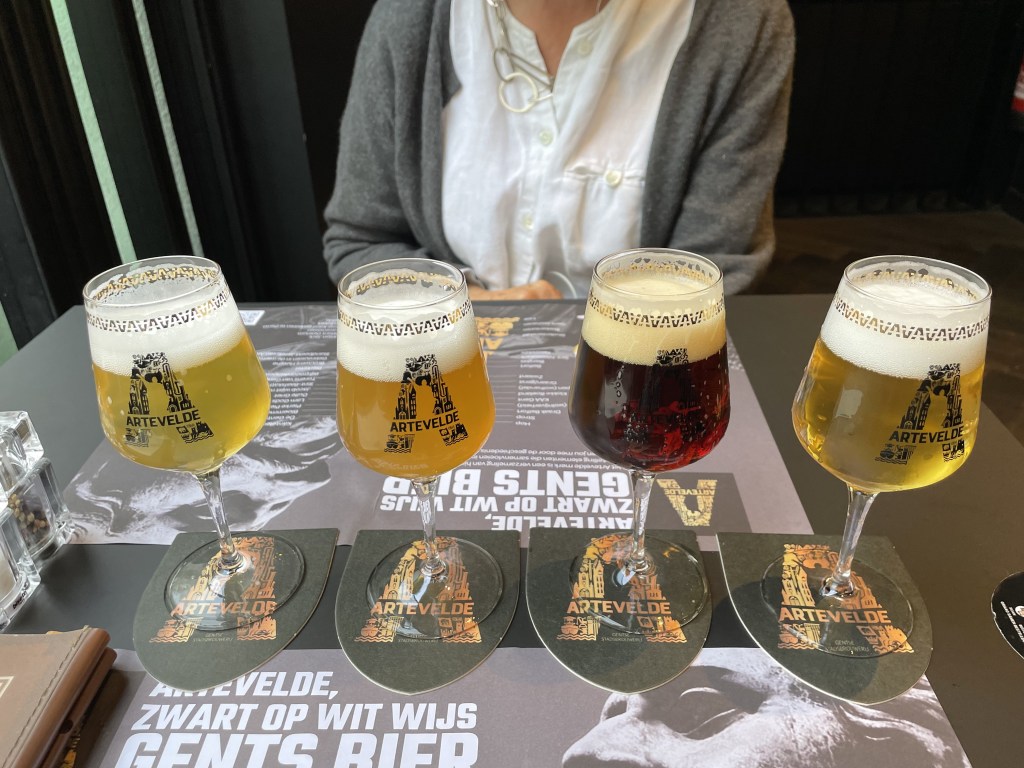
This time we ate at the Artevelde brewery and I cleared another item off my Belgian bucket list: drinking a sample tray of beers.  All of the beers was good and the accompanying burger, almost overwhelmed by chips, was one of the best we had while in Belgium.

Artevelde Brewery

We had a final beer in the rather luxurious bar in our hotel.  This time we got free beer and snacks courtesy of the fact that we had eschewed a laundry change during our stay – apparently a small encouragement to eco-practices pursued by hotel management.  That was a nice bonus to round off our stay.

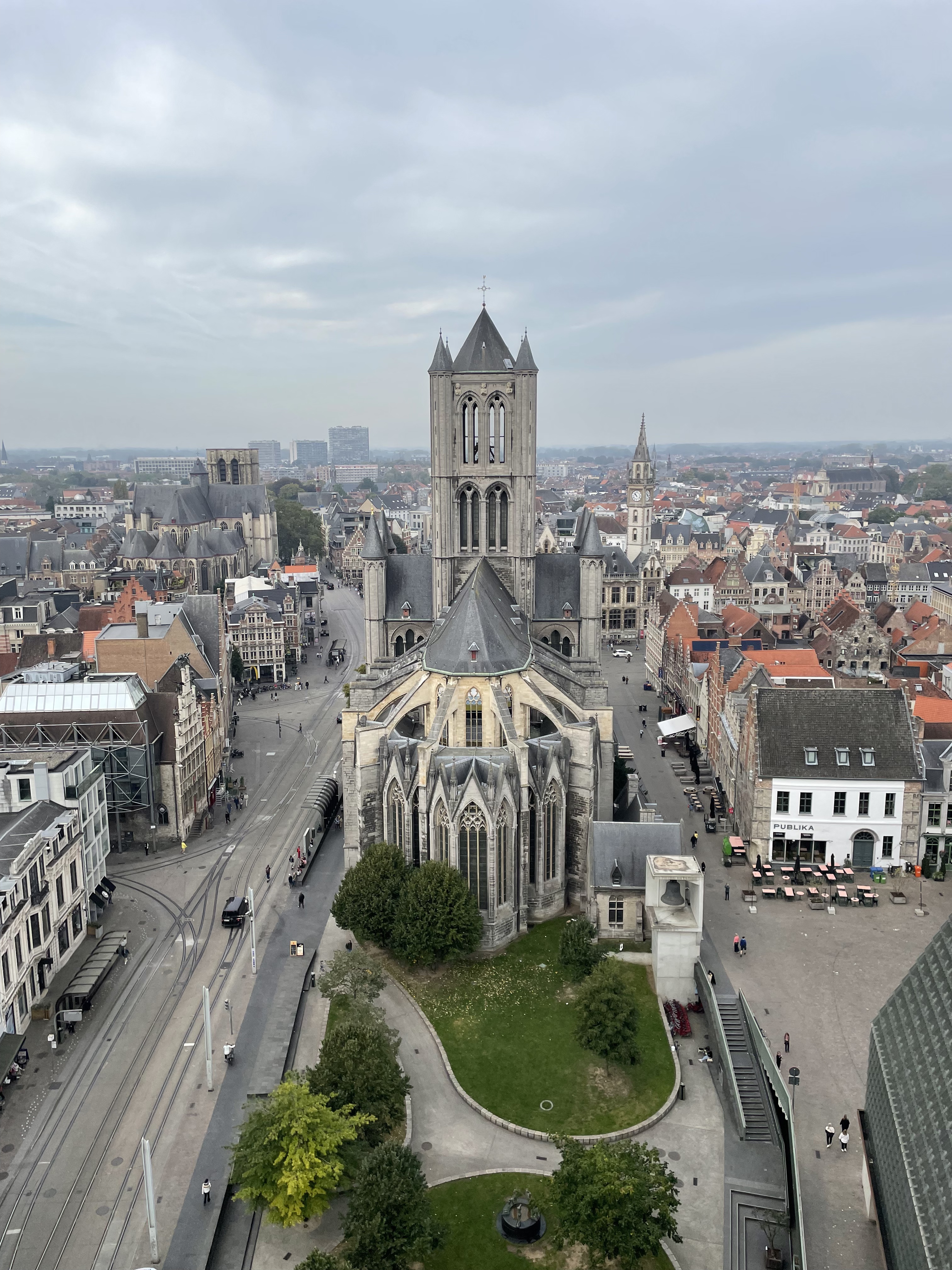
On our final morning, Jane did a bit more shopping while I took a farewell look at Ghent from the top of the Ghent Belfry (Belfort).  Once again, the presentation of information – once I had found the way in – was very good.  I was glad that I went early in the day though, since the stairwell was not built for crowds!

Ghent From The Belfry (Belfort)

Our journey back to Brussels and then London and then home was uneventful. There was plenty of time to contemplate a very good city-break holiday and how, after all these years of going on holiday together, Jane and I have both compromised to find, I think, a good balance between sight-seeing and chilling out in cafes and bars.  We must plan another.

More Sun in Ghent

Following our day in Bruges, we had two full days in Ghent.  As in Bruges, we spent quite a bit of time just walking the streets.  However, there were churches, museums and galleries we wanted to see and, to facilitate that, we bought a pair of Ghent ‘CityCards’.  Despite the significant up-front cost, these proved good value and reduced the hassle around ticket buying and queuing.  Also, they encouraged us to venture into a couple of places that we might not have bothered with if an entrance fee had been required.

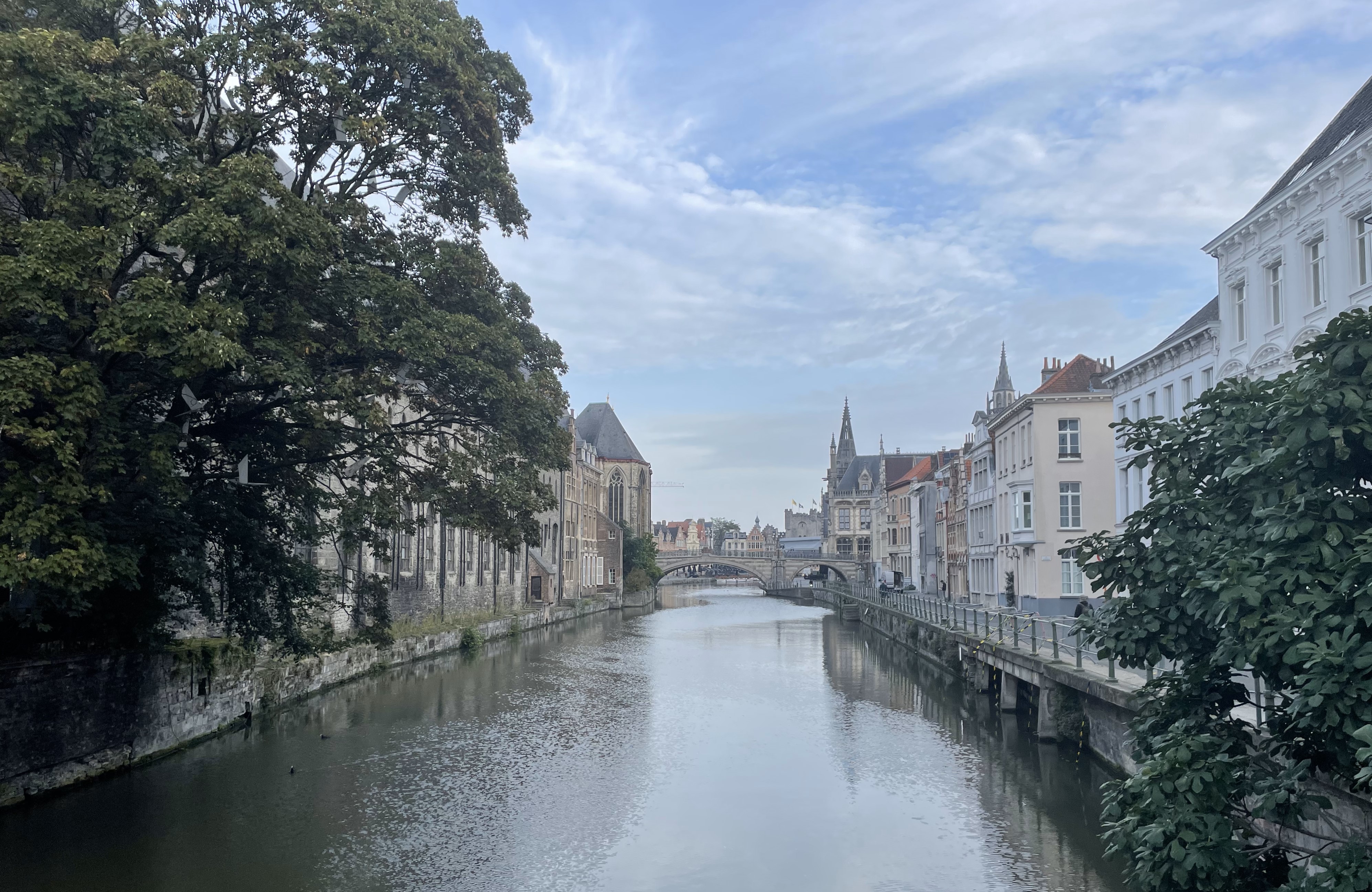
Ghent Waterways: (Quite) Early Morning

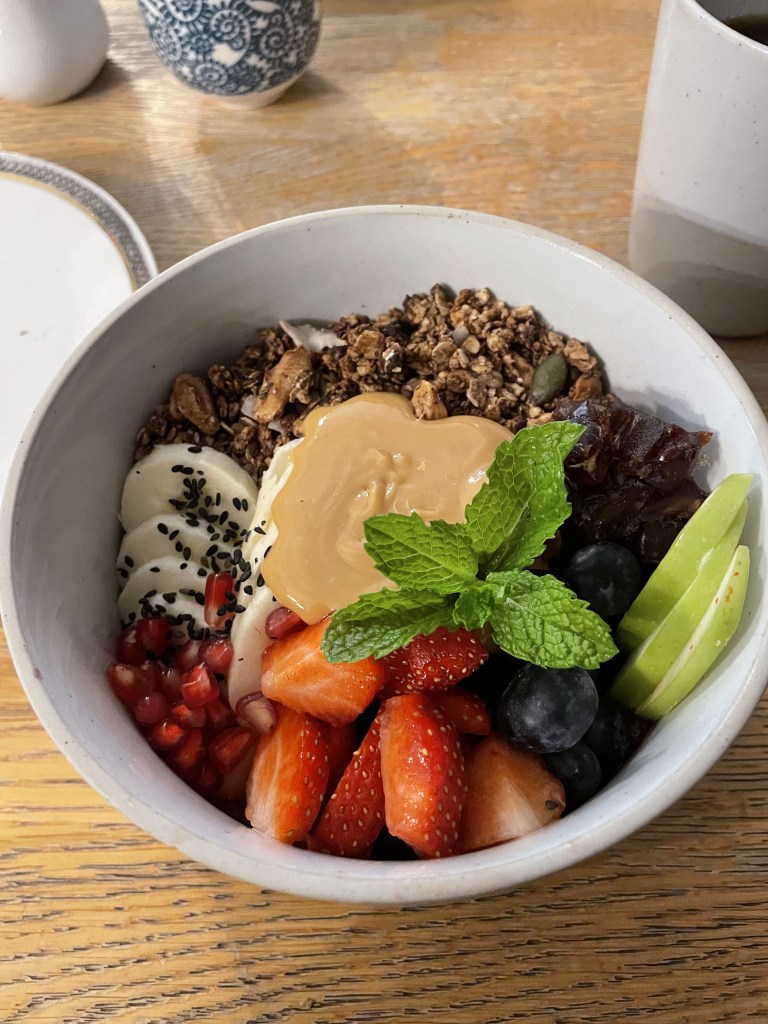
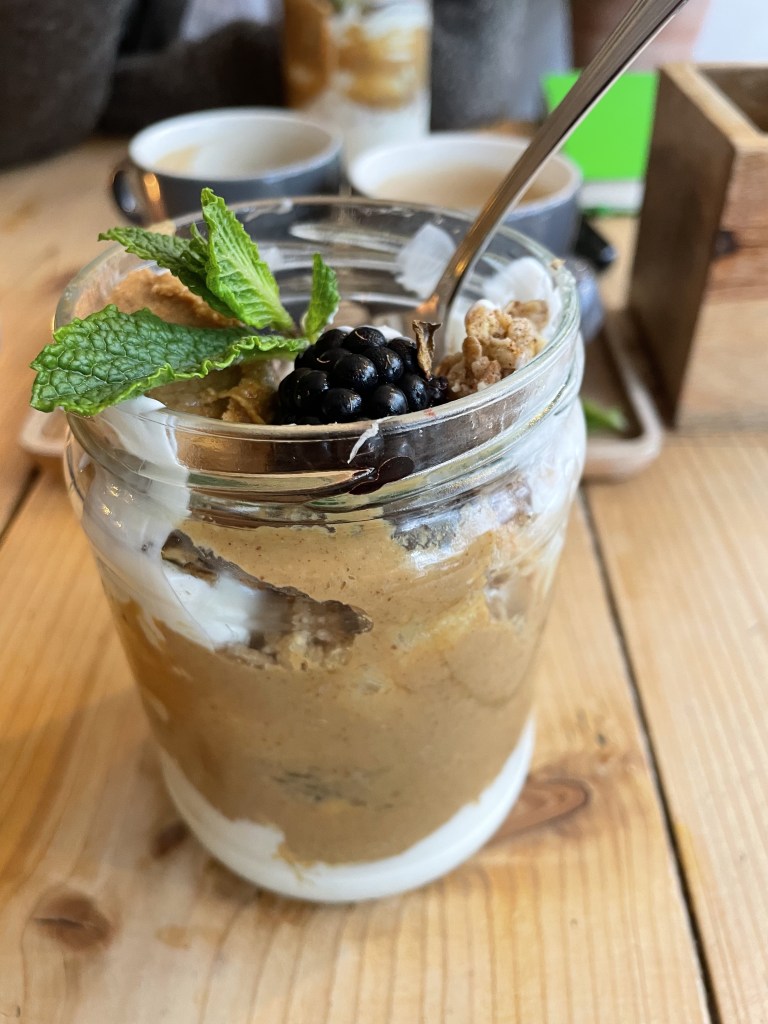
First though, we had to fortify ourselves with breakfast.  On our way to Bruges the previous day we had passed a café, STEK, that had looked promising and we made the first of what turned out to be two visits there.  The breakfast was excellent – rivalling the brunch we had had the previous day in Bruges – and again I was sold on the inclusion of peanut butter in my banana crumble.  I have been adding nut butter to my breakfasts at home ever since.

Lovely Belgian Breakfasts: Blackbird (Bruges) vs STEK (Ghent)

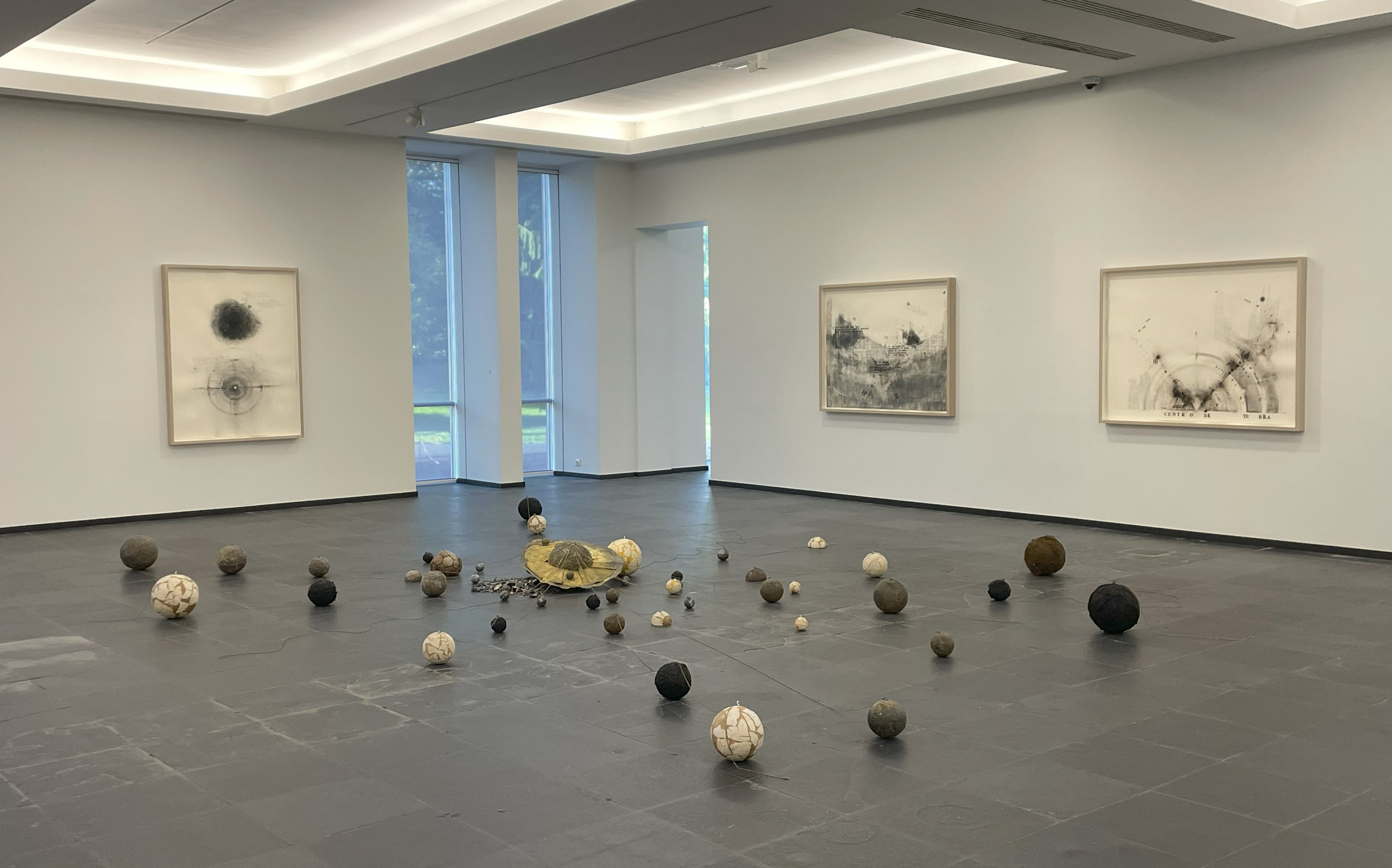
Our first gallery visit in Ghent was to the Municipal Museum of Contemporary Art Ghent (S.M.A.K.) to the south of the city.  This was only established in 1999 and, frankly, the collection betrayed that.  The gallery has some big rooms – all white as is usual for galleries of this type – but there wasn’t a huge amount on show.  I enjoyed the peace and quite of the place but we didn’t stay long.

In S.M.A.K.

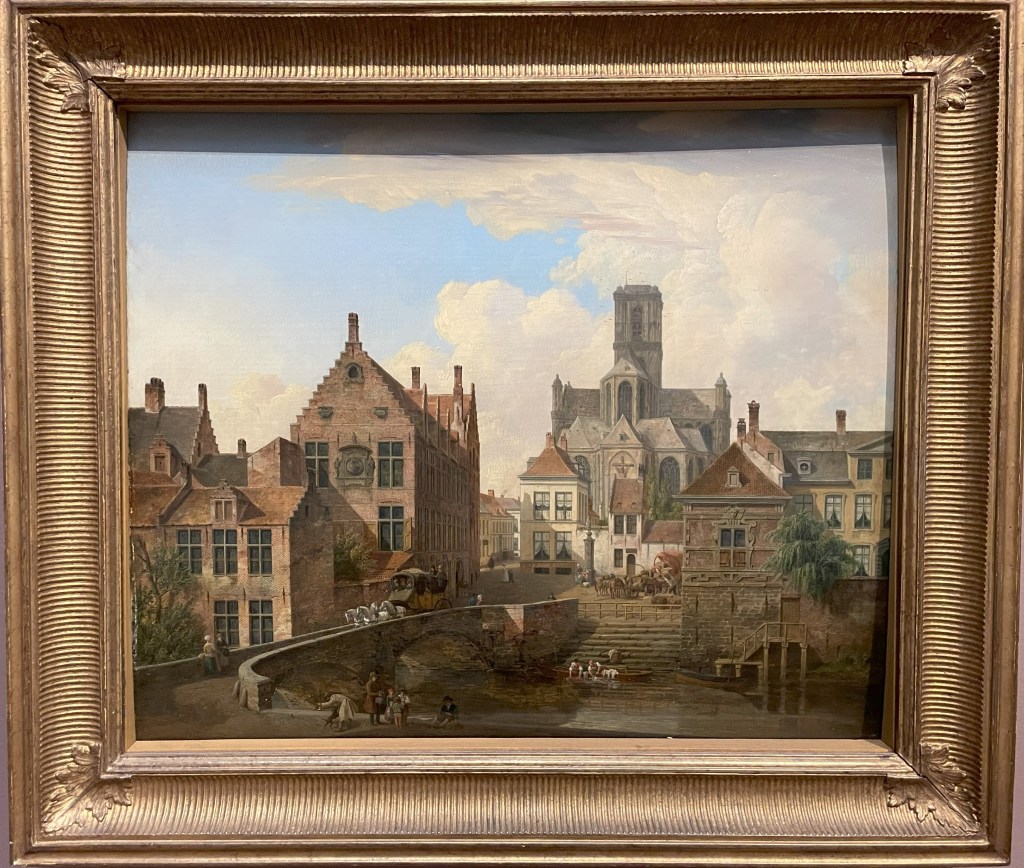
We strolled over the road to the Museum of Fine Arts Ghent (MSK).  This holds a vastly more comprehensive collection than S.M.A.K.  It’s collection represented art across several centuries, a solid coverage of Belgian art and a diverse set of artists from Hieronymus Bosch (who I always find interesting) to Rubens, Rodin and Magritte. 

St Bavos Cathedral – A Painting By Belgian, Pierre Francois de Noter at MSK

I was initially impressed by the incredibly well-preserved colours in the medieval religious works, then flagged a bit through the portrait rooms, before reviving as I moved into the galleries of more modern art.  The gallery has been renovated recently and it was very comfortable, quiet and well laid out according to chronology but also thematically.

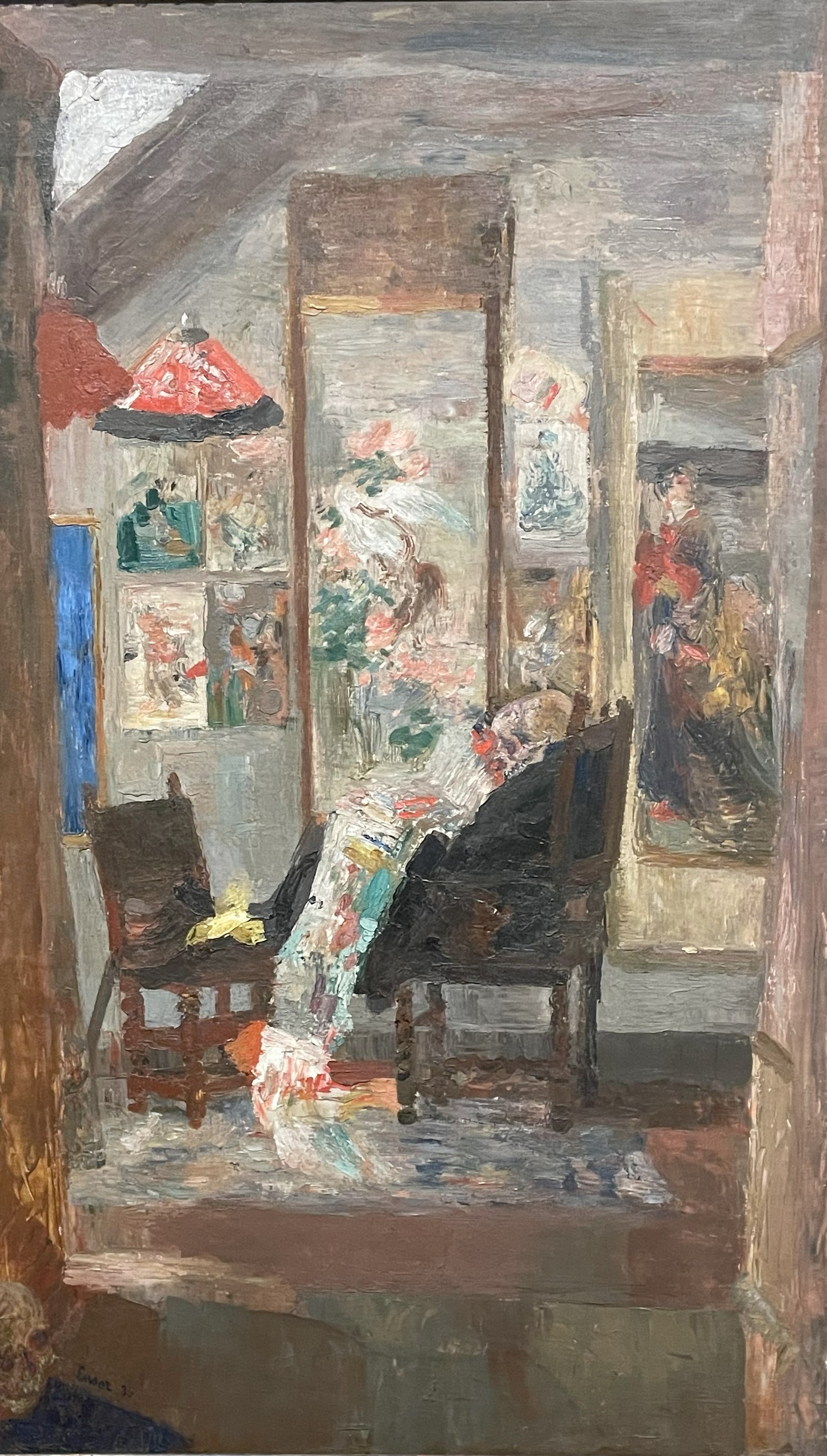
A More Modern Belgian Painting – ‘Skeleton Looking At Chinoiseries’ By James Ensor

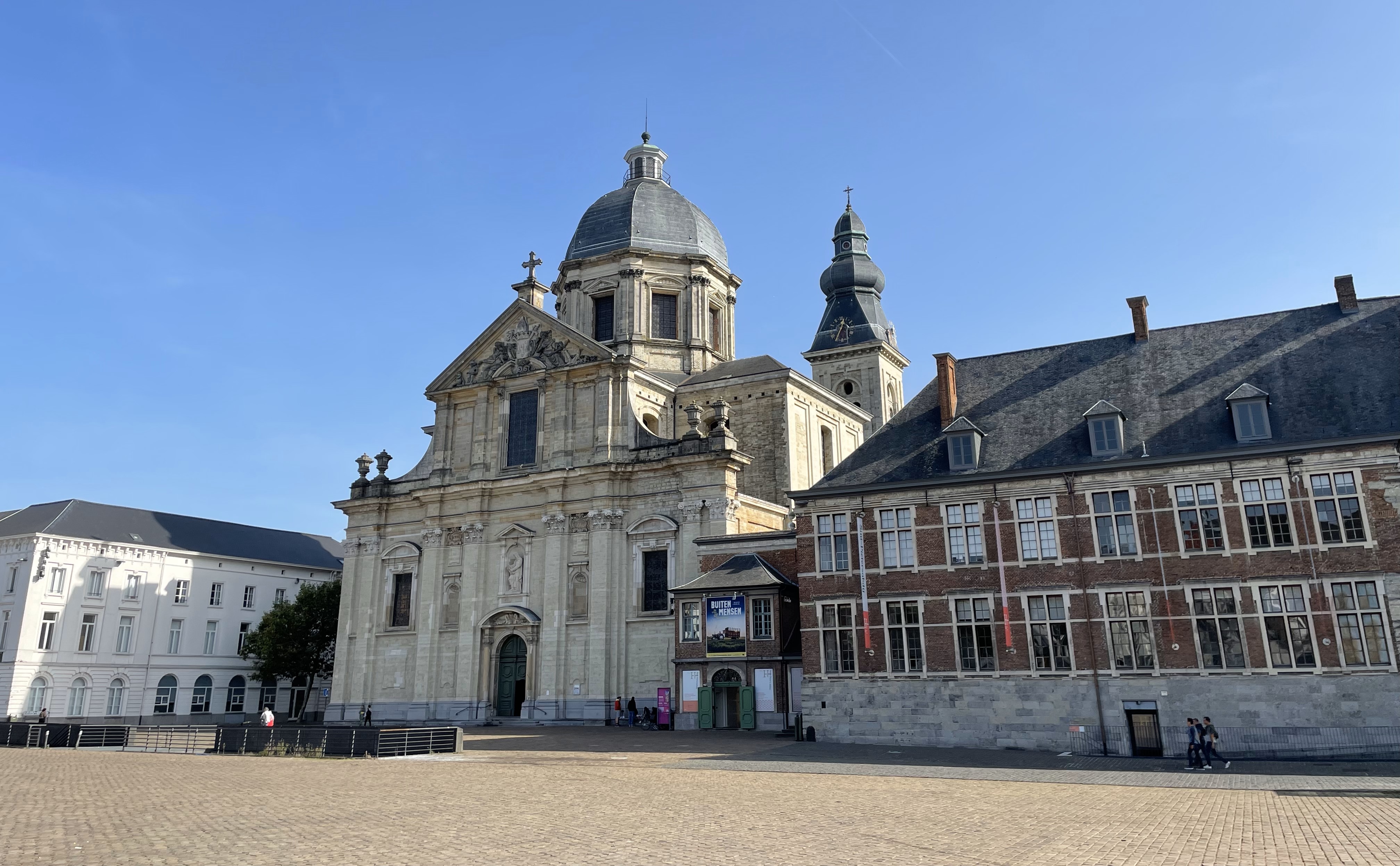
Having had our culture infusion for the day, Jane and I strolled back in increasing sunshine towards the centre.  We popped into Saint Peter’s Abbey but were confused by the lack of things to see and took what turned out to be a wrong turn into the attractive, but unremarkable, adjacent gardens and vineyards.  It turned out that these were open to the general public and we were now locked out of the Abbey.  It was not the only time during our stay in Belgium that a combination of our lack of language skills and dubious signage confused our sight-seeing.

St Peter’s Abbey And Church, Ghent

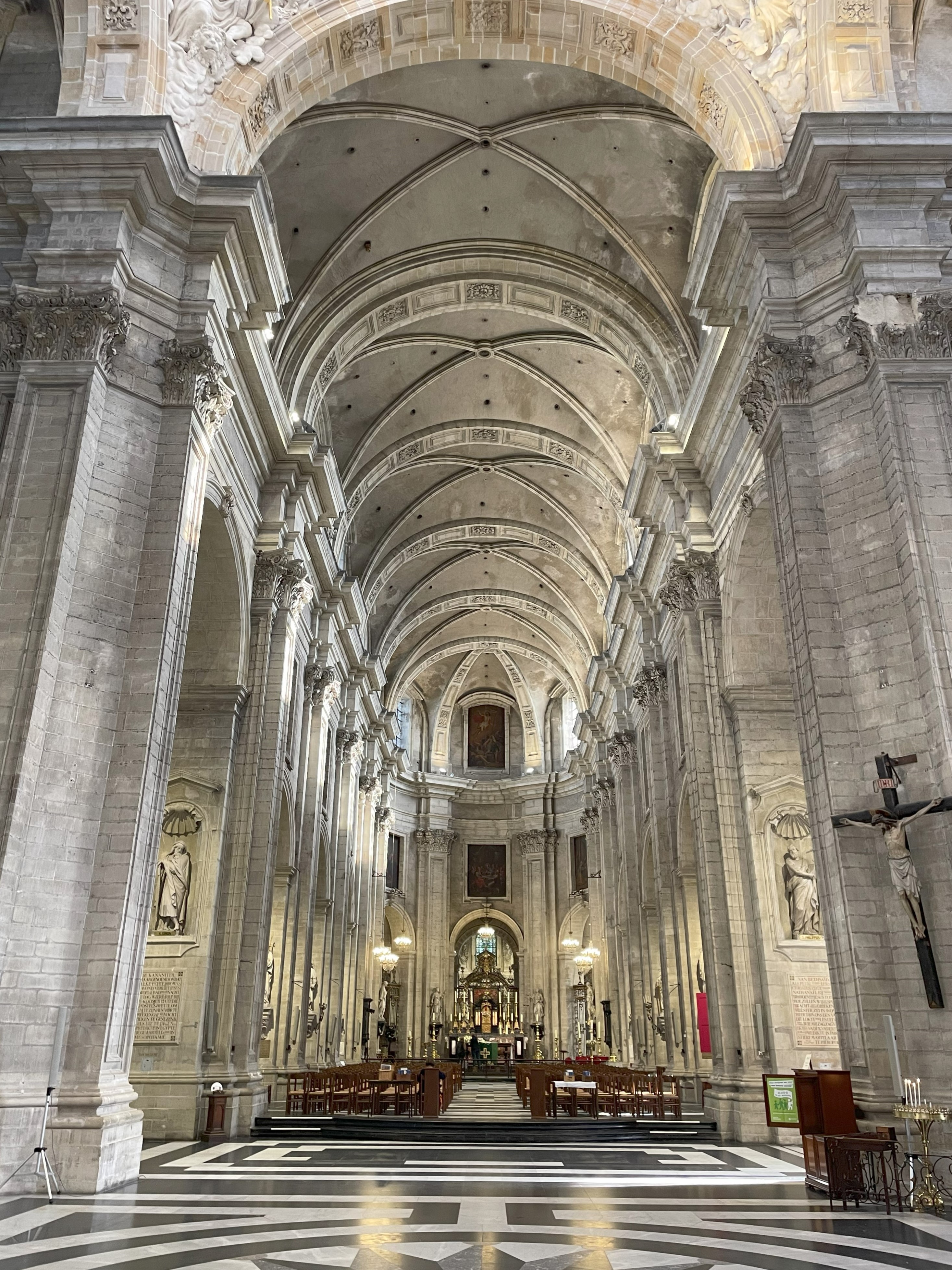
We found our way back to the Abbey entrance but since there was no exhibition on, we moved swiftly next door to Our Lady of St Peter’s Church.  This was part of the original abbey complex which was one of the earliest settlements that ultimately became Ghent.  It dates back to the 12th century and was rebuilt in a Baroque style in the 17th century.  It was impressive inside and out.

Inside Our Lady Of St Peter’s Church

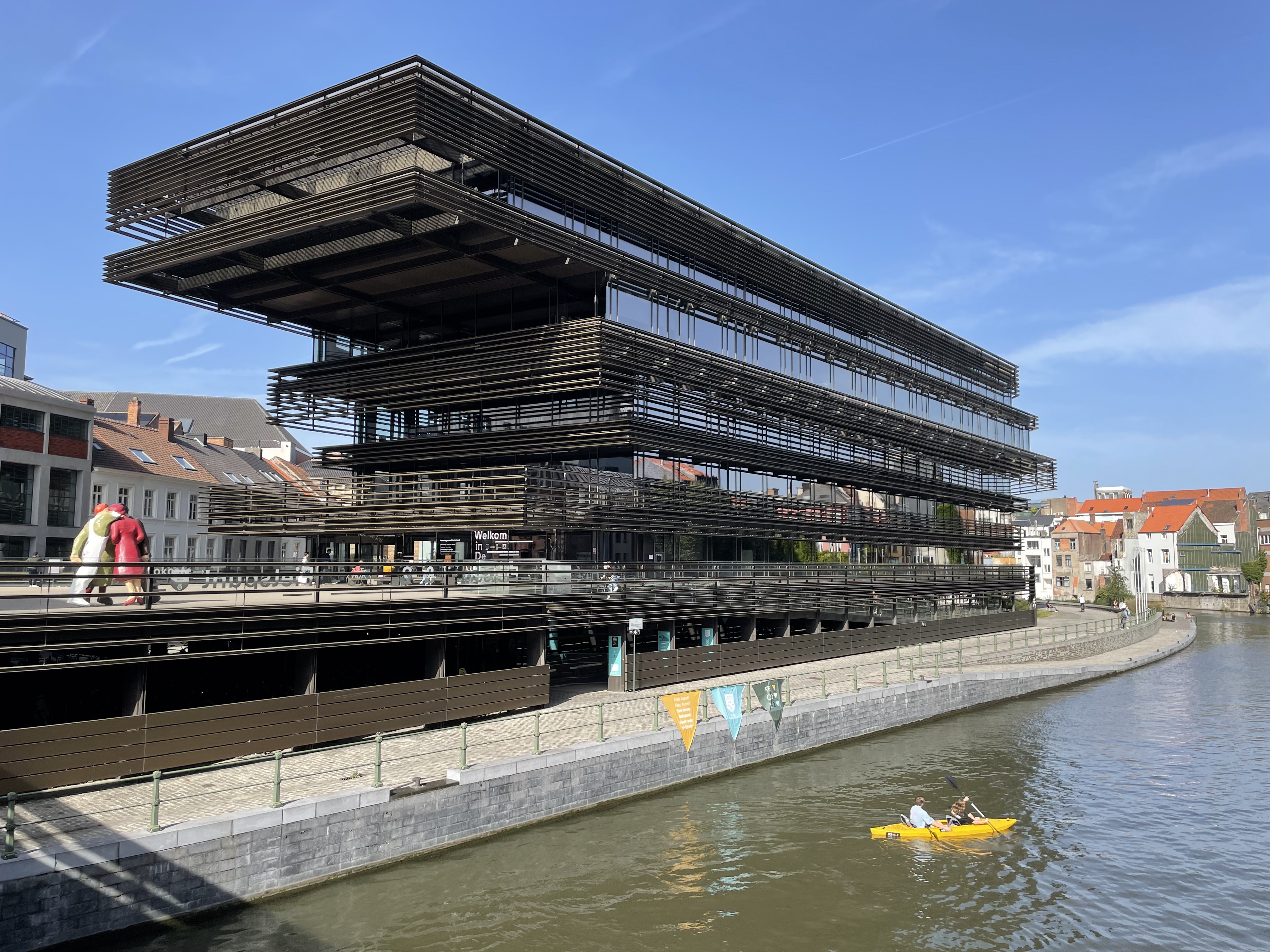
The sun was well out by now and we continued a relaxed walk along the Ghent waterways, past the new and radically modern-looking library to St Bavo’s Cathedral

Ghent City Library

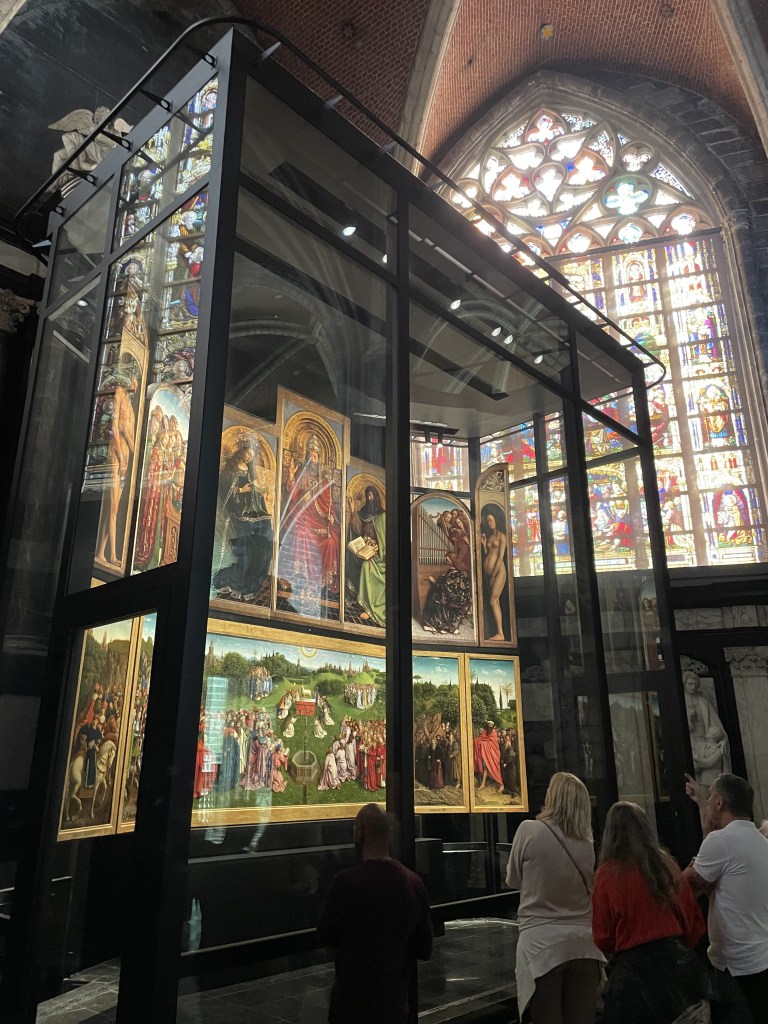
As expected, the Cathedral was crowded with tourists most of whom were seeking a view of the famous Ghent Altarpiece which was completed in 1432 by the Van Eyck brothers. 

The altarpiece has survived clandestine sales of some of its parts, thievery, war and religious uprisings.  It has been restored in recent years – indeed, we saw part of this process during our visit to the Fine Arts Museum.  It is now largely back in St Bavos and is a huge tourist attraction, including a virtual reality tour (which I opted out of).

Inside St Bavos (With The Ghent Altarpiece To The Right)

While Jane sought out places to buy Belgian linen, I visited St Michael’s Church and St Nicholas’ Church.  In the latter, there was an ongoing service so I didn’t loiter. 

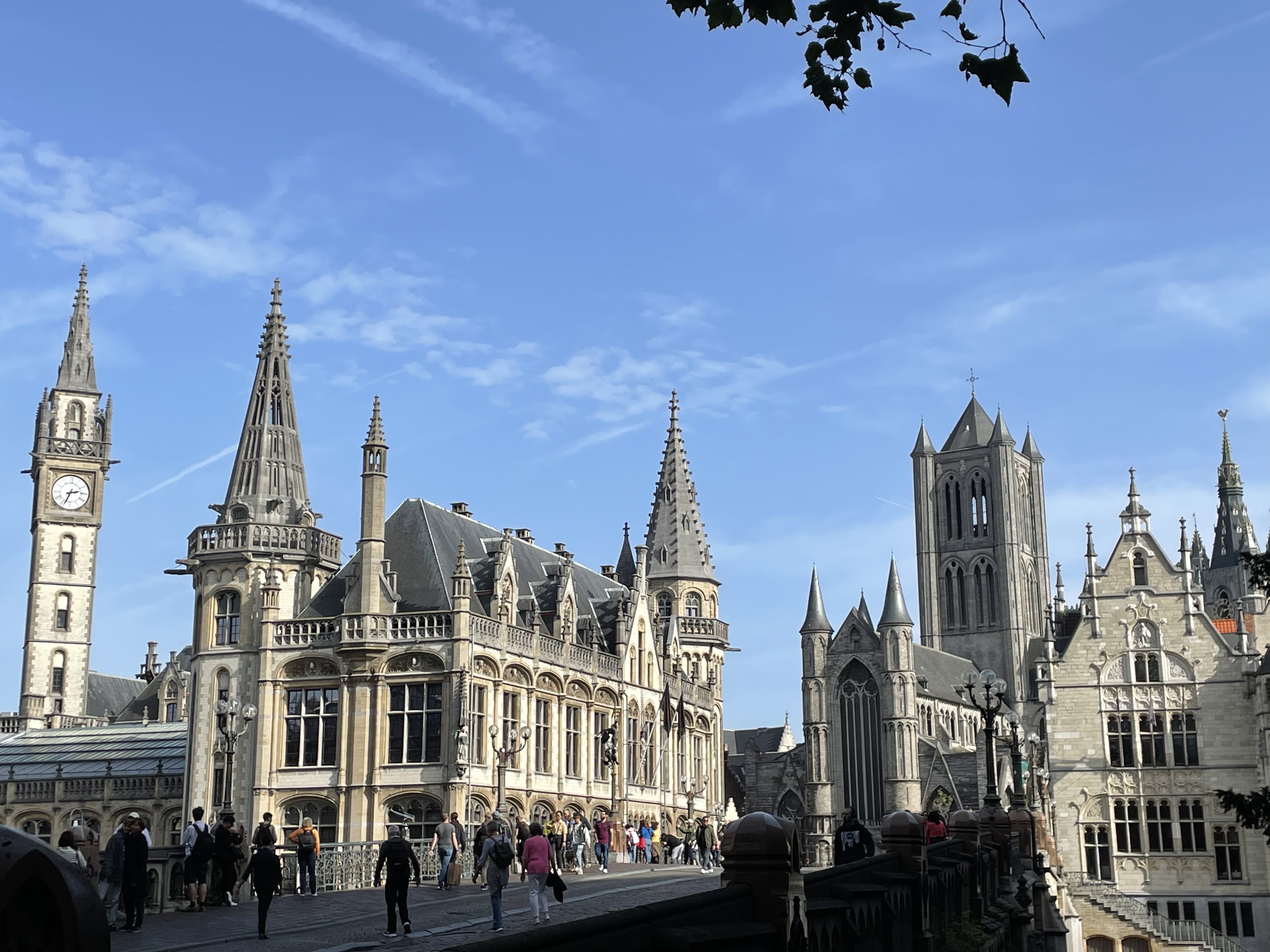
Our Hotel (1898 The Post) And St Nicholas Church From St Michael’s Bridge, Ghent (From a Similar Angle to The Painting By de Noter Above)

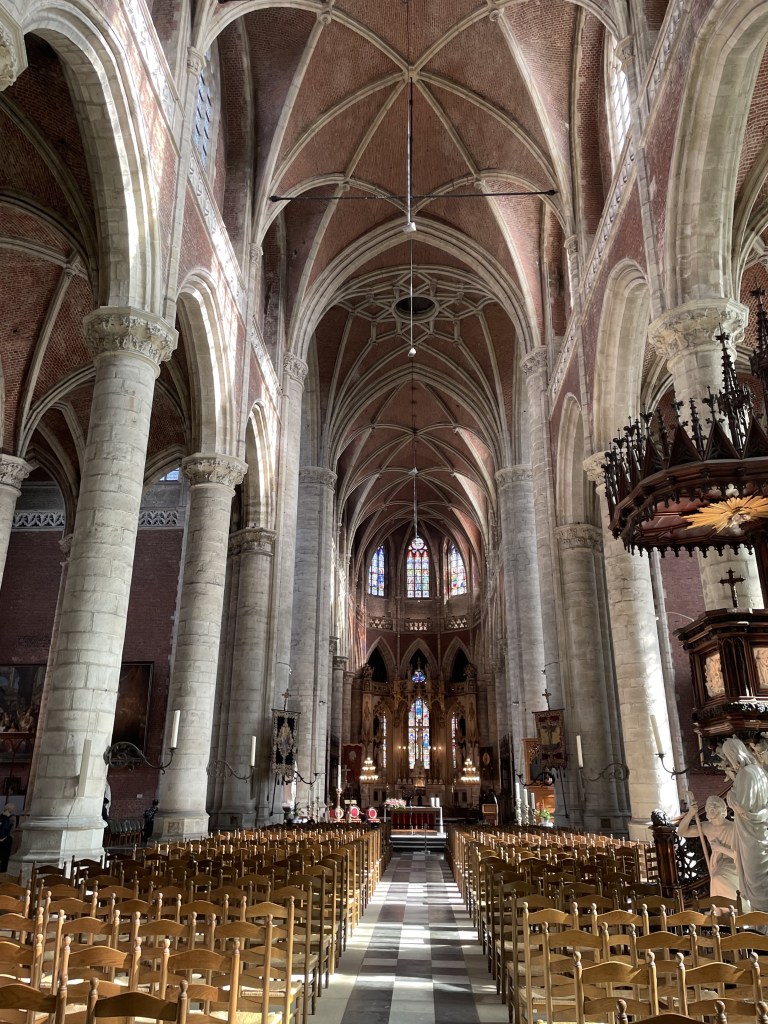
St Michael’s Church was rather lovely – probably my favourite of the churches in Ghent that I saw.  It is another very old church; it was started in 1440 but its tower was only completed in 1825.  Its internal brickwork was beautiful in the dappled sunshine coming into the nave past nearby trees and, although ornate in parts, it felt slightly less polished and more homely than some of the other churches we had seen.

Inside St Michael’s Church; Empty, Airy And Beautifully Sunlit

Whoa!  It had been a very full, long morning.  By now we were ready for something other than churches and galleries.  Food and Belgian beer beckoned.

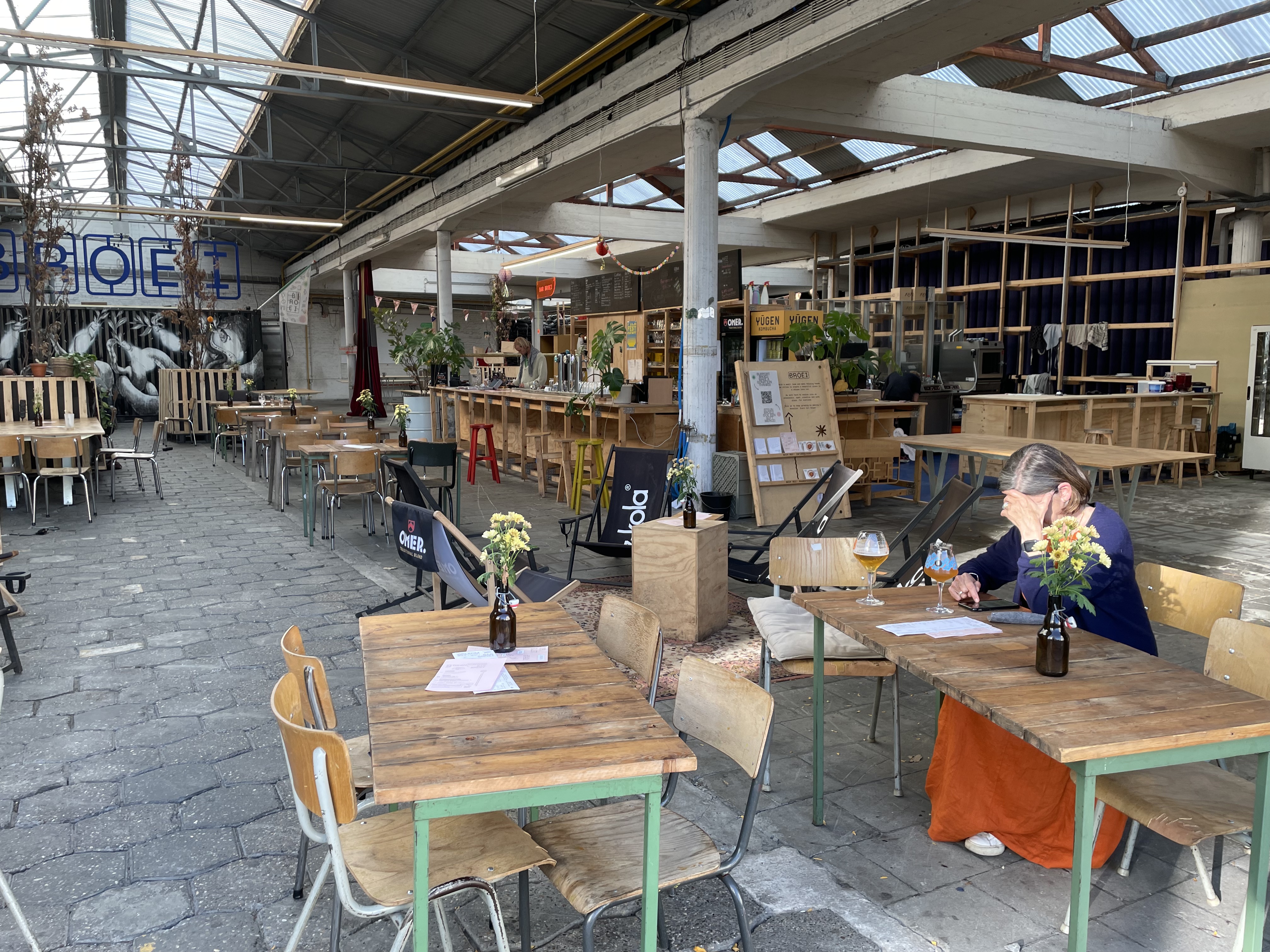
I spotted that the brewery for the beer I had drunk on our first night in Ghent, DOK, was open for food as well as drinks.  It was at the northern end of the waterways surrounding the centre of the city and we set off in what was by now warm, continuous sun.  As we approached the brewery, we passed Bar Broei, a rough and ready looking bar that nonetheless sold good, homemade snacks and excellent beer.  We chilled out there very comfortably and with a very personable barman for a couple of hours.

Bar Broei – Rough And Ready But Just What We Needed After A Long Morning Sight-seeing

We resumed our walk to Dok Brewery and discovered that it was in an industrial area surrounded by a variety of street food outlets busy with, it seemed, mainly local residents.  This was perfect for us and we tucked into more beer and, of course, a beef burger. 

Dok Brewery: Vibrant Eating And Drinking Establishments

Such meat eating was becoming the norm.  So were the early nights back at the hotel, first in the bar and then our room.  We still had another day in Ghent to go.

Our Final Night Scene, Ghent

Sunny Belgium

Jane and I spent a few days in Belgium.  We had visited Antwerp several years ago and had been surprised at how much there had been to see and how interesting the city was.  We wanted to see a couple of different Belgian cities this time and to travel by train.  We booked the Eurostar to Brussels with an included ticket on to Ghent with the intention of also visiting Bruges.  Jane booked an impressive, centrally located hotel in a building with an interesting history; we were all set.

Ghent Post Office (Designed 1898) Now Shops And Our Hotel For A Few Days

The UK train workers dispute disrupted our journey to London and we decided to drive to Jane’s sister in Teddington, and impose on her our need for a lift to the Tube.  Fortunately, the Eurostar was on time, comfortable and smooth.  The onward journey to Ghent in a double level carriage was especially comfortable as we accidentally sat in the first-class upper deck and had great views of the Belgian countryside.  Taxis seemed absent at the station but the tram into the centre of town was easy to navigate and a bit of a novelty.

1898 The Post– A Moody Looking Hotel

We settled into our hotel room and then relaxed into Ghent’s late afternoon sunshine with a stroll around the northern bend of the River Leie and past the Castle of the Counts.  We ended up at a sunny, packed bar overlooking the river and indulged in our first taste of local Belgian beer. 

‘Gravensteen’ – Castle Of The Counts, Ghent

We also had our first taste of Belgian beef – I confess that I ate more beef in our three days in Belgium than I think I have in the last three years.  When in Belgium….. 

We made our way back to the hotel for an early night (very early given the UK-Belgium time difference) and resolved to make an early start for Bruges the following morning.

View From Outside Our Hotel Including St Michiels Kerk

The rail journey to Bruges was again easy and comfortable.  Once in the city, we just walked around in lovely October sunshine for a while, just taking in the gorgeous juxtaposition of medieval architecture and the river and canal network.  Of course, there were hordes of tourists many of which were participating in large guided tours led by guides with little flag poles; not my cup of tea!

Me And Other Tourists Capturing The Sights In The Centre Of Bruges

We shuffled out of the main flows of these tours into peaceful side streets and quiet corners.  Wherever we looked we saw pretty bridges, attractive buildings with the traditional stepped parapet walls, and an overall sense of cleanliness and history.

Starting To Get Away From The Bruges Crowd

We walked north to a vegan café, Blackbird, that Jane had discovered online, for a well-earned brunch.  We had what turned out to be my favourite breakfast or our brief Belgian holiday; an acai bowl laden with fruit, yogurt and peanut butter accompanied by a wonderful cup of coffee.  I’m a nut butter convert now!

The ‘Blackbird’ Cafe In Typical Bruges Buildings

We continued to wander along the canal paths past stunning buildings and back to the city centre.  On our way we popped into the Bourgogne des Flandres Brewery for a local brew, a quick rest and a view of boats going up and down the waterways.  Then we pressed on to visit the 800-year old Belfort (Belfry) to learn more about the city and get a elevated panorama.  

Belfort, Bruges

The belfry dominates the main square of the city and required a 366-stair climb to get to its top.  On the way up is a Treasury with its artifacts and a lot of information about the city and, especially, the way the bells in the tower were used to signal peace or danger. 

Near the top we could enter a floor where the belfry carillon with its 47 bells sits.  It was installed in 1748 and has been repeatedly extended and restored.  It is like a huge musical box with a large cylinder with pins that cause the bells to ring in a particular sequence that can also be set by a keyboard.  We were able to see it working although the chiming of the bells is best heard from outside. 

The Carillon, Belfort, Bruges

At the very top floor of the belfry, the views were predictably spectacular. 

From The Belfort, Bruges

We resumed our wander through Bruges’s streets while skirting the densest crowds and made our way to Saint Saviour’s Cathedral, also known as Sint-Salvatorskathedraal.  This is a beautiful, airy space with a huge nave, impressive tapestries and remarkably vibrant stained glass. 

Saint Saviour’s Cathedral, Bruges

As with several of the historic buildings we visited whilst in Belgium, there was a Treasury.  This one had several lovely pieces on show. 

The Saint Saviour’s Cathedral Treasury

By now we were beginning to think again about beer and food.  We walked back towards the north end of the city centre and found a delightful waterside bar (it was hard to know if the waterways were river or canal but here the water was flowing and not at all smelly).  The sky was cloudless and the temperature, view and atmosphere was so perfect that we settled down for a lengthy session of beer and more beef – a very nice steak and chips this time.

Bruges’s Waterways

Replete, we decided we had had a lovely but sufficient Bruges experience.  Our phone batteries were low – I’d forgotten to bring my remote charger and Google Maps is such a battery suck.  Jane had to start asking passers-by for directions (I would rather use the position of the sun than ask anyone the way!)  Finally, a circuitous route took us back to the station, the return journey to Ghent and another early night in our hotel there to prepare us for a couple of days of Ghent sight-seeing. 

A Lull In Proceedings

A few weeks ago we were in Ireland and Edinburgh. Later this week we are spending a few days in Belgium.  In between we have slowed down into more usual routines and come to terms with the fact that, despite unseasonably warm weather, the trees are starting to turn and Autumn is upon us.

Some Of The Last Big Dahlias From The Garden This Year

There is still a lot to do in the garden before closing up for Winter.  I’ve made some progress in that I have brought in an excellent harvest of potatoes and onions, have started to pull down the climbing beans and their frames and have collected the wood remaining from some cut trees from out of the field. 

Some Of This Year’s Bumper Crop Of Onions, Potatoes and Squash

However, I need to weed the currants and leeks, and harvest the squash and Jerusalem artichokes.  I also need to dig over all the vegetable beds to give the bindweed and creeping cinquefoil another almost crippling blow before the end of Autumn.  I say ‘almost’ since it cannot be eliminated, only managed. 

Preparing For Winter – Wood Turned Into Wood Store

A further project is to tidy up the compost heaps which have become very dilapidated.  Jane will be upset that I will once again put together a rather improvised set of heaps using old pallets rather than use the purpose-built wood frames that she bought for me years ago.  I continue to save those for when we move to our ‘Tin House’ (currently rented out) in Jane’s nearby childhood village of Amberley.  The timeframes for that are vague but my short-term solution for the compost heaps will suffice in the meantime; I just need to get my skates on and do it.

My Over-Full, Collapsing Compost Heaps

That effort needs to fit in alongside getting a grip on my small allotment in Amberley which I have held onto as another sign of our intention to move to the ‘Tin House’ at some point.  Also, we have taken on a mini-project to help Middle Son (MS) and his partner to design and enhance his new garden in Bristol.  This was a requested alternative from MS to a more typical birthday present.  We really enjoyed delivering our first instalment of help while he cooked us a lovely roast lunch.

A low light of the last few weeks has been watching the steady decline of Forest Green Rovers (FGR) – the football club I support (enthusiastically through often through gritted teeth).  Relegation last season following glorious promotion the previous season wasn’t entirely unexpected especially after our now much lauded manager left abruptly for Championship and, more recently, Premiership football.  But we are struggling again this season and the disconsolate and disappointing defeat in the last match was very dismaying.  What goes up can come down!

FGR At Meadow Lane, Notts County. A Proper Football Stadium

On the other hand, a highlight in the last few weeks has been a weekend in Nottingham with my sister and Dad.  I saw FGR play Notts County while I was there – we lost again, though only narrowly and a little unluckily – but what was most encouraging was seeing my Dad fighting his way back to the level of activity and health he had earlier this year.  For a while this summer he was really struggling with a side-effect of the innovative, and seemingly successful, cancer treatment he has been on.  Now that side -effect has been addressed, he has his mental agility and much of his strength back, and his treatment has restarted.

I stayed with my sister in her new house not far from my Dad, but spent the days with at my Dad’s house where we reminisced over tea, lunch and a game of Mahjong.  We played with a lovely, intact, bone Mahjong set that has been in the family for ages.  The feel of the bricks and the counters that substitute for money is wonderful.  Dad was able to demonstrate his powers of mathematics were undiminished as he worked out who owed who and how much after each round.  I lost all I had won when we last played back in May last year.

Playing Mah Jong

The rest of the month has flown by through a routine combination of the village men’s Talk Club (restarted after a summer break), a morning a week at the Food Bank, local walks solo or with friends, shopping for and then cooking good home food, and evenings of streamed television. 

Our current streamed television of choice is Fauda on Netflix.  It’s a gripping action series that develops interesting male and female, Israeli and Palestinian characters over four series.  We are about to watch the last episode and we shall miss it a lot when it’s over.  The last series is partly set in Belgium.  I think later this week we will be visiting rather different parts of the country from the vast, labyrinthine housing estates depicted in Fauda!

Proper Baby-Sitting and Grayson Perry

We have babysat First Grandchild (FG) a few times for short periods during visits to Edinburgh during the last year or so.  It’s been a joy and a privilege to be able to do so. Plus we always enjoy visiting his parents and seeing Edinburgh.

The Water of Leith From Dean Bridge – The Steep Gradients So Near To The Centre Of Edinburgh Still Surprise Me

Our baby-sitting responsibilities went up a notch at the beginning of September when First Grandchild’s (FG’s) parents went to a wedding of an old friend in Spain.  Jane and I were thankful to be asked to baby sit for the 36 hours they were away but were unsure how the experience would go for us and for FG. 

His other grandparents do a lot of babysitting and look after him all day on Thursdays.  But it would be the first time that someone other than a parent would get FG up in the morning (twice), manage his afternoon nap (twice), put him to bed (once), plus feed, entertain and keep him safe in between.  It was our first go at proper grandchild babysitting!

Eldest Son and his wife had departed in the small hours of the night.  Apart from 15 minutes of full-on anxiety and yelling after he woke up that morning, and another five minutes of low-grade moaning after his first nap, FG was fine with the whole weekend. 

First Grandchild Exactly Where We Wanted Him – Asleep With His Monkey and Other Soft Toys

FG knows his routine down to the fine details: which soft toy needs to be kissed goodnight in what order, which book is the last book to be read before bedtime, which bedroom light goes on and off when.  As long as we stuck to that routine and provided plenty of book reading, tower and garage building, and other activities at other times, he was very happy.  FG, his parents in Spain and, certainly, the two of us, all had (tiring) fun.

Of course, we visited a few Edinburgh playgrounds and, as usual, the Royal Botanic Garden with FG while we were with him.  The weather was kind to us and we were able to walk, to and from everywhere and around the gardens, at FG’s pace. 

Like most kids his age he loves being able to take mini-decisions about what to do when and, as grandparents, we have the time to allow that.  That Jane has had a motherhood bringing up three boys and then a career in providing parental advice to troubled mums and dads really helps.  I learnt a lot from her about how to give toddlers options so they feel a semblance of decision making while the adults actually remain in control.

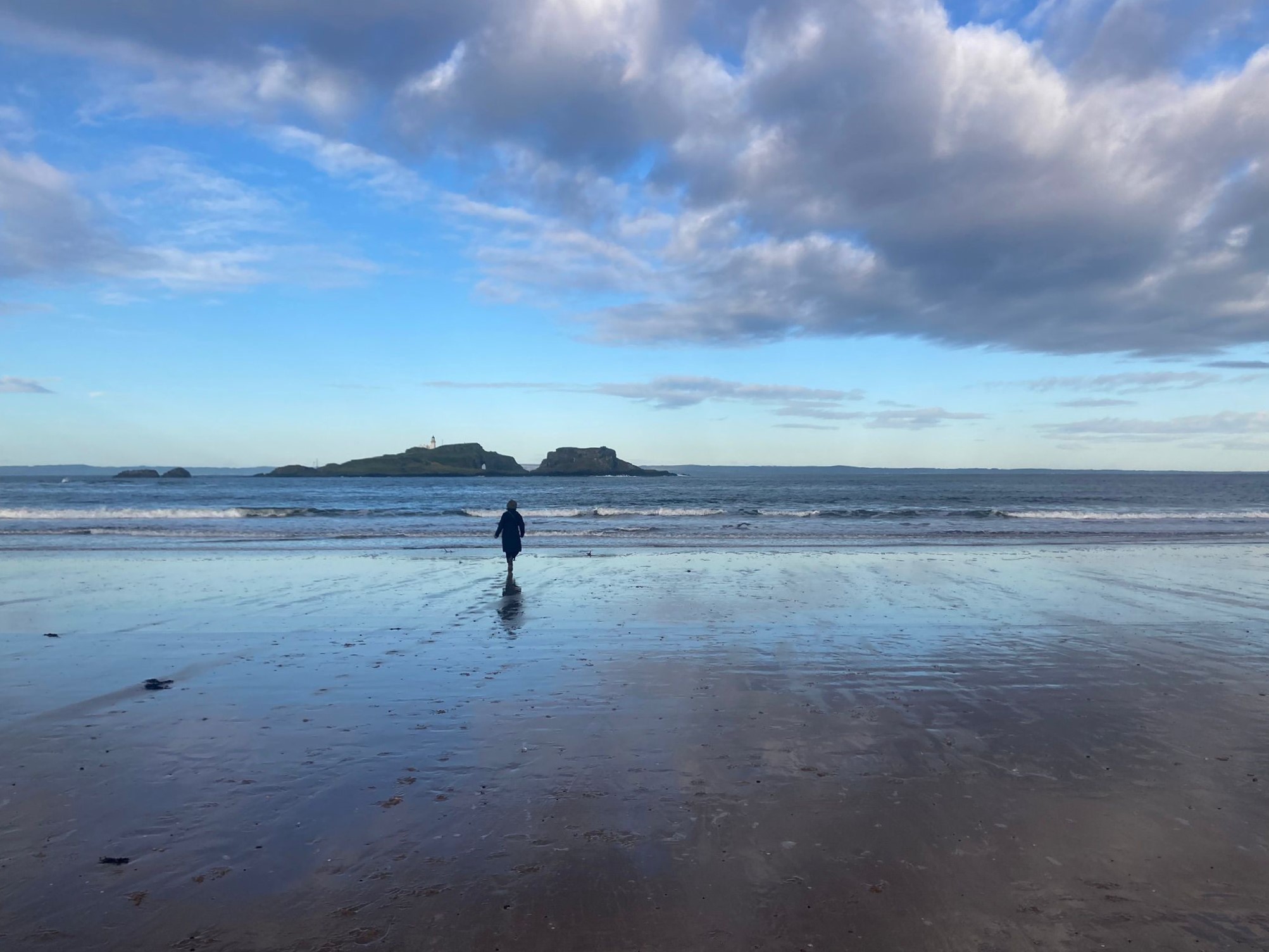
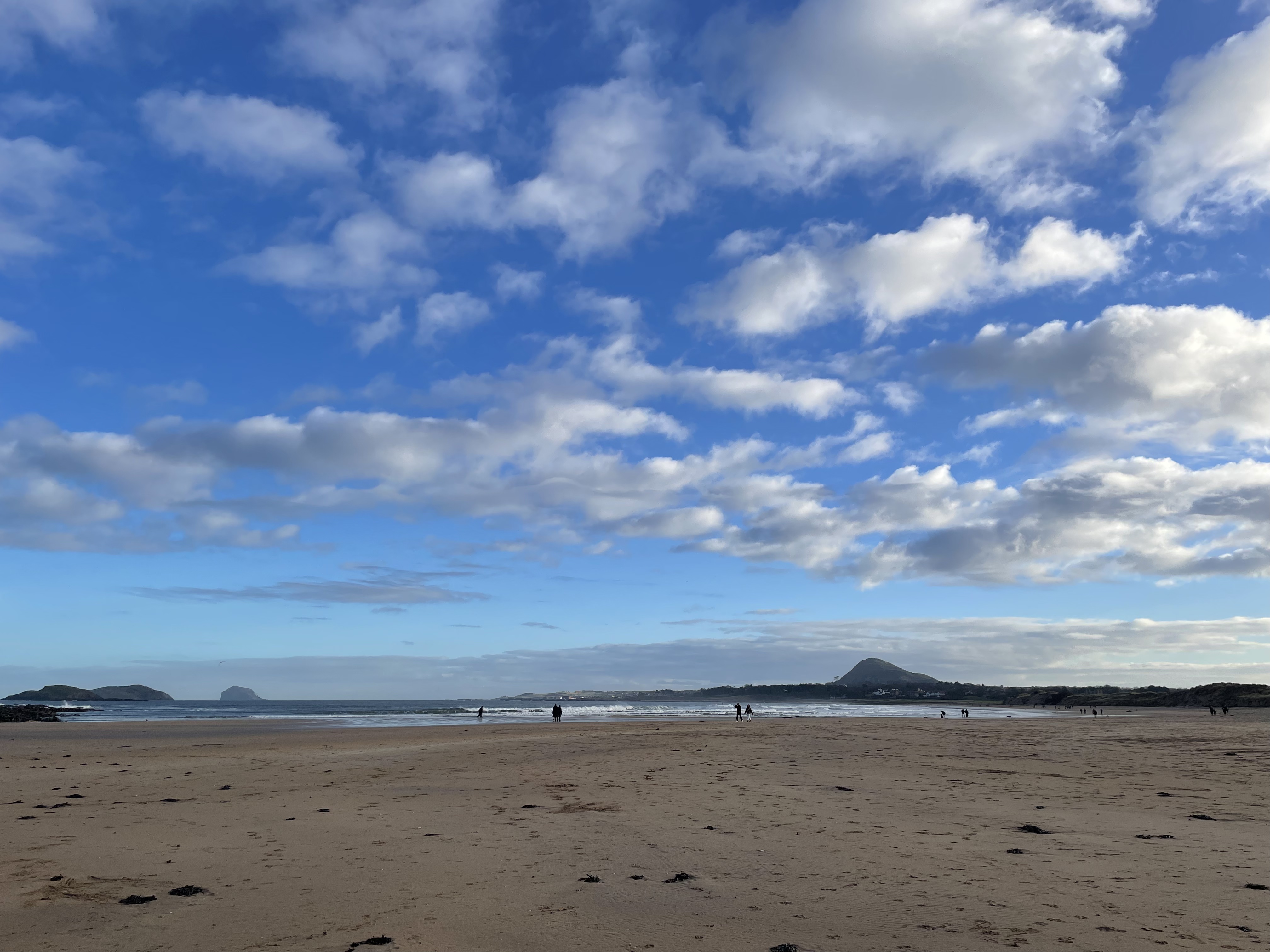
A highlight with FG was a trip to Portobello beach.  We got there early so the crowds were yet to gather in large numbers in the sunny and warm weather.  FG loves the outdoors and the novelty of visiting the coast.  He loved wandering along the shoreline and collecting shells and other debris along it (and, in some sort of memory throwback to my own childhood, so did I).  It was a great way to spend a morning.

First Grandchild (FG) And Granny On Portobello Beach

Another morning with FG was consumed with a trip on the new tram service to and from Leith.  FG was more concerned with engaging with fellow passengers willing to smile at him than with looking out of the window.  He enjoyed the journey and a big vegan biscuit at Williams and Johnson Coffee Co.  Leith appears to be an increasingly cool place to live and work and the tram extension is surely a catalyst for that.

Leith

Before FG’s parents shot off for their whirlwind jaunt to the wedding, we managed a good dose of art and culture by visiting The Scottish Gallery, a nearby private gallery we have visited several times before, and the National Gallery of Scotland.

‘Folk At Heart’ At The Scottish Gallery, Edinburgh

The Scottish Gallery was showing a range of artists embracing traditional folk art.  Although the gallery is quite small, there was plenty to admire.  I particularly liked the woven baskets, the muted colours of some of the naïve style paintings and prints and, downstairs, the textiles by Jane Keith which were innovatively displayed given the compact space.

Textiles By Jane Keith At The Scottish Gallery

The headline exhibition at the National Gallery was a substantial retrospective of Grayson Perry’s work.  I’ve enjoyed Grayson Perry exhibitions before – notably the Summer Exhibition at the Royal Academy in 2018 and, more recently, in Bath.  The latter was a small exhibition of his ceramics where Grayson explained the pieces in his own words. 

Grayson provided the captions for each piece at the National Gallery exhibition too and, apart from the art itself, this was one of the most attractive features of the show.  His art is very accessible anyway but his thoughtful captions alongside each piece were unpretentious, clear and highly explanatory of the themes that have dominated his work since he was a very young man and how they have developed in his mind.

Examples Of Grayson Perry’s Ceramics, Iron And Tapestry Works – With Typical Intense Detail

From the first work – a plate he made in 1983 called ‘Kinky Sex’ – the irreverence of his approach and the courage of his anti-establishmentarianism came through.  But rather than be just a series of bold, even brash statements, the exhibition and particularly Grayson’s own words, drew me into what I see the Guardian newspaper calls ‘a thrumming conversation’. 

Grayson’s ‘Tomb Of The Unknown Craftsman’ (2011)

Some of the pieces on show were beautiful to my eyes, some were rather ugly, but every one of them had something to say and was engaging in some way.  Rather than say more here, this is a link to a video hosted by Grayson describing much of the show: Grayson Perry’s Smash Hits.  Watch out for references to ‘Alan Measles’ who is Grayson’s (troubled) childhood teddy bear who, entertainingly, crops up in various guises throughout the exhibition.

‘Kenilworth AM1’ (Including Alan Measles’s ‘Stunt Double’ In The Box On The Back)

The only downside to the exhibition was that, somehow, I missed the last room and exited prematurely.  Nonetheless I thought it was brilliant.

As was the whole weekend!  Proper baby-sitting was a resounding success and we look forward to doing it again (we are scheduled for a longer stint in April next year during another Spanish wedding trip). 

Having said that, it was great to get home, slot into routines less driven by a 21-month-old, and have a bit of a rest in what remained of summer in our home and garden. 

Late Summer In Our Garden

After An Irish Wedding

I got up a little gingerly on the morning after the wedding.  My alcohol unit count and monthly quota had taken something of a battering the day before and my head was a little fuzzy.  It was a blessing then that the relatives of the bride and groom had laid on a lovely lunch with more drinks, at the wedding reception venue at Ballycurry.  I had enough scope in my alcohol unit quota for a ‘hair of the dog’ or two.

By now, after a damp start, the weather was gorgeous and the manor house and estate looked splendid.  After an excellent buffet lunch, we had the opportunity to see one of the recent ventures the bride’s brother has initiated to diversify revenues into the estate farm.  This was a substantial film set that has been used by the BBC and, latterly, for streamed series such as Vikings and The Last Duel.  The scale of the set was impressive and now the trick will be to find new ways of using it for further dramatic series.

The Film Set With The Estate House Beyond

The next day, our last full day in Ireland, again started with dreary weather.  We considered abandoning ill-formed plans to visit local gardens and to visit Dublin’s galleries and museums instead.  But as we left our Airbnb, blue sky appeared and we headed east over the mountains again to Glendalough.

Glendalough

This is an ancient monastic settlement, set in a glacial valley, and now a big draw for tourists.  We arrived just in time to find a parking spot among hundreds of cars and a fleet of large coaches.  The ruins of the towers, monuments and chapels are very picturesque.  The quaintness of the scene was enhanced by the presence of semi-tame deer mooching between the gravestones despite the crowds. 

Deer Amongst The Gravestones At Glendalough

Rather than loiter among the throng of tourists, or embark on the suggested nearby woodland walks, we headed off to lunch at Powerscourt Gardens.

Powerscourt Gardens (Including, Apparently, The Longest Herbaceous Border in Ireland)

The mansion at Powerscourt was destroyed by fire in 1974 and has been restored since as a tourist destination with a few high-quality shops (including a couple of Jane’s favourites) and a restaurant.  We were able to bag a restaurant seat by the window overlooking the 47 acre expanse of formal gardens and arboretum.  The view was great and the food was excellent quality and value. 

Powerscourt Gardens And Great Sugar Loaf Mountain

We worked lunch off a bit with an extended walk around the gardens.  These are varied in format and large enough to absorb the large number of visitors, especially as we moved away from the main building.  The sun was creating lovely dappled shade, the borders were full of colour, bees and butterflies, and the views were splendid.  I enjoyed our relaxed time at Powerscourt very much.

The Japanese Garden, Powerscourt

Our penultimate excursion (apart from one final, smooth charging up of the car) was again to the coast.  We visited Bray Head with the intention of walking along the coastal path for a while.  Unfortunately, this was shut due to a recent rockfall so we ventured up towards Bray Head.  This was a steep and stony climb that, until we reached the top, afforded none of the expected views of Bray or the coast to the north. 

Looking South and North West From Bray Head

Eventually I made it to the top of the tree line to get some long views up the coast and across to the Wicklow Mountains but I eschewed the final scramble to the imperious, concrete Bray Head Cross which was built in 1950 and from which, I imagine, the vistas are even more spectacular.

Bray Head Cross – It’s Bigger Than It Looks Here

Jane had one more thing on her bucket list for the trip before we left for Roslare and the ferry uncomfortably early the following morning.  That was to visit a traditional, rural Irish pub.  We popped into the one nearest to our Airbnb, Brennans in Kilteel, which was just inside Kildare rather than Wicklow. 

An Authentic But Rather Empty ‘Brennans’, Kilteel, At 6pm On A Monday Evening

As was befitting, I had a pint of Guinness (which took me fractionally over my 100 alcohol unit quota for the month but which was very nice and creamy).  In a nod to our normal UK-routine we completed the Guardian newspaper Quick Crossword over our drinks.  Then we headed back to our Airbnb to finish the Netflix Scandi-noir crime series we had started earlier in our trip, polished off the remaining chocolate and crisps, and had an early night.  It was a pleasantly chilled evening to complete our busy day and our brief stay in Ireland!

Before An Irish Wedding

At the end of August, Jane and I travelled by road and ferry to County Wicklow in Ireland to attend, and help celebrate, the wedding of a granddaughter of Jane’s aunt.  This was a great opportunity to see a part of Ireland and a useful test of driving (and, critically, charging up) our electric car in a foreign country.  We had decided to tack a free day on either side of the two days of the wedding events so we could get a feel for County Wicklow and space out the two 12-hour journeys to and from Ireland.

Leaving Fishguard, Approaching Roslare. The Ferry Trip Reminded Me Of My Childhood Trips To The Isle of Wight

The only time I had been to the Republic of Ireland before was for a short conference in Dublin.  I only really remember that trip for it being the only time in my working career that I was ever late for the start of a conference due to drink-induced oversleeping (I had previously prided myself on turning up no matter what).  During this latest visit, the drinking was much more moderate, the wedding celebrations were lovely and we had a very good time.

We stayed in an Airbnb on the west side of the Wicklow Mountains – the opposite side from the location of the wedding.  That meant more driving for Jane (since she didn’t really trust me in the narrow lanes) but it enabled us to see much more of County Wicklow and the eastern edge of County Kildare.  Having our own car allowed a comfortable familiarity and charging it up was relatively easy, although more expensive than in the UK. 

Our Airbnb was in a renovated and repurposed farm outbuilding amid a lovely garden that is periodically open to the public – June Blake’s Garden.  At the time of our visit the flower beds were packed with colour.  The dahlias (I have come to love this species of plant) were particularly gorgeous.  It was lovely to stroll through the garden and among the restored farm buildings whenever we went out to the car or just to put the recycling out. 

June Blake’s Garden, Blessington, Wicklow

Armed with information from the Airbnb host, the bride to be and a travel blog I follow by someone living in Ireland (Marie at HopsSkipsandJumps), we ad-libbed our itinerary and set off on our first free morning to the National Botanic Gardens at Kilmacurragh.  The meadows, trees and one long flower bed that was full of interesting plants and masses of bees and butterflies, were lovely and the weather was kind.

National Botanic Gardens, Kilmacurragh

We then headed to the town of Wicklow for a perusal of the county town and lunch.  Already we were finding the Irish people very friendly and, as we sat on the quayside with our fish and chips, a quip from a passer-by, “ahh, fine dining!”, made us giggle. 

Wicklow Town Docks – Perfect Spot For Fish And Chips!

We took a look at the remains of a Norman castle, (The Black Castle) on a promontory overlooking the town.  We loved the views along the coast in gorgeous sunshine.

Views From The Black Castle, Wicklow Town

Jane wanted to visit the hand weaving mill and shop at the ancient and pretty rural settlement of Avoca.  Having negotiated our way down some very narrow roads to Avoca and wandered around the shop, we returned to the coast for a wander along one of the long and surprisingly empty beaches on the Wicklow coast.  

Avoca Handweaving Mill And Shop
The Long Beach At Brittas Bay

We then headed home equipped with bits of fruit, nuts, chocolate and crisps for an evening in front of Netflix.  To be honest we didn’t eat very healthily until we got to the wedding reception but we did enjoy The Lørenskog Disappearance, which is yet another European crime thriller in which we seem to specialise.

Next morning was rather grey and drizzly.  We ventured a quick walk and a breath of fresh but damp air around a section of the nearby Blessington Lakes. These were formed over 50 years ago when the Poulaphoca Dam was built. 

Blessington Lakes And Low Cloud Over The Wicklow Mountains

Fearing rain, we headed back to the Airbnb to change into our glad rags.  In my case that involved squeezing rather inelegantly into a morning suit that I hadn’t worn for decades and that I first wore at my own wedding over 38 years ago.  It was a little tight to say the least!

Then we were off to the wedding ceremony.  The wedding service, in Nun’s Cross Church, Killiskey, was lovely and cheering.  The weather perked up for the photos on the way out and we made our way to the wedding reception.

Ballycurry

This was in a giant marquee directly in front of an impressive country house owned by the bride’s family.  The estate is managed by her aunt and uncle and, latterly, her brother.  The setting and arrangements for the reception were both marvellous.  The marquee was laid out for around 170 guests and we all enjoyed an evening of plentiful drinks, lovely food (especially the local lamb), dancing, mingling and celebrating. 

It was a late night by the time we got back to the Airbnb, but it had been a thoroughly memorable day.

Fragmented Summer

June this year was wonderfully sunny.  The vegetables would have appreciated a little more rain but July certainly made up for that.  Indeed, July and, so far, August have often felt autumnal and summer has only come in fits and starts.  The sunny periods may have been intermittent but maybe that has helped us to appreciate the sun more on the occasions when it has shone on the unusually verdant countryside.

Intermittent Bright Summer Sunshine On My Daily Walks Into Town

Our summer has sometimes felt as fragmented as the weather.  The lack of any ties to school holidays and, much more recently, my retirement has meant that we don’t tend to book blocks of holiday through the summer months.  As a result, we don’t have centrepiece diary commitments to schedule around.  Instead, we have moved towards multiple shorter trips including those to our sons in Belfast and Edinburgh, plus a couple of day visits to Nottingham to check on my Dad during a period of ill-health. 

The Wonderful Variations Of London’s Skylines

Retirement means flexibility too.  I was able a few weeks ago to piggy back, at relatively short notice, onto the back of a visit Jane was making to London to see a friend of hers.  We could share the driving a bit and I caught up with an old friend of my own.  I also took the opportunity to visit an exhibition of the sort that was part of my routine when we had a flat or sons in London.  I miss those exhibition trips a lot.  This one was a visit to the rather wonderful White Cube in Bermondsey.

Anselm Kiefer At The White Cube Gallery, Bermondsey

I have been to this gallery several times and one of the most memorable visits was to see an exhibition by Anselm Kiefer.  I wrote briefly here about that back in January 2020 just before Covid disrupted things.  The monumentalism and scale of that exhibition is repeated in his latest works at The White Cube.  I loved it and the White Cube spaces were perfect for it!

More Anselm Kiefer

Kiefer’s works this time were based around the novel by James Joyce called Finnegan’s Wake.  The novel is apparently (I’ve not tried to read it) a fractured mix of dream world and grim reality that deploys invented and combined words.  The language of the novel is strewn across most of the works on show.  While most of the phrases and sentences are nonsensical in this context, they added somehow to the mystery and sense of a dystopia as I moved from room to room.

Detail From Various Anselm Kiefer Works At The White Cube Gallery

Goodness knows how the White Cube is funded – the exhibition was, as usual, free – and I fear removal of some of the works will require repolishing of the extensive polished concrete gallery floors.  To be honest the huge piles of debris in a couple of the exhibition rooms were, for all their scale, harder to appreciate than the pictures on the walls.  These were dense art works including rural scenes that worked for me close up and from observation across the huge rooms.

‘Woman Will Water The Wild World Over’ By Anselm Kiefer

Those rooms were linked by a vast corridor stuffed with huge, dusty vitrines and crude floor-to-ceiling shelves full of… well, what were they full of?  Just stuff!  It was like walking through a museum of detritus but it was strangely compelling and all underlined by the sheer scale of the thing.

‘Arsenal’ by Anselm Kiefer

Another recent highlight has been a visit to Cambridge where I once – several decades ago – studied.  I had not been back for quite a while and the reason this time was the wedding of my Best Man (BM).  He lives nearby and we took up an Airbnb (which turned out to be outstanding) in his village and travelled into Cambridge twice: once for the formal registry element of the wedding and then again for a ceremony and reception held in BM’s and my old college, Peterhouse

Our Outstanding Airbnb (Just the Left-Hand Portion Of The Building) From The Grounds

Peterhouse Main Quadrangle and Chapel (Left) And My Old H Staircase In Gisborne Court (Right)

The whole weekend was a delightful mix of ceremony, catch up with a few old friends and meetings with a number of new acquaintances – both local and international – who were very interesting and easy to talk to.  They really helped to make the whole weekend event lovely.  The event generated some nostalgia too as the reception dinner was held in the main Peterhouse Dining Hall where, about 50 years ago, I ate college meals every day.  I didn’t appreciate the history or the grandeur of the college buildings half as much when I was living there as I did during this fleeting visit.

Peterhouse Main (Dining) Hall

One other prompt for a less welcome bit of recollection was that Jane, and a few others at the wedding, contracted Covid there.  Fortunately, I have avoided it again but it was a reminder that the pandemic was not long ago and that damned virus is still very much around.

During our stay in and around Cambridge, Jane and I went to Kettle’s Yard to see an exhibition of Palestinian embroidery over the last century that Jane had read about.  Even someone like me with no real understanding of the intricacies of embroidery could appreciate the delightful patterns and muted colours of the clothing on display in the first room of everyday women’s wear. 

Palestinian Embroidery At Kettles Yard; Everyday Wear In The 1920’s

The exhibition went on to show more formal and more ornate wear and the way each local area had its distinctive styles and motifs.  The exhibition then tracked the changes in Palestine embroidery brought about by history since the Second World War.

Palestinian Embroidery: Formal Wear (1921)

First the United Nations Partition Plan for Palestine in 1947, the subsequent displacement of about 70,000 Palestinians, and then the 1967 Six-Day War all disrupted and then broke much of the cottage industry of embroidery crafting in the Palestinian villages.  Enforced movement of Palestinians mixed up the local pockets of unique styling.  Materials such as silks from France became unattainable and were replaced by cheaper products.  Small handicraft workshops were often replaced by factories.  The end results, outside of a few traditional, small-scale operations, became bland and almost garish.

Finally, following and during the Intifadas of the 1980s and 1990s the embroidery became a means of protest.  The exhibition showed how the defiance of the Palestinians led them to incorporate the Palestinian flag into their embroidery designs as a symbol of resistance. 

The exhibition was an interesting mix of video and clothing, and of art and history.

Palestinian Dress Post Intifada With The Palestinian Flag Embedded In Designs

Back at home the advent of the new football season, together with the Women’s Football World Cup, is starting to take up time at Forest Green Rovers’ football stadium and in front of the telly. 

Evening Football At Forest Green Rovers – We Lost (Again) But It Was A Nice Sunset

Also, we have entertained Eldest Son, his wife and First Grandchild (FG) with a number of relatives who were keen to meet the little one.  I had a great time with FG and my phone is full of video of him that Jane and I watch on repeat.  Now we are looking forward to entertaining Youngest Son, his partner and some of their (and our) friends from their time in Australia.  Then we are off to Ireland for another wedding.  For a quietly retired chap like me, summer may feel a bit fragmented but it also feels pretty full!