Outings, Outings, Outings!

A few times since I retired, Jane and I have resolved to break up our routines (my retirement routine especially) with more frequent outings and trips.  This has resulted in short bursts of trips away from the house and we have had one of those brief bursts of outings recently.  A combination of summer weather and a little more determination this time, may mean we sustain the run of outings for a little longer than previously.

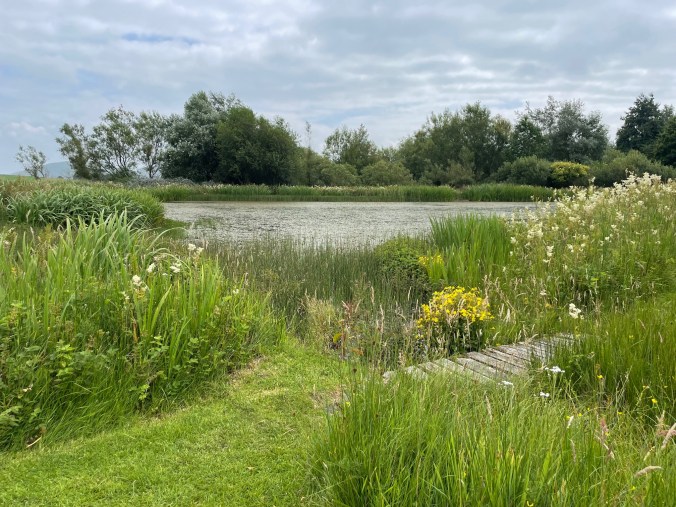
Hard To Tear Us Away From Our Garden This Summer?

Jane kicked us off by organizing our rather impromptu trip to Basel and then we had a trip to Belfast and Derry.  Those were followed up by a visit to the Ashmolean Museum in Oxford which had originally been conceived as a birthday treat for me before the grander idea of a weekend in Basel intervened.  Then we had a day out in and around Bath and finally, before Jane headed off for a few days in Southern France with her book group, we pottered around more than a dozen open private gardens a nearby Cotswold village.  I love my daily and weekly retirement routine but it has been fun to give it a jolt.

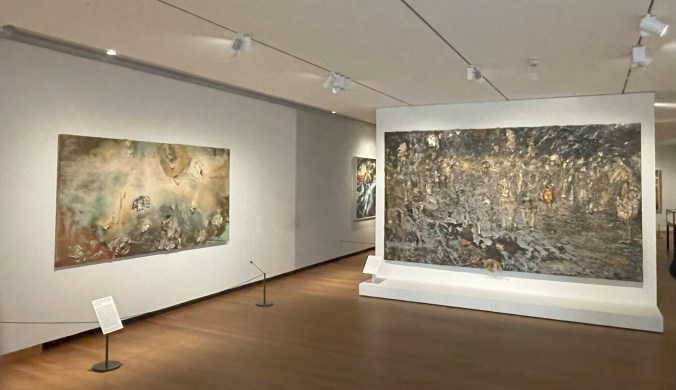
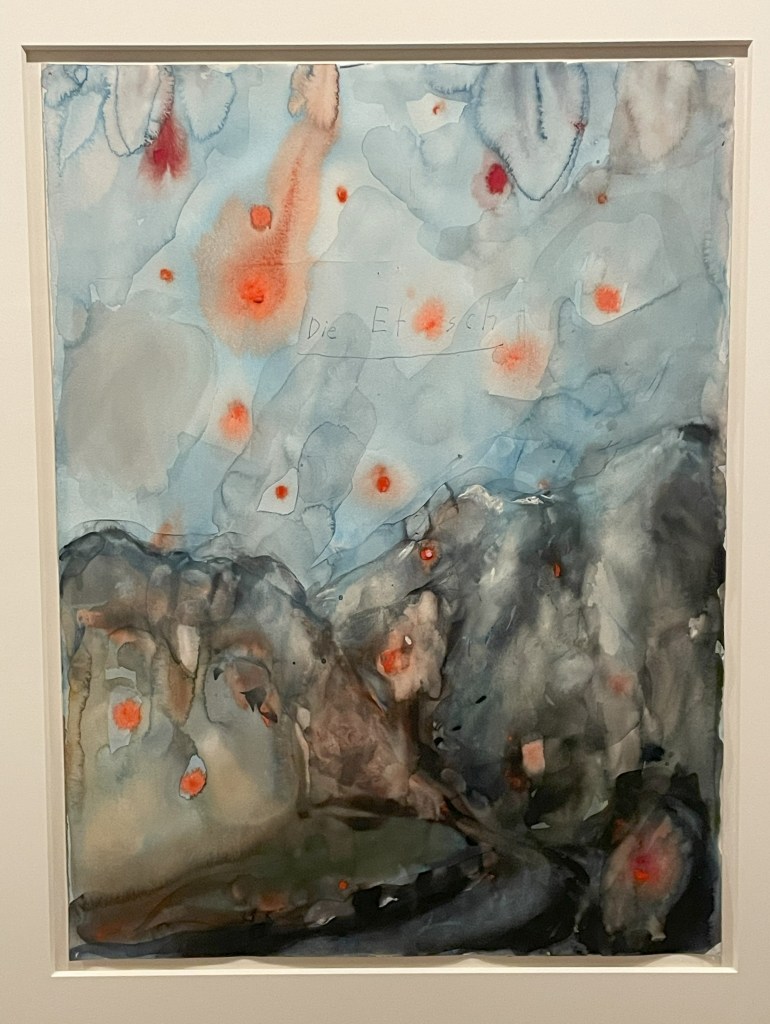
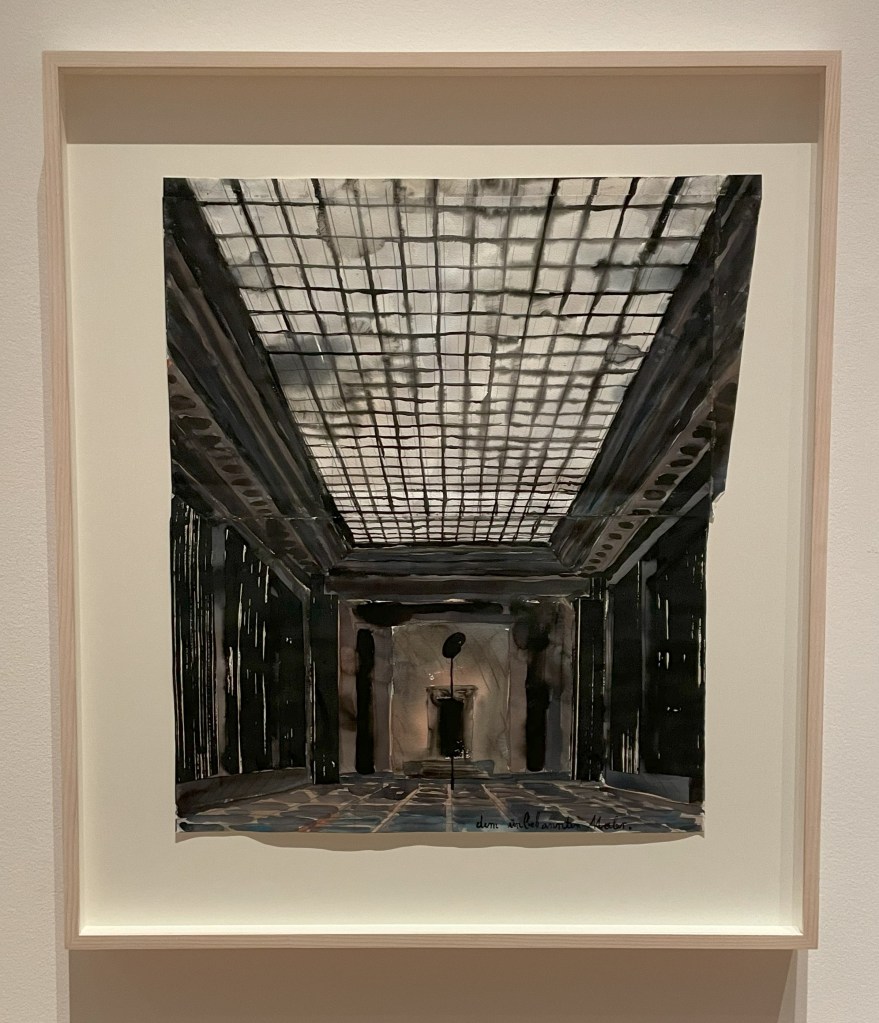
The main reason for visiting the Ashmolean Museum was to celebrate my birthday by visiting the current exhibition of paintings by Anselm Kiefer.  I hadn’t heard of him until I saw an incredible exhibition of his work about five years ago and I have sought him out since. 

His subject matter and resultant paintings are often dark.  At the Ashmolean, we read about his early preoccupation with post-Second World War thinking in Germany and his ambition to expose some of the cultural and artistic taboos of that time.  One of the first pictures in the exhibition – and the only one for which photographs were prohibited – was an image of Hitler. 

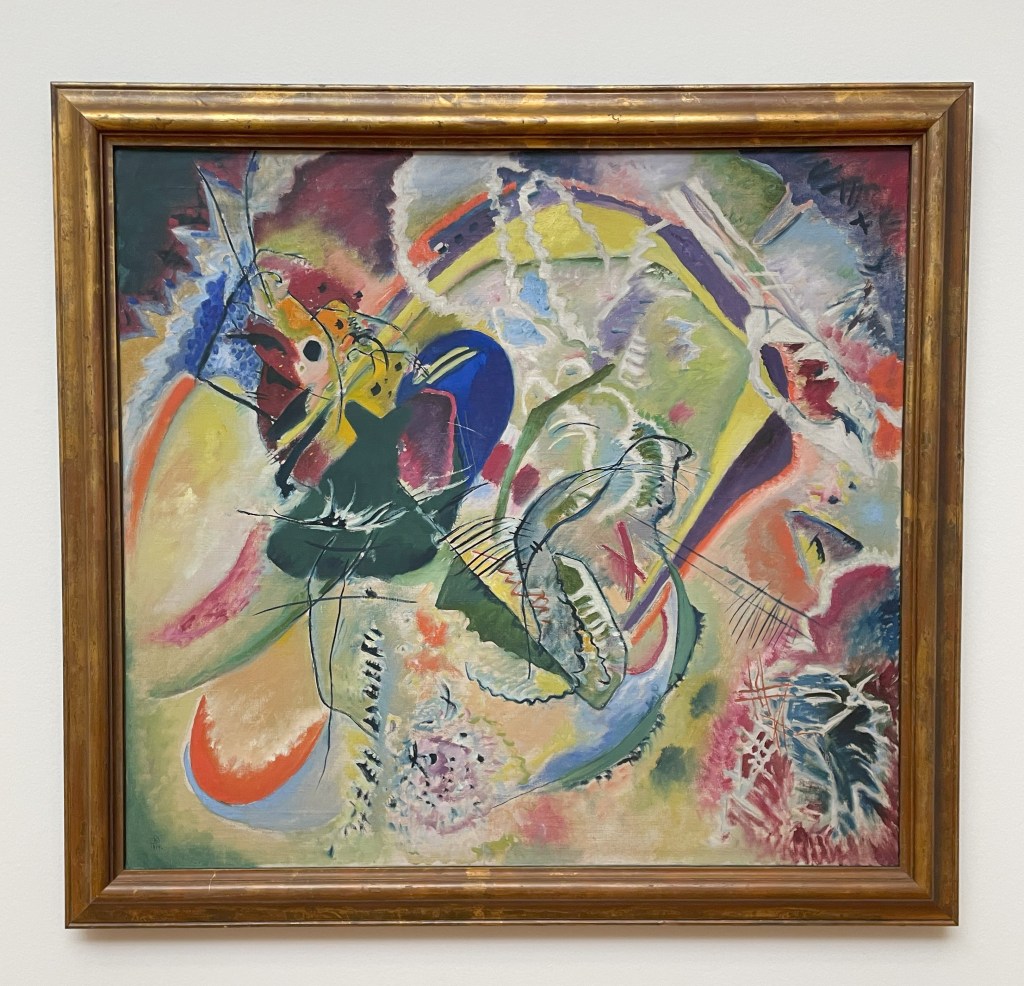
'At Night The Heavy Earth Is Falling' By Anselm Kiefer
‘At Night The Heavy Earth Is Falling’ By Anselm Kiefer

Actually, the exhibition started with some typically monumental, deeply layered works that were very recent.  I confess that it was these of those on show that resonated most strongly with me.  Perhaps this was because they were so reminiscent of Kiefer’s works that I had seen in previous exhibitions and were in a style I was familiar with. 

Paintings By Anselm Kiefer Painted In The 1970s

The rest of the exhibition lived up to expectations though.  Kiefer is an interesting artist and a couple of his watercolours were as arresting as the larger, more obviously impactful oils.  I’ll continue to look out eagerly for his exhibitions.

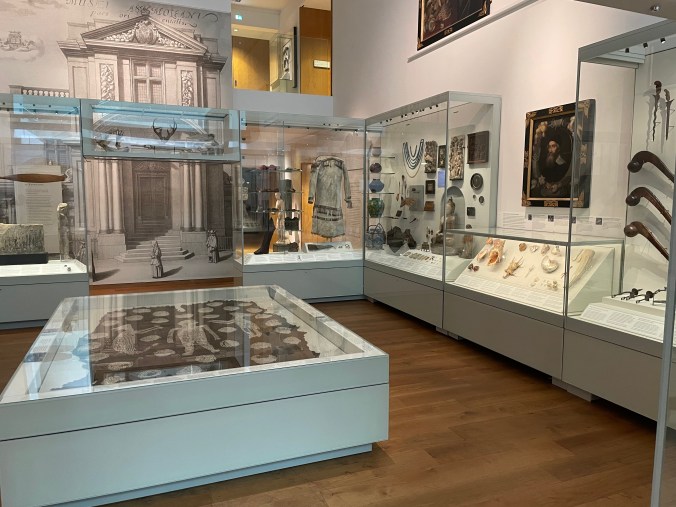
We spent an hour of so wandering through the Ashmolean before a very nice lunch on the roof terrace in the sun.  It was good to come across a section of the museum dedicated to its founder, Elias Ashmole, because it reminded me of an excellent book by Phillipa Gregory (called ‘Virgin Earth’) about Elias’s friend and colleague, John Tradescant, that I read last year.

Section Of The Ashmolean Dedicated To Elias Ashmole

The museum’s rooms are full of a wide huge variety of exhibits from Egyptian mummies to cabinet after cabinet of ceramics. 

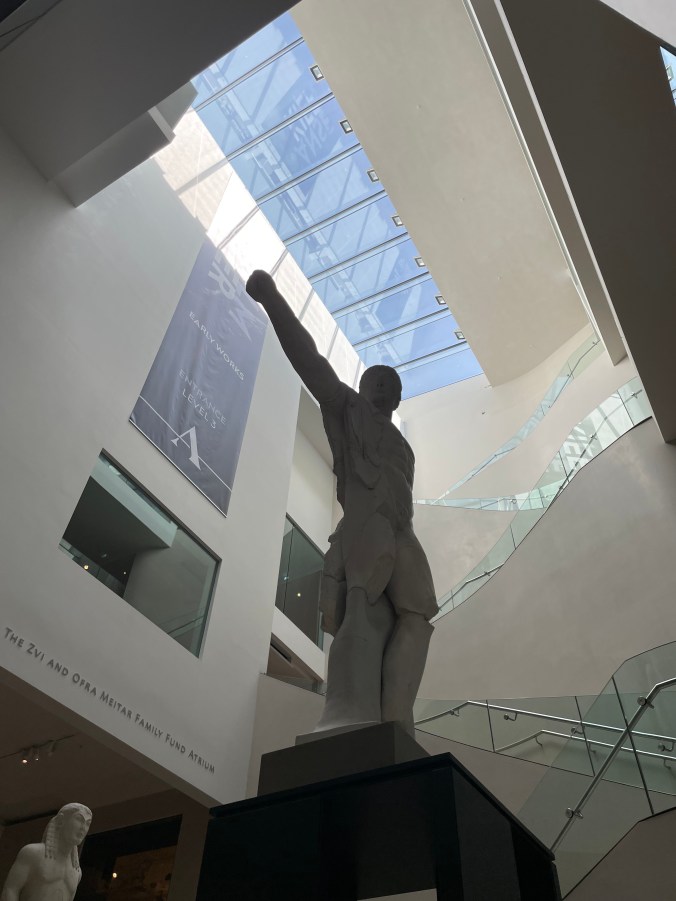
Apollo From The Temple of Zeus, Greece (About 460BC)
Ashmolean Museum: Apollo From The Temple of Zeus, Greece (About 460BC)

There was also a short more temporary exhibition of portraits of leaders and the Iranian elements of this show were well presented and explained.  Then lunch beckoned….

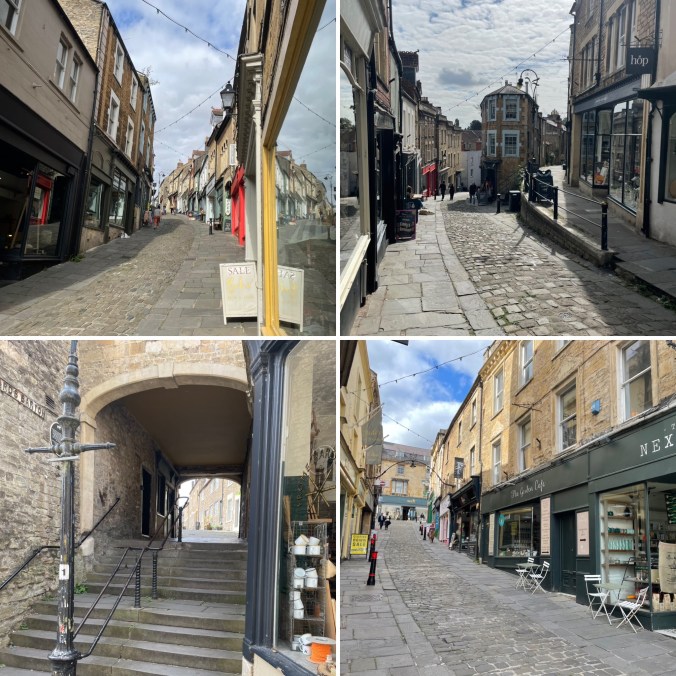
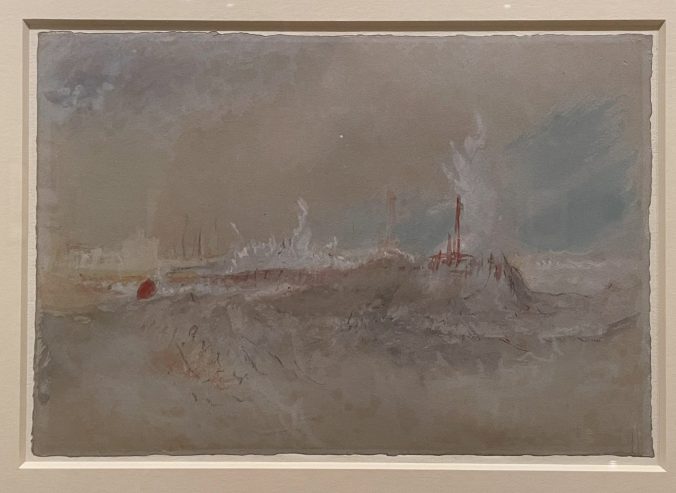
We took in another dose of art during a trip to Bath.  We visited a well-reviewed exhibition at The Holburne Museum of watercolours by J.M.W. Turner – another of my favourite artists.  I enjoyed this even more than the exhibition of Turner watercolours I had seen earlier this year in Edinburgh.  The room was a lot less crowded, Turner’s watercolours were more varied and, in some cases, more interestingly abstract. Plus, there were several lovely paintings by his friends of the time which showed how they influenced – indeed, competed with – each other.

'A Rough Sea Bearing Against Margate Jetty' By J.M.W. Turner
‘A Rough Sea Bearing Against Margate Jetty’ By J.M.W. Turner

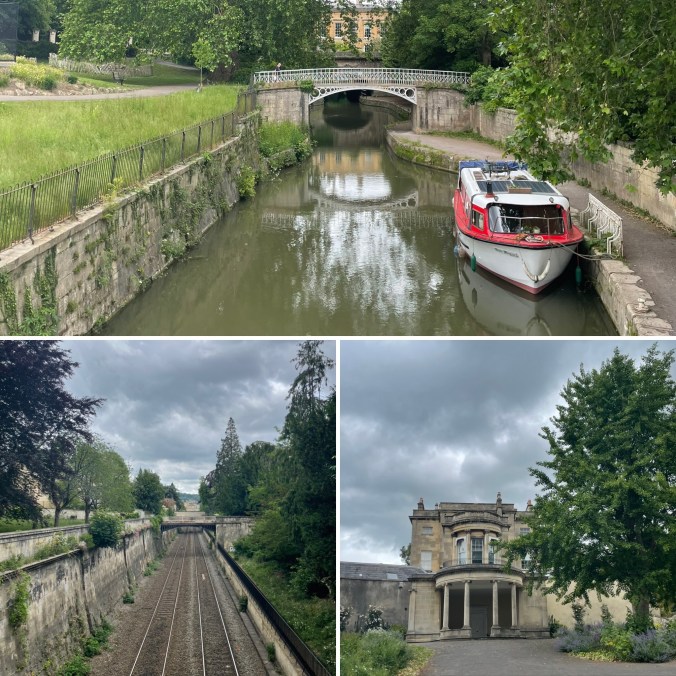
We had a stroll through the adjacent Sydney Gardens.  Despite visiting Bath many times, it was the first time I had walked through these gardens and was surprised that they spanned both the Kennet and Avon Canal and the Great Western Railway with lovely bridges and impressive vistas.  In the dappled sunshine, we could somehow imagine the mix of Jane Austen romance, toll path horses and Victorian railway steam as we wandered about.

Views In Sydney Gardens, Bath
Views In Sydney Gardens. Bath

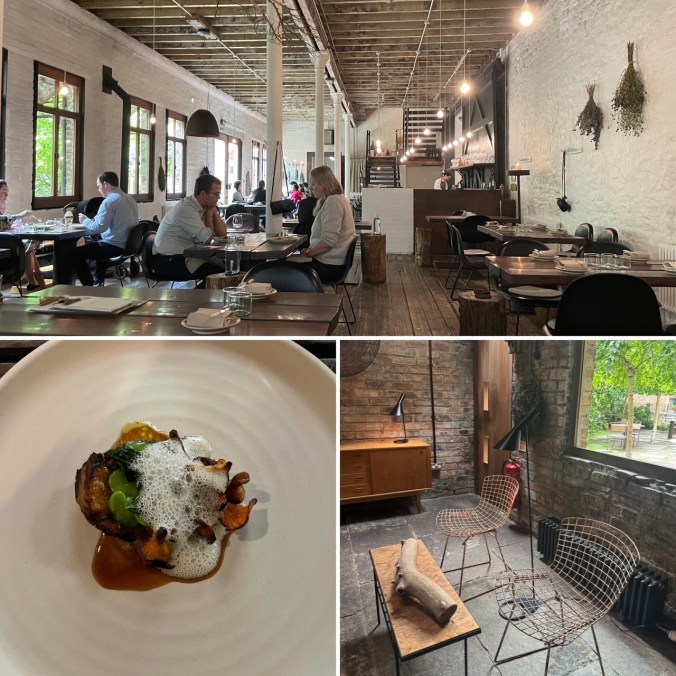
We had an excellent lunch at our favourite bakery in Upstairs at Landrace.  We are so lucky to be able to just drop into restaurants as good as this and take home what we still think is our favourite sourdough bread.

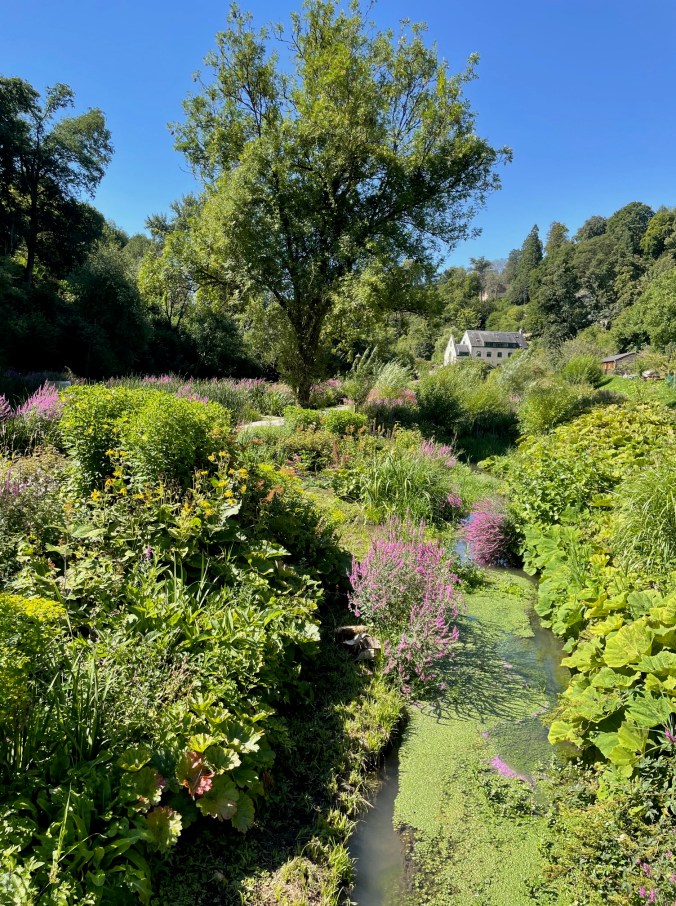
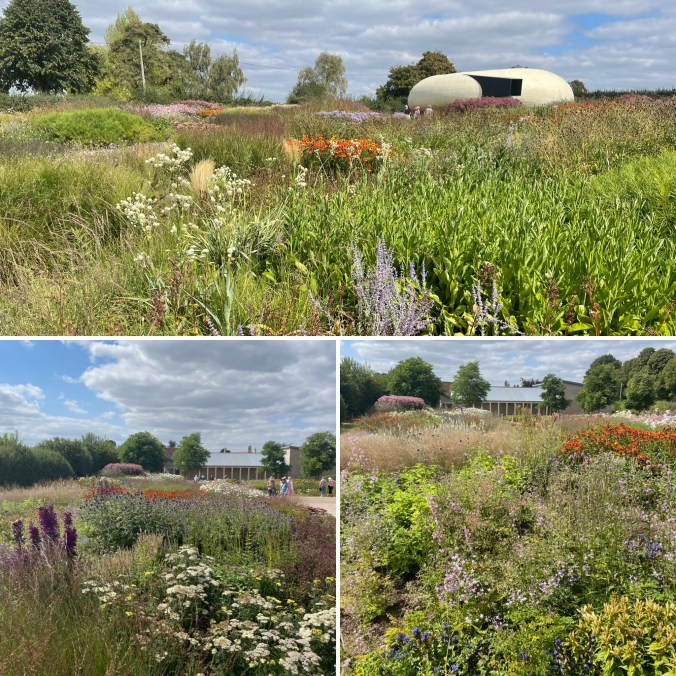
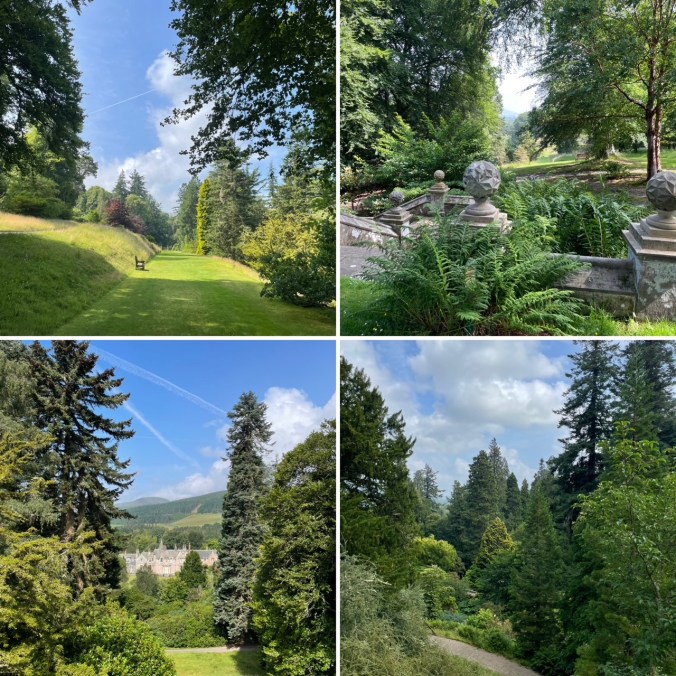
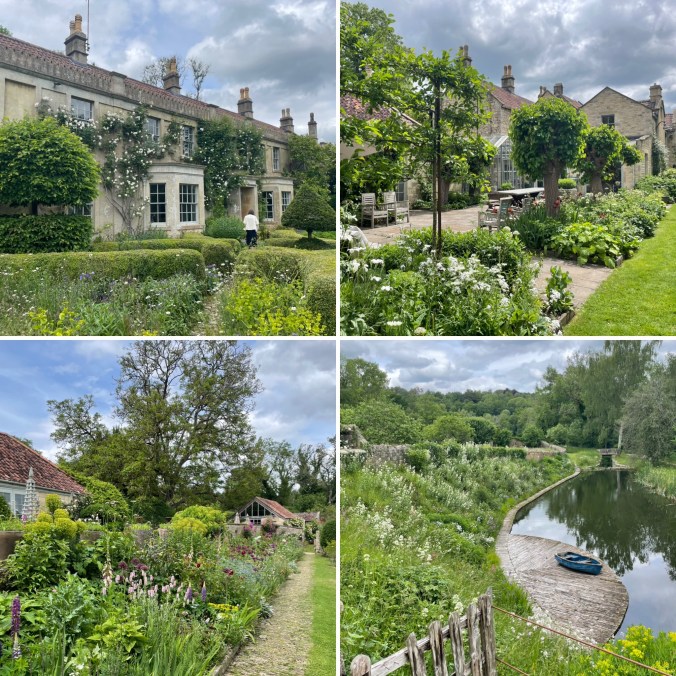
Then, to complete the day, Jane took us down some very windy and narrow lanes into deepest East Somerset to Caisson Gardens where she had booked a tour.  The sun was shining still and the gardens were a delight.  Visitor numbers were restricted and so the views of the flower beds and the backdrop of the house were largely unimpeded and aspect after aspect was beautiful.

Caisson Gardens
Caisson Gardens

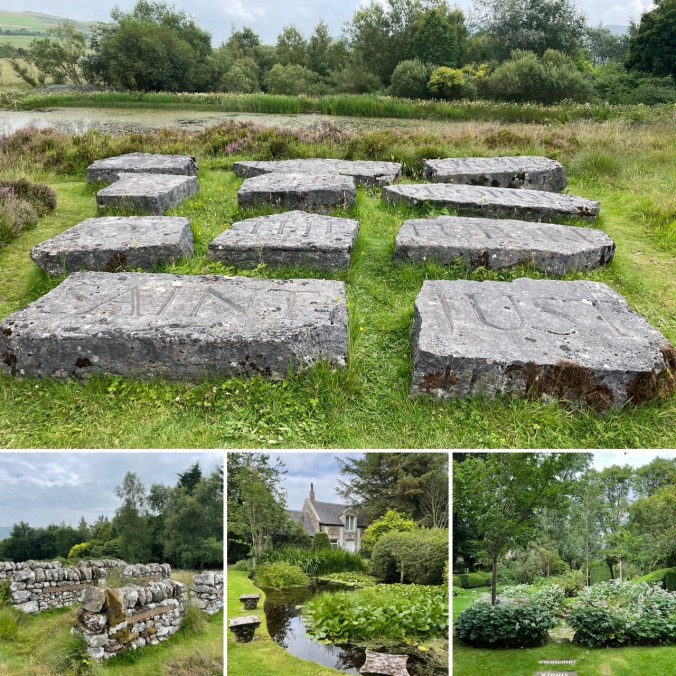
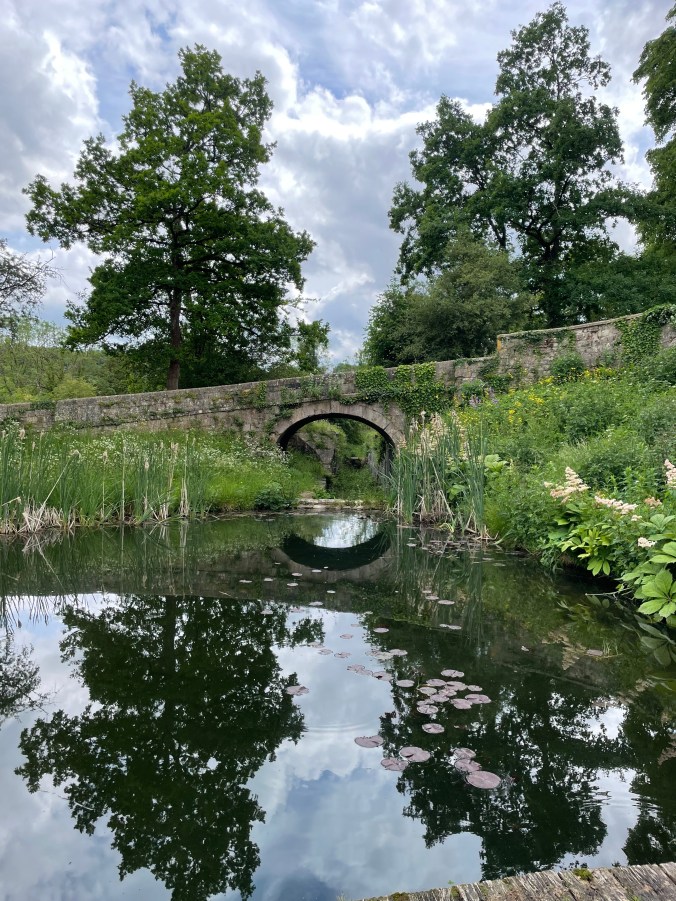
There was some interesting history too in that the remains of Somerset Coal Canal runs through the gardens and adjoining fields.  This once had innovative, but ultimately flawed, Caisson Locks.  The remains of the waterway now supplement ponds full of tiny black frogs, a small lake and a pattern of rivulets running down from the house. 

More Views Of Caisson Gardens

The garden has only opened to the public recently but is well-established and is already a wonderful spectacle at this time of the year.

Lake At Caisson Gardens

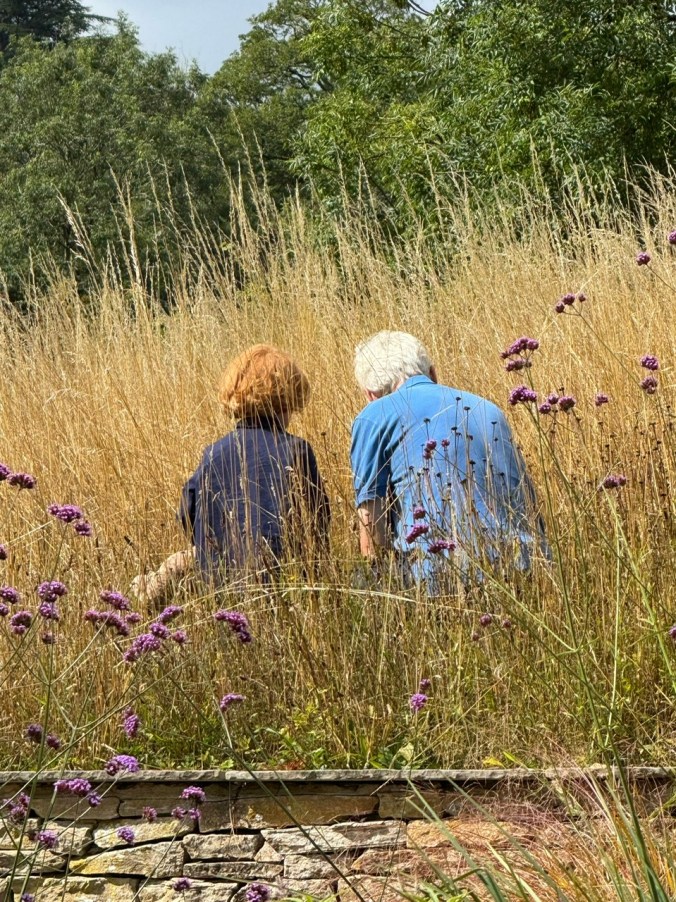
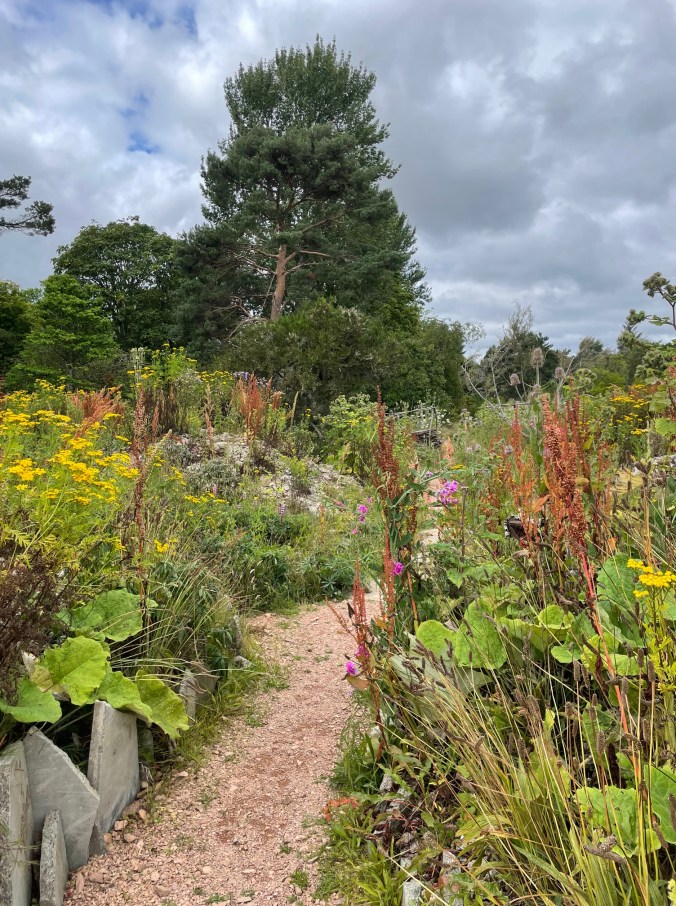
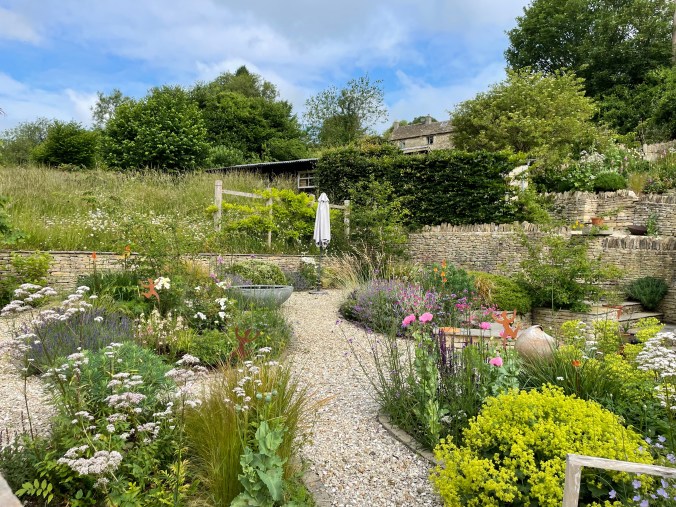
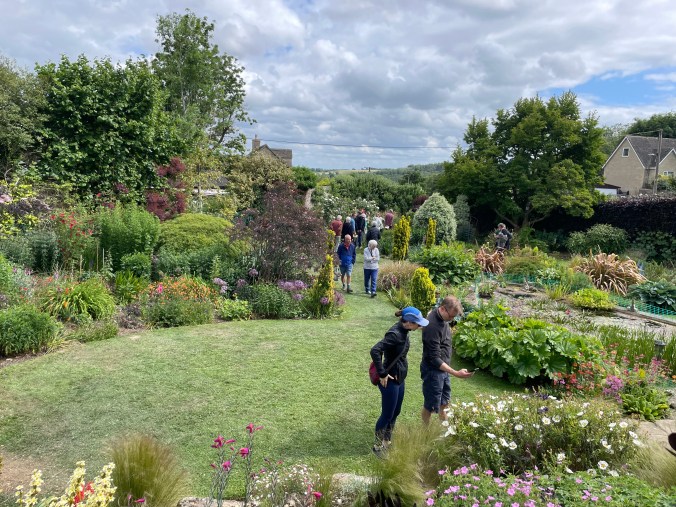
Less spectacular but enjoyable nonetheless, was an afternoon spent on the Box Open Gardens tour in a village near to our previous house.  It’s always interesting to peek into other peoples’ lives – or at least, their gardens.  We picked up a couple of ideas for our own garden and met a lot of people who we hadn’t seen for a long time.  We also were able to wander around the extensive, organic gardens of the local special needs school which you can only get a glimpse of from the road.  Again, the sun shone and we had a very pleasant afternoon.

One Of The Box Village Open Gardens

We have plans for more outings.  We just need to keep breaking the routine.

Belfast to Derry and Back

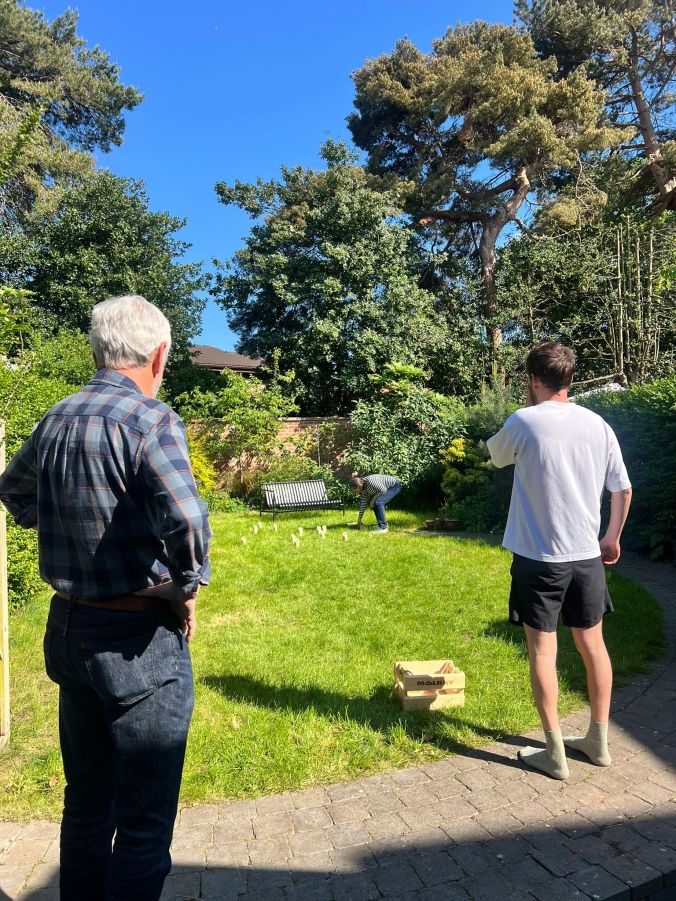
Eight months since our last visit to Belfast to attend and celebrate the wedding of Youngest Son (YS) and his wife, we visited again a couple of weekends ago.  This was a very relaxed trip with few fixed plans, no real schedule other than our flight in and out, and just a desire to catch up properly with the newly wedded couple and to see a bit of Northern Ireland again.  We were helped by terrific, sunny and warm weather and, as usual, great hospitality starting with a barbeque in YS and his wife’s pretty, sunny garden.

Playing Molkky (A Finnish Game Akin to Petanque and Skittles) In The Garden

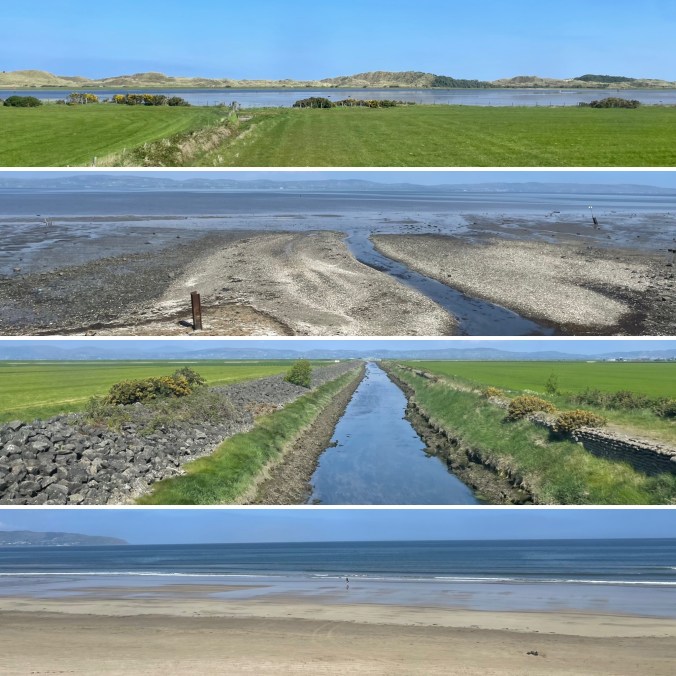
On our first full day in Northern Ireland, we took the train to Derry/Londonderry.  The train journey was very comfortable and relaxing with great views of grassy fields and hills.  Then, as we passed Coleraine and Castlerock, we looked out on beautiful beaches and wide inlets before approaching Loch Foyle and the city of Derry.

Coastal Views Between Castlerock And Derry

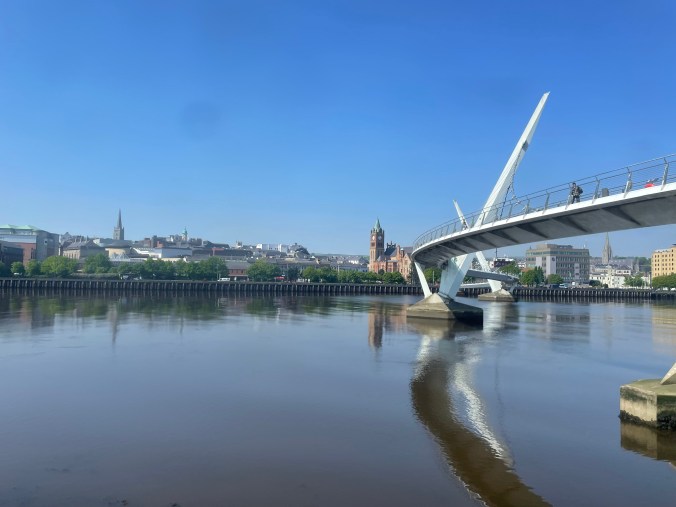
We traversed the Peace Bridge over the River Foyle.  The bridge was funded by the Northern Ireland Government and the European Union Fund for Peace and Reconciliation.  It is an unusual s-shape with two main supports.  We learnt later that the shape is to indicate that the path to peace is not straight and that the two pillars represent the two sides of any peace agreement and the importance of both to enduring harmony.  Derry has been a fulcrum of conflict for centuries between English and Irish and Protestant and Catholic, but the bridge is a testament to the current atmosphere of relative calm, hope and peace.

Derry And The Peace Bridge

We headed into the city and refuelled with coffee at The Hang Ten Brewbar.  There was further, more alcoholic refuelling in the sun at Peadar O’Donnells traditional Irish pub and then we strolled through the city to meet up with a city tour guide. 

Looking Up Waterloo Street, Derry (Peadar O'Donnell's Pub On The Right)
Looking Up Waterloo Street, Derry (Peadar O’Donnell’s Pub On The Right)

He gave a brief account of the early history of Derry including its initial establishment as a monastic community by St Columba in the 6th century and the much later takeover of the city as part of the colonisation of the area by livery companies based in London – hence the alternative name of Londonderry.  These companies, loyal to the English Crown, build the city walls in 1619.  These have apparently never been breached despite a myriad of sieges and attacks since – hence a third name for the city: ‘The Maiden City’.

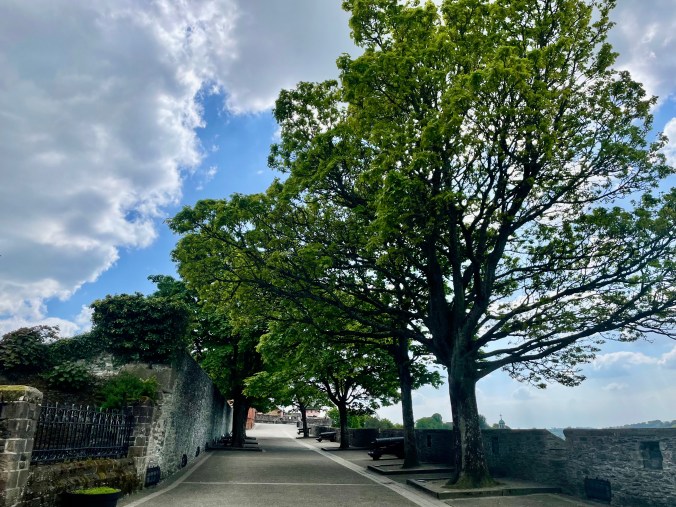
The guided tour followed a simple route around the top of the city walls which have a roughly rectangular layout with four original gates in each side.  Between the two thick sides of the wall is a mass of clay that helped to absorb the power of cannon shot.  Atop this is a thoroughfare broad enough to carry large heavy wagons. 

On Derry's City Walls
On Derry’s City Walls

Of course, the walls also provide great views of the surrounding countryside, the river and some of the more significant buildings in the city itself. 

St Augustine's Church, Derry
St Augustine’s Church, Derry

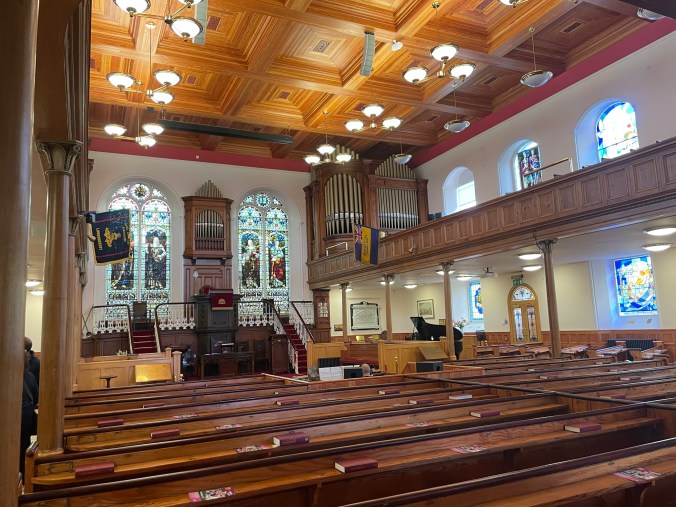
These included the pretty St Augustine’s Church (The Wee Church on the Walls’) and the First Derry Presbyterian Church.  The tour ended in the very centre of Derry from which we could see all four of the original gates and could show our appreciation to the tour guide for a very informative and interesting 90 minutes.

The First Derry Presbyterian Church

Our evening meal back in Belfast was at the very good Mourne Seafood Bar not far from Belfast City Hall where YS and his now wife were married.  

Throughout our stay, we ate very well.  It is great seeing one’s offspring mastering skills I have never possessed and YS’s control of his new barbeque was excellent.  He is barista trained and has access to good Belfast bakeries so breakfast at home was very good.  But even better were the breakfasts at Cultura (where I had a really exceptional Italian Hash) and Neighbourhood Cafe (where I was greedy and had both the lovely fruity, minty coconut granola followed by the excellent Scrambled Eggs Rayu).  The quality was reminiscent of the great breakfasts we had on our trips to Australia some years ago when YS was based there.

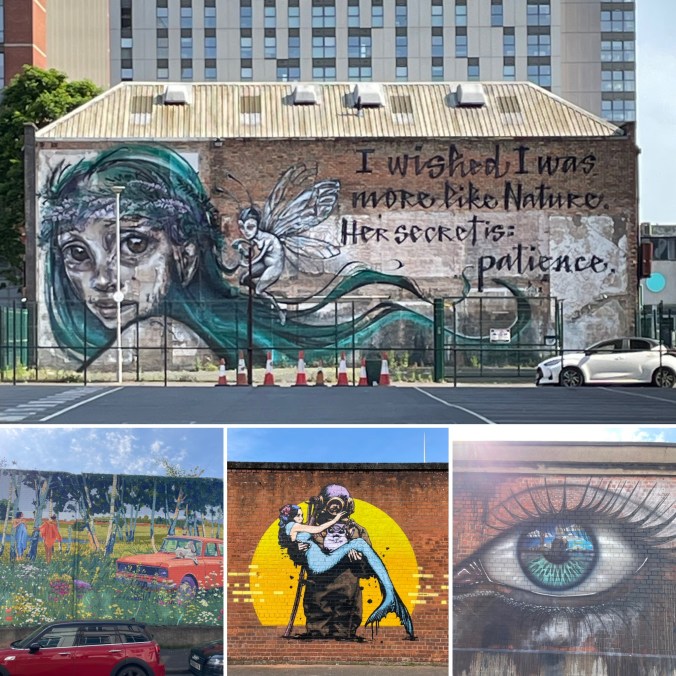
Murals Near The Cathedral Quarter, Belfast

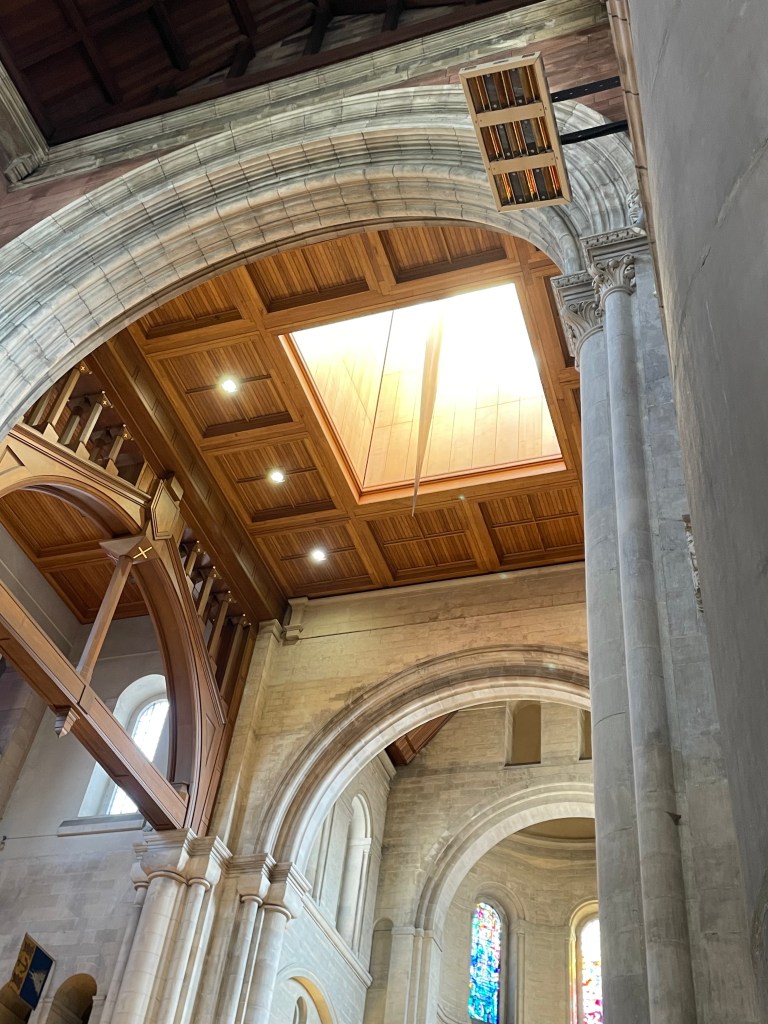
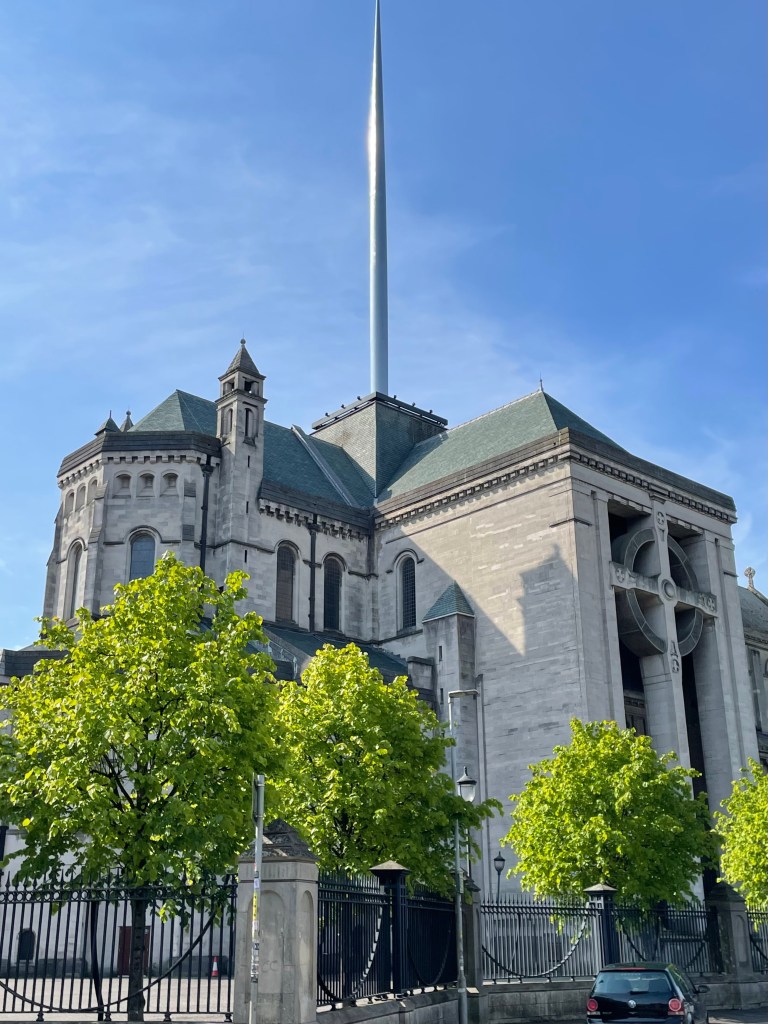
After breakfast at Neighbourhood, Jane went with YS’s wife to her osteopathy studio for a treatment for Jane’s shoulder while YS and I wandered nearby to see The Cathedral Church of St. Anne and some of the local murals.  During the several times we have visited this Cathedral Quarter I had not previously noticed the distinctive cathedral spire which was, this time, shining in the sunlight.  The way the spire protrudes down into the interior of the church was an interesting bit of design.

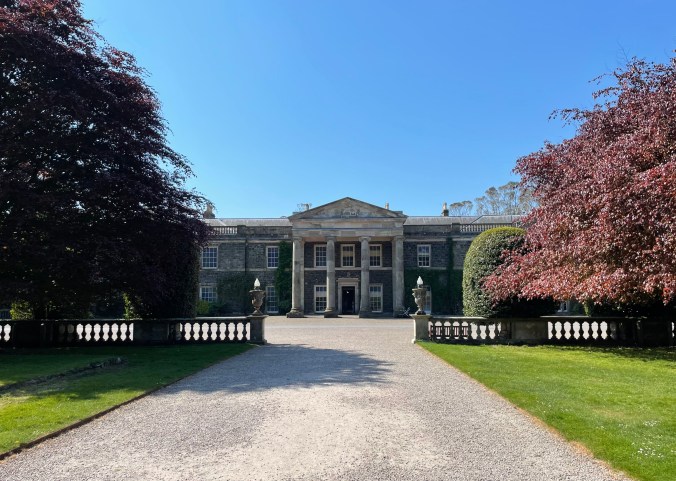
Another highlight of our trip was an outing to Mount Stewart, a large estate on the edge of the extensive Strangford Lough and now owned by the National Trust. 

Mount Stewart House
Mount Stewart House

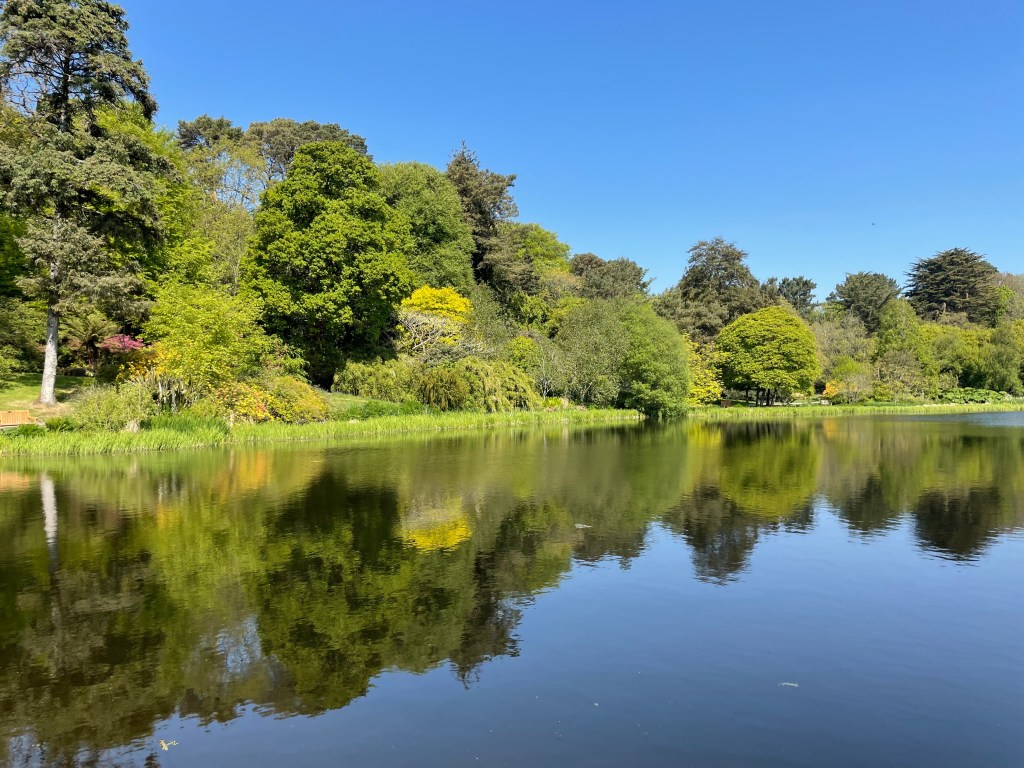
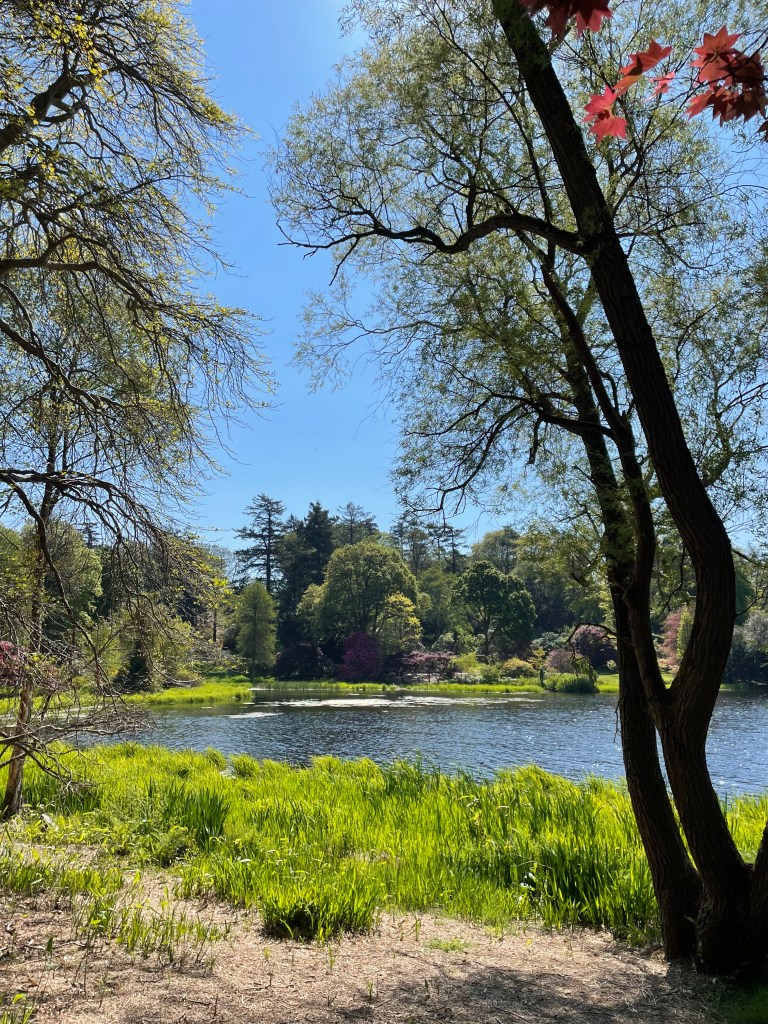
We didn’t go in the house this time since the weather invited us to spend our time in the beautiful gardens and wandering around the lake. 

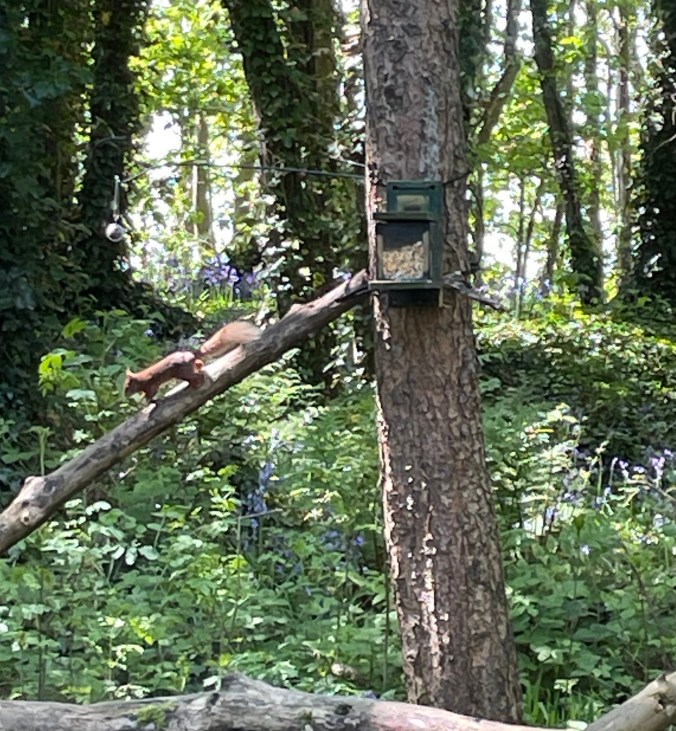
We also ventured into the woods following signs to a red squirrel hide in the hope we might spot one.  In the hide we sat quietly for five minutes peering out of a large and presumably one way window.  Moments after I had I whispered to Jane that this was probably all a bit of a long shot and waste of time, a red squirrel appeared around the side of the hide.  It was a very exciting moment followed by 10 minutes of watching this little, shy creature poking around the feeding boxes and scampering over fallen logs.  Red squirrel numbers have collapsed in the last century due to viruses and competition with larger, invasive grey squirrels, but are now beginning to revive due to conservation efforts such as that we saw.  We felt very lucky to see one.

A Red Squirrel; Very Happy In Its Conservation Area
A Red Squirrel; Very Happy In Its Conservation Area At Mount Stewart

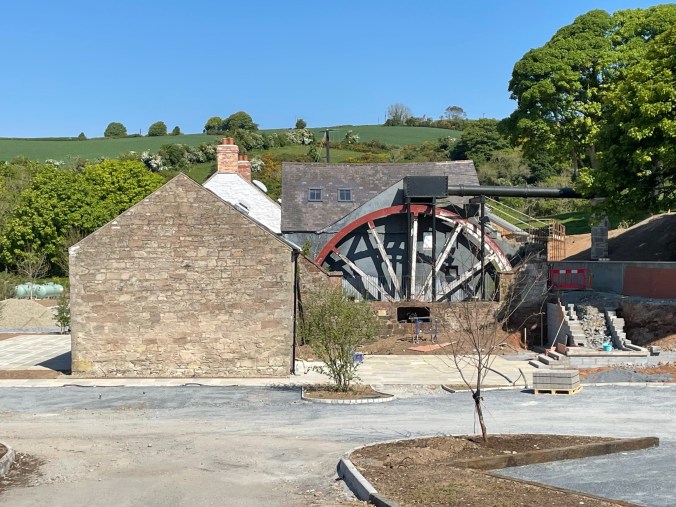
We thoroughly enjoyed our trip to Belfast and to Derry/Londonderry.  Belfast seems to be thriving despite some political and governmental issues.  It was nice that we had an opportunity to peek at a soon to open restaurant associated with Yotam Ottolenghi.  He is certainly a famous restaurateur and his investment in Northern Ireland must be a good sign for the region.  

Site Of The New Restaurant Associated With Ottolenghi
Site (A Repurposed Mill) Of The New Restaurant Associated With Ottolenghi And Opening In 2025

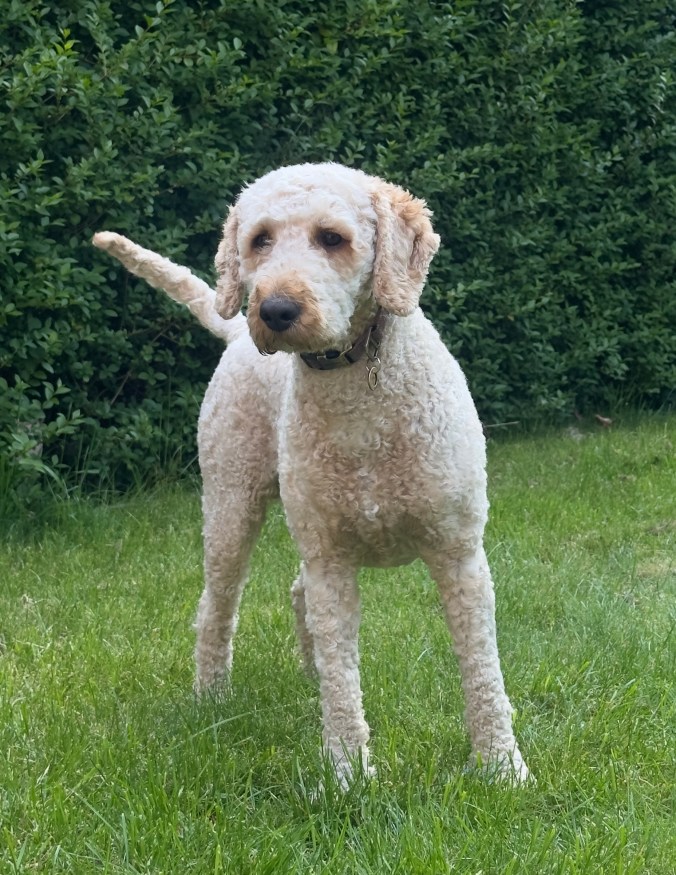
It was great too to see how YS and his wife live, why they enjoy Belfast and Northern Ireland so much and how they have made their home there with their rather elegant and increasingly mature dog ‘Reggie’. 

Reggie!
Reggie!

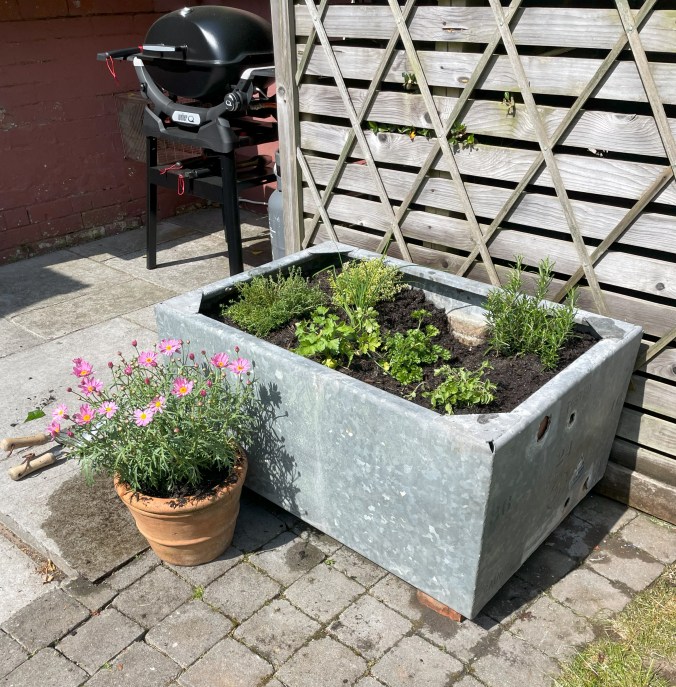
We were glad we could repay their relaxed hospitality with a bit of gardening.  The centre point of our effort was the retrieval of an old zinc water cistern from a local skip and working with YS and wife to fill it, and a few other pots, with herbs.  YS’s new barbeque is now surrounded by these pots and is adjacent to a bit of planting that we all felt very proud of.  It was not only a very enjoyable weekend but a productive one.

New Planting (Just Missing The Jasmine That YS Added Later)

Art and Architecture in Basel

I am not an art connoisseur but I do enjoy visiting art galleries; indeed, we both do.  Whilst we were in Basel for my birthday, and as the weather turned from sun to cloud to rain, we went indoors to see the Kunstmuseum, Fondation Beyeler and the Swiss Architecture Museum.  Each was impressive in different ways and we enjoyed visiting them all very much.

Basel Kunstmuseum (Hauptbau - Main Building)
Basel Kunstmuseum (Hauptbau – Main Building)

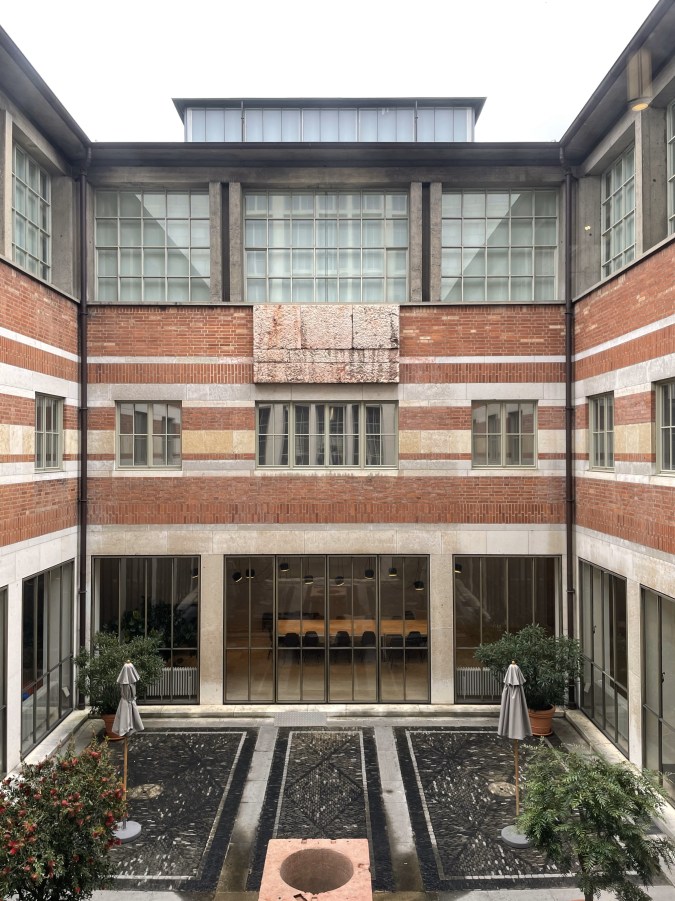
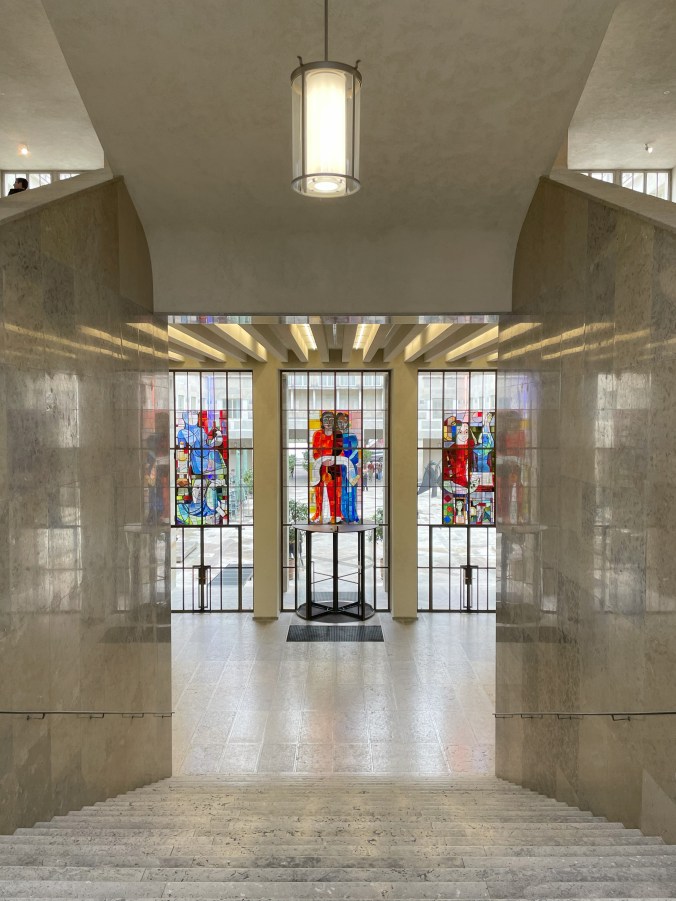
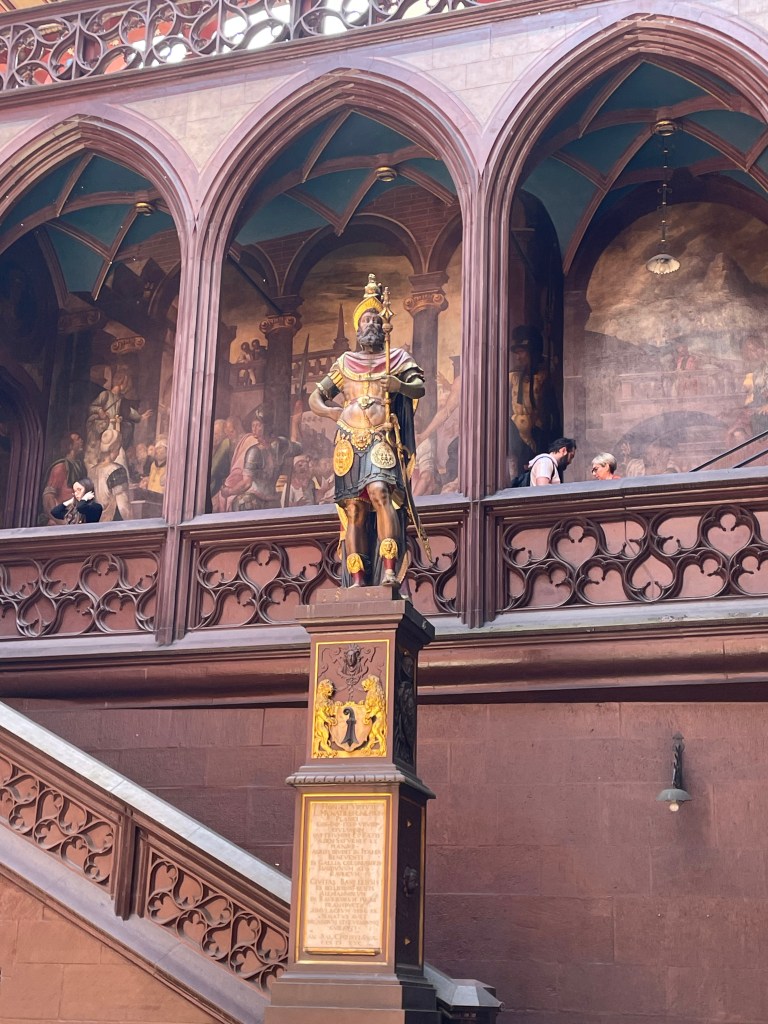
The collection at the Kunstmuseum Basel is very extensive and diverse.  It is housed in three different buildings.  The first was built in the 1930’s and is a beautiful building from that era that is full of great art from the 15th century to the middle of the 20th century.  The colours throughout the building are subtle and earthy, and the stairwell was as impactful as some of the art.

Inside Basel Kunstmuseum (Hauptbau - Main Building)
Inside Basel Kunstmuseum (Hauptbau – Main Building)

We started gently in a side room where the curators had paired pieces from different genres and periods and exhibited them side by side.  This was in an effort to trigger new comparisons and feelings that would not be prompted if the works were seen alone.  I didn’t always see the connections in the pairings but some were more obvious and fun to spot. 

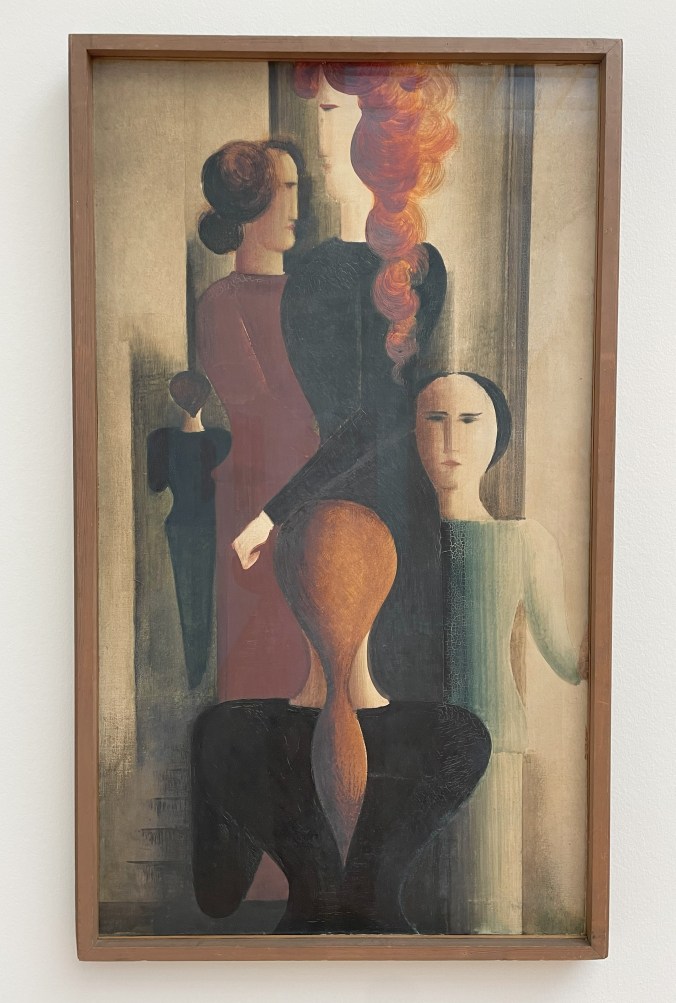
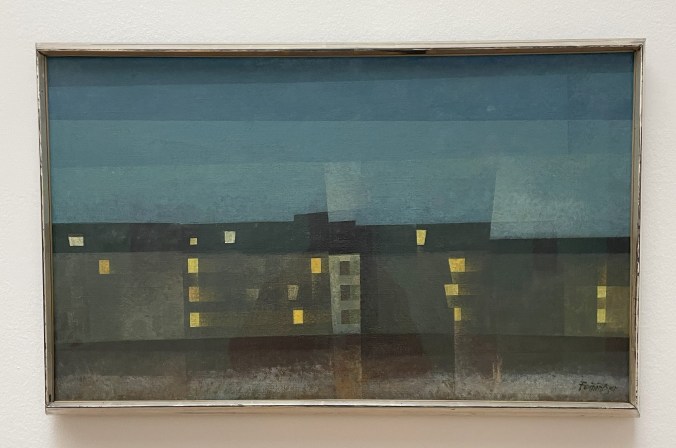
We both spent more time upstairs amid works from the early 20th century.  Here too I had fun recognising some of artists before reading the explanatory captions alongside the works.  There was representation of almost every western-mainland European artist I could think of plus many I was unfamiliar with. (I only spotted two works by English and American artists).  The quality was consistently very high and here are two I particularly liked….

'Women on a Stairway' By Oskar Schlemmer
‘Women on a Stairway’ By Oskar Schlemmer
'Illuminated Windows' By Lyonel Feininger
‘Illuminated Windows’ By Lyonel Feininger

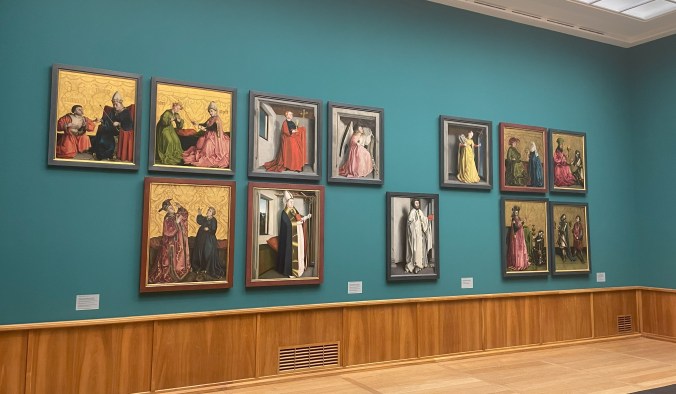
By the time I had finished with the 20th century art on the first floor, I was tiring.  However, as I moved into areas showing the 15th to 19th century art I was revitalised again by the range and quality.  I skipped through some of the rooms displaying early religious work – although, not for the first time, I was astonished by the vibrancy of the colour given that most of these works are over half a millennium old. 

Vibrant Religious Works In Kunstmuseum Basel
Brightly Coloured 15th Century Religious Works In Kunstmuseum Basel

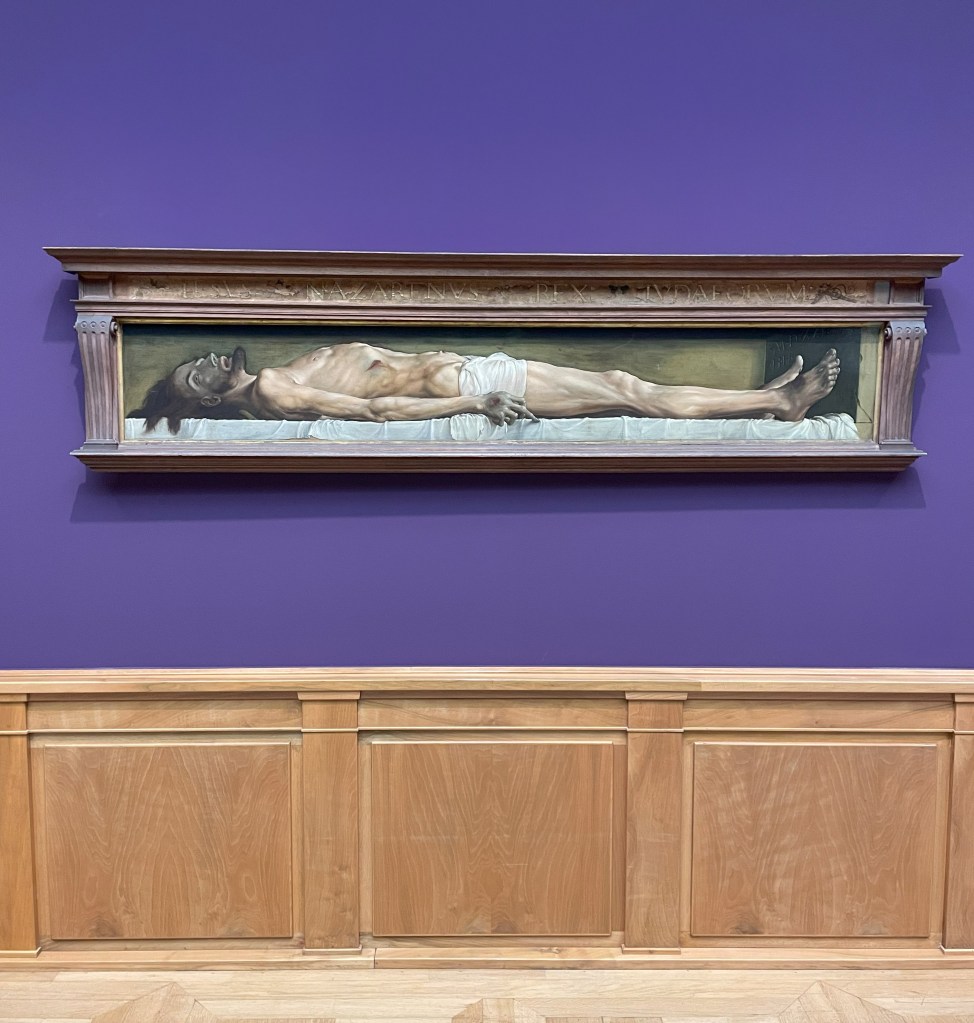
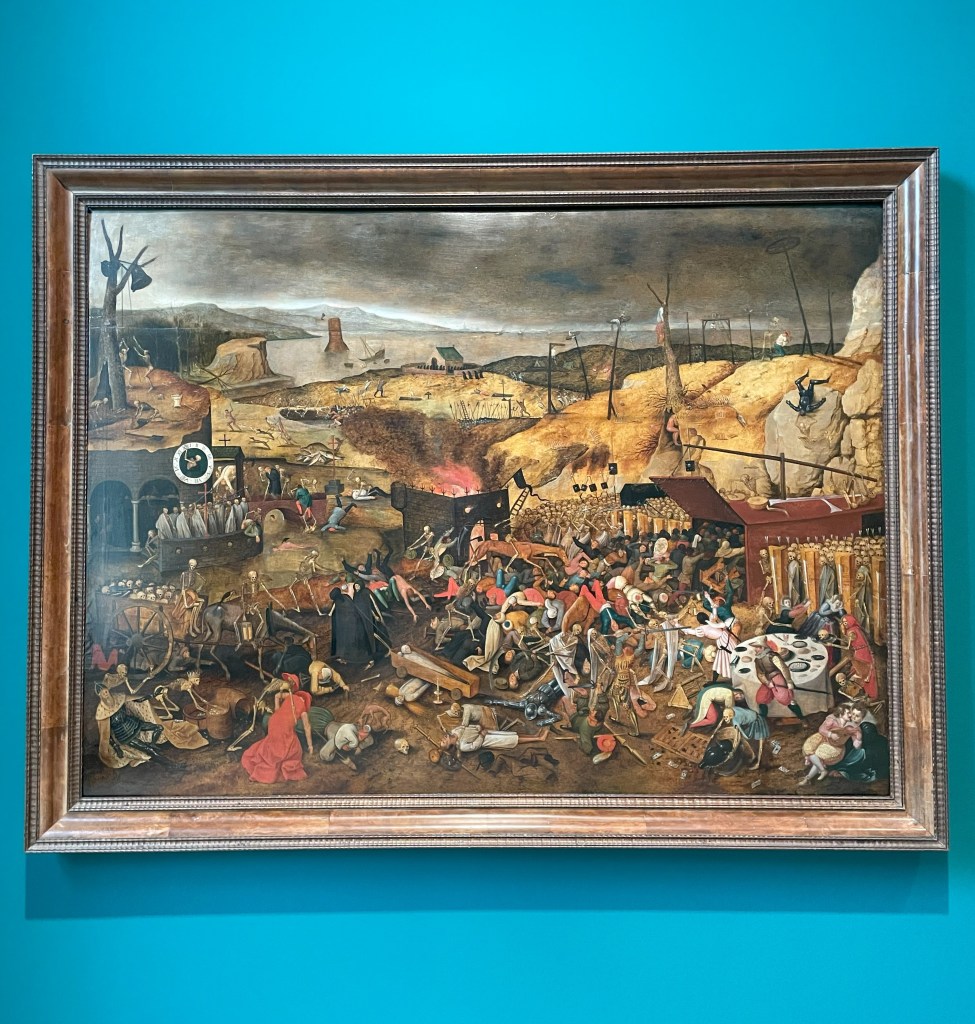
My favourite paintings in this section were one by Pieter Bruegel, whose detailed crowd scenes I always find interesting, and those by Hans Holbein (the Younger).

I slowed again as we came to the 18th and 19th century sections and really enjoyed painting after painting.  I especially enjoyed a room of Dutch still lives.

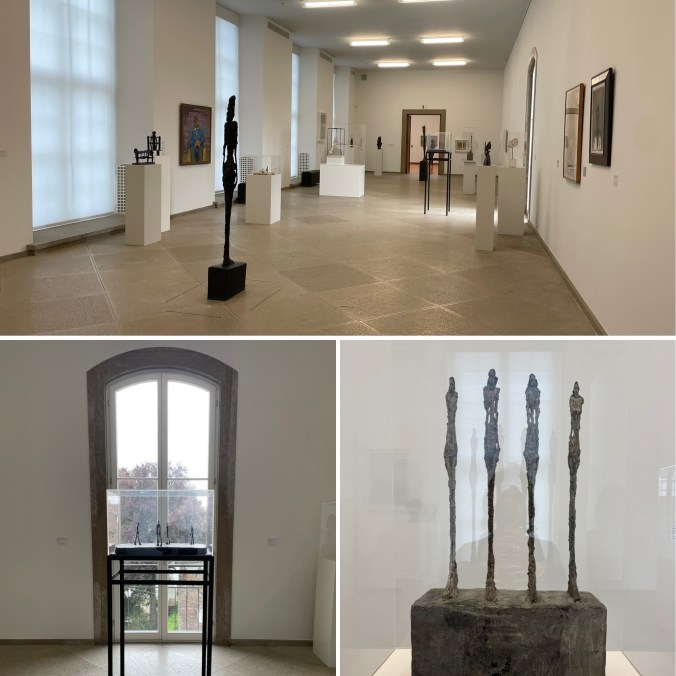
To be honest I thought I was done but there was still more early 20th century art to see including a whole room dedicated to Alberto Giacometti sculptures (I hadn’t previously realised that he was Swiss!).  And this was just the first building……

The Giacometti Room, Kunstmuseum Basel

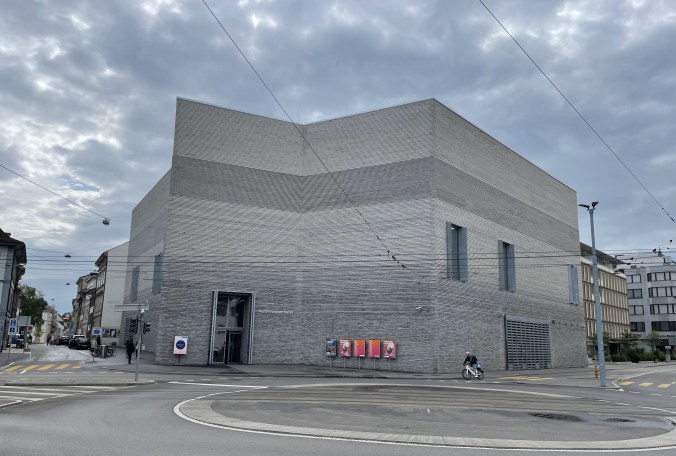
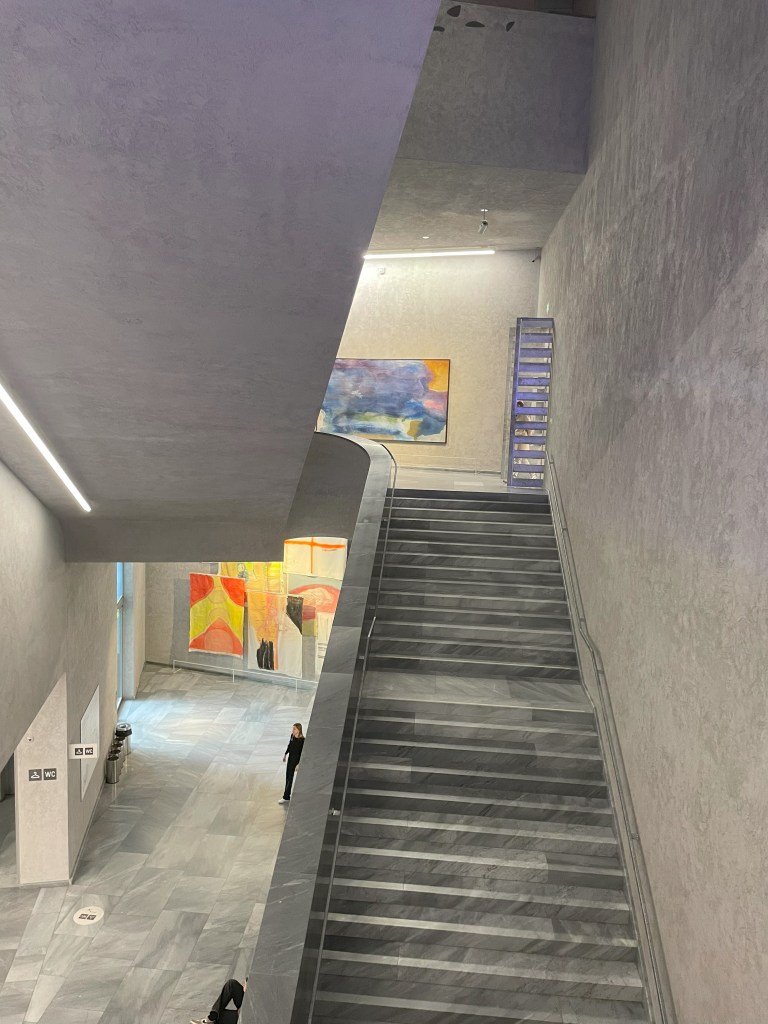
The second Kunstmuseum building was built in 2016 and is a radical design resembling a slightly crumpled grey box.  Inside, the look is very contemporary with bare grey surfaces and art dating from 1950. 

Basel Kunstmuseum (New Building)

Frankly, I was sated with art by this time.  I walked around the floors but found the modern art even harder to fully take in than usual, especially as not all the information was provided in English and so the backstory to the artists and work was harder to grasp.  However, I did like an Alexander Calder mobile in the entrance hall and the overall ambiance of the place.

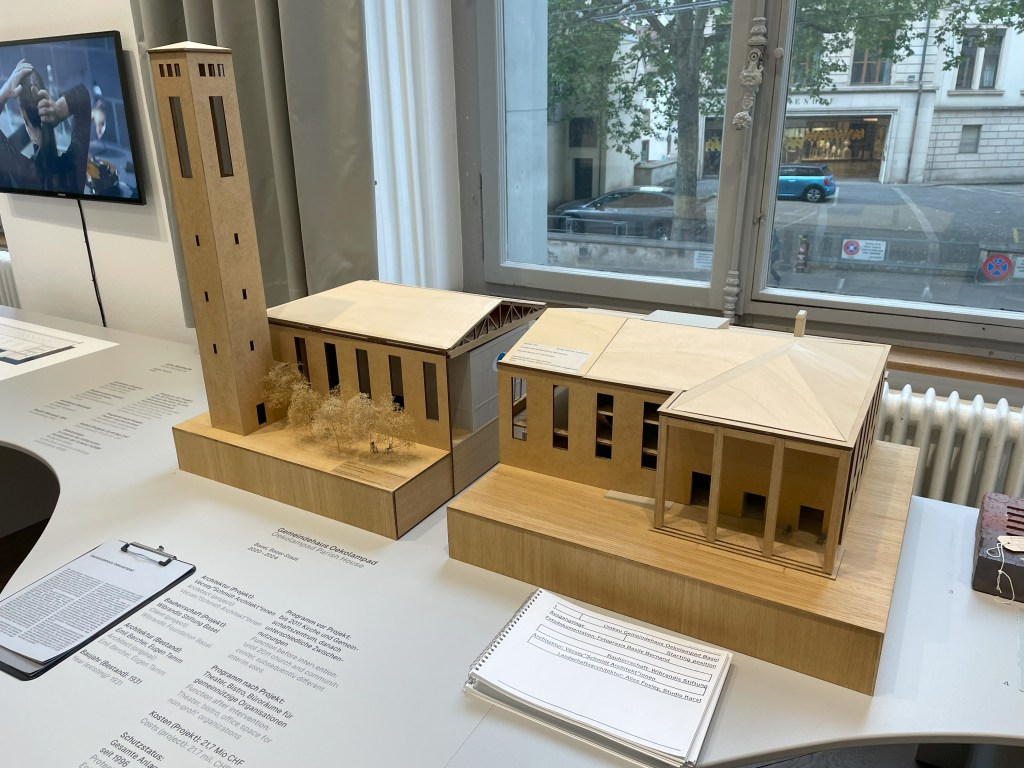
We didn’t make it to the third Kunstmuseum building which is for temporary exhibitions.  Instead, we stopped off at the Swiss Architecture Museum.  This had a couple of ongoing exhibitions on display. 

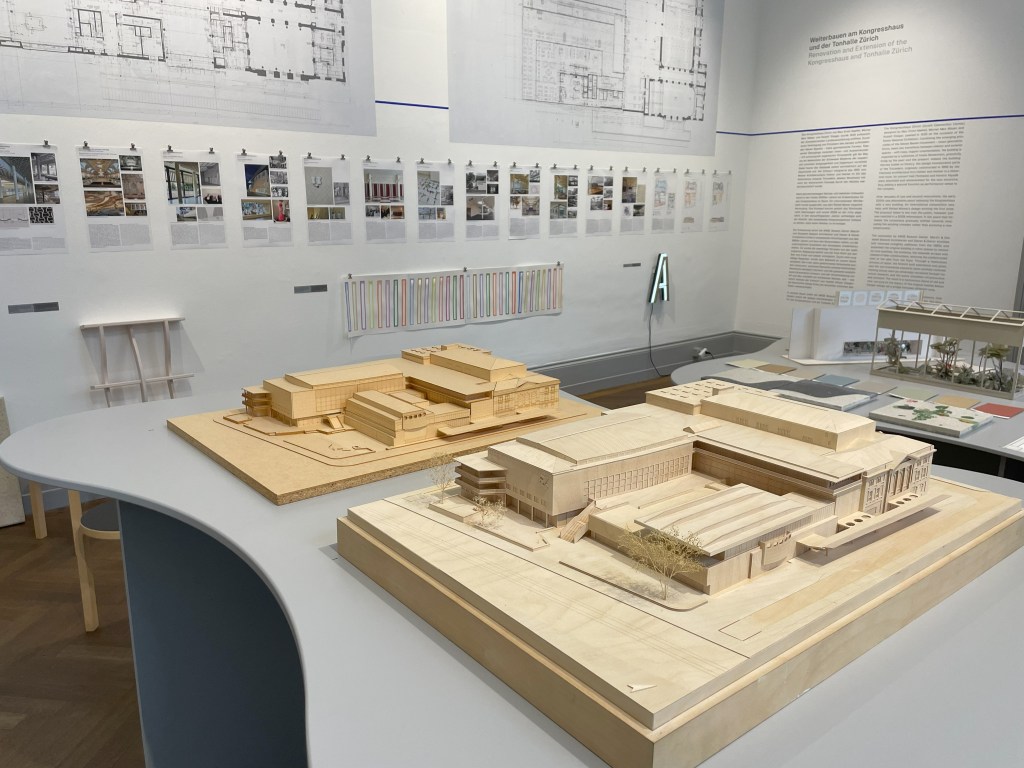
By far the most interesting was that showing recent Swiss developments demonstrating renewal and renovation of buildings rather than their demolition and replacement.  Not only is replacement more eco-friendly but it preserves a continuum of history. This was a theme of the European Architectural Heritage Year of 1975 and the exhibition we saw was a celebration of the 50th anniversary of that event.

Models of Renovated/Restored Buildings On Show At The Swiss Architecture Museum

Some of the developments portrayed were quite small – individual houses or community buildings – while others were large and included the Kongresshaus and Tonhalle in Zurich.  The museum was well worth an hour or so of our time even as laypeople in the architecture world.

Our last day in Basel was forecast to be wet and, indeed, it rained all day.  We had planned for this and set off on a tram to Fondation Beyeler a few miles outside the city.  We knew that the main art gallery – another very impressive collection apparently – was closed to visitors, but we were very keen to see the well-reviewed exhibition of art called ‘Northern Lights’.  This was focused on representations of the boreal forest around the Arctic Circle by Canadian, Scandinavian and Russian artists.

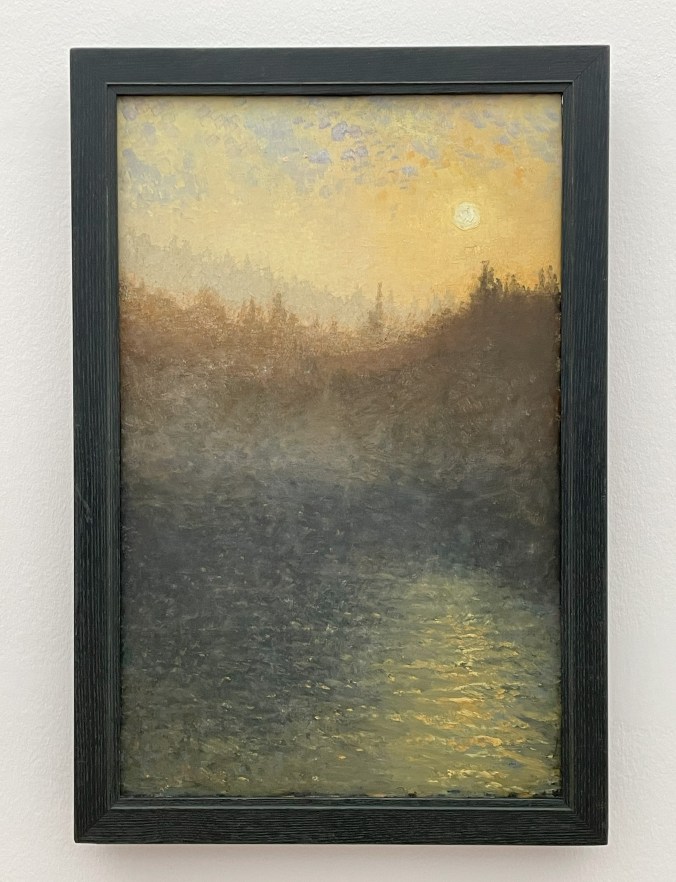
I was particularly keen to see works on show by Hilma Af Klint.  I had not heard of this Swedish artist until I heard children at a local school read about her during my volunteering to help ‘unconfident readers’.  Her two works on show here was very different from her later symbolism and portrayed the eeriness of the forest.

'Sunrise' By Hilma Af Klimt
‘Sunrise’ By Hilma Af Klimt

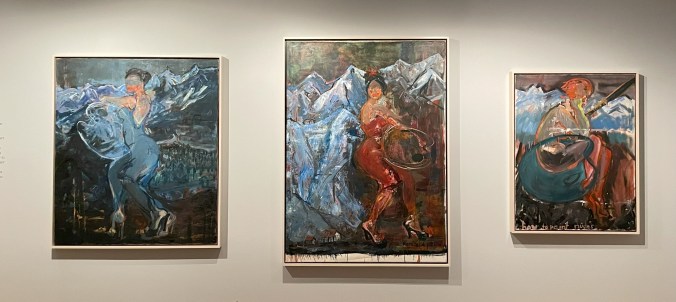
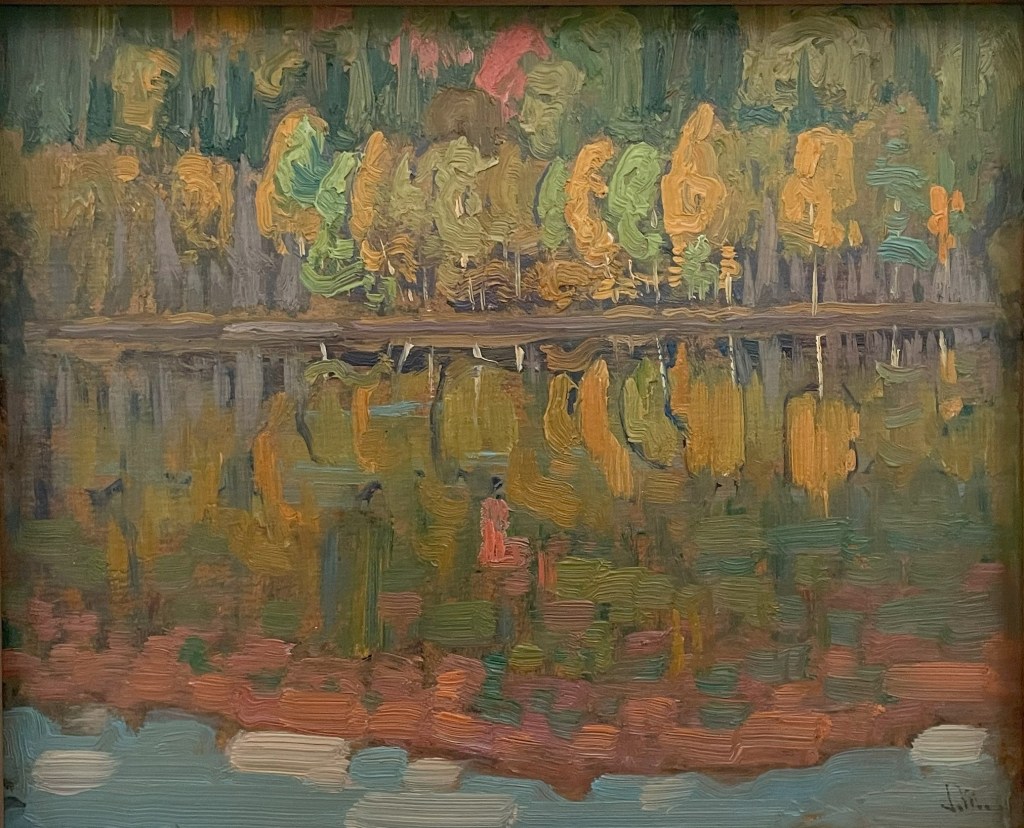
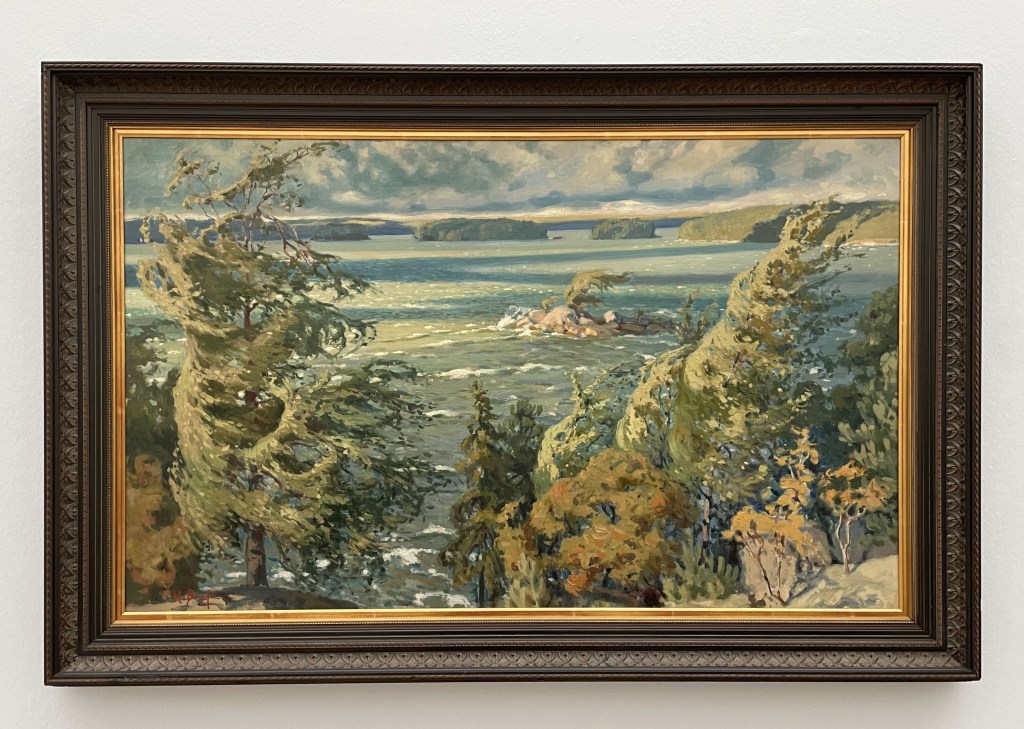
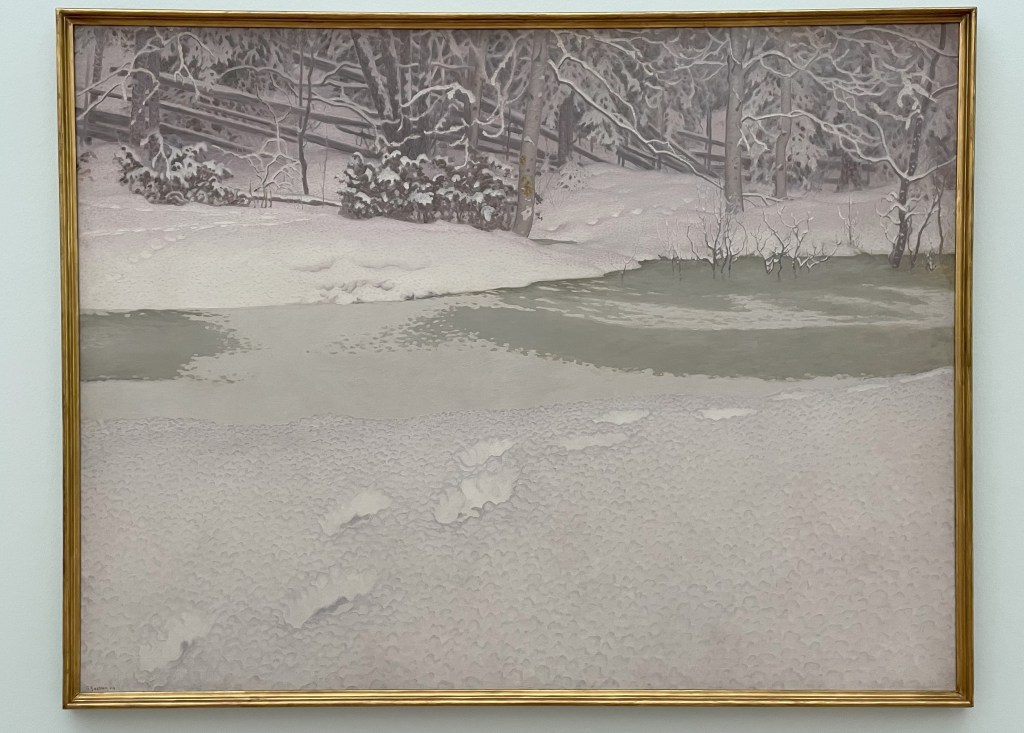
To be honest though, there were paintings in the exhibition that I enjoyed more and all were by artists I had never heard of before.  Both of us really enjoyed a few of the works by another Swede: Akseli Gallen-Kallela.  These were some of my favorites of his:

'Spring Night' By Askeli Gallen-Kallela At The Northern Lights Exhibition, Fondation Beyeler
‘Spring Night’ By Askeli Gallen-Kallela At The Northern Lights Exhibition, Fondation Beyeler
Four More Paintings By Askeli Gallen-Kallela
Four More Paintings By Askeli Gallen-Kallela Including ‘Mantykoski Waterfall’ (Left)

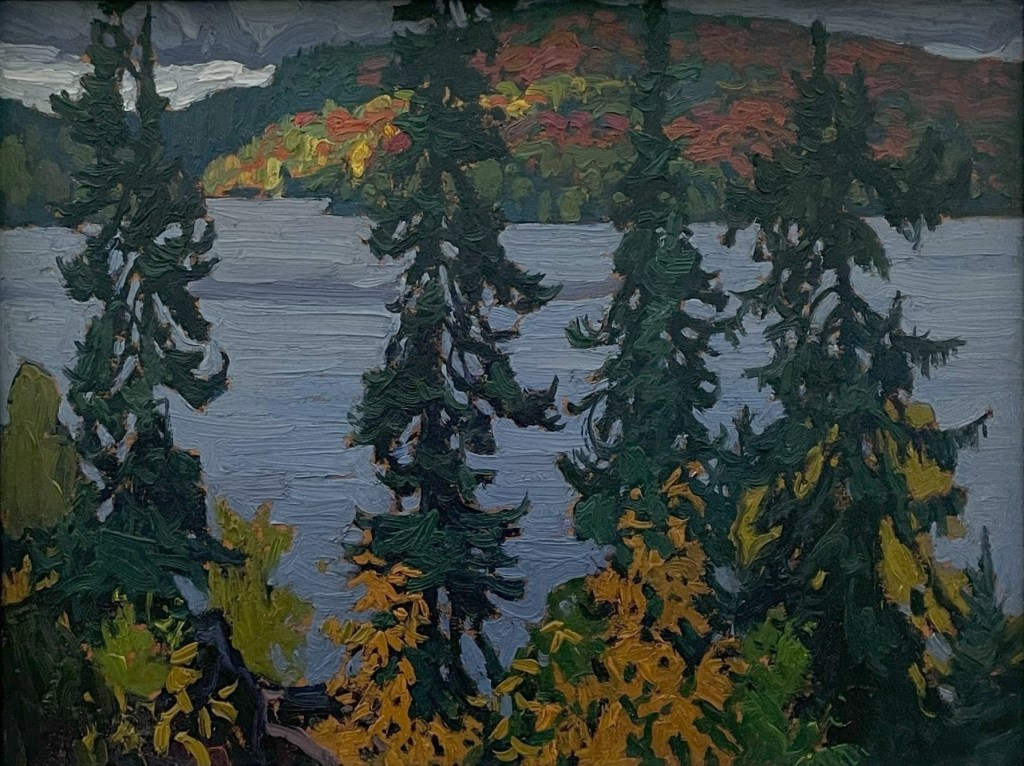
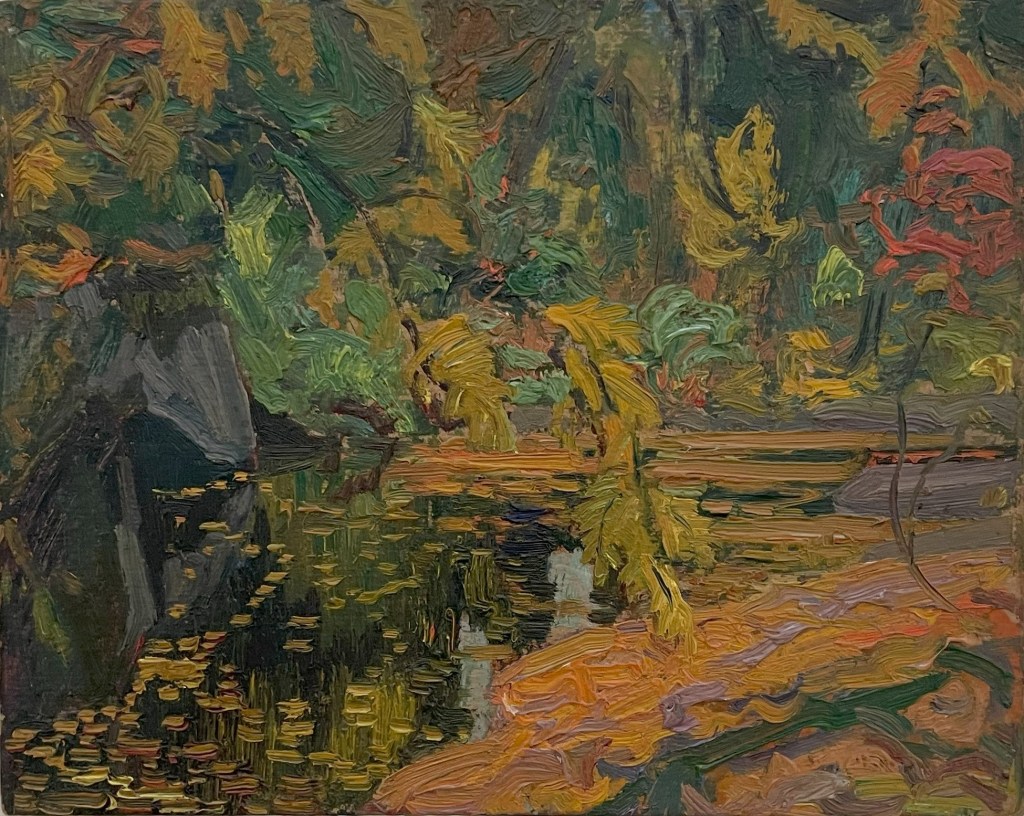
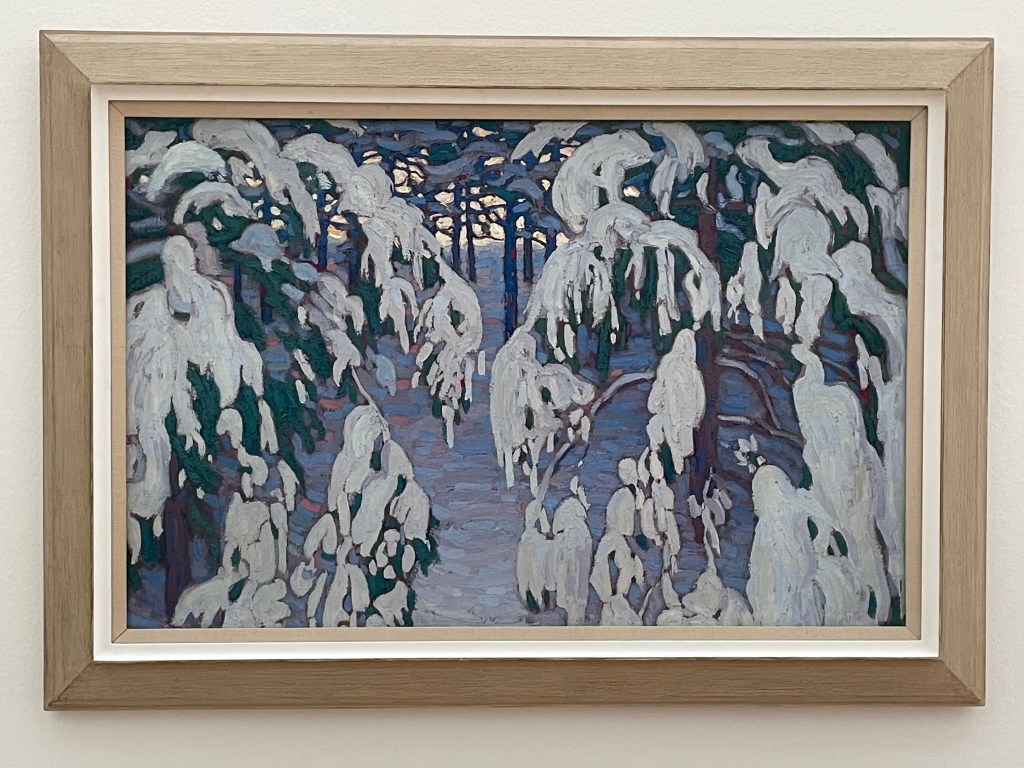
I also really enjoyed the last room of smaller paintings.  Several were by Canadians including Tom Thomson including one of a canoe he used to row out onto lakes and which, sadly, he ultimately disappeared in, and J. E. H. MacDonald who was originally from the UK. 

Paintings By Lawren Harris and J. E. H. MacDonald

Many of the paintings in the exhibition gave a strong impression of the cold of the forest.  Apart from a couple which showed the wind in the trees, they also had a calm, silent, atmospheric quality.   

Throughout the exhibition, the presentation and the information provided was first class.  Both of us liked the fact that the explanatory captions for each art work were on the floor rather than alongside the paintings.  I wonder why this tactic isn’t employed in other galleries.

As we left Fondation Beyeler, following very tasty lunch there, we saw some filming going on in the pretty but wet gardens.  Jane overheard that it was related to the Eurovision Song Contest that was gearing up for the finals a week or so later.  I’m certainly glad our excellent, uncrowded visit to Basel didn’t happen to coincide with that!

The Garden, Fondation Beyeler

Birthday in Basel

Unusually, my wife Jane picked up a copy of the Financial Times (FT) a couple of weekends ago.  On Saturday’s, it’s a thick paper with a variety of sections – some more interesting than others.  In the travel section, there was an article on Antwerp which we visited several years ago and, alongside that, an article on visiting Basel in Switzerland.  Upon reading it, Jane suggested that we book a trip there the following weekend to mark my birthday.  Within 20 minutes, we were booked into car parks, flights and a hotel and were set; retirement flexibility, a bit of money in the bank and the internet on our phones makes delivering on a whim so easy!

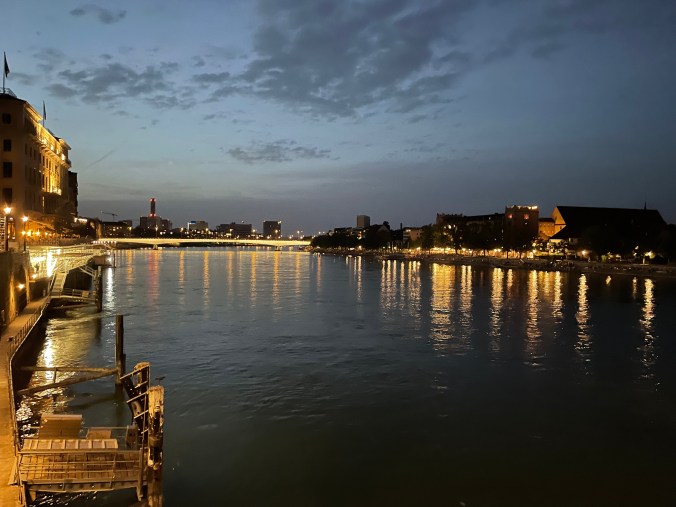
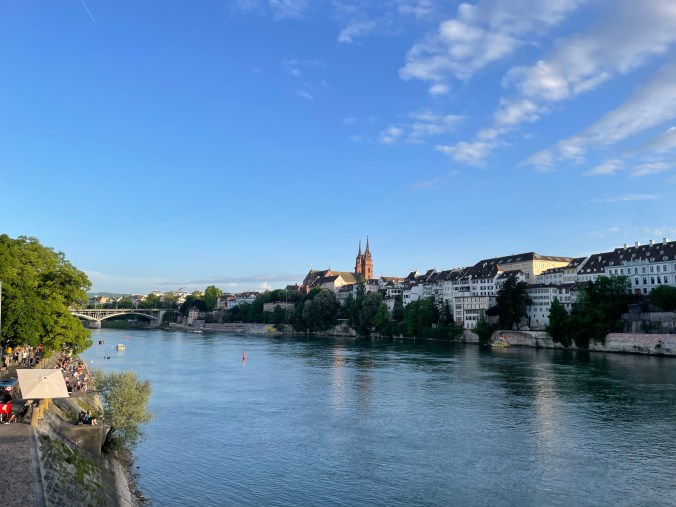
View Of The Rhine on Our First Evening in Basel

We arrived late in the evening, checked in to our room and ventured out to a brasserie recommended in the FT article for something to eat.  We chose simply – just a beer and a burger each – but were taken aback by the cost of restaurant food.  Meal prices are about twice those in our part of the UK.  It took us a couple of days to recalibrate our expectations as we picked up menus in a variety of places over the next few days.  The food quality was excellent everywhere but the prices were eye opening.

Other aspects of the city break in Basel weren’t so expensive.  Our hotel (Hotel Märthof) was very central, perfectly comfortable and decent value.  The service there was exceptional and there were some useful addons, notably including the free BaselCard which all Basel hotels provide for overnight stays and which offers half price museum and gallery entry, and free public transport. 

That last perk was very useful on our last afternoon in Basel when the weather was rainy, almost all the public buildings and bars were shut, and we found ourselves wanting to kill some time in comfort.  We simply got the number Line 10 Tram, one of the longest tram rides in Europe and one of only five tram lines in Europe to span more than one country (in this case France and Switzerland).  It was an interesting hour or so that enabled views of misty hills and nice, green French and Swiss countryside.

From The Line 10 Tram In France

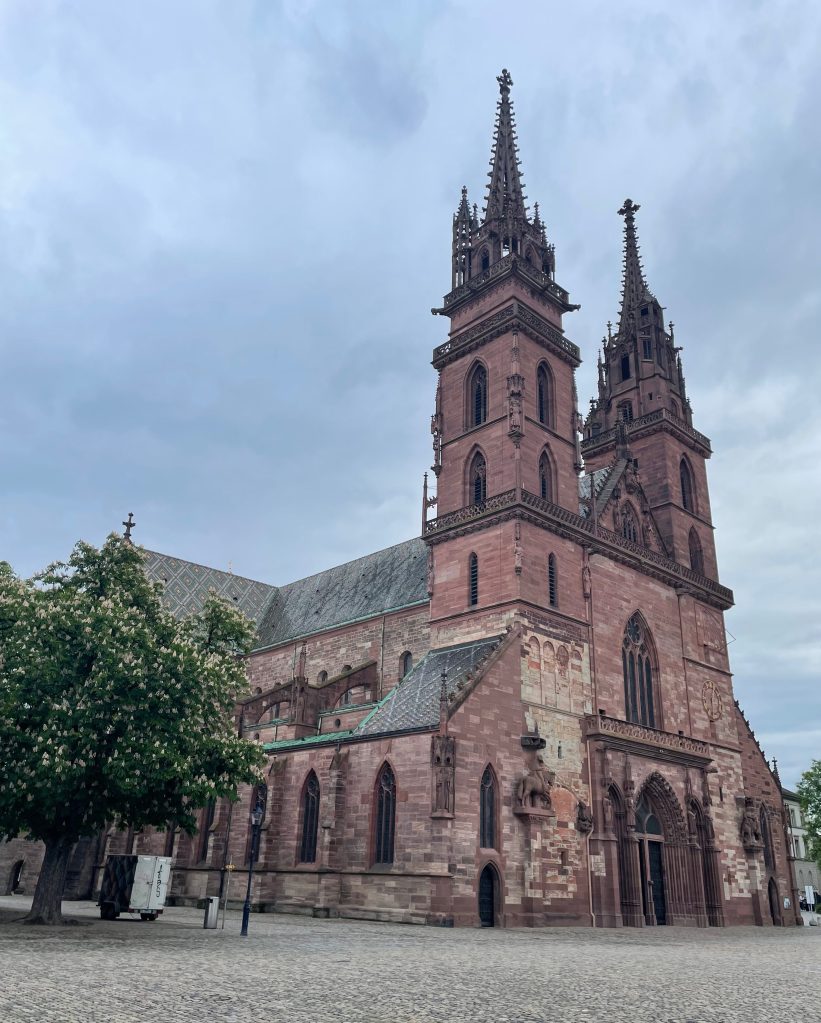
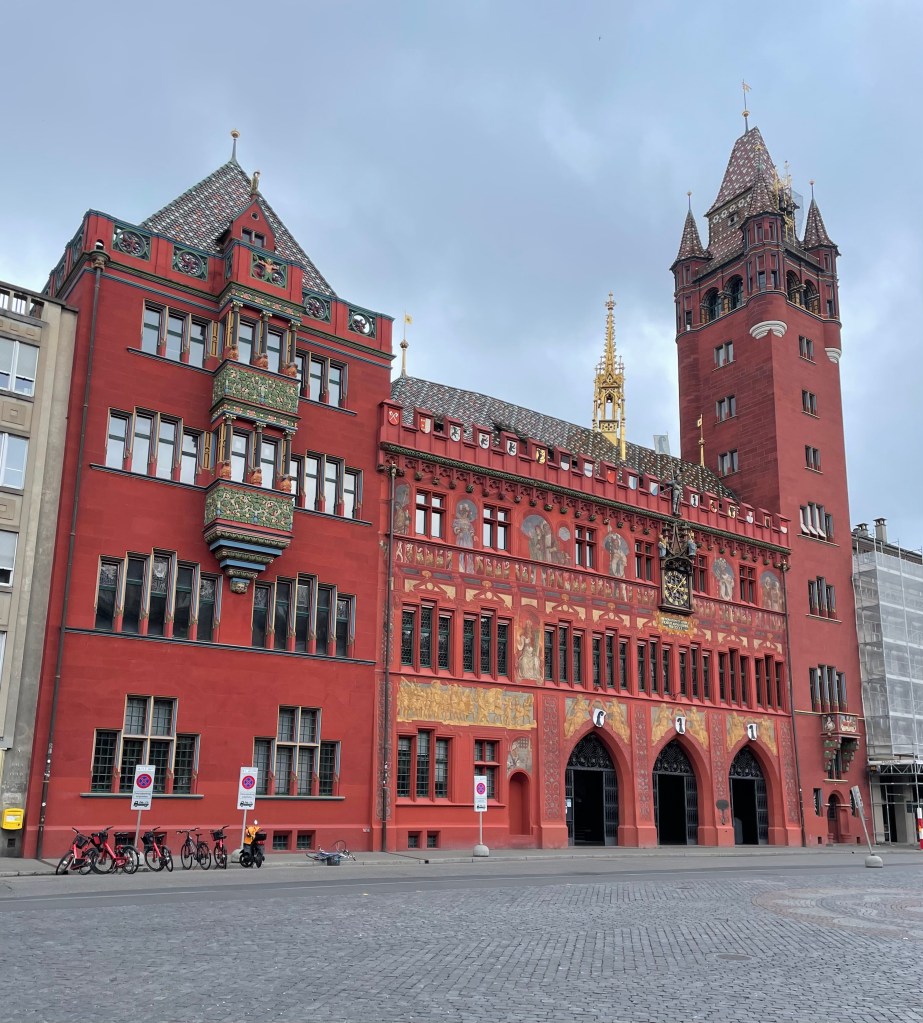
Our first full day in Basel was very sunny and warm.  After substantial pastries at Bio Andreas, we walked a lot and got a feel for the old part of the town and beyond.  We visited the Cathedral (Basler Münster) and took in our first daylight views of the Rhine that separates the two halves of the city.

View From Basler Munster: Rhine, Bridges And Chestnut Trees (Which Were All Over The City)

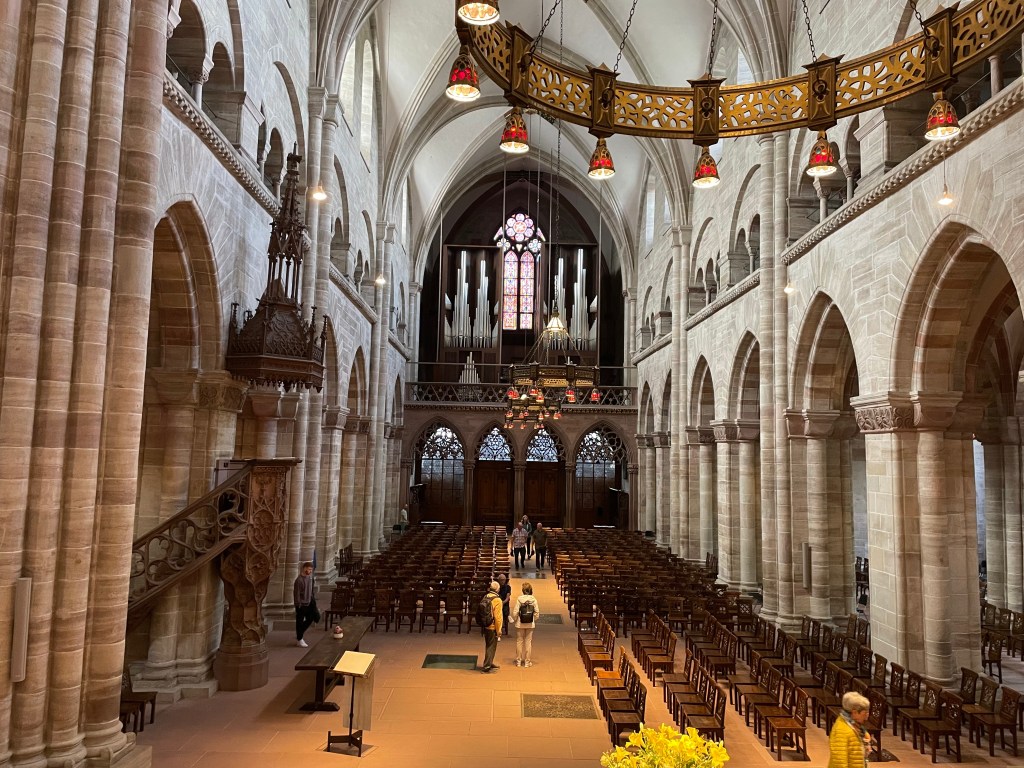
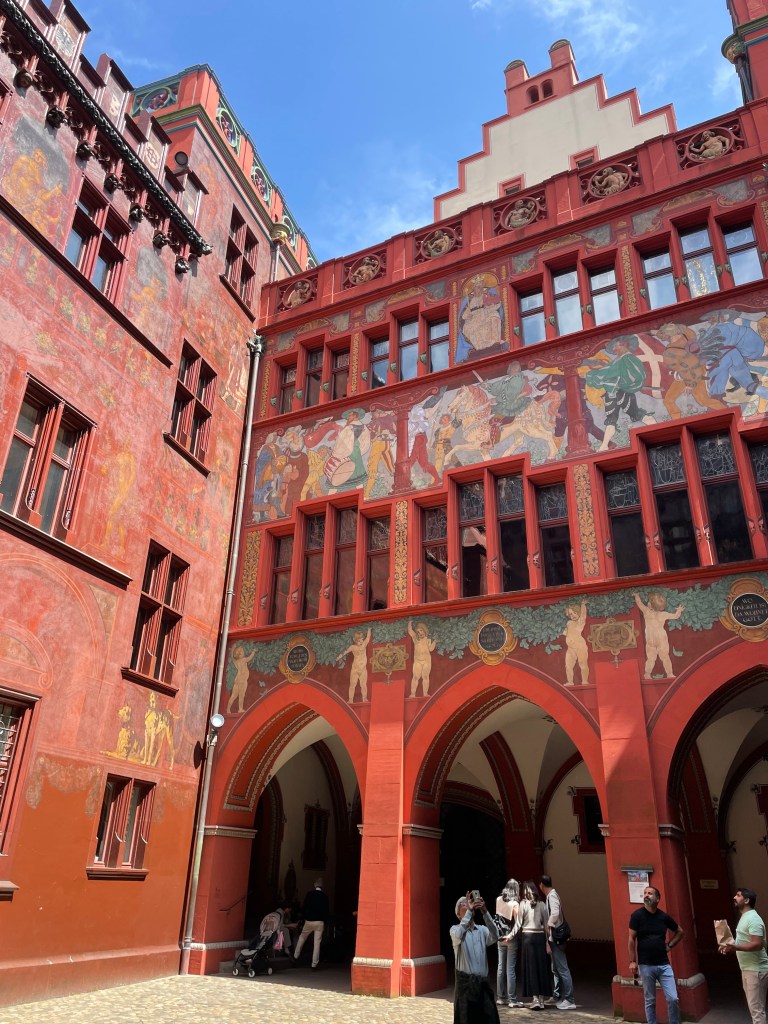
The cathedral dominates much of the south bank of the Rhine but, inside, it is of a good scale.  The extensive roof has pretty coloured tiles and, while the exterior walls are mainly red, inside the walls are a muted grey/brown colour.  We both liked this colouring, the lighting and the simplicity of the interior.  It was also clear even at this early stage of our trip that we were not going to be overwhelmed by crowds of other tourists; nice!

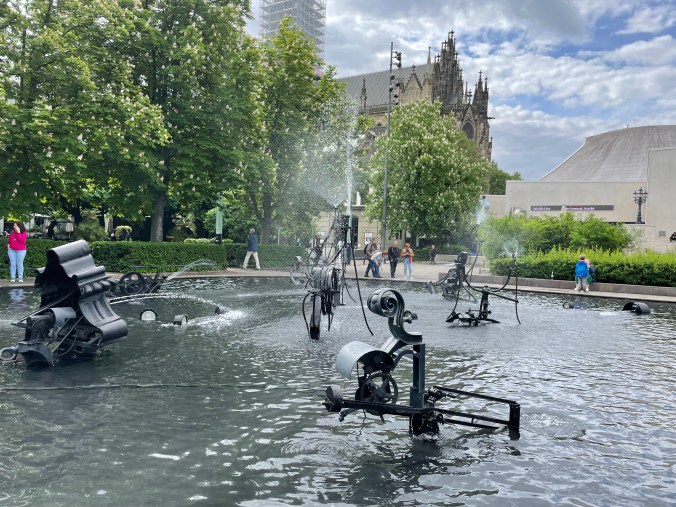
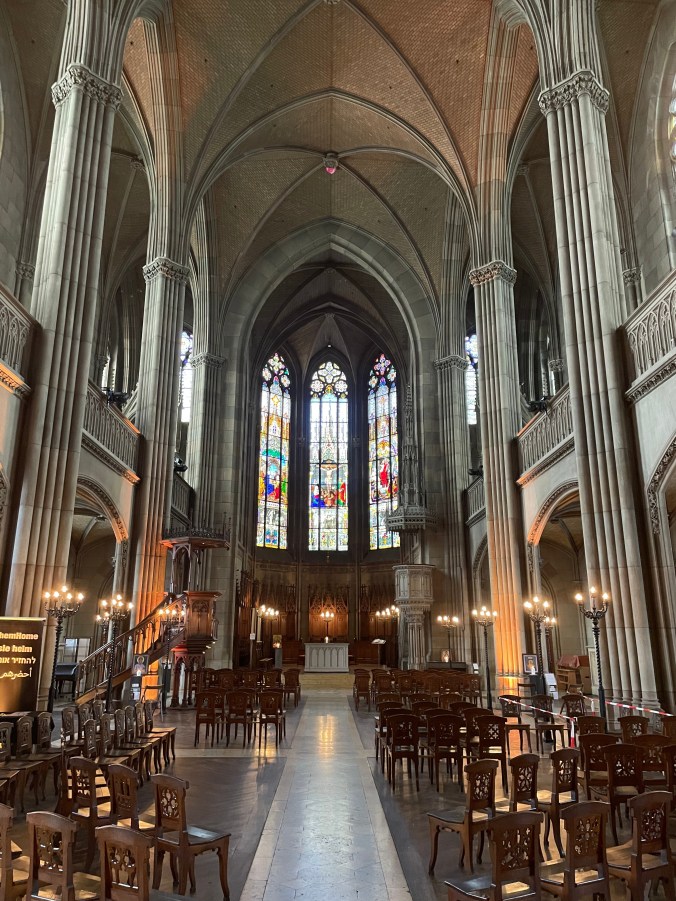
We walked on to the Tinguely Fountain which was an amusing array of mechanical, moving fountains and then to the nearby Offene Kirche Elisabethen.  The nave of this church was (or at least seemed) taller than the cathedral and I loved the airiness and, again, the lighting. 

Tinguely Fountains
Tinguely Fountains (Created By Jean Tinguely In 1977)
Offene Kirche Elisabethen

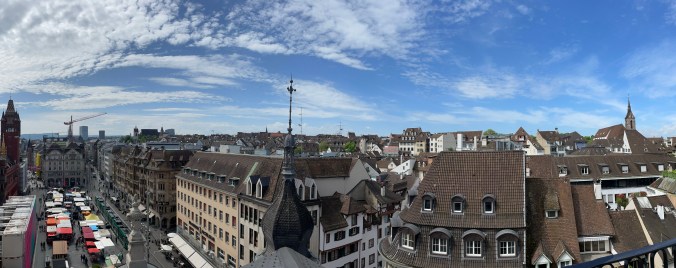
Our hotel had a roof terrace and so we thought that we would try that out while the sun was shining.  We enjoyed a couple of complimentary glasses of fruit infused water while perched over the market place, watching the market customers choose from the pricey but high-quality fare for sale and listening to the bells of the surrounding churches.  This was all very relaxing but, with phones now recharged, we thought it time to find a bar.

Panorama From Our Hotel Roof Terrace

Jane did a couple of searches on her phone and re-consulted the FT article.  This led us over the main bridge to the north side of the city where we could see seating in front of hotels and bars on terraces leading down to the Rhine riverbank.  These would have been fine I’m sure but we wanted something a little quieter and offbeat. 

View OF Basler Munster From The Main Bridge Across The Rhine

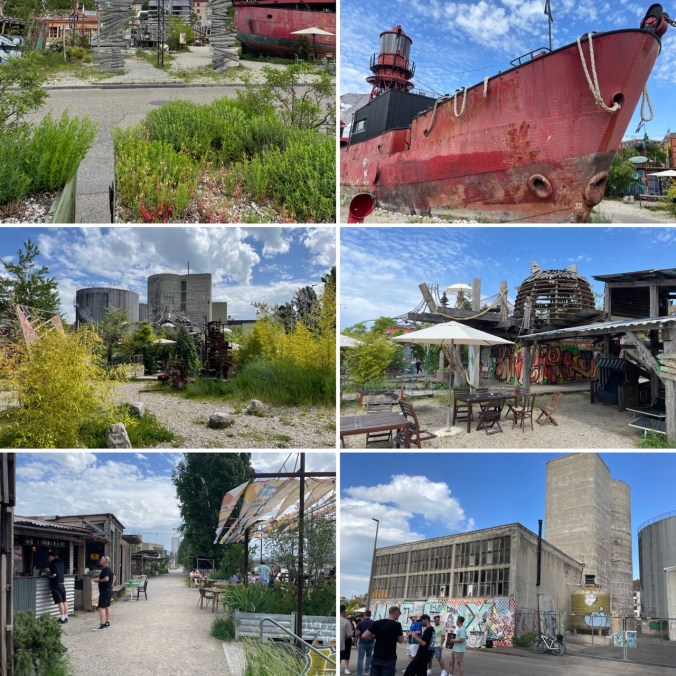
Jane found a description on her phone of a ‘quirky’ bar and, despite the significant distance to it, we set off west along the Rhine.  The walk was delightful.  It was initially between rows of lime trees with seating along the river on one side and some substantial houses on the other.  Then the walk became indispersed with small pop-up bars and DJs with portable sound systems.  Finally, past some rather run down industrial buildings and cranes, we came to Holzpark, an alternative cultural centre and play-space, and the quirky bar called Landestelle.

Holz Park, Landestelle Bar and DJs Playing En Route

Landestelle was almost perfect for us.  It was buzzy with interesting looking, local people but not crowded.  The staff were friendly and the music choices were unusual but to our taste.  The Rhine – already wide despite still about 1,000km from the sea – was right alongside.  We watched huge barges slipping past and the sight of swimmers and divers on the far bank near modern offices and imposing factory chimneys.  The only drawback for me was that the draft beer was so continental and lager-like – not the hoppy IPAs we have become used to in our local pub.  Notwithstanding that, we felt as though we had found a lively but relatively undiscovered aspect of Basel.  We thoroughly enjoyed ourselves and the walk back to the hotel.

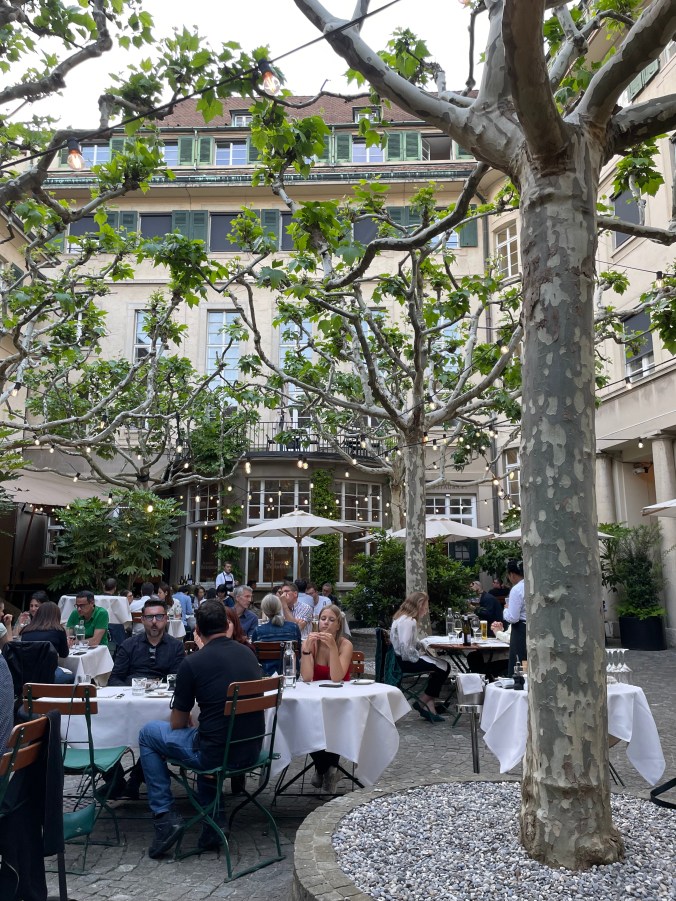
Our step count merited a nice dinner.  Jane had already booked us in at the Volkshaus restaurant.  The weather was still warm and sunny enough for us to eat outside in a charming courtyard under a canopy of heavily managed plane trees and next to a continuous tinkle of a fountain.  I was braced for the price list by this time (and I wasn’t disappointed there!) but the asparagus soup and steak frites (with the steak covered innovatively in a tarragon sauce) was top notch. 

Volks Haus Restaurant: Courtyard Dining

Much of the rest of our time in Basel was spent indoors avoiding the increasingly heavy cloud then rain.  However, we had planned for that and were very happy in the Kunstmuseum, with its very large collection of art from the 15th century onwards, the Swiss Architecture Museum and, on the Monday when the rain was heaviest, Fondation Beyeler where there was an exceptional exhibition of paintings by artists’ works portraying the boreal forests around the Arctic.  More on those visits, for those who are interested in art and architecture, in the next blog post.

We had a great break from our normal home routine whilst we were in Basel.  Despite the impetuousness and short notice of our trip, Jane had done enough planning to make the trip full and thoroughly rewarding.  I enjoyed especially the mix of good food (once I had adjusted to the price shock), relaxed drinking, friendly and helpful people, and the impressive galleries and museums we had time to visit.  It was a very memorable birthday weekend.

Spring Blossoms

In the weeks since we got back from our month in Edinburgh – a month we have already booked again in Edinburgh for 2026 – we have settled into a home-based routine.  This has been especially pleasurable due to the exceptional Spring weather.  It has been largely sunny, the mornings have been fresh and clear and, since the clocks went forward, the evenings have been long and getting longer.  It has been a lovely time to be back at home in the country and to see the trees, bulbs and perennials start to come back to life and into flower.

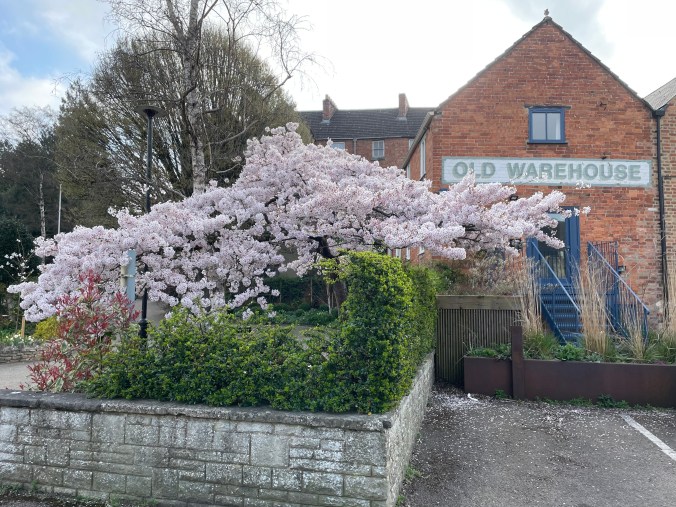
Cherry Tree In The Local Town
Cherry Tree In The Local Town of Nailsworth

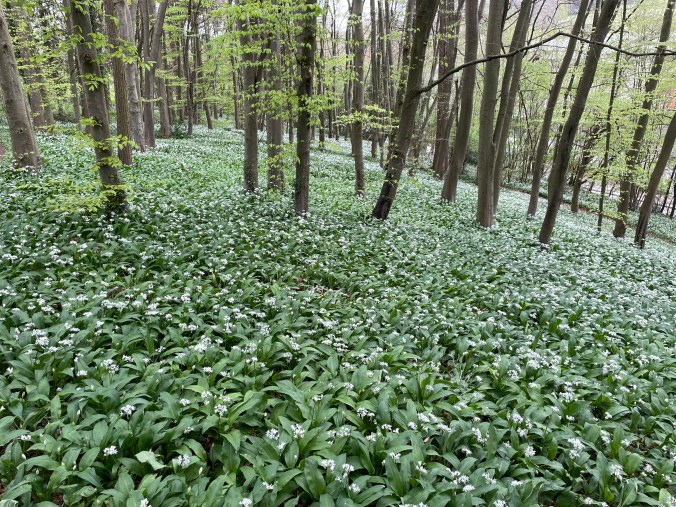
The walks into the local town for the newspaper and daily provisions have been chilly on the way in but warm on the way back.  The dry weather has opened up previously muddy routes across the fields.  The paths have offered views in the local woodlands and hedgerows of, first, the last snowdrops, then daffodils, then bluebells and primroses, and, now, wild garlic and cow parsley. 

A Wild Garlic Carpet In The Woods

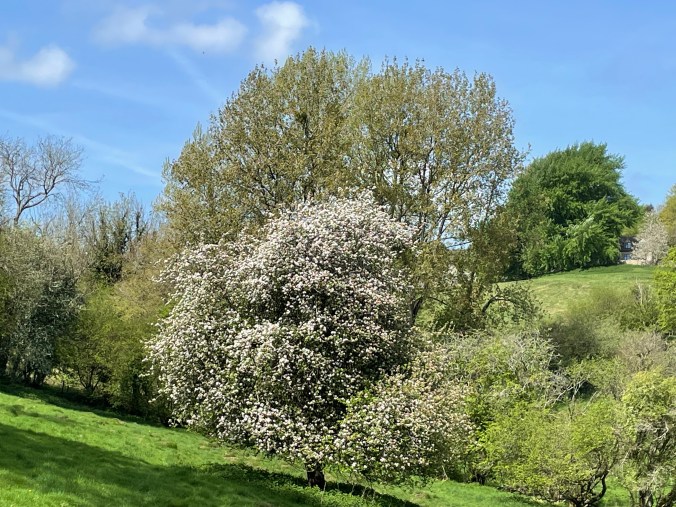
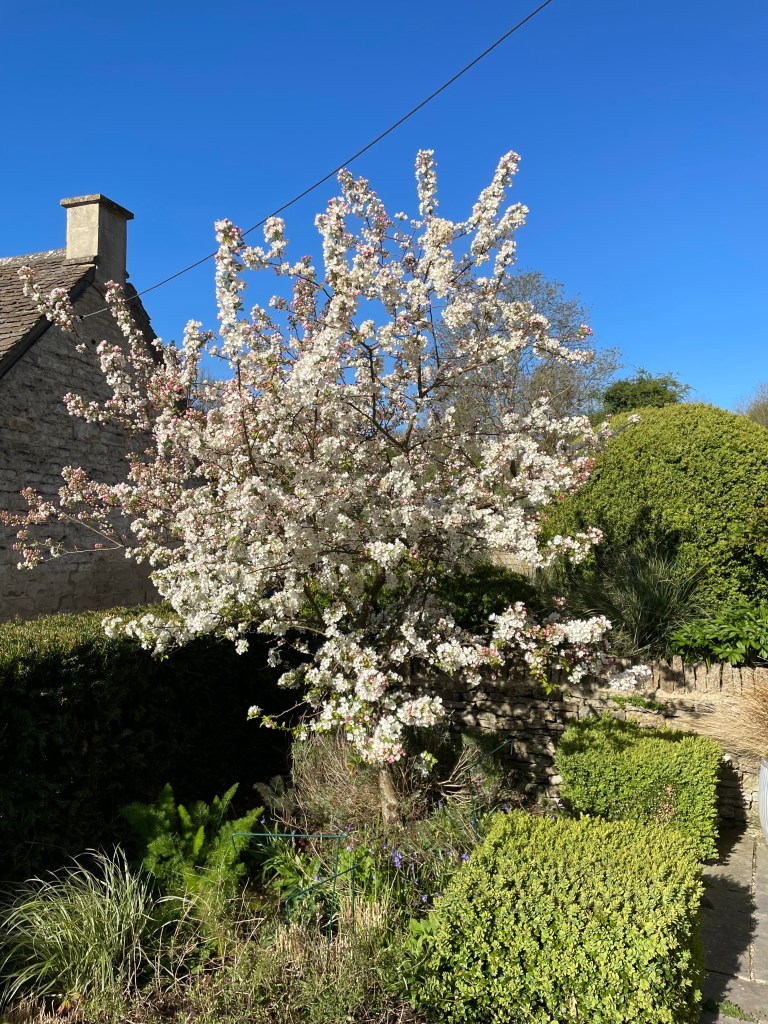
The bursts of white from the blackthorn and, now, the hawthorn have been terrific while the early flowering cherry trees have now been supplanted in their splendour by later flowering cherry, apple, plum and pear tree blossom. 

Apple Blossom In The Neighbouring Field

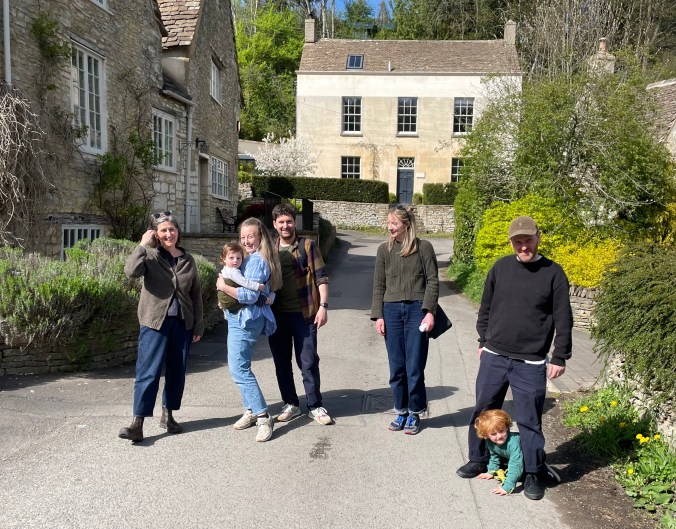
In the midst of all of this we have had a late Easter celebration with our grandchildren and their parents.  The weather was kind and made the construction of my Easter Egg Hunt for the grandchildren easy.  First Grandchild in particular, really enjoyed it and we all enjoyed watching him gather up rather too many Easter eggs.  FG and his parents live in a central Edinburgh flat and he really appreciates the contrast of English countryside.  It was so rewarding to see his excitement on the Easter Egg Hunt and on other nature hunts and adventures we had organized.

Our Easter Crowd
Our Easter Crowd

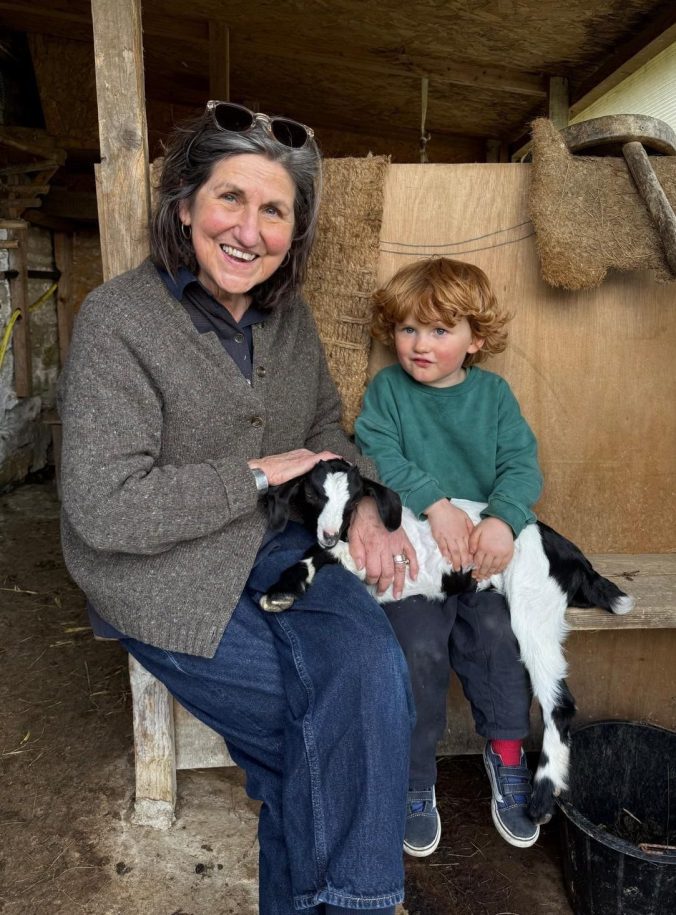
FG also loved seeing and holding the brand-new baby goats owned by some village friends of ours. I was amazed at how gentle both the baby goat and FG were.

Easter: First Grandchild And A Brand New Kid

Second Grandchild was too young to join in everything directly but he too seemed to capture the vibrant atmosphere of our Easter weekend.  He always seems to be smiling. That was particularly the case at Easter with so many people around including, especially, his cousin.

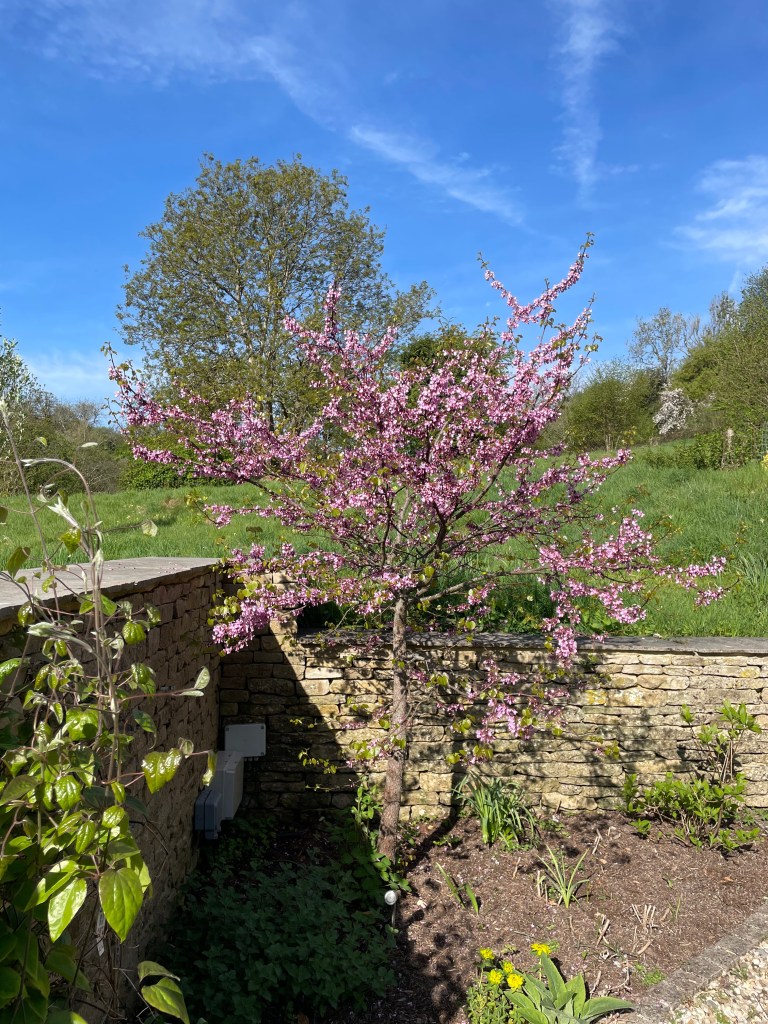
The good recent weather has allowed me to catch up on clearing vegetable patches.  There is more to do and I need to be careful not to aggravate joint aches and pains, but I am pleased with the progress I have made.  Plus, the sunny evenings are starting to beckon us out for relaxed drinks amongst the euphorbia, Judas Tree and wisteria and, soon, the alliums and salvias.

Against this Spring backdrop, there have been a few other highlights.  We made a rare trip to London for a wedding (of Jane’s God-daughter) and to see and stay with some old friends of ours.  The finale of a decade-long set of ‘boy’s nights out’ with mates dating back to the 1970’s was arranged to coincide with our trip to London.  Apart from the hangover, it was a splendid trip and very enjoyable, particularly as we got to see our friends’ newly renovated house.  It was great that the final boy’s night out was a little extravagant with a private room, silly hats and a wonderful souvenir booklet produced by the prime organizer.  This included pictures of long-ago evenings together that encapsulated fading but amusing memories.

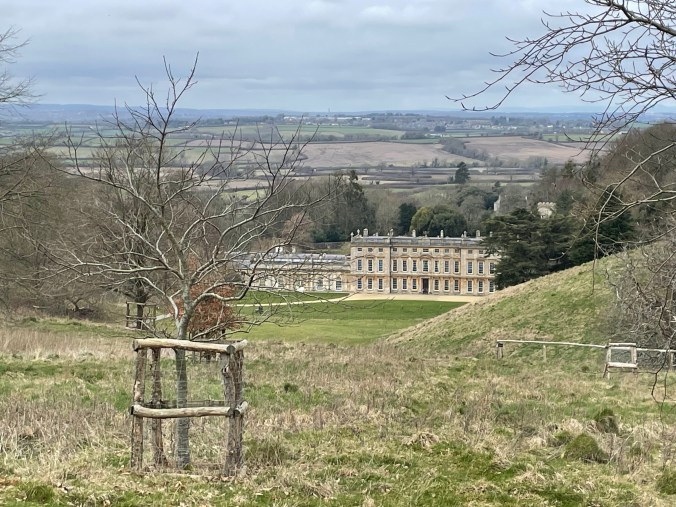
Also, back in March, friends in the village took Jane and I on an excursion to Dyrham Park.  We have long admired this couple for heading out on quickly arranged short breaks and excursions when the weather looks promising.  This time they took us off with them for a very relaxed and interesting time together.  

Approaching Dyrham Park House

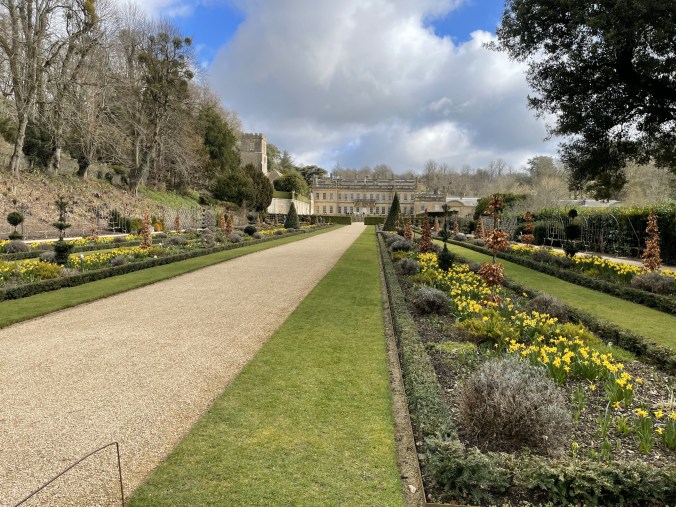
We didn’t venture into the Dyrham Park house which has been renovated comprehensively recently, but the gardens were lovely.  The daffodils were in peak season and the beautiful pale limestone of the baroque hall provided a great backdrop to views of the planting.  The parkland around the house offers splendid views of the south Gloucestershire and Avon landscape. 

Dyrham Park Gardens
Dyrham Park Gardens

I hadn’t been to the park for several years, when I went with my parents well before my Mum died, but I’m keen to go again in Autumn.  By that time nature will have moved on and the trees and gardens will look very different.

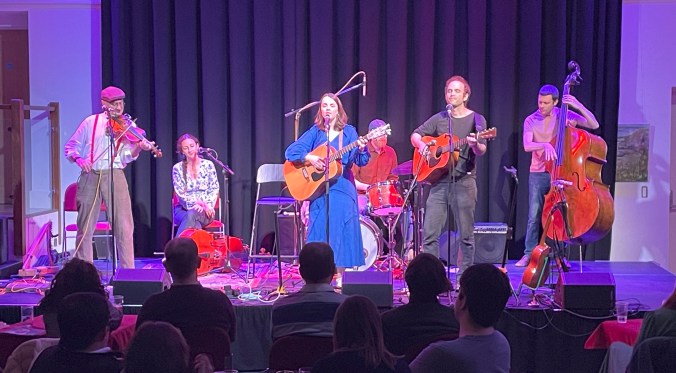
Two other highlights: first a very enjoyable visit to Tetbury Goods Shed to see a band we have seen a few times called Faeland.  They were on good form with an extended lineup and the lead singer’s beautiful clear voice resonating around a well-designed venue.

Faeland At Tetbury Goods Shed

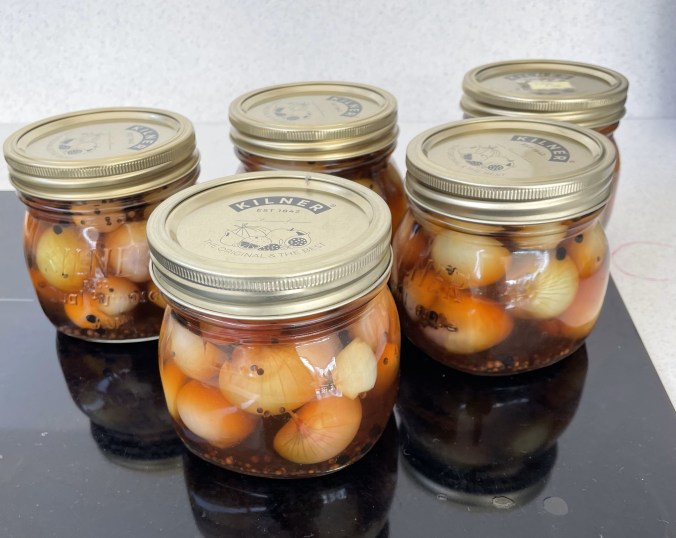
Second, I finally pickled the crop of shallots that I harvested well over six months ago.  They have been winking at me from the string bag I had stored them in every time I went into the shed.  Two years ago, I set myself a New Year resolution to do something creative at least once a month; I have failed on that. But pickling well over a kilogram of stored shallots counts as being creative for April – even if I haven’t actually tasted them yet.

My Spiced Pickled Shallots

Not everything in March and April has gone smoothly.  My knee and ankle are improving slowly with help from physiotherapy but both have been annoyingly painful at times.  Plus, a couple of weeks ago, I had a ‘fall’ (when approaching 70 one seems to call them ‘falls’ rather than a ‘trip’ or a ‘slip’ which would have been a more accurate description of the event) which wrenched my shoulder.  But, overall, it has been a very good early Spring and I have appreciated being retired and so able to fully appreciate it outdoors rather than from an office window.

Edinburgh: Holiday or Home?

We have visited Edinburgh many times since Eldest Son (ES) moved there and increasingly frequently since he and his wife had a son there.  We have fallen in love with the city. 

I have always liked city living.  Jane is more of a rural lover.  I too have really enjoyed my several years of retirement in a comfortable home, out in the beautiful countryside of Gloucestershire and our lovely community in the Stroud valleys.  But now we are beginning to recognise that our current levels of mobility won’t be forever and that we need to plan for that.  Living in a town or, better, a city like Edinburgh, might be the solution.

Classic Edinburgh View – The Castle From Princes Street

We have spent a lot of time debating the options and it is a privilege to have those choices.  To help in the decision making, we spent a month from late January in Edinburgh.  All our previous visits to Edinburgh had been little more than long weekends.  This time we wanted to see how it felt to get a more profound and thorough feel for the city, and to think about how it might be to live in it for at least a substantial part of the year.

The month we spent in Edinburgh deepened our regard for it.  We managed to get to the cinema once and the pub a few times, but barely scratched the surface of the nightlife that is available.  However, I could already see that there is a lot going on and that I could resume my love of small-venue music gigs that absorbed me in the latter years of my working life in London.  It seemed clear too from a couple of visits to the local pub with ES’s parent-in-law, that making new friends wouldn’t be too hard.

In the event, I don’t think that we are closer to a decision about where our next couple of steps will take us in terms of where we live.  We continue to toss ideas around. 

I think that we have concluded two things.  First, that the model of hiring a flat in central Edinburgh for a month is one that we want to repeat (although the flat we stayed in this time was really good and set a high expectation for next time); we had a great time and I think the arrangements were helpful to ES and his wife without putting so much pressure on them to provide the hospitality. 

The second thing is that we want to keep a base in the Gloucestershire area so that we can stay close to Jane’s roots and the ones I have put down since we moved here, and be close to Middle Son, his fiancé and Second Grandchild.  Now we need to work out what that means.  Fortunately, we don’t have to make a decision immediately; to an extent, we can see how events unfold and influence things – goodness knows that recent world events have shown how quickly perspectives can change.

Our Rural Idyll – Different From Edinburgh But Not Too Shabby As A Location

Regardless of all that, our winter Edinburgh month left us with a huge number of happy memories.

Best Solo Moments for me during this visit were those alone with First Grandchild (FG).  One was when Jane was rather immobilised with her broken arm, and I took FG out to a local park.  He played wonderfully considerately in the playground and then we went on a long walk during which we chatted incessantly.  I felt so proud of him .

Me: “It’s Like A Trampoline”
FG: “It Is a Trampoline Grandad!”

The other, was when I was babysitting and putting FG to bed but couldn’t work out how to zip up his sleeping bag.  FG (like me) is a person who likes routine and I could see that he was struggling to manage his emotions about my zip incompetence and the impending break in routine.  Just as he visibly got control of those emotions, I finally worked out that the zip went downwards not upwards and we could celebrate together.

Best Moment with Jane was probably one of her earliest ventures out after her accident when we went to The Port of Leith Distillery for lunch.  This a building that stands alone amid demotion works On one side it overlooks the port and the Firth of Forth and, on the other, The Royal Yacht Britannia and the adjacent, drastic demolition and renovation of a chunk of Leith.  The views were great, the demolition work was entertaining to watch (for me, anyway), lunch and drinks were nice and going to Leith on the tram felt like a very positive step in Jane’s recovery.

Port Of Leith Distillery: The View From Our Table, The Building And The Inside

Best Pub was Teuchters Bar & Bunker just over the road from where we were staying.  It has a great range of local beers, really good comfort food and a very convivial atmosphere.  ES’s father-in-law took me there a couple of times and he seemed to know everyone which led me to…..

….Most Embarrassing Moment was in Teuchters when, leaning back to meet yet another new acquaintance standing just behind me, I slid off my chair onto the floor.  I did say the beer was good! 

This just beat another embarrassing moment when I again fell on my backside.  This time I was blown over by the a gust of wind during the last vestiges of Storm Eowyn.  At least I fared better than a magpie that was also caught out by the gusty wind and died yards away having been blown against a building.

Best Bar: Spry, as usual.  We managed to get there almost every week.

Spry Wine Bar

Best Cinema: Everyman Cinema.  It was our first visit to an Everyman cinema that serves food and drink to you in the auditorium while you relax on their sofa-like seats.  I made two mistakes; first I didn’t understand the ordering system and needed to be prompted by the staff to indulge.  Then I unwisely chose their largest bottle of beer – daft if you need to sit through a two-hour film without a loo visit.  We saw the Dylan biopic ‘A Complete Unknown’ and really enjoyed the whole experience.

Best Toastie: The toastie I had at the aptly named Toast in Morningside Road was exceptional.  But for consistency over several visits, I’d recommend Cairngorm Coffee just up the road from where we stayed.  We even had a special Valentines Day orange flavoured toastie there.

Best Restaurant: We didn’t make it to as many as planned but taking our Edinburgh family to The Free Company, a farm and restaurant in the outskirts of Edinburgh on the edge of the Pentland Hills was a real treat.  FG behaved impeccably and did some good dancing on the way out that put my Dad-Dancing to shame. 

The Free Company Restaurant As We Arrived (It Was Almost Full When We Left)

Best Museum was, of course, the National Museum of Scotland which we visit almost every time we are in Edinburgh.  However, for the first time, I also visited the Surgeons’ Hall Museum and enjoyed that.  This museum has several parts covering the origins, history and the future of surgery.  The section called the Wohl Pathology Museum was very impressive although, after 20 minutes of looking at exhibits showing deformed, vitamin-deficient skeletons and the results of cancer on internal organs, I felt a little squeamish and cut the visit short.

Outside The Surgeons’ Hall Museum (No Photos Allowed Inside)

Correction.  I covered best art galleries, cathedrals and graveyards in earlier posts.  However, before moving on from Edinburgh posts, I should just correct a prior statement about there being two cathedrals in Edinburgh.  ES’s father-in-law corrected me and pointed out that there is also St Mary’s Catholic Cathedral nestled next to the new St James’s Shopping Centre and overlooking a plaza with modern and old statues.  For completeness, here it is…..
St Mary’s Catholic Cathedral

Maybe we will pop inside and have a closer look during our next Edinburgh visit.
Edinburgh: Graveyards and Galleries

I have always been interested in visiting old graveyards.  They are generally quiet places for reflection, a secluded refuge for wildlife, and also a rather oblique representation of history and of lives lived.  For me, those characteristics more than offset any feeling of sadness or mournfulness derived from their function. 

Edinburgh has a number of graveyards in or near its centre.  While Jane was resting her broken arm, I took the opportunity to visit a few. 

St John’s and St Cuthbert’s Churches At The End Of Princes Street

At the west end of Princes Street is Saint Cuthbert’s Churchyard. It seemed to be the nearest cemetery to our holiday flat.  This is a very old graveyard with burials believed to have dated from the 14th century and probably much earlier.  It is one of a few graveyards in Edinburgh that has a watchtower, built in the 19th century, for guards aiming to prevent bodysnatching for the purposes of medical science.

St Cuthbert’s Churchyard Between St Cuthbert’s And St John’s Churches

Another such watch tower is in New Calton Burial Ground.  This has great views over Holyrood, Arthurs Seat and the government buildings and alleys off Canongate.  Like many of the graveyards I visited, it has a map to show the location of graves of the Edinburgh ‘great and good’.  On the day of my visit, the northern end was full of birdsong.

New Carlton Burial Ground Including Its Watchtower
View From Near The New Carlton Burial Ground – Canongate Kirk, Salisbury Crags and Arthurs Seat

New Carlton Burial Ground was overspill from the nearby Old Calton Burial Ground which I have visited before and which has memorials to a number of notable Scots, including famous radicals of whom some were deported to Australia for their troubles. 

Old Carlton Cemetery

In Canongate is Canongate Kirkyard.  The Kirk and its Cemetery which was created when decreed that the inhabitants of the Canongate would no longer be allowed to worship at Holyrood Abbey in 1687.  It is the resting place of Adam Smith, the famous Scottish philosopher and economist. 

View From Canongate Kirkyard – Carlton Hill In The Background

This cemetery has views back to Carlton Hill and is a peaceful haven just yards away from the many tourists – even at this time of year – strolling between Holyrood and The Royal Mile.  I too, wandered down to Holyrood Palace but, impressive as it looks from outside, I demurred from paying £25 to enter the grounds and house; maybe I will on a future rainy, rather than just grey, day in the City.

Holyrood Palace On A Grey Edinburgh Day

Unlike the other graveyards I visited, Greyfriars Kirkyard was crowded with tourists eager to follow up on apparent connections to Harry Potter characters and the famous story of Greyfriars Bobby, a terrier who sat by and guarded the grave of his owner (a nightwatchmen at the cemetery) for 14 years, without a break, until he too died.  

The more interesting aspects for me were the scale and disposition of the mausoleums in Greyfriars Kirk.  These proliferated from the 1660s when burial in Greyfriars Church was prohibited.  Families of the dead apparently compensated for not being allowed inside by erecting very large monuments outside.  Some of these directly attach to the houses around the graveyard (see below).

Greyfriars Kirkyard and The Greyfriars Bobby Monument

Further afield, I stumbled across two other cemeteries.  Dean Cemetery, behind high walls and full of mature trees, was very quiet except for the birds.  The cemetery is attractive – if you like this sort of thing – but the grey skies gave the cemetery a rather melancholy air and I plan to return when the trees are in leaf and the atmosphere is brighter.

Dean Cemetery

Even prettier – perhaps helped by the blue skies overhead when I visited – was Grange Cemetery.  I found this during a rather random walk south of the centre of Edinburgh.  I noticed the imposing surrounding walls and found a way in.  Like Dean Cemetery it is in two halves.  Here however, the divide here is not a wall but a long array of catacombs that are halfway underground; an interesting dimension to the site.

The Grange Association do a great job of maintaining the cemetery and of documenting its history and its ‘residents’.  Thanks to that, I found the grave of Robin Cook who was one of my political heroes 20-25 years ago.  His gravestone has a nice epitaph referring to the Iraq war: ‘I may not have succeeded in halting the war but I did secure the right of Parliament to decide on war’.

Grange Cemetery And Catacombs (With Robin Cook’s Gravestone Top Right)

In the last week of our Edinburgh stay, I returned to the National Gallery of Scotland to see the permanent collection and we also returned together to Dovecote Studios to see an really excellent exhibition presenting the Scottish Colourists.

My Favourite Picture In The Scottish Colourists Exhibition At Dovecote Studios Exhibition – By Arthur Melville, A Forerunner and Mentor to the Colourists

The Scottish Colourists were a group of just four artists who were at their peak in terms of quality and influence in the art world in the first half of the 20th century.  Unlike Jane, I hadn’t heard of any of them as I entered the exhibition.  But interesting information about them was carefully presented and their influencers, and those they influenced, were summarised and then underlined with examples.  I loved the exhibition and felt I learnt a lot.

The Scottish Colourists: Works By (clockwise from top left) SJ Peploe, FCB Cadell, JD Fergusson And Leslie Hunter

Another interesting exhibition I saw was at the Talbot Rice Gallery.  The gallery is part of Edinburgh University and is within the wonderful buildings of Old College.  The art on show was at another end of the spectrum from that of the Scottish Colourists.  Let’s just say that the anti-woke brigade would not have approved.

Old College, Edinburgh University

The first part was an exhibition of videos by Gabrielle Goliath relating to violence against women.  The videos were images of women describing their experiences but the words were truncated so that only the gaps between their words remained.  It was strangely powerful albeit with really just the one idea and the explanations of the videos were too high-falutin for me to absorb properly.

Much more aesthetically pleasing but equally, weirdly impactful was an exhibition of work by Guadalupe Maravilla, an child refugee and cancer survivor from El Salvador.  It’s hard to describe the work (see below) but the allusions to healing, trauma and displacement were fascinating.  All this was in a single, splendid room bedecked with hammocks for the ‘healing gods’; it was all very dramatic.

The Work Of Guadalupe Maravilla At The Talbot Rice Gallery, Edinburgh

Jane and I also visited a couple of the multitude of private galleries in Edinburgh.  One, the Open Eye Gallery, had some work by a friend of hers, Gail Turpin, who’s exhibition we visited last summer when we were in the city.  I liked her watercolours but was even more taken by a room showing paintings by James Fairgrieve and by a few ceramics by Rachel Wood.

Inside The Open Eye Gallery, Edinburgh

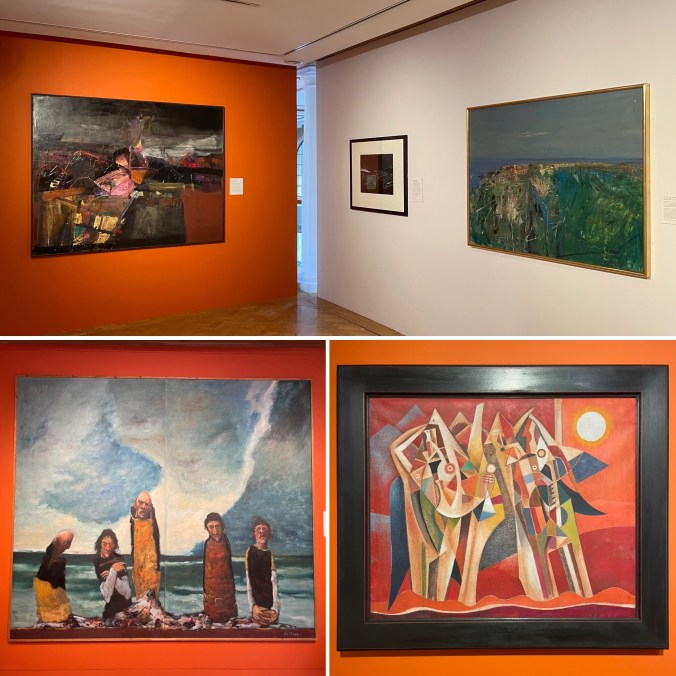
The other was the oft-visited The Scottish Gallery just up from where Eldest Son lives.  As soon as I walked in my eyes fell on a couple of Joan Eardley paintings.  I’d never heard of her until we started to visit Edinburgh a few years ago, but love all her paintings of sea and fields that I have seen since. 

One Of Joan Eardley’s Paintings At The Scottish Gallery

We originally planned day trips to Glasgow and Fife whilst in Edinburgh.  In the absence of those, I was very happy visiting Edinburgh’s graveyards and galleries, and wandering through the wonderful Georgian architecture of central Edinburgh, where most streets seem to have a monument or imposing building at their end.  It’s a great city to visit, and, I think, to live in.

Buildings At Night At The End Of The Street Of Our Holiday Home, Edinburgh

Edinburgh Cathedrals and Outskirts

Before Jane broke her arm, we spent large parts of each day absorbing Edinburgh: the city and its sights.  We walked to the shops, to the cinema, to the bars and cafes we frequented and even, somewhat aimlessly, to just take in the Georgian architecture of New Town or to discover slightly unfamiliar areas on its margins.  We were priding ourselves on our step counts while taking in the ambiance of the city and seeing some new places.

For example, for the first time in all our past Edinburgh visits we went to both the cathedrals in the city.  St Mary’s Episcopal Cathedral is actually just at the end of the street with our Airbnb.  It’s a relatively modern cathedral but it is in a gothic style.  It is large, imposing and pleasantly airy, and set in grassy grounds.

St Mary’s Cathedral, Edinburgh

St Giles’ Cathedral is far older and is set right in the heart of Edinburgh next to the Royal Mile.  It has a lovely open spire and a pleasingly compact shape.  Inside, the layout is unusual with a central altar.  I liked the atmosphere, the scale of the place and the fact that it encouraged donations rather than imposed an entrance fee. 

St Giles’ Cathedral, Edinburgh

The Thistle Chapel that was bolted onto the side of the Cathedral in 1911, is a particularly interesting aspect of the building.  The chapel was designed and built in the neo-gothic arts and crafts style for the Knights of the Thistle, an order of chivalry associated with Scotland which dates back to 1687.  This order consists of sixteen members and a new member is only ‘invested’ when another dies.  Each member is represented around the chapel with statues or, more recently, plate crests.  I loved the cool, almost damp atmosphere in the chapel and some of the diverse stories of the past and current members.

The Thistle Chapel, St Giles’ Cathedral

We also ventured outside of the City.  We visited South Queensferry which Jane had seen described somewhere as the UK’s second prettiest town.  It has a quaint high street and some interesting buildings and gardens nearby. 

South Queensferry Looking West From The Beach

However, I think the most remarkable thing about the town is the view across the Firth of Forth between the road and the rail bridge.  The rail bridge was originally built in 1890 and I’m not surprised that it has been voted Scotland’s greatest man-made wonder; it is a terrific, dramatic structure.

Road And Rail From South Queens Ferry; A Panorama

We spent a day in Border Country south of Edinburgh. The journey south through the Pentland Hills and past the Eildon Hills to Melrose was very attractive.

Above Melrose

Melrose is a pretty town with a number of tourist attractions (mainly closed for the winter).  The Abbey on the town outskirts looked great in the sunny weather.  However, it was clear that it is undergoing significant renovation and repair so we didn’t venture into its grounds.  Instead we simply strolled around the town for a while and then set off to see nearby Dryburgh Abbey.

Melrose Abbey Undergoing Repair

I vaguely recall visiting Dryburgh Abbey when I was a teenager.  It has changed a lot less than me since then but Historic Scotland have, I suspect, increased the information available around the site.  This did illuminate what it must have been like to be a Premonstratensian monk in the 12th century.  Apart from the 2am nocturnal mass, the vow of silence and the bitter cold, it didn’t look like being such a bad life! 

Dryburgh Abbey

The abbey is now a lovely ruin surrounded by very mature trees and well-kept grassland leading down to the River Tweed.  Sir Walter Scott is buried amongst the ruins.  We were almost the only visitors at the time and the Abbey and its environs were peaceful and relaxing to walk around.

Dryburgh Abbey

We drove on to Selkirk and then Peebles.  We started on roads along the sparkling River Tweed but were diverted, due to bridge repairs, onto a hillside route.  I was surprised at how wild the landscape is around Peebles and, given that we were in no rush, the diversion proved to be a welcome one. 

We found a relatively fast electric car charger on the edge on Peebles town centre and walked into the town.  We took on board cake and coffee at The Milkman and wandered up the high street of what was a spa town.  It was all very relaxing and pleasant, and, all the while, reminding me of childhood holidays with my parents in the Tweed Valley.

Peebles

We headed home chattering about our impending day of baby-sitting First Grandchild the next day, unaware, of course, that subsequent events would prevent that, or further big trips before we return home.  At least we managed to see some Scottish countryside and we can comfort ourselves with the knowledge that it will be there still when we return in the future.

A Different Way In Edinburgh

We are booked for a month into a very comfortable, nicely warm and well-furnished Airbnb in central Edinburgh that has a view of the Castle.  Our idea has been to try a model for visiting Edinburgh that is different from our usual 3-4 night stays with Eldest Son, wife and First Grandchild.  In part it is just an extended holiday, but in part a test as to how we might find living more permanently in this wonderful city.

Sunrise Over Edinburgh Castle From Our Airbnb

The first two weeks have been extremely successful – until a bit of a disaster yesterday; more on that later. 

We have already visited lots of Edinburgh sights – the museums, cathedrals, galleries and exhibitions – got into the hinterlands of Edinburgh and, of course, done a bit of grandchild entertainment.  Were lucky enough to have a double dose of grandchildren when Middle Son, his fiancée and Second Grandchild visited us on our second weekend.  That visit, plus the nature of the intermittent contact with First Grandchild over a longer period than usual, has created a bit of a feel of living here rather than just holidaying here. 

Edinburgh From The Top Of The National Museum of Scotland

No doubt that feeling would have been further enhanced by Youngest Son and his wife being able to join us as planned on our first weekend in Edinburgh.  Unfortunately, Storm Eowyn put paid to that.  Their flight was cancelled and Edinburgh was all but shut down during the worst if the storm.  Even at the end of the storm, the gusts of wind were strong enough to knock me off my feet!

Because of, first, Storm Eowyn, and then a visit from Middle Son and family, we have tended to eat in rather than out.  However, we have sampled a couple of our favourite bars and a few cafés, and we love the local pub (Teuchters).  Anyway, there are two more weeks for trying some more recommended restaurants. 

Another View of Edinburgh Castle From Flodden Wall

Cooking in a holiday home is not new to us but doing so most evenings over a few weeks is another way of generating a feeling of being ‘home from home’ rather than just being on holiday.  Next week, we are even entertaining Eldest Son’s parents in law.  That will be a further novelty but a nice reflection of how things might be if we moved to Edinburgh more permanently.

Edinburgh Views (Great Weather!)

During our days here, we have been very active.  We have, of course, sampled the normal delights of the Royal Botanic Garden the Scottish National Portrait Gallery, the Modern Art Gallery of Scotland the Scottish National Gallery and the National Museum of Scotland.  Edinburgh is a capital and has public buildings, exhibitions and collections to match that status.  There were new exhibitions in all of the galleries and all were a pleasure to visit – although it was sad to see the Storm Eowyn damage in the Botanic Gardens.

Storm Damage – One Of The Largest Cedars In The Royal Botanic Gardens Has Gone

The Scottish National Gallery is celebrating 40 years of its photography collection and curation.  Photography is not my favourite art form but it was good to see some pictures by some famous photographers (such as Robert Mapplethorpe, Annie Liebovitz, and Lee Miller) among the often gritty, local Scottish fare.

40 Year Celebration Of Scottish Photography Collection – Including The Iconic Lennon/Ono Photo

The Modern Art Gallery continues to show the substantial Everlyn Nicodemus exhibition which I saw on our last Edinburgh visit.  I sped through that but perhaps somehow enjoyed it a little more on a second viewing; plus, there are several other works in the gallery’s permanent collection I had not focused on before.

‘After the Birth’ By Everlyn Nicodemus

The Scottish National Gallery had a sequel to an exhibition of JMW Turner watercolours that I had seen in the gallery two years previously.  That had shown the section of the Henry Vaughan collection of Turner watercolours that had been bequeathed to Scotland.  This new exhibition was of the selection of watercolours bequeathed to Northern Ireland that again, as part of conditions of the donation, can only be shown to the public in January. 

Turner Watercolours at the National Gallery of Scotland

There were no surprises in the collection of blurry seascapes, sunrises, sunsets and mountain valleys shrouded in mist.  But I like Turner’s style and enjoyed the viewing despite the long queues to get in.

Also at the National Gallery was a small exhibition of art inspired by the landscape of the Orkneys, called ‘In Orcadia’ and including large, interestingly constructed paintings by Samantha Clark

The ‘In Orcadia’ Exhibition

That was good but even better, I thought, was the large exhibition of paintings by the Royal Scottish Society of Painters in Watercolour.  There were hundreds of paintings on show and of course, not all hit the spot for me.  But overall, I thought the quality was very high and I could imagine several on my living room wall.

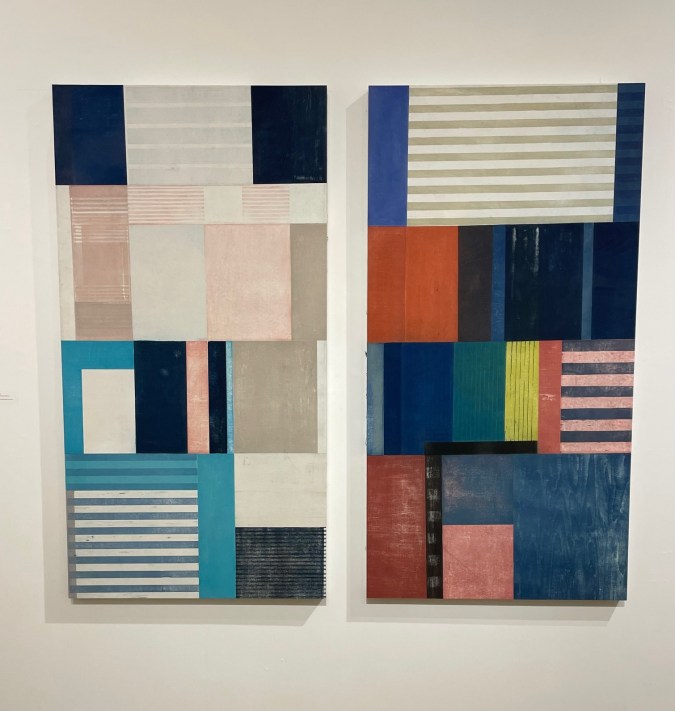
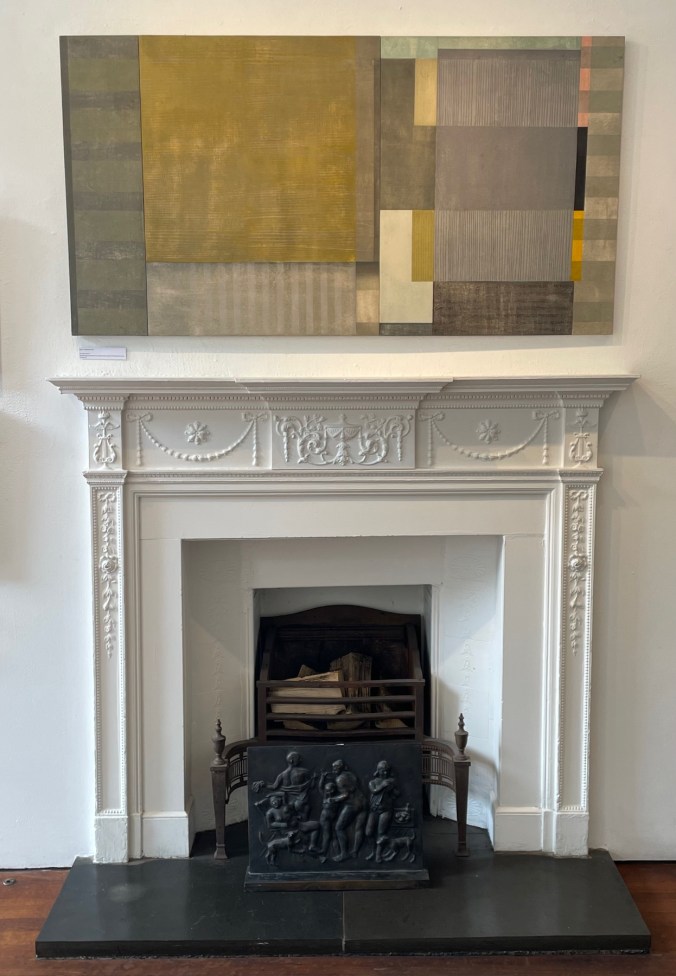
We also went to diverse art exhibitions at Dovecote Studios and the City Art Centre.  At Dovecote we saw textiles and paintings by Ptolemy Mann.  The designs were colourful and bold but Jane was a little disappointed that the majority of the textiles were manufactured in India not Scotland. 

Dovecote Studios And Ptolemy Mann Artwork

At the City Art Centre were two exhibitions of modern Scottish art and of pop art; I liked the pots by Lara Scobie at the former and the typically irreverent set of cartoonish watercolours by the seemingly slightly unhinged, David Shrigley.

Works By Lara Scobie and David Shrigley At The City Art Centre, Edinburgh

We made a couple of trips to the National Museum of Scotland.  The first to see some of the displays that we don’t get much of a chance to see when accompanied by First Grandchild.  The second was with him; his increasingly calm inquisitiveness was a joy to participate in.

One concept we discussed, as we passed some of the dinosaur and wild animal exhibits, was that of skeletons.  Subsequent conversations indicate that he understood how creatures often have skeletons and that you can’t see until after they are dead.  It’s fascinating to watch children learn.

Everything From Dinosaurs To Hi-Tech On Show At The National Museum of Scotland

And now we come to the misfortune of yesterday….. Apart from Storm Eowyn, the weather during our stay has been largely dry and sunny.  However, it has also been cold and yesterday morning my wife, Jane, slipped on some ice and, it turned out, broke her shoulder.  The pictures of x-rays that we came away from the hospital with have helped First Grandchild understand the importance of bones but there is no other upside to the accident. 
We’ll cope and enjoy the rest of our stay in Edinburgh but plans regarding how are changing……

Heading Into 2025

My memories of Christmas are beginning to dissolve into a blur of having felt very good about the convivial familial get together.  It was great to have our close family in our house – the only exception being Youngest Son’s wife who had to dog-sit in Belfast.  It was, once again, amusing and interesting to see the two grandchildren in close proximity and to compare and contrast their current, very different characters.  Jane ran the kitchen with help from all and we ate and drank well.  But now we head into 2025 with the promise of new challenges and entertainments. 

Frosty, Icy Morning In Horsley

The cold snap has brough some frosty and icy conditions underfoot but some beautiful clear air and skies.  My physiotherapist has advised me to continue walking despite my uncomfortable knee and so I have limped around to keep it mobile.  I think that continued walking, and the daily exercises I’ve been given, are helping my knee although they have also strained other parts of my hips and legs so health sometimes feels like a running battle.

Cold On The Way To The Shops

I’ve been thinking about New Year resolutions as I always do at this time of year (but, usually, not so much thereafter).  I will maintain my ongoing targets for drink free days, limiting alcohol unit intake, weight and walking steps.  However, I also want to be more proactive generally about the various health niggles that I suppose are inevitable at this time of life. 

More Cold Walking On The Way To Town

I’m also keen to do better on a resolution I made this time last year: to be more creative and do more creative things.  I made some progress early last year with visible sock darning, devising and running a darts competition in the local pub, and creating a few treasure hunts for First Grandchild.  But my creativity petered out and, for example, the Kintsugi kit remains untouched and making sourdough bread is on hold.  I must do better.

I also need to read more books and not just newspapers and magazines given that I enjoy fiction so much.  I have resolved to read more during the day since, currently, I never manage more than a few pages each night in bed just before nodding off.  Currently a 500-page book takes me almost 6 months to get through even when it’s a good read (as I think Demon Copperhead by Barbara Kingsolver is). 

My ability to find that daytime reading space is related to a resolution to nap less after lunch.  I love our very comfortable sofa adjacent to the kitchen with its view out into the garden and nearby copse so I just have to avoid sitting on it after lunch!

Sofa View

Our local Talk Club for men sharing how they feel and what they are going to do about improving their mental health, has restarted after a 6-month hiatus.  At the first meeting of the year, held in a new location above the village pub, I realised once again that my only real anxieties at the moment are rooted in health – which I need to take a bit more control of where I can – and world events.  So, another resolution is to reduce use of social media (I have already left the increasingly toxic ‘X’) and continue last year’s resolution and listen to the news on the radio even less.  I’m not sure if that will help but Talk Club is a good mechanism to ensure that I think about how world news affects my well-being and if increased abstention from hearing about it makes any difference.

The year has, apart from the ongoing health irritants, started well.  Following the family-oriented period over Christmas, I have resumed visits to the village pub and contacts with friends and acquaintances in the village.  It is clear from talking to them that I, and Jane, have been fortunate to avoid flu so far this winter.

Promising Sunrise Viewed From Our House

Also, Jane has gone off for a week-long sewing retreat at Merchant & Mills, her favourite sewing pattern manufacturer and textile sales room in Rye.  That has been a nice change for us both; she has enjoyed the retreat and learnt some new sewing skills while I have fended for myself successfully and have got to watch some streamed series in the television that Jane has no interest in (Series 3 of Industry on BBC iPlayer is, again, remarkable). 

Next, we have an innovative trip to Edinburgh – innovative in the sense that it is a month-long stay rather than just a long weekend.  We are both excited about how it will feel to be on holiday for so long (with the logistics helped a little by the likelihood of a bit of house sitting by some family members while we are away).  We are looking forward to seeing the Edinburgh branch of the family in a different context and over a longer period than usual and to getting to know Edinburgh even better.  The icing on the mid-winter break cake is that we are accommodating the Bristol and Belfast branches of the family on a couple of weekends while we are there.  It’s a stimulating start to 2025.