In my last post, I mentioned that, during our latest Edinburgh stay, both Jane and I enjoyed the exhibition of Andy Goldsworthy’s art at the National Gallery of Scotland. This was a celebration of fifty years of his work with natural materials such as clay, reeds and stones and even sheep poo. I thought it was a tremendous display and I’m only sorry I haven’t paid more attention to him before.
The entrance to the gallery immediately thrusts you into Andy Goldsworthy’s world of sustainable, largely transitory art, and his relationship with nature. The entrance stairway is partly covered by discarded and stained sheep wool stitched together into a stair runner. At the top of these stairs was a dramatic piece made of reclaimed barbed wire. Immediately to the left and right were canvases caked in mud and sheep droppings around a blank space where once there was a sheep lick that attracted the unknowing sheep as participants in the work. It was an arresting start to the exhibition.
‘Fence’ (left) And One Of Two ‘Sheep Paintings’ (2025) By Andrew Goldsworthy at The Scottish National Gallery
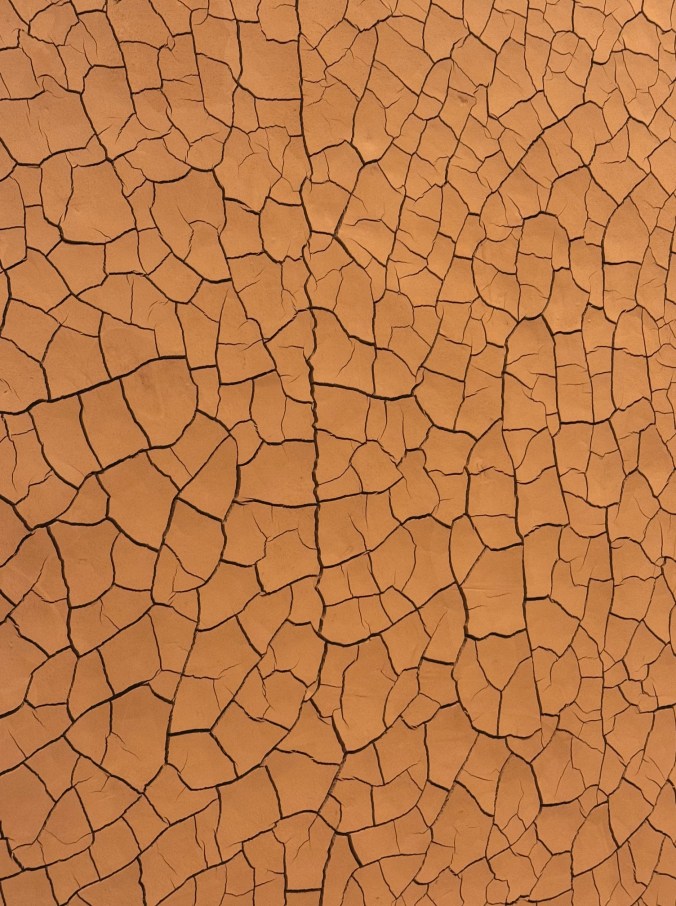
Many of the works were constructed by Goldsworthy specifically for the space afforded by the Gallery. For example, one room was filled with rocks gathered from 108 graveyards in Dumfries and Galloway where piles of surplus stone have built up as graves have been dug. (I confess that this was actually the only work I was not impressed by). Another room, with a lovely skylight, was hung with hundreds of bullrush stalks. Elsewhere, an entire wall was covered with dried and, therefore, cracked mud that is bright red/orange from the iron it naturally contains.
‘Red Wall’ By Andrew Goldsworthy (2025)
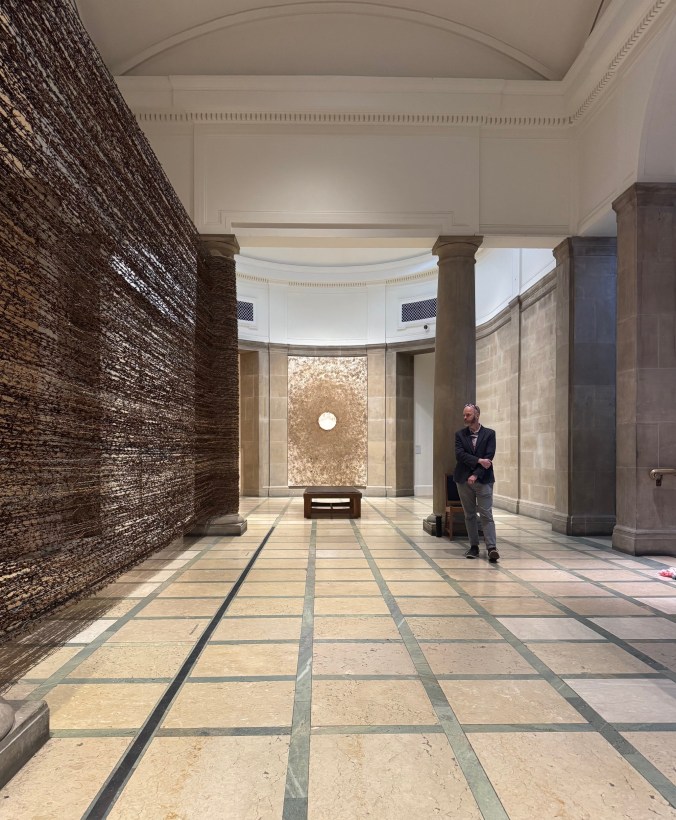
The centrepiece on the first floor of the exhibition was a corridor of oak branches. At one end was a beautiful twisted collage of fern leaves and at the other a circular array of long reeds. The whole room was very memorable.
‘Oak Passage’ by Andrew Goldsworthy (2025)
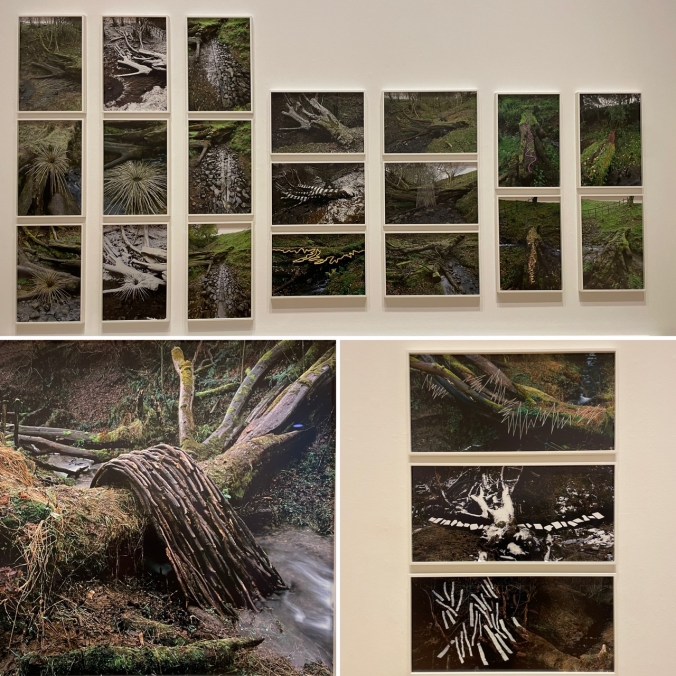
Indeed, every room was memorable. I particularly liked the room devoted to photographs of Goldsworthy’s manipulations of sheep wool, stones, reeds and leaves to develop images of a fallen, dead elm tree. I presumed that all the photographs here were shot by Goldsworthy himself but there were other videos and photos that involved others; I wondered who they were.
Examples Of The ‘Fallen Elm’ Series By Andrew Goldsworthy (2009 And Ongoing)
Throughout the exhibition there were unpretentious explanations of what we were seeing and what Goldsworthy was trying to do – even the three works made from dripping hare blood and snow onto paper.
By the time I got to the end of the exhibition where Goldsworthy’s early work was shown, I felt that perhaps these might have been shown at the start to show the chronological development of his ideas. But, as Jane pointed out, that would have made the exhibition entrance less impactful. Fair point; anyway, it was one of the best art exhibitions I have seen and I recommend it to anyone in Edinburgh before very early November 2025.
Our time in Edinburgh – the bread on either side of our Fife sandwich filling – was busy.
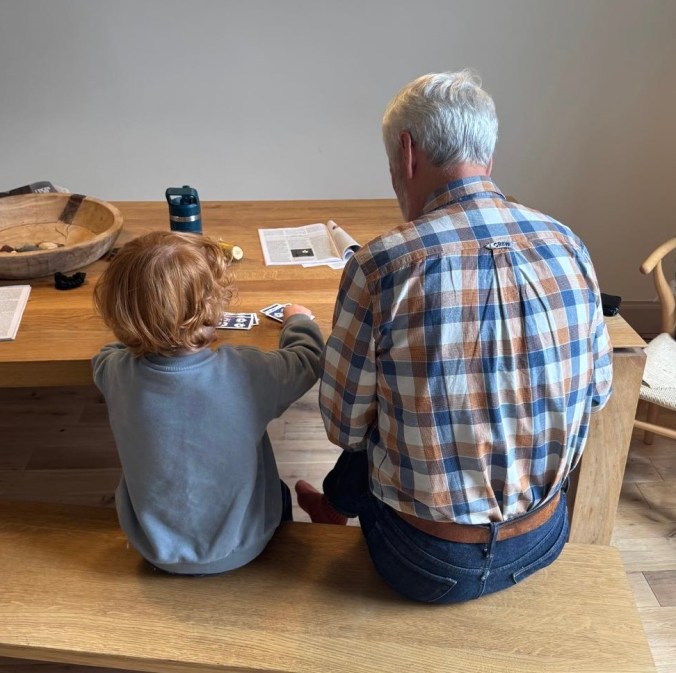
We did some of the usual things with First Grandchild (FG); going to the playground, visiting the National Museum of Scotland and meeting his hopeful requests: ‘can you play with me?’.
Playing Cards With First Grandchild (FG)
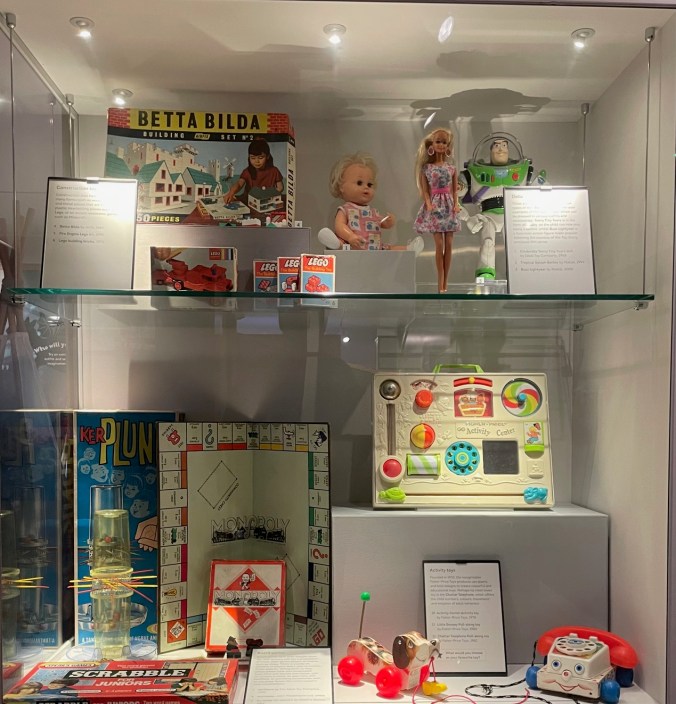
We also went to the Museum Of Childhood for the first time. FG loved the activities available and we liked the nostalgia of seeing the toys from our own childhoods and those of our sons. Entrance to the museum was free and we will definitely be going back with FG.
A Display of Toys From My Youth At The Edinburgh Museum Of Childhood, Including Betta Bilda, One Of My Favourites
FG also had a tremendous time at the Newhailes Gardens and Adventure Park near Musselburgh. This is owned by the Scottish National Trust and is a wonderful facility. I wandered the grounds while FG loved all the activities. I then joined him to build towers, and to watch him get some experience of sack and egg and spoon races.
Newhailes House, Front And Back
We did spend some time away from our Edinburgh family so they could get back to something resembling their routine. A huge highlight of this was a visit to the Andy Goldsworthy exhibition at the National Gallery of Scotland. Based on reviews I had seen, I was expecting great things and it truly was an excellent display. The exhibition was so good, I’ll cover our visit in a separate blog post after this one.
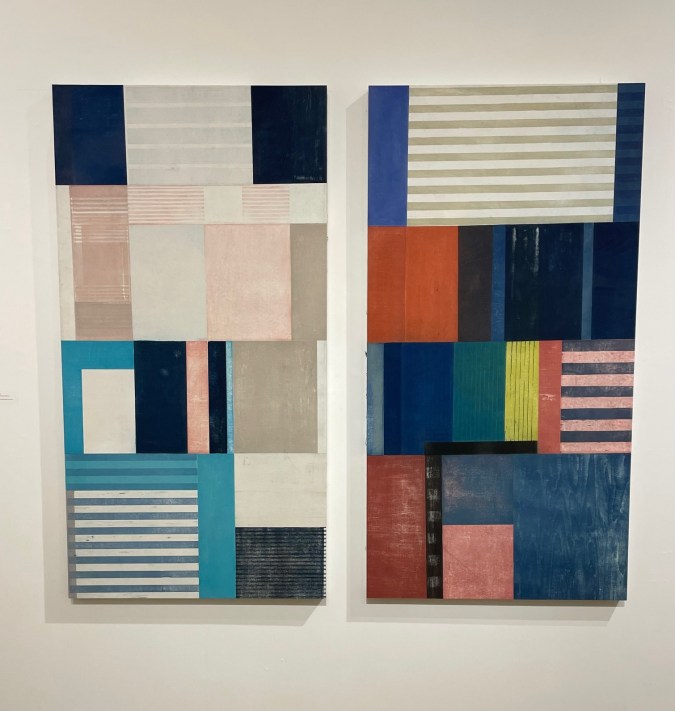
Jane and I visited a few other galleries while in Edinburgh. In the basement of the National Gallery was an exhibition of work by Paul Furneaux who we know our Eldest Son admires. I liked his paintings too.
‘Temple Path’ By Paul Furneaux At the Scottish National Gallery
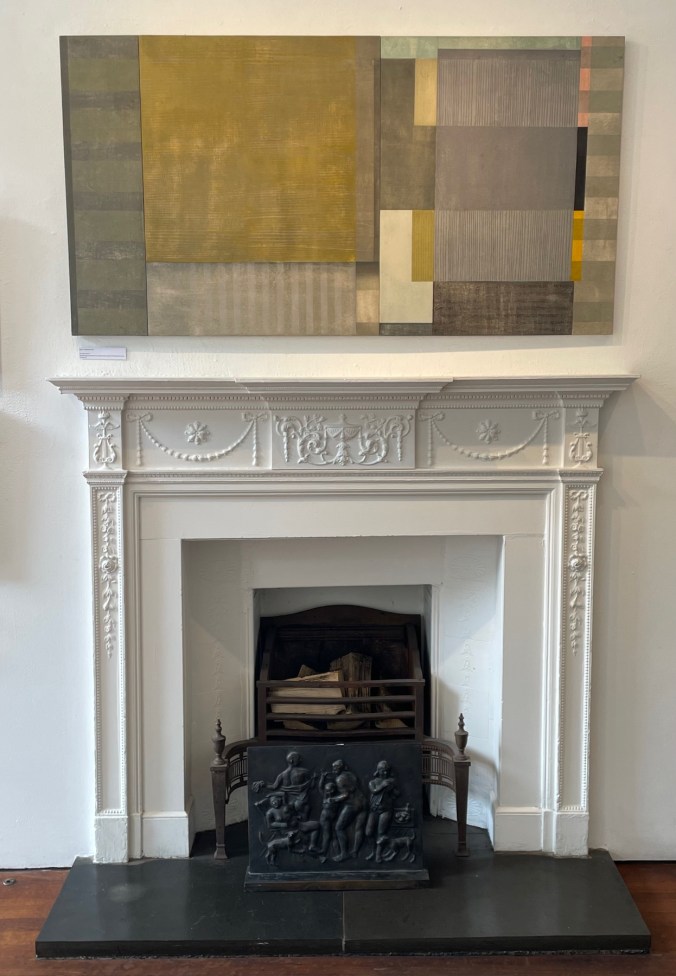
Furneaux also featured in the Open Eye Gallery which is always worth visiting as was The Scottish Gallery opposite. The latter had an exhibition of paintings by Alexander Goudie who I enjoyed getting to know a bit.
Another Painting By Paul Furneuax (‘Rain City’), This Time At The Open Eye Gallery, Edinburgh
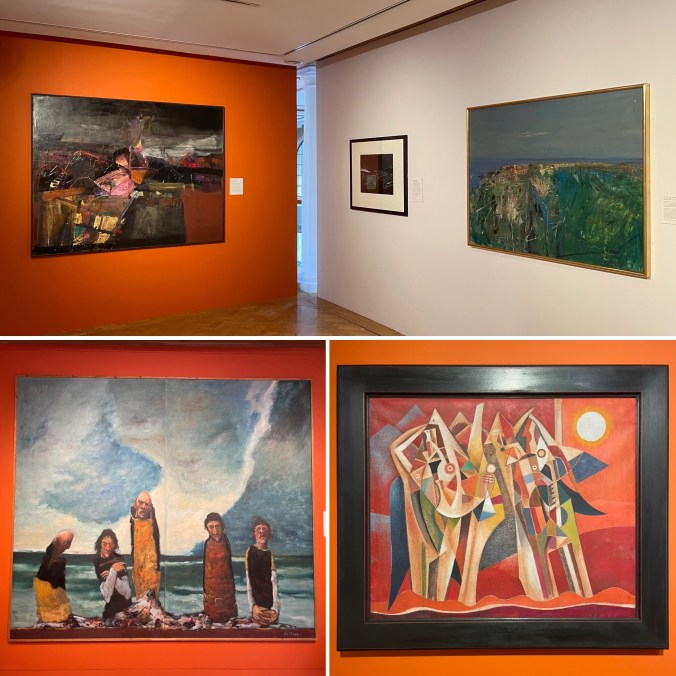
One afternoon, I slipped off and went to a free show of Post-Modern art at the City Art Centre. A little embarrassingly, I got told off for taking a photo here (see below, top) – I just didn’t see the signs prohibiting photography. Otherwise, my visit was very satisfactory as previous shows there have been. I particularly enjoyed the rather macabre painting by John Bellany of men gutting fish (also below). Bellany had a separate (but not free) exhibition at the centre but I didn’t pop in.
Scottish Post Modern Art At The City Art Centre, Edinburgh
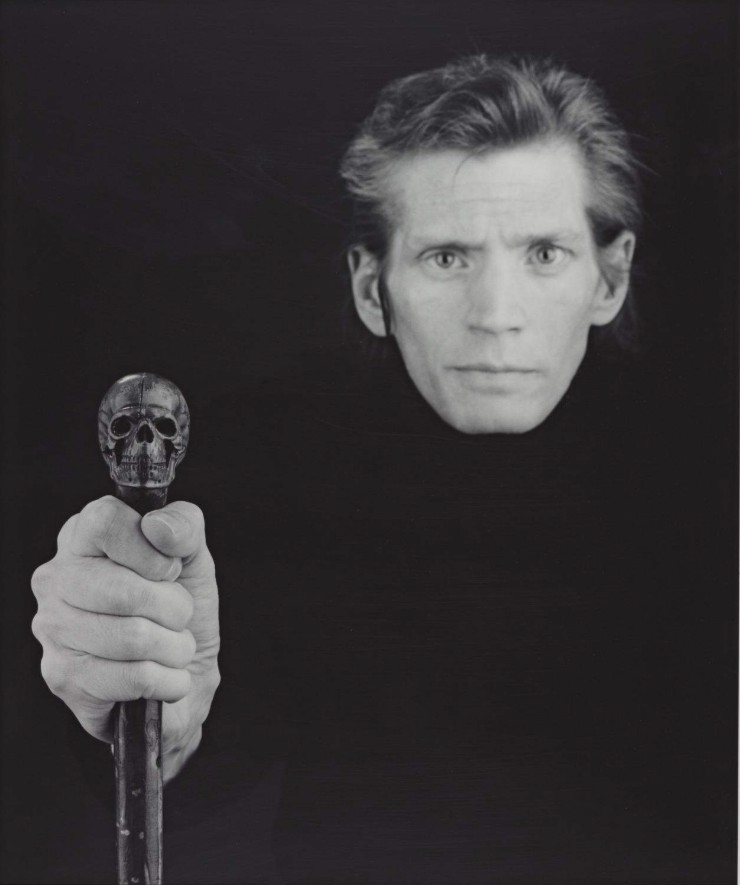
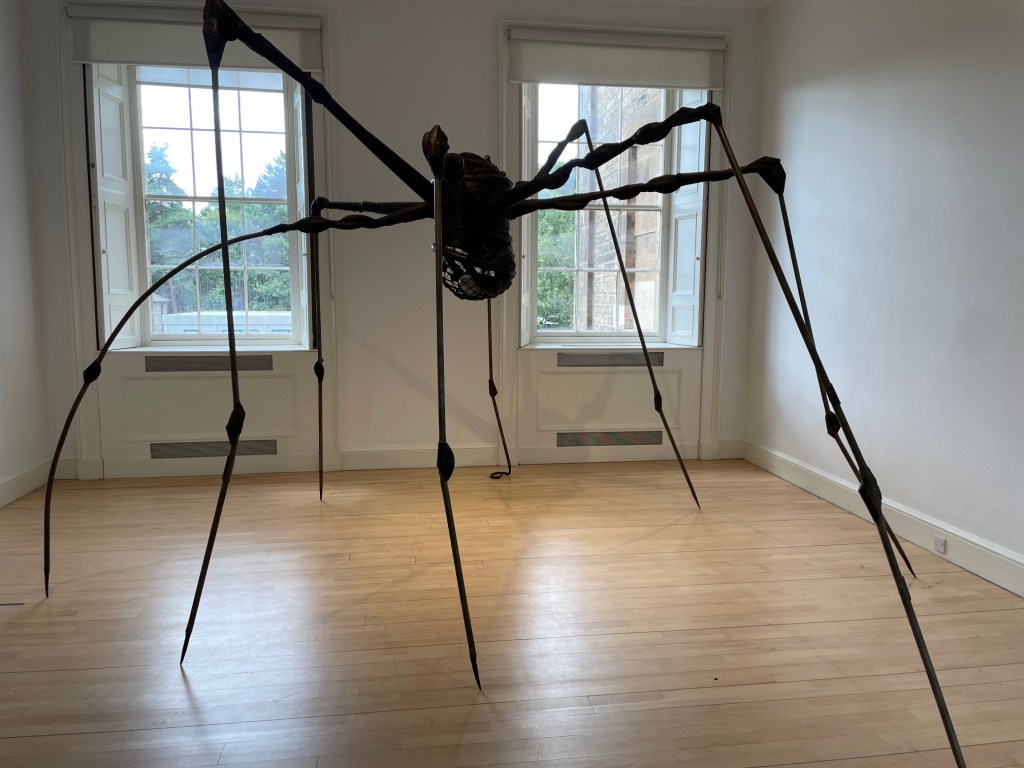
Jane and I also visited the Scottish National Gallery of Modern Art briefly to see three or four rooms of works by Louise Bourgeois, Robert Mapplethorpe and Helen Chadwick. This was mildly diverting but only Bourgeois’s spider, which we had both seen variants of before at the Hayward Gallery in London, and the famous photo of Mapplethorpe’s disembodied head (see below) left much of an impression on me.
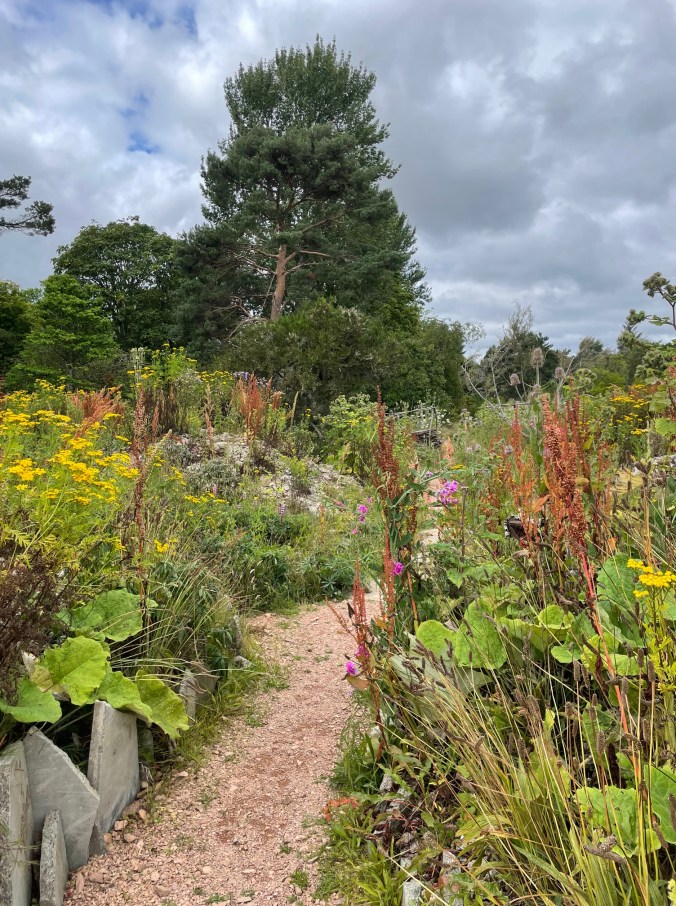
Beyond the art and beyond Edinburgh, we also took some time out to explore some gardens. Recalling these visits now reminds me that I failed to mention in my last blog post a very pleasant hour or so spent in the St Andrews Botanic Garden during our time in Fife. It was a longer walk out of the St Andrews town centre than we expected but well worth a visit to see a rather wild and experimental garden that is investigating how gardens, and the insects that live in them, can cope with our changing climate. Semi-wild gardens, busy with insect life, can be very attractive at this time of year.
St Andrews Botanic Gardens
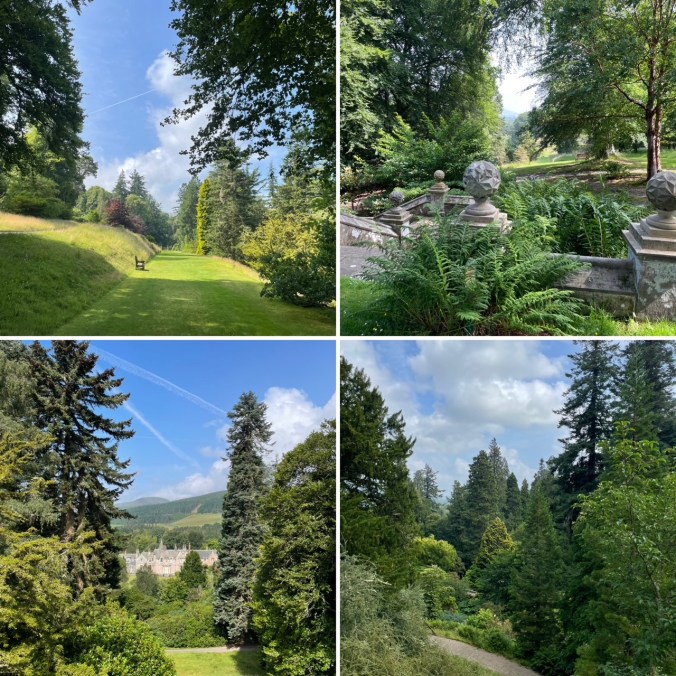
Now we travelled south from Edinburgh to the Pentland Hills and Tweed Valley to Dawyck Botanic Garden. This is a 65-acre arboretum with a lot of mature indigenous trees and a large number planted using seed collected a couple of centuries ago in America by a traveller called David Douglas. He met a sticky end in Hawaii after falling into an animal trap already occupied by a bull, but his legacy at Dawyck is impressive.
Dawyck Botanic Garden, Scottish Borders
The setting is lovely with gorgeous views across heavily wooded valleys to open hillsides beyond. It would be worth visiting again in Spring when more of the azaleas and rhododendrons are in flower.
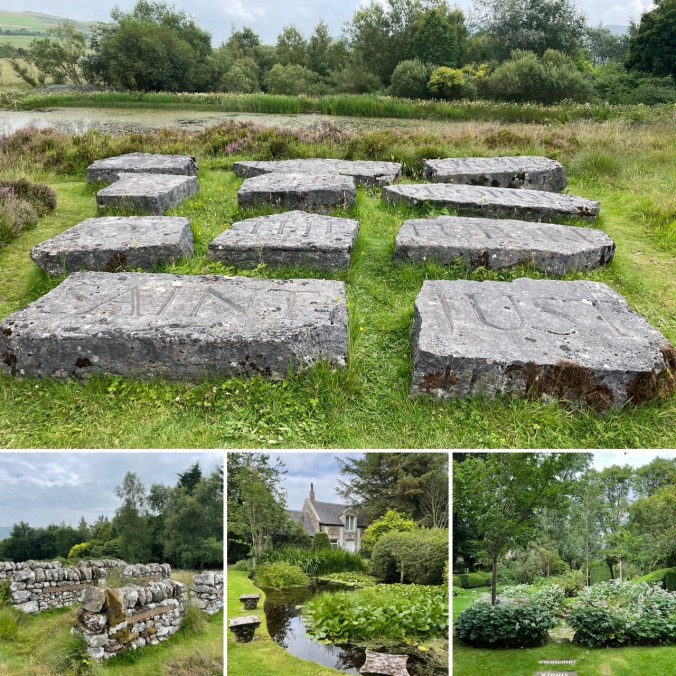
We then went on to Little Sparta, the home and garden of Scottish poet and artist Ian Hamilton Finlay whose work I have often seen in various places in and around Edinburgh including, during this visit, the City Art Centre. This year is the centenary of his birth.
Little Sparta, South Lanarkshire
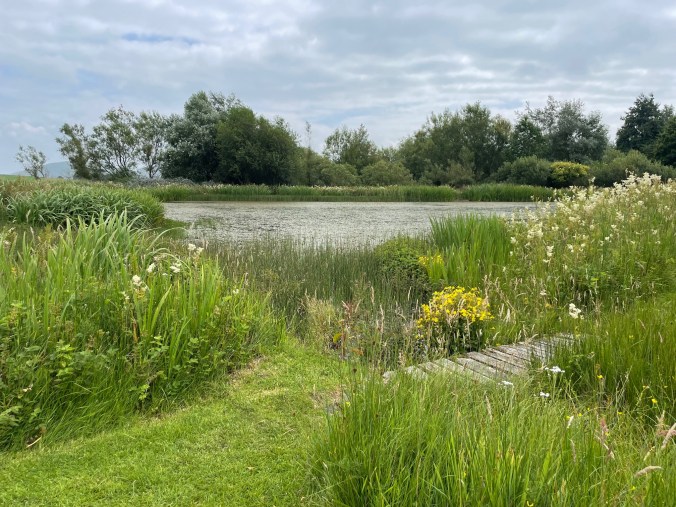
The garden is in the middle of nowhere. It is both a little chaotic and very sweet. Throughout the garden are little paths and about 200 individual art works from golden heads to simple inscriptions and stone sculptures. I particularly liked the open area beyond the wooded garden which included an attractive lake.
Little Sparta
Of course, we ate and drank well while in Edinburgh as usual. A highlight was a drink at the Newbarns Brewery and Taproom followed by an excellent dinner at Ardfern. We will be going to both (and Ardfern’s sister restaurants) again.
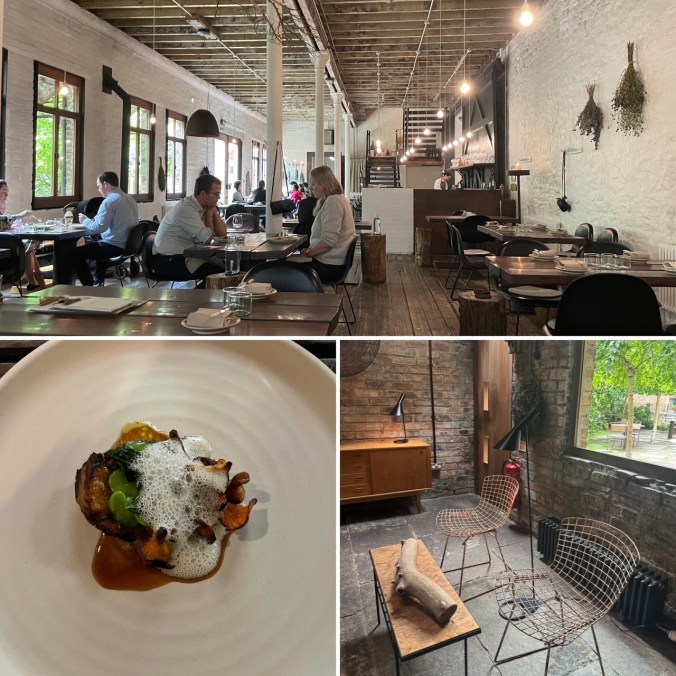
Our stay in Edinburgh was completed with a rather splendid lunch at Timberyard. This was with our extended Edinburgh family including ES’s wife’s parents and was to celebrate Jane and my 40th wedding anniversary. FG provided the rubies from his toy treasure chest and then got on with some drawing, leaving us to enjoy a splendid three courses. The restaurant is a lovely space and the service and food are top notch.
Timberyard, Edinburgh
ES’s wife asked what advice we had, given we have achieved 40 married years together. I mumbled something about needing patience to adjust as circumstances and each partner change at different times. I’m not sure if retirement brings a requirement for more patience. Certainly, intermittent contact with grandchildren and no work to worry about allows much more time to think about getting along than full blown parental childcare and employment ever did!
We took our time over Timberyard’s food but there was still time to take in England Woman’s Football Team winning the European Championship after extra time and penalties. It was a thrilling end to a lovely week and a half in Scotland.
We have just returned from a really excellent time in Scotland. We stayed with our Edinburgh based family and then gathered them up for a few days in Fife. We then returned to Edinburgh for our wedding anniversary celebrations and a bit more time in our favourite city. This is the longest sustained period we have spent with First Grandchild (FG) (and his parents) and it was a real treat.
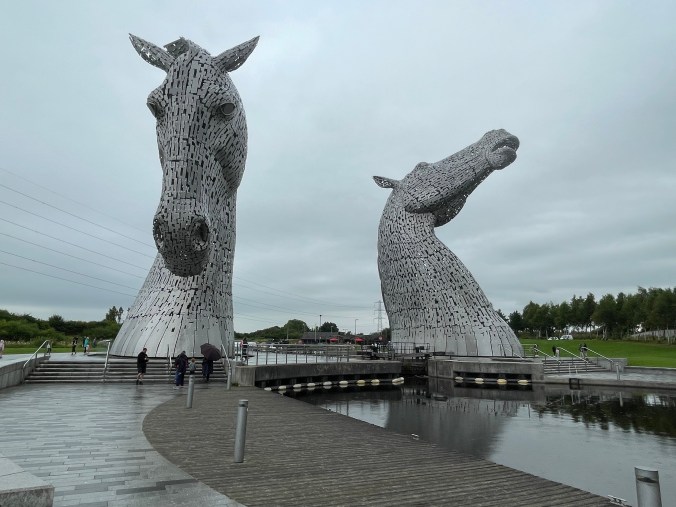
The Kelpies, Helix Park, Falkirk
We decided to travel to our holiday Airbnb in Fife via The Kelpies. These are huge metal statues of horse spirits that, as legend has it, tempted humans into the river and drowned them. The story may be a bit grim but the monuments, designed by Andy Scott, are very impressive. FG was less enamoured with the Kelpies than we were but walking around them was a useful activity break before the next section of driving to a recommended cafe in Culross on the north bank of the Firth of Forth.
FG’s wife always ensures that we eat very well when we visit Edinburgh and surrounds – either through her excellent and seemingly effortless cooking, or through her restaurant recommendations. The Mercat in Culross was a cafe and homeware shop that Jane had also heard about and the toastie lunch there didn’t disappoint.
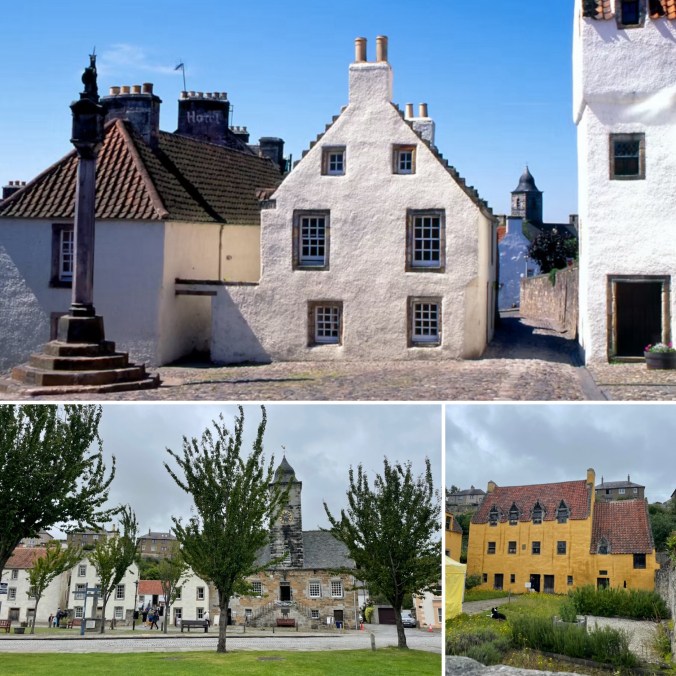
Views of Culross (Top One Courtesy of National Trust Scotland)
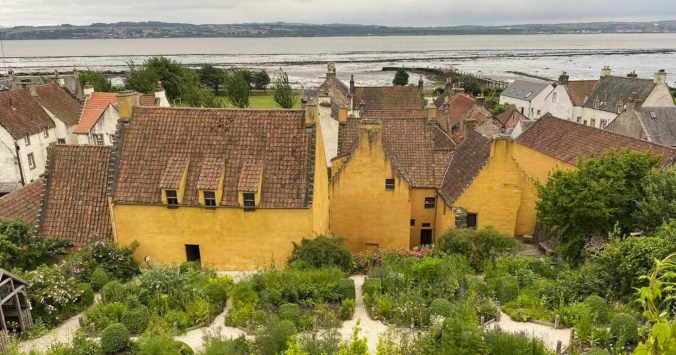
Culross is a very pleasant town. The market square was small but pretty and the buildings along the coast front were clearly historic. They are preserved well enough to, apparently, be used in a lot of period films and television series, some of which we have seen. The old wealth of the town was based on coal. While FG enjoyed the substantial playground, I read up on the innovative way in which the coal was loaded onto ships via a tunnel under the water of the Forth of Firth and then up a lift shaft onto the pier.
Culross And The Firth of Forth (Pic Courtesy of National Trust Scotland)
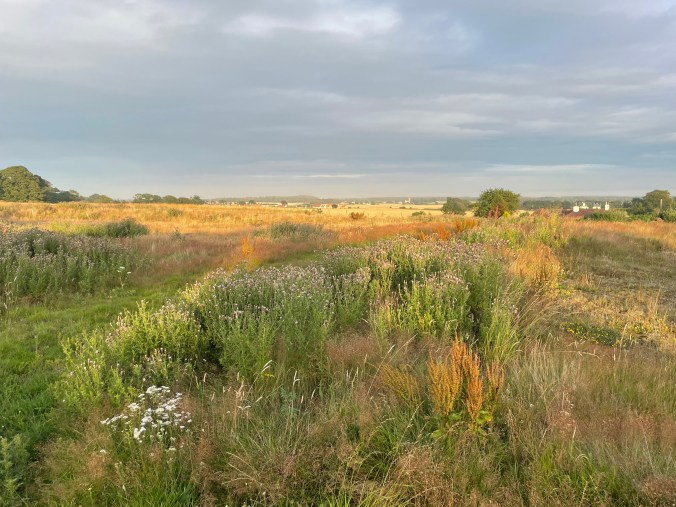
Our holiday home was one of four new, eco-type buildings on the Charleton Estate in East Fife. It housed us comfortably (once we got used to the limited storage spaces and the absurdly steep stairs to Jane and my bedroom) and was surrounded by a golf course and open land we could walk around. In summary, it was near ideal and a great base for discovering other parts of Fife.
View South From Our Holiday Home
I liked Fife very much. We had visited the east Fife coast once before immediately after the wedding of ES and his wife in late 2022. Then, however, Jane was ill and the weather was so poor that we didn’t appreciate the environment much beyond being impressed with the scale of the flooding and the wind velocity. This time, we had warm and mainly sunny weather.
Many of the Fife towns have an interesting industrial and mercantile past often based on coal. The usually pretty main streets of solidly-built Georgian or Victorian houses and cottages indicate a historic wealth. Around these, the landscape is clearly fertile and is dominated by agriculture – mainly potatoes, wheat and attractive fields of manure/ground cover crops such as white radish and phacelia.
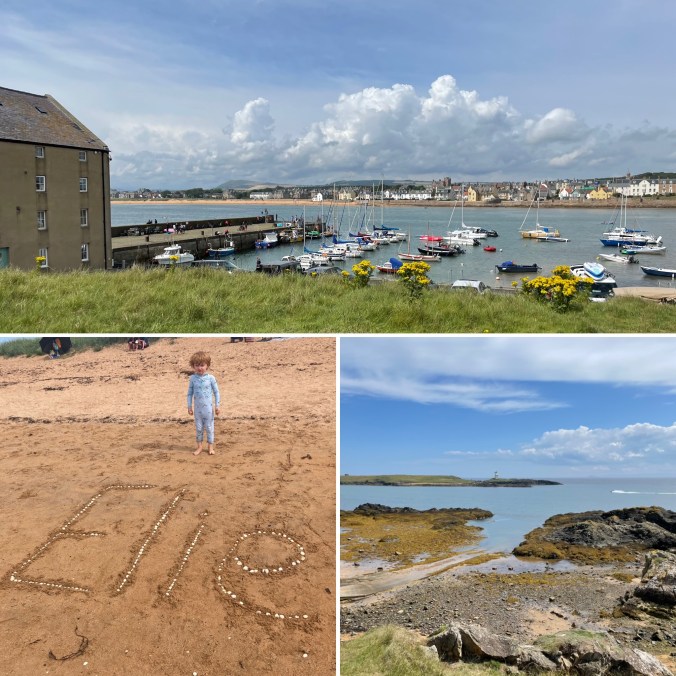
The coastal towns near our base were particularly attractive. Anstruther looked a bit touristy but Elie harbour was lovely and we spent several hours there helping FG potter about, make sand constructions, search for ‘treasure’ and paddle.
Elie
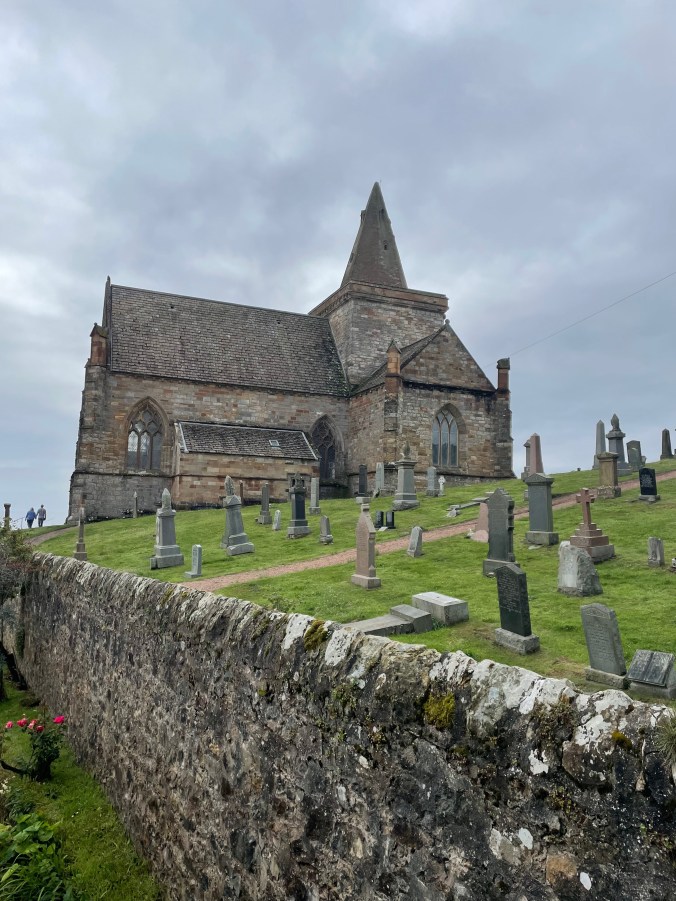
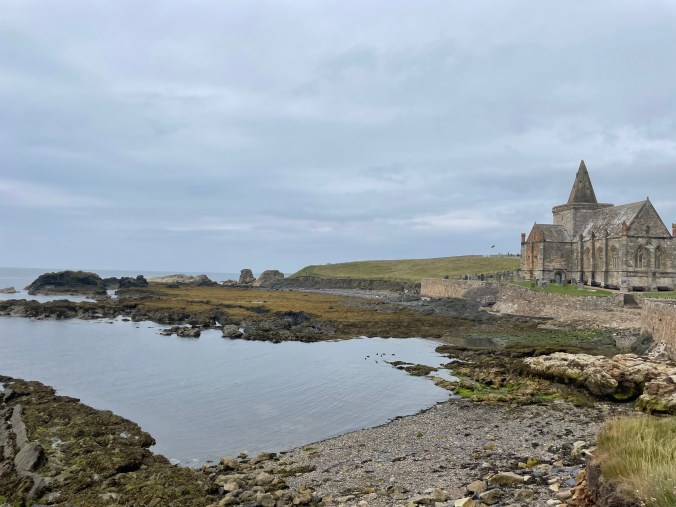
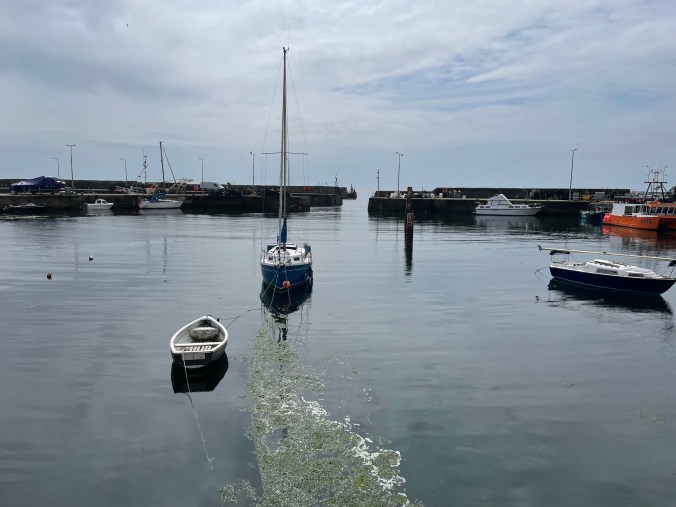
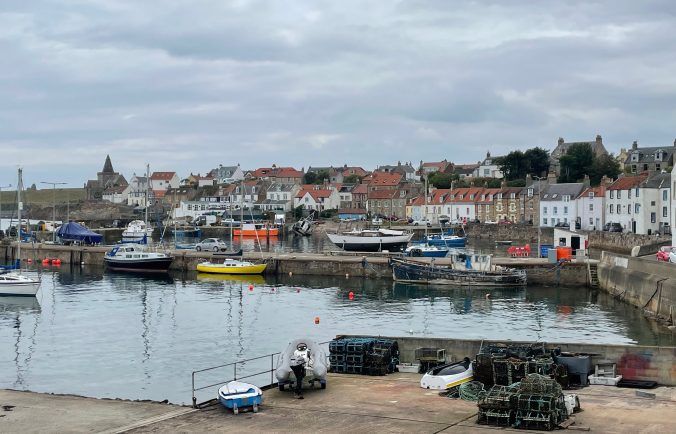
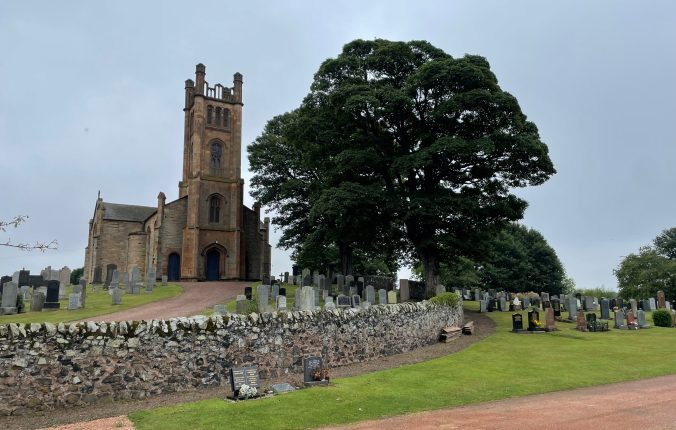
Even better was St Monans. I love this place. It’s a stop off from the Fife coastal walk – some of which is walkable only at low tide. It has a great, compact, sturdy harbour, many 17th and 18th century cottages and several grander old houses. I particularly enjoyed the views of the church (one of the oldest in Scotland) and the walk along the coast to a windmill.
St Monans Church
Coastal Walk Route And St Monans Church
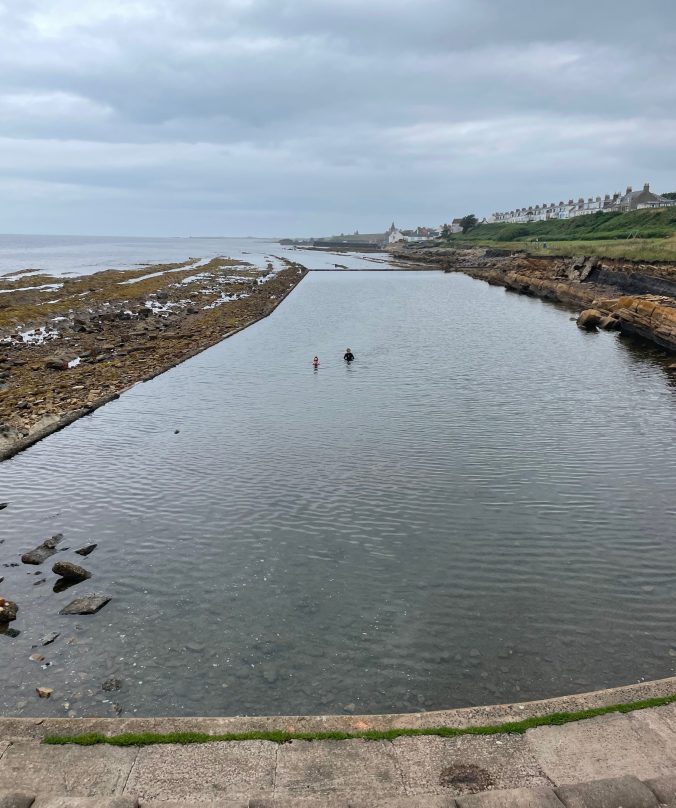
On the walk I saw and/or heard interesting birds including yellowhammers, curlews, redshanks and oystercatchers. I then passed a huge tidal swimming pool built in the 1930s and still popular with wild swimmers today.
Tidal Swimming Pool, St Monans
St Monans has a long history of fishing and industry. The windmill was used to pump sea water into buildings with salt pans. The foundations of these buildings are still visible. Using local coal, it seems that the salt industry all along the Firth of Forth coast was huge in the late 18th and early 19th centuries until foreign imports became too competitively priced. It was interesting to see the remains of this bit of St Monans’ history.
St Monans Harbour
On top of all this, St Monans has some very good cafes and restaurants including the Giddy Gannet and the East Pier Smokehouse (which provided an excellent smoked seafood stew in a beautiful location).
St Monans From East Pier Smokehouse
We also ate very well at the The Kinneuchar Inn in the centre of another nearby, very pretty little town (Kilconqhuar). At all these meals, FG was very absorbed with his pebbles, shells and card games and was so well behaved (with a bit of ‘management’) that we could relax.
Kilconqhuar Church
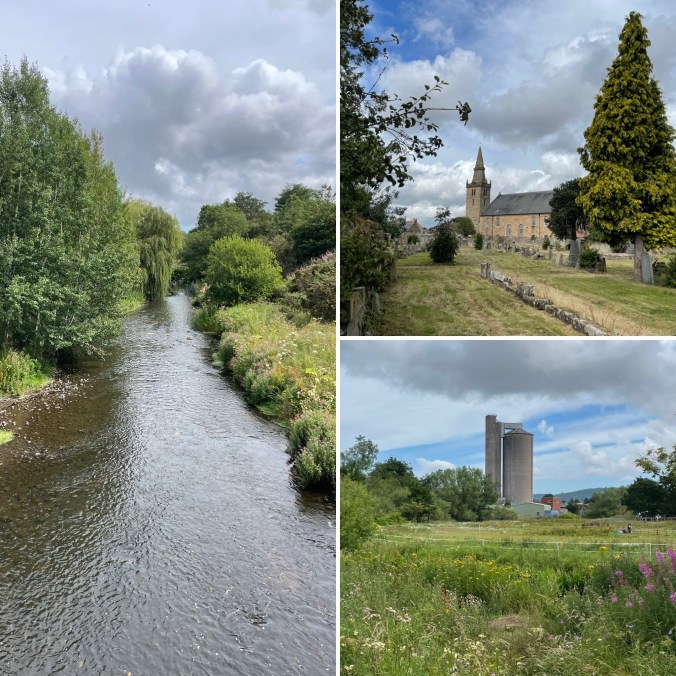
While in Fife, we also visited St Andrews. On the way, I was dropped off in Cupar while the others went on to an adventure park and a pick-your-own fruit farm. Like so many other towns, Cupar has a history back to Medieval times and a lot of nice old buildings. However, apart from a nice parish church and a walk along the Eden River, Cupar was relatively unassuming and unmemorable.
Views In And Around Cupar
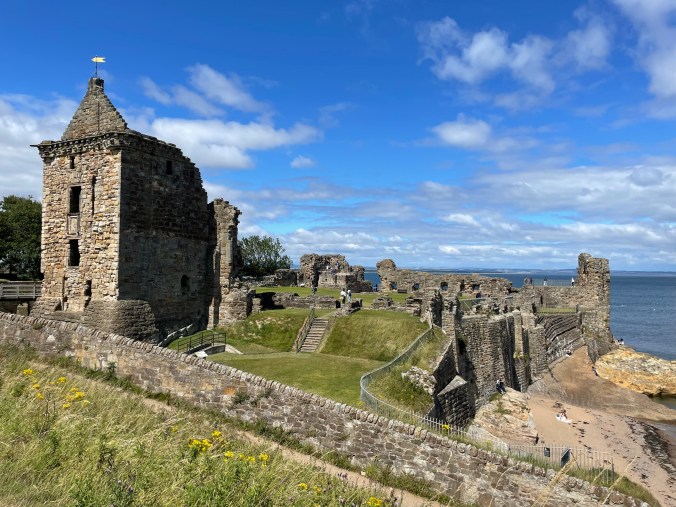
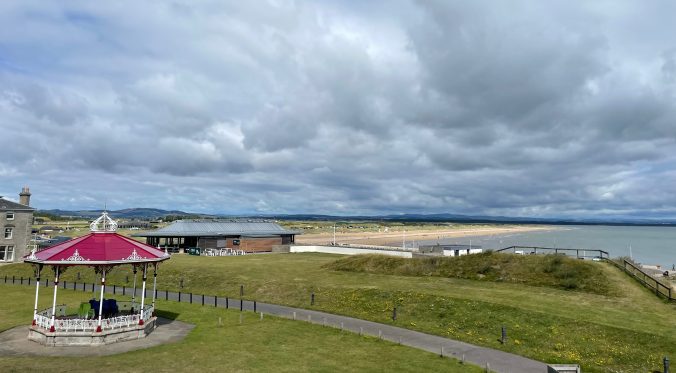
St Andrews, on the other hand, was very grand with its ancient university (founded in 1413), its prestigious golf course, beautiful beaches and historic buildings.
St Andrews Castle
St Andrews Beach Front
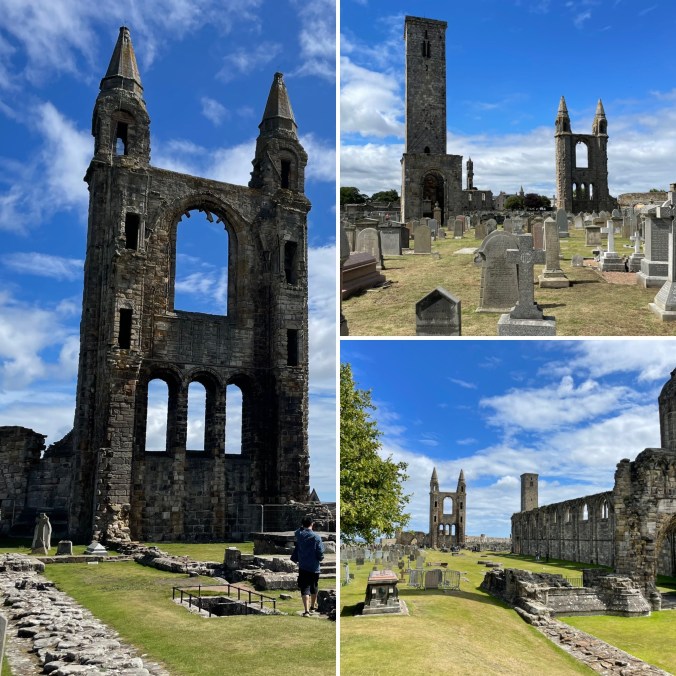
The cathedral, built in 1138, is now a ruin but has an impressive location. Within its grounds is St Rule’s Tower which pre-dates the cathedral. Together they are an impressive sight and a big tourist attraction.
St Andrews Cathedral and St Rule’s Tower
Our break in Fife had all I could have wished for. We enjoyed variety, history, wildlife, attractive British landscapes, pretty towns and great places to eat. That culinary pleasure included a very good home barbeque engineered by ES. Plus, of course, we loved spending quality time with FG. We loved seeing him enjoy the whole holiday whether on the beach, in the playgrounds or learning how to play simple card games. I hope we can do something like it again sometime.


 My Retirement Journey