A Glasgow Virgin

While we were based in Edinburgh for a week, Jane and I visited Glasgow.  It was my first encounter with Scotland’s largest city.  I think the only UK city in the top 10 by size I now have yet to visit is Liverpool and I need to plan for that.  Thanks to holidays with my parents in my youth and my trips to football grounds with Forest Green Rovers, there are only a handful of northern industrial cities in the top 100 UK cities by population that I have yet to go to.  I suspect that Glasgow is a lot more interesting than most of those 😊
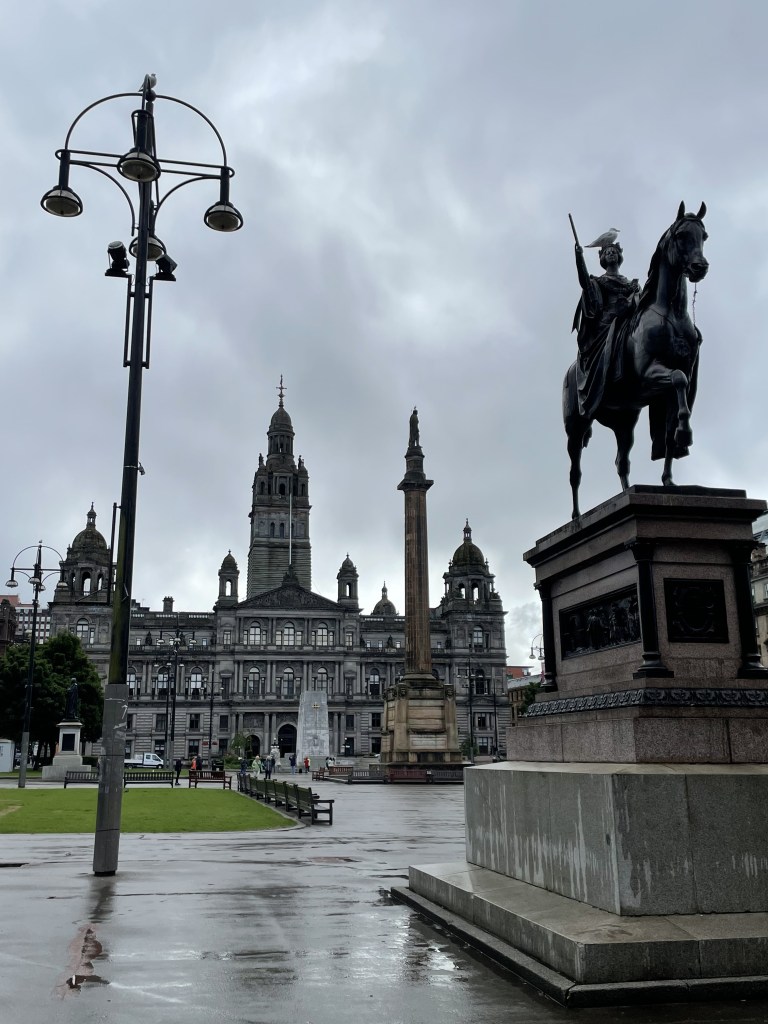
George Square, Glasgow

We travelled from Edinburgh to Glasgow by train.  It was a very easy journey through the Scottish Lowlands past green fields, spoil heaps (large orange-brown hills, locally called ‘bings’ that are apparently a legacy of the 19th century oil-shale industry) and a brief sighting of the attractive Linlithgow Palace.  The stop at Falkirk High railway station was personally significant since it made sense of a lyric in one of my favourite songs by one of my favourite singer-songwriters who was brought up in Falkirk: Loneliness Shines by Malcolm Middleton. 

My favourite place is Falkirk High Station

Metal rails stretch off towards life

And I’m just waiting

I always assumed Falkirk had a railway station but wondered why the word ‘High’ was included without understanding that it was just a part of the station’s name.  It’s a great song from a master of miserabilism.

Anyway, we arrived mid-morning in Glasgow and, since it was raining, took immediate shelter in the Gallery of Modern Art (GOMA).  We quickly perused the permanent collection which included a number of works by Eduardo Paolozzi who is also prominent in Edinburgh where he was born (well, just up the road in Leith actually). 
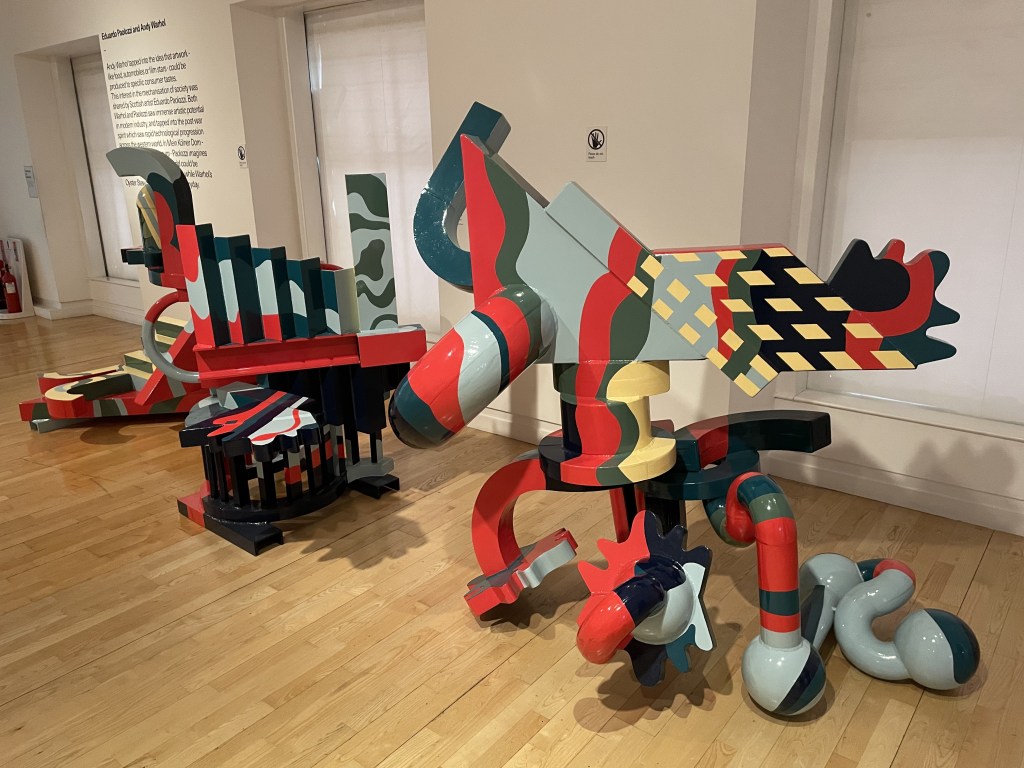
GOMA: Eduardo Paolozzi’s ‘Hamlet In A Japanese Manner’, 1966

We eschewed the queues to see the Banksy exhibition at GOMA which, in retrospect, was an omission due to limited planning of our Glasgow trip.  Instead, we took a bus tour around the city – something that Jane always loves to do upon arrival in a new city so as to get a feel for it.  It was a good idea even though rain prevented us using the open top part of the bus.  The recorded guide through the headphones provided by the tour operator was very informative and once we had secured a seat on the upper deck and the sun started shining, the tour showed Glasgow off at its best.

We headed to the West End of the city to visit the Botanic Gardens there.  On the way we saw a lot of the River Clyde and the redevelopment of the old port and shipyards.  Indeed, we saw a lot of areas that I’d like to come back to on foot, both in the oldest parts of the city and along the river.  I’m especially keen to spend some time in the Riverside Museum which looked as though it would have some lively exhibits – perhaps we’ll go on tour with First Grandchild when he is a little older.

Unsurprisingly, parts of the West End of Glasgow are reminiscent of the lovely Georgian streets and squares of Edinburgh that were built at the same time.  However, prices of the flats within the three and four storey terraces are significantly lower than in Edinburgh.  That reflects, perhaps, the more fragmented nature of the architecture in Glasgow and the status and cachet of Edinburgh as Scotland’s capital.  I sensed though, that Glasgow is up and coming with a vibrant cultural energy that presumably has increased dramatically since Glasgow became European Capital of Culture in 1990.
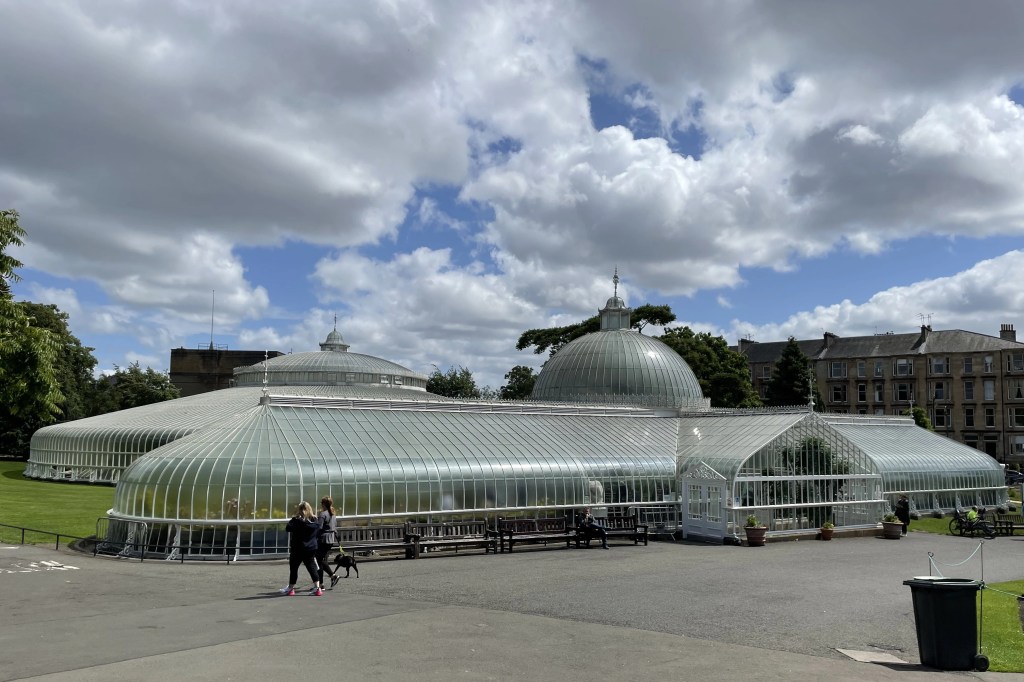
Glasgow’s Kibble Palace In The Botanic Gardens

After a quick lunch stop, we thoroughly enjoyed the glasshouses in the Botanic Gardens.  These are called the Kibble Palace.  This is because they were designed and built for John Kibble’s own garden but then transported to Glasgow’s botanical gardens in 1873, initially as a concert and exhibition venue and then the temperate glasshouse which it remains today.
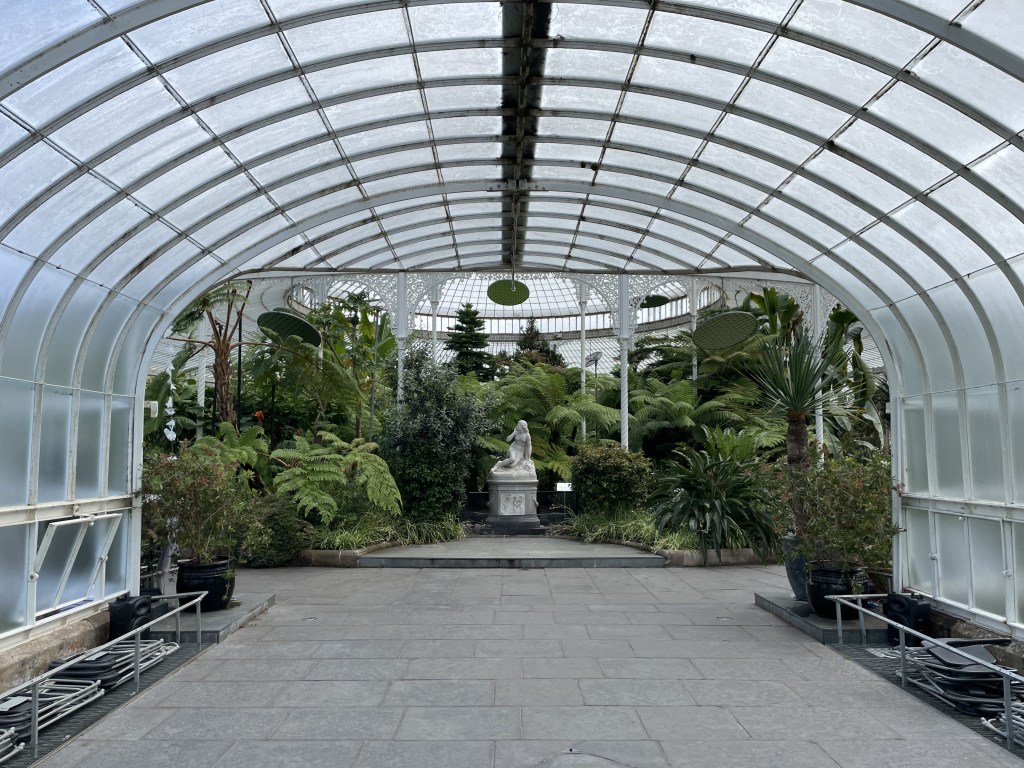
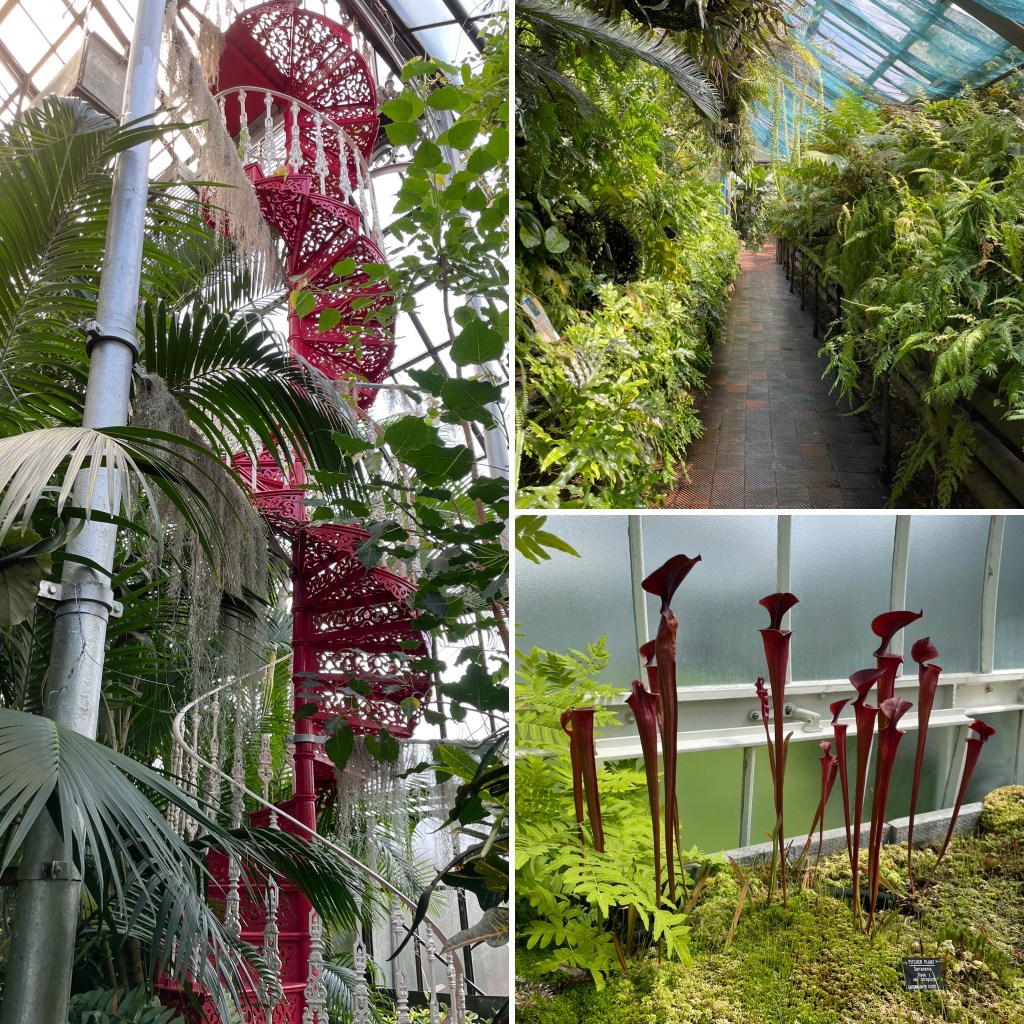
Inside Kibble Palace, Glasgow Botanic Gardens

We strolled south from the gardens past Glasgow University and the Hunterian Museum (saving it for another day), into some small independent shops on Great Western Road, through Kelvingrove Park and on to the Kelvingrove Art Gallery and Museum

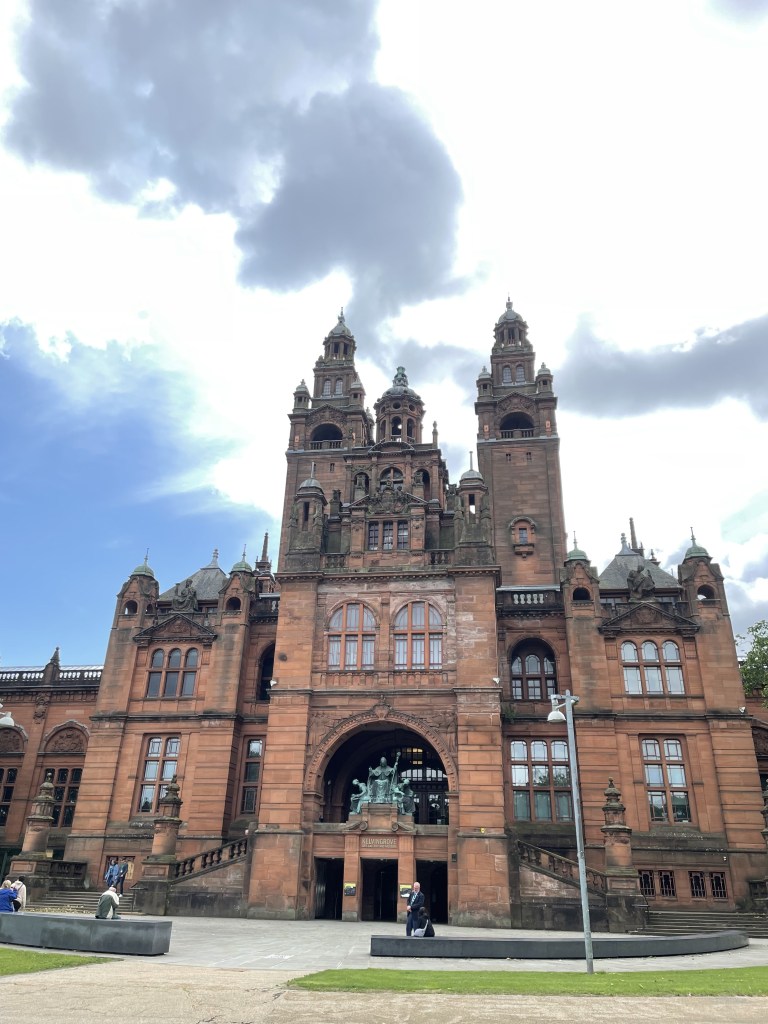
Kelvingrove Art Gallery And Museum

This is an impressive late Victorian building overlooking the park which, like all public Scottish museums and galleries, is free to enter.  That is great because it encourages short as well as longer visits.  Because we wanted to finish our open top bus tour, we restricted ourselves to a short dash around the ground floor and lack of pre-planning on our part meant that a look at the current Mary Quant exhibition will have to wait for another time.
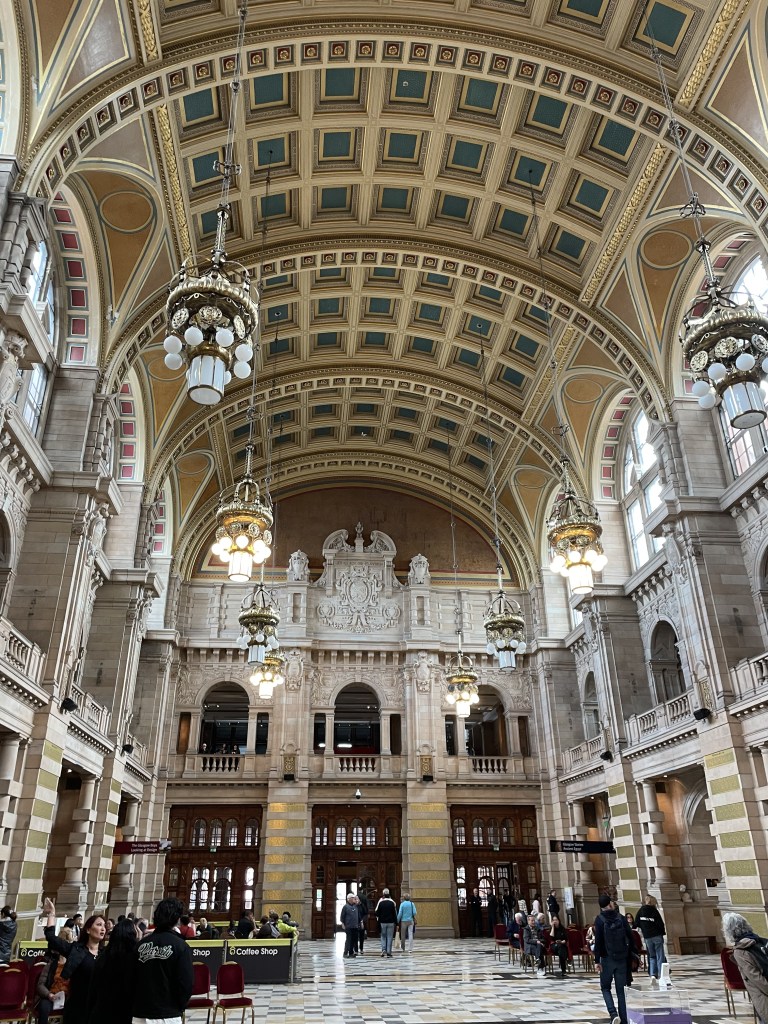
Entrance Hall Of Kelvingrove Art Gallery And Museum

The Kelvingrove contains an eclectic mix of art and history.  There is a room on the Glasgow Boys that Jane was keen to see since she had seen a play recently about them and their rebelliousness against Victorian traditions in painting.  I spent most of my time in a couple of rooms celebrating Charles Rennie Mackintosh, one of Glasgow’s most famous sons. 

Reconstruction Of Part Of Miss Cranston’s Tea Room Designed By Charles Rennie Mackintosh

Frankly, neither of us invested enough time to do the collections in the Kelvingrove justice but we will visit Glasgow again soon, I’m sure.  This trip was an excellent diversion from our usual walks around the sights of Edinburgh.  Next time, armed with what we now know, we will fill in some of the gaps that deserved more time or that we missed out on last week.
Edinburgh: Same Trip, Different Model

For our latest visit to Edinburgh, we changed the accommodation model from what we have done in the past.  This time we stayed in an Airbnb, converted mews building rather than stay in Eldest Son (ES) and his wife’s flat.  That meant we felt we could stay in Edinburgh for longer – a full week this time – and not be a burden on them as they worked and went about their daily lives. 

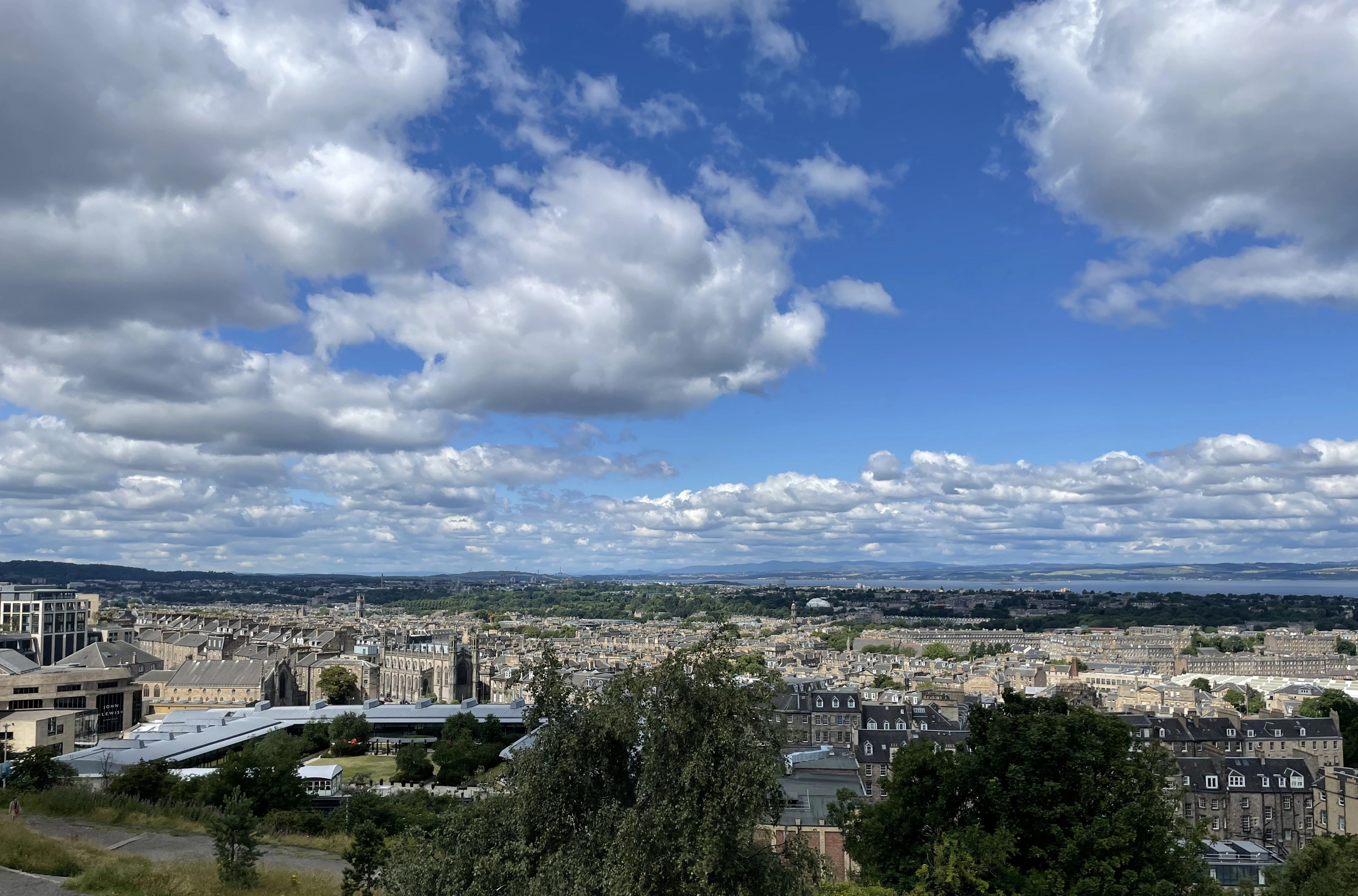
Edinburgh New Town (From Calton Hill) – Where First Grandchild Lives!

Because our accommodation was so close to them, we were able to pop over for, or just after, breakfast to see First Grandchild (FG) and, on his nursery days, enjoy the novelty of taking him to his nursery.  Overall, we saw ES, his wife and FG as much as ever, but they and we could also enjoy a bit more independence.  It worked for us anyway!

Our first few days were those when FG doesn’t go to nursery and so we had fun with him in Inverleith Park, the Royal Botanic Garden and the National Portrait Gallery (where FG ignored the art but loved going up and down the flights of steps).  We also loved playing with him at home playing with his toys.  It had been almost two months since we had last seen FG and, at his age (just over 18 months), that is a long time and a lot of growing up.  The way he now plays with his toys using his imagination in conversation with them is the main development I noticed.

Edinburgh Skyline From Inverleith Park

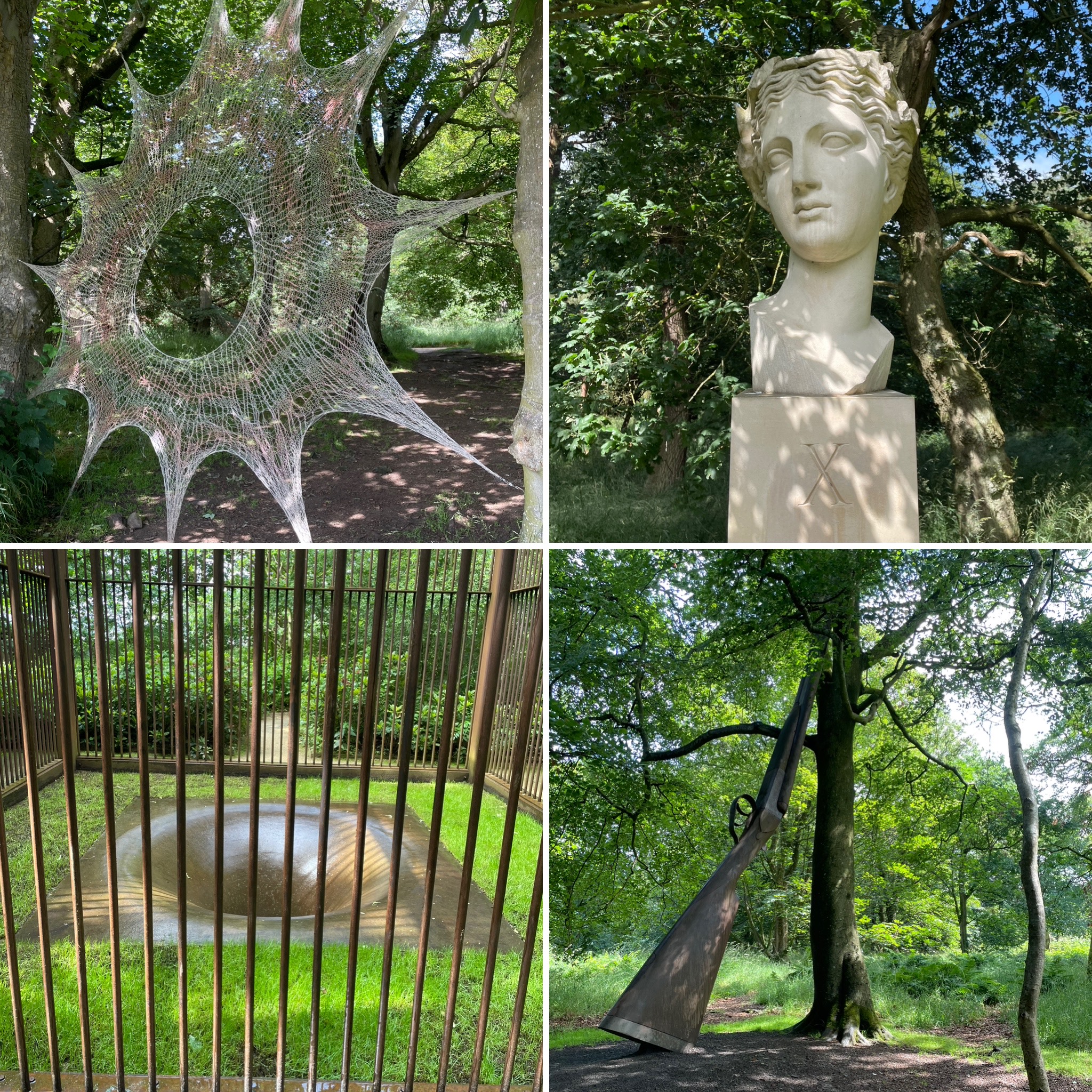
The highlight of these early days of our stay was a car trip to Jupiter Artland to the south west of Edinburgh.  This is an outdoor sculpture park exhibiting a wide variety of works of contemporary artists set in over 100 acres of woodland and open grassland.  It is a very impressive venture founded in 2009 by philanthropist art collectors Robert and Nicky Wilson. 

Jupiter Artland: Works By Shane Waltner, Ian Hamilton Finlay, Anish Kapoor And Cornelia Parker

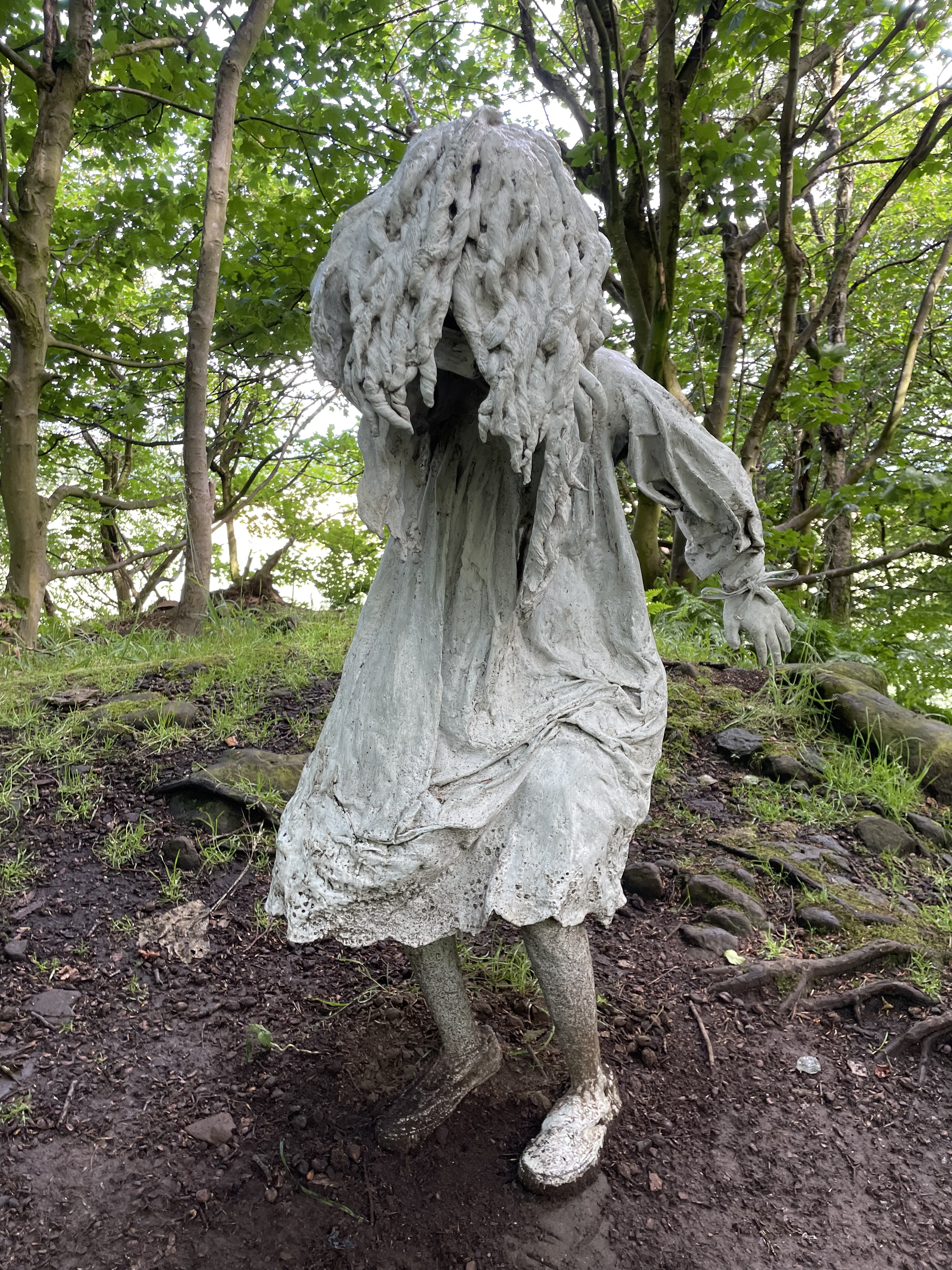
FG walked with us but was a little bemused by our occasional sheltering under trees to avoid the showers.  He seemed to particularly enjoy the ‘Weeping Girls’ (rather macabre bronze figures looking very sad) by Laura Ford and the ‘Temple of Apollo’ by Ian Hamilton Finlay which had the sort of steps that he loves. 

Jupiter Artland: One Of The ‘Weeping Girls’ By Laura Ford

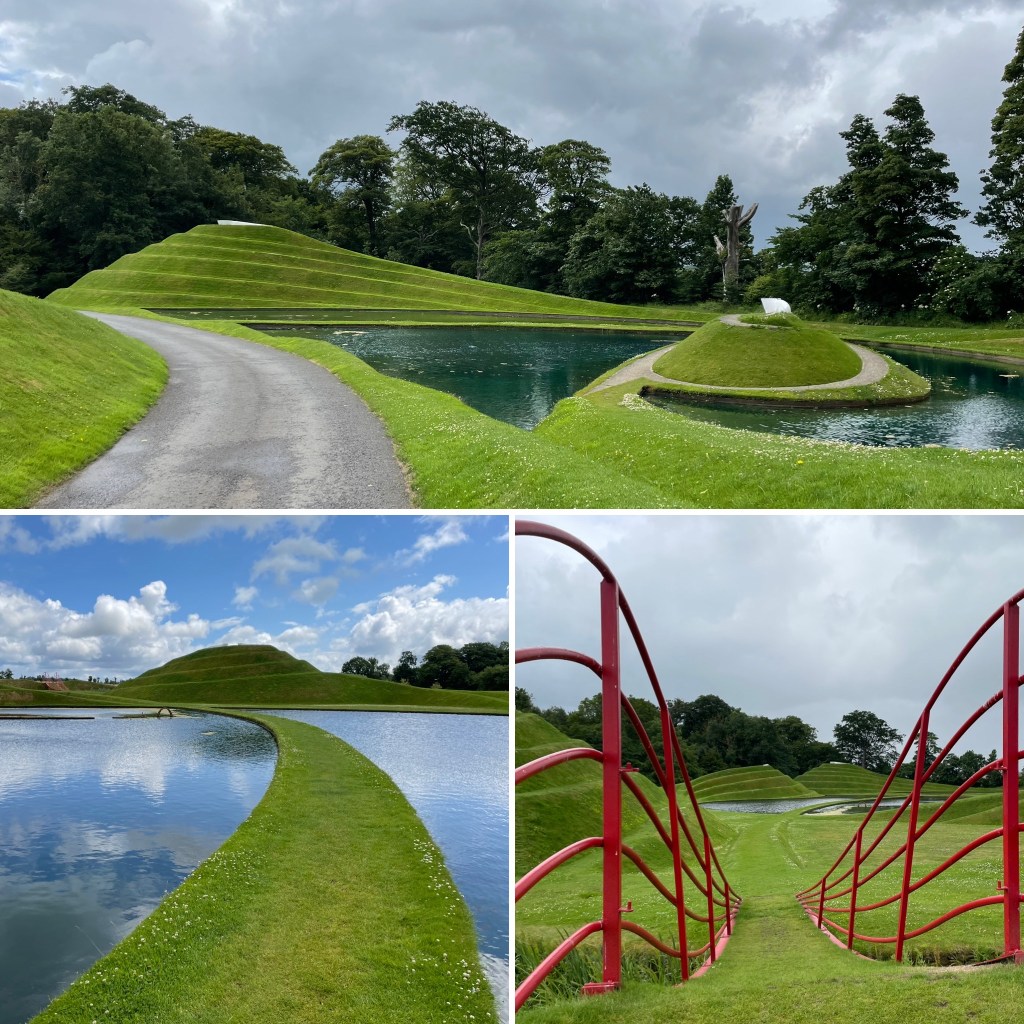
I believe that he also enjoyed the snacks at the café.  While he tried those out, I popped off to get a closer look at the earthworks by Charles Jencks that we had driven past on the way in to Jupiter Artland.  They are larger versions of those outside the Scottish Museum of Modern Art and are quite dramatic, especially as the heavens opened for another shower.

Jupiter Artland: Charles Jencks’ ‘Cells Of Life’

On the Sunday we had a lovely lunch with ES’s wife’s parents.  ES has certainly married into a family that knows hospitality and how to cook.  We had great breakfasts fueled by bread from excellent Archipelago Bakery and delightful gooseberry jam home made by ES’s mother-in-law.  On our Edinburgh visits ES’s wife has repeatedly demonstrated calm and efficient cooking of lovely meals and she did so again.  ES wasn’t to be outshone and he treated us to a very tasty vegetable curry too.  Overall, and as usual, we ate very well.

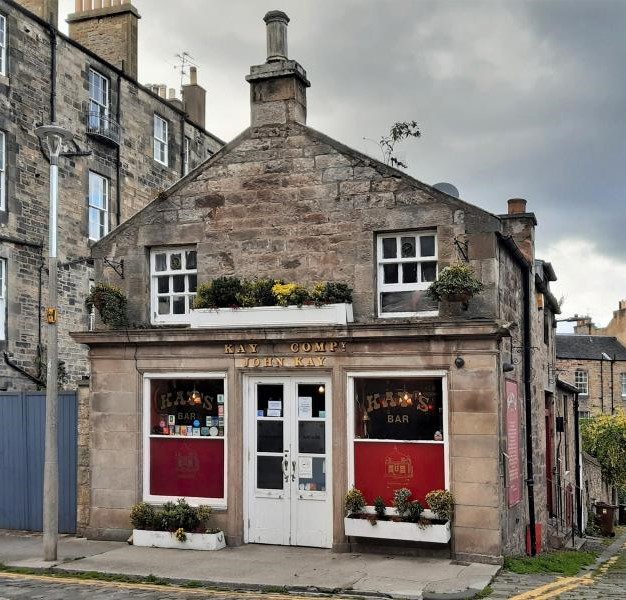
We also drank well including at our favourite Edinburgh bar, Spry and at Kay’s Bar which is a tiny, intimate pub tucked away in a side street right next to our Airbnb accommodation. 

Kay’s Bar, Edinburgh

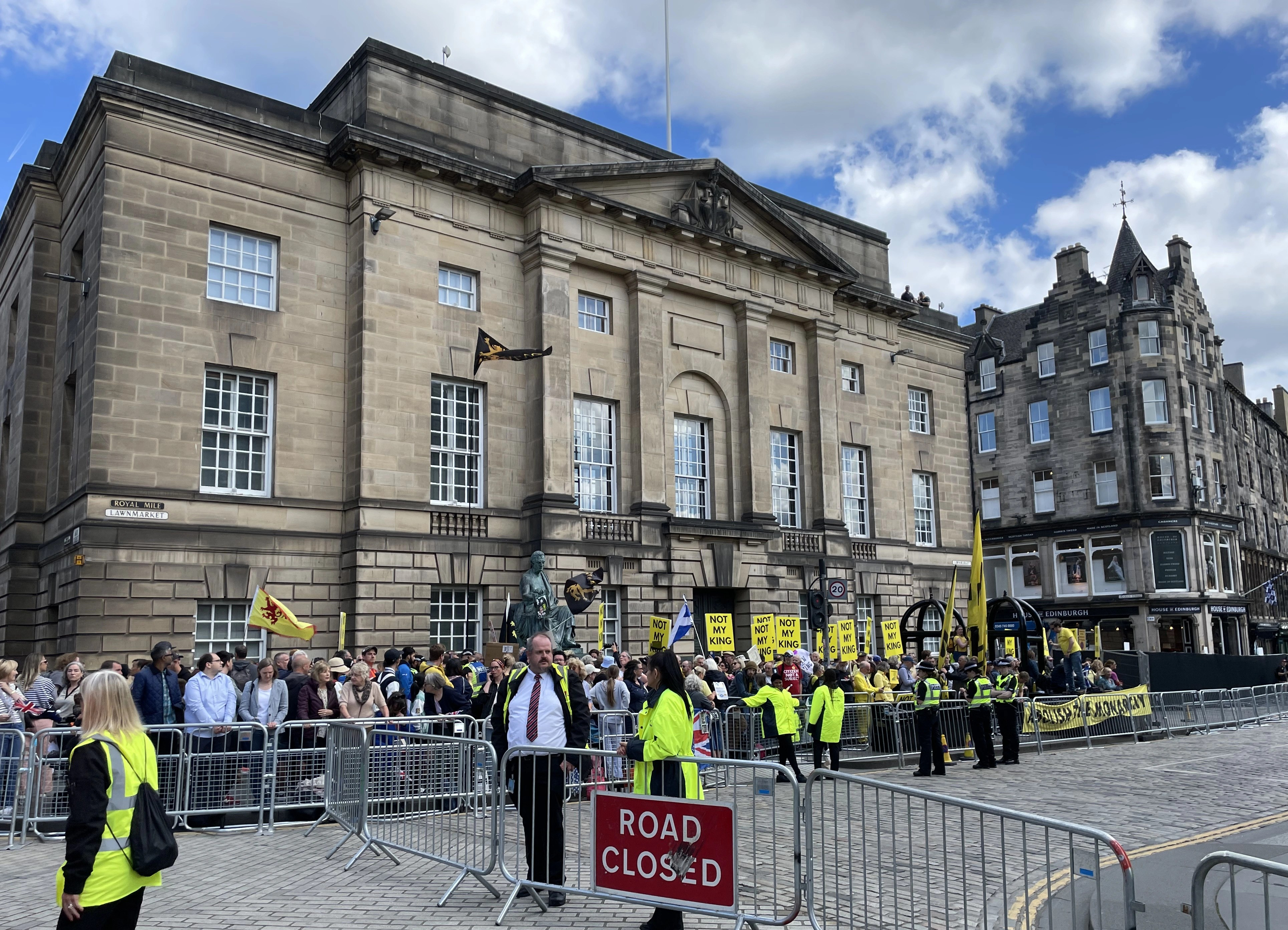
Once we had dropped FG off at nursery – he seemed entirely unfazed by the change in those accompanying him – Jane and I had several hours in which to relax and see the sights of Edinburgh.  Our main excursion within Edinburgh was past the noisy royalists and noisier anti-royalists lining the Royal Mile to watch King Charles receive the Scottish crown jewels, and on to the National Museum of Scotland

‘Not My King’ Protesters On The Royal Mile, Edinburgh

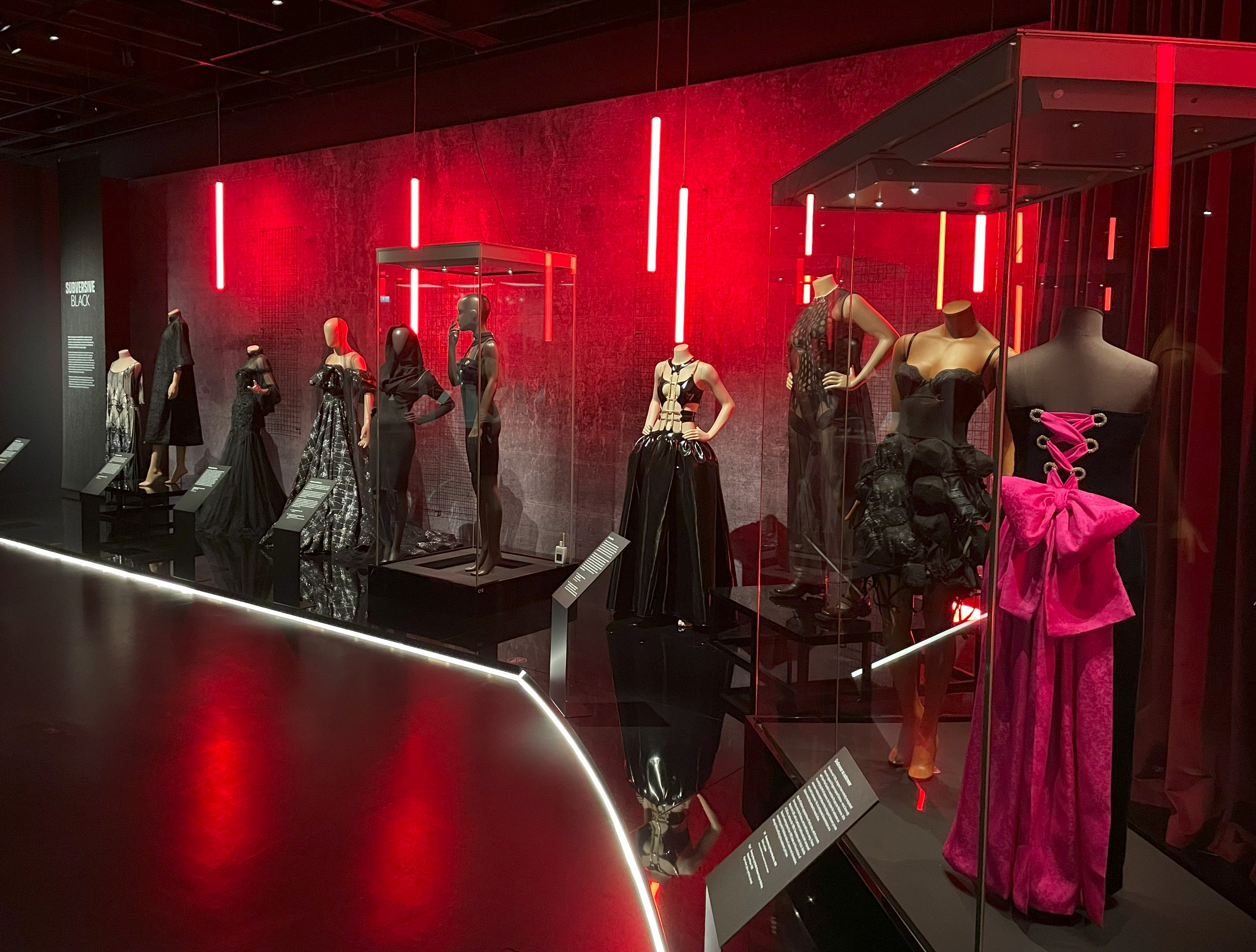
There we saw an exhibition called Beyond the Little Black Dress.  This traced the history of the little black dress as a fashion item since the 1920’s to the present (and, with a bit of foresight, into the future).  Even I could see that the dresses were spectacularly good and almost all the famous designers I know were represented. 

The Little Black Dress Exhibition At The Scottish National Museum

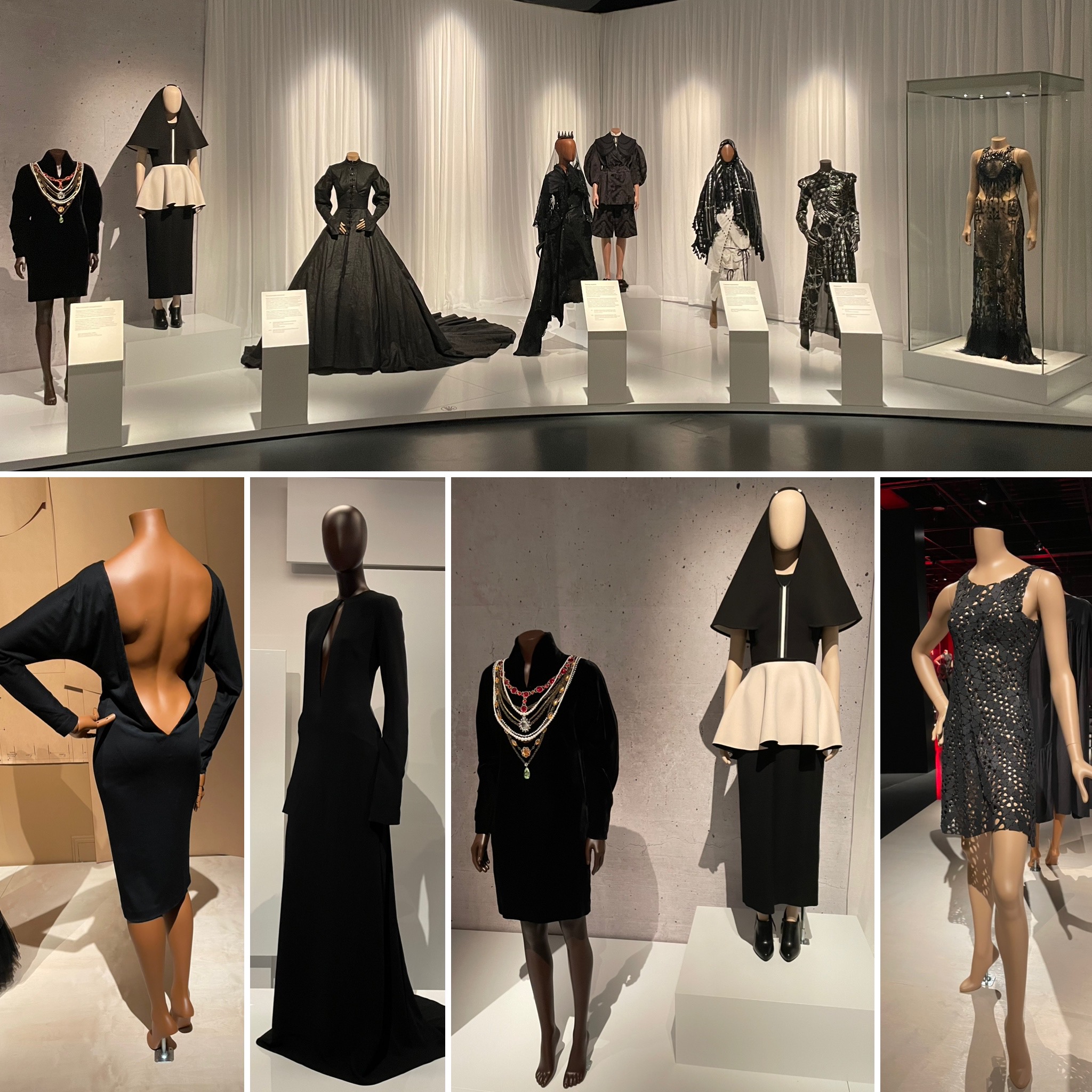
Rather than follow a purely chronological route, the exhibition was mainly structured around themes that have underpinned the use of the little black dress by designers and those who wear it.  There were sections on ‘Well Mannered Black’ (emphasising elegance during cocktail hour), ‘Spiritual Black’ (reflecting religious undertones), ‘Subcultural Black’ (such as the Goth look), and ‘Subversive Black’ (including the erotic and nuances of bondage).  Others showed, for instance, how Japanese designers used different ‘Shades of Black’ and how sustainable fashion is emerging. 

Little Black Dresses At The Exhibition At The Scottish National Museum (With A 3-D Printed Dress Bottom Right)

I liked the displays very much and I felt I learnt something in an area I know little about.  I was particularly struck by the last exhibit which was a short video called ‘Her Dreams Are Bigger’ by Osman Yousefzada.  This showed poor textile workers in Bangladesh – the sort that make mass-produced little black dresses – and related what they imagined the wearers of the clothes they make do and think.  The punchline is in the title of the video.  It was quite unexpectedly moving.

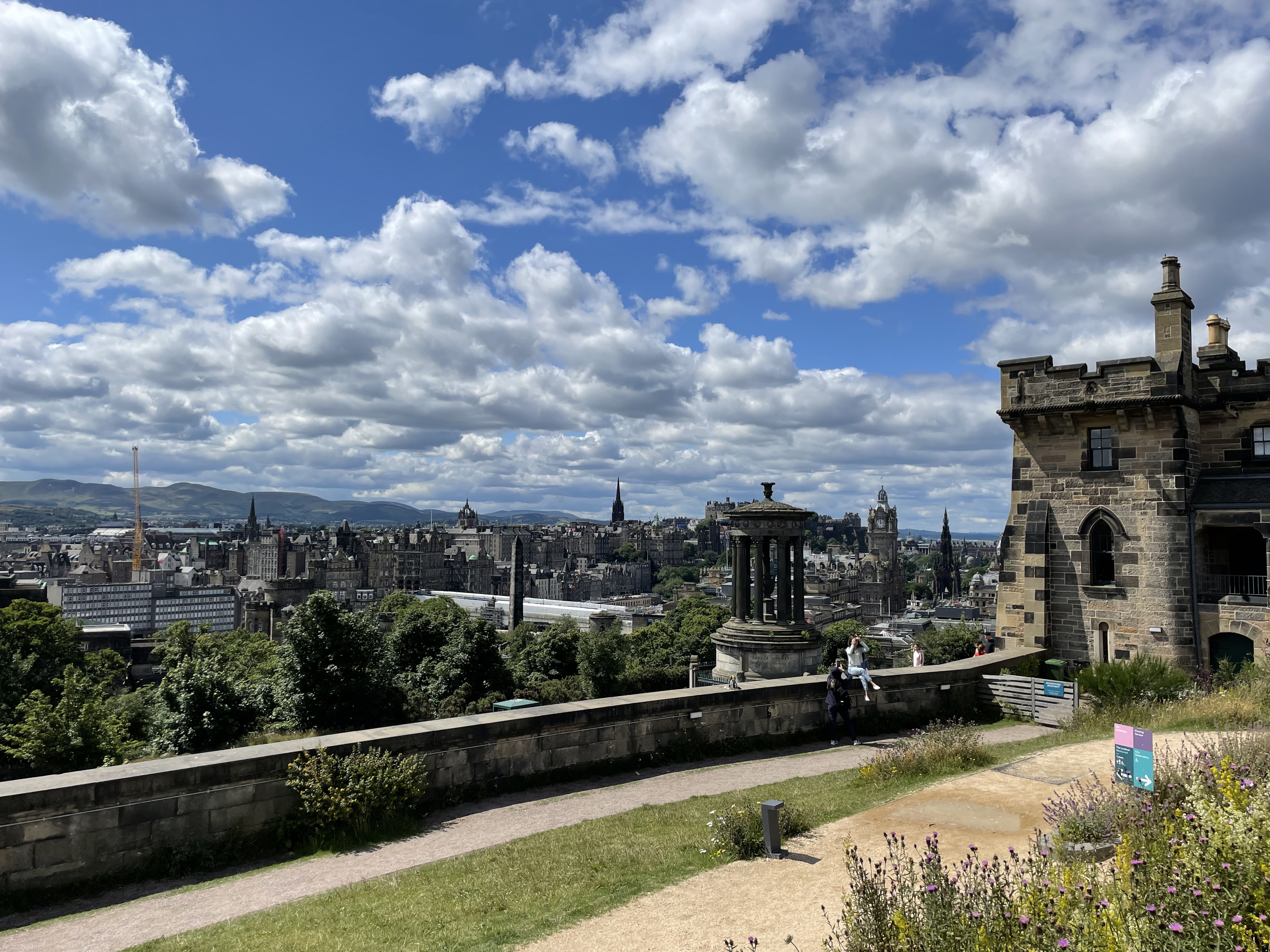
While Jane went off to peruse shops, I walked over to Old Calton Burial Ground and Calton Hill.  Both offered great views of Edinburgh in wonderfully sunny weather and clear air. 

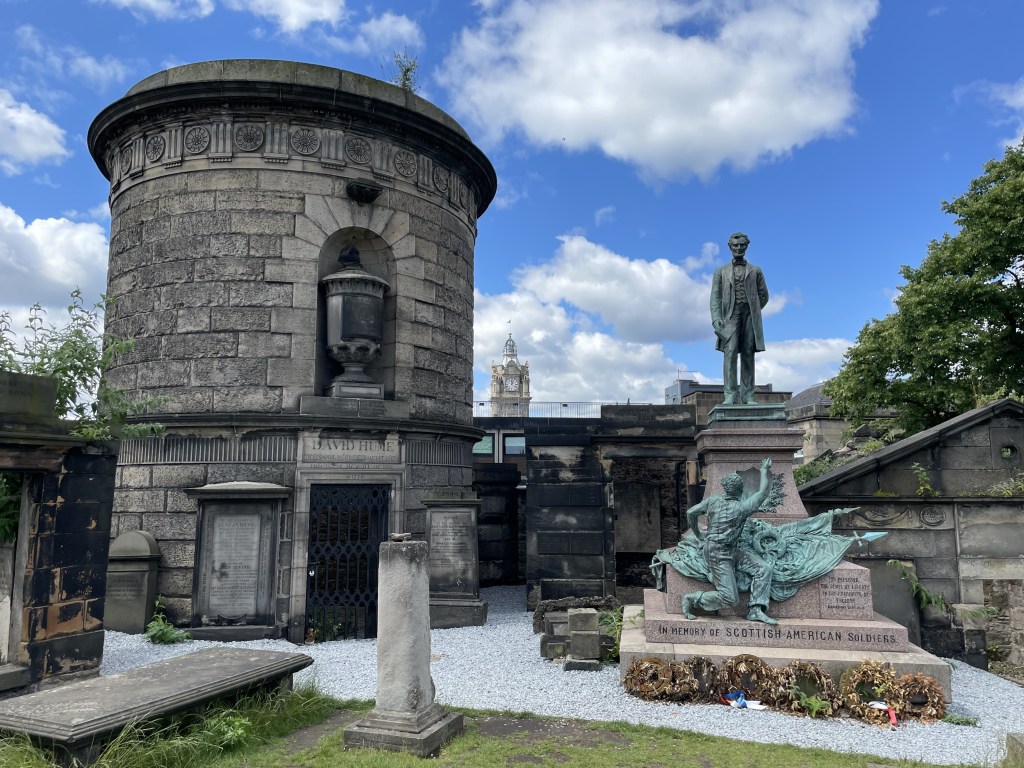
Old Calton Burial Ground

I hadn’t seen the burial ground before and it is a secluded, private space easily overlooked by tourists.  It is dominated by a tall obelisk erected in memory of members of the Friends of the People who campaigned for universal suffrage in the late 18th century but who were deported to Australia for their efforts.  It got me researching ‘one man one vote’ campaigns and I was amazed to find out how long it took for rich property owners to lose their monopoly of electoral privilege.  It was only in the early 20th century that the UK passed legislation to enable all men to vote; womens’ suffrage followed shortly after.

View Across Edinburgh Old Town From Calton Hill

On another day, Jane and I popped into The Scottish Gallery, a private gallery which had completely changed its exhibitions since the last time we visited and now included some lovely porcelain pottery by Jack Doherty (not someone I knew but who Jane follows and likes). 

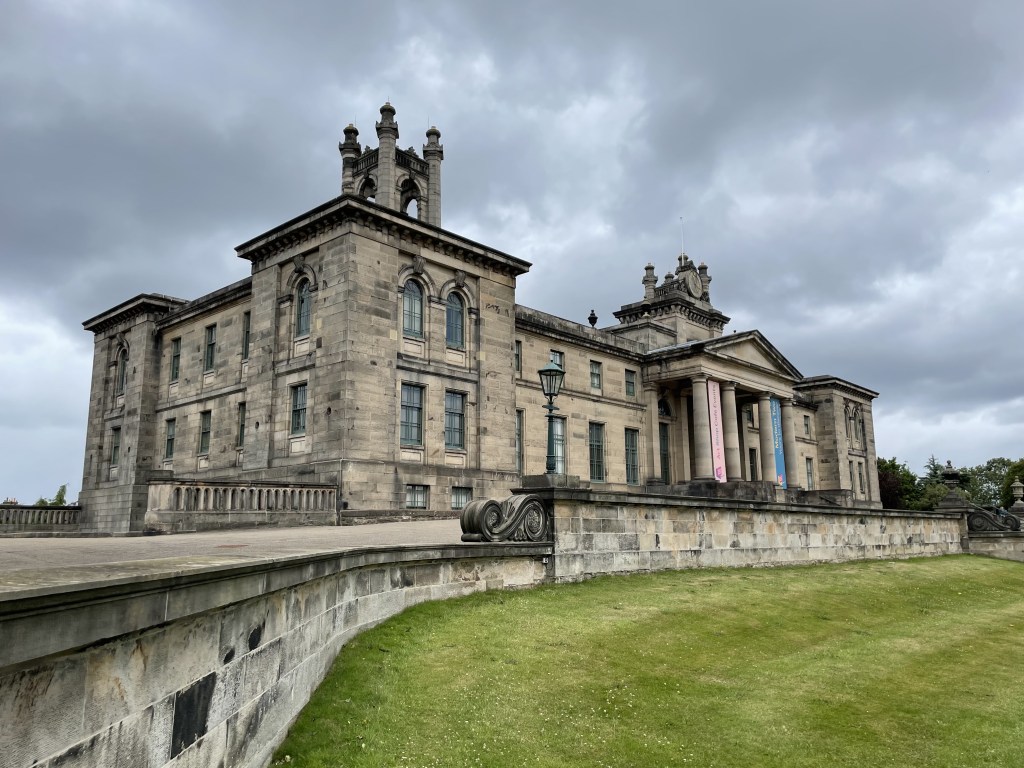
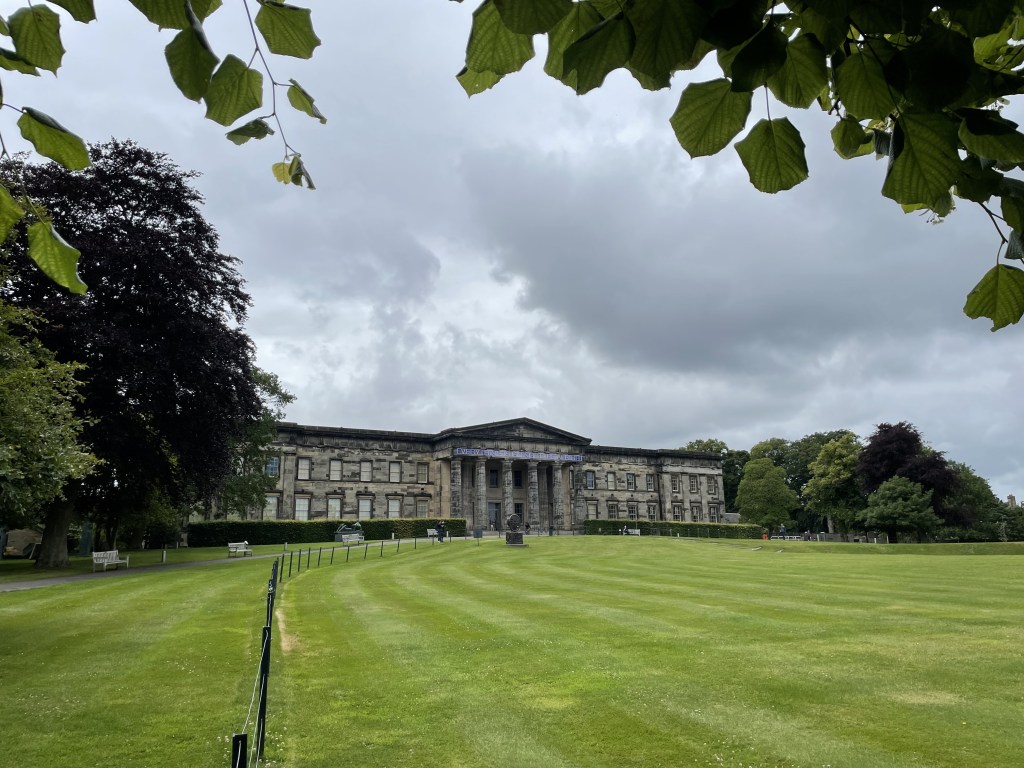
Jane and I also visited both buildings comprising the Scottish National Gallery of Modern Art where I briefly revisited the retrospective of Alberta Whittle’s work (and, as during our last visit, enjoyed the abstract watercolours more than the more prominent fabric and photo-collage works).  We wandered through the galleries and again I was struck by the number of famous artists (that is, the ones I know!) represented on the walls.  It was nice to be able to spend the time rather aimlessly taking in such a wide range of art.

Modern Art Galleries of Scotland 1 and 2

The relative flexibility of our longer stay in Edinburgh than usual (without impinging overmuch on ES and his wife) and the fact that we drove up (with no recharging delays or issues at all) and so had a car with us, afforded the opportunity to travel further afield.  I’ll cover our day trip to Glasgow separately……

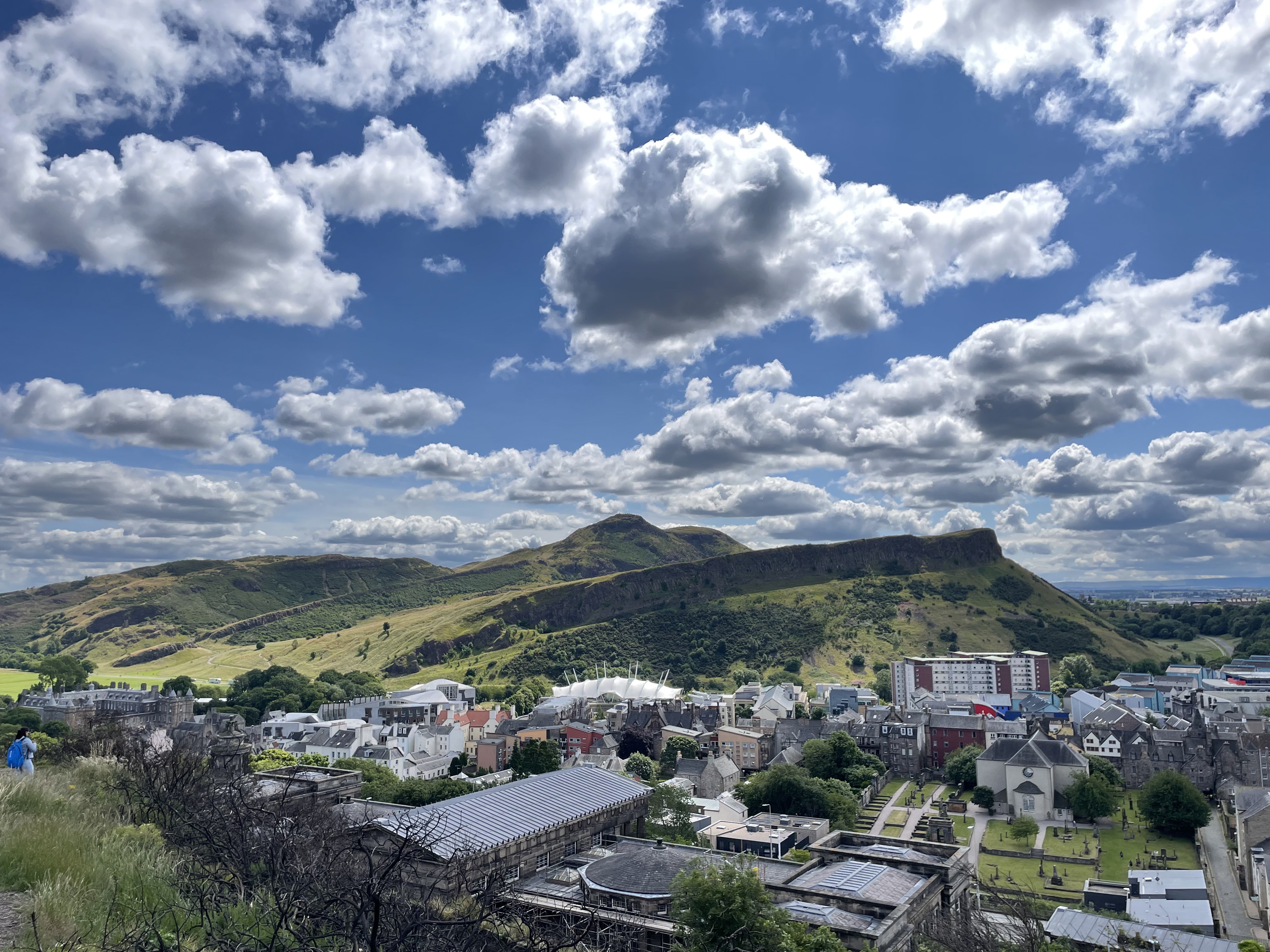
Arthur’s Seat From Calton Hill